Bora Bora

    Bora Bora

    French Polynesia

    Luxury, honeymoon hotspot

    4.9
    Guest Rating
    25°C
    Partly Cloudy
    Humidity: 75%
    Wind: 31 km/h
    Live Temperature
    6
    Active Events

    About Bora Bora

    Bora Bora feels like a dream made tangible, where Mount Otemanu rises from a lagoon streaked with a dozen blues and palm fronds whisper over sugar-soft sand, welcoming relaxed Bora Bora travel that lingers from sunrise swims to moonlit dinners over water. The island’s rhythm is gentle and gracious, with life arranged around the lagoon, the scent of tiare, and a culture that prizes hospitality and time together. With compact distances and iconic overwater stays, Bora Bora things to do unfold easily, from drift-snorkeling coral gardens to lazy afternoons at a beachside café.

    Geography and culture

    A volcanic peak encircled by a vast coral reef, Bora Bora is ringed by motu islets and a calm lagoon that glows like liquid glass on clear days for classic Bora Bora attractions. Vaitape serves as the island’s petite hub, with boats fanning out to resorts and snorkeling grounds beneath the shadow of Otemanu, where the views seem to shift with every cloud. Polynesian traditions weave through dance, song, and tattoo, while hotel spas offer taurumi, a Tahitian massage that feels like a lullaby for tired muscles.

    Beaches to know

    Matira Beach is the postcard scene, a long public arc of white sand shelving...

    Climate & Weather

    Tropical climate with year-round warm temperatures and trade winds.

    Best Time to Visit

    May to October for dry weather and pleasant temperatures

    Top Highlights

    Mount Otemanu

    Luxury resorts

    Romantic sunsets

    Popular Activities

    Luxury experiences
    Lagoon tours
    Sunset cruises
    Spa treatments

    Quick Info

    Timezone
    UTC-10
    💰Currency
    CFP franc (XPF)
    🗣️Language
    French, Tahitian
    Temperature
    28°C

    Upcoming Events

    TALIFIT RACE (TALIFIT Events) 2026
    Sports tournament
    TBA

    TALIFIT RACE (TALIFIT Events) 2026

    Bora Bora TALIFIT RACE 2026: A Unique Lagoon Experience

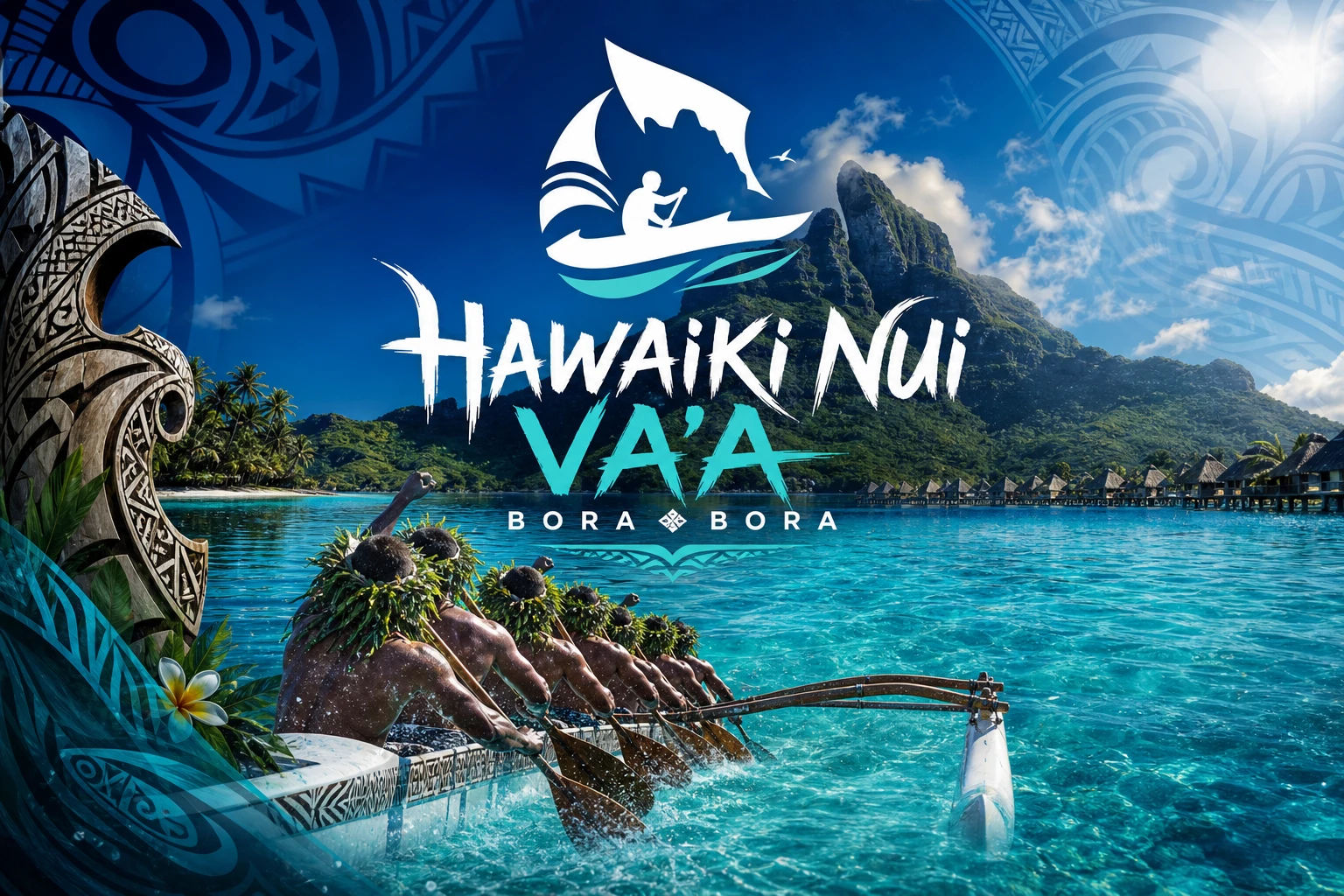
    Bora Bora TALIFIT RACE 2026 (by TALIFIT Events) is confirmed for April 6–11, 2026, with Matira Beach / Pointe Matira named as the arena for the week-long event on the island of Bora Bora. It’s positioned as “more than a Va’a race,” combining outrigger paddling competition with Polynesian culture, community experiences, and the kind of lagoon setting that makes even elite sport feel like a once-in-a-lifetime island journey.

    Bora Bora TALIFIT RACE 2026: A Lagoon Race with Real Polynesian Soul

    Bora Bora is often described in terms of luxury resorts and postcard water, but TALIFIT RACE asks you to experience the island through effort, rhythm, and connection. This event is built around va’a (outrigger canoe paddling), a sport deeply rooted in Polynesian heritage, and the organizers frame it as a gathering shaped by “Strength, Unity, Humility, and Joy,” with “Mana” and cultural transmission at its core.

    For travelers, that matters because the TALIFIT RACE weekend isn’t only about watching athletes. It’s a chance to visit Bora Bora with a purpose and a schedule, where your trip naturally includes community energy and cultural storytelling alongside lagoon time. If you love island events that feel authentic rather than staged, this one is designed to deliver exactly that.

    Confirmed 2026 Dates and the Main Venue Area

    The TALIFIT Events site lists “SAVE THE DATES” as April 6–11, 2026 for TALIFIT RACE, and also states that “Registration will be Open October 1st…” (as part of its published planning timeline). TALIFIT’s official social content also states “Matira Beach becomes the arena from April 6–11, 2026,” which matches the dates and pinpoints the key beach location.

    Matira Beach (Pointe Matira) is one of Bora Bora’s best-known public beach zones and is famous for shallow, swimmable lagoon water and sunset views, which makes it a natural “arena” for spectator-friendly paddling and finish-line energy. In practical travel terms, it also means you can build your itinerary around one recognizable island landmark rather than chasing scattered venues each day.

    What the Event Is: More Than a Race

    TALIFIT describes the festival as “More than a Competition, an Experience,” and specifically frames TALIFIT RACE as “More than a Va’a race,” with paddlers coming together to share cultural connection and the spirit of va’a. That’s an important clue about what your week will feel like: not only heats and results, but also shared moments, island excursions, and a community welcome that turns a sporting event into a travel experience.

    The same site also presents TALIFIT as a broader brand of “Cultural & Hybrid Sports in Bora Bora,” which suggests that the race week is part of a larger vision that mixes athletic challenge with Polynesian cultural context. If you’re coming from outside French Polynesia, this is exactly the kind of framework that helps you connect with the island in a deeper way than simply “arrive, relax, leave.”

    What Happens During April 6–11: The Week-Long Rhythm

    While detailed day-by-day 2026 schedules and race formats can change, the official event communication confirms the week runs across six dates (April 6–11). A multi-day structure matters for planning because it encourages you to stay longer, which is often the difference between a “Bora Bora snapshot trip” and a true island immersion.

    A good travel approach is to treat April 6 as arrival and orientation, then focus on key competition days in the middle, leaving at least one half-day for pure lagoon exploration around the edges of the event program. Bora Bora is the kind of island where you want time for both: organized festival energy and unstructured lagoon calm.

    The Cultural Side: Why Va’a Belongs in Bora Bora

    Va’a is not a trendy imported sport in French Polynesia; it’s heritage. TALIFIT’s messaging emphasizes “Polynesian Culture, Connection, Mana,” and positions the race as a place where culture is transmitted and shared, including across generations. This is one reason the event is appealing even if you’re not an elite paddler: watching va’a in Bora Bora is like watching an island express identity through movement, teamwork, and ocean skill.

    As a visitor, the best way to honor that is simple: show up curious, respectful, and ready to learn. Give yourself time to speak with participants, watch the warm-ups, and understand how the lagoon environment shapes technique and strategy.

    Where to Stay and How to Plan Bora Bora Logistics

    Bora Bora’s accommodation choices range from high-end overwater resorts to more local guesthouses and hotels on the main island. Since TALIFIT’s arena is at Matira Beach / Pointe Matira, staying on the southern side of the main island can reduce daily transfer friction and help you enjoy sunrise and sunset sessions without long commutes.

    A practical planning note for festival week:

    • Book early if you want a specific style of stay near Matira, since event weeks can tighten availability even outside peak holiday seasons.
    • If you’re staying at a resort islet (motu), confirm boat transfer times, especially for evening celebrations or early race starts.

    Pricing and Registration: What’s Confirmed

    TALIFIT’s site indicates that registration will open October 1st (year not explicitly shown in the snippet, but stated in the context of 2026 dates). Search results also show a TALIFIT registration page snippet that references a “6x Pass Paddler” at $150 USD, but the full registration page content was not accessible in the retrieved page capture here, so pricing should be verified directly on the official registration portal when it is available.

    For now, the most reliable “confirmed” pricing guidance is that registrations exist and are structured into passes, but exact 2026 fees should be checked from TALIFIT’s official registration page once it’s fully published and accessible.

    Verified Information At a Glance

    Item: Confirmed details

    Event name: Bora Bora TALIFIT RACE 2026 (TALIFIT Events)

    Event category: Va’a (outrigger canoe) race festival with cultural programming

    Confirmed 2026 dates: April 6–11, 2026

    Confirmed main venue area: Matira Beach / Pointe Matira, Bora Bora

    Event positioning (confirmed): “More than a Va’a race,” focused on Polynesian culture, connection, and “Mana.”

    Registration timing note: Registration stated to open October 1st (as published alongside 2026 save-the-dates).

    Pricing: Not fully confirmed in accessible official page content here; verify via official TALIFIT registration page when live.

    Join Us for an Unforgettable Experience in Bora Bora

    If Bora Bora is on your 2026 list and you want an island experience that goes beyond the lagoon photos into something you can feel in your chest, plan for April 6–11, base yourself near Matira, and let TALIFIT RACE introduce you to Bora Bora through va’a, culture, and the unforgettable energy of a community celebrating the ocean together.

    Bora Bora (Matira Beach referenced in related listings) , Bora Bora
    Apr 6, 2026 - Apr 11, 2026
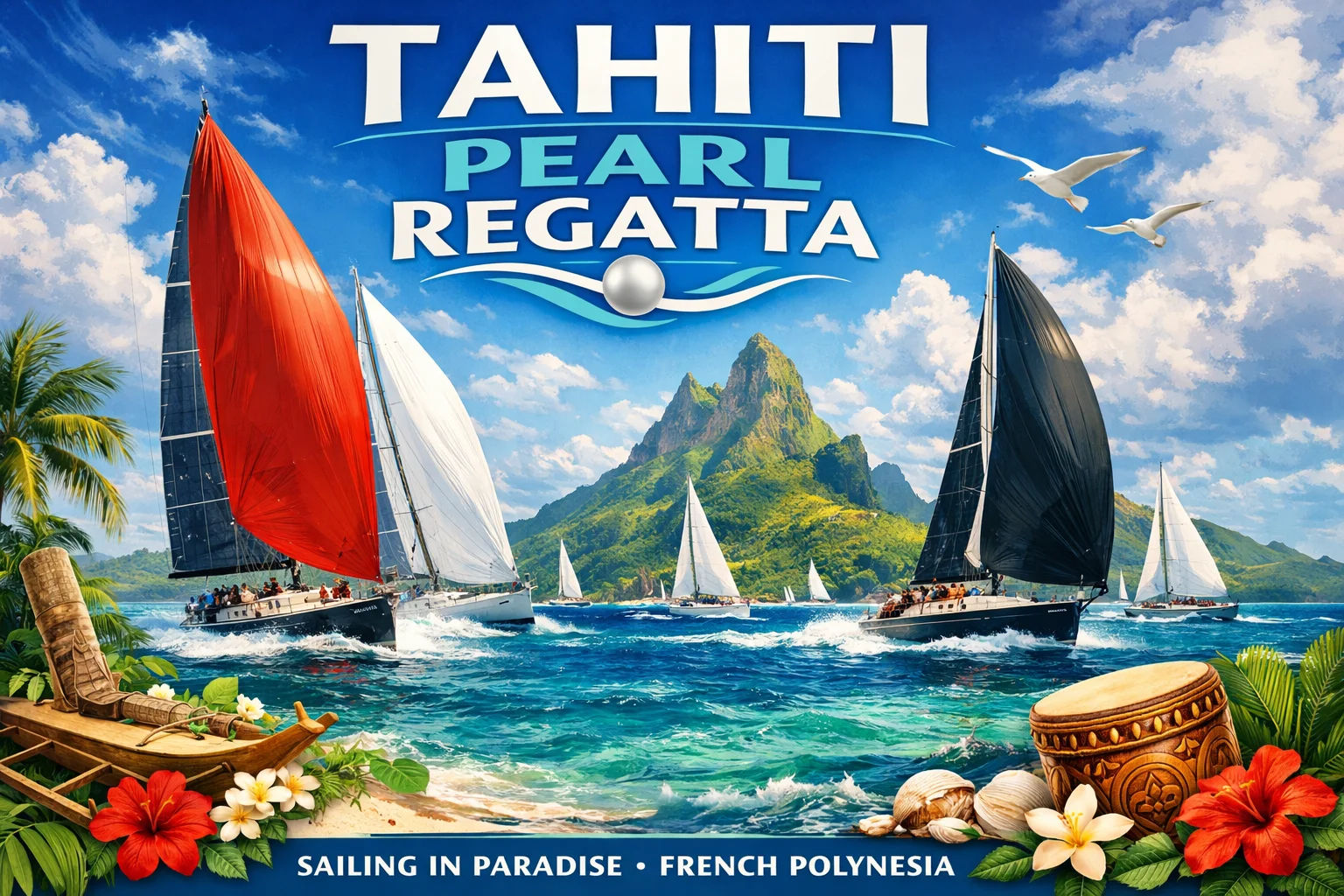
    Tahiti Pearl Regatta 2026
    Sailing
    Free

    Tahiti Pearl Regatta 2026

    Experience the Thrill: Tahiti Pearl Regatta 2026

    Tahiti Pearl Regatta 2026 is scheduled for 23–29 May 2026 in French Polynesia’s Leeward Islands, with racing legs that traditionally include a spectacular approach to Bora Bora and its lagoon as one of the most anticipated moments of the week. For sailors, island‑hoppers, and ocean‑loving travelers, the Bora Bora leg of the Tahiti Pearl Regatta is where competitive sailing, turquoise water, and iconic South Pacific scenery all come together.

    Tahiti Pearl Regatta 2026 in the Leeward Islands

    The Tahiti Pearl Regatta is often described as a friendly yet serious sailing event that combines short‑course racing with island‑style evenings of music, dancing, and barbecues. It takes place in and around the Leeward Islands of French Polynesia, with courses set between islands such as Raiatea, Tahaʻa, Huahine, and Bora Bora, depending on the year’s route.

    In 2026, multiple sailing and charter sources confirm the regatta dates as 23–29 May 2026, highlighting a week of organized racing on tropical waters where prevailing trade winds typically blow from the east at around 10–15 knots, with occasional stronger gusts. Race distances are usually under 20 nautical miles, apart from one or two inter‑island passages, which makes the event accessible to a wide range of crews.

    The Bora Bora Leg: Why It Is So Special

    While the exact 2026 day‑by‑day course has not yet been fully published, past editions underline how iconic the Raiatea to Bora Bora leg has become. A detailed race report from a previous regatta describes this leg as “one of the most expected and most exciting parts of its program,” a 27‑nautical‑mile passage that finishes inside Bora Bora’s lagoon, often with boats anchoring off major resorts like Le Méridien Bora Bora for the post‑race celebration.

    That combination of an open‑water dash followed by a lagoon finish is what makes the Bora Bora segment unique:

    • Crews sail blue water between islands, reading winds and currents in the open Pacific.
    • The fleet then enters Bora Bora’s lagoon, surrounded by coral reef, Mount Otemanu, and shallow turquoise flats that have made the island famous worldwide.

    For spectators and non‑racing visitors, the arrival of the regatta fleet in Bora Bora is a visual spectacle, with cruising and racing yachts gliding in front of overwater bungalows and reef‑ringed motu islets.

    Regatta Format and Fleet Mix

    The Tahiti Pearl Regatta welcomes a mix of monohulls, catamarans, and trimarans, from bareboat charters to locally based racing yachts. Race reports highlight:

    • Performance monohulls working hard to lead out of the lagoon and build gaps on longer legs.
    • Fast multihulls and trimarans that excel in lighter air and flat lagoon conditions.

    This mixed fleet adds variety to each start line and means that the Bora Bora leg is not only about who is fastest overall but also about which type of boat best matches the day’s wind and sea state.

    For many crews, the event is as much about gaining experience in a tropical racing environment as it is about podium results, which explains why it is marketed as an ideal regatta for sailors who want to improve their racing skills in a warm‑water setting.

    Evenings Ashore: Music, Dancing, and Polynesian Flavor

    Beyond the sailing, the Tahiti Pearl Regatta is famous for its nightly shore‑based celebrations. A Bora Bora and Leeward Islands travel guide notes that the regatta’s evenings feature music, dancing, and barbecues, creating a friendly atmosphere where local communities, sailors, and visiting guests share food and stories.

    When the fleet overnights near Bora Bora, the post‑race program typically includes:

    • A Polynesian‑themed party with local musicians and dancers.
    • Shared meals highlighting island staples and grilled seafood.
    • Prizegivings or daily awards that recognize both performance and spirit.

    These social events give visiting crews and island travelers a chance to experience Tahitian and Polynesian hospitality in a relaxed setting, often under the stars beside Bora Bora’s lagoon.

    Practical Information for 2026 Participants and Visitors

    Dates and General Area

    • Tahiti Pearl Regatta 2026 dates: 23–29 May 2026.
    • Sailing zone: Leeward Islands of French Polynesia, including Raiatea, Tahaʻa, and usually Bora Bora on at least one leg.

    A Bora Bora events calendar lists “Tahiti Pearl Regatta – 5–11 May” as a typical May window in earlier years, and recent charter and regatta partners confirm that the 2026 edition has been positioned later in the month, on 23–29 May.

    Wind and Conditions

    Sailing guides for the region describe the Leeward Islands as a trade‑wind area, with reliable easterly winds of 10–15 knots and occasional gusts up to 25–30 mph. Seas can be moderate in the open channels but are usually calmer inside lagoons and behind reef lines, which makes the Bora Bora leg particularly scenic and comfortable compared with pure offshore racing.

    Race Distances

    Regatta descriptions emphasize that most race legs are under 20 nautical miles, apart from one or two longer passages such as the Raiatea to Bora Bora crossing. This format lets crews enjoy competitive starts, tactical beats, and reaching legs without the fatigue of overnight racing, leaving energy for evening activities.

    Entering the Tahiti Pearl Regatta and Cost Considerations

    Charter and race partners promote the 2026 Tahiti Pearl Regatta as an accessible event for visiting crews, with packages that include boat charter, safety equipment, and regatta entry, though exact 2026 pricing is not fully detailed in the public summaries referenced here.

    Common cost elements include:

    • Boat charter (monohull or catamaran) for the regatta period.
    • Entry fees for the Tahiti Pearl Regatta itself, covering race organization and some shoreside events.
    • Mooring or marina fees at islands like Raiatea and Bora Bora, depending on the route.

    During Bora Bora nights, visitors should also budget for:

    • Meals and drinks at waterfront venues and resorts.
    • Optional excursions like snorkeling trips on non‑race days.

    Because official 2026 fee tables are not clearly published in the sources cited, anyone planning to race should request current pricing directly from regatta organizers or charter partners, using the confirmed 23–29 May 2026 dates as the anchor.

    Experiencing the Bora Bora Leg as a Non‑Racing Visitor

    You do not have to be a racer to enjoy the Bora Bora segment of the Tahiti Pearl Regatta.

    A Bora Bora events guide notes that the island regularly hosts high‑level water events, with regatta fleets anchoring off beaches and in front of resorts, turning the lagoon into a live backdrop of sails and masts. If you are staying in Bora Bora during late May 2026, you may be able to:

    • Watch the regatta fleet arrive from scenic spots like Matira Beach or resort pontoons.
    • Join spectator or hospitality boats organized by local operators.
    • Attend public evening events or parties associated with the regatta when they are open to outside guests.

    Pairing a Bora Bora stay with the regatta week can turn a classic lagoon holiday into a dynamic island experience, with daily visual drama on the water.

    Travel Tips for the Tahiti Pearl Regatta Bora Bora Leg

    If you want to align your trip with the Bora Bora leg in 2026, a few planning strategies help:

    • Use the core dates: Plan to be in the Leeward Islands, and ideally in Bora Bora, sometime during 23–29 May 2026, leaving flexibility for the exact Bora‑focused days once the detailed course is released.
    • Consider starting in Raiatea or Tahaʻa: These islands are often the logistical hub for the regatta, and from there it is easy to connect onward to Bora Bora by ferry or small plane.
    • Book early for Bora Bora: Late May is a shoulder period but events like TPR can increase demand for overwater bungalows and lagoon‑view rooms, especially near popular anchorages.

    On race days, remember that sailors and support boats will be focused on safety and competition, so any private boating plans should respect course limits and marshaling instructions.

    Why the Tahiti Pearl Regatta Bora Bora Leg Belongs on Your Island List

    Sailing reports describe the Raiatea to Bora Bora crossing as “spectacular,” with the fleet threading between lagoon passes and racing toward a finish line framed by Bora Bora’s volcanic peaks and reef. Travel writers covering Bora Bora’s event calendar highlight the Tahiti Pearl Regatta in May as one of the most visually striking times to see the lagoon, when cruising yachts and performance boats share the water with the island’s everyday outrigger canoes and local craft.

    With 23–29 May 2026 confirmed as the next edition of the regatta, this is the ideal year to combine a classic Bora Bora island stay with the energy of an international sailing event. Whether you join as crew, charter your own boat, or simply watch from the beaches and pontoons, the Tahiti Pearl Regatta Bora Bora leg offers a rare chance to see this famous lagoon come alive with sails, music, and Polynesian spirit.

    Verified Information at a Glance

    • Event Name: Tahiti Pearl Regatta 2026
    • Event Category: Sailing regatta and island festival (short‑course and passage races with evening celebrations)
    • Region: Leeward Islands, French Polynesia (including Raiatea, Tahaʻa, and typically Bora Bora)
    • Confirmed 2026 Dates: 23–29 May 2026
    • Bora Bora Leg (context): Historic Raiatea–Bora Bora passage of about 27 nautical miles, finishing in Bora Bora lagoon with boats anchoring off major resorts; considered one of the most exciting parts of the program.
    • Typical Conditions: Trade winds from the east around 10–15 knots, with stronger gusts recorded; race legs generally under 20 nautical miles apart from inter‑island passages.
    • Evening Experience: Shore‑based celebrations with music, dancing, and barbecues at island stops, including Bora Bora, creating a friendly, sailor‑meets‑island atmosphere.
    • Pricing Status (2026): Dates and general format confirmed; specific 2026 entry fees, charter packages, and mooring costs are not fully detailed in the public summaries and should be requested from organizers or charter partners.
    Leeward Islands, French Polynesia , Bora Bora
    May 23, 2026 - May 29, 2026

    Past Events

    New Year's Eve Celebrations 2026
    Holiday, Celebration
    Free

    New Year's Eve Celebrations 2026

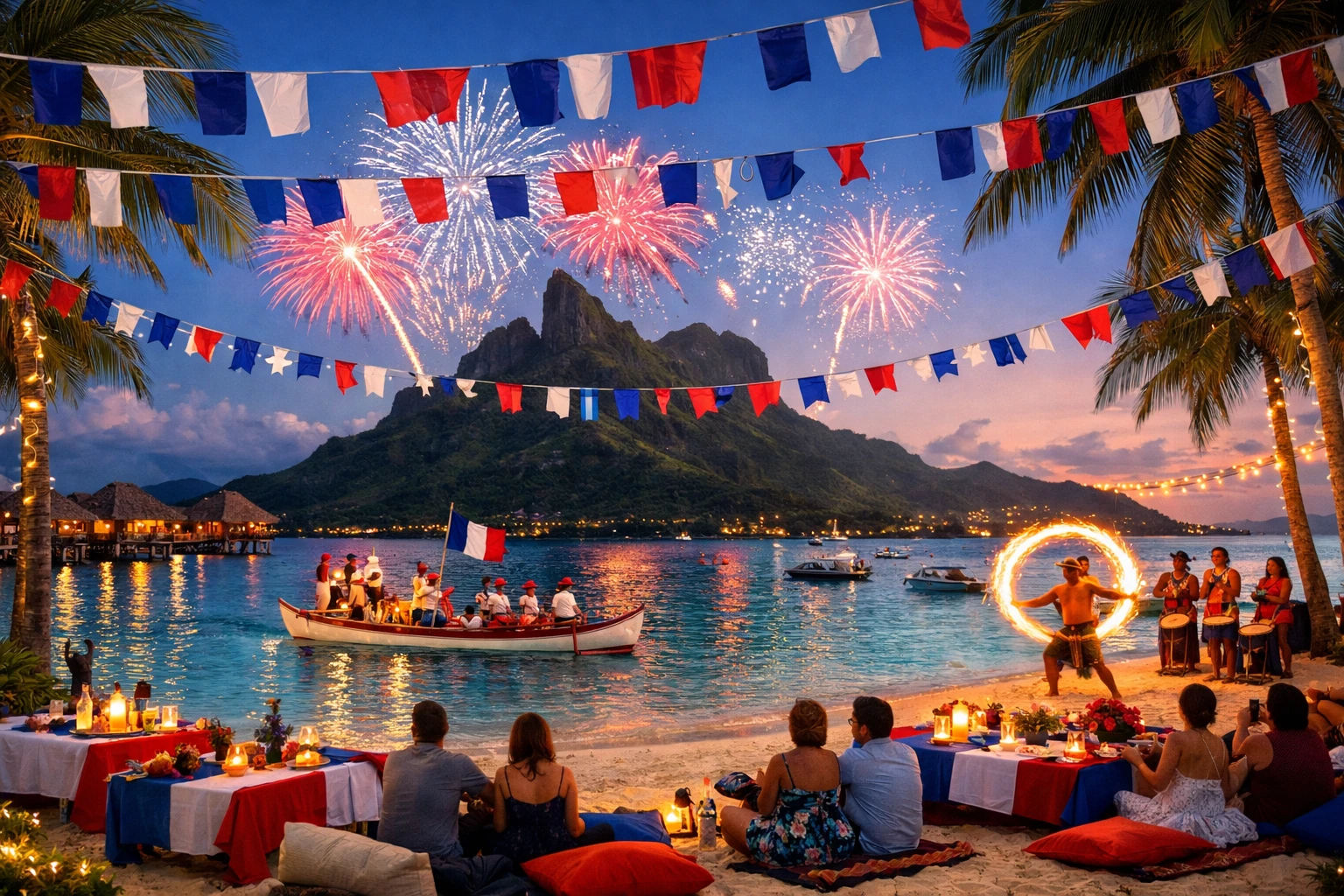
    New Year's Eve 2026 in Bora Bora promises to be an extraordinary celebration where turquoise lagoons meet starlit skies in the world's most romantic setting, as luxury resorts and intimate venues prepare spectacular festivities to welcome 2026 in paradise. From the legendary Four Seasons Resort Bora Bora's gala under the stars to Conrad Bora Bora Nui's fireworks spectacular over the lagoon, and The Westin's exclusive tropical celebration packages, visitors can choose from an array of sophisticated events that blend Polynesian culture with international luxury. Whether you prefer an intimate beachside countdown, a lavish resort gala with fire dancers, or a sailing adventure through the Society Islands, Bora Bora's New Year's Eve 2026 celebrations offer unforgettable ways to bid farewell to the year while surrounded by the natural beauty that has captivated travelers for centuries.

    Luxury resort celebrations and experiences

    The Four Seasons Resort Bora Bora sets the gold standard for New Year's Eve celebrations with their annual gala under the stars, featuring a sophisticated countdown experience that combines world-class dining with fireworks displays over Mount Otemanu. Guests gather on pristine beaches and elegant terraces to enjoy carefully curated menus showcasing both French culinary excellence and fresh Polynesian ingredients, while live entertainment and traditional fire dancers create a magical atmosphere leading up to midnight. The resort's overwater bungalows provide intimate settings for private celebrations, with many guests choosing to toast the new year from their own lagoon-facing decks.

    Conrad Bora Bora Nui elevates the celebration with their spectacular New Year's Eve dinner buffet priced at 49,000 XPF per person, featuring premium ingredients like tender wagyu beef, slow-roast suckling pig, and aromatic lemongrass shrimp. The evening culminates with fireworks bursting over the lagoon while fire dancers light up the night sky in a dazzling performance, with champagne provided for guests of legal drinking age. The resort's elevated position offers panoramic views of the lagoon and Mount Otemanu, creating dramatic backdrops for midnight celebrations.

    The Westin Bora Bora Resort & Spa offers exclusive New Year's Eve celebration packages that include tropical-themed festivities designed to create unforgettable holiday memories in paradise. These packages typically feature special dining experiences, entertainment, and premium amenities that showcase the resort's commitment to luxury hospitality in one of the world's most beautiful settings.

    Traditional Polynesian cultural elements

    Bora Bora's New Year's Eve celebrations beautifully blend international traditions with authentic Polynesian culture, creating unique experiences that honor both the global significance of the holiday and local customs. Traditional fire dancing performances are central to many resort celebrations, with skilled Polynesian dancers creating mesmerizing displays that reflect the islands' ancient cultural heritage. These performances often include the spectacular fire knife dance, where dancers manipulate flaming batons in rhythmic patterns that have been passed down through generations.

    Local musicians perform traditional Polynesian songs alongside contemporary favorites, often incorporating traditional drums and string instruments that create the distinctive island sound. Many celebrations feature himene (traditional Polynesian singing) and cultural demonstrations that educate visitors about the rich heritage of French Polynesia while creating an authentic island atmosphere for the midnight countdown.

    Sailing and cruise celebrations

    Luxury cruise experiences offer unique perspectives on Bora Bora's New Year's Eve celebrations, with vessels like the Oceania Riviera hosting special voyages that combine multiple Polynesian islands with sophisticated onboard festivities. Atlantis Events operates an all-gay luxury cruise from December 28, 2025, to January 6, 2026, that positions guests in Bora Bora for New Year's Eve with majestic fireworks and mesmerizing light displays against the stunning island paradise backdrop.

    These cruise celebrations often feature multiple viewing areas for fireworks displays, with passengers able to observe celebrations both on their vessel and ashore while enjoying the unique perspective that only water-based venues can provide. The combination of luxury cruise amenities and Bora Bora's natural beauty creates an unmatched New Year's Eve experience for travelers seeking something beyond traditional land-based celebrations.

    Intimate beachside celebrations

    For travelers seeking more intimate New Year's Eve experiences, Bora Bora's pristine beaches offer countless opportunities for private celebrations under the stars. Matira Beach, consistently rated among the world's most beautiful beaches, provides a stunning setting for small groups and couples to create personalized midnight celebrations with the lagoon and Mount Otemanu as natural backdrops. Many visitors choose to arrange private beach picnics with champagne and local delicacies while watching fireworks displays from multiple resort venues illuminate the night sky.

    Private villa rentals and boutique accommodations often provide exclusive beach access and personalized service for guests wanting to celebrate away from larger crowds while still enjoying the luxury amenities that define Bora Bora hospitality. These intimate celebrations allow visitors to fully appreciate the natural beauty and tranquility that make Bora Bora one of the world's premier romantic destinations.

    Dining and culinary experiences

    New Year's Eve dining in Bora Bora showcases the best of French culinary traditions enhanced by fresh Polynesian ingredients and stunning tropical settings. Resort restaurants create special tasting menus that feature locally caught fish, premium imported ingredients, and creative interpretations of both French and Polynesian cuisine. Conrad Bora Bora Nui's New Year's Eve buffet exemplifies this approach with its emphasis on premium ingredients and elegant presentation in a spectacular lagoon-side setting.

    Many venues offer outdoor dining experiences where guests can enjoy gourmet meals while watching the sunset paint the sky in brilliant colors before midnight celebrations begin. The combination of world-class cuisine and breathtaking natural settings creates dining experiences that visitors remember long after returning home. Fresh tropical fruits, locally grown vanilla, and the famous black pearls of Tahiti often appear in special New Year's desserts and signature cocktails created exclusively for the evening.

    Weather and timing considerations

    December and early January represent ideal weather conditions in Bora Bora, with warm temperatures typically ranging from 75-85°F (24-29°C) and gentle trade winds providing comfortable conditions for outdoor celebrations. The austral summer season brings longer daylight hours and generally stable weather patterns, though brief tropical showers are possible and often create spectacular rainbow displays over the lagoon.

    The timing of celebrations takes advantage of Bora Bora's position relative to international time zones, allowing visitors to experience one of the earlier New Year's celebrations worldwide before connecting with family and friends in other time zones throughout the following day. This timing creates opportunities for extended celebrations and allows visitors to savor the experience without rushing to catch flights or continue travels immediately after midnight.

    Photography and memories

    Bora Bora's New Year's Eve celebrations provide exceptional opportunities for photography, with fireworks displays reflected in crystal-clear lagoon waters and Mount Otemanu providing dramatic silhouettes against illuminated skies. The combination of natural beauty and celebratory lighting creates unique imagery that captures both the excitement of the moment and the timeless appeal of the Polynesian landscape.

    Many resorts offer professional photography services during their New Year's Eve celebrations, allowing guests to focus on enjoying the experience while ensuring that memories are preserved with professional quality images. The contrast between tropical paradise settings and traditional New Year's imagery creates distinctive photographs that stand apart from typical celebration documentation.

    Planning and booking considerations

    New Year's Eve represents peak season in Bora Bora, requiring advance planning and early reservations to secure preferred accommodations and celebration packages. Luxury resorts typically release their New Year's Eve packages several months in advance, with the most desirable overwater bungalows and beachfront villas booking quickly due to limited inventory.

    It's worth noting that the InterContinental Bora Bora Resort & Thalasso Spa will be undergoing renovations beginning in June 2025, with the first phase affecting the south overwater villas while other areas remain operational. The resort plans a complete closure for renovations starting mid-2026, so visitors planning New Year's Eve 2026 celebrations should verify operational status when making reservations.

    Transportation and logistics

    Reaching Bora Bora for New Year's Eve celebrations requires connecting through Tahiti's Faa'a International Airport, with Air Morea providing regular flights to Bora Bora Airport. During peak holiday periods, flight schedules may be adjusted to accommodate increased demand, making advance booking essential for travelers wanting to arrive in time for New Year's Eve festivities.

    Many luxury resorts provide helicopter transfers from Tahiti, offering scenic arrivals that showcase the dramatic beauty of the Society Islands while ensuring timely arrival for evening celebrations. These premium transfer options often include champagne service and aerial photography opportunities that begin the New Year's Eve experience from the moment of arrival.

    Sustainable celebration practices

    Contemporary New Year's Eve celebrations in Bora Bora increasingly incorporate sustainable practices that protect the pristine environment that makes these experiences so special. Many resorts use biodegradable materials for decorations, source ingredients locally to support island communities, and implement fireworks displays designed to minimize environmental impact while maximizing visual spectacle.

    Visitors are encouraged to participate in reef-safe practices, including the use of environmentally friendly sunscreens and respectful interaction with marine life during lagoon activities. These sustainable approaches ensure that future generations can continue to experience the natural beauty that makes Bora Bora New Year's Eve celebrations truly magical.

    Reserve your piece of paradise now for New Year's Eve 2026 in Bora Bora, where crystal-clear lagoons, dramatic volcanic peaks, and world-class luxury create the ultimate setting for welcoming the new year. Whether you choose a sophisticated resort gala with fireworks over the water, an intimate beachside celebration under the stars, or a cruise adventure through the Society Islands, Bora Bora promises a New Year's Eve experience that surpasses all expectations. Book your luxury accommodation early, plan your celebration style, and prepare to toast 2026 in one of the most beautiful places on Earth, where every sunset creates the perfect prelude to an unforgettable midnight celebration.


    , Bora Bora
    Dec 31, 2025 - Jan 1, 2026
    HiP's Bora Bora Festival 2025
    Cultural, Dance, Festival
    TBA

    HiP's Bora Bora Festival 2025

    International dance competition featuring performers from around the world, staged on white sandy beaches with innovative staging and Polynesian cultural backdrop.

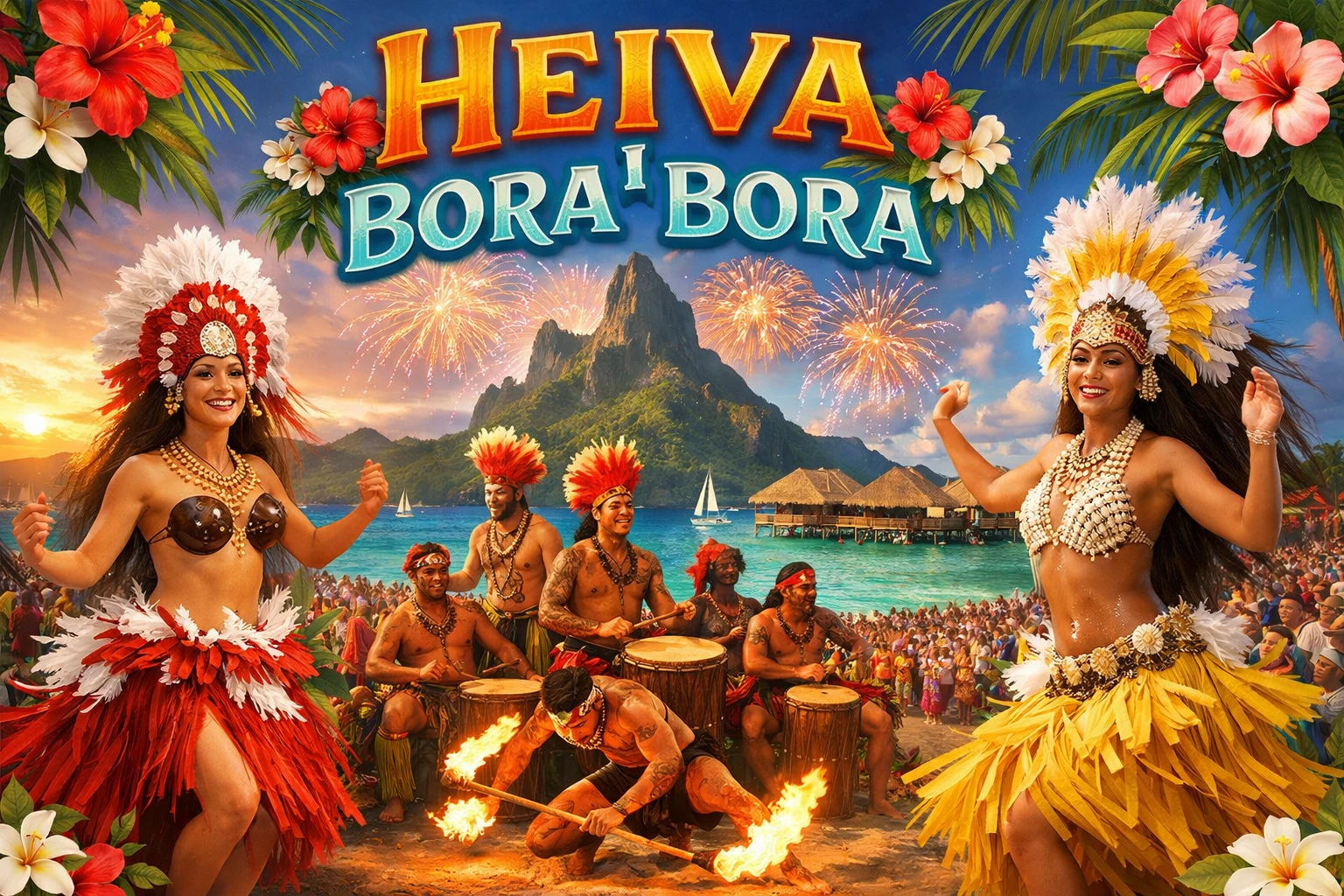
    HiP’s Bora Bora Festival 2025 is confirmed for the final weekend of November, with the main competition days set for Saturday–Sunday, November 29–30, 2025 at Chapiteau Fare Mata‘i, Place Tuvavau in Vaitape, Bora Bora; festival programming is listed from November 27–29 on Tahiti Tourisme, indicating build-up activities and openings ahead of the two-day championship showdown. Positioned as the “World Tahitian Dance League,” the event returns to its spiritual birthplace with a custom white-sand stage on Bora Bora’s lagoonfront, bringing elite ori Tahiti soloists and teams from around the globe for the World Team Championship and headline matchups, all produced by the creative team behind Heiva i Paris.

    Dates, venue, tickets

    • Competition weekend: Saturday–Sunday, November 29–30, 2025 (afternoon to late afternoon local time).
    • Festival window: Thursday–Saturday, November 27–29, 2025 on the official tourism calendar, aligning pre-events and opening activations before the weekend finals.
    • Venue: Chapiteau Fare Mata‘i (also referenced as Chapiteau Blanc), Place Tuvavau, Vaitape, Bora Bora, with a purpose-built white-sand stage on the waterfront.
    • Tickets: Sales live via the organizer’s platform, with reserved seating options; demand is high given limited seating at the chapiteau and international attendance.

    What the festival is

    HiP’s Bora Bora is a high-profile international ori Tahiti competition created by the founders of Heiva i Paris. It blends professional-level staging with the raw cultural power of Tahitian dance and percussion, spotlighting both solo mastery and precision team work in a championship format set against Bora Bora’s legendary lagoon. The World Team Championship is the marquee contest, with national squads performing themed suites that combine ‘ōte‘a, ‘aparima, and drum-driven interludes, judged on technique, musicality, staging, and authenticity. Organizers describe the 2025 edition as “Back to its Origins,” reconnecting the league with Bora Bora’s iconic white-sand stage and the island’s role as a cradle for Polynesian stagecraft.

    Who’s competing and the 2025 buzz

    Registrations opened in spring 2025, and social announcements have trailed a headline face-off between elite soloists Calicia and Kalea on the Bora Bora stage during the November 29–30 showdown, alongside the multi-country team brackets that define the world title. As with the 2024 inaugural edition, expect a deep international field shaped by Heiva i Paris connections and the growing global ecosystem of ori Tahiti schools, from France and mainland Europe to Japan, the Americas, and across Oceania. The format’s blend of solo and team rounds gives audiences a complete spectrum of the art: the intimate storytelling of ‘aparima and the thunder of full ensemble ‘ōte‘a in one setting.

    Staging and production values

    • Custom white-sand stage: A signature build that tests balance, footwork, and formation precision, while creating a luminous canvas for costuming and choreography under tropical light.
    • Heiva i Paris creative DNA: The staging team brings lighting, scenery, and flow innovations honed in Paris to a Polynesian outdoor venue, translating arena-grade polish to a waterfront chapiteau setting.
    • Live percussion and choral support: Traditional to‘ere, pahu, and vocal ensembles drive tempo and dynamics; arrangements are crafted to match each troupe’s narrative arc and energy.

    Cultural significance

    HiP’s Bora Bora situates modern competition within Polynesia’s living culture. While choreographies embrace theatrical staging, judging emphasizes mastery of foundational technique, ensemble discipline, and cultural coherence across costume, movement, and story. By returning to Bora Bora, the league affirms the island’s role as an inspirational stage for Tahitian dance, reinforcing ties to the broader festival season that includes the historic Heiva cycles and canoe racing culminations like Hawaiki Nui Va‘a across the Society Islands. For visitors, this makes late November a compelling time to witness contemporary performance art deeply rooted in heritage, presented with world-class production in an intimate island venue.

    Travel planning

    • When to arrive: Target arrival by Thursday, November 27 to settle in, pick up tickets, and enjoy opening activations; competition sessions run Saturday–Sunday with peak attendance on finals day.
    • Where to stay: Vaitape and Matira offer the most convenient access to Place Tuvavau and chapiteau shuttles; overwater resorts provide lagoon luxury, while guesthouses offer proximity and local immersion.
    • Getting there: Fly to Bora Bora (BOB) via Papeete (PPT) on Air Tahiti; seat availability tightens around festival weekends, so book early and sync inter-island connections with event timings.
    • Getting around: Coordinate taxi-boat or land transfers through accommodations; many properties run event-night shuttles to Tuvavau to reduce traffic and ease drop-offs near the venue.

    How the days flow

    • Thursday–Friday: Arrival, rehearsal sightings, press calls, and possible cultural pop-ups on the waterfront; check Tahiti Tourisme and organizer feeds for any public previews or meet-the-artists moments.
    • Saturday: Opening brackets and early team rounds; solo heats and category showcases run into the late afternoon.
    • Sunday: Semifinals and finals, plus the headline solo face-off and the World Team Championship awards; post-show celebrations often spill onto the waterfront with photo calls and spontaneous music.

    What to wear and bring

    • Attire: Resort evening wear with breathable layers; the chapiteau is open-air near the lagoon, so bring a light wrap against evening breezes.
    • Essentials: Phone tickets, portable fan, water, and a small seat cushion for longer sessions; respect photography rules and avoid flash during performances.
    • Cultural etiquette: Applaud transitions and drum breaks; remain seated during key passages; give performers and costume handlers space during entries and exits.

    Pairing your trip

    • Lagoon days: Book a morning snorkel or motu picnic on non-competition days; Bora Bora’s coral gardens and ray channels are world-famous and just minutes from Vaitape.
    • Cultural stops: Explore artisan markets in town for shell, pandanus, and ‘ura‘pe‘a dye crafts that often feature in dance costuming, connecting the performance arts to everyday making.
    • Island circuit: Sunset viewpoints around Matira and boat loops beneath Mount Otemanu frame the festival weekend with the island’s most iconic vistas.

    Tickets, seating, and demand

    The chapiteau’s capacity is intentionally intimate to preserve sightlines and acoustics, and the 2024 launch demonstrated strong international pull; for 2025, organizers are again urging early purchase, with seat maps and categories available on the official ticket portal. If sessions sell out, check Tahiti Tourisme listings for same-day release windows or returned seats, and consider splitting your party across adjacent blocks to secure entry for everyone.

    Why late November is ideal

    This timing follows the intense mid-year Heiva cycles and aligns with calmer trade winds and typically favorable lagoon conditions for outdoor staging. It also lands after the peak canoe race period, clearing the calendar for performers and musicians migrating from Tahiti and the Leeward Islands to Bora Bora for a final year-end celebration of dance excellence. For travelers, it is a sweet spot before festive season rates spike, with warm days, balmy evenings, and a cultural crescendo concentrated into one unforgettable weekend.

    Verified 2025 details at a glance

    • Festival window: November 27–29, 2025 (tourism listing), with main competition days November 29–30.
    • Location: Chapiteau Fare Mata‘i, Place Tuvavau, Vaitape, Bora Bora.
    • Format: Solo categories plus World Team Championship, produced by the Heiva i Paris creative team, staged on a custom white-sand platform.
    • Tickets: Available now on the organizer’s portal; seating limited, early purchase recommended.

    If Tahitian dance, live percussion, and island pageantry stir the heart, this is the weekend to be in Bora Bora. Book seats now, arrive by Thursday to soak in the anticipation, and spend two unforgettable days watching champions rise on the white sand as drums roll across the lagoon. Follow Tahiti Tourisme and the HiP’s League channels for session times and artist reveals, and get ready to experience ori Tahiti at its absolute apex — in the most breathtaking arena on earth.


    Chapiteau Fare Mata'i, Place Tuvavau, Bora Bora, Bora Bora
    Nov 27, 2025 - Nov 29, 2025
    Bora Bora Liquid Festival 2025
    Sports, Water Sports, Cultural
    TBA

    Bora Bora Liquid Festival 2025

    Bora Bora’s legendary Liquid Festival is widely recognized as French Polynesia’s most joyful celebration of waterman culture, blending elite endurance racing with family-friendly beach festivities in the world’s most photographed lagoon; however, publicly available calendars and long-running event guides indicate the festival traditionally runs in late November or early December, not on November 1 specifically, and official 2025 dates had not been posted by organizers at the time of writing. Historic schedules place the multi-day program in the end-of-year window and describe it under its original “Ironmana” identity, with stacked disciplines such as SUP, open-ocean swim, surf-ski, V1 outrigger, sailing outriggers, and relay formats anchored around Matira Beach and Sofitel’s lagoonfront resorts; travelers planning for early November 2025 should watch for an official announcement and be ready to shift a week or two later if the customary timing holds.

    What the festival is

    Born from the Bora Bora Ironmana concept at the turn of the millennium, the Liquid Festival brings together world-class and passionate amateur “watermen and waterwomen” for multiple days of racing and lagoon culture in a refreshingly casual, communal atmosphere. The program typically spans sprints, time trials, and long-distance courses with daily fatigue loading, culminating with a signature endurance test such as a 35 km SUP crossing for the strongest paddlers and a V1 outrigger race around Bora Bora for va‘a specialists from Tahiti, Hawaiʻi, Australia, New Zealand, and beyond. Off the water, the beach scene flows with live DJs, community barbecues, tamure dance shows, kids’ clinics, and sunset yoga, emphasizing celebration and accessibility alongside top-tier competition.

    Typical dates and 2025 outlook

    Longtime island event roundups list the Liquid Festival at the tail end of the calendar year — for example, a December lineup notes “KXT Ironmana Liquid Festival” at the turn of November–December in Bora Bora, reinforcing that the race week traditionally aligns with early summer in the South Pacific rather than the very start of November. While dedicated pages profile the event’s culture, course styles, and host venues, official 2025 date postings have not yet been widely released; prospective attendees should verify final dates directly via the organizer’s channels and local partners before booking, as the festival has historically run in the late-November to early-December window.

    Disciplines and formats

    • SUP: From 100 m beach sprints and lagoon circuits to the festival’s famed 35 km endurance epic for elite paddlers, SUP features daily efforts that build cumulative load across the week.
    • Va‘a: V1 outrigger time trials, surf-zone starts, and an island-circumnavigation race from Matira Beach showcase Polynesia’s ancestral paddling culture in its spiritual home waters.
    • Surf-ski and open-ocean swim: Configured to conditions, these races tap steady trade winds and reef-protected passages, with safety teams shepherding fields across turquoise lanes edged by coral gardens.
    • Sailing outriggers: Traditional pahi-style canoes sometimes kick off the week with a symbolic voyage and participate in festival showpieces within the lagoon, marrying seamanship with spectacle.
    • Relays and combined tests: Time-trial ladders, beach-run transitions, and multi-discipline “waterman” relays keep the action fast and spectator-friendly between marquee endurance days.

    The setting: Matira and the Sofitel lagoon

    The festival’s heart beats along Matira’s powder-white arc, where shallow, crystal water turns electric blue by midday and the peaks of Otemanu and Pahia create a cinematic backdrop for start lines and finish arches. Historic editions base operations at Sofitel Marara and Sofitel Private Island, enabling quick boat shuttles, sheltered staging, and seamless hospitality for athletes, families, and fans rotating between courses, clinics, and beach socials. With clear water, reef sharks, rays, and kaleidoscopic fish, the lagoon itself becomes a living gallery during races and recovery swims.

    Vibe and community

    The Liquid Festival’s magic lives in its balance: fierce on-water rivalries paired with open-armed Polynesian hospitality on the beach. Kids’ programs introduce keiki to technique and ocean respect, while visiting amateurs can toe the same lines as pros in relay or sprint formats that keep the field inclusive and the schedule dynamic. As one longtime profile notes, locals cheer as loudly for visitors as for hometown favorites, underscoring the event’s spirit of shared endurance and cross-cultural camaraderie.

    Travel planning for late November/December

    • When to go: Based on recurring listings and past editions, target the last week of November into early December, rather than November 1; monitor official pages and Bora Bora event calendars for the 2025 confirmation before finalizing flights.
    • Where to stay: Sofitel properties have historically hosted core operations; additional options in Matira, Vaitape, and top overwater resorts provide a full spectrum of budgets and styles within boat or shuttle reach of race hubs.
    • How long to stay: Plan a 6–8 night window to absorb the full multi-day schedule, plus buffer for arrival, acclimation, and a post-race lagoon day; endurance racers benefit from early setup for equipment checks and paddling recon.
    • Booking and logistics: High-season overlaps with regional events like Hawaiki Nui Va‘a and holiday peaks; secure rooms and inter-island flights early, and arrange board or canoe logistics well in advance through resort partners or local clubs.

    Athlete tips

    • Heat and hydration: Bora Bora’s lagoon is warm and inviting; plan electrolytes and hourly fueling for long efforts, with ice towels and in-water cool-downs between starts to control core temperature.
    • Craft choices: SUP depth and outrigger setups should prioritize stability in wind and boat wake; test fins, leashes, and hydration systems during tune-ups in front of Matira’s reef line to mimic race water.
    • Pacing the week: Many formats stack intensity day after day; protect shoulders for swim/SUP doubles and manage leg load between beach-run transitions and time trials to maintain late-week punch.

    Spectator experience

    • Best vantage points: The Matira sandbar near start lines, Sofitel jetty areas, and finish corridors offer dramatic angles, while short boat shuttles can position photographers along turquoise lanes without disrupting safety craft.
    • Family-friendly rhythm: Morning races, midday beach breaks with clinics and lunch barbecues, and late-afternoon sprints or awards create a natural cadence for keiki naps, swims, and sunset gatherings.
    • Culture on shore: Expect tamure dance, live DJs, and spontaneous ukulele; many evenings flow from award circles into social hours with a barefoot dress code written in soft sand.

    Why the Liquid Festival matters

    This is the rare event where modern endurance sport expresses Polynesian roots in their purest element. The Ironmana heritage anchored in va‘a, the presence of sailing outriggers, and the festival’s open clinics fold visitors into an authentic lagoon lifestyle rather than isolating them as spectators. By closing international paddling calendars in paradise, the Liquid Festival has become both a pilgrimage for ocean athletes and a joyful on-ramp for newcomers, sustaining ocean culture through participation and celebration.

    Verifying 2025 details

    • What’s known: Reputable Bora Bora event guides place the Liquid Festival in late November to early December, and destination features describe the multi-day format centered at Matira and Sofitel resorts with Ironmana-branded endurance showpieces.
    • What to confirm: The exact 2025 dates and entry pathways were not posted by organizers at the time of writing; given tradition, early November 1 is less likely than late November, so check official festival channels and Bora Bora event pages as announcements roll out.

    When the dates drop, book quickly, block a full week, and come ready to live on island time: paddle at dawn, cheer by midday, dance at dusk. The Bora Bora Liquid Festival rewards anyone who loves the ocean, whether racing the lagoon’s long blue roads or watching from the shade with salty hair and sandy feet. Keep an eye on the festival and Bora Bora event listings to lock in the 2025 schedule, and line up a front-row spot at Matira to feel the drumbeat of Polynesia carried over water like a call to race — and to celebrate — in the world’s most dazzling lagoon.

    Bora Bora Lagoon and beaches, Bora Bora
    Typically occurs in November; exact 2025 dates need official confirmation
    Hawaiki Nui Va'a (Bora Bora finish) 2025
    Sports, Cultural
    Free

    Hawaiki Nui Va'a (Bora Bora finish) 2025

    The Hawaiki Nui Va'a returns for its spectacular 32nd edition from October 29 to November 1, 2025, culminating in the breathtaking finish at Matira Beach in Bora Bora, where hundreds of supporters will gather to witness the climax of French Polynesia's most prestigious outrigger canoe race. This legendary three-day marathon covers 129 kilometers (80 miles) through the stunning Society Islands, connecting Huahine, Raiatea, Taha'a, and Bora Bora in an epic test of endurance, skill, and traditional Polynesian seafaring prowess. More than 2,000 pirogues from across French Polynesia and international crews will compete in this extraordinary celebration of va'a culture, with the mythical Matira Beach serving as the ultimate destination for this journey through paradise.

    The most prestigious outrigger canoe race in the world

    Hawaiki Nui Va'a stands as the pinnacle of outrigger canoe racing, drawing elite paddlers from across the Pacific to compete in six-person va'a (outrigger canoes) specially designed for open-ocean racing. Since its inaugural edition in 1992, this race has grown from a local competition into an international sporting phenomenon that showcases the athletic prowess and cultural heritage of Polynesian seafaring. The event takes its name from Hawaiki Nui, meaning "the great Hawaiki," which in Polynesian mythology represents the ancestral homeland from which all Pacific islands were first populated.

    The race embodies the spirit of ancient Polynesian voyaging, when skilled navigators used outrigger canoes to traverse vast ocean distances using only stars, currents, and natural signs. Modern competitors honor this legacy while pushing the limits of human endurance across some of the most challenging and beautiful waters in the South Pacific.

    Three-day race format and course details

    The 2025 edition follows the traditional three-stage format that has defined Hawaiki Nui Va'a since its inception. Day 1 (October 29) begins with the most challenging leg, a grueling 44.5-kilometer open-ocean crossing from Huahine to Raiatea that tests crews against prevailing trade winds and ocean swells. Elite teams complete this stage in approximately 3 hours and 15 minutes, with the current course record standing at an impressive 3 hours, 11 minutes, and 47 seconds.

    Day 2 (October 30) offers a comparative sprint of 22 kilometers through the protected lagoon waters between Raiatea and Taha'a. This stage favors tactical positioning and sprint speed, with leading crews covering the distance in under 2 hours. The current record for this leg stands at 1 hour, 52 minutes, and 49 seconds, demonstrating the incredible pace these elite athletes maintain even in the shorter stage.

    The climactic Day 3 (October 31) features the legendary 58-kilometer crossing from Taha'a to Bora Bora, where crews battle fatigue, ocean conditions, and the psychological pressure of approaching the finish at Matira Beach. This final stage typically requires just over 4 hours for leading crews, with the course record of 4 hours, 7 minutes, and 1 second representing the absolute pinnacle of outrigger racing performance. The overall race record of 9 hours, 20 minutes, and 51 seconds was set by Shell Va'a in 2009.

    The spectacular Bora Bora finish

    Matira Beach in Bora Bora provides one of the most dramatic and beautiful finish lines in all of sport, where crews arrive after three days of intense competition to be greeted by hundreds of supporters who gather on boats and along the legendary white sand beach. The approach to Bora Bora, with Mount Otemanu rising dramatically from the turquoise lagoon, creates an unforgettable backdrop for the race's climax. Spectators can witness the raw emotion of competitors as they cross the finish line, many overcome by the achievement of completing this ultimate test of Polynesian seamanship.

    The finish area transforms into a celebration of Polynesian culture, with traditional music, dance, and food creating a festival atmosphere that welcomes both competitors and spectators. The community of Bora Bora embraces the event as a highlight of their annual calendar, with local businesses and residents contributing to the warm hospitality that greets arriving teams.

    Multiple race categories

    Beyond the premier men's senior division, Hawaiki Nui Va'a 2025 features multiple categories that provide competition opportunities for different age groups and skill levels. The Va'a Hine women's category, established in 1995, runs a challenging 45-kilometer course that showcases the growing strength of women's outrigger racing in French Polynesia. The Taure'a junior men's category, created in 1998, follows the same distance as the women's race, providing developing athletes with their own prestigious competition.

    Corporate teams compete in a special category that covers the final two stages from Raiatea to Bora Bora, allowing businesses to participate in this iconic event while building team cohesion through shared challenge. The veteran categories provide opportunities for experienced paddlers to continue competing at the highest level while passing their knowledge to younger generations.

    Cultural significance and heritage

    Hawaiki Nui Va'a represents far more than athletic competition; it serves as a living celebration of Polynesian cultural identity and the seafaring heritage that enabled the settlement of the Pacific islands. The race course passes near Taputapuatea marae on Raiatea, a UNESCO World Heritage site considered the spiritual center of Polynesia from which voyaging canoes departed to populate islands across the Pacific. This connection to ancestral voyaging traditions gives the modern race profound cultural significance beyond its sporting achievements.

    The event provides a platform for preserving and sharing traditional knowledge about canoe construction, navigation techniques, and ocean safety that have been passed down through generations of Polynesian seafarers. Many competitors learn from kupuna (elders) who maintain connections to traditional practices while adapting them to modern competitive requirements.

    Island hospitality and festivities

    Each participating island creates a unique welcome for teams, supporters, and visitors, with evening festivities that celebrate Polynesian culture through traditional music, dance, and cuisine. Huahine, known as the "Garden Island," offers intimate gatherings where teams can connect with local families and experience authentic Polynesian hospitality. Raiatea provides opportunities to explore sacred sites and learn about the island's role as the launching point for Pacific voyaging.

    Taha'a, the "Vanilla Island," showcases its agricultural heritage while providing the final staging point for the dramatic crossing to Bora Bora. The evening celebrations create lasting friendships between competitors and local communities, embodying the spirit of aloha that defines Polynesian culture. These cultural exchanges often prove as meaningful to participants as the competitive aspects of the race itself.

    Spectator experience and viewing opportunities

    The multi-island format provides spectators with numerous viewing opportunities, from shoreline positions to chartered boats that follow the action across open water. Many visitors plan multi-day trips that allow them to experience different perspectives of the race while exploring the unique character of each island. Boat charters provide the most comprehensive viewing experience, following crews through the challenging open-ocean crossings while offering photography opportunities and close-up observation of racing tactics.

    Shore-based viewing offers its own advantages, particularly at start and finish areas where the excitement and emotion of competition are most intense. Matira Beach provides the ultimate spectator experience, with its white sand setting and crystal-clear water creating perfect conditions for witnessing the race's climactic finish.

    Planning your visit

    The late October timing coincides with some of the most pleasant weather conditions in French Polynesia, with trade winds providing ideal racing conditions while temperatures remain comfortable for outdoor activities. Visitors should book accommodations well in advance, particularly on Bora Bora where demand peaks during the race weekend. Many hotels offer special packages that include race viewing opportunities, cultural activities, and transportation between islands.

    Inter-island transportation during race week requires advance planning, with Air Morea and Tahiti Air Charter providing additional flights to accommodate increased demand. Ferry services between islands may operate modified schedules to support race logistics, making early booking essential for spectators planning to follow the entire race.

    Photography and documentation

    The stunning natural settings and dramatic racing action create exceptional photography opportunities throughout the three-day event. The contrast between traditional outrigger canoes and the tropical paradise setting provides unique imagery that captures both the athletic intensity and cultural significance of the competition. Professional and amateur photographers find endless subjects, from the determination on paddlers' faces to the spectacular landscapes that frame each stage.

    Drone photography requires special permits and coordination with race organizers to ensure safety and avoid interference with competition. Many photographers combine race coverage with broader documentation of Polynesian culture and island life, creating comprehensive visual stories that extend beyond the sporting aspects.

    Accommodation and travel packages

    Specialized travel companies offer comprehensive packages that include inter-island transportation, accommodation, race viewing opportunities, and cultural activities. These packages often provide the most convenient way to experience the full scope of Hawaiki Nui Va'a while ensuring optimal viewing positions and cultural immersion opportunities. Independent travelers should focus on booking accommodations on Bora Bora first, as options there become limited quickest.

    Many visitors choose to extend their stay beyond the race weekend, using the event as a launching point for broader exploration of French Polynesia's natural and cultural attractions. The Society Islands offer world-class diving, hiking, cultural sites, and relaxation opportunities that complement the excitement of race weekend.

    Reserve your accommodations now for October 29-November 1, 2025, and prepare to witness the ultimate expression of Polynesian seafaring tradition at Hawaiki Nui Va'a. Whether you follow the entire three-day journey or focus on the spectacular finish at Matira Beach, this legendary race offers an unmatched combination of athletic excellence, cultural celebration, and natural beauty. Book your inter-island transportation, plan your viewing strategy, and get ready to experience the magic of outrigger racing in the heart of the South Pacific, where ancient traditions meet modern competition in the world's most beautiful racing venue.


    , Bora Bora
    Oct 31, 2025 - Nov 1, 2025

    Photo Gallery

    Bora Bora gallery 1
    Bora Bora gallery 2
    Bora Bora gallery 3
    Bora Bora gallery 4
    Bora Bora gallery 5

    Popular Events at Bora Bora

    Bora Bora Liquid Festival

    Bora Bora Liquid Festival

    <p><em>A high energy island celebration blending luxury, music, and lagoon life in French Polynesia</em></p><p>The <strong>Bora Bora Liquid Festival</strong> has earned a reputation as one of the most talked about luxury lifestyle events in the South Pacific. Set against the iconic turquoise lagoon, dramatic peaks of Mount Otemanu, and some of the world’s most exclusive resorts, this festival is designed for travelers who want to experience Bora Bora beyond postcard views. It is where upscale nightlife, yacht culture, and island atmosphere merge into a multi day celebration unlike anywhere else in the Pacific.</p><p>Hosted in Bora Bora during peak festive season, the event attracts international DJs, high profile guests, and travelers seeking a refined yet energetic island escape. While Bora Bora is often associated with romance and tranquility, the Bora Bora Liquid Festival reveals a vibrant social side of the island, offering curated parties, lagoon experiences, and unforgettable nights under the stars.</p><h2>What Is the Bora Bora Liquid Festival?</h2><h3>A Luxury Lifestyle Festival on the Island</h3><p>The Bora Bora Liquid Festival is best described as a <strong>premium music and lifestyle experience</strong> rather than a traditional cultural festival. It combines daytime lagoon activities with evening beach and yacht parties, often involving private venues and exclusive access locations across the island.</p><p>The event aligns with the global Liquid Week brand concept, which is known for blending luxury travel with music, fashion, and destination focused entertainment.</p><h3>Who the Festival Attracts</h3><p>Guests typically include:</p><ul><li>International travelers and influencers</li><li>Luxury lifestyle enthusiasts</li><li>Yacht owners and charter guests</li><li>Music lovers drawn to high end DJ driven events</li></ul><p>The atmosphere is social, stylish, and intentionally curated to maintain exclusivity.</p><h2>The Origins and Growth of the Bora Bora Liquid Festival</h2><h3>From Destination Events to Island Icon</h3><p>Liquid Festival events first gained recognition through high end destination parties in Europe and the Caribbean. The Bora Bora edition emerged as a natural fit due to the island’s reputation for luxury, privacy, and natural beauty.</p><p>Over time, the Bora Bora Liquid Festival developed its own identity, becoming closely associated with New Year celebrations and end of year travel in French Polynesia.</p><h3>Why Bora Bora Fits the Concept</h3><p>Bora Bora’s lagoon provides the perfect floating venue for yacht based events, while its resorts and beach clubs offer controlled, upscale settings for evening gatherings. This balance allows the festival to feel vibrant without overwhelming the island’s relaxed pace.</p><h2>When the Bora Bora Liquid Festival Takes Place</h2><h3>Confirmed Event Season</h3><p>The <strong>Bora Bora Liquid Festival is typically held in late December through early January</strong>, aligning with the New Year holiday period.</p><p>Most editions run for:</p><ul><li><strong>5 to 7 days</strong></li><li>Often beginning <strong>between December 27 and December 29</strong></li><li>Culminating with <strong>New Year’s Eve and New Year’s Day celebrations</strong></li></ul><p>Exact dates are confirmed annually by organizers, but the late December to early January window is consistent and widely recognized.</p><h2>Where Festival Events Are Hosted on the Island</h2><h3>Lagoon and Yacht Venues</h3><p>Many of the festival’s most iconic moments take place on:</p><ul><li>Private yachts and catamarans</li><li>Floating platforms within Bora Bora lagoon</li><li>Designer lagoon side venues with controlled access</li></ul><p>These locations showcase the island’s colors by day and transform into glowing party spaces by night.</p><h3>Resort and Beach Club Settings</h3><p>Evening events are often held at select resort locations or beach clubs near <strong>Vaitape</strong> and <strong>Matira Beach</strong>, areas known for accessibility and scenic beauty.</p><p>Venues may change from year to year based on partnerships, but all emphasize privacy, aesthetics, and sound quality.</p><h2>Highlights of the Bora Bora Liquid Festival</h2><h3>International DJ Performances</h3><p>Music is at the heart of the Bora Bora Liquid Festival. The lineup typically features:</p><ul><li>International electronic and house music DJs</li><li>Guest performers flown in for headline nights</li><li>Sunset sets transitioning into late night performances</li></ul><p>Events are designed to flow naturally with the island environment, emphasizing sound and atmosphere rather than large scale production.</p><h3>Lagoon Parties and Yacht Experiences</h3><p>Daytime activities often center around the water. Guests may enjoy:</p><ul><li>Floating parties anchored in shallow lagoon areas</li><li>Yacht hopping experiences</li><li>Champagne afternoons with music and swimming</li></ul><p>These moments define the festival’s signature island luxury vibe.</p><h2>Fashion, Style, and Social Culture</h2><h3>A Stage for Island Chic</h3><p>Dress codes are stylish yet relaxed, blending resort wear with evening elegance. Linen, swimwear, designer sunglasses, and minimalist evening outfits are common.</p><p>Fashion is expressive but never formal, matching Bora Bora’s upscale casual identity.</p><h3>Social Energy and Networking</h3><p>The festival is also known for its social dynamics. Guests often meet travelers from around the world, with shared activities and intimate venues encouraging conversation and connection.</p><h2>Pricing and Package Information</h2><h3>Festival Access and Packages</h3><p>Unlike free public festivals, the <strong>Bora Bora Liquid Festival operates primarily on a package based model</strong>. Pricing varies based on accommodation level, access tier, and included experiences.</p><p>Typical package ranges may include:</p><ul><li><strong>USD 3,000 to 6,000+ per person</strong> for basic access and shared accommodations</li><li>Higher pricing for luxury resorts, private yacht access, or VIP experiences</li></ul><p>Packages may include entry to events, select boat parties, transportation between venues, and hosted gatherings.</p><h3>Individual Event Tickets</h3><p>In some years, limited <strong>single event tickets</strong> or island guest passes are available, though these are restricted and sell out quickly. Pricing depends on the specific event and venue.</p><p>All pricing is confirmed annually and subject to capacity limits.</p><h2>Cultural Context and Island Respect</h2><h3>Coexisting with Island Traditions</h3><p>While the Bora Bora Liquid Festival focuses on nightlife, organizers and participants are expected to respect local culture, land, and marine environments. Noise levels, event timing, and venue selection are planned to minimize impact.</p><p>Visitors are encouraged to balance festival participation with appreciation for Polynesian customs and everyday island life.</p><h3>Supporting Local Services</h3><p>The event supports local employment through logistics, transportation, security, catering, and marine services. Many local businesses benefit from increased travel demand during festival week.</p><h2>Travel Tips for Attending the Festival</h2><h3>Booking Flights and Accommodations</h3><p>Late December is peak season in Bora Bora. Flights into <strong>Bora Bora Airport via Tahiti</strong> and accommodations sell out months in advance.</p><p>Travelers should:</p><ul><li>Book flights and festival packages early</li><li>Confirm inter island connections</li><li>Review luggage limits for island flights</li></ul><h3>Getting Around Bora Bora</h3><p>Festival shuttles, boats, and resort transfers are often coordinated by organizers. Outside of events, bicycles, scooters, and water taxis provide easy island mobility.</p><h3>What to Pack</h3><ul><li>Daytime swimwear and cover ups</li><li>Evening island chic outfits</li><li>Comfortable sandals</li><li>Reef safe sunscreen</li><li>Waterproof phone or camera case</li></ul><h2>Exploring Bora Bora Beyond the Parties</h2><h3>Balance Celebration with Relaxation</h3><p>Guests often complement festival nights with island experiences such as:</p><ul><li>Snorkeling in coral gardens</li><li>Lagoon tours and manta ray encounters</li><li>Relaxation at Matira Beach</li><li>Hiking or boat views of Mount Otemanu</li></ul><p>This balance keeps the experience refreshing rather than overwhelming.</p><h2>Why the Bora Bora Liquid Festival Stands Apart</h2><p>The <strong>Bora Bora Liquid Festival</strong> offers a rare blend of exclusivity, natural beauty, and high energy celebration in one of the world’s most iconic island settings. It reveals a side of Bora Bora that is dynamic, social, and modern while still grounded in the island’s unmistakable environment.</p><blockquote>Dancing beside a glowing lagoon, sailing between parties on calm turquoise waters, and welcoming the New Year surrounded by island beauty creates memories that last long after the music fades. Exploring Bora Bora through the Liquid Festival is an invitation to experience the island with rhythm, style, and unforgettable energy.</blockquote><h2>Verified Information at a Glance</h2><ul><li><strong>Event Name:</strong> Bora Bora Liquid Festival</li><li><strong>Event Category:</strong> Luxury Music and Lifestyle Festival</li><li><strong>Location:</strong> Bora Bora Island, French Polynesia</li><li><strong>Typically Held:</strong> Late December to early January</li><li><strong>Event Duration:</strong> Approximately 5 to 7 days</li><li><strong>Peak Events:</strong> New Year’s Eve and New Year’s Day celebrations</li><li><strong>Venues:</strong> Bora Bora lagoon, yachts, select resort and beach venues near Vaitape and Matira</li><li><strong>Estimated Pricing:</strong> Packages generally start around USD 3,000 and vary by accommodation and access level</li><li><strong>Audience:</strong> Luxury travelers, music lovers, international visitors</li><li><strong>Admission Model:</strong> Package based access with limited individual event tickets</li></ul><p><em>Exact dates, DJ lineups, venues, and package pricing are confirmed annually by festival organizers. Travelers are advised to verify official details before booking and planning travel.</em></p>

    Typically in Late December to early January
    Hawaiki Nui Vaʻa (Canoe Race Stopovers)

    Hawaiki Nui Vaʻa (Canoe Race Stopovers)

    <p><em>A legendary island voyaging race and the vibrant celebrations that follow each landing</em></p><p>Every November, the turquoise lagoons and open channels of French Polynesia become the stage for one of the most respected outrigger canoe races in the world. <strong>Hawaiki Nui Vaʻa</strong> is not simply a sporting competition. It is a powerful expression of Polynesian ocean heritage, teamwork, endurance, and ancestral pride. While the race itself draws elite Vaʻa crews from across the Pacific, the <strong>canoe race stopovers</strong> transform each host island into a cultural celebration that welcomes locals and travelers alike.</p><p>From Huahine to Raiatea and finally to Bora Bora, the stopovers of Hawaiki Nui Vaʻa offer rare opportunities to observe traditional voyaging culture up close, experience island festivities, and connect with communities that live by the rhythm of the sea.</p><h2>Understanding Hawaiki Nui Vaʻa and Its Cultural Meaning</h2><h3>What Hawaiki Nui Vaʻa Represents</h3><p>The name <em>Hawaiki Nui</em> refers to the ancient homeland found throughout Polynesian oral tradition. The race honors the long distance voyages once made by Polynesian navigators using stars, winds, and waves. Today, Hawaiki Nui Vaʻa stands as the pinnacle of outrigger canoe racing in French Polynesia and one of the most demanding events in the Vaʻa calendar.</p><p>Crews paddle <strong>six person outrigger canoes</strong>, relying on perfect synchronization, strength, and mental resilience as they cross wide ocean channels between islands.</p><h3>Why the Stopovers Matter</h3><p>The stopovers are more than rest points. They reflect the traditional welcome once given to voyagers arriving by sea. Each island greets the paddlers with ceremony, food, music, and community pride, turning the race into a shared cultural experience rather than a closed sporting event.</p><h2>History of Hawaiki Nui Vaʻa</h2><h3>Origins of the Race</h3><p><strong>Hawaiki Nui Vaʻa was first held in 1992</strong> and quickly gained international recognition. It was designed to revive long distance inter island paddling and to celebrate Polynesian maritime identity.</p><p>Over the decades, the race has grown in prestige, attracting top teams from Tahiti, the outer islands, Hawaii, New Zealand, and beyond. Winning Hawaiki Nui Vaʻa is considered one of the highest honors in the sport.</p><h3>Growth of the Island Celebrations</h3><p>As the race gained popularity, host islands developed traditions around welcoming the crews. These stopovers became festivals in their own right, blending competitive excitement with authentic island culture.</p><h2>When Hawaiki Nui Vaʻa Takes Place</h2><h3>Confirmed Annual Dates</h3><p><strong>Hawaiki Nui Vaʻa is held annually in November</strong>, typically <strong>late November</strong>.</p><p>The race runs over <strong>three days</strong>, with confirmed scheduling that generally follows this pattern:</p><ul><li><strong>Day 1:</strong> Huahine to Raiatea</li><li><strong>Day 2:</strong> Raiatea to Bora Bora</li><li><strong>Day 3:</strong> Lagoon racing and final ceremonies in Bora Bora</li></ul><p>In recent confirmed editions, race dates have fallen around <strong>November 24 to November 26</strong>, with slight variations depending on the calendar year.</p><p>November weather offers warm temperatures and favorable ocean conditions while avoiding the peak cyclone season.</p><h2>The Race Route and Stopover Islands</h2><h2>Huahine Stopover</h2><p><em>The spiritual beginning of the journey</em></p><h3>Why Huahine is Significant</h3><p>Huahine is often regarded as one of the most traditional islands in French Polynesia. Its strong cultural identity and connection to ancient marae make it a meaningful starting point for Hawaiki Nui Vaʻa.</p><h3>Stopover Experience</h3><p>Before the race begins, Huahine hosts opening ceremonies, team briefings, and community gatherings. When crews depart, locals line the shore to offer blessings and encouragement.</p><p>For visitors, Huahine provides a peaceful and deeply cultural introduction to the race atmosphere, with fewer crowds and close interaction with local residents.</p><h2>Raiatea Stopover</h2><p><em>The sacred heart of Polynesian voyaging</em></p><h3>Arrival at the Birthplace of Navigation</h3><p>The first major stopover occurs in <strong>Raiatea</strong>, long considered the spiritual center of Polynesia. This island is home to <strong>Taputapuātea</strong>, a UNESCO World Heritage site and ancient center of navigation and ceremony.</p><p>Crews arriving from Huahine are greeted with powerful welcomes that honor the island’s status as the birthplace of Polynesian wayfinding.</p><h3>Island Celebrations</h3><p>Raiatea’s stopover includes:</p><ul><li>Canoe arrivals visible from coastal villages</li><li>Community feasts and shared meals</li><li>Cultural performances featuring drumming and dance</li><li>Opportunities to meet paddlers and teams</li></ul><p>This stopover balances recovery with celebration, creating a festive yet respectful atmosphere.</p><h2>Bora Bora Stopover</h2><p><em>The dramatic finale in a legendary lagoon</em></p><h3>A World Famous Finish</h3><p>The final and most anticipated stopover takes place in <strong>Bora Bora</strong>. Paddlers arrive after crossing open ocean and enter one of the world’s most beautiful lagoons beneath Mount Otemanu.</p><p>Spectators gather along lagoon shores, beaches, and boats to witness the arrival, making this stopover a visual highlight of Hawaiki Nui Vaʻa.</p><h3>Lagoon Races and Closing Festivities</h3><p>On the final day, short races or exhibitions may occur inside the lagoon, followed by award ceremonies and celebrations. Bora Bora’s community and visitors come together to honor the winners and all participants.</p><h2>Highlights of the Hawaiki Nui Vaʻa Stopovers</h2><h3>Spectacular Canoe Arrivals</h3><p>Each stopover arrival is emotional and powerful. Crews often reach shore exhausted yet determined, greeted by cheers, music, and family support. These moments showcase the human spirit behind the sport.</p><h3>Cultural Performances</h3><p>Traditional drumming, chanting, and dance form an essential part of each welcome. Performances reflect the island’s identity and reinforce the cultural significance of ocean voyaging.</p><h3>Community Connection</h3><p>Unlike ticketed sports events, Hawaiki Nui Vaʻa stopovers encourage interaction. Visitors can speak with paddlers, observe authentic traditions, and feel genuinely included in the celebration.</p><h2>Cultural Importance of the Race and Stopovers</h2><h3>Honoring Ancestral Navigation</h3><p>Hawaiki Nui Vaʻa reinforces the knowledge and skills that allowed Polynesians to settle the Pacific. The race revives pride in ocean literacy, teamwork, and respect for nature.</p><h3>Strengthening Island Bonds</h3><p>By linking islands through paddling rather than air travel, the race symbolizes unity across the Society Islands and strengthens cultural ties between communities.</p><h2>Admission and Pricing Information</h2><h3>Free Public Access</h3><p>One of the most appealing aspects of <strong>Hawaiki Nui Vaʻa canoe race stopovers</strong> is that <strong>spectating is free</strong>. Visitors can watch arrivals, ceremonies, and celebrations without purchasing tickets.</p><h3>Optional Costs</h3><p>Costs for visitors typically include:</p><ul><li>Transportation between islands</li><li>Accommodation during race week</li><li>Food and local events</li></ul><p>No official admission fees are charged for stopover viewing areas.</p><h2>Travel Tips for Experiencing the Stopovers</h2><h3>Where to Stay</h3><p>Travelers often choose to base themselves in:</p><ul><li><strong>Huahine village areas</strong> for the opening leg</li><li><strong>Raiatea coastal accommodations</strong> near arrival points</li><li><strong>Bora Bora lagoon side hotels or guesthouses</strong> for the final stopover</li></ul><p>Booking several months in advance is recommended, as November draws increased demand.</p><h3>Getting Around</h3><p>Local ferries, flights, scooters, and boats are the most reliable ways to move between islands and viewing areas. Lagoon boats provide unforgettable perspectives during Bora Bora arrivals.</p><h3>What to Bring</h3><ul><li>Sun protection and light clothing</li><li>Respectful attire during ceremonies</li><li>Reusable water bottles</li><li>A camera or binoculars</li></ul><h2>Exploring the Islands During Race Week</h2><h3>Beyond the Paddling</h3><p>Between race events, visitors often explore:</p><ul><li>Snorkeling and lagoon excursions</li><li>Hiking viewpoints in Huahine and Raiatea</li><li>Cultural sites such as Taputapuātea</li><li>Local markets and village cafés</li></ul><p>The stopovers create natural pauses perfect for island discovery.</p><h2>Why the Hawaiki Nui Vaʻa Stopovers Are So Special</h2><p>The <strong>Hawaiki Nui Vaʻa (Canoe Race Stopovers)</strong> offer far more than sport. They represent a living connection between past and present, where ocean, island, and people unite through tradition and determination. Witnessing these arrivals and celebrations allows travelers to experience French Polynesia at its most authentic.</p><blockquote>Standing on the shore as outrigger canoes arrive after hours at sea, hearing drums echo across the lagoon, and sharing energy with island communities is something that stays with you long after the race ends. Planning a November visit around Hawaiki Nui Vaʻa opens the door to one of the most meaningful island experiences in the Pacific.</blockquote><h2>Verified Information at a Glance</h2><ul><li><strong>Event Name:</strong> Hawaiki Nui Vaʻa</li><li><strong>Event Category:</strong> Outrigger Canoe Race and Cultural Event</li><li><strong>Location:</strong> Society Islands, French Polynesia</li><li><strong>Primary Stopovers:</strong> Huahine, Raiatea, Bora Bora</li><li><strong>Typically Held:</strong> Late November</li><li><strong>Event Duration:</strong> 3 days</li><li><strong>Confirmed Race Route:</strong></li><li class="ql-indent-1">Day 1: Huahine to Raiatea</li><li class="ql-indent-1">Day 2: Raiatea to Bora Bora</li><li class="ql-indent-1">Day 3: Lagoon events and ceremonies in Bora Bora</li><li><strong>Spectator Admission:</strong> Free public access</li><li><strong>Estimated Dates Example:</strong> Around November 24 to November 26</li><li><strong>Participants:</strong> Elite Polynesian and international Vaʻa teams</li></ul><p><em>Exact dates, arrival locations, and ceremonial schedules are confirmed annually by race organizers. Visitors are encouraged to check local island announcements when planning travel around the event.</em></p>

    Typically in Late November
    Tahiti Pearl Regatta (Bora Bora leg)

    Tahiti Pearl Regatta (Bora Bora leg)

    <p><em>High adventure sailing meets island culture in the crown jewel lagoon of French Polynesia</em></p><p>Each year, the turquoise waters of French Polynesia host one of the South Pacific’s most celebrated sailing events. The <strong>Tahiti Pearl Regatta</strong> is a multi island sailing race that blends competitive yachting with island festivals, cultural exchange, and lagoon side celebration. Among all its stages, the <strong>Bora Bora leg</strong> stands out as the most visually dramatic and emotionally charged, drawing sailors, spectators, and travelers from around the world.</p><p>As the fleet arrives beneath Mount Otemanu and glides into Bora Bora’s iconic lagoon, racing gives way to celebration. This leg symbolizes both achievement and welcome, where ocean endurance meets Polynesian hospitality. For visitors who love sailing culture or wish to experience Bora Bora beyond resorts, the Tahiti Pearl Regatta Bora Bora leg delivers unforgettable moments on and off the water.</p><h2>Understanding the Tahiti Pearl Regatta</h2><h3>What the Regatta Represents</h3><p>The Tahiti Pearl Regatta is an international sailing competition that typically spans several islands in the Society Islands archipelago. More than a race, it functions as a floating cultural festival, combining offshore and lagoon stages with island hosted festivities.</p><p>Teams include professional crews, amateur sailors, and local Polynesian participants. The regatta welcomes monohulls, catamarans, and cruising yachts, creating a diverse and inclusive sailing environment.</p><h3>Why Bora Bora Holds Special Importance</h3><p>While earlier legs often begin in <strong>Raiatea</strong> and pass through <strong>Tahaʻa</strong>, the arrival in <strong>Bora Bora</strong> marks one of the regatta’s most anticipated milestones. Bora Bora’s lagoon offers protected waters ideal for final races and celebrations, while the island’s global reputation adds prestige and excitement to the event.</p><h2>History of the Tahiti Pearl Regatta and Bora Bora’s Role</h2><h3>Origins of the Regatta</h3><p>Founded in the early 2000s, the Tahiti Pearl Regatta was created to promote sailing tourism and inter island connection in French Polynesia. It emphasizes friendly competition, seamanship, and cultural respect over pure speed alone.</p><p>Over the years, the regatta has become a fixture of the Polynesian sailing calendar, attracting repeat participants who consider it one of the world’s most scenic and welcoming regattas.</p><h3>The Evolution of the Bora Bora Leg</h3><p>As the final or near final stage in many editions, the Bora Bora leg evolved into a celebration focused on arrival rather than departure. The finish is often staged inside or just outside Bora Bora’s lagoon, where spectators experience sailing at close range and crews are greeted with ceremony.</p><p>This leg balances sporting achievement with Polynesian festivity, making it especially appealing to visitors.</p><h2>When the Tahiti Pearl Regatta Takes Place</h2><h3>Confirmed Seasonal Timing</h3><p>The <strong>Tahiti Pearl Regatta is traditionally held in April</strong>, aligning with favorable weather and sea conditions in French Polynesia. April offers reliable trade winds, warm temperatures, and reduced rainfall, ideal for offshore racing.</p><p>In most editions:</p><ul><li>The regatta runs for <strong>5 to 7 days</strong></li><li>The Bora Bora leg typically occurs <strong>mid to late April</strong></li><li>Island festivities coincide with the fleet’s arrival</li></ul><p>While specific dates vary by year, April planning remains consistent and confirmed historically.</p><h2>Where the Bora Bora Leg Takes Place</h2><h3>Arrival and Racing Areas</h3><p>The Bora Bora leg generally concludes in or near <strong>Bora Bora Lagoon</strong>, with race finishes visible from:</p><ul><li><strong>Vaitape waterfront</strong></li><li>Areas near <strong>Matira Beach</strong></li><li>Lagoon channels framed by Mount Otemanu and Mount Pahia</li></ul><p>Viewing areas often include docks, beaches, and boats within designated spectator zones.</p><h3>Onshore Celebration Venues</h3><p>Once ashore, activities and social events usually take place near <strong>Vaitape village</strong>, marina areas, or community grounds arranged by local organizers. These spaces host prize giving ceremonies, concerts, and shared meals.</p><h2>Highlights of the Bora Bora Leg</h2><h3>Spectacular Fleet Arrival</h3><p>Few sailing experiences rival the sight of dozens of sails crossing a turquoise lagoon beneath jagged green peaks. As boats reach Bora Bora, the contrast between deep ocean blue and shallow coral hues creates stunning visuals for photographers and spectators.</p><p>Local boats often escort the fleet, adding to the celebratory atmosphere.</p><h3>Lagoon Races and Fun Sails</h3><p>In some editions, the Bora Bora leg includes short lagoon races or exhibition sails. These are designed for enjoyment and spectator engagement rather than endurance, allowing crews to showcase skill in close quarters sailing.</p><p>Lagoon sailing emphasizes precision, teamwork, and respect for the reef environment.</p><h2>Cultural Celebrations in Bora Bora</h2><h3>Polynesian Welcome Ceremonies</h3><p>Arrival in Bora Bora is often marked by traditional welcomes. Crews may be greeted with music, dance, and speeches that reflect Polynesian hospitality and island identity.</p><p>These moments transform the regatta from a sporting event into a cultural exchange.</p><h3>Music, Dance, and Shared Feasts</h3><p>Evenings during the Bora Bora leg frequently feature:</p><ul><li>Live Polynesian music</li><li>Tahitian dance performances</li><li>Communal dinners with local cuisine</li><li>Informal interactions between sailors and residents</li></ul><p>The relaxed atmosphere encourages storytelling and connection beyond competition.</p><h2>Who Participates in the Regatta</h2><h3>International and Regional Crews</h3><p>Sailors arrive from Europe, Australia, New Zealand, North America, and across the Pacific. Many crews include repeat participants who form lasting friendships through the event.</p><p>French Polynesian crews also play a key role, bringing regional knowledge and cultural insight to the fleet.</p><h3>A Welcoming Event for Varied Skill Levels</h3><p>The Tahiti Pearl Regatta is known for being accessible. While competitive, it emphasizes safety and camaraderie. Cruising yachts and club sailors are welcomed alongside experienced racers.</p><h2>Pricing and Access Information</h2><h3>Entry Fees for Participants</h3><p>Entry fees apply only to registered boats and crews. While pricing varies by year and category, <strong>participant registration typically includes</strong>:</p><ul><li>Race organization and safety coordination</li><li>Moorings or anchorage arrangements</li><li>Official social events and prize giving</li></ul><p>Exact entry fees are confirmed annually by organizers and depend on boat size and crew number.</p><h3>Spectator Access</h3><p>For visitors, the <strong>Bora Bora leg is free to watch</strong> from public areas such as beaches, docks, and designated viewing zones. There is no ticket required for general spectating.</p><p>Special dinners or events hosted during the regatta may involve separate reservation costs depending on venue.</p><h2>Travel Tips for Experiencing the Regatta in Bora Bora</h2><h3>Best Places to Stay</h3><p>During regatta week, accommodations fill quickly. Visitors often choose:</p><ul><li>Hotels and guesthouses near <strong>Vaitape</strong></li><li>Resorts along <strong>Matira Beach</strong></li><li>Lagoon side bungalows with water views of sailing areas</li></ul><p>Booking several months in advance is strongly recommended for April travel.</p><h3>Getting Around the Island</h3><p>Bora Bora is easy to explore by bicycle, scooter, or shuttle. Water taxis also operate around the lagoon, offering unique viewing perspectives for the race.</p><h3>What to Pack</h3><ul><li>Light, breathable clothing</li><li>Sun protection including hats and reef safe sunscreen</li><li>Comfortable footwear</li><li>Camera or binoculars for sail viewing</li></ul><h2>Exploring Bora Bora Between Regatta Events</h2><h3>Lagoon and Land Attractions</h3><p>When not watching races, visitors often enjoy:</p><ul><li>Snorkeling in coral gardens</li><li>Lagoon cruises and outrigger canoe experiences</li><li>Sunset viewing at <strong>Matira Point</strong></li><li>Cultural shopping and cafés in Vaitape</li></ul><p>The regatta schedule leaves time for relaxation and exploration.</p><h2>Why the Bora Bora Leg Is So Memorable</h2><p>The <strong>Tahiti Pearl Regatta (Bora Bora leg)</strong> captures everything that makes French Polynesia special. Skillful sailing, dramatic scenery, and heartfelt cultural connection come together in one place. It is an experience where ocean tradition meets island warmth, creating memories that last far beyond the finish line.</p><blockquote>Watching sails glide into Bora Bora’s lagoon while music drifts from shore is a moment of pure island magic. Plan an April visit, follow the fleet’s journey, and discover Bora Bora not just as a destination, but as a celebration of sea, sport, and Polynesian spirit.</blockquote><h2>Verified Information at a Glance</h2><ul><li><strong>Event Name:</strong> Tahiti Pearl Regatta</li><li><strong>Specific Highlight:</strong> Bora Bora leg</li><li><strong>Event Category:</strong> International Sailing and Cultural Regatta</li><li><strong>Location:</strong> Bora Bora Island, French Polynesia</li><li><strong>Typically Held:</strong> April</li><li><strong>Event Duration:</strong> Approximately 5 to 7 days overall</li><li><strong>Bora Bora Leg Timing:</strong> Mid to late April depending on schedule</li><li><strong>Race Route:</strong> Usually includes Raiatea, Tahaʻa, and Bora Bora</li><li><strong>Activities:</strong> Offshore racing, lagoon sailing, cultural celebrations, prize giving</li><li><strong>Spectator Access:</strong> Free public viewing in Bora Bora</li><li><strong>Participant Pricing:</strong> Entry fees apply to registered boats and vary annually</li></ul><p><em>Dates, routing, and registration details are confirmed each year by the Tahiti Pearl Regatta organizing committee. Travelers and participants are encouraged to verify current year information when planning attendance.</em></p>

    Typically in April
    Heiva i Bora Bora (Heiva Festival)

    Heiva i Bora Bora (Heiva Festival)

    <h1>Heiva i Bora Bora (Heiva Festival)</h1><p><em>A vibrant island celebration of Polynesian culture, dance, and ancestral pride</em></p><p>Each year, when the dry season settles gently over French Polynesia, the island of Bora Bora comes alive with rhythm, color, and cultural pride during <strong>Heiva i Bora Bora</strong>, one of the most anticipated island festivals in the Leeward Islands. As a local expression of the wider Heiva celebrations held across Tahiti and the islands, this festival honors Polynesian heritage through dance, music, sport, and storytelling in one of the most beautiful lagoon settings on Earth.</p><p>For travelers seeking more than luxury resorts and postcard views, <strong>Heiva i Bora Bora (Heiva Festival)</strong> offers an authentic window into island life. It is a time when the community gathers, traditions are celebrated openly, and visitors are warmly welcomed to experience the living culture of Bora Bora.</p><h2>Understanding the Meaning of Heiva in Polynesian Culture</h2><h3>What Heiva Represents</h3><p>The word <em>Heiva</em> translates broadly to celebration or festival. Historically, Heiva marked important communal gatherings that included ceremonies, competitions, and rituals rooted in Polynesian belief systems. During the colonial era, many of these practices were discouraged or banned, but they survived through community resilience.</p><p>In modern times, Heiva has become a cultural revival movement. It celebrates Polynesian identity, language, music, and physical expression while honoring ancestors and traditional knowledge.</p><h3>Heiva in Bora Bora</h3><p>While <strong>Heiva i Tahiti</strong> is the largest and most internationally known celebration, <strong>Heiva i Bora Bora</strong> brings these traditions to a more intimate island setting. The festival reflects local history, island specific dance styles, and community involvement unique to Bora Bora.</p><h2>History of Heiva i Bora Bora</h2><h3>Cultural Revival and Pride</h3><p>Heiva festivals gained renewed importance in the late 20th century as Polynesians reclaimed and revitalized cultural expressions. Bora Bora embraced Heiva as a way to preserve traditional arts and pass them on to younger generations.</p><p>Over time, <strong>Heiva i Bora Bora</strong> has grown into a key event on the island’s cultural calendar, supported by local associations, schools, and cultural leaders.</p><h3>A Festival Rooted in Community</h3><p>Unlike large scale commercial festivals, Heiva i Bora Bora remains deeply local. Performers are often island residents, families take part together, and preparations begin months in advance. That sense of belonging is felt in every performance and ceremony.</p><h2>When Heiva i Bora Bora Takes Place</h2><h3>Confirmed Festival Season</h3><p><strong>Heiva i Bora Bora is traditionally held between late June and July</strong>, aligning with the wider Heiva season across French Polynesia.</p><p>While exact dates vary slightly each year, festivals on Bora Bora commonly take place <strong>from mid June through mid July</strong>, with main dance competitions and performances concentrated in <strong>early to mid July</strong>.</p><p>For example, recent editions have featured performances around the <strong>first two weeks of July</strong>, depending on scheduling and island coordination.</p><h2>Where the Festival Is Held on the Island</h2><h3>Main Performance Venues</h3><p>Key festival events typically take place at:</p><ul><li><strong>Place Tiare</strong> in Vaitape, a central and well known gathering area</li><li>Open air cultural stages near <strong>Vaitape village</strong></li><li>Community grounds with lagoon or mountain backdrops</li></ul><p>These venues allow both locals and visitors to enjoy performances in an open and welcoming environment, often under the stars.</p><h3>Island Wide Celebrations</h3><p>In addition to central performances, smaller events, workshops, and rehearsals may occur across Bora Bora’s neighborhoods and villages, creating a festive atmosphere throughout the island.</p><h2>Highlights of Heiva i Bora Bora</h2><h3>Traditional Dance Competitions</h3><p>Dance is the heart of Heiva. Groups perform both <strong>ʼōteʼa</strong>, a powerful and rhythmic drum based dance, and <strong>aparima</strong>, a softer style that uses hand movements to tell stories.</p><p>Performances are judged on:</p><ul><li>Choreography and synchronization</li><li>Authenticity of movements</li><li>Costumes made from natural materials</li><li>Emotional expression and storytelling</li></ul><p>The energy and precision of these dances reflect months of hard work and deep cultural knowledge.</p><h3>Polynesian Drumming and Music</h3><p>Live percussion using pahu and toʼere drums drives the performances. Musicians sit behind dancers, creating complex rhythms that echo coral, ocean, and ancestral heartbeat.</p><p>Traditional chants in Tahitian language accompany many performances, adding depth and historical meaning.</p><h2>Sports and Cultural Activities</h2><h3>Traditional Athletic Competitions</h3><p>Heiva is also a celebration of physical strength and skill. Depending on the year, <strong>Heiva i Bora Bora</strong> may include:</p><ul><li>Stone lifting competitions</li><li>Coconut husking</li><li>Spear throwing</li><li>Outrigger canoe events</li></ul><p>These sports honor the strength and resilience valued in Polynesian society.</p><h3>Handicrafts and Cultural Displays</h3><p>Visitors can also enjoy exhibitions of traditional crafts such as weaving, wood carving, and costume making. These displays show how cultural knowledge is preserved and adapted for modern life.</p><h2>Cultural Importance for Bora Bora</h2><h3>Preserving Language and Identity</h3><p>Heiva provides an important platform for the Tahitian language, which is used extensively during performances and announcements. This reinforces linguistic pride and cultural continuity.</p><p>Younger performers learn directly from elders and cultural leaders, ensuring traditions are passed forward with respect and accuracy.</p><h3>Community Pride and Unity</h3><p>For Bora Bora residents, Heiva is a moment of unity. Families, schools, and neighborhoods support performers with costumes, logistics, and encouragement. Visitors often remark on the warmth and inclusion they feel during festival events.</p><h2>Admission and Pricing Information</h2><h3>Free Public Performances</h3><p>Most <strong>Heiva i Bora Bora</strong> events are <strong>free and open to the public</strong>, especially outdoor dance competitions and cultural showcases. This accessibility reflects the festival’s community spirit and ensures everyone can participate.</p><h3>Occasional Ticketed Events</h3><p>Some special evenings or reserved seating areas may require a modest fee, particularly if hosted at specific venues. When charged, pricing is typically affordable and aimed at covering logistical costs rather than profit.</p><h2>Travel Tips for Visiting During Heiva</h2><h3>Best Time to Book</h3><p>July is peak season in Bora Bora, both for tourism and cultural events. Accommodation and flights should be booked well in advance to secure preferred options.</p><h3>What to Wear</h3><ul><li>Light, breathable clothing</li><li>Comfortable sandals or walking shoes</li><li>Respectful attire for cultural settings</li><li>A light jacket for evening breezes</li></ul><p>Photographers should avoid flash during performances unless permitted.</p><h3>Getting Around</h3><p>Bora Bora is small and easy to navigate by bicycle, scooter, or shuttle. Event venues in Vaitape are accessible from most accommodations.</p><h2>Exploring Bora Bora Beyond the Festival</h2><h3>Nearby Attractions</h3><p>Between performances, visitors often explore:</p><ul><li><strong>Matira Beach</strong>, one of the island’s most famous stretches of sand</li><li>Lagoon snorkeling and coral gardens</li><li>Mount Otemanu viewpoints</li><li>Local shops and cafés in Vaitape</li></ul><p>Heiva week creates a perfect balance between cultural immersion and island relaxation.</p><h2>Why Heiva i Bora Bora Is a Must Experience Island Festival</h2><p>The <strong>Heiva i Bora Bora (Heiva Festival)</strong> is more than a celebration. It is a living expression of Polynesian identity set against one of the world’s most breathtaking landscapes. From the thunder of drums to the grace of dancers under the night sky, Heiva connects past and present in a deeply moving way.</p><blockquote>Witnessing Heiva in Bora Bora means stepping into the heart of island culture, sharing moments shaped by ancestry, artistry, and pride. Plan your summer island journey around this festival and let Bora Bora welcome you not only with beauty, but with soul.</blockquote><h2>Verified Information at a Glance</h2><ul><li><strong>Event Name:</strong> Heiva i Bora Bora</li><li><strong>Event Category:</strong> Cultural Festival and Traditional Arts</li><li><strong>Location:</strong> Bora Bora Island, French Polynesia</li><li><strong>Primary Venues:</strong> Place Tiare, Vaitape and community performance grounds</li><li><strong>Typically Held:</strong> Late June to July</li><li><strong>Peak Festival Period:</strong> Early to mid July</li><li><strong>Main Activities:</strong> Polynesian dance competitions, drumming, chanting, traditional sports, crafts</li><li><strong>Admission:</strong> Mostly free public events, occasional modest fees for select seating</li><li><strong>Audience:</strong> Local community, cultural travelers, island visitors</li></ul><p><em>Exact dates, schedules, and seating arrangements are confirmed annually by local organizers and the municipality of Bora Bora. Visitors are advised to check current year announcements when planning their trip.</em></p>

    Typically in Late June to July

    Fall in Love with Bora Bora

    Discover the magic of this tropical paradise. From stunning beaches to vibrant culture,Bora Bora offers unforgettable experiences for every traveler.