Maui

    Maui

    Hawaii, USA

    Lush landscapes, volcanoes, beaches

    4.8
    Guest Rating
    16°C
    Clear
    Humidity: 83%
    Wind: 11 km/h
    Live Temperature
    26
    Active Events

    About Maui

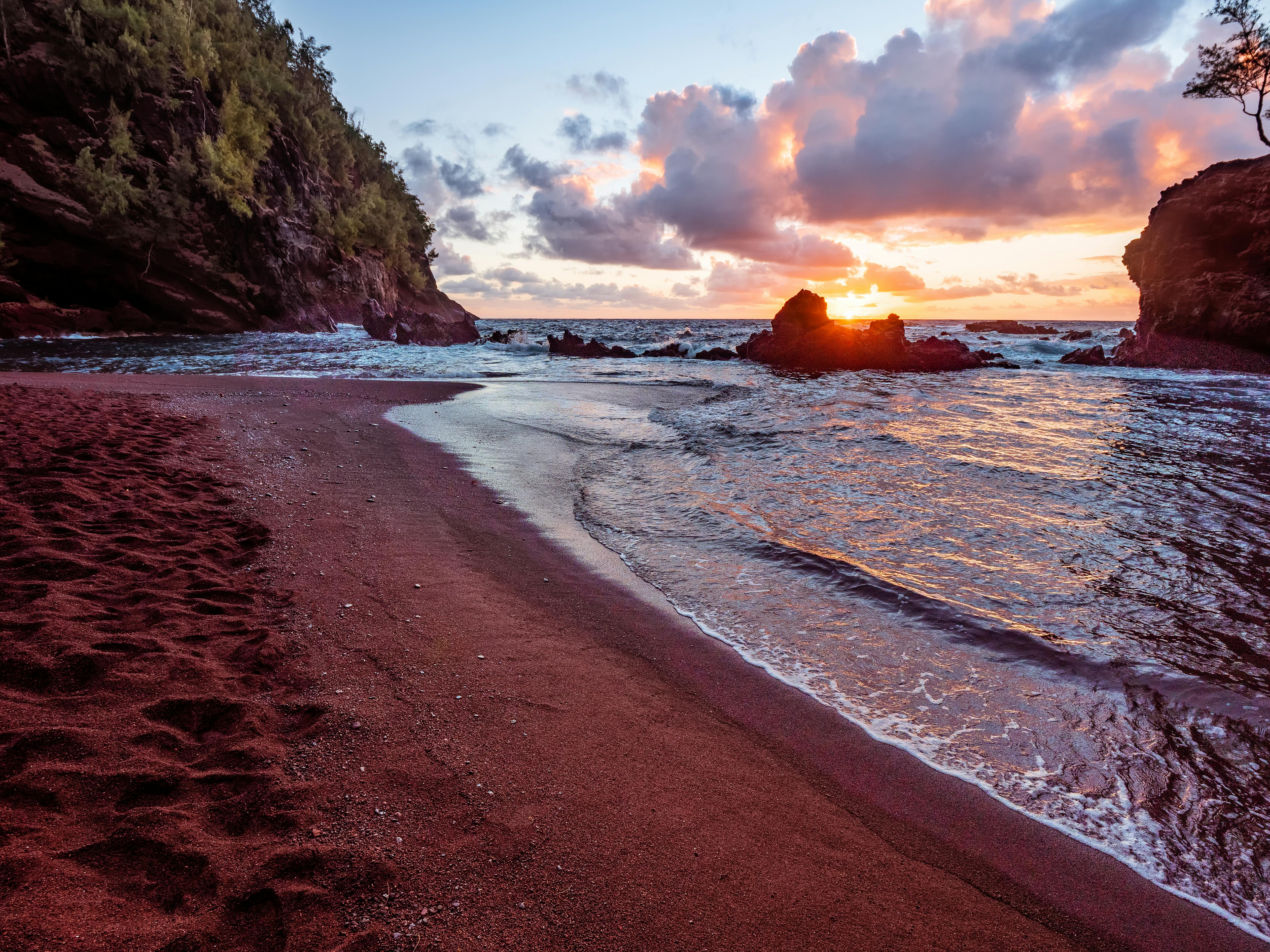
    Morning on Maui feels like a deep breath. Trade winds move through palms, the air smells of plumeria, and the Pacific catches the first light in ripples of silver and blue. This is an island that does easy luxury and raw nature in the same day. Maui travel can mean sunrise above the clouds, lazy hours on golden sand, roadside fruit stands, and a dinner where the ocean is close enough to hear.

    Maui is shaped by two volcanoes, West Maui and Haleakalā, with a green valley between them. The west and south coasts hold many of the most popular Maui beaches and resorts, while the north shore and Upcountry offer farms, surf towns, and quiet views. The famous Road to Hāna twists along sea cliffs and waterfalls on the east side, trading speed for scenery at every turn. It helps to plan your days by region so you spend more time exploring and less time in the car.

    For classic sand and calm water, start with Kāʻanapali Beach, a wide stretch lined with paths, shops, and easy snorkeling near Black Rock. Farther north, Napili Bay curves around clear, gentle water and small-scale charm. In South Maui, Wailea Beach and Polo Beach deliver soft sand with a...

    Climate & Weather

    Tropical climate with year-round warm temperatures and trade winds.

    Best Time to Visit

    April to October for warm, dry weather

    Top Highlights

    Haleakala volcano

    Road to Hana

    Whale watching

    Popular Activities

    Volcano hiking
    Scenic drives
    Whale watching
    Surfing

    Quick Info

    Timezone
    UTC-10
    💰Currency
    USD
    🗣️Language
    English, Hawaiian
    Temperature
    24°C

    Upcoming Events

    Maui Whale Watching Season (Peak) 2026
    Wildlife/Tour
    $80 - $159

    Maui Whale Watching Season (Peak) 2026

    Every winter, one of nature's most magnificent spectacles unfolds in the warm waters surrounding Maui. Between 10,000 and 12,000 North Pacific humpback whales, known in Hawaiian as koholā, journey over 3,000 miles from Alaska's feeding grounds to the shallow channels between Maui, Lanai, and Molokai to breed, give birth, and nurse their calves. For visitors planning a 2026 Maui escape, whale watching season represents the perfect blend of adventure, natural wonder, and Hawaiian cultural connection that defines the island experience.

    When Is Peak Whale Watching Season in Maui 2026?

    Official Season Dates

    The Hawaiian Islands Humpback Whale National Marine Sanctuary establishes the official whale season from December 15, 2025 through May 15, 2026. This federally protected period ensures the safety of humpback whales and their calves through regulations that restrict jet skis, parasailing, and other watercraft in sanctuary waters.​

    Early Arrivals: November-December 2025

    Humpback whales begin arriving in Hawaiian waters as early as late November 2025. These early scouts are typically male whales establishing breeding territories and competing for dominance. By December 1, tour operators start offering whale watching excursions with guaranteed sightings becoming common by mid-December.​

    Peak Viewing: January-March 2026

    This is when you want to be on Maui. The absolute peak of whale watching season runs from mid-January through mid-March 2026, with mid-February traditionally considered the height of activity. During these months, the Au'au Channel between Maui and Lanai becomes alive with spectacular displays:​

    • Breaching: Whales launching their 40-ton bodies completely out of the water
    • Tail slaps: Powerful displays where whales slap their flukes on the surface
    • Pec slaps: Side-lying whales slapping their long pectoral fins
    • Spy hopping: Whales rising vertically to observe their surroundings
    • Competition pods: Groups of male whales competing for female attention in synchronized swimming displays
    • Mother-calf bonding: Newborn calves learning to swim alongside protective mothers

    If you can only visit Maui once during whale season 2026, aim for late January through February for the most active whale behavior and highest concentration of sightings.​

    Farewell Months: April-May 2026

    By April 2026, most whales begin their long migration back to Alaskan feeding grounds. However, stragglers—often mothers with young calves who need extra time to build strength—continue to be spotted through early May. While activity decreases, April visitors still enjoy excellent whale watching opportunities with smaller crowds and lower prices.​

    Best Maui Locations for Whale Watching

    Ma'alaea Harbor: The Whale Watching Capital

    Located on Maui's central south shore, Ma'alaea Harbor sits at the entrance to the Au'au Channel, the shallow water corridor between Maui, Lanai, and Molokai where humpbacks concentrate. This strategic position offers:​

    • Shortest boat ride to prime whale watching waters (often 5-10 minutes)
    • Calm morning conditions in the protected bay
    • Largest selection of tour operators and vessel types
    • Easy access from Kihei, Wailea, and West Maui

    Lahaina: Historic Whaling Port Turned Whale Sanctuary

    The historic town of Lahaina, once the Pacific's whaling capital in the 1800s, now serves as a premier departure point for respectful whale watching. Tours from Lahaina Harbor offer:​

    • Direct access to Ka'anapali and north Maui waters
    • Dramatic mountain backdrops for photography
    • Combination tours with snorkeling at Lanai or Molokini Crater
    • Walkable harbor area with restaurants and shops

    Ka'anapali Beach: Beach Departure Tours

    Several operators offer beach-launch whale watching from Ka'anapali, where guests wade out to board rafts or catamarans. Benefits include:​

    • No harbor commute—launch directly into whale waters
    • Luxury catamaran options with open bars
    • Sunset whale watches combining golden hour and whale activity
    • Resort-convenient departure for West Maui guests

    Shore-Based Viewing

    Maui's geography allows spectacular whale watching without boarding a boat. Top shore-based locations include:​

    • Papawai Point (Mile marker 9 on Honoapiilani Highway)
    • McGregor Point (Mile marker 8-9 South of Lahaina)
    • Wailea Beach Walk (South Maui coastal path)
    • Kihei coastline (multiple beach parks with whale viewing)

    Bring binoculars, arrive in morning when waters are calmest, and watch for blows (whale spouts) on the horizon.

    Types of Whale Watching Tours and Pricing

    Budget-Friendly Options: Large Vessels ($50-$75)

    Perfect for families and budget-conscious travelers:

    • Quicksilver from Ma'alaea: Starting at $49.95 adults, $39.95 children ages 7-12, free for ages 0-6 (one per paying adult)​
    • Tours accommodate 100+ passengers
    • Stable platforms ideal for families with young children
    • Naturalist narration and educational programs
    • 1.5-2 hour duration​

    Mid-Range Adventures: Small Group Rafts ($100-$150 CAD)

    Ideal for active travelers seeking closer encounters:

    • Smaller vessels (15-25 passengers) get closer to whales
    • Lower profile allows better eye-level viewing
    • More maneuverable for following whale movements
    • Often includes hydrophone to hear whale songs
    • 1.5-2 hour tours​

    Premium Experiences: Luxury Catamarans ($150-$250 CAD)

    For comfort-focused whale watchers:

    • Spacious decks with shade and seating
    • Open bar with tropical drinks and snacks
    • Stable platform for non-swimmers
    • Often includes breakfast or lunch
    • Sunset whale watches available
    • 2-3 hour experiences​

    Private Charters: Ultimate Flexibility ($1,200+)

    • Customized departure times and routes
    • Ideal for proposals, celebrations, or photography
    • Extended time on water
    • Choice of vessel type and amenities

    Pro Tip: Book whale watching tours at least 2-3 days in advance during peak season (January-March 2026). Morning tours typically offer calmer conditions and better whale activity.

    What You'll Experience: Humpback Whale Behaviors

    Breaching: The Show-Stopping Spectacle

    A full breach occurs when a 40-ton humpback whale launches its entire body out of the water, often twisting before crashing back with an explosion of spray visible for miles. Scientists believe breaching serves multiple purposes: communication, parasite removal, play, and courtship display. During peak season, multiple breaches in a single tour are common.​

    Competition Pods: Nature's Underwater Marathon

    One of whale season's most thrilling sights is a competition pod—a group of male whales competing for proximity to a female. These synchronized swimming displays can involve 5-10 whales charging through the water at speeds up to 15 mph, with dramatic surface behaviors including head lunges, tail throws, and charging.​

    Mother and Calf Interactions

    Newborn humpback calves, weighing 1-2 tons at birth, stay close to their mothers throughout their Maui stay. Watching a calf learn to breach, often belly-flopping in adorable attempts, ranks among whale watching's most heartwarming moments. Mothers are extremely protective, often positioning themselves between boats and calves.​

    Singing: The Underwater Symphony

    Male humpback whales sing complex songs lasting 10-20 minutes, repeated for hours. While surface observers can't hear these songs, snorkelers and divers sometimes detect the eerie, haunting melodies underwater. Some tour boats deploy hydrophones allowing guests to hear whale songs during quiet moments.​

    Cultural Significance: Hawaiian Respect for Koholā

    In Native Hawaiian culture, humpback whales hold deep spiritual significance. Ancient Hawaiians believed koholā were aumakua (family guardians) and treated them with great reverence. The Hawaiian Islands Humpback Whale National Marine Sanctuary continues this tradition of protection, establishing strict regulations:​

    • Boats must maintain 100-yard distance from whales
    • No swimming with or approaching whales
    • No drone flights over whales
    • Quiet vessel operation in whale areas

    Responsible tour operators prioritize whale welfare, cutting engines when whales surface nearby and educating guests on conservation. Respecting these guidelines ensures future generations can experience Maui's whale migration.

    Planning Your Maui Whale Watching Trip 2026

    Best Months for Your Travel Style

    January 2026: Peak activity begins, smaller crowds than February, good hotel availability

    February 2026: Absolute peak whale numbers and behaviors, highest prices, book accommodations early

    March 2026: Still excellent whale watching, spring break crowds, slightly warmer weather

    December 2025: Early season, fewer whales but also fewer tourists, lower prices

    April 2026: Late season, mother-calf pairs linger, uncrowded tours, budget-friendly

    What to Bring

    • Reef-safe sunscreen (required by Hawaiian law)
    • Polarized sunglasses to reduce water glare
    • Light jacket or windbreaker for morning tours
    • Camera with zoom lens (200mm+ ideal)
    • Binoculars for shore-based viewing
    • Seasickness medication if prone to motion sickness
    • Water bottle (stay hydrated in tropical sun)

    Combining Whale Watching with Other Activities

    Maximize your Maui whale watching trip by pairing tours with:​

    • Molokini Crater snorkeling (morning snorkel, afternoon whale watch)
    • Road to Hana drive (winter rains enhance waterfalls)
    • Haleakalā sunrise (early summit, mid-morning whale tour)
    • Wailea beach time (watch whales from shore between tours)
    • Lahaina historic town (visit whaling museum, learn conservation history)

    Conservation and the Future of Maui Whale Watching

    The North Pacific humpback whale population, listed as endangered until 2016, has rebounded from fewer than 1,500 individuals in the 1960s to over 21,000 today. This remarkable recovery stems from international whaling bans, marine sanctuary protections, and responsible eco-tourism. Your whale watching dollars directly support:

    • Marine research and monitoring programs
    • Education initiatives in Hawaiian schools
    • Sanctuary patrol and enforcement
    • Habitat restoration projects

    By choosing certified eco-tour operators and following viewing guidelines, you become part of the conservation success story while experiencing one of Earth's most awe-inspiring natural phenomena.

    Call to Action: Book Your Maui Whale Watching Adventure

    The 2026 whale watching season in Maui offers a once-in-a-lifetime opportunity to witness nature's giants in their natural habitat. Whether you're planning a romantic sunset sail, a family adventure on a large catamaran, or an intimate small-group raft expedition, Maui's waters will be alive with humpback activity from January through March.

    Start planning now:

    1. Choose your travel dates (aim for January 26 - March 15 for peak activity)
    2. Book accommodations early (Kihei, Wailea, or Lahaina for easy harbor access)
    3. Reserve whale watching tours 1-2 weeks before arrival
    4. Consider multiple tours—morning and afternoon offer different behaviors
    5. Add shore-based viewing at sunrise or sunset for bonus sightings

    The koholā are coming. Will you be there to welcome them?

    Verified Information at a Glance

    Event Category: Natural wildlife migration and seasonal viewing opportunity

    Official Season: December 15, 2025 - May 15, 2026​

    Peak Viewing Period: Mid-January through mid-March 2026 (February is absolute peak)​

    Early Activity: Late November 2025 (first arrivals)​

    Late Activity: April-early May 2026 (stragglers and mother-calf pairs)​

    Primary Locations:

    • Ma'alaea Harbor (central departure point)​
    • Lahaina Harbor (west Maui departure)​
    • Ka'anapali Beach (beach launch tours)​
    • Au'au Channel between Maui, Lanai, and Molokai (primary whale concentration)​

    Tour Pricing (2026 estimates):

    • Budget large vessel: $50-$75 USD ($49.95 adult at Quicksilver)​
    • Small group raft: $100-$150 CAD​
    • Luxury catamaran: $150-$250 CAD​
    • Private charter: $1,200+ USD​

    Whale Behaviors: Breaching, tail slaps, pec slaps, spy hopping, competition pods, mother-calf bonding​

    Viewing Regulations: 100-yard minimum distance, no swimming with whales, no drone flights​

    Conservation Status: North Pacific humpback population rebounded to 21,000+ (removed from endangered list 2016)

    Cultural Significance: Koholā (Hawaiian) considered sacred aumakua (family guardians) in Native Hawaiian tradition​

    All dates, locations, behaviors, and pricing referenced above are confirmed through official Maui tourism resources, marine sanctuary guidelines, and established tour operator information for the 2025-2026 season.​


    Waters surrounding Maui, Maui
    Jan 1, 2026 - May 31, 2026
    East Maui Taro Festival (30th) 2026
    Food festival
    Free

    East Maui Taro Festival (30th) 2026

    East Maui Taro Festival 2026 (30th): A Hāna Tradition Rooted in Kalo and Community

    East Maui Taro Festival (30th) 2026 is confirmed for Saturday, April 18, 2026, held at the Hāna Ballpark in East Maui, celebrating kalo (taro) through Hawaiian culture, food, music, hula, and community gathering. Admission is described as open to the public with no charge, making it one of Maui’s most meaningful and accessible cultural festivals for visitors who want to experience the island beyond the resorts.

    If you’ve spent any time in Hāna, you already know the difference. The pace is slower, the conversations last longer, and the landscape feels more intimate, more lived-in, more sacred. The East Maui Taro Festival is a celebration that matches that spirit, bringing locals and visitors together to honor kalo, share food, and keep cultural knowledge moving from one generation to the next.

    This is not a “watch from the sidelines” kind of event. It’s designed as a community gathering where you can learn by doing, taste kalo in many forms, and listen to Hawaiian music and hula in a setting that feels like old Hawaiʻi. For an islands audience, it’s the kind of festival that makes travel feel connected rather than consumptive.


    Confirmed 2026 Date, Time Window, and Venue (Hāna Ballpark)

    A local Hāna guide confirms the festival returns on Saturday, April 18, 2026, and states it is held at the Hāna Ballpark. The festival’s own social announcement for the 30th annual edition also lists Sat. April 18th, 2026, at Hāna Ball Park, with a typical daytime window of 9am–5pm.

    For trip planning, April is an excellent time to be on Maui. The weather is usually comfortable for a day outdoors, and the road to Hāna is lush, green, and full of waterfalls. A festival day at Hāna Ballpark gives you a clear anchor to plan around, whether you’re doing a full weekend in East Maui or a longer island itinerary.


    What the Festival Celebrates: Why Kalo Matters in Hawaiʻi

    Kalo, or taro, is more than a crop in Hawaiian culture. The Hāna guide explains that Hawaiian tradition views kalo as the older sibling of mankind, and that the festival exists in part to keep that relationship visible through gathering, storytelling, and shared food. That cultural framing is what makes this festival stand out among Maui events. It’s about identity, continuity, and honoring the land that feeds the community.

    If you’re visiting Maui and looking for experiences that feel truly rooted in place, this is the kind of day that changes how you understand the island. You don’t just take photos of greenery and cliffs; you learn why food, farming, and family are central to East Maui’s resilience and pride.


    What to Expect at the East Maui Taro Festival 2026

    The festival experience is designed to be easy to enjoy, even if you arrive without a plan. The Hāna guide lists core attractions visitors can expect in 2026, including:

    • Live music and hula throughout the day
    • Cultural demonstrations
    • Food stands featuring fresh poi and taro dishes
    • Local vendors with crafts and plants
    • Spaces for families and kūpuna to connect


    Food Highlights: Poi, Taro Dishes, and Local Flavor

    Kalo shows up in many forms, from traditional poi to creative festival plates that let you taste the ingredient in sweet and savory ways. The Hāna guide specifically mentions food stands serving fresh poi and “creative taro dishes,” which is exactly what makes the day so fun for curious eaters. If you’ve only tried taro as a smoothie add-in or a chip, this festival offers a deeper, more authentic sampling of what kalo means to the island.


    Cultural Demonstrations: Learning by Watching (and Sometimes Joining)

    The Hāna guide lists cultural demonstrations such as poi pounding, lauhala weaving, and kapa making. These elements are the heart of the festival because they turn the day into an active classroom. You can watch skilled practitioners, ask questions, and understand how cultural knowledge is carried forward.


    Music, Hula, and That “Talk Story” Feeling

    Live music and hula throughout the day create a warm rhythm that makes the festival feel like a living gathering, not a staged show. The Hāna guide also encourages visitors to “talk story” with people, ask about taro patches, and take the weekend slowly, which is good advice for anyone traveling to Hāna.


    Local Relevance: Making the Most of Hāna and East Maui During Festival Weekend

    The East Maui Taro Festival is a great reason to spend real time in East Maui, not just drive through. Hāna is not “a quick stop” destination. It rewards travelers who stay overnight, wake up to ocean sunrises, and experience the town’s quiet hours when day-trippers have left.

    If you’re building a festival weekend itinerary, consider:

    • Arriving in Hāna the day before so you can attend the festival rested and early.
    • Visiting Hāna Bay viewpoints and taking short walks rather than over-scheduling.
    • Supporting local vendors and buying crafts or plants that help keep the community economy strong.

    Most importantly, treat the road and the town with respect. Hāna is a real community, not only a scenic route endpoint. Drive patiently, park thoughtfully, and keep noise low when you’re in residential areas.


    Practical Travel Tips for Visitors (Road to Hāna, Parking, and Comfort)

    Drive Planning

    The Road to Hāna is part of the experience, but it can take longer than visitors expect. Plan for stops, slow driving, and occasional traffic pinch points. If you’re attending the festival, leave earlier than you think you need to so the day feels relaxed.

    What to Bring

    • Sun protection, water, and a light rain layer, because East Maui weather can change.
    • Cash or card for food and vendor purchases, since admission may be free but festival eating and shopping are part of the fun.
    • A reusable bag for vendor finds, especially if you buy plants or packaged foods.

    Family-Friendly Vibe

    The festival is described as open to the public with “no charge” and designed for families, which makes it a strong pick for multi-generational travel. If you’re traveling with kids, the mix of food, music, and hands-on demonstrations usually keeps the day engaging without feeling overwhelming.


    Tickets and Pricing: What’s Confirmed for 2026

    For the 30th East Maui Taro Festival in 2026, the Hāna guide states the event is open to the public with no charge, supporting the idea that general festival admission is free. Food and vendor purchases are separate, so your “price” is mostly what you choose to eat and bring home.

    Because specific booth prices and any optional add-on activities can vary year to year, plan a flexible food budget and check the festival’s official updates closer to April for any program additions.


    Verified Information at a Glance

    Item: Confirmed details

    Event Name: East Maui Taro Festival (30th Annual)

    Event Category: Hawaiian cultural festival (kalo/taro), food, music, hula, cultural demonstrations, local vendors

    Confirmed 2026 Date: Saturday, April 18, 2026

    Confirmed Venue: Hāna Ballpark (Hāna Ball Park), East Maui, Maui, Hawaiʻi

    Confirmed Typical Time Window: 9:00 am–5:00 pm (as posted for the 30th annual announcement)

    Admission/Pricing: Described as open to the public with no charge (general admission).


    • If you want to feel Maui in a way that goes deeper than beaches and viewpoints, make your way to Hāna on Saturday, April 18, 2026, arrive hungry and curious, and let the 30th East Maui Taro Festival introduce you to kalo, culture, and community in the most welcoming corner of the island.
    Hāna, Maui (East Maui), Maui
    Apr 18, 2026 - Apr 18, 2026
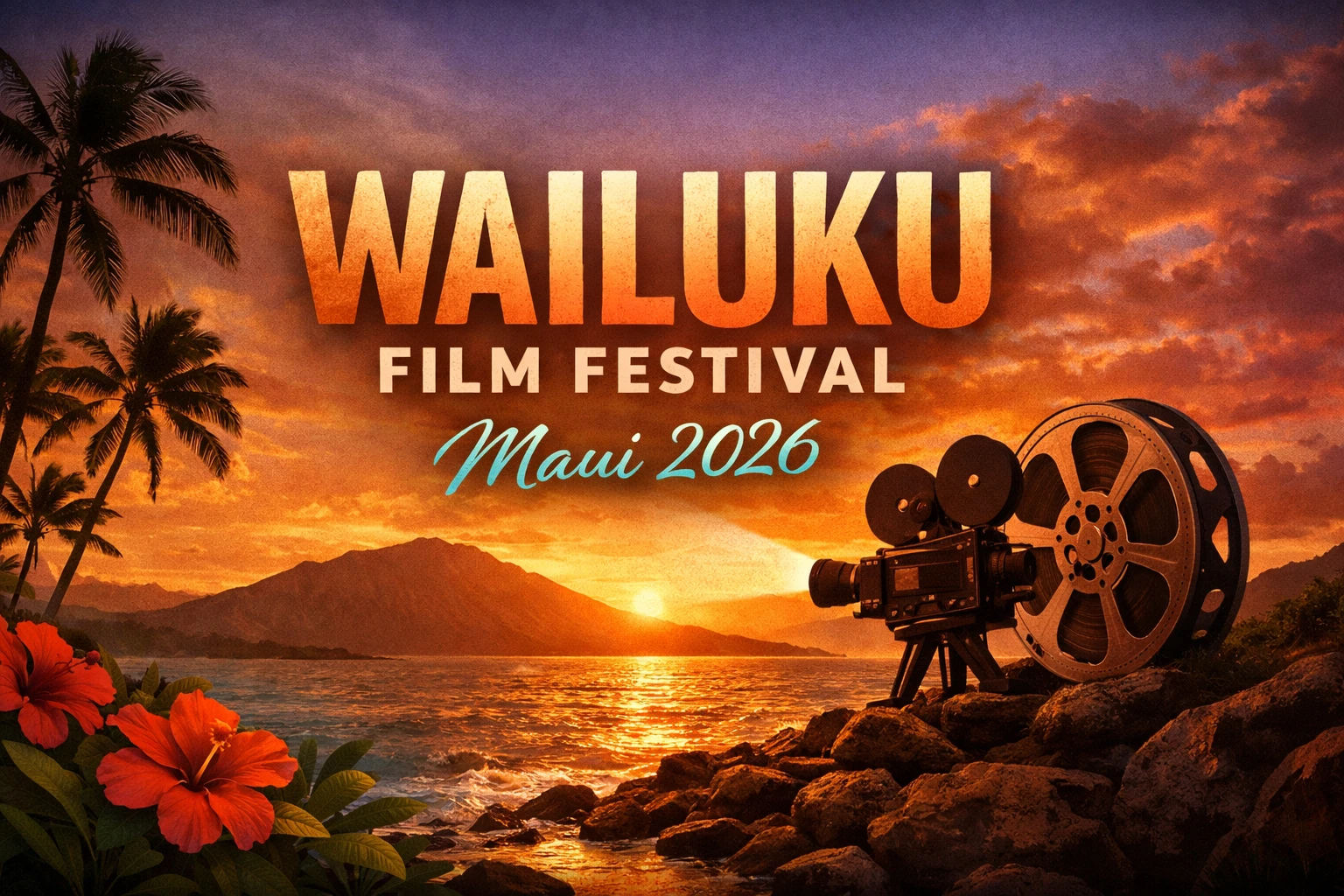
    Wailuku Film Festival 2026
    Film / Arts Festival
    TBA

    Wailuku Film Festival 2026

    Event Overview: Wailuku Film Festival

    When a film festival closes after 25 years, it leaves behind something that no press release and no new event can instantly replace: the specific shape of its absence. The Maui Film Festival built its quarter-century identity around the Celestial Cinema at Wailea, around the luminaries it honored under the Hawaiian stars, and around a model of film celebration that the wider festival world recognized as genuinely one of a kind. When it filed for bankruptcy in May 2025 and confirmed that its 25-year chapter was over, there was a real question about what would follow.

    The answer is the Wailuku Film Festival. And it is not trying to be what the Maui Film Festival was. It is trying to be something entirely different: a community-rooted, values-driven, education-focused celebration of film as a form of storytelling that is rooted in place, perspective, and purpose, held not in the resort corridors of Wailea but in the historic heart of Wailuku, Maui's most culturally layered town, across four days from June 18 to 21 at one of the most architecturally significant theaters in the Hawaiian Islands.

    Its inaugural edition will screen over 80 films across four categories that say more about what Maui's film culture actually needs than any marketing brief could. This is a festival built from the inside out, by the people who run the island's film office, for the storytellers who are already here and the ones who need a reason to come home.

    The Vision: Why This Festival Exists and What It Is Built to Do

    Festival Director Brian Kohne, who serves simultaneously as the Maui Film Commissioner at the Maui Film Office, stated the festival's founding purpose with the kind of directness that usually only comes from people who have been waiting a long time to say something clearly:

    "Wailuku Film Festival exists to cultivate a nurturing, values-driven space where filmmakers are empowered to take creative risks, build meaningful relationships, and be celebrated. We're creating a place where filmmakers can find a home, or return home, to share stories that matter so we can all grow forward together."

    That word home does significant work in that sentence. The Hawaiʻi film category is designed explicitly to bring Hawaiʻi-connected filmmakers who are working elsewhere in the world back to Maui to screen their work. As Kohne explained: "We're seeking our people who are out in the world working and bring them home, give them a reason to bring their art home, to inspire us, to reconnect with us." That is a different founding impulse from nearly every other film festival, whose first instinct is to attract the largest possible outside profile. The Wailuku Film Festival's first instinct is to strengthen a community's relationship with its own creative identity.

    Vince Keala Lucero, filmmaker and founding member of the Hawai'i Film Alliance, added: "The Wailuku Film Festival is an inspiring opportunity to strengthen Maui's creative ecosystem and elevate Hawai'i's stories on the world stage. Mahalo to everyone involved. Holoimua!"

    The festival is brought to the community by the County of Maui and the Maui Film Office, with the Mayor's office formally endorsing it as "a vital investment in the future of Maui's creative economy." That institutional backing matters: it signals that the Wailuku Film Festival is not a temporary solution to the gap left by its predecessor but a long-term commitment by local government to building a sustainable film culture on the island.

    The Four Program Categories: What Films the Festival Celebrates

    The Wailuku Film Festival accepts all film formats and genres, including narrative, documentary, independent, experimental, animated, and episodic works, across both short and feature-length categories, from filmmakers anywhere in the world. The single requirement is alignment with at least one of four focus areas:

    Hawaiʻi

    The broadest and most inclusive of the four categories, the Hawaiʻi category encompasses films made in Hawai'i, films made about Hawai'i, and films made by filmmakers from Hawai'i regardless of where they were produced. The deliberate breadth of this definition is intentional: it creates space for everything from a narrative feature set on Maui's North Shore to a documentary made by a Maui-raised filmmaker about an entirely different part of the world, as long as the human connection to these islands is present. It is a category defined by identity rather than geography, which is a meaningfully different way of thinking about what makes a film "from" a place.

    Indigenous Voices

    The Indigenous Voices category is one of the most distinctive features of the Wailuku Film Festival's programming philosophy. It is open to Indigenous filmmakers from around the world, with Kohne explicitly naming New Zealand and the broader Pacific as regions whose mainstream Indigenous film culture could inspire and connect with Hawaiian filmmakers. As he described the vision: "if we can bring in some top indigenous filmmakers from New Zealand and other regions that have gone mainstream, we can inspire our makers."

    That ambition to connect the Native Hawaiian filmmaking community with the broader global Indigenous storytelling movement, which has produced internationally significant work from Aotearoa New Zealand, Canada, Australia, and across the Americas, is among the most thoughtful curatorial decisions the festival has made. It positions Wailuku as a meeting point in the Pacific for a global conversation about Indigenous representation in cinema that is more relevant and more urgent than ever.

    Watersports

    The Watersports category is the most distinctively Maui-specific of the four, and it is an honest acknowledgment of something that the island's film industry has always known but that mainstream film festival programming rarely reflects: the ocean defines life on Maui in ways that no other single natural feature does. Ho'okipa Beach Park on the North Shore is the windsurfing and kitesurfing capital of the world. The waves at Peahi (Jaws) are among the most challenging and most filmed big-wave breaks on the planet. Outrigger canoe paddling, surfing, freediving, and the broader ocean tradition are not peripheral to Maui culture: they are its most visible and most exported expressions. A film festival that includes a dedicated Watersports category is saying something true about the island it comes from.

    Student Shorts

    The Student category is perhaps the most direct expression of the festival's founding purpose. Open to filmmakers currently enrolled in accredited high schools, colleges, and universities, it is divided into two subcategories: High School (maximum 10 minutes) and Higher Education (maximum 20 minutes). The submission guidelines emphasize creative risk-taking, originality, and fresh perspectives across all formats, from documentary and narrative to experimental and hybrid forms.

    Kohne's motivation for the student focus is straightforward and worth hearing directly: "Students who have not attended a festival don't know what they are." The festival's goal is not simply to screen student work but to introduce a generation of young Maui filmmakers to the professional infrastructure, the community, and the shared purpose that film festivals exist to create. This is a festival that explicitly wants to be "a student's first film festival," and that founding intention carries the possibility of generational impact that no celebrity-honoree program could produce.

    The Program: Four Days of Screenings, Panels, and Community

    Over the four days from June 18 to 21, the Wailuku Film Festival program will move through a full and varied calendar of activities that balance the films themselves with the relational and educational infrastructure that gives a festival its lasting value.

    The confirmed program elements include:

    • Screenings: More than 80 films across the four categories, spread across the festival venues throughout the four days. The scale of 80 films in four days means a rich and varied program that covers narrative and documentary, short and feature, amateur and professional, across the full breadth of the category definitions.
    • Talk-Story Panels: The Hawaiian concept of talk-story, the informal, meandering, relationship-building conversation that has been a social institution on the islands long before it was formalized into anything, is named explicitly in the festival's program description. That naming is intentional: the panels at the Wailuku Film Festival are not simply industry Q&A sessions. They are designed to have the warmth and genuine exchange of the talk-story tradition.
    • Workshops: Hands-on filmmaking and craft workshops for attendees, with particular orientation toward the student and emerging filmmaker community that is one of the festival's primary audiences.
    • Filmmaker Gatherings: Social events designed to create the informal connections between filmmakers that are, for many festival participants, the most professionally valuable part of any festival experience.
    • Community Events: Events designed to bring the broader Wailuku and Maui community into contact with the festival, reflecting the founding philosophy that this is a festival for the island rather than simply on it.

    The ʻĪao Theater: A Stage That Has Hosted Legends

    The ʻĪao Theater at 68 North Market Street, Wailuku is one of the most historically significant buildings in the Hawaiian Islands and an entirely appropriate venue for a film festival that is explicitly about culture, identity, and the relationship between stories and places.

    Opened in 1928 in the Spanish Mission architectural style that was characteristic of the era's theater construction across California and Hawaii, the theater originally served as both a movie house and a vaudeville performance space. The entertainers who appeared on its stage in the World War II era read like a USO hall of fame: Bob Hope, Frank Sinatra, Betty Hutton, and Mickey Rooney all performed there for troops during the war years, when Maui served as a significant military staging and training ground.

    The theater fell into disrepair in the 1980s and faced possible demolition before community advocacy secured its listing on the State of Hawaii's Register of Historic Places in 1994 and the National Register of Historic Places in 1995, giving it the preservation protection that its architecture and history warranted. It subsequently became the home of Maui OnStage, the island's community theater organization, which has been using it for live performances ever since.

    As a film festival venue, the ʻĪao Theater provides something that no modern multiplex or resort conference center could offer: the specific, irreplaceable atmosphere of a historic movie palace whose walls have absorbed nearly a century of performances, where the architecture itself carries the memory of everyone who sat in those seats before you.

    The festival also uses the Naylor building and the MACC's Castle Theater (the Maui Arts and Cultural Center in Kahului), providing additional screening capacity and event space across the festival period.

    Wailuku: The Town That Was Always More Than a Gateway

    Wailuku is not a destination that most Maui tourism itineraries emphasize, and that is precisely its advantage as a festival location. It is Maui's county seat, the island's civic and administrative center, and a town with a historical depth and a concentration of genuinely local businesses, restaurants, and cultural institutions that the resort zones of Kīhei and Wailea cannot claim.

    North Market Street, where the ʻĪao Theater stands, is the historic commercial spine of Wailuku's old town, a walkable streetscape of early 20th-century buildings that houses antique stores, local restaurants, coffee shops, and the kind of independent retail presence that distinguishes a lived-in town from a tourist-facing resort strip. The Maui Film Commissioner's decision to hold the festival specifically here, in a venue district where "theaters are within walking distance of restaurants and businesses," reflects a deliberate philosophy of keeping the festival embedded in daily Wailuku life rather than sequestered in a dedicated venue complex.

    The approach to 'Iao Valley State Monument is minutes from the theater. The valley's narrow walls of green volcanic rock, rising steeply above the 'Iao Stream, and the iconic 'Iao Needle, a 1,200-foot basalt pinnacle rising from the valley floor, represent one of the most visually dramatic and culturally significant landscapes in all of Hawai'i. For festival visitors arriving between screenings and panels, the valley is a 10-minute drive from the theater and a completely different kind of encounter with the island that the festival celebrates.

    Getting to Wailuku and Practical Visitor Information

    Getting to Maui

    Kahului Airport (OGG) is located approximately 5 minutes from Wailuku by car, making the festival's central Maui location one of the most accessible airport-to-venue situations of any island film festival in the Pacific. Direct flights connect Kahului to Honolulu (35 minutes), Los Angeles, San Francisco, Seattle, Phoenix, Portland, and other West Coast US cities. Inter-island connections from O'ahu, Kaua'i, and the Big Island are available multiple times daily.

    Getting around Wailuku

    The festival venues on North Market Street are walkable from each other and from the parking areas around the historic town center. Rental cars from Kahului Airport provide access to the broader island, and the 5-minute drive between the airport and Wailuku makes logistics straightforward for festival-goers flying in specifically for the event.

    Where to stay

    The broader Central Maui area around Wailuku and Kahului offers a range of accommodation options from budget to mid-range, providing a more locally flavored and less resort-oriented base than the Kāʻanapali or Wailea hotel zones. For visitors who want beach access alongside the festival, Kīhei on the South Shore is approximately 20 to 25 minutes from Wailuku and offers the full range of accommodation at more accessible prices than the Wailea luxury zone.

    Tickets and Submissions

    Current and updated ticket and submission information is available through the official festival website at wailukufilm.com and through the festival's social media at @wailukufilmfestival (Instagram) and @wailukufilm (Facebook).

    June Weather on Maui

    June brings warm, dry conditions across Maui's central and southern areas, with daytime temperatures around 28 to 30 degrees Celsius in the lower elevations. Wailuku, on the island's central isthmus, benefits from consistent northeast trade winds that moderate the heat into conditions ideal for moving between outdoor festival events and indoor screenings. Evenings in Wailuku settle to a comfortable 22 to 24 degrees Celsius.

    Verified Information at a Glance

    Item: Confirmed details

    Event name: Wailuku Film Festival (inaugural edition)

    Event category: Community film festival; independent, documentary, narrative, experimental, animated, episodic; Hawaiian, Indigenous, Watersports, Student focus

    Dates: June 18 to 21 (four days)

    Primary venues: ʻĪao Theater, 68 North Market Street, Wailuku, Maui (National Register of Historic Places, opened 1928); MAPA (Maui Academy of Performing Arts) building, Wailuku; Naylor building, Wailuku; MACC Castle Theater, Kahului

    Films: 80+ films across four categories

    Categories: Hawaiʻi, Indigenous Voices, Watersports, Student Shorts (High School max 10 min; Higher Education max 20 min)

    Program elements: Screenings, talk-story panels, hands-on workshops, filmmaker gatherings, community events

    Festival Director: Brian Kohne (Maui Film Commissioner, Maui Film Office)

    Organizer: County of Maui and Maui Film Office

    Philosophy: "Film as an art form rooted in place, perspective, and purpose"

    Submissions: Open to filmmakers worldwide; must align with at least one of four categories; all formats and genres accepted; via wailukufilm.com

    Ticket pricing: To be confirmed; check wailukufilm.com for updates

    Nearest airport: Kahului Airport (OGG), approximately 5 minutes from Wailuku by car

    Iconic nearby attraction: ʻĪao Valley State Monument and ʻĪao Needle, 10 minutes from festival venues

    June climate: 28 to 30°C daytime; 22 to 24°C evenings; dry; trade wind influence; ideal for multi-venue festival movement

    Social media: @wailukufilmfestival (Instagram), @wailukufilm (Facebook)

    Official website: wailukufilm.com

    The Wailuku Film Festival is the clearest statement Maui has made in years about what it believes film is for: not a red carpet for celebrities, but a shared space where stories that matter get told, seen, and celebrated in the community that shaped them. Eighty films in four days at a theater where Frank Sinatra performed for troops and the ʻĪao Valley rises green at the end of the street. Talk-story panels, workshops, filmmaker gatherings, and four category windows wide enough to welcome voices from Native Hawai'i, the global Indigenous film community, the ocean culture of the Pacific, and the next generation of student storytellers just finding their eye. Visit wailukufilm.com, check the screening schedule as it is announced, submit your film if you have one that belongs, and come to Wailuku for June 18 to 21 ready for what happens when a community decides to tell its own stories on its own terms.

    Wailea Golf Course / Various, South Maui, Maui
    Jun 18, 2026 - Jun 21, 2026
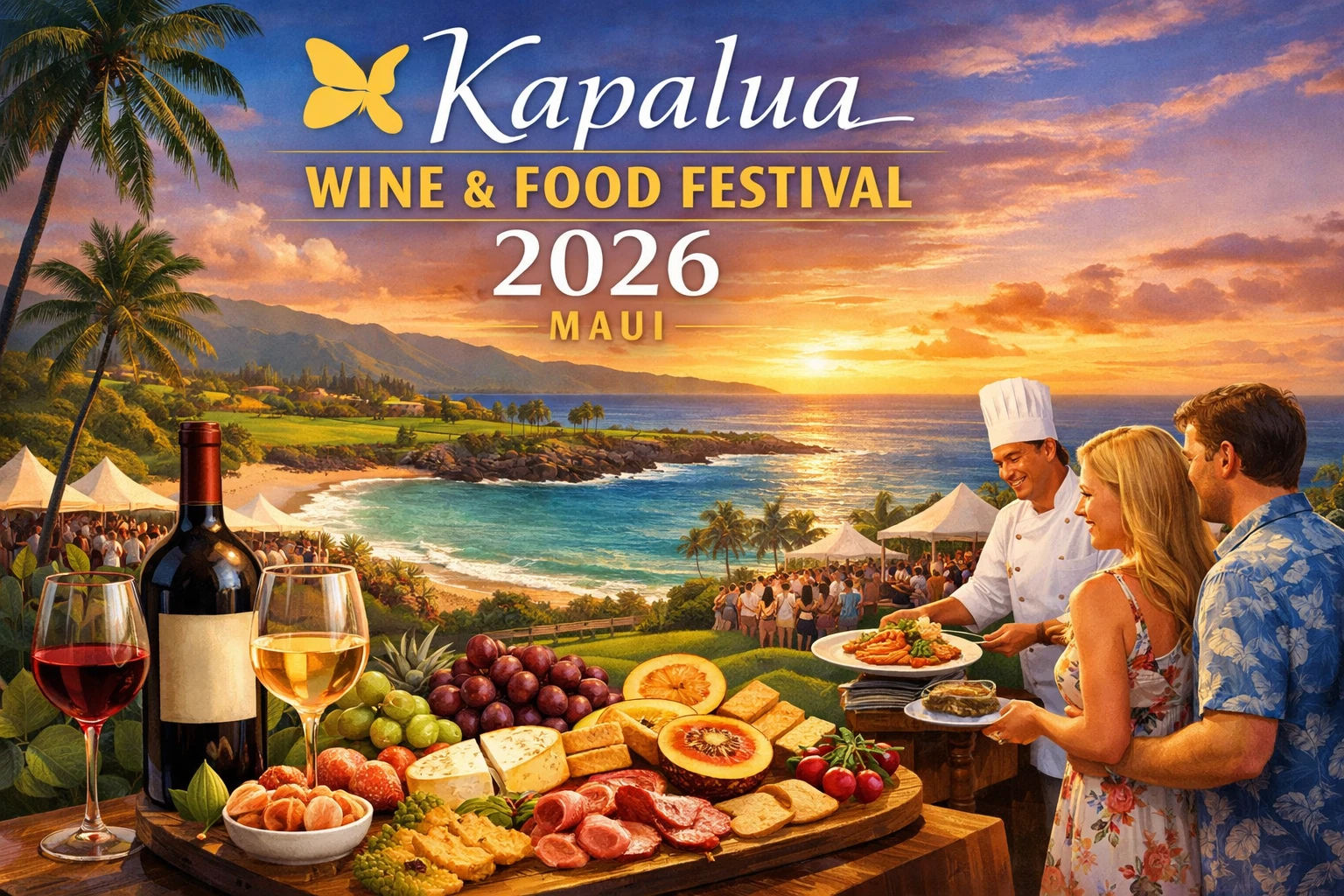
    Kapalua Wine & Food Festival 2026
    Food & wine festival
    $52

    Kapalua Wine & Food Festival 2026

    Kapalua Wine & Food Festival 2026: Experience the Best of Maui

    Kapalua Wine & Food Festival 2026 returns to Maui from June 25 to 28, 2026, bringing four days of tastings, seminars, and chef-led experiences to the stunning Kapalua Resort on the island’s northwestern coast. It’s a 21+ festival that blends culinary craftsmanship with the spirit of aloha, and it remains one of Maui’s most anticipated island weekends for travelers who plan their trip around food, wine, and ocean-view sunsets.​


    Kapalua Wine & Food Festival Maui 2026: The Island Weekend Food Lovers Plan Around

    Maui has no shortage of memorable experiences, but the Kapalua Wine & Food Festival feels different because it turns the island itself into part of the pairing. Between ocean breezes, golden-hour light, and the relaxed elegance of Kapalua, the festival creates a setting where wine education and fine dining never feel formal or stiff.​

    The official festival site positions the 2026 edition as the 45th annual Kapalua Wine & Food Festival, returning to Kapalua Resort and showcasing world-class vintners, celebrity chefs, and local purveyors. For visitors, that mix matters because it lets you taste Maui through multiple lenses: refined technique from visiting chefs, regional ingredients from local producers, and a community vibe rooted in the island’s hospitality culture.​


    Quick Correction: “Maui 2206” vs. Maui 2026

    The request mentions “Maui 2206,” but the confirmed festival dates published by the event are for June 25 to 28, 2026. The rest of this guide is written for the 2026 Kapalua Wine & Food Festival on Maui.


    When and Where: Kapalua Wine & Food Festival 2026 Dates and Setting

    The festival’s official site clearly lists the 2026 dates as June 25 to 28, 2026, and describes the event as returning to “the breathtaking Kapalua Resort” on Maui. Kapalua sits above a rugged stretch of coastline known for dramatic views and resort-level comforts, with easy access to spots like Kapalua Bay and the coastal trail that connects scenic lookouts along the shoreline. (Local exploring is part of the fun between tastings.)

    This is also the time of year when Maui’s days are long and the evenings are ideal for outdoor dining, making the festival schedule feel naturally aligned with island living. If you’re building a trip around the weekend, it’s worth planning at least one extra day before or after to enjoy the ocean and the Upcountry side of Maui without rushing between events.


    The Festival’s Roots and What Makes It Unique on Maui

    According to the festival’s official FAQ, the Kapalua Wine & Food Festival was initiated in the 1980s by the Kapalua Wine Society, and it has evolved into one of the nation’s oldest and most prestigious educational food-and-wine events of its kind. That “education” piece is key: beyond indulgence, the weekend emphasizes learning through tastings, seminars, and interactions with winemakers and chefs.

    The same FAQ explains that the event has supported charitable efforts, including expanded donations in the aftermath of Maui wildfires, with support directed to multiple grassroots initiatives and community-focused organizations. For travelers, this context adds another layer to the weekend because it connects a luxury resort setting with ongoing community recovery and local hospitality support.


    What to Expect in 2026: Chefs, Vintners, and the Maui Flavor

    The official 2026 save-the-date announcement highlights celebrity chefs Maneet Chauhan, Antonia Lofaso and the Voltaggio Brothers, alongside Maui restaurants and local purveyors. That lineup suggests a weekend designed for both serious food fans and curious travelers who want an island vacation anchored by one standout event.

    In addition to chef appearances, the festival promises “interactive tasting seminars” and “intimate winemaker dinners,” plus opportunities to discover “rare and exceptional wines.” If you enjoy experiences where you can ask questions, taste side-by-side comparisons, and leave with a better understanding of what’s in your glass, Kapalua’s seminar-driven format is a natural fit.​


    Signature Experiences: Tasting, Learning, and Ocean-View Social Nights

    While the detailed 2026 schedule is still described as an update to come, the festival’s own description and FAQs make the typical experience menu clear. Think of the weekend as a curated set of smaller events rather than one single fairground-style tasting.


    Interactive Wine Seminars and Demonstrations

    The festival explicitly describes “interactive wine tasting seminars” and “cooking demonstrations,” which are ideal if you want more than a quick sip and a photo. Seminars are where you can learn why certain varietals work with Pacific seafood, how oak influences texture, or how to think about acidity and spice when pairing with island ingredients.


    Intimate Winemaker Dinners

    Winemaker dinners are highlighted as part of the weekend’s experiences, and they typically attract travelers who want a slower pace with structured courses, storytelling, and deeper pours. On Maui, these dinners also double as an island night out: dressed-up resort wear, warm air, and the feeling that you’re doing something special without leaving the aloha spirit behind.


    The Social Side: Mixing and Mingling

    The FAQ notes that guests can mix and mingle with winemakers, chefs, and fellow enthusiasts while sampling premium offerings. If you’re traveling solo or as a couple, this is one of the best Maui events for naturally meeting people, because everyone already has an easy shared topic: what they just tasted and what they’re excited to try next.


    Practical Details Visitors Should Know (21+ Rules, Attire, Airports)

    The festival’s FAQ is unusually clear about logistics, which is helpful for planning a smooth island weekend.


    Age Policy: Adults Only

    All festival events are 21 and older, and the policy explicitly states no children or infants, even in strollers or carriers. This is important for Maui family travelers because it affects babysitting plans and whether the festival fits your trip style.


    What to Wear

    The official guidance recommends resort casual attire for seminars and demonstrations, and “elevated resort wear” for the Grand Tasting Gala, with examples like sundresses, aloha shirts, linen trousers, and dressy sandals. On an island, this matters because you want to be comfortable in warm weather while still matching the tone of the venues.


    Getting There: Airports Closest to Kapalua

    The FAQ explains that Kapalua Airport (JHM) is the closest for limited inter-island flights, and that most visitors arrive via Kahului Airport (OGG), about 30 miles from the resort. For travelers planning a longer Hawaii itinerary, that makes Kapalua an easy add-on after Honolulu or the Big Island, especially if Maui is already on the route.


    Ticket Pricing: What’s Confirmed Right Now

    The official 2026 save-the-date page confirms the dates and positioning of the event, but it does not publish a full 2026 ticket price list yet, noting to “check back for updates on the schedule.” Because event pricing can vary by package (festival passes, dinners, seminars, gala tickets), the safest approach is to treat pricing as “to be announced” until the official ticketing page posts 2026 rates.

    What can be confirmed from the festival FAQ is that tickets are scanned at the entrance to each event and must be accessible via printed barcode or mobile device, which is useful to know when planning your festival day flow.


    Local Maui Relevance: Making Kapalua Feel Like More Than a Resort Weekend

    Kapalua’s northwestern location makes it easy to combine festival events with some of Maui’s most scenic coastal time. Between sessions, consider a slow walk near Kapalua Bay, a sunset viewpoint stop, or a relaxed morning exploring nearby beaches before the day’s tastings begin. This is also a great base for adding classic Maui contrasts to your trip, like a day trip to Lahaina-side areas when appropriate, or a drive toward central Maui for a change of pace.

    The festival itself also highlights Maui’s local purveyors and beloved restaurants, which is one of the best ways to “taste the island” beyond typical visitor itineraries. If you like bringing home edible souvenirs, festival weekends are often the time to discover small-batch products and local producers you might otherwise miss on a quick beach vacation.


    Verified Information at a Glance

    • Event Name: 45th Kapalua Wine & Food Festival
    • Event Category: Food & wine festival (epicurean event with tastings, seminars, dinners)
    • Confirmed 2026 Dates: June 25 to June 28, 2026
    • Confirmed Destination: Kapalua Resort, Maui, Hawaiʻi
    • Notable 2026 Featured Chefs: Maneet Chauhan, Antonia Lofaso, and the Voltaggio Brothers
    • Confirmed Age Policy: 21+ only, no children or infants (no exceptions)
    • Airports (Planning Detail): Kapalua Airport (JHM) for limited inter-island flights; most visitors arrive via Kahului Airport (OGG)
    • Pricing: 2026 ticket prices not published on the official 2026 save-the-date page at time of writing; schedule updates pending.


    Plan Your Ideal Maui Weekend

    If your idea of an ideal island trip includes ocean air, memorable meals, and the chance to learn directly from winemakers and chefs while Maui glows at golden hour, circle June 25 to 28, 2026 and plan a Kapalua stay that leaves room for both tasting notes and beach time, because this is the kind of Maui weekend that turns a vacation into a story you’ll want to tell.

    Kapalua Resort, Maui, Hawaiʻi, Maui
    Jun 25, 2026 - Jun 28, 2026
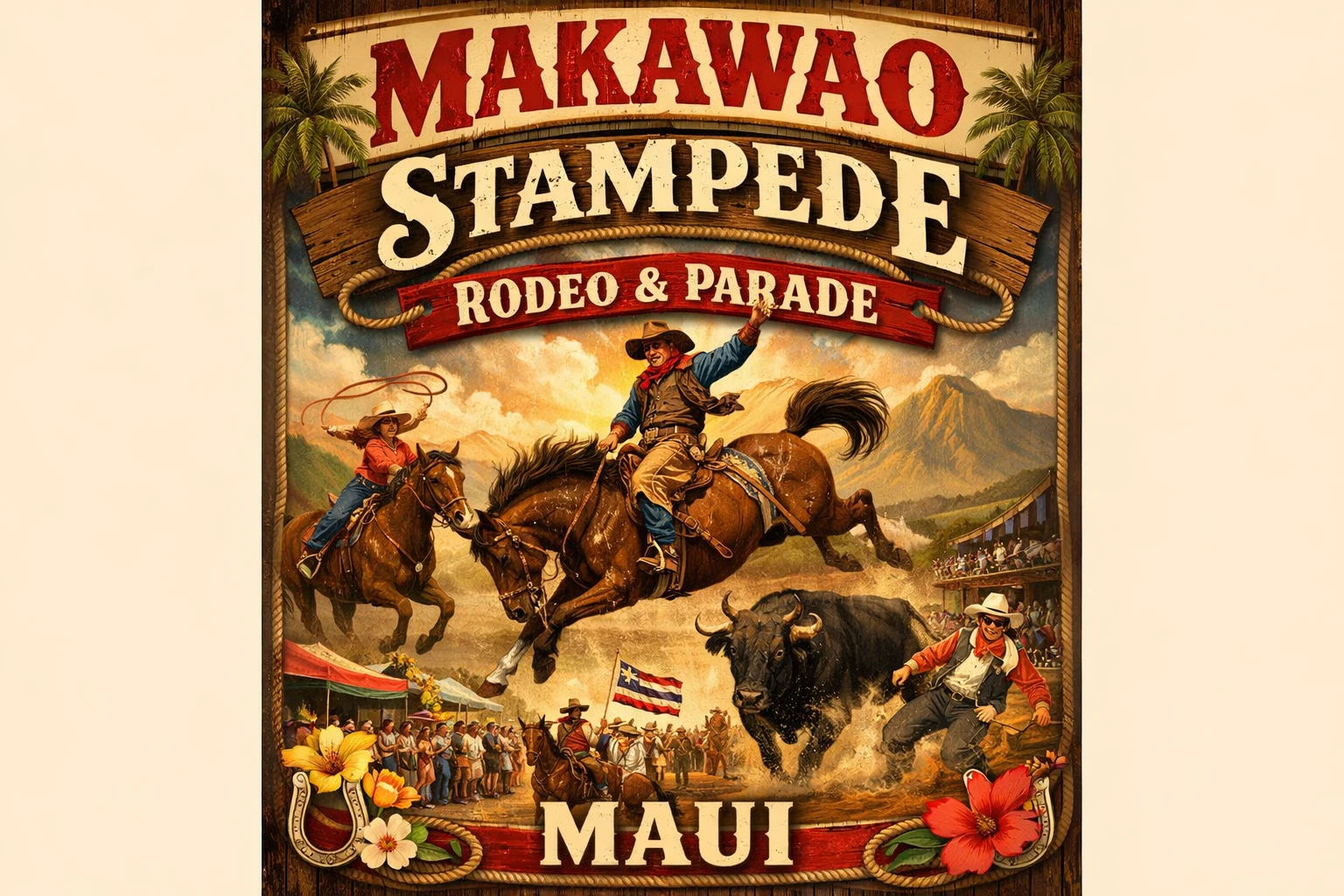
    Makawao Stampede Rodeo & Parade 2026
    Rodeo / Parade / Cultural
    Free

    Makawao Stampede Rodeo & Parade 2026

    Discover the Makawao Stampede Rodeo and Parade

    Most visitors who come to Maui for the first time expect beaches, resorts, and the kind of tropical beauty that every photograph of the island confirms. Very few expect to find, on a green hillside nearly 3,000 feet above sea level, a cowboy town that has been running one of the most authentic and beloved rodeos in the United States every Fourth of July weekend for nearly seventy consecutive years. But that is exactly what Makawao is, and exactly what the Makawao Stampede Rodeo and Parade delivers every summer: an upcountry Maui celebration of paniolo culture, Hawaiian cowboy heritage, and community pride that draws competitors from across the Hawaiian Islands and the continental United States and spectators who come back year after year because there is nothing else quite like it anywhere in the Pacific.

    The schedule is built across multiple days: the Makawao Town Parade on Saturday June 27 at 9:00 AM along Baldwin Avenue, followed by the Bull Bash on Friday July 3, the first night rodeo performance on Saturday July 4, Paniolo Day on Sunday July 5, and the Championship Patriotic Day on Sunday July 6, all at the Oskie Rice Event Center, 523 Olinda Road, Makawao. This edition marks a milestone worth noting: 110 years of Kaonoulu Ranch, the upcountry operation that has been central to Makawao's paniolo heritage, with nearly 250 competitors from across Hawai'i and around the country.


    The Paniolo Tradition: How Hawai'i Got Its Cowboys

    The story of the Hawaiian cowboy is one of the more surprising chapters in Pacific cultural history, and understanding it gives the Makawao Stampede its full meaning.

    In the early 1800s, King Kamehameha III faced a cattle management crisis. The cattle population, descended from livestock given to the kingdom by British navigator Captain George Vancouver, had grown far beyond what local Hawaiians knew how to handle. To solve the problem, the king brought in vaqueros from Mexico and California: highly skilled Spanish-speaking horsemen who knew cattle, roping, and riding. The Hawaiian men who trained under them became the first paniolo, a Hawaiian pronunciation of the Spanish españoles.

    The paniolo tradition took hold most deeply in the upcountry highlands of Maui, where the grassy slopes of Haleakalā and the wide-open ranch lands provided exactly the terrain that cattle ranching required. By the late 19th century, Upcountry Maui was home to some of the most skilled horsemen in the Pacific, competing not just locally but on the mainland. In 1908, three Hawaiian paniolo: Ikua Purdy, Archie Ka'au'a, and Jack Low traveled to the Frontier Days Rodeo in Cheyenne, Wyoming, then considered the most prestigious rodeo in the world, and Ikua Purdy won the world steer roping championship, defeating the best cowboys from across the United States and stunning an audience that had never seen Hawaiian competitors. That victory remains one of the most celebrated moments in Hawaiian sports history, and it established once and for all that the paniolo tradition was not a derivative of mainland cowboy culture but a genuinely world-class equestrian tradition in its own right.

    The Makawao Stampede Rodeo grew directly from that heritage. The rodeo started in 1956, and today the family of its original organizers, the Miranda family, continues to run the event as an annual Upcountry Maui tradition, with nearly 250 competitors gathering each July 4th weekend for what the official festival website describes as "110 years of tradition." PBS Hawai'i featured the event in its documentary series Home Is Here, describing it as the defining Fourth of July gathering for paniolo and spectators from across the islands.

    The official tourism site for Hawai'i describes it plainly: "The Makawao Rodeo, held yearly on the Fourth of July, is Hawai'i's largest paniolo competition and has been an Upcountry tradition for more than 50 years."


    The Full Event Calendar: Parade, Bull Bash, and Rodeo Days

    What makes the Makawao Stampede exceptional among Hawaiian summer events is not a single afternoon but a multi-day program that builds progressively from the parade through to the championship finale.


    The Makawao Town Parade, Saturday June 27

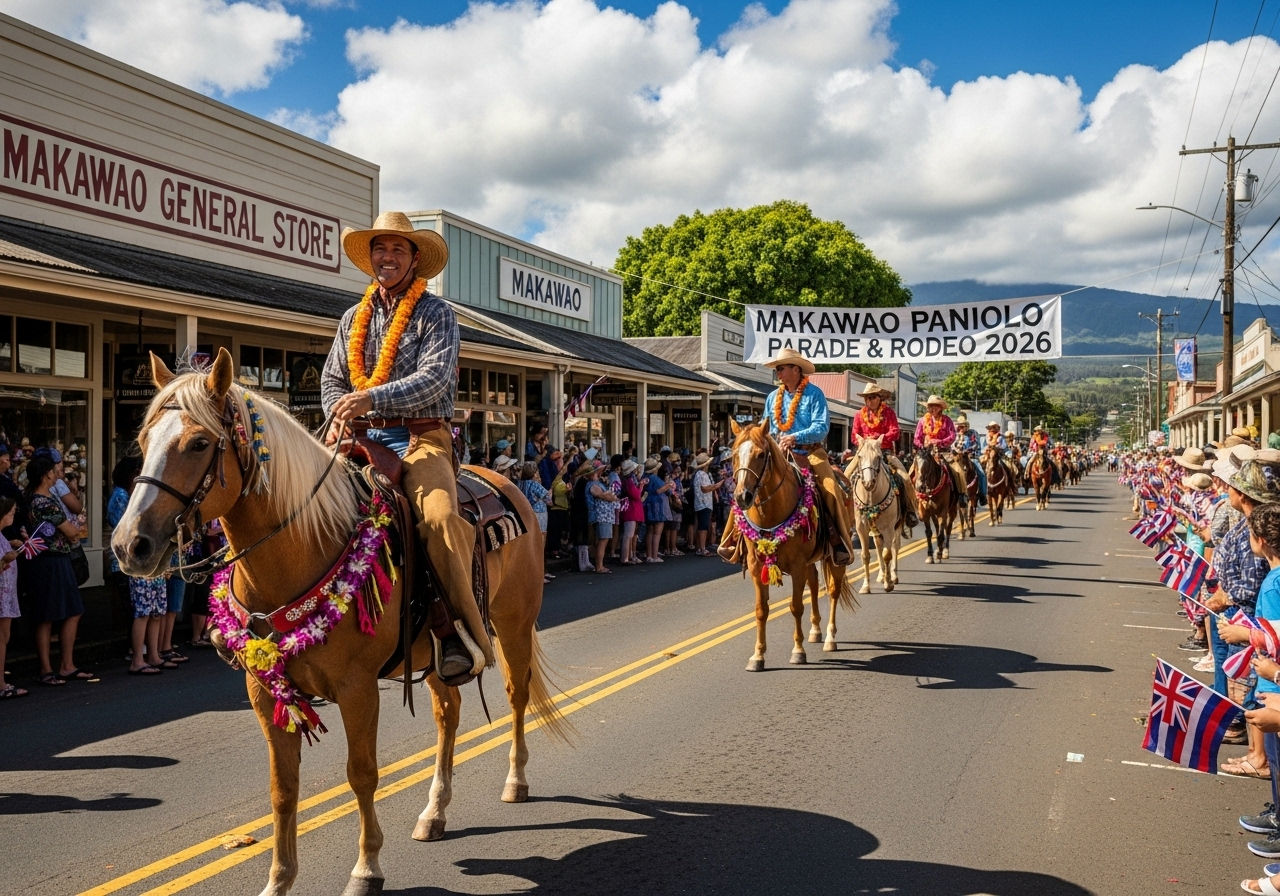
    The festivities begin the weekend before the rodeo with the Makawao Town Parade on Saturday June 27 at 9:00 AM, running along Baldwin Avenue and Makawao Avenue in the heart of town. Now in its late 50s as an annual event, the parade is an expression of community identity as much as a pre-rodeo warm-up.

    The parade lineup includes paniolo in formal cowboy attire, marching bands, classic cars, floats from local organizations, and the always-popular pā'ū riders: women dressed in traditional Hawaiian riding attire, on horseback, representing each island of Hawai'i with their island's signature flower color woven into their clothing, their horses' manes, and their lei. The pā'ū riders are among the most visually distinctive elements of any traditional Hawaiian parade, and the Makawao version draws some of the finest riders on the island.

    The fun begins even before the official parade start: a stick horse race for adults and youth takes place at 8:00 AM along Baldwin Avenue in front of the Designing Wahine Emporium, and free shuttle service from the Oskie Rice Event Center parking area brings visitors into town without the frustration of limited street parking.


    The Bull Bash, Friday July 3

    The rodeo weekend proper opens on Friday July 3 at the Oskie Rice Event Center with the Bull Bash, gates opening at 3:00 PM and the bull riding beginning at 7:00 PM after a preshow concert at 5:00 PM. The Bull Bash is the most concentrated and arguably most adrenaline-charged single event of the entire weekend: pure bull riding, where competitors attempt to ride some of the most powerful animals in the sport for the required eight seconds that separates a successful ride from an immediate dismount.

    For many first-time rodeo visitors, the bull riding is the event that rewires their understanding of what professional rodeo actually is. The combination of an 1,800-pound bull, a rider, eight seconds, and a dirt arena in an upcountry Maui evening is something that no description fully prepares you for.


    Rodeo Performances, July 4 to 6

    The main rodeo program unfolds across three days from Saturday July 4 through Monday July 6, progressing from the first night performance through Paniolo Day and culminating in the Patriotic Day championship performance that closes the Stampede with the winners of each event confirmed.

    The competitive events span the full traditional rodeo repertoire:

    • Bull riding: Eight seconds on a bucking bull; scoring on both the bull's performance and the rider's control
    • Barrel racing: Rider and horse navigate a precise three-barrel cloverleaf pattern at speed; one of the most technically demanding equestrian events in rodeo
    • Calf roping (tie-down roping): Rider ropes a calf, dismounts, and ties three legs in the fastest possible time
    • Bareback bronc riding: Rider on a bucking horse with only a rigging handle, no saddle; one of rodeo's most physically demanding events
    • Team roping: Two riders working together to rope a steer by head and heels in minimum time; one of the most distinctively paniolo-influenced events in the sport
    • Steer wrestling, saddle bronc, and additional events completing the full traditional program

    The nearly 250 competitors come from across the Hawaiian Islands and from the continental United States, bringing a range of professional experience and regional styles together in a single arena in ways that make the Makawao Stampede a genuine cross-section of American rodeo at its most culturally specific.


    The Oskie Rice Event Center: A Venue With a Name Worth Knowing

    The Oskie Rice Event Center at 523 Olinda Road, Makawao, HI 96768 is the spiritual home of the Makawao Stampede, and the name it carries is itself a piece of Hawaiian rodeo history. Oskie Rice was one of Maui's most beloved paniolo figures, a horseman and rodeo competitor whose memory the venue honors as the permanent guardian spirit of upcountry competition.

    The facility sits in the green upcountry highlands above Makawao town, at an elevation that gives the arena an atmospheric quality entirely unlike the beach-level resort venues that most Maui visitors experience. The surrounding landscape of pasture, eucalyptus, and the distant slopes of Haleakalā creates the visual context for a rodeo that feels genuinely embedded in its environment rather than staged within it. The air is cooler, cleaner, and carries a distinctive upcountry quality that Maui residents describe as one of the essential pleasures of the highlands.

    The venue hosts food vendors, craft stalls, and the kind of festival-ground atmosphere that builds through the multi-day program into a community gathering with real momentum by the final championship Sunday.


    Makawao Town: Baldwin Avenue and the Upcountry Character

    Makawao town is worth at least half a day of exploration before or after the rodeo, and its Baldwin Avenue main street is one of the most genuine small-town commercial strips in the Hawaiian Islands. Western-fronted buildings house a mix of art galleries, boutiques, bakeries, local restaurants, and the kind of independent businesses that arrive when a community decides it prefers its own identity to a franchise-based alternative. The famous Komoda Store and Bakery, a family-run institution that has been producing cream puffs and other baked goods since 1916 and regularly sells out by mid-morning, is the most cited single destination on Baldwin Avenue and functions as an unofficial test of how early you are willing to get up for a cream puff.

    The surrounding Upcountry Maui region encompasses some of the island's most productive agricultural land: lavender farms at Alii Kula Lavender, protea flowers growing at commercial scale on the Haleakalā slopes, Surfing Goat Dairy on the lower slopes, and the vast Ulupalakua Ranch on the southwestern side of the volcano, where cattle still graze on rolling grasslands in the shadow of the summit crater.


    Tickets, Pricing, and Practical Information

    Tickets and Pricing

    Face-value tickets for the Makawao Stampede Rodeo events start at approximately $47 to $55 per performance, with an average price around $68 on resale platforms. The Bull Bash on July 3 and the Saturday night July 4 performance tend to carry the highest demand and the most competitive availability. The parade on June 27 along Baldwin Avenue is a free community event that requires no ticket.

    Tickets are available through etix.com, the Oskie Rice Event Center website, and major ticketing resellers. Rodeo event queries can be directed to Morag Miranda at 808-960-0137 or Ken Miranda at 808-960-4708.


    Getting to Makawao and Upcountry Maui

    Kahului Airport (OGG) is approximately 20 to 25 minutes from Makawao by car via the Haleakalā Highway and the Makawao Avenue approach through Pukalani. Rental cars are the most practical transport option for upcountry Maui, where public transport is limited and the distances between the coast and the highlands require flexibility. The free shuttle service from the Oskie Rice Event Center to the parade route is available for those attending the Saturday June 27 parade.


    Where to Stay

    Most Maui hotel zones (Kāʻanapali, Wailea, Kīhei) are accessible within 30 to 45 minutes of Makawao, making a beach-based stay entirely compatible with day trips for rodeo events. For visitors who specifically want to be in the upcountry character, vacation rentals in Makawao, Kula, and Pukalani offer a genuinely different and cooler experience of Maui during the hot summer months.


    July Weather in Upcountry Maui

    While the coastal resort areas of Maui experience 30 to 33 degrees Celsius in July, Makawao at around 1,500 feet elevation sits significantly cooler, typically around 22 to 26 degrees Celsius by day and 18 to 20 degrees in the evenings. Layering for evening rodeo performances is advisable, as the temperature drops noticeably after sunset in the upcountry.


    Verified Information at a Glance

    Event Name: Makawao Stampede Rodeo and Parade (4th of July Makawao Stampede)

    Event Category: Professional rodeo, paniolo cultural celebration, parade, community festival

    Typical Month: Late June (parade) and July 4th weekend (rodeo)

    Parade Date: Saturday, June 27, 9:00 AM along Baldwin Avenue and Makawao Avenue, Makawao Town

    Bull Bash: Friday, July 3; Gates 3:00 PM; Preshow Concert 5:00 PM; Bull Bash 7:00 PM

    1st Night Rodeo: Saturday, July 4

    Paniolo Day: Sunday, July 5

    Championship/Patriotic Day: Monday, July 6

    Venue: Oskie Rice Event Center, 523 Olinda Road, Makawao, HI 96768

    Competitors: Nearly 250 from across Hawai'i and the continental United States

    Edition Milestone: 110 years of Kaonoulu Ranch celebration

    Rodeo Events: Bull riding, barrel racing, calf roping, bareback bronc, saddle bronc, steer wrestling, team roping

    Ticket Prices: From approximately $47 to $55 face value; average $68 on resale platforms

    Parade Admission: Free

    Organizer: Miranda Family / K Ranch Roping LLC

    Rodeo Contact: Morag Miranda: 808-960-0137; Ken Miranda: 808-960-4708

    Rodeo Founded: 1956 (nearly 70 years of annual tradition)

    Nearest Airport: Kahului Airport (OGG), approximately 20 to 25 min from Makawao by car

    July Upcountry Climate: 22 to 26°C daytime; 18 to 20°C evenings; cooler than coast; layering advisable for evening performances

    Official Website: maui-rodeo.com / oskiericeeventcenter.com


    Seventy years of paniolo, nearly 250 riders and ropers from across the Pacific and the continental United States, upcountry Maui air that is nothing like what any beach resort prepares you for, and a Baldwin Avenue parade that starts at 9:00 AM on a June Saturday with horses, marching bands, and pā'ū riders in full island regalia. The Makawao Stampede Rodeo and Parade is the Fourth of July the way Maui has always done it, rooted in the ground, shaped by community, and celebrating a way of life that the island's paniolo have been carrying forward since the days of the first Spanish vaqueros on Haleakalā's slopes. Grab your tickets from maui-rodeo.com before the Bull Bash sells out, plan your June 27 parade morning on Baldwin Avenue, and spend the Fourth of July weekend in Makawao discovering the Maui that lives above the beach line.

    Oskie Rice Arena & Makawao Town, Upcountry Maui, Maui
    Jun 28, 2026 - Jul 6, 2026
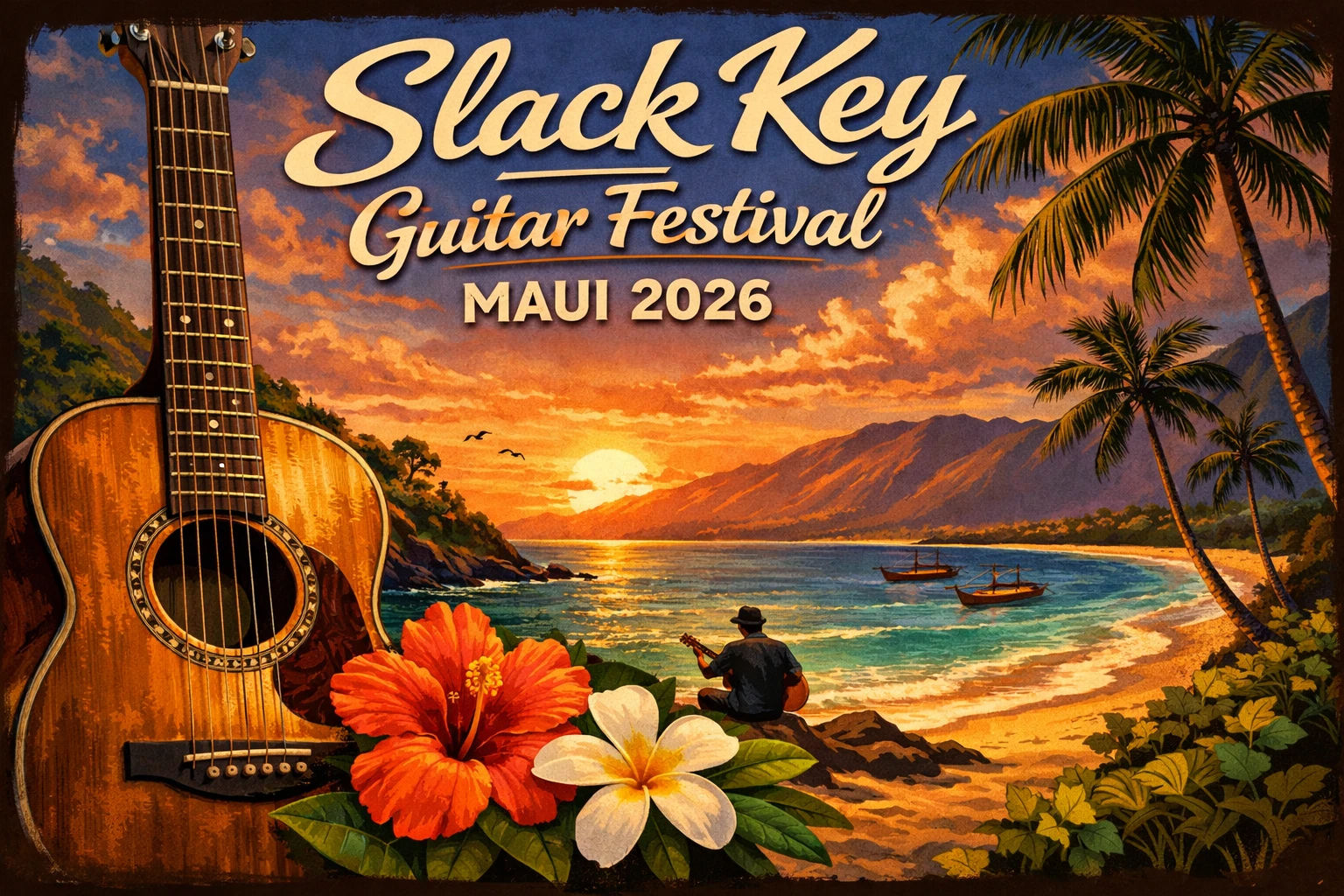
    Slack Key Guitar Festival – Maui 2026
    Music Festival / Cultural
    Free

    Slack Key Guitar Festival – Maui 2026

    35th Annual Hawaiian Slack Key Guitar Festival – Maui StyleThere are only a few musical traditions in the world that belong so completely to a single place that hearing them instantly and unmistakably conjures that place in the listener's imagination. Ki ho'alu, Hawaiian slack key guitar, is one of them. The moment you hear the open, resonant, fingerpicked sound of a slack key guitar, the tuning producing that characteristic lush chord underneath the melody, you are somewhere in Hawai'i whether you are physically there or not.

    And if you happen to be on Maui on Sunday June 28, you can hear the real thing live, outside, in a beautiful amphitheater, surrounded by Maui's favorite local food and island crafts, at absolutely no cost. The 35th Annual Hawaiian Slack Key Guitar Festival - Maui Style, organized by the Ki-ho'alu Foundation, Inc. under the direction of Milton Lau, runs from 2:00 PM to 6:00 PM at the Maui Arts and Cultural Center (MACC) Amphitheater in Kahului, with doors opening at 1:00 PM for those who want to arrive early, settle in, and let the island take over.

    Free admission. All ages. Thirty-five years of doing this on Maui. Those three facts say most of what needs to be said about what this festival is and what it values.

    Ki Ho'alu: The Guitar Sound That Belongs to Hawai'i Alone

    To fully understand the Hawaiian Slack Key Guitar Festival Maui Style, it helps to understand what slack key guitar actually is and how a uniquely Hawaiian music tradition was born from one of the more unlikely cultural encounters in Pacific history.

    The story begins in the early 1800s, when King Kamehameha III was dealing with a cattle problem. The islands' cattle population, originally gifted to the kingdom by British explorer Captain George Vancouver, had grown beyond what local Hawaiians knew how to manage. To teach Hawaiians herding and livestock management, the king brought in vaqueros from Mexico: skilled Spanish-speaking cowboys who arrived with their horses, their herding techniques, and their guitars. The Hawaiians who learned from them became the first paniolo (a Hawaiianization of españoles), and in their off-hours, sitting around after work in the style that Hawaiians call kanikapila (informal music-making among friends), they began experimenting with the guitars the vaqueros had left behind.

    The experimentation produced something entirely new. Instead of using the standard tunings brought from the mainland, the Hawaiian paniolo began "slacking" the strings, loosening the tuning pegs to create open chord tunings where the open strings themselves produced a full, resonant major chord or a chord with a major seventh. The Hawaiian-language name for the technique, ki ho'alu, means literally "loosen the key": loosen the tuning peg to produce the open, ringing resonance that defines the sound.

    Over the following century, the tradition was passed down through families as a private and deeply personal art form, often kept deliberately secret: certain tunings were closely guarded family possessions, passed from parent to child in a lineage of musical inheritance that gave individual families their own distinctive sound. Many guitarists chose to play only for family and friends rather than recording or performing professionally. As George Kuo, one of the great masters of the tradition, observed: "Sometimes the older players would lock into a groove (keeping the same tempo and feeling) and stay there all night."

    The tradition found its modern beginning in 1946, when Gabby Pahinui, the legendary guitarist from O'ahu, recorded "Hi'ilawe", the first known commercial recording of ki ho'alu. Released in 1946, the song sparked a musical movement that eventually drew the wider world's attention to the tradition and inspired a generation of guitarists to play and record.

    The tradition received further institutional support from an unexpected direction when King David Kalākaua, Hawai'i's last king, whose reign in the 1880s and 1890s was defined by a deliberate Hawaiian cultural renaissance, supported the preservation of ancient music while encouraging the guitar and the 'ukulele as instruments that could carry traditional Hawaiian song. His coronation in 1883 and his Jubilee in 1886 both featured guitar alongside traditional instruments and chant, cementing the guitar's place in the Hawaiian musical tradition at the highest cultural level.

    In the decades since, ki ho'alu has been recognized by the Grammy Awards as a distinct and significant musical tradition, with a dedicated Grammy category (Best Hawaiian Music Album) that has been won by artists including Ledward Kaapana, George Kahumoku Jr., Keola Beamer, and others who are regulars on the Maui festival circuit.

    Thirty-Five Years on Maui: The Festival's Place in Island Culture

    The Hawaiian Slack Key Guitar Festival - Maui Style has been running continuously since its first edition, making it one of the longest-running annual music events in the state of Hawai'i. Organized by the Ki-ho'alu Foundation, Inc. under the direction of Milton Lau, the festival has maintained an unwavering commitment to two things that define its character: the highest quality of Hawaiian musical performance and free admission for all ages.

    That combination is rarer than it should be. A four-hour program of Grammy-caliber Hawaiian music, available without charge, specifically designed to be welcoming to families, kama'āina (local residents), and visitors from around the world alike, reflects a set of values about what music is for that the festival has held for 35 years without compromise.

    As the event description says: "Come and celebrate our special culture with us and walk away knowing you experienced something special." That is not marketing language. It is an accurate description of what the festival delivers to everyone who attends.

    The Artists: Hawaii's Finest Slack Key Musicians on One Stage

    The 35th Annual Hawaiian Slack Key Guitar Festival - Maui Style will feature some of Hawaii's dynamic and exciting musicians in the slack key guitar and Hawaiian music genre across the full four hours.

    Looking at the 34th edition lineup for context, the festival regularly brings together the most significant names in the living ki ho'alu tradition:

    • Ledward Kaapana: One of the most celebrated slack key guitarists in Hawaiian music history, a National Heritage Fellowship recipient, Grammy-nominated artist, and a figure whose playing embodies the Big Island paniolo tradition at its most expressive
    • Michael Kaawa: A highly respected figure in the contemporary slack key scene
    • Stephen Inglis: Multi-instrumentalist and frequent Grammy participant in the Hawaiian music category
    • Ken Makuakane: Award-winning composer and recording artist
    • Darrell Aquino: Accomplished guitarist in the ki ho'alu tradition
    • Shem Kahawa'i: Protégé of George Kahumoku Jr. and regular at the weekly Napili Kai Slack Key Show
    • Kailua Moon (Danny & Nani Carvalho): One of Maui's most beloved husband-and-wife performing duos
    • Walter Keale, Dwight Kanae, Kevin Brown & Friends, and others completing a lineup of extraordinary depth

    The specific artist roster for the 35th edition will be announced as the June date approaches, but the curatorial standards the festival has maintained across three and a half decades make the lineup announcement something Maui's music community looks forward to each year as much as the event itself.

    The MACC Amphitheater: The Perfect Stage for an Open-Air Musical Celebration

    The Maui Arts and Cultural Center (MACC) Amphitheater at 1 Cameron Way, Kahului, HI 96732 is one of the most beloved outdoor performance venues on the island, and it serves as the festival's home with good reason. The open-air amphitheater configuration, with its natural acoustic properties and the Maui sky above, creates an environment where ki ho'alu's characteristic open, resonant sound can breathe in a way that enclosed indoor venues do not allow.

    Kahului sits at the heart of Maui's central isthmus, the natural convergence point of the island where the two volcanic masses of Haleakalā and the West Maui Mountains meet. From the MACC, you can look toward Haleakalā, the massive shield volcano whose summit crater sits at 10,023 feet, across the cane-field flatlands that once defined the central valley's agricultural identity. The MACC itself is a significant cultural institution that hosts the full range of performing arts on Maui year-round, and its amphitheater has hosted some of the island's most memorable outdoor performances.

    The festival's practical layout includes food vendors offering some of Maui's favorite foods and snacks, and island craft vendors presenting handmade goods from Maui artisans under the umbrella of the festival's "Made in Maui" marketplace philosophy. This is not simply a concert: it is a full afternoon of music, food, craft, and community gathering that carries the spirit of the traditional Hawaiian backyard kanikapila into a public celebration accessible to everyone.

    The Weekly Slack Key Show: More Hawaiian Music While You Are on Maui

    For visitors who want to experience ki ho'alu in an even more intimate setting during their time on the island, the George Kahumoku Jr. Slack Key Show: Masters of Hawaiian Music runs every Wednesday evening at the Napili Kai Beach Resort in Napili, on Maui's northwest coast.

    Established in 2003, the show is hosted by George Kahumoku Jr., a four-time Grammy Award-winning slack key guitarist who is one of the most important figures in the preservation and popularization of ki ho'alu. Each Wednesday features a different guest artist drawn from the top tier of Hawaiian guitar, 'ukulele, and vocal performance, creating a series that has introduced thousands of visitors to the living tradition of slack key music in a setting of extraordinary intimacy.

    Doors open at 5:45 PM, the show runs from 6:30 PM to 8:00 PM, and tickets are available at Priority Reserved seating ($60) for the front four rows, General Admission ($40) for open seating from row five onward, and a Kama'āina discount of $30 at the door for Hawai'i residents with a Hawaiian driver's license.

    The Napili Kai Beach Resort setting adds its own dimension to the experience: the stage faces Napili Bay, one of the most sheltered and picturesque small bays on the west side of Maui, with Moloka'i visible across the channel on clear evenings. Attending a Wednesday Slack Key Show at Napili Kai and then the annual festival at the MACC in the same Maui visit gives a visitor the full spectrum of what ki ho'alu sounds like in both its intimate and its celebratory forms.

    Maui in June: The Island Setting for Slack Key Season

    A June trip to Maui built around the Slack Key Guitar Festival gives visitors access to one of the most appealing versions of the island's character. June is the sweet spot before the peak summer crowds of July and August fully arrive, with warm and largely dry weather across the south and west sides of the island and the trade winds producing comfortable conditions on the central isthmus where Kahului and the MACC are located.

    Average June temperatures across Maui's lower elevations sit around 28 to 30 degrees Celsius by day, dropping to a comfortable 22 to 24 degrees in the evening. The 2:00 PM to 6:00 PM festival window encompasses the late afternoon, when Maui's light has the warm golden quality that makes even a parking lot amphitheater look like a postcard.

    Haleakalā National Park

    The summit of Haleakalā at 10,023 feet is accessible on a day trip from Kahului via the Haleakalā Highway, a winding ascent through cloud layer and high desert that takes approximately 90 minutes and arrives at a volcanic crater landscape unlike anything else in the Pacific. The sunrise view from the summit is among the most frequently cited natural experiences in all of Hawai'i. A summit visit in the early morning, a drive back to sea level, and an afternoon at the Slack Key Festival is one of those Maui days that no organized itinerary could improve on.

    Ho'okipa Beach Park

    Ho'okipa Beach Park on Maui's North Shore, approximately 20 minutes east of Kahului, is the global capital of professional windsurfing and kitesurfing, where world champions train in conditions that bring consistent large swells and strong trade winds to one of the most visually dramatic beach parks on the island. The bluff above the beach provides one of the best spectator vantage points in Hawaiian water sports culture.

    Pā'ia Town

    Pā'ia, the funky North Shore surf town strung along the Hāna Highway a few miles east of Kahului, is Maui's most distinctive dining and alternative retail destination: farm-to-table restaurants, independent coffee shops, surf shacks, and vintage clothing stores in a stretch of buildings that has maintained its character against the tide of resort development. A morning in Pā'ia before driving to the MACC for the afternoon festival makes a natural circuit of the island's cultural geography.

    'Iao Valley State Monument

    'Iao Valley, minutes from Kahului via the Wailuku approach, offers the 'Iao Needle, a 1,200-foot basalt pinnacle rising from a narrow valley of extraordinary green intensity, alongside the cultural history of one of the most significant sites in Hawaiian history: the valley where Kamehameha I won the decisive Battle of Kepaniwai in 1790 in his campaign to unify the Hawaiian Islands. It is a 10-minute drive from the MACC and a completely different kind of engagement with the Maui landscape.

    Practical Information: Getting There, Getting Around, Staying on Maui

    Arrival

    Kahului Airport (OGG) is Maui's primary airport, located approximately 5 minutes by car from the MACC, making this one of the most convenient airport-to-venue situations of any cultural event in the Pacific. Direct flights serve Kahului from Los Angeles, San Francisco, Seattle, Phoenix, and other West Coast cities, alongside multiple daily inter-island connections from O'ahu, Kaua'i, and the Big Island.

    Getting to the MACC

    The Maui Arts and Cultural Center at 1 Cameron Way, Kahului is centrally located on the island, easily accessible from all parts of Maui by car in 15 to 40 minutes depending on starting point. Ample parking is available on-site.

    Where to stay

    Kahului and Wailuku provide the most central base for visitors attending the festival, with a range of budget-to-mid-range accommodation options and proximity to the island's main commercial and cultural facilities. The resort areas of Kā'anapali and Wailea offer luxury beach accommodation within 30 to 45 minutes of the MACC. Kīhei on the south shore provides mid-range to budget options with beach access at around 20 minutes from Kahului.

    Verified Information at a Glance

    Event name: 35th Annual Hawaiian Slack Key Guitar Festival – Maui Style

    Event category: Outdoor live music festival; Hawaiian slack key guitar (ki ho'alu); Hawaiian cultural celebration; free community event

    Typical month: June (annual, last Sunday of June historically)

    Date: Sunday, June 28

    Time: 2:00 PM to 6:00 PM (4 hours); Doors open at 1:00 PM

    Venue: Maui Arts and Cultural Center (MACC) Amphitheater, 1 Cameron Way, Kahului, HI 96732

    Admission: FREE for all ages

    Organizer: Milton Lau / Ki-ho'alu Foundation, Inc.

    Edition: 35th annual

    Program length: 4 hours of live performance

    Past artists (34th edition): Ledward Kaapana, Michael Kaawa, Stephen Inglis, Ken Makuakane, Darrell Aquino, Kahiau Lam-Ho, Namaka Cosma White, Kailua Moon, Walter Keale, Dwight Kanae, Kevin Brown & Friends, Shem Kahawa'i

    On-site vendors: Food vendors (Maui's favorite foods and snacks); island craft vendors ("Made in Maui"); festival merchandise

    Weekly ki ho'alu show: George Kahumoku Jr. Slack Key Show, every Wednesday, Napili Kai Beach Resort, Napili; 6:30 to 8:00 PM; Priority seating $60, GA $40, Kama'āina $30

    Nearest airport: Kahului Airport (OGG), approximately 5 minutes from the MACC

    June climate: 28 to 30°C daytime; 22 to 24°C evenings; dry; trade wind conditions

    Phone: (808) 226-2697 (Ki

    Maui Arts & Cultural Center (MACC), Kahului, Maui
    Jun 28, 2026 - Jun 28, 2026
    4th of July Fireworks Boat Cruises 2026
    Holiday Celebration / Cruise
    Free

    4th of July Fireworks Boat Cruises 2026

    4th of July Fireworks Boat Cruises on Maui: The Best Way to Watch Independence Day Over the Pacific

    There are very few places in the world where the Fourth of July looks like it does from the water off Lahaina, Maui. The fireworks launch from a barge anchored just offshore of Front Street at 8:00 PM, and when they go up, they go up against a backdrop of the West Maui Mountains, the warm Pacific night, and the channel between Maui and Lānaʻi that on a clear evening shows the lights of a neighboring island on the horizon. From the water, there are no traffic jams, no scramble for viewing position, and no parking problem. There is just the ocean, the fireworks directly overhead, and whatever boat experience you have chosen for the evening.

    The Lahaina Fourth of July fireworks are the only public fireworks display on Maui, funded annually by community contributions from Lahaina businesses and residents who come together each year to keep the celebration alive. That community effort, combined with the unique setting and the range of cruise options that depart from Ma'alaea Harbor and Lahaina Harbor, makes the Maui Fourth of July one of the most genuinely special Independence Day experiences available anywhere in the United States.

    Cruise operators typically begin selling their July 4th departures months in advance, and the most popular options sell out well before the holiday weekend. This is not a last-minute booking situation.


    Why Watch from the Water: The Case for a Fireworks Cruise

    Any experienced Maui resident will tell you that watching the Lahaina fireworks from Front Street on July 4th is a lesson in crowd management and parking patience that even the most committed Independence Day enthusiast eventually learns to skip. No parking is permitted on Front Street from 2:00 PM to 9:00 PM on July 4th. The shuttle system from Lahaina Cannery Mall and the Outlets of Maui in Kāʻanapali moves people but not without wait times.

    From the water, none of that applies. You board your vessel from Ma'alaea or Lahaina before the crowds reach their peak, sail out to an unobstructed position in the channel or offshore of Front Street, and watch Maui's only fireworks display from exactly the angle that the show is designed to be seen from: from the sea, looking toward the mountains. The fireworks launch from a barge offshore, which means that from a boat at the right position, you are closer to the launch point than any land-based spectator.

    The added elements of food, open bars, music, and in some cases live Hawaiian entertainment or Polynesian dancing make a fireworks cruise a full evening rather than a wait followed by a 20-minute show followed by a traffic jam.


    The Confirmed Cruise Options: Something for Every Group and Budget

    The range of Maui Fourth of July fireworks cruises covers everything from a budget-friendly inflatable raft experience to a premium adults-only dinner event aboard one of the most sophisticated charter vessels in the islands. Here is a full breakdown of confirmed operators and pricing:


    Pacific Whale Foundation – July 4th Cocktail Cruise

    The Pacific Whale Foundation (PacWhale Eco-Adventures) runs two departures from Ma'alaea Harbor on July 4th: one at 6:15 PM and one at 6:30 PM, each running approximately 2.5 hours. The cruise includes fruit, cheese, crudités, and local specialty desserts alongside juice, soda, filtered water, and alcoholic beverages for adults. A naturalist is onboard throughout to provide educational context about the marine environment, the coastline, and Hawaiian cultural history, giving the cruise an educational dimension that distinguishes it from a standard party boat. Check-in is at the Pacific Whale Foundation Ocean Store at Ma'alaea Harbor Shops, 45 minutes before departure.

    Pricing: Adults (13+) $174.94 online / $139.95 discounted; Children (3-12) $112.44 online / $89.95 discounted; Infants (0-2) free.


    Pacific Whale Foundation – Kai Ko Fireworks Sail

    A second PacWhale vessel, the Kai Ko, departs Ma'alaea at 6:00 PM on July 4th, with a slightly earlier start that gives passengers more time on the water before the 8:00 PM fireworks.

    Pricing: Adults $199.94; Children $137.44.


    Pride of Maui – Fireworks Over the Pacific

    The Pride of Maui July 4th cruise is consistently described as the option that sells out first among all Maui Independence Day offerings, and the program explains why. It includes a full holiday menu of appetizers, entrees, and dessert alongside a premium open bar, and the evening incorporates a "mini-luau" with Polynesian dancers, Hawaiian storytelling, and live music, making it the most complete cultural experience of any July 4th cruise available on Maui.

    Pricing: Adults $298; Children $258.


    Calypso Maui – Triple-Deck Fireworks Cruise

    The Calypso is a premier triple-deck boat departing from Ma'alaea Harbor, offering a family-friendly July 4th experience with cocktails, appetizers, and two complimentary drinks included in the ticket price. The multi-deck configuration means excellent sight lines for all passengers during the fireworks, and the spacious layout gives families room to move and enjoy the evening without feeling crowded.

    Pricing: Adults (7+) $149; Children (0-6) $99.


    Sail Trilogy – July 4th Fireworks Sunset Sail

    Sail Trilogy, one of Maui's most established and trusted sailing operators, runs a July 4th Fireworks Sunset Sail from Ma'alaea Harbor with a delicious holiday menu, full open bar, and the family-friendly orientation that characterizes all of Trilogy's operations. Trilogy's boats are known for their crew quality and the warmth of their onboard atmosphere, and the July 4th departure consistently draws guests who have sailed with them before and return specifically for the holiday event. Pricing to be confirmed through Trilogy's official booking channels.


    Maui Reef Adventures – Budget-Friendly Raft Cruise

    For guests looking for a more intimate and adventurous option at a lower price point, Maui Reef Adventures offers a July 4th fireworks cruise limited to 30 passengers aboard their rigid hull inflatable rafts (RHIBs). The small passenger limit creates a genuinely intimate experience, and the low-to-the-water perspective from an inflatable raft gives a completely different sensory experience of the fireworks than a large catamaran deck. Snacks and non-alcoholic refreshments are included.

    Pricing: Adults $89; Children $69.


    Ali'i Nui – Premium Adults-Only Dinner Cruise

    For couples or adult groups who want the most premium fireworks cruise experience available on Maui, the Ali'i Nui July 4th Fireworks Dinner Cruise is an adults-only event starting at $399 per person that delivers a full dinner service aboard one of the most elegant charter vessels in the islands. The Ali'i Nui is well known to Maui visitors for its consistently high-quality food, service, and onboard atmosphere, and the July 4th dinner cruise represents the event at its most formal and most memorable.

    Pricing: Starting at $399 per person (adults only).


    4th of July Fireworks on the Water in Lahaina

    For those who prefer to depart from Lahaina Harbor rather than Ma'alaea, this cruise checks in at Lahaina Harbor, Slip 17, 675 Wharf Street, Lahaina and runs for approximately 2 hours with snacks included and a maximum of 40 passengers per group. The Lahaina departure means a shorter transit time to the fireworks position offshore of Front Street, and the smaller vessel size keeps the experience intimate.


    The Fireworks and Front Street: What Happens on Land

    For visitors who want to combine a land experience with their July 4th evening, Lahaina's Front Street celebrations begin well before the 8:00 PM fireworks launch.

    The LahainaTown Action Committee program for the evening includes:

    • Stilt walkers, balloon twisters, and family entertainment throughout the afternoon
    • A classic car show along Front Street
    • Maui Taiko drumming performance
    • Library Lawn entertainment: the Chop Suey Jazz Orchestra (5:00 to 5:50 PM), Kuikawa Hawaiian Trio (6:00 to 6:50 PM), and the Maui Community Band (7:00 to 8:00 PM)
    • Campbell Park entertainment including Game Show Fanatics interactive performances at 6:00 PM and 8:15 PM
    • The Star-Spangled Banner sung a cappella by Sheryl Renee to open the fireworks at 8:00 PM

    Fleetwood's on Front Street is one of the best land-based viewing locations on Maui, with its elevated rooftop deck offering an unobstructed view of the offshore fireworks barge along with a July 4th rooftop BBQ buffet and live music. For visitors who do not book a cruise, Fleetwood's rooftop is the consistently recommended land alternative.


    What to Know Before You Book

    Ma'alaea Harbor vs. Lahaina Harbor

    Most of the major cruise operators depart from Ma'alaea Harbor on the central south coast of Maui, approximately 15 to 20 minutes from Kīhei, 20 to 25 minutes from Wailea, and 30 to 40 minutes from Kāʻanapali. The Lahaina Harbor options are located on the west coast and are more convenient for guests staying in Kāʻanapali, Lahaina, or Nāpili.

    Book as early as possible

    The Pride of Maui cruise consistently sells out first, sometimes weeks before July 4th. The Pacific Whale Foundation departures and the Calypso cruise also fill up significantly in advance. Anyone planning to attend should book their preferred option as soon as tickets become available, which typically happens months before the holiday.

    What to bring

    Light clothing appropriate for a warm Pacific evening, a light layer for the return trip when the sea breeze picks up after sunset, sunscreen for the pre-sunset portion of the cruise, and cash or card for gratuities. All cruise operators note that gratuity is not included in the ticket price and is warmly appreciated by crew.

    Getting to the harbors

    Ma'alaea Harbor is directly off Route 30 on the central isthmus, with parking available on-site. Lahaina Harbor is at 675 Wharf Street, Lahaina, with street and public parking nearby, though holiday traffic on July 4th means arriving significantly earlier than check-in time. Arriving 45 to 60 minutes before your cruise departure is the consistent recommendation from all operators.


    Verified Information at a Glance

    Event: 4th of July Fireworks Boat Cruises, Maui; fireworks at Lahaina Harbor offshore of Front Street

    Event category: Holiday cruise; Independence Day fireworks viewing; ocean tour; family event; adults-only options

    Typical date: July 4 (annual)

    Fireworks launch time: 8:00 PM from barge offshore of Front Street, Lahaina

    Only public fireworks on Maui: Yes; community-funded annually by Lahaina businesses and residents

    Pacific Whale Foundation – Cocktail Cruise: Ma'alaea Harbor; departs 6:15 PM and 6:30 PM; 2.5 hours; Adults $174.94 / Children $112.44 / Infants free; naturalist onboard

    Pacific Whale Foundation – Kai Ko Fireworks Sail: Ma'alaea Harbor; departs 6:00 PM; Adults $199.94 / Children $137.44

    Pride of Maui – Fireworks Over the Pacific: Full dinner + premium open bar + mini-luau + Polynesian dancers; Adults $298 / Children $258; typically sells out first

    Calypso Maui – Triple-Deck Cruise: Ma'alaea Harbor; Adults (7+) $149 / Children (0-6) $99; appetizers + 2 free drinks included

    Sail Trilogy – Fireworks Sunset Sail: Ma'alaea Harbor; full menu + open bar; pricing via sailtrilogy.com

    Maui Reef Adventures – RHIB Raft Cruise: 30 passengers max; Adults $89 / Children $69; snacks included

    Ali'i Nui Dinner Cruise: Adults only; from $399 per person; full dinner service

    Lahaina Harbor Cruise: Check-in Lahaina Harbor, Slip 17, 675 Wharf St; 2 hours; max 40 passengers; snacks included

    Departure harbors: Ma'alaea Harbor (most operators); Lahaina Harbor (675 Wharf Street)

    Front Street land viewing: Free; Library Lawn bands from 5 PM; fireworks 8 PM; Fleetwood's rooftop BBQ and live music recommended

    No parking: Front Street closed to parking 2:00 PM to 9:00 PM on July 4th

    Nearest airports: Kahului Airport (OGG) for Ma'alaea (30 min); Kapalua Airport (JHM) for West Maui/Lahaina (20 min)

    Booking advice: Book as early as possible; Pride of Maui consistently sells out first

    The fireworks go up at 8:00 PM. From the deck of a boat anchored offshore of Lahaina, with the West Maui Mountains behind the light show and the Pacific spreading out in every other direction, that moment is simply one of the finest ways to spend an Independence Day night in the United States. Choose your cruise, book early before the most popular options sell out, arrange your harbor arrival well ahead of check-in time, and give yourself a Maui Fourth of July that you will not be comparing to any parking lot land viewing for the rest of your life.

    Ma'alaea Harbor, Central Maui, Maui
    Jul 4, 2026 - Jul 4, 2026

    Past Events

    Iron & Wine (concert) 2026
    Music/Concert
    $52

    Iron & Wine (concert) 2026

    Experience Iron & Wine Live on Maui!

    Iron & Wine is confirmed to perform on Maui on March 18, 2026, at 7:30 PM at the Maui Arts & Cultural Center (MACC), Castle Theater in Kahului. Tickets are officially listed at $52.50, $62.50, and $82.50 (including all fees), sold online only, with prices increasing on the day of the show.

    Iron & Wine Concert 2026 on Maui: An Unforgettable Island Evening

    An Iron & Wine concert on Maui hits differently than a typical mainland show because the island setting encourages you to slow down and listen. The Maui Arts & Cultural Center describes Iron & Wine as the musical project of singer-songwriter Sam Beam, known for cinematic indie-folk songwriting and a catalogue that has shaped the genre for more than 20 years. If you’re planning a 2026 Maui trip and want an evening that pairs beautifully with sunset beach time and relaxed island dinners, this Kahului performance is a standout cultural anchor.

    This concert is also a strong fit for travelers staying anywhere on the island. Kahului is centrally located, so it’s accessible from West Maui (Lahaina side), South Maui (Kīhei/Wailea), and Upcountry, making it easier to build into a vacation itinerary without relocating hotels.

    Verified Date, Time, and Venue in Kahului

    The official MACC event listing confirms the concert date and time as March 18, 2026, at 7:30 PM. It also confirms the venue as Maui Arts & Cultural Center, Castle Theater. This is important for planning because MACC is Maui’s best-known performing arts venue, and Castle Theater is its primary indoor concert hall, ideal for a focused listening experience.

    If you’re driving in for the show, Kahului also puts you close to Maui’s main airport area, which is convenient if you’re timing the concert near your arrival or departure days.

    Ticket Prices and On-Sale Details (Verified)

    MACC lists three ticket price tiers for Iron & Wine on Maui:

    • $52.50
    • $62.50
    • $82.50

    All prices are stated as including all fees.

    The same official listing notes:

    • Tickets sold online only.
    • Prices will increase on the day of the show.
    • Tickets go on sale at 10 AM Tuesday, December 16 (advance access referenced for MACC members), and to the general public at 10 AM Wednesday, December 17.

    Because pricing increases on show day and the purchase path is online-only, booking early is the simplest way to lock in your preferred seats and avoid last-minute stress.

    Why This Show Belongs on Your Maui Itinerary

    Maui is known for beaches, whales, and road trips, but the island’s arts scene is a major part of local life, especially at MACC. The official listing highlights Iron & Wine’s long-running impact, including multiple full-length studio records and notable collaborations, positioning the show as more than a casual night out. For travelers, it’s a chance to experience Maui after dark in a way that’s calm, curated, and community-oriented, rather than purely bar-and-club focused.

    If you’re traveling as a couple, this is also one of those rare vacation nights where you don’t need a complicated plan. Dinner, a short drive to Kahului, and a theater show is a classic island evening that feels elevated without feeling rushed.

    Planning Tips for an Easy Concert Night

    The MACC listing notes that the Box Office is not open for window transactions and that online orders use print-at-home ticketing, with tickets also downloadable to electronic devices for scanning at entry. That means you should plan for:

    • A charged phone (or printed ticket) for smooth entry.
    • Buying tickets in advance instead of hoping for walk-up sales.
    • Arriving early enough to park, find your seats, and settle in before the 7:30 PM start.

    Because you’re on an island, it’s also smart to leave extra time for traffic if you’re coming from West Maui or South Maui during peak dinner hours.

    Turn Iron & Wine into a Maui Cultural Highlight

    Iron & Wine’s March 18, 2026, show at the Maui Arts & Cultural Center’s Castle Theater offers a memorable way to experience Maui beyond the beach, pairing world-class songwriting with a venue that’s central and easy to reach. With verified ticket pricing from $52.50 to $82.50 including fees, and online-only sales with day-of-show price increases, it rewards early planning. If you want one night on your 2026 Maui trip that feels intimate, artistic, and unmistakably island-paced, make time for Iron & Wine in Kahului and let the music carry you through the evening.

    Verified Information at a Glance

    • Event Name: Iron & Wine (Concert)
    • Event Category: Live music concert (indie folk / singer-songwriter)
    • Island/Location: Maui, Hawaiʻi (Kahului)
    • Confirmed Date: March 18, 2026
    • Confirmed Time: 7:30 PM
    • Confirmed Venue: Maui Arts & Cultural Center (MACC), Castle Theater
    • Ticket Prices (confirmed): $52.50, $62.50, $82.50 (includes all fees)
    • Ticket Sales (confirmed): Online only; prices increase on the day of the show
    • On-Sale Times (confirmed): 10 AM Tuesday, Dec 16 (advance access noted); 10 AM Wednesday, Dec 17 (general public)
    Kahului (Maui Arts & Cultural Center), Maui
    Mar 18, 2026 - Mar 18, 2026
    Valley To the Sea Half Marathon & 5K/10K 2026
    Sport/Running
    TBA

    Valley To the Sea Half Marathon & 5K/10K 2026

    Event Overview: Valley To the Sea Half Marathon & 5K/10K 2026

    The Valley To the Sea Half Marathon & 5K/10K 2026 is confirmed for Saturday, March 14, 2026 on the island of Maui, Hawaiʻi. The half marathon course runs from ʻĪao Valley Needle (Wailuku) to the Maui Humpback Whale National Marine Sanctuary (Kīhei). With ocean views, a net-downhill feel, and a finish-line beach vibe, it’s one of Maui’s most scenic race days for runners who want a true “valley to the sea” island experience.

    The Valley To the Sea Half Marathon & 5K/10K is promoted as a signature Maui event with “spectacular views,” blending competition and fun with a finish at the Humpback Whale Sanctuary in Kīhei. The official race site paints the picture clearly: you start in the lush mountain setting near ʻĪao Valley, then run toward the coast where the ocean surrounds you at the finish. It’s a natural fit for destination runners because it combines two Maui identities in one morning, the green valley of Wailuku and the bright shoreline of South Maui.

    If you’re building a Hawaii race-cation, this event is also timed perfectly for whale season vibes, since the finish location is at the Maui humpback whale sanctuary area and March is still within Hawaii’s peak humpback season window.

    Key Event Details: Dates, Locations, and Courses

    Verified Date and Main Location

    Active.com lists the event date as March 14, 2026, and confirms the main location at the Maui Humpback Whale Sanctuary, 726 South Kihei Road, Kihei, HI 96753.

    Half Marathon Course

    The half marathon course is a point-to-point race: Start: Iao Valley Needle and Finish: Humpback Whale Sanctuary, Kihei. The official race information page reinforces the same key course structure, describing the half marathon as “ʻĪao Valley in Wailuku to the Maui Humpback Whale Sanctuary in Kihei.”

    Race Distances and Start Times

    The Valley To the Sea race day is designed so different runner types can join the same island weekend. Active.com confirms the options include:

    • Half Marathon (point-to-point from ʻĪao Valley Needle to Kīhei).
    • 10K (starts and finishes at the Maui Humpback Whale Sanctuary in Kīhei).
    • 5K (starts and finishes at the Maui Humpback Whale Sanctuary in Kīhei).

    Start Times

    For start times, Active.com lists:

    • Half Marathon: 6:30am @ Iao Needle State Park.
    • 5K/10K: 6:30am (new time) at the Maui Humpback Whale Sanctuary in Kīhei.

    Those early starts are typical for Maui, helping runners beat the heat and catch gorgeous sunrise light as the island wakes up.

    The Course Experience: Maui's Scenic Run

    This race is often described as scenic and motivating, and the official race info page notes the half marathon route is “flat and down hill” with only 5–7% uphill. Active.com adds that the courses are known for ocean views, and that the race ends at one of Maui’s most beautiful beach areas near the sanctuary. In other words, it’s a great choice if you want a personal-best friendly profile but still want the destination-runner magic of changing landscapes.

    Half Marathon Start: ʻĪao Valley Needle (Wailuku)

    The half marathon start is listed as ʻĪao Valley Needle, which gives the event its “valley” character and puts you at a dramatic natural landmark before you even begin. Starting in Wailuku also makes it easy to explore Central Maui before or after race weekend.

    Race Finish: Maui Humpback Whale National Marine Sanctuary (Kīhei)

    Active.com lists the finish and 5K/10K start/finish at the Maui Humpback Whale Sanctuary in Kīhei with the full address at 726 South Kihei Road. Finishing in Kīhei is a major perk for travelers because you’re already in South Maui, close to beaches and post-race food options.

    Tickets and Pricing: Registration and Entry Fees

    Active.com provides verified registration pricing by category, including both “regular” and discounted pricing shown on the listing:

    • 5K: $40.00 (shown discounted to $35.00).
    • 10K: $70.00 (shown discounted to $60.00).
    • Half Marathon: $95.00 (shown discounted to $75.00).
    • Half Marathon (Hawaii Residents): $75.00 (shown discounted to $60.00).
    • Virtual 5K: $45.00.
    • Virtual Half Marathon: $65.00.

    Active.com also notes that if you can’t make it in person, virtual entries are offered and the organizers will mail out your bib, medal, and shirt.

    Race Day Essentials: Packet Pickup, Awards, and Logistics

    Packet Pickup

    The official race information page confirms mandatory race packet pickup and states packets containing race number, T-shirts, and other items will be available at the Maui Humpback Whale Sanctuary. It lists packet pickup timing as Friday 13th, 3:00 PM–5:00 PM, and advises bringing your confirmation number and ID. It also explains that packets are generally not issued on race day unless it’s the 5K and/or 10K, with exceptions requiring prior approval, and it notes half marathon packets left will be brought to the start.

    Awards

    For awards, the official race info page confirms:

    • 5K/10K: top three place awards for each age division plus finisher medals.
    • Half marathon: medals for all finishers plus age division awards for the top three places.

    Shuttle and Logistics for Visitors

    The official race homepage notes that participants can sign up for the shuttle to the start line by emailing the organizers. Since the half marathon is point-to-point, shuttle planning is one of the most important logistics to sort out early, especially if you’re visiting Maui without a rental car or you’re staying in Kīhei/Wailea.

    Make it a Maui Race Weekend

    Because the finish area is in Kīhei, many travelers choose to stay in South Maui for easy post-race recovery. Active.com describes the event as ending when you cross the finish line with live entertainment, snacks, and awards, which fits a relaxed beach-day vibe after your run. If you have extra days, pairing race weekend with a sunrise beach walk, a casual snorkel day, or a drive through Central Maui makes the trip feel complete.

    Run Valley To the Sea in 2026

    Valley To the Sea Half Marathon & 5K/10K 2026 is confirmed for March 14, 2026 on Maui, with the half marathon starting at ʻĪao Valley Needle in Wailuku and finishing at the Maui Humpback Whale Sanctuary in Kīhei. With early start times, verified distance options, and pricing that includes both in-person and virtual entries, it’s an accessible island event for runners chasing scenery as much as speed. If Maui is calling, lace up, plan your shuttle and packet pickup, and come experience the rare joy of running from rainforest valley air all the way to the warm sea breeze of South Maui.

    Verified Information At a Glance

    • Event Name: Valley To the Sea Half Marathon & 5K/10K 2026
    • Event Category: Road running race (Half Marathon, 10K, 5K; virtual options available)
    • Island/State: Maui, Hawaiʻi, USA
    • Confirmed Race Date: Saturday, March 14, 2026
    • Half Marathon Course (confirmed): Start at ʻĪao Valley Needle (Wailuku); Finish at Maui Humpback Whale Sanctuary (Kīhei)
    • 5K/10K Course (confirmed): Start and finish at Maui Humpback Whale Sanctuary, Kīhei
    • Confirmed start time (Half Marathon): 6:30am at Iao Needle State Park
    • Confirmed start time (5K/10K): 6:30am (new time)
    • Confirmed main venue address: Maui Humpback Whale Sanctuary, 726 South Kihei Road, Kihei, HI 96753
    • Verified entry fees (selected categories): Half Marathon $95.00 (shown $75.00), 10K $70.00 (shown $60.00), 5K $40.00 (shown $35.00), GA Virtual 5K $45.00, Virtual Half $65.00, Hawaii Resident Half $75.00 (shown $60.00)
    • Packet pickup (confirmed): Friday 13th, 3:00 PM–5:00 PM at Maui Humpback Whale Sanctuary; ID and confirmation number required
    • Awards (confirmed): Finisher medals for half marathon; 5K/10K finisher medals and top-3 age division awards; half marathon top-3 age division awards
    Maui Humpback Whale Sanctuary, Kīhei, Maui
    Mar 14, 2026 - Mar 14, 2026
    World Whale Day Parade 2026
    Parade/Community
    Free

    World Whale Day Parade 2026

    World Whale Day Parade 2026 Maui takes place on February 15, 2026 along South Kihei Road and serves as the capstone celebration of Pacific Whale Foundation’s 45th Annual World Whale Day week. It’s a vibrant, family-friendly island parade that brings thousands together to celebrate whales, ocean conservation, and Maui community pride right in the heart of South Maui.

    World Whale Day Parade 2026 Maui: what it is

    The World Whale Day Parade is the signature public celebration of World Whale Day on Maui, organized as part of Pacific Whale Foundation’s annual World Whale Day programming. Pacific Whale Foundation describes the parade as a “vibrant, family-friendly” event that showcases community pride and ocean conservation, making it one of the most accessible conservation celebrations for visitors and residents alike. Unlike ticketed galas or limited-capacity events, a parade creates a shared island moment where anyone can participate simply by showing up, cheering, and learning.

    World Whale Day itself has strong roots on Maui, and sources describe it as being founded in 1980 in Lahaina to honor humpback whales. That origin story matters because it frames the parade as part of a long-standing Maui tradition rather than a one-off event, and it helps visitors understand why February feels like whale season and whale culture across the island.

    Confirmed 2026 date and parade route area

    Pacific Whale Foundation’s World Whale Day 2026 page lists the World Whale Day Parade on February 15, 2026 and places it on South Kihei Rd. A Pacific Whale Foundation social post about the 45th Annual World Whale Day also notes that the celebration begins at 9 am with “Maui’s Parade of Whales along South Kihei Road,” and it references a starting point at the intersection of Alanui Kealiʻi. Together, these sources confirm the key planning essentials for travelers: the date, the South Kihei Road location, and the morning start time reference.

    Some third-party event listings point to different location references, but the official Pacific Whale Foundation schedule remains the most reliable source for the parade’s main road location and its positioning as the capstone event. For visitors, that means planning lodging in Kihei or nearby areas is especially convenient, since you can often walk or take a short ride to the parade corridor.

    A little history: why Maui celebrates World Whale Day

    World Whale Day is widely described as having been born on Maui in 1980, originally in Lahaina, to honor humpback whales that migrate to Hawaiian waters. Pacific Whale Foundation’s 2026 programming highlights the organization’s 45th anniversary, tying the week’s events to decades of whale advocacy, education, and community involvement. That continuity is part of what makes the parade feel meaningful: it is not only entertainment, it’s a visible reminder of Maui’s identity as a whale island in winter.

    For travelers, this context adds depth to a Maui trip. Instead of viewing whale season as only a sightseeing activity, World Whale Day week helps visitors connect with the local conservation culture that has shaped how Maui relates to whales over generations.

    What you’ll experience at the parade

    Pacific Whale Foundation describes the parade as bringing “thousands together” in a family-friendly atmosphere that showcases community pride and ocean conservation. Expect ocean-themed creativity, community groups, and a festive crowd energy that fits South Maui’s open, sunny vibe in February. The parade is also commonly referred to as a “Parade of Whales,” reinforcing that the visuals often include whale and ocean motifs, costumes, and conservation messaging that is easy for kids and first-time visitors to understand.

    Community spirit and island pride

    Because the parade is a community-forward event, it tends to feel welcoming even if you are visiting Maui for the first time. Families line the road, local organizations participate, and the conservation theme gives the celebration a purpose beyond spectacle. It’s also a great setting for travelers who want to experience Maui culture in a casual, daytime format rather than in nightlife spaces.

    Conservation messages made easy

    The parade is explicitly framed around ocean conservation, which means you can expect educational moments woven into the fun, whether through signage, themed displays, or community groups sharing their mission. For visitors traveling with children or students, it can be one of the easiest ways to introduce whale conservation ideas without needing a formal classroom setting.

    How to plan your day in South Kihei

    Since the parade takes place along South Kihei Road, staying in Kihei or nearby South Maui areas can dramatically reduce logistical stress. Plan to arrive early, especially since an official post mentions a 9 am start time for the Parade of Whales, and morning road activity can affect traffic and parking. Walking, biking, or using rideshare can be the easiest approach if you are staying close, because South Kihei can become busy during popular island events.

    Bring sun protection, water, and comfortable footwear because roadside viewing often means standing for a while in bright Maui daylight. Keep your day flexible: many visitors pair the parade with a late breakfast, beach time in Kihei, or an afternoon whale watch to keep the island theme going.

    Pair the parade with Maui whale-season experiences

    February is peak whale season timing for Maui travel planning, and Pacific Whale Foundation’s World Whale Day week also includes specialty whale watch cruises on February 10 and 11, 2026 as listed on the official schedule. Adding a whale watch before or after the parade can make the celebration feel complete: you see whales in the wild, then join the island community honoring them on land. Travelers who want an itinerary built around marine life can also consider the week’s other public-facing events, such as the World Whale Film Festival on February 11, 2026 and Taste & Tunes on February 12, 2026.

    This kind of themed week works especially well for visitors who enjoy purposeful travel. Maui becomes more than a destination; it becomes a shared story about the ocean, community, and seasonal migration.

    Pricing and access information

    Pacific Whale Foundation does not list an admission price for the parade on its World Whale Day 2026 schedule, and the parade is presented as a community celebration that brings thousands together on South Kihei Road. That strongly suggests a public-access format typical of parades, with costs mainly tied to travel, food, and optional ticketed events elsewhere in the week. For visitors, the best budgeting approach is to treat the parade as a free highlight, then choose whether to add ticketed World Whale Day events like the film festival or Taste & Tunes if you want more structured evenings.

    Make World Whale Day Parade 2026 part of your Maui story

    World Whale Day Parade 2026 Maui is the kind of island event that feels joyful and meaningful at the same time: a bright South Kihei morning, a community celebrating whales, and a shared reminder that conservation can be festive, local, and welcoming. With the parade confirmed for February 15, 2026 on South Kihei Road and a 9 am start time referenced in Pacific Whale Foundation’s announcement, it’s easy to plan around and perfect for travelers building a February Maui itinerary. Mark the date, grab your spot along the route, and let Maui’s Parade of Whales become one of the most memorable moments of your island trip.

    Verified Information at glance

    Event Name: World Whale Day Parade (also referenced as Maui’s Parade of Whales)

    Event Category: Community parade and ocean conservation celebration

    Organizer: Pacific Whale Foundation (World Whale Day week programming)

    Confirmed Date (2026): February 15, 2026

    Confirmed Location: South Kihei Road, Maui, Hawaiʻi

    Start Time (referenced): 9 am start time mentioned in Pacific Whale Foundation’s save-the-date announcement

    Role in the week: Capstone celebration of World Whale Day week

    Pricing: No official ticket price listed for parade access in the official schedule

    South Kihei Road (Kihei), Maui
    Feb 15, 2026 - Feb 15, 2026
    Maui Open Studios 2026
    Arts/Open Studios
    Free

    Maui Open Studios 2026

    Maui Open Studios 2026 is a free, self-guided island-wide art event where visitors can tour working studios and exhibition spaces across three weekends: February 14 to 15, February 21 to 22, and February 28 to March 1, 2026. It’s one of the best ways to experience Maui beyond beaches, meeting artists in Upcountry workshops, coastal studios, and creative spaces where island life directly shapes the work.

    Maui Open Studios 2026: what it is and why it’s special

    Maui Open Studios is built around a simple idea: for three weekends, artists open their studios and exhibition spaces to the public for free, turning the island into a moving, choose-your-own art tour. The event is designed to be self-guided, which means visitors can explore at their own pace, map a route by region, and spend extra time in studios that resonate. For travelers seeking meaningful souvenirs, Maui Open Studios is a chance to buy art directly from the maker and learn the story behind it.

    For 2026, the Maui Open Studios website announces a major organizational update: Art Maui will be the new host of Maui Open Studios. That continuity matters for visitors because it signals the event remains active and structured, with schedules and artist directories posted to support planning.

    Confirmed 2026 dates and weekend structure

    Maui Open Studios 2026 runs across three separate weekends, and multiple event listings confirm the date blocks as February 14 to 15, February 21 to 22, and February 28 to March 1, 2026. The official artist directory for Weekend 1 confirms that Weekend 1 is Saturday and Sunday, February 14 and 15, with open hours listed as 11 am to 6 pm. This weekend-based format is what makes the event so travel-friendly: visitors can plan around one weekend, or build a full island art holiday around all three.

    Because each weekend often highlights different island regions, the best strategy is to choose your base and then “radiate out” by car, giving each day a clear geographic focus rather than zigzagging across the island. A separate Maui event guide also summarizes the timeframe as February 14 through March 1, 2026 and describes it as island-wide, reinforcing the multi-week scope.

    The Maui art experience: what you’ll see and do

    The heart of Maui Open Studios is access. Visitors are not just walking into a retail gallery; they’re stepping into the spaces where Maui art is made, where materials, light, island weather, and culture influence creative decisions. The Maui Open Studios schedule page explains that artists open studios and exhibition spaces to the public and that the event includes an Opening Celebration and Preview Exhibition designed to help visitors decide which artists to include in their self-guided tours.

    Many travelers love Maui Open Studios because it is easy to personalize. Spend 15 minutes in one studio to get a quick overview, then linger for an hour in another learning about technique, inspiration, and process.

    Opening Celebration and Preview Exhibition

    The Maui Open Studios schedule describes an Opening Celebration and Preview Exhibition that draws hundreds of guests and allows artists to display preview works and portfolios, interact with visitors, and sell some pieces. The schedule page notes that printed guidebooks can be picked up at the Opening, which is helpful for travelers who prefer a physical map-style planning tool. Not every registered artist participates in the preview portion, but the schedule page indicates that typically about 60 artists opt in, making it a useful planning stop.

    Island culture and local relevance

    Maui’s creative scene is closely tied to place: ocean horizons, Upcountry farms, volcanic slopes, and the daily rhythms of island life. Maui Open Studios turns that local identity into an experience visitors can actually enter, not just observe. It also encourages slow travel, the kind that spreads visitor spending across multiple communities, including smaller areas where home studios and co-ops are located.

    In addition, Maui Open Studios aligns well with the island’s broader arts ecosystem. Art Maui’s role as new host reinforces that local arts organizations are actively supporting artists and cultural experiences that are accessible to both residents and visitors.

    How to plan your self-guided studio tours

    Maui Open Studios is easiest with a rental car, especially if you want to visit multiple regions in a day. Use the online artist directories to build a route that makes sense geographically rather than trying to “catch everything,” because the joy of open studios comes from unhurried conversations and discovery. If traveling with family, plan short studio bursts with breaks in between, since open studio touring is fun but can be surprisingly tiring when you’re driving, browsing, and talking all day.

    Practical tips that help:

    • Start early within the 11 am to 6 pm window so you have buffer time for traffic and spontaneous stops.
    • Choose a daily region theme, such as Upcountry one day and coastal studios another day, then cluster 4 to 7 stops.
    • Bring a reusable bag or protective tube if you might purchase prints, and consider shipping options for larger pieces.

    Pricing, entry, and what to budget for

    Maui Open Studios is promoted as a free, self-guided tour experience, which means there is no general admission ticket required to visit participating studios. That said, travelers should budget for the real costs of participation: car rental, fuel, food, and any artwork purchases. Many visitors treat it like a Maui “gallery crawl,” combining studio visits with coffee stops, food trucks, and scenic drives that make the day feel like a full island experience.

    Artwork pricing varies widely by artist and medium, so a helpful approach is to decide in advance whether you are browsing for inspiration, shopping for a small keepsake, or looking for a statement piece to ship home. Buying directly from the artist can also feel more meaningful because you get context and a personal connection to the work.

    Best ways to pair Maui Open Studios with a Maui vacation

    Because Maui Open Studios runs mid-February through early March 2026, it overlaps with peak winter travel and whale season, making it ideal for travelers who want both culture and nature. Plan mornings or alternate days for ocean activities, then dedicate one or two full days to art touring when you want something slower and grounded. If traveling as a couple, Maui Open Studios is also a strong date-style activity: scenic drives, studio conversations, and the option to bring home an artwork that becomes a long-term reminder of the island.

    If staying in South Maui, you can structure studio touring as day trips and return for sunset and dinner. If staying in Central Maui, you’ll likely reduce drive time and make it easier to bounce between regions.

    Make Maui Open Studios 2026 the highlight of your island trip

    Maui Open Studios 2026 is more than an art event. It’s an invitation into the island’s creative heartbeat, spread across three weekends so visitors can explore at their own pace. Whether you’re collecting original art, meeting the people behind the work, or simply looking for an experience that feels authentically Maui, these open studio days deliver a rare kind of connection. Mark the February 14 to March 1 window on your calendar, map a studio route that fits your travel style, and spend a weekend discovering Maui through the artists who call the island home.

    Verified Information at glance

    Event Name: Maui Open Studios 2026

    Event Category: Art event, open studio tours (self-guided)

    Host (2026): Art Maui (new host announced)

    Format: Artists open studios and exhibition spaces to the public; self-guided tours

    Confirmed Dates (2026): February 14 to 15, 2026; February 21 to 22, 2026; February 28 to March 1, 2026

    Confirmed Weekend 1 Open Hours: 11 am to 6 pm (Saturday and Sunday, February 14 and 15)

    Location: Island-wide, Maui, Hawaiʻi

    Entry Fee: Free self-guided tours (general public access)

    Planning Resource (confirmed): Online artist directories by weekend, including Weekend 1 directory page

    Island-wide Maui, Maui
    Feb 14, 2026 - Mar 1, 2026
    Taste & Tunes 2026
    Food & Drink/Music
    TBA

    Taste & Tunes 2026

    Taste & Tunes 2026 Maui is a relaxed open-air evening of locally inspired food, craft drinks, and live music under the Upcountry stars, scheduled for February 12, 2026 at OCEAN Organic Farm & Distillery. As part of Pacific Whale Foundation’s World Whale Day 2026 week of events, Taste & Tunes adds an island food-and-music celebration to a schedule that honors whales, ocean conservation, and Maui community connection.

    Taste & Tunes 2026 Maui: what the event is

    Taste & Tunes is a Maui island gathering hosted during World Whale Day week by Pacific Whale Foundation, designed as a “relaxed open-air evening” featuring locally inspired food, craft drinks, and live music. The event takes place at OCEAN Organic Farm & Distillery, an Upcountry venue known for open skies and rural Maui scenery, making it ideal for a night that feels both social and distinctly island. For visitors, this is the kind of Maui experience that blends culture and conservation without feeling like a formal fundraiser dinner.

    Pacific Whale Foundation’s World Whale Day 2026 page frames the week as a celebration of the organization’s 45th anniversary and a series of events across Maui that honor marine conservation, cultural traditions, and community connection. Taste & Tunes fits that mission by bringing people together in a way that feels easy: good flavors, good music, and an island setting that invites conversation.

    Confirmed 2026 date and venue

    Taste & Tunes is listed on Pacific Whale Foundation’s World Whale Day 2026 schedule as taking place on February 12, 2026 at OCEAN Organic Farm & Distillery. The same schedule notes that the evening includes live performances by Tavana and the John Cruz Trio. This confirmation is especially useful for travelers planning a Maui itinerary around whale season, since it provides a fixed date that can anchor lodging and transportation plans.

    An additional Pacific Whale Foundation events listing references Taste & Tunes at OCEAN Organic Farm & Distillery in mid-February 2026 within the World Whale Day programming context, reinforcing that it is part of the week’s lineup. For accurate timing and any updates, Pacific Whale Foundation’s World Whale Day page remains the best source to monitor as the date approaches.

    Why Taste & Tunes belongs on an island itinerary

    Maui is famous for ocean adventures, but some of the most memorable island travel moments happen on land, especially Upcountry where the air is cooler and the night sky feels bigger. Taste & Tunes is explicitly positioned as an open-air evening under the stars, which matches what many travelers crave after a day of snorkeling, whale watching, or hiking. It’s also a strong way to experience Maui’s local creative side, because the event centers on music and food rather than a strictly lecture-style conservation program.

    Taste & Tunes is also woven into a bigger whale-season celebration, which makes it feel purposeful instead of just another night out. Attending supports a local nonprofit’s conservation mission while still delivering the kind of island atmosphere visitors want: relaxed, welcoming, and rooted in place.

    Food, drinks, and live music highlights

    Pacific Whale Foundation describes Taste & Tunes as featuring “locally inspired food” and “craft drinks,” which signals an experience influenced by island-grown ingredients and Maui’s farm-to-glass culture. Because the venue is OCEAN Organic Farm & Distillery, the craft drink element is a natural fit, especially for travelers who enjoy tasting local spirits and learning about what the island produces. The open-air format also means the evening is designed for mingling, sampling, and moving through the space at an unhurried Upcountry pace.

    On the music side, the lineup is clearly stated: Tavana and the John Cruz Trio will provide live music for the night. That’s an especially Maui way to experience an event, because music under the stars is part of what makes island evenings feel different from mainland nightlife.

    What the vibe feels like

    This is not positioned as a black-tie gala. It’s described as relaxed and open-air, which suggests casual island attire, a social layout, and a mix of locals and visitors enjoying Maui’s creative energy. Because it sits within World Whale Day week, it also attracts people who care about the ocean, which often makes conversations more interesting and more connected.

    The World Whale Day connection (and why it matters)

    Taste & Tunes is part of World Whale Day 2026, which Pacific Whale Foundation describes as a week of events across Maui that honor marine conservation and cultural traditions. The same page states the organization is celebrating its 45th anniversary during the 2026 week, giving these events an added milestone significance. Travelers who attend Taste & Tunes can pair it with other listed week events such as the World Whale Film Festival (February 11, 2026) and additional gatherings later in the week.

    Pacific Whale Foundation also offers ticketing structures that include bundles and a “Package for Two” covering multiple evenings, explicitly including Taste & Tunes among the bundle’s events. If traveling as a couple or with a friend, bundling can turn the trip into a themed Maui week: whales, ocean stories, music, and island food all in one itinerary.

    Maui Upcountry travel tips for event night

    OCEAN Organic Farm & Distillery is an Upcountry venue, so plan transportation in advance, especially if sampling craft drinks. Visitors staying in Kihei, Wailea, Lahaina area resorts, or Kahului should allow extra travel time because Upcountry roads can be slower at night and parking may be busier when special events are happening. Bringing a light layer is smart because Upcountry evenings can feel cooler than South Maui beaches, particularly when you are outside under the stars.

    Make the most of your drive by arriving early enough to enjoy the venue setting before the main music portion starts, since the open-air environment is part of what the event is selling. If building a weeklong island trip, Taste & Tunes fits well after daytime ocean activities, creating a satisfying day-to-night rhythm.

    Tickets and pricing: what is confirmed

    Pacific Whale Foundation’s World Whale Day 2026 page lists Taste & Tunes and notes “TICKETS COMING SOON!” indicating ticketing is planned but pricing and purchase details may not be fully released in the public listing yet. The same page confirms that guests can buy tickets by choosing individual events, building a bundle, or purchasing a “Package for Two,” and it explicitly names Taste & Tunes as one of the bundled events. However, no confirmed ticket price for Taste & Tunes 2026 is displayed in the available source content.

    For the most accurate pricing once released, use Pacific Whale Foundation’s official World Whale Day 2026 ticket links and updates. If planning budgets now, estimate for event tickets plus Upcountry transportation and consider extending your stay to attend multiple World Whale Day week activities.

    Make Taste & Tunes 2026 part of your Maui whale-season week

    Taste & Tunes 2026 is a Maui island night that balances everything travelers love about Hawaiʻi: food, music, open skies, and a sense of community purpose. With a confirmed date of February 12, 2026 at OCEAN Organic Farm & Distillery and live music from Tavana and the John Cruz Trio, it’s an easy choice for visitors who want more than beach time on their itinerary. Watch Pacific Whale Foundation for ticket updates, plan your Upcountry evening, and step into a Maui celebration that feels as warm and memorable as the island itself.

    Verified Information at glance

    Event Name: Taste & Tunes

    Event Category: Food and live music event (World Whale Day week gathering)

    Host/Organizer: Pacific Whale Foundation (as part of World Whale Day 2026 week)

    Confirmed Date (2026): February 12, 2026

    Confirmed Island Location: Maui, Hawaiʻi

    Confirmed Venue: OCEAN Organic Farm & Distillery (Upcountry Maui)

    Confirmed Program Elements: Locally inspired food, craft drinks, live music under the stars

    Confirmed Artists: Tavana; John Cruz Trio

    Ticketing Status: Ticketed event with “Tickets coming soon” noted on the official schedule; bundles and “Package for Two” options referenced

    Pricing: Ticket prices not confirmed in the available official schedule content

    OCEAN Organic Farm & Distillery (Upcountry Maui), Maui
    Feb 12, 2026 - Feb 12, 2026
    World Whale Film Festival 2026
    Film/Environment
    TBA

    World Whale Film Festival 2026

    World Whale Film Festival 2026 on Maui is a one-night celebration of ocean storytelling hosted by Pacific Whale Foundation, set for Wednesday, February 11, 2026 at the historic ʻĪao Theater in Wailuku. Timed during Maui’s peak humpback whale season, it’s an island event that blends film, conservation, and community in one of Hawaiʻi’s most meaningful whale-watching months.

    World Whale Film Festival 2026 Maui: what it is

    The World Whale Film Festival is an annual Maui-based event launched in 2017 by Pacific Whale Foundation, showcasing short films focused on ocean conservation, marine wildlife protection, Indigenous ecological knowledge, climate change, and environmental stewardship. The festival is part of the wider World Whale Day celebration on Maui, which Pacific Whale Foundation describes as returning with a week of events across the island. For travelers who love island culture and nature, the festival offers a different way to connect with whales: not from a boat or beach, but through powerful local and global stories.

    In 2026, the festival is positioned as a community gathering that aims to spark change and celebrate the ocean planet through film. It’s an easy add-on to a Maui trip because it is a single-evening event, leaving daytime free for whale watching, snorkeling, hiking, or exploring Upcountry.

    Confirmed 2026 date and venue in Wailuku

    Pacific Whale Foundation’s World Whale Day 2026 schedule lists the World Whale Film Festival on February 11, 2026 at ʻĪao Theater. A dedicated Pacific Whale Foundation page also notes the festival “returns to the Historic ʻĪao Theater” in Wailuku, reinforcing the venue location for this edition. The Historic ʻĪao Theater is a classic Maui venue that gives the festival an intimate, cinematic feel that matches the emotional impact of conservation storytelling.

    A public event listing for the “9th Annual World Whale Film Festival” confirms it takes place Wednesday, February 11, 2026, and identifies Historic Iao Theater as the location. This Wailuku setting also makes it convenient for visitors staying in Central Maui areas like Kahului or travelers driving in from South Maui or West Maui for an evening out.

    Why this festival matters during Maui whale season

    Maui is globally known for humpback whale season, when whales migrate to Hawaiian waters for breeding and calving during winter months. World Whale Day itself has roots in Lahaina, Maui, where it began as a local whale awareness event founded by Pacific Whale Foundation in 1980. That history gives the film festival a deeper island context because it connects modern conservation messaging to a tradition that started on Maui decades ago.

    The 2026 World Whale Day programming is also tied to Pacific Whale Foundation’s 45th anniversary, adding a milestone energy to the week’s gatherings and highlighting the organization’s long-term role in marine conservation education. For visitors, it’s a chance to do more than sightsee: attending the film festival supports an island-based conservation community and helps amplify stories that can change how people travel, consume, and advocate for oceans.

    What to expect at the World Whale Film Festival

    The World Whale Day 2026 schedule describes the festival as showcasing powerful short films on ocean conservation, marine wildlife, Indigenous wisdom, climate change, and stewardship. Pacific Whale Foundation also frames the festival as an annual platform that welcomes passionate filmmakers, including students and first-time creators, creating a mix of perspectives that can feel personal and fresh. Since 2021, the festival has included an online platform, helping the event reach global audiences while staying rooted in Maui’s community.

    The vibe: island community, not red carpet

    This is not a flashy celebrity premiere. It’s a Maui community night where the setting, the stories, and the people in the room are tied together by love for the ocean and a shared desire to protect it. The ʻĪao Theater venue elevates the experience while keeping it intimate, making it easy to arrive as a visitor and still feel part of the island gathering.

    Story themes you’ll see

    Based on Pacific Whale Foundation’s descriptions, expect short films that explore:

    • Marine conservation and ocean advocacy.
    • Marine wildlife protection with whales often at the emotional center.
    • Indigenous ecological knowledge and stewardship values.
    • Climate change impacts on ocean ecosystems.

    Maui local relevance: what to do before and after the festival

    Wailuku is a great base for Central Maui exploring, and attending an evening at ʻĪao Theater pairs well with daytime stops around Kahului, local eateries, and scenic drives toward ʻĪao Valley area. If staying in Kihei or Wailea, the drive to Wailuku is straightforward for a night out, and the festival can become a highlight that breaks up a beach-heavy itinerary. Visitors coming from West Maui can also make it a cultural stop that complements whale-focused sightseeing tied to the island’s winter season.

    Because World Whale Day week includes multiple events across Maui, travelers can shape the island experience around conservation and community rather than only attractions. Pacific Whale Foundation’s schedule references ticket bundles and a “Package for Two” that includes tickets to multiple events, suggesting a curated weeklong celebration rather than a single standalone screening.

    Tickets and pricing: what is confirmed and what is not

    Pacific Whale Foundation’s World Whale Day 2026 page states “Buy your tickets today” and indicates options to choose individual events, build a bundle, or purchase a “Package for Two,” confirming that the festival is ticketed. The same page describes the “Package for Two” as including two tickets to four events: the Opening Ceremony, World Whale Film Festival, Taste & Tunes, and the Big Blue Soirée. However, the sources available here do not provide confirmed ticket prices for the World Whale Film Festival itself.

    For the most accurate pricing, rely on Pacific Whale Foundation’s ticketing links connected to the film festival page and the World Whale Day 2026 schedule. If planning travel around the event, budget for tickets plus Central Maui parking, dinner before or after, and at least one whale-watching experience to round out the theme of your island trip.

    Travel tips for an island film night in February

    February is prime time for Maui whale season, so booking accommodations early is smart, especially in popular areas like Kihei, Wailea, and West Maui. Choose lodging based on the kind of trip you want: Central Maui for convenience to Wailuku and Kahului, South Maui for beaches and dining, or West Maui for resort-style stays. Plan to arrive at ʻĪao Theater with extra time, since community events can draw locals and visitors, and the best seats and smoothest entry come with early arrival.

    Dress is typically island casual, but bring a light layer for evening breezes or air-conditioned indoor venues. If combining the festival with ocean activities, pack reef-safe sunscreen, a reusable water bottle, and a mindset of mālama, caring for the place you’re visiting.

    Make World Whale Film Festival 2026 your Maui highlight

    World Whale Film Festival 2026 is one of those Maui experiences that stays with you because it deepens the island story: whales are not just something to photograph, they are something to understand and protect. With the festival confirmed for February 11, 2026 at the Historic ʻĪao Theater in Wailuku, it’s an easy and meaningful addition to a winter Maui itinerary. Secure your tickets through Pacific Whale Foundation, plan a whale-season week on the island, and spend one unforgettable evening letting Maui’s ocean stories move you from your seat to the shore with fresh eyes.

    Verified Information at glance

    Event Name: World Whale Film Festival (9th Annual World Whale Film Festival)

    Event Category: Environmental and conservation film festival (short films)

    Host/Organizer: Pacific Whale Foundation

    Confirmed Date (2026): Wednesday, February 11, 2026

    Confirmed Island Location: Maui, Hawaiʻi

    Confirmed Venue: Historic ʻĪao Theater, Wailuku

    Program Focus (as described): Short films on ocean conservation, marine wildlife, Indigenous wisdom, climate change, and stewardship

    Ticketing (confirmed): Ticket purchase is required, with options for individual tickets or bundles and a “Package for Two” referenced for World Whale Day week events

    Pricing: Ticket prices not confirmed in the sources provided here

    ÊIao Theater (Wailuku), Maui
    Feb 11, 2026 - Feb 11, 2026
    Meet in Maui conference (BC Road Builders) 2026
    Conference
    TBA

    Meet in Maui conference (BC Road Builders) 2026

    Meet in Maui (BC Road Builders) 2026 runs February 8 to 12, 2026 in Wailea, Maui, bringing Canadian roadbuilding and heavy construction leaders together for learning, strategy, and high-value networking in a true island setting. Hosted by the BC Road Builders & Heavy Construction Association, this Maui conference blends serious industry programming with the calm focus that only an oceanfront destination can provide.

    Meet in Maui conference 2026 overview

    The BC Road Builders & Heavy Construction Association Meet in Maui Conference is positioned as a “premier industry event” designed to build meaningful connections, share strategic insights, and support business growth across the roadbuilding and heavy construction sector. The 2026 dates are confirmed as February 8 to 12, 2026, and the event location is listed as Wailea Beach Resort in Wailea, Maui. For attendees, the value is in the combination: targeted sessions during the day, then relationship-building and deal-making conversations that naturally continue in a relaxed island environment.

    This event sits within BC Road Builders’ larger annual events calendar, where Maui is a recurring destination category, reflecting the conference’s long-standing appeal to members and partners. If the goal is to step away from the day-to-day jobsite pace without stepping away from the industry, Meet in Maui offers a setting where professionals can think clearly and engage deeply.

    Background and why Maui fits this industry event

    BC Road Builders is a non-profit association representing firms in British Columbia’s road building and maintenance industry, including highway maintenance contractors, construction contractors, underground utility contractors, paving contractors, and service and supply companies. Bringing this network to Maui may sound like a vacation at first glance, but the setting supports a real business purpose: focused discussions, concentrated networking time, and fewer distractions than a typical city conference.

    The association has hosted Maui events across multiple years, and their Maui archive shows the continuity of these gatherings and the strong attendance they attract. The island location also creates a more level playing field for networking, because people spend more time together across breakfasts, sessions, and evening events rather than dispersing into separate routines.

    Dates, venue, and confirmed schedule timing

    Meet in Maui 2026 is confirmed for February 8 to 12, 2026. The listed location is Wailea Beach Resort in Wailea, Maui, placing the event in South Maui near beach paths, ocean-view lookouts, and the wider Wailea resort area. Schedule pages associated with the event display conference days across February 8, 9, 10, and 11, supporting the multi-day structure referenced in the main listing.

    Important milestone dates are also listed, including October 15 as the early bird registration end date and January 4 as the hotel deadline date. These deadlines matter for planning because Wailea accommodation can book up quickly during winter season, and conference pricing often rewards early commitment.

    What to expect: sessions, networking, and business value

    The event description emphasizes emerging trends, technological advancements, and critical issues shaping the roadbuilding and heavy construction industry. It also highlights structured networking opportunities aimed at connecting industry leaders, decision-makers, and innovators in an environment designed for professional engagement. For attendees, this typically translates into sessions where contractors, owners, suppliers, and consultants can compare perspectives and align on what is changing across materials, project delivery, workforce, safety, and infrastructure priorities.

    Because it is a destination conference, much of the real value happens in the in-between moments: informal meetings over coffee, hallway introductions that turn into partnerships, and longer conversations that are hard to schedule back home. Maui’s pace makes it easier to hold those conversations without rushing, which is one reason destination events remain popular in relationship-driven industries.

    Who should attend

    Meet in Maui is relevant for:

    • Contractors and maintenance firms looking for market intelligence and peer connection.
    • Service and supply companies that benefit from relationship building with decision-makers.
    • Leaders and managers focused on strategy, innovation, and business development in the roadbuilding ecosystem.

    Maui local relevance for conference travelers

    Wailea offers a polished resort setting with oceanfront walking paths and easy access to South Maui beaches, which makes it ideal for early-morning runs, recovery swims, or informal meetings outdoors. For visitors extending their stay, Maui’s island culture can be experienced through local food, small-town markets, and respectful visits to natural areas, balancing conference time with a deeper connection to place. While the conference is business-focused, the destination encourages attendees to slow down and be present, which often improves the quality of professional interaction.

    Maui is also a strong option for partner travel, and many attendees bring spouses or families, turning the week into both a professional milestone and a memorable island trip. Planning a few extra days can help justify the long flight time and allow for classic Maui experiences that fit different travel styles, from beach relaxation to scenic drives.

    Registration and pricing: what is confirmed

    The BC Road Builders event listing confirms the dates, location, and key deadlines, but the snippet shown does not provide delegate pricing for 2026. The Maui archive page references a past edition and notes that 2022 had a delegate fee of $1,750 USD with no fee increase that year, but that historical figure should not be treated as confirmed pricing for 2026. For accurate 2026 pricing, rely on the official BC Road Builders event page and registration portal links associated with Meet in Maui.

    Practical travel tips for Maui conference week

    Winter in Maui is a high-demand travel period, so book flights and accommodation early, especially if trying to align with the hotel deadline date listed by the organizers. Consider arriving at least a day before the first conference sessions to adjust to time zones and start networking during early arrivals. Pack for resort-meets-conference: light business casual for sessions, a layer for breezy evenings, and comfortable footwear for walking the Wailea area.

    If traveling from British Columbia, plan for the international travel requirements typical for Canada to US trips, and keep digital copies of key confirmations for smooth airport and hotel check-in. This is also a good time to coordinate with colleagues about shared transport from the airport, since splitting rides can make logistics easier.

    Make February 2026 a Maui business milestone

    Meet in Maui (BC Road Builders) 2026 is set up for people who want more than presentations: it’s for professionals who want real conversations, new relationships, and a stronger read on where the roadbuilding and heavy construction industry is heading. With confirmed dates of February 8 to 12, 2026 at Wailea Beach Resort, the conference offers a rare mix of Pacific island calm and high-impact professional time. Review the official event page, plan around the early bird and hotel deadlines, and make Maui the place where the next partnership, idea, or opportunity finally has room to grow.

    Verified Information at glance

    Event Name: 2026 Meet in Maui (BC Road Builders & Heavy Construction Association Meet in Maui Conference)

    Event Category: Industry conference (road building and heavy construction)

    Organizer: BC Road Builders & Heavy Construction Association

    Dates: February 8 to 12, 2026

    Location (island): Maui, Hawaii, USA

    Venue: Wailea Beach Resort, Wailea, Maui

    Important Date, Early Bird Registration Ends: October 15 (year not restated on page snippet, associated with 2026 event listing)

    Important Date, Hotel Deadline: January 4 (year not restated on page snippet, associated with 2026 event listing)

    Pricing: Registration pricing for 2026 not confirmed in the referenced event listing snippet; check official registration links for current fees


    Maui , Maui
    Feb 8, 2026 - Feb 12, 2026
    Maui Oceanfront Marathon 2026
    Sports/Running
    TBA

    Maui Oceanfront Marathon 2026

    Picture this: you're running 26.2 miles along one of the world's most beautiful coastlines, with the Pacific Ocean on your left, humpback whales breaching in the distance, and the West Maui Mountains rising to your right. The Maui Oceanfront Marathon, scheduled for Sunday, January 18, 2026, transforms this dream into reality for runners seeking a destination race that doubles as a tropical vacation. As the 18th annual edition and the official RRCA Hawaii State Marathon Championship, this point-to-point course from Wailea to Lahaina offers everything from seaside vistas to authentic Hawaiian culture, making it one of the most sought-after January marathons in North America.

    Event Date and Race Weekend Schedule

    Sunday, January 18, 2026: Race Day

    The Maui Oceanfront Marathon takes place on Martin Luther King Jr. weekend, specifically Sunday, January 18, 2026, offering mainland runners a three-day weekend travel opportunity. Race day features multiple distance options to accommodate runners of all levels:​

    Marathon Start Times:

    • 5:00 AM: Standard marathon start (required for competitive finishers)
    • 4:00 AM: Early start option for runners needing extra time (up to 8 hours to finish by noon cutoff)

    Additional Race Distances:

    • Half Marathon (13.1 miles)
    • 6-Miler
    • 5K (3.1 miles)
    • Cookie Run (fun run for families)

    All races start from The Shops at Wailea parking area at 3750 Wailea Alanui Drive in Wailea-Makena.​

    Post-Race Celebrations

    Sunday Evening: After Party Sunset Cocktail Dinner Cruise

    • Departure from Ma'alaea Bay Harbor
    • Whale watching on the Calypso catamaran
    • Celebrate your finish with fellow runners while humpback whales put on their own show

    Monday, January 19: Bonus After Party Cruise

    • Second opportunity for sunset cocktail cruise
    • Perfect recovery activity with gentle boat movement and ocean views​

    The MLK weekend timing means many runners extend their stay through Monday, combining marathon achievement with island exploration during peak whale watching season.

    The Course: 26.2 Miles of Oceanfront Beauty

    Point-to-Point Route Overview

    The Maui Oceanfront Marathon follows Highway 30 (Honoapiilani Highway) along Maui's southwest and west coasts, offering continuous ocean views punctuated by island landmarks:​

    Start (Mile 0): The Shops at Wailea parking area in upscale Wailea

    • Runners circle the shops complex before heading onto Wailea Iki Road
    • First mile includes a south loop to Fairmont Kea Lani Hotel turnaround

    Early Miles (1-13): Kihei Coastline

    • Run through the oceanfront town of Kihei on South Kihei Road
    • Pass numerous beach parks including Kamaole I, II, and III
    • Cross Kealia Pond National Wildlife Refuge wetlands
    • Turn left onto Highway 30 at mile 13 above Ma'alaea Bay

    Mid-Course (13-20): Ma'alaea to Lahaina Stretch

    • Climb the scenic Pali (cliff) section with elevation gain
    • Most challenging terrain of the course
    • Spectacular views of Ma'alaea Bay, Molokini Crater, and Kahoolawe Island
    • Watch for whales breaching offshore during migration season

    Final Miles (20-26.2): Approach to Launiupoko

    • Gradual descent toward sea level
    • Pass through outskirts of historic Lahaina town
    • Finish line at Launiupoko Beach Park, just south of Lahaina
    • Final 3 miles feature road closures for runner safety​

    Course Challenges and Terrain

    Elevation Profile:

    Runners report approximately 2,800 feet of elevation gain according to GPS data, making this a moderately challenging marathon despite the coastal setting. The Pali climb in miles 13-18 represents the most significant sustained elevation gain.​

    Surface:

    The entire course runs on paved public roads (Highway 30 and connecting streets). Most miles feature wide shoulders separated from traffic by cones, though the race runs on open roads until the final miles.​

    Weather Considerations:

    • January temperatures typically range from 65-80°F
    • Early morning start (5 AM) helps runners avoid peak heat
    • Coastal breezes provide cooling but can create headwinds
    • Occasional light rain showers are possible

    Aid Stations:

    The course features 19 fully-stocked aid stations positioned approximately every 1.5 miles, offering water, electrolyte drinks, and nutrition.​

    Registration, Pricing, and Race Details

    How to Register

    Registration for Maui Oceanfront Marathon 2026 opened in spring 2025 through the official website at mauioceanfrontmarathon.com. While specific 2026 pricing hasn't been published, typical registration fees for island marathons range from $120-180 depending on registration period (early bird vs. regular vs. late).​

    Registration Tips:

    • Early registration ensures guaranteed race entry and lowest pricing
    • Event t-shirts are included but must be registered by a specific cutoff date for size guarantee
    • Entry fees are non-refundable and non-transferable
    • Virtual race options may be available for those unable to travel

    Club Member Discounts:

    Hawaii running club members (Valley Isle Road Runners, Mid Pacific Road Runners, Big Island Road Runners) typically receive 20-30% discounts on marathon and half marathon entries.​

    Race Packet Pickup

    Packet pickup typically occurs on Saturday, January 17 at The Shops at Wailea, allowing runners to collect bibs, timing chips, and race shirts while exploring the upscale shopping complex.

    Why Run the Maui Oceanfront Marathon?

    Scenic Beauty Unlike Any Other

    Runner's World magazine named the Maui Marathon among the top 10 most scenic marathons in the nation, and the half marathon earned recognition as one of the "Best Jaw-Dropping, Breathtaking, I'm-Never-Going-Back-to-Work Running Trips to Take." When hills challenge your legs, you need only look left at the endless Pacific Ocean, coconut palms, and breaching humpback whales to remember why you came.​

    Whale Watching While You Run

    January coincides with peak humpback whale season in Maui. As you run the oceanfront course, watch for whale spouts, breaches, and tail slaps in the Au'au Channel. The marine mammal spectacle adds a dimension to your marathon experience that landlocked races simply cannot match.​

    RRCA Hawaii State Championship

    As the official Road Runners Club of America Hawaii State Marathon Championship, this race attracts competitive runners from across the Hawaiian Islands and the mainland, elevating the event's prestige while maintaining its welcoming community atmosphere.​

    Community-Focused Nonprofit Event

    The Maui Oceanfront Marathon operates as a 501(c)(3) nonprofit, with proceeds benefiting local school teams, clubs, and Maui community organizations that volunteer to support the race. Your entry fee contributes directly to youth athletics and island nonprofit groups.​

    Destination Race Experience

    Unlike big-city marathons, Maui Oceanfront Marathon offers an intimate island experience where runners can easily combine race participation with vacation activities: snorkeling, beach time, whale watching tours, road to Hana adventures, and Hawaiian cultural experiences.

    Training for Maui's Course

    Preparing for Island Conditions

    Hill Training: The Pali climb demands respect. Incorporate sustained hill repeats and long climbs into your training to prepare for the miles 13-18 elevation gain.​

    Heat Acclimation: Even with a 5 AM start, January in Maui brings warmth and humidity unfamiliar to many mainland winter runners. Practice running in warmer conditions or overdress during training to simulate tropical heat.

    Open Road Running: Since much of the course runs on public roads with traffic, train on similar surfaces and practice maintaining focus despite passing vehicles.

    Hydration Strategy: Dial in your hydration and nutrition plan using the 19 aid stations. The ocean views can distract from maintaining consistent fueling.

    Travel Planning and Lodging

    Where to Stay

    Wailea (Start Area):

    • Luxury resorts including Grand Wailea, Four Seasons, Fairmont Kea Lani
    • Walk to start line from many properties
    • Upscale dining and shopping at The Shops at Wailea
    • High-end accommodation with premium pricing

    Kihei (Mid-Course):

    • Budget-friendly condos and vacation rentals
    • Family-oriented beach town atmosphere
    • Easy access to start via short drive
    • Lower cost than Wailea or Ka'anapali

    Lahaina/Ka'anapali (Finish Area):

    • Historic whaling village charm
    • Resort options at Ka'anapali Beach
    • Convenient for post-race celebration
    • Requires shuttle or crew pickup from finish line

    Ma'alaea (Central Location):

    • Midpoint between start and finish
    • Harbor area with restaurants
    • Departure point for post-race sunset cruises

    Getting to Maui

    Kahului Airport (OGG): Maui's main airport, approximately 30 minutes from Wailea start and 45 minutes from Lahaina finish.

    Rental Car: Essential for most runners to reach start line, explore island, and manage race logistics. Book early for MLK weekend.

    Race Transportation: Runners finishing at Launiupoko Beach need crew pickup or must arrange shuttle back to start area hotels. Plan logistics carefully.

    What to Do Beyond the Race

    Race Weekend Activities

    Friday/Saturday:

    • Attend packet pickup at The Shops at Wailea
    • Easy shakeout run along Wailea Beach Walk
    • Carb-load at Kihei or Wailea restaurants
    • Sunset at Wailea Beach or Makena Big Beach

    Monday Recovery:

    • Post-race sunset whale watching cruise
    • Gentle snorkeling at Molokini Crater or Turtle Town
    • Spa treatments and massage
    • Beach lounging and celebration dining

    Extended Vacation Options

    Road to Hana: Full-day adventure to Maui's windward coast waterfalls and bamboo forests

    Haleakalā National Park: Sunrise at 10,023-foot summit or hiking in volcanic crater

    Snorkeling: Molokini Crater, Honolua Bay, or Coral Gardens

    Cultural Experiences: Old Lahaina Luau, Maui Ocean Center, Ali'i Kula Lavender Farm

    Call to Action: Register for Paradise

    The Maui Oceanfront Marathon 2026 offers more than a finish line and medal. It delivers an experience that fuses athletic accomplishment with island beauty, whale watching with road racing, and personal achievement with Hawaiian hospitality. Whether you're chasing a Boston qualifier, running your first marathon, or simply seeking an unforgettable destination race, the oceanfront course from Wailea to Lahaina promises memories that extend far beyond 26.2 miles.

    Registration is open now at mauioceanfrontmarathon.com. Lock in your spot for Sunday, January 18, 2026, then book your flight to Kahului, reserve your ocean-view accommodation, and start training for the hills. When you round that final turn at Launiupoko Beach Park with the Pacific Ocean beside you and the West Maui Mountains at your back, you'll understand why runners return year after year to this island paradise race.

    The ocean is calling. Will you answer?

    Verified Information at a Glance

    Event Category: Destination marathon and running event on Maui, Hawaii

    Official Name: Maui Oceanfront Marathon (18th Annual Edition, RRCA Hawaii State Marathon Championship)​

    Date: Sunday, January 18, 2026 (Martin Luther King Jr. weekend)​

    Start Times:

    • Marathon: 5:00 AM (competitive start) and 4:00 AM (extended time option, 8-hour limit to noon cutoff)​
    • Half Marathon, 6-Miler, 5K: Times published closer to race date

    Start Location: The Shops at Wailea parking area, 3750 Wailea Alanui Drive, Wailea-Makena, HI 96753​

    Finish Location: Launiupoko Beach Park, south of Lahaina on Highway 30​

    Course Type: Point-to-point oceanfront route on paved public roads

    Distance Options:

    • Marathon (26.2 miles)
    • Half Marathon (13.1 miles)
    • 6-Miler
    • 5K (3.1 miles)
    • Cookie Run (fun run)​

    Course Highlights:

    • Continuous ocean views along southwest and west Maui coastline
    • 19 aid stations throughout course​
    • Approximately 2,800 feet elevation gain​
    • Peak whale watching season during race
    • Scenic Pali (cliff) section miles 13-18

    Post-Race Events:

    • Sunday After Party: Sunset cocktail dinner cruise with whales, Ma'alaea Bay​
    • Monday After Party: Second cruise option​

    Organization: 501(c)(3) nonprofit benefiting Maui school teams and community groups​

    Registration: mauioceanfrontmarathon.com (entry fees non-refundable and non-transferable)​

    Airport: Kahului Airport (OGG), approximately 30-45 minutes from race area

    All dates, times, locations, and event details confirmed through official Maui Oceanfront Marathon website and event resources.​

    Maui, Maui
    Jan 18, 2026 - Jan 18, 2026
    Makawao Paniolo Parade and Rodeo 2026
    Cultural, Western
    Free

    Makawao Paniolo Parade and Rodeo 2026

    The Makawao Paniolo Parade and Rodeo preparation events for 2026 begin building momentum for Hawaii's largest rodeo celebration, as Upcountry Maui's cowboy community starts organizing another spectacular showcase of authentic paniolo heritage at the historic Oskie Rice Event Center. Building on the success of the 57th Annual Makawao Parade in 2025, which drew thousands of spectators to celebrate "One Vision - Celebrating Community," the 2026 preparation period will focus on maintaining the beloved traditions while expanding community engagement through the full week of festivities that typically runs from late June through early July. With nearly seven decades of rodeo excellence since 1956, the Makawao Stampede has grown from a local ranching competition into an internationally recognized event that attracts competitors from Hawaii, the mainland United States, and even Australia, making it a cornerstone of Pacific rodeo culture and Hawaiian cowboy tradition.

    The legacy of Hawaiian paniolo culture

    The Makawao Paniolo Parade and Rodeo represents the living embodiment of Hawaii's unique cowboy heritage, which began when Mexican vaqueros arrived in the 1830s to teach Hawaiian ranch hands cattle management techniques on the Big Island's Parker Ranch. This cultural fusion created the paniolo tradition, with Hawaii's cowboys developing their own distinctive style that blended Spanish and Mexican techniques with indigenous Hawaiian values and practices. The Makawao event serves as the premier showcase for this authentic cultural heritage, demonstrating skills like the po'o wai u (Hawaiian-style cattle roping using a forked stand) that exists nowhere else in the world.

    The Miranda family's stewardship of the Kaonoulu Ranch and Oskie Rice Event Center exemplifies this cultural continuity, with Morag and Ken Miranda representing fifth-generation ranchers whose great-grandfather Harald "Pop" Rice bought the ranch in 1916. The arena bears the name of Morag's grandfather, Oskie Rice, creating a direct link between contemporary celebrations and the pioneering families who established Hawaii's ranching industry. This family connection ensures that the rodeo maintains its authentic character while adapting to modern safety and entertainment standards.

    Annual preparation timeline and community involvement

    The 2026 preparation period typically begins in January with initial planning meetings among the organizing committee, which includes the Miranda family, community volunteers, and local business sponsors who support this massive undertaking. By March, vendor applications open for food booths, craft vendors, and sponsors, while competitor registration begins for participants planning to travel from other islands and the mainland. The extensive preparation requires year-round coordination to manage the logistics of hosting nearly 250 competitors and 6,000+ spectators over the four-day celebration period.

    Community involvement extends throughout the year with local schools, youth groups, and organizations preparing parade entries, while ranchers and cowboys begin training horses and practicing skills for the competitive events. The preparation phase creates economic opportunities for local artisans, food vendors, and service providers while strengthening community bonds through shared work toward this defining annual celebration.

    Traditional parade preparation and route planning

    The Makawao Parade preparation involves coordinating with Maui County for road closures along Baldwin Avenue and Makawao Avenue, with closures typically beginning at 7:45 AM along Baldwin Avenue and 8:45 AM along Makawao Avenue to accommodate the 9 AM parade start. The 2025 parade featured grand marshal Kathleen Souza and honored Pukalani Superette and the Nakashima 'Ohana as community honorees, establishing a tradition of recognizing individuals and businesses that contribute significantly to Upcountry community life.

    Parade preparation includes recruiting participants such as mounted paniolo in formal cowboy attire, marching bands, classic car enthusiasts, local businesses with themed floats, cultural performers, youth groups, and schools. The parade route winds through historic Makawao town before ending at the Oskie Rice Event Center, where Ho'olaule'a festivities continue throughout the day with live music, food vendors, and family activities.

    Rodeo event preparation and competitor coordination

    The competitive rodeo events require extensive preparation to ensure safety standards and fair competition across multiple disciplines including bull riding, barrel racing, team roping, steer wrestling, bronc riding, and the uniquely Hawaiian po'o wai u competition. The Monster Bull Bash on Friday evening represents the most challenging preparation, as this sold-out event features professional bull riders competing on some of the most challenging bulls in the Pacific region, requiring specialized safety equipment and medical personnel on standby.

    Competitor preparation begins months in advance, with participants training horses, practicing techniques, and coordinating travel from other Hawaiian islands and mainland locations. The international draw of the event attracts rodeo professionals from Australia and other Pacific nations, requiring coordination with customs and immigration authorities while ensuring that all participants meet safety and insurance requirements.

    Venue preparation and infrastructure development

    The Oskie Rice Event Center requires extensive preparation to accommodate the massive crowds and ensure safety for both spectators and competitors. Infrastructure preparations include arena maintenance, grandstand safety inspections, sound system installation, vendor area setup, parking coordination with shuttle services from off-site locations, and emergency access planning for medical and fire safety personnel.

    The venue's capacity management becomes crucial during the sold-out Monster Bull Bash, requiring advance ticket sales through Etix.com and careful crowd control to ensure the intimate atmosphere that makes Makawao special while accommodating maximum safe attendance. Preparation also includes coordination with local law enforcement for traffic management and security throughout the multi-day event period.

    Cultural education and authenticity preservation

    Preparation for the 2026 events includes developing educational components that help visitors understand the historical significance and cultural authenticity of paniolo traditions. The Miranda family emphasizes that the rodeo serves as more than entertainment, functioning as a living classroom where urban visitors and tourists can learn about Hawaii's ranching heritage and the skills that remain relevant on working ranches throughout the islands.

    Educational preparation involves coordinating with local schools and cultural organizations to provide context for the unique fusion of Mexican, Spanish, and Hawaiian traditions that created the paniolo culture. This includes preparation of informational materials, volunteer training for cultural interpretation, and coordination with Hawaiian cultural practitioners who can share traditional knowledge and values that underlie the cowboy skills on display.

    Family-friendly programming and keiki activities

    The preparation period emphasizes developing age-appropriate activities that engage children and families while maintaining the authentic rodeo atmosphere. Keiki activities require special preparation including mutton busting (sheep riding for children), stick horse races, petting zoo coordination, ice cream eating contests, and watermelon eating contests that create positive memories while introducing young people to ranching culture.

    Safety preparation for youth activities receives particular attention, with specialized equipment, trained supervisors, and age-appropriate animals selected to ensure that children can participate safely in ranch-style activities. The family-friendly emphasis reflects the Miranda family's commitment to changing rodeo culture to create an environment where parents feel comfortable bringing children and where young people can find positive role models in the paniolo community.

    Entertainment and musical programming

    Concert preparation involves booking country music performers who complement the rodeo atmosphere while appealing to both local residents and visiting tourists. The 2025 event featured the Jimmy Charles Band for the Monster Bull Bash and the Maui Country Band for Patriotic Day, establishing expectations for high-quality musical entertainment that enhances rather than competes with the rodeo competition.

    Musical programming preparation requires sound system setup, stage construction, performer coordination with travel and accommodation needs, and timing coordination to ensure that concerts enhance the rodeo experience without interfering with competition schedules or competitor preparation needs.

    Sponsorship development and community partnerships

    The preparation period involves extensive outreach to local businesses and organizations seeking sponsorship support that makes the event financially viable while providing marketing opportunities for Upcountry businesses. Sponsorship preparation includes developing packages that provide value to sponsors while maintaining the community character that defines the Makawao celebration rather than turning it into a commercial enterprise.

    Community partnership development extends to coordination with hotels, restaurants, and tourism operators who can provide services for visiting competitors and spectators while benefiting from the economic impact of this major annual event. The preparation emphasizes partnerships that strengthen rather than exploit the community relationships that make the rodeo special.

    Safety protocols and emergency preparedness

    Rodeo safety preparation requires coordination with medical personnel, ambulance services, fire departments, and law enforcement agencies to ensure rapid response capabilities for any incidents during the high-risk activities inherent in professional rodeo competition. The Monster Bull Bash particularly requires specialized emergency medical technicians trained in rodeo-specific injuries and equipped with appropriate transportation and treatment capabilities.

    Safety preparation also includes crowd management protocols, emergency evacuation procedures, weather contingency planning, and communication systems that can coordinate response across the large venue and diverse activities occurring simultaneously throughout the event period.

    Economic impact planning and community benefit

    Preparation includes economic impact analysis and planning to maximize benefits for the local Upcountry community while managing the challenges of increased traffic, parking demands, and service needs during the event period. This includes coordination with local businesses to prepare for increased demand while ensuring that economic benefits circulate throughout the community rather than being captured by outside interests.

    The preparation emphasizes maintaining the event's role as a community celebration rather than purely commercial enterprise, ensuring that local families can afford to participate while generating sufficient revenue to support the significant costs of hosting a professional rodeo competition.

    Start planning now to be part of the 2026 Makawao Paniolo Parade and Rodeo preparation activities, where you can witness and contribute to the preservation of Hawaii's unique cowboy heritage in the heart of Upcountry Maui. Whether you're interested in volunteering for parade coordination, supporting local vendors, or simply learning about the year-long preparation that creates Hawaii's premier rodeo celebration, the 2026 events promise to showcase the authentic paniolo culture that makes Makawao special. Mark your calendar for late June through early July 2026, embrace the opportunity to connect with Hawaii's ranching traditions, and prepare to experience the aloha spirit and cowboy skills that have made this 70-year tradition one of the Pacific's premier cultural celebrations.


    , Maui
    Jan 15, 2026 - Jan 31, 2026
    New Year's Eve Celebrations 2026
    Holiday, Celebration
    Free

    New Year's Eve Celebrations 2026

    New Year's Eve 2026 on Maui transforms the Valley Isle into a tropical paradise of celebration, where pristine beaches become the backdrop for spectacular fireworks displays, luxury resorts host elegant galas, and the warm Pacific breeze carries sounds of laughter and music into the star-filled Hawaiian night. The crown jewel of Maui's NYE festivities remains the magnificent fireworks spectacular at Wailea Beach, launched from a barge offshore near the Grand Wailea Resort at the stroke of midnight, visible from multiple resort properties and beachfront locations along the South Shore. Combined with sunset cocktail cruises, traditional Hawaiian luaus with special 9 PM seatings, waterfront dining experiences, and intimate beachside countdowns, Maui offers an unmatched variety of ways to welcome 2026 in one of the world's most beautiful settings.

    The spectacular Wailea Beach fireworks display

    The midnight fireworks show at Wailea Beach stands as Maui's premier New Year's Eve attraction, featuring a professional pyrotechnic display launched from a barge several hundred feet offshore to maximize visibility across the resort corridor. The Grand Wailea Resort anchors this celebration with their signature NYE festivities, including a family-friendly movie night on Chapel Lawn from 10 PM to midnight, followed by the spectacular fireworks countdown that illuminates the entire South Shore coastline. The strategic offshore positioning ensures that guests at multiple resorts, including the Four Seasons, Fairmont Kea Lani, and Wailea Beach Marriott, can enjoy premium views of this dazzling display.

    The fireworks celebration represents more than just visual spectacle; it embodies the collective spirit of aloha that defines Hawaiian celebrations, bringing together resort guests, local residents, and visitors from around the world in a shared moment of wonder and anticipation for the year ahead. The tropical setting creates a uniquely magical atmosphere where palm trees silhouetted against exploding colors in the night sky create images that distinguish Maui's New Year's Eve from celebrations anywhere else in the world.

    Luxury resort celebrations and exclusive experiences

    Grand Wailea leads the luxury celebration offerings with their comprehensive NYE programming that extends beyond the fireworks into New Year's Day. Their "E Ala E" wellness experience at 6 AM on Wailea Beach invites guests to wade into the ocean at sunrise, symbolically releasing the previous year's negativity while emerging renewed for 2026 with traditional Hawaiian oli (chanting). The resort's Humu After Hours Party provides sophisticated evening entertainment with DJ music, dancing, and champagne toasts, while their New Year's Day breakfast at Humuhumunukunukuāpua'a features enhanced holiday menus and bloody mary bars.

    Wailea Beach Resort Marriott complements the area's celebration with their festive season programming from December 23, 2025, through January 3, 2026, featuring signature events like Santa's arrival by outrigger canoe and Christmas Eve storytelling with Mrs. Claus that create magical holiday memories leading up to the New Year's celebration. These resort experiences combine luxury amenities with authentic Hawaiian cultural elements, ensuring that visitors experience both comfort and cultural authenticity during their stay.

    Oceanfront dining and luau experiences

    Maui's restaurant scene transforms for New Year's Eve with special prix fixe menus, extended hours, and festive atmospheres that showcase both international cuisine and local Hawaiian flavors. Te Au Moana at Wailea Beach Marriott offers special New Year's Eve luau seating at 9 PM, strategically timed to conclude before the midnight fireworks while positioning guests within walking distance of optimal viewing areas. This traditional Hawaiian feast combines authentic cultural performances with oceanfront dining that embodies the spirit of celebrating in paradise.

    Feast at Mokapu at the Andaz Maui provides another excellent luau option with 9 PM seating that allows guests to experience traditional Hawaiian hospitality before transitioning to fireworks viewing on nearby Wailea Beach. The combination of traditional imu-roasted pig, poi, fresh seafood, and tropical fruit creates an authentic island dining experience that reflects Hawaii's agricultural abundance and cultural traditions. These luau experiences provide cultural education alongside festive dining, helping visitors understand the deeper meanings behind Hawaiian celebration traditions.

    Spectacular sunset cruises and ocean celebrations

    Ocean-based celebrations offer unique perspectives on Maui's New Year's Eve festivities, with multiple operators providing specialized NYE cruises that combine open-bar service, gourmet dining, and front-row seats for the Wailea fireworks display. Ali'i Nui offers premium New Year's Eve fireworks cruises featuring spectacular shows under the stars with top deck options for elevated and exclusive celebrations, departing from Ma'alaea Harbor with check-in at 1:30 PM for extended ocean experiences.

    Pacific Whale Foundation's New Year's Eve cocktail cruise provides another excellent ocean celebration option, featuring live DJ entertainment, desserts, midnight champagne toasts, and two complimentary alcoholic beverages for adults during the 2.5-hour cruise aboard the Ocean Voyager. These maritime celebrations typically depart around 10 PM, allowing guests to experience both sunset magic and midnight fireworks from optimal ocean vantage points while avoiding crowded beach viewing areas.

    Ka'anapali and West Maui celebrations

    The Ka'anapali resort corridor provides alternative celebration venues for visitors staying on Maui's west side, featuring resort-based parties, beachfront dining, and entertainment that creates festive atmospheres without requiring travel to the Wailea area for fireworks viewing. Royal Lahaina Resort's Myths of Maui Luau offers New Year's Eve programming that combines traditional Hawaiian culture with holiday celebration, while the Hyatt Regency's Drums of the Pacific provides another authentic luau experience in the Ka'anapali setting.

    The Ritz-Carlton Kapalua's Tales of the Kapa Moe luau rounds out the west side cultural offerings, providing intimate celebrations that emphasize the resort's commitment to authentic Hawaiian hospitality and cultural preservation. These west side celebrations allow guests to experience Hawaiian traditions while enjoying resort amenities and avoiding the crowds that typically gather around the Wailea fireworks area.

    Cultural significance and Hawaiian traditions

    New Year's Eve celebrations on Maui reflect the unique blend of international holiday traditions with authentic Hawaiian cultural values, creating meaningful experiences that honor both global celebration customs and indigenous island heritage. The concept of "Hau'oli Makahiki Hou" (Happy New Year in Hawaiian) encompasses not just temporal transition but spiritual renewal and community strengthening that defines Hawaiian approaches to significant life transitions.

    Traditional Hawaiian elements woven throughout NYE celebrations include oli (chanting), hula performances, lei making, and sharing of mo'olelo (stories) that connect contemporary celebrations to ancestral wisdom and cultural continuity. The oceanfront setting for most celebrations reflects the Hawaiian understanding of the ocean as a source of spiritual renewal and physical sustenance, making beach-based NYE activities particularly meaningful in Hawaiian cultural context.

    Family-friendly activities and entertainment

    Maui's New Year's Eve celebrations prioritize family inclusion through programming designed to engage visitors of all ages while maintaining sophisticated entertainment value for adults. The Grand Wailea's movie night on Chapel Lawn provides family-friendly entertainment that builds anticipation for the midnight fireworks while ensuring that children can participate in age-appropriate activities before the late-night countdown begins.

    Many resort celebrations include traditional Hawaiian cultural demonstrations, lei-making workshops, and storytelling sessions that educate children about island heritage while providing hands-on activities that create lasting memories. The emphasis on outdoor celebrations and beach-based activities accommodates families seeking active engagement rather than purely sedentary entertainment options.

    Accommodation and advance planning

    New Year's Eve represents peak season on Maui, requiring advance reservations and early planning to secure preferred accommodations and celebration packages. Wailea area resorts typically offer comprehensive NYE packages that include accommodation, dining, entertainment, and fireworks viewing access, though these premium options command substantial pricing premiums during the holiday period.

    Alternative accommodation strategies include staying in central or west Maui locations and traveling to Wailea for fireworks viewing, though this requires coordination with transportation and potential traffic delays during peak celebration hours. Many visitors book accommodations six months to one year in advance to ensure availability during this highly popular celebration period.

    Weather and comfort considerations

    December 31st weather on Maui typically features ideal conditions with temperatures ranging from 70-80°F, gentle trade winds, and minimal rainfall probability, creating perfect conditions for outdoor celebrations that extend well into New Year's morning. The tropical climate allows for comfortable beachwear and open-air dining throughout the evening, with light layers recommended for potential evening breezes in oceanfront locations.

    The consistent pleasant weather conditions make outdoor celebrations particularly appealing, with beach-based activities, ocean cruises, and resort lawn events all benefiting from the comfortable tropical environment. Visitors should plan for sun protection during daytime activities and light evening wear appropriate for oceanfront celebrations.

    Transportation and logistics

    Popular celebration areas experience significant traffic congestion during New Year's Eve, particularly around the Wailea resort corridor where large crowds gather for fireworks viewing. Resort concierges often provide transportation coordination and timing recommendations to help guests avoid peak traffic periods while ensuring arrival in time for preferred activities and optimal viewing positions.

    Ride-sharing services and taxi availability become limited during peak celebration hours, making advance transportation planning essential for visitors not staying within walking distance of their chosen celebration venues. Many resorts provide shuttle services or coordinate group transportation to assist guests with logistics during this busy celebration period.

    Photography and memory creation

    Maui's New Year's Eve celebrations provide exceptional opportunities for photography and videography, with the combination of tropical settings, spectacular fireworks, and dramatic ocean backdrops creating stunning visual compositions. The beachfront fireworks display offers multiple photography angles, from close-up action shots to wide landscape compositions that capture both pyrotechnics and natural beauty.

    Professional photography tips for the fireworks display include arriving early to secure optimal positioning, using tripods for stability during long exposures, and experimenting with different focal lengths to capture both detail and environmental context. The tropical setting provides unique photographic opportunities unavailable at mainland celebrations.

    Book your slice of paradise now for New Year's Eve 2026 on Maui, where spectacular fireworks illuminate tropical skies above pristine beaches and authentic Hawaiian hospitality creates the ultimate celebration of new beginnings. Whether you choose an elegant resort gala with ocean views, a traditional luau under swaying palms, or a romantic sunset cruise with champagne toasts, Maui offers unforgettable ways to welcome 2026 surrounded by the natural beauty and cultural richness that define the Valley Isle. Reserve your accommodations and celebration experiences early, prepare for the magic of midnight fireworks over Wailea Beach, and get ready to create memories that will make this New Year's Eve your most magnificent celebration yet in the heart of the Pacific Paradise.


    , Maui
    Dec 31, 2025 - Jan 1, 2026
    Festival of Lights (Holiday Kickoff) 2025
    Holiday, Community
    Free

    Festival of Lights (Holiday Kickoff) 2025

    The Festival of Lights at Maui Ocean Center returns December 12-13 and 19-20, 2025, transforming Hawaii's premier aquarium into a magical underwater wonderland that celebrates the holiday season with stunning light displays, live entertainment, and family-friendly activities from 6:00 PM to 9:00 PM each evening. This enchanting event, now in its second year, offers visitors the unique opportunity to experience the aquarium after dark, with specially designed holiday lighting that illuminates the marine exhibits while creating an otherworldly atmosphere beneath the ocean's surface. Combined with ornament crafting workshops, festive 3D holiday screenings in the Sphere Theater, live music performances, and special diver presentations featuring underwater holiday magic, the Festival of Lights has quickly established itself as one of Maui's most distinctive holiday celebrations.

    A unique aquarium experience after dark

    The Festival of Lights transforms the Maui Ocean Center into an entirely different experience, allowing visitors to explore Hawaii's largest aquarium under the glow of thousands of twinkling holiday lights. The stunning light displays are strategically positioned throughout the facility to complement the natural beauty of the marine exhibits while creating a festive atmosphere that captures the magic of the holiday season. The after-hours timing provides an intimate setting where families can enjoy the wonder of marine life illuminated by holiday lighting, creating photo opportunities and memories that are impossible to capture during regular daytime visits.

    The aquarium's signature 750,000-gallon Open Ocean exhibit becomes particularly spectacular during the evening hours, with special lighting effects that highlight the graceful movements of sharks, rays, and tropical fish as they glide through their underwater realm. The combination of marine life and holiday illumination creates a truly unique experience that showcases both the natural beauty of Hawaii's ocean environment and the festive spirit of the season.

    Entertainment and cultural programming

    Live entertainment forms a central component of the Festival of Lights experience, with local musicians and performers providing the soundtrack for evening celebrations. The musical programming typically features Hawaiian artists performing both traditional island music and holiday favorites, creating an authentic cultural experience that reflects Maui's unique blend of island heritage and holiday traditions. These performances take place throughout the aquarium, allowing visitors to enjoy live music while exploring the illuminated exhibits.

    The entertainment schedule is designed to appeal to all ages, with family-friendly performances that encourage participation and create opportunities for visitors to learn about Hawaiian culture through music and storytelling. The intimate setting of the aquarium provides excellent acoustics and close proximity to performers, ensuring that all guests can enjoy the entertainment regardless of crowd size or positioning.

    Interactive activities and workshops

    Hands-on ornament crafting workshops provide visitors with opportunities to create personalized holiday decorations while learning about marine conservation and ocean stewardship. These educational activities combine creativity with environmental awareness, allowing participants to craft memorable keepsakes while gaining deeper understanding of Hawaii's marine ecosystems. The workshops are supervised by knowledgeable staff who provide guidance on both crafting techniques and marine biology concepts.

    The interactive elements extend throughout the aquarium with special holiday-themed displays and educational stations that encourage exploration and discovery. Children and adults alike can participate in scavenger hunts, marine identification games, and other activities that enhance their understanding of ocean life while maintaining the festive holiday atmosphere.

    Special diver presentations and underwater magic

    One of the festival's most captivating features involves special diver presentations that bring holiday magic directly into the aquarium's exhibits. Professional divers dressed in holiday attire perform underwater demonstrations that combine marine education with festive entertainment, creating spectacular visual displays as they interact with sharks, rays, and other marine life. These presentations occur at scheduled intervals throughout each evening, providing multiple viewing opportunities for visitors.

    The underwater performances showcase the skill and training required for professional aquarium diving while adding an element of holiday whimsy that delights visitors of all ages. The unique combination of marine education and seasonal celebration creates memorable moments that distinguish the Maui Ocean Center's Festival of Lights from traditional holiday events.

    Sphere Theater holiday screenings

    The aquarium's state-of-the-art Sphere Theater presents special 3D holiday screenings that complement the Festival of Lights experience. These immersive films combine cutting-edge technology with holiday themes, creating an engaging multimedia experience that transports viewers into underwater winter wonderlands or magical holiday adventures. The theater's advanced projection system and surround sound create a truly immersive experience that serves as both entertainment and education.

    The holiday screenings are carefully selected to appeal to family audiences while maintaining educational value about marine life and ocean conservation. The comfortable theater setting provides a welcome respite from outdoor activities while continuing the festival's themes of wonder, discovery, and seasonal celebration.

    Holiday treats and refreshments

    Festival visitors can enjoy a variety of holiday treats and refreshments available throughout the evening, including traditional seasonal favorites alongside tropical specialties that reflect Hawaii's unique culinary culture. The food offerings are designed to complement the festival experience while providing sustenance for families spending the entire evening exploring the illuminated aquarium. Local vendors often participate, showcasing island-made products and specialties.

    The refreshment areas are strategically located throughout the aquarium to ensure convenient access while maintaining the flow of visitor movement through the exhibits. Special attention is given to accommodating dietary restrictions and preferences, ensuring that all festival attendees can find appropriate options to enhance their evening experience.

    Educational components and conservation messaging

    The Festival of Lights maintains the Maui Ocean Center's commitment to marine education and conservation awareness through specially designed displays and presentations that highlight the importance of ocean stewardship during the holiday season. Educational components are seamlessly integrated into the festival experience, providing opportunities for learning without detracting from the celebratory atmosphere.

    Conservation messaging focuses on how individual actions can protect Hawaii's marine environment, with practical tips and information that visitors can implement in their daily lives. The holiday setting provides a unique context for discussing environmental responsibility and the importance of preserving ocean ecosystems for future generations.

    Accessibility and family considerations

    The Festival of Lights is designed to be accessible to visitors of all ages and abilities, with wheelchair accessibility throughout the aquarium and special accommodations for families with young children. The evening timing from 6:00 PM to 9:00 PM provides flexibility for families with different schedules while ensuring that the experience concludes at a reasonable hour for families with school-age children.

    Stroller-friendly pathways and rest areas are available throughout the facility, while family restrooms and nursing areas provide necessary amenities for visitors with infants and toddlers. The intimate setting of the aquarium ensures that all visitors can easily navigate the exhibits and participate in activities regardless of mobility considerations.

    Ticketing and reservations

    Advance ticket purchase is strongly recommended due to the limited capacity and growing popularity of the Festival of Lights. Tickets are typically priced at $25 for adults and $15 for children, representing excellent value for a three-hour evening of entertainment, education, and unique experiences. The pricing includes access to all festival activities, exhibits, entertainment, and the Sphere Theater holiday screening.

    Group rates and annual pass holder discounts may be available, making the festival accessible to local families and repeat visitors. Online ticket purchasing provides convenience while ensuring availability for preferred dates, as the festival typically sells out or reaches capacity limits during peak holiday season.

    Photography opportunities and memories

    The unique combination of marine life, holiday lighting, and after-hours ambiance creates exceptional photography opportunities throughout the festival experience. The dramatic lighting effects and underwater scenes provide stunning backdrops for family photos and social media content that captures the magic of this distinctive holiday celebration. Special photography areas may be designated to accommodate visitors while ensuring that other guests can continue enjoying the exhibits.

    Professional photography tips and guidelines are often provided to help visitors capture the best possible images while respecting the marine life and other festival attendees. The low-light conditions and moving subjects provide creative challenges that result in unique and memorable photographs that document this special holiday experience.

    Parking and transportation

    The Maui Ocean Center provides ample free parking for festival attendees, though arrival early in the evening is recommended to secure convenient spaces and avoid potential traffic congestion during peak attendance periods. The aquarium's location at 192 Maalaea Road in Wailuku provides easy access from all parts of Maui, with clear signage and well-maintained roadways leading to the facility.

    Public transportation options may be available during the festival period, and ride-sharing services provide convenient alternatives to driving, particularly for visitors staying at nearby resorts or vacation rentals. The central location makes the Festival of Lights easily accessible for both residents and tourists seeking unique holiday entertainment.

    Weather considerations and comfort

    December weather in the Maalaea area typically features comfortable temperatures ranging from 70-80°F, with occasional trade wind breezes that provide natural cooling during outdoor portions of the festival. The indoor nature of most activities ensures comfort regardless of weather conditions, while the evening timing avoids the heat of midday sun exposure.

    Visitors should dress comfortably for walking and indoor/outdoor transitions, with light layers that can be adjusted as needed throughout the evening. The combination of air-conditioned indoor spaces and open-air areas provides options for maintaining comfort during the three-hour festival experience.

    Mark your calendar for December 12-13 and 19-20, 2025, and experience the enchantment of the Festival of Lights at Maui Ocean Center, where holiday magic meets underwater wonder in one of Hawaii's most unique seasonal celebrations. Whether you're seeking family-friendly entertainment, educational experiences, or simply the joy of seeing marine life illuminated by thousands of twinkling lights, this extraordinary event offers an unforgettable way to celebrate the holidays in paradise. Purchase your advance tickets now, prepare your camera for stunning underwater holiday scenes, and get ready to discover why the Festival of Lights has become one of Maui's most beloved new holiday traditions that combines the wonder of the ocean with the magic of the season.


    , Maui
    Dec 12, 2025 - Dec 20, 2025
    Annual Lighting of the Banyan Tree 2025
    Holiday, Family
    Free

    Annual Lighting of the Banyan Tree 2025

    Historic banyan tree illumination ceremony with caroling, crafts, and Santa visits in historic Lahaina.
    , Maui
    Dec 6, 2025 - Dec 6, 2025
    Maui Invitational Basketball Tournament 2025
    Sports, Basketball
    TBA

    Maui Invitational Basketball Tournament 2025

    The 2025 Maui Invitational Basketball Tournament returns to the historic Lahaina Civic Center November 24-26, 2025, bringing eight elite college basketball programs together for the 42nd edition of college basketball's most prestigious early-season tournament. This year's field features an exciting mix of traditional powerhouses and rising programs, including Texas, Arizona State, NC State, USC, Seton Hall, Boise State, Washington State, and local favorite Chaminade, all competing for the coveted championship trophy in one of sport's most unique and beautiful settings. With all 12 games broadcast live on ESPN networks and played in the intimate 2,400-seat venue that has witnessed countless basketball legends, the 2025 tournament promises to deliver the signature "Maui Magic" that has made this event a bucket-list destination for college basketball fans worldwide.

    Tournament format and schedule

    The Southwest Maui Invitational follows its traditional three-day format, with first-round action beginning Monday, November 24th, featuring four compelling matchups that set the stage for championship weekend. The tournament opens with NC State taking on Seton Hall at 2:30 PM ET, followed by USC battling Boise State at 5:00 PM ET. The evening session showcases local favorites Chaminade hosting Washington State at 9:00 PM ET, while the marquee nightcap features Arizona State against Texas at 11:00 PM ET on ESPN2.

    Tuesday's semifinal round determines championship game participants while also featuring consolation bracket action, ensuring that all eight teams play meaningful games throughout the tournament. Winners from Monday's first two games meet at 5:00 PM ET on ESPN, while the winners of games three and four clash at 8:00 PM ET on ESPNU. The losers' bracket games provide additional competitive opportunities and help determine final tournament standings.

    Wednesday's championship round concludes with multiple games across different tournament brackets, culminating in the championship game that crowns the 2025 Maui Invitational champion. The tournament's unique format ensures that every participating team plays three games, providing maximum competitive value and entertainment for both players and spectators throughout the three-day event.

    Historic venue and atmosphere

    The Lahaina Civic Center serves as one of college basketball's most unique and intimate tournament venues, with its 2,400-seat capacity creating an electric atmosphere where every fan feels connected to the action on the court. Built in 1975, this modest gymnasium has witnessed some of college basketball's greatest moments and biggest upsets, including Chaminade's legendary victories over top-ranked teams that established the tournament's reputation for March Madness-style surprises in November.

    The venue's proximity to the Pacific Ocean and tropical setting creates an unmatched ambiance that distinguishes the Maui Invitational from typical college basketball tournaments played in sterile arena environments. Players and coaches consistently cite the unique atmosphere as both challenging and inspiring, with the combination of passionate local fans, visiting team supporters, and basketball tourists creating energy levels that rival Final Four venues despite the intimate setting.

    Participating teams and storylines

    The 2025 field features several compelling storylines and coaching changes that add intrigue to an already competitive tournament. Texas enters under new head coach Sean Miller, who was hired from Xavier after the program's disappointing recent seasons under Rodney Terry. Miller brings extensive tournament experience and recruiting prowess that could quickly transform the Longhorns into championship contenders, making their sixth Maui Invitational appearance particularly noteworthy.

    NC State competes under first-year head coach Will Wade, who has assembled a highly-regarded transfer class designed to immediately elevate the Wolfpack program. Wade's reputation for developing competitive teams quickly makes NC State a dangerous opponent despite potential early-season chemistry concerns typical of transfer-heavy rosters.

    USC enters its second season under Eric Musselman, whose aggressive recruiting has attracted top transfer talent and promising freshmen, though key player Alijah Arenas is expected to miss the tournament due to knee injury. The Trojans' improved depth and Musselman's tournament coaching experience position them as potential championship contenders.

    Chaminade's unique role

    Division II Chaminade University continues its cherished tradition of participating in odd-numbered years, providing the tournament with its most distinctive storyline and beloved underdog presence. The Silverswords' historic victories over top-ranked teams, including their legendary 1982 upset of Virginia, have created some of college basketball's most memorable moments and established Chaminade as honorary giant-killers in the tournament's lore.

    Chaminade's presence adds authentic Hawaiian culture and local community connection that distinguishes the Maui Invitational from purely competitive events. The Silverswords serve as gracious hosts while also competing fiercely for victories that would rank among the greatest upsets in college basketball history, creating unique storylines and emotional investment that enriches the tournament experience for all participants.

    Television coverage and accessibility

    ESPN's comprehensive coverage ensures that basketball fans worldwide can experience the tournament's unique atmosphere and high-level competition through extensive television and streaming options. All 12 games receive live coverage across ESPN, ESPN2, and ESPNU, with additional streaming availability through the ESPN app that accommodates diverse viewing preferences and schedules.

    The tournament's strategic scheduling over Thanksgiving week maximizes viewership opportunities while providing college basketball with premier early-season content during a period of high fan engagement. ESPN's production team emphasizes the tournament's unique setting and cultural elements, showcasing both basketball action and Hawaiian hospitality that distinguishes Maui Invitational coverage from typical college basketball broadcasts.

    Travel and accommodation planning

    Attending the Maui Invitational requires advance planning due to limited accommodation options and high demand during Thanksgiving week, with many visitors booking hotel reservations and flights months in advance. West Maui hotels in Lahaina and Ka'anapali provide the most convenient access to the Lahaina Civic Center, though tournament popularity often requires expanded accommodation searches throughout Maui to secure reasonable pricing and availability.

    Tournament packages through Chaminade University offer all-tournament reserved seating with booster package options, though single-game tickets are not available through the university. Alternative ticketing options may be available through participating schools or secondary markets, though tournament popularity typically ensures strong demand throughout the three-day event.

    Cultural immersion and Hawaiian experience

    The Maui Invitational provides visitors with opportunities to experience authentic Hawaiian culture alongside world-class college basketball, creating a unique sports tourism experience that extends far beyond the games themselves. Lahaina's historic Front Street offers shopping, dining, and cultural attractions within walking distance of the tournament venue, while Maui's diverse recreational activities provide options for non-basketball hours and extended stays.

    Traditional Hawaiian entertainment and cultural presentations often accompany tournament activities, providing educational and entertaining experiences that help visitors understand and appreciate the local community that graciously hosts this prestigious event. The combination of competitive basketball and cultural immersion creates memorable experiences that distinguish tournament attendance from typical sporting events.

    Economic and community impact

    The tournament generates significant economic benefits for West Maui through visitor spending, hotel occupancy, restaurant patronage, and retail sales that support the local economy during a typically slower tourism period. The event's reputation attracts basketball fans who might not otherwise visit Hawaii, introducing new audiences to Maui's attractions while supporting businesses throughout the island.

    Community involvement through local sponsorships, volunteer opportunities, and cultural programming creates connections between the tournament and Maui residents that extend beyond pure economic benefits. The tournament's longstanding relationship with the community reflects mutual respect and shared pride in hosting one of college basketball's premier events.

    Tournament history and prestige

    Since its 1984 inception, the Maui Invitational has established itself as college basketball's premier early-season tournament, attracting the nation's top programs and creating memorable moments that influence NCAA tournament seedings and national championship races. The tournament's unique combination of competitive excellence and exotic location has produced legendary performances and upsets that remain part of college basketball lore decades later.

    Previous champions include numerous eventual national champions and Final Four teams, demonstrating the tournament's role as both elite competition and reliable predictor of postseason success. The prestigious participant list includes every major college basketball program, with invitation to the Maui Invitational considered among the highest honors in non-conference scheduling.

    Future tournament announcements

    The 2026 field has already been announced, featuring Arizona, BYU, Clemson, Colorado State, Ole Miss, Providence, VCU, and Washington, indicating the tournament's continued ability to attract elite programs years in advance. This forward planning demonstrates the event's prestige and the eagerness of top programs to participate in this unique basketball experience.

    Weather and comfort considerations

    November weather in Lahaina typically features ideal conditions with warm temperatures ranging from 70-85°F, gentle trade winds, and minimal rainfall, creating perfect conditions for both tournament attendance and extended Maui exploration. The outdoor lifestyle and beach proximity provide natural relaxation opportunities between basketball games, while the comfortable climate makes walking between venues and activities pleasant throughout the tournament period.

    Photography and memories

    The tournament's unique setting provides exceptional opportunities for photography and memory creation, with the combination of competitive basketball action and tropical paradise creating distinctive imagery that captures both sporting excellence and Hawaiian beauty. The intimate venue allows for close-up action photography, while Maui's stunning landscapes provide spectacular backdrops for tournament documentation and vacation memories.

    Mark your calendar for November 24-26, 2025, and experience the magic of college basketball's most unique tournament at the Maui Invitational, where championship-level competition meets tropical paradise in an intimate setting that creates unforgettable memories. Whether you're following your favorite team or simply seeking the ultimate basketball and vacation combination, the 2025 tournament promises three days of elite competition, cultural immersion, and Hawaiian hospitality that defines this legendary event. Book your accommodations and flights early, prepare for an extraordinary blend of hoops and paradise, and get ready to witness why the Maui Invitational remains the gold standard for early-season college basketball tournaments in one of the world's most beautiful settings.


    , Maui
    Nov 24, 2025 - Nov 27, 2025
    Hawaii Food & Wine Festival 2025
    Culinary, Festival
    TBA

    Hawaii Food & Wine Festival 2025

    Annual culinary celebration featuring over 150 internationally renowned chefs, wine tastings, cooking demonstrations, and grand tastings.

    Hawaii Food & Wine Festival (HFWF) returns October 18–November 2, 2025, with more than two weeks of chef‑curated events across Oʻahu, Maui, and Hawaiʻi Island, and a flagship weekend on Oʻahu beginning Friday, October 24 that features large‑format tastings, intimate collaboration dinners, and hands‑on culinary experiences led by Michelin‑recognized chefs, acclaimed local talent, and top winemakers and mixologists from around the world. The official 2025 festival listing highlights this 13th annual edition as a destination‑wide celebration of Hawaiʻi’s ingredients, sustainability leadership, and hospitality culture, with tickets released in waves and popular events expected to sell out in advance.

    Dates, locations, and the Oct 24 focus

    • Festival window: Oct 18–Nov 2, 2025, spanning multiple weekends and islands, with Oʻahu hosting a concentrated series of marquee events starting Friday, Oct 24.
    • Islands: Core programming on Oʻahu, with additional signature events historically staged on Maui and Hawaiʻi Island; the tourism listing confirms multi‑island participation for 2025.
    • Format: Large outdoor tastings, collaboration dinners, wine and spirits seminars, farm‑to‑table experiences, and chef‑led classes that showcase Hawaiʻi’s regional flavors and diverse culinary influences.

    What makes HFWF unique

    Co‑founded by chefs Roy Yamaguchi and Alan Wong, HFWF was built to champion Hawaiʻi’s farmers, fishers, and food entrepreneurs while advancing sustainable agriculture and food security; the festival functions as a nonprofit with proceeds supporting local culinary and agricultural programs through grants and partnerships. The programming pairs world‑renowned chefs with Hawaiʻi’s ingredients and cultural narratives, creating dishes that reflect place while spotlighting regenerative practices and supply‑chain resilience that matter to island communities.

    The Oct 24–26 Oʻahu weekend

    The Oʻahu kick‑off weekend traditionally features:

    • A headline Friday night tasting with 15–30 chef stations, premium wine and spirits pours, and live entertainment that sets the tone for the week ahead.
    • Saturday collaboration dinners at leading hotels and restaurants, where visiting chefs team with local stars on multi‑course menus built around Hawaiʻi produce and fisheries.
    • Sunday experiences that may include a family‑friendly daytime tasting or a themed gala, often with sustainability or cultural storytelling integrated into menus and decor.

    Exact chef lineups, venues, and themes are released in waves; the tourism board advises monitoring updates and joining the mailing list to secure first access to ticket drops for this popular timeframe.

    Chefs, winemakers, and talent

    HFWF curates a blend of Michelin‑recognized chefs, Food Network personalities, and acclaimed local figures from Oʻahu’s dynamic dining scene, with master sommeliers, importers, and winemakers presenting alongside spirits brands in tailored seminars and pairing dinners. The mix of international and Hawaiʻi voices expands palates while grounding each event in the islands’ agricultural context, from Kona coffee and cacao to Kauaʻi shrimp, Maui onions, and Oʻahu greens grown on revitalized ag lands.

    Sustainability and community impact

    Festival design emphasizes:

    • Local sourcing: Menus prioritize Hawaiʻi‑grown produce, line‑caught fish, and pasture‑raised meats to lower food miles and support island producers.
    • Waste reduction: Events build in composting, recycling, and reusables to minimize environmental footprint; seminars and tours often explore regenerative agriculture and aquaculture innovations.
    • Giving back: Proceeds fund scholarships, culinary training, school garden programs, and producer grants that strengthen Hawaiʻi’s food system year‑round.

    Ticketing and how to plan

    • Rolling releases: Tickets are released event‑by‑event; high‑demand tastings and chef collaborations around Oct 24 tend to sell out first, so early purchase is essential.
    • Budgeting: Pricing varies by format. Large tastings offer broad variety and strong value, while chef collabs and seminars provide intimate access at premium tiers. Build a mix to match interests and budget.
    • Flexibility: Create an anchor plan for Oct 24–26 on Oʻahu, then add mid‑week classes or second‑weekend island hops to Maui or Hawaiʻi Island if schedules align.

    Sample weekend strategy (Oct 24–26)

    • Friday (Oct 24): Book the flagship Oʻahu tasting for maximum variety and energy; arrive early to scout stations and pace courses around featured wines and cocktails.
    • Saturday (Oct 25): Reserve a collaboration dinner with a chef whose cuisine resonates; look for menus highlighting kalo, ʻulu, kūlolo, or reef‑safe fisheries for deeper cultural and sustainability connections.
    • Sunday (Oct 26): Choose a seminar, family‑friendly tasting, or a finale gala; finish with a beach walk or sunset pau hana to savor the weekend’s flavors.

    Travel and logistics

    • Where to stay: Waikīkī and Kakaʻako place guests near many Oʻahu venues and make rideshare logistics simple on tasting nights; Ala Moana offers quick access to dining corridors and beachfront parks.
    • Getting around: Use rideshare or taxis for tasting nights; hydrate and plan a late start the next day. Parking at hotel venues is limited and often validated only for short durations.
    • What to pack: Smart‑casual evening wear, comfortable shoes for standing tastings, a light layer for trade winds, and a small notebook or phone notes for favorite pours and producers.

    Cultural etiquette and responsible enjoyment

    • Aloha spirit: Staff the “aloha table” with patience and kindness. Thank chefs and volunteers; many are local students or producers sharing their craft.
    • Respect for place: Follow reef‑safe sunscreen guidance, stay mindful of waste sorting, and honor any cultural protocols or blessing moments that open flagship events.
    • Pace yourself: Alternate wine and spirits with water. Use palate cleansers between bold stations to better appreciate subtle courses later in the evening.

    Beyond the plate: tours and classes

    While headline tastings draw the biggest crowds, HFWF’s classes and farm tours deliver some of the most memorable learning:

    • Coffee, cacao, and rum: Explore Hawaiʻi Island or Oʻahu producers who connect terroir to cup and glass, often with tasting flights and pairing bites.
    • Aquaculture and fisheries: Sessions may highlight loko iʻa (fishpond) revitalization, reef‑friendly sourcing, and modern aquaculture that protects wild stocks.
    • Chef techniques: Hands‑on classes and demos teach tiki cocktail builds, poke seasoning, or pastry techniques tuned to island ingredients.

    For families and mixed groups

    Look for daytime events flagged as family‑friendly, with tasting tokens or mini‑menus that let non‑drinkers participate fully. Build in beach time, museum visits, or hikes between events to balance the schedule and keep energy high for evening tastings.

    Why Oct 24 matters

    The Oct 24 Oʻahu weekend serves as a major pivot point in the festival’s arc, condensing star power and producer showcases into a single, easy‑to‑plan window for travelers who want the “best of HFWF” in three days. It is also the weekend most likely to sell out across formats, making it the smart focus for early planners who want high energy, variety, and access to acclaimed chefs and winemakers in one place.

    Verified details at a glance

    • Event: Hawaii Food & Wine Festival (13th annual).
    • Dates: Oct 18–Nov 2, 2025; flagship Oʻahu weekend begins Fri, Oct 24.
    • Islands: Oʻahu, with additional events on Maui and Hawaiʻi Island.
    • Format: Signature tastings, collaboration dinners, seminars, classes, farm and fishery experiences.
    • Tickets: Released in waves; join mailing lists and purchase early for Oct 24–26 formats.
    • Mission: Support Hawaiʻi agriculture and culinary education; advance sustainability and local sourcing.

    Mark the calendar for Friday, October 24, then build a delicious long weekend around Oʻahu’s flagship tastings, dinners, and classes. Secure tickets as they drop, book a stay with easy venue access, and come ready to savor Hawaiʻi’s ingredients and hospitality at their peak. Follow the festival listing for lineup and ticket releases, and get set to taste the islands through the chefs and producers who are shaping Hawaiʻi’s culinary future today.

    Kā'anapali and surrounding Maui, Maui
    Oct 24, 2025 - Oct 26, 2025
    Maui County Fair 2025
    Festival, Community, Entertainment
    $10

    Maui County Fair 2025

    98th annual county fair returns after 6-year absence with E.K. Fernandez rides, 44 food booths, daily entertainment, and traditional parade.

    Maui County Fair 2025 returns Thursday to Sunday, October 2–5, 2025, at the War Memorial Special Events Complex in Wailuku, bringing back the full fair experience with E.K. Fernandez rides, the traditional opening parade, daily entertainment, and 40-plus nonprofit food booths after a six-year hiatus. The County of Maui has committed $1.5 million to revive the beloved event, with Festivals of Aloha executive director Daryl Fujiwara coordinating the 98th Maui County Fair in partnership with county agencies, community organizations, and sponsors to restore a tradition that has welcomed as many as 90,000 attendees in past years.

    Dates, location, and what’s new

    • Dates: Thursday–Sunday, Oct 2–5, 2025.
    • Location: War Memorial Special Events Complex, Wailuku.
    • What’s new: E.K. Fernandez rides return to Maui with a new cashless app for ride purchases, replacing the old card system, and a larger county role in funding and operations to ensure the fair’s comeback in 2025.

    The county announced the return in July with a detailed rides list, underscoring a commitment to joy and safety after a long pause since 2019 due to the pandemic and financial challenges. Mayor Richard Bissen called the fair a chance to reconnect, heal, and move forward together as one ‘ohana, with food, fun, and community traditions that reflect Maui’s identity.

    Rides, parade, food, and entertainment

    A robust slate of E.K. Fernandez amusements has been confirmed, including family favorites and thrill rides: Dizzy Dragons, Helicopter, Magic Maze, Merry-Go-Round, Lolli Swings, Pharaoh’s Fury, Scooter, Seven Seas, Super Sizzler, Super Slide, Wacky Worm, Wave Swinger, and Zero Gravity, with Fernandez also bringing concession trailers for funnel cakes and cotton candy. The traditional opening parade is slated to return along Kaʻahumanu Avenue ahead of opening night at the fairgrounds, bringing marching bands, floats, and community groups to the route before gates open at War Memorial.

    Inside the grounds, organizers are targeting 44 nonprofit food booths serving local classics alongside carnival treats, with plans to revive daily entertainment and bring back popular contests such as the Healthy Baby Contest, with additional competitions under consideration as logistics finalize. Vendor applications for nonprofits opened in July with an August 8 deadline via themauifair.com, and organizers are also coordinating transportation options to help residents of Lānaʻi and Molokaʻi attend during the weekend.

    Admission and ticketing

    The fair has announced general admission pricing at $10 for adults and $5 for children, with ride access purchased separately via the E.K. Fernandez mobile app; a cash-loading solution is in development for attendees who prefer not to use cards in the app. As entertainment, vendor, and contest schedules publish, the official site themauifair.com and county channels will list daily hours, parade timing, and gate details so families can plan their visits around performances and special events.

    Why the fair matters this year

    After 2019, the fair experienced years of disruption. In 2025, the county’s appropriation and hands-on coordination reflect a shared determination to revive a cherished gathering — an event that feeds local nonprofits, showcases island agriculture and youth programs, and gives keiki and kūpuna a joyful place to gather. County statements highlight the fair as a pathway to “reconnect, heal, and move forward,” an ethos felt across the parade, exhibits, and the return of the Joy Zone rides.

    Behind-the-scenes rebuild

    Even with $1.5 million committed, organizers face large new costs to reconstruct food booths and update electrical infrastructure. Festival coordinator Daryl Fujiwara told the County Council’s Budget, Finance and Economic Development Committee that none of the old booths were salvageable, estimating roughly $340,000 to rebuild 44 booths and another $180,000 for electrical, creating a fundraising target of around $500,000 beyond the county appropriation to fully resource the fairgrounds. Community partners and sponsors are being courted to bridge the gap and ensure nonprofit food vendors can safely serve throughout the weekend.

    Practical planning tips

    • Getting there: The War Memorial Special Events Complex has multiple parking areas; opening night is busiest around the parade and gates opening, so arrive early or plan to come later in the evening after parade traffic clears.
    • Using rides: Download the E.K. Fernandez rides app in advance to load funds and avoid lines; the old card system is retired, and a cash-loading option is being finalized for 2025.
    • Budgeting: Set aside funds for admission, rides, and nonprofit food booth favorites; many community organizations rely on fair proceeds for year-round programs.
    • Family strategy: Stagger ride times with show schedules and meal breaks; plan a meet-up point and consider noise protection for little ones near the main stage and ride zones.
    • Accessibility: Check themauifair.com as the fair approaches for updated gate hours, accessibility routes, stroller-friendly areas, and reserved parking information.

    What to eat and where to explore

    Nonprofit booths are the fair’s culinary heartbeat. Expect local plate lunch classics, teri sticks, chow fun, laulau, shave ice, butter mochi, and specialty items unique to each group’s booth. E.K. Fernandez will also add funnel cakes and cotton candy to the mix for a balance of local and carnival flavors. Between meals, wander exhibits that spotlight school clubs, agriculture, robotics, and cultural programs, and catch daily entertainment across stages to discover Maui’s next generation of performers.

    For out-of-town visitors

    Pair a fair evening with daytime exploration: ʻĪao Valley and Wailuku Town are minutes away, while Kīhei and Kāʻanapali beach days fit nicely before a late-afternoon fair visit. If traveling from West or South Maui, plan extra drive time for parade day and weekend traffic, and consider mid-day or later-evening fair arrivals for a more relaxed pace.

    How to get involved

    • Nonprofits: Apply for food and vendor spots via themauifair.com; the 2025 deadline for food booths was Aug 8, but interest forms remain open for other roles.
    • Sponsors and volunteers: Contact the fair via the official site to support booth rebuilding, electrical upgrades, transportation, or program areas that enhance safety and guest experience.
    • Parade groups: Marching bands, school clubs, and community groups can register through the site to bring Maui pride to Kaʻahumanu Avenue on opening night.

    Verified details at a glance

    • Name: 98th Maui County Fair.
    • Dates: Oct 2–5, 2025.
    • Place: War Memorial Special Events Complex, Wailuku.
    • Parade: Traditional opening parade down Kaʻahumanu Avenue before gates open.
    • Rides: E.K. Fernandez Joy Zone returns; app required for ride purchases.
    • Food booths: 44 nonprofit booths planned; vendor apps via themauifair.com.
    • Admission: $10 adults; $5 children; ride purchases separate via app.
    • Organizer: Festivals of Aloha executive director Daryl Fujiwara under County of Maui sponsorship; $1.5M county funding committed; additional $500k fundraising need identified for infrastructure.

    Maui is ready for the lights, music, rides, and flavors that make the county fair a community treasure. Mark Oct 2–5 on the calendar, download the E.K. Fernandez app, and bring the whole ʻohana to War Memorial for a weekend of togetherness that supports local nonprofits and celebrates Maui’s spirit. Watch themauifair.com and county channels for the parade route, hours, entertainment schedule, and vendor lineup — then come hungry, ride ready, and eager to make new fair memories on Maui.

    War Memorial Special Events Complex, Wailuku, Maui
    Oct 2, 2025 - Oct 5, 2025
    23rd Annual Richard Ho'opi'i Leo Ki'eki'e Falsetto Contest
    Cultural, Music, Competition
    TBA

    23rd Annual Richard Ho'opi'i Leo Ki'eki'e Falsetto Contest

    Prestigious Hawaiian falsetto singing competition celebrating traditional Hawaiian vocal traditions.

    The 23rd Annual Richard Ho‘opi‘i Leo Kīkēkīe Falsetto Contest will fill the ballroom at The Ritz-Carlton Maui, Kapalua on Saturday, September 20, 2025, honoring Hawai‘i’s cherished male falsetto tradition with an elegant evening of mele, culture, and friendly competition as part of Maui Nui’s Festivals of Aloha season. Doors open at 5:30 p.m. and the contest begins at 6:30 p.m., with applications and tickets managed through the Festivals of Aloha hub, which coordinates the countywide cultural series each September and October. This signature event uplifts amateur male soloists who perform leo kīkēkīe — Hawai‘i’s distinctive falsetto style — to preserve a living art form closely associated with the late, beloved Maui icon Uncle Richard Ho‘opi‘i, the contest’s founder and namesake.

    Date, place, and how to attend

    • Date and time: Saturday, Sept 20, 2025. Doors 5:30 p.m., contest 6:30 p.m..
    • Venue: The Ritz-Carlton Maui, Kapalua, which has become a celebrated home for the contest in recent years, adding sophistication to a deeply cultural night.
    • Tickets and entries: Applications for amateur male soloists and ticket information are directed through festivalsofaloha.com; follow the official site and social channels for live links and any remaining availability as the date approaches.

    What the contest celebrates

    Founded by Uncle Richard Ho‘opi‘i of The Ho‘opi‘i Brothers, the contest was designed to provide a championship opportunity for amateur falsetto singers while creating a dynamic platform to perpetuate Hawai‘i’s unique falsetto traditions for future generations. Uncle Richard’s own stature in Hawaiian music — Nā Hōkū Hanohano Award winner and Lifetime Achievement honoree, Grammy Award co-recipient, and National Endowment for the Arts Folk Heritage Fellow — continues to set the standard for musicianship, humility, and entertainment values the contest seeks to uphold each year.

    Who can enter and how it works

    The competition focuses on amateur male soloists and includes rules crafted to keep the emphasis on voice, mele, and cultural integrity. Past calls for entries have highlighted that contestants must be amateur male solo vocalists who have not released a solo album or won another falsetto championship, with accompanying oneself on ʻukulele or guitar encouraged and weighted positively by the judging rubric; contestants relying solely on backup musicians historically receive lower accompaniment scores to recognize the added difficulty of self-accompaniment while singing falsetto. The evening typically features multiple rounds of mele selections, Hawaiian language emphasis, musicianship, stage presence, and cultural protocol, with awards for top placements and special recognitions such as Hawaiian Language or Musicianship honors.

    Legacy and recent champions

    The Falsetto Contest has helped raise the profile of numerous Maui and Hawai‘i Island performers while energizing a new generation of singers. In 2024, Maui’s Antonio “Akoni” Robles won the 22nd annual contest at the Ritz-Carlton Kapalua with a moving rendition of “Waikaloa,” earning top honors on a night that organizers said saw the strongest contestant turnout in years. Winners receive cash prizes and notable awards, often including premium instruments and performance opportunities in other Festivals of Aloha showcases, reinforcing the event’s role as both a cultural platform and an artistic springboard.

    Within the Festivals of Aloha

    The Falsetto Contest is a pillar of Maui County’s celebrated Festivals of Aloha, Maui Nui Style, a seven-week cultural program of pageantry, hula, mele, parades, street parties, and family activities across Maui, Lāna‘i, Moloka‘i, Hāna, and Wailea each September and October. In 2025, the theme “Hahai nō ka Ua i ka Ululā‘au – Rains Always Follow the Forests” honors the Year of Our Community Forests and connects heritage to stewardship, a spirit that infuses the contest’s dedication to preserving leo kīkēkīe through living practice and public celebration.

    What to expect on the night

    • Elegant setting: The Ritz-Carlton Kapalua’s ballroom setting enhances sound, lighting, and audience comfort, framing the intimate art of falsetto with the dignity it deserves.
    • Cultural protocol: The program interweaves mele with Hawaiian language and cultural protocol, reflecting the contest’s commitment to authenticity and aloha.
    • Community and aloha: The audience often includes kumu hula, musicians, kūpuna, and families from across Maui Nui and beyond, creating a supportive atmosphere where each contestant is encouraged as a steward of a cherished tradition.

    Travel and planning tips

    • Arrivals and parking: Kapalua is about 15–20 minutes north of Kāʻanapali and 25–30 minutes north of Lahaina; plan extra time for resort arrival and to enjoy pre-show networking and seating.
    • Dress code: Smart island attire suits the ballroom setting; a light layer is helpful for hotel air-conditioning.
    • Respect and protocol: Be mindful during Hawaiian language announcements, oli, or mele; silence phones and refrain from flash photography or videography if restricted for contestants’ comfort.
    • Extend the weekend: Pair the Saturday contest with daytime Kā‘anapali or Kapalua coastal walks, a morning snorkel, or a Sunday visit to Wailuku or ʻĪao Valley, aligning with other Festivals of Aloha happenings the same month.

    For prospective contestants

    • Prepare early: Review entry criteria and deadlines on festivalsofaloha.com, select mele that suit your range and storytelling, and practice self-accompaniment if possible to maximize scoring potential.
    • Cultural mentorship: Seek guidance from Hawaiian language teachers or cultural practitioners to refine pronunciation, kaona (poetic meaning), and stage protocol — these details resonate with judges and audience alike.
    • Stage craft: Focus on breath control, clarity at higher tessitura, and pacing that prioritizes diction and emotion over speed; the best falsetto performances carry both technical brilliance and heartfelt connection.

    Why this contest matters

    Leo kīkēkīe is one of Hawai‘i’s most distinctive vocal traditions. By centering amateur male soloists and showcasing their voices at a marquee hotel ballroom within a countywide cultural festival, this event ensures that falsetto is not just archived but actively lived, learned, and loved in the present. The partnership between Festivals of Aloha and community sponsors has also produced recordings such as “Hawaiian Falsetto Vol. 1,” which won multiple Nā Hōkū Hanohano awards and serves as both a legacy document and an inspiration for new entrants.

    Verified details at a glance

    • Event: 23rd Annual Richard Ho‘opi‘i Leo Kīkēkīe Falsetto Contest.
    • Date and time: Saturday, Sept 20, 2025; doors 5:30 p.m., contest 6:30 p.m..
    • Place: The Ritz-Carlton Maui, Kapalua.
    • Tickets and entries: Via festivalsofaloha.com; follow official channels for updates and availability.
    • Mission: A championship platform for amateur male falsetto singers and the preservation of Hawai‘i’s unique leo kīkēkīe tradition, founded by Uncle Richard Ho‘opi‘i.

    Celebrate the soaring beauty of Hawaiian falsetto where it belongs — live, among friends, kūpuna, and cultural practitioners who keep this voice alive. Reserve seats for Sept 20 at The Ritz-Carlton Kapalua, encourage a talented friend to enter, and be part of an unforgettable night that honors Uncle Richard’s legacy while inspiring the next generation to lift their voices in aloha.


    Ritz-Carlton Maui, Kapalua, Maui
    Sep 20, 2025 - Sep 20, 2025
    Ku Mai Ka Hula Competition 2025
    Cultural, Competition, Dance
    TBA

    Ku Mai Ka Hula Competition 2025

    Maui's only adult hula competition featuring traditional and contemporary Hawaiian dance performances.

    Kū Mai Ka Hula 2025 returns to the Maui Arts & Cultural Center on Friday and Saturday, September 12–13, for its 18th anniversary as Maui’s only adult hula competition, with a special costuming talk, Designing the ʻAʻahu, opening the weekend on Thursday, September 11. Celebrated for elevating Maui’s hula stories and mele alongside elite performances from Hawaiʻi, Japan, and the continental United States, this two-day festival of kahiko and ʻauana brings top hālau and esteemed judges to Castle Theater, plus craft vendors and ono food in the Yokouchi Pavilion.

    Dates, venue, and tickets

    • Dates and times:
    • Thursday, Sept 11, 7:30 p.m. – Designing the ʻAʻahu (McCoy Studio Theater).
    • Friday, Sept 12, 6 p.m. – Solo Competition and Awards; pre-show starts 4:30 p.m. (Castle Theater/Yokouchi Pavilion).
    • Saturday, Sept 13, 1 p.m. – Group Competition and Awards; pre-show starts 11:30 a.m. (Castle Theater/Yokouchi Pavilion).
    • Venue: Maui Arts & Cultural Center, Castle Theater (competitions) and McCoy Studio Theater (Thursday presentation), Kahului, Maui.
    • Tickets: $38 adults; $21 kids 12 and under per day, all fees included; two-day adult package $35/day when purchased together; MACC members receive 10% discount; online-only sales launch Thursday, Aug 14 at 10 a.m. via MauiArts.org; box office window closed, email support available at boxoffice@mauiarts.org.

    What makes Kū Mai Ka Hula special

    Now in its 18th year, Kū Mai Ka Hula — literally “Hula Appears” — is Maui’s premier annual hula competition and the island’s only contest exclusively for adult dancers, featuring solo, group, and kūpuna divisions in both kahiko (traditional) and ʻauana (modern) styles. It draws award-winning hālau from across Hawaiʻi, Japan, and the continental U.S., and showcases a level of performance comparable to larger statewide competitions, while uniquely centering the stage and audience experience on Maui at the MACC. The 2025 judging panel includes renowned kumu hula from across the pae ʻāina such as Taupori Tangaro, Ulalia Woodside Lee, Maka Herrod, and Cody Pueo Pata, affirming the event’s cultural rigor and prestige.

    2025 weekend schedule at a glance

    • Designing the ʻAʻahu: A deep dive into the artistry and logistics of hula costuming with accomplished Maui kumu hula, exploring inspiration, materials, sourcing, and the vision behind finishing a hula presentation, held Thursday at 7:30 p.m. in the McCoy Studio Theater.
    • Friday Solo Competition: Pre-show entertainment in the Yokouchi Pavilion by the Kamehameha Schools Maui Hawaiian Ensemble begins at 4:30 p.m.; soloists take the Castle Theater stage at 6 p.m., followed by an awards ceremony.
    • Saturday Group Competition: Pre-show starts 11:30 a.m.; groups compete at 1 p.m., followed by awards; shop made-in-Hawaiʻi craft vendors throughout the day and enjoy food and beverage offerings in the pavilion courtyard.

    Cultural focus and community connection

    Press and past coverage emphasize Kū Mai Ka Hula’s Maui-centric orientation, with many hālau choosing mele that honor Maui’s places and heritage, even when traveling from afar to perform on island. The event is presented by the Maui Arts & Cultural Center in association with Kauahea Inc., founded by Kumu Hula Hōkūlani Holt to support Hawaiian arts and culture, aligning the competition with year-round cultural education and community engagement on Maui. In keeping with the MACC’s wildfire relief support, patrons are invited to bring non-perishable donations for Maui Food Bank during the competition weekend.

    How to get tickets and plan seating

    Tickets for both Friday and Saturday go on sale online only at 10 a.m. on Thursday, Aug 14; purchasing both days together secures the two-day adult discount of $35 per day (all fees included). Families benefit from the kids’ pricing at $21 per day for ages 12 and under, and MACC members receive an additional 10% discount at checkout. Because the MACC box office is not open for window sales, buyers should create or verify their MauiArts.org account ahead of the onsale to speed checkout; for accessibility requests or questions, email the box office team.

    Tips for attending

    • Arrive early for pre-shows: Pavilion entertainment starts well before the competitions and sets the cultural tone; arriving early also gives time to browse artisan booths and grab food and drinks without rushing.
    • Dress comfortably and respectfully: Light layers for the air-conditioned theater; culturally mindful attire is appreciated for a Hawaiian cultural event.
    • Support local: Bring a tote for purchases from made-in-Hawaiʻi crafters; these vendors are curated for Saturday’s program and connect visitors with authentic island-made products.
    • Give back: Consider bringing a non-perishable item for Maui Food Bank to contribute to ongoing community support efforts.

    For visiting hula fans

    • Make a weekend of it: Pair Friday evening and Saturday afternoon competitions with morning visits to ʻĪao Valley and Wailuku’s historic core, or an early beach walk before the group competition.
    • Transportation and parking: MACC has ample on-site parking, but plan extra time Friday evening; rideshare is convenient from central and West Maui lodging.
    • Where to sit: Castle Theater provides excellent sightlines across tiers; if attending both days, consider varying seat locations to experience different visual perspectives of formations and adornments.

    For prospective competitors and hālau

    The official Kū Mai Ka Hula site invites interested hālau to inquire about participating, noting the competition’s 18th anniversary in 2025 and sponsorship support for the event. The About page highlights divisions and styling, underscoring that Ms. and Mr. Hula Maui as well as group categories feature both kahiko and ʻauana performances that foreground disciplined technique and storytelling through mele and hula. With a judging panel drawn from respected kumu across Hawaiʻi, entrants can expect culturally informed criteria and feedback commensurate with the competition’s reputation.

    Verified details at a glance

    • Title: 18th Annual Kū Mai Ka Hula — Maui’s only adult hula competition.
    • When: Sept 12 (Solo, 6 p.m., pre-show 4:30 p.m.) and Sept 13 (Group, 1 p.m., pre-show 11:30 a.m.); Designing the ʻAʻahu panel Sept 11, 7:30 p.m..
    • Where: Maui Arts & Cultural Center, Castle Theater; McCoy Studio Theater for Thursday panel; Yokouchi Pavilion for pre-shows and vendors.
    • Tickets: On sale Aug 14 at 10 a.m. online only; $38 adults/$21 kids per day; two-day adult bundle $35/day; MACC members 10% off.
    • Judges and hālau: Award-winning hālau from Hawaiʻi, Japan, and the continental U.S.; judging by esteemed kumu hula including Taupori Tangaro, Ulalia Woodside Lee, Maka Herrod, and Cody Pueo Pata.

    Kū Mai Ka Hula is a rare chance to experience world-class hula through Maui’s lens, with intimate theater acoustics, close-up views of kapa, lei, and ʻaʻahu, and mele that speak directly to this island’s past and present. Secure tickets the moment they go on sale, plan to enjoy the pre-show music and marketplace, and be part of a weekend that honors tradition, celebrates excellence, and welcomes everyone who loves hula to gather in aloha at the MACC.

    Maui Arts & Cultural Center, Kahului, Maui
    Sep 12, 2025 - Sep 13, 2025
    Al Di Meola Electric Band Concert 2025
    Music, Concert
    TBA

    Al Di Meola Electric Band Concert 2025

    Al Di Meola brings the Electric Band to Maui for a one-night-only concert on Saturday, September 6, 2025, at 7:30 p.m. in the Castle Theater at the Maui Arts & Cultural Center (MACC), with local duo Indio & Avi announced as special guests and pre-concert music in the Yokouchi Pavilion by Andrew and Jay Molina. The performance is part of Di Meola’s 2025 electric-focused tour and marks a rare Hawaii date where the Grammy-winning fusion icon revisits the high-energy sound that defined his early solo albums and Return to Forever years, alongside newer works from his acclaimed 2024 double studio release, TWENTYFOUR.

    Date, time, and venue

    • Saturday, September 6, 2025
    • 7:30 p.m. curtain
    • Castle Theater, Maui Arts & Cultural Center, One Cameron Way, Kahului, HI
    • The official event listing confirms the schedule, venue, and presenting details, with MACC anchoring all ticketing online for this date.

    Tickets and packages

    • Price range: The MACC listing notes reserved seating with tiered pricing and a limited Premium Seating option; media announcements cite a range from $15 to $125, with a separate $100 pre-show meet-and-greet and signed merch upgrade package available for add-on purchase.
    • Member benefits: MACC members receive an early access purchase window and a published discount on select seats per venue policy.
    • How to buy: All tickets are sold through the MACC website; the physical box office is not open for walk-up sales, but email support is available for inquiries.

    Program notes and what to expect

    Di Meola’s Electric Band set is designed as a high-energy showcase that stitches together chapters of his storied career: early fusion masterpieces like Elegant Gypsy, Return to Forever-era fireworks, and global-leaning newer material that blends complex rhythmic syncopation with lyrical melodies and sophisticated harmony. Press previews quote Di Meola framing the show as “many chapters” of his musical life, with nods to the Mediterranean Sundance legacy and pieces from recent cycles, ensuring both longtime fans and new listeners can follow an arc from blazing fusion to nuanced world-jazz textures. Expect virtuosic interplay, tightly arranged ensemble passages, and electric tone craft that contrasts the acoustic trio settings he’s also renowned for.

    Guest artists and pre-concert entertainment

    The night opens with Maui’s Indio & Avi, whose acoustic guitar interplay sets a complementary tone before the electric fireworks to come, followed by pre-concert music in the Yokouchi Pavilion by Andrew and Jay Molina that creates a festive lobby atmosphere as doors open and guests arrive. The MACC format encourages arriving early to enjoy food and beverage vendors on-site before taking seats in the Castle Theater.

    Artist background and recent releases

    • Fusion legacy: Di Meola’s breakout with Chick Corea’s Return to Forever put him at the vanguard of 1970s fusion, and subsequent solo albums like Land of the Midnight Sun and Elegant Gypsy became touchstones for electric guitar virtuosity.
    • Acoustic chapters: The historic Guitar Trio with Paco de Lucía and John McLaughlin and best-selling live release Friday Night in San Francisco broadened his influence into acoustic flamenco-jazz fusion.
    • Latest work: TWENTYFOUR (2024), a double studio album, drew strong praise and underlines the continued evolution of his writing, which often weaves tango, flamenco, and Middle Eastern motifs into modern jazz contexts.

    Practical tips for the Maui show

    • Parking and arrival: Allow extra time for evening parking at MACC and to enjoy pavilion entertainment; doors typically open well before showtime so guests can purchase food and beverages and settle in.
    • Meet-and-greet logistics: The $100 upgrade requires a valid concert ticket and includes signed merchandise and an artist photo; quantities are limited and sold separately through the MACC link.
    • Accessibility: Castle Theater provides accessible seating; contact the venue ahead of time for assistance and seating accommodations.

    Why this date is special

    Maui receives fewer major jazz-fusion bookings than mainland markets or Honolulu, which makes Di Meola’s Castle Theater appearance a standout opportunity to experience a living guitar legend in a world-class acoustic setting on-island. Local media note the concert as a return after many years, with setlist expectations spanning “elegant” early fusion through contemporary compositions that retain rhythmic bite and melodic depth. The MACC’s request for attendees to bring non-perishable donations for Maui Food Bank adds a community-forward dimension to the evening, with incentives for donors including a chance to win a meet-and-greet and signed poster bundle.

    Travel pairing for visitors

    • Make a weekend of it: Combine the Saturday night concert with daytime Upcountry drives, ʻĪao Valley hikes, or North Shore beach time; the venue’s central Kahului location is convenient from most resort areas.
    • Dining: Consider early dinner in Kahului or Wailuku before doors open to avoid intermission lines; on-site vendors are available for bites and drinks pre-show and at intermission.
    • Late-night options: Post-show, nearby Wailuku and Kahului spots offer dessert or nightcap possibilities before heading back to resort areas.

    Verified details at a glance

    • Event: Al Di Meola Electric Band, with special guests Indio & Avi; pre-concert music by Andrew & Jay Molina.
    • Date/time: Sat, Sept 6, 2025, 7:30 p.m..
    • Venue: Castle Theater, Maui Arts & Cultural Center, Kahului.
    • Tickets: Reserved seating; media and venue listings cite tiers from $15 up to a premium level, plus a $100 meet-and-greet upgrade; MACC member early access and discount apply.
    • Box office: Online sales only via mauiarts.org; email assistance available for questions.

    Al Di Meola’s Electric Band promises a rare, high-voltage night on Maui. Secure seats through the MACC site, consider the meet-and-greet upgrade while it lasts, and arrive early to enjoy the pavilion music and local food and drinks. Whether drawn by the ferocious precision of his fusion years or the global lyricism of recent albums, this is the moment to experience one of the guitar’s defining voices live in an intimate Hawaiian setting.

    Maui Arts & Cultural Center, Kahului, Maui
    Sep 6, 2025 - Sep 6, 2025
    Wailuku First Friday 2025
    Community, Music, Food
    Free

    Wailuku First Friday 2025

    Monthly street party featuring live music, vendors, food, and community spirit along Market Street.

    Wailuku First Friday returns on Friday, September 5, 2025, lighting up historic Market Street with live music, local food, artisan vendors, keiki-friendly activities, and a warm, walkable block-party vibe from 6 to 9 p.m.. This free monthly town party closes Market Street to cars, sets up stages and pop-ups along the corridor, and showcases the best of Maui-made products and talent as the gathering kicks off the island’s September Festivals of Aloha programming in central Maui. Visitors and residents can expect a festive evening that feels authentically local, with great eats, island entertainment, and easy access to downtown’s galleries, shops, and landmarks — all centered around Wailuku’s storied main street.

    Date, time, and where to go

    • Friday, September 5, 2025, 6–9 p.m. on Market Street, Wailuku Town, Maui.
    • Street closure: Market Street closes to vehicle traffic starting at 5:30 p.m.; cars left in the closure area may be ticketed and towed.
    • Free parking: Wailuku Garage offers free parking after 6 p.m.; entrance on Church Street between Vineyard and Main.

    What’s planned for September

    The September edition opens the Festivals of Aloha and spotlights Maui-grown and Maui-made products with a pop-up farmers market inside Wailuku Garage in collaboration with GoFarm Hawaiʻi, Hawaiʻi Farmers Union, and Maui Farmers Support Network, bringing fresh produce and locally crafted goods directly to attendees. Live music features award-winning Hawaiian trio Ei Nei, known for close harmonies and mele rooted in tradition, plus Wailuku native and 2024 Richard Hoʻopiʻi Falsetto Contest champion Antonio “Akoni” Robles; DJ Z keeps things moving between sets. Expect a community mural activity by Sae Design in front of the ʻĪao Theater, Sketchy Booth and Labubu Party at Mystery Maui, and a bustling lineup of local artisans and food vendors along the street.

    First Friday vibe and what to expect

    Wailuku First Friday is a family-friendly block party that feels like a neighborhood celebration as much as a night market. Multiple music stations, cultural pop-ups, and food trucks create an easy rhythm so groups can split up for snacks, shopping, and keiki activities, then regroup for a favorite band set or mural session. Regulars praise it as a small but lively street fair “to feel like a local” with multiple bands, hula, and a rotating selection of vendors — and great Maui treats like fresh malasadas — right in central Wailuku. Visitors get to experience a real island town after hours, with historic storefronts, theater marquees, and friendly merchants that define Wailuku’s aloha-forward charm.

    Road closures, access, and tips

    • Arrive early: Street parking fills quickly and Market Street closes at 5:30 p.m.; plan to park in Wailuku Garage after 6 p.m. and walk a block to Market Street.
    • Bring small bills: Many food and craft vendors accept cards, but quick cash purchases keep lines moving, especially during peak dinner time.
    • Dress light: Expect warm evenings; comfortable shoes are essential for strolling and standing at stages.
    • Respect the neighborhood: Use designated bins and follow event staff guidance at crosswalks and closure points to keep the party safe and clean for all.

    Festivals of Aloha connection

    As the first Friday in September, this Wailuku town party plays an official part in Maui’s Festivals of Aloha schedule, celebrating culture, community, and island pride with music, vendors, and hands-on activities on Market Street from 6 to 9 p.m.. The county-wide series continues through September with cultural exhibits, hula, competitions, and ho‘olaule‘a gatherings across Maui Nui; Wailuku’s kickoff sets the tone with a welcoming, central event that is easy to reach and enjoy on a Friday night.

    Where to eat and what to try

    From Wailuku stalwarts to pop-up food trucks, there is plenty to sample along the route — plate lunches, poke bowls, hot malasadas, shave ice, and local-style desserts that keep the lines moving between sets. Many downtown restaurants and cafés extend hours or offer grab-and-go specials during First Friday, so consider a progressive dinner: start with pupus at one end of Market Street, try a vendor specialty near the center stage, then finish with a sweet treat closer to ʻĪao Theater. Vendors change monthly, so keep an eye out for Maui-grown ingredients and locally made pantry items featured in the farmers market pop-up inside the garage this month.

    Arts, culture, and community

    Wailuku First Friday regularly includes cultural demonstrations, community art, and partnerships that celebrate local creativity. The September community mural activity hosted by Sae Design invites partygoers to add a brushstroke to a collective artwork, while Mystery Maui’s activities add playful energy near the theater. The live sets from Ei Nei and Akoni foreground mele Hawai‘i and falsetto in Wailuku’s hometown setting, linking contemporary performance with Maui’s musical traditions.

    Practical planning for families

    • Keiki-friendly: Expect face painting, chalk art, and safe, car-free blocks to explore; keep an eye on little ones near performance areas and food lines.
    • Stroller-savvy: Strollers navigate well along Market Street, but the busiest chokepoints are near the main stage; detour via adjacent sidewalks if needed.
    • Restrooms and water: Use venue restrooms where available and bring a refillable bottle; food vendors often sell bottled water, and the garage provides a quieter spot to regroup.

    If visiting Maui for First Friday

    • Make a day of it: Spend the afternoon at ʻĪao Valley State Monument or nearby beaches, then head into town for the 6 p.m. start; First Friday is an easy add-on to a central Maui itinerary.
    • Support local: Browse Wailuku’s boutiques and galleries before the closure or after the event opens, and consider snagging Maui-made goods at the farmers pop-up to take home.
    • Check the calendar: Wailuku First Friday runs monthly, but organizers note a pause in October 2025 with return scheduled for Friday, Nov. 7, 2025; September 5 is the marquee town party heading into fall.

    Verified details at a glance

    • Event: Wailuku First Friday (free monthly town party).
    • Date/time: Friday, Sept. 5, 2025, 6–9 p.m..
    • Location: Market Street, Wailuku; street closure at 5:30 p.m.; free parking at Wailuku Garage after 6 p.m..
    • September highlights: GoFarm Hawaiʻi pop-up farmers market in Wailuku Garage, Ei Nei live set, Akoni Robles performance, DJ Z, community mural at ʻĪao Theater, Sketchy Booth and Labubu Party at Mystery Maui.
    • Note: No Wailuku First Friday in October; returns Nov. 7, 2025.

    Mark the calendar, bring an appetite, and get ready to stroll, listen, and shop local under the Wailuku Town lights on September 5. With Hawaiian music on stage, Maui-grown goods in the garage, and Market Street full of flavor and aloha, Wailuku First Friday is an easy, inspiring way to spend a Maui evening — and the perfect kickoff to the island’s September Festivals of Aloha.


    Market Street, Wailuku, Maui
    Sep 5, 2025 - Sep 5, 2025

    Photo Gallery

    Maui gallery 1
    Maui gallery 2
    Maui gallery 3
    Maui gallery 4
    Maui gallery 5

    Popular Events at Maui

    Kapalua Wine & Food Festival

    Kapalua Wine & Food Festival

    <p>Kapalua Wine &amp; Food Festival is Maui’s most iconic epicurean weekend, bringing together top vintners, celebrity chefs, and local island restaurants for tastings, seminars, winemaker dinners, and a headline Grand Tasting Gala at Kapalua Resort. If you want a Hawaii island getaway that feels equal parts luxury and local, this is the event where Maui’s “good life” culture is on full display.</p><h2>Kapalua Wine &amp; Food Festival: The Maui Experience in One Weekend</h2><p>The Kapalua Wine &amp; Food Festival is described by the organizers as one of the oldest and most beloved food and wine festivals in the U.S., bringing together world-class vintners, celebrity chefs, and Maui and Hawaiʻi’s favorite restaurants and local vendors. The same official FAQ notes the festival was initiated in the 1980s by the Kapalua Wine Society and has evolved over time, with the event itself growing into a prestigious educational experience centered on food and wine.</p><p>What makes this festival different from a typical “wine tasting” is how strongly it embraces place. It is hosted in the world-renowned Kapalua Resort area on Maui’s northwest coast, creating a setting where ocean views, sunset dinners, and resort-level hospitality naturally elevate the entire experience.</p><h2>When to Plan Your Visit: Typical Dates and Best Month</h2><p>Kapalua Wine &amp; Food Festival is generally positioned as a <strong>summer</strong> event on Maui. A Maui Now event announcement for the festival describes it as returning in July (with multi-day programming across a long weekend), which aligns with how many travelers plan it as a mid-summer island trip.</p><p>Because dates can shift year to year, the safest planning approach is to treat late June to July as the typical timing window and then confirm official dates once they’re posted. If your goal is to secure resort accommodations close to the festival venues, it helps to plan early since the host resort and nearby properties can fill up around festival weekend.</p><h2>Where the Magic Happens: Kapalua Resort and The Ritz-Carlton Maui, Kapalua</h2><p>The festival is centered at Kapalua Resort, with major events hosted by The Ritz-Carlton Maui, Kapalua. Kapalua’s location on Maui’s northwest coast makes it ideal for travelers who want an island itinerary that balances wine events with beach time, coastal walks, and scenic drives.</p><p>The official Kapalua event listing specifically highlights the Grand Tasting Gala being hosted by The Ritz-Carlton Maui, Kapalua. It also references the Aloha Garden Pavilion as the setting for the gala, reinforcing that the festival leans into Maui’s indoor-outdoor island lifestyle rather than a convention-center vibe.</p><h2>Festival Highlights: What You Can Do and Taste</h2><p>The Kapalua Wine &amp; Food Festival is built as a menu of experiences, so you can tailor the weekend to your travel style. The official festival FAQ describes the weekend as offering interactive wine tasting seminars, intimate winemaker dinners, and opportunities to sample unique and premium wines from around the globe.</p><h3>The Grand Tasting Gala (Signature Event)</h3><p>The Grand Tasting Gala is consistently framed as the weekend’s top event. The Kapalua event page calls it the “highlight of the weekend,” noting it features Kapalua Resort’s family of restaurants and chefs from across Maui, and places special focus on the Lahaina culinary community.</p><p>The same listing also mentions premium elements such as Petrossian caviar, specialty purveyors, premium and hard-to-find wines, craft cocktails, and island-style entertainment. For visitors, this is the “one ticket” that most closely captures the festival’s full flavor: Maui chefs, global wine, and a social island atmosphere in one night.</p><h3>Celebrity Chef Cooking Demonstrations</h3><p>Beyond sipping, the festival leans into learning and storytelling through food. The Kapalua event page highlights “Celebrity Chef Cooking Luncheons,” describing four-course experiences paired with highly prized wines and featuring celebrity chefs like Rick Moonen and Maneet Chauhan.</p><p>This format is ideal for travelers who want more than a crowded tasting room. A seated, guided experience helps you understand ingredients, technique, and pairing logic, while still keeping the tone fun, interactive, and island-relaxed.</p><h3>Interactive Wine Seminars and Winemaker Dinners</h3><p>Wine education is a core part of the festival identity. The official FAQ emphasizes interactive tasting seminars and intimate winemaker dinners as key experiences across the weekend.</p><p>A Maui Now festival announcement also describes a series of wine tasting seminars with renowned vintners and intimate curated dinners pairing gourmet cuisine with rare vintages. This is what makes the event feel “festival-like” rather than just a single gala: you can build a multi-day Maui itinerary around tastings, learning sessions, and dinner events.</p><h2>Island Culture and Community Impact</h2><p>Kapalua Wine &amp; Food Festival is not positioned only as luxury entertainment. The official festival FAQ explains that, especially after wildfires that impacted the local community, the event expanded donations to support several grassroots initiatives and organizations connected to Lahaina restoration and hospitality education.</p><p>For travelers, this adds depth to the experience. You are not only consuming “island luxury,” but also participating in an event that explicitly recognizes Maui community resilience and channels support toward local recovery and workforce development in hospitality.</p><h2>Practical Travel Tips for Visitors</h2><p>A great Kapalua Wine &amp; Food Festival trip is equal parts scheduling and island ease. Since the event blends multiple tastings, demos, and evening programming, the biggest mistake is packing your days too tightly and forgetting you’re on Maui.</p><h3>Getting to Kapalua</h3><p>The festival FAQ identifies Kahului Airport (OGG) as where most flights to Maui arrive, and it also mentions Kapalua Airport (JHM) as the closest airport for limited inter-island flights. This helps with planning ground transportation because Kapalua is a drive from Kahului, and having a plan for rides is important if your itinerary includes wine tastings.</p><h3>Transportation and Safety</h3><p>The festival FAQ notes that Uber, Lyft, and taxis are available nearby and that resort bell staff can help arrange rides. This is especially useful for visitors because tastings and dinners often involve alcohol, and safe transportation is part of enjoying the weekend responsibly.</p><h3>Dress Code and Vibe</h3><p>Kapalua is relaxed, but it still has a polished resort standard. The official FAQ suggests resort casual attire for seminars and cooking demonstrations and encourages elevated resort wear for the Grand Tasting Gala.</p><h3>Age Restrictions</h3><p>All festival events are <strong>21 and older</strong>, with no exceptions including infants, according to the official festival FAQ. If you’re traveling as a family to Maui, this is important since you may need to plan childcare or choose which adults attend.</p><h2>Tickets and Pricing (What’s Available Publicly)</h2><p>Pricing can vary by event type and whether you purchase passes or individual tickets. Maui Now notes that inclusive festival passes or a la carte tickets are available, and it describes festival passes as including interactive wine tasting seminars, two celebrity chef cooking demos, and Grand Tasting Gala premier access, along with extras like a VIP winemaker reception and preferred seminar seating.</p><p>Specific ticket prices are not always published in one universal “official price list” on every public page, but third-party and media coverage indicates typical per-event pricing ranges. For example, Travel Weekly reported festival passes priced at <strong>$1,250 per person</strong>, including seminars, cooking demos, and the Grand Tasting Gala, along with a VIP reception.</p><p>Because pricing changes by package type, early-bird windows, and event add-ons, the best visitor strategy is to decide your “must-do” experiences first (Grand Tasting vs seminars vs demos), then compare pass bundles versus a la carte tickets on the official festival site.</p><h2>Verified Information at a Glance</h2><ul><li><strong>Event name:</strong> Kapalua Wine &amp; Food Festival</li><li><strong>Event category:</strong> Food and wine festival (epicurean event featuring tastings, seminars, and chef programming)</li><li><strong>Typically held:</strong> <strong>Summer</strong> (commonly promoted around <strong>July</strong> as a long weekend festival)</li><li><strong>Main location:</strong> Kapalua Resort, Maui, Hawaiʻi</li><li><strong>Key venue host:</strong> The Ritz-Carlton Maui, Kapalua</li><li><strong>Signature event:</strong> Grand Tasting Gala (hosted at The Ritz-Carlton Maui, Kapalua; described as the highlight of the weekend)</li><li><strong>Typical programming:</strong> Interactive wine tasting seminars, intimate winemaker dinners, celebrity chef cooking demonstrations/luncheons</li><li><strong>Age requirement:</strong> <strong>21+ only</strong> for all events (no exceptions, including infants)</li><li><strong>Pricing (publicly reported examples):</strong> Festival passes have been reported at <strong>$1,250 per person</strong> in travel media, and tickets may also be available a la carte depending on event type.</li></ul><p>If Maui is calling and you love the idea of pairing world-class wine with island ingredients and oceanfront evenings, make Kapalua your base, choose your must-do tastings and chef events, and treat yourself to a weekend of sipping, savoring, and celebrating in the spirit of aloha at the Kapalua Wine &amp; Food Festival.</p>

    Typically in July
    Maui Whale Festival

    Maui Whale Festival

    <p>Maui Whale Festival is a beloved Maui island tradition that celebrates the return of North Pacific humpback whales to Hawaiian waters each winter, blending conservation education, family-friendly fun, and community pride. Centered around South Maui, it’s one of the best times of year to visit if you want a trip that combines ocean adventure with meaningful local culture.</p><h2>Understanding the Maui Whale Festival</h2><p>Maui Whale Festival is widely associated with Pacific Whale Foundation programming and community celebrations that honor humpback whales and ocean stewardship. A long-running Maui visitor guide describes the festival as being held in Kihei at Kalama Park in South Maui, with other related events in nearby locations, and explains that it exists to commemorate, celebrate, and inform locals and visitors about humpback whales.</p><p>In recent years, Pacific Whale Foundation has promoted a related “World Whale Day” week with multiple events across Maui, including community gatherings, films, and conservation-focused programming. For visitors, this means “Maui Whale Festival” can feel like a season of whale-centered events rather than one single afternoon, and you can choose experiences ranging from parades to educational stations to ocean outings.</p><h2>When to Experience the Maui Whale Festival</h2><p>Maui’s humpback whale season is a winter highlight, and festival activities are often timed to the peak viewing period. MauiInformationGuide states that every year, in late February or early March, Pacific Whale Foundation hosts the Maui Whale Festival, with festivities carried out all week but most of the event held on two days during the weekend.</p><p>Pacific Whale Foundation’s World Whale Day programming is explicitly listed in February, including a parade on South Kihei Road and community day programming at Māʻalaea Harbor Shops. If your goal is to combine the best whale-watching conditions with lively island events, targeting <strong>February into early March</strong> is the sweet spot suggested by these event descriptions.</p><h2>Festival Locations: Kihei, Kalama Park, and Beyond</h2><p>South Maui is the heart of the celebration. MauiInformationGuide lists <strong>Kalama Park in Kihei</strong> as the main festival location and notes that other events are held nearby.</p><p>Large community moments also take place along major South Maui routes. Pacific Whale Foundation lists the <strong>World Whale Day Parade as happening on South Kihei Road</strong>, describing it as a capstone event that draws thousands for a family-friendly parade emphasizing community pride and ocean conservation.</p><p>Another key hub is <strong>Māʻalaea</strong>. Pacific Whale Foundation lists “Community Day: Mālama I Nā Koholā” at Māʻalaea Harbor Shops as a family-friendly event with hands-on activities, keiki crafts, marine science stations, live performances, and Hawaiian cultural programs.</p><h2>Top Festival Highlights to Plan Your Maui Trip Around</h2><p>Maui Whale Festival experiences vary by year, but the recurring themes are easy to spot: community celebrations, education, and ways to connect with the ocean responsibly.</p><h3>Parade Energy: World Whale Day in Kihei</h3><p>The parade is the festival moment that feels most like a classic island street celebration. Pacific Whale Foundation describes the World Whale Day Parade on South Kihei Road as the capstone celebration of World Whale Day, with a vibrant, family-friendly atmosphere.</p><p>For visitors, this is also a great entry point because it does not require expert knowledge of marine science to enjoy. It’s the kind of event where you can show up, feel the community spirit, and instantly understand how strongly Maui connects cultural life with the ocean.</p><h3>Community Day: Mālama I Nā Koholā (Ocean Stewardship)</h3><p>If you want the most “interactive” day, Community Day programming is built for it. Pacific Whale Foundation describes Mālama I Nā Koholā as offering marine science stations, keiki crafts, live performances, and Hawaiian cultural programs honoring place, history, and stewardship.</p><p>This is especially valuable for families and for travelers who want a deeper island experience than simply booking a boat tour. It’s also a reminder that whale season on Maui is as much about responsible behavior and conservation as it is about sightseeing.</p><h3>The Classic Festival Feel: Music, Food, and Keiki Activities</h3><p>A Maui guide describing the festival at Kalama Park emphasizes how community-focused it is, noting that the festival includes live music and kid-friendly activities and games for keiki. The same guide lists examples of past music headliners and describes kid zones including things like bouncy houses and a Keiki eco-focused conference element, reinforcing that the festival is designed to be all-ages.</p><p>Food is part of the experience too. MauiInformationGuide notes that local restaurants participate and that food and drinks are purchased using “scripts,” and it also states that there is <strong>no alcohol served at the festival</strong>.</p><h2>Whale-Watching Culture: How the Festival Fits the Maui Island Experience</h2><p>The Maui Whale Festival is inseparable from the fact that humpback whales come to Maui’s waters during winter. MauiInformationGuide encourages visitors in winter to do at least one whale watch boat trip while on the island, reflecting how closely whale season activities align with festival timing.</p><p>Pacific Whale Foundation also lists specialty whale watches during World Whale Day week, describing cruises that blend expert insight and cultural perspectives with whale encounters. Even if you do not take a cruise, the festival season encourages a “watch, learn, protect” mindset that shapes how many locals talk about whales and ocean life.</p><h2>Practical Travel Tips for Maui Whale Festival Visitors</h2><p>A smooth festival trip comes down to planning around crowds, weather, and transportation. Since many core activities are outdoors in Kihei or along South Maui roads, it helps to think like a local: arrive early, stay flexible, and keep your day simple.</p><h3>Getting There and Parking</h3><p>Kihei can get busy during large events. MauiInformationGuide notes that parking can be “kind of crazy” and suggests checking with Pacific Whale Foundation for <strong>shuttle services</strong> or parking up the streets near Kalama Park.</p><h3>What to Bring</h3><p>For an island festival day, pack <strong>reef-safe sunscreen, water, and light sun protection</strong>. (These are practical traveler essentials, even when not specifically listed on official pages.) For families, plan for stroller-friendly movement where possible and keep a meeting point in mind if attending the parade.</p><h3>Add a Whale Watch the Smart Way</h3><p>If you book a whale watch during festival season, prioritize operators and tours that emphasize <strong>respectful viewing</strong>. The World Whale Day programming highlights conservation and stewardship, so aligning your excursion with that theme helps the trip feel consistent and responsible.</p><h2>Pricing: What Does Maui Whale Festival Cost?</h2><p>Costs can vary by activity, but many community events are positioned as accessible and public-facing. Pacific Whale Foundation states that <strong>Community Day at Māʻalaea Harbor Shops is free for Hawaiʻi residents</strong>, which suggests a community-access focus for at least part of the programming.</p><p>For the Kihei festival-style event, MauiInformationGuide describes food and drinks as purchased with “scripts,” which implies that entry may be separate from food spending and that visitors should budget for meals and snacks on-site. Pacific Whale Foundation’s World Whale Day page also promotes <strong>ticketed evening events and bundles</strong> for certain programmed nights, indicating that some festival experiences are paid while others remain community-oriented.</p><h2>Verified Information at a Glance</h2><ul><li><strong>Event name:</strong> Maui Whale Festival (whale season community celebration on Maui)</li><li><strong>Event category:</strong> Wildlife and ocean conservation festival with community events, education, and cultural programming</li><li><strong>Typically held (timing):</strong> Late February or early March, with events carried out across the week and major weekend days (as described by MauiInformationGuide).</li><li><strong>Key South Maui location (confirmed):</strong> Kalama Park, Kihei (main festival location described by MauiInformationGuide).</li><li><strong>Parade location (confirmed for World Whale Day programming):</strong> South Kihei Road (World Whale Day Parade).</li><li><strong>Community Day location (confirmed for World Whale Day programming):</strong> Māʻalaea Harbor Shops (Mālama I Nā Koholā).</li><li><strong>Pricing (confirmed):</strong> Community Day at Māʻalaea Harbor Shops is free for Hawaiʻi residents; some programmed events are ticketed (bundles and individual events promoted).</li><li><strong>Food and drink note (festival format):</strong> Food and drinks are purchased using “scripts,” and a Maui guide states there is no alcohol served at the festival.</li></ul><p>If you’re dreaming of an island trip where you can watch humpbacks in their seasonal home waters and also join a community celebration that honors the ocean, plan your Maui visit around Maui Whale Festival season, spend time in Kihei and Māʻalaea for the festival days, and let whale country on Maui remind you what “aloha” looks like in action.</p>

    Typically in February or early March
    Aloha Festivals (Maui)

    Aloha Festivals (Maui)

    <p>Aloha Festivals (Maui)Aloha Festivals (Maui) is one of the best ways to experience Hawaiian culture on the island through hula, mele (music), lei-making, community gatherings, and family-friendly celebrations that typically run through September into October. While “Aloha Festivals” is a statewide tradition, Maui’s version is often promoted as “Festivals of Aloha” and spreads across Maui Nui, including events in Wailuku, Kahului, Wailea, Hāna, and even neighboring islands like Lānaʻi and Molokaʻi.</p><h2>Aloha Festivals Maui: What It Is</h2><p>Aloha Festivals is recognized as Hawaiʻi’s premier festival showcasing Hawaiian culture and multi-ethnic diversity, featuring more than 100 events statewide such as parades, street parties, cultural displays, and demonstrations. Go Hawaii also notes that most events are free and that discounts are offered to Aloha Festivals ribbon wearers, which is a helpful detail for travelers who want a cultural island trip without constant ticket costs.</p><p>On Maui, the celebration is experienced through Maui Nui programming that highlights local community traditions, small-town pride, and cultural practitioners. News coverage describing the Maui schedule emphasizes that the celebrations span September through October and take place across Maui, Lānaʻi, Molokaʻi, Wailea, Hāna, and Makawao, positioning the festival as an island-wide (and inter-island) cultural season rather than a single-day event.</p><h2>History and Cultural Roots</h2><p>Aloha Festivals began in 1946 as “Aloha Week,” created to perpetuate Hawaiʻi’s music, dance, and history and to honor Hawaiian heritage through public celebration. The organization later evolved, and in 1991 Aloha Week became Aloha Festivals, growing into a statewide cultural celebration supported by thousands of volunteers.</p><p>This background matters on Maui because it clarifies what the experience is meant to be: not a tourist performance, but a community-backed cultural season with real continuity. When visitors attend Maui events under the Aloha Festivals umbrella, they’re stepping into a tradition built specifically to keep Hawaiian culture visible, practiced, and shared across generations.</p><h2>When to Visit: Typical Months and Best Timing</h2><p>For Maui travelers, the key planning window is late summer into fall. Maui-focused reporting on the “Festivals of Aloha” schedule confirms that events span <strong>September through October</strong>, which is ideal for visitors who want warm island weather but a different energy than peak summer.</p><p>Statewide, Aloha Festivals are described as being held each September across the major Hawaiian islands, which is why September is considered the core month to target if you want the most event choice. If your trip dates are flexible, arriving early in the season gives you more chances to catch multiple island communities in celebration mode rather than fitting everything into one weekend.</p><h2>Maui Highlights: What to See and Do</h2><p>Because the Maui program changes by location, it helps to think in themes: community nights, hula showcases, ho‘olaule‘a gatherings, and cultural practice experiences. The official Maui Nui events page lists a wide range of activities, including hula performances, live entertainment, markets, and cultural practitioner demonstrations, reinforcing that the festival is as hands-on as it is watch-and-enjoy.</p><h3>Wailuku and Kahului: Easy-Access Cultural Nights</h3><p>The Maui Nui schedule lists Wailuku First Friday on Market Street as an event that ushers in the Festivals of Aloha with an evening supporting local merchants, local eats, and entertainment. For visitors staying in central Maui, this kind of street-night programming is a low-effort, high-reward way to feel the festival spirit without needing a full-day commitment.</p><p>In Kahului, the schedule includes Aloha Friday at Queen Ka‘ahumanu Center with Hawaiian cultural exhibits, hands-on activities, Hawaiian music, and hula. This is a great option for families or first-time visitors because it combines approachable cultural displays with performance, all in a convenient town hub.</p><h3>Wailea: Cultural Programming with Free Public Access</h3><p>One standout for travelers is Wailea’s festival programming hosted at the Four Seasons Resort Maui, because the official events page explicitly states that Wailea events are <strong>free and open to the public</strong>. The schedule also notes complimentary off-site parking and roundtrip shuttle service for Wailea event parking, which makes attendance easier even if you’re not staying in Wailea.</p><p>Wailea programming includes cultural practitioner demonstrations and presentations such as carving traditional bamboo tools for printing (‘ohe kāpala), weaving (ulana niu), poi pounding practice (ku‘i pa‘iai), and creating traditional items like ipu and feather flowers, with the note that fees apply for certain workshops. This mix of free entry with optional paid hands-on activities is ideal for island travelers who want both cultural learning and budget flexibility.</p><h3>Hāna: A Deeper Maui Island Experience</h3><p>Hāna events are listed as a full week of community programming, with the schedule including a Hāna Parade and Ho‘olaule‘a at Hāna Ballpark, plus additional community events and a Ho‘ike Night at Hāna Ballpark. For visitors, this is the “slow Maui” version of Aloha Festivals, where you can pair cultural events with Hāna’s natural beauty and a more local, small-town feel.</p><p>Because Hāna requires travel time, it’s best approached as an overnight or multi-day detour rather than a quick out-and-back. If you do make the trip, you’ll experience an island community celebration that feels intimate, grounded, and uniquely Maui.</p><h3>Lānaʻi and Molokaʻi: Maui Nui Beyond Maui</h3><p>A defining feature of the Maui program is that it extends across Maui Nui. The official schedule lists a Lānaʻi Parade and Ho‘olaule‘a and also a Molokaʻi Ho‘olaule‘a at the Molokaʻi Community Health Center with local eats, local buys, and live entertainment.</p><p>For travelers, this offers a special opportunity: you can turn Aloha Festivals into a multi-island cultural itinerary without needing to chase huge stadium-style events. Even a single day trip to Lānaʻi or Molokaʻi during festival season can add depth to a Maui vacation by showing how each island community expresses aloha in its own style.</p><h3>Food, Crafts, and the “Ho‘olaule‘a” Vibe</h3><p>Aloha Festivals on Maui isn’t only about watching performances. The schedule repeatedly highlights local eats, crafters, and artisan markets like the Live Aloha Market in Wailea, which is listed as featuring local artisans and vendors.</p><p>Ho‘olaule‘a events are especially traveler-friendly because they combine food, music, and cultural atmosphere in one place. If you want one word to guide your Maui festival planning, “ho‘olaule‘a” is it: these gatherings are designed for browsing, tasting, listening, and meeting people while the island celebrates.</p><h2>Practical Travel Tips for Aloha Festivals (Maui)</h2><p>Aloha Festivals is spread out, so trip planning should be neighborhood-based rather than trying to do everything in one day. A simple strategy is to choose a “base” (such as Kahului/Wailuku for central convenience, Wailea for resort access, or Hāna for immersive East Maui) and then pick one or two major event nights.</p><p>Helpful visitor tips based on official schedule details:</p><ul><li>Check where parking and shuttles are offered, especially in Wailea where complimentary off-site parking and shuttles are noted.</li><li>Build extra time if attending Hāna week activities, since events run across multiple days and the region rewards slower travel.</li><li>Bring cash or card flexibility for workshops and market purchases, because the schedule notes that some hands-on practitioner activities have fees.</li></ul><h2>Pricing: What Does It Cost?</h2><p>A major advantage of Aloha Festivals is affordability. Go Hawaii states that <strong>most Aloha Festivals events are free</strong>, which generally holds true for Maui Nui programming where many gatherings are open community events.</p><p>At the same time, certain experiences can have costs depending on what you choose. For example, the Maui Nui schedule’s Wailea section includes hands-on cultural workshops and explicitly notes that “fees apply,” and some events in the schedule link to separate ticket or admission pages.</p><h2>Verified Information at a Glance</h2><ul><li><strong>Event name:</strong> Aloha Festivals (statewide); Maui celebration commonly promoted as “Festivals of Aloha” / “Maui Nui style” programming</li><li><strong>Event category:</strong> Hawaiian cultural festival (parades, street parties, cultural displays, demonstrations, music, and hula)</li><li><strong>Typically held (Maui Nui):</strong> September through October</li><li><strong>Statewide timing note:</strong> Held each September across major Hawaiian islands</li><li><strong>Main Maui areas featured in programming:</strong> Wailuku, Kahului, Wailea, Hāna, Makawao, plus Lānaʻi and Molokaʻi events in Maui Nui schedules</li><li><strong>Example confirmed venues from Maui Nui schedule:</strong> Queen Ka‘ahumanu Center (Kahului); Hāna Ballpark; Four Seasons Resort Maui at Wailea; Molokaʻi Community Health Center</li><li><strong>Pricing:</strong> Most events are free (statewide note), while some hands-on workshops and certain special events may have fees or separate admission.</li></ul>

    Typically in September - October
    Maui Invitational (College Basketball Tournament)

    Maui Invitational (College Basketball Tournament)

    <h2>Introduction to the Maui Invitational: Your Ultimate Island Hoops Getaway</h2><p>The Maui Invitational is Maui’s marquee early-season college basketball tournament, drawing top NCAA Division I men’s programs to a famously intimate venue in Lahaina during Thanksgiving week. For fans, it’s the rare island sports trip where you can watch elite basketball up close, then step outside into Maui sunshine and a laid-back Hawaiʻi atmosphere.</p><h2>What is the Maui Invitational?</h2><p>The Maui Invitational is an annual early-season college basketball tournament typically played during Thanksgiving week in Lahaina, Hawaiʻi, at the Lahaina Civic Center on the island of Maui. It is hosted by Chaminade University of Honolulu, and the invited field generally includes seven or eight NCAA Division I men’s teams, with Chaminade participating every other year.</p><p>The Lahaina Civic Center itself is a big part of the tournament’s identity. It’s a small, close-to-the-court arena and community complex in Lahaina that is specifically noted as the site of the annual Maui Invitational basketball tournament.</p><h2>When is the Tournament Held?</h2><p>The Maui Invitational is typically held in <strong>November during Thanksgiving week</strong>, which makes it a natural anchor for an island holiday trip. That timing also means the tournament often aligns with peak travel demand, so planning early is key if you want good flights, hotels, and seats.</p><p>From a travel perspective, November in Maui is a sweet spot: the island is active, but it’s not the same as the high-summer rush, and the tournament adds a festive, high-energy layer to Lahaina’s West Maui vibe.</p><h2>Why Fans Love It: The Lahaina Civic Center Experience</h2><p>Most college hoops arenas are huge, and fans are far from the action. The Maui Invitational is the opposite: the Lahaina Civic Center is known for its intimate setup, which is why the event is so respected by coaches, players, and serious fans.</p><p>Because it’s hosted in Lahaina on Maui, the tournament also delivers something rare in the sports world: a legitimate island vacation feel without sacrificing the quality of competition. Many fans plan their days around game sessions, then spend the rest of their time exploring West Maui beaches, snorkeling spots, and local food in and around Lahaina.</p><h2>Tournament Format: What a Visitor Sees</h2><p>The tournament is built to give teams multiple games in a short window, which creates a fast, festival-like schedule. The official tournament ticket information describes “all tournament tickets” as providing access to all 12 games, with 4 games per day, which reflects a three-day, high-density format.</p><p>This format is excellent for travelers because you can watch multiple top programs in one day without bouncing between venues. It also makes Lahaina feel like a temporary college basketball hub, with fans from different schools mixing in the same restaurants, beaches, and scenic overlooks between sessions.</p><h2>Tickets and Pricing: What to Expect</h2><p>Ticketing is one of the biggest questions for Maui Invitational travelers because demand is high and the venue is small. The official “Tournament Ticket Types” page outlines several ticket categories, including all-tournament options, booster ticket-only options (linked to a specific school’s games), all-day tickets, and single-game tickets.</p><h3>Official Single-Game Prices (Published)</h3><p>The official tournament page lists single-game pricing on a game-by-game basis and provides these specific price points:</p><ul><li><strong>Monday and 3rd Place:</strong> $173 per ticket.</li><li><strong>Semi and Championship:</strong> $250 per ticket.</li><li><strong>Consolation Games:</strong> $60 per ticket.</li></ul><p>The same page states that single-game tickets may also be available at the on-site Tournament Box Office at the Lahaina Civic Center, with box office hours listed for the tournament period. It also notes there is a <strong>6-ticket limit per transaction</strong> and that ticket sales are final with no refunds or exchanges.</p><h3>Ticket Types That Shape the Experience</h3><p>If your goal is maximum basketball, all-tournament tickets or all-day tickets are the most “fan-forward” choice because they are described as providing access to every game in the tournament window or every game on a given day. If you’re traveling primarily for one team, booster ticket-only options are described as guaranteeing access to your school’s three games, which can simplify both planning and budget.</p><p>Because there are multiple seating zones listed (North Grandstands, South Grandstands, West Platforms, and courtside options in booster categories), it helps to decide what matters most: overall view, proximity, or the feel of being in your team’s concentrated fan section.</p><h2>Local Maui Relevance: Making Lahaina Your Tournament Base</h2><p>The Maui Invitational is strongly tied to Lahaina because the Lahaina Civic Center is the signature venue. For travelers, staying in or near Lahaina is the simplest way to reduce transportation stress, especially on days with four games where you may want the option to take breaks between sessions.</p><p>Lahaina’s West Maui setting also gives the tournament a distinctive “island sports” atmosphere. You can build a balanced trip with morning ocean time, afternoon basketball, and evenings exploring Lahaina’s dining and walking areas before doing it all again the next day.</p><h2>Travel Tips for First-Time Maui Invitational Visitors</h2><p>Planning a Maui Invitational trip is easier when you treat it like two itineraries layered together: tournament schedule plus island vacation. A few practical tips:</p><ul><li><strong>Book accommodations early</strong> because Thanksgiving week is a high-demand travel period and the tournament concentrates visitors in West Maui.</li><li>Aim to stay close to the Lahaina Civic Center so you can walk or take short rides to games and return easily between sessions.</li><li><strong>Choose your ticket strategy first</strong> (all-tournament vs all-day vs single-game) because the tournament format is dense and tickets shape your daily rhythm.</li><li>Plan meals and breaks around game blocks since the official format notes four games per day, which can turn into a long, exciting day if you attend multiple sessions.</li></ul><h2>Verified Information at a Glance</h2><ul><li><strong>Event name:</strong> Maui Invitational (college basketball tournament)</li><li><strong>Event category:</strong> NCAA men’s college basketball early-season tournament</li><li><strong>Typically held:</strong> November during Thanksgiving week</li><li><strong>Typical location:</strong> Lahaina, Maui, Hawaiʻi</li><li><strong>Primary venue:</strong> Lahaina Civic Center</li><li><strong>Host (confirmed):</strong> Chaminade University of Honolulu</li><li><strong>Field (typical):</strong> Seven or eight NCAA Division I men’s teams invited; Chaminade participates every other year</li><li><strong>Game volume (as described in official ticket info):</strong> 12 games total, 4 games per day</li><li><strong>Pricing (official single-game prices published):</strong> $60 (consolation games), $173 (Monday and 3rd place), $250 (semifinal and championship).</li></ul><p>If Maui is on your travel list and college hoops is part of your identity, start planning a Thanksgiving week escape to Lahaina, lock in your Maui Invitational tickets, and experience the rare thrill of elite basketball in a true island setting at the Lahaina Civic Center.</p>

    Typically in November
    Merrie Monarch Festival

    Merrie Monarch Festival

    <h2>Merrie Monarch Festival: Hawaiian Culture at Its Highest Level</h2><p>The Merrie Monarch Festival is a week-long celebration honoring King David Kalākaua, known as the “Merrie Monarch,” and it exists to perpetuate Hawaiian traditions, language, and arts with hula at the center. It is widely recognized as the most prestigious hula competition in the world, drawing hālau hula (hula schools) and cultural practitioners from Hawaiʻi and beyond.</p><p>For visitors, this is not a “show” in the casual vacation sense. It is a cultural gathering with deep protocol, high artistic standards, and a community atmosphere that feels distinctly Hawaiian from the first chant to the final award.</p><h2>When It Happens: Typical Month and Timing</h2><p>Merrie Monarch Festival takes place annually in the spring, scheduled during the week after Easter. That timing means the exact dates change year to year, but the event is reliably an April-season travel anchor for people planning an island trip focused on culture.</p><p>The hula competition portion is traditionally held on <strong>Thursday, Friday, and Saturday nights</strong> during festival week. Planning a visit around those nights gives the best chance to see the performances that define Merrie Monarch worldwide.</p><h2>Where It Happens: Hilo Venues and Island Setting</h2><p>The festival is hosted in Hilo, and the official ticketing information places the competition nights at Edith Kanakaʻole Multi-Purpose Stadium. Hilo itself offers a very different island experience compared with resort-heavy areas: greener landscapes, rain-kissed scenery, and a strong sense of local life that pairs naturally with a culture-first event.</p><p>While the stadium nights are the headline, Merrie Monarch week includes additional public happenings that spread across central Hilo, making it easy to spend full days exploring without leaving the city area. If Maui is on your travel list, it still fits beautifully as an add-on island afterward, but Merrie Monarch’s heart is in Hilo.</p><h2>Festival Highlights: What to See and Do</h2><p>Merrie Monarch is best enjoyed as a full-week cultural immersion, not just one evening. The festival’s structure includes both ticketed competition nights and free community programming, which means even visitors without stadium tickets can still experience the festival spirit.</p><h3>The Hula Competition Nights</h3><p>The competitive hula events are the core of Merrie Monarch’s global reputation. Competition ticket pricing and structure confirm the key nights: <strong>Miss Aloha Hula (Thursday)</strong> and <strong>group competitions (Friday and Saturday)</strong>, which is why these evenings are often treated as the “must-see” part of the week.</p><p>These performances are where visitors witness the difference between casual stage hula and elite, lineage-based, rigorously trained hula. The experience is intensely moving even for first-timers, because the storytelling happens through chant, movement, costume craftsmanship, and musical precision.</p><h3>Free Events and Daytime Culture</h3><p>Merrie Monarch is not only for people who secure stadium seats. The official festival site frames it as a week-long festival, and outside descriptions of the event emphasize that early-week activities include free events such as performances and cultural showcases.</p><p>This is important for trip planning because Merrie Monarch tickets are famously competitive. Even without reserved seating, visitors can still build a strong itinerary around community performances, cultural demonstrations, and the overall Hilo atmosphere during festival week.</p><h2>Tickets and Pricing (Official Figures)</h2><p>Ticketing is one of the most searched parts of “Merrie Monarch Festival Maui” style queries, so it helps to be clear: tickets apply to the Hilo stadium competition nights. The official Merrie Monarch ticket page lists the following prices:</p><ul><li><strong>Reserved seating (Sections E–J):</strong> $55 for one ticket for one person to attend all 3 nights.</li><li><strong>Reserved seating (Sections AE, A–D, K–M, P, Q, VL, VR):</strong> $50 for one ticket for one person to attend all 3 nights.</li><li><strong>Reserved seating (Sections N, NR):</strong> $40 for one ticket for one person to attend 2 nights (Friday/Saturday).</li><li><strong>General admission:</strong> $30 for one ticket for one person to attend 2 nights (Friday/Saturday), plus $10 for Miss Aloha Hula (Thursday).</li></ul><p>The official page also explains that tickets are obtained through a request process, which is part of why planning early is essential. Because demand is high, many travelers plan their island flights and accommodations only after they understand their ticket situation, especially if attending the competition is a top priority.</p><h2>Cultural Etiquette and Respectful Attendance</h2><p>Merrie Monarch is a cultural space first, and visitor behavior matters. The official festival framing emphasizes perpetuation of Hawaiian traditions, which is a reminder to treat the performances and venues with respect, whether you’re in the stadium or watching free programming.</p><p>A simple approach for visitors:</p><ul><li>Keep voices low during performances and follow venue rules.</li><li>Ask before photographing performers outside official settings, and never assume everything is “for content.”</li><li>Approach the festival as education and appreciation, not just entertainment.</li></ul><h2>Island Travel Tips: Planning a Merrie Monarch Trip (With Maui as a Second Stop)</h2><p>If your trip includes both islands, think of Hilo as the culture anchor and Maui as the rest-and-recover extension. A practical strategy is to stay in Hilo for the festival core, then hop to Maui for beaches, snorkeling, and resort relaxation once the competition nights wrap up.</p><p>Helpful planning pointers:</p><ul><li>Book lodging early, since Hilo demand rises during festival week.</li><li>Build buffer days, because festival schedules and city traffic can make “quick in, quick out” travel stressful.</li><li>If Maui is part of your plan, treat it as a separate island chapter rather than the festival location, and allocate enough time for inter-island flights and check-ins.</li></ul><h2>Verified Information at a Glance</h2><ul><li><strong>Event name:</strong> Merrie Monarch Festival</li><li><strong>Event category:</strong> Hawaiian cultural festival and premier hula competition</li><li><strong>Location (confirmed):</strong> Hilo, island of Hawaiʻi (Big Island), not Maui</li><li><strong>Typically held:</strong> Spring, during the week after Easter</li><li><strong>Competition nights (typical):</strong> Thursday, Friday, Saturday</li><li><strong>Main venue (confirmed):</strong> Edith Kanakaʻole Multi-Purpose Stadium (competition ticketing venue)</li><li><strong>Ticket pricing (official):</strong> Reserved seating <strong>$40–$55</strong> depending on sections and nights; general admission <strong>$30</strong> (Fri/Sat) plus <strong>$10</strong> (Thu Miss Aloha Hula).</li><li><strong>Pricing note:</strong> Many festival-week experiences outside the competition are commonly described as free community events, while the stadium competition requires tickets.</li></ul><p>For a trip that goes deeper than a postcard version of Hawaiʻi, plan your island journey around Merrie Monarch Festival in Hilo, reserve time to explore local culture during the week, and then reward yourself with a Maui beach stay afterward so you experience both the cultural heart and the island ease that make Hawaiʻi unforgettable.</p>

    Typically in April

    Fall in Love with Maui

    Discover the magic of this tropical paradise. From stunning beaches to vibrant culture,Maui offers unforgettable experiences for every traveler.