Crete

    Crete

    Greece

    Largest Greek island, history + nature

    4.6
    Guest Rating
    9°C
    Clear
    Humidity: 36%
    Wind: 23 km/h
    Live Temperature
    14
    Active Events

    About Crete

    Sunrise on Crete feels generous. The light rolls over olive groves, warms whitewashed villages, and turns the sea a clear, inviting blue. This is Greece’s largest island, where rugged mountains meet soft sand and history sits quietly beside daily life. Crete travel is about balance, long lunches in shady squares, road trips along the Libyan Sea, mountain hikes with goat bells in the distance, and evenings that stretch as the sky fades to pink.

    Mountains shape everything here. The Lefka Ori in the west and the Psiloritis range in the center rise steeply from the coast, sheltering valleys filled with vines and olives. Gorges cut to the sea, and small plateaus host villages that still press their own olive oil. On the north coast you will find lively towns like Chania, Rethymno, and Heraklion, while the south coast stays wilder and quieter. Crete attractions spread wide, so renting a car opens doors to beaches, ruins, and tiny tavernas you will remember long after you leave.

    The beaches are as varied as the island itself. In the west, Elafonissi mixes pale sand with coral pink streaks and shallow water that glows under the sun. Balos is a lagoon with milky turquoise shallows and a viewpoint...

    Climate & Weather

    Tropical climate with year-round warm temperatures and trade winds.

    Best Time to Visit

    Late April to early October for warm weather and fewer crowds

    Top Highlights

    Minoan palaces

    Samaria Gorge

    Diverse landscapes

    Popular Activities

    Historical tours
    Hiking
    Beach activities
    Cultural experiences

    Quick Info

    Timezone
    UTC+2
    💰Currency
    Euro
    🗣️Language
    Greek
    Temperature
    22°C

    Upcoming Events

    Apokries (Greek Carnival Season) 2026
    Carnival/Festival
    Free

    Apokries (Greek Carnival Season) 2026

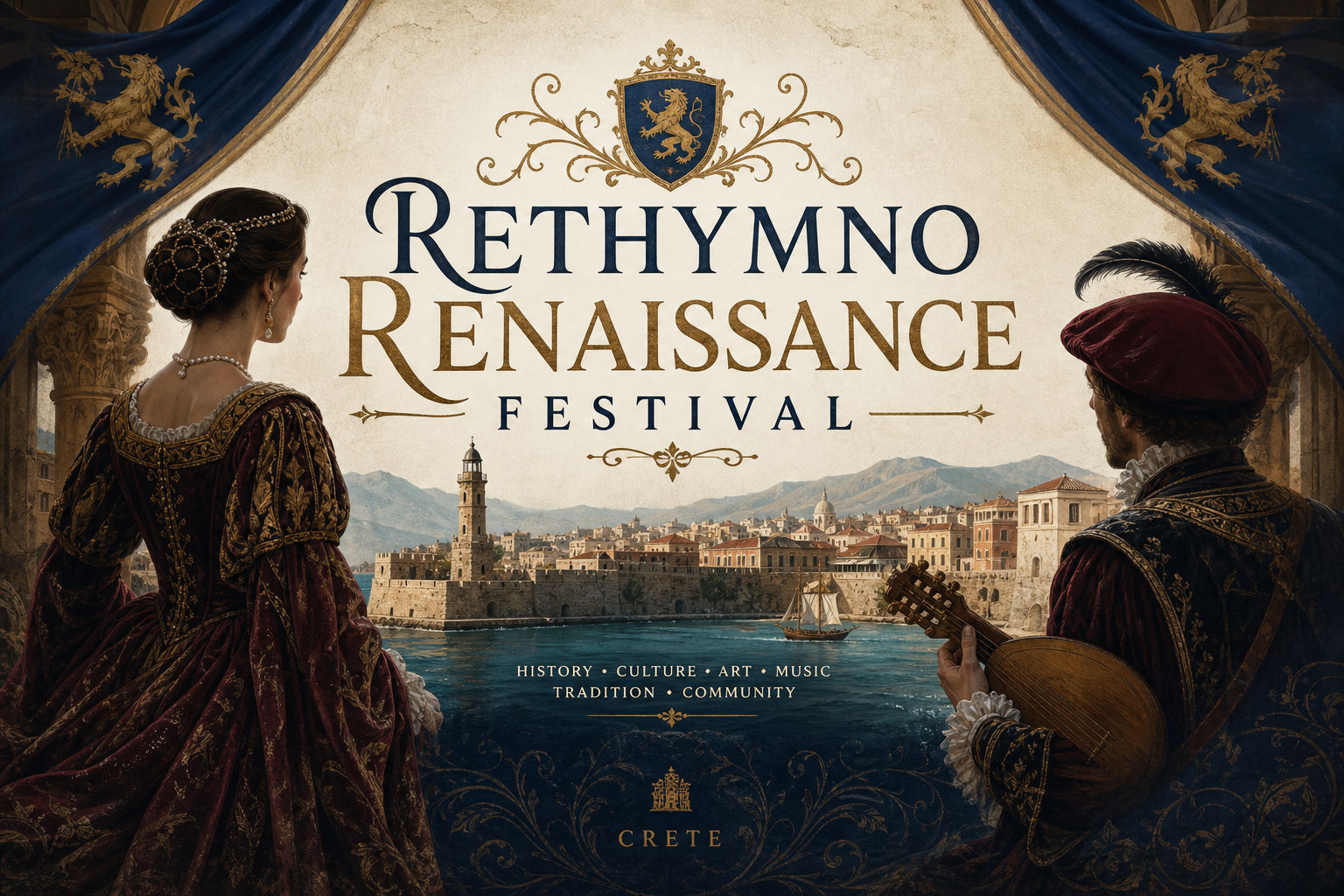
    Apokries (Greek Carnival Season) 2026 in Crete runs from Sunday, February 1 to Sunday, February 22, 2026, with Tsiknopempti (the famous smoky Thursday of grilling and feasting) on February 12, 2026. On the island of Crete, Apokries is at its most iconic in Rethymno, where Venetian old-town scenery meets weeks of costumes, floats, and high-spirited local traditions.

    Apokries 2026 Crete overview

    Apokries is Greece’s pre-Lenten Carnival season, celebrated with costumes, street parties, community gatherings, and food traditions that build toward the fasting period of Lent. In Crete, the season is especially beloved, and travel sources frequently point to Rethymno (Rethymnon) as the island’s most famous Carnival destination because it blends local Cretan culture with the town’s Venetian heritage.

    For travelers, Apokries 2026 in Crete is one of the best winter reasons to visit the island. You get culture, music, and community energy without the summer crowds, and you get to see Cretan towns in a season when locals are out celebrating rather than simply working through peak tourist demand. Instead of beach-only travel, you can build your itinerary around Old Town evenings, tavernas, and costume events in historic squares.

    Verified Apokries 2026 dates (nationwide, applies to Crete)

    A Greece holiday guide lists Apokries 2026 as running from Sunday February 1st to Sunday February 22nd. The same source lists Tsiknopempti on February 12th, 2026, which is an important cultural milestone for anyone visiting Crete for food, nightlife, and that “everyone is out” Carnival vibe.

    Odynovo Tours also confirms the 2026 Carnival season running from February 1 to February 22, reinforcing the travel-planning window for Apokries in Crete. While individual Cretan towns may schedule their biggest parades and finales on different days within that window, these dates anchor the season in a way that’s helpful for flights and accommodation planning.

    Why Crete is special during Apokries

    Crete has a strong identity year-round, and Apokries taps into that local confidence. Many Greek Carnival traditions are shared nationwide, but Cretan celebrations often feel more community-driven and more tied to neighborhood life in towns and villages. One Apokries guide highlights that Rethymno’s Carnival is rising in popularity because it mixes Venetian heritage with local Greek traditions and involves surrounding villages as well.

    Another Greek-islands Carnival guide describes how preparations in Rethymno begin early, with handmade costumes and huge floats, and notes how the Old Town transforms with people dancing through narrow streets during Carnival. That “Old Town setting” is a major advantage in Crete: you’re not watching Carnival against a generic backdrop, you’re watching it unfold through historical streets and squares that already feel cinematic.

    Rethymno Carnival: Crete’s headline Apokries experience

    If you ask where to experience Apokries in Crete, Rethymno is the name that appears again and again in travel guides. Sources describe Rethymno’s Carnival as a standout because it mixes Venetian heritage with local traditions, and because it builds over weeks rather than being only a one-day parade. The Greek-islands Carnival guide also notes that Rethymno includes imaginative handmade costumes and huge colorful floats, and that the Old Town becomes a fairytale-like setting during celebrations.

    It’s important to keep the facts clean: a full official Rethymno Carnival 2026 program with exact parade date, route, and ticketed events was not found in the sources captured here, so those details cannot be confirmed in this article. What is confirmed is that Apokries 2026 dates apply nationwide and that Rethymno is widely recognized in sources as Crete’s most popular Carnival location.

    Apokries traditions visitors can enjoy in Crete

    Even without a town-by-town schedule, Apokries has recognizable rhythms and traditions that travelers can plan around.

    Tsiknopempti (Smoke Thursday) food tradition

    Tsiknopempti is listed as February 12, 2026, and it’s a key night for eating grilled meat before Lent. A February travel guide explains Tsiknopempti as the second Thursday of the festival and describes the final week as “Cheese Week,” a transitional period toward Lent. In Crete, this often translates into packed tavernas, street-level celebration energy, and a perfect excuse to book a classic Cretan dinner experience.

    Costumes, parties, and street life

    General Carnival coverage describes Apokries as a time for vibrant parades, festive celebrations, and unique local traditions across Greece. In Crete, the best way to experience that is to spend evenings in old-town areas, where the streets themselves act like a festival venue, especially in places like Rethymno.

    Village participation

    One Apokries guide notes that surrounding villages are also included in Rethymno’s Carnival celebrations and references local customs being reenacted. For visitors who want a deeper cultural trip, this is a reminder that Crete’s Carnival experience can extend beyond the main town into smaller communities.

    Local landmarks and island travel ideas (Crete edition)

    To keep the experience grounded in place, base your Apokries trip in a town with a walkable old center. Rethymno is repeatedly described as a central Carnival hub, and its Old Town setting is part of why the celebrations feel so atmospheric. If you’re staying in Heraklion or Chania, you can still enjoy Apokries season, but the most “postcard” Carnival mood is often strongest in Rethymno’s historic streets.

    Build a Cretan winter itinerary that mixes festival time with island exploration:

    • Daytime: coastal walks, cafés, and scenic drives, since winter is calmer.
    • Evening: old-town dining and Carnival street atmosphere during Apokries weeks.
    • Key date: plan one night out around Tsiknopempti on February 12.

    Practical travel tips for Apokries 2026 in Crete

    Apokries is popular with locals, so book accommodation early if you’re targeting weekends within February 1–22, 2026, especially if you want to stay in a central old-town area. Since program details can be municipal and released later, plan your trip around the verified season window and then confirm local events closer to travel.

    Helpful packing and planning checklist:

    • Bring layers for cool evenings, especially near the sea.
    • Pack a simple costume or accessory, since Carnival participation is part of the experience.
    • If your priority is food culture, prioritize February 12 for Tsiknopempti.
    • Check the municipality calendars for Rethymno and other towns closer to the date for parade routes and official program updates (not verified here).

    Pricing and admission

    Apokries is a season rather than a single ticketed event, and no official Crete-wide admission fee applies to the Carnival period itself. Because town-specific 2026 programs and ticketed events were not captured here, specific pricing for stands, parties, or concerts cannot be verified in this response. In practice, travelers should budget for accommodation, transport between towns, meals, and optional ticketed nightlife depending on local listings and venues.

    Experience Apokries 2026 in Crete

    Apokries 2026 in Crete is the kind of winter island celebration that turns a trip into a story: costumes in the Old Town, smoky grills on Tsiknopempti (February 12), and a cultural season running from February 1 to February 22, 2026. Base yourself in a town like Rethymno that’s known for Carnival atmosphere, wander the Venetian streets, and let the island’s music, food, and community spirit guide your days. Pick your dates within the Apokries window, follow the sound of celebration through Crete’s towns, and explore the island when it’s at its most local and lively.

    Verified Information at glance

    Event Name: Apokries (Greek Carnival Season)

    Event Category: Carnival season (pre-Lenten celebrations across Greece

    Confirmed National Dates (2026): Sunday, February 1 to Sunday, February 22, 2026

    Confirmed Key Date (2026): Tsiknopempti (Smoke Thursday) on February 12, 2026

    Island Focus: Crete, Greece

    Key Cretan Carnival hub (commonly cited): Rethymno/Rethymnon Carnival (program and exact 2026 parade dates not confirmed in sources captured here)

    Typical activities (general): Costumes, parades, parties, and food-centered celebrations

    Pricing: No Crete-specific ticket pricing confirmed in cited sources

    Rethymno, Heraklion, Chania, Crete
    Feb 1, 2026 - Feb 22, 2026
    RIANA Users Meeting 2026
    Conference/Research
    TBA

    RIANA Users Meeting 2026

    RIANA Users Meeting 2026: An Overview

    RIANA Users Meeting 2026 is confirmed for 17–18 March 2026 at the Foundation for Research and Technology – Hellas (FORTH) in Heraklion, Crete, Greece, with remote participation available for those who cannot attend on site. For researchers and nanoscience and nanotechnology users, it’s a rare chance to present project ideas, share results, and connect directly with RIANA facility representatives while experiencing Crete’s early-spring energy in one of the island’s most important innovation hubs.

    RIANA Users Meeting 2026 is described as the 1st RIANA Users Meeting, organized by RIANA WP5, focused on bringing together RIANA users and facility representatives in one collaborative setting. The event is framed as a “unique opportunity” to present project ideas, showcase results, and connect with fellow researchers and RIANA facility representatives, with expectations that each Access Project’s Principal Investigator (or a delegate) will contribute through oral presentations. Additional participants are explicitly welcomed to join remotely, which makes this Crete-based meeting accessible even if travel budgets or schedules are tight.

    If you’re planning to attend in person, the setting matters. Hosting the meeting at FORTH in Heraklion places you in a serious research environment while still giving you the island advantages Crete is known for: walkable old-town evenings, coastline views, and day trips that make professional travel feel more balanced.

    Key Dates and Location

    Verified Dates, City, and Venue

    The official event page confirms the meeting will be held at the premises of FORTH in Heraklion, Crete, Greece, on 17–18 March 2026. The dedicated venue page confirms the exact address as Ν. Plastira 100, Vassilika Vouton, GR-700 13, Heraklion, Crete. These details are the foundation for booking flights, selecting accommodation, and mapping your daily transport plan between Heraklion city and the FORTH campus.

    Who Should Attend and Event Focus

    Who It's For and What Happens There

    RIANA Users Meeting 2026 is designed to support RIANA users and strengthen the RIANA community through presentations and discussion. The event page states it anticipates participation in person from each Access Project’s Principal Investigator (or delegate), contributing with oral presentations and discussions within the community. It also emphasizes the networking value of connecting with RIANA facility representatives and other researchers.

    From an attendee perspective, the meeting typically rewards preparation. If you’re presenting, bring a crisp story of your project aims, methods, and outcomes, and arrive ready to discuss how to extend the work through facility access, collaborations, and next-step experimentation.

    Remote Participation Option

    The event page explicitly confirms that remote participation will also be available for those unable to attend on site. This is an important detail for international researchers, early-career academics, and industry participants who want to stay connected to the RIANA ecosystem without committing to long travel days. If your goal is simply to listen to updates and connect with facility representatives, remote attendance may still provide meaningful value depending on the program structure.

    Registration and Planning Timeline

    Registration Deadline

    The official event page includes a clear note: the registration deadline is 31/12/2025. Since the meeting takes place in mid-March 2026, this early deadline is crucial for anyone planning attendance, especially if you need institutional approval, travel funding, or visa processing time.

    If you missed the deadline, it is still worth contacting the organizers or the support email listed in the registration area (as referenced by the Indico site navigation) to ask whether late registration or remote access is possible, but that flexibility is not confirmed in the official text captured here.

    Travel and Local Information

    Getting to FORTH: Taxi, Bus, and Transfers

    The venue page confirms that organizers plan to arrange a bus transfer from Heraklion City Center, with schedule and stop details to be announced before the meeting. If you travel independently, the page provides verified options:

    • Taxi: approximately 15 Euros from the city center to FORTH.
    • Heraklion urban bus: about 30 minutes travel time, departing from the bus station in front of the Astoria Hotel (Eleftherias Square), with a one-way ticket costing 1.60 € if purchased at the kiosk (or 2.50 € if purchased on the bus).

    For conference visitors, this is valuable because it reduces uncertainty. You can choose a city-center hotel and still have predictable access to the meeting venue without renting a car.

    Crete Local Relevance: Turning Heraklion into a Great Conference Base

    Heraklion is one of Crete’s most important hubs and a practical base for a work trip because it pairs infrastructure with authentic Cretan life. Even if your daytime schedule is full, evenings in the city can be simple and satisfying: a walk, a calm dinner, and a chance to reset for the next day’s sessions.

    If you have an extra half-day after the meeting, consider exploring nearby cultural sites and waterfront areas around Heraklion. Crete is a large island, so short local experiences often fit best during tight conference schedules.

    Tickets and Pricing

    Pricing and Tickets (What’s Confirmed)

    The official event page confirms the meeting details and registration deadline but does not publish an attendance fee or ticket pricing in the captured content. Because pricing is not listed in the verified sources here, registration costs cannot be confirmed in this article.

    Attend RIANA Users Meeting 2026 in Heraklion

    RIANA Users Meeting 2026 is confirmed for 17–18 March 2026 at FORTH in Heraklion, Crete, with a remote participation option and a program focus on presenting project ideas, showcasing results, and building RIANA community connections. With clear transport guidance from Heraklion city center to the venue, it’s straightforward to plan an efficient stay on Crete while still enjoying the island setting outside meeting hours. If your work touches nanoscience and nanotechnology user access, make plans to connect with the RIANA network in Heraklion and experience Crete as a place where research conversations and island life can fit together beautifully.

    Verified Information at a Glance

    • Event Name: RIANA Users Meeting 2026 (1st RIANA Users Meeting)
    • Event Category: Scientific users meeting / research community meeting (nanoscience and nanotechnology user community)
    • Confirmed Dates: 17–18 March 2026
    • Confirmed City/Island: Heraklion, Crete, Greece
    • Confirmed Venue: Foundation for Research and Technology – Hellas (FORTH)
    • Confirmed Venue Address: Ν. Plastira 100, Vassilika Vouton, GR-700 13, Heraklion, Crete
    • Remote participation (confirmed): Available
    • Purpose (confirmed): Present project ideas, showcase results, connect with researchers and RIANA facility representatives
    • Registration deadline (confirmed): 31/12/2025
    • Transport notes (confirmed): Planned bus transfer from Heraklion City Center; taxi about 15 Euros; urban bus about 30 minutes with one-way ticket 1.60 € (kiosk) or 2.50 € (on bus)
    • Pricing/registration fees: Not published in captured official sources
    Heraklion, Crete, Greece, Crete
    Mar 17, 2026 - Mar 18, 2026
    M. Mambo Marathonios 2026 (Edition #2)
    Festival (Dance / performances)
    TBA

    M. Mambo Marathonios 2026 (Edition #2)

    M. Mambo Marathonios 2026 (Edition #2) Overview

    M. Mambo Marathonios 2026 (Edition #2) is confirmed for April 23–27, 2026 at the Royal & Imperial Belvedere Resort in Hersonissos, Crete, Greece, with a Pre-Party on April 22 and an After-Party on April 27. It’s an all-under-one-roof island dance holiday built around mambo and salsa, pairing pool socials, marathon-style night parties, and full-board resort comfort on Europe’s southernmost island.


    Experience the Magic of Mambo in Crete

    Crete is already a dream for sun seekers, food lovers, and history fans, but in late April it becomes something else for dancers: a warm-weather escape where your daily schedule revolves around rhythm. M. Mambo Marathonios is not presented as a standard city dance congress. The official festival page frames it as the “next chapter” after a successful first edition, designed to go deeper into an immersive dance experience shaped by community feedback.

    For an island audience, the appeal is obvious. You’re not commuting between venues or losing hours in traffic. You’re living inside the event at a resort in Hersonissos, stepping from breakfast to pool socials to workshops and then into a full night of dancing that stretches into sunrise. It’s a dance vacation where the destination and the festival format reinforce each other.


    Confirmed Dates and Venue: All Under One Roof

    The official festival page confirms the main event runs April 23–27, 2026 at the Royal & Imperial Belvedere Resort in Hersonissos, Crete, explicitly describing the concept as “all under one magnificent roof.” Belvedere Resort’s own events page also confirms the same dates and venue for “M. Mambo Marathonios — Edition #2.”

    The festival page also confirms:

    • Pre-Party: April 22, 2026
    • After-Party: April 27, 2026

    This is ideal for travel planning because it gives you a clean itinerary window. If you want the full experience, arrive on April 22 to catch the pre-party energy and avoid that “first night missed” feeling.


    What Makes It a “Marathonios”: Dance All Day and Night

    M. Mambo Marathonios leans into a marathon structure: long social-dancing hours and night parties that run deep into the morning. The official program-style content on the festival page repeatedly lists pool socials in the afternoon and night parties running late (example time blocks shown include night party periods such as 23:00–07:30 in the program preview).

    That pacing is why this event attracts dancers who want immersion, not only workshops. You can treat it like a “training camp” if you’re serious about technique, or like a music-and-connection getaway if you’re primarily a social dancer.


    The Setting: Hersonissos, Crete’s North Coast Playground

    Hersonissos is one of Crete’s best-known resort areas, and it works well for a dance holiday because it has the infrastructure visitors want: hotels, beaches, restaurants, and easy access from Heraklion’s airport area. The Belvedere Resort page confirms the venue as part of its Crete resort experience and highlights hosting the festival on site.

    For an island trip, the timing is also a sweet spot. Late April in Crete often feels warm and bright without the intense crowds of July and August, making it easier to explore beaches and old towns between dance blocks.


    Food and Island Lifestyle: The Importance of Full-Board

    The festival page’s schedule preview includes daily meal blocks such as breakfast, lunch, and dinner, describing buffet-style options that include Greek and Cretan choices. Even without diving into every menu detail, the key travel takeaway is that meal planning is built into the event rhythm.

    For dancers, this is not a small detail. Full-board structure can be the difference between burning out and thriving over five days. It makes the event feel like an organized retreat, not a scattered nightlife binge.


    Exploring Crete: Activities Between Parties

    A marathon dance festival does not mean you stay indoors the whole time, especially on Crete. The festival’s program page encourages exploring the island, referencing Crete’s beaches and mountains as part of the broader travel vibe.

    If you want to keep your body fresh while still enjoying the island:

    • Choose beach time that is more “float and relax” than “full hike day.”
    • Do a short town stroll in Hersonissos or nearby areas rather than a long driving loop.
    • Book a calm cultural stop (museum or historic site) on your arrival day or after-party day, when dancing pressure is lower.


    Tickets and Pricing: What You Need to Know

    The official festival page content confirms dates, venue, and event structure, but it does not display a clear public price table in the content provided here. Because pricing can differ by pass type (event pass only vs accommodation packages, early-bird tiers, room type), the most accurate approach is to check the official pass pages and booking links on the organizer’s site when you are ready to purchase.

    One pricing detail that is confirmed on the official “MMM 4-Day Pass” page is that the accommodation tax (€10 per room, per night) is already included in the prices shown on that page. That is a helpful budgeting note for travelers comparing hotels in Crete, because it reduces surprise costs at reception.


    Practical Travel Tips for M. Mambo Marathonios 2026

    Getting There

    Crete is typically reached via Heraklion (Iraklion) airport, then a transfer to Hersonissos. If you arrive on April 22 for the pre-party, you can travel during daylight and still have time to settle in.


    What to Pack for a Dance Marathon on an Island

    • Two pairs of dance shoes (humidity and long hours matter).
    • Light layers for late-night air-conditioning or breezy terraces.
    • Blister care, because five nights of dancing can be unforgiving.
    • Swimwear, because pool socials are part of the daytime rhythm.


    Pace Yourself Like a Pro

    Marathon-style events reward smart pacing. Treat one afternoon as “recovery mode,” eat full meals, and rotate dance intensity so you can still feel great on the final night.


    Verified Information at a Glance

    Item: Confirmed details

    Event name: M. Mambo Marathonios 2026 (Edition #2)

    Event category: Dance festival / dance marathon (mambo/salsa social dancing)

    Confirmed 2026 dates: April 23–27, 2026

    Confirmed pre-party: April 22, 2026

    Confirmed after-party: April 27, 2026

    Confirmed venue: Royal & Imperial Belvedere Resort, Hersonissos, Crete, Greece

    Confirmed event format: “All under one roof” resort-style dance holiday, with pool socials and night parties (as described in program preview).

    Pricing: Full price list not confirmed in the visible official festival page content here; one confirmed budgeting detail is that the accommodation tax (€10 per room, per night) is included in displayed package prices on the official pass page.


    If you’ve been waiting for a 2026 trip where the island sun fuels your days and the music carries you through the night, set your sights on Hersonissos from April 23–27, arrive early for the April 22 pre-party, and step into M. Mambo Marathonios Edition #2 to dance Crete from poolside afternoons to sunrise socials under the Mediterranean sky.

    Royal & Imperial Belvedere Resort in Hersonissos, Crete, Greece, Crete
    Apr 23, 2026 - Apr 27, 2026
    CC Retreat Festival (Creative Consciousness) 2026
    Festival/Retreat
    TBA

    CC Retreat Festival (Creative Consciousness) 2026

    CC Retreat Festival Crete 2026: An Island Retreat for Creative Consciousness and Deep Reset

    CC Retreat Festival (Creative Consciousness) in Crete is confirmed for May 16–23, 2026 at Villas Arodamos, a retreat venue with views of the White Mountains and the Aegean Sea, about 85 km from either Chania (CHQ) or Heraklion (HER) airports. It’s an 8‑day “best of” retreat festival blending daily meditative practices, ecstatic dance, ceremonies, reflection circles, and evening bonfire sessions, designed for travelers who want their island time to feel both restorative and transformational.

    Crete has always been an island of myth, mountains, and sea, but CC Retreat Festival invites you to experience it through inner travel as much as outward exploration. Creative Consciousness frames this event as an “extraordinary 8‑day” gathering that combines daily practices, dances, ceremonies, exercises, lectures, and “lots of celebration.” The tone is clear: this is not a passive wellness holiday where you book a massage and scroll by the pool. It’s a structured retreat designed to help participants reconnect with authenticity, energy, and community.

    For an island audience, the timing is perfect. Mid‑May in Crete often feels warm and open without the peak-summer intensity, which pairs beautifully with a retreat schedule that includes early mornings, movement, reflection, and evenings under the stars. If you’re looking for a 2026 trip that offers more than sightseeing, CC Retreat Festival is built to make the island itself feel like part of the transformation.

    Confirmed Dates, Location, and Travel Access

    The official CC Retreat Festival page confirms the dates as 16–23 May 2026 in Crete, with the venue listed as Villas Arodamos. Creative Consciousness also lists the same event dates and location on its calendar, describing it as a “best of compilation” retreat festival in Crete with registration open.

    Travel logistics are unusually clear for a retreat: the event page notes Crete has two airports, Chania (CHQ) and Heraklion (HER), described as an equal distance from the venue, and it specifies the venue is about 85 km from either airport. That detail helps travelers choose flights based on price and schedules rather than guessing which airport is “better.”

    What Happens at CC Retreat Festival: A “Best of” Week of Practices and Celebration

    Creative Consciousness describes the event as composed of “best of” daily meditative practices, dances, ceremonies, exercises, lectures, gatherings, and celebration. It also frames the experience with themes like “Transformation, Liberation, Realization,” which sets expectations that the retreat is intentionally deep rather than purely recreational.

    Daily Structure and Key Activities (Confirmed)

    The event page lists a detailed itinerary outline, including:

    • A daily morning program (listed as 7:00–8:15 am) with rotating practices such as meditations, trauma yoga, chakra breathing, and more.
    • Ecstatic Dance daily, with the note that participants may DJ for one or two days.
    • Daily reflection circles with Marc A. Steinberg and daily personal silent awareness time.
    • Bonfire talks and chanting sessions.
    • A selection of retreat exercises (example given: psychodrama theater).
    • A “Gurdjieff Ceremony & Dance Night,” plus healing sessions and a one-day medicine plant ceremony listed as part of the program.

    For travel writing, this confirms the retreat is both movement-based and emotionally reflective, with a strong community focus. The daily ecstatic dance alone gives the week a celebratory heartbeat, which helps explain why this is labeled a retreat “festival” rather than a silent retreat.

    The Setting: Villas Arodamos and Crete’s Mountain-Sea Energy

    The event page highlights the venue as having “unrestricted views of the White Mountains and the Aegean Sea.” That combination is part of Crete’s magic: mountains that feel ancient and protective, and a sea horizon that feels limitless. Even if you’re attending primarily for the program, the environment matters because retreats tend to amplify what’s around you.

    Because the venue is away from the busiest resort strips, you can expect a quieter atmosphere that supports early mornings, meditation, and nightly bonfires. If you’ve ever tried to “reset” in a crowded tourist zone, you’ll understand why this kind of location choice can be the difference between a true retreat and a vacation that simply includes yoga.

    Cultural and Island Context: How to Experience Crete Respectfully During a Retreat

    A retreat week can become intense, so it helps to keep your relationship with the island gentle and respectful. Crete is home to living traditions, villages, and sacred sites, and even simple behaviors like dressing appropriately when visiting churches and being mindful in small communities go a long way.

    CC Retreat Festival’s programming leans into themes of authenticity and consciousness. A natural way to align your travel behavior with that spirit is to support local businesses before or after your retreat week: eat at family-run tavernas, buy local olive oil or honey, and keep your footprint light.

    Practical Travel Tips for CC Retreat Festival 2026

    When to Arrive and Depart

    Because the retreat runs May 16–23, arriving on May 15 is a smart buffer, especially if you want to recover from travel and settle into the venue rhythm. If possible, consider staying one extra day after May 23 so your departure does not feel rushed and you have time to integrate before flying.

    What to Pack for an 8-Day Retreat on an Island

    • Light layers for morning practice and evenings outdoors.
    • Comfortable movement clothing for yoga, dance, and ceremony work.
    • A journal, since reflection circles and personal awareness time are part of the program.
    • Walking shoes for short nature breaks, because the venue is positioned for views and outdoor connection.

    Who This Retreat Is Best For

    Based on the confirmed program, this retreat is ideal for travelers who enjoy embodied practices (dance, breathwork, yoga) and group processes (reflection circles, community exercises), not just spa relaxation.

    Tickets and Pricing: What’s Confirmed (and What Is Not)

    The CC Retreat Festival page confirms that registration is open and notes that “space is strictly limited to 24 persons.” However, the page content provided does not publish a clear 2026 price list for attendance, accommodation, or meal packages.

    Because retreat pricing often varies by room type and booking phase, the most accurate guidance is to verify current prices directly through the official Creative Consciousness registration flow and calendar listing before committing.

    Verified Information at a Glance

    Item: Confirmed details

    Event name: CC Retreat Festival (Creative Consciousness)

    Event category: Retreat festival (meditative practices, ecstatic dance, ceremonies, workshops/lectures, community gatherings)

    Confirmed 2026 dates: May 16–23, 2026

    Confirmed location: Villas Arodamos, Crete, Greece

    Nearest airports (confirmed guidance): Chania (CHQ) or Heraklion (HER), venue listed as about 85 km from either.

    Confirmed program elements: Daily morning practices (7:00–8:15), daily ecstatic dance, reflection circles with Marc A. Steinberg, bonfire talks/chanting, ceremony nights, healing sessions, 1-day medicine plant ceremony.

    Registration status: Registration open; space limited to 24 persons.

    Pricing: Not published in the accessible page content here; confirm through official registration.

    If Crete is calling you in 2026 and you want an island week that leaves you lighter, clearer, and more alive than when you arrived, plan for May 16–23 at Villas Arodamos, fly into Chania or Heraklion, and step into CC Retreat Festival ready to move, reflect, and celebrate under the White Mountains and the Aegean sky.

    Villas Arodamos, Crete, Greece , Crete
    May 16, 2026 - May 23, 2026

    Past Events

    Souvenirs, Gifts, Folk Art, Fashion & Accessories Trade Fair - Crete 2026
    Trade Show
    Free

    Souvenirs, Gifts, Folk Art, Fashion & Accessories Trade Fair - Crete 2026

    The Mediterranean's largest island transforms into a vibrant commercial hub every January when the Souvenirs, Gifts, Folk Art, Fashion & Accessories Trade Fair returns to Crete. The 37th edition takes place from January 23 to 26, 2026, at the International Exhibition Centre of Crete in Gournes, Heraklion, launching the tourism trade fair season with exceptional opportunities for professionals across Greece's hospitality and retail sectors. This prestigious four-day event serves as the cornerstone of a multi-city series organized by Alfa Expo, bringing together exhibitors, buyers, and industry professionals in one of the island's most strategic business environments.​

    Understanding the Touristika Expo Series

    The Crete trade fair represents the first stop in a carefully orchestrated circuit of tourism-focused exhibitions that travel across Greece's most significant tourist destinations throughout early 2026. Following the Crete event, the fair continues to Rhodes (February 6-8), Thessaloniki (February 14-16), and Corfu (February 27-March 1), creating a comprehensive network that connects suppliers with buyers across the nation's key tourism markets.​

    This strategic multi-city approach allows exhibitors to maximize their reach while giving regional buyers convenient access to the latest products, trends, and commercial partnerships without traveling to Athens or international trade shows. For Crete specifically, hosting the opening fair positions the island as the commercial gateway to Greece's tourism season, attracting the most motivated buyers eager to secure inventory and establish partnerships for the year ahead.​

    The 37th Edition: Four Days of Business Opportunity

    The 2026 Crete edition marks the 37th year of this established trade fair, demonstrating its long-standing importance to Greece's tourism and retail sectors. Running from Friday, January 23 through Monday, January 26, the event provides an extended weekend format that accommodates professional schedules while maximizing networking and business development opportunities.​

    The fair operates exclusively as a trade-only event, meaning admission is restricted to industry professionals including retailers, hoteliers, tourism operators, boutique owners, and wholesalers. This professional-only structure ensures a serious commercial environment where meaningful business relationships develop, orders are placed, and strategic partnerships form without the distractions of consumer foot traffic.​

    Exhibition Categories and Product Sectors

    The trade fair encompasses diverse product categories that reflect the full spectrum of tourism-related retail needs. Primary sectors include handicraft products, gifts and souvenirs, decoration items, home and office design, furniture, lighting solutions, fashion and clothing, and tourism-related accessories and supplies. This comprehensive scope allows buyers to source everything from traditional Greek folk art to contemporary fashion accessories within a single efficient venue.​

    Exhibitors showcase both authentic Cretan crafts and international products, creating a marketplace where traditional island artisans display alongside modern designers and wholesale suppliers. The result is a dynamic commercial environment where heritage meets innovation, and local culture intersects with global tourism trends.

    The Venue: International Exhibition Centre of Crete

    Located in Gournes, a coastal area approximately 16 kilometers east of Heraklion city center, the International Exhibition Centre of Crete (IECC) provides modern facilities specifically designed for large-scale trade events. The venue occupies part of the former American airbase that operated in Gournes until the early 1990s, with the repurposed military infrastructure now serving commercial, research, and cultural functions.​

    The exhibition center's proximity to Nikos Kazantzakis International Airport, just 6 kilometers away, offers exceptional convenience for exhibitors and buyers traveling from other Greek islands, mainland Greece, or international destinations. This strategic location balances accessibility with sufficient space for comprehensive exhibitions, while placing visitors within easy reach of Heraklion's commercial district, historic attractions, and hospitality infrastructure.​

    Gournes: Beyond the Exhibition Halls

    The Gournes area itself offers attractions worth exploring before or after trade fair sessions. The Cretaquarium, one of southern Europe's largest marine aquariums, occupies former airbase buildings and showcases Mediterranean marine ecosystems through impressive displays. This facility provides an engaging diversion for international visitors combining business with leisure during their Crete stay.​

    The nearby beach offers opportunities for seaside walks along the island's stunning northern coastline, while local tavernas serve authentic Cretan cuisine featuring the island's renowned olive oil, fresh seafood, and traditional dishes. The fertile surrounding plain, characterized by olive groves and agricultural landscapes, reminds visitors of Crete's deep agricultural heritage that continues influencing the island's artisanal products and folk art traditions.​

    Crete's Rich Tradition of Folk Art and Crafts

    Understanding Crete's artisanal heritage provides essential context for appreciating the trade fair's significance to island culture and economy. The island maintains centuries-old craft traditions that directly influence the souvenirs, folk art, and handmade products featured prominently at the exhibition.​

    Authentic Cretan Handicrafts

    Cretan pottery represents one of the island's most ancient and respected crafts, with roots extending back to Minoan civilization over 4,000 years ago. Villages like Thrapsano and Margarites remain renowned for ceramic production, where artisans create both traditional designs and contemporary pieces using time-honored techniques. Exhibitions featuring these authentic pottery items connect modern commerce with archaeological heritage, offering buyers products that carry genuine cultural significance.​

    Kopaneli, the traditional Cretan bobbin lace, represents another distinctive island craft that appears in trade fair displays. This intricate lacework technique has been passed through generations of Cretan women, creating delicate textiles used for home decoration, fashion accessories, and gift items that embody the island's patient artistry and attention to detail.​

    Olive wood carvings showcase another quintessentially Cretan material, transforming the island's abundant olive trees into functional kitchen items, decorative sculptures, and unique souvenirs. Leather goods produced using traditional methods, handwoven textiles created on village looms, and embroidered linens crafted by women's cooperatives all represent authentic island products that distinguish Cretan offerings from mass-produced imports.​

    Strategic Business Advantages for Trade Fair Participants

    Attending the Crete edition as the series opener provides specific strategic advantages for both exhibitors and buyers. The January timing allows retailers and hoteliers to establish inventory and supplier relationships before the peak tourism season begins, ensuring adequate stock for the busy spring and summer months when visitor numbers surge across Greek islands.​

    For exhibitors, the four-day format provides ample opportunity to develop meaningful relationships with buyers, demonstrate products thoroughly, negotiate terms, and secure orders that justify the investment in booth space and materials. The professional-only environment ensures that conversations remain focused on commercial objectives rather than casual browsing, maximizing productivity and return on participation investment.

    Buyers benefit from concentrated access to diverse suppliers under one roof, enabling efficient comparison shopping, trend identification, and relationship building that would require weeks of individual supplier visits if conducted separately. The ability to place orders with multiple suppliers during a single trip reduces procurement costs while building a comprehensive vendor network.

    Exploring Heraklion During the Trade Fair

    Visitors attending the trade fair have excellent opportunities to experience Heraklion's cultural and historical attractions during evenings and between business sessions. As Crete's capital and largest city, Heraklion offers exceptional Mediterranean urban experiences that blend ancient heritage with contemporary island life.​

    Historic Attractions and Cultural Sites

    The Heraklion Archaeological Museum houses one of the world's finest collections of Minoan artifacts, providing fascinating insight into Europe's oldest civilization. The museum's treasures include pottery, frescoes, jewelry, and sculptures excavated from sites across Crete, creating context for understanding the island's long artistic and commercial traditions.​

    Knossos Palace, located just south of Heraklion, represents the ceremonial and political center of Minoan civilization. Walking through the partially reconstructed palace complex reveals the sophisticated architecture, advanced engineering, and artistic achievements of Bronze Age Crete, demonstrating that the island's reputation for quality craftsmanship extends back millennia.​

    The Venetian Fortress Rocca a Mare, guarding Heraklion's harbor, and the Morosini Fountain in the city center showcase the island's Venetian period architecture, when Crete served as a crucial Mediterranean trading hub. These landmarks remind visitors that commercial exchange has shaped Cretan culture for centuries, making the modern trade fair part of this long mercantile tradition.​

    Winter Climate and Island Atmosphere

    January in Crete offers mild Mediterranean winter weather, with comfortable daytime temperatures ideal for exploring outdoor attractions between business sessions. While swimming season has concluded, the pleasant climate allows hiking through gorges, visiting archaeological sites, and exploring charming villages without summer's intense heat and crowded tourist conditions.​

    Winter Crete reveals the island's authentic character, when local life continues at its natural pace unburdened by peak season tourism pressures. Visitors experience genuine Cretan hospitality in tavernas serving traditional dishes, observe daily rhythms in village squares, and connect with island culture in ways that summer's crowds often obscure.​

    Practical Information for Trade Fair Attendees

    Professional visitors planning to attend the Souvenirs, Gifts, Folk Art, Fashion & Accessories Trade Fair should arrange accommodations in advance, particularly if combining the Crete event with subsequent fairs in Rhodes, Thessaloniki, or Corfu. Heraklion offers diverse lodging options from business hotels near the city center to resort properties along the coast, with January rates significantly lower than peak summer season pricing.​

    Transportation to the International Exhibition Centre in Gournes is accessible via rental car, taxi, or organized shuttle services that exhibition organizers typically arrange for major trade events. The venue's location between Heraklion city and the airport allows convenient access from either direction, with clear signage directing visitors to the former Gournes base where the exhibition center operates.​

    Trade professionals attending should verify their credentials and registration in advance, as the professional-only policy requires documentation confirming commercial status in relevant industries. This typically includes business cards, tax identification numbers, or professional association membership that demonstrates legitimate commercial interest in the exhibition's product categories.​

    Supporting Cretan Artisans and Island Economy

    Participation in this trade fair directly supports Crete's artisan communities and contributes to preserving traditional island crafts for future generations. When buyers source authentic Cretan products through fair connections, they help sustain village cooperatives, family workshops, and independent craftspeople who maintain centuries-old techniques threatened by mass production and imported alternatives.​

    The economic impact extends beyond individual artisans to encompass the broader tourism sector that depends on authentic cultural products to differentiate Greek islands from competing Mediterranean destinations. Souvenirs and folk art that genuinely reflect Cretan heritage create meaningful visitor experiences, encouraging repeat tourism and positive word-of-mouth that benefits the entire island economy.

    Your Gateway to Greece's Tourism Trade Network

    The Souvenirs, Gifts, Folk Art, Fashion & Accessories Trade Fair in Crete 2026 represents far more than a commercial exhibition. It embodies the intersection of island heritage and modern tourism economy, where traditional crafts meet contemporary retail needs and local artisans connect with global markets. The event launches Greece's premier tourism trade fair circuit while celebrating Crete's position as the nation's largest and most culturally rich island destination.

    Whether you're a retailer seeking unique Mediterranean products, a hotelier sourcing distinctive amenities, a boutique owner discovering emerging designers, or a wholesaler building supplier networks across Greek islands, this four-day professional gathering delivers unmatched commercial value within one of Europe's most captivating island settings.

    Mark your calendar for January 23 through 26, 2026, and prepare to join Greece's tourism trade community at the International Exhibition Centre of Crete in Gournes. Book your travel and accommodations now to secure optimal arrangements for this essential industry event. Connect with authentic Cretan artisans, discover trending products, establish lasting supplier relationships, and position your business for a successful 2026 tourism season.

    The Mediterranean's premier island trade fair awaits. Your strategic business partnerships begin in Crete.

    Verified Information at Glance

    Event Category: B2B Trade Fair / Tourism Industry Exhibition / Professional Wholesale Market

    Event Name: 37th Souvenirs, Gifts, Folk Art, Fashion & Accessories Trade Fair - Crete

    Organizer: Alfa Expo / Touristika Expo​

    Confirmed Dates: Friday, January 23 to Monday, January 26, 2026​

    Duration: 4 days​

    Venue: International Exhibition Centre of Crete (IECC)​

    Venue Address: Former Base of Gournes, 71500 Heraklion, Crete, Greece​

    Distance from Airport: 6.10 km from Nikos Kazantzakis International Airport (HER)​

    Distance from City Center: 16 km from Heraklion center​

    Admission Type: Trade professionals only (not open to general public)​

    Product Categories: Handicraft products, gifts and souvenirs, decoration, home and office design, furniture, lighting, fashion, clothing, tourism accessories​

    Target Audience: Retailers, hoteliers, tourism operators, wholesalers, boutique owners, professional buyers​

    Series Events: Part of multi-city circuit including Rhodes (Feb 6-8), Thessaloniki (Feb 14-16), Corfu (Feb 27-Mar 1)​

    Contact: International Exhibition Center of Crete, Tel: +30 281 076 3301​

    Event Significance: Opens the 2026 tourism trade fair season in Greece's most important tourist destinations​

    International Exhibition Center of Crete, Heraklion, Crete
    Jan 23, 2026 - Jan 26, 2026
    Epiphany Day Blessing of the Waters 2026
    Religious, Traditional
    Free

    Epiphany Day Blessing of the Waters 2026

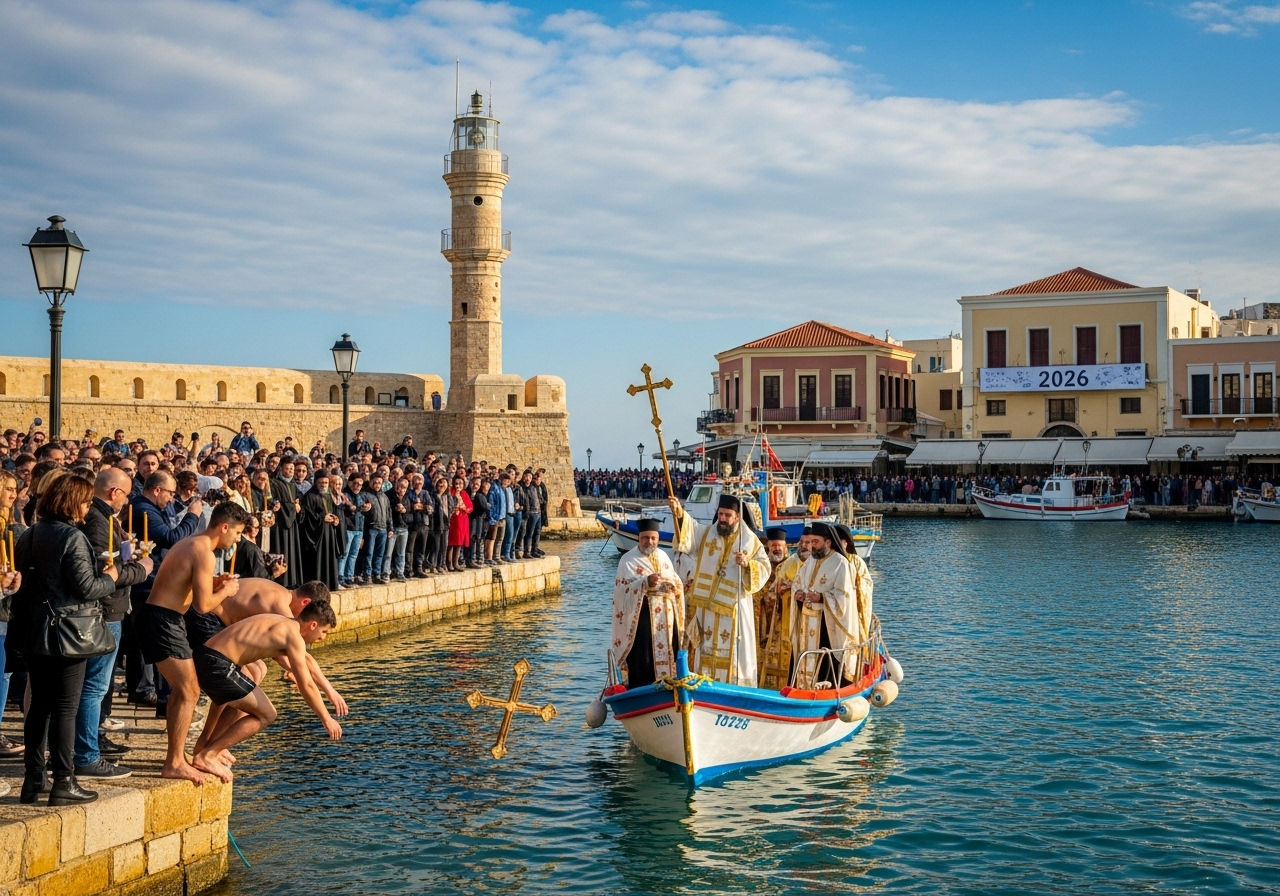
    The Epiphany Day Blessing of the Waters on January 6, 2026, in Crete represents one of the most profound and spectacular religious celebrations in the Orthodox Christian calendar. Known locally as "Ta Fota" (The Lights) or "Theofania," this sacred festival commemorates the baptism of Jesus Christ in the Jordan River and marks the revelation of the Holy Trinity. Across Crete's harbors, beaches, rivers, and even the renowned Cretaquarium, thousands gather to witness brave swimmers dive into winter waters to retrieve blessed crosses, creating unforgettable moments of faith, community, and tradition.

    This ancient ceremony transforms the island's coastal cities into centers of spiritual celebration, where centuries-old traditions blend seamlessly with modern expressions of faith. The event concludes the twelve-day Christmas season and offers visitors a unique opportunity to witness one of Greece's most authentic and deeply meaningful religious observances.

    The Sacred Significance of Epiphany

    Ancient Origins and Religious Meaning

    Epiphany stands as one of the oldest and most revered celebrations in the Orthodox Church, holding profound theological significance that extends far beyond its ceremonial aspects. The festival commemorates three pivotal moments in Christian history: the baptism of Jesus by John the Baptist, the visit of the Magi to the Christ child, and the miracle at the wedding in Cana. For Orthodox Christians, this day represents the "Theophany" or manifestation of God, when Jesus was revealed as both fully human and fully divine.

    The celebration marks the culmination of the twelve-day Christmas period, serving as both a conclusion to holiday festivities and a spiritual preparation for the year ahead. This timing creates a unique atmosphere where the joy of Christmas merges with the solemnity of religious observance, making January 6th one of the most emotionally resonant dates in the Orthodox calendar.

    The Symbolism of Water Blessing

    The central ritual of water blessing carries deep symbolic meaning that connects participants to the fundamental elements of Christian faith. Water represents purification, renewal, and spiritual rebirth, while the cross symbolizes Christ's sacrifice and resurrection. When priests cast blessed crosses into harbors, seas, and rivers across Crete, they sanctify not only the water but also the natural world, affirming the Orthodox belief in God's presence throughout creation.

    The act of diving for the cross transforms individual participants into living symbols of faith and courage, as they plunge into winter waters to retrieve the sacred object. This dramatic moment creates a powerful visual representation of spiritual dedication that resonates with believers and observers alike, making the ceremony both deeply personal and universally inspiring.

    Major Celebration Locations Across Crete

    Heraklion: The Capital's Grand Ceremony

    Heraklion hosts Crete's most spectacular Epiphany celebration, beginning with special liturgical services at the Holy Cathedral of Saint Titus and culminating in the dramatic harbor ceremony. The day commences with the Orthros service and Festive Hierarchical Divine Liturgy, followed by the Great Blessing of the Waters at the cathedral, creating a spiritual foundation for the public celebration.

    The traditional procession from the cathedral to Heraklion harbor begins around 10:30 AM, with hundreds of faithful following clergy through the historic city center. At 11:00 AM, the harbor comes alive as priests perform the water blessing ceremony, casting the sacred cross into the Mediterranean while crowds gather along the waterfront to witness the spectacle.

    The climactic moment arrives when brave swimmers, predominantly young men but increasingly including women, dive into the cold January waters to retrieve the cross. According to tradition, whoever recovers the cross receives special blessings and good fortune for the entire year, creating intense competition and excitement among participants. The ceremony concludes with the release of a white dove, symbolizing the Holy Spirit and adding a peaceful, transcendent element to the celebration.

    Cretaquarium: A Unique Modern Tradition

    The Cretaquarium in Heraklion offers a distinctive twist on the traditional Epiphany celebration, hosting a special water blessing ceremony led by His Eminence Archbishop Eugenios of Crete. This modern venue demonstrates how ancient traditions adapt to contemporary settings while maintaining their spiritual significance.

    The aquarium opens with regular admission from 9:30 AM to 12:00 PM on January 6th, after which free tickets are issued for visitors to attend the 1:00 PM water blessing ceremony. Safety protocols ensure controlled access, with designated viewing areas managed by aquarium staff to provide optimal experiences for all participants. Following the ceremony, visitors who couldn't attend the blessing receive complimentary admission until 4:00 PM, extending the celebration throughout the afternoon.

    Chania: Harbor Celebrations and Local Traditions

    Chania's Epiphany celebration centers around the city's iconic Venetian Harbor, where the ceremony takes place against the backdrop of the historic lighthouse and 14th-century architecture. The Municipal organization coordinates the water blessing at the central water reservoir in the Saint John parish, located at the end of Iggoumenou Gavriil Street, at 11:00 AM.

    The picturesque setting of Chania's Old Town provides an enchanting atmosphere for the celebration, as the narrow alleys and waterfront areas fill with locals and visitors gathering to witness the traditional ceremony. The intimate scale of Chania's celebration allows for closer interaction between participants and observers, creating opportunities for meaningful cultural exchange and authentic experiences.

    Rethymno and Regional Celebrations

    Throughout Crete's regional municipalities, dozens of water blessing ceremonies take place simultaneously, demonstrating the island-wide significance of this sacred tradition. The Municipality of Faistos coordinates multiple ceremonies throughout the day, beginning at 10:00 AM in Pombia and continuing through locations including Zaros, Matala, Kalamaki, and Kokkino Pyrgos until 3:00 PM.

    The Municipality of Viannos schedules harbor and beach ceremonies from 10:30 AM through 12:15 PM, covering locations from Ano Viannos reservoir to Kastri Harbor. These regional celebrations maintain the same spiritual significance as major city events while offering more intimate, community-focused experiences that connect visitors with local traditions and customs.

    The Dramatic Cross Diving Tradition

    Preparation and Participants

    The cross diving tradition represents the most visually spectacular and emotionally charged aspect of Epiphany celebrations. Participants, traditionally young men but increasingly including women in recent decades, prepare for weeks leading up to the ceremony, building physical conditioning and mental fortitude necessary for diving into winter Mediterranean waters.

    The preparation extends beyond physical readiness to include spiritual preparation, as many participants attend special services and engage in prayer and fasting leading up to the ceremony. This spiritual preparation transforms the diving from mere competition into an act of faith and devotion that connects participants to centuries of Orthodox tradition.

    Local diving clubs and swimming organizations often coordinate training sessions for prospective participants, ensuring safety while maintaining the authentic character of the tradition. These preparations create community bonds and generational connections as experienced divers mentor newcomers in both technique and spiritual significance.

    The Moment of Truth

    The actual moment when priests cast the cross creates an atmosphere of intense anticipation and spiritual focus. Dozens of swimmers position themselves in the water, awaiting the precise moment when the blessed cross enters the sea. The sudden rush of bodies diving and swimming creates a dramatic spectacle that embodies the passion and dedication of Orthodox faith.

    Spectators lining harbors, beaches, and waterfront areas cheer enthusiastically as swimmers compete to reach the cross, creating an atmosphere that combines religious solemnity with celebratory excitement. The moment when a successful diver emerges with the cross generates spontaneous applause and celebration, as the community recognizes both the individual achievement and the collective blessing it represents.

    The successful retriever receives special recognition from presiding clergy and the gathered community, often including personal blessings and ceremonial honors that extend throughout the year. This recognition transforms individual participants into community symbols of faith and courage, creating lasting connections between personal achievement and communal celebration.

    Traditional Customs and Cultural Elements

    Epiphany Carols and Music

    Like Christmas and New Year's Eve, Epiphany features its own traditional carols known as "Fota Kalanda," performed by children and adults throughout Crete's villages and cities. These regional variations of traditional songs reflect local dialects and customs while maintaining the universal themes of light, blessing, and spiritual renewal.

    The carol singers, often dressed in traditional costumes, go door-to-door sharing music and receiving coins and sweets in return. This tradition creates opportunities for intergenerational connection and cultural transmission, as older residents share stories and memories while younger participants learn traditional melodies and customs.

    Many communities organize special musical performances and cultural programs that accompany the water blessing ceremonies, featuring traditional Cretan instruments and folk songs that enhance the celebratory atmosphere. These musical elements help create the distinctive character that distinguishes Cretan Epiphany celebrations from similar observances elsewhere in Greece.

    House Blessings and Holy Water

    Following the public water blessing ceremonies, Orthodox priests visit homes throughout their parishes to perform individual house blessings using holy water blessed during the Epiphany service. This tradition extends the sacred celebration into private spaces, connecting family life with communal worship and creating lasting spiritual connections between households and the broader Orthodox community.

    The house blessing ritual involves sprinkling holy water throughout living spaces while reciting special prayers for protection, prosperity, and spiritual well-being. Family members often gather to receive individual blessings, creating intimate moments of faith that complement the public spectacle of the harbor ceremonies.

    Many Cretan families preserve blessed water from Epiphany throughout the year, using it for special occasions, illnesses, or moments when spiritual support is needed. This practice maintains the connection between the annual celebration and daily spiritual life, ensuring that Epiphany's significance extends far beyond January 6th.

    Practical Information for Visitors

    Weather and What to Expect

    January weather in Crete creates ideal conditions for witnessing Epiphany celebrations, with mild Mediterranean temperatures typically ranging from 10°C to 16°C (50°F to 60°F). While too cool for beach activities, these comfortable temperatures allow for extended outdoor observation of ceremonies without the harsh winter conditions found in northern European destinations.

    Visitors should dress in layers and bring waterproof jackets, as January can include occasional rainfall that adds dramatic atmosphere to ceremonies without significantly disrupting outdoor events. The mild climate means that harbors and waterfront areas remain accessible throughout the day, allowing visitors to move freely between different ceremony locations.

    The absence of summer crowds creates optimal viewing conditions at all ceremony locations, while the off-season atmosphere allows for more intimate interactions with local participants and observers. Many visitors find January's quieter pace particularly appealing for experiencing authentic cultural traditions without tourist distractions.

    Accommodation and Cost Advantages

    January represents Crete's off-season period, offering significant cost advantages for visitors interested in experiencing Epiphany celebrations. Accommodations, car rentals, and travel services typically cost 40% less than comparable summer rates, making this an attractive time for budget-conscious travelers seeking authentic cultural experiences.

    Most hotels and guesthouses remain open during January, often providing more personalized service due to lower occupancy rates. Many establishments offer special packages that include transportation to ceremony locations and guidance about local traditions and customs.

    Restaurant reservations are generally unnecessary during January, and many establishments offer extended hours on Epiphany Day to accommodate celebration schedules. This accessibility allows visitors to experience authentic Cretan cuisine and hospitality while participating in religious and cultural observances.

    Photography and Cultural Sensitivity

    Epiphany celebrations provide exceptional photography opportunities, from the dramatic moment of cross diving to the solemn beauty of liturgical processions. The combination of religious significance, natural beauty, and human drama creates compelling visual stories that capture the essence of Orthodox tradition and Cretan culture.

    Visitors should maintain respectful behavior during religious services and ceremonies, understanding that these events hold deep spiritual significance for participants and observers. Photography is generally welcomed during public ceremonies, but visitors should avoid disrupting worship services or intruding on private moments of prayer and blessing.

    The golden light of January afternoons, combined with Mediterranean coastal settings, creates particularly stunning photographic conditions during harbor ceremonies. Many professional photographers travel to Crete specifically for Epiphany celebrations, recognizing the unique visual opportunities provided by this authentic cultural event.

    Regional Ceremony Schedule and Locations

    Municipality of Malevizi Celebrations

    The Municipality of Malevizi coordinates multiple simultaneous ceremonies throughout its coastal and inland areas, beginning at 11:00 AM with events in Krousonas and Ammoudara. The schedule continues through Lygaria, Agia Pelagia, and Palaiokastro, concluding with the Fodele Beach ceremony at 1:30 PM.

    These coordinated events allow visitors to experience multiple ceremonies in a single day, witnessing how different communities interpret and celebrate the same sacred tradition. Each location offers unique characteristics, from the fishing shelter atmosphere in Pantanassa to the resort beach setting of Agia Pelagia.

    Southern Coast and Mountain Communities

    The Municipality of Gortyna schedules ceremonies from the ancient aqueduct in Plora through coastal locations including the Holy Monastery of Koudoumas and the beaches of Lentas and Loutres Harbor. These diverse locations demonstrate how Epiphany traditions adapt to different geographical and cultural settings while maintaining their essential spiritual character.

    Mountain communities like those around the Gergeri Reservoir offer intimate ceremonies that connect Orthodox tradition with Crete's inland agricultural heritage. These locations provide alternatives to crowded harbor celebrations while maintaining the authentic character of traditional observance.

    Dam and Reservoir Ceremonies

    The Development Organization of Crete coordinates special ceremonies at major water management facilities, including the Aposelemi Dam in Heraklion and Amari Dam in Rethymno. These modern locations demonstrate how ancient traditions adapt to contemporary infrastructure while maintaining their spiritual significance.

    The ceremony at Agios Georgios Reservoir on the Lassithi Plateau offers a unique mountain setting that combines spiritual observance with spectacular natural beauty. These inland ceremonies attract fewer crowds while providing authentic experiences of Orthodox tradition in peaceful, contemplative settings.

    The Living Heritage of Faith

    Community Bonds and Cultural Continuity

    Epiphany celebrations in Crete represent far more than annual religious observance; they embody the living heritage of a community that has maintained its spiritual and cultural identity through centuries of historical change. The ceremony creates bonds between generations as grandparents share memories with grandchildren, ensuring that traditional knowledge and values pass from one generation to the next.

    Local cultural associations coordinate traditional New Year's cake-cutting ceremonies following water blessing services, extending the celebration and creating opportunities for community fellowship. These gatherings demonstrate how religious observance integrates seamlessly with social traditions and cultural practices that define Cretan identity.

    The participation of entire communities in Epiphany celebrations, from young children singing carols to elderly residents sharing stories and blessings, creates a comprehensive cultural experience that encompasses all aspects of local life. This inclusivity makes the celebration particularly meaningful for visitors seeking authentic cultural immersion.

    Modern Adaptations and Timeless Traditions

    While maintaining their essential spiritual character, Epiphany celebrations in Crete continue to evolve and adapt to contemporary circumstances. The inclusion of modern venues like the Cretaquarium demonstrates how traditional observances can embrace new settings while preserving their sacred significance.

    The increasing participation of women in cross diving reflects broader social changes while maintaining the ceremony's spiritual core. These adaptations ensure that Epiphany remains relevant and meaningful for new generations while honoring the traditions that have sustained the celebration for centuries.

    Social media and digital photography now document and share Epiphany celebrations worldwide, extending their reach and impact far beyond Crete's shores. This technological integration helps preserve cultural traditions while introducing them to global audiences who may develop deeper appreciation for Orthodox heritage and Greek culture.

    Experience the profound beauty and spiritual power of Crete's Epiphany celebrations on January 6, 2026. Join thousands of faithful and curious visitors who gather annually to witness one of the Orthodox world's most dramatic and meaningful traditions. Whether you're drawn by spiritual curiosity, cultural interest, or the desire for authentic travel experiences, the Blessing of the Waters offers unforgettable moments that connect you to centuries of faith and tradition. Plan your visit to coincide with this sacred celebration and discover why Epiphany in Crete creates memories that last a lifetime and spiritual connections that transcend cultural boundaries.

    Verified Information at Glance

    Event: Epiphany Day Blessing of the Waters 2026

    Date: Monday, January 6, 2026

    Religious Significance: Commemoration of Jesus Christ's baptism in Jordan River

    Main Locations: Heraklion Harbor (11:00 AM), Cretaquarium (1:00 PM), Chania (11:00 AM)

    Key Ceremony: Priests cast blessed crosses into water; swimmers dive to retrieve them

    Cultural Name: "Ta Fota" (The Lights) or "Theofania" in Greek

    Duration: Single day event with ceremonies across multiple locations

    Weather: Mild Mediterranean climate, 10°C to 16°C (50°F to 60°F)

    Admission: Free public ceremonies; some venues offer special access arrangements

    Special Features: White dove release, traditional carols (Fota Kalanda), house blessings

    Regional Coverage: Island-wide celebrations in all major municipalities

    Cretaquarium Event: Free tickets available after 12:30 PM for 1:00 PM ceremony

    Cultural Significance: Marks end of 12-day Christmas season

    Traditional Elements: Cross diving competition, community processions, holy water blessings

    Note: Specific ceremony times may vary by location. Visitors should confirm local schedules with municipal authorities or Orthodox parishes for precise timing information.

    Heraklion Harbor (11:00 AM), Cretaquarium (1:00 PM), Chania (11:00 AM), Crete
    Jan 6, 2026 - Jan 6, 2026
    New Year's Eve Celebrations 2026
    Holiday, Community
    Free

    New Year's Eve Celebrations 2026

    As midnight approaches on December 31st, 2025, Crete transforms into a magical island of celebration where ancient Greek traditions blend seamlessly with modern festivities. The largest Greek island offers an enchanting New Year's Eve experience that combines warm Mediterranean hospitality, spectacular fireworks displays, and time-honored customs that have been cherished for generations.

    The heart of Cretan New Year's celebrations beats strongest in the island's historic cities of Heraklion, Chania, and Rethymno, where thousands gather to welcome 2026 with joy, music, and the promise of new beginnings. Unlike the cold winter celebrations found elsewhere in Europe, Crete's mild December climate creates perfect conditions for outdoor festivities that last well into the early hours of January 1st.

    The Cultural Significance of New Year's Eve in Crete

    Ancient Traditions Meet Modern Celebrations

    New Year's Eve holds profound cultural significance for Cretans, representing far more than just a calendar change. The celebration centers around the figure of Ayios Vassilis (Saint Basil), the Greek equivalent of Santa Claus, who brings gifts to children on New Year's Eve rather than Christmas. This beloved tradition transforms December 31st into the most anticipated night of the holiday season for Greek families.

    The island's celebration period extends far beyond a single evening, encompassing the entire twelve-day period from December 25th to January 6th (Epiphany). This extended festive season allows visitors to experience the full spectrum of Cretan holiday traditions, from Christmas markets to the dramatic Blessing of the Waters ceremony on Epiphany.

    The Sacred Tradition of Vasilopita

    The centerpiece of every Cretan New Year's celebration is the cutting of the Vasilopita, a special sweet cake that embodies hope and good fortune. Baked with a hidden coin inside, this traditional cake creates moments of excitement and anticipation as families gather around midnight to discover who will receive the lucky slice. The person who finds the coin is believed to enjoy good luck throughout the entire year ahead, making this ritual both meaningful and memorable for participants.

    The ceremony follows a specific order, with slices cut first for Christ, then for the house, followed by family members in order of age. This beautiful tradition brings families together and creates lasting memories that connect modern Cretans with their ancestral customs.

    Major Celebration Destinations Across Crete

    Heraklion: The Capital's Grand Festivities

    Heraklion, Crete's vibrant capital, hosts the island's largest and most spectacular New Year's Eve celebrations. The festivities center around Eleftherias Square (Freedom Square), the city's largest public space that transforms into a magical outdoor celebration venue. This historic square, surrounded by neoclassical architecture and crowned by the Monument to the Unknown Soldier, provides a stunning backdrop for the evening's events.

    The square comes alive with live music performances featuring both traditional Cretan musicians and contemporary Greek artists. Food stalls offering local delicacies line the perimeter, while families and visitors gather to enjoy the festive atmosphere that builds throughout the evening. As midnight approaches, the energy reaches its peak with a spectacular fireworks display that illuminates the ancient Venetian fortress and reflects off the nearby harbor waters.

    Chania: Venetian Harbor Magic

    The picturesque city of Chania offers perhaps the most romantic New Year's Eve setting on the island. The celebration takes place along the famous Venetian Harbor, where the iconic lighthouse and 14th-century architecture create an enchanting atmosphere. The waterfront location provides perfect viewing conditions for the midnight fireworks, with colorful explosions reflecting dramatically in the calm harbor waters.

    Chania's Old Town transforms into a pedestrian paradise on New Year's Eve, with traditional tavernas extending their celebrations onto the cobblestone streets. Live music echoes through the narrow alleys as locals and visitors dance to both contemporary hits and traditional Cretan folk songs. The intimate scale of Chania's celebration creates opportunities for meaningful connections between travelers and local families.

    Rethymno: Historic Charm and Festivities

    Rethymno's New Year's Eve celebrations blend the city's rich Venetian and Ottoman heritage with modern Greek hospitality. The historic Old Town becomes one expansive celebration zone, with the Venetian Harbor serving as the focal point for fireworks and live entertainment. The city's well-preserved medieval architecture provides a unique backdrop that transports celebrants through centuries of history.

    Local tavernas in Rethymno's Old Town offer special New Year's Eve packages that include traditional Cretan cuisine, live music, and prime viewing locations for the midnight festivities. The intimate atmosphere allows visitors to experience authentic Cretan hospitality while participating in time-honored traditions like card games and storytelling that continue until dawn.

    Traditional Foods and Festive Cuisine

    Sweet Delicacies and Holiday Treats

    Cretan New Year's celebrations feature an irresistible array of traditional sweets that have been prepared by island families for generations. Melomakarona, honey-soaked cookies spiced with cinnamon and cloves, fill bakery windows throughout December and create the aromatic backdrop for holiday festivities. These oval-shaped treats, topped with chopped walnuts, represent abundance and sweetness for the coming year.

    Kourabiedes, delicate almond shortbread cookies dusted with powdered sugar, are another essential element of Cretan New Year's celebrations. These melt-in-your-mouth cookies are often shaped like crescents and flavored with rose water or mastiha, creating a distinctly Greek taste that visitors find memorable and authentic.

    The famous bougatsa holds special significance on New Year's Day in Heraklion, where locals traditionally visit Lions' Square (Plateia Eleftheriou Venizelou) to enjoy this creamy custard pastry at legendary cafes like Kirkor and Phyllo Sophies. This morning tradition provides a perfect start to the new year and connects modern Cretans with decades of local customs.

    Savory Specialties and Festive Feasts

    Traditional Cretan New Year's meals center around abundant meat dishes that symbolize prosperity and progress. Roasted pork features prominently on holiday tables, often seasoned with local herbs like oregano and thyme, and served alongside roasted potatoes and seasonal vegetables. The generous portions reflect the Cretan belief that abundance at New Year brings prosperity throughout the coming months.

    Christopsomo (Christ's Bread) graces every holiday table as a round, sweet bread decorated with intricate cross patterns. This aromatic loaf, flavored with cinnamon, orange zest, and cloves, represents the sacred aspects of the holiday season and is shared among family members as a symbol of unity and blessing.

    Local tavernas throughout Crete offer special New Year's Eve menus featuring kalitsounia (small cheese pies), dolmades (stuffed vine leaves), and fresh Greek salads that showcase the island's renowned produce. These establishments often extend their celebrations well beyond midnight, creating opportunities for visitors to experience authentic Cretan hospitality and cuisine.

    Entertainment and Nightlife

    Bars, Clubs, and Live Music Venues

    Crete's nightlife scene explodes with energy on New Year's Eve, offering entertainment options that cater to every taste and age group. Major cities feature packed bars and clubs where DJs blend the latest international hits with traditional Greek music, creating an atmosphere that encourages both locals and visitors to dance until sunrise. Many venues offer special New Year's packages that include drinks, party favors, and prime viewing locations for fireworks displays.

    Popular establishments in Heraklion and Chania often require advance reservations for New Year's Eve, as the combination of live entertainment and holiday atmosphere draws capacity crowds. Local spirits like raki and tsikoudia feature prominently in celebrations, offering visitors authentic tastes of Cretan distilling traditions.

    For those seeking a more intimate experience, traditional tavernas throughout the island host gatherings featuring live musicians performing Cretan folk songs and encouraging impromptu dance circles. These venues provide opportunities to witness and participate in authentic cultural expressions while enjoying meze platters and local wines.

    Street Parties and Public Celebrations

    The magic of Cretan New Year's Eve extends far beyond indoor venues, with vibrant street parties spontaneously emerging throughout the island's historic centers. In Heraklion, the area surrounding Lions' Square becomes a pedestrian celebration zone where food stalls, games, and live performances create a festival atmosphere that appeals to families and young adults alike.

    Street celebrations often feature themed events and costume contests that range from elegant masquerade balls to playful costume parties. These public gatherings encourage cultural exchange between visitors and locals, creating lasting memories and friendships that extend far beyond the holiday season.

    Traditional elements like carol singing (kalanta) continue throughout the celebration period, with groups of children and adults performing door-to-door concerts in exchange for coins or sweets. These performances add authenticity to street celebrations and provide visitors with opportunities to witness customs that have remained unchanged for centuries.

    Spectacular Fireworks Displays

    Harbor and Waterfront Shows

    The most breathtaking moments of Cretan New Year's Eve celebrations occur at midnight when spectacular fireworks displays light up the Mediterranean sky. Each major city coordinates elaborate pyrotechnic shows that take advantage of waterfront locations, creating stunning reflections in harbor waters that amplify the visual impact.

    Chania's fireworks display, launched from positions around the Venetian Harbor, creates a magical amphitheater of light that transforms the historic lighthouse and surrounding architecture into a glittering backdrop. The calm harbor waters act as a natural mirror, doubling the visual spectacle and creating photographic opportunities that capture the essence of Mediterranean celebration.

    Heraklion's display takes place near the ancient Venetian fortress, where centuries-old stone walls provide dramatic silhouettes against the colorful explosions. The strategic positioning allows spectators throughout the city center to enjoy unobstructed views while creating intimate viewing experiences for couples and families gathered along the waterfront.

    Beach Resort Celebrations

    Many of Crete's luxury beach resorts organize private fireworks displays directly on sandy beaches, creating exclusive celebration environments for their guests. These intimate shows allow visitors to experience New Year's Eve with sand between their toes and the gentle sound of Mediterranean waves providing a natural soundtrack to the festivities.

    Resort celebrations often include beach bonfires, champagne toasts, and live music that continues long after the fireworks conclude. The combination of luxury accommodation and authentic Cretan hospitality creates memorable experiences that distinguish island celebrations from urban festivities elsewhere in Greece.

    Accommodation and Planning Tips

    Where to Stay During the Festivities

    Crete offers diverse accommodation options that cater to every budget and preference during the New Year's celebration period. The GDM Megaron Hotel in Heraklion provides central location advantages with rooftop bar access that offers spectacular views of the city's fireworks display. The Lato Boutique Hotel represents another excellent choice, featuring comfortable rooms and proximity to major celebration venues.

    For travelers seeking authentic local experiences, family-run guesthouses like the Kronos Hotel provide friendly service and insider knowledge about the best celebration locations. Budget-conscious visitors can choose from hostels such as Intra Muros and So Young Hostel, which offer affordable accommodations and social atmospheres that encourage connections with fellow travelers.

    Advance booking is essential, with reservations recommended at least three months prior to arrival. Many accommodations offer special New Year's packages that include gala dinners, party access, and transportation to major celebration venues.

    Dining Reservations and Special Menus

    Crete's finest restaurants and tavernas create special New Year's Eve menus that showcase the best of local cuisine alongside international favorites. Establishments like Peskesi in Heraklion and The Well of the Turk in Chania are particularly renowned for their festive offerings and authentic Cretan atmosphere.

    Many venues require advance reservations for New Year's Eve, as both locals and visitors seek to combine exceptional dining with prime viewing locations for fireworks displays. Hotel restaurants often offer gala dinners that provide elegant alternatives to street celebrations while maintaining connections to local traditions and customs.

    Weather and What to Expect

    Mediterranean Climate Advantages

    Crete's mild Mediterranean climate creates ideal conditions for New Year's Eve celebrations, with December temperatures typically ranging from 10°C to 16°C (50°F to 60°F). This comfortable weather allows for extended outdoor festivities without the heavy winter clothing required in northern European destinations.

    The absence of snow and harsh winter conditions means that celebration venues remain accessible throughout the evening, and outdoor dining continues to be pleasant well past midnight. Visitors should pack layers for evening temperature variations while enjoying the freedom of movement that mild weather provides.

    Occasional December rainfall adds dramatic atmosphere to celebrations without significantly impacting outdoor events, as most major venues provide covered areas and indoor alternatives. The generally stable weather patterns make Crete a reliable destination for travelers seeking warm weather holiday celebrations.

    Unique Cretan Customs and Traditions

    The Podariko Tradition

    One of the most charming Cretan New Year's customs is the "podariko," where families invite a person with a "good foot" to be the first to enter their home after midnight. This tradition is believed to bring good luck for the entire year ahead and often involves careful selection of someone known for their positive energy and good fortune.

    Visitors may be invited to participate in this meaningful tradition, creating opportunities for deep cultural exchange and lasting friendships with Cretan families. The honor of being chosen as someone's "first foot" represents genuine acceptance and hospitality that extends far beyond typical tourist experiences.

    Pomegranate Symbolism and Gift Giving

    Ceramic pomegranates represent traditional New Year's gifts throughout Crete, symbolizing abundance, fertility, and good fortune for the coming year. This custom derives from ancient practices where ripe pomegranates were thrown at home entrances to ensure prosperity. Modern celebrations maintain this symbolism through decorative pomegranate gifts and ornaments that appear throughout holiday markets and celebrations.

    The twelve days of Christmas celebration period allows visitors to witness multiple traditional customs, from carol singing to card playing sessions that continue until dawn on New Year's Day. These extended celebrations provide immersive cultural experiences that reveal the depth and richness of Cretan holiday traditions.

    Beyond New Year's Eve: Extended Celebrations

    Epiphany and the Blessing of Waters

    Crete's New Year's celebrations culminate on January 6th with the dramatic Epiphany ceremony known as the Blessing of the Waters. This spectacular ritual takes place at harbors throughout the island, where priests throw crosses into the sea and brave swimmers dive into winter waters to retrieve them.

    In Heraklion, crowds gather at the old port to witness this ancient ceremony, which concludes with the release of a white dove symbolizing the Holy Spirit. The combination of religious significance and physical courage creates deeply moving experiences that demonstrate the spiritual foundations underlying Cretan celebrations.

    Museums and Cultural Attractions

    The New Year period offers exceptional opportunities to explore Crete's world-renowned museums and archaeological sites with reduced crowds and special holiday programming. Many institutions offer free admission on the first Sunday of January, providing budget-friendly access to treasures like the Heraklion Archaeological Museum's Minoan artifacts and colorful Knossos frescoes.

    The Historical Museum of Crete provides comprehensive insights into the island's Byzantine, Venetian, and modern periods, while rural attractions like the Cretan Olive Oil Farm near Rethymno demonstrate traditional production methods. Winter weather creates comfortable conditions for exploring outdoor archaeological sites like Knossos Palace without summer heat and crowds.

    Ready to experience the magic of a Mediterranean New Year's Eve? Crete awaits with open arms and hearts full of ancient wisdom and modern joy. Book your accommodation early, pack for mild weather adventures, and prepare to discover why Cretan New Year's celebrations create memories that last a lifetime. Join thousands of visitors and locals who gather each year to welcome new beginnings under the star-filled Cretan sky, where every tradition tells a story and every celebration connects you to centuries of Mediterranean culture and hospitality.

    Verified Information at Glance

    Event: New Year's Eve Celebrations 2026

    Date: December 31, 2025 into January 1, 2026

    Primary Locations: Heraklion (Eleftherias Square), Chania (Venetian Harbor), Rethymno (Old Town)

    Weather: Mild Mediterranean climate, 10°C to 16°C (50°F to 60°F)

    Key Traditions: Vasilopita cake cutting, Ayios Vassilis gift giving, Podariko first-foot custom

    Fireworks: Midnight displays at all major harbors and city centers

    Extended Celebration: December 25, 2025 to January 6, 2026 (Epiphany)

    Special Foods: Melomakarona cookies, kourabiedes, bougatsa, Christopsomo bread

    Accommodation: Advance booking required (3+ months recommended)

    Cultural Highlights: Blessing of Waters ceremony January 6th, traditional kalanta caroling

    Venue Access: Free public celebrations in squares and harbors

    Restaurant Reservations: Special NYE menus available with advance booking required

    Note: Specific 2026 event schedules and detailed pricing were not available in current public sources. Travelers should confirm exact timing and costs with local tourism authorities and venue operators.

    , Crete
    Dec 31, 2025 - Jan 1, 2026
    Heraklion Christmas Market 2025
    Market, Holiday
    Free

    Heraklion Christmas Market 2025

    The Heraklion Christmas Market transforms Crete's vibrant capital into a winter wonderland where Mediterranean warmth meets festive traditions. Set against the backdrop of ancient Venetian architecture and modern Greek culture, this annual celebration brings together locals and visitors for an unforgettable holiday experience that captures the unique spirit of Christmas in Greece.

    The Heart of Cretan Christmas Celebrations

    Nestled in the historic Eleftherias Square (Liberty Square), the Heraklion Christmas Market serves as the centerpiece of the city's holiday festivities. This central location, just steps away from the Archaeological Museum and surrounded by the city's most important landmarks, creates an accessible hub where centuries-old traditions blend seamlessly with contemporary celebrations.

    The market transforms the square into a magical village of wooden stalls and festive decorations, reminiscent of European Christmas markets but with distinctly Greek characteristics. Twinkling fairy lights illuminate handcrafted items, local delicacies, and traditional ornaments, while the gentle Mediterranean climate allows visitors to enjoy outdoor festivities without the harsh winter conditions found elsewhere in Europe.

    Rich Cultural Heritage and Traditions

    Ancient Customs Meet Modern Celebrations

    Christmas in Crete carries deep spiritual significance rooted in Greek Orthodox traditions. The island's Christmas season officially begins on November 15th and extends until January 6th (Epiphany), creating a 51-day celebration period that encompasses Christmas, New Year's, and the Feast of the Three Kings. This extended holiday period allows the Christmas market to flourish as part of a broader cultural celebration.

    The market showcases unique Cretan traditions, including the display of decorated boats (karavakia) alongside traditional Christmas trees. This maritime tradition honors St. Nicholas, the patron saint of sailors, reflecting Crete's deep connection to the sea and its seafaring heritage. Visitors can witness these beautifully illuminated boats as part of the market's decorative displays, creating a distinctly Greek interpretation of Christmas symbolism.

    Christmas Kalanta and Community Spirit

    One of the most cherished aspects of the Heraklion Christmas Market experience is the tradition of Christmas Kalanta (carols). Throughout the market season, groups of children and adults perform door-to-door caroling, singing traditional Greek Christmas songs and spreading holiday cheer. The market often serves as a gathering point for these carolers, and visitors may encounter these musical performances while browsing the stalls.

    Market Highlights and Attractions

    Artisan Crafts and Local Products

    The Heraklion Christmas Market showcases the finest of Cretan craftsmanship and local artistry. Visitors can explore stalls filled with handmade gifts, traditional pottery, woven textiles, and jewelry crafted by local artisans. These unique items reflect the island's rich cultural heritage and provide authentic souvenirs that capture the essence of Cretan traditions.

    Local artisans demonstrate their skills throughout the market, offering visitors the opportunity to witness traditional crafts being created. From wood carving to ceramic painting, these live demonstrations add an educational and interactive element to the shopping experience, allowing guests to appreciate the skill and artistry behind each handcrafted item.

    Culinary Delights and Traditional Treats

    The market's food stalls present an irresistible array of traditional Cretan holiday treats. The air fills with the enticing aromas of freshly baked melomakarona (honey-soaked cookies) and kourabiedes (almond shortbread cookies dusted with powdered sugar), two essential Christmas delicacies that have been prepared by Cretan families for generations.

    Visitors can sample local specialties including bougatsa (cream-filled pastry), roasted chestnuts, and seasonal treats prepared according to traditional family recipes. The market also features stalls offering mulled wine and other warm beverages, perfect for the mild but crisp December evenings in Heraklion.

    Entertainment and Activities

    The Christmas market comes alive with live music performances featuring local musicians and traditional Greek holiday songs. These performances create a festive atmosphere that encourages community participation and celebrates the joy of the season. Children can enjoy carousel rides and games specifically set up for the holiday celebration.

    The market also hosts special events throughout the season, including traditional dance performances, puppet shows, and storytelling sessions that bring Greek Christmas legends to life. These activities provide entertainment for families while preserving and sharing important cultural traditions with both locals and visitors.

    Exploring Beyond the Market

    Historic Heraklion During Christmas

    The Christmas market serves as an excellent starting point for exploring Heraklion's rich historical and cultural offerings. The city's streets are adorned with festive decorations and twinkling lights, creating a magical atmosphere for evening strolls through the historic center.

    Visitors can attend special Christmas services at the Metropolitan Church of Agios Minas, the patron saint of Heraklion, experiencing the deep spiritual traditions that define Greek Orthodox Christmas celebrations. The church's candlelit processions and solemn hymns provide a moving contrast to the festive market atmosphere.

    Museums and Cultural Sites

    December offers ideal conditions for exploring Heraklion's world-renowned museums and archaeological sites. The mild winter weather, with temperatures ranging from 10°C to 16°C (50°F to 60°F), creates comfortable conditions for outdoor exploration without the summer crowds.

    The nearby Archaeological Museum houses treasures from Minoan civilization, while the Crete Aquarium offers a fascinating journey into Mediterranean marine life. The Nikos Kazantzakis Museum provides insights into the life and work of Crete's most famous author, with special holiday exhibitions often featured during the Christmas season.

    Practical Information for Visitors

    Getting to Heraklion

    Heraklion International Airport receives flights from Athens and other major European cities, with domestic connections available year-round. Ferry services from Piraeus Port in Athens provide an alternative route, offering scenic views of the Mediterranean during the journey.

    Once in Heraklion, the Christmas market is easily accessible by public transportation, with well-connected bus routes serving the city center. The pedestrian-friendly design of the historic center makes walking the preferred method for exploring the market and surrounding attractions.

    Accommodation and Dining

    City hotels remain open during the winter months, offering comfortable accommodations at reduced off-season rates. Many local restaurants and tavernas continue operating throughout December, providing authentic Cretan cuisine and warm hospitality.

    During the holiday season, shops extend their opening hours, including Sundays, making it convenient for last-minute gift shopping. This extended schedule ensures that visitors can fully enjoy the market and surrounding commercial areas at their leisure.

    Weather and What to Wear

    Crete's mild Mediterranean climate makes December an ideal time for outdoor festivities. Average temperatures range from 10°C to 16°C (50°F to 60°F), with occasional sunny days providing perfect conditions for market exploration. Visitors should dress in layers, with comfortable walking shoes and a light jacket for evening activities.

    The pleasant weather conditions allow for outdoor dining and extended market visits without the need for heavy winter clothing. This comfortable climate contributes significantly to the enjoyable atmosphere of the Christmas market experience.

    The Magic of Mediterranean Christmas

    The Heraklion Christmas Market represents a unique fusion of Greek Orthodox traditions, Mediterranean culture, and universal holiday spirit. Unlike northern European Christmas markets, this celebration maintains a distinctly warm and welcoming atmosphere that reflects the natural hospitality of the Cretan people.

    The market creates an authentic cultural experience where visitors can participate in centuries-old traditions while enjoying modern amenities and conveniences. This balance between tradition and accessibility makes the Heraklion Christmas Market appealing to travelers seeking both cultural enrichment and holiday entertainment.

    The absence of snow is more than compensated by the warmth of community spirit, the beauty of traditional crafts, and the delicious flavors of Cretan cuisine. The market proves that Christmas magic isn't dependent on cold weather but rather on the joy of human connection and cultural celebration.

    Planning Your Visit

    The Christmas market typically operates throughout December, coinciding with the extended Greek Christmas season. Visitors should plan to spend several hours exploring the various stalls, sampling local delicacies, and participating in cultural activities.

    The market is family-friendly, with activities and attractions suitable for all ages. Children particularly enjoy the carousel rides and interactive demonstrations, while adults appreciate the sophisticated craftsmanship and traditional entertainment.

    Photography enthusiasts will find endless opportunities to capture the market's festive atmosphere, from the twinkling lights reflecting off ancient stone buildings to the joyful expressions of carolers and craftspeople. The golden hour lighting, combined with the Mediterranean architecture, creates particularly stunning photographic conditions.

    Don't miss this extraordinary opportunity to experience Christmas through Greek eyes and Cretan hearts. The Heraklion Christmas Market 2025 awaits with open arms, ready to share the warmth, traditions, and joy that make Greek Christmas celebrations truly special. Come discover why Crete during the holidays offers one of Europe's most authentic and memorable Christmas experiences, where ancient traditions dance with modern celebrations under the gentle Mediterranean sun.

    Verified Information at Glance

    Event Name: Heraklion Christmas Market 2025

    Location: Eleftherias Square (Liberty Square), Heraklion, Crete, Greece

    Season Duration: Christmas season runs from November 15th to January 6th (51 days)

    Market Period: Throughout December 2025 (specific dates not publicly confirmed)

    Venue Details: Central square location, accessible by public transport and walking

    Admission: Free entry to market area

    Weather: Mild Mediterranean climate, 10°C to 16°C (50°F to 60°F)

    Nearby Airport: Heraklion International Airport

    Special Features: Traditional crafts, local food stalls, live music, children's activities

    Cultural Elements: Christmas Kalanta (carols), decorated boats (karavakia), Orthodox traditions

    Accessibility: Pedestrian-friendly historic center with extended shop hours during holidays

    Note: Specific 2025 dates and pricing details were not available in current public sources. Visitors should check with local tourism authorities for exact scheduling and any admission fees for special events.


    Central square location, Crete
    Dec 8, 2025 - Dec 24, 2025
    Oxi Day Parade 2025
    Cultural, National Holiday
    Free

    Oxi Day Parade 2025

    National holiday parade commemorating Greece's refusal to surrender to Axis powers in WWII, featuring military parades and patriotic celebrations.

    Oxi Day Parade 2025 in Crete takes place on Tuesday, October 28, 2025, with morning church services, wreath-laying ceremonies, and grand student and military parades in the major towns of Chania, Rethymno, Heraklion, and Agios Nikolaos, along with closures of archaeological sites and most public services for the national holiday. The day honors Greece’s defiant “No” on October 28, 1940, when Prime Minister Ioannis Metaxas rejected Mussolini’s ultimatum, marking Greece’s entry into WWII and becoming a lasting symbol of courage and unity remembered islandwide with flags, bands, and processions through city centers and waterfronts.

    Date, holiday status, and where to go

    • Date: Tuesday, October 28, 2025, observed nationwide as a public holiday with parades across Crete’s regional capitals and many smaller towns and villages.
    • Crete’s parade hubs: Chania (Venetian Harbor area and city center), Rethymno (old town avenues), Heraklion (including Kournarou/Kornarou Square and central boulevards), and Agios Nikolaos (lakeside/center routes), with exact routes and times set by each municipality closer to the day.
    • Closures and access: Archaeological sites and most businesses close; streets on parade routes are blocked and traffic is heavy as school buses bring students to march.

    What happens on Oxi Day in Crete

    • Church services: The day begins with a doxology at each city’s cathedral, honoring those who fought and fell for Greece; in Chania this service is held at the Metropolitan Church of the Presentation of the Virgin Mary.
    • Wreath-laying: Officials, armed forces, veterans, schools, and civic bodies lay wreaths at war memorials, with the national anthem and moments of silence at hero statues and monuments before parades step off.
    • Parades: Primary and secondary schools, universities, scouts, guides, traditional dance groups in local attire, and armed forces contingents march with bands and flag details through city centers, drawing large crowds in a patriotic atmosphere.

    Chania’s program example

    Chania publishes a detailed ceremonial schedule each year. A recent program shows the rhythm that repeats annually:

    • 10:45 a.m. doxology at the Metropolitan Church in the old town, with a keynote speech.
    • 11:40 a.m. wreath-laying at the city’s Hero Statue near the Clock Tower by state and local leaders, armed forces, veterans, and civic organizations.
    • 12:00 p.m. grand parade featuring schools, cultural associations in Cretan dress, and military units, followed by the lowering of the flag at Firkas Fortress late afternoon, and the lighthouse illuminated in blue and white throughout the weekend.
    • This flow is a reliable template for 2025, with exact times confirmed by the municipality as the date approaches.

    History in brief

    Oxi Day commemorates Metaxas’ refusal of an Axis demand to allow Italian troops into Greece on October 28, 1940. The defiant “No” galvanized the nation, led to Greek resistance on the Albanian front, and remains a touchstone of national pride, marked every year with processions, flags, and civic rituals throughout Greece, including Crete. The holiday underscores values of bravery, solidarity, and freedom, often quoted with Churchill’s praise of Greek courage during the Greco‑Italian War.

    How to experience the parades

    • Arrive early: Streets close well before step-off; get to central squares at least 45–60 minutes ahead for good viewing near cathedrals, hero statues, or reviewing stands.
    • Best vantage points: In Chania, the Metropolitan Church area, Hero Statue, and stretches near the Venetian Harbor give atmosphere and space; in Heraklion, Kornarou (Kournaros) Square is a prime spot mentioned by local guides.
    • Respectful etiquette: Stand for the national anthem, remove hats during memorial moments, and avoid blocking marching lines or ceremonial areas; photography is welcome but keep sidewalks and crossings clear.
    • After the parade: Cafés and tavernas fill quickly with families; book tables in advance. Expect a celebratory mood with patriotic songs and Cretan music through the afternoon.

    Practical tips for visitors

    • What’s open: Archaeological sites and state museums close; many shops close or keep limited hours; cafés and restaurants in old towns are usually open and busy after ceremonies.
    • Transport: Use public transport sparingly around parade hours; parking is limited in centers. Plan on walking in from peripheral streets or using taxis before road closures begin.
    • Weather and dress: Late October is mild; bring a light layer for sea breezes and comfortable shoes for standing. Wear modest attire if attending church services before the parade.
    • With children: Parades are family-friendly and inspiring; keep a meeting point in case of crowd separation and bring water and a small snack for little ones.

    Beyond the parades: cultural context

    • Cathedrals and memorials: The doxology and wreath-laying give a solemn frame to the day. Visitors can better understand local history by visiting war memorials and reading plaques that narrate regional sacrifices.
    • Flags and tradition: Homes and balconies display Greek flags; students march in school uniforms, while local groups sometimes appear in Cretan dress, connecting national remembrance with regional identity.
    • Coastal gestures: In recent years Chania has illuminated its Venetian Lighthouse in blue and white over the holiday weekend, infusing the harbor with national colors and symbolism after dusk.

    Planning a long Oxi Day weekend in Crete

    • Friday–Monday stays: Stretch the visit to explore the Venetian Harbors of Chania or Rethymno, old-town museums, and nearby beaches, then join Tuesday’s ceremonies and parades before a relaxed evening by the sea.
    • Food experiences: Pair parade day with Cretan comfort foods — kalitsounia, boureki, slow-cooked meats, and village salads — and toast with local wine or tsikoudia; reservations are wise on the holiday afternoon.
    • Day trips: Before or after Oxi Day, consider Balos or Falasarna (Chania), Arkadi Monastery (Rethymno), Knossos and the Heraklion Archaeological Museum, or the Lassithi Plateau from Agios Nikolaos for a fuller cultural arc.

    Verified essentials at a glance

    • Holiday: Oxi Day (Ohi Day), national public holiday.
    • 2025 date: Tuesday, October 28, 2025.
    • Crete observance: Morning church services, wreath-laying, and midday parades in Chania, Rethymno, Heraklion, Agios Nikolaos; road closures; sites and most services closed.
    • Chania program pattern: 10:45 doxology, 11:40 wreaths at Hero Statue, 12:00 grand parade; lighthouse illuminated in national colors over the weekend; flag-lowering at Firkas Fortress late afternoon.

    Mark Tuesday, October 28 on the calendar, pick a Cretan city center, and stand shoulder to shoulder with locals as bands, students, and veterans bring Oxi Day’s meaning to life. Arrive early, choose a vantage near the cathedral or hero’s monument, then linger after for a long lunch as flags ripple over the harbor. For route specifics and timings, check municipal announcements in mid‑October — and get ready to witness courage remembered with pride on Crete’s streets.


    Main cities and towns across Crete, Crete
    Oct 28, 2025 - Oct 28, 2025
    Chania Film Festival 2025
    Film, Arts, Cultural
    TBA

    Chania Film Festival 2025

    12th annual international film festival showcasing local and international cinema with screenings, workshops, and cultural events across the city.

    Chania Film Festival 2025 returns to Crete as a two-week celebration of cinema, education, and community, confirmed to run in Chania in late October with official dates published by the festival and partner listings. The festival’s English homepage announces that the 13th edition will take place in Chania, Crete in October 2025, during the traditional late‑October window when CFF anchors the island’s cultural calendar with screenings, workshops, masterclasses, and school programs that draw tens of thousands each year. Independent event roundups align with that window and cite specific late‑October dates, reflecting CFF’s established slot at the end of the month, often stretching into early November with parallel activities and awards.

    Dates and format

    The festival confirms its 13th edition in October 2025 in Chania, maintaining the long‑standing pattern of an eleven‑day program spanning the last week of October and, in some editions, the first week of November, with competition sections for fiction, documentary, and animation alongside a robust education track. European festival directories characterize CFF as an annual autumn event that “takes place on the island of Crete, at the last week of October every year,” consolidating it as a dependable date for cinephiles planning fall travel to Greece. Local media listings also echo the late‑October window and promote CFF’s multi‑venue footprint and citywide footprint each year.

    What to expect

    • Screenings: An international selection of features, documentaries, and animation, programmed across multiple venues in Chania and accompanied by Q&As, panels, and curated sidebars that highlight new voices and regional stories.
    • Competitions and awards: CFF hosts juried awards, including dedicated prizes such as the Film Clubs Association (OKLE) Award, “History and Culture of Crete” Award, “Right to Life” Award, and a Podcast Award, which focus attention on thematic excellence and innovation across forms.
    • Learning and outreach: Beyond the main slate, CFF is recognized for year‑round educational initiatives; during the festival it presents workshops, masterclasses, and CFF Edu programs that serve schools and emerging filmmakers, contributing to audience development and industry literacy across Crete.

    Submissions and selection

    For 2025, the festival specifies a submissions window from February 1 to May 31, 2025, with eligibility for works produced in the last three years (2022–2025) and notifications by late July; entries are made exclusively online via the designated submissions portal. The programming team places films either as Official Selections or Nominations for the CFF Award, and retains flexibility to include works in on‑site or controlled‑access online screenings that expand audience reach while protecting rights. The festival’s regulations also note creator consent for promotional use of trailers and the possibility of future inclusion in CFF’s education initiatives, reflecting its mission to connect art and learning.

    Scale and audience

    CFF reports attendance of more than 22,000 viewers across its eleven‑day run, including a significant school audience that participates in dedicated programs and matinees, distinguishing CFF from purely industry‑facing festivals and strengthening its social impact in Crete. That public focus meshes with Chania’s city character: a walkable old town, easy distances between venues, and an engaged local audience that brings energy to premieres and conversations throughout the week.

    Venues and city experience

    Screenings and parallel events typically take place in central Chania venues, with festival activity clustered around the old town and harbor area, making it simple for visitors to combine films with strolls along the Venetian port and evenings at cafés and tavernas. The festival’s club and cine‑club activities underscore CFF’s year‑round presence, including curated series like “Attikon Screenings,” which frame the main event within a continuous conversation about cinema in the city. Accommodation guides for Chania highlight the convenience of staying within walking distance of Koum Kapi and Nea Chora beaches, placing festival‑goers close to both cinemas and the waterfront.

    How 2025 fits in the Crete festival ecosystem

    Chania’s late‑October film festival complements other Crete film and media events that bookend the season, including September’s Chaniartoon animation and comics festival in Chania and August’s Ierapetra documentary festivals in eastern Crete, making the island a multi‑stop destination for cinephiles and creators through late summer and fall. Public listings group CFF among Crete’s headline cultural fixtures for 2025, often referencing the same mid‑ to late‑October dates for planning purposes.

    Planning a visit

    • When to book: Airfare and hotels in Chania are more available than in peak summer, but the festival draws international and domestic visitors; locking in stays around the old town provides optimal access to venues and nightlife.
    • Getting there: Fly into Chania International Airport (CHQ) or Heraklion (HER) and drive or bus to Chania; CHQ is a short transfer from the old town.
    • Getting around: Chania is walkable; most festival venues and hospitality spots are within a compact radius around the harbor and old town streets.
    • What to pack: Light layers for mild autumn evenings, a compact notebook for screenings, and comfortable walking shoes for cobbled lanes and venue hopping.

    Tips for filmmakers

    • Submit early: The window closes May 31, 2025; films completed between 2022 and 2025 qualify, with notifications by late July, giving teams time to plan travel and materials.
    • Materials: Prepare screener links, press kits, stills, and a trailer; ensure audio meets stated technical specs and ship any required exhibition files by August 20, 2025.
    • Engagement: CFF covers two nights of hospitality for participating filmmakers, encouraging on‑site presence for Q&As and workshops that deepen audience connection and industry networking.

    Why Chania Film Festival stands out

    The combination of international scope, community engagement, and education gives CFF a distinct identity. It is large enough to attract global work and juried recognition, and intimate enough to facilitate close encounters between filmmakers and audiences. The late‑October timing also allows visitors to experience Crete in a gentler season, where screenings can be paired with day trips to beaches or mountain villages and evenings in one of Greece’s most atmospheric old towns.

    Verified details at a glance

    • Event: 13th Chania Film Festival (CFF).
    • When: Late October 2025 in Chania, Crete, aligning with the festival’s traditional “last week of October” slot.
    • Submissions: Feb 1–May 31, 2025; eligible production years 2022–2025; notifications by end of July; online submission only.
    • Program: Fiction, documentary, animation; competitions and special awards; workshops, masterclasses, and education track; potential on‑site and controlled online screenings.
    • Audience: 22,000+ across eleven days, including schools; multiple central venues and citywide cultural footprint.

    Block late October on the calendar, book a base near Chania’s old harbor, and plan days that mix coastal walks with screenings and post‑film conversations under the city’s Venetian lights. Filmmakers should finalize submissions by May 31 and prepare to meet an engaged audience that makes Crete’s largest film event as welcoming as it is ambitious. Follow the festival’s official site for the 2025 lineup, venue schedule, and ticket details as autumn approaches, and come ready to see why Chania Film Festival has become a cornerstone of Greece’s cultural fall season.


    Chania, Crete, Crete
    Oct 15, 2025 - Oct 26, 2025
    Crete Half Marathon 2025
    Sports, Running
    TBA

    Crete Half Marathon 2025

    Athletic event starting from Arkalochori featuring half marathon (21.1km), 10km, 5km races for adults, plus children's and disability races.

    Crete Half Marathon 2025 takes place on Sunday, October 5, 2025, in Arkalochori, Heraklion, with a fast, village‑to‑village loop through olive groves and vineyards and a festival finish at the Arkalochori Exhibition Center that blends pure Greek racecraft with a Cretan cultural celebration after the awards ceremony. The 10th‑anniversary edition features the hallmark half marathon alongside 10 km, 5 km, and a 1 km kids’ run, plus prize money for the top three men and women and an afternoon “glenti” with music and local tastes that turns race day into a community party.

    Date, place, and start times

    • Date: Sunday, October 5, 2025.
    • Host town: Arkalochori, 25 minutes from Heraklion (Crete), with start/finish at Arkalochori Exhibition Center (coordinates 35.1381, 25.2729).
    • Gun times: 10 km at 8:50, Half Marathon at 9:10, 1 km at 9:15, 5 km at 12:10; awards at 13:10; traditional Cretan festivity at 13:40.

    Distances and time limits

    • Half Marathon: 21.097 km, limit 2:45.
    • 10 km: limit 1:15.
    • 5 km: limit 1:05.
    • 1 km kids’ run: no time limit.

    Course overview

    • Half marathon: A circular route in central Crete that threads the villages of Minoa Pediada amidst vineyards and olive groves, with rolling terrain and classic countryside views before closing back at the Exhibition Center for a stadium‑style finish.
    • 10 km: Out toward Houmeri with a u‑turn back to the finish.
    • 5 km: A village loop entirely inside Arkalochori.

    Registration, fees, and caps

    • Registration window: Online through the official site; deadline September 15, 2025; edits and cancellations accepted until August 30.
    • Early bird until Aug 29: Half Marathon €30, 10 km €29, 5 km €28; Late entry from Aug 30: Half €33, 10 km €32, 5 km €31.
    • Entry caps: Half 1,100; 10 km 600; 5 km 2,800; 1 km 100 students; organizers note sellout about two weeks before race day in 2024, so early sign‑up is advised.

    Packet pickup and timing

    • Bib collection: Saturday, Oct 4, 11:00–18:00 at the event kiosk in Eleftherias Square, Heraklion; bring bib number and ID/passport.
    • Timing: Official chip timing with checkpoints en route; downloadable finisher certificate after results validation.

    What runners receive

    • Half/10K/5K: Bib, timing chip, on‑course aid, finisher’s medal, a special handmade clay commemorative medal, official technical T‑shirt, official back‑bag, online certificate, and race photos.
    • 1K kids: Bib, on‑course support, finisher medal, official T‑shirt.

    Prize money and awards

    • Overall Half Marathon: €1,100 for first man and first woman, €600 for second, €400 for third; category awards and bespoke winners’ cups also featured, reinforcing a competitive but celebratory atmosphere for the anniversary race.


    Safety and medical

    • Medical: Volunteer doctors, Hellenic Red Cross Samaritans, and two ambulances at the Exhibition Center; runners participate at their own responsibility and are advised to complete a pre‑race medical check; under‑18 participants require parental approval.


    Why run Arkalochori

    • Scenery and culture: The half marathon’s ring through villages gives a pure slice of Cretan rural life, and the finish‑line glenti delivers a signature island welcome with music, cheering locals, and post‑race celebration built into the schedule.
    • Organization: A tight schedule, clear wave times, and a simple expo pickup in central Heraklion make logistics straightforward for travelers flying in for the weekend.
    • Performance: Rolling but runnable; many runners target personal bests on the 10 km and 5 km, while the half’s countryside loop rewards steady pacing and smart fueling on the undulations between villages.

    Training and pacing notes

    • Terrain profile: Expect gentle rises and descents among olive groves; the toughest section is reported late in the half, so aim to negative split by opening a touch conservative through 10–15 km.
    • Weather: Early October in Crete is warm and sunny; hydrate early and often, and take advantage of aid stations listed in the race guide.
    • Music zones: Organizers and independent guides highlight musical spots along the half route to keep energy high through village sections, which helps runners lock into rhythm between water tables.

    Travel logistics

    • Getting there: Fly to Heraklion (HER). Arkalochori is about 25 minutes by car; many participants stay in Heraklion for packet pickup and drive in on race morning.
    • Parking and access: Follow event signage to the Exhibition Center start/finish; arrive at least one hour before gun time per organizer guidance.
    • Where to stay: Heraklion city for easy expo access and dining, or an Arkalochori/Peza countryside stay for a quieter pre‑race night; coastal bases like Hersonissos are also within driving range.

    Weekend itinerary idea

    • Saturday: Packet pickup in Heraklion, easy shake‑out along the Venetian Walls, early dinner with carb‑friendly Cretan dishes like rustic pasta, vegetables in olive oil, and grilled lean protein.
    • Sunday: Race morning transfer, run, awards, and traditional festivity at the finish; afternoon recovery meal in a nearby village taverna.
    • Monday: Wine country loop through Peza or Archanes, Knossos visit, and Heraklion Archaeological Museum before departure.

    How to register and stay updated

    • Official site: Event details, registration, and last‑minute updates are posted on cretehm.com, with the race info page consolidating start times, fees, caps, and packet pickup instructions.
    • Race listings: Third‑party calendars confirm date and location for Oct 5, 2025, and summarize the course structure across all distances for travel planning and comparison.

    Verified details at a glance

    • When: Sunday, Oct 5, 2025.
    • Where: Arkalochori, Heraklion, Crete; start/finish at Arkalochori Exhibition Center (35.1381, 25.2729).
    • Starts: 10K 8:50, Half 9:10, 1K 9:15, 5K 12:10; awards 13:10; Cretan festivity 13:40.
    • Fees: Early bird until Aug 29 — Half €30, 10K €29, 5K €28; late from Aug 30 — Half €33, 10K €32, 5K €31; deadline Sept 15.
    • Caps: Half 1,100; 10K 600; 5K 2,800; 1K 100; prior sellout about two weeks before race day.
    • Packet pickup: Sat, Oct 4, 11:00–18:00, Eleftherias Square, Heraklion.
    • Prize purse: Half overall M/F — €1,100/€600/€400 for 1st/2nd/3rd.

    Lace up for a run that captures Crete’s soul. Secure a bib before caps fill, book an easy hop into Heraklion, and get ready to race through vineyards and villages to a finish line where the medal is handmade and the celebration is pure Cretan hospitality. Head to cretehm.com to register, lock travel, and make October 5 a goal worth training for — with a finish you will never forget.

    Arkalochori, Heraklion, Crete
    Oct 5, 2025 - Oct 5, 2025
    Chestnut Festival 2025
    Cultural, Culinary, Festival
    Free

    Chestnut Festival 2025

    Traditional autumn harvest celebration in mountain villages featuring roasted chestnuts, local wine, honey, raki, folk music, and dancing.

    Chestnut Festival 2025 in Crete is a beloved autumn tradition centered around the chestnut groves of western Crete, with the biggest celebrations held in the Kissamos region’s mountain villages of Elos, Vlatos, and Limni. For 2025, trusted event roundups indicate a mid to late October window, with multiple sources pointing to the weekend of October 19–21 as the target timeframe, while emphasizing that exact dates are typically confirmed by the Municipality of Kissamos closer to the month based on harvest and weather conditions. Recent schedules from 2023 and 2024 show the Kissamos Chestnut Festival running as a three-day series that rotates venues across Limni, Vlatos, and Elos on a Friday–Sunday program in the last third of October, a pattern that informs planning for 2025.

    What it is

    The Chestnut Festival is a village-hosted celebration of the chestnut harvest. It blends live Cretan music, traditional dance, culinary demos, and tastings of roasted and boiled chestnuts, alongside an open-air market of local products and seasonal dishes. The heart of the festivities takes place in Elos’ square on Sunday, where the grand celebration features speeches, a rizitiko folk song performance, children’s theater, and an all-day glenti with bands and dance troupes, while Friday and Saturday events in Limni and Vlatos often focus on culinary workshops, documentary screenings, and intimate concerts. The free, community-led format welcomes both locals and visitors to share in the harvest and hospitality of the Inachori villages.

    When it happens

    • Seasonal window: Late October into early November, tied to the chestnut harvest; Crete event guides consistently note late October as the prime period, with dates announced close to the season.
    • 2023–2024 pattern: The festival ran as a three-day program on Oct 27–29, 2023, and Oct 25–27, 2024, rotating through Vlatos, Limni, and Elos, which illustrates how organizers schedule a Friday–Sunday arc in the final third of October.
    • 2025 outlook: Regional event listings flag Oct 19–21, 2025, as the expected weekend, with the standard caveat that the Municipality of Kissamos will finalize and publish the official program as harvest timing is confirmed.

    Where to go

    • Elos: Sunday’s grand celebration in Elos Square is the culmination, with roasted chestnuts, music, dance, and local food stretching through the afternoon; Elos sits inland from Kissamos on the scenic route toward Elafonisi.
    • Vlatos: Often hosts Friday evening programming such as documentary screenings or intimate concerts at the parish center, setting a reflective tone before the weekend’s big feast.
    • Limni: Typically the site of Saturday culinary demos such as “creative recipes with chestnuts,” tastings, and live music in the former primary school courtyard.
    • Kissamos region: The festival is organized by the Municipality of Kissamos with village communities and cultural associations, and it is sometimes referred to as the “Inachori Chestnut Festival” after the broader area that encompasses these villages.

    2025 program expectations

    While the final 2025 schedule will publish in October, recent official programs provide a reliable blueprint:

    • Friday evening: Opening event in Vlatos or Limni featuring a cultural documentary, followed by a small-scale concert.
    • Saturday evening: Chef-led “creative chestnut recipes” demonstration with tasting, then a live music set and social dancing.
    • Sunday from late morning: Grand celebration in Elos Square with welcome speeches, a short lecture on chestnut nutrition or heritage, rizitiko singing, children’s theater, and an all-day glenti with bands, dancing groups, local product market, and continuous roasted chestnut service.

    Why it matters

    The Chestnut Festival sustains a living rural tradition while supporting small producers. It shines a light on Cretan mountain culture and seasonal foods that are easy to miss on the coast. The weekend format invites slow travel: wander chestnut groves, linger over village meze, and join a circle dance as the band picks up. For Elos and the Inachori villages, the event brings families home and introduces visitors to the warmth, flavors, and music of western Crete’s highlands.

    Travel planning

    • Base in Kissamos or Chania: Kissamos offers a shorter drive to Elos, Vlatos, and Limni; Chania Old Town is a great coastal base with a 60–90 minute inland drive depending on the village.
    • Driving: Roads to Elos are paved but winding; designate a sober driver if tasting wine or tsikoudia. Parking is in village lots or roadside areas near the squares; arrive early on Sunday.
    • What to bring: Cash for stalls, a light jacket for mountain breezes, comfortable shoes for cobbled squares, and a reusable bag for local products.
    • Pair with sights: Combine with a quiet morning at Elafonisi or Kedrodasos if weather allows, then head uphill for the afternoon celebration in Elos; autumn light in the chestnut groves is beautiful for photos.
    • Lodging tip: Rural stays near Elos, Vlatos, or Milia Mountain Retreat make a memorable weekend and place travelers within a short drive of all three venues.

    What to eat and drink

    • Chestnuts: Roasted over braziers and passed out hot; look for boiled chestnuts, chestnut honey confections, and savory dishes like pork with chestnuts in village tavernas.
    • Meze and sweets: Dakos, graviera, wild greens pies, and spoon sweets complement the tastings; local product tables stock olive oil, herbs, and cheeses.
    • Drinks: House wine and tsikoudia flow, especially on Sunday; sip slowly and pair with food. Festival demos sometimes include creative pairings or modern chestnut recipes by visiting chefs.

    Accessibility and atmosphere

    Village streets become pedestrian-friendly social spaces during the festival. The atmosphere is family-first and intergenerational, with schoolchildren performing and elders leading dances. Visitors are welcomed as neighbors; a simple “efharistó” goes far at the tasting braziers. These are real community events rather than staged tourist shows, which is precisely their charm.

    Verified details at a glance

    • Event: Chestnut Festival, Kissamos region (Elos, Vlatos, Limni).
    • 2025 target dates: Weekend window in mid to late October; listings indicate Oct 19–21 as expected, subject to official municipal confirmation.
    • 2023–2024 precedent: Oct 27–29, 2023, and Oct 25–27, 2024, with Friday at Vlatos/Limni, Saturday at Limni/Vlatos, Sunday grand celebration at Elos.
    • Highlights: Roasted chestnuts, culinary demos, live Cretan music, traditional dances, kids’ theater, and an open-air market of local products.
    • Organizer: Municipality of Kissamos with the communities of Elos and Vlatos and cultural associations “Anagennisi” and “Neoi Orizontes,” plus Ennia Choria SA development company.

    Mark the calendar for mid to late October and plan a weekend in western Crete’s chestnut country. Keep an eye on the Municipality of Kissamos announcements as the harvest nears, then head for Vlatos and Limni on Friday and Saturday nights before joining the grand feast in Elos on Sunday. Come hungry for roasted chestnuts, ready to dance to live lyra and laouto, and open to the neighborly warmth that makes this festival one of Crete’s sweetest fall traditions.


    Village of Elos and surrounding mountain areas, Crete
    Oct 1, 2025 - Oct 1, 2025
    6th International Cultural Festival "FOLKWAY" 2025
    Cultural, Music, Dance
    TBA

    6th International Cultural Festival "FOLKWAY" 2025

    International cultural festival featuring folk music, dance performances, and traditional arts from multiple countries with workshops and cultural exchanges.

    The 6th International Cultural Festival “FOLKWAY” returns to Crete from September 25 to 29, 2025, hosted by the Municipality of Hersonissos in the Heraklion region, with nightly performances, a traditional feast, and multi-country folk dance and music showcases that celebrate living heritage on Greece’s largest island. Confirmed dates, host city, and program outline are published by European and Greek festival platforms and the event’s organizing partners, with applications open to folk-dance ensembles, choirs, and orchestras from around the world under an officially supported cultural framework.

    Dates, place, and format

    • Dates: Thursday to Monday, September 25–29, 2025.
    • Location: Hersonissos, Crete (Municipality of Hersonissos, Heraklion prefecture), with hotel base and stages in and around the resort town known for beaches and cultural venues.
    • Format: Five days and four nights, including a welcome day, two festival performance evenings, a traditional feast with music, and free time for optional excursions around Crete’s historic and natural sites.

    Who participates

    The festival invites traditional folk-dance groups, choirs, and orchestras from all countries, with no age limit and limited total group slots to maintain program quality and diversity. Ensembles present up to 10 minutes of repertoire in traditional costume, accompanied live or by recorded orchestration, and march with national flags for a visible cultural exchange on stage and in town. Past editions have hosted 10 or more countries, a scale that ensures each night feels global while keeping performances focused and audience-friendly.

    2025 program highlights

    • Thursday, Sept 25: Arrivals and hotel check‑in after 14:00; evening at leisure and organizers’ briefing for participating groups.
    • Friday, Sept 26: Free day for activities and excursions; 20:00 traditional feast with Greek and international folk music, food, and drinks; presentation of participation gifts and certificates.
    • Saturday, Sept 27: Free morning and optional excursion; late-afternoon call; evening stage program with folk ensembles in national costumes; local organizations present gifts; post-show traditional tastings.
    • Sunday, Sept 28: Free morning and optional excursion; late-afternoon call; second performance night; closing-stage exchanges and local tastings.
    • Monday, Sept 29: Breakfast and group departures.

    This outline matches official festival postings and partner portals, which list two primary performance evenings and a dedicated feast night interwoven with cultural hospitality and local treats after each show.

    Organization and official backing

    FOLKWAY is organized by Open Ways Events & Travel in official cooperation with the Municipality of Hersonissos and local cultural associations, providing permitting, venue support, and local partner engagement that elevate production quality and community participation. European Association of Folklore Festivals (EAFF) and allied festival directories list the 2025 edition with dates, location, and contact information, reinforcing the event’s visibility in international folklore circuits and confirming its 6th iteration on Crete.

    Participation packages and costs

    • Registration-only option: €35 per person for groups arranging their own accommodation.
    • Full package options: From €205 per person in 3-star hotels with half board (breakfast and lunch) for 4 nights, or €325 per person in 4-star hotels with half board for 4 nights; every 25 participants receive one free place.
    • Extras: Additional hotel nights available at €43 (3-star HB) or €72 (4-star HB) per person per night; optional excursions, medical insurance, and long-stay extensions are not included.
    • Payment timeline: 10% guarantee fee on approval, 60% due by May 30, 2025, and remaining balance either 20 days prior or on arrival day per organizer instructions.

    Packages include participation certificates, souvenirs, the communal feast with food and drink, hotel-to-venue transport for performance nights, and local hospitality gestures such as after-show tastings and gifts from host organizations.

    What audiences will see

    Expect an evening parade of cultures: precision circle dances, line formations, partner styles, and choral traditions delivered in richly embroidered costumes with live percussion and folk instruments where possible. Program curation prioritizes variety across regions so a single night might move from Balkan rhythms to Caucasus suites, from Mediterranean choral timbres to Anatolian or Central European folk patterns, with Cretan groups often anchoring the finale and inviting shared dances.

    Why Hersonissos is a strong host

    Hersonissos is 25 km from Heraklion International Airport (Nikos Kazantzakis), with quality hotels, easy beach access, nearby archaeological sites, and venues that fit both outdoor and indoor programming needs. It is a resort town that also sustains active cultural associations, making it well placed for a festival that blends performance nights with leisure, excursions, and community engagement. Festival listings from local tourism portals confirm the municipality’s role and the event window for 2025, ensuring travelers can plan accommodations and transfers confidently.

    Travel tips for festival-goers

    • Booking: For attendees not performing, book Hersonissos hotels early for Sept 25–29; the town’s walkability and bus connections to Heraklion make it a convenient cultural base.
    • Getting there: Fly to Heraklion (HER), then transfer 25–30 minutes by taxi or pre‑arranged shuttle to Hersonissos; buses also run regularly to the resort corridor.
    • What to pack: Lightweight evening wear for performances, comfortable shoes for promenade strolls, sun protection for daytime excursions, and a light layer for breezy nights by the sea.
    • Sightseeing: Combine a performance night with a daytime visit to Knossos, the Heraklion Archaeological Museum, and the nearby villages above Hersonissos for traditional cafés and craft stops.
    • Dining: Explore seaside tavernas for Cretan specialties like dakos, boureki, fresh grilled fish, and local cheeses; pair with Crete’s white Vidiano or red Liatiko for a taste of the island’s emerging wine scene.

    For participating ensembles

    • Repertoire planning: Prepare two distinct 8–10 minute sets to fit back-to-back performance evenings; bring national flags and a brief group profile with photos and video links for festival promotion.
    • Logistics: Align arrival schedules with Thursday afternoon check‑in; coordinate costume transport and instrument needs with the organizer in advance, and confirm any special staging or audio requests with the technical team at the on-site briefing.
    • Cultural exchange: The Friday feast is designed for shared music and dance — bring a simple, inclusive dance or song to teach other groups and the audience for a memorable exchange.

    What makes “FOLKWAY” distinct

    Beyond the performance nights, the program’s traditional feast and post-show tastings embody Cretan filoxenia (hospitality), turning a standard festival schedule into a lived cultural exchange where visiting artists and local hosts break bread and swap songs. With official municipal partnership and a compact, beach-adjacent host city, FOLKWAY balances stage polish with human scale, inviting audiences and artists to meet, mingle, and make friends across borders.

    Verified details at a glance

    • Event: 6th International Cultural Festival “FOLKWAY”.
    • Dates: Sept 25–29, 2025.
    • Location: Hersonissos, Crete (Municipality of Hersonissos, Heraklion).
    • Program: Two main performance nights, one traditional feast, free days for excursions, official hospitality and after‑show tastings.
    • Participation: Open to folk dance groups, choirs, and orchestras; 10-minute sets in national costume; flags and group info requested.
    • Packages: From €205 (3-star HB) or €325 (4-star HB) for 4 nights; €35 registration-only; “1 free per 25” offer; extra nights available.
    • Backing: Organized by Open Ways Events & Travel with official municipal cooperation; listed by EAFF and regional portals with confirmed dates.

    Whether traveling to Crete as a culture lover or joining with a folk ensemble, circle the dates and plan a long weekend around Hersonissos’ beaches, Heraklion’s museums, and two luminous evenings of music, costume, and dance. Reserve accommodation early, build a day trip to Knossos or a village taverna lunch between shows, and come ready to applaud artists from many countries as “FOLKWAY” turns Crete into a living stage of shared traditions.

    Hersonissos, Crete, Crete
    Sep 25, 2025 - Sep 29, 2025
    Sardine Festival 2025
    Cultural, Culinary
    UPDATED
    Free

    Sardine Festival 2025

    Annual seafood festival celebrating traditional fishing culture with fresh sardines, music, dance events, and community gatherings.

    Sardine Festival 2025 in Crete is a joyful, sea-scented celebration that locals stage on the shore as summer rolls into early autumn, with the biggest party traditionally taking place on Chania’s Nea Chora beach during the first half of September and often as early as the end of August, depending on the year’s program and sea conditions. While precise 2025 dates will be announced closer to late summer by the Municipality of Chania and local organizers, reliable guides consistently place the festival window between late August and the first week of September, centering festivities in Nea Chora and sometimes nearby Souda as a blessing for the fishing season and a treat for residents and visitors alike.

    What the Sardine Festival is

    The Sardine Festival is a community feast dedicated to the humble, delicious sardine, a cornerstone of Cretan coastal life and a symbol of good fortune for the year’s catch. Streets and beachfront promenades in Nea Chora transform into an open-air glendi with grills smoking, platters of freshly grilled sardines passed out, and live music that draws the crowd into line dances as the sun sets over Chania’s western bay. Local sources emphasize the festival’s easygoing, neighborhood feel: free or low-cost fish tastings, plenty of wine, and a welcoming atmosphere that makes it easy to mingle with locals just steps from the sea.

    When and where in 2025

    • Timing window: Typically late August through the first week of September, with many listings noting September 1–10 as the usual window for Nea Chora’s event; final date publishes closer to the season on municipal and hotel feeds.
    • Locations: Nea Chora beach is the main stage, with occasional sister events in Souda; other coastal spots like Elafonisi have hosted sardine-themed tastings during August–September as part of broader festival calendars.
    • 2025 date watch: Travelers should monitor Chania municipality and local hotel/event pages in late August for the exact night, since the community-led nature means dates are confirmed nearer the time.

    What to expect on the night

    • Fresh sardines off the grill: Volunteers and local cooks grill sardines by the hundreds and hand them out piping hot with a squeeze of lemon, crusty bread, and simple salads that showcase Cretan olive oil and oregano.
    • Live music and dance: Traditional Cretan musicians set the tone with lyra and laouto or amplified ensembles; the promenade becomes a social dance floor where visitors are welcome to join in.
    • Free tastings and a festive vibe: Nea Chora is known for offering tastings and sometimes complimentary servings sponsored by the municipality and neighborhood associations, creating a generous, come-as-you-are mood by the water.

    Why Nea Chora is perfect for the festival

    Nea Chora is Chania’s fishing district and closest in-town beach, a short stroll west of the Old Harbor with a promenade lined by seafood tavernas and a small harbor where boats bob at anchor. It is the kind of place where grilled fish and beach culture are part of daily life, so hosting the Sardine Festival here feels natural and authentic rather than staged. Local guides call out the festival as a signature summer moment at Nea Chora, with the aroma of sardines on the grill, music on the breeze, and neighbors turning out in force.

    Cultural roots and community spirit

    Blessing the sardine is symbolic of wishing luck for the next season’s catches. The festival honors the people who put fresh fish on Cretan tables and reminds everyone that coastal culture is built on simple, perfect food shared freely with friends and strangers. As with many Cretan glendi, the heart of the event is hospitality: food, music, and dance as shared rituals that keep community bonds strong.

    Travel planning for 2025

    • Where to base: Stay in Chania Old Town or near Nea Chora to be within an easy seaside walk on festival night; beachfront hotels at Nea Chora put guests right in the heart of the action.
    • Getting there: From the Old Harbor lighthouse, it is about a 15–20 minute walk west along the coast to Nea Chora’s promenade; buses and taxis also serve the beach district.
    • What to bring: Cash for drinks and extra snacks, a reusable water bottle, napkins or wipes, and a light layer for sea breezes after dark; comfortable shoes help for dancing and strolling.
    • Arrive early: Seats and prime promenade spots go fast; arriving before sunset secures a good vantage and avoids the longest queues at the grills.
    • Eat beyond the tasting: Sardine tastings are generous, but consider a sit-down meal at one of Nea Chora’s seafood tavernas to sample other catches of the day once crowds thin.

    Pair it with a Chania weekend

    • Day 1: Explore the Old Venetian Harbor and Maritime Museum, then walk to Nea Chora for a swim and the festival at sunset.
    • Day 2: Hit Balos or Falasarna beaches west of Chania, then return for mezes and a moonlit stroll along the harbor walls.
    • Day 3: Visit the botanical park or the mountain villages behind Chania, and catch a late lunch in the fish tavernas lining Nea Chora before departure.

    Tips for a great experience

    • Go local with drinks: House white wine, retsina, or a light beer suits grilled sardines; later in the evening, a small glass of tsikoudia rounds things off the Cretan way.
    • Mind the bones: Sardines are served whole; locals eat them hot and simple, sometimes filleting at the table, sometimes savoring them as-is.
    • Join the dance: When the circle forms, step in. Cretan dances are social rather than performative, and locals are happy to guide newcomers through the steps.

    How the festival fits Crete’s late-summer calendar

    The Sardine Festival bridges August’s cultural season with early September’s town events before autumn’s tsikoudia (raki) distillation festivals begin. It is a last splash of beachside celebration where summer flavors meet the first whispers of fall, making early September a sweet spot for food-loving travelers.

    Verified details at a glance

    • Event: Sardine Festival (Nea Chora, Chania; sister events sometimes in Souda).
    • Typical timing: Late August to the first week of September; many listings cite September 1–10 as the target window, with the exact date announced closer to the month.
    • What happens: Free or low-cost grilled sardine tastings on the beach promenade, live music, and dancing by the sea; a neighborhood celebration open to all.
    • Why go: Authentic coastal culture, great seafood, and a warm community atmosphere within walking distance of Chania’s Old Town.

    Mark the calendar for late August to early September, book a stay near Nea Chora or the Old Harbor, and leave an evening open for the Sardine Festival. Watch for the Municipality of Chania’s date announcement as summer peaks, then head to the beach hungry, ready to dance, and eager to toast the sea’s gifts with new friends by the water’s edge.

    Chania, Crete, Crete
    Sep 8, 2025 - Sep 8, 2025

    Photo Gallery

    Crete gallery 1
    Crete gallery 2
    Crete gallery 3
    Crete gallery 4
    Crete gallery 5

    Popular Events at Crete

    Feast of the Assumption (Aug 15)

    Feast of the Assumption (Aug 15)

    <h2>How Crete Celebrates Panagia: Faith, Music, and Unforgettable Village Nights</h2><p>On the island of <strong>Crete</strong>, summer is not only about beaches and sunsets. It is also the season of <em>panigyria</em>, the local religious festivals that bring villages and towns together with a mix of devotion, tradition, and celebration. The most important of them all is the <strong>Feast of the Assumption (Aug 15) in Crete</strong>, known in Greek as <strong>Koimisi tis Theotokou</strong>. It honors the Virgin Mary, lovingly called <strong>Panagia</strong>, and it is one of the biggest days of the year across Greece.</p><p>For travelers, August 15 in Crete is a powerful opportunity to experience the island beyond tourist highlights. You can attend candlelit church services in centuries-old chapels, watch village squares fill with families and musicians, taste homemade Cretan dishes, and feel the warmth of island community life. Whether you are staying in Chania, Rethymno, Heraklion, Agios Nikolaos, or a small mountain village, you will find that Crete celebrates the Assumption with deep emotion and true hospitality.</p><blockquote>The Feast of the Assumption on the island of Crete is both sacred and social, a day when faith and Cretan culture meet in the most welcoming way.</blockquote><h2>What Is the Feast of the Assumption and Why It Matters in Crete?</h2><h3>The Religious Meaning of August 15</h3><p>The Feast of the Assumption commemorates the <strong>Dormition of the Virgin Mary</strong>, a major feast in the Orthodox Christian calendar. In many places on Crete, the day is marked by:</p><ul><li>Church services and hymns dedicated to Panagia</li><li>Processions with icons</li><li>Community gatherings and shared meals</li></ul><p>Even if you are not religious, the atmosphere is moving and meaningful. The day carries a sense of gratitude, protection, and togetherness that is easy to feel.</p><h3>Panagia: A Central Figure in Island Life</h3><p>Across Crete, many churches and chapels are dedicated to Panagia. You will notice her presence in:</p><ul><li>Church names and village chapels</li><li>Icons in homes and shops</li><li>Family traditions and local stories</li></ul><p>On August 15, this devotion becomes visible everywhere. It is one of those rare island days when the entire community seems aligned in purpose.</p><h2>When Is the Feast of the Assumption Celebrated in Crete?</h2><h3>Confirmed Date: August 15 Every Year</h3><p>The <strong>Feast of the Assumption is celebrated on August 15</strong> annually. In Crete, celebrations often begin the evening before, on <strong>August 14</strong>, with vespers services and preparation for the main day.</p><h3>What Time of Day Celebrations Happen</h3><p>While exact timings vary by village and church, typical patterns include:</p><ul><li><strong>Evening of Aug 14:</strong> church services and gatherings begin, some villages start music and food later at night</li><li><strong>Morning of Aug 15:</strong> Divine Liturgy, often followed by a communal meal or local hospitality</li><li><strong>Evening of Aug 15:</strong> village festivals, live music, dancing, and a full community celebration</li></ul><h2>Where to Experience August 15 on the Island of Crete</h2><p>Because this feast is celebrated island-wide, your best experience depends on your travel style.</p><h3>Village Crete: The Most Authentic Panigyri Atmosphere</h3><p>Small villages often deliver the most memorable Assumption celebrations. Expect:</p><ul><li>A strong family and community presence</li><li>Local musicians and traditional dancing</li><li>Tables of food shared with guests</li><li>A slower, more genuine island feel</li></ul><p>If you are willing to explore beyond major towns, you will likely find a celebration that feels personal and unforgettable.</p><h3>Major Towns and Coastal Areas: Easier Access, Strong Energy</h3><p>In larger centers such as <strong>Chania</strong>, <strong>Rethymno</strong>, <strong>Heraklion</strong>, and <strong>Agios Nikolaos</strong>, you can still find church services and community gatherings. These areas offer:</p><ul><li>Easier transport and accommodation</li><li>Multiple churches and parish events</li><li>A chance to combine the feast with city sightseeing and beach time</li></ul><h3>Important Local Churches and Monasteries</h3><p>Many Assumption events focus on churches or monasteries dedicated to Panagia. Across Crete, monasteries and historic churches often host meaningful services, sometimes drawing visitors from surrounding areas. If you want a more spiritual, less party-focused experience, choose a monastery setting.</p><p>Because the island has many Panagia sites, ask locals where the biggest nearby celebration is. Hotel hosts, taxi drivers, and shop owners usually know exactly which village is famous for its August 15 panigyri.</p><h2>What Happens During the Feast of the Assumption in Crete?</h2><h3>Church Services, Icons, and Candlelight</h3><p>The feast begins with religious observance. Visitors can expect:</p><ul><li>Candles and incense</li><li>Chanted hymns and choir singing</li><li>Icon veneration and prayers</li><li>Families attending together, often dressed neatly for church</li></ul><p>Arriving early is respectful and helps you find a place to stand, especially in small chapels.</p><h3>The Panigyri: Food, Music, and Dancing After the Service</h3><p>After the religious part, Crete celebrates in a distinctly Cretan way. The panigyri may include:</p><ul><li>Live Cretan music, often with <strong>lyra</strong> and <strong>laouto</strong></li><li>Traditional dancing in the square</li><li>Long tables set up for communal dining</li><li>A feeling that everyone belongs, including visitors</li></ul><p>Some panigyria continue late into the night, especially in August when the island is lively and warm.</p><h3>Cretan Food You May See at August 15 Gatherings</h3><p>Food is central to island hospitality. Depending on the location, you may taste:</p><ul><li><strong>Pilafi</strong> and slow-cooked meat dishes</li><li>Local cheeses and village bread</li><li>Salads with Cretan olive oil</li><li>Seasonal sweets and fruit</li><li>Raki offered as a welcome, often with small bites</li></ul><p>If you are invited to join a table, accept with gratitude and pace yourself, Cretan generosity can be abundant.</p><h2>Cultural Aspects: Why This Feast Feels So Special on Crete</h2><h3>A Community Celebration, Not a Tourist Show</h3><p>The Feast of the Assumption is primarily for locals. That is why it feels so authentic. You are witnessing real island life, with all its warmth and meaning. It is an ideal event for travelers who want to experience culture respectfully rather than just consume it.</p><h3>Music as a Language of Belonging</h3><p>In Crete, music and dance are not separate from identity. At an Assumption panigyri, the music is often the moment where the night shifts from formal to joyful. Even if you do not know the steps, watching the circles form and expand is unforgettable.</p><h3>Respect and Celebration Side by Side</h3><p>The day carries both reverence and happiness. You will notice how easily Cretans move between the church and the party, holding both as meaningful parts of the feast.</p><h2>Practical Travel Tips for August 15 in Crete</h2><h3>Book Early: August Is Peak Island Season</h3><p>August is one of the busiest months on the island of Crete. If you want to attend the Feast of the Assumption, plan ahead for:</p><ul><li>Accommodation, especially in popular areas like Chania, Rethymno, and beach resorts</li><li>Rental cars, which sell out early in high season</li><li>Ferry or flight schedules if you are combining islands</li></ul><h3>Getting Around on Feast Day</h3><p>Some villages may have road closures or limited parking near churches and squares. Helpful tips:</p><ul><li>Arrive before sunset on Aug 14 if you want the best access</li><li>Park outside the village center and walk in if needed</li><li>Keep cash for small vendors or community food stands</li></ul><h3>What to Wear</h3><p>For the church portion:</p><ul><li>Modest clothing, shoulders covered, and respectful attire</li></ul><p>For the festival portion:</p><ul><li>Comfortable shoes for dancing or standing in a square</li><li>A light layer for late-night breezes, especially in higher-elevation villages</li></ul><h3>Etiquette for Visitors</h3><ul><li>Avoid loud behavior during church services</li><li>Ask before photographing people inside churches</li><li>Follow local cues for when to stand, sit, or move</li><li>If offered food or raki, accept politely or decline gently, either is fine</li></ul><h2>Pricing: Is the Feast of the Assumption Free?</h2><p>In Crete, the Feast of the Assumption is a religious public holiday and community celebration. <strong>There is typically no admission fee</strong> to attend church services or village celebrations in public squares.</p><p>Visitors should budget for:</p><ul><li>Transport and parking</li><li>Food and drinks if buying from vendors</li><li>Optional donations at churches or monasteries</li></ul><p>Some villages offer food as part of hospitality or community fundraising. In those cases, donations may be appreciated, but it is not usually treated as a ticketed event.</p><h2>How to Plan Your Island Itinerary Around August 15</h2><h3>A Simple 2-Day Assumption Plan in Crete</h3><p><strong>Aug 14 afternoon:</strong></p><ul><li>Swim or relax in the heat of the day</li><li>Head to a village with a known panigyri</li><li>Attend vespers at a Panagia church</li></ul><p><strong>Aug 14 night:</strong></p><ul><li>Enjoy the village festival, music, and food</li></ul><p><strong>Aug 15 morning:</strong></p><ul><li>Attend Divine Liturgy if you wish</li><li>Explore local neighborhoods, markets, or a nearby beach</li></ul><p><strong>Aug 15 evening:</strong></p><ul><li>Choose a second celebration in another village or enjoy a relaxed dinner by the sea</li></ul><h3>Great Pairings with the Feast</h3><p>Because you will be on the island in peak summer, consider combining the feast with:</p><ul><li>Old Town walks in <strong>Chania</strong> or <strong>Rethymno</strong></li><li>Archaeology near <strong>Heraklion</strong> such as Knossos on non-festival days</li><li>Beach days on the north coast or quieter south coast coves</li></ul><h2>Verified Information at a Glance</h2><ul><li><strong>Event Name:</strong> Feast of the Assumption (Koimisi tis Theotokou), often called the Panagia feast</li><li><strong>Event Category:</strong> Religious feast day and community festival (panigyri)</li><li><strong>Island / Location:</strong> Crete, Greece (celebrated island-wide in towns and villages)</li><li><strong>Confirmed Date:</strong> <strong>August 15</strong> every year</li><li><strong>Typical Lead-in:</strong> Celebrations often begin on the evening of <strong>August 14</strong> with church services and gatherings</li><li><strong>Typical Venues:</strong> Orthodox churches and chapels dedicated to Panagia, village squares, monastery grounds depending on the community</li><li><strong>Typical Activities:</strong> Church services, icon veneration, processions in some locations, communal meals, live Cretan music and dancing at village panigyria</li><li><strong>Pricing:</strong> Generally <strong>free to attend</strong>; visitors may pay for food and drinks and may choose to make donations at churches</li></ul><p>Crete on August 15 is the island at its most heartfelt. Choose a village, step into a candlelit Panagia church, then follow the music into the square where locals dance under the stars, and let the Feast of the Assumption become the night you remember whenever you think of Crete.</p>

    Typically in August 15 every year
    Chania Summer Festival

    Chania Summer Festival

    <p><em>An island season of music, theatre, and open-air culture in Chania’s most beautiful settings</em></p><p>Chania is the kind of place that makes you slow down. On this side of the island of <strong>Crete</strong>, days unfold between sea swims and old-town wandering, and nights feel made for long dinners under lantern light. When the <strong>Chania Summer Festival</strong> arrives, the city’s natural rhythm becomes even richer. Performances, concerts, theatre nights, and cultural events take over open-air venues and historic spaces, giving travelers a chance to experience Chania as more than a postcard harbor.</p><p>The <strong>Chania Summer Festival Crete</strong> experience is not one single stage or one single sound. It’s a seasonal celebration of arts and island life, where you might catch a concert one night, a theatre performance the next, and still have time for sunset on the Venetian harbor in between. If you love events with atmosphere, local flavor, and walkable charm, Chania in summer is a perfect match.</p><blockquote>In Chania, culture feels effortless. The city’s old stones, sea breeze, and Cretan hospitality make every summer performance feel like part of the island.</blockquote><h2>What Is the Chania Summer Festival?</h2><h3>A seasonal arts and culture program in Chania</h3><p>The <strong>Chania Summer Festival</strong> refers to the city’s summer cultural calendar, typically featuring a blend of:</p><ul><li>Live music concerts</li><li>Theatre productions</li><li>Dance performances</li><li>Cultural evenings and guest artists</li><li>Community-focused events that celebrate Cretan identity</li></ul><p>Rather than being confined to one arena, the festival atmosphere often spreads across the city. Chania’s historic architecture and outdoor-friendly summer climate make it ideal for open-air performances.</p><h3>Why it’s a must for island travelers</h3><p>Many visitors come to Crete for beaches, but the island’s cultural life is a huge part of what makes a trip memorable. Chania’s summer events add a deeper layer to your holiday, especially if you enjoy:</p><ul><li>Nighttime activities that aren’t club-focused</li><li>Authentic local scenes</li><li>Experiencing island culture in a relaxed, welcoming setting</li></ul><h2>Chania’s Cultural Background: Why This City Shines in Summer</h2><h3>A city shaped by civilizations</h3><p>Chania’s identity is layered. Venetian influences, Ottoman-era elements, and modern Greek life all sit side by side in the Old Town. That history creates a natural stage for arts programming, with atmospheric streets and historic venues that make performances feel immersive.</p><p>Local landmarks that often define a Chania evening include:</p><ul><li><strong>The Venetian Harbor</strong> and its waterfront promenade</li><li><strong>The lighthouse</strong>, one of Chania’s most iconic sights</li><li>The narrow alleys of the <strong>Old Town</strong></li><li><strong>Splantzia</strong> (also known as Splanzia), a neighborhood with local character and evening energy</li><li>The <strong>Municipal Market</strong> area for daytime food and local life</li></ul><p>This is why Chania’s summer culture feels so special. The city itself provides the mood.</p><h2>When the Chania Summer Festival Is Typically Held in Crete</h2><p>The <strong>Chania Summer Festival Crete</strong> season generally aligns with Crete’s peak cultural months and warmest evenings. It is typically held across <strong>June, July, August, and often into early September</strong>, depending on the year’s program and venues.</p><p>For travelers, this is ideal:</p><ul><li>Days are long and bright</li><li>Nights are warm and made for outdoor performances</li><li>The city has a lively, festive island atmosphere</li></ul><p>Exact dates and event schedules vary each year, so it’s best to plan your trip within the summer window and check local listings once you arrive in Chania.</p><h2>Chania Summer Festival Highlights: What to See and Do</h2><h3>Open-air concerts with a Cretan summer feel</h3><p>Live music is one of the biggest draws. Depending on the year, you may find:</p><ul><li>Greek artists and touring performers</li><li>Classical or contemporary concerts</li><li>Local ensembles and Cretan-influenced nights</li></ul><p>A summer concert in Chania often becomes a full evening experience. Dinner, a stroll by the harbor, then music under the stars.</p><h3>Theatre and performance nights in atmospheric venues</h3><p>Chania’s summer programming often includes theatre, including Greek-language productions and performance art. Even if you don’t speak Greek, you can still enjoy:</p><ul><li>Outdoor staging and dramatic lighting</li><li>Movement-based performances and dance</li><li>The unique feeling of being in a historic Mediterranean city at night</li></ul><h3>Dance, cultural showcases, and community events</h3><p>Many island festivals blend formal performances with community culture. During the Chania summer season, you may encounter:</p><ul><li>Dance shows</li><li>Cultural evenings linked to local heritage</li><li>Smaller performances in public spaces</li></ul><p>These nights can feel especially authentic because locals attend in large numbers, and the atmosphere is more about community than tourism.</p><h2>Best Places to Feel the Festival Atmosphere in Chania</h2><h3>The Venetian Harbor and lighthouse walk</h3><p>Even if your performance venue is elsewhere, the harbor often sets the tone for your evening. Sunset here is a daily ritual. The walk toward the lighthouse is especially beautiful just before a show, when the sky softens and the city lights begin to glow.</p><h3>The Old Town lanes and evening neighborhoods</h3><p>Chania’s Old Town is a festival in itself during summer. Before or after a performance, wander through:</p><ul><li>Side streets filled with small shops and courtyards</li><li>Squares where locals gather</li><li>Neighborhood cafés where you can hear Greek conversations and island stories</li></ul><h3>Splantzia: local character and relaxed nights</h3><p>If you want a more local Chania feel, spend time in <strong>Splantzia</strong>. It often feels less like a tourist stage and more like a lived-in neighborhood, perfect for a pre-show meal or a late-night dessert.</p><h2>Cultural Aspects: How the Festival Reflects Crete’s Island Identity</h2><h3>Crete’s love of music, storytelling, and gathering</h3><p>Cretan culture is famously social. Island evenings often revolve around food, conversation, music, and community. The Chania Summer Festival fits naturally into this rhythm, giving you cultural experiences that feel integrated rather than staged.</p><h3>Food and hospitality make the night complete</h3><p>A festival night in Chania should include Cretan flavors. Look for:</p><ul><li>Local meze and seasonal dishes</li><li>Fresh seafood near the waterfront</li><li>Cretan wine and raki enjoyed responsibly</li><li>Slow dining, which is part of island life</li></ul><p>If you want to eat like a local, ask your server what’s best that day. Cretan menus often shine when you follow what’s seasonal.</p><h2>Travel Tips for Visitors Planning a Festival Trip to Chania</h2><h3>Getting to Chania on the island of Crete</h3><p>Chania is a major travel hub for western Crete, reached by:</p><ul><li>Flights into the Chania area</li><li>Ferry connections to Crete with onward travel</li><li>Buses and car rental for moving between towns and beaches</li></ul><p>Once in the city, many central areas are walkable, and taxis and buses cover wider routes.</p><h3>Where to stay for easy access to festival nights</h3><p>For a culture-focused trip, consider:</p><ul><li><strong>Chania Old Town</strong> for atmosphere and walking access</li><li>Near the <strong>Venetian Harbor</strong> if you want scenic evenings</li><li>Slightly outside the center for quieter nights and easier parking</li></ul><p>Summer is busy on Crete, and festival nights can increase demand, so booking ahead is smart.</p><h3>What to pack for warm evenings and outdoor events</h3><ul><li>Light layers for cooler breezes near the sea</li><li>Comfortable shoes for cobblestones</li><li>A small bottle of water for walks between dinner and venues</li><li>A light shawl or layer if attending performances in open-air spaces</li></ul><h3>Crowd planning and timing</h3><p>In July and August, Chania can be lively and crowded. To keep your experience smooth:</p><ul><li>Arrive early for popular performances</li><li>Plan dinner earlier than you would in quieter months</li><li>Keep a flexible schedule since island time can be relaxed</li></ul><h2>Pricing and Tickets: What You Should Know</h2><p>Chania’s summer cultural program typically includes a mix of:</p><ul><li>Ticketed concerts and theatre performances</li><li>Lower-cost community events</li><li>Occasional free public cultural moments</li></ul><p>Ticket prices vary depending on the performance and venue. Because there is no single fixed price for all Chania Summer Festival events, a practical approach is:</p><ul><li>Budget for paid entry for major performances</li><li>Watch for free or low-cost events advertised locally during summer</li><li>Confirm pricing and availability once the seasonal program is released</li></ul><h2>Pair the Chania Summer Festival With Western Crete Highlights</h2><h3>Beach days near Chania</h3><p>Chania makes it easy to combine culture with island water time. Depending on your style, you can explore beaches and then return to the city for evening events. Western Crete is known for dramatic coastlines and famous beach scenery.</p><h3>Old Town mornings and market stops</h3><p>Start your day with a relaxed walk and visit the <strong>Municipal Market</strong> area or local food shops, then reserve your energy for a performance night later.</p><h3>Day trips for a fuller island itinerary</h3><p>If you have a week in Crete, Chania is a great base for exploring western villages, scenic drives, and coastal viewpoints. This balance makes your festival trip feel like a complete island holiday.</p><h2>Why Chania Summer Festival Belongs on Your Crete Itinerary</h2><p>Chania is already one of the most romantic and atmospheric cities on the island of Crete. Add the <strong>Chania Summer Festival</strong>, and your evenings become something more than dinner and a stroll. You get music that floats through warm air, performances that feel heightened by historic surroundings, and a chance to experience the island’s cultural heart in a way that is easy, enjoyable, and deeply memorable.</p><p>Plan your trip for June through early September, keep at least two nights open for performances, and let Chania guide you from sunset at the Venetian Harbor to an open-air show you will still be thinking about long after you leave the island.</p><h2>Verified Information at glance</h2><ul><li><strong>Event Name:</strong> Chania Summer Festival</li><li><strong>Event Category:</strong> Summer cultural festival and arts program (music, theatre, dance, cultural events)</li><li><strong>Island / Location:</strong> Chania, Crete, Greece</li><li><strong>Typically held:</strong> <strong>June through August</strong>, often extending into <strong>early September</strong> depending on the year</li><li><strong>Common settings and venues:</strong> Cultural and performance venues around Chania, with events often connected to the Old Town and central city areas (specific venues vary by program)</li><li><strong>Typical highlights:</strong> Open-air concerts, theatre performances, dance showcases, community cultural evenings, visiting and local artists</li><li><strong>Pricing:</strong> Varies by event; many major performances are ticketed while some community events may be free or low-cost</li><li><strong>Local landmarks to pair with your visit:</strong> Venetian Harbor, Chania Lighthouse, Old Town lanes, Splantzia neighborhood, Municipal Market area, waterfront promenade</li></ul>

    Typically in June through August
    Matala Beach Festival

    Matala Beach Festival

    <p><em>A free-spirited island weekend of music, sunsets, and hippie history on Crete’s south coast</em></p><p>If you have ever dreamed of an island festival where the beach is the venue, the sunsets are part of the program, and the vibe feels genuinely carefree, the <strong>Matala Beach Festival Crete</strong> should be on your travel list. Set in the seaside village of <strong>Matala</strong> on Crete’s south coast, this beloved event blends live music, street energy, and the area’s famous hippie heritage into a weekend that feels like a warm throwback to simpler times.</p><p>Matala is already known for its golden bay and the iconic caves carved into the cliffs, once inhabited by free spirits in the 1960s and 1970s. During the festival, those same cliffs look down on stages, beach gatherings, and a village that seems to sing from every corner. Whether you come for rock, reggae, folk, or just the island atmosphere, Matala Beach Festival is a unique way to experience <strong>Crete</strong> beyond the typical tourist routes.</p><p>Matala Beach Festival Crete is more than a music event. It is a celebration of freedom, community, and Cretan summer energy by the sea.</p><h2>Why Matala Matters: The Hippie History That Shaped the Festival</h2><h3>The Matala Caves and the 1960s Island Legend</h3><p>Matala’s story is what makes this festival feel different from other beach events in Greece. The <strong>Matala caves</strong>, carved into soft limestone cliffs, became a symbol of counterculture when travelers, artists, and hippies arrived and made them temporary homes. Over time, Matala became part of the island’s modern mythology: a place where music, freedom, and sea air blended into a lifestyle.</p><p>Even today, you will see that spirit in Matala’s mural-covered lanes, handmade jewelry stalls, and relaxed café culture. The festival doesn’t invent an identity. It amplifies what is already there.</p><h3>A Festival Built Around a Real Place, Not a Generic Venue</h3><p>Matala is small and walkable. During the Matala Beach Festival, it feels like the whole village becomes part of the event. Music stages, beach crowds, pop-up vendors, and street performers create a community atmosphere that is hard to replicate in a larger city festival setting.</p><h2>When the Matala Beach Festival Is Typically Held in Crete</h2><p>The <strong>Matala Beach Festival Crete</strong> is typically held in <strong>early summer</strong>, most commonly in <strong>June</strong>. The event usually runs over multiple days, often structured as a festival weekend.</p><p>Exact dates can vary from year to year. For planning:</p><ul><li>Aim for <strong>June</strong> as the most reliable travel window</li><li>Book accommodation early, as Matala and nearby south-coast areas fill up fast during festival weekends</li></ul><p>June is a great choice for an island trip because the sea is warming up, days are long, and the south coast feels lively without always having the peak July and August crowds.</p><h2>What to Expect at Matala Beach Festival Crete</h2><h3>Live Music with a Beach Backdrop</h3><p>The festival is primarily known for its music program. You can expect multiple performances across the event days, often featuring a range of styles that fit the relaxed, open-air setting. Even if you don’t recognize every artist, the atmosphere is the main attraction: music by the water, barefoot crowds, and sunsets that make every set feel cinematic.</p><h3>A Village Transformed into an Island Street Party</h3><p>Beyond the main stage energy, the festival often brings:</p><ul><li>Street musicians and performers</li><li>Art stalls and handmade crafts</li><li>Food stands and local vendors</li><li>A lively evening scene that spreads through Matala’s lanes</li></ul><p>Matala’s beach road and central village areas become the social heart of the event, with people moving naturally between stages, cafés, and the shoreline.</p><h3>The Setting: Sunsets, Cliffs, and Warm Sea Air</h3><p>Matala’s bay faces west, which means sunset is a daily highlight. During the festival, the sunset feels like a shared ritual. Visitors gather on the sand or at waterfront tavernas, then drift toward the music as the sky turns orange and pink.</p><h2>Top Festival Highlights You Should Not Miss</h2><h3>The Main Stage by the Sea</h3><p>The most iconic Matala Beach Festival moment is standing on the beach with the cliffs behind you and live music ahead. Arrive early for prime space, especially on the busiest night.</p><h3>Exploring the Matala Caves Between Sets</h3><p>The caves are one of the most important local landmarks. If you have not explored them before, go earlier in the day or in a quieter moment, then return for music later. It adds depth to your experience because you connect the festival to Matala’s history.</p><h3>Local Food and Cretan Flavors in Festival Mode</h3><p>The south coast of Crete is a great place to eat well. Between sets, look for:</p><ul><li>Cretan salads with local olive oil and herbs</li><li>Fresh seafood in waterfront tavernas</li><li>Simple grilled meats and traditional dishes</li><li>Local wine and raki enjoyed responsibly</li></ul><p>Festival weekends are busy, so expect popular places to fill up early in the evening.</p><h2>Cultural Aspects: How the Festival Reflects Crete’s Island Spirit</h2><h3>A Mix of Travelers and Locals</h3><p>Matala has long been a meeting point for visitors from across Europe and beyond. The festival reflects that, drawing a diverse crowd while still feeling rooted in the island. You will meet:</p><ul><li>Young travelers on summer island routes</li><li>Couples looking for a nostalgic vibe</li><li>Cretans enjoying music and the atmosphere</li><li>Repeat visitors who plan their trip around the festival every year</li></ul><h3>A Relaxed Vibe, with Respect for Place</h3><p>Matala’s charm depends on keeping the area welcoming and clean. The best festival experiences happen when visitors treat the beach and village with care. Using bins, respecting local guidelines, and staying mindful of the historic sites makes a real difference.</p><h2>Travel Tips for Attending Matala Beach Festival in Crete</h2><h3>How to Get to Matala on the Island</h3><p>Matala is on the south coast of Crete, not far from the <strong>Heraklion</strong> region. Visitors typically reach it by:</p><ul><li>Car rental, which offers the most flexibility</li><li>Bus routes from Heraklion area to the south coast, depending on seasonal schedules</li><li>Organized excursions or transfers during peak season</li></ul><p>Driving gives you the freedom to explore nearby beaches and villages, but parking can be challenging during festival weekends.</p><h3>Where to Stay: Matala and Nearby Bases</h3><p>Accommodation in Matala fills quickly. Consider:</p><ul><li>Staying in Matala village if you want maximum convenience</li><li>Looking at nearby areas such as <strong>Phaistos</strong>, <strong>Moires</strong>, or coastal spots within a short drive if Matala is booked out</li><li>Booking early for June, especially if traveling as a group</li></ul><h3>What to Pack for a Beach Music Festival</h3><p>Keep it island practical:</p><ul><li>Lightweight clothing and swimwear</li><li>Comfortable sandals plus walking shoes</li><li>Sun protection and a refillable water bottle</li><li>A light layer for evening breezes</li><li>Cash for small vendors, as not every stall may accept cards</li></ul><h3>Staying Comfortable During Peak Crowds</h3><ul><li>Go early for popular sets</li><li>Keep a flexible mindset, as island events can shift pace</li><li>Plan meeting points if traveling with friends, since phone signals can be busy in crowded areas</li></ul><h2>Pricing: Is Matala Beach Festival Free?</h2><p>The <strong>Matala Beach Festival is widely known for free entry</strong>, which is a big part of its appeal and community feel. Visitors should still budget for:</p><ul><li>Accommodation, which can rise during festival dates</li><li>Food and drinks</li><li>Transport and parking</li><li>Optional extras such as boat trips or nearby site visits</li></ul><p>If any special ticketed activities are added in certain years, they would typically be announced in the official program, but the festival’s reputation is strongly linked to being open and accessible.</p><h2>Pair the Festival With Nearby Crete Highlights</h2><h3>Phaistos Palace and the Messara Plain</h3><p>Close to Matala you will find <strong>Phaistos</strong>, one of Crete’s major archaeological sites. Visiting Phaistos adds a deeper historical layer to your south-coast trip and is an excellent daytime activity before music nights.</p><h3>Kommos Beach for a Quieter Swim</h3><p>If Matala beach is crowded during festival days, nearby <strong>Kommos Beach</strong> offers a calmer alternative with wide sand and a more natural feel. It is a great place to reset before a late night of music.</p><h3>Explore the South Coast Island Rhythm</h3><p>Matala is a gateway to the slower side of Crete. Even a short drive brings you to olive groves, small villages, and viewpoints that feel far from the busy north coast.</p><h2>Why Matala Beach Festival Belongs on Your Island Festival Bucket List</h2><p>The best island festivals do not feel forced. They feel like a natural extension of the place. The <strong>Matala Beach Festival Crete</strong> has that rare quality. The music fits the setting, the setting fits the history, and the history gives the festival a soul you can feel the moment you arrive.</p><p>Whether you are coming to dance barefoot on the sand, explore the legendary caves, or simply soak up a Cretan summer weekend with great energy, Matala offers an experience that stays with you long after you leave the island. Plan your June trip to Crete, make Matala your south-coast base for a few days, and let the beach, the cliffs, and the music remind you how unforgettable an island festival can be when it grows from a real story.</p><h2>Verified Information at a Glance</h2><ul><li><strong>Event Name:</strong> Matala Beach Festival</li><li><strong>Event Category:</strong> Beach music festival and cultural summer event</li><li><strong>Island / Location:</strong> Matala, south coast of Crete, Greece</li><li><strong>Typically held:</strong> <strong>June</strong> (multi-day festival weekend; exact dates vary by year)</li><li><strong>Main setting and venues:</strong> Matala Beach and Matala village areas, with the cliffs and Matala caves as iconic surrounding landmarks</li><li><strong>Typical highlights:</strong> Live music performances, beach atmosphere, street activity in the village, sunset gatherings, local food and crafts</li><li><strong>Pricing:</strong> Commonly <strong>free entry</strong> to the main festival areas; visitors budget separately for accommodation, food, and transport</li><li><strong>Local landmarks to pair with your visit:</strong> Matala caves, Kommos Beach, Phaistos Palace, the Messara plain, south-coast village routes</li></ul>

    Typically in June
    Rethymno Renaissance Festival

    Rethymno Renaissance Festival

    <h2>An Enchanting Summer Arts Festival Inspired by Rethymno’s Venetian Past</h2><p>The <strong>Rethymno Renaissance Festival</strong> is a long-running cultural festival built around performances that echo the spirit of the Renaissance period, closely tied to Rethymno’s Venetian heritage. While programming can change by year, the festival typically includes:</p><ul><li>Theatre productions</li><li>Classical and contemporary music concerts</li><li>Dance performances</li><li>Cultural evenings in historic settings</li></ul><p>It is one of those island events where the venue matters as much as the performance. Watching a play inside the Fortezza or listening to music in an old stone courtyard makes the experience feel uniquely Cretan.</p><h3>Why it stands out on the island of Crete</h3><p>Crete has no shortage of summer festivals, but Rethymno’s Renaissance theme fits the city perfectly. Rethymno’s Old Town is one of the best-preserved Venetian-era urban areas in Greece, and the festival uses this setting not as a backdrop, but as part of the performance itself.</p><h2>A Brief History: Renaissance Rethymno and the Cultural Roots of the Festival</h2><h3>Rethymno’s Venetian identity</h3><p>Rethymno flourished during the Venetian period, and its architecture still shows it. The city’s elegant facades, loggias, and fortified structures reflect centuries of cultural exchange. The <strong>Fortezza (Fortress of Rethymno)</strong>, built in the 16th century, remains the city’s defining landmark and a central festival venue.</p><p>The Renaissance Festival draws inspiration from this layered history and uses the arts to reconnect modern island life with the city’s cultural past.</p><h3>Modern festival spirit with local pride</h3><p>Today, the festival is not only about history. It is also about contemporary creativity on the island. Local audiences attend alongside travelers, and the event helps keep Rethymno’s cultural calendar vibrant through the summer season.</p><h2>When the Rethymno Renaissance Festival Is Typically Held</h2><p>The <strong>Rethymno Renaissance Festival Crete</strong> is typically held during the <strong>summer months</strong>, most commonly <strong>in July and August</strong>. Exact dates and the number of performance nights can vary each year depending on the program and venues.</p><p>For planning purposes:</p><ul><li>Aim for <strong>mid to late summer</strong> if you want the best chance of catching multiple performances</li><li>Stay flexible and check local announcements and posters in Rethymno once you arrive, as schedules can be updated seasonally</li></ul><h2>Festival Venues: Where the Magic Happens in Rethymno</h2><h3>The Fortezza Castle: the festival’s crown jewel</h3><p>The <strong>Fortezza</strong> is one of Crete’s most atmospheric venues. Its stone walls, open spaces, and views over the Aegean create an unforgettable setting for evening performances. Festival nights here often feel cinematic, especially as the sun drops and the castle lights come on.</p><h3>Old Town courtyards and historic streets</h3><p>Rethymno’s Old Town is full of hidden corners that come alive during cultural events. Depending on the year’s program, you may find performances or cultural moments near:</p><ul><li>Venetian-era courtyards</li><li>Historic squares and lanes</li><li>Central old-town gathering spots around the harbor area</li></ul><p>Even when you are not in a formal venue, the Old Town itself feels like part of the festival experience.</p><h2>What to Expect: Highlights and Experiences</h2><h3>Theatre under the stars</h3><p>Theatre is often a central element of the Rethymno Renaissance Festival. Performances may include Greek productions and occasionally works that connect to classical or Renaissance-era themes. Even if you do not speak Greek fluently, the atmosphere of open-air theatre in a historic fortress can still be worth experiencing.</p><h3>Music concerts with island atmosphere</h3><p>Music programming varies, but summer festivals in Crete commonly include concerts that may range from classical performances to ensembles and special guest musicians. The acoustics of stone venues and warm evening air add depth that you rarely get in a modern concert hall.</p><h3>Dance and cultural performances</h3><p>Dance performances can be especially engaging for visitors because movement communicates across language barriers. Depending on programming, you may see:</p><ul><li>Contemporary dance</li><li>Traditional-inspired performances</li><li>Artistic collaborations tied to the festival theme</li></ul><h3>A city-wide festival feeling</h3><p>A big part of the joy is how Rethymno feels during festival season. The harbor is lively, restaurants fill with people heading to performances, and the Old Town streets stay active late into the night.</p><h2>Cultural Aspects: Why This Festival Feels So Cretan</h2><h3>Crete’s summer nights are made for the arts</h3><p>On an island like Crete, people naturally gather outdoors in the evenings. The Renaissance Festival fits this lifestyle, offering culture without pulling you away from the relaxed rhythm of a holiday. You can spend the day swimming and sightseeing, then step into a performance after dinner.</p><h3>Local hospitality and food as part of the evening</h3><p>Rethymno is known for excellent dining, and festival nights are the perfect excuse to plan a proper Cretan evening:</p><ul><li>Start with meze and local dishes in the Old Town</li><li>Enjoy a slow dinner with Cretan wine or raki</li><li>Walk to the venue through lantern-lit streets</li></ul><p>This is one of the most enjoyable ways to experience the island as locals do.</p><h2>Practical Travel Tips for Visitors</h2><h3>How to get to Rethymno on the island of Crete</h3><p>Rethymno sits between <strong>Heraklion</strong> and <strong>Chania</strong> on the north coast. Visitors typically reach it by:</p><ul><li>Bus connections along the north coast route</li><li>Car rental for greater flexibility, especially if exploring beaches and villages</li></ul><p>Once you are in the city, the Old Town is best explored on foot.</p><h3>Where to stay for the best festival access</h3><p>For a festival-focused trip, consider:</p><ul><li>Staying in or near <strong>Rethymno Old Town</strong> for atmosphere and walkability</li><li>Choosing accommodation near the <strong>harbor</strong> for evening life</li><li>Staying slightly outside the center if you prefer quieter nights and don’t mind a short walk or taxi</li></ul><h3>What to wear and bring</h3><p>Summer evenings can stay warm, but stone venues and sea breezes can cool things down.</p><ul><li>Light layers are useful</li><li>Comfortable shoes are essential for cobblestones and fortress paths</li><li>Bring water, especially if walking up to the Fortezza before sunset</li></ul><h3>Crowds and timing</h3><p>July and August are peak season in Crete. Plan to:</p><ul><li>Arrive early for popular performances</li><li>Allow extra time for parking if you drive</li><li>Book accommodation ahead, especially if you want to stay in the Old Town</li></ul><h2>Tickets and Pricing: What You Should Know</h2><p>Ticketing and pricing for the Rethymno Renaissance Festival can vary by performance, venue, and year. Many summer cultural events in Crete include:</p><ul><li>Ticketed performances with priced entry</li><li>Occasional open public cultural moments</li></ul><p>Because specific current-year ticket prices are not reliably consistent without the official program in hand, the safest guidance is:</p><ul><li>Expect that many main performances are <strong>ticketed</strong></li><li>Confirm <strong>exact ticket prices and purchase options</strong> once the official schedule for your travel year is published locally</li></ul><p>If you want to see more than one show, budget for multiple tickets and plan your evenings early so you can choose the performances that best match your interests.</p><h2>How to Build a Perfect Rethymno Renaissance Festival Itinerary</h2><h3>A two-night culture plan on the island</h3><p><strong>Night 1: Old Town performance night</strong></p><ul><li>Sunset walk at the Rethymno harbor</li><li>Dinner in the Old Town lanes</li><li>Theatre or music performance, then gelato and a late stroll</li></ul><p><strong>Night 2: Fortezza night</strong></p><ul><li>Late afternoon visit to the Fortezza for views</li><li>Early dinner nearby</li><li>Evening performance inside the fortress</li></ul><h3>What to do during the day</h3><p>Balance your festival evenings with classic Crete experiences:</p><ul><li>Swim at Rethymno’s long town beach or nearby coves</li><li>Explore the Old Town by daylight for details you miss at night</li><li>Take a short drive to traditional villages inland for a slower side of the island</li></ul><h2>Why the Rethymno Renaissance Festival Belongs on Your Crete Bucket List</h2><p>Many travelers come to Crete for sun and sea, and they leave loving the island’s culture just as much. The <strong>Rethymno Renaissance Festival Crete</strong> is a perfect bridge between those two worlds. You can spend the day in the water and the night in a Venetian fortress listening to music or watching theatre under the stars. Few islands offer that kind of contrast so naturally.</p><p>If you want a trip that feels richly Cretan and deeply memorable, plan your summer visit around Rethymno’s festival season, choose at least one performance at the Fortezza, and give yourself time to wander the Old Town before and after the show. Let the city’s lantern-lit lanes lead you to an evening where history, art, and island atmosphere come together in the most beautiful way.</p><h2>Verified Information at a Glance</h2><ul><li><strong>Event Name:</strong> Rethymno Renaissance Festival</li><li><strong>Event Category:</strong> Summer arts and cultural festival (theatre, music, dance)</li><li><strong>Island / Location:</strong> Rethymno, Crete, Greece</li><li><strong>Typically held:</strong> <strong>July and August</strong> (exact dates vary by year)</li><li><strong>Main venues and settings:</strong> <strong>Fortezza Castle (Fortress of Rethymno)</strong> and cultural venues within or near Rethymno Old Town depending on the program</li><li><strong>Typical highlights:</strong> Open-air performances, theatre, concerts, dance shows, historic venue atmosphere in Venetian-era settings</li><li><strong>Pricing:</strong> Many performances are typically ticketed; exact ticket prices depend on the specific show and year’s program</li><li><strong>Local landmarks to pair with your visit:</strong> Rethymno Old Town, Venetian Harbor, Fortezza Castle, the Venetian architectural streets and courtyards, nearby beaches and inland villages</li></ul>

    Typically in July and August
    Heraklion Summer Arts Festival

    Heraklion Summer Arts Festival

    <p><em>Your island guide to culture-filled nights in the heart of Heraklion</em></p><p>Crete is famous for sunlit beaches, mountain villages, and legendary hospitality, but the island’s cultural life is just as compelling, especially in summer. In the capital city of <strong>Heraklion</strong>, warm evenings set the stage for music, theatre, dance, and visual arts during the <strong>Heraklion Summer Arts Festival</strong>. Locals and travelers gather after the heat of the day to enjoy performances in atmospheric venues, often within walking distance of the old town’s Venetian walls and lively squares.</p><p>If you want a trip that blends island relaxation with real cultural depth, the <strong>Heraklion Summer Arts Festival in Crete</strong> is a rewarding way to experience the city at its best. Think open-air concerts, contemporary performances, local productions, guest artists, and that unmistakable Cretan energy that turns a simple night out into a memory.</p><blockquote>On the island of Crete, summer culture does not stay indoors. In Heraklion, the arts spill into the evening air and invite you to join in.</blockquote><h2>What Is the Heraklion Summer Arts Festival?</h2><h3>A summer-long celebration of arts in Crete’s capital</h3><p>The <strong>Heraklion Summer Arts Festival</strong> refers to Heraklion’s seasonal program of cultural events staged during the summer months. It typically features a mix of:</p><ul><li>Live music concerts</li><li>Theatre performances</li><li>Dance shows</li><li>Cultural evenings and community events</li><li>Occasional exhibitions and special productions</li></ul><p>The festival atmosphere is shaped by the city itself. Heraklion is busy and modern, yet deeply historic. That contrast makes watching a performance here feel uniquely Cretan.</p><h3>Why it matters on an island destination</h3><p>Many island trips focus on beaches alone. The Heraklion Summer Arts Festival offers something different: the chance to connect with Crete’s cultural identity through the arts. For visitors, it is an easy way to experience local creativity without needing deep planning or long travel distances.</p><h2>A Quick Cultural Background: Heraklion’s Role in Crete’s Story</h2><h3>From Minoan heritage to modern performances</h3><p>Heraklion sits close to <strong>Knossos</strong>, one of the most important archaeological sites in Greece and a symbol of the Minoan civilization. The city also carries layers of Venetian and Ottoman history visible in landmarks like:</p><ul><li>The <strong>Venetian Walls of Heraklion</strong></li><li>The <strong>Koules Fortress</strong> at the old harbor</li><li>The <strong>Lion Square (Morosini Fountain)</strong>, a central meeting point</li><li>Historic streets and neighborhoods around the old town</li></ul><p>This historical depth shapes the mood of summer arts events. When you attend a concert or theatre night in Heraklion, you are doing so in a city that has been a cultural crossroads for centuries.</p><h2>When the Heraklion Summer Arts Festival Is Typically Held</h2><p>The Heraklion Summer Arts Festival is typically associated with the <strong>summer season in Crete</strong>, generally spanning <strong>June through September</strong>, when:</p><ul><li>Outdoor performances are comfortable in the evenings</li><li>Tourism is at its peak</li><li>Cultural programming is most active across the island</li></ul><p>Exact schedules and event nights can vary by year and by organizing venue, so it is best to plan your trip with flexibility and check local listings once you are in Heraklion.</p><h2>Festival Highlights: What to See and Do</h2><h3>Open-air concerts under the Cretan sky</h3><p>Summer in Heraklion is made for music. You may find concerts featuring:</p><ul><li>Greek artists and touring acts</li><li>Classical or contemporary ensembles</li><li>Local Cretan musicians, sometimes incorporating traditional instruments</li></ul><p>If you want a distinctly island feel, look for nights that include Cretan musical elements or performances tied to local culture.</p><h3>Theatre and performance arts in a historic city</h3><p>Heraklion’s summer programming often includes theatre, ranging from modern productions to Greek-language classics. Even if you do not speak Greek fluently, the energy, staging, and setting can still be enjoyable, especially for dance and visual performance pieces.</p><h3>Dance, community culture, and special evenings</h3><p>Beyond headline performances, summer arts seasons often include:</p><ul><li>Dance showcases</li><li>Cultural celebrations with local groups</li><li>Family-friendly events</li><li>Special guest performances that draw local crowds</li></ul><p>Part of the joy is the variety. You can attend one event on a whim and discover another through local recommendations the next day.</p><h2>Best Places to Experience the Festival Atmosphere in Heraklion</h2><h3>The city center: where island life meets nightlife</h3><p>Heraklion’s center is lively in summer, especially around:</p><ul><li><strong>Lion Square (Morosini Fountain)</strong></li><li>The pedestrian shopping streets and cafés</li><li>The waterfront promenade leading toward the harbor</li></ul><p>Even on nights when you are not attending a ticketed event, the city feels like it is in cultural mode.</p><h3>The old harbor and Koules Fortress area</h3><p>The harbor is one of the most scenic areas for an evening walk. Pair a performance night with a stroll past the <strong>Koules Fortress</strong>, then enjoy dinner with sea views before heading to your event.</p><h3>Near the Venetian Walls</h3><p>Heraklion’s Venetian fortifications are an unforgettable landmark. Walking along sections of the walls at sunset gives you a sense of the city’s scale and history, a perfect lead-in to a night of arts and performance.</p><h2>Cultural Aspects: How the Festival Connects to Cretan Identity</h2><h3>A blend of modern Crete and deep tradition</h3><p>Crete is known for strong traditions, but Heraklion is also modern, youthful, and evolving. The summer arts season often reflects this blend:</p><ul><li>Contemporary Greek culture and music</li><li>Respect for heritage and local identity</li><li>A strong sense of community attendance, not only tourism</li></ul><p>You will likely sit beside locals who attend every year, families out together, students, and travelers who planned their island trip around culture rather than beaches.</p><h3>Food and hospitality as part of the experience</h3><p>Cretan evenings usually involve food before or after performances. Make the most of it:</p><ul><li>Try classic Cretan dishes in tavernas around the center</li><li>Enjoy slower island dining before a show</li><li>Ask locals for recommendations, as Heraklion has many neighborhood favorites beyond tourist zones</li></ul><h2>Practical Travel Tips for Visitors</h2><h3>Getting to Heraklion on the island of Crete</h3><p>Heraklion is one of Crete’s main gateways, making it easy to reach by:</p><ul><li>Flight to Heraklion’s airport</li><li>Ferry connections to the island</li></ul><p>Once you are in the city, much of the center is walkable, and taxis and buses are widely available.</p><h3>Where to stay for easy festival access</h3><p>For a smooth festival-focused trip, consider staying:</p><ul><li>In <strong>Heraklion city center</strong> for walkability</li><li>Near the <strong>waterfront</strong> for evening atmosphere</li><li>Close to main bus routes if you plan day trips across the island</li></ul><h3>How to dress for summer arts nights</h3><p>Heraklion evenings are warm, but breezes can rise near the sea.</p><ul><li>Light, breathable clothing works well</li><li>Bring a light layer for night walks</li><li>Comfortable shoes are essential for cobblestones and longer walks between dinner and venues</li></ul><h3>Accessibility and crowd planning</h3><p>Summer in Crete is busy. Plan to:</p><ul><li>Arrive early for popular events</li><li>Build extra time for parking or taxi delays</li><li>Keep a flexible schedule so you can adjust based on weather and event availability</li></ul><h2>Pricing and Tickets: What to Expect</h2><p>Pricing can vary widely depending on the specific event, venue, and performer. The Heraklion Summer Arts Festival typically includes a mix of:</p><ul><li>Ticketed performances (concerts, theatre, special productions)</li><li>Lower-cost community events</li><li>Occasional free public cultural nights</li><li>Budget for <strong>paid tickets</strong> as the norm for major performances</li><li>Look out for <strong>free or low-cost events</strong> advertised locally during summer</li><li>Confirm ticket pricing and availability once the official seasonal program is published for the year you plan to visit</li></ul><h2>Make It an Island Itinerary: What to Pair With Festival Nights</h2><h3>Morning archaeology, evening performance</h3><p>Heraklion is ideal for cultural layering. Many visitors combine:</p><ul><li><strong>Knossos Palace</strong> in the morning or late afternoon</li><li>Dinner in the city</li><li>A festival performance at night</li></ul><p>This turns one day into a full Crete cultural experience.</p><h3>Beach time near Heraklion</h3><p>If you want to balance arts with island relaxation, plan beach time during the day. The north coast near Heraklion offers easy options for quick swims, then you can return to the city for evening events.</p><h3>A day trip beyond the city</h3><p>If you have more time on the island, consider a day trip to a nearby village or a coastal town, then return to Heraklion for a performance. This gives you both sides of Crete: urban culture and rural charm.</p><h2>Why the Heraklion Summer Arts Festival Is Worth Planning Around</h2><p>Crete is an island that rewards curious travelers. Yes, you can come for beaches and sunshine, but when you add cultural nights in Heraklion, you discover a deeper layer of the island’s personality. The <strong>Heraklion Summer Arts Festival</strong> offers evenings filled with creativity, community energy, and an atmosphere shaped by history, sea air, and the city’s vibrant heart.</p><p>If you want your Crete trip to include more than sightseeing, build a few festival nights into your stay, wander the Venetian harbor at sunset, dine like a local near Lion Square, and let the arts lead you into a warmer, more memorable side of Heraklion that you will want to return to again and again.</p><h2>Verified Information at a Glance</h2><ul><li><strong>Event Name:</strong> Heraklion Summer Arts Festival</li><li><strong>Event Category:</strong> Summer cultural festival (music, theatre, dance, arts programming)</li><li><strong>Island / Location:</strong> Heraklion, Crete, Greece</li><li><strong>Typically held:</strong> <strong>June to September</strong> (summer season; event dates vary by year and venue program)</li><li><strong>Common settings and venues:</strong> Central Heraklion cultural venues and performance spaces, with events often connected to the city center and historic areas (specific venues depend on the year’s program)</li><li><strong>Typical highlights:</strong> Open-air concerts, theatre performances, dance showcases, cultural evenings, visiting and local artists</li><li><strong>Pricing:</strong> Varies by event; many major performances are ticketed, while some community cultural events may be free or low-cost</li><li><strong>Local landmarks to pair with your visit:</strong> Knossos Palace, Venetian Walls, Koules Fortress and the old harbor, Lion Square (Morosini Fountain), Heraklion city center pedestrian streets</li></ul>

    Typically in June to September

    Fall in Love with Crete

    Discover the magic of this tropical paradise. From stunning beaches to vibrant culture,Crete offers unforgettable experiences for every traveler.