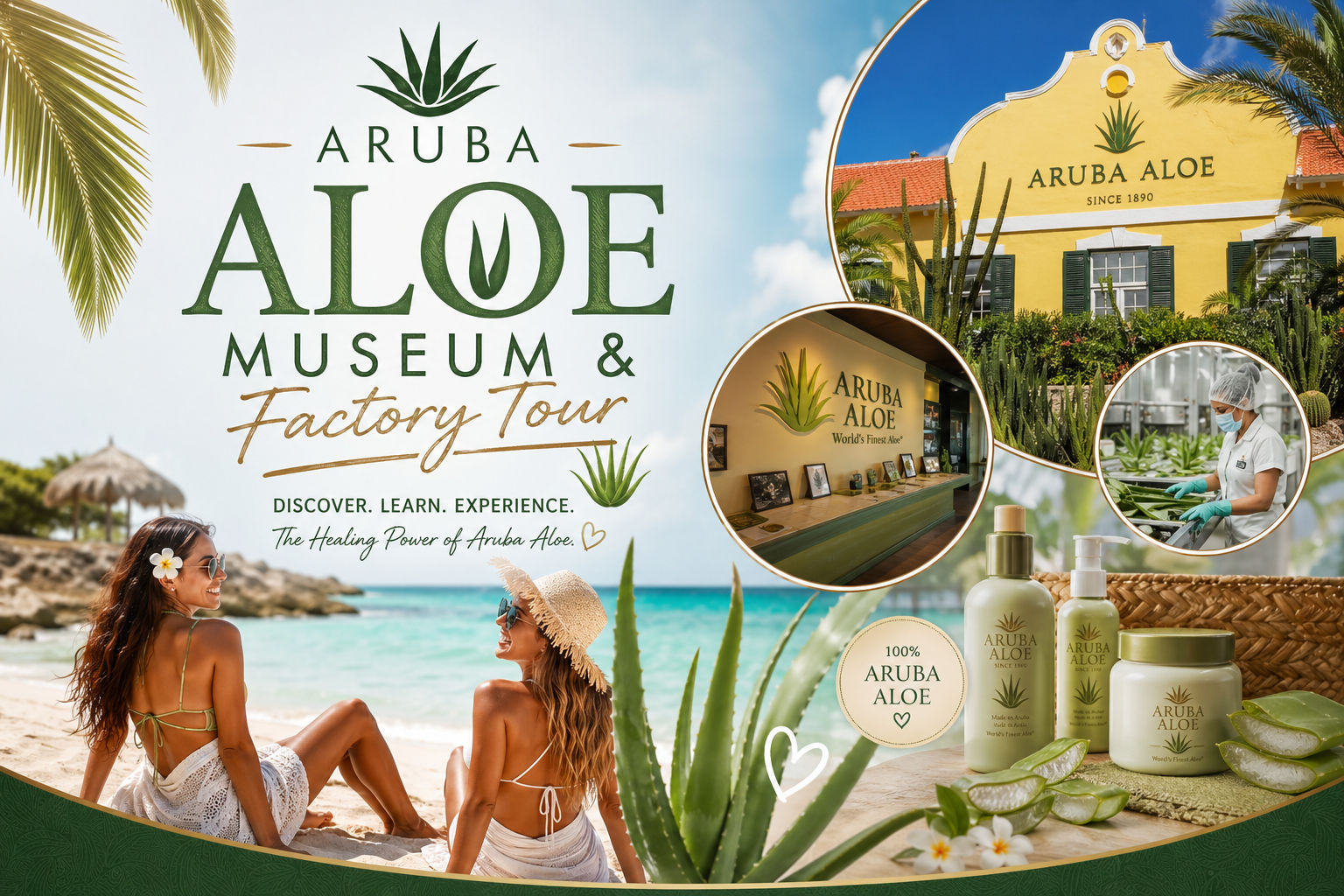
Most travelers arrive in Aruba with their eyes set on the turquoise water and powdery white beaches. But between the sun and the sea lies a story rooted in this island's soil that many visitors never fully discover. The Aruba Aloe Museum and Factory Tour is not just a tourist attraction; it is a living, breathing piece of Aruban heritage. In 2026, it remains one of the most rewarding and genuinely surprising experiences you can have on the island. The best part? It won’t cost you a single cent to get in.
From Desert Plant to Global Powerhouse: The History of Aloe in Aruba
Long before Aruba became known for its beaches and all-inclusive resorts, this little island had already built a global reputation through a desert plant. Aloe vera was first introduced to Aruba around 1840, and within decades, it transformed the island's economy and landscape. By the early 1900s, roughly two-thirds of Aruba's surface was covered in aloe fields, earning it the nickname "The Island of Aloes".
The company behind today's tour, Royal Aruba Aloe, was officially founded in 1890 by Cornelis Eman, making it the oldest aloe company in the world. What started as a farming operation on 150 acres of land at the Hato plantation has grown into a globally recognized skincare brand with:
- Over 350 product items
- Annual production exceeding five million units
- Distribution across 55 countries
As of 2023, the company employs around 150 people and sells approximately 15,000 units per year in the United States market. In 2021, Royal Aruba Aloe became the first company outside the Netherlands to receive a Royal Predicate (Koninklijk) from the Dutch Kingdom, recognizing over 130 years of continuous operation. This royal designation makes it the first company with that honor in the Caribbean part of the Dutch Kingdom.
What Makes Aruban Aloe Different From the Rest of the World
Not all aloe vera is created equal, and the tour makes that point beautifully clear. Aruban aloe has an aloin content of around 22%, which is several percentage points higher than most aloe varieties grown elsewhere in the world. The island's dry, sunny climate and specific soil conditions create a growing environment that allows the plant to develop a higher concentration of active compounds than aloe grown in more humid or tropical regions.
The company grows all of its aloe on-site and uses freshly harvested leaves to make every product, making it one of the very few aloe companies in the world that controls the full process from plant to product under one roof. The same original aloe fields where Cornelis Eman first planted his crops in the 1800s are still in use today at the Hato location, just outside Oranjestad.
Inside the Aruba Aloe Museum and Factory Tour
What to Expect When You Arrive
The museum and factory are located at Pitastraat 115 in Hato, a short drive from Oranjestad and just minutes from Eagle Beach. Tours run every 15 minutes throughout the day and last approximately 25 minutes each, making it easy to fit into any travel itinerary without planning too far ahead. No reservations are required unless you are arriving with a large group.
The tour itself is guided and available in multiple languages including English, Dutch, Spanish, and Papiamento, which is a real bonus for the diverse mix of visitors Aruba attracts each year.
The Factory Floor: Where the Magic Happens
Once inside, the tour takes you through the full production process, which is genuinely fascinating even if you have zero background in skincare or manufacturing:
- You start in the aloe fields, where guides walk you through how the plants are cultivated and harvested by hand.
- From there, you enter the cutting room to see how the thick leaves are "filleted" to extract the pure aloe gel inside.
- Next is the production floor, where you watch the gel get processed, tested in the lab, and transformed into lotions, cooling gels, soaps, and sun care products.
- The tour wraps up in the packaging area, where finished products are prepared for distribution across 55 countries.
The factory's approach to sustainability and eco-friendly production is woven throughout the tour, which makes it feel responsible as well as educational.
The Museum: Aruba's Official Aloe Archive
The museum section of the property is Aruba's national depository for historic aloe tools, farming equipment, and production machinery dating back to the 1800s. A complete library covers the history, manufacture, and medicinal properties of aloe vera. The exhibits put the plant's journey from Aruban desert crop to global export into real perspective, complete with historical photos, original documents, and hands-on displays that work for all ages.
The Gift Shop: Where You Leave With More Than Memories
At the end of every tour, guests pass through the flagship on-site store, which is the original retail location that Royal Aruba Aloe opened back in 2000. Today, the company has 17 retail locations across the island, but this Hato store is where it all started.
The product range is extensive:
- Pure aloe vera gels for sunburn relief, which travelers heading to the beach will want to stock up on.
- Moisturizing and anti-aging lotions made with 100% Aruban aloe.
- Sunscreen and after-sun care products specifically formulated for tropical climates.
- Haircare and scalp treatments.
- Soaps, baby products, and gift sets ideal for bringing home.
Prices are reasonable and the quality is genuinely excellent. Locals shop here regularly, which is usually the most honest endorsement any store can get.
Combining the Aloe Tour With the Best of Oranjestad and Aruba
The factory sits just minutes from some of Aruba's most beloved spots, making it an easy addition to a full day out exploring the island:
- Eagle Beach is a 5-minute drive away and consistently ranked among the top beaches in the Caribbean, making it a natural pairing for a morning tour followed by a long afternoon on the sand.
- Oranjestad's downtown with its colorful Dutch-colonial architecture, the Wilhelmina Park, and the Seaport Casino area is about 10 minutes from the factory.
- Aruba's National Park (Arikok) and the Natural Pool are accessible from the same side of the island for those wanting a full adventure day.
- Druif Beach and the low-rise hotel strip along L.G. Smith Boulevard are both nearby for a post-tour lunch with ocean views.
If you are staying near Palm Beach or in Oranjestad at a property like the Renaissance Wind Creek Aruba Resort, the drive to Hato takes under 15 minutes without traffic.
Travel Tips for Visiting the Aruba Aloe Museum and Factory in 2026
- Go early in the morning to beat cruise ship tour groups, which tend to arrive mid-morning between 10 a.m. and 1 p.m.
- Wear comfortable, light clothing since parts of the tour pass through outdoor fields and a working production facility.
- Tours are free, but bringing cash or a card for the gift shop is a good idea since products sell out regularly.
- The tour is fully accessible and suitable for children of all ages.
- Papiamento is the local language of Aruba, and hearing your guide drop a few local phrases makes the experience feel even more authentic.
- The Hato area also sits near the Alto Vista Chapel, one of Aruba's oldest landmarks, which is worth a quick visit if you are already in the neighborhood.
Frequently Asked Questions
Is the Aruba Aloe Museum and Factory Tour free in 2026?
Yes, the guided factory tour is completely free for all visitors in 2026. No entry fee or reservation is required unless you are arriving as part of a large group.
How long does the Aruba Aloe Factory Tour take?
The tour runs approximately 25 minutes and departs every 15 minutes throughout the day. It is suitable for all ages and requires no prior booking for individuals or small groups.
What are the opening hours for the Aruba Aloe Museum and Factory?
The museum and factory are open Monday to Friday from 8:30 a.m. to 4:00 p.m. and Saturday from 9:00 a.m. to 12:00 noon. The facility is closed on Sundays.
Where exactly is the Aruba Aloe Museum and Factory located?
The museum and factory are located at Pitastraat 115 in Hato, Aruba, just a few minutes from Eagle Beach and roughly 10 minutes from downtown Oranjestad.
What language is the tour conducted in?
Tours are available in English, Dutch, Spanish, and Papiamento, catering to the wide range of international visitors that Aruba welcomes each year.
Can I buy Aruba Aloe products at the factory?
Absolutely. The original on-site store at Hato carries the full product range including gels, lotions, sun care, haircare, and gift sets. The store is open during factory hours and accepts card payments.
If you are planning a trip to Aruba in 2026 and looking for an experience that goes beyond the beach, the Aruba Aloe Museum and Factory Tour delivers something genuinely rare: history, culture, nature, and a world-class product all in one 25-minute visit that costs you nothing to enjoy. The island gave the world some of its finest aloe vera for over 135 years. Come see where it all started, right here in Hato.
Verified Information at a Glance
- Attraction Name: Aruba Aloe Museum and Factory Tour (Royal Aruba Aloe)
- Category: Cultural / Historical / Eco-Tourism Attraction
- Location: Pitastraat 115, Hato, Aruba (near Oranjestad)
- Entry Fee: Free (no admission charge)
- Tour Duration: Approximately 25 minutes
- Tour Frequency: Every 15 minutes throughout operating hours
- Operating Hours (2026):
- Monday to Friday: 8:30 a.m. to 4:00 p.m.
- Saturday: 9:00 a.m. to 12:00 noon
- Sunday: Closed
- Reservation Required: No (large groups should call ahead)
- Tour Languages: English, Dutch, Spanish, Papiamento
- Company Founded: 1890, by Cornelis Eman
- Royal Designation Received: 2021, first in the Caribbean Dutch Kingdom
- Products Exported To: 55 countries
- Annual Production: Over 5 million units
- On-Site Retail Store: Yes, open during tour hours
- Number of Retail Locations Island-Wide: 17 stores across Aruba
- Nearby Attractions: Eagle Beach (5 min), Oranjestad downtown (10 min), Arikok National Park (20 min)