Experience the Magic: Aruba Carnival!
Aruba Carnival is a months-long explosion of color, music, and island pride that takes over Oranjestad, San Nicolas, and neighborhoods all across the One Happy Island. From nighttime torchlight parades to all-day Grand Parades, it is the ultimate time to experience Aruba’s culture up close.
What Exactly is Aruba Carnival?
Aruba Carnival is the island’s largest annual festival, a full season of parades, pageants, music contests, and street parties that celebrates Aruban and Caribbean culture. The season features traditional brass bands, roadmarch music, soca and calypso competitions, and elaborate costumes worn by thousands of carnivalistas.
Carnival in Aruba is organized by various foundations and groups, with a coordinated schedule that stretches across different districts. Events build momentum over several weeks and culminate in two massive Grand Parades, one in San Nicolas and one in Oranjestad, followed by the symbolic burning of “Momo,” the spirit of Carnival.
When Does Aruba Carnival Take Place?
The Carnival season officially opens in November with the Kana Kibra ceremony, but most of the action for visitors happens from early January through the period just before Lent. Key parades and parties roll out across January and into February, ending with the Grand Parades and Burning of Momo just before Ash Wednesday.
Because Carnival is tied to the Christian liturgical calendar, exact dates move each year, though the pattern of weekend and holiday events remains similar. Travelers should check the latest Carnival schedule for specific dates of the Torch Parade, Lighting Parades, Children’s Parades, and Grand Parades.
Main Island Locations and Parade Routes
Aruba Carnival unfolds across multiple locations on the island.
Oranjestad: The Capital's Vibrancy
Oranjestad, the capital on the island’s western coast, hosts many headline events, including:
- Torch Parade (Parada di Flambeu) through the streets of downtown
- Grand Children’s Parade Oranjestad
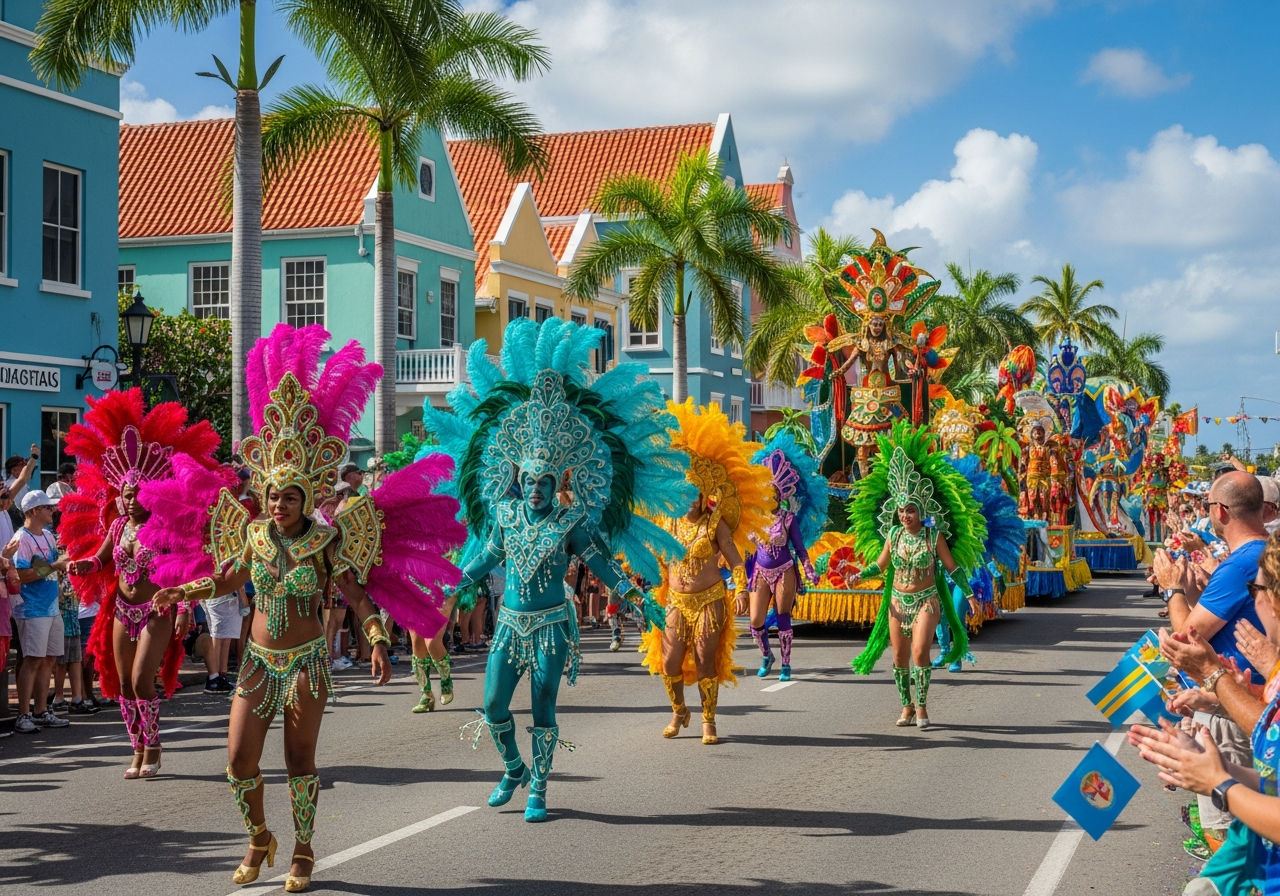
- Grand Carnival Parade Oranjestad, an all-day spectacle with decorated floats and huge bands
Parades pass along main roads in the center, so spectators can watch from sidewalks near landmarks like the cruise port, Renaissance marketplace, and downtown shopping streets.
San Nicolas and Other Districts: Expanding the Celebration
San Nicolas, Aruba’s “Sunrise City” in the south, is the other focal point. It hosts:
- J’ouvert Morning (Jouve Morning) early morning street party
- Children’s Parades
- Grand Carnival Parade San Nicolas
Other parades and events take place in Noord, Savaneta, and school districts, bringing Carnival energy to many corners of the island.
Signature Events and Highlights You Won't Want to Miss
Aruba Carnival offers a rich mix of parades and parties, each with its own vibe.
Torch Parade and Lighting Parades: Illuminating the Night
The Torch Parade typically kicks off the parade season in early January, featuring thousands of people dancing behind trucks blasting roadmarch music and soca, often wearing light-up accessories and carrying glowing torches. Later in the season, nighttime Lighting Parades in Oranjestad and San Nicolas fill the streets with illuminated costumes and floats.
Children’s and School Parades: Future Carnival Stars
Children’s Parades and Escolar (school) Parades take place in Noord, Oranjestad, and San Nicolas, giving younger carnivalistas their moment to shine. These family-friendly events showcase colorful costumes sized for kids, lively but shorter routes, and a playful atmosphere.
Tumba, Caiso & Soca Competitions, and Pageants: The Sound of Carnival
Music is central to Aruba Carnival. Key events include:
- Tumba Festival, where composers and singers compete for the official Carnival roadmarch song
- Caiso & Soca Monarch contests
- Elections of Prince & Pancho, Youth Queen, and Grand Queen
These shows are usually ticketed, indoor or arena-style events, mixing live bands, costumes, and comedy with serious competition.
Grand Carnival Parades and Burning of Momo: The Grand Finale
The highlight of the season is Grand Parade weekend, with one full day parade in San Nicolas followed by the Grand Parade in Oranjestad. Floats, feathered costumes, giant headpieces, and nonstop bands create a wall of sound and color that can last six to eight hours.
After the final parade, the Burning of Momo ceremony symbolically closes Carnival, marking a return to everyday life and the start of Lent.
Cultural Meaning and the Heart of Island Spirit
Aruba Carnival reflects the island’s diverse roots, blending African, European, and Caribbean influences into a unique celebration. Calypso, soca, and tumba music, along with Dutch colonial history and Latin rhythms, all show up in costumes, songs, and dance moves.
Beyond the spectacle, Carnival season is a time when Aruban communities come together. Groups spend months designing costumes, practicing choreography, and raising funds, turning each parade band into a neighborhood project.
Costs, Tickets, and Smart Budget Planning
For spectators, most Aruba Carnival street parades are free to watch from sidewalks along the routes. You can simply find a spot in Oranjestad or San Nicolas and enjoy hours of costumes and music at no admission cost.
Certain events do require tickets, including:
- Pageants and Queen elections
- Tumba, Caiso & Soca Monarch, and other stage shows
- Some organized brunches or party events
Prices vary by event and section. For those who want to march in a band as a tourist, packages offered by groups like the Aruba Tourist Carnival Group typically include costume, participation in specific parades, and sometimes drinks or extras, with pricing published per event.
Practical Travel Tips for Carnival on Aruba Island
Aruba Carnival season is popular, so booking flights and accommodation well in advance is wise, especially for Grand Parade weekend. Many visitors stay in hotels and resorts along Palm Beach and Eagle Beach, then travel into Oranjestad and San Nicolas for parades.
Traffic and road closures are significant during major parades, so plan extra time and consider:
- Using taxis or hotel shuttles where available
- Parking outside the tightest downtown zones and walking in
- Arriving early to secure shade and a comfortable viewing spot
Bring light clothing, sunscreen, hats, ear protection for small children, and plenty of water, as parades often take place under strong sun.
Experiencing Carnival Like a Local
To experience Aruba Carnival more deeply, consider:
- Attending at least one music competition such as Tumba or Caiso & Soca Monarch to hear original songs live
- Watching both a nighttime parade and a daytime Grand Parade to feel the different moods
- Exploring smaller parades in Noord or Savaneta, which often feel more intimate
Sampling street food and local favorites like pastechi, grilled meats, and cold Balashi or Chill at pop-up stands along the route adds to the island flavor. Respecting parade marshals, staying off the route, and following local guidance helps keep the experience safe and enjoyable for everyone.
Exploring Aruba Island Beyond Carnival
Carnival is a great anchor for an Aruba island holiday, but it pairs beautifully with beach and nature time. Before or after the parades, visitors can relax on Eagle Beach or Palm Beach, snorkel at Malmok, or explore Arikok National Park’s cacti-dotted landscapes and caves.
Downtown Oranjestad’s pastel Dutch Caribbean architecture, museums, and shopping streets are easy to explore between events, while San Nicolas offers murals, art galleries, and a more laid-back local vibe close to Baby Beach. Combining Carnival with these island highlights creates a well-rounded Caribbean escape.
An Invitation to Feel the Vibe of Aruba Carnival
If you have ever wanted to dance behind a brass band, feel basslines on your skin, and see streets turned into rivers of feathers and sequins, Aruba Carnival is your moment. The island’s warm trade winds, turquoise sea, and welcoming communities create an ideal backdrop for weeks of celebration that still feel rooted and authentic.
Start watching the official Carnival schedule, choose your must-see parades, and secure your stay on Aruba island for the heart of the season. Whether you simply watch from the sidelines or join a band and march in costume, Aruba Carnival invites you to become part of the rhythm, the color, and the island spirit that make this festival truly unforgettable.
Verified Information at a Glance
- Event name: Aruba Carnival
- Event category: National Carnival season with parades, pageants, music competitions, and street parties
- Typical season: Officially opens in November; main parades and events run from early January through the pre-Lenten period
- Flagship events: Torch Parade, Lighting Parades, Children’s Parades, J’ouvert Morning, Tumba Festival, Caiso & Soca events, Grand Carnival Parades in San Nicolas and Oranjestad, Burning of Momo
- Main locations: Oranjestad (capital), San Nicolas, Noord, Savaneta, and school districts across Aruba island
- Grand Parade routes: All-day Grand Carnival Parades in San Nicolas and Oranjestad along central city streets
- Typical spectator pricing: Street parades free to watch; tickets required for stage shows, elections, and some special events
- Participation packages: Tourist Carnival group packages available for marching in selected parades, with costume and inclusions priced per event
- Best planning advice: Confirm current year schedule, book accommodation early for parade weekends, and arrive ahead of major events to handle traffic and secure good viewing spots