What Is the Bali Kite Festival?
The Bali Kite Festival turns the skies above Bali island into a massive canvas of color, sound, and tradition, especially along the coast near Sanur. It is one of the island’s most spectacular cultural events, blending age-old Hindu rituals with friendly competition between village kite teams.
The Bali Kite Festival is an annual international kite festival held along the eastern coast at Padang Galak, just north of Sanur Beach. Originally created as a seasonal religious festival, it serves as a way for Balinese Hindus to send messages of thanks and requests for abundant harvests to the gods through giant kites flown high in the windy season.
Over time, the event has grown to include not only traditional village teams from all over Bali island but also international kite enthusiasts and professional kite flyers. The result is a colorful mix of sacred symbolism, community pride, and high-energy competition.
When the Bali Kite Festival Usually Takes Place
The Bali Kite Festival is closely tied to the island’s windy dry season, which generally runs from around July through August, sometimes extending into early October when conditions are right. The main competitions are usually scheduled in the heart of this period to take advantage of strong, steady coastal winds.
Exact dates change from year to year because the festival depends heavily on the weather and local organizing committees, so visitors are advised to confirm the current year’s schedule before making detailed plans. Even outside the main competition days, local teams often fly and practice with their giant kites throughout the kite season, giving travelers more chances to see them in the sky.
Main Island Locations and Venues
The core Bali Kite Festival events take place at Padang Galak Beach, a wide stretch of black sand coastline slightly north of central Sanur. This area offers open space, direct ocean winds, and easy access from Denpasar and other parts of South Bali.
Other kite competitions and related events can be held at nearby beaches such as Mertasari Beach in Sanur and occasionally as part of the Sanur Village Festival program. Beyond the official festival grounds, you will see kites flying across the island in areas like Denpasar, Tanjung Benoa, and throughout southern rice fields whenever winds are strong.
Traditional Kites and Competition Categories
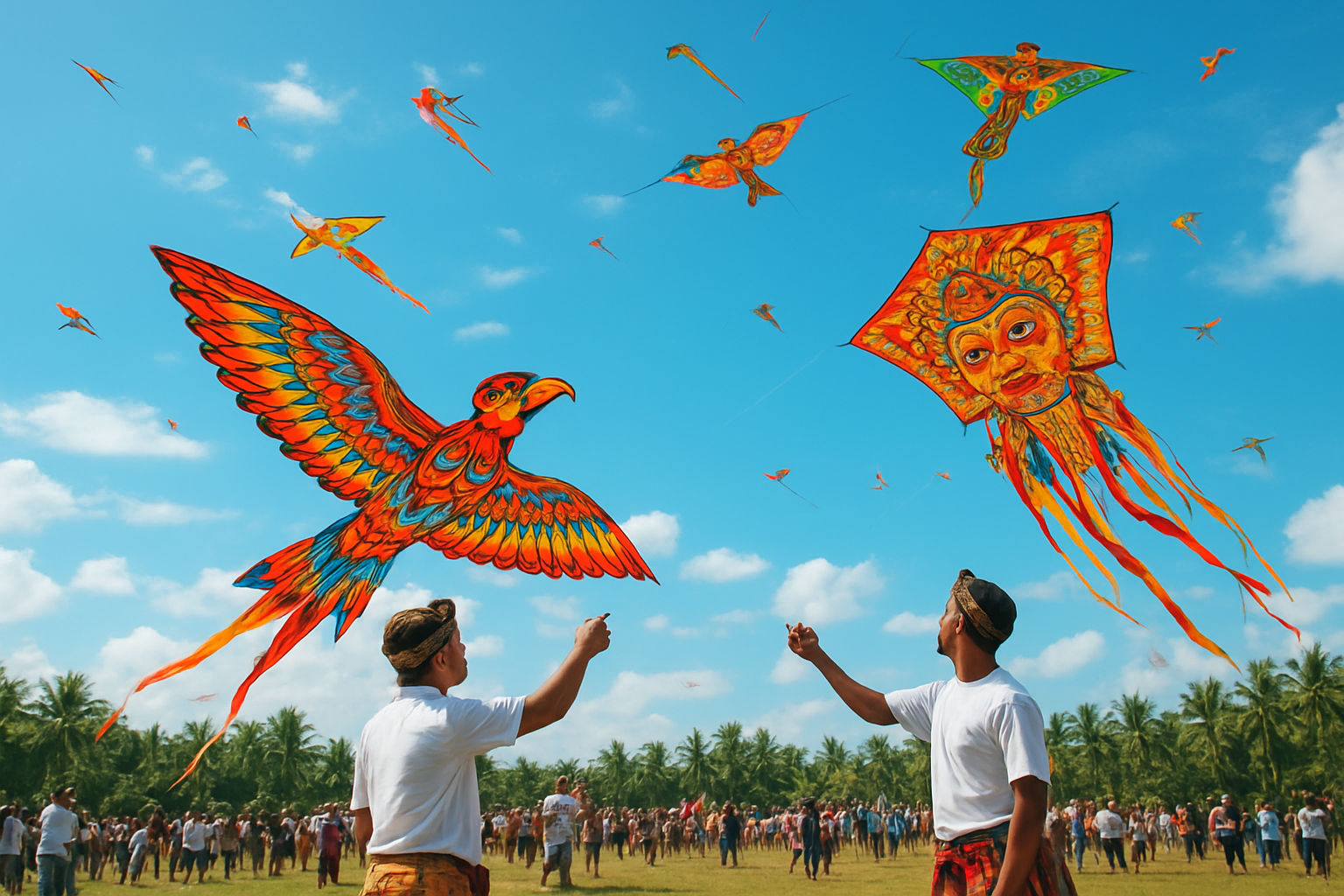
The Bali Kite Festival showcases enormous traditional kites, many of which can reach around four meters wide and nearly ten meters long. These giant creations are handmade by village teams, known as banjar, using bamboo frames and fabric or plastic materials in classic Balinese designs.
Types of Traditional Kites
- Bebean: Fish-shaped kites.
- Janggan: Bird- or dragon-like kites with very long tails.
- Pecukan: Leaf-shaped kites, known for being difficult to control.
There is also a “New Creation” category that allows for modern and artistic designs, including mythological figures, stylized animals, and sponsored themes.
Each kite entry is supported by a large team that may include 70 to 80 people, along with their own gamelan orchestra and flag bearers. Teams compete for awards such as best launch, best design, longest flight, and best overall performance in front of judges and large crowds.
Cultural and Religious Significance on Bali Island
While the Bali Kite Festival is a thrilling spectacle for visitors, its roots are deeply spiritual. Traditionally, flying these kites at the start of the windy season is seen as a way to send messages and prayers to the Hindu gods, thanking them for previous harvests and asking for future abundance.
The festival also reflects the importance of community life in Balinese villages. Banjar groups spend months designing, building, and decorating their kites together, reinforcing intergenerational bonds and passing down skills and stories to younger participants.
Festival Atmosphere and What to Expect
On festival days, Padang Galak Beach becomes a hive of activity from late morning through the afternoon. Crowds of spectators gather on the sand, while teams prepare their kites in marked zones, tuning frames, checking lines, and waiting for the right wind.
The sky quickly fills with color as giant kites rise and humming noisemaker strips create a distinctive buzzing sound overhead. On the ground, gamelan orchestras play rhythmic music, food vendors sell snacks and cold drinks, and commentators announce the teams and results in Indonesian and sometimes English.
Practical Travel Tips for Visiting the Bali Kite Festival
Reaching Padang Galak from popular tourist areas such as Sanur, Kuta, Seminyak, or Nusa Dua usually takes between 30 and 60 minutes by car, depending on traffic. Hiring a private driver or using a ride-hailing app is often the easiest way to get there, especially if you plan to stay several hours.
Traffic can become congested near the event grounds, so arriving earlier in the day helps secure better viewing spots and reduces delays. Comfortable footwear, sunscreen, hats, and plenty of water are essential, as you will likely spend most of your time standing or walking on open sand under the sun.
Costs, Entry, and Budget Considerations
The Bali Kite Festival is primarily a community and cultural event, and for spectators there is usually no formal ticket fee to watch from the beach. Most costs for visitors come from transport, snacks, drinks, and any guided tours or packages that hotels and travel operators may offer around the festival.
Some side competitions or international kite events on Bali may charge entry fees for participants, but those are applied to teams registering kites rather than to general spectators. For travelers, the festival can be enjoyed on a modest budget as long as you plan for transport and refreshments.
Safety, Etiquette, and Respectful Behavior
Given the size and power of the kites, safety is an important consideration. Spectators should stay well clear of launch and landing zones, never walk under flying lines, and follow any instructions from marshals or organizers on the beach.
It is also important to respect the teams’ space and focus, avoiding interference while they prepare and steer their kites. Taking photographs is generally welcomed, but asking before entering a group’s staging area or posing with a kite is a considerate gesture.
Exploring Bali Island Around Kite Season
Pairing the Bali Kite Festival with wider island exploration makes for a rich itinerary. Sanur itself offers calmer beaches, a long coastal promenade, and easy boat connections to Nusa Lembongan and Nusa Penida, while nearby Denpasar provides markets and museums.
Further afield, travelers can combine kite watching with visits to Uluwatu Temple and its sunset Kecak dance, the rice terraces around Ubud, or beach days in Canggu and Jimbaran. Visiting during the windy season also means you may see spontaneous kite flying in villages and fields all over the island, not just at the main festival grounds.
A Sky-High Invitation to Experience the Bali Kite Festival
If you are looking for a festival that feels deeply rooted in Bali island’s culture yet remains visually thrilling and family-friendly, the Bali Kite Festival is a perfect choice. Standing on Padang Galak Beach while giant dragon and fish-shaped kites dance against a bright blue sky, accompanied by gamelan music and sea breezes, is an experience that stays with you long after your holiday ends.
Plan your trip for the windy months, check the latest festival dates, and give yourself a day to simply look up and enjoy the art, teamwork, and devotion behind every kite. Whether you watch from the sand with a coconut in hand or follow local teams as they practice across the island, let the Bali Kite Festival lift your spirit as high as the kites soaring over Bali’s shores.
Verified Information at a Glance
- Event name: Bali Kite Festival
- Event category: Annual international kite festival and seasonal religious cultural event
- Typical months held: During the windy dry season, mainly July and August and sometimes extending into early October depending on conditions
- Main venue: Padang Galak Beach, just north of Sanur on Bali island
- Additional venues: Other Sanur beaches such as Mertasari and occasional appearances within the Sanur Village Festival program
- Island and area: Southeastern coast of Bali island, near Sanur and Denpasar
- Main kite types: Traditional Bebean (fish), Janggan (bird or dragon with long tails), Pecukan (leaf), plus “New Creation” artistic kites
- Cultural purpose: To send messages of thanks and requests for abundant crops to Hindu gods and to celebrate village identity and craftsmanship
- Spectator pricing: No standard ticket fee for beach spectators; main visitor costs are transport, food, and any optional tour packages
- Best planning tip: Confirm exact dates close to travel, as schedules shift with weather and local organizers, and arrive early at Padang Galak to avoid traffic and secure good viewing spots