Jatiluwih Festival 2026Jatiluwih Festival 2026: Celebrating Bali's Living UNESCO World Heritage Landscape
The Jatiluwih Festival 2026, now in its 7th edition, is officially confirmed for July 18 to 19, 2026 at Jatiluwih Tourism Village, Tabanan Regency, Bali, set entirely within the UNESCO World Heritage-listed rice terraces, and admission is completely free. Indonesia Travel's official listing describes it as a celebration that blends breathtaking landscape, authentic cultural showcases, local products, educational activities, and eco-tourism in one of Bali's most visually stunning locations, a place where the terraced rice fields climb the slopes of Mount Batukaru at an elevation of around 700 meters above sea level.
Most people travel to Bali for the beaches. The travelers who find their way to Jatiluwih come back transformed. There is nothing like standing in the middle of rice terraces that stretch as far as you can see in every direction, knowing that the water flowing through those fields follows channels engineered by Balinese farmers over a thousand years ago, and that the system managing it all, the Subak, is still running exactly as it was designed.
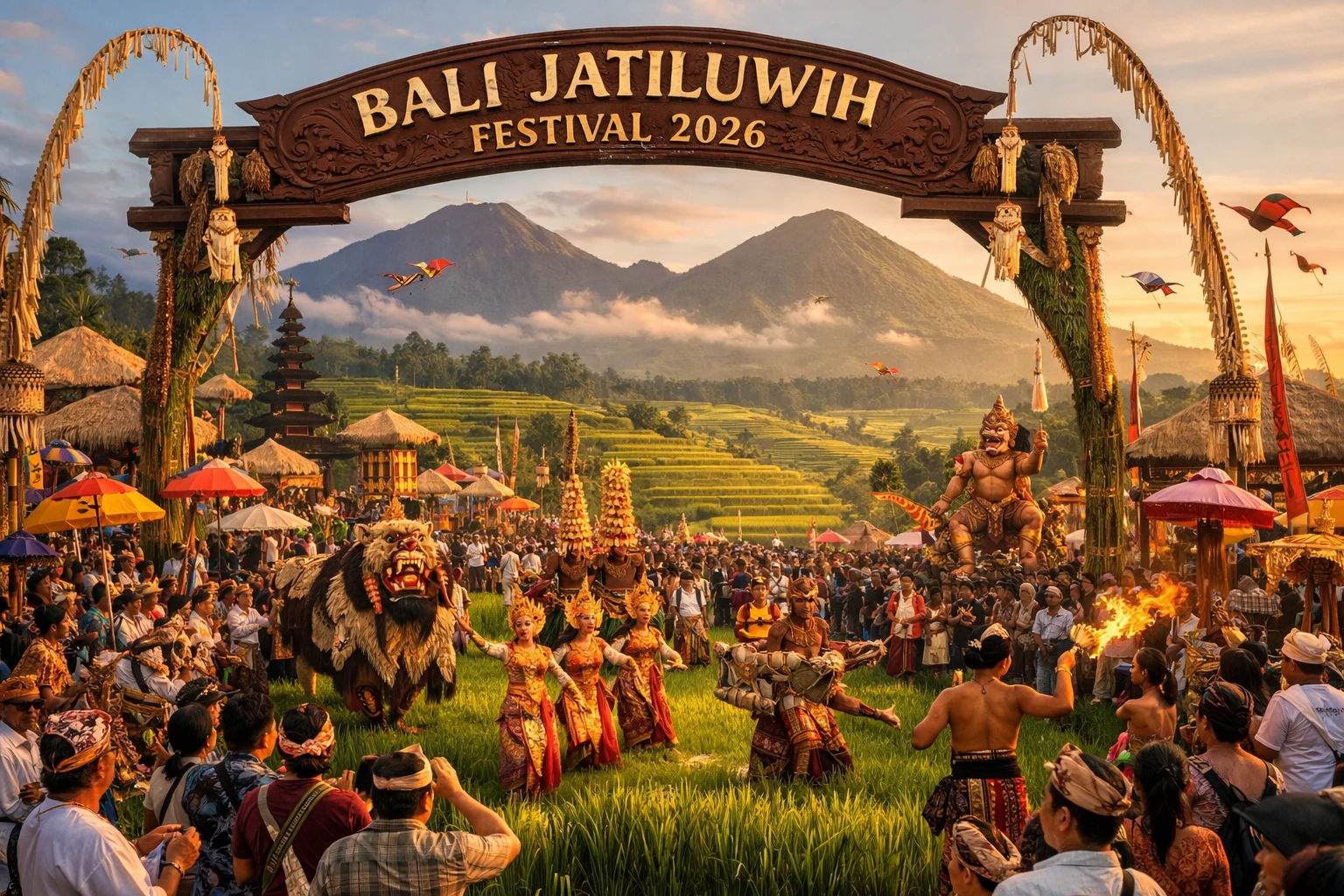
The Jatiluwih Festival puts a cultural celebration inside that landscape, and the combination is one of the most memorable event experiences available anywhere on the island of Bali. For two days in mid-July, the village fills with traditional dance, live music, local food, agricultural demonstrations, workshops, and community pride at a scale that feels completely proportional to its setting. Nothing about this festival is oversized or overproduced. It fits the land.
Confirmed Dates, Venue, Location, and Admission for Jatiluwih Festival 2026
Indonesia Travel's official listing and multiple planning calendars confirm:
- Dates: July 18 to 19, 2026
- Venue: Jatiluwih Tourism Village, Penebel District, Tabanan Regency, Bali
- Ticket Price: FREE
Bali Live's official calendar notes the festival as covering "culture and nature, local products, walking activities" at the Jatiluwih Rice Terraces, a concise summary that is accurate but barely scratches the surface of what the two days actually contain.
Understanding the Setting: Jatiluwih and the Subak System
To appreciate the Jatiluwih Festival fully, you need to understand what makes its setting extraordinary beyond the obvious visual beauty.
Jatiluwih is located approximately 25 kilometers from Ubud, at an altitude of around 700 meters above sea level on the southern slopes of Mount Batukaru, Bali's second highest volcano. The rice terrace landscape covers more than 600 hectares, creating a staircase of irrigated paddies that has been continuously farmed for centuries.
In 2012, UNESCO designated Jatiluwih as part of the Cultural Landscape of Bali Province World Heritage Site, specifically recognizing the Subak irrigation system as an expression of outstanding universal value. The Subak dates back to the 9th century, and it operates through a philosophy known as Tri Hita Karana, the three causes of well-being: harmony with God, harmony with people, and harmony with nature.
Water temples within the Subak network coordinate irrigation schedules, pest management through synchronized planting and fallow cycles, and the collective management of scarce water resources across hundreds of farming families. The system has been studied by ecologists and agricultural scientists as a model of sustainable land management, and it continues to function today exactly as it was designed.
When the Jatiluwih Festival celebrates this landscape, it is celebrating not just the view but the living knowledge system that created it and continues to sustain it.
The 7th Edition: Seven Attractions and a Pentahelix Model
Indonesia Travel's official 2026 listing describes the 7th edition as highlighting seven unique attractions: breathtaking landscape, authentic cultural showcases, local products, educational activities, community collaboration, eco-tourism experiences, and strong pentahelix partnerships.
The pentahelix model refers to the festival's collaborative organizational structure, which brings together government, academia, the private sector, the community, and media in a coordinated effort to make the event both meaningful and sustainable. This approach is particularly significant at Jatiluwih, where the tension between tourism development and the preservation of active agricultural land is an ongoing and delicate balance. The festival is designed to demonstrate that cultural tourism and farming heritage can coexist productively when the community is at the center of decision-making.
What the Festival Program Includes Across Two Days
Based on the confirmed program description from Indonesia Travel and the consistent pattern of previous editions, the 2026 Jatiluwih Festival includes:
Traditional Cultural Performances
Dance groups from Tabanan and surrounding areas perform in the open air against the backdrop of the rice terraces. Expect Kecak, Barong, Joged, and contemporary Balinese creative forms that draw on traditional vocabulary while interpreting them for the festival setting. Evening performances, which in 2025 featured classical gamelan blended with modern fusion bands, create an atmosphere that is festive and distinctly Balinese without being formulaic.
The Red Rice Culinary Experience
Jatiluwih is famous across Bali for its organic red rice, a variety grown specifically in these highlands that has a distinctive nutty flavor and higher nutritional value than standard white rice. The festival's food stalls showcase dishes made with this local red rice alongside satay, lawar, jukut urab, and fresh tropical fruits from family-run village stalls. Eating at the festival is not just satisfying; it is a direct connection to the agricultural landscape you are standing inside.
Rice Terrace Walks and Subak Educational Activities
Guided walks through the terraces are a confirmed festival activity, with local guides explaining the subak system, identifying different stages of the rice growth cycle, and pointing out the network of small irrigation channels, shrines, and water temple structures that make the landscape function as a cultural system rather than just a scenic one. These walks range from accessible flat sections to more immersive routes further into the terrace system.
Traditional Farming Demonstrations
Festival attendees can witness and sometimes participate in demonstrations of traditional Balinese farming techniques. Depending on the agricultural calendar at festival time in mid-July, this may include seedling transplanting, irrigation management observation, or post-harvest processing methods. These demonstrations are not museum re-enactments. Jatiluwih's farmers are actively farming during festival week, and the demonstrations are simply their daily work made visible and explained.
Creative Workshops
Workshops in traditional crafts, weaving, and local art forms are part of the festival's educational strand. These are accessible to visitors of all ages and give people something to take home beyond photographs, whether a handmade item, a newly learned technique, or a recipe from a village cook.
Yoga and Wellness Sessions Overlooking the Terraces
Previous editions have included yoga and wellness activities in the terrace landscape, which, given the altitude, the fresh mountain air, and the visual calm of the paddies, is one of the more natural pairing choices any festival organizer has ever made.
Why Mid-July is an Ideal Time to Be at Jatiluwih
The Jatiluwih Festival is positioned in Bali's dry season, which runs from approximately April through October. Mid-July at Jatiluwih means clear mornings, green and active terraces, cool highland temperatures, and reliable afternoon light that turns the paddy landscape gold in the hours before sunset.
The contrast between the dense heat of south Bali at sea level and the freshness of Jatiluwih at 700 meters elevation is immediate and welcome. Visitors who have spent several days in Kuta, Seminyak, or Ubud notice the difference in temperature and atmosphere within minutes of arriving, and that physical shift reinforces the sense that you have entered a genuinely different part of the island.
Practical Travel Tips for Jatiluwih Festival 2026
Getting to Jatiluwih from Popular Bali Bases
The terraces are in the highlands of Tabanan Regency, and road access requires planning:
- From Ubud: approximately 60 to 75 minutes by car, heading northwest via Mengwi or Mas-Pejeng roads.
- From Kuta and the airport area: approximately 75 to 90 minutes by car.
- From Seminyak and Canggu: approximately 60 to 75 minutes via the Mengwi route.
- From Denpasar: approximately 60 minutes.
The road from Tabanan town to Jatiluwih village winds uphill through farming communities and forest edges. A hired driver familiar with the route is strongly recommended for first-time visitors.
When to Arrive
Arriving early on July 18, the first festival day, gives you the calmest conditions and the best light for photography in the terraces. The crowd builds through the day, and evening performances attract the largest audiences.
What to Wear and Bring
- Light layers: mornings in Jatiluwih can be noticeably cooler than south Bali, and a light jacket is useful before temperatures rise mid-morning.
- Comfortable walking shoes: terrace paths are uneven and may be muddy after recent rain even in dry season.
- Cash for stalls: vendor stalls at cultural festivals in rural Bali almost universally prefer cash payments.
- Sun protection: the combination of high altitude and clear dry-season sky means UV exposure is stronger than you might expect.
- A sarong: for any ceremonial or temple spaces within or adjacent to the festival site.
Consider Staying in or Near Tabanan
The town of Tabanan is approximately 30 minutes from Jatiluwih and has accommodation options for visitors who want to avoid the long drive back to south Bali after an evening performance. Alternatively, the nearby highland village area has a small number of eco-villa and guesthouse properties that place you inside the terrace landscape itself, which is one of the most deeply peaceful overnight experiences available on the island.
Combine Your Visit with Mount Batukaru Temple
Pura Luhur Batukaru, one of Bali's six directional mountain temples and among its most sacred, sits on the slopes of Mount Batukaru approximately 20 to 30 minutes from Jatiluwih. Combining a festival visit with a morning or early afternoon stop at this misty, atmospheric temple gives you a complete picture of the cultural and spiritual landscape that frames the Jatiluwih terraces.
Verified Information at a Glance
Event Name: Jatiluwih Festival 2026, 7th edition
Event Category: Cultural and eco-tourism festival celebrating UNESCO World Heritage rice terraces; traditional performances, culinary, workshops, farming education
Confirmed Dates: July 18 to 19, 2026
Confirmed Venue: Jatiluwih Tourism Village, Penebel District, Tabanan Regency, Bali
Confirmed Ticket Price: FREE
UNESCO Status (Venue): Jatiluwih Rice Terraces designated as UNESCO World Heritage Site in 2012 as part of the Cultural Landscape of Bali Province
Key Cultural Element: Subak irrigation system, dating from the 9th century; guided terrace walks and subak education confirmed in program
Local Specialty: Jatiluwih organic red rice: featured in the festival culinary program
Festival Organization Model: Pentahelix: government, academia, private sector, community, and media collaboration
If you are planning a July Bali trip and you want one weekend that takes you completely off the tourist circuit into the Balinese agricultural heartland, where the food, the culture, the landscape, and the community all tell the same ancient story about how an island learned to feed itself beautifully for over a thousand years, then July 18 and 19 at Jatiluwih is the weekend that will make the rest of your Bali experience look different in the best possible way.