Honoring the legacy of Hawaiʻi’s unifier through culture, ceremony, and community
Each June, communities across Hawaiʻi Island come together to honor one of the most influential figures in Hawaiian history during the King Kamehameha Day Celebration Big Island. This deeply meaningful cultural observance commemorates King Kamehameha I, the aliʻi who unified the Hawaiian Islands in the late 18th century and established the Kingdom of Hawaiʻi.
On the Big Island, where Kamehameha was born and raised, the celebration carries special significance. The event blends history, Hawaiian protocol, storytelling, music, hula, and community pride. For visitors and residents alike, King Kamehameha Day offers a powerful opportunity to experience living Hawaiian culture in the place where it all began.
Who Was King Kamehameha the Great
Born on Hawaiʻi Island
King Kamehameha I was born in Kohala on the Big Island, traditionally believed to be in the mid 1700s. Raised among aliʻi and trained as a warrior, he became known for his strength, leadership, and strategic brilliance. His birthplace is often associated with sites such as Kamehameha Birthplace State Monument near Hawi, a place of quiet reverence on the island’s northern tip.
Unifier of the Hawaiian Islands
By 1810, Kamehameha I had successfully unified the Hawaiian Islands under one rule, bringing an end to years of inter island conflict. His leadership laid the foundation for a lasting Hawaiian Kingdom and promoted principles such as mālama ʻāina, caring for the land, and kuleana, responsibility to community.
The King Kamehameha Day Celebration Big Island exists to honor this legacy and to remind future generations of his role in shaping Hawaiʻi.
The History of King Kamehameha Day
A recognized state holiday
King Kamehameha Day has been officially recognized as a public holiday since 1871, making it one of the oldest commemorative holidays in Hawaiʻi. It is observed annually on June 11, and government offices and schools are typically closed.
The celebration has evolved over time, but its core purpose remains unchanged. It honors leadership, Hawaiian sovereignty, and cultural continuity.
Why the Big Island celebration matters
While King Kamehameha Day is observed statewide, the Big Island holds a unique place due to its ancestral connection to Kamehameha himself. Ceremonies here feel especially grounded, local, and tied to the land, offering a more intimate cultural experience compared to larger urban celebrations.
When the King Kamehameha Day Celebration Takes Place
Confirmed annual date
The King Kamehameha Day Celebration Big Island is held annually on June 11. Surrounding events such as cultural festivals, educational programs, and parades may take place in the days leading up to or following the holiday.
June weather on the Big Island is generally warm and pleasant, making it ideal for outdoor gatherings and cultural performances.
Where Celebrations Are Held on the Big Island
Hilo and the Kamehameha Statue
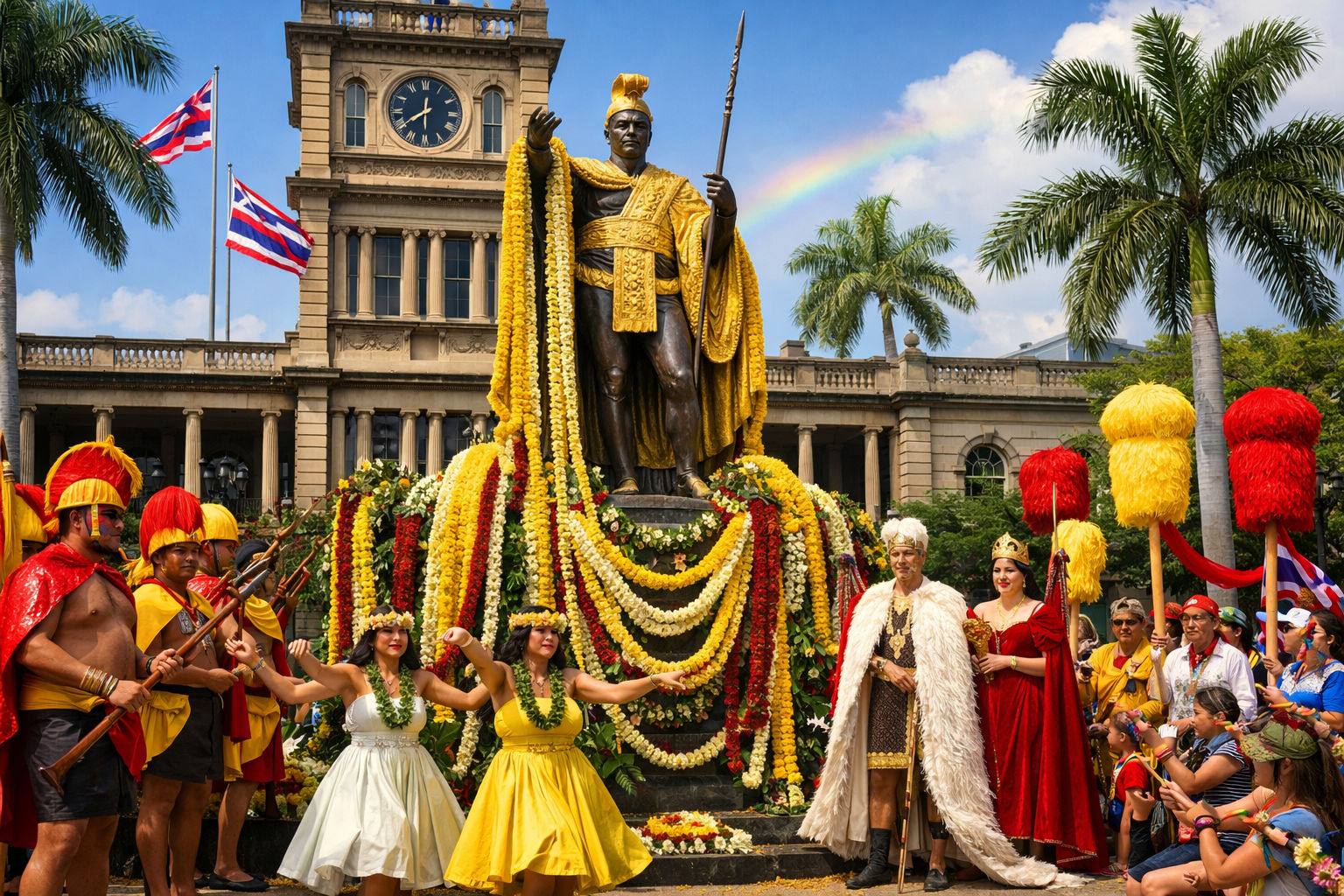
One of the most important and confirmed ceremonial locations is Kamehameha Park in Hilo, home to one of the original statues of King Kamehameha I. This statue, cast in Paris in the 1800s, is draped with long strands of fresh lei during a sacred ceremony on June 11.
The lei draping ceremony in Hilo is open to the public and deeply respected. Elders, cultural practitioners, and community members participate in chants, pule, and music that honor the aliʻi.
Other island communities
Additional celebrations may occur in Kohala, Waimea, Kona, and other towns connected to Kamehameha’s life and legacy. While formats vary by year, events often include parades, hula performances, and educational displays.
Signature Highlights of the Celebration
The lei draping ceremony
The lei draping of the King Kamehameha statue is the centerpiece of the Big Island celebration. Dozens of lei made from native and introduced flowers are carefully placed over the statue, sometimes requiring ladders or cranes due to their size and weight.
Each lei represents aloha, gratitude, and respect. The ceremony follows Hawaiian protocol and includes oli, chant, and traditional music.
Cultural performances and hula
Hula is central to the celebration. Performances often tell stories of Kamehameha’s life, battles, genealogy, and leadership. Both kahiko and ʻauana styles may be presented, depending on the program.
Local hālau hula from across the Big Island frequently participate, creating a strong sense of community representation.
Community Parades and Festivities
Parades honoring Hawaiian heritage
Some Big Island communities host King Kamehameha Day parades, featuring floats, marching bands, paʻu riders, and community organizations. These parades are festive yet respectful, reflecting pride in Hawaiian history.
Paʻu riders, women dressed in elegant gowns representing the colors of Hawaiian islands, are especially symbolic and visually striking.
Family friendly activities
- Educational booths about Hawaiian history
- Craft demonstrations
- Hawaiian music performances
- Food vendors offering local favorites
These activities make the event welcoming for families and visitors of all ages.
Cultural Meaning and Protocol
Respecting Hawaiian traditions
King Kamehameha Day is not a spectacle created for tourism. It is a commemorative day rooted in Hawaiian values and protocol. Visitors are welcome, but respectful behavior is essential.
This includes:
- Standing quietly during chants and prayers
- Avoiding loud conversation during ceremonies
- Asking permission before close photography
Understanding these practices adds depth and meaning to the experience.
Honoring leadership and unity
The celebration emphasizes not just historical victory, but unity, wisdom, and caretaking of the Hawaiian people and land. These themes remain central to modern Hawaiian identity and governance.
Admission and Pricing Information
Free public events
Most King Kamehameha Day Celebration Big Island events are free and open to the public, including lei draping ceremonies, parades, and cultural performances. There is no admission fee to attend official ceremonies at Kamehameha Park in Hilo.
Food vendors and craft purchases vary in price, but the cultural observances themselves remain accessible to all.
Travel Tips for Attending on the Big Island
Arrive early for ceremonies
Lei draping ceremonies attract large crowds and begin in the morning. Arriving early ensures better visibility and easier parking, especially in Hilo.
What to wear
- Modest, comfortable clothing
- Sun protection such as hats and sunscreen
- Comfortable walking shoes
- Light rain gear if attending events on the Hilo side
Red and yellow clothing is sometimes worn in honor of Kamehameha, as these are associated with aliʻi.
Where to stay
Visitors often stay in:
- Downtown Hilo or Banyan Drive for ceremony access
- Waimea or Kohala for historical exploration
- Kailua-Kona and drive to events as desired
Explore Big Island History While You Visit
Meaningful nearby sites
Around King Kamehameha Day, many visitors also explore:
- Kamehameha Birthplace State Monument in Kohala
- Puʻukoholā Heiau National Historic Site, built by Kamehameha
- Hilo Bayfront and Liliʻuokalani Gardens
These locations provide context and deepen appreciation for the celebration.
Why King Kamehameha Day on the Big Island Is So Special
The King Kamehameha Day Celebration Big Island offers far more than a holiday gathering. It is a living expression of Hawaiian history and pride, held on the land where one of the greatest leaders of the Pacific was born and raised.
Standing among the crowd as fresh lei are placed upon Kamehameha’s statue, hearing chant rise into the island air, and witnessing generations come together creates a memory rooted in meaning. Visiting the Big Island in June and experiencing this celebration offers an authentic connection to Hawaiʻi that stays with you long after the day ends.
Verified Information at glance
- Event Name: King Kamehameha Day Celebration
- Location: Big Island of Hawaiʻi
- Primary Ceremony Venue: Kamehameha Park and Kamehameha Statue, Hilo
- Event Category: Cultural and Historical Commemoration
- Official Holiday Date: June 11
- Frequency: Annual
- Major Activities: Lei draping ceremony, hula performances, chants, parades, cultural events
- Admission: Free public attendance
- Related Locations: Kohala, Waimea, Kailua-Kona, Hilo
Event schedules, parade routes, and additional activities may vary by year. Visitors are encouraged to confirm local community announcements when planning their visit.