Hogmanay on the Isle of Skye transforms Scotland's most enchanting island into a celebration of epic proportions, where ancient Highland traditions meet the drama of winter landscapes and the warmth of island hospitality creates unforgettable New Year's experiences. On December 31, 2025, and into the early hours of January 1, 2026, communities across this Hebridean island will gather for ceilidh dances, traditional first-footing customs, bonfires blazing against winter darkness, and jubilant celebrations that honor Scotland's most important annual festival. From the colorful harbor town of Portree to remote villages nestled beneath the Cuillin mountains, from luxury hotels hosting elegant galas to intimate pub gatherings where locals welcome strangers as friends, Skye's Hogmanay offers authenticity that larger city celebrations cannot match. Whether you're drawn to the mystical allure of welcoming the New Year beneath ancient peaks, the genuine warmth of Highland hospitality, or the thrill of participating in traditions stretching back centuries, Hogmanay on the Isle of Skye promises experiences that will resonate long after the celebrations end.
Understanding Hogmanay: Scotland's Greatest Celebration
Hogmanay, Scotland's distinctive New Year's celebration, holds greater cultural significance than Christmas in Scottish tradition. The word's etymology remains debated, possibly deriving from French "hoguinané" (a New Year's gift) or Norse origins reflecting Scotland's Viking heritage. Regardless of linguistic roots, Hogmanay represents Scotland's most important annual celebration, with traditions developed over centuries blending pagan, Norse, and Christian influences.
The festival's prominence partially stems from historical context. When the Protestant Reformation and later Presbyterianism discouraged Christmas celebrations as too Catholic, Scots channeled their festive energy into New Year, creating elaborate customs that persist today. The winter solstice timing also connects Hogmanay to ancient celebrations marking the year's darkest days and the promise of returning light.
Scottish Hogmanay traditions encompass practices observed nationwide with local variations. Key customs include first-footing (being the first visitor to a home after midnight, ideally a tall, dark-haired man bringing symbolic gifts), singing "Auld Lang Syne" written by Scotland's national bard Robert Burns, performing the "Loony Dook" cold water plunge (more common in larger towns), holding torchlight processions, and celebrating with fire ceremonies symbolizing purification and renewal.
On the Isle of Skye, these traditions take on distinctive character shaped by the island's geography, close-knit communities, Gaelic heritage, and the dramatic natural setting that makes every celebration feel more intense and meaningful. The isolation that once made Skye remote now creates intimacy and authenticity in Hogmanay celebrations that feel genuinely special rather than commercialized.
Hogmanay Traditions on the Isle of Skye
First-Footing: The Island Way
First-footing remains one of Skye's most cherished Hogmanay traditions. After midnight strikes, the first person to cross a threshold brings luck for the coming year. Tradition dictates the ideal first-footer should be tall, dark-haired, and male (though modern celebrations often relax these specifications), and should bring symbolic gifts including coal (for warmth), shortbread (for food security), salt (for flavor and preservation), whisky (for good cheer), and black bun or fruit cake (for prosperity).
On Skye, first-footing takes on community dimension as groups move from house to house throughout the night and into New Year's Day, sharing drams of whisky, stories, and good wishes. The island's small population and strong community bonds mean these visits feel genuinely welcoming rather than performative, with doors opened to neighbors, friends, and even respectful visitors who find themselves included in this ancient custom.
The practice reflects Highland hospitality's deepest values, emphasizing community, sharing, and the importance of welcoming others properly. For visitors lucky enough to be invited to participate or receive first-footers, the experience provides rare insight into authentic Scottish social customs.
Ceilidh Dances and Musical Gatherings
Ceilidhs (pronounced "kay-lees") form the centerpiece of Skye's Hogmanay celebrations. These social gatherings feature traditional Scottish country dancing to live music, with experienced callers guiding participants through steps of dances including Strip the Willow, Dashing White Sergeant, Gay Gordons, Hamilton House, and the Eightsome Reel.
On Hogmanay, ceilidhs typically begin in the evening and continue past midnight, with the celebration pausing for the countdown, rendition of "Auld Lang Syne" (with participants crossing arms and holding hands in a circle), and toast to the New Year before resuming with renewed energy. The physical exertion of Scottish country dancing, the live music's infectious energy, and the inclusive atmosphere where skilled dancers help beginners create exhilarating experiences.
Skye's community halls, hotels, and some pubs host Hogmanay ceilidhs, with Portree offering the largest organized events while smaller villages hold more intimate gatherings. Live bands featuring fiddles, accordions, pipes, and other traditional instruments provide authentic soundtracks to these celebrations.
Fire Ceremonies and Torchlight Traditions
Fire holds symbolic importance in Scottish Hogmanay, representing purification, driving away evil spirits, and welcoming the new year's light. While major cities like Edinburgh host massive torchlight processions, Skye's fire traditions take more intimate forms reflecting island scale and character.
Some island communities organize smaller torchlight walks or bonfire gatherings, weather and safety permitting. These fires blazing against winter darkness create powerful visual and emotional impact, connecting participants to ancient traditions while providing literal warmth against December's cold.
The dramatic landscapes of Skye enhance these fire ceremonies, with flames reflected in sea lochs, silhouetted against mountain profiles, or illuminating historic sites. The combination of elemental fire, winter weather, and Skye's otherworldly scenery creates almost mystical atmosphere.
Saining and House Blessing
Traditional saining involves fumigating homes with juniper smoke to purify spaces and ward off evil spirits before the New Year. While less commonly practiced today, some traditional households on Skye maintain this custom, particularly in areas where older ways persist more strongly.
The ritual involves burning juniper branches and carrying the smoking branches through every room of the house, allowing smoke to reach all corners. This practice connects to pre-Christian traditions while being absorbed into Scottish folk Christianity, representing the blend of influences characterizing Highland culture.
Celebration Locations Across the Island
Portree: The Heart of Island Festivities
Portree, Skye's capital and largest town with approximately 2,500 residents, hosts the island's most substantial Hogmanay celebrations. The town's central location, concentration of hotels and restaurants, and community infrastructure make it the natural focal point for organized events.
Hogmanay Ceilidh: The Aros Centre and local hotels typically organize major ceilidhs with live bands, running from evening through past midnight. Tickets usually cost £20-£40 depending on venue and inclusions, often selling out weeks in advance.
Gala Dinners: Several hotels including the Cuillin Hills Hotel, Portree Hotel, and others offer special Hogmanay dinner packages featuring traditional Scottish cuisine, entertainment, countdown celebrations, and often accommodation packages. Expect prices ranging from £80-£150+ per person for dinner, or £200-£400+ for dinner and accommodation packages.
Pub Celebrations: Portree's pubs including The Isles Inn, The Granary, and MacNab's Inn create festive atmospheres with extended hours, special drinks offers, and often live music. These provide more casual alternatives to ticketed events, though they fill quickly with locals and visitors.
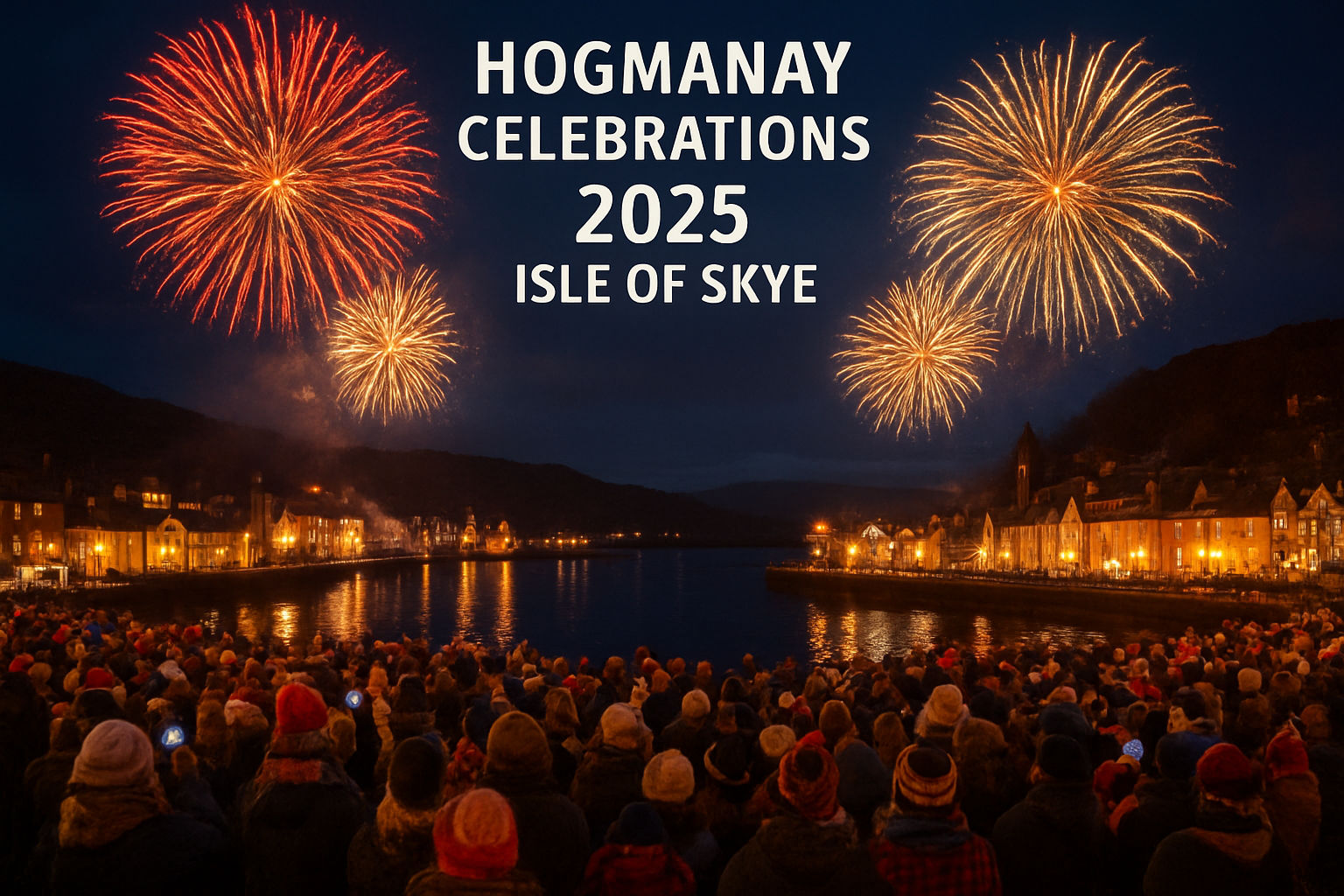
Midnight at the Harbor: Many locals and visitors gather at Portree's picturesque harbor for the midnight countdown, creating impromptu community celebration with views across the water and the town's colorful buildings providing iconic backdrop.
Dunvegan: Castle and Community
Dunvegan, dominated by the historic Dunvegan Castle (seat of Clan MacLeod for over 800 years), celebrates Hogmanay with characteristic Highland pride. The village's community hall often hosts traditional gatherings bringing together local families and welcomed visitors.
Some years, Dunvegan Castle itself may organize special Hogmanay events taking advantage of its atmospheric setting, though private functions are more common than public events. The castle's grounds and nearby loch create romantic settings for New Year's celebration.
Smaller Villages and Remote Areas
Villages throughout Skye including Broadford, Uig, Staffin, Elgol, and Sleat host their own Hogmanay celebrations, typically in community halls or local hotels. These smaller gatherings often feel most authentic, with tight-knit communities welcoming visitors into genuine Highland hospitality.
Remote crofts and rural areas maintain more private celebrations, with extended families gathering for traditional meals, first-footing expeditions, and quiet reflection on the year past and year ahead. The sense of connection to land, tradition, and community runs deep in these settings.
Traditional Hogmanay Foods and Drinks
Culinary Traditions
Scottish Hogmanay cuisine emphasizes hearty, warming dishes appropriate for midwinter celebration:
Steak Pie: Rich beef stew topped with shortcrust or puff pastry, a Hogmanay dinner staple representing prosperity.
Cock-a-Leekie Soup: Chicken and leek soup, sometimes with prunes, providing warming start to festive meals.
Haggis: Scotland's national dish of sheep's pluck mixed with oatmeal, onions, and spices encased in stomach lining, often served with neeps (turnips) and tatties (potatoes).
Salmon: Fresh Scottish salmon, often smoked or baked, representing abundance from the sea.
Black Bun: Dense fruit cake enclosed in pastry, traditionally eaten at Hogmanay and given to first-footers.
Shortbread: Buttery Scottish biscuits, also traditional first-footing gifts.
Clootie Dumpling: Steamed pudding filled with dried fruits and spices, served as dessert.
Whisky: The Water of Life
No Scottish Hogmanay is complete without whisky, Scotland's most famous export and the "uisge beatha" (water of life) in Gaelic. Skye's Talisker Distillery produces the island's distinctive single malt, characterized by maritime influence, peppery notes, and peaty character.
Hogmanay traditions call for toasting the New Year with whisky, offering drams to first-footers, and keeping bottles at hand throughout celebrations. Many events feature whisky tastings or special bottles saved for the occasion.
Beyond Talisker, celebrations might include other Scottish whiskies, while some preferring lighter drinks opt for champagne or prosecco for midnight toasts, blending Scottish tradition with international New Year's customs.
Practical Planning for Skye's Hogmanay
Booking and Reservations
Hogmanay represents one of Scotland's busiest periods, requiring advance planning:
Accommodation: Book 3-6 months ahead for Hogmanay period. Hotels, B&Bs, and holiday cottages fill quickly, with many requiring 2-3 night minimum stays. Expect premium pricing compared to off-season rates.
Restaurant Reservations: Book dinner reservations by November at latest, particularly for Hogmanay Eve. Many venues offer set menus only on December 31.
Event Tickets: Purchase ceilidh and gala tickets when they become available in autumn, as popular events sell out.
Transportation: Ferry and accommodation bookings should coordinate, as you cannot reach Skye without prearranged transport and somewhere to stay.
Weather Considerations
December 31 on Skye brings full winter conditions:
Temperature: 2-7°C (36-45°F), feeling colder with wind chill
Daylight: Approximately 7 hours; dark by 4 PM
Conditions: Rain, wind, possible snow especially on high ground
Roads: Potentially icy; single-track sections require careful driving
Essential Gear:
- Full waterproof clothing (jacket and pants)
- Insulated, waterproof boots
- Warm layers including thermal underwear, fleece or wool, down jacket
- Hat, gloves, scarf
- Headlamp for walking after dark
- Emergency supplies if driving
Transportation
Getting There: Most visitors drive via the Skye Bridge from Kyle of Lochalsh. Allow 2+ hours from Inverness, 5-6 hours from Edinburgh or Glasgow. Weather can slow journeys significantly.
On the Island: Having a car provides flexibility, but Hogmanay celebrations mean designated drivers are essential. Some hotels arrange shuttles to events. Taxis are limited; book ahead if needed.
Staying Safe: Do not drink and drive. Island roads are challenging enough sober in daylight, exponentially more dangerous intoxicated in darkness and bad weather.
Cultural Etiquette
Participating respectfully in Skye's Hogmanay:
- Learn basic Gaelic: Simple greetings like "Bliadhna Mhath Ùr" (Happy New Year) are appreciated
- Dress appropriately: Smart casual minimum for events; many wear kilts and Highland dress
- Participate fully: Join in dancing even if inexperienced; enthusiasm matters more than skill
- Respect traditions: Observe first-footing customs if invited to participate
- Support local: Buy from island businesses; respect that Hogmanay is locals' celebration primarily
- Environmental care: Leave no trace; respect Scotland's outdoor access codes
Beyond Hogmanay: Experiencing Winter Skye
Visitors traveling to Skye for Hogmanay should explore the island's winter attractions:
Landscape Photography: Dramatic winter light, moody skies, and potential snow create spectacular conditions for photography despite challenging weather.
Winter Wildlife: Seals, otters, white-tailed eagles, and red deer can be spotted with patience and luck.
Historic Sites: Dunvegan Castle, Duntulm Castle ruins, and ancient standing stones take on atmospheric quality in winter.
Quiet Beaches: Famous beaches like Talisker Bay and Claigan Coral Beach offer solitude impossible in summer.
Talisker Distillery: Winter tours provide cozy alternative to outdoor activities.
Fairy Pools: Though cold, the cascading waterfalls remain beautiful, often frozen in spectacular formations.
Welcome 2026 on the Island of Legend
Hogmanay 2025 on the Isle of Skye beckons with promises of authentic Scottish celebration in one of the world's most dramatic settings. This is your invitation to experience New Year's as Highlanders have for centuries, where ancient customs thrive in communities that maintain genuine connection to tradition, where winter landscapes enhance rather than diminish the festivities, where strangers become friends through shared dances and drams.
December 31, 2025, approaches rapidly. Now is the moment to secure your place at Skye's Hogmanay celebrations. Book accommodation before limited winter availability vanishes. Purchase tickets for ceilidhs and gala dinners. Plan your journey to this legendary island where myth and reality blur in the best possible ways.
Imagine dancing Strip the Willow in a crowded village hall, the caller's voice guiding you through swirling patterns while fiddles and accordions drive the irresistible rhythm. Picture standing at Portree harbor as midnight arrives, joining voices with islanders and visitors to sing "Auld Lang Syne," the familiar melody carrying across dark waters toward the mountains beyond.
Envision welcoming first-footers at your holiday cottage door or being invited to first-foot at a local home, carrying coal and whisky, receiving warmth and welcome that embodies Highland hospitality's essence. Feel the excitement of counting down to 2026 surrounded by new friends in an ancient land where every celebration feels weighted with history and meaning.
The Isle of Skye awaits your arrival, ready to share Scotland's most important celebration with visitors who come seeking authentic experiences. The ceilidh bands are rehearsing, hotels are planning their galas, communities are preparing for first-footing expeditions, and the island itself stands ready to provide spectacular backdrop to your Hogmanay adventure.
Don't let this opportunity pass. Book your Skye Hogmanay experience today. Prepare for winter weather that makes indoor celebrations all the more welcoming. Pack your camera to capture landscapes transformed by winter's drama. Bring your enthusiasm for tradition, your willingness to dance even when you don't know the steps, and your appetite for both whisky and adventure.
The New Year approaches. The misty island calls. Hogmanay 2025 on the Isle of Skye promises memories that will warm you through all the years to come. Will you answer?
Verified Information at a Glance
Event Name: Hogmanay Celebrations 2025/2026 Isle of Skye
Category: New Year's Celebration / Scottish Cultural Festival / Traditional Highland Festivity
Dates:
- Hogmanay Eve: Tuesday, December 31, 2025
- New Year's Day: Wednesday, January 1, 2026 (bank holiday)
- January 2: Thursday, January 2, 2026 (additional bank holiday in Scotland)
Location: Isle of Skye, Inner Hebrides, Scotland
- Main celebrations: Portree (island capital)
- Other venues: Dunvegan, Broadford, villages island-wide
Significance: Hogmanay is Scotland's most important annual celebration, marking New Year with traditions older than Christmas observances
Traditional Activities:
- Ceilidh dancing (traditional Scottish social dancing)
- First-footing (visiting homes after midnight with symbolic gifts)
- Singing "Auld Lang Syne" at midnight
- Torchlight processions and fire ceremonies
- Whisky toasting
- Traditional Scottish feasting
- Wearing Highland dress
Key Traditions Explained:
- First-Footing: First visitor after midnight brings luck; traditional gifts include coal, shortbread, salt, whisky, black bun
- Auld Lang Syne: Robert Burns poem sung at midnight with crossed arms, holding hands in circle
- Saining: Purifying homes with juniper smoke (traditional households)
Major Venues and Events:
Portree:
- Aros Centre: Major ceilidh with live bands
- Hotels: Cuillin Hills Hotel, Portree Hotel offering gala dinners
- Pubs: The Isles Inn, The Granary, MacNab's Inn with extended hours
- Harbor: Midnight countdown gathering spot
Typical Pricing:
- Ceilidh tickets: £20-£40
- Gala dinner: £80-£150+ per person
- Dinner + accommodation package: £200-£400+ per person
- Pub entry: Usually free, but capacity limited
- Whisky tastings: £15-£50
Traditional Foods:
- Steak pie, cock-a-leekie soup, haggis
- Black bun (fruit cake in pastry)
- Shortbread, clootie dumpling
- Scottish salmon, Highland beef
Traditional Drinks:
- Talisker whisky (Skye's single malt)
- Other Scottish whiskies
- Champagne/prosecco
- Traditional Scottish ales
Weather: Full winter conditions
- Temperature: 2-7°C (36-45°F)
- Daylight: ~7 hours; dark by 4 PM
- Conditions: Rain, strong winds, possible snow
- Wind chill: Makes it feel significantly colder
What to Pack:
- Full waterproof gear (jacket, pants)
- Insulated waterproof boots
- Thermal layers, fleece, down jacket
- Hat, gloves, warm scarf
- Headlamp for evening/night
- Smart casual/formal wear for events
- Highland dress (optional but appreciated)
Getting There:
- By Car: Via Skye Bridge from Kyle of Lochalsh; 2+ hours from Inverness
- By Train: Scenic route to Kyle of Lochalsh, then bus/taxi
- By Bus: Scottish Citylink from Inverness/Glasgow
- Nearest Airport: Inverness (80 miles)
Accommodation: Book 3-6 months in advance
- Hotels, B&Bs, self-catering cottages
- Minimum 2-3 night stays common
- Premium Hogmanay pricing
- Limited availability
Reservations Essential For:
- Accommodation (by September-October)
- Restaurant dinners (by November)
- Ceilidh/gala tickets (when available in autumn)
- Any organized events
Transportation Notes:
- Designated drivers essential (don't drink and drive)
- Limited taxi services (book ahead)
- Some hotels provide event shuttles
- Single-track roads require careful driving
- Weather can make roads dangerous
Cultural Etiquette:
- Learn basic Gaelic greetings
- Dress smartly for events
- Participate enthusiastically in ceilidhs
- Respect first-footing traditions if invited
- Support local businesses
- Environmental responsibility
Gaelic Phrases:
- Bliadhna Mhath Ùr (BLEE-uh-nuh va OOR) - Happy New Year
- Sláinte mhath (SLAHN-chuh vah) - Good health (toast)
- Tapadh leat (TAH-puh let) - Thank you
Bank Holidays:
- January 1 (New Year's Day)
- January 2 (Scotland only)
What Makes Skye Special:
- Authentic Highland traditions
- Intimate community celebrations
- Dramatic winter landscapes
- Genuine Scottish hospitality
- Smaller scale than Edinburgh (more personal)
- Strong Gaelic heritage
- Spectacular natural scenery
Additional Winter Activities:
- Talisker Distillery tours
- Landscape photography
- Winter wildlife watching
- Historic sites (Dunvegan Castle)
- Beach walks (Talisker Bay, coral beaches)
- Fairy Pools (dramatic in winter)
Safety Considerations:
- Roads potentially icy/dangerous
- Limited emergency services on remote island
- Weather can change rapidly
- Daylight very limited
- Mobile phone coverage spotty in some areas
Best For:
- Those seeking authentic Scottish experiences
- Culture and tradition enthusiasts
- Travelers comfortable with winter weather
- People who appreciate small-scale, intimate celebrations
- Photography enthusiasts
- Whisky lovers
- Anyone wanting memorable New Year's experience
Not Ideal For:
- Those expecting large-scale city entertainment
- Visitors uncomfortable with challenging weather
- People seeking guaranteed sunshine
- Those needing extensive nightlife options
Tourist Information:
- Visit Scotland: visitscotland.com
- Isle of Skye: isleofskye.com
- Portree Information: Tourist office in Portree
Booking Resources:
- Individual hotel/venue websites
- Visit Scotland booking platform
- Local tourist information centers
- Social media for community events
Note: Specific 2025/2026 event details including exact times, venues, and final pricing are typically confirmed 6-8 weeks before Hogmanay. Monitor local sources from November 2025 for complete, up-to-date information. Always book accommodation and major events well in advance as Hogmanay is Scotland's busiest celebration period.