Panigyri of Panagia Tourliani in Ano Mera: A Sacred Mykonos Celebration Beyond the Beach Clubs
The Panigyri of Panagia Tourliani in Ano Mera is one of the most meaningful religious celebrations in Mykonos, centered on the island’s most important monastery and its patron-protector image of the Virgin Mary. Publicly available sources confirm that Panagia Tourliani is located in Ano Mera about 7 to 8 kilometers from Mykonos Town, that the monastery was founded in 1542, and that the community marks major feast observances connected to the Virgin in August, with strong local participation, religious services, and long-standing processional traditions.
For travelers who want to see the island beyond nightlife and designer beach clubs, this is exactly the kind of event that reveals the deeper soul of Mykonos. The Panigyri of Panagia Tourliani offers a more intimate and authentic island experience, one shaped by faith, local memory, village gathering, and a living connection between the people of Mykonos and one of their most revered sacred places.
What is the Panigyri of Panagia Tourliani?
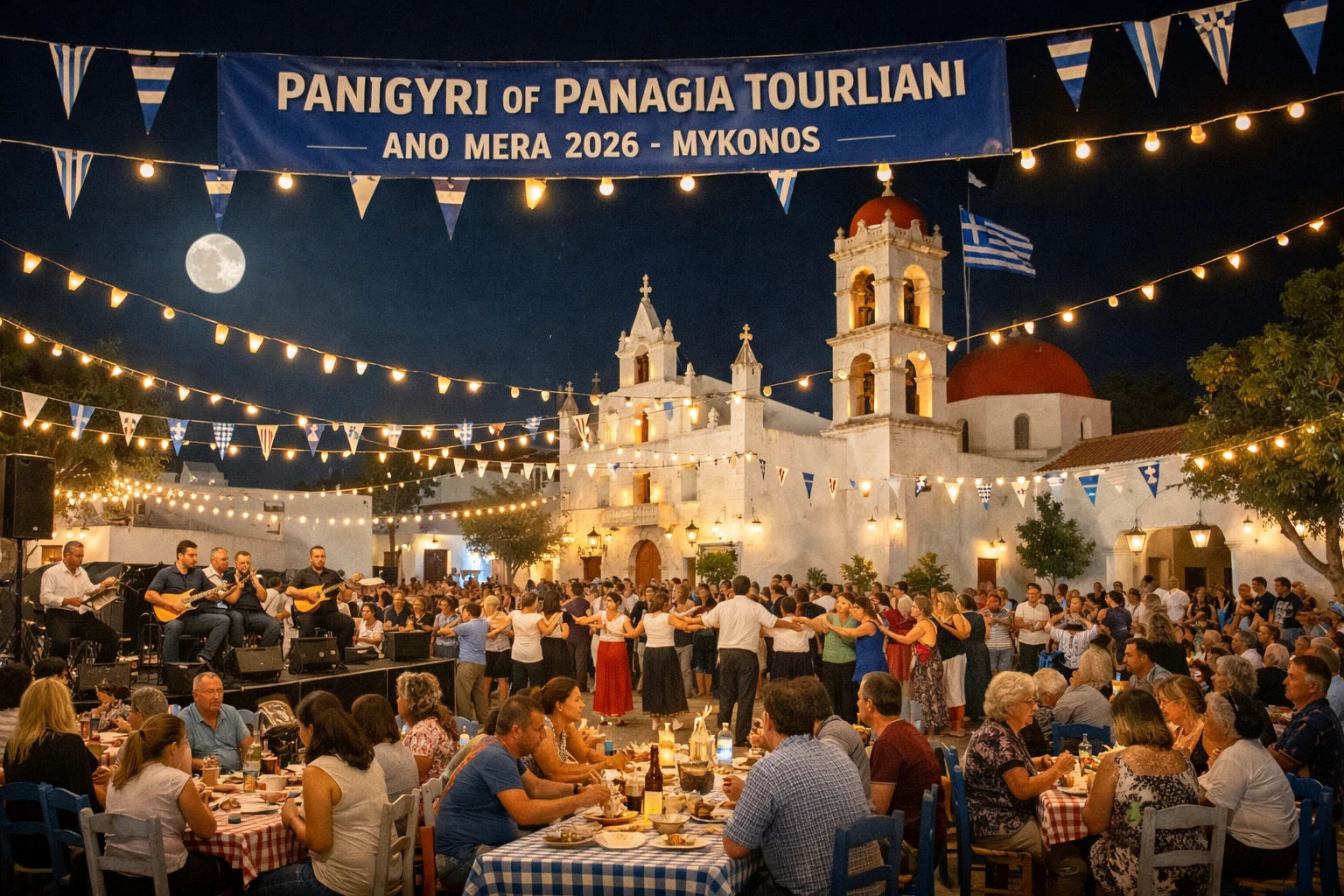
In Greek island life, a panigyri is a feast celebration connected to a church, monastery, or patron saint, usually combining worship with communal gathering, food, music, and local participation. In the case of Panagia Tourliani, the panigyri centers on the historic monastery in Ano Mera and the Virgin Mary image regarded as especially sacred in Mykonos.
This is not a modern festival built for tourism. It belongs to the island’s religious calendar and to older patterns of devotion that still matter deeply in local life.
That difference shapes the atmosphere. Visitors should expect something rooted in worship first, with cultural richness growing around it through village life, hospitality, and the emotional importance of the day for Mykonians themselves.
Why Panagia Tourliani Matters So Much in Mykonos
Panagia Tourliani is not just another church on the island. Multiple sources describe it as the patron saint or protector of Mykonos, and local writing about the monastery calls it the religious creed of Mykonians and a place tied to countless stories, traditions, and appeals for comfort in times of joy and sorrow.
That helps explain why its feast is so important. A panigyri here is not simply a village custom. It is a celebration linked to one of the spiritual symbols most closely associated with the island itself.
For anyone interested in heritage travel, this makes the event especially meaningful. You are not attending a niche side tradition. You are stepping into one of the strongest expressions of Mykonian religious identity.
The Monastery and Its Setting in Ano Mera
Ano Mera is the inland heart of Mykonos and offers a very different rhythm from the coast. Tour and guide sources consistently place Panagia Tourliani in the village square area of Ano Mera, around 7 to 8 kilometers from Mykonos Town, surrounded by tavernas, coffee shops, and the calmer, more traditional face of island life.
That setting matters because it gives the panigyri a village-centered character. The monastery is not isolated on a mountain or hidden in a remote valley. It sits within a lived-in community where the feast can spill naturally into public space and local gathering.
Architecturally, the monastery is also a major landmark. Sources highlight its marble bell tower, ornate marble fountain, Florentine wood-carved screen, icons, and museum holdings, all of which help make a visit feel culturally rich even outside feast days.
The History Behind Panagia Tourliani
The monastery’s origins go back to 1542, when monks from Paros founded it on the site of an older church. Later restoration in the eighteenth century gave it much of its present form, and the site has remained central to the spiritual life of Mykonos ever since.
Local historical writing adds more depth by explaining that the icon and the monastery became closely tied to the seafaring life of the island. One source says ships would not depart until sailors had prayed to the miraculous icon of the Virgin Mary and placed their hopes under her protection.
That relationship between sea, island, and sacred protector is important in Mykonos. It means the Panigyri of Panagia Tourliani is not only about the monastery itself. It is also about the broader memory of how island communities survived, traveled, and entrusted themselves to divine care.
Confirmed Feast Dates and How to Understand Them
This is the section where accuracy matters most. Public sources confirm several date references connected to Panagia Tourliani, and they are not all identical because they refer to different layers of the religious observance.
The clearest verified references are:
- August 15 is widely identified as a major celebration day tied to the patron saint and the Dormition of the Virgin Mary. Tripadvisor and Viator both mention August 15 as a significant celebration date in Ano Mera.
- August 23 is identified by local religious writing as the day on which the historic monastery celebrates “with every ecclesiastic splendor” the Return of the Feast of the Virgin Mary, known as the Apodosis of the Dormition.
- Wikipedia’s summary of the monastery also distinguishes between a big festival on August 15 and the main feast of the monastery on August 23.
The safest way to present this for travelers is simple:
- August 15 is a confirmed major celebration date associated with the Panagia Tourliani tradition in Ano Mera.
- August 23 is also a confirmed important monastery feast day in local religious tradition.
- If you want the most precise local observance details for this year, it is best to verify close to the date through church or local community channels because both dates carry religious significance.
What Happens During the Panigyri
The retrieved sources do not provide a minute-by-minute official programme for this year, but they do offer a clear picture of the religious and traditional elements tied to Panagia Tourliani. The monastery celebrates with strong ecclesiastical solemnity and with broad participation from Mykonians, while other island panigyri on Mykonos are described as occasions with food, local wine, music, singing, and dancing into the night.
That means visitors can reasonably expect a blend of:
- Religious services or liturgical observance at the monastery.
- Processional or devotional activity linked to the icon and the feast.
- Strong local attendance in Ano Mera.
- A communal village atmosphere that may extend into food, gathering, and traditional celebration.
This combination is what makes a Greek island panigyri so memorable. The sacred and the social sit side by side, and neither feels artificial.
The Wider Traditions Connected to the Monastery
One of the most fascinating aspects of Panagia Tourliani is that its significance stretches beyond one August feast. Local writing says a traditional custom has continued from the sixteenth century to today, with the miraculous icon descending to Chora on the Saturday of the first week of Great Lent and returning to the monastery on the Saturday of Lazarus.
That tradition involves a walk of about 7 kilometers between Ano Mera and Chora, undertaken by the Mykonian people with great devotion. During Lent, the icon remains for veneration in one of three parish churches in Chora before returning to the monastery.
Even if you are visiting in summer, this tells you something essential. Panagia Tourliani is not only relevant on one feast day. It remains woven into the religious calendar and emotional geography of the island throughout the year.
Why This Celebration Stands Out for Visitors
There are many reasons to visit Mykonos, but few of them feel as grounding as a village feast tied to the island’s patron saint. The Panigyri of Panagia Tourliani gives travelers something the beach scene cannot, which is a sense of continuity and belonging rooted in place.
Ano Mera is especially suited to that experience. It is calmer than the club-lined coasts, easier to imagine as a living village, and rich in small local details such as bakeries, tavernas, and the square in front of the monastery.
For an island traveler, that contrast can be refreshing. One day you might be at Psarou, Paradise, or Scorpios. The next, you are standing in Ano Mera at a monastery feast that has meaning far beyond summer style.
Practical Travel Tips for Attending
If you hope to experience the Panigyri of Panagia Tourliani, plan with respect first and curiosity second. This is a religious observance before it is a visitor attraction.
What to Do Before You Go
- Aim for mid to late August, since August 15 and August 23 are the key confirmed feast dates connected to the monastery.
- Verify the exact local observance schedule shortly before visiting, because the most important liturgical activity may vary by year and by church announcement.
- Dress modestly, especially if entering the monastery or attending services. Panagia Tourliani is an active place of worship.
Getting There
- Ano Mera is about 7 to 8 kilometers from Mykonos Town according to multiple sources.
- Buses run from Mykonos Town toward Ano Mera, and Panagia Tourliani is a short walk from the bus stop.
- A car or taxi gives more flexibility if you are attending around service times or evening village gatherings.
What to Pair It With
- Explore Ano Mera square and stop at a local taverna or coffee shop.
- Combine the visit with nearby beaches such as Kalafatis, Kalo Livadi, or Agia Anna for a balanced inland and coast day.
- Take time inside the monastery to appreciate the iconostasis, bell tower, and religious museum.
Pricing and Entry Details
No official public ticket price for attending the panigyri itself was found in the retrieved sources. That is expected, since a panigyri is a religious feast rather than a ticketed entertainment event.
For the monastery as a visitor attraction, Viator’s information says there is a small entrance fee of about 1 euro for the church and museum, though this is informational travel content rather than an official monastery notice. It also notes that exact change in cash may be useful.
So the clearest practical guidance is:
- No confirmed ticketed event price for the feast itself was found.
- A small visitor entry fee for the monastery is mentioned in travel information, approximately 1 euro, but travelers should verify locally.
A Beautiful Reason to See Another Side of Mykonos
The Panigyri of Panagia Tourliani reminds you that Mykonos is more than a summer brand. It is an island with memory, devotion, and a village life that still gathers around sacred dates with seriousness and warmth.
If you time your trip around August and step into Ano Mera with respect, you may experience one of the most revealing celebrations the island has to offer, where bells, prayer, community, and the evening light come together in a way that feels unmistakably Greek and deeply Mykonian.
Verified Information at a Glance
- Event name: Panigyri of Panagia Tourliani, Ano Mera, Mykonos.
- Event category: Religious feast, monastery panigyri, local cultural celebration.
- Venue: Panagia Tourliani Monastery, Ano Mera, Mykonos.
- Location detail: About 7 to 8 kilometers from Mykonos Town.
- Monastery founding date: 1542.
- Religious importance: Panagia Tourliani is described as the patron saint or protector of Mykonos.
- Confirmed major celebration date: August 15.
- Confirmed additional important monastery feast date: August 23, linked to the Return of the Feast of the Virgin Mary.
- Confirmed customs: Religious services, strong local participation, and longstanding processional traditions connected with the icon.
- Broader local feast atmosphere in Mykonos: Food, wine, traditional music, singing, and dancing are typical elements of island panigyria.
- Transport note: Buses run from Mykonos Town to Ano Mera, and the monastery is a short walk from the stop.
- Feast pricing: No official ticket price for attending the panigyri itself was found.