
Phuket
Thailand's largest island, famous for its stunning beaches, vibrant nightlife, and rich cultural heritage. A tropical paradise offering everything from pristine white sand beaches to bustling markets and world-class diving.
The story of Phuket
Climate & Weather
Tropical climate with year-round warm temperatures and trade winds.
Best Time to Visit
November to April (cool and dry season)
Top highlights
Stunning beaches and crystal-clear waters
Vibrant nightlife in Patong
Rich cultural heritage and temples
Gateway to Phi Phi Islands
World-class diving and snorkeling
Delicious Thai cuisine and street food
Popular activities
Quick info
Upcoming events
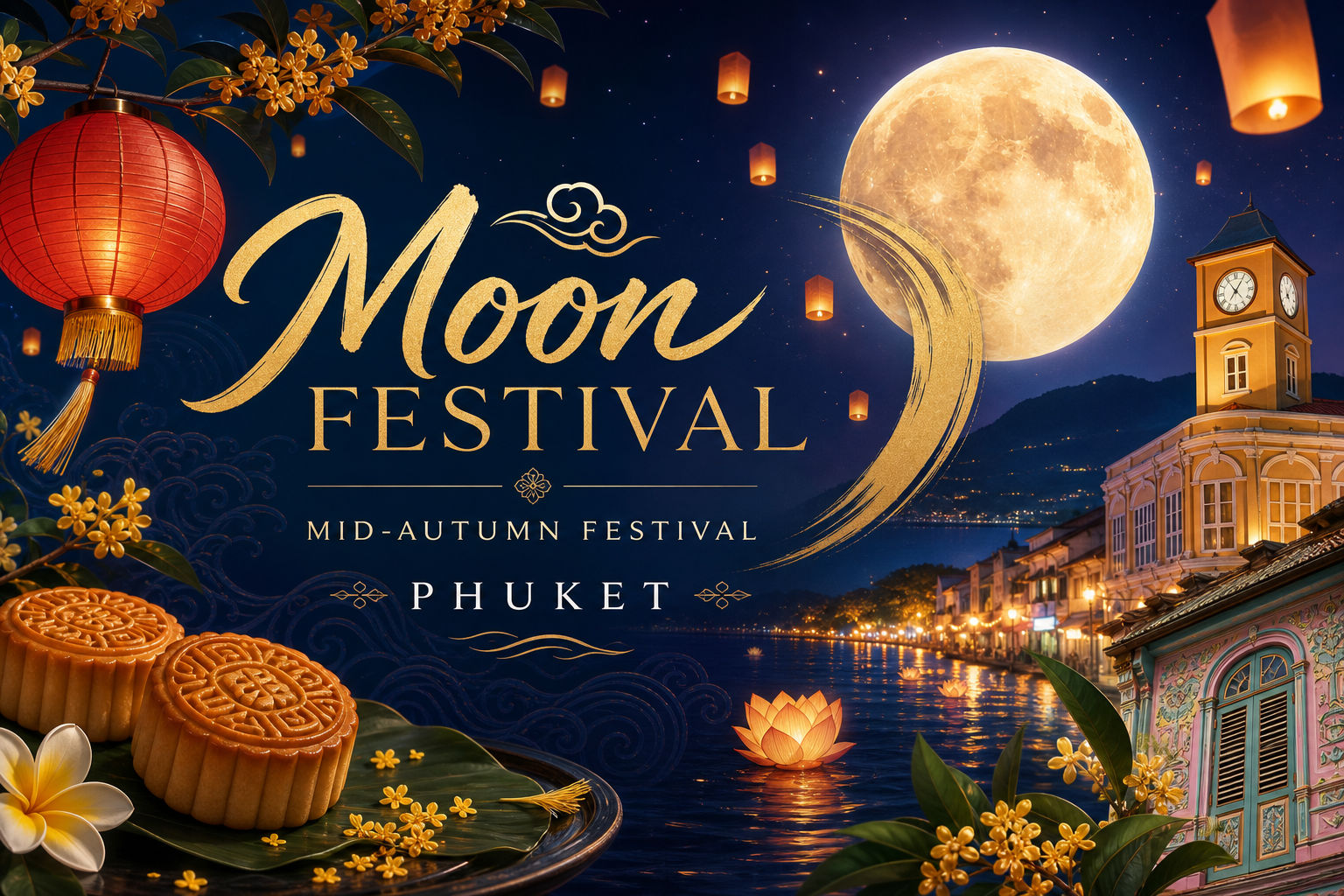
Moon Festival – Mid-Autumn Festival 2026
There is something quietly perfect about celebrating the Mid-Autumn Festival on an island. The Moon Festival 2026 falls on Wednesday October 7, 2026, the 15th day of the 8th lunar month when the full moon reaches its brightest and most perfect state, and in Phuket it lands on a Chinese-heritage island whose Hokkien community has been observing this ancient celebration for over two centuries. Known in Thailand as Wai Phra Chan (literally "worship the moon"), the Mid-Autumn Festival in Phuket is an evening of altar offerings, mooncake sharing, lantern displays, and beachfront moon gazing that combines the island's Sino-Portuguese Old Town atmosphere with the warm October ocean air in a way that no mainland city can quite replicate.
"The Mid-Autumn Festival in Phuket combines the island's Sino-Portuguese Old Town atmosphere with the warm October ocean air in a way that no mainland city can quite replicate."
The Date: October 7, 2026
The Brightest Full Moon of the Year
The Mid-Autumn Festival follows the Chinese lunar calendar and falls on the 15th day of the 8th lunar month, which in 2026 corresponds to Wednesday October 7, 2026. This is when the moon is at its fullest and most luminous of the entire year according to the traditional Chinese calendar, and the entire festival is built around that astronomical moment.
The timing places the Moon Festival squarely within Phuket's most culturally dense autumn period:
- August 19 to September 6: Por Tor Hungry Ghost Festival
- October 7, 2026: Moon Festival / Mid-Autumn Festival
- October 8 to 17: Phuket Vegetarian Festival
- November 14: Loy Krathong
What Is the Mid-Autumn Festival
The Ancient Story Behind the Moon
The Mid-Autumn Festival has been celebrated in China for over 3,000 years, with roots in both the autumn harvest tradition and one of the most enduring love stories in Chinese mythology.
Chang'e and the Moon
The Myth of the Moon Goddess
The festival's most beloved origin story centers on Chang'e, the Moon Goddess of Immortality. In the original myth, the legendary archer Hou Yi shot down nine of the original ten suns that were burning the earth, saving humanity. As a reward, the Queen Mother of the West gave him the elixir of immortality. Hou Yi, not wishing to live forever without his beloved wife Chang'e, kept the elixir safely at home. When a villain broke into their home to steal it, Chang'e swallowed the elixir herself to prevent it from falling into his hands. She immediately floated up to the moon, where she has lived ever since.
"On the 15th day of the 8th lunar month, the moon is at its fullest and Chang'e is at her most visible."
The Mid-Autumn Festival is the night when people look up at the moon and feel her presence most strongly, when families eat mooncakes together, light lanterns, and send their love across the distance between earth and moon.
The Harvest Connection
Celebrating Abundance and Gratitude
Alongside the mythological dimension, the Mid-Autumn Festival has its roots in the autumn harvest celebration. The 15th day of the 8th lunar month in the traditional Chinese agricultural calendar marks the midpoint of autumn when harvests are gathered, the granaries are full, and the community can pause to give thanks and enjoy abundance together. Mooncakes, traditionally made from the harvest's finest ingredients, are the edible expression of that gratitude.
How the Moon Festival Is Celebrated in Phuket
Phuket's Unique Cultural Blend
Phuket's Mid-Autumn Festival is observed primarily by the island's Chinese-Thai community, whose Hokkien and Teochew heritage gives the celebration the same deep cultural roots that characterize Por Tor and the Vegetarian Festival. The celebrations are centered in Phuket Town's Old Town area and at the Chinese shrines and community spaces that form the backbone of the island's Chinese cultural life.
The Altar Ceremony: Wai Phra Chan
A Ritual of Gratitude and Reflection
The central ritual of the Moon Festival in Thailand is Wai Phra Chan, the worship of the moon, performed at household altars and at community shrines on the evening of October 7. The ceremony involves:
- Setting up a sacred altar facing the moon, typically outdoors on a terrace, in a courtyard, or at a temple facing east or southeast to catch the moonrise
- Arranging offerings on the altar including mooncakes, pomelos, seasonal fruits, candles, incense sticks, and paper offerings
- The worship ceremony itself in which family members pay respects to the moon, to the Moon Goddess Chang'e, and to their ancestors in a sequence of incense offering and prayer that varies by family tradition but shares the common element of expressing gratitude for the year's blessings
- Moon gazing as the full moon rises over the horizon, the family gathers to admire its brightness together, a ritual that in Phuket takes place with the warm tropical October night as the backdrop and, for families near the coast, the reflection of the moon on the Andaman Sea below
Mooncakes: The Festival's Essential Food
A Culinary Tradition with Modern Twists
Mooncakes are the single most iconic and most universally shared element of the Mid-Autumn Festival across all Chinese communities worldwide, and Phuket is no exception. These dense, rich pastries are round like the moon and are filled with sweet pastes, whole salted egg yolks (representing the full moon), and increasingly contemporary flavors that reflect the modern confectionery industry's enthusiasm for reinventing the tradition.
The classic mooncake varieties available in Phuket during the Moon Festival season include:
- Lotus seed paste with salted egg yolk: The most traditional and most beloved variety, where the smooth sweetness of the lotus paste is cut by the rich, savory depth of the salted egg yolk at the center. When sliced in half, the egg yolk glows golden like a miniature moon in the center of the cake
- Red bean paste: The second most traditional filling, slightly less rich than lotus paste and with a cleaner sweetness that makes it the preferred variety for those who find lotus paste intense
- Mixed nuts and seeds (wuren): A Cantonese-style mooncake filled with a dense mixture of sesame seeds, walnuts, melon seeds, and other nuts bound with golden syrup, providing a texturally complex alternative to the smooth paste varieties
- Pandan and coconut: A Southeast Asian adaptation of the mooncake tradition that reflects the Phuket community's Thai culinary influences, using the fragrant green pandan leaf and coconut milk in a combination that is as naturally suited to the tropical setting as any filling the traditional recipe could produce
- Durian: Phuket's own contribution to mooncake innovation, using the King of Fruits in a filling that is intensely aromatic, deeply sweet, and unmistakably Southeast Asian. Durian mooncakes are deeply divisive in the way that all durian preparations are, but for those who love the fruit they are the most distinctively local version of the festival's essential food
"Mooncakes are the single most iconic and most universally shared element of the Mid-Autumn Festival across all Chinese communities worldwide."
In Phuket, mooncakes appear in Chinese bakeries, supermarkets, hotel lobbies, and market stalls throughout the weeks leading up to October 7. The Phuket Town Chinese bakeries on Thalang Road and Dibuk Road produce the most traditional versions, with recipes that have been passed down through Hokkien family bakery traditions for generations.
Lanterns: Light for the Moon Goddess
A Glowing Tribute to Tradition
Paper lanterns are the Mid-Autumn Festival's most visually beautiful element, carried by children through the streets and displayed at temples and community spaces throughout the evening of October 7. The lantern tradition has multiple explanations in Chinese folklore, but its most widely shared meaning is simply that the lantern's light guides the Moon Goddess and honors the full moon's own brilliance with a terrestrial echo.
In Phuket's Old Town, the lanterns hung at the Chinese shrines and along Thalang Road's shophouse arcades during the Moon Festival create one of the most photogenic evening atmospheres the island produces at any time of year, with the red and gold paper lanterns glowing against the heritage Sino-Portuguese architecture in a combination that is entirely particular to this island and this community.
Traditional lantern varieties for children include:
- Rabbit lanterns: The most traditional and most beloved shape, honoring the Jade Rabbit who lives on the moon and is the Moon Goddess's companion
- Fish and animal lanterns
- Lotus flower lanterns: Connecting the Moon Festival's celestial theme to the Buddhist symbolism that runs through Thai culture alongside the Chinese tradition
- LED and modern lanterns: Contemporary versions in the shapes of popular cartoon characters and animals that reflect the festival's evolution within living communities
Pomelos: The Moon Festival Fruit
A Sweet Symbol of Abundance
The pomelo is the Mid-Autumn Festival's sacred fruit in the Hokkien tradition and one of the most practically charming elements of how the festival is observed in Phuket. Large, round, and yellow-green, the pomelo's roundness echoes the full moon, its sweetness represents abundance, and its large size means a single fruit can be shared across an entire family gathering.
"The pomelo's rind is famously used by children as a hat during the festival, hollowed out and worn on the head in a tradition of cheerful practicality."
In Phuket's markets in the weeks before October 7, pomelos appear in extraordinary abundance at every Chinese household's fruit stall, piled in towers at the altar offerings in the Chinese shrines and sold in clusters of three or five for the home altar arrangements that families assemble for the Wai Phra Chan ceremony.
Where to Experience the Moon Festival in Phuket
Phuket Town Old Town: The Atmospheric Heart
Phuket Town's Old Town, with its Sino-Portuguese shophouse architecture along Thalang Road, Dibuk Road, Rommanee Road, and Phang Nga Road, is the most atmospheric location on the entire island for Moon Festival evening. The Chinese shrines embedded throughout the Old Town neighborhood, the heritage buildings decorated with lanterns and flowers for the occasion, and the Chinese bakeries selling freshly made mooncakes from their shopfront windows create a sensory environment that makes the Mid-Autumn Festival feel lived-in and genuine rather than performative.
Specifically:
- Jui Tui Shrine on Ranong Road, Phuket Town's most famous Chinese shrine and the center of the Vegetarian Festival, holds Moon Festival ceremonies and is beautifully decorated for the occasion
- Bang Neow Shrine on Phangsana Road hosts its own community ceremony
- Seng Tek Bel Shrine on Phuket Road, fresh from its role as the Por Tor Festival's spiritual center just weeks earlier, continues its calendar of community observances through the Moon Festival
- Thai Hua Museum on Krabi Road, the converted Chinese school that serves as the most accessible introduction to Phuket's Chinese heritage for first-time visitors, stages Moon Festival programming appropriate to its role as a living cultural institution
The Chinese Shophouse Bakeries
A Taste of Tradition
The working Chinese bakeries in Phuket Town's Old Town neighborhood are one of the most direct connections between the island's current residents and the Hokkien culinary heritage their ancestors carried from Fujian province generations ago. During the Moon Festival season from late September through October 7, these bakeries produce mooncakes alongside their year-round inventory of Hokkien pastries, Ang Ku cakes, and Chinese-style bread. Visiting the bakeries on Thalang Road in the days before October 7 and buying mooncakes directly from the family businesses that produce them is one of the most meaningfully local food experiences Phuket offers.
Beachfront Hotel Celebrations
Moonlit Elegance by the Sea
Phuket's international resort hotels and beachfront properties use the Moon Festival as an occasion for special dinner and entertainment programmes that bring the Chinese cultural celebration into the resort experience for international visitors. These hotel events typically offer:
- Special mooncake menus and mooncake boxes prepared by the hotel's Chinese chef or in partnership with Phuket Town bakeries
- Lantern-lit beachfront dinner settings that use the October full moon rising over the Andaman Sea as the evening's natural centerpiece
- Thai and Chinese cultural performances that combine the two traditions that meet in Phuket's heritage
- Moon-viewing setups on terraces, poolside, or directly on the beach where guests can observe the October 7 full moon rising over the water in the most dramatically beautiful possible setting
"Book these special dinners in advance as they typically sell out quickly among both hotel guests and the local expat community who treat the hotel Moon Festival dinner as an annual tradition."
At the Kata, Karon, Bang Tao, and Laguna beachfront resorts, the combination of the full moon reflected on the Andaman Sea and the lantern decorations for the hotel's Moon Festival programme creates an evening atmosphere that is simply not available at any other time of year.
Mooncakes in Phuket: Where to Buy and What to Look For
The Mooncake Market in Phuket
The mooncake market in Phuket during the weeks before October 7 extends well beyond the traditional Chinese bakeries, reflecting the festival's broad popularity across both Chinese-Thai and Thai communities:
- Robinson Department Store and Central Festival Phuket: Both major shopping malls stock imported premium mooncake brands from Hong Kong and Singapore alongside Thai-made varieties, with branded gift boxes available for giving as presents to Thai colleagues, resort hosts, and friends
- Tops Supermarket and Villa Market: The international supermarkets in Phuket carry a range of mooncakes from early September through October 7
- Chinese bakeries on Thalang Road: The most traditional and most locally significant source for mooncakes in Phuket, with the best lotus seed paste, red bean, and pandan coconut varieties
- Hotel boutiques: Many of Phuket's five-star hotels produce their own signature mooncake ranges as gifts and as part of their Moon Festival dining programmes, with the most sought-after examples coming from the Chinese restaurants at major resort properties
Mooncake Gift Giving
A Gesture of Goodwill
In both Chinese and Thai culture, giving mooncakes as gifts during the Moon Festival season is as natural and as obligatory as sending Christmas cards in the Western tradition. A box of quality mooncakes is the appropriate gift for Thai business associates, landlords, resort staff you interact with regularly, and any Thai-Chinese friends or acquaintances. The presentation of the gift matters as much as its content: premium mooncake boxes are often as beautiful as the cakes themselves, with lacquered or printed tins and boxes that are kept and reused long after the mooncakes are eaten.
The Moon Festival and Phuket's Vegetarian Festival
Two Days Apart in 2026
One of the most remarkable features of the 2026 Moon Festival for visitors planning a Phuket autumn trip is that the Moon Festival on October 7 and the Vegetarian Festival opening on October 8 are separated by exactly one day.
This creates a natural combined itinerary that gives visitors two of Phuket's most culturally significant Chinese heritage events in a single trip:
- October 7 evening: Moon Festival ceremonies at the Chinese shrines of Phuket Town, mooncakes and pomelos at the Old Town bakeries, lantern displays along Thalang Road, beachfront moon-gazing dinner at a Kata or Karon resort
- October 8: Vegetarian Festival Day 1 at Jui Tui Shrine and Bang Neow Shrine, the beginning of nine extraordinary days of vegetarian street food, white-clad devotees, and the build-up to the piercing and fire-walking ceremonies that make the Vegetarian Festival one of the most visually extraordinary events anywhere in Southeast Asia
The two festivals share the same shrine network, the same community, and the same Hokkien cultural roots, making the transition from Moon Festival evening to Vegetarian Festival morning a completely natural progression through the deepest layers of Phuket's Chinese heritage.
Moon Festival and the Paradise Beach Full Moon Party
Two Distinct Celebrations
It is worth noting that Phuket also hosts an entirely separate and entirely secular Full Moon Party at Paradise Beach, Patong on a monthly basis, timed to the actual full moon. The September full moon party at Paradise Beach falls on Saturday September 26, 2026 and the October full moon party on Monday October 26, 2026.
The Moon Festival on October 7 does not coincide with the Paradise Beach Full Moon Party, as the Chinese lunar calendar's 15th day of the 8th month does not always align exactly with the Western full moon calendar. The two events are entirely distinct:
EventDateCharacterMoon Festival (Mid-Autumn)October 7, 2026Chinese cultural heritage, Phuket Town, family ceremony, mooncakes, lanternsParadise Beach Full Moon PartyOctober 26, 2026Beach party, electronic music, 20+ crowd, 1,200 to 1,800 THB entry Both are legitimate and enjoyable Phuket experiences. They serve completely different audiences and different travel intentions. The Moon Festival is a cultural immersion event centered in Phuket Town's Chinese community. The Paradise Beach party is one of Phuket's best known monthly nightlife events at a beachfront venue in Patong. Visitors to Phuket in October 2026 who want both can attend the Moon Festival on October 7 and the Full Moon Party on October 26 without any conflict.
Practical Tips for Moon Festival in Phuket 2026
Make the Most of Your Experience
- Be in Phuket Town on the evening of October 7 rather than on the west coast beaches. The Old Town's Chinese shrine and shophouse atmosphere is the most culturally authentic setting for the Moon Festival and the one that gives the celebration its most resonant character
- Buy mooncakes early. The best traditional varieties from the Thalang Road bakeries sell out in the days before October 7. Aim to visit the bakeries on October 4 or 5 for the best selection
- Book the Vegetarian Festival accommodation at the same time. If you plan to combine the Moon Festival with the Vegetarian Festival (October 8 to 17), accommodation in Phuket Town and near Jui Tui Shrine fills up quickly. Book both together as a single extended trip
- Bring a pomelo to a shrine. Purchasing a pomelo at a Phuket Town market and offering it at one of the Chinese shrine altars on the evening of October 7 is the simplest and most meaningful way for a visitor to participate in the ceremony rather than simply observe it
- October weather in Phuket falls in the green season with a higher chance of afternoon rain showers, but evenings typically clear for the pleasant, warm October nights that make outdoor moon-gazing so enjoyable. October temperatures are 27 to 30 degrees Celsius with the humidity moderated by the season's rainfall
Frequently Asked Questions
The Things People Always Want to Know
When is the Moon Festival (Mid-Autumn Festival) 2026 in Phuket?
Wednesday October 7, 2026, the 15th day of the 8th lunar month.
What is the Moon Festival called in Thailand?
Wai Phra Chan, meaning "worship the moon".
What do people eat at the Moon Festival?
Mooncakes and pomelos are the essential foods, along with seasonal fruits displayed on the altar and shared between family members.
Where is the best place to experience the Moon Festival in Phuket?
Phuket Town's Old Town area, particularly around Jui Tui Shrine, Thalang Road, and the Chinese bakeries of the heritage shophouse district.
Is the Moon Festival a public holiday in Thailand?
No. Unlike Emancipation Day in Jamaica, Wai Phra Chan is a cultural observance rather than a national public holiday, though it is widely celebrated by Thailand's significant Chinese-Thai community.
What is the connection between the Moon Festival and the Vegetarian Festival in Phuket?
Both are observed by Phuket's Hokkien Chinese community through the same network of Chinese Taoist shrines. In 2026, the Moon Festival on October 7 falls exactly one day before the Vegetarian Festival opens on October 8, making a combined trip extremely straightforward.
Phuket's Chinese Heritage Festival Calendar: August to November 2026
A Rich Tapestry of Cultural Observances
DateFestivalCharacterAugust 19 to September 6Por Tor Hungry Ghost FestivalAncestral offerings, shrine ceremonies, Ranong Road marketOctober 7Moon Festival / Wai Phra ChanMooncakes, lanterns, moon gazing, Phuket TownOctober 8 to 17Phuket Vegetarian FestivalNine days, white dress, street food, piercing ceremoniesNovember 14Loy KrathongFloating lanterns, candlelit krathong on water Verified Information at a Glance
- Festival Name: Moon Festival / Mid-Autumn Festival / Wai Phra Chan
- 2026 Date: Wednesday October 7, 2026 (15th day, 8th lunar month)
- Type: Cultural observance (not a public holiday)
- Primary Location: Phuket Town Old Town — Chinese shrines, Thalang Road, Chinese bakeries
- Key Rituals: Altar offerings (Wai Phra Chan), mooncake sharing, lantern displays, moon gazing, pomelo offering
- Essential Food: Mooncakes (lotus paste, red bean, pandan coconut, durian) and pomelos
- Symbol: Round mooncake, paper lantern, pomelo, Jade Rabbit
- Community: Hokkien and Teochew Chinese-Thai community of Phuket
- Adjacent Event: Phuket Vegetarian Festival opens October 8, 2026 (one day later)
- Nearest Airport: Phuket International Airport (HKT)
- Best For: Cultural travelers, Chinese heritage visitors, food tourists, families, photographers, visitors combining with the Vegetarian Festival, long-stay Phuket residents, expat community
```
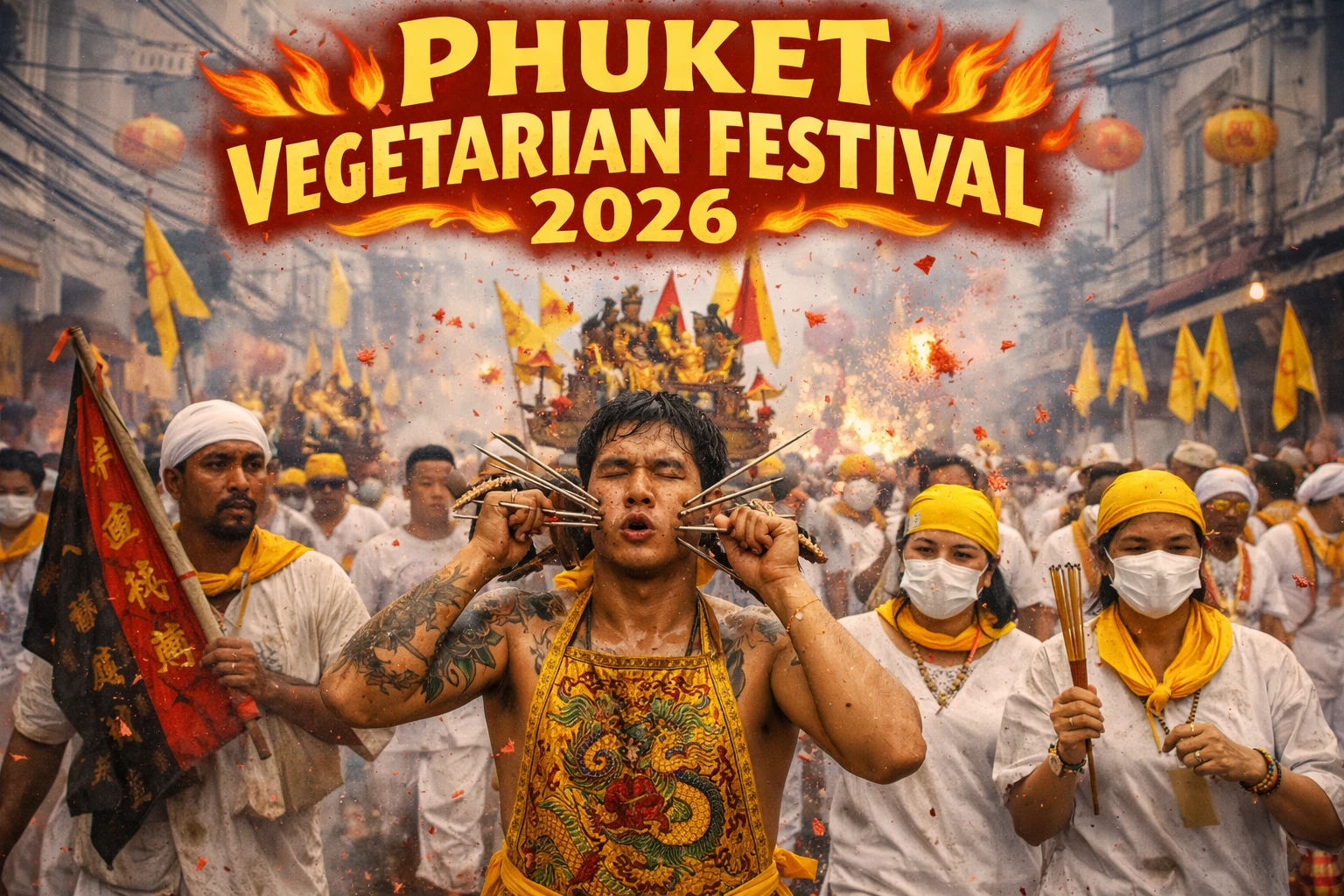
Phuket Vegetarian Festival 2026
Phuket Vegetarian Festival 2026: A Unique Cultural Experience
Phuket Vegetarian Festival 2026 is expected to take place in October 2026 (dates vary each year because the festival follows the lunar calendar), with the island’s main ceremonies centered in Phuket Town’s Chinese shrines and surrounding neighborhoods. It’s one of Phuket’s most intense cultural events, mixing spiritual rituals, loud processions, and a genuinely delicious plant-based food scene that spreads across the island for multiple days.
Experience Phuket Like Never Before
Phuket is famous for beaches like Patong, Kata, and Karon, but every year the island transforms into a completely different destination during the Phuket Vegetarian Festival. The air fills with incense and firecrackers, white-clad devotees crowd the streets, and the island’s Chinese shrines become the heart of a high-energy spiritual season that draws curious travelers from around the world.
This is not a gentle, quiet festival. It can be loud, smoky, and emotionally intense, especially when you witness the processions up close. But it’s also deeply local and surprisingly welcoming when approached respectfully, offering a rare chance to see Phuket beyond nightlife and beach days.
Understanding the Phuket Vegetarian Festival
The Phuket Vegetarian Festival is a nine-day Taoist-influenced celebration observed by Phuket’s Chinese-Thai communities, with rituals that focus on purification, merit-making, and abstaining from meat and certain strong-smelling foods. In practice, “vegetarian” during the festival often means a stricter plant-based approach, and many foods are marked with yellow-and-red “เจ” (Jay) signage, making it easy for visitors to identify festival-friendly meals.
For travelers, the festival serves as a cultural bridge into Phuket’s Chinese heritage, which is especially visible in Phuket Old Town’s architecture, shrines, and community life. If your island travel style is about local identity and tradition, this festival is one of the strongest reasons to visit Phuket outside the usual high season.
When is Phuket Vegetarian Festival 2026?
Festival dates change every year because they follow the lunar calendar, and some sources publish the exact schedule closer to the event. A current 2026-focused guide notes the Phuket Vegetarian Festival is in October 2026, but travelers should confirm the exact start and end days once Phuket’s local shrine committees and tourism channels publish the finalized calendar.
A good planning approach is to schedule a flexible Phuket stay in October 2026 and aim to be on the island for at least a long weekend, since the most memorable moments tend to cluster around the larger procession days. Staying 4 to 6 nights gives you time to experience both the spiritual side in Phuket Town and the calmer beach side of the island between events.
The Heart of the Festival: Phuket Town Shrines and Processions
While vegetarian food pops up island-wide, the “must-see” core of the Phuket Vegetarian Festival is concentrated around Phuket Town and its Chinese shrines. These shrine areas become the staging grounds for ceremonies, parades, and the intense firecracker moments that define the festival’s atmosphere.
Where to Go in Phuket Town
Phuket Old Town is the most natural base for festival immersion, since it places you close to shrines and the main procession corridors while also giving you access to cafes, heritage streets, and walkable neighborhoods. It’s also where you’ll feel the island’s cultural layers most clearly: Sino-Portuguese shopfronts, local markets, and the community rhythm that continues even when the streets erupt into celebration.
What You Will See During Processions
Processions can include musicians, loud firecrackers, devotees carrying ritual items, and spirit mediums known for dramatic acts that many visitors find shocking. This is why the festival is often described as one of the world’s most extreme religious events, and why respectful distance, awareness, and caution around crowds and smoke are essential.
The Food: Phuket’s Best “Jay” Eating of the Year
For many travelers, the most joyful part of the Phuket Vegetarian Festival is the island-wide food culture it creates. Street vendors, small restaurants, and temporary stalls offer plant-based versions of Thai-Chinese classics, and even non-vegetarians often use this week to “eat around the island” in a completely different way than usual.
Expect to find:
- Noodle dishes and stir-fries made without meat, often using tofu and mushrooms.
- Dumplings and buns with festival-friendly fillings.
- Snacks, sweets, and drinks sold from pop-up stands near shrines and markets.
Because the festival draws huge crowds, food stalls can be busiest in the evenings, so visiting earlier in the day can mean shorter lines and more options. If you’re staying in beach areas like Patong, consider doing a dedicated day or evening trip into Phuket Town specifically for food exploration plus shrine viewing.
Cultural Etiquette and Practical Safety Tips
The festival is incredibly photogenic, but it’s also sacred to many participants. Approaching it with respect will improve your experience and how locals respond to you.
Practical guidance for visitors:
- Wear modest clothing, and consider wearing white if you want to blend in with the common festival attire.
- Expect heavy firecracker smoke and loud noise near processions; bring earplugs and a mask if sensitive.
- Keep a safe distance from firecrackers and dense crowds, and avoid standing directly in the path of processions.
- Ask permission before close-up photos of devotees, especially during intense ritual moments.
Where to Stay on the Island During the Festival
Phuket is large enough that you can design two different kinds of festival trips.
Stay in Phuket Town for Cultural Immersion
If your priority is ceremonies, processions, and food, staying in or near Phuket Old Town is the most efficient option. You’ll spend less time in traffic and more time walking to the areas where the festival is most alive.
Stay at the Beach and Day-Trip to the Festival
If you want a beach-first itinerary with festival nights, base yourself in a coastal area like Patong, Kata, or Karon and travel into Phuket Town on the key days. This approach works well for couples and families who want cultural experiences but also want downtime by the sea.
What Does It Cost to Attend?
Phuket Vegetarian Festival activities take place in public streets and at shrines, so typical attendance is free, with costs mainly coming from transport, food, and any tours you choose. Because pricing for organized experiences varies widely, the best strategy is to treat the festival itself as a free public cultural event and budget for taxis, day tours, or private guides if you want structured access and context.
Food during the festival can be very affordable if you focus on street stalls, but prices depend on location and demand, especially in the busiest Phuket Town areas at peak hours. Planning a “food crawl” budget per day is smarter than trying to estimate a single ticket price, since there usually isn’t one.
Verified Information at a Glance
Event Name: Phuket Vegetarian Festival (often described as Phuket’s Vegetarian Festival)
Event Category: Cultural and religious festival with Taoist/Chinese-Thai traditions, processions, and vegetarian food
Timing: October 2026 (exact dates vary by lunar calendar and are finalized closer to the event)
Main Location: Phuket Town, centered around Chinese shrines and surrounding streets
Typical Experiences: Shrine ceremonies, street processions, loud firecrackers, and island-wide “jay” vegetarian food stalls
Pricing: Public viewing is generally free; main costs are transport, food, and optional tours
- If Phuket is on your island travel list in 2026, timing your trip for October and stepping into the Vegetarian Festival is one of the most unforgettable ways to experience the island’s real cultural heartbeat, from the incense-filled shrine streets of Phuket Town to the incredible plant-based food you’ll only find at this scale during festival season.
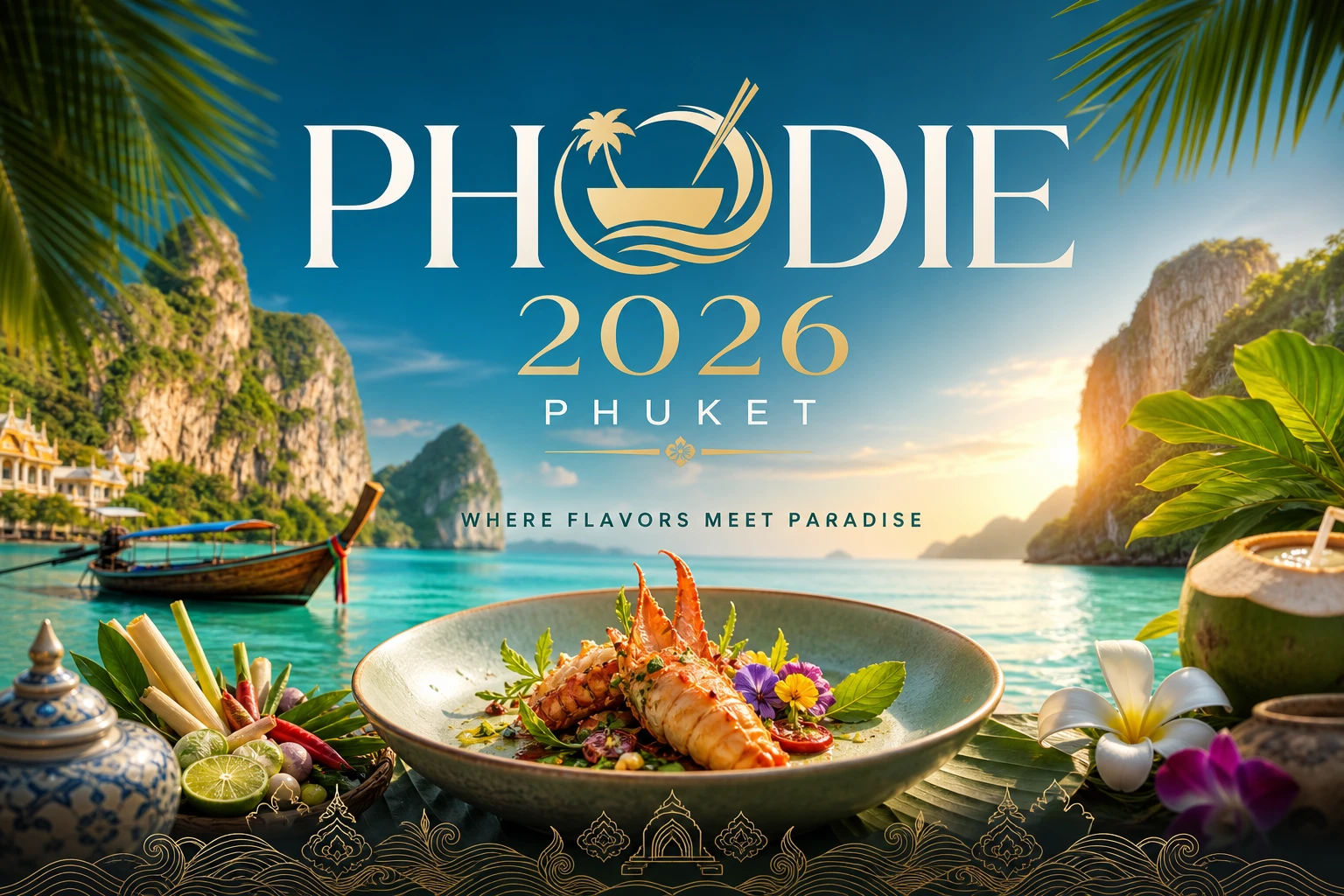
PHOODIE 2026
PHOODIE is Phuket’s first premium island-wide food festival, taking place from 20 to 29 November across participating hotels, restaurants, and bars throughout Phuket, Thailand. Created by the Phuket Hotels Association, the event invites visitors to taste the island through chef-led menus, Thai street-food favourites, cocktail experiences, culinary talks, masterclasses, and immersive dining events.
For food-loving travellers, PHOODIE offers a delicious reason to see Phuket beyond the beach. Across ten flavour-filled days, the island becomes a culinary map, linking the seafood of the Andaman coast, southern Thai spice, Peranakan heritage, international fine dining, and the creative energy of Phuket’s hotel kitchens.
"PHOODIE is a celebration of Phuket’s dining culture, bringing together hotels, restaurants, chefs, bartenders, local ingredients, and food-focused experiences across the island."
The Story of PHOODIE
Phuket's Culinary Festival Debut
PHOODIE is a new culinary festival presented by the Phuket Hotels Association. It is designed as a celebration of Phuket’s dining culture, bringing together hotels, restaurants, chefs, bartenders, local ingredients, and food-focused experiences across the island.
Rather than taking place in only one exhibition hall or night market, PHOODIE is spread across participating venues. That makes the event feel like an invitation to explore different parts of Phuket, from beachfront resorts and refined hotel restaurants to local food neighbourhoods and chef-led tasting spaces.
The festival’s first edition is built around the idea that Phuket is more than a resort island. It is a major dining destination with influences from southern Thailand, Chinese-Peranakan communities, Muslim food traditions, fishing villages, and a global hospitality scene.
PHOODIE will feature curated restaurant menus, signature dishes, Thai food, fresh Andaman seafood, craft cocktail experiences, chef talks, hands-on cooking classes, food tours, and both international and local culinary influences.
- Curated restaurant menus
- Signature dishes from participating hotels
- Thai food and southern Thai flavours
- Fresh Andaman seafood
- Craft cocktail experiences
- Chef talks and food conversations
- Hands-on cooking and culinary masterclasses
- Food tours and tasting events
- International and local culinary influences
Confirmed PHOODIE Dates
Mark Your Calendars
PHOODIE takes place from Friday, 20 November to Sunday, 29 November. The event runs daily from 11 a.m. to 9 p.m. across Phuket.
The event’s official festival site describes the programme as an eight-day celebration, while the Phuket Hotels Association has published the confirmed public festival dates as 20 to 29 November, which spans ten calendar days. Visitors should use the 20 to 29 November dates when booking travel and consult the festival schedule for the timing of individual dining events.
- Friday, 20 November: PHOODIE begins
- Saturday, 21 November and Sunday, 22 November: A strong weekend window for tastings, food tours, and special dining events
- Monday, 23 November to Thursday, 26 November: A useful period for quieter restaurant bookings and masterclasses
- Friday, 27 November to Sunday, 29 November: Final festival weekend and closing opportunities to enjoy PHOODIE experiences
Because many activities will take place at individual restaurants and hotels, exact times, ticket requirements, and availability may differ by venue.
A Festival Across Phuket Island
Explore the Island's Culinary Diversity
The defining feature of PHOODIE is its island-wide format. Instead of travelling to one temporary festival field, visitors can create their own culinary itinerary across Phuket.
The festival is expected to involve a large network of Phuket Hotels Association members. The PHOODIE website references 150 member hotels and restaurants and more than 1,001 dishes, highlighting the scale of the island’s hospitality and culinary community.
"PHOODIE transforms Phuket into a culinary map, inviting exploration from Old Town's heritage streets to beachside dining."
- Phuket Old Town: Sino-Portuguese streets, local cafés, and Peranakan-influenced food
- Kamala: Resort dining, sunset views, and beachside restaurants
- Patong: High-energy nightlife, international dining, and central access
- Bang Tao and Laguna: Luxury resorts, beach clubs, and chef-driven restaurants
- Mai Khao and Nai Yang: Quieter northern beaches and hotel culinary experiences
- Kata and Karon: Family-friendly beaches and accessible restaurant options
- Rawai and Nai Harn: Seafood, fishing-village atmosphere, and southern island flavour
- Cape Panwa: Coastal stays and views across the Andaman Sea
Specific venues named on the festival site include Black Ginger in Tambon Sa Khu, plus Jaras and hom experiences in Kamala, with individual dates and times still to be confirmed.
Phuket’s Food Story
A Melting Pot of Culinary Influences
Phuket’s food culture is one of the richest in Thailand because the island has long been a meeting place for travellers, traders, migrants, and communities from across Asia.
The island’s cuisine combines several influences:
- Southern Thai cooking: Bold spice, turmeric, fresh herbs, coconut, and seafood
- Chinese-Peranakan heritage: Noodles, braises, pastries, pork dishes, and distinctive café culture
- Malay and Muslim traditions: Aromatic curries, grilled meats, roti, and rice dishes
- Andaman Sea ingredients: Fish, prawns, squid, crab, and shellfish
- Global hotel dining: Italian, Japanese, French, modern Asian, and contemporary fusion menus
PHOODIE creates a space where these layers can be tasted side by side. A visitor could begin with local noodles in Phuket Old Town, enjoy a cocktail at a resort bar in Kamala, and end with a chef’s tasting menu featuring locally sourced seafood.
Signature Phuket Dishes to Try
Discover the Island's Culinary Gems
PHOODIE’s official festival information highlights classic Thai street food, southern curries, Andaman seafood, chargrilled meats, handmade pasta, and desserts.
Use the festival as an excuse to explore dishes that reveal Phuket’s character:
- Mee Hokkien Phuket: Stir-fried yellow noodles, often served with seafood, pork, and a rich savoury sauce
- Oh tao: A local oyster dish with taro, egg, and a crisp-edged texture
- Moo hong: Slow-braised pork belly, influenced by Chinese-Peranakan cooking
- Kanom jeen: Rice noodles served with curry and fresh herbs
- Gaeng som: A sharp, sour southern Thai curry, often made with fish and vegetables
- Massaman curry: A rich, fragrant curry with Persian and Malay influences
- Fresh grilled fish: Often served with chilli, lime, garlic, and herbs
- Som tam: Green papaya salad, best ordered at your own spice level
- Pad Thai: A familiar favourite that can taste entirely different when made with fresh local ingredients
- Roti: A versatile street-food staple served savoury or sweet
When ordering spicy dishes, remember that southern Thai heat can be serious. It is perfectly fine to ask for mai phet, meaning “not spicy”, or phet nit noi, meaning “a little spicy.”
Hotel Dining Meets Local Ingredients
Experience Phuket's Culinary Craftsmanship
PHOODIE is supported by Phuket’s hotel and restaurant community, so guests can expect experiences that go beyond ordering from a standard menu. The festival’s stated focus includes signature dishes, tasting menus, cocktails, and stories behind the food.
At participating venues, look for:
- Limited-edition PHOODIE menus
- Multi-course tasting dinners
- Guest-chef collaborations
- Wine or cocktail pairings
- Beachfront dining experiences
- Ingredient-led menus featuring seafood, tropical fruit, herbs, and local produce
- Cooking workshops
- Chef demonstrations
- Talks about Phuket’s food history and future
The festival site describes opportunities to sample dishes that balance local ingredients with international technique. That may mean fresh seafood in a refined preparation, Thai spices used in a contemporary dish, or familiar global cuisine made with a Phuket twist.
The Phuket Hotels Association Behind PHOODIE
Driving Phuket's Culinary Evolution
The Phuket Hotels Association brings together the island’s hotel community. It has promoted PHOODIE as a landmark culinary event that puts Phuket’s dining scene in the spotlight.
The association’s involvement is important because it gives PHOODIE access to a broad network of hospitality professionals, chefs, food-and-beverage leaders, and venues. The festival is not only about selling meals. It also aims to connect food lovers with the people, produce, and stories behind Phuket’s dining landscape.
For visitors, this means PHOODIE can deliver variety. You may be able to move from a cooking class in one venue to a cocktail event in another, then enjoy a locally inspired dinner in a third without leaving the island.
Planning a PHOODIE Food Trip
Navigate the Festival with Ease
The best way to enjoy PHOODIE is to avoid cramming too many restaurants into one day. Phuket’s roads can be busy, and the island is larger than it looks on a map.
Choose two or three experiences per day, grouping them by area. For example, pair an Old Town food walk with dinner in central Phuket, or combine a Kamala beach afternoon with a resort restaurant experience nearby.
Suggested Festival Itinerary
Craft Your Culinary Adventure
Day one: Phuket Old Town
- Start with local coffee and pastries
- Explore Thalang Road and Soi Romanee
- Try Hokkien noodles or a Peranakan-influenced dish
- Visit local shops and heritage buildings
- Book an evening PHOODIE menu in Phuket Town or nearby
Day two: West Coast Dining
- Relax at Kamala, Bang Tao, Kata, or Karon Beach
- Enjoy a long beachside lunch
- Join a cocktail experience at sunset
- Book a special dinner at a participating resort restaurant
Day three: Southern Phuket
- Visit Rawai seafood market or a local fishing-community area
- Explore Nai Harn Beach and Promthep Cape
- Try grilled seafood or a southern Thai curry
- End with a chef-led event if one is scheduled nearby
Day four: Northern Phuket
- Stay near Mai Khao or Nai Yang for a quieter day
- Explore Sirinat National Park
- Experience a hotel cooking class, lunch, or tasting menu
- Enjoy an early evening by the beach
Where to Stay During PHOODIE
Accommodations for Every Taste
Choose a base that matches the food experiences you want most.
- Phuket Old Town: Best for local food, heritage walks, cafés, and night-market style dining
- Kamala: Best for resort restaurants, beach views, and named festival experiences such as Jaras and hom
- Bang Tao and Laguna: Best for luxury stays, beach clubs, and high-end dining options
- Patong: Best for nightlife, transport convenience, and a wide selection of international restaurants
- Kata and Karon: Best for families and relaxed beach access
- Rawai and Nai Harn: Best for seafood fans, a quieter southern setting, and local coastal character
- Mai Khao and Nai Yang: Best for a peaceful north-island stay and easy airport access
If PHOODIE events are spread across several areas, stay in central Phuket or plan to change hotels mid-trip. That can reduce long taxi rides and allow you to experience different parts of the island.
Getting Around Phuket
Travel Tips for Seamless Exploration
Phuket does not have a citywide rail system, so travel planning matters. For PHOODIE, use a mix of hotel transport, taxis, ride-hailing apps, and pre-booked drivers.
Practical tips:
- Book transfers for evening dining events in advance
- Allow extra time between west-coast beach areas and Phuket Old Town
- Avoid driving after drinking at cocktail tastings
- Confirm the exact venue and entrance before leaving
- Keep your phone charged and carry your booking details
- Ask your hotel concierge about reliable transport providers
- Plan meals by neighbourhood rather than crossing the island repeatedly
Prices and Ticket Information
Budgeting for Your PHOODIE Experience
PHOODIE is not a single-entry festival with one universal admission fee. It is a collection of food and drink experiences hosted at participating Phuket venues.
A full public price list has not been published for the festival programme. Individual experiences are expected to have their own prices, reservations, and booking requirements depending on the restaurant, menu, chef collaboration, masterclass, or tasting involved.
- À la carte dishes and festival menus
- Tasting dinners
- Cocktail events
- Cooking classes or masterclasses
- Food tours
- Transport between venues
- Service charges and taxes where applicable
- Optional wine pairings or premium upgrades
Check the PHOODIE website and individual venue pages before booking. Popular hotel restaurants may require advance reservations, especially for limited-seat tasting menus and special chef events.
Enjoy PHOODIE Respectfully
Embrace the Culture with Care
Phuket’s food culture is generous, but it deserves the same respect as any cultural experience.
- Support local vendors and independent eateries alongside hotel venues
- Ask about spice levels rather than wasting food you cannot eat
- Inform restaurants of allergies when booking
- Dress appropriately for refined hotel restaurants
- Arrive on time for reserved experiences
- Avoid excessive food waste
- Carry a reusable water bottle
- Ask permission before photographing chefs, stallholders, or kitchen spaces
- Tip according to venue practice, while noting that service charges may already be included
- Respect temple areas, local neighbourhoods, and markets when exploring beyond the resort zones
Frequently Asked Questions
The Things People Always Want to Know
When is PHOODIE in Phuket?
PHOODIE takes place from 20 to 29 November, with stated daily hours of 11 a.m. to 9 p.m.
What is PHOODIE Phuket?
PHOODIE is Phuket’s first premium island-wide culinary festival, created by the Phuket Hotels Association. It brings together hotels, restaurants, chefs, and food experiences across the island.
Where is PHOODIE held?
PHOODIE is held across participating venues around Phuket rather than at one single site. The festival covers hotel restaurants, bars, and food-focused venues across the island.
Is there an entry fee for PHOODIE?
No single festival-entry price has been published. Individual dining events, menus, tastings, cooking classes, and cocktail experiences are expected to have separate prices and booking requirements.
What food will be available at PHOODIE?
Expect Thai street-food classics, southern Thai curries, fresh Andaman seafood, chargrilled meats, handmade pasta, desserts, cocktails, tasting menus, and chef-led experiences.
Is PHOODIE suitable for families?
Yes, many dining experiences across Phuket should be suitable for families. However, individual venues, chef’s tables, cocktail events, and late-night experiences may have age restrictions or a more adult-focused atmosphere. Check each event before booking.
How should I book PHOODIE experiences?
Use the official PHOODIE festival website and the participating restaurant or hotel’s booking channels. Reserve early for limited-capacity dinners, masterclasses, and special collaborations.
Verified Information at a Glance
- Event name: PHOODIE
- Event category: Island-wide culinary festival, food and drink event
- Organiser: Phuket Hotels Association
- Confirmed dates: 20 to 29 November
- Daily stated hours: 11 a.m. to 9 p.m.
- Location: Phuket, Thailand, across participating hotels, restaurants, and bars
- Festival format: Curated menus, signature dishes, cocktail experiences, food tours, cooking masterclasses, live talks, and immersive tastings
- Scale referenced by organisers: 150 Phuket Hotels Association member hotels and restaurants, with more than 1,001 dishes
- Named venue experiences: Black Ginger in Tambon Sa Khu, and Jaras and hom experiences in Kamala, with individual dates and times to be confirmed
- Food focus: Thai street food, southern Thai cooking, fresh Andaman seafood, international cuisine, local ingredients, and chef-led dining
- Pricing: No single general admission fee or complete public price list has been published; individual experiences are priced and booked separately
- Best for: Food lovers, couples, groups of friends, culinary travellers, cocktail enthusiasts, and visitors seeking a deeper side of Phuket
Come hungry between 20 and 29 November, explore Phuket one plate at a time, and let PHOODIE lead you from Old Town noodles and southern Thai spice to sunset cocktails, Andaman seafood, and unforgettable island dining stories.
```
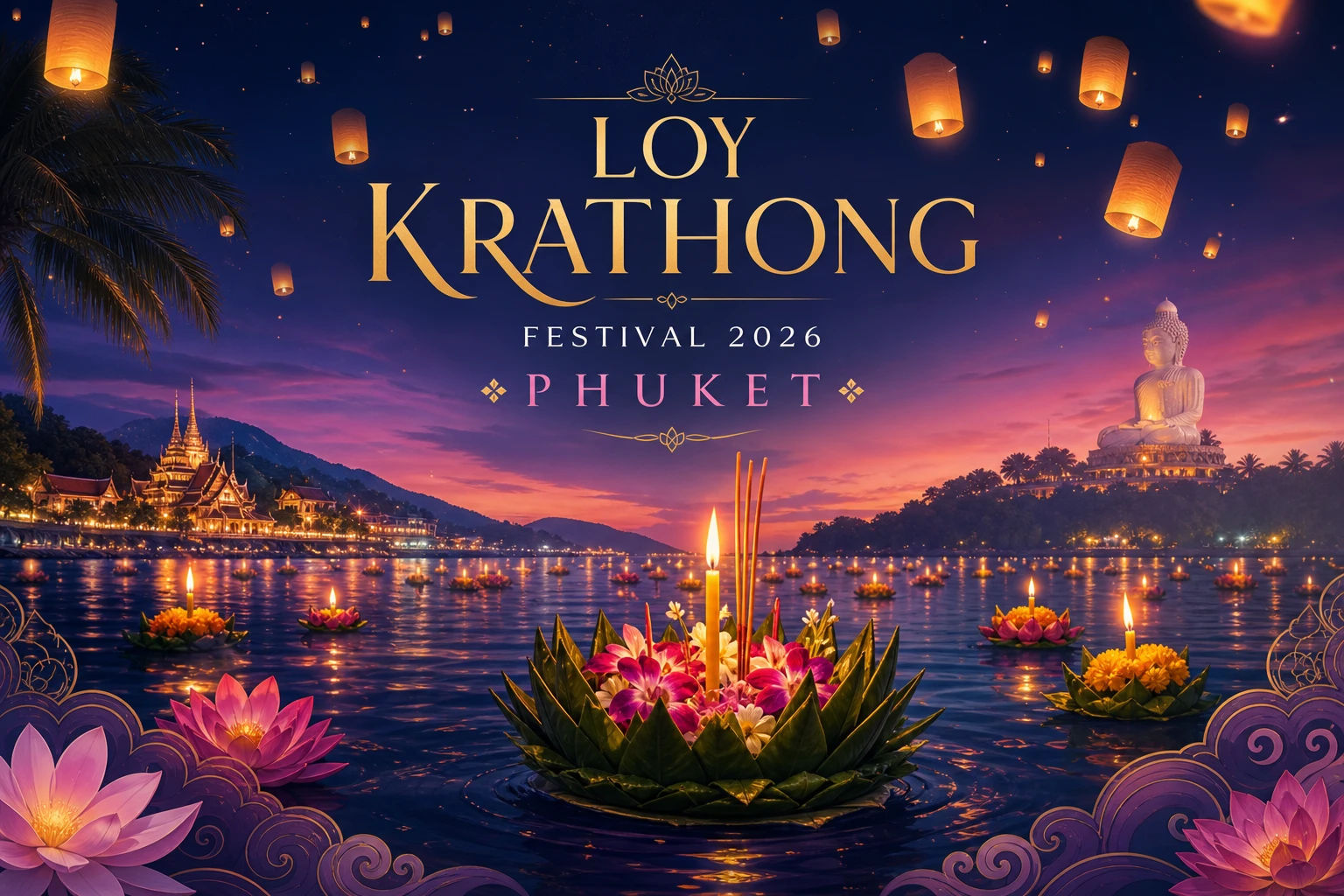
Loy Krathong Festival 2026
Loy Krathong Festival in Phuket is expected to be observed around Tuesday, 24 November, with some date listings placing the main full-moon celebration on Wednesday, 25 November. The festival follows the Thai lunar calendar, so travellers should confirm the final Phuket programme with local authorities and their hotel closer to the occasion.
For visitors, Loy Krathong is one of Phuket’s most beautiful cultural evenings. As night falls, people gather beside water to release small decorated floats called krathong, offering gratitude to the water, asking forgiveness for its use and symbolically letting go of misfortune. It is a peaceful, reflective celebration that feels very different from Phuket’s usual beach-club and nightlife image.
"Loy Krathong is a peaceful, reflective celebration that feels very different from Phuket’s usual beach-club and nightlife image."
What Is Loy Krathong?
Understanding Thailand's Festival of Lights
Loy Krathong is Thailand’s famous Festival of Lights, observed on the full-moon night of the 12th month in the Thai lunar calendar. The date changes each year because it is based on the lunar cycle rather than the Gregorian calendar.
The name explains the central ritual:
- Loy means to float
- Krathong refers to a small decorated floating vessel or basket
Traditionally, a krathong is made from natural materials such as banana trunk, banana leaves, flowers, candles, and incense. People place the float gently onto a river, canal, lake, or sea, then watch it drift away beneath the full moon.
The ritual carries several meanings:
- Giving thanks to Phra Mae Khongkha, the Goddess of Water
- Asking forgiveness for polluting or using waterways
- Releasing bad luck, sadness, or negative feelings
- Making a wish for the future
- Honouring Thai spiritual and cultural traditions
In Phuket, the festival is celebrated around beaches, ponds, canals, resort lagoons, and community waterfronts. The island setting makes Loy Krathong especially moving, because the sea and water are central to everyday life, food, work, and travel.
Confirmed Loy Krathong Dates
Mark Your Calendar for the Full Moon
Loy Krathong is tied to the Thai lunar calendar, which means local observances can sometimes span more than one evening. Current date guides identify the festival as falling on 24 November or 25 November, depending on the lunar-calendar calculation and local event scheduling.
For travel planning, treat 24 and 25 November as the key Loy Krathong period in Phuket.
Important details to know:
- The festival is held on the full moon of the 12th Thai lunar month
- The main ceremony usually happens after sunset
- Phuket hotels, temples, and neighbourhoods may hold their own celebrations
- Exact event hours, venues, and activities are set locally
- Loy Krathong is not a national public holiday, although it is widely celebrated across Thailand.
Because the date is lunar-based, verify timing with your hotel, local tourism office, or participating venue after arriving in Phuket.
Loy Krathong in Phuket
A Coastal Celebration of Reflection and Release
Loy Krathong in Phuket has a relaxed coastal character. Rather than the mass sky-lantern releases often associated with Chiang Mai’s Yi Peng celebrations, Phuket’s focus is generally on floating krathongs on water.
That distinction matters. Phuket visitors should not assume that sky lanterns will be released. Coastal safety, fire risk, aviation rules, and local environmental concerns can limit or prohibit lantern releases. The most appropriate way to participate is by joining a local krathong-floating ceremony using an eco-friendly float.
The Phuket experience may include:
- Krathong-making activities
- Thai cultural performances
- Local food stalls
- Thai dance and music
- Community gatherings at beaches, lagoons, or public-waterfront spaces
- Resort-hosted dinners and ceremonies
- Temple events
- Traditional floating rituals after dark
The mood is more gentle than rowdy. Couples, families, and groups of friends gather close to the water, light candles, make wishes, and release their krathongs into the night.
Where to Celebrate Loy Krathong in Phuket
Discover the Best Locations for Floating Krathongs
A final official island-wide programme has not yet been published, but several areas are commonly suitable for Loy Krathong celebrations. Always ask about the approved floating location and whether the venue provides environmentally responsible krathongs.
Bang Tao and Laguna
Resort Elegance and Lagoon Tranquility
Bang Tao and the Laguna area are popular choices for visitors staying at resorts. The lagoon setting offers a calmer, more controlled place for a floating ceremony than open sea conditions.
Hotels in this part of Phuket often organise their own Loy Krathong dinners, cultural performances, or krathong-making sessions. Some may include a float as part of a dinner package, while others sell handmade krathongs separately.
Stay in Bang Tao if you want:
- Resort-based celebrations
- Beach clubs and restaurants nearby
- Easy access to family-friendly lagoon areas
- Sunset views before the evening ritual
- A quieter alternative to central Patong
Phuket Old Town
Heritage Streets and Cultural Richness
Phuket Old Town is a rewarding area for travellers who want to pair Loy Krathong with the island’s cultural history. The streets around Thalang Road, Dibuk Road, and Soi Romanee are known for Sino-Portuguese architecture, cafés, local food, and a slower, heritage-rich pace.
While Old Town is not defined by a single large waterfront, it is a good place to enjoy local dining before heading to a confirmed nearby ceremony at a public park, temple, or hotel venue.
Make an evening of it:
- Eat local Hokkien noodles or moo hong
- Browse colourful heritage streets before sunset
- Visit a local market if open
- Ask a local business or hotel for the closest approved floating location
- Join an organised cultural event rather than floating a krathong in an unsuitable drain or canal
Patong
Vibrant Energy Meets Cultural Tradition
Patong is Phuket’s busiest tourism district, so celebrations here can feel more energetic and commercial. Some hotels and beachfront restaurants may organise dining packages, krathong floats, and Thai cultural entertainment.
Patong can work well if you are staying nearby, but choose a venue that clearly explains its environmental and safety practices. Open-sea conditions are not always suitable for floating large numbers of krathongs, and a managed hotel pool or lagoon ceremony can be a more responsible option.
Kata and Karon
Family-Friendly Beaches and Relaxed Vibes
Kata and Karon offer broad beaches, relaxed dining, and a family-friendly atmosphere. Local hotels may host smaller Loy Krathong experiences with Thai food, traditional dress, live music, and floats made from natural materials.
These areas are ideal for visitors who want an easy beach holiday combined with a cultural evening. Check conditions before heading to the water. Strong waves, tides, or rain can affect the practical side of the ceremony.
Rawai and Nai Harn
Seaside Serenity and Cultural Connection
The southern Phuket communities of Rawai and Nai Harn feel closely connected to the sea. Rawai’s fishing-village atmosphere, seafood restaurants, and longtail boats create a natural coastal setting for a reflective Loy Krathong evening.
Nai Harn Lake is often a more protected place to look for organised floating events than an exposed beach. If a local programme is confirmed there, it can be one of the most atmospheric options on the island.
Nearby experiences include:
- A seafood meal in Rawai
- Sunset at Promthep Cape
- A quiet walk around Nai Harn Lake
- Visiting Yanui Beach before evening plans
- Booking a locally organised cultural dinner
How to Choose an Eco-Friendly Krathong
Celebrate Loy Krathong with Respect for Nature
The most respectful way to celebrate Loy Krathong is to choose a biodegradable krathong and release it only where organisers permit.
Traditional materials include:
- Banana trunk base
- Banana leaves
- Fresh flowers
- Natural fibres
- A small candle
- Incense sticks
Avoid krathongs made from:
- Foam
- Plastic
- Glitter-covered artificial materials
- Metal pins that can harm wildlife
- Excessive decorations that will not break down naturally
A small float is enough. One meaningful krathong shared by a couple, family, or group is often a more sustainable choice than several separate floats.
Many venues also collect floats after the ceremony or use contained water areas to reduce waste. This is a good sign that the organiser takes the festival’s water-respect message seriously.
How to Take Part Respectfully
Embrace the Ritual with Care and Consideration
The ritual itself is simple, but it should not be rushed.
A typical Loy Krathong moment may involve:
- Choosing or making a natural krathong.
- Lighting the candle and incense, where permitted.
- Placing a small wish, coin, or symbolic item in the float.
- Taking a quiet moment to reflect or express gratitude.
- Setting the krathong gently onto the water.
- Watching it drift away without pushing it, throwing it, or stepping into unsafe water.
Visitors should follow local direction, especially around temples, beaches, and public waterside spaces.
Useful etiquette:
- Dress respectfully for temple events
- Do not treat religious rituals as a photo shoot
- Ask permission before photographing families or monks
- Avoid flash during evening ceremonies
- Keep children close to water
- Never walk into the sea at night to release a float
- Use only approved floating zones
- Do not release sky lanterns unless an official organiser explicitly allows it
- Dispose of packaging properly
- Respect quiet moments of prayer or reflection
Loy Krathong and Yi Peng: The Difference
Understanding Two Distinct Thai Traditions
Travellers often confuse Loy Krathong with Yi Peng, but they are not the same festival.
Loy Krathong is celebrated throughout Thailand and centres on floating krathongs on water. Yi Peng is a northern Thai Lanna tradition most strongly associated with Chiang Mai, where lanterns may be released into the sky during certain organised events.
In Phuket, Loy Krathong is the relevant celebration. The experience is about water, reflection, and small illuminated floats rather than a guaranteed sky full of lanterns.
This distinction helps visitors set realistic expectations and participate in a way that respects the island’s local practices and environmental rules.
Food to Enjoy During Loy Krathong
Savour Local Flavours as Part of the Celebration
A festival evening in Phuket is always better when it includes local food. Start with an early dinner, then head to your chosen floating location after sunset.
Look for:
- Mee Hokkien Phuket, stir-fried noodles with seafood or pork
- Moo hong, rich Peranakan-style braised pork
- Oh tao, oyster, taro, and egg dish
- Kanom jeen, rice noodles served with curries and herbs
- Fresh grilled fish or prawns
- Southern Thai curries with turmeric, chilli, and local vegetables
- Roti, served sweet or savoury
- Coconut desserts and tropical fruit
- Thai tea or fresh coconut water
If you are sensitive to spice, say mai phet for “not spicy” or phet nit noi for “a little spicy.” Southern Thai food is known for bold flavours, so it is always fine to ask for advice before ordering.
Planning Your Phuket Trip
Maximise Your Festival Experience
Late November is a popular period for Phuket travel. The wet season is usually easing, beaches become more inviting, and the island begins moving toward its busier travel months.
For a Loy Krathong-focused trip, arrive at least one or two days before 24 November. That gives you time to confirm the latest local programme, book a dinner or workshop, and choose a responsible ceremony.
Where to Stay
Find Your Perfect Base for the Festival
- Bang Tao or Laguna: Best for resort-based ceremonies and lagoon settings
- Phuket Old Town: Best for local food, heritage streets, and a city-cultural experience
- Kata or Karon: Best for beach access and a relaxed family atmosphere
- Rawai or Nai Harn: Best for seafood, quieter southern Phuket, and possible lake-based celebrations
- Patong: Best for nightlife and convenience, though less tranquil
- Mai Khao or Nai Yang: Best for visitors seeking a calmer north-island stay near the airport
Getting Around
Navigate Phuket with Ease During Loy Krathong
Use taxis, hotel transfers, ride-hailing services, or a private driver for evening events. Phuket traffic can be slow, especially between beach areas and Old Town.
Practical travel tips:
- Confirm your event location before sunset
- Allow more travel time than map apps suggest
- Book dinner and transport in advance
- Avoid driving after alcohol
- Carry a small rain layer
- Use insect repellent near lakes and waterways
- Keep a portable charger with you
- Have cash for small vendors and handmade krathongs
Tickets and Pricing
Understand the Costs of Celebrating Loy Krathong
Loy Krathong is not one centrally ticketed Phuket festival, so there is no single island-wide admission price. Community events may be free, while hotels, restaurants, and private venues can charge for dinner packages, workshops, or organised cultural experiences.
No confirmed Phuket-wide price list has been published. Budget varies according to the venue and your chosen experience.
Typical costs may include:
- Handmade biodegradable krathong
- Restaurant dinner or resort buffet
- Cultural performance package
- Krathong-making workshop
- Transport to and from the venue
- Drinks and market food
- Optional donations at temple events
Always ask whether the price includes the krathong, ceremony access, food, drinks, and transport. If a private event sells lantern releases, verify that it is officially authorised and environmentally responsible before booking.
Frequently Asked Questions
The Things People Always Want to Know
When is Loy Krathong in Phuket?
Loy Krathong is expected around 24 and 25 November. Because the festival follows the Thai lunar calendar, visitors should confirm the final local Phuket date and programme closer to the event.
Where can I celebrate Loy Krathong in Phuket?
Look for approved celebrations at resort lagoons, hotels, temples, public parks, and community waterfronts in areas such as Bang Tao, Laguna, Phuket Old Town, Kata, Karon, Rawai, and Nai Harn. Exact venues should be confirmed locally.
Is Loy Krathong free in Phuket?
Some community ceremonies may be free, but there is no single island-wide ticket. Hotels, restaurants, workshops, and special dinner events may charge separately.
What is a krathong?
A krathong is a small floating offering, traditionally made from banana trunk, banana leaves, flowers, candles, and incense. It is released on water as part of a ritual of gratitude, forgiveness, and renewal.
Does Phuket release sky lanterns for Loy Krathong?
Do not assume so. Phuket’s Loy Krathong celebrations focus on floating water lanterns, while sky-lantern releases are more closely associated with Chiang Mai’s Yi Peng tradition and may be restricted for safety and environmental reasons.
What should I wear to Loy Krathong in Phuket?
Wear comfortable, modest clothing, especially for temple or community events. Light trousers, a skirt, a modest dress, or a covered-shoulder top are appropriate, along with footwear suitable for walking near water.
How can I celebrate Loy Krathong sustainably?
Choose a small biodegradable krathong made from natural materials, share one float with your group, use approved water locations, avoid foam and plastic decorations, and follow local cleanup guidance.
Verified Information at a Glance
- Event name: Loy Krathong Festival
- Event category: Thai cultural, spiritual, and water-lantern festival
- Expected key dates: 24 to 25 November
- Festival timing: Full-moon night of the 12th Thai lunar month
- Location: Phuket, Thailand, with celebrations varying by hotel, temple, community, and waterfront venue
- Main ritual: Floating a decorated krathong on water to honour the Goddess of Water, seek forgiveness, and symbolically release negativity
- Typical Phuket settings: Beaches, resort lagoons, lakes, temples, parks, and community waterfronts
- Likely areas to check: Bang Tao, Laguna, Phuket Old Town, Patong, Kata, Karon, Rawai, and Nai Harn
- Sky lanterns: Not a guaranteed Phuket tradition; do not release them unless officially authorised
- Pricing: No single island-wide entry fee or confirmed Phuket-wide price list; community events may be free while hotel and restaurant experiences may be paid
- Sustainability: Use biodegradable banana-leaf and flower krathongs, avoid foam and plastic, and float only in approved areas
- Best for: Couples, families, cultural travellers, photographers, and visitors seeking a thoughtful island evening
Plan your Phuket stay around 24 and 25 November, choose a locally approved waterside celebration, float a simple natural krathong beneath the moon, and let this gentle Thai tradition add a moment of gratitude and calm to your island journey.
```
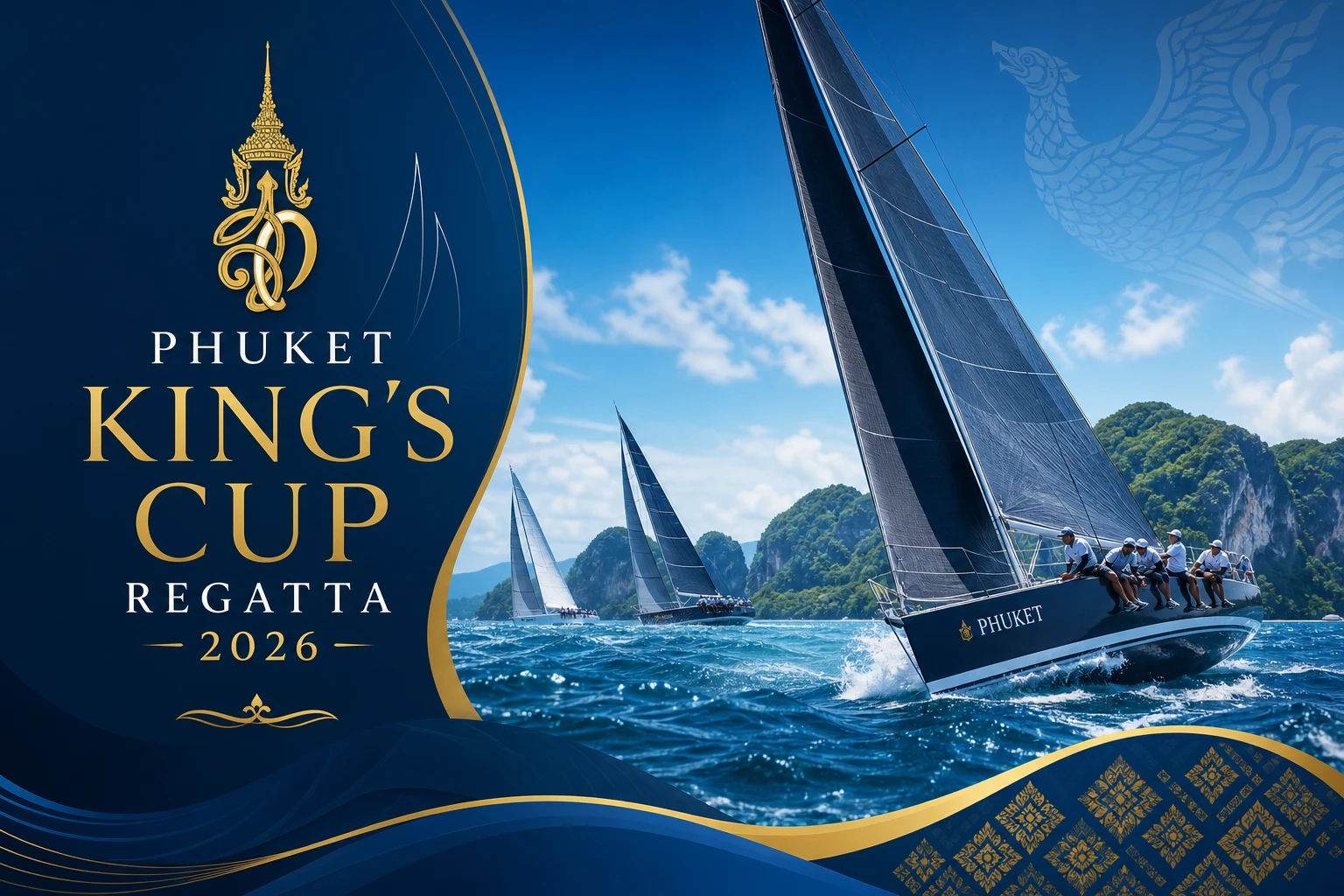
Phuket King’s Cup Regatta 2026
The Phuket King’s Cup Regatta returns to the Andaman Sea from Saturday, 5 December to Saturday, 12 December, bringing international sailing teams, racing yachts, and a festive shore-side atmosphere to Kata Beach, Phuket. The 38th edition is set to continue a tradition that has made the regatta one of Asia’s best-known marine sporting events.
For travellers, the Phuket King’s Cup Regatta is much more than a yacht race. It is a week of sea views, tropical competition, beachside hospitality, Thai culture, and island exploration, all centred on the glittering waters off Phuket’s southwest coast.
"In 2016, UNESCO declared merengue an Intangible Cultural Heritage of Humanity, formally recognising what Dominican people had known for generations."
The Story of the Phuket King’s Cup Regatta
Asia's Premier Sailing Event
The Phuket King’s Cup Regatta is an annual international sailing event held in Phuket, Thailand. Founded in 1987 to celebrate the birthday of the late King Bhumibol Adulyadej, it has grown into a major fixture on the Asian sailing calendar.
The regatta attracts sailors from Thailand, across Asia, and around the world. Its fleet can include racing yachts, cruising yachts, multihulls, one-design boats, and dinghies, depending on the final class structure and entries for the year. The event combines serious competition with a welcoming island atmosphere.
The Phuket King’s Cup Regatta is known for its blend of international yacht racing and vibrant social events.
- International yacht racing
- A scenic Andaman Sea race area
- A Kata Beach social and spectator hub
- Competitive keelboat and dinghy classes
- Sailors from across Asia and beyond
- Opening and closing celebrations
- Daily prize-giving and hospitality events
- An opportunity to see Phuket from the sea
The 2026 Experience
Confirmed Dates and Schedule Highlights
The confirmed dates for the 38th Phuket King’s Cup Regatta are 5 to 12 December. The event is traditionally held during the first week of December, connecting the regatta with Thailand’s maritime and royal-calendar traditions.
- Saturday, 5 December: Regatta begins
- Sunday, 6 December to Friday, 11 December: Main racing, shore activity, and social program period
- Saturday, 12 December: Final race-day and closing-week activity
The detailed daily schedule, including registration times, race starts, prize-givings, lay days, and official social events, should be checked directly with the Phuket King’s Cup Regatta organisers closer to the event.
Into the Waters at Kata Beach
The Heart of the Regatta
Kata Beach is the confirmed primary location for the Phuket King’s Cup Regatta, with racing taking place in sea areas off Phuket’s southwest coast. Kata is one of Phuket’s most enjoyable beach districts, offering a broad sandy beach, clear views over the Andaman Sea, a wide choice of hotels and restaurants, and easy access to nearby Karon, Kata Noi, and Phuket Old Town.
Public shore viewing from Kata Beach is free, making it an accessible hub for spectators.
- Golden sand and warm Andaman water
- Longtail boats and local beach life
- Distant islands and headlands
- Hillsides behind Kata
- Sunset views after racing
- Restaurants, cafés, and bars within walking distance
The Art of Racing on the Andaman Sea
Where Strategy Meets Beauty
The Andaman Sea gives the Phuket King’s Cup Regatta its special character. The water is warm, the coastal scenery is dramatic, and the sailing conditions can test crews with shifting winds, sea breeze patterns, and tactical racecourse decisions.
- Start-line manoeuvres
- Spinnakers and colourful downwind sails
- Close tactical yacht racing
- Multihulls moving quickly across the race area
- Crews balancing on the rail
- Mark roundings, depending on racecourse position
- Boats returning toward Kata after racing
The visible action depends on daily course design, weather, and safety decisions. Some racing may take place farther offshore, so a shore view does not always reveal every tactical moment. For a closer experience, a licensed private charter or organised spectator boat can be an option, subject to local conditions and race-management restrictions.
A Regatta With Nearly Four Decades of Heritage
A Celebration of Sailing and Community
The Phuket King’s Cup Regatta was founded in 1987 in recognition of the late King Bhumibol Adulyadej’s 60th birthday. The event has since become an annual fixture with strong links to Thailand’s sailing community and international maritime sport.
Its longevity is part of its appeal. The regatta has evolved alongside Phuket’s development into one of Southeast Asia’s leading leisure and yachting destinations. Yet it continues to represent something more personal than a large commercial spectacle: a gathering of sailors who return to Phuket for competition, friendships, and the pleasure of racing in tropical waters.
How to Watch the Phuket King’s Cup Regatta
From Shore to Sea
Watching from shore is the simplest way to enjoy the event. Kata Beach offers an easy, accessible base for seeing parts of the fleet and enjoying the atmosphere around the regatta hub.
- Arrive early to choose a good viewing spot
- Bring sunscreen, sunglasses, and a wide-brimmed hat
- Carry water and light snacks
- Check the event noticeboard or official channels for planned start times
- Use binoculars for a closer view of racing offshore
- Respect any restricted beach or launch areas
- Stay clear of boat-handling equipment and crew zones
- Support local cafés and restaurants around Kata
A spectator boat can provide a closer view of yachts and sails, but it must be approached responsibly. Charter only through reputable, licensed operators and ensure the skipper understands racing exclusion zones.
- A licensed captain and crew
- Safety equipment and life jackets
- Clear instructions about racecourse boundaries
- Respectful distances from competitors
- Weather contingency plans
- Drinking water and shade
- A safe transfer point and reliable return time
The Social Side of Regatta Week
Celebrating Together
The Phuket King’s Cup Regatta has a strong social side. The event traditionally includes opening events, daily prize-givings, sponsor hospitality, and a final awards celebration, though the exact schedule and access arrangements should be confirmed from the official programme.
For sailors, these gatherings are a chance to compare racing stories, meet other crews, and celebrate results. For visitors, they add a sense of occasion to an evening in Kata.
Expect the general atmosphere to shift from practical daytime sailing clothing to polished but relaxed evening style. Think breathable resort wear, smart-casual outfits, and shoes suitable for walking on sand or uneven surfaces.
Explore Phuket Beyond Kata Beach
Discover the Island's Rich Offerings
The Phuket King’s Cup Regatta is an excellent reason to stay longer on the island. Racing may take up only part of each day, leaving plenty of time to discover beaches, culture, food, and coastal viewpoints.
Phuket Old Town
Spend a non-race morning in Phuket Old Town, about an hour from Kata depending on traffic. The streets around Thalang Road, Dibuk Road, and Soi Romanee feature colourful Sino-Portuguese buildings, cafés, local shops, and some of Phuket’s best-known food.
- Mee Hokkien Phuket noodles
- Moo hong, slow-braised pork belly
- Oh tao, a local oyster and taro dish
- Kanom jeen rice noodles with curry
- Thai desserts and local coffee
Karon and Kata Noi
Stay close to the regatta with a beach day at Karon or Kata Noi. Karon has a long open shoreline, while Kata Noi is smaller and more sheltered. Both offer a change of pace from the main Kata Beach hub.
Promthep Cape and Rawai
Drive south to Promthep Cape for one of Phuket’s classic sunset views. Continue to Rawai for seafood restaurants, longtail boats, and a fishing-community atmosphere.
Big Buddha Area
The hilltop area around Phuket’s Big Buddha has long been known for sweeping island views, though visitors should check current access conditions and local guidance before travelling because site access can change.
Island Boat Trips
On a free day, consider a responsibly operated boat trip to nearby islands such as Coral Island, Racha Islands, or Phang Nga Bay. Avoid scheduling a full-day trip if you have a regatta activity or event reservation that evening.
Travel Tips for Regatta Visitors
Maximizing Your Phuket Experience
Early December is a popular time in Phuket. The weather is generally more suitable for beach travel than the wetter months, but tropical showers and strong sun are still possible.
Where to Stay
- Kata Beach: Best for being close to the regatta hub and shore viewing
- Karon Beach: Best for more hotel choice while remaining close to Kata
- Kata Noi: Best for a quieter, upscale beach stay
- Rawai and Nai Harn: Best for a more relaxed south-Phuket base and seafood access
- Patong: Best for nightlife and a large range of hotels, but busier and farther from the race hub
- Phuket Old Town: Best for food, heritage, and a more urban stay, but requires transport to Kata
- Bang Tao or Laguna: Best for luxury resorts, but less convenient for daily Kata Beach viewing
Getting Around
Use hotel transfers, taxis, ride-hailing services, or a private driver. Phuket traffic can be slow, particularly between beach areas and Phuket Town.
- Allow extra time for evening transport
- Book airport transfers early during high season
- Avoid driving after drinks at social events
- Confirm the correct entrance for hotel and beach venues
- Keep your phone charged
- Carry cash for small purchases
- Use a waterproof pouch for phones and valuables at the beach
What to Pack
- Light, breathable clothing
- Swimwear and a cover-up
- Reef-safe sunscreen
- Hat and polarised sunglasses
- Sandals and comfortable walking shoes
- Lightweight rain jacket
- Reusable water bottle
- Binoculars for shore-based race viewing
- Smart-casual evening clothes
- Dry bag or waterproof phone pouch
Racing Entry Fees and Spectator Costs
Understanding the Costs
Public viewing from Kata Beach is free. The regatta’s official online entry page lists a standard boat entry fee of 35,000 Thai baht and an individual crew member fee of 6,500 Thai baht. These fees apply to competitors, not ordinary spectators.
- Kata Beach race viewing: Free
- Private boat charter: Varies by operator, boat size, duration, and inclusions
- Official social events: Pricing and access depend on the final organiser programme
- Hotels and restaurants: High-season rates apply
- Transport: Taxis, private drivers, and airport transfers vary by distance and booking time
- Island excursions: Priced separately by operator
Responsible Spectator Etiquette
Enjoying the Regatta Respectfully
The regatta takes place in a working marine environment. Enjoy the spectacle while keeping safety, competitors, and Phuket’s coast in mind.
- Watch from designated public areas
- Never enter a racecourse with an unapproved boat
- Do not fly drones near race activity without permission
- Keep a safe distance from launching zones
- Follow beach safety flags and lifeguard instructions
- Wear a life jacket on charter boats
- Avoid litter, especially plastic, on beaches and at sea
- Do not touch boats, sails, or equipment without permission
- Respect local residents, hotel guests, and beach businesses
- Support licensed local operators and sustainable tourism practices
Frequently Asked Questions
The Things People Always Want to Know
When is the Phuket King’s Cup Regatta?
The Phuket King’s Cup Regatta runs from 5 to 12 December.
Where is the Phuket King’s Cup Regatta held?
The main shore-side venue is Kata Beach, Phuket, with racing held in sea areas off Phuket’s southwest coast.
Is the Phuket King’s Cup Regatta free to watch?
Yes. Public shore viewing from Kata Beach is free.
Can tourists watch the regatta from a boat?
Yes, visitors may charter a licensed spectator boat, subject to local conditions and racecourse restrictions. Spectator boats must stay clear of competitors and follow safety instructions.
What type of boats compete in the Phuket King’s Cup Regatta?
The regatta features a mix of sailing classes that can include keelboats, racing yachts, cruising yachts, multihulls, one-design boats, and dinghies, subject to the final entry list and racing classes.
How much does it cost to enter the Phuket King’s Cup Regatta?
The official online entry page lists a standard boat entry fee of 35,000 Thai baht and a crew fee of 6,500 Thai baht per person. These are competitor fees, not spectator tickets.
What should I wear to the Phuket King’s Cup Regatta?
For daytime viewing, wear breathable clothes, sun protection, and shoes suitable for sand. For evening gatherings, smart-casual resort clothing is appropriate, though specific official events may have their own dress guidance.
Verified Information at a Glance
- Event name: Phuket King’s Cup Regatta
- Event category: International sailing regatta and marine sporting event
- Edition: 38th edition
- Confirmed dates: Saturday, 5 December to Saturday, 12 December
- Primary location: Kata Beach, Phuket, Thailand
- Race area: Andaman Sea off Phuket’s southwest coast
- Event format: Week-long yacht and dinghy racing, shore-side hospitality, prize-givings, and social events
- Heritage: Established in 1987 to mark the late King Bhumibol Adulyadej’s 60th birthday
- Spectator access: Public shore viewing from Kata Beach is free
- Competitor pricing: Standard boat entry fee of 35,000 Thai baht; crew entry fee of 6,500 Thai baht per person
- Public ticket price: No general spectator ticket is required for shore viewing
- Best for: Sailing fans, families, photographers, luxury travellers, beach holidaymakers, and visitors seeking a major Phuket sporting event
Make Phuket your island base from 5 to 12 December, find a spot on Kata Beach, watch the sails catch the Andaman breeze, and turn regatta week into a memorable blend of sport, sea, Thai food, and tropical exploration.
```
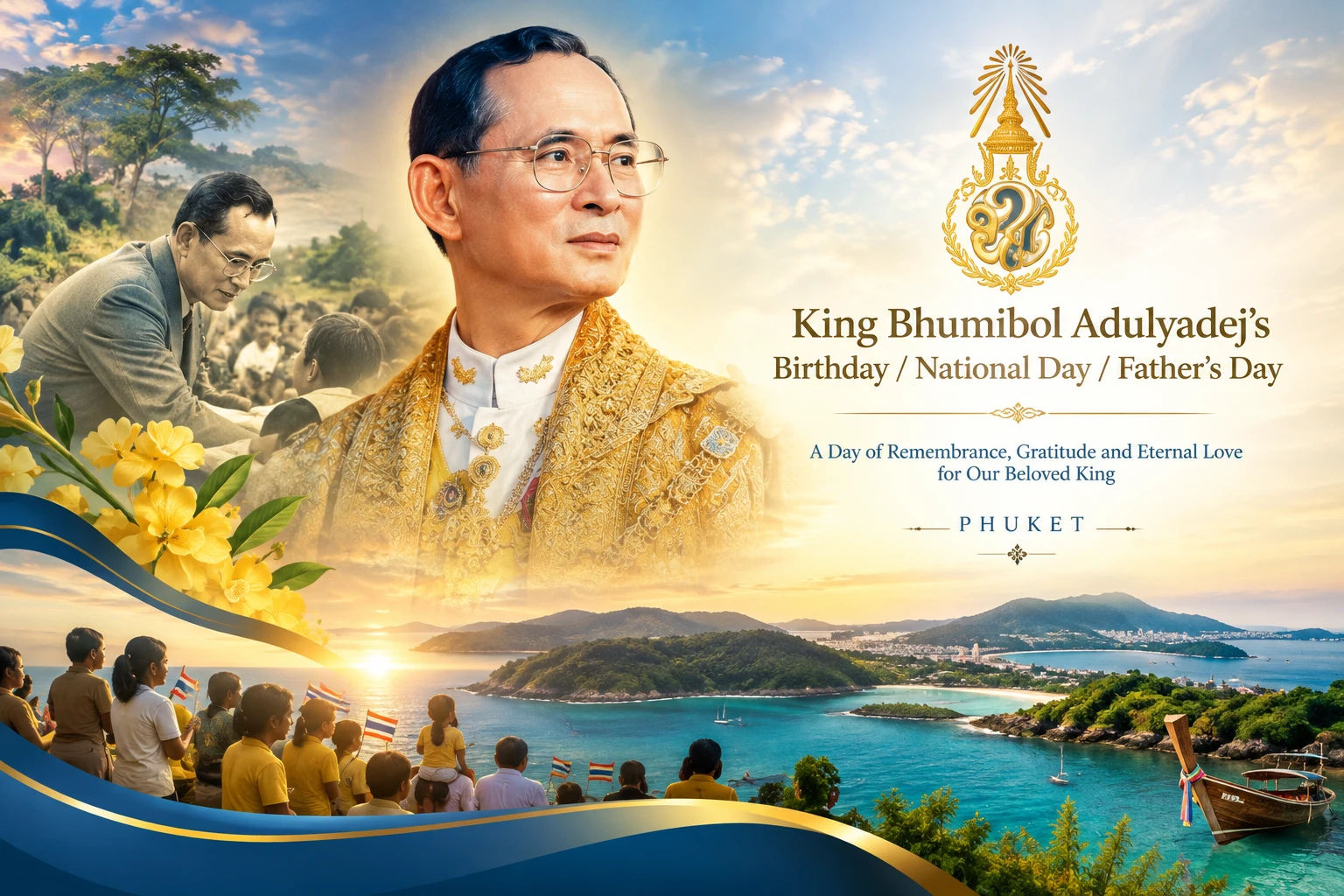
King Bhumibol Adulyadej’s Birthday / National Day / Father’s Day 2026
On Saturday, December 5, 2026, Phuket joins the rest of Thailand in observing three occasions on one date: the birth anniversary of the late King Bhumibol Adulyadej the Great, Thailand’s National Day, and National Father’s Day. For many Thai families, it is a day to honor a father or father figure. It is also a day of remembrance, gratitude, and public ceremony.
There is an important date for visitors to keep alongside December 5. Because the observance falls on a Saturday in 2026, Monday, December 7 is the substitute public holiday. Banks and government services may operate differently over the long weekend. The national dates are confirmed, but a Phuket-specific 2026 ceremony timetable, public venue, and start time have not yet been confirmed in the information reviewed.
"If you are visiting the island, approach the day as a cultural and national observance rather than a ticketed festival."
Why December 5 Matters in Thailand
A Day of National and Personal Reflection
December 5 was the birthday of King Bhumibol Adulyadej, also known as King Rama IX. Born on December 5, 1927, he died in 2016. Thailand continues to mark his birth anniversary, and the date is also the country’s National Day and National Father’s Day.
The three names express different parts of the day. The royal anniversary commemorates the late king. National Day gives people an occasion to reflect on their country. Father’s Day makes the date personal, inviting families to recognize fathers and father figures in their own lives.
For 2026, the date falls one year before what would have been King Bhumibol’s 100th birthday.
Thai government information describes recognition of his centenary through an international commemorative program covering 2026–2027. He remains closely associated with royal development projects, particularly work connected with the welfare of communities across Thailand.
Phuket’s 2026 Holiday Dates
Mark Your Calendar
The key dates for an island visit are Saturday, December 5, and Monday, December 7, 2026. The first is the commemorative date. The second is the substitute holiday listed on Thailand’s 2026 bank-holiday calendar because December 5 falls on a weekend.
- Saturday, December 5, 2026: King Bhumibol Adulyadej the Great’s birthday anniversary, National Day, and National Father’s Day.
- Sunday, December 6, 2026: The day between the anniversary and substitute holiday.
- Monday, December 7, 2026: Substitute public and bank holiday for the December 5 observances.
The substitute holiday does not move Father’s Day to Monday. If you are hoping to see an observance or spend the day with family, December 5 remains the date to plan around. December 7 is the additional day off recognized in the holiday calendar.
The long weekend may also affect your practical plans. Confirm bank, government-office, and tour-operator hours individually. Restaurants and attractions do not all follow the same schedule, so there is no reason to assume that the entire island closes.
How the Day Is Observed
Ceremonies and Traditions
Thai government descriptions of the annual observance include alms-giving, religious services, tribute ceremonies, and volunteer activities. Families may also spend time together in honor of Father’s Day. In previous years, commemorative activities have taken place in provinces across Thailand, not only in Bangkok.
You may see people wearing yellow, a color associated with King Bhumibol because he was born on a Monday, the day traditionally linked with yellow in Thailand.
Flowers, portraits, and respectful displays may also be part of local observances. Visitors need not dress alike, but modest, considerate clothing is appropriate if attending a formal ceremony.
A tribute event is different from a tourist performance. If you happen upon one, keep entrances clear, follow officials’ directions, and avoid photographing people closely during prayer or a solemn moment without permission.
A Respectful Way to Take Part
Engage with the Day Thoughtfully
You do not need a seat at an official ceremony to appreciate the day. If a temple visit is already part of your plans, enter quietly and follow its dress and photography rules. If your accommodation or a local community announces a volunteer activity open to visitors, ask what help is useful before joining.
It is just as appropriate to spend the day with family, learn about the anniversary, and continue your Phuket visit thoughtfully. The holiday’s meaning does not depend on finding a public spectacle.
King Bhumibol’s Legacy and the Island
Connecting History with Place
King Bhumibol’s reign shaped modern Thailand over decades. His royal development work addressed questions including agriculture, water, and community livelihoods. The Thai government describes more than 4,000 royal development projects associated with his efforts. That figure offers a sense of the scale of his public work; it is not a count of projects on Phuket.
Phuket has a landmark that connects its landscape to the late king’s reign. At Laem Phromthep on the island’s southern tip, the Kanchanaphisek Lighthouse was built for the golden jubilee of King Rama IX’s accession to the throne. Thailand’s tourism authority describes it as a viewpoint over the sea, with an exhibition about the lighthouse and its role in timekeeping. Check current opening access before planning to go inside.
The view is reason enough to go; knowing why the lighthouse was built gives it another layer of meaning.
A visit there can add context to a day otherwise spent on the coast. It is not an announced venue for a December 5, 2026 ceremony, so do not travel there expecting a scheduled tribute event.
Spending December 5 in Phuket
Crafting a Meaningful Day
Phuket offers many ways to build a day around the observance without treating the holiday itself as a tourist attraction. You might begin with a respectful temple visit, have lunch with family, then spend the afternoon exploring a part of the island beyond your accommodation.
Wat Chalong, in Chalong, Mueang Phuket, is one of the island’s important temples. Visitors can learn about its history and observe temple etiquette, but should not assume that a general listing for Wat Chalong confirms a special Father’s Day 2026 service there. Check a current notice if your visit depends on a timed ceremony.
Old Phuket Town offers a different kind of outing. Its streets reflect the island’s many cultural influences, with historic shophouses, local food, and museums. A walk around Thalang Road, Krabi Road, or Dibuk Road can help you appreciate Phuket as a lived-in place, not only a beach destination. The regular Lat Yai Sunday market takes place on Sundays; December 5, 2026 is a Saturday, so do not mistake it for a holiday-day event.
If you are traveling with your father or children, keep the day simple. A favorite meal, time together, and room to talk may feel more fitting than packing every hour with activities.
Closures, Costs, and Visitor Planning
Practical Tips for the Holiday
There is no island-wide ticket price for King Bhumibol Adulyadej’s birthday anniversary, National Day, or Father’s Day. They are national observances, not one festival with a gate. An individual attraction, meal, or privately organized activity may have its own price.
The 2026 Phuket ceremony venues and times are not confirmed in the information reviewed. If attending one is important, check announcements close to December 5. Do not copy a Bangkok schedule into a Phuket itinerary: a ceremony at Sanam Luang in Bangkok tells you nothing about the start time of a Phuket gathering.
Keep these practical points in mind:
- Check banks and official services: Monday, December 7 is the substitute bank holiday.
- Confirm attraction hours: A museum, temple, or tour may set its own long-weekend schedule.
- Allow for busier travel: A three-day break can bring more domestic visitors to Phuket.
- Dress respectfully at ceremonies: Follow instructions from the local organizer.
- Keep the commemorative date clear: Saturday, December 5 is the anniversary and Father’s Day; Monday, December 7 is the substitute holiday.
There is no confirmed Phuket-specific admission price to quote for a public commemorative event. If you see a charge advertised, check what the paid activity actually includes rather than assuming it is an official Father’s Day celebration.
Frequently Asked Questions
The Things People Always Want to Know
When is King Bhumibol Adulyadej’s birthday observed in Phuket in 2026?
The anniversary, National Day, and National Father’s Day fall on Saturday, December 5, 2026 throughout Thailand, including Phuket.
Is there a substitute holiday in 2026?
Yes. Monday, December 7, 2026, is the substitute public and bank holiday because December 5 falls on a Saturday.
Why is Father’s Day on December 5 in Thailand?
Thailand marks National Father’s Day on the birthday of the late King Bhumibol Adulyadej, who was born on December 5, 1927. The date is also Thailand’s National Day.
Where are Phuket’s December 5, 2026 ceremonies?
A Phuket-specific 2026 venue and timetable have not been confirmed in the information reviewed. Provincial ceremonies have been held around Thailand in past years; look for an updated local announcement before choosing a location.
Is there an admission fee for the holiday?
No single admission fee applies to the national observance. A particular museum, tour, meal, or independently organized event may charge separately.
Are banks open on Monday, December 7, 2026?
Monday, December 7 is listed as a substitute bank holiday on the Bank of Thailand holiday schedule reproduced by Bangkok Bank. Check your bank’s branch and digital-service arrangements.
Should visitors wear yellow on Father’s Day in Phuket?
Yellow is traditionally associated with King Bhumibol and is commonly worn in tribute. It is not a requirement for every visitor. If you attend a formal event, follow its dress guidance and choose respectful clothing.
Verified Information at a Glance
- Event category: National public holiday, royal commemoration, and Father’s Day.
- Occasion: King Bhumibol Adulyadej the Great’s birthday anniversary, Thailand’s National Day, and National Father’s Day.
- Confirmed date: Saturday, December 5, 2026.
- Substitute holiday: Monday, December 7, 2026.
- Location: Nationwide in Thailand, including Phuket. There is no single island-wide event venue.
- Phuket-specific 2026 ceremony venue and start time: Not confirmed in the information reviewed.
- Traditional observances: Tribute ceremonies, religious activities, and volunteer service may take place; confirm local 2026 arrangements before attending.
- Island-wide admission price: None for observing the holiday. Separately organized attractions or activities may have fees.
- Local landmark with a historical link: Laem Phromthep Kanchanaphisek Lighthouse, built for King Rama IX’s golden jubilee; it is not a confirmed 2026 ceremony site.
- Visitor planning note: December 7 is a bank holiday; verify individual business and attraction hours.
Spend December 5, 2026, in Phuket with an appreciation for what the day means to the people around you. If you find a confirmed local ceremony, attend respectfully. Otherwise, make time for family, visit a place that helps you understand the island, and let the day’s spirit of gratitude shape your visit.
```
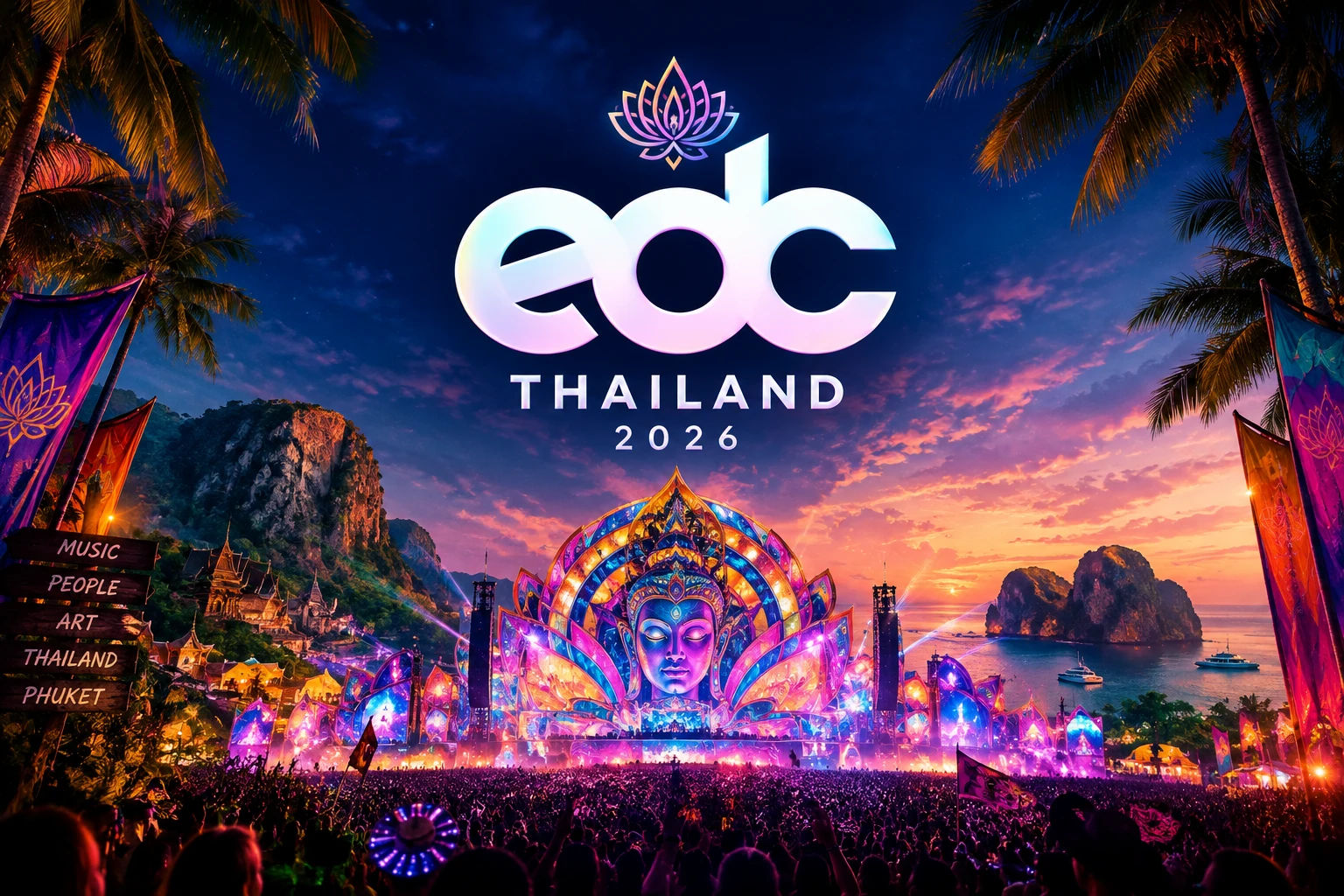
EDC Thailand 2026
EDC Thailand returns to Phuket from Friday, December 18, through Sunday, December 20, 2026, bringing three nights of electronic music, art, and carnival energy to Rhythm Park in Laguna Phuket. Gates are scheduled to open from 3 p.m. to midnight each day, giving visitors time to enjoy the island before heading into the festival.
"For dance music fans, EDC Thailand 2026 is a reason to make Phuket more than a beach stop."
EDC Thailand 2026 Dates and Venue
Where and When to Experience the Magic
The confirmed festival dates are December 18, 19, and 20, 2026. EDC Thailand takes place at Rhythm Park, Laguna Phuket, in the Cherng Talay area of the island. The official daily event hours are 3 p.m. to midnight. Box-office hours had not been announced in the festival guide reviewed.
That location matters when you book a hotel. Laguna Phuket and nearby Bang Tao put you closer to Rhythm Park than accommodation in Patong or Phuket Old Town. Those other areas can still make good bases if you want their particular atmosphere, but plan the journey to and from the venue for all three nights, not just the first.
The festival is not on the beach itself. Rhythm Park is the main event venue; beach parties and other gatherings are separate experiences around Phuket. A three-day EDC pass gets you into the festival according to its ticket terms, but it does not automatically include every party promoted elsewhere on the island.
The Three-Day Schedule
Plan Your Nights Under the Electric Sky
The festival spans three days, each packed with musical performances and vibrant energy.
- Friday, December 18: Festival opens 3 p.m. to midnight.
- Saturday, December 19: Festival opens 3 p.m. to midnight.
- Sunday, December 20: Final festival day, 3 p.m. to midnight.
The artist-by-artist set times should be checked when the organisers release the final running order. A name on the lineup confirms an announced appearance, not which hour or stage that artist will play.
Six Stages, Different Sounds
Discover the Musical Diversity
One of EDC’s pleasures is walking toward a sound you did not expect to love. The December 2026 edition has six announced stages, each with its own musical character. You can spend much of a night with a favourite genre or move between them as your energy changes.
- kineticFIELD: EDC’s main stage, built for large-scale production and major headline performances.
- circuitGROUNDS: A home for harder electronic sounds, bass music and drum and bass.
- neonGARDEN: The new addition for this Thailand edition, focused on house and techno and hosted by Factory 93 throughout the weekend.
- stereoBLOOM: A stage moving across styles, with announced daily takeovers.
- bionicJUNGLE: A more intimate setting for a curated house-music lineup.
- BOOMBOX: A platform for emerging Thai and regional Southeast Asian artists.
The takeover plans add another way to navigate the weekend. Bassrush Experience is announced at circuitGROUNDS on Friday, December 18. At stereoBLOOM, the organisers list Insomniac Records on Friday, Dreamstate on Saturday and Basscon on Sunday. If one of those sounds is the reason you are going, keep the corresponding date free and check the final stage timetable.
Do not overlook BOOMBOX on the way to a headline set. A festival in Phuket has the chance to introduce international visitors to artists shaping electronic music closer to home. Spending even part of an evening there can make your EDC trip feel connected to the region hosting it.
Who Is Playing EDC Thailand 2026?
The Lineup That Electrifies
The announced December 2026 lineup includes Martin Garrix, Charlotte de Witte, DJ Snake, Dom Dolla, Tiësto and Above & Beyond. Other announced performers include Andy C, Vintage Culture, CamelPhat, Jamie Jones, Subtronics, Boys Noize, VTSS, Loco Dice, Odd Mob and Paul van Dyk. A Green Velvet B2B Steve Angello set and Worship are also on the bill. Organisers have said more artists may be announced.
There is variety in those names. Fans of big melodic moments can find one kind of night; house and techno listeners another; bass and drum-and-bass fans another again. The lineup makes it worth exploring beyond a single stage, particularly across all three dates, December 18 to 20.
Check that the lineup you see belongs to December, not the January 2026 Phuket festival. January featured artists such as Zedd, Porter Robinson, Armin van Buuren and deadmau5. Their appearance earlier in the year does not make them confirmed for December.
EDC Thailand 2026 Tickets and Prices
Choose Your Experience
EDC Thailand’s official ticket page displays the following three-day prices at its listed tiers:
- General Admission, Early Owl Experience Pass: ฿10,490. The page also shows an approximate US$319 reference price.
- VIP, Early Owl Elevated Experience Pass: ฿16,490. The page shows approximately US$519.
These are festival-pass prices shown on the official page, not guaranteed final checkout totals. Ticket quantities are limited by tier, and costs may change as availability changes. International visitors should also check the actual charge in their payment currency at checkout. Earlier Future Owl presale prices appeared in January announcements; they are not the currently displayed ticket-page prices.
A GA pass gives access to the festival grounds and stages, subject to event rules and stage capacity. VIP adds benefits advertised by the organiser, including quicker entry, a dedicated viewing and dance area, air-conditioned restrooms, a VIP Ferris wheel, beauty bar and seated chill zones. Choose VIP for those extras, not on the assumption that it guarantees a spot at the front of every performance.
The ticket page also advertises an All-Access add-on for an official Thursday opening beach party and day parties on Friday, Saturday and Sunday. It is an add-on, not automatically part of the regular three-day GA or VIP pass. The reviewed page does not display a fixed price for it, so confirm the cost and access before purchase.
Only buy through an official EDC ticketing platform. The organisers warn visitors about scalpers and fraudulent tickets, and a valid pass is the foundation for every other part of your travel plan.
Planning Your Phuket Festival Trip
Beyond the Music: Your Guide to Enjoying Phuket
Three consecutive nights at Rhythm Park can be exhilarating, but the trip will feel better if you plan the quieter hours too. Bang Tao and Laguna are natural areas to consider for accommodation near the venue. If you stay farther away, work out your return transport before the music ends at midnight.
EDC offers official three-day round-trip shuttle passes between selected pickup points and the venue. Published departure windows are 2 p.m. to 7 p.m. daily, with returns from 11 p.m. to 2 a.m. The organiser says Hotel EDC guests ride free on its shuttle. Check your pickup point, preferred time and the price of a separate shuttle pass when booking.
Hotel EDC Thailand is announced at Angsana Laguna Phuket, with festival-themed rooms, poolside and beach activities, wellness sessions and dedicated transfers. It is a separate stay to compare with other Phuket hotels, not an accommodation benefit included in every EDC ticket.
If you want a day away from festival activity, explore Phuket Old Town for its historic streets and local food, or spend a quieter afternoon near your accommodation. Keep the daytime plan realistic. The best set on Sunday, December 20 will be more enjoyable if you have had enough rest after Friday and Saturday.
Entry Rules Worth Knowing
What You Need to Know Before You Go
EDC Thailand is for guests aged 20 and over, and a valid physical photo ID is required. The official guide says digital IDs, photocopies, expired IDs and birth certificates are not accepted as proof of entry. International travellers may use a valid passport or another accepted government-issued photo ID that meets the rules.
The festival also has no re-entry. Once your wristband has been scanned into Rhythm Park on a given day, you cannot leave and come back that day. Eat, arrange transport and bring permitted essentials with that in mind.
Other practical rules include:
- Bring an empty reusable water bottle or hydration pack within the organiser’s stated size limits. Outside drinks are not permitted.
- Use cashless payment. The venue accepts credit and debit cards and listed mobile-payment methods; cash can be exchanged on site for a prepaid card.
- Leave professional cameras and drones behind. Phone cameras and permitted compact devices are fine for personal use.
- Prepare for rain or shine. Wear comfortable footwear and check the forecast.
- Do not bring drugs or illegal substances. EDC states a zero-tolerance policy and warns that Thai narcotics laws are strictly enforced.
Medical and information teams are planned throughout the site. Agree on a meeting point with friends before the crowd grows and use event staff if anyone needs help.
Frequently Asked Questions
The Things People Always Want to Know
When is EDC Thailand 2026 in Phuket?
The December edition runs Friday, December 18, to Sunday, December 20, 2026. Daily festival hours are 3 p.m. to midnight.
Where is EDC Thailand 2026 held?
The venue is Rhythm Park in Laguna Phuket, in the Cherng Talay area of Phuket, Thailand. It is a festival site, not a beach party venue.
How much are EDC Thailand 2026 tickets?
The official page displays ฿10,490 for a three-day GA Early Owl pass and ฿16,490 for a three-day VIP Early Owl pass. Check the live checkout total and availability before paying.
Is EDC Thailand 2026 an 18+ event?
No. Attendees must be at least 20 years old and present an accepted, valid photo ID.
Which DJs are confirmed for December 2026?
Announced artists include Martin Garrix, Tiësto, Charlotte de Witte, DJ Snake, Dom Dolla, and Above & Beyond, among many others. Final day-by-day set times should be checked when released.
Is there a shuttle to EDC Thailand?
Yes. Official three-day shuttle passes are advertised, with outbound service 2 p.m. to 7 p.m. and return service 11 p.m. to 2 a.m. from selected pickup points. Hotel EDC guests are advertised as riding free.
Does an EDC Thailand festival ticket include the beach parties?
Not automatically. The organiser advertises an All-Access Experience Pass as an add-on for the official Thursday opening beach party and daily day parties. Check its separate price and conditions.
Verified Information at a Glance
- Event category: Electronic dance music festival, live entertainment and immersive arts.
- Event name: EDC Thailand 2026, December Phuket edition.
- Confirmed dates: Friday, December 18, through Sunday, December 20, 2026.
- Venue: Rhythm Park, Laguna Phuket, Thailand.
- Daily event hours: 3 p.m. to midnight.
- Organisers named in the lineup announcement: Insomniac Events and Future Vibes Co., Ltd.
- Stages: Six, including kineticFIELD, circuitGROUNDS, neonGARDEN, stereoBLOOM, bionicJUNGLE, and BOOMBOX.
- Announced lineup highlights: Martin Garrix, Tiësto, Charlotte de Witte, DJ Snake, Dom Dolla, and Above & Beyond.
- Officially displayed three-day GA price: ฿10,490 at the listed Early Owl tier.
- Officially displayed three-day VIP price: ฿16,490 at the listed Early Owl tier.
- Age requirement: 20+ with valid photo ID.
- Re-entry: Not permitted on the same day.
- Official shuttle windows: Departures 2 p.m. to 7 p.m.; returns 11 p.m. to 2 a.m., daily.
- Separate beach-party access: Available through an advertised All-Access add-on, not included by default with every festival pass.
Choose your pass for December 18 to 20, 2026, plan the ride back before the first night begins, and let Phuket be part of the adventure. Follow a favourite artist to one stage, discover a new sound at another, and enjoy three nights under EDC’s Electric Sky.
```
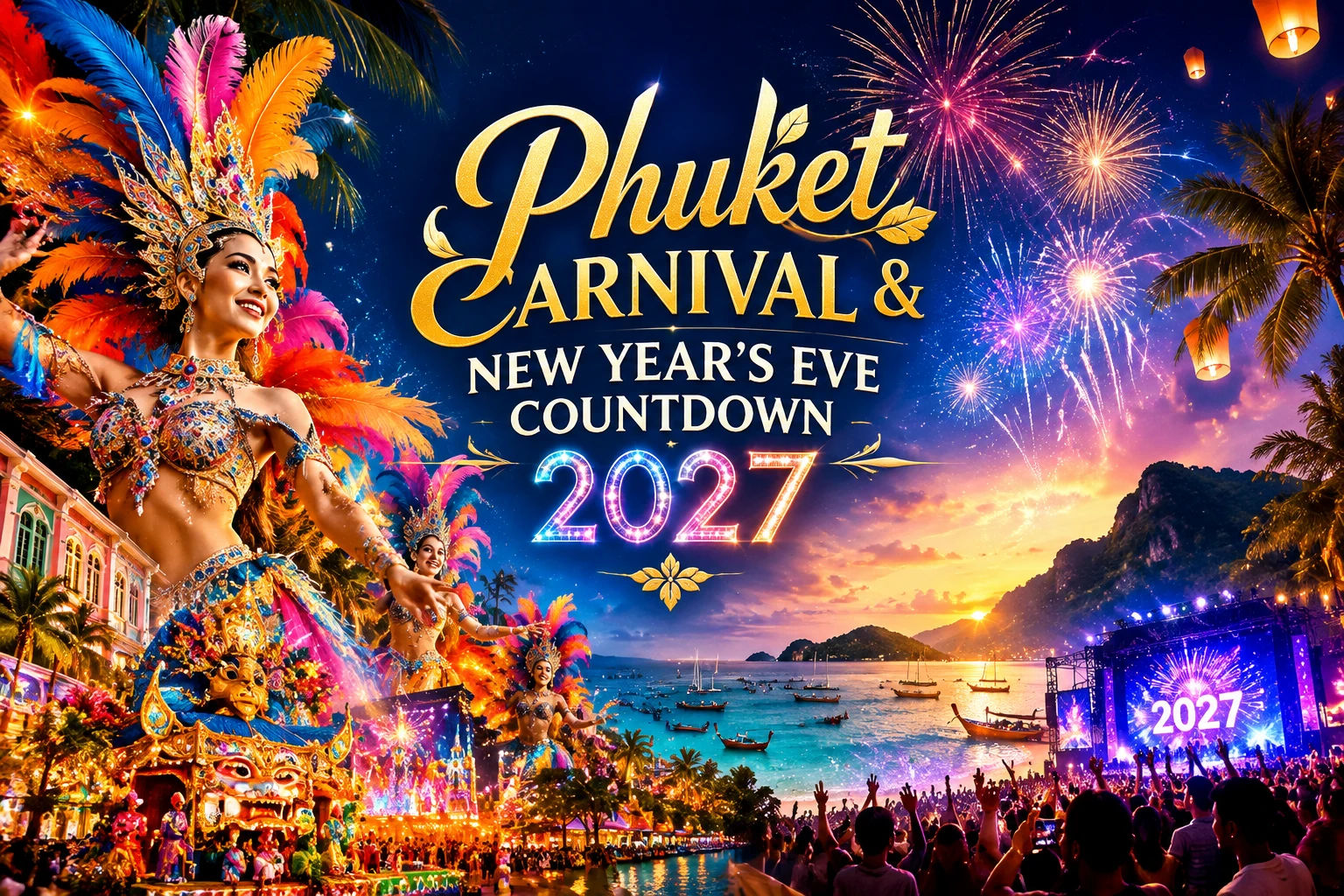
Phuket Carnival & New Year’s Eve Countdown 2027
The final night of 2026 is easy to imagine in Phuket: dinner beside the Andaman Sea, music spilling into the streets and people counting down together as midnight approaches. Patong Beach is the island’s best-known public gathering place for New Year’s Eve, while hotels and beach clubs from Kata Noi to Bang Tao offer their own celebrations.
If you are searching for “Phuket Carnival & New Year’s Eve Countdown 2027,” one distinction matters before you book. New Year’s Eve is Thursday, December 31, 2026, welcoming Friday, January 1, 2027. A travel guide lists a combined “Phuket Carnival & New Year’s Eve Countdown” for December 29, 2026, to January 2, 2027, but an official programme confirming those dates as one festival was not found. Phuket Carnival at Patong and the New Year’s countdown should be treated as separate celebrations, not as one confirmed five-night event.
"Phuket Carnival at Patong and the New Year’s countdown should be treated as separate celebrations, not as one confirmed five-night event."
Phuket’s Countdown to 2027
The Island's Most Anticipated Night
Thursday, December 31, 2026, is the night Phuket welcomes 2027. Celebrations continue past midnight into Friday, January 1, which is New Year’s Day. The island does not have one entrance gate or one ticket for the occasion. A public beach gathering, a resort gala and a beach-club party are different experiences with different access arrangements.
In Patong, the biggest crowds traditionally gather around Patong Beach and Bangla Road. A local Phuket guide describes a free public beach countdown with music and midnight fireworks in previous years. It also notes that the programme has usually built over several nights before December 31. The exact 2026 public-stage schedule, performers and fireworks plan have not been confirmed by a current municipal announcement in the information reviewed.
That does not mean you should avoid Patong. It means planning it as a lively New Year’s Eve area, while checking the current public-event announcement before promising yourself a specific concert, parade or fireworks launch point.
Carnival and Countdown Are Not the Same Event
Understanding the Distinction
Phuket Carnival at Patong traditionally celebrates the opening of the tourism high season. Its 2025 edition took place December 19 to 21, with a parade, performances, market zone and beach activities. Road closures were announced for that year’s parade. Those dates and activities belong to 2025, not the countdown welcoming 2027.
The December 29, 2026, to January 2, 2027 “Phuket Carnival & New Year’s Eve Countdown” window appears in a third-party travel guide. It should not be presented as confirmed dates for the municipality’s Phuket Carnival. A distinct carnival may still be announced for 2026, but its date, parade route and admission arrangements need their own current notice.
For visitors, the practical answer is simple: make December 31 your countdown date, and add a carnival parade to your itinerary only after its separate 2026 programme is published.
Where to Celebrate New Year’s Eve in Phuket
Choosing Your Perfect Spot
Phuket’s beaches offer very different versions of the same night. Pick the area that suits your group rather than trying to cross the island just before midnight.
Patong Beach and Bangla Road
The Heart of Phuket's Nightlife
Patong Beach is the choice for visitors who want a large, energetic crowd. Walk toward the sand for the public countdown atmosphere, or make plans at one of the businesses nearby. Bangla Road is the centre of Patong’s nightlife, with bars and clubs filling as the evening gets later.
"This is not a quiet beach picnic. Expect noise, crowds and a slower journey home."
If you are travelling with children or anyone who dislikes dense crowds, choose a viewing place and an exit plan well before midnight. A table at a private venue may offer more structure, but it will have its own price and rules.
A local guide describes the Patong public beach countdown as free, with nothing to book for a place on the sand. Because the 2026 municipal programme and access plan were not available in the information reviewed, confirm any barriers, stage areas or viewing restrictions closer to the date.
Kata and Kata Noi
Exclusive Celebrations by the Sea
For a booked celebration with a confirmed schedule, Kata Rocks has announced a New Year’s Eve Countdown Party on December 31, 2026, beginning at 10:30 p.m. It advertises live performances, DJs, a midnight Champagne toast and fireworks over the Andaman Sea.
Nearby at Kata Noi, Fira Phuket has announced its Mykonos NYE Countdown Party from 5 p.m. on December 31 to 2 a.m. on January 1, 2027. Fira offers party-table options, a six-course dinner at KIPO Steakhouse and a separate seven-course rooftop dining experience at DOXA Skybar. These are individual Fira bookings, not access included with a Kata Rocks ticket.
Bang Tao and Kamala
Beach Clubs and Resort Revelries
Bang Tao and Kamala have beach clubs and resorts where guests can plan dinner and a late-night party. Event listings currently describe New Year Carnival at Carpe Diem in Bang Tao on December 31, while venues in Kamala advertise their own dining and music. Compare each organiser’s current booking terms before paying.
A beach-club view is not a guarantee of a public fireworks show organised by the town. In some areas, the lights you see may come from private venues. Ask your chosen venue what is planned for December 31, 2026 and whether a particular view is part of your reservation.
Confirmed Countdown Parties and Prices
Secure Your Spot for the Night
If you want to turn New Year’s Eve into a booked occasion, several venues have published December 31, 2026 details. These prices belong to the named venue, not to an island-wide carnival or the public Patong beach gathering.
- Kata Rocks, Kata: Countdown party from 10:30 p.m. Premium free-flow drinks and canapés cost ฿4,950 net per guest; a mocktail and canapés option costs ฿3,450 net. Admission for children aged 6 to 14 is listed at ฿1,250 net. The stated prices include service charge and tax. Confirm the terms before booking the mocktail package, as the venue’s description also mentions a midnight Champagne glass.
- Fira Phuket, Kata Noi: A celebration is listed from 5 p.m. until 2 a.m. KIPO’s six-course dinner starts from ฿4,500++ per person, while DOXA’s seven-course rooftop option starts from ฿5,999++ per person. The “++” means charges are additional, so ask for the final amount.
- Mövenpick Myth Hotel Patong Phuket: A Masquerade Gala begins at 7 p.m., with dinner, live saxophone and violin, a DJ and a countdown. Adult buffet options are ฿5,990, ฿6,990 or ฿7,990 net, depending on drinks. Children aged 6 to 12 are listed at ฿2,990 net, while children under six dine complimentary. A 10% early-booking saving is advertised for bookings made September 1 to December 29, 2026.
A lower advertised “from” price does not always buy the same experience as a higher one. Look at the meal, drinks, viewing area, age policy and final checkout total. Most importantly, check that the booking is for Thursday, December 31, 2026, not an older event labelled “New Year 2026.”
What the Island Adds to the Night
Beyond the Countdown
New Year’s Eve in Phuket does not need to begin at sunset. You can spend December 31 enjoying the island at a gentler pace, then head to your chosen countdown location after a rest. That makes a long night more enjoyable than arriving tired from an ambitious day trip.
Phuket Old Town offers a daytime contrast to the west-coast beach celebrations. Take a walk around Thalang Road and nearby historic streets, try a local meal and return to your hotel with enough time to get ready. The Lat Yai walking market is normally held on Sundays, so it should not be included as a confirmed activity on Thursday, December 31, 2026.
If you prefer to stay near your evening venue, enjoy Patong, Kata or Bang Tao during the day. A relaxed afternoon close to your hotel may be more practical than travelling from one end of Phuket to the other during the holiday rush.
Phuket Carnival, when separately scheduled, adds another dimension to the island’s high-season celebrations through parades and performances. But the local New Year’s experience is broader than carnival alone. Beach gatherings, music, hotel dinners and private parties let visitors choose how to welcome the year.
Getting Around on December 31
Transportation Tips for a Seamless Night
Transport is one of the most important parts of a Phuket New Year’s Eve plan. Patong is likely to be busy, particularly around the beach road and Bangla Road. The 2025 Phuket Carnival had its own parade-related closures, but those should not be copied into a 2026 New Year’s Eve traffic plan. Check current local notices before setting off.
Choose one main area for the night if you can. Dinner in Kata followed by a last-minute drive to Patong for midnight may sound tempting, but it depends on traffic and finding a drop-off point at the busiest time of the year.
A comfortable plan includes:
- A confirmed venue or public viewing area.
- Transport arranged in both directions.
- A meeting point if your group becomes separated.
- A weather check for any outdoor celebration.
- The event’s age and entry rules, especially for beach clubs.
- Enough time to leave safely after midnight.
If you plan to drink, arrange a driver or other safe transport in advance. A clear journey home lets you enjoy the countdown without negotiating it in the middle of the crowd.
Phuket New Year’s Eve 2027 FAQs
The Things People Always Want to Know
When is Phuket’s countdown to 2027?
The countdown is on Thursday, December 31, 2026, leading into Friday, January 1, 2027.
Is Phuket Carnival held from December 29, 2026 to January 2, 2027?
Those dates appear in a third-party travel guide, but an official 2026 Phuket Carnival programme confirming them was not found in the information reviewed. The carnival and New Year’s Eve countdown should be treated as separate events.
Where is the main public New Year’s Eve gathering in Phuket?
Patong Beach is the best-known public countdown area, with Bangla Road nearby for nightlife. Confirm the current December 31, 2026 public-event programme and viewing arrangements before travelling there for a specific performance.
Is the Patong Beach countdown free?
A local Phuket guide describes the public beach countdown as free to attend. Its 2026 municipal programme and any controlled-access areas should still be checked closer to New Year’s Eve. Paid beach clubs and hotel events are separate.
How much are Phuket New Year’s Eve 2026 party tickets?
There is no island-wide ticket price. Confirmed examples include Kata Rocks from ฿3,450 net for its mocktail option, Fira’s KIPO dinner from ฿4,500++, and Mövenpick Myth Patong’s adult buffet from ฿5,990 net. Each price applies only to that venue and package.
Will there be fireworks on New Year’s Eve in Phuket?
Kata Rocks explicitly advertises midnight fireworks for its December 31, 2026 party, and Fira Phuket describes fireworks across Kata Noi. Fireworks are a familiar part of Patong’s public countdown, but the 2026 municipal display plan should be checked when announced.
Is Phuket Carnival the same as Carnival Magic?
No. Phuket Carnival at Patong is a separately organised high-season celebration that has included street parades. Carnival Magic is a ticketed entertainment attraction in Phuket, not the municipal carnival or the New Year’s Eve countdown.
Verified Information at a Glance
- Event category: New Year’s Eve countdown, music, dining and possible public beach festivities.
- Date welcoming 2027: Thursday, December 31, 2026, into Friday, January 1, 2027.
- Main public gathering area: Patong Beach and nearby Bangla Road, based on Phuket’s established New Year’s Eve celebrations; the detailed 2026 municipal programme is not yet confirmed.
- “Phuket Carnival & New Year’s Eve Countdown” five-night date range: December 29, 2026, to January 2, 2027 appears in a third-party guide, but is not verified as one official event.
- Separate Phuket Carnival 2026 dates, route and admission: Not confirmed in the reviewed official information. The 2025 carnival ran December 19 to 21.
- Confirmed December 31 venue: Kata Rocks, Kata, from 10:30 p.m.; packages ฿3,450, ฿4,950 and ฿1,250 net, according to category.
- Confirmed December 31 venue: Fira Phuket, Kata Noi, 5 p.m. to 2 a.m., with dining from ฿4,500++ per person.
- Confirmed December 31 venue: Mövenpick Myth Hotel Patong Phuket, from 7 p.m., with adult gala packages from ฿5,990 net.
- Island-wide admission price: None. Public viewing and private events have different arrangements.
- Confirmed public Patong 2026 performer and fireworks timetable: Not available in the reviewed municipal information.
Choose the Phuket New Year’s Eve that feels right for your group. Spend December 31, 2026, close to the beach or venue you want, enjoy the music without rushing across the island, and welcome 2027 with a view of the Andaman Sea.
```
Past events
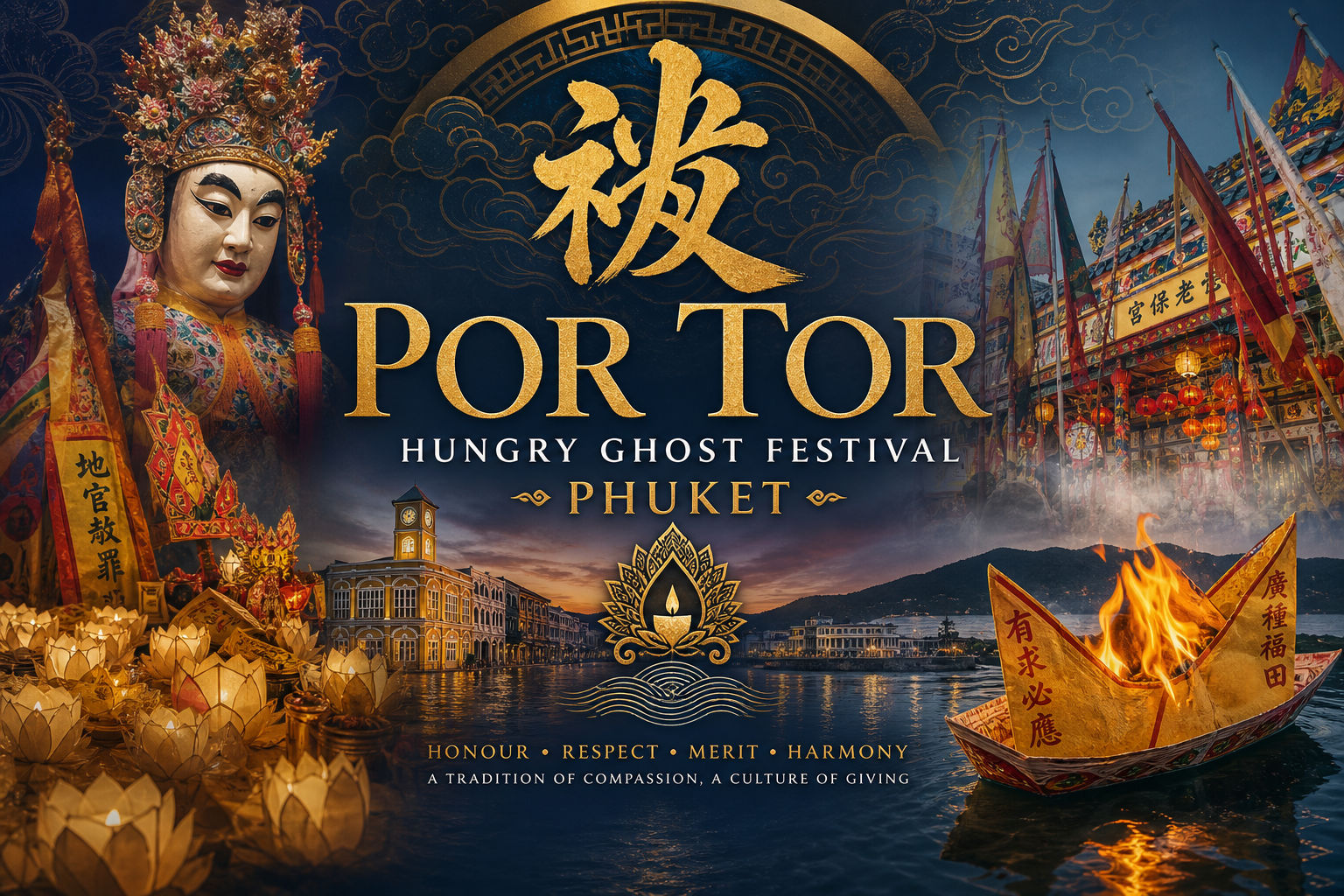
Por Tor – Hungry Ghost Festival 2026
Queen Sirikit's Birthday – National Mother's Day 2026
..webp)
Asanha Bucha & Khao Phansa 2026 (Buddhist Lent begins)
Phuket Pride Festival 2026
%20Phuket%202026.webp)
Songkran Festival (Thai New Year) — Phuket 2026
Phuket Heroines Monument Festival 2026
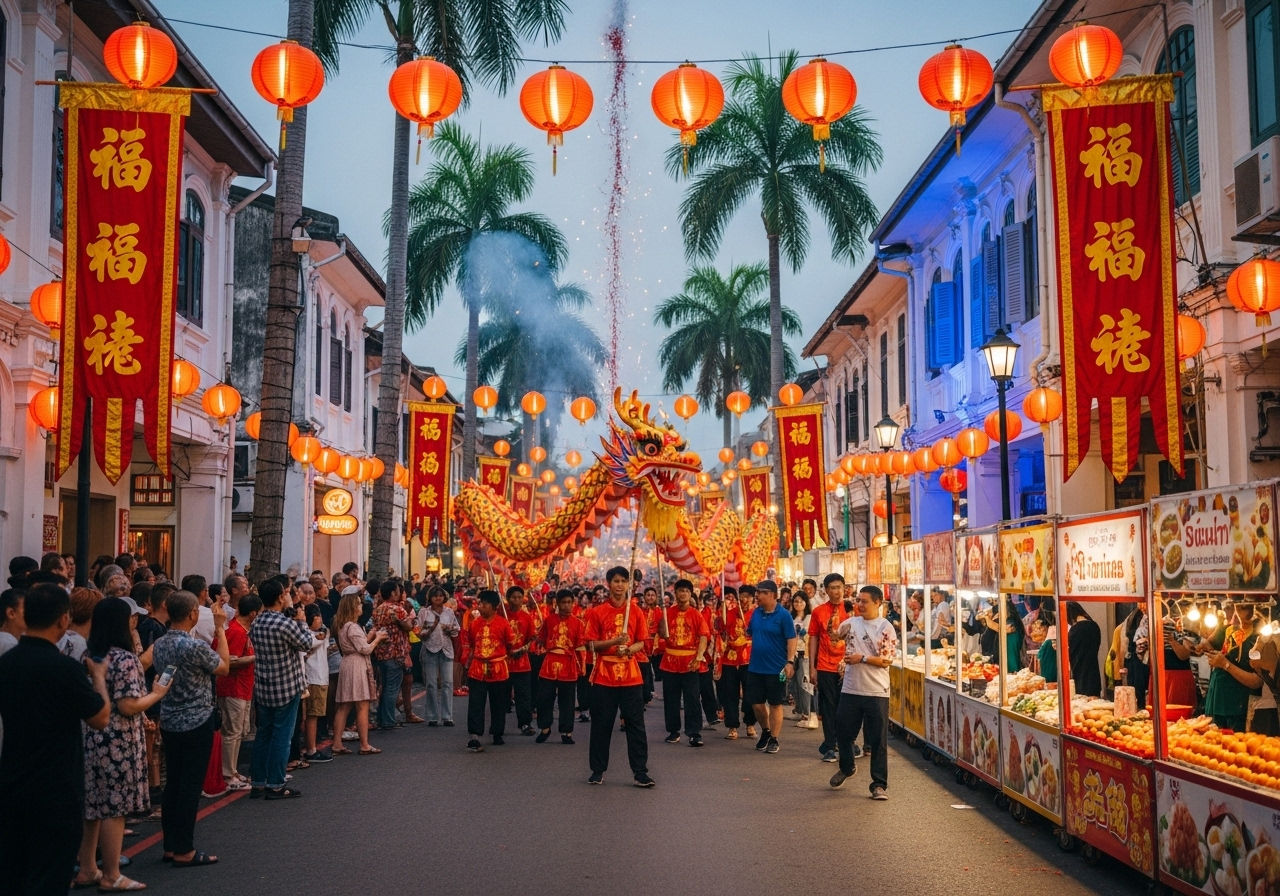
Chinese New Year Celebrations 2026
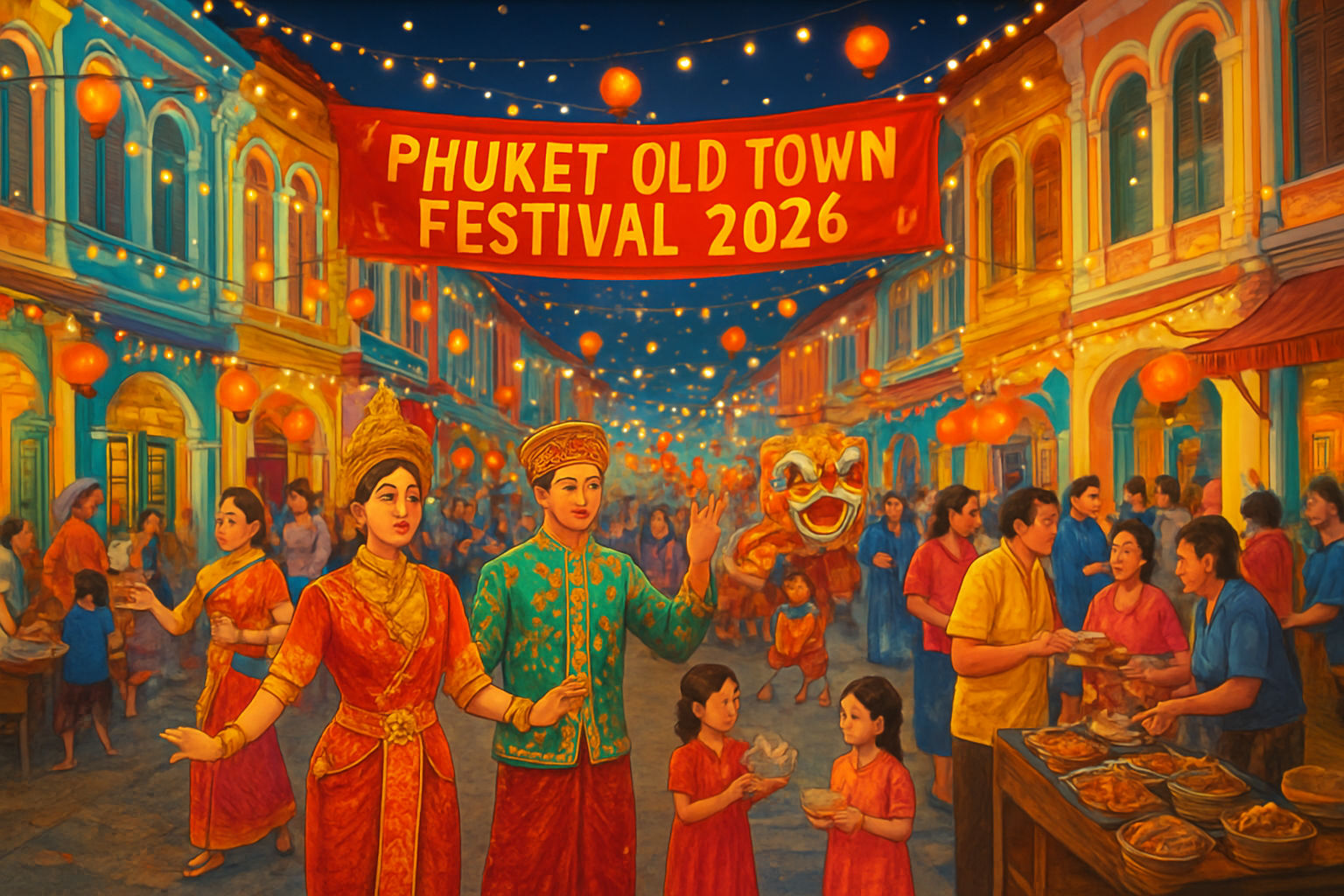
Phuket Old Town Festival 2026
EDC Thailand 2026
%202026.png?updatedAt=1763068886372)
Thailand International Boat Show (TIBS) 2026
GUF Farewell Concert 2026
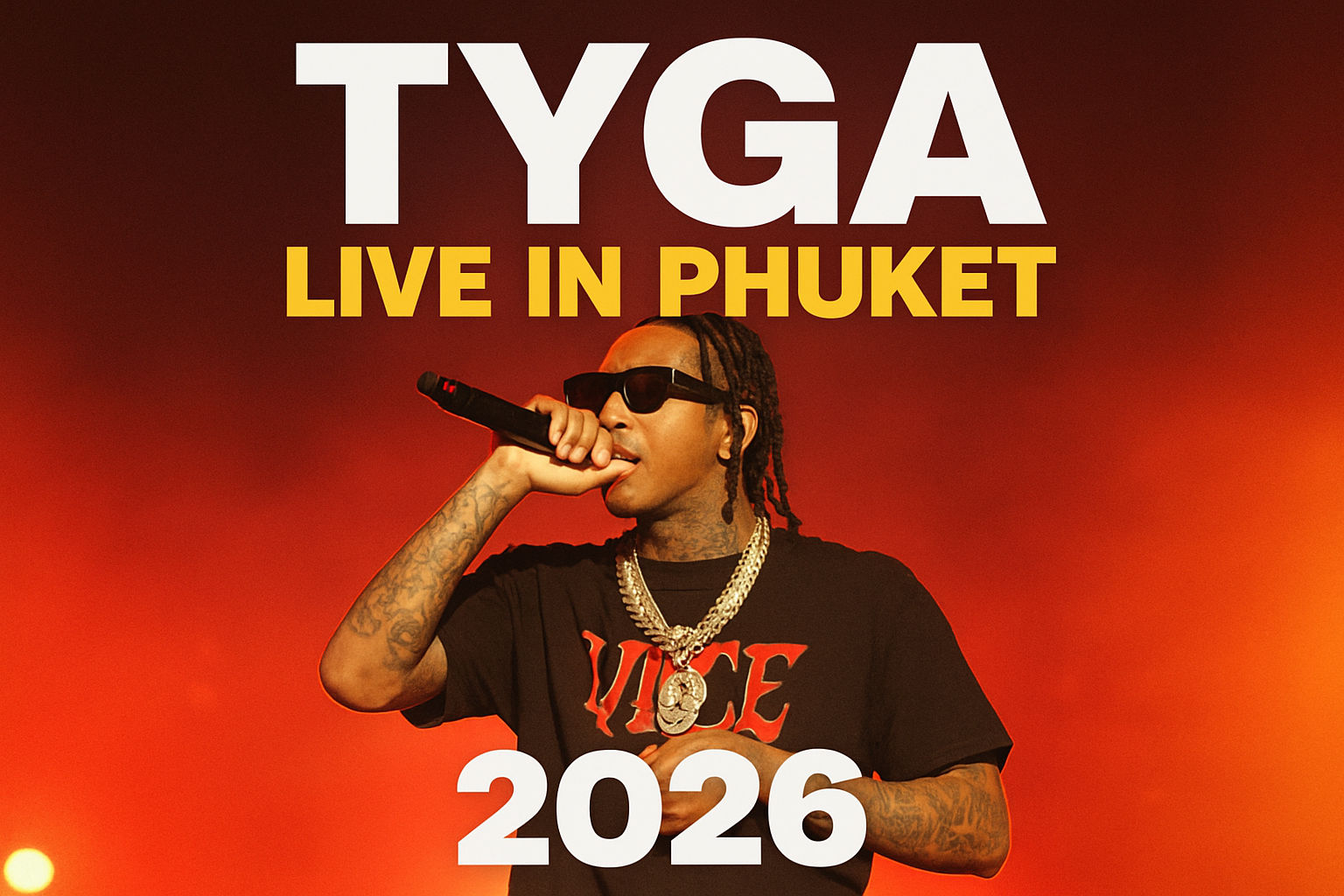
TYGA Live in Phuket 2026
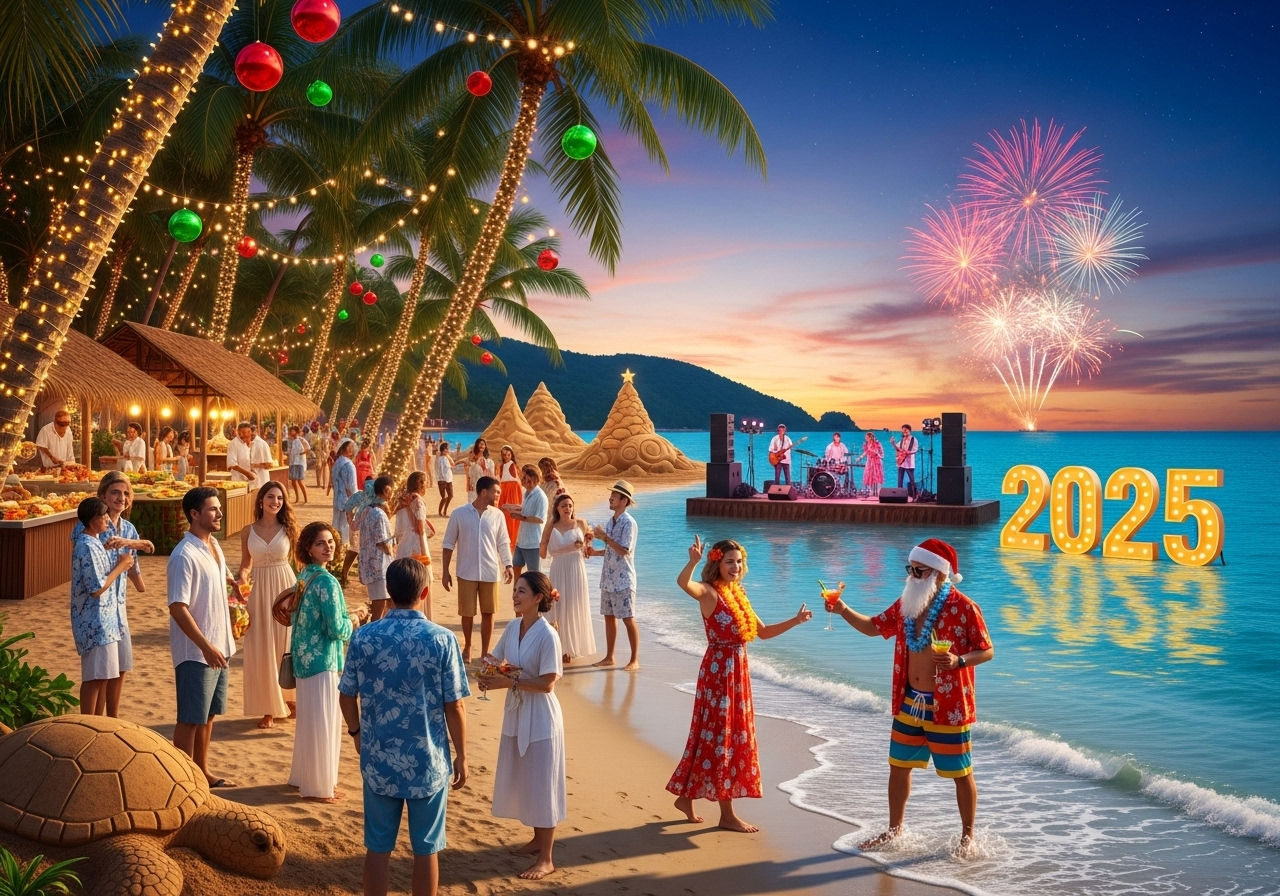
Christmas & New Year Beach Celebrations 2025
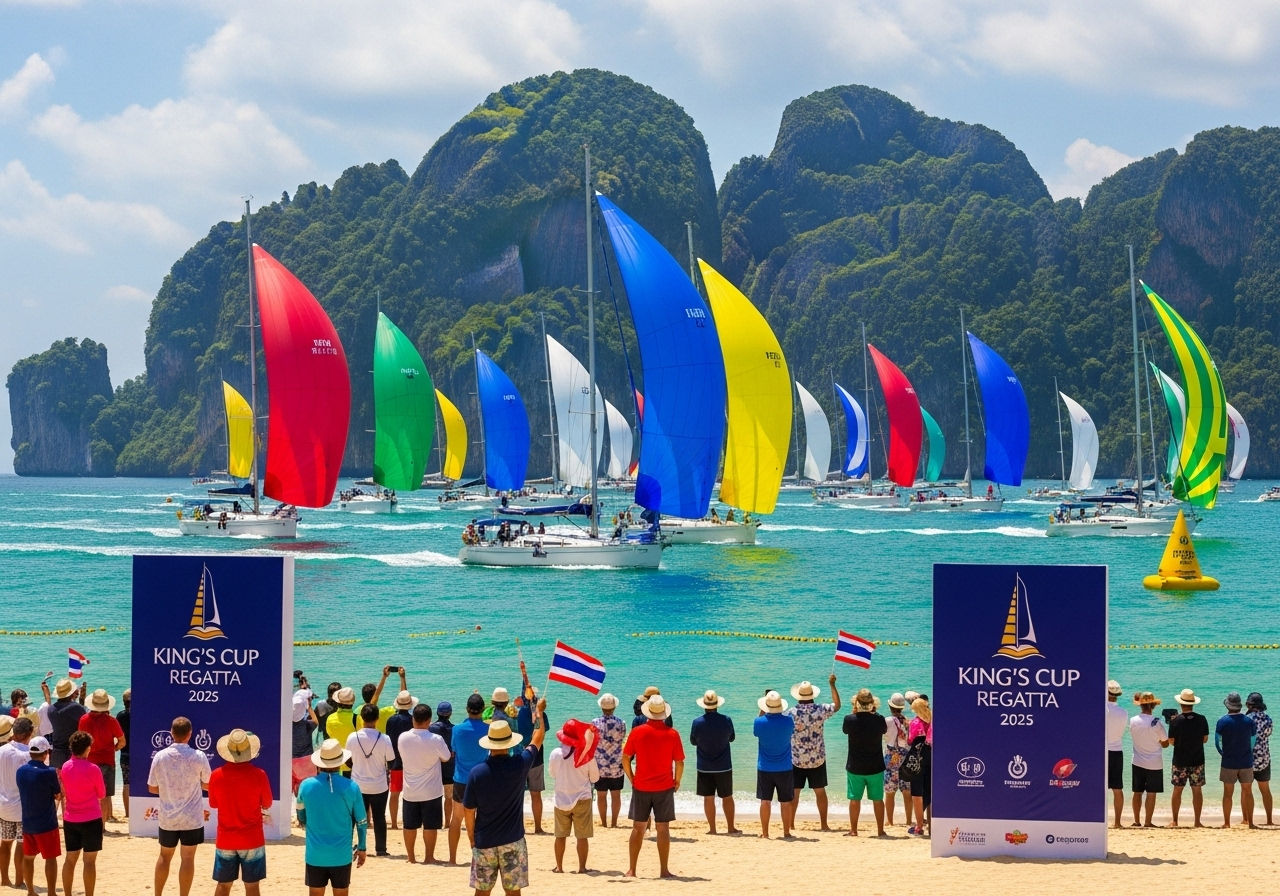
King's Cup Regatta 2025
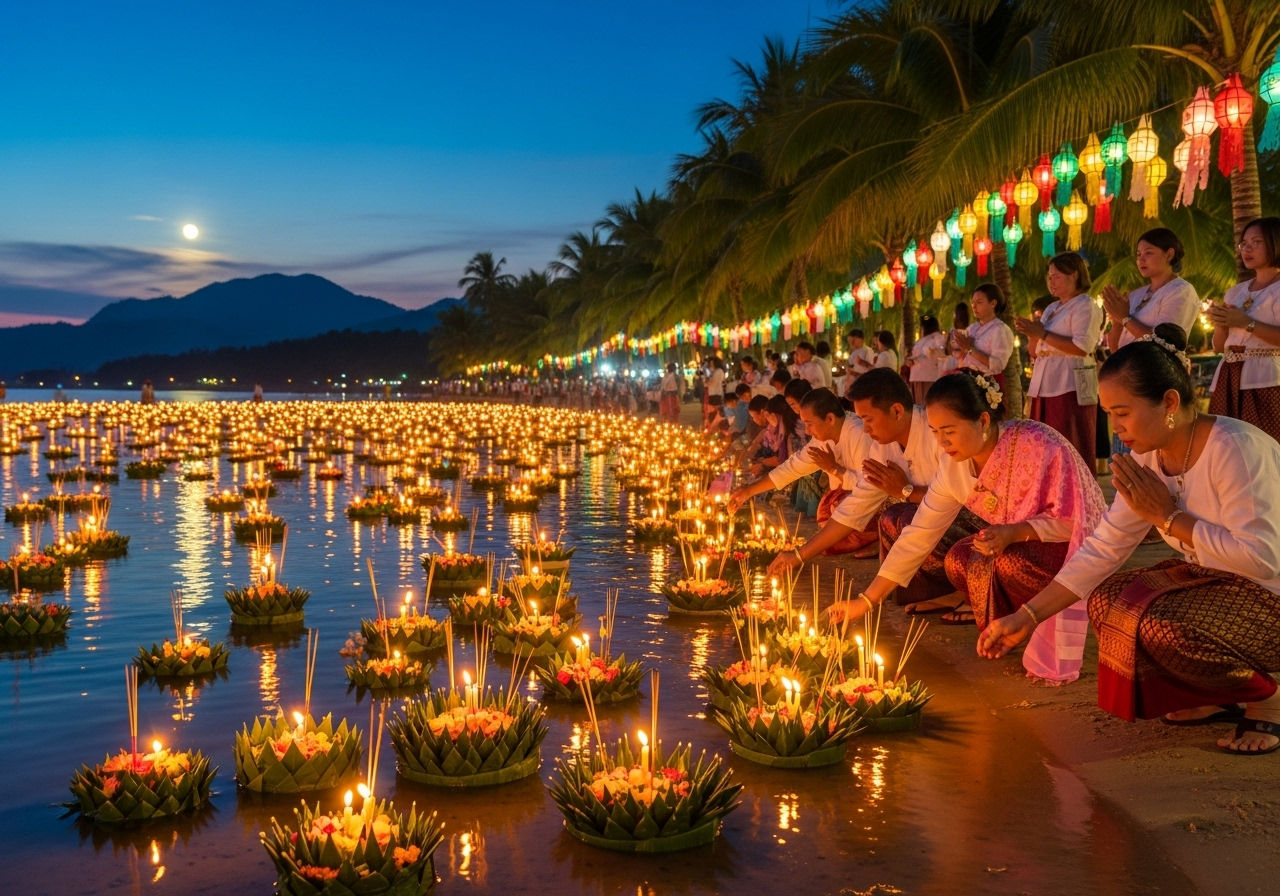
Loy Krathong Festival 2025
Photo gallery

Popular at Phuket

Typically in late December
Phuket Carnival / Patong Beach Carnival
Phuket Carnival: Event DescriptionPhuket Carnival, also called Patong Carnival, is a large public celebration designed to welcome the tourism high season on Phuket island. It focuses on outdoor performances, parades, and street markets along Patong Beach and nearby streets. Patong is Phuket’s most famous resort and nightlife hub, so using it as the festival’s main stage lets visitors experience both cultural and party sides of the island in one place. Recent event listings describe the Phuket Carnival & New Year Countdown as spanning multiple days and locations, including Patong Beach, Bangla Road, and Kata Beach, with one 2026 guide listing dates from December 29 to January 2 as an example schedule. This highlights how the carnival often overlaps with year-end festivities, creating a long celebration that feels like an extended beach party. When is Phuket Carnival Typically Held? Phuket Carnival is usually held during the peak tourism season, with two main patterns appearing in recent information: Some guides frame “Phuket Carnival & New Year Countdown” as a multi‑day event at the end of December, running through New Year. Other coverage of Patong Carnival mentions three‑day celebrations in high season, with a strong focus on early high‑season dates or year‑end, depending on the year’s calendar and city planning. A 2026 Phuket festival guide in particular lists December 29, 2026 – January 2, 2027 as the window for “Phuket Carnival & New Year Countdown,” giving an example of how the event ties into the New Year period on Patong Beach. For island travelers, this means the most reliable expectation is that Phuket Carnival / Patong Beach Carnival happens in late December , closely linked with New Year celebrations and the official launch of the high season. Main Locations: Patong Beach, Bangla Road, and Key Streets Patong Beach Carnival activity is centered around: Patong Beach – the beachfront area used for stages, performances, and fireworks or countdown elements depending on the year. Bangla Road – the main nightlife street that becomes a pedestrian zone, heavily involved in street parties, live music, and carnival‑style entertainment. Side streets such as Soi Post Office and Soi Dr. Wattana – highlighted in recent carnival write‑ups as zones for cultural displays, food stalls, and family‑friendly activities. One recent article describing Patong Carnival notes that the celebration transforms “the streets into a kaleidoscope of colour, music, and aromas,” and specifically lists Bangla Road, Soi Post Office, and Soi Dr. Wattana as key festival zones. This layout creates a walkable loop for visitors, with the beach at one end and nightlife streets and local neighborhood pockets filling in the rest. Festival Highlights: What Happens During Phuket Carnival Colorful Opening Parade Patong Carnival usually begins with a large, colorful parade through the heart of Patong, featuring floats, costumes, dancers, and themed groups. Coverage of recent parades describes Patong “coming alive” with vibrant colors and music as floats and performers move along the beachfront and central roads to mark the start of the high season. This parade is often the most photogenic part of the festival and a great time to stake out a spot along Patong’s beachfront road or near Bangla Road’s entrance. Live Music, Stage Shows, and Street Performances Throughout the carnival days, various stages around Patong host: Live bands and DJs. Thai and international dance performances. Cultural shows and fashion or costume presentations. Recent guides describe a constant flow of live music and performances across multiple zones, turning Patong into a city‑length open‑air entertainment district. Food Stalls and Seafood Festival Overlap Phuket Carnival often overlaps or cooperates with food events, such as Patong Seafood Festival in some years, creating a strong culinary component. Recent descriptions mention: Fresh seafood stalls along Patong’s main beach road. Asian street food stands representing Thai and regional cuisines. Sweet snacks, drinks, and “fair‑style” bites that make it easy to graze through the evening. For island travelers, this means Phuket Carnival doubles as a convenient way to sample local and regional dishes without leaving Patong. Cultural and Local Flavor on Patong Beach While Patong is best known for nightlife, Phuket Carnival introduces more explicit cultural elements into the area. Articles about the event mention exhibitions of old photos and artifacts showing Patong’s past, as well as stands where local artisans and performers present their work. This gives visitors a rare chance to see: Historical images of Patong before large‑scale tourism. Local crafts and art aligned with Thai and Sino‑Thai heritage. Traditional Thai performance styles placed alongside modern music and shows. For an islands‑minded audience, this balance of beach, nightlife, and heritage is what makes Phuket Carnival / Patong Beach Carnival stand out compared with a typical high‑season weekend. Practical Travel Tips for Enjoying Phuket Carnival Where to Stay Since most activities happen in and around Patong: Stay in Patong if you want to walk to parades, beach events, and Bangla Road without worrying about late‑night transport. Stay in nearby beach areas (Karon, Kamala, Kata) if you prefer quieter nights and are willing to take a taxi or ride‑share into Patong for key evenings. A 2026 festival guide notes that Phuket Carnival & New Year Countdown events span Patong Beach, Bangla Road, and Kata Beach, which suggests additional stages or countdown elements may appear in Kata as well. That makes Kata a good “middle‑ground” base for those who want access to both areas. Getting Around Patong’s roads can get heavily congested during carnival nights, especially when the main parade or headline concerts are scheduled. Smart strategies: Walk as much as possible once you are in Patong, especially along Beach Road and Bangla Road. Arrive earlier in the evening to avoid traffic bottlenecks. Use tuk‑tuks or ride‑shares from other beaches, allowing extra time on peak nights. What to Bring Because this is an outdoor beachfront festival: Wear light clothing and comfortable shoes for walking and standing. Bring a small bag for your phone, cash, and a light rain layer in case of passing showers. Expect loud music and crowds, particularly near Bangla Road and main stages. Pricing: What Phuket Carnival Costs Phuket Carnival / Patong Beach Carnival is a public street festival , and there is usually no entry ticket to walk the streets, watch parades, or enjoy general performances along Beach Road and Bangla Road. Your main costs will typically be: Food and drinks from festival stalls and local bars. Hotel stays in Patong or nearby beaches. Optional paid events or gala dinners, especially around New Year’s Eve. A 2026 festival guide that lists Phuket Carnival & New Year Countdown alongside other events on the island shows specific ticket prices for those other events (such as EDC Thailand and boat festivals), but does not list a gate fee for Phuket Carnival itself, implying that the core carnival is free to wander and enjoy. Individual venues, such as beachfront resorts offering New Year Gala dinners or countdown packages under the “Phuket Carnival” and New Year theme, may charge set prices for their own events, so it is worth checking hotel and restaurant offers if you want a seat with a view, drinks packages, or buffet access. How Phuket Carnival Fits Into an Island Itinerary For travelers building an island‑focused trip, Phuket Carnival is easy to weave into a larger Andaman Sea itinerary: Spend the day exploring nearby islands (Phi Phi, Racha, Phang Nga Bay) or quieter beaches. Come back to Patong in the evening for carnival parades, food stalls, and music. If your dates overlap New Year, treat the Phuket Carnival & Countdown segment as your central celebration, then move on to other islands afterward. Because the carnival sits at the height of high season, it also pairs well with sailing events, diving trips, and inland excursions (like Big Buddha or Old Phuket Town), all accessible from Patong as a base. Verified Information at a Glance Event name: Phuket Carnival / Patong Beach Carnival (often combined with Phuket Carnival & New Year Countdown). Event category: Beachside street and cultural festival with parades, live music, food stalls, and New Year countdown elements. Typical timing: High season, most recently framed as late December with dates such as December 29 – January 2 in a 2026 guide. Some years also highlight early‑season Patong Carnival windows in November. Main locations: Patong Beach and its beachfront road, Bangla Road, and nearby streets including Soi Post Office and Soi Dr. Wattana; some editions extend activity to Kata Beach. Core highlights: Opening parade with floats, costumes, and live performers. Live music, dance, and cultural performances across multiple stages. Food and drink stalls, often tied in with Patong Seafood Festival flavors. Attendance: One recent article notes the carnival attracts over 20,000 visitors annually, underlining its status as a major Patong event. Pricing: Public street access is generally free; spending is mainly on food, drinks, and optional venue‑hosted countdown or gala packages. If Phuket island is on your radar and you enjoy big, colorful seaside celebrations, plan your visit for late December, book a stay within walking distance of Patong Beach, and let Phuket Carnival / Patong Beach Carnival be your base for beachfront parades, live music, and nights where the entire shoreline feels like one long festival.
Typically in early December
Phuket King’s Cup Regatta
Experience the Royal Regatta: Phuket King's Cup Phuket King’s Cup Regatta is Asia’s premier sailing regatta, a week-long series of yacht races held off Phuket island that brings together professional crews, passionate amateurs, and sailing enthusiasts from around the world in early December. Based mainly around Kata Beach and Kata Bay, it combines competitive racing with glamorous beachfront parties, creating one of the most exciting weeks of the Phuket high season. Phuket King’s Cup Regatta Overview Phuket King’s Cup Regatta is a one-week annual yacht racing event held in Phuket, Thailand, traditionally during the first week of December. It was inaugurated in 1987 to celebrate the 60th birthday of His Majesty King Bhumibol Adulyadej (Rama IX), who was himself an accomplished sailor and a strong supporter of water sports. The regatta has grown into Asia’s most prestigious sailing event, attracting a large fleet of keelboats, multihulls, and traditional craft each year. Organizers describe it as Asia’s largest and most popular regatta, with dozens of yachts and international crews converging on Phuket for a full week of racing and social functions. When the Regatta is Typically Held The Phuket King’s Cup Regatta is traditionally held in early December , timed around the King’s birthday period. Multiple sources explain that the event is normally scheduled for the first week in December to coincide with the former King’s birthday, and that this pattern has continued as a tradition. Recent event notices and calendars illustrate this timing: One official event listing notes the 2025 edition as running from 30 November to 6 December 2025 , with dates marked as tentative. The official regatta notice of race for the 37th edition gives dates of 29 November to 6 December 2025 , confirming the late November to early December race window. The regatta website announces the 35th edition as being held 2–9 December for that year. For travelers planning a Phuket island trip, this means the safest time to target is the first week of December , checking the year’s exact dates on the official event site once they are confirmed. Where it Happens on Phuket Island The regatta’s racing and social life are centered around the southwest coast of Phuket, especially Kata Beach and Kata Bay . An event information page lists “Kata Bay Beach, Phuket, Thailand” as the location for the 2025 regatta, reinforcing Kata as the main on-shore base. A luxury resort overview notes that Kata Rocks, perched on a small cape between Kata and Kata Noi beaches, overlooks the Andaman Sea and yachts moored near Koh Pu, providing prime views of the King’s Cup activity offshore. Another lifestyle guide explains that the regatta is typically held from November to December at Kata Beach and involves more than 100 yachts and some 2,000 sailors each year. For spectators, this location matters: Kata Beach and Kata Noi offer excellent vantage points for watching yachts racing off the coast. Nearby hills and ocean-view terraces at resorts around Kata provide elevated views of the racecourse and moored boats. History and Prestige of the King’s Cup The event was conceived in 1986 by members of Thailand’s yachting community as a tribute to the King’s upcoming 60th birthday in 1987. Wikipedia notes that a group of sailors met in 1986 to plan a regatta in the Andaman Sea, and the first Phuket King’s Cup Regatta was held in 1987 to mark this royal milestone. Since then, the King’s Cup has grown steadily in scale and reputation. The Philippine Sailing Association describes it as Asia’s premier yacht racing event, highlighting that it now hosts a substantial contingent of keelboats, multihulls, and traditional craft across multiple racing classes. A yacht charter and race support company notes that the regatta typically attracts around 100 boats with some 2,000 crew, and ranks as the number one event in the Asian Yachting Circuit. The regatta operates under royal patronage. Official descriptions state that it is held under the Royal Patronage of His Majesty the King and is organized by the Phuket King’s Cup Regatta Organizing Committee under the auspices of the Royal Varuna Yacht Club, working with the Yacht Racing Association of Thailand, the Royal Thai Navy, and Phuket Province. Racing Formats, Classes, and On-Water Experience The Phuket King’s Cup Regatta combines coastal “round the island” courses with windward–leeward racing to create a varied week of competitive sailing. One race organizer explains that competitors can expect 7–10 races over the week, with the best results counting toward final standings. The official 2025 Notice of Race details a full program running from registration and practice sessions through daily race starts, with warning signals typically at 09:30 from Monday to Friday and 09:00 on Saturday, followed by an awards ceremony. The regatta features multiple classes, making it attractive for different kinds of yachts and crews: IRC Racing divisions (0, 1, 2) for performance keelboats. Premier class for larger yachts (over 50 feet). Open Charter and Bareboat Charter classes. Multihull divisions for catamarans and other multi-hulled craft. For island-based travelers watching from shore, the visual impact is striking: fleets of spinnakers against the backdrop of Phuket’s lush headlands and offshore islands. Even if you are not racing, just being on Kata Beach or a nearby viewpoint during race days lets you feel the rhythm of starts, mark roundings, and finishes across the bay. Social Side: Parties, Awards, and Marina Life Phuket King’s Cup Regatta is as famous for its social calendar as it is for its race program. Sailing specialists explain that the week is “a well-managed week of racing” combined with lively beach parties on most nights , helping to build its reputation as a world‑renowned regatta both on and off the water. The official Notice of Race references daily prize‑giving sessions and a final awards ceremony hosted at a Kata beachfront resort, showing how evenings are structured around social gatherings for crews, owners, sponsors, and guests. Local luxury properties like Kata Rocks highlight their role as natural hangouts and viewing spots for yacht owners and spectators, reinforcing that this is a social highlight of Phuket’s high season. For island travelers, this means: You can enjoy sundowner drinks at Kata-area bars and terraces while watching the yachts. Many evenings during regatta week feature themed parties, live music, and social events linked to sponsors and participating teams. Travel Tips for Enjoying the Regatta on Phuket Island Because the King’s Cup overlaps with Phuket’s high season, a little planning goes a long way. Practical Tips: Stay in the Kata area if the regatta is your main focus, since race operations and many social events are based around Kata Bay. Book early for early December , as hotels around Kata and nearby beaches can fill quickly during regatta week and the general high season. Plan your viewing spots , from Kata Beach itself to hilltop viewpoints or ocean‑view terraces where you can watch the racing fleets offshore. Consider a spectator or charter experience if you want to get closer to the action; yacht charter companies and race specialists promote King’s Cup participation and spectator packages, though exact offerings and prices vary by provider. Pricing and How to Take Part For spectators on the island, there is no ticketed entry fee to watch from the beach or public areas. The racing takes place offshore and is best viewed from Kata Beach, nearby hills, or, for a premium experience, from private boats or resort terraces. For those who want to sail in the Phuket King’s Cup Regatta, the costs depend on whether you: Enter your own yacht. Charter a race‑ready boat through a sailing company. Join as crew through organized charter or training outfits. Race-focused operators emphasize that pricing is bespoke. One international charter brand notes that for full pricing and booking for the Phuket King’s Cup Regatta, prospective participants must contact their sales team directly or inquire via the regatta or charter websites. The official Notice of Race stresses that all entries and enquiries go through the regatta secretariat, with bank transfer details provided for entry fees, confirming that participant pricing is handled directly and can vary by class and boat. For most island visitors, the main expenses will be: Accommodation around Kata or nearby beaches. Local transport and island activities on non‑race times. Food, drinks, and any paid social events linked to sponsors or specific venues. Why the King’s Cup Belongs on an Island Traveler’s Calendar Phuket King’s Cup Regatta showcases a different side of Phuket island, one that blends international sailing culture with the Andaman Sea’s dramatic scenery and Phuket’s resort lifestyle. Instead of only seeing the island from sunbeds and viewpoints, visitors during regatta week see Phuket as a meeting point for global crews, local marine industries, and long‑time yachting communities. For an islands‑focused audience, the event also pairs beautifully with broader Andaman itineraries. You can: Spend days watching or sailing and evenings at Kata’s beach venues. Add side trips to nearby islands before or after race week, using Phuket as a hub in the Andaman Sea. Verified Information at a Glance Event name: Phuket King’s Cup Regatta (Phuket King’s Cup). Event category: International yacht racing regatta (sailing event with multiple racing classes and social program). Typical dates: Traditionally held in the first week of December , often running from late November into early December (for example, 29 November–6 December 2025). Main location on the island: Kata Beach / Kata Bay, Phuket, with racing in the Andaman Sea off Phuket’s southwest coast. Founded: 1987, inaugurated to celebrate the 60th birthday of His Majesty King Bhumibol Adulyadej. Patronage and organizers: Held under the Royal Patronage of His Majesty the King; organized by the Phuket King’s Cup Regatta Organizing Committee under the auspices of the Royal Varuna Yacht Club, in conjunction with the Yacht Racing Association of Thailand, the Royal Thai Navy, and Phuket Province. Scale (typical): Described as Asia’s premier and most popular regatta, often featuring around 100 yachts and about 2,000 sailors in some years. Racing format: One‑week event with a mix of round‑the‑island courses and windward–leeward races, delivering roughly 7–10 races with the best results counting toward overall trophies. Classes (examples): IRC racing divisions, Premier class (over 50 ft), Open Charter, Bareboat Charter, Multihull classes. Spectator pricing: Watching from public beaches and viewpoints is free; participation costs for crews and charters are set by race organizers and charter companies and are typically provided on enquiry. If Phuket island is on your radar and you want a high‑season trip that adds world‑class sailing to your beach time, plan for the first week of December, base yourself around Kata Beach, and spend your days watching the Phuket King’s Cup Regatta fleets cut across the Andaman Sea before joining the regatta‑week parties that light up Phuket’s coastline each night.
Typically in February
Phuket Old Town Festival
Phuket Old Town Festival: A Celebration of Heritage Phuket Old Town Festival is one of Phuket island’s best cultural weekends, when Phuket Town’s historic streets become walking roads filled with parades, live performances, craft stalls, and local street food set against colorful Sino-Portuguese shophouses. Typically held in February and often scheduled to follow the Chinese New Year celebrations, it’s the perfect event for travelers who want to explore Phuket beyond beaches and connect with the island’s Baba Peranakan heritage. What is the Phuket Old Town Festival? Phuket Old Town Festival is a cultural street festival held in the historic heart of Phuket Town, celebrating the island’s heritage and its distinctive Sino-Portuguese architecture. A Phuket festival guide from Andamanda Phuket describes it as a festival that highlights Phuket’s rich history and architecture through parades, traditional performances, local delicacies, and exhibitions, while turning key Old Town streets into pedestrian zones. This festival matters because Phuket Old Town is more than a photo backdrop. The Old Town’s architecture reflects Phuket’s multicultural history, and the festival brings that identity to life through music, dance, street culture, and community participation. When to Plan Your Visit: Typical Dates Phuket Old Town Festival typically takes place in February . Phuket101 notes that the Old Phuket Town Festival typically follows the Chinese New Year and is expected around February 12–14, 2026 (dates to be confirmed) , which gives travelers a reliable seasonal window even when exact dates vary. Because it’s event-based and streets are closed to traffic, it’s smart to confirm the exact schedule close to travel time. Phuket101 also notes that exact schedules can be difficult to pin down and are usually announced only a few weeks before the event, which is a useful planning reality for visitors. Where the Magic Happens: Walking Streets of Phuket Old Town The festival transforms Phuket Old Town into an evening walking district. Phuket101 explains that during the Old Phuket Town Festival, Thalang Road and Soi Romanee are closed to traffic each evening, and the streets fill with food stalls, art vendors, souvenirs, and live music performances. Other sources reinforce that multiple Old Town roads become part of the pedestrian festival zone. Andamanda Phuket notes that the festival turns streets such as Thalang, Krabi, Dibuk, and Phang Nga Roads into pedestrian hubs of cultural expression and community engagement. Thalang Road: The Iconic Festival Spine Thalang Road is often the main “festival spine” for visitors. Phuket101 specifically calls out Thalang Road as one of the key roads that becomes a walking street during the festival. Even outside festival nights, Thalang Road is one of Phuket Town’s most photographed streets thanks to its heritage buildings. During the festival, it becomes even more immersive with stages, performances, and vendor lines flowing down the street. Soi Romanee: Small Lane, Big Atmosphere Soi Romanee is another core location during festival evenings. Phuket101 notes it is closed to traffic during the Old Phuket Town Festival and fills with vendors and live music. This lane is ideal for travelers who love street photography and night lights because the festival energy packs into a smaller space and the heritage buildings frame the experience tightly. Festival Highlights: What to Do and See Phuket Old Town Festival is designed for wandering. You’ll get the best experience by walking slowly, sampling food, and letting performances pull you down side streets. Cultural Performances and Live Music Live entertainment is a core part of the event. Andamanda Phuket highlights traditional performances as a key festival feature, while Phuket101 specifically mentions live music performances as part of the festival street atmosphere. Because Phuket Town has a strong local arts scene, the performances often feel like a showcase of island talent, not just tourist entertainment. Street Markets: Crafts, Art Vendors, and Souvenirs The festival’s market vibe is one of its strongest draws. Phuket101 notes that the streets fill with art vendors and souvenirs alongside food stalls, which makes it easy to shop for locally made crafts while you explore. This is also a great time to support small Phuket creators, from handmade accessories to locally inspired prints, because many vendors are residents who treat the festival as their best weekend of the year. Local Food: Phuket Town’s Best Flavors in One Place Food is a major part of the Phuket Old Town Festival experience. Both Andamanda Phuket and Phuket101 mention food stalls and local delicacies as a central feature, which fits Phuket Town’s reputation for Thai-Chinese fusion dishes and snack culture. For island travelers, this is the easiest night to taste “Phuket in bites.” Expect quick street snacks, sweet treats, and regional specialties that feel different from typical resort menus. Cultural Context: Baba Peranakan Heritage in Phuket Phuket Old Town Festival is often framed around Phuket’s Baba Peranakan heritage. Phuket101 explicitly states that the festival celebrates Phuket’s Baba Peranakan heritage with traditional costumes, rickshaw rides through the historic district, and a light show projected onto heritage buildings. This cultural angle is what makes the event especially relevant for travelers who want depth. Instead of seeing Phuket Old Town as a quick daytime stop, the festival encourages you to experience it as a living neighborhood shaped by generations of Thai-Chinese community life. Practical Travel Tips for the Festival (Phuket Island Logistics) Phuket Old Town Festival takes place in a busy urban area, so planning a few details can save time and stress. Tips that help most visitors: Arrive early , since traffic in Phuket Old Town gets heavy during festival evenings according to Phuket101. Consider staying in Phuket Town for 2–3 nights if this festival is your priority, so you can walk instead of fighting for parking and taxis at peak hours. Wear comfortable shoes because the core experience is walking the closed streets. Add a daytime heritage stop before the festival, such as Thai Hua Museum, which Phuket101 recommends as a worthwhile visit offering insight into Phuket’s Chinese history and culture. Pricing: What Does It Cost to Attend? Phuket Old Town Festival is generally described as a public event that is free to enter , with costs coming from personal spending on food and shopping. A travel listing notes that no tickets are required and that visitors should budget for food, drinks, and souvenirs. Some hotels, restaurants, or guided experiences may bundle festival-themed dinners or tours, but the street festival itself is typically accessed without an admission fee. Verified Information at a Glance Event name: Phuket Old Town Festival (Phuket Town, Phuket island) Event category: Cultural street festival celebrating heritage, architecture, performances, and local food Typically held: February (often follows Chinese New Year; exact dates announced close to event). Main location: Phuket Old Town, Phuket Town Key streets commonly involved: Thalang Road and Soi Romanee (closed to traffic in the evenings; filled with vendors and live music). What to expect (highlights): Food stalls, art vendors, souvenirs, live music performances, parades, traditional performances, exhibitions. Cultural focus: Baba Peranakan heritage with traditional costumes, rickshaw rides, and light projections on heritage buildings. Pricing: Typically free entry; budget for food, drinks, and souvenirs. If Phuket island is calling and you want a trip that goes beyond the beach, plan your visit for February, book a stay near Phuket Town, and spend your festival nights wandering Thalang Road and Soi Romanee with a snack in hand while Phuket Old Town Festival turns the historic district into the island’s most atmospheric walking street celebration.
Typically in November
Loy Krathong (and Yi Peng in Phuket)
Experience Loy Krathong in Phuket: The Island's Most Romantic Night Loy Krathong in Phuket is the island’s most romantic night of the year, when locals and visitors float candlelit krathong offerings on the sea, lakes, and lagoons under the full moon, often alongside sky lantern moments inspired by Northern Thailand’s Yi Peng tradition. If you want a Phuket island trip that feels cultural, photogenic, and deeply Thai, planning around Loy Krathong season in November is one of the best choices you can make. Loy Krathong and Yi Peng in Phuket: What's the Difference? Loy Krathong is a Thai festival celebrated on the evening of the full moon of the 12th month in the traditional Thai lunar calendar, which usually falls in November. The core ritual is floating a decorated krathong, a buoyant basket or small raft with a candle and incense, on a river, canal, pond, or other waterway as a symbolic act of letting go and making wishes. Yi Peng is the Northern Thai (Lanna) lantern festival that coincides with Loy Krathong and is associated with releasing sky lanterns (khom loi) into the air. Wikipedia notes that Yi Peng coincides with Loy Krathong and that the most elaborate Yi Peng celebrations are in Chiang Mai, where people release sky lanterns while Loy Krathong floats light the water. In Phuket, the main event is Loy Krathong, but some beaches and gatherings may include flying lanterns, though these can be restricted for safety. Phuket101 specifically notes that flying lanterns used to fill the sky in previous years but have been limited due to safety issues, which is important if you’re traveling expecting a Chiang Mai style mass release. When Loy Krathong is Celebrated in Phuket (Typical Month) Loy Krathong takes place on the full moon of the 12th lunar month, usually in November , and the exact date changes every year. Phuket101 provides a clear example for planning by listing Loy Krathong Festival in Phuket as November 5, 2025, reinforcing the annual November timing even as the specific date moves. For travel planning on Phuket island, November is a sweet spot. You get cultural nights in Phuket Town and at beaches, plus generally comfortable weather for exploring the island during the day before heading out at night for the candlelit floats. Where to Celebrate Loy Krathong in Phuket One of the best parts of Loy Krathong in Phuket is that you don’t need to chase one “official venue.” Phuket101 explains that in Phuket, Loy Krathong is celebrated on all beaches, at Saphan Hin Lake in Phuket Town, at Karon Lake, Nai Harn Lake, and wherever there is water, including many hotels’ swimming pools, plus piers like Rawai Pier. That flexibility makes it ideal for island travelers who want to combine beach time with culture. You can choose a lively beach atmosphere, a more local Phuket Town park setting, or a quieter resort lagoon experience depending on your style. Phuket Town: Saphan Hin Lake and Local Vibes Phuket101 points to Saphan Hin Lake in Phuket Town as a key place to join Loy Krathong. If you want a more “community” feel, Phuket Town celebrations often lean into food stalls, family crowds, and a local festival mood that feels different from the beach party zones. Beach Celebrations: Patong, Karon, Nai Harn, and More Phuket101 states that Loy Krathong is celebrated on all beaches in Phuket. Beaches give you the classic “floating lights on the sea” moment, with the sound of waves and the full moon overhead, which is why so many visitors associate Loy Krathong in Phuket with a dreamy coastal scene. Piers and Waterfront Points: Rawai Pier Phuket101 also mentions that you can enjoy Loy Krathong at many piers around the island, such as Rawai Pier. If you’re staying in the south, Rawai is a strong option because it’s easy to pair with a seafood dinner and a relaxed waterfront walk. The Meaning Behind the Floating Lights Loy Krathong is strongly tied to gratitude and apology to the water goddess. Phuket101 explains that the festival is meant to thank and apologise to the water goddess, thanking her for supporting life year-round and saying sorry for making the water dirty. The ritual also carries personal symbolism. Phuket101 notes that couples sometimes release a krathong together hoping they will drift away together as a sign of lasting love, and it also mentions an older tradition of putting a bit of hair or nail clippings on the krathong as a wish to carry away bad luck and illness. What is a Krathong (and What to Buy on the Island) A krathong is traditionally a small floating container made to hold offerings, decorated with folded leaves, incense sticks, and a candle. Wikipedia explains that traditional krathongs can be made from banana trunk slices or plant materials, and it notes that modern krathongs are sometimes made of bread, while Styrofoam versions are increasingly banned due to pollution. Phuket101 gives direct, practical advice for Phuket visitors: buy krathongs made from banana tree slices or bread dough and avoid Styrofoam if you ever see it. This is one of the easiest ways to participate responsibly, especially on an island where ocean health matters. Yi Peng Moments in Phuket: Realistic Expectations Yi Peng is primarily a Chiang Mai and Northern Thailand phenomenon, so Phuket’s experience is different. Phuket101 notes that people also release flying lanterns on main beaches in Phuket, describing it as surreal and beautiful, but adds that sky lantern use has been limited due to safety issues. The key travel takeaway: enjoy any lantern moments you see, but do not plan your entire Phuket trip around a guaranteed mass lantern release. If a large-scale lantern event is your priority, Chiang Mai is the classic destination, while Phuket is best for water lanterns and coastal krathong scenes. What to Expect on the Night in Phuket Loy Krathong in Phuket is usually a blend of serene and festive. Phuket101 notes that as with many local events, there is plenty of street food to enjoy, plus parties and games at local fun fairs in popular places. This is a great island night for slow travel. Many visitors build an evening around three simple steps: buy a krathong near the waterfront, watch others float theirs while you find a calm spot, then release your own with a wish under the full moon. Travel Tips for Loy Krathong in Phuket Phuket island is easy to navigate, but festival nights bring crowds near water access points. A few choices can make your night smoother: Go early to your chosen spot, especially if you want an easy place to stand near the waterline. Keep cash for buying krathongs from vendors near beaches, lakes, and piers, since Phuket101 notes they’re widely available near the water. Choose biodegradable krathongs, since both Wikipedia and Phuket101 highlight environmental concerns and encourage natural materials over Styrofoam. If you’re with kids or prefer a calmer atmosphere, consider Saphan Hin Lake in Phuket Town or a resort lagoon rather than the busiest nightlife beaches. Pricing: What Does It Cost? There is no standard ticket price to “enter” Loy Krathong in Phuket because it is a public cultural festival celebrated across beaches, lakes, and piers. Visitors typically spend money on krathongs purchased from vendors, food, and transportation rather than admission fees. If you’re staying at a resort, some hotels host their own Loy Krathong activities near pools or lagoons, which can shift pricing depending on whether an event is included for guests or sold as a special dinner package. For a simple budget plan, set aside a small amount for a krathong, snacks, and getting to your chosen waterfront spot. Verified Information at a Glance Event name: Loy Krathong (often coinciding with Yi Peng lantern traditions) Event category: Thai cultural and religious festival of lights (floating krathongs on water; sometimes sky lanterns). Typically held: Full moon of the 12th month in the Thai lunar calendar, usually November (date changes yearly). Where to celebrate in Phuket (examples): All beaches, Saphan Hin Lake (Phuket Town), Karon Lake, Nai Harn Lake, and piers such as Rawai Pier. Meaning (as described): Floating krathongs to thank and apologise to the water goddess, and to wish for good luck. Krathong materials (best practice): Banana trunk or bread-based biodegradable krathongs; avoid Styrofoam. Sky lanterns in Phuket: Lantern releases may occur on some main beaches, but have been limited due to safety issues. Pricing: No standard admission fee; costs usually include buying a krathong, food, and transportation. Example date reference: Phuket101 lists Loy Krathong Festival in Phuket as November 5, 2025. Plan a Phuket island trip for November, pick your perfect waterfront setting from Saphan Hin Lake to Rawai Pier, buy a biodegradable krathong, and spend the night floating your wishes under the full moon while Phuket’s beaches and town lights glow around you.
Typically in October
Phuket Vegetarian Festival
Phuket Vegetarian Festival: An Unforgettable Cultural Journey The Phuket Vegetarian Festival is Phuket island’s most intense and fascinating cultural event, a nine-day Taoist celebration in the ninth lunar month (usually October) honoring the Nine Emperor Gods with white-clad processions, temple rituals, firewalking, and dramatic acts of devotion alongside incredible vegetarian street food. For travelers, it’s a rare chance to see Phuket beyond beaches, stepping into the island’s Thai-Chinese heritage in Phuket Town and nearby communities like Kathu. The festival is widely known locally as the Nine Emperor Gods Festival, and it transforms Phuket into a spiritual setting filled with ceremonies, incense, and vegetarian food stalls. It is as much about purification as it is about spectacle, with principles often associated with the event including wearing white and abstaining from meat and alcohol, reflecting the festival’s focus on spiritual cleansing and discipline. When to Experience the Festival The Phuket Vegetarian Festival takes place during the ninth lunar month, which usually falls in September or October , and it lasts nine days. Many travel and event sources list it as an October festival in practice, and one 2025 example date listing shows October 19–28, 2025 in Phuket Town. Because the festival follows the lunar calendar, dates move each year. The easiest travel strategy is to plan a Phuket trip for late September or October, then confirm the exact year’s schedule through local Phuket Town shrine announcements or reliable Phuket event calendars. Typical Duration and Timing Duration: Nine days. Typically held: Ninth lunar month, usually October. Exact dates vary yearly. Example Dates for 2025: October 19–28 (one guide) and October 21–29 (another guide). It's crucial to verify official dates for your travel year. Where to Experience the Festival Phuket Town is the main base for visitors, with major ceremonies centered on prominent Chinese shrines. Jui Tui Shrine in Phuket Town is a focal point for opening ceremonies, and processions begin from leading shrines around Phuket island each day. Phuket’s Thai-Chinese neighborhoods become the “festival map.” Streets leading to shrines fill with food stands and crowds, especially around Phuket Town during the main festival days. Key Locations Phuket Town: The primary location for main shrine activity, processions, and food stalls. Jui Tui Shrine: A major focal point for opening ceremonies and daily activities. Kathu District: Important for the festival's origin story and understanding its historical roots. Jui Tui Shrine and the Start Rituals When the main festival starts, worshipers gather at Jui Tui Shrine in Phuket Town for an opening event that includes raising a large bamboo pole to invite divinities. This ceremony is one reason early festival days feel especially electric in Phuket Town, even before the biggest street processions roll out. Kathu: Where the Origin Story is Often Set Many accounts trace the festival’s early Phuket roots to the Kathu district. An origin story claims that a Chinese opera group performing in Kathu became ill and, after performing a version of a vegetarian ceremony, experienced a “miraculous disappearance” of illness, after which locals adopted the tradition and celebrated it annually. Even if you come mainly for the processions in Phuket Town, Kathu adds depth to the story. Visiting the area during festival season helps you understand that the Phuket Vegetarian Festival isn’t a staged tourist show, but a living community tradition shaped by Phuket’s history and Chinese immigration-era heritage. The Festival Experience: Rituals, Processions, and Devotion The Phuket Vegetarian Festival is famous because it’s visually intense and spiritually serious at the same time. Processions feature devotees who may enter a trance and pierce their cheeks with extreme objects, then walk from shrine to shrine while locals set up offerings and receive blessings. Key Experiences and Highlights Street Processions (Parades): Daily processions start from one of the leading shrines, with devotees traveling from shrine to shrine. Arriving early and picking a shrine area is recommended. Shrine Ceremonies: Various rituals and ceremonies take place at Chinese shrines across the island, particularly in Phuket Town. Firecrackers, Smoke, and Sound: Firecrackers explode throughout the event, and streets are filled with incense and smoke. Be prepared for loud noise and heavy air; ear protection or eye protection may be needed. Firewalking and Other Ceremonies: Firewalking is one of the best-known rituals associated with the festival’s later days. Other fire-offering ceremonies demonstrate the structured religious calendar of the event. Extreme Ritual Acts: Some spirit mediums and devotees perform acts like extreme body piercing. These are religious acts and should be observed respectfully. Vegetarian Food: The Most Delicious Way to Participate Even if you don’t attend the shrines, the food alone makes this festival worth planning around. Hundreds of food stalls appear around Phuket Town during the festival, offering vegetarian dishes in all kinds of shapes and styles, often using tofu and noodles to mimic familiar favorites. Ranong Road is highlighted as a place to find large concentrations of vegetarian food stalls, connecting The Fountain Circle to Jui Tui Shrine. This corridor serves as a practical “walkable food route” in Phuket Town during the festival week. Food-Spot Tip in Phuket Town You can find hundreds of food stalls along Ranong Road connecting The Fountain Circle to Jui Tui Shrine, a smart place to start for browsing and tasting. Practical Note: Most non-vegetarian restaurants in Phuket Town will close for about a week, while restaurants in beach resort areas usually operate normally. This makes Phuket Town ideal for full immersion, while Patong, Kata, Karon, and other beach zones can be a calmer base if you want to day-trip into the festival. Cultural Etiquette and Respectful Travel Tips This is a sacred event for many participants, so the best experience comes from respectful observation. While visitors don’t have to follow every vow, respect is essential. Simple, Practical Etiquette Wear white or light clothing: This helps you blend in with the respectful tone. Expect loud firecrackers and heavy incense: Especially near processions and shrine areas. Consider ear protection. Keep a safe distance: From trance participants and ritual zones, and always follow local crowd direction and safety barriers. Treat photography carefully: While it draws photographers, it remains a religious ceremony for many devotees. Be discreet and considerate. Dress modestly: Near shrines and avoid touching ritual objects or pushing into trance spaces. How to Plan Your Phuket Trip Around the Festival The Phuket Vegetarian Festival is busiest in and around Phuket Town, where the largest crowds and food activity typically cluster. Travel Planning Tips for Island Visitors Stay in or near Phuket Town: For easy walking access to shrines and food streets during the nine days. Consider beach base with day trips: If you prefer beach time, base yourself at a beach area (e.g., Patong, Kata, Karon) and plan day trips into Phuket Town for processions and dinner at vegetarian stalls. Bring ear protection: If loud noise is uncomfortable, as firecrackers are common in shrine zones. Plan a flexible schedule: Processions and ceremonies vary by shrine and day; each day can start from a different leading shrine. For a softer introduction: Go early in the day for food and shrine visits, then choose one procession or ceremony rather than trying to cover everything. Pricing: What Does It Cost to Attend? The festival is generally experienced in public streets and at shrines, so there is no standard “ticket price” for entry like a concert. Visitors typically spend money on food, transport, and optionally guided tours or temple donations rather than admission. Food pricing varies widely, but the festival is often a good-value way to eat around Phuket Town because you can sample many dishes street-stall style. If you want to budget, plan a daily amount for vegetarian street food, plus extra for transportation if you’re staying at the beaches rather than in town. Verified Information at a Glance Event Name: Phuket Vegetarian Festival (also known as the Nine Emperor Gods Festival) Event Category: Taoist religious and cultural festival with vegetarian food, shrine ceremonies, and processions. Duration: Nine days. Typically Held: Ninth lunar month, usually October (exact dates vary yearly). Main Location: Phuket Town (with activity around Chinese shrines across Phuket island). Key Rituals and Highlights: Shrine ceremonies, street processions, firecrackers, incense, firewalking, and extreme body piercing rituals. Origin Story: Commonly linked to a Chinese opera group in Kathu that fell ill and recovered after observing vegetarian practice and prayers to the Nine Emperor Gods. Pricing: No standard spectator ticket price listed; costs are mainly food, transport, and lodging. If Phuket island is on your travel list, plan your trip for October, base yourself near Phuket Town’s shrines, dress respectfully in light clothing, and spend nine unforgettable days tasting vegetarian street food and witnessing the Phuket Vegetarian Festival’s powerful ceremonies that turn the island into a living, breathing tradition.