Puerto Rico
    Caribbean

    Puerto Rico

    Mix of beaches, Old San Juan, rainforest

    4.5
    Guest Rating
    27°C
    Rainy
    Humidity: 64%
    Wind: 14 km/h
    Live Temperature
    31
    Active Events
    About

    The story of Puerto Rico

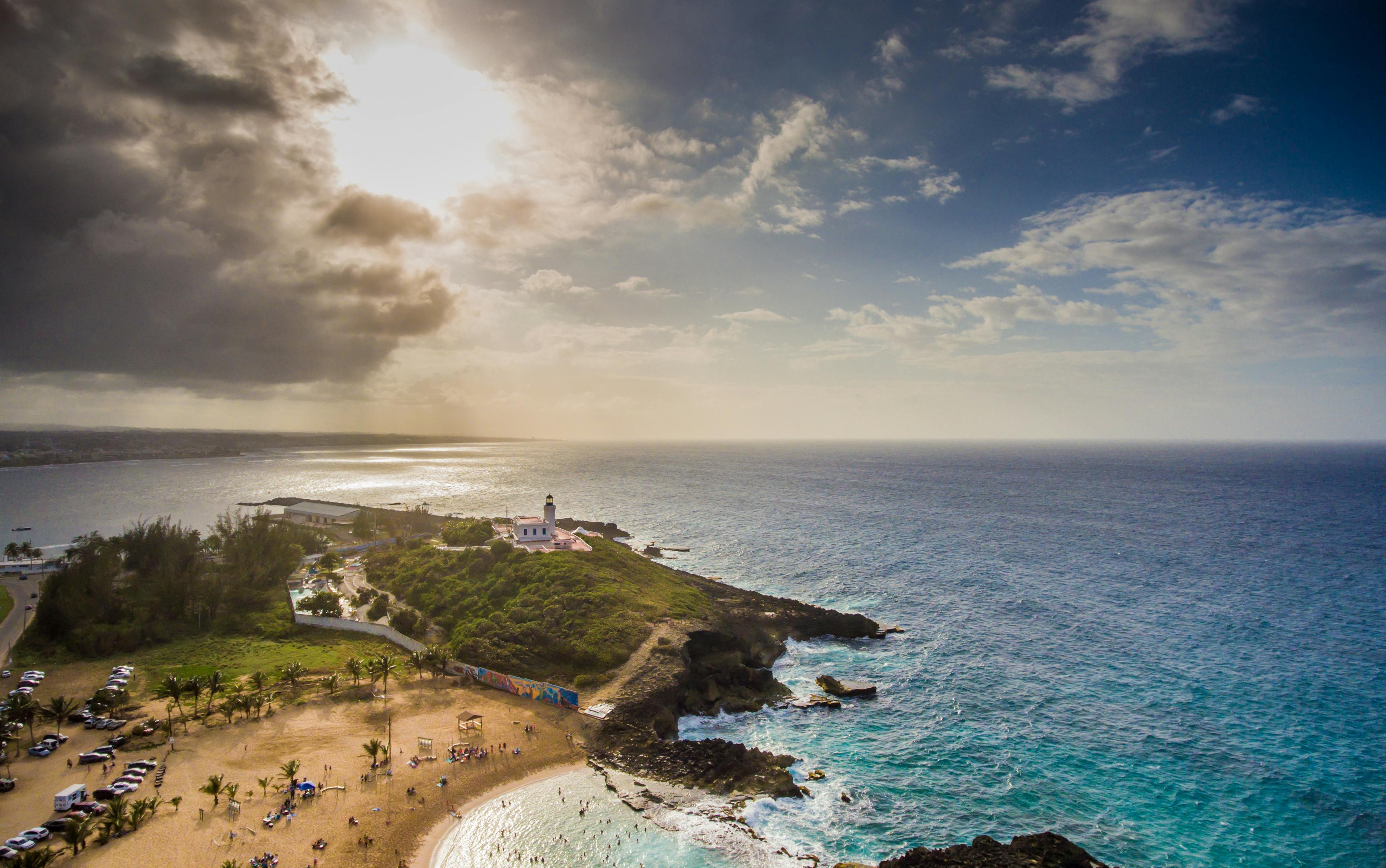
    Puerto Rico combines Spanish colonial architecture, tropical rainforests, and beautiful beaches. Explore the historic streets of Old San Juan, hike through El Yunque, and experience the magical bioluminescent bay.

    The sound of coqui frogs at dusk, the smell of roasting pork from a roadside stand, and the sight of colonial walls glowing in the late afternoon sun, Puerto Rico is an island that engages all your senses. It is a place where you can wander through 500 years of history in the morning and surf a perfect wave in the afternoon. Puerto Rico travel is a vibrant mix of culture, nature, and flavor, all wrapped in the warm spirit of the Caribbean.

    As a U.S. territory, Puerto Rico is easy to get to for American travelers, with no passport required. The island’s geography is incredibly diverse. The north coast is lush and green, home to the capital city of San Juan and beautiful beaches. The south is drier and sunnier, with a more laid back vibe. In the center, a mountain range called the Cordillera Central offers cool air, coffee plantations, and winding roads with incredible views. And just off the coast, the islands of Vieques and Culebra feel like...

    Climate & Weather

    Tropical climate with year-round warm temperatures and trade winds.

    Best Time to Visit

    Mid-December to April for dry, pleasant weather

    Highlights

    Top highlights

    El Yunque Rainforest

    Old San Juan

    Bioluminescent Bay

    Activities

    Popular activities

    Rainforest hiking
    Historic tours
    Kayaking
    Beach activities
    Essentials

    Quick info

    Timezone
    UTC-4
    💰Currency
    USD
    🗣️Language
    Spanish, English
    Temperature
    28°C
    What's On

    Upcoming events

    Noche de San Juan 2026
    Food & Drink/Festival
    Free

    Noche de San Juan 2026

    Noche de San Juan 2026: A Night of Celebration in Puerto Rico

    Noche de San Juan 2026 in Puerto Rico is celebrated on the night of June 23, 2026, when beaches across the island fill with music, family gatherings, and the famous midnight ritual of walking backward into the ocean for luck and spiritual cleansing. It’s one of the most joyful nights on the island calendar, and it feels especially electric in the San Juan metro area, where city beaches turn into open-air parties under the stars.

    What Makes Noche de San Juan So Special

    Puerto Rico has plenty of major events, but Noche de San Juan stands out because it belongs to everyone. There’s no stadium, no single ticketed gate, and no one “right” way to celebrate. Instead, the whole island becomes the venue: from Condado and Isla Verde in the north to smaller coastal towns where locals arrive with coolers, chairs, and speakers and claim their spot in the sand.

    This tradition honors Saint John the Baptist, the island’s patron saint, and it blends Catholic and older solstice-style customs into a uniquely Puerto Rican beach ritual. The result is a celebration that feels both spiritual and social: people come for good luck, but they stay for the music, the laughter, and the feeling that summer has officially begun.

    The Key Date: When to Celebrate in 2026

    Noche de San Juan is celebrated every year on June 23, and Puerto Rico’s official tourism guidance describes it as happening “every year on the night of June 23.” In 2026, that means the main celebration night is Tuesday, June 23, 2026, with the biggest beach energy typically building from sunset into midnight.

    If June 23 lands midweek, the vibe can be slightly more local and spontaneous compared to weekend years, but San Juan-area beaches still get very crowded. The safest plan is to treat it as a full evening outing: arrive before dark, settle in, and stay for the midnight moment.

    The Midnight Ritual: Backward into the Ocean

    The signature Puerto Rico tradition is the midnight “backward plunge,” where people walk backward into the sea at 12:00 AM and dip into the waves for cleansing and luck. Discover Puerto Rico describes the ritual as three backward plunges at midnight, while also noting some people do seven or twelve dips for stronger symbolism.

    PuertoRicoDayTrips emphasizes the same core idea: be at the beach, stay up late, then get wet at midnight as part of the tradition. The important thing for visitors is not perfection; it’s participation, and the island-wide energy at midnight is exactly what makes Noche de San Juan feel unforgettable.

    Where to Celebrate: Best Beaches and Island Areas

    Because the event is island-wide, the “best” spot depends on whether you want a big party scene, something family-friendly, or a quieter local beach.

    San Juan Metro Beaches: Biggest Crowds, Biggest Energy

    PuertoRicoDayTrips notes that San Juan-area beaches can be extremely packed, describing the scene as a huge beach party and warning it can be close to “elbow to elbow.” Popular metro-area beaches and zones mentioned include:

    • Isla Verde
    • Ocean Park (especially the Último Trolley area)
    • Condado
    • Carolina Beach
    • El Escambrón

    Discover Puerto Rico also specifically calls out Condado, Isla Verde, Luquillo, and Carolina Beach as popular options. If your goal is “maximum atmosphere,” pick one of these and commit to arriving early to claim sand space and reduce parking stress.

    Beyond San Juan: A More Local Pace

    If you prefer a less intense crowd while still enjoying the tradition, beaches outside the capital region can feel more community-driven. You’ll still see families setting up food and music, but the night may feel less like a giant block party and more like a coastal gathering.

    What Happens Before Midnight: How the Night Builds

    Noche de San Juan doesn’t start at midnight. It starts when the sun goes down and the beach turns into a social living room. Discover Puerto Rico describes beaches coming alive with picnics, bonfires, and music as night falls.

    PuertoRicoDayTrips adds practical realism: many hotels in San Juan host organized beach events, and some beaches may even have concerts or organized festivities. In other words, you can celebrate DIY with friends and snacks, or you can choose a hotel-organized party if you want a more structured night.

    Cultural Notes: How to Celebrate Like a Respectful Visitor

    Noche de San Juan is welcoming, but it’s also a beloved tradition, and small choices make a big difference in how you experience it.

    • Be mindful of families: this is often multi-generational, even on party-heavy beaches.
    • Don’t bring glass bottles: PuertoRicoDayTrips specifically asks people not to bring glass bottles to the beach.
    • Keep the beach clean: pack bags for trash and leave the sand better than you found it (this matters on an island).
    • Be careful in the water: PuertoRicoDayTrips warns that lifeguards are not on duty at night and entering the water is at your own risk.

    Practical Travel Tips for June 23 in Puerto Rico

    Arrive Early and Plan Parking

    If you’re going to the San Juan metro beaches, PuertoRicoDayTrips recommends getting there early if you want parking and a good spot in the sand. Even if you take a rideshare, arriving early helps you avoid peak traffic and lets you settle in before the crowds thicken.

    Bring the Right Beach-Night Kit

    PuertoRicoDayTrips suggests basics like bug spray (sand fleas), bathing suit, and towels, and the general advice is to bring a cooler with your own items. Add a phone power bank and a small flashlight for the walk back, because beach exits and side streets can get hectic after midnight.

    Choose Your “Vibe” Intentionally

    Discover Puerto Rico notes resorts in San Juan and Isla Verde often host their own celebrations. If you want a controlled environment, that’s an easy option, but if you want the classic Puerto Rico experience, a public beach at midnight is the real story.

    Pricing: What It Costs to Attend

    Noche de San Juan is fundamentally a public tradition, and the main beach ritual does not require a ticket. Costs are typically optional and personal: food and drinks, transportation, and any resort or hotel event you choose to attend.

    In practical terms, the best budget strategy is to treat the night as a free island experience and decide whether you want to spend on convenience (a beachfront hotel event) or keep it simple with a cooler and a public beach gathering.

    Verified Information at a Glance

    Event Name: Noche de San Juan (Puerto Rico)

    Event Category: Cultural and religious tradition (Saint John the Baptist celebration) with beach gatherings and midnight ocean ritual

    Confirmed Annual Date: Night of June 23

    Noche de San Juan 2026 Date: June 23, 2026 (Tuesday night, leading into midnight)

    Signature Tradition: Walk backward into the ocean at midnight and dip for luck/cleansing (commonly 3 dips; some do 7 or 12).

    Popular Beaches: Condado, Isla Verde, Luquillo, Carolina Beach; also Ocean Park, El Escambrón (San Juan metro).

    Pricing: Public beach celebration has no entry fee; costs depend on personal spending or optional resort events.

    Safety Note: Lifeguards may not be on duty at night; entering the water is at your own risk.

    If Puerto Rico is on your 2026 island travel list, plan to be on the sand on June 23, pick a beach that matches your vibe, and stay up for the midnight moment when the whole shoreline moves together toward the waves, because experiencing Noche de San Juan in Puerto Rico is the kind of tradition that makes you feel like you truly arrived.

    Puerto Rico Convention Center, San Juan, Puerto Rico
    Jun 23, 2026 - Jun 23, 2026
    Aibonito Flower Festival (Festival de las Flores) 2026
    Food & cultural festival
    TBA

    Aibonito Flower Festival (Festival de las Flores) 2026

    Aibonito Flower Festival in Puerto Rico: A Mountain Bloom-Filled Tradition Worth the Drive

    The Aibonito Flower Festival, known locally as Festival de las Flores de Aibonito, is one of Puerto Rico’s most beloved mountain events, bringing together flower growers, landscape artists, food vendors, musicians, artisans, and families for a colorful multi-day celebration in the island’s central highlands. Reliable public sources confirm that the festival has been celebrated since 1969, takes place in Aibonito, features plant sales, workshops, live music, arts and crafts, and exhibitions, and in its latest confirmed edition ran from June 27 to July 6 with daily hours from 8:00 a.m. to 6:00 p.m.

    For travelers looking beyond the beach, this is the kind of Puerto Rico experience that feels rooted, joyful, and unmistakably local. Set in one of the island’s coolest mountain towns, the Aibonito Flower Festival offers a different side of island life, one shaped by horticulture, small-town pride, roadside food, cool breezes, and the deep love Puerto Ricans have for gathering around beauty and tradition.


    What is the Aibonito Flower Festival?

    The Aibonito Flower Festival is an annual flower and plant fair held in the mountain municipality of Aibonito, Puerto Rico. Discover Puerto Rico describes it as a multi-day celebration where the island’s best flower growers and landscape artists come together so attendees can see and purchase everything from orchids and ornamental flowers to fruit trees and vegetable plants.

    That broad scope is part of what makes the event special. It is not only a flower show in the narrow sense. It is also a giant plant market, a cultural fair, a family outing, and a summer tradition that mixes gardening, music, food, and local pride in one place.

    Puerto Rico Day Trips goes even further and calls it the largest plant show and sale on the island. For visitors, that means the event is as practical as it is beautiful. You are not only looking at displays. You are stepping into a living marketplace of tropical plants, growers, and island expertise.


    Why Aibonito is the Perfect Setting

    Aibonito is often called one of Puerto Rico’s coolest towns, both in temperature and in feel, and that mountain setting gives the festival an atmosphere you do not get on the coast. The cooler climate supports flower growing and makes spending a full day outdoors far more pleasant than it might be in hotter lowland towns during summer.

    That cooler weather also shapes the tone of the event. You still get the warmth and music of Puerto Rico, but with crisp mountain air, rolling green scenery, and a slower pace that makes the day feel easy and inviting.

    For island travelers, this is one of the great pleasures of visiting Aibonito. It reminds you that Puerto Rico is not only beaches and old city walls. It is also mountain roads, misty ridges, agricultural pride, and small towns with traditions that have lasted for generations.


    A Festival with Deep Roots in Puerto Rico

    One of the strongest confirmed details about the event is its long history. Discover Puerto Rico states that the festival has been celebrated since 1969, which places it among the island’s more established and enduring recurring events.

    That kind of longevity says a lot. Events do not last that long unless they matter to people. The Aibonito Flower Festival has clearly grown from a local agricultural idea into a yearly island tradition that people still plan around.

    Historical references tied to the festival reinforce that sense of scale. One retrospective source notes that early editions attracted around 20,000 people in just three days, and a current event page says the festival receives approximately 100,000 visitors annually, though that latter figure should be read as promotional rather than an official attendance audit.


    When the Festival is Usually Held

    One of the most useful parts of planning for the Aibonito Flower Festival is that its seasonal pattern is fairly consistent. Puerto Rico Day Trips says the event is usually held from the end of June through the first weekend in July, and the latest confirmed edition ran from June 27 to July 6.

    Other public pages support that same timing. Discovering Puerto Rico places the event during the last week of June and the first week of July, and MiAgendaPR confirms the June 27 to July 6 date range for the most recent edition it lists.

    That means travelers can treat late June and early July as the most reliable planning window for this festival. While exact dates should always be verified closer to travel time, the seasonal timing is one of the clearest and most consistent aspects of the event.


    What You Will See at the Festival

    The visual appeal of the Aibonito Flower Festival is obvious from the name, but the range of plant life on display is broader than many first-time visitors expect. Official and travel sources mention orchids, fruit trees, vegetable plants, tropical ornamentals, and all sorts of flowers available for viewing and purchase.

    Puerto Rico Day Trips describes rows and rows of booths selling everything from orchids and fruit trees to heliconias, gingers, and hibiscus. That description makes the event sound less like a curated museum display and more like a giant mountain garden market, which is exactly why so many people love it.

    Some public pages also describe garden exhibitions as a major part of the event. MiAgendaPR says one recent edition featured 32 display gardens, while BoricuaOnline refers to more than 100,000 square feet of floral exhibition space, though that latter figure comes from a secondary informational site rather than an official organizer page.


    More Than Flowers: Music, Food, and Island Culture

    The Aibonito Flower Festival is not only about plants. Discover Puerto Rico confirms that the event also includes live music, food kiosks, workshops, arts and crafts, and exhibitions.

    That mix is essential to understanding the festival’s island appeal. In Puerto Rico, the best public events rarely stay in one lane. A horticultural fair naturally expands into food, music, handmade goods, and social gathering because that is how people here celebrate.

    Visitors can also expect a distinctly Puerto Rican flavor to the day. Local travel coverage points to food stands, family activities, rides and games for children, and roadside vendors selling everything from flowers to perfume along the roads leading toward the festival grounds.

    This wider atmosphere turns the event into something much bigger than a specialty show. You might arrive for orchids and leave having spent the whole day eating fritters, listening to live music, browsing crafts, and soaking up mountain-town energy.


    The Venue and How the Grounds Work

    One of the best practical details confirmed by Puerto Rico Day Trips is the location setup. The event takes place in the permanent Flower Festival Area behind the Coliseo Los Polluelos de Aibonito, with official sales booths, entertainment, and food kiosks set up there.

    That permanent event space helps explain why the festival feels so established. It is not an improvised fair squeezed into random streets. It has a known home and an infrastructure designed for large crowds and recurring annual use.

    Roadside activity also plays a role. The same source says smaller vendors line the roads leading to the park, selling plants, flowers, food, and other items, which means the festival experience begins before you even arrive at the main grounds.


    Tickets, Pricing, and What is Confirmed

    Pricing is one area where the available public information is especially useful. Puerto Rico Day Trips states that the latest confirmed festival charged about $7 per person Monday through Friday, $8 per adult on Saturday, Sunday, and July 4, and $3 for children under 12, with tax included. It also says parking is free and tickets are available at the door.

    MiAgendaPR provides matching ticket figures for the same recent edition, which strengthens confidence in those published rates.

    It is still important to phrase this carefully for future travelers. Those are the latest publicly confirmed prices found in the retrieved sources, not an official unreleased price list for the next edition. So while they are highly useful as a planning benchmark, visitors should still expect possible changes by the time the next festival opens.


    Hours, Crowds, and the Best Time to Go

    The latest confirmed edition of the festival was open daily from 8:00 a.m. to 6:00 p.m. according to Puerto Rico Day Trips. That long daytime schedule makes it easy to build a full-day outing around the event.

    Crowd timing matters, though. The same source says most people go on weekends and in the afternoon, and recommends mid-week mornings for visitors who want to avoid the heaviest crowds.

    That advice is especially valuable if you are serious about shopping for plants or taking photos. Earlier visits tend to be calmer, cooler, and more comfortable, especially in a popular event that draws large crowds from around the island.


    Travel Tips for Visitors Exploring the Mountain Region

    Aibonito is close enough to be an easy road trip from San Juan, but far enough to feel like a change of scenery. Puerto Rico Day Trips estimates the drive from San Juan at about 1.5 hours, making the festival very realistic as a day trip or as part of a central mountain weekend.

    A few practical tips can make the visit smoother:

    • Leave early if you are coming from the metro area, especially on weekends.
    • Wear comfortable shoes because you will likely spend hours walking through booths, gardens, and vendor areas.
    • Bring cash as well as cards, since smaller vendors may vary in payment options.
    • Be careful when buying plants if you are flying back to the mainland United States, because Puerto Rico Day Trips reminds travelers that USDA baggage inspections apply for certain plant materials.

    The festival also fits beautifully into a wider mountain-route itinerary. You can pair Aibonito with a scenic drive through the Ruta Panorámica, lunch in Cayey, or stops in nearby central towns known for cooler weather, viewpoints, and traditional food.


    Why the Festival Stands Out in Puerto Rico’s Event Calendar

    Puerto Rico has no shortage of colorful festivals, but the Aibonito Flower Festival stands out because it combines natural beauty, horticultural pride, and community atmosphere in a way few other events do. It feels different from a patron-saint festival or a music-heavy town celebration because its core attraction is living beauty, flowers, foliage, gardens, and growing things.

    At the same time, it never feels narrow or exclusive. You do not have to be a gardener to enjoy it. Families, photographers, road-trippers, plant lovers, and curious visitors all find something here, whether it is the flowers, the mountain air, the food kiosks, or the simple joy of seeing Puerto Rico in bloom.

    If you want to experience Puerto Rico through color, culture, and the cooler green heart of the island, set your sights on Aibonito when the flower festival returns and spend a day where the mountains feel festive, fragrant, and beautifully alive.


    Verified Information at a Glance

    • Event name: Aibonito Flower Festival, also called Festival de las Flores de Aibonito.
    • Event category: Flower festival, plant fair, cultural and family event.
    • Location: Aibonito, Puerto Rico.
    • Confirmed long-term history: Celebrated since 1969.
    • Typical season: End of June through the first weekend in July.
    • Latest confirmed public dates found: June 27 to July 6.
    • Latest confirmed public daily hours found: 8:00 a.m. to 6:00 p.m.
    • Confirmed venue area: Permanent Flower Festival Area behind Coliseo Los Polluelos de Aibonito.
    • Confirmed activities: Plant and flower displays, plant sales, live music, food kiosks, workshops, arts and crafts, and exhibitions.
    • Latest confirmed public ticket pricing found: About $7 Monday to Friday, $8 on Saturday, Sunday, and July 4, and $3 for children under 12.
    • Parking: Free, according to the latest confirmed travel listing retrieved.
    • Travel note: Approximate drive from San Juan is 1.5 hours.
    Aibonito (Central Puerto Rico), Puerto Rico
    Jun 26, 2026 - Jul 5, 2026
    Piña Colada Festival 2026
    Food & drink festival
    TBA

    Piña Colada Festival 2026

    Piña Colada Festival in Puerto Rico: A Flavor-Filled Old San Juan Weekend Worth Planning For

    The Piña Colada Festival in Puerto Rico is one of the most fun and easy-to-love summer events on the island, and the official festival website already confirms the next edition will take place July 10 to 12, 2026, in Old San Juan. The same official source says more than 40 bars and restaurants will serve 6-ounce cocktails and bites inspired by the world-famous drink for only $4, while activities include salsa lessons, painting experiences, treasure-hunt style games, and festival merchandise sold at Camínalo Outlet Store.

    For travelers, this is a dream setup. You get a historic Caribbean city, a world-famous cocktail tied to Puerto Rico, a walkable district full of bars and plazas, and a weekend built around flavor, music, and local energy rather than one fenced-off venue.


    What is the Piña Colada Festival in Puerto Rico?

    The Piña Colada Festival is a multi-venue food and drink festival centered in Old San Juan, celebrating Puerto Rico’s deep cultural connection to the piña colada. The official festival page says it takes place the weekend after National Piña Colada Day in the heart of Old San Juan, with participating bars and restaurants serving special cocktails and bites across the district.

    This is important because it is not a single ballroom tasting or one-stage concert. It is more of a citywide crawl and cultural celebration, where you move through the streets of Old San Juan trying different drinks, desserts, and food creations while taking in music, art, and island atmosphere.

    That structure is part of what makes the event so appealing. You are not only attending a festival. You are exploring one of the most beautiful urban areas in the Caribbean while tasting one of Puerto Rico’s most iconic creations.


    Why the Piña Colada Matters So Much in Puerto Rico

    The piña colada is more than a popular tropical cocktail here. It is one of the island’s most recognizable symbols and a point of local pride. The official festival page states clearly that while the exact inventor remains debated, one thing is certain: the piña colada was born, raised, and forever lives in Puerto Rico.

    That cultural claim shows up all over San Juan. Barrachina calls itself the birthplace of the piña colada and says the drink was crafted there in 1963 by Don Ramón Portas Mingot, while the Caribe Hilton says bartender Ramón “Monchito” Marrero created it there in 1954. These competing origin stories are part of the drink’s mystique and one reason the festival feels so rooted in Puerto Rico rather than generic cocktail culture.

    For visitors, that means the Piña Colada Festival offers more than a chance to sip something sweet. It is a way to step directly into one of Puerto Rico’s most beloved food-and-drink debates while enjoying the island’s talent for hospitality and celebration.


    Confirmed Dates for the Next Edition

    One of the strongest and most useful facts about the event is that the official website already confirms the dates for the next edition. The Piña Colada Festival homepage states that the festival will run from July 10 to July 12, 2026.

    That timing lines up perfectly with National Piña Colada Day, which falls on July 10, and with the festival’s own statement that it takes place the weekend after or around that celebration in Old San Juan.

    For travelers, this is ideal. July is already a lively time on the island, and the festival gives you a clear weekend anchor for planning a San Juan trip around drinks, history, food, and nightlife.


    Where the Festival Takes Place

    The official festival website confirms the location as Old San Juan, Puerto Rico. Rather than focusing on one fixed venue, the event is spread across bars and restaurants throughout the historic district.

    That is exactly the right setting for an event like this. Old San Juan is one of the most walkable, photogenic, and culturally rich parts of Puerto Rico, with blue cobblestones, colonial balconies, plazas, sea views, and a dense mix of food and drink spots within easy walking distance.

    Public event listings for the recent edition also connect the festival to Viejo San Juan and Plaza San José, reinforcing the neighborhood focus and helping visitors picture the general festival zone.


    What You Can Expect During the Weekend

    The official “About the Festival” page gives a very clear sense of the experience. More than 40 bars and restaurants will serve 6-ounce cocktails and bites inspired by the piña colada for only $4, including many types of coladas, mojitos, margaritas, local beer, and desserts such as gelatos, waffles, piraguas, and paletas.

    That means the festival is broader than the classic frozen cocktail. You can expect:

    • Traditional piña coladas.
    • Piña colada-inspired variations.
    • Other tropical cocktails and local beer.
    • Desserts and small bites tied to pineapple, coconut, and Caribbean flavors.

    The same page also confirms added activities such as salsa lessons and painting the perfect piña colada. The homepage mentions a treasure hunt, a “painted bottle” challenge, and a prize of a bottle of Don Q Gold for the person who finds the bottle and says the secret phrase.

    This playful structure is one of the festival’s best qualities. It is not just about standing in line for drinks. It feels interactive, social, and very much in tune with Old San Juan’s street energy.


    The Atmosphere in Old San Juan

    One reason the Piña Colada Festival works so well is that Old San Juan already feels festive even before the event begins. The neighborhood is full of plazas, balconies, live music corners, and bars tucked into historic buildings, so the festival simply amplifies what the district does naturally.

    During the weekend, that means visitors can drift from Calle Fortaleza to Plaza San José, stop for a cocktail, browse artisan stands, listen to music, and then continue on to another venue a few blocks away.

    This makes the experience ideal for travelers who want a city festival that still feels relaxed. You can go at your own pace, spend an hour or spend the whole day, and still feel fully part of the event.


    Food, Cocktails, and Local Creativity

    The festival’s strongest selling point is variety. More than 40 participating bars and restaurants means you are not getting one version of the same drink again and again. You are getting creative spins from different venues across the city.

    That matters in Puerto Rico, where local bars and kitchens love to remix classics. The official festival page says visitors can try everything from all types of coladas to mojitos and margaritas, while public listings from the previous edition mention even more variety, including fruit coladas, virgin coladas, martinis, rum punch, coquito-inspired drinks, local craft beer, and dessert-style creations.

    For food lovers, this turns the festival into a tasting trail rather than just a drinking event. And because the prices are low by festival standards, it becomes easy to sample more than one thing without feeling locked into a single venue.


    Activities Beyond the Drinks

    The Piña Colada Festival has enough extra programming to keep it from feeling repetitive. Official pages mention:

    • Salsa lessons.
    • A painting activity focused on the perfect piña colada.
    • A treasure hunt.
    • The painted bottle search with a Don Q Gold prize.
    • Festival hats and T-shirts sold for $19.99 at Camínalo Outlet Store from 12 p.m. to 7 p.m.

    These details may sound small, but they help create a fuller island event atmosphere. The weekend becomes about movement, interaction, and discovery, not only consumption.

    That is especially helpful for groups with different interests. Some may come for cocktails, others for photography, shopping, dancing, or simply the excuse to spend more time in Old San Juan.


    Practical Tips for Attending

    If you want to enjoy the Piña Colada Festival well, treat it like a walking city festival rather than a sit-down event. Old San Juan’s beauty is part of the experience, so the more comfortably you can move through it, the better your weekend will feel.


    Smart Planning Tips

    • Stay in or near Old San Juan if the festival is your main focus, because the event is built around the district’s bars and restaurants.
    • Wear light clothing and comfortable shoes, since you will likely spend hours walking cobblestone streets in summer heat.
    • Pace your drinks and add food stops in between, because the event is designed for sampling.
    • Start earlier in the day if you want shorter lines and a more relaxed pace before evening crowds build.


    Make the Most of the Neighborhood

    • Pair the festival with visits to El Morro, San Cristóbal, Paseo de la Princesa, or Calle Fortaleza for a fuller Old San Juan experience.
    • Take time in local plazas, where music and artisan activity often make the event feel even more lively.
    • Check the festival map once it is released, since the whole point is moving between participating venues.


    Pricing and Value

    Pricing is one of the clearest and most attractive parts of this event. The official festival site says over 40 bars and restaurants will offer 6-ounce cocktails and bites for only $4.

    That kind of pricing is unusually friendly for a popular festival in a tourist-heavy district. It makes the Piña Colada Festival much more approachable than many ticket-heavy food events, and it encourages sampling rather than one big spend.

    What the official homepage does not clearly show is a separate entry fee for attending the overall festival. Based on the retrieved official content, the pricing emphasis is on the low-cost cocktails and bites rather than on a festival pass. Since no confirmed admission fee appears in the fetched pages, it is safest to say that the event is organized through participating venues and clearly advertised around $4 specials, while any separate fees would need to be checked on the live event listings.


    Why This Festival Deserves a Place on Your Puerto Rico Itinerary

    The Piña Colada Festival works because it combines all the things Puerto Rico does best. It celebrates local flavor, turns a historic neighborhood into a social playground, keeps pricing inviting, and wraps the whole weekend in music, sunshine, and island charm.

    It also gives travelers something refreshingly simple. You do not need insider access, formal attire, or a complicated plan. You just need a few free hours in Old San Juan, a willingness to wander, and an appetite for tasting one of Puerto Rico’s most famous creations in the place that proudly claims it as its own.

    If you are looking for a summer weekend in Puerto Rico that feels festive, flavorful, and unmistakably local, put Old San Juan on your July calendar and follow the trail of pineapple, coconut, music, and Caribbean color through one of the happiest events on the island.


    Verified Information At A Glance

    • Event name: Piña Colada Festival.
    • Event category: Food and drink festival, cocktail festival, citywide cultural event.
    • Confirmed dates: July 10 to 12, 2026.
    • Confirmed location: Old San Juan, Puerto Rico.
    • Festival format: Multi-venue event across participating bars and restaurants.
    • Confirmed participating scale: More than 40 bars and restaurants.
    • Confirmed featured pricing: 6-ounce cocktails and bites for $4.
    • Confirmed activities: Salsa lessons, painting activity, treasure hunt, painted bottle challenge, and festival merchandise.
    • Confirmed merchandise pricing: Festival hats and T-shirts at $19.99.
    • Confirmed prize mentioned on the homepage: Bottle of Don Q Gold for the painted bottle challenge.
    • Confirmed official general admission fee: No separate official festival entry fee was visible in the retrieved official pages.
    Old San Juan, Puerto Rico
    Jul 10, 2026 - Jul 12, 2026
    World Salsa Congress 2026
    Music / Dance Festival
    $25

    World Salsa Congress 2026

    Thirty years. Thirty nights. Thirty stories. The Congreso Mundial de la Salsa 2026 is not just Puerto Rico's biggest salsa event of the year. It is the 30th anniversary of the event that literally invented the salsa congress format, and to mark three decades of history the organizers have transformed a single weekend into a full month of continuous celebration running from July 1 through August 1, 2026, under the ambitious cultural tourism platform Destino Salsa 2026. The main congress finale events take place Thursday July 30, Friday July 31, and Saturday August 1, 2026, at the Fairmont El San Juan Hotel and Casino in Isla Verde, San Juan, Puerto Rico.

    "30 Años, 30 Noches, 30 Historias" (30 Years, 30 Nights, 30 Stories) drives the most ambitious expansion in the congress's history.

    Thirty Years: The Birthplace of the Salsa Congress Format

    Puerto Rico's Legacy in Salsa

    The Congreso Mundial de la Salsa did not just grow into one of the world's great salsa events. It created the entire salsa congress format that the global Latin dance community now takes for granted. When the first edition launched in San Juan in 1996, the concept of a multi-day event combining competitive salsa dancing, professional workshops, social dancing parties, live music, and international performers under one roof was genuinely new. In the three decades since, hundreds of salsa congresses have launched in cities across North America, Europe, Latin America, and Asia, all following the template that Puerto Rico originated.

    The 30th anniversary in 2026 is therefore not simply a milestone birthday for one event. It is a celebration of the format's global influence and of Puerto Rico's central role in taking a neighborhood dance from the barrios of New York and the streets of San Juan to every continent on earth.

    Destino Salsa 2026: Thirty Days, Thirty Nights, Thirty Stories

    A Month-Long Celebration Across Puerto Rico

    The "30 Años, 30 Noches, 30 Historias" theme drives the most ambitious expansion in the congress's history. Rather than a long weekend event, Destino Salsa 2026 runs every single night from July 1 through August 1, presenting a unique salsa-themed experience each night across venues and municipalities that span the entire island:

    • San Juan as the central hub, with venues across the capital including the iconic Fairmont El San Juan Hotel, historic Old San Juan, and the beachfront Isla Verde corridor
    • Carolina, Toa Baja, Cataño, Bayamón, Loíza in the greater San Juan metropolitan area
    • Ponce on the south coast, Puerto Rico's second city and a historic center of Puerto Rican musical culture
    • Arecibo and Hatillo on the northern coast, bringing the Destino Salsa programme beyond the capital to communities across the island

    The programme across the thirty days includes:

    • Live music events and salsa nights at venues across San Juan
    • Folklore gatherings that connect the salsa tradition to its Afro-Caribbean and Puerto Rican musical roots
    • Patron saint festivals in participating municipalities, where the local fiestas patronales overlap with the Destino Salsa programming to create community celebrations that are both authentically local and internationally relevant
    • The Galería Mundial de la Salsa: A major new museum exhibition debuting at Plaza Las Américas, Puerto Rico's largest shopping mall, presenting the history of salsa music and dance in a purpose-designed installation that extends to a network of exhibition spaces across the island

    The Main Congress: July 30 to August 1 at the Fairmont El San Juan Hotel

    The Climax of the Celebrations

    The three main anniversary congress days at the Fairmont El San Juan Hotel and Casino in Isla Verde are the climactic centerpiece of the entire month:

    The Competition Programme

    Showcasing the Best of Salsa

    The World Salsa Congress competition format is one of the most rigorous and most internationally respected in competitive salsa dancing, with categories that cover the full spectrum of the art form:

    • Mundial Salsa Ladies: The female solo competition that is one of the most technically demanding and most watched categories in the international salsa competition calendar
    • Men's Challenge: The male counterpart, equally demanding and equally prestigious
    • Mundial Bachata Open: The bachata competition that reflects the growing importance of the Dominican dance form within the Latin dance congress ecosystem
    • Bomba Soloists: A category of profound cultural significance, presenting Puerto Rico's Afro-indigenous Bomba tradition, which predates salsa by centuries and is the rhythmic and cultural foundation from which Puerto Rican popular music ultimately grew, within the congress's competitive framework
    • Group Exhibitions: Competitive presentations by dance schools and companies from Puerto Rico and internationally, combining choreographic creativity with technical execution in the format most closely related to stage performance

    The competition rules reflect the congress's international mandate: participants must be 16 years or older, and to represent a country, at least one member of a competing couple must be a citizen or naturalized citizen of that country.

    Workshops: Six Sessions of Elite Instruction

    Learn from the Best

    The workshop programme is one of the congress's most practically valuable dimensions for traveling dancers, providing access to instruction from internationally recognized salsa instructors and performers across six workshop sessions built into the congress schedule. Workshop content typically covers:

    • On2 (New York style) salsa technique from instructors rooted in the Palladium-era and contemporary New York tradition
    • On1 (Los Angeles style) salsa technique and partnership work
    • Cuban salsa (Casino) reflecting the original Havana social dance tradition
    • Sensual and contemporary fusion styles that represent the directions competitive salsa has moved since the congress format was established
    • Performance and choreography workshops for dancers interested in the competitive exhibition and stage performance dimensions of the art form
    • Bachata technique and sensual bachata workshops reflecting the congress's expanded scope

    Social Dancing: The Heart of Every Salsa Congress

    Dance the Night Away

    For the majority of the thousands who attend the World Salsa Congress, the social dancing at the evening and late-night parties is the reason they come. The social dancing format, where any attendee can invite any other attendee to dance regardless of level or country of origin, is the most democratic and most joyful expression of what salsa actually is: a conversation between two people conducted entirely through movement and music, requiring no shared language beyond the rhythm.

    The combination of the hotel's beachfront setting on Isla Verde, the assembled talent of the international salsa community, and the particular electricity of a 30th anniversary creates social dance floors that are likely to be among the most memorable in the congress's entire three-decade history.

    The Gala Dinner and Concert

    A Night of Elegance and Celebration

    The Gala Dinner and Concert is the most formal and most festive evening of the main congress programme. With the Fairmont El San Juan Hotel's grand event spaces as the backdrop, the gala combines fine dining with live performance from salsa artists and special presentations that honor the congress's 30-year history and the individuals who built it.

    The Venues: Isla Verde and San Juan

    Iconic Locations for a Historic Event

    The Fairmont El San Juan Hotel and Casino at 6063 Avenida Isla Verde, Carolina, Puerto Rico 00979, is one of the Caribbean's most storied luxury properties. The hotel's history traces back to the 1950s when it was the centerpiece of the Isla Verde strip and one of the Caribbean's most glamorous destinations, hosting performers and entertainers from the golden era of Latin music. Its restoration and rebranding as a Fairmont property brought the original grandeur back alongside contemporary luxury standards, and its combination of beachfront location, casino, multiple restaurants and bars, and large event spaces makes it the natural home for a congress of this scale and this ambition.

    The beach access at the Fairmont is particularly relevant for the congress's social atmosphere: the evening social parties can extend naturally from the hotel's interior ballrooms to the beachfront terraces and bar areas with the Atlantic Ocean as the backdrop for night-time dancing.

    Additional San Juan Venues

    Beyond the Fairmont

    Beyond the Fairmont, the Destino Salsa 2026 programme activates a network of San Juan venues that span the city's cultural and entertainment geography:

    • Teatro Tapia (Tapia Theatre): The 19th-century theatre on Plaza Colón in Old San Juan, one of the oldest functioning theatres in the Americas and a venue whose colonial architecture and intimate scale give salsa performances a theatrical gravitas that modern venues cannot replicate
    • San Juan Marriott: The beachfront Marriott on Condado Avenue, one of the city's primary convention and event hotels
    • Plaza Colón: The historic square outside the Tapia Theatre in Old San Juan, one of the most visually recognizable public spaces in the city
    • Marriott beach area: The outdoor beachfront performance and social space adjacent to the Condado Marriott

    Tickets: What the World Salsa Congress 2026 Costs

    Access the Experience

    Multiple ticket tiers are available for the main congress days of July 30 to August 1:

    Ticket TypePriceFull Pass (All workshops + all shows + 2 drinks)US$299Spectator Full Pass (All competitions/shows + all workshops)US$199Friday Single-Day Spectator PassUS$79Saturday Single-Day Spectator PassUS$79Friday Single Night Spectator (Show only)US$25Puerto Rico Residents DiscountUS$159 (Full Pass) The tiered pricing makes the World Salsa Congress accessible at multiple levels of engagement, from the single-night casual visitor at $25 through to the full-immersion competitor and dancer at $299 with workshops included.

    Where to book:

    The Competitions in Detail: How It Works

    Rules and Regulations

    The World Salsa Congress competition structure is built around the International Salsa Bureau affiliation system, making it one of the most formally governed salsa competitions in the world:

    • Dance schools, instructors, and professional dancers affiliated with the International Salsa Bureau travel from their home countries to compete under their national flag
    • To represent a country, at least one member of a competing couple must hold citizenship or naturalization in that country
    • All competitors must be 16 years of age or older
    • Competition categories span age groups and competitive levels, with baby (8 and under) and infantil (9-12) divisions in some categories for younger dancers

    The combination of international representation rules and rigorous technical standards gives the World Salsa Congress its particular prestige within the global Latin dance competition circuit.

    The Galería Mundial de la Salsa: A New Cultural Institution

    A Lasting Legacy

    One of the most exciting new elements of the 2026 edition is the Galería Mundial de la Salsa, a museum-quality installation debuting at Plaza Las Américas, Puerto Rico's largest shopping mall and one of the largest in the entire Caribbean. The Galería presents the history of salsa music and dance in a purpose-designed exhibition format that extends across a network of exhibition spaces on the island, creating a lasting cultural legacy from the 30th anniversary celebration.

    For visitors to Puerto Rico for the congress who want context for what they are watching on the competition floor, the Galería provides the historical and cultural narrative that connects the contemporary art form to its roots in the African-derived rhythms, the Puerto Rican cuatro tradition, the Cuban son and mambo heritage, and the New York barrio streets where the word "salsa" was first applied to the music in the 1960s and 70s.

    Getting to San Juan for the World Salsa Congress 2026

    Travel Made Easy

    Luis Muñoz Marín International Airport (SJU) in San Juan is one of the most connected airports in the Caribbean with direct flights from:

    • New York (JFK, EWR, LGA): Multiple daily flights on JetBlue, American, United, and Spirit, with flight time approximately 3.5 hours
    • Miami: American Airlines, Spirit, 2.5 hours
    • Orlando: Multiple carriers, approximately 3 hours
    • Boston, Philadelphia, Washington DC, Atlanta, Dallas, Houston, Chicago: Direct services on American, United, JetBlue, and Spirit
    • Toronto: Air Canada and WestJet seasonal services
    • London Heathrow: British Airways (via connecting hub) or direct seasonal services

    The Fairmont El San Juan Hotel is approximately 10 to 15 minutes from the airport via the Luis A. Ferré Highway (PR-26), making it one of the most airport-convenient major event hotels in the Caribbean.

    No passport is required for US citizens traveling to Puerto Rico as it is a US territory. US citizens travel with a government-issued ID and are not subject to international entry requirements, making Puerto Rico the most logistically straightforward Caribbean destination for travelers from the continental United States.

    Isla Verde: The Congress Neighborhood

    A Vibrant Setting for Dance

    The Isla Verde strip where the Fairmont El San Juan Hotel is located is Puerto Rico's most concentrated beachfront hotel and nightlife corridor, a stretch of Caribbean beachfront hotels, casinos, restaurants, and beach bars that gives congress attendees a complete entertainment environment within walking distance of the main venue:

    • The beach: Isla Verde's Atlantic-facing beach is one of the best and most accessible urban beaches in the Caribbean, with calm warm water, wide sand, and the beach bar infrastructure that makes a between-sessions afternoon recovery genuinely pleasant
    • Restaurants: The Isla Verde corridor has the highest concentration of quality restaurants in the San Juan area, from Puerto Rican traditional cooking to high-end hotel dining
    • Casinos: Multiple hotel casinos along the Isla Verde strip give the late-night programme a Las Vegas-adjacent dimension that suits the congress's late-night social dancing culture
    • Nightlife: Beyond the congress's own social parties, the Isla Verde and Condado corridors have some of San Juan's most established nightlife venues, ensuring that the dancing does not have to stop when the official congress programme ends

    Combining the Congress with Old San Juan

    Explore Puerto Rico's Rich Heritage

    The Walled City of Old San Juan, a UNESCO World Heritage candidate site approximately 20 minutes from Isla Verde, gives World Salsa Congress visitors one of the Caribbean's most spectacular heritage destinations within easy reach of the main congress venue:

    • El Morro (Castillo San Felipe del Morro): The 16th-century Spanish colonial fortress at the northwestern tip of the old city, whose walls drop directly into the Atlantic Ocean and whose cannon battery views over the bay are among the most photographed in the entire Caribbean
    • La Fortaleza: The Governor's Mansion and the oldest executive mansion in continuous use in the Americas
    • Calle Fortaleza and Calle Cristo: The cobblestone streets of the old city with their iconic blue-painted street bricks, colonial townhouses, independent restaurants, rum bars, and boutique shops
    • Barrachina: The San Juan bar that claims co-credit for inventing the piña colada in 1963
    • Plaza Colón and Teatro Tapia: Part of the Destino Salsa venue network, connecting the congress's cultural programming directly to Old San Juan's most historic public spaces

    Practical Tips for the World Salsa Congress 2026

    Make the Most of Your Experience

    • Book accommodation at the Fairmont El San Juan Hotel early. The congress's main venue hotel will fill months in advance of July 30. Staying at the venue gives immediate access to all social dancing without transportation logistics and the most immersive congress experience
    • Overflow accommodation options along the Isla Verde strip include the Courtyard Marriott Isla Verde, the InterContinental San Juan, and smaller boutique hotels within walking distance of the Fairmont
    • Buy the Full Pass if you plan to take workshops. At $299 the Full Pass delivers access to six workshops alongside the competition and show programme at a cost per session that makes it the most economical option for serious dancers
    • The social dancing is the best part. Budget equal time for the social parties as for the workshops and competitions. The informal partner dancing between world-class performers and enthusiastic beginners on the same floor is the experience that separates a salsa congress from any other dance event format
    • Learn at least one Spanish phrase. Puerto Rico is a Spanish-speaking island and basic Spanish courtesy goes a long way in the community spaces, restaurants, and local venues beyond the congress hotel
    • Currency: US dollars. Puerto Rico uses the US dollar as a US territory, eliminating any currency exchange requirement for travelers from the continental United States
    • Dress code: Congress social events typically run from smart casual to formal depending on the specific night. Gala Dinner requires formal or semi-formal dress. The daytime competition and workshop sessions are sportswear appropriate

    Frequently Asked Questions

    The Things People Always Want to Know

    When is the World Salsa Congress 2026?

    The main congress events run Thursday July 30, Friday July 31, and Saturday August 1, 2026. The broader Destino Salsa 2026 programme runs July 1 through August 1.

    What is the 2026 theme?

    "30 Años, 30 Noches, 30 Historias" (30 Years, 30 Nights, 30 Stories), marking the 30th anniversary edition.

    Where is the main venue?

    Fairmont El San Juan Hotel and Casino, 6063 Avenida Isla Verde, Carolina, Puerto Rico 00979.

    How much are tickets?

    From $25 (single night spectator) to $299 (full pass with workshops). Puerto Rico residents pay $159 for the full pass.

    What competitions are held?

    Mundial Salsa Ladies, Men's Challenge, Mundial Bachata Open, Bomba Soloists, and Group Exhibitions.

    Is a passport required for US citizens?

    No. Puerto Rico is a US territory and US citizens travel with a government-issued ID only.

    How do I get tickets?

    Through destinosalsa.com or by calling 787.303.0334.

    Verified Information at a Glance

    • Event Name: Congreso Mundial de la Salsa 2026 / World Salsa Congress
    • Edition: 30th annual
    • Theme: "30 Años, 30 Noches, 30 Historias"
    • Main Congress Dates: Thursday July 30 to Saturday August 1, 2026
    • Full Programme (Destino Salsa): July 1 to August 1, 2026
    • Main Venue: Fairmont El San Juan Hotel and Casino, Isla Verde, San Juan, Puerto Rico
    • Additional Venues: Teatro Tapia, San Juan Marriott, Plaza Colón, Old San Juan
    • Competitions: Mundial Salsa Ladies, Men's Challenge, Mundial Bachata Open, Bomba Soloists, Group Exhibitions
    • Workshops: 6 sessions included in Full Pass
    • Tickets: $25 to $299 (tiered)
    • Official Website: destinosalsa.com
    • Contact: 787.303.0334
    • New for 2026: Galería Mundial de la Salsa at Plaza Las Américas
    • Nearest Airport: Luis Muñoz Marín International Airport (SJU), San Juan, 10 to 15 minutes from venue
    • Passport Required (US citizens): No
    • Best For: Competitive salsa dancers, social dancers, Latin music lovers, Puerto Rican heritage visitors, dance instructors and school groups, Latin culture travelers, couples, international dance congress circuit travelers

    ```

    Fairmont El San Juan Hotel & Casino, Isla Verde, San Juan, Puerto Rico
    Jul 30, 2026 - Aug 1, 2026
    Carnaval de la Yuca 2026
    Food Festival / Cultural
    Free

    Carnaval de la Yuca 2026

    Every October, the town of Isabela on Puerto Rico's northwestern coast transforms into a vibrant celebration of culture, food, and music. The Festival de la Yuca brings together locals and visitors to honor the island's rich heritage rooted in the yuca, or cassava, a staple of Puerto Rican and Taíno cuisine.

    "The Yuca Festival returns to Isabela, an event that honors our rich roots, cherished traditions, and the extraordinary Isabelino flavor that sets us apart."

    The Story of Festival de la Yuca

    Isabela's Signature Cultural Event

    Held annually in the heart of Isabela, the Festival de la Yuca is a celebration of the town's agricultural roots and culinary traditions. The event takes place in the Manuel Corchado y Juarbe Recreation Plaza, offering an intimate setting reminiscent of traditional Puerto Rican fiestas patronales.

    Yuca: Puerto Rico's Taíno Foundation Ingredient

    The Heart of Puerto Rican Cuisine

    The yuca, known scientifically as Manihot esculenta, is a cornerstone of Puerto Rican cuisine and a vital part of the Taíno people's culinary heritage. It was the primary staple crop of the Taíno, and their methods of preparing yuca have been preserved for over a thousand years.

    The techniques for processing yuca, including grating, pressing, and baking, have been passed down continuously for centuries.

    Key dishes at the festival include:

    • Casabe: Traditional Taíno flatbread made from grated yuca, served with various toppings.
    • Yuca frita: Deep-fried yuca batons served with garlic mojo or mayo-ketchup.
    • Alcapurrias de yuca: Fried turnovers stuffed with seasoned meat or crab.
    • Sancocho de yuca: A hearty stew featuring yuca and other root vegetables.
    • Pasteles de yuca: A variation of pasteles using yuca for a denser texture.
    • Tembleque and yuca desserts: Sweet dishes showcasing yuca's versatility.
    • Mofongo de yuca: A traditional dish using yuca instead of plantain.

    The 2025 Music Programme: A Blueprint for 2026

    Traditional Sounds of Puerto Rico

    The festival's music program is deeply rooted in traditional Puerto Rican music, providing an authentic cultural experience. The 2025 lineup included:

    Saturday, October 18, 2025 (from 2:30 PM)

    • Bomba de la Mar: Afro-Puerto Rican bomba tradition.
    • La Orquesta de Güiro Puertorriqueño: Folk music centered around the güiro.
    • Grupo Sazón Criollo: Music with a criollo roots emphasis.
    • Algareplena: Plena music with call-and-response vocals.

    Sunday, October 19, 2025 (from 1:00 PM)

    • Jóvenes del Areyto: Youth performers in traditional folk music.
    • Encuentro de Trovadores: Improvising folk poets in the décima tradition.
    • Edwin Colón Zayas y su Taller Campesino: Celebrated jíbaro music performer.
    • Plenalibre: Internationally recognized plena group.

    The festival's emphasis on traditional music aligns with its culinary theme, connecting the island's food and music heritage.

    The Craft Market and Cultural Activities

    Artisans and Traditions

    Beyond food and music, the festival features a vibrant craft market and cultural activities, including:

    • Local artisans: Handmade crafts such as vejigante masks and wood carvings.
    • Agricultural displays: Exhibits on yuca cultivation and processing.
    • Taíno cultural presentations: Demonstrations of traditional casabe-making techniques.
    • Family activities: Engaging activities for all ages, introducing traditional culture.

    Isabela: The Northwestern Coast

    A Scenic Backdrop

    Isabela, with its population of approximately 45,000, boasts a dramatic landscape where limestone karst topography meets the Atlantic Ocean. The town's combination of coastline, agricultural highlands, and a preserved town plaza makes it a picturesque location for the festival.

    "The most beautiful town in Puerto Rico," Isabela prides itself on its unique charm and community authenticity.

    The festival draws primarily local attendees, contributing to its genuine atmosphere.

    Getting to Isabela

    Travel Tips

    Isabela is located about 90 to 100 minutes west of San Juan via PR-22:

    • From San Juan: PR-22 west to Arecibo, then PR-2 to Isabela.
    • From Luis Muñoz Marín Airport (SJU): Approximately 90 minutes by car.
    • From Aguadilla/Rafael Hernández Airport (BQN): About 20 minutes east via PR-2.
    • From Rincón: Roughly 30 to 40 minutes north via PR-115 and PR-2.

    A rental car is required as public transit options are limited.

    The Broader Yuca Festival Context

    Root Vegetable Heritage

    The Festival de la Yuca is part of a series of Puerto Rican festivals celebrating root vegetables and agricultural products. These festivals highlight the island's culinary identity:

    FestivalMunicipalityApproximate DateFeatured Ingredient Festival de la AlmojábanaLaresMarchCorn masa fritter Festival Nacional del GuineoLaresJune 13-14, 2026Banana (guineo) Festival de la YucaIsabelaMid-to-late OctoberYuca (cassava) Festival Nacional del PlátanoCorozalOctober 10-12, 2026Plantain Festival del ÑameVariousVariousÑame (yam) The Festival de la Yuca stands out for its focus on yuca, a crop with deep historical roots predating European contact.

    Practical Tips for the Festival de la Yuca 2026

    Make the Most of Your Visit

    • Expect mid-to-late October dates. Follow the Municipio de Isabela's official Facebook page for updates.
    • Arrive at the Manuel Corchado y Juarbe Recreation Plaza. Enjoy the festival's town-center atmosphere.
    • Saturday starts at 2:30 PM, Sunday at 1:00 PM. Evening hours offer peak music and social atmosphere.
    • Try the casabe. Experience the festival's most historically significant dish.
    • Stay in Aguadilla or Rincón. Explore the northwest coast's attractions before and after the festival.

    2026 Dates: A Note on Confirmation

    Stay Updated

    The 2025 Festival de la Yuca ran October 18 to 19, 2025. The 2026 dates have not yet been officially announced. Expect the festival in the October 17 to 25, 2026 window. Confirm dates through:

    Verified Information at a Glance

    • Event Name: Festival de la Yuca (Yuca Festival / Cassava Festival)
    • Location: Manuel Corchado y Juarbe Recreation Plaza, Isabela, Puerto Rico
    • 2025 Dates (Reference): Saturday October 18 to Sunday October 19, 2025
    • 2026 Dates: Expected mid-to-late October 2026 (TBC — confirm via Municipio de Isabela)
    • Format: Two-day community plaza festival
    • Programme: Yuca food village, traditional live music (bomba, plena, jíbaro, trovadores), artisan craft market, cultural activities
    • Featured Food: Casabe, yuca frita, alcapurrias, sancocho, pasteles de yuca
    • Admission: Free (based on municipal festival format)
    • Nearest Airport: Rafael Hernández Airport (BQN), Aguadilla — approximately 20 minutes from Isabela
    • Distance from San Juan: Approximately 90 to 100 minutes by car via PR-22
    • Transportation: Rental car required
    • Best For: Cultural food tourists, Puerto Rican heritage travelers, Taíno history enthusiasts, traditional music lovers, families, visitors combining with northwest coast beaches and surf, content creators covering authentic off-the-beaten-path Puerto Rico
    Coamo, Puerto Rico, Puerto Rico
    Expect mid-to-late October dates
    Fiestas Patronales de Rincón 2026
    Religious Festival / Cultural
    Free

    Fiestas Patronales de Rincón 2026

    Every August, the sleepy surf village of Rincón transforms its beloved Plaza de la Amistad into the beating social heart of the entire northwestern coast. The Fiestas Patronales de Rincón 2026 run from Friday, August 28 through Monday, August 31, 2026, offering four nights of live music, food kioskos, artisan markets, amusement rides, and the particular community warmth that Puerto Rican patron saint festivals have been delivering to their towns for over four centuries. This event is free to attend and honors Santa Rosa de Lima, Rincón's patron saint and the first person born in the Americas to be canonized by the Catholic Church.

    "Fiestas patronales are the single most widespread and deeply rooted cultural tradition in Puerto Rico, held once per year in every one of the island's 78 municipalities in honor of that town's patron saint."

    The Story of Fiestas Patronales

    Puerto Rico's Most Universal Tradition

    Fiestas patronales are the single most widespread and deeply rooted cultural tradition in Puerto Rico, held once per year in every one of the island's 78 municipalities in honor of that town's patron saint. No other tradition so completely crosses the lines of age, income, neighborhood, and political affiliation in Puerto Rican community life. The fiestas are where grandparents, parents, and grandchildren all show up together on a Friday night to eat the same street food, hear the same live music, and run into every neighbor they have not spoken to since the last time the fiestas came around.

    The tradition arrived in Puerto Rico with Spanish colonization in the 16th century, when the Catholic Church assigned each newly established town a patron saint whose feast day became the anchor for an annual community celebration. Over four centuries, the religious dimension has remained present alongside the addition of African musical traditions, indigenous food culture, and thoroughly contemporary entertainment formats, producing a celebration format that is simultaneously colonial, Afro-Caribbean, indigenous, and entirely modern.

    Santa Rosa de Lima

    Rincón's Patron Saint

    Santa Rosa de Lima (1586–1617) was born Isabel Flores de Oliva in Lima, Peru, to a Spanish colonial family, and became the first person born in the Americas to be canonized as a saint by the Roman Catholic Church. She is venerated across Latin America and the Catholic world as the patron saint of Latin America, the Philippines, and the Americas broadly. Her life of extreme asceticism, mystic prayer, and charitable service to Lima's poor made her a figure of enduring spiritual significance across the Spanish colonial world.

    Her feast day on August 30 gives the Rincón fiestas their anchor date, and the religious dimension of the celebration includes a Mass and procession honoring her at Rincón's parish church, the formal opening of the fiestas that precedes the four nights of music and community celebration on the Plaza de la Amistad.

    The 2026 Experience

    Four Nights at the Plaza de la Amistad

    The Fiestas Patronales de Rincón 2026 run from Thursday, August 28 through Sunday, August 31 at the Plaza de la Amistad in Rincón's town center. Based on confirmed performer announcements, the 2026 lineup includes:

    • Rumba Caliente — One of Puerto Rico's most popular and most consistently in-demand salsa orchestras, whose energetic live performances and broad repertoire make them a natural headliner for any Puerto Rican fiestas patronales.
    • Barreto — A major Puerto Rican salsa and tropical music act whose name in the lineup signals a high-energy, crowd-pleasing night on the main stage.
    • El Show Zulinka — Puerto Rican entertainment that delivers the kind of theatrical, high-energy variety performance that makes fiestas patronales evenings accessible and enjoyable for audiences of all ages.

    The full four-night musical programme typically delivers one or two headline acts per night across the fiestas' main stage, with earlier evening time slots for community organizations, youth performers, and local musical groups before the headline acts perform in the later evening hours. The 2026 programme is confirmed to run across all four days with the Plaza de la Amistad as the central venue.

    Into the Plaza de la Amistad

    Rincón's Community Heart

    The Plaza de la Amistad (Plaza of Friendship) is Rincón's main public square, named with the same spirit of open welcome that defines the town's identity as one of Puerto Rico's most internationally connected and most multicultural communities. The plaza sits at the center of Rincón's small town grid, surrounded by the parish church, local government buildings, and the small-town Puerto Rican architecture that gives the fiestas their particular atmosphere of genuine community celebration rather than staged event.

    During the fiestas, the plaza and surrounding streets are transformed with:

    • Kioskos: The temporary food vendor stalls that are the fiestas' culinary core, serving Rincón's local and regional Puerto Rican food alongside cold beers and refreshments across all four nights.
    • Artesanos: The artisan market featuring local and island-wide craftspeople presenting handmade jewelry, clothing, ceramics, wood carvings, and traditional Puerto Rican craft objects.
    • Machinas: The amusement rides (carnival rides) that are a defining feature of every Puerto Rican fiestas patronales, providing the carnival dimension that makes the event genuinely festive for families and children.
    • Main stage: The live music performance area where the headline acts perform each evening, with the crowd filling the plaza for the late-evening concert sets.

    The Culinary Delights

    What to Eat at the Fiestas Kioskos

    The kiosko food at Rincón's fiestas reflects the northwestern Puerto Rico culinary tradition with the added influence of the town's coastal location and its proximity to the island's agricultural northwest:

    • Mofongo: The unavoidable Puerto Rican classic, green plantain mashed with garlic and chicharrón in a pilón, served with meat or seafood.
    • Alcapurrias: The fried ground plantain and yautía turnover stuffed with seasoned ground beef or crab, served hot from the fryer.
    • Empanadillas and pastelillos: Fried pastry turnovers filled with beef, chicken, or seafood, one of the most universally loved Puerto Rican street foods at every festival on the island.
    • Pernil (roast pork): Slow-roasted pork shoulder seasoned with adobo and sofrito, one of the most deeply Puerto Rican of all festival foods and the dish most associated with community celebration cooking.
    • Chuletas (pork chops): Grilled or fried pork chops with tostones and rice at the kioskos that set up the most complete Puerto Rican plate meals.
    • Seafood dishes: Given Rincón's position on the western coast, the fiestas kioskos include fresh fish, shrimp, and crab preparations that reflect the town's relationship with the sea.
    • Piraguas: Shaved ice cones in tropical fruit flavors (tamarind, parcha, coconut, cherry, guanábana) sold from the piragüero's cart that is as much a fixture of any Puerto Rican fiestas as the main stage itself.
    • Tembleque and coconut desserts: The sweet finish to the fiestas eating experience, with the coconut pudding tradition of Puerto Rican home cooking appearing in festival format.

    Rincón: The Surf Town

    Puerto Rico's Unique Character

    Rincón is unlike any other municipality in Puerto Rico. Its combination of world-class surfing breaks, dramatic sunset views over the Mona Passage toward the Dominican Republic, a substantial international expat and surf community, and an authentically Puerto Rican town character gives it a dual identity that no other island municipality quite replicates.

    The town gained international recognition when it hosted the 1968 World Surfing Championships, an event that put it on the global surf map and began the influx of American and international surfers and eventually permanent residents that has shaped its community character ever since. Today Rincón's permanent and seasonal population includes a significant English-speaking expat community alongside its Puerto Rican families, giving its cultural events an audience diversity that larger municipal fiestas in the interior do not typically see.

    Rincón's Surf Breaks

    Best Known Spots

    For visitors coming to Rincón for the fiestas who want to experience the surf culture that defines the town's identity, the key breaks are:

    • Steps Beach (Tres Palmas Marine Reserve): The most famous big-wave break in Puerto Rico, where the shallow reef produces the powerful hollow waves that attract professional surfers during the winter season. In August, the waves are gentler and more accessible for intermediate surfers.
    • Dogman's: A reliable reef break south of the lighthouse, one of the most consistent waves in the Rincón area.
    • Sandy Beach: The most beginner-accessible surf spot in Rincón, with a sandy bottom and forgiving waves that make it the go-to for first-time surfers and surf lessons.
    • Maria's Beach: A point break that works well in the northwest swells of the late season.

    The Festival de la Ballena Jorobada

    Rincón's Other Annual Event

    Rincón hosts a second major annual event that gives the town a distinct two-festival calendar:

    The Festival de la Ballena Jorobada (Humpback Whale Festival) takes place every March, celebrating the humpback whales that migrate through the Mona Passage waters just offshore from Rincón's coast between December and March each year. The whale festival is one of Puerto Rico's most ecologically distinctive events and pairs Rincón's marine environment directly with a cultural celebration that draws whale-watching visitors, marine biology enthusiasts, and nature tourism travelers from across the island and beyond.

    August Fiestas in the Puerto Rico Calendar

    The Sweetest Month for Earth Garden

    Rincón's August fiestas sit within a dense Puerto Rico late-summer and autumn event calendar:

    DateEventLocation July 30 to August 1World Salsa CongressSan Juan, Isla VerdeAugust 28 to 31Fiestas Patronales de RincónRincón, northwest coastOctober 7Moon Festival / Mid-Autumn FestivalPhuket Town / island-wideOctober 10 to 12Festival Nacional del PlátanoCorozalMid-to-late OctoberFestival de la YucaIsabela The Rincón fiestas come exactly three weeks after the August 1 close of the World Salsa Congress in San Juan, making a combined Puerto Rico trip in late July through late August a genuinely rich itinerary: salsa congress in Isla Verde, then a road trip west to the northwestern coast for the Rincón fiestas with surf beaches, sunset views, and community celebration at the Plaza de la Amistad.

    Getting to Rincón

    Travel Tips and Essentials

    Rincón sits on Puerto Rico's far western coast, approximately 110 kilometers (68 miles) west of San Juan:

    • From San Juan: Approximately 1 hour 45 minutes to 2 hours west via PR-22 (José de Diego Expressway) along the northern coast, then PR-2 south to Aguadilla and PR-115 into Rincón. The expressway route is the fastest and most comfortable.
    • From Rafael Hernández Airport (BQN), Aguadilla: Approximately 20 to 25 minutes south via PR-2 and PR-115, making Aguadilla the most convenient arrival airport for visitors going directly to Rincón.
    • From Mayagüez: Approximately 30 minutes north via PR-2 and PR-115.
    • From Isabela: Approximately 30 to 40 minutes south via PR-2, making a combined Festival de la Yuca (October) and Rincón itinerary natural for visitors exploring the northwest coast.

    A rental car is essential. Rincón is not accessible from San Juan by any practical public transit route and the town's dispersed geography, spread across multiple beach communities rather than centered on a single walkable area, makes a car necessary for moving between beaches, surf breaks, restaurants, and the Plaza de la Amistad during the fiestas.

    Practical Tips for the Fiestas Patronales de Rincón 2026

    Everything You Need Before August 28

    • Arrive at the Plaza de la Amistad from 6:00 PM onward for the best combination of evening atmosphere, kiosko food, and music. The headline acts typically perform from 9:00 PM to midnight or later on each night.
    • Friday and Saturday nights draw the biggest crowds. If you can only attend one night, Saturday, August 29 typically delivers the largest audience and the most festive atmosphere.
    • Sunday, August 30 is Santa Rosa de Lima's feast day and the most religiously significant night of the four, with the Mass and procession at the parish church typically preceding the evening festival programme.
    • Parking is limited near the plaza during the fiestas. Park along the residential streets north of the town center and walk to the plaza, or arrange accommodation within walking distance.
    • The weather in late August in Rincón is warm and humid (29 to 32°C) with the possibility of afternoon showers that typically clear by evening. The northwest coast in August is in the calmer pre-winter surf season with good beach conditions during the day.
    • Stay at least two nights to enjoy the daytime beach and surf culture alongside the evening fiestas. Rincón's accommodation options range from international-standard boutique hotels and guesthouses to vacation rental homes across the various beach communities.

    Frequently Asked Questions

    The Things People Always Want to Know

    When are the Fiestas Patronales de Rincón 2026?

    Friday, August 28 through Monday, August 31, 2026.

    Where do they take place?

    Plaza de la Amistad, Rincón town center.

    Who is Rincón's patron saint?

    Santa Rosa de Lima, feast day August 30, the first person born in the Americas to be canonized as a Catholic saint.

    Is admission free?

    Yes. Fiestas patronales are free public community celebrations.

    Who is performing in 2026?

    Confirmed acts include Rumba Caliente, Barreto, and El Show Zulinka.

    What airport should I fly into?

    Rafael Hernández Airport (BQN) in Aguadilla is approximately 20 to 25 minutes from Rincón and is the most convenient option. Luis Muñoz Marín (SJU) in San Juan is approximately 1 hour 45 minutes to 2 hours away.

    Verified Information at a Glance

    • Event Name: Fiestas Patronales de Rincón 2026
    • 2026 Dates: Friday, August 28 to Monday, August 31, 2026
    • Venue: Plaza de la Amistad, Rincón, Puerto Rico
    • Patron Saint: Santa Rosa de Lima (feast day August 30)
    • Confirmed Acts: Rumba Caliente, Barreto, El Show Zulinka
    • Programme: Live music stage, food kioskos, artisan market (artesanos), amusement rides (machinas), religious Mass and procession
    • Admission: Free
    • Location: Far western coast, Rincón, Puerto Rico
    • Nearest Airport: Rafael Hernández Airport (BQN), Aguadilla — 20 to 25 minutes
    • Distance from San Juan: Approximately 1 hour 45 minutes to 2 hours by car via PR-22
    • Transportation: Rental car required
    • August Weather: 29 to 32°C, humid, possible afternoon showers clearing by evening
    • Also Known For: World-class surfing, humpback whale watching (winter season), Festival de la Ballena (March), international surf and expat community
    • Best For: Cultural travelers, Puerto Rican heritage visitors, surf and beach travelers, food tourists, families, visitors combining with World Salsa Congress in late July/early August, content creators covering authentic off-the-beaten-path Puerto Rico events
    Rincón, Puerto Rico, Puerto Rico
    Aug 28, 2026 - Aug 31, 2026
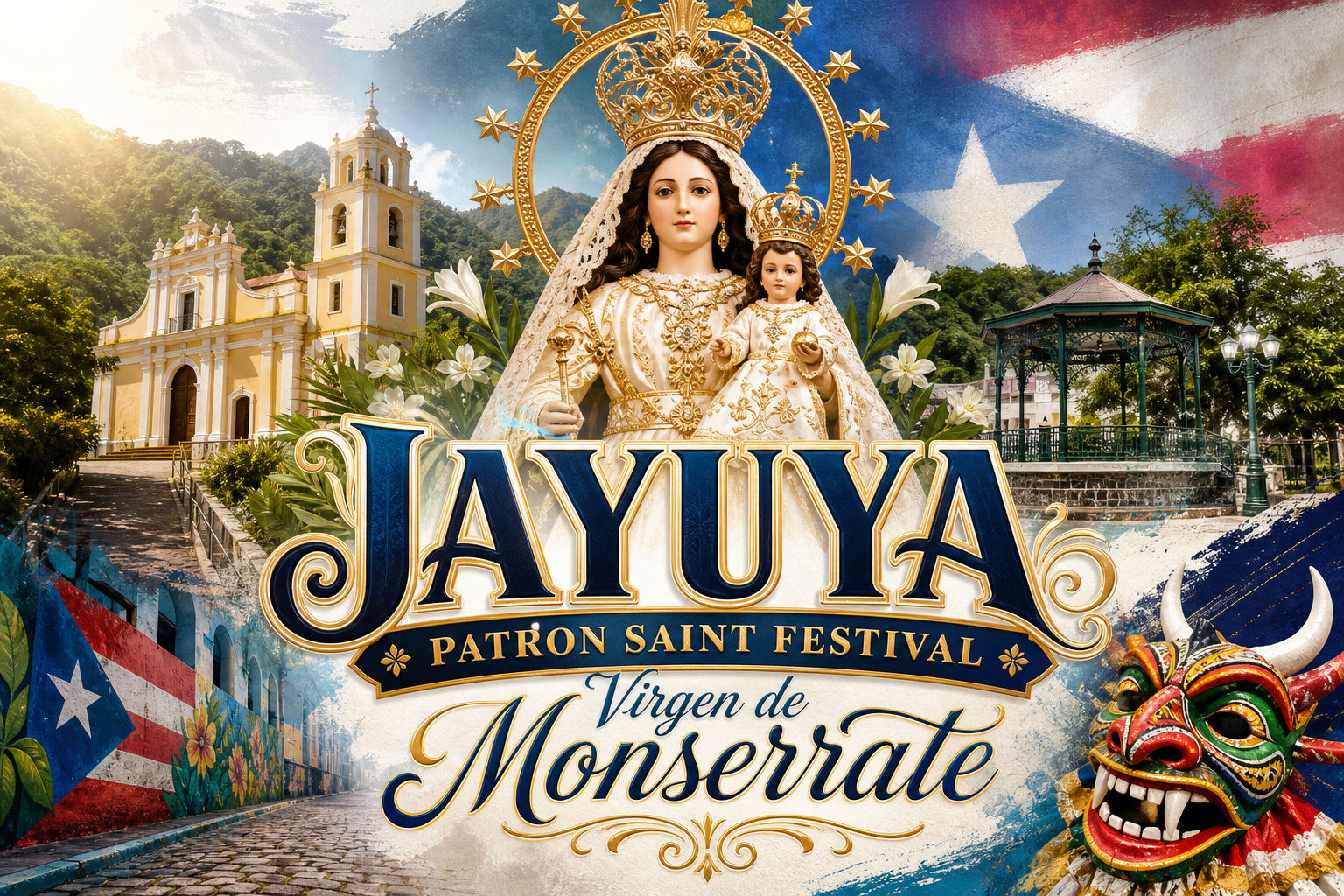
    Jayuya Patron Saint Festival – Virgen de Monserrate 2026
    Religious Festival / Cultural
    Free

    Jayuya Patron Saint Festival – Virgen de Monserrate 2026

    Deep in the Cordillera Central, where the mountain roads narrow and the coffee groves press close to the highway shoulders, the small highland municipality of Jayuya comes alive every September in honor of its patron saint. The Fiestas Patronales de Jayuya en Honor a la Virgen de la Monserrate 2026 run Saturday September 5 through Tuesday September 8, 2026, four days of live music, religious processions, mountain food, artisan markets, and the community warmth of a fiestas patronales that takes place not on a coastal tourist strip but in one of the most scenically beautiful and most culturally significant mountain towns on the entire island.

    "The Jayuya fiestas are the most culturally significant of these five because of Jayuya's unique indigenous heritage context, its mountain setting, and its position as the island's most prominent Taíno cultural center."

    The Date: September 5 to 8, Built Around a Sacred Feast Day

    A Celebration Anchored in Spiritual Tradition

    The Jayuya fiestas anchor on September 8, the feast day of Our Lady of Montserrat (Nuestra Señora de la Monserrate), the Marian apparition venerated throughout the Spanish-speaking world and honored as patron saint in at least five Puerto Rican municipalities: Jayuya, Aguas Buenas, Hormigueros, Moca, and Salinas. The fiestas begin several days before the feast day and culminate on September 8 with the most solemn religious ceremonies of the entire celebration.

    The 2025 edition ran September 5 to 8, 2025, and the 2026 edition is expected to follow the same four-day format ending on September 8. Confirm final 2026 programme details through the Municipio de Jayuya's official channels and enmipatiopr.com as September approaches.

    La Virgen de Monserrate: Jayuya's Spiritual Anchor

    The Deep-Rooted Faith of a Mountain Town

    Our Lady of Montserrat is one of the most widely venerated Marian titles in the Spanish Catholic tradition, originating from the Black Madonna enshrined at the Monastery of Montserrat in Catalonia, Spain, whose dark-complexioned statue has been a pilgrimage destination since the 12th century. The Spanish colonial church brought devotion to La Virgen de Monserrate to Puerto Rico in the 16th and 17th centuries, where it took root most deeply in the mountain municipalities whose landscape of dramatic peaks and forested ridges echoed the Catalan mountain setting of the original shrine.

    In Jayuya, the veneration of the Virgen de Monserrate is inseparable from the town's identity. A particularly beloved local legend tells that a devotee named González was attacked by a bull and invoked the Virgin's name. Immediately the beast fell, its legs broken and its forehead touching the ground as if in prayer — a miracle that deepened the community's faith in her protection and sealed her place as Jayuya's spiritual guardian.

    The September 8 feast day is the most religiously significant moment of Jayuya's entire year, observed with:

    • Solemn Mass at Jayuya's parish church in the town center
    • Procession carrying the image of La Virgen de Monserrate through the streets of Jayuya in the evening, with the mountain community lining the route in a display of collective faith that connects the living to generations of Jayuyanos who walked the same streets in the same procession before them
    • Offerings and devotional prayers at the church altar
    • Special religious programming across all four festival days that frames the cultural celebrations within the spiritual context that gives the fiestas their deeper meaning

    The Two Venues: Sports Complex and Public Plaza

    Where Tradition Meets Celebration

    The Jayuya fiestas use two distinct venues that together cover the full range of festival programming:

    Filiberto García Sports Complex — Main Stage

    The Heartbeat of Musical Performances

    The Complejo Deportivo Filiberto García hosts the main stage performances, providing the open-air space needed for the large crowds that the evening concert programme draws from across the central region. This is where the headline musical acts perform each night, with the mountain air and the surrounding Cordillera Central ridgeline as the backdrop for concerts that run from the early evening into the late-night hours.

    The sports complex format gives the concert programme a festival-grounds atmosphere distinct from the intimate plaza setting of smaller municipal fiestas, and the combination of the two venues means visitors can move between the concert energy of the sports complex and the community warmth of the plaza food and craft market depending on what they are looking for at any given moment.

    Jayuya Public Plaza — Community Heart

    The Social and Culinary Center

    The Plaza Pública de Jayuya is the social and culinary center of the fiestas, hosting:

    • Kioskos serving Jayuya's mountain food tradition across all four days
    • Artisan stalls from local and island-wide craft vendors
    • Food vendors in the full Puerto Rican festival street food format
    • Games and amusement rides (machinas) for families and children
    • Cultural exhibitions and community organization displays

    The plaza's position at the center of Jayuya's mountain town grid gives the festival its most intimate and most genuinely community-rooted atmosphere, where local families set up chairs and settle in for the evening in the way that Puerto Rican fiestas patronales have been doing since the Spanish colonial era.

    The Music Programme: Mountain Fiestas, Full Lineup

    A Celebration of Puerto Rican Sounds

    The Jayuya fiestas deliver live concerts by local and national Puerto Rican artists across all four days, organized by the Municipal Administration of Jayuya under Mayor Jorge "Georgie" González. The musical programme reflects the broad spectrum of Puerto Rican popular music:

    • Salsa and tropical music from established Puerto Rican orchestras and soloists whose names appear consistently across the island's fiestas patronales circuit
    • Merengue and cumbia representing the broader Latin popular music tradition
    • Bomba and plena performances that connect the festival's musical programme to the Afro-Puerto Rican folk traditions shared across the island's mountain and coastal communities
    • Jíbaro music and décima reflecting the mountain folk tradition most directly associated with the central highlands communities where Jayuya sits — the cuatro-driven sound of Puerto Rican country music that is heard most authentically in the mountain municipalities that gave birth to it
    • Folkloric dance groups presenting traditional Puerto Rican dance forms in the cultural programming that runs alongside the concert schedule

    The 2026 specific artist lineup had not been announced at time of research. Follow the Municipio de Jayuya's Facebook page and enmipatiopr.com for the confirmed 2026 programme as September approaches.

    The Cultural Programme: Beyond the Music

    A Rich Tapestry of Art and Tradition

    What distinguishes Jayuya's fiestas from a straightforward concert series is the depth of its cultural programming across all four days:

    • Art exhibitions spotlighting local Jayuya artists working in painting, sculpture, photography, and mixed media, presented in the gallery spaces and outdoor exhibition areas of the festival grounds
    • Cultural workshops in traditional Puerto Rican craft and art forms, including demonstrations of techniques that connect to the Taíno indigenous heritage that Jayuya celebrates more directly than almost any other Puerto Rican municipality
    • Circus and variety shows that provide family entertainment programming in the late afternoon hours before the evening concerts begin
    • Folkloric dance performances by groups from Jayuya and surrounding municipalities presenting the regional dance traditions of the central highlands
    • Community organization presentations that reflect the social fabric of Jayuya's mountain community across schools, cultural associations, and civic groups

    Jayuya: The Indigenous Capital of Puerto Rico

    A Town Steeped in Taíno Heritage

    Jayuya (population approximately 15,000) occupies a unique position in Puerto Rican cultural identity that goes far beyond what its small size might suggest. The municipality sits at the geographic center of the island in the highest reaches of the Cordillera Central, surrounded by Puerto Rico's most dramatic mountain landscape, and it carries the name of Hayuya, a Taíno cacique (chief) who was one of the leaders of the Taíno Revolt of 1511, the first significant indigenous uprising against Spanish colonial rule in Puerto Rico.

    This indigenous heritage is the defining element of Jayuya's cultural identity and the reason the town hosts not one but two major annual cultural festivals: the September fiestas patronales honoring the Virgen de Monserrate and the Festival Nacional Indígena in November, Puerto Rico's most important annual celebration of Taíno culture and heritage.

    The November Festival Nacional Indígena

    A Celebration of Taíno Culture

    Held at the end of November each year, the Festival Nacional Indígena de Jayuya is Puerto Rico's primary annual event celebrating the island's Taíno indigenous roots:

    • Taíno ceremonies and costume pageants presenting the spiritual traditions, dress, and cultural practices of the pre-Columbian Taíno civilization
    • Parades of indigenous costumes through the streets of Jayuya
    • Artisan demonstrations of Taíno craft techniques including pottery, basket weaving, and stone carving in the pre-Columbian tradition
    • Hot air balloon rides over the mountain landscape for panoramic views of the Cordillera Central that give visitors a perspective on the terrain that shaped Taíno life for thousands of years before European contact
    • Visits to nearby coffee plantations that connect the Taíno agricultural legacy to the mountain coffee culture that replaced it and that today defines Jayuya's economic identity

    The Festival Nacional Indígena makes Jayuya a two-trip destination in 2026: the September fiestas patronales for the community celebration of faith and music, and the November indigenous festival for the deepest engagement with the island's pre-Columbian heritage available anywhere in Puerto Rico.

    Mountain Food at the Jayuya Fiestas

    A Culinary Journey Through the Highlands

    The food kioskos at the Jayuya fiestas reflect the mountain cooking tradition of the central highlands, which is distinctly different from the coastal Puerto Rican food experience most visitors know from San Juan and the beach communities:

    • Lechón asado (wood-roasted whole pig): The central highlands are home to Puerto Rico's most celebrated lechón tradition, centered in the nearby Ruta del Lechón (Guavate) just south of Cayey. The festival kioskos serving slow-roasted pork from wood-fired pits are drawing on a cooking tradition that has been perfected in these mountains for generations
    • Gandinga, mollejas, y empanadillas: The full range of Puerto Rican offal and fried street food that appears at every fiestas patronales
    • Pasteles de masa: The banana leaf-wrapped masa and pork parcels, particularly satisfying in the cooler mountain air of Jayuya's September evenings
    • Mofongo de montaña: Mountain-style mofongo with the pork and chicken preparations most associated with highland cooking
    • Fresh-brewed Jayuya coffee: Jayuya is one of Puerto Rico's premier coffee-growing municipalities and the local café tradition means that fresh-ground, locally roasted coffee is available throughout the festival in a quality not replicated at sea-level events
    • Tembleque, mampostiales, and dulces criollos: The traditional Puerto Rican sweets and candy tradition that appears at fiestas patronales in its most authentically homemade form in the smaller mountain municipalities

    Jayuya in the Puerto Rico September Cultural Calendar

    A Month of Celebration and Heritage

    The Jayuya fiestas sit within a broader September cultural moment across Puerto Rico:

    Feast DayMunicipalityPatron Saint September 8JayuyaNuestra Señora de la Monserrate September 8Aguas BuenasNuestra Señora de la Monserrate September 8HormiguerosNuestra Señora de la Monserrate September 8MocaNuestra Señora de la Monserrate September 8SalinasNuestra Señora de la Monserrate Five Puerto Rican municipalities share the same patron saint feast day on September 8, each celebrating their fiestas patronales on overlapping schedules. The Jayuya fiestas are the most culturally significant of these five because of Jayuya's unique indigenous heritage context, its mountain setting, and its position as the island's most prominent Taíno cultural center.

    Getting to Jayuya

    Your Journey to the Heart of the Mountains

    Jayuya sits deep in the central mountain interior of Puerto Rico, with no direct expressway access — the mountain roads are the only way in:

    • From San Juan: Approximately 1 hour 30 minutes to 2 hours via PR-52 (Luis A. Ferré Expressway) south to Ponce direction, then PR-10 north through Utuado toward Jayuya, or via PR-52 to Villalba and mountain roads north. The routes vary and all involve winding mountain roads after leaving the expressway
    • From Luis Muñoz Marín Airport (SJU): Approximately 1 hour 45 minutes to 2 hours by car
    • From Ponce: Approximately 45 minutes to 1 hour north via PR-10 through the Cordillera, the most straightforward approach to Jayuya from any major Puerto Rico city
    • From Utuado: Approximately 20 to 30 minutes southeast via PR-111 and the connecting mountain roads, making Utuado the most practical accommodation base for visitors to the Jayuya fiestas who want a short drive in and out

    A rental car is absolutely required. Jayuya is not accessible by any practical public transit from San Juan or from any other major municipality. The mountain roads approaching Jayuya are among the most dramatic and most beautiful drives on the island, with views across the Cordillera Central that make the journey a meaningful part of the experience rather than merely a logistical necessity.

    Important: The mountain roads to Jayuya are narrow and winding. Drive carefully, leave extra time, and avoid driving the mountain routes after dark if you are unfamiliar with them.

    Where to Stay: The Best Base for the Jayuya Fiestas

    Finding Your Home in the Highlands

    Jayuya's accommodation inventory is limited to small guesthouses and home rentals within the municipality itself. The most practical accommodation strategy for visiting the fiestas is to base yourself in a nearby larger municipality:

    • Utuado: The largest nearby mountain municipality, approximately 20 to 30 minutes from Jayuya, with the Lago Dos Bocas reservoir, the Cueva Ventana natural cave overlook, and the most practical selection of accommodation in the central mountain region. The Parador La Casa Grande in Utuado is one of Puerto Rico's most beloved mountain paradores (country inns), with a jungle-hillside setting that is the most atmospheric accommodation option within reach of the Jayuya fiestas
    • Ponce: Puerto Rico's second city on the south coast, approximately 45 minutes to 1 hour from Jayuya, with the full range of urban hotel accommodation and the cultural attractions of the island's most architecturally preserved historic center
    • Vacation rentals in Jayuya itself: A small number of vacation rental homes in Jayuya and the surrounding mountain communities provide the most direct base for the fiestas, bookable through the standard short-term rental platforms

    Combining the Jayuya Fiestas with Nearby Attractions

    Explore the Richness of the Central Highlands

    The fiestas patronales are the perfect anchor for a broader central highlands itinerary that takes in the most dramatically beautiful and most culturally significant interior Puerto Rico has to offer:

    • Lago Dos Bocas (Utuado): The most scenic mountain reservoir in Puerto Rico, where a government ferry crosses the still lake to small waterfront restaurants serving fresh fried fish with tostones and mountain views. Approximately 25 minutes from Jayuya
    • Río Camuy Cave Park: One of the Western Hemisphere's largest cave systems, approximately 45 minutes north of Jayuya near Hatillo. The guided tours through the enormous limestone caverns and sinkholes are one of Puerto Rico's most extraordinary natural experiences
    • Toro Negro State Forest: Puerto Rico's largest forest reserve, approximately 30 minutes southeast of Jayuya, with hiking trails through the island's highest peaks including Cerro de Punta (1,338 meters), the highest point in Puerto Rico
    • Hacienda Gripinas: Puerto Rico's most historic mountain coffee hacienda, located in Jayuya itself on PR-527, a colonial-era coffee plantation now operating as a parador (country inn) with guided walks through the working coffee groves. Visiting Hacienda Gripinas the morning of a fiestas day combines the agricultural heritage that gives Jayuya its mountain identity with the community celebration of the evening
    • Jayuya's Taíno heritage sites: The municipal area contains several sites of Taíno archaeological significance including petroglyphs carved into the riverstone at the Río Saliente and the community museum dedicated to the pre-Columbian history of the region

    Practical Tips for the Jayuya Fiestas Patronales 2026

    Maximize Your Festival Experience

    • Arrive early for evening concerts. The Filiberto García Sports Complex fills quickly for headline acts, particularly on Saturday September 5 and the feast day closing ceremonies on Tuesday September 8
    • Dress in layers. Jayuya sits at high mountain altitude and September evenings in the Cordillera Central are noticeably cooler than the coast — a light jacket or layer for the late-evening concert is genuinely needed in a way it never is in San Juan or on the beach
    • September 8 is the feast day: The most solemn and most moving day of the fiestas. Attend the Mass and evening procession for La Virgen de Monserrate for the most spiritually and culturally complete experience of what the celebration is actually about
    • Bring cash. Mountain festival kioskos, artisan stalls, and small vendors in the central highlands generally prefer cash over card payment
    • Fuel up before leaving the expressway. Gas stations thin out dramatically on the mountain roads approaching Jayuya. Fill your tank in Utuado, Ponce, or at the last expressway exit before you turn into the mountains
    • Book accommodation in advance. The limited mountain accommodation options around Jayuya fill during the fiestas. Hacienda Gripinas parador in Jayuya and Parador La Casa Grande in Utuado are the most sought-after stays and book out months ahead for the fiestas weekend

    Frequently Asked Questions

    The Things People Always Want to Know

    When are the Fiestas Patronales de Jayuya 2026?

    Saturday September 5 through Tuesday September 8, 2026.

    Who is Jayuya's patron saint?

    Nuestra Señora de la Monserrate (Our Lady of Montserrat), feast day September 8.

    Where are the events held?

    The Filiberto García Sports Complex (main stage concerts) and the Plaza Pública de Jayuya (kioskos, artisans, rides, food).

    Is admission free?

    Yes. Fiestas patronales are free public community celebrations.

    How far is Jayuya from San Juan?

    Approximately 1 hour 30 minutes to 2 hours by car.

    Do I need a car?

    Yes, absolutely. A rental car is required. Jayuya is not accessible by public transit.

    What other major event does Jayuya host?

    The Festival Nacional Indígena, held in late November, celebrating Taíno indigenous heritage with ceremonies, costume pageants, and hot air balloon rides.

    Verified Information at a Glance

    • Event Name: Fiestas Patronales de Jayuya en Honor a la Virgen de la Monserrate
    • 2026 Dates: Saturday September 5 to Tuesday September 8, 2026
    • Patron Saint: Nuestra Señora de la Monserrate, feast day September 8
    • Main Stage Venue: Complejo Deportivo Filiberto García, Jayuya
    • Community Venue: Plaza Pública de Jayuya
    • Programme: Live concerts, religious Mass and procession, folkloric dance, art exhibitions, cultural workshops, circus shows, artisan market, food kioskos, amusement rides
    • Organized By: Municipal Administration of Jayuya, Mayor Jorge "Georgie" González
    • Admission: Free
    • Location: Jayuya, Cordillera Central, central mountain interior, Puerto Rico
    • Nearest Airport: Luis Muñoz Marín International Airport (SJU), San Juan — approximately 1 hour 45 minutes by car
    • Transportation: Rental car required — mountain roads only
    • September Weather: 22 to 27°C in the mountains, cooler than coast, light jacket recommended for evenings
    • Also Known For: Taíno indigenous heritage, Festival Nacional Indígena (November), Hacienda Gripinas coffee plantation, Cerro de Punta (highest peak in Puerto Rico)
    • Best For: Cultural travelers, Puerto Rican heritage visitors, religious pilgrimage travelers, mountain hiking enthusiasts, coffee tourism visitors, families, content creators covering authentic off-the-beaten-path Puerto Rico, Taíno history and indigenous culture travelers

    ```

    Complejo Deportivo Filiberto García, Jayuya, Puerto Rico, Puerto Rico
    Sep 5, 2026 - Sep 8, 2026
    Tacos & Margaritas Fest 2026
    Food Festival
    $50 - $75

    Tacos & Margaritas Fest 2026

    Every September, San Juan transforms into a vibrant celebration of Mexican culture with the return of the Tacos & Margaritas Fest 2026. Known as "la fiesta más chingona del año", this event promises a night filled with unlimited tacos, margaritas, live music, and unforgettable memories at the Centro de Convenciones.

    "Unlimited tacos, unlimited margaritas, and a night among friends that celebrates the very best of Mexican food and cocktail culture."

    The Story of Tacos & Margaritas Fest

    San Juan's New September Tradition

    In its second year, the Tacos & Margaritas Fest has quickly become a staple in Puerto Rico's event calendar. The festival's inaugural edition in 2025 set the stage for a yearly celebration that combines culinary excellence with a lively atmosphere.

    Returning on September 20, 2026, the fest promises an even grander experience, building on the success of its debut with new features and a commitment to quality.

    What to Expect: The 2026 Experience

    Unlimited Delights and Unforgettable Moments

    The festival offers an all-inclusive experience, ensuring that guests can indulge without limits. The ticket price covers all food and drink for the night:

    • Unlimited tacos from multiple stations.
    • Unlimited margaritas from five distinct flavor bars.
    • Live music and entertainment throughout the evening.

    Into the Culinary Creations

    Chef Leo Mendoza's Mexican Mastery

    Chef Leo Mendoza leads the culinary lineup, showcasing authentic Mexican flavors. The festival's taco stations offer a variety that captures the essence of Mexican cuisine:

    • Tacos de carne asada: Grilled beef with onion, cilantro, and salsa.
    • Tacos al pastor: Marinated pork with pineapple and onion.
    • Tacos de camarones: Shrimp tacos with coastal flavors.
    • Vegetarian options: Jackfruit, roasted vegetables, and bean-based tacos.
    "Chef Leo Mendoza's presence elevates the food programme beyond generic festival fare."

    The Margarita Experience

    Five Flavor Bars to Savor

    The margarita bars are a highlight, offering diverse flavors to suit every palate:

    • Classic lime margarita with a salt rim.
    • Mango margarita with tropical flair.
    • Strawberry margarita for a sweet twist.
    • Tamarind margarita for a distinct Mexican taste.
    • Spicy margarita with jalapeño-infused tequila.
    "The unlimited margarita model with five flavor bars makes this one of the most generous cocktail festival formats in Puerto Rico's event calendar."

    The Venue: Centro de Convenciones

    San Juan's Premier Event Space

    The Centro de Convenciones offers a sophisticated setting for the festival. Its features include:

    • Large event halls for ample space.
    • Professional infrastructure for high-quality production.
    • Central location with easy access from major areas.
    • Ample parking for convenience.

    Everything You Need Before September 20

    Practical Tips for a Seamless Experience

    • Buy VIP if you can. Early entry and exclusive perks are worth the upgrade.
    • Arrive at your entry time. Beat the crowd and enjoy first access.
    • Dress smart casual. Adhere to the dress code for entry.
    • 18+ strictly enforced. No exceptions.
    • Book tickets early at PRTICKET.COM. Demand is high.
    • Uber and Rideshare recommended. Ensure safe travel.

    Frequently Asked Questions

    The Things People Always Want to Know

    When is Tacos & Margaritas Fest 2026?

    Saturday September 20, 2026.

    Where is it?

    Centro de Convenciones (Puerto Rico Convention Center), San Juan, Puerto Rico.

    What is included in the ticket?

    Unlimited tacos and unlimited margaritas for the full evening. VIP also includes exclusive bar access, 1-hour early entry, commemorative glass, and official lanyard.

    How much are tickets?

    $50 General, $70 VIP at PRTICKET.COM.

    What time does it start?

    VIP entry from 5:00 PM, General entry from 6:00 PM.

    What is the age limit?

    18+ strictly enforced, no exceptions.

    Is there a dress code?

    Yes. No tank tops, no shorts, no caps.

    Who is the featured chef?

    Chef Leo Mendoza.

    How do I contact the organizers?

    Call 787.409.2184 or visit tacosmargaritasfest.com.

    Verified Information at a Glance

    • Event Name: Tacos & Margaritas Fest 2026 (2nd Annual Edition)
    • Date: Saturday September 20, 2026
    • Venue: Centro de Convenciones, San Juan, Puerto Rico
    • Format: All-inclusive food and cocktail evening event
    • Ticket Prices: $50 General / $70 VIP
    • Tickets: PRTICKET.COM
    • VIP Perks: Early entry 5:00 PM, exclusive bars, unlimited tacos and margaritas, 12 oz glass, lanyard
    • General Entry: 6:00 PM, unlimited tacos and margaritas
    • Age: 18+ strictly enforced
    • Dress Code: No tank tops, no shorts, no caps
    • Featured Chef: Chef Leo Mendoza
    • Entertainment: Live music, entertainment, activities
    • Margarita Bars: Five flavor bars running simultaneously
    • Official Website: tacosmargaritasfest.com
    • Instagram: @tacosandmargaritafestpr
    • Contact: 787.409.2184
    • Nearest Airport: Luis Muñoz Marín International Airport (SJU), San Juan — 15 to 20 minutes from venue
    • Best For: Food and cocktail enthusiasts, Mexican cuisine lovers, adults-only premium event seekers, San Juan nightlife and food tourists, couples, friend groups, culinary content creators, visitors combining with other September Puerto Rico events

    ```

    Puerto Rico Convention Center, Miramar, San Juan, Puerto Rico
    Sep 20, 2026 - Sep 20, 2026
    Festival del Plátano 2026
    Food Festival / Cultural
    Free

    Festival del Plátano 2026

    Every October, the mountain town of Corozal in Puerto Rico's central highlands becomes the undisputed capital of the plantain universe. The 41st Festival Nacional del Plátano 2026 runs Saturday October 10 through Monday October 12, 2026, at the traditional festival grounds along Carretera 159 in Corozal, the island town that has proudly carried the title of Puerto Rico's plantain capital since the festival launched in its current format in 1983. Admission is free. Food runs approximately $6 to $18 per item.

    This is Puerto Rico at its most authentically local: mountain air, live music, handmade crafts, and more plantain dishes than most people knew existed, all gathered in one place for a long October weekend that the island's food lovers, cultural travelers, and culinary tourists circle on the calendar every year.

    "The Festival Nacional del Plátano is a celebration of the plantain, the starchy, versatile, deeply Puerto Rican fruit-vegetable that sits at the center of the island's culinary identity."

    Forty-One Years of Plantain Pride: The Festival's History

    The Roots of a Cultural Tradition

    The Festival Nacional del Plátano has its roots even earlier than its 1983 founding date. It began as a craft fair in Corozal before evolving into a dedicated celebration of the plantain. The choice of Corozal as the festival's permanent home reflects the municipality's genuine agricultural significance in Puerto Rico's plantain-growing geography.

    Corozal sits in the central mountain region (La Cordillera Central) where the fertile volcanic soil, reliable rainfall, and mountain altitude create growing conditions that produce the island's best plantains. The farmers of Corozal and the surrounding highland municipalities have been growing plantains for generations, and the festival exists to honor that agricultural heritage while drawing visitors from across Puerto Rico and beyond into the mountains to experience it directly.

    By 2026, the festival reaches its 41st edition, which makes it one of the longest-running agricultural and cultural food festivals in Puerto Rico's dense festival calendar.

    The Plantain: Puerto Rico's Most Versatile Ingredient

    Understanding the Plátano

    Before the food, the context. The plátano (plantain) is not a banana. This distinction matters enormously in Puerto Rican culinary culture and the Festival Nacional del Plátano is in many ways a three-day argument for recognizing it properly.

    The plantain belongs to the same genus as the banana but is starchier, less sweet, and treated in Puerto Rican cooking as a vegetable rather than a fruit. It is cooked at every stage of its ripeness cycle, each stage producing entirely different textures and flavor profiles:

    • Verde (green, unripe): Starchy, firm, and neutral in flavor, the green plantain is the raw material for mofongo, tostones, pasteles, alcapurrias, and many of Puerto Rico's most iconic dishes.
    • Pintón (semi-ripe, yellow-green): The transitional stage where some starch has converted to sugar but the plantain still holds its structure.
    • Maduro (ripe, yellow to black): Sweet, soft, and caramelizable, the ripe plantain is sliced and pan-fried into tostones maduros or baked into plátanos al horno.

    The festival's food programme celebrates all three stages and the full range of preparations that Puerto Rican culinary tradition has built around them.

    What Happens at the Festival: Food, Music, Crafts, and Community

    The Heart of Puerto Rican Festivity

    The Festival Nacional del Plátano is built on four pillars that together define what a Puerto Rican municipal festival looks and feels like at its best:

    La Ciudad Platanera: The Plantain Food Village

    A Culinary Haven

    The Ciudad Platanera (Plantain City) is the festival's culinary heart, a dedicated food zone where vendors present the full range of plantain-based dishes from across Puerto Rico's culinary tradition. With food running approximately $6 to $18 per item, the Ciudad Platanera is one of the most accessible and most genuinely satisfying food experiences in Puerto Rico's festival calendar.

    The dishes available across the three days include:

    • Mofongo: Puerto Rico's most iconic dish, green plantain mashed with garlic, olive oil, and pork cracklings (chicharrón).
    • Tostones: Green plantain sliced, fried, flattened, and fried again to a crisp golden round.
    • Alcapurrias: Ground green plantain and yautía (taro root) masa stuffed with beef picadillo.
    • Canastitas (Plantain Cups): Green plantain formed into small cups filled with chicken, shrimp, or ground beef stew.
    • Sopas de plátano (Plantain Soup): Slow-cooked broths where green or semi-ripe plantain thickens the liquid.
    • Pasteles: Green plantain and root vegetable masa spread on a banana leaf, filled with seasoned pork and olives.
    • Tembleque de plátano: A plantain adaptation of Puerto Rico's classic coconut pudding.
    • Pionono: Ripe sweet plantain sliced lengthwise, shaped into a ring, and filled with seasoned ground beef.

    Live Music: Orquestas and Puerto Rican Sound

    The Rhythm of the Festival

    No Puerto Rican festival exists without music, and the Festival Nacional del Plátano presents live orquestas and musical acts across all three days on the festival's main stage. The musical programme at Corozal's festival reflects the broad spectrum of Puerto Rican popular music:

    • Salsa: The heartbeat of any Puerto Rican festival.
    • Cumbia and merengue: The broader Latin popular music tradition.
    • Plena and bomba: Puerto Rico's indigenous Afro-Caribbean percussion-based folk music forms.
    • Reggaeton and urban: Contemporary Puerto Rican popular music.

    The evening musical programme is the social dimension of the festival, when the food vendors stay open and the crowd shifts from eating and shopping to dancing and celebrating.

    Artesanías: Puerto Rican Craft Market

    A Showcase of Craftsmanship

    The artisan market is the third pillar of the festival and one of the most culturally significant. The Festival Nacional del Plátano hosts artisans from Corozal and across Puerto Rico presenting handmade work in a range of traditional and contemporary craft categories:

    • Vejigante masks: The papier-mâché or coconut shell masks with their multi-pointed horns.
    • Mundillo lace: The traditional Puerto Rican bobbin lace-making tradition.
    • Wood carving and santos: Carved wooden religious figures (santos de palo).
    • Jewelry and metalwork: Contemporary artisan jewelry using local materials.
    • Ceramics and pottery: Wheel-thrown and hand-built pieces from Puerto Rican ceramic artists.
    • Textiles and woven work: Baskets, hats, and woven items in the mountain craft tradition.

    The artisan market gives visitors a direct purchasing relationship with the makers, providing genuinely local Puerto Rican craft objects.

    Family Activities and Cultural Programming

    Interactive and Educational Experiences

    The festival's three-day programme also includes activities that make it appropriate for families with children:

    • Cooking demonstrations showing traditional plantain preparation techniques.
    • Agricultural displays connecting the festival's food programme to the actual growing of plantains.
    • Children's entertainment zones with games, rides, and activities.
    • Cultural presentations by school groups, folkloric dance troupes, and community organizations.

    The Festival Location: Corozal in Puerto Rico's Mountain Heart

    A Scenic Setting

    Corozal (population approximately 35,000) sits in the north-central interior of Puerto Rico, in the foothills of the Cordillera Central at an elevation that gives it significantly cooler and more pleasant temperatures than the coastal tourist zones in October.

    The festival grounds are located on Carretera 159 (PR-159), the main road through the agricultural zone outside the Corozal town center. This location along the highway rather than in the town plaza gives the festival space for its full Ciudad Platanera food village, artisan market, main stage, and parking infrastructure.

    Getting to Corozal

    Your Journey to the Festival

    Corozal is approximately 35 to 45 minutes southwest of San Juan via the Luis A. Ferré Expressway (PR-52) and the mountain roads of the central interior:

    • From San Juan: PR-52 (Luis A. Ferré Expressway) west to Bayamón, then PR-2 or PR-167 south and west through Naranjito toward Corozal.
    • From Luis Muñoz Marín Airport (SJU): Approximately 45 to 55 minutes via the expressway network.
    • From Ponce: Approximately 1 hour north via PR-52 and the central mountain roads.
    • From Mayagüez: Approximately 1.5 hours east via PR-2 and the northern coastal route.

    A rental car is strongly recommended for visiting the Festival del Plátano in Corozal. The mountain location and the festival's agricultural-zone grounds are not accessible by public transit from San Juan.

    October in Corozal: Mountain Weather vs. Coastal Puerto Rico

    Embracing the Elements

    The Festival del Plátano's October timing places it in Puerto Rico's late wet season, with weather conditions in the mountain interior that differ significantly from the coastal experience:

    • Temperature: Corozal's mountain elevation brings October highs of approximately 24 to 27°C (75 to 81°F).
    • Rainfall: October is still in the wet season and afternoon showers are possible.
    • Hurricane season: October is technically still within the Atlantic hurricane season.

    The mountain air, the cooler temperatures, and the green landscape of the central highlands in October make the Festival del Plátano one of the most physically pleasant outdoor food festival experiences in Puerto Rico.

    Festival del Plátano and the October Puerto Rico Event Calendar

    A Month of Celebrations

    The Festival del Plátano lands in one of Puerto Rico's most festival-dense months:

    October 10 to 12: Festival Nacional del Plátano, Corozal.

    The festival's proximity to San Juan makes it a natural day trip from the capital, but overnight visitors who stay in a Corozal or nearby mountain municipality guesthouse (parador) get the full experience of the central highlands.

    Beyond the Festival: Corozal and the Central Highlands

    Exploring Puerto Rico's Interior

    Visitors making the trip to Corozal for the Festival del Plátano can extend their stay into the broader central mountain region, one of the most undervisited and most beautiful parts of Puerto Rico:

    • Toro Negro State Forest: Puerto Rico's largest forest reserve, approximately 40 minutes south of Corozal.
    • Lago Dos Bocas: The most scenic of Puerto Rico's mountain reservoirs, near Utuado approximately 45 minutes from Corozal.
    • Ciales: A small mountain municipality near Corozal known for its coffee, its honey, and its traditional mountain cooking.
    • Naranjito and Barranquitas: Mountain municipalities between Corozal and San Juan with their own agricultural heritage.

    A Parallel Plantain Festival: Festival Nacional del Guineo in Lares

    Celebrating the Musa Genus

    Puerto Rico actually celebrates two major plantain-family festivals in 2026 that together bookend the island's agricultural year:

    • Festival Nacional del Guineo (banana festival) in Lares: Saturday June 13 to Sunday June 14, 2026.
    • Festival Nacional del Plátano in Corozal: October 10 to 12, 2026.

    The two festivals together represent Puerto Rico's dual relationship with the Musa genus: the guineo as the sweet everyday fruit and the plátano as the culinary cornerstone of the island's savory cooking tradition.

    Frequently Asked Questions

    The Things People Always Want to Know

    When is the Festival Nacional del Plátano 2026?

    Saturday October 10 to Monday October 12, 2026.

    Which edition is the 2026 festival?

    The 41st annual Festival Nacional del Plátano.

    Where is it held?

    Along Carretera 159 (PR-159), Corozal, Puerto Rico.

    How much does it cost to attend?

    Admission is free. Food items run approximately $6 to $18.

    How far is Corozal from San Juan?

    Approximately 35 to 45 minutes by car from San Juan via the expressway network.

    Do I need a car?

    Yes. A rental car is strongly recommended. The festival grounds are not accessible by public transit from San Juan.

    What is the signature dish?

    Mofongo is Puerto Rico's most iconic plantain dish and the festival's most celebrated preparation, alongside tostones, alcapurrias, pasteles, piononos, and plantain soups.

    Verified Information at a Glance

    • Event Name: Festival Nacional del Plátano 2026
    • Edition: 41st annual
    • 2026 Dates: Saturday October 10 to Monday October 12, 2026
    • Location: Carretera 159 (PR-159), Corozal, Puerto Rico
    • Admission: Free
    • Food Prices: $6 to $18 per item
    • Festival Since: 1983 (in its current format), earlier roots as a craft fair
    • Key Programme: Ciudad Platanera food village, live music (orquestas), artisan craft market, cultural activities
    • Featured Food: Mofongo, tostones, alcapurrias, canastitas, pasteles, piononos, sopas de plátano
    • Distance from San Juan: 35 to 45 minutes by car
    • Nearest Airport: Luis Muñoz Marín International Airport (SJU), San Juan
    • Transportation: Rental car required
    • October Weather: 24 to 27°C, cooler than coast, possible afternoon showers
    • Related Event: Festival Nacional del Guineo, Lares, June 13 to 14, 2026
    • Best For: Food tourists, Puerto Rican culture travelers, culinary content creators, families, visitors wanting authentic off-the-beach island culture, island heritage travelers, day-trippers from San Juan

    ```

    Coamo, Puerto Rico, Puerto Rico
    Oct 10, 2026 - Oct 12, 2026
    Archive

    Past events

    Puerto Rico Wine & Food Festival (inaugural) 2026
    Food & drink festival
    Past
    TBA

    Puerto Rico Wine & Food Festival (inaugural) 2026

    San Juan, Puerto Rico
    Apr 23, 2026 - Apr 26, 2026
    XTERRA Puerto Rico 2026
    Sports tournament (Off-road triathlon / trail running)
    Past
    TBA

    XTERRA Puerto Rico 2026

    Cabo Rojo, Puerto Rico
    Apr 18, 2026 - Apr 19, 2026
    Taste of Rum 2026 (Puerto Rico International Rum Festival & Conference)
    Food & Drink/Festival
    Past
    TBA

    Taste of Rum 2026 (Puerto Rico International Rum Festival & Conference)

    Puerto Rico Convention Center, San Juan
    Mar 28, 2026 - Mar 28, 2026
    Festival of the Diaspora 2026 (FOTD 2026)
    Conference/Culture
    Past
    TBA

    Festival of the Diaspora 2026 (FOTD 2026)

    San Juan (Sheraton Puerto Rico Resort & Casino is cited in promo materials)
    Mar 13, 2026 - Mar 15, 2026
    Carnival Day (observance) 2026
    Observance
    Past
    Free

    Carnival Day (observance) 2026

    Feb 17, 2026 - Feb 17, 2026
    Carnaval de Ponce (Ponce Carnival) 2026
    Culture/Festival
    Past
    Free

    Carnaval de Ponce (Ponce Carnival) 2026

    Ponce, Puerto Rico
    Feb 12, 2026 - Feb 17, 2026
    ALC 14th Annual UnConference (Puerto Rico) 2026
    Conference/Professional
    Past
    TBA

    ALC 14th Annual UnConference (Puerto Rico) 2026

    San Juan, Puerto Rico
    Feb 11, 2026 - Feb 13, 2026
    Fiestas de la Calle San Sebastián (SanSe) 2026
    Culture/Festival
    Past
    Free

    Fiestas de la Calle San Sebastián (SanSe) 2026

    Old San Juan, San Juan
    Jan 15, 2026 - Jan 18, 2026
    The 5th Element Festival 2026
    Music/Festival
    Past
    Free

    The 5th Element Festival 2026

    San Juan and surrounding venues
    Jan 7, 2026 - Jan 13, 2026
    Three Kings Day/January festivities 2026
    Holiday, Cultural
    Past
    Free

    Three Kings Day/January festivities 2026

    Island wide
    Jan 1, 2026 - Jan 6, 2026
    Festival of Lights Bayamón 2026
    Holiday/Lights
    Past
    Free

    Festival of Lights Bayamón 2026

    Bayamón
    Jan 1, 2026 - Jan 31, 2026
    New Year’s Eve Celebrations 2026
    Holiday, Nightlife
    Past
    Free

    New Year’s Eve Celebrations 2026

    Dec 31, 2025 - Jan 1, 2026
    Hatillo Masks Festival (Festival de las Máscaras) 2025
    Cultural, Parade
    Past
    Free

    Hatillo Masks Festival (Festival de las Máscaras) 2025

    Dec 28, 2025 - Dec 28, 2025
    Festival del Mundillo (Bobbin Lace) 2025
    Cultural, Craft
    Past
    Free

    Festival del Mundillo (Bobbin Lace) 2025

    Nov 15, 2025 - Nov 17, 2025
    Coca‑Cola Music Hall Headliners (Nov) 2025
    Music, Concert
    Past
    TBA

    Coca‑Cola Music Hall Headliners (Nov) 2025

    Nov 1, 2025 - Nov 30, 2025
    Inksane Tattoo Fest #7 2025
    Expo, Arts
    Past
    Free

    Inksane Tattoo Fest #7 2025

    Oct 17, 2025 - Oct 19, 2025
    Día Nacional de la Zalsa (National Salsa Day) 2025
    Music, Cultural
    Past
    Free

    Día Nacional de la Zalsa (National Salsa Day) 2025

    Oct 5, 2025 - Oct 5, 2025
    Puerto Rico Bellydance Fusion Fest 2025
    Dance, Festival
    Past
    Free

    Puerto Rico Bellydance Fusion Fest 2025

    Oct 3, 2025 - Oct 5, 2025
    Puerto Rico National Clean Energy Week Conference 2025
    Conference, Energy
    Past
    Free

    Puerto Rico National Clean Energy Week Conference 2025

    Sep 15, 2025 - Sep 16, 2025
    Danilo "El Primerizo" 2025
    Comedy, Music
    Past
    Free

    Danilo "El Primerizo" 2025

    Sep 12, 2025 - Sep 12, 2025
    Pandora & Flans Inesperado Tour 2025
    Music, Concert
    Past
    Free

    Pandora & Flans Inesperado Tour 2025

    Sep 6, 2025 - Sep 6, 2025
    SKILLET Revolution Tour 2025
    Music, Concert
    Past
    Free

    SKILLET Revolution Tour 2025

    Sep 5, 2025 - Sep 5, 2025
    Gallery

    Photo gallery

    Puerto Rico gallery 1
    Puerto Rico gallery 2
    Puerto Rico gallery 3
    Puerto Rico gallery 4
    Puerto Rico gallery 5
    Always Popular

    Popular at Puerto Rico

    Noche de San Juan

    Typically in June

    Noche de San Juan

    Noche de San Juan - Event DescriptionNoche de San Juan is Puerto Rico’s most beloved midsummer beach tradition, celebrated every year on the night of June 23, when locals and visitors gather on the sand for music, bonfires, and the famous midnight ritual of walking backward into the ocean for cleansing and good luck. If you want an island night that feels joyful, communal, and unmistakably Puerto Rican, Noche de San Juan is the one to plan your trip around. What is Noche de San Juan? Noche de San Juan, also known as Saint John’s Night, is celebrated in Puerto Rico on the night of June 23 in honor of Saint John the Baptist, the island’s patron saint. Discover Puerto Rico explains that the tradition blends spiritual cleansing with summer celebration, turning beaches across the island into gathering places for friends, families, and travelers who want to take part in something both festive and meaningful. This celebration has layers. Discover Puerto Rico notes the night is rooted in both Catholic and pagan solstice customs, which helps explain why the rituals feel both religious and folkloric at the same time. When Noche de San Juan Happens (and Why the Timing Matters) Noche de San Juan is celebrated every year on June 23, the eve of June 24, which is the feast day and birthday associated with Saint John the Baptist. Puerto Rico Day Trips reinforces that the tradition happens exactly at midnight between June 23 and 24, which is why people plan their evening around being on the beach late at night. For island travelers, the late-June timing is perfect because it lines up with summer energy and long days. It’s also one of the rare Puerto Rico cultural traditions where the main “venue” is not a stage, but the ocean itself. The Midnight Ritual: How the Tradition is Practiced The most iconic part of Noche de San Juan is the midnight backward plunge. Discover Puerto Rico explains that at exactly midnight, crowds rush into the ocean and walk backward into the waves to perform three backward plunges, a ritual believed to cleanse the spirit and bring good luck. Puerto Rico Day Trips describes the same tradition with added detail: people walk backward into the ocean and fall backward into it, doing it three times in a row, because the water is said to be “blessed” and the act is meant to clean you of bad things and help ward off evil throughout the year. Both sources also note that some people do more than three plunges, commonly seven or twelve, for stronger protection or a deeper “reset” feeling. What the Ritual Means on an Island On an island, the sea is not just scenery. It’s part of daily life, history, and belief, and this ritual reflects that relationship. Discover Puerto Rico frames the ritual as cleansing and renewal, which fits the idea of arriving at summer with a fresh start. You don’t have to be religious to participate. Puerto Rico Day Trips notes that it’s all in good fun and that everyone is welcome to join, whether you believe in the tradition or not. What the Beaches Feel Like: Music, Bonfires, and a Full-Night Vibe Noche de San Juan is often described as a beach party with a spiritual core. Discover Puerto Rico notes that as the sun sets, beaches come alive with picnics, bonfires, and music, creating a lively, family-friendly atmosphere that builds toward midnight. Puerto Rico Day Trips adds that it becomes a happy celebration where family and friends get together to enjoy food, music, and good company, especially in the San Juan area where crowds can be extremely dense. If June 23 falls on a weekend, Puerto Rico Day Trips warns to be prepared for days and nights of parties, particularly around San Juan. Best Places to Celebrate Noche de San Juan in Puerto Rico Because it’s an island-wide tradition, you can celebrate almost anywhere, but certain beaches are especially popular. San Juan Metro Beaches (Biggest Crowds) If you want the most intense “everybody is here” energy, San Juan is the hub. Puerto Rico Day Trips lists Isla Verde, Ocean Park (especially the Ultimo Trolley beach), Condado, Carolina, and even Escambrón as some of the busiest areas. Discover Puerto Rico echoes these hotspots and highlights Condado Beach in San Juan as a high-energy option with crowds and DJs, while also mentioning Isla Verde and Carolina Beach as popular options depending on the vibe you want. A More Relaxed but Still Social Beach Scene If you love the tradition but want a less packed scene than Condado, consider beaches outside the most crowded zones. Discover Puerto Rico recommends Luquillo Beach as a strong social option with music and fireworks, and Puerto Rico Day Trips mentions that people gather at many beaches and even pools around the island with smaller crowds than in San Juan. Hotel and Resort Celebrations If you’re traveling and want a more structured experience, resorts often host events. Discover Puerto Rico notes that many hotels and resorts across the island host private celebrations with live music, beach parties, and midnight plunges, and Puerto Rico Day Trips also says that many hotels in San Juan organize events on their beaches. Cultural Travel Tips: How to Enjoy Noche de San Juan Respectfully This is a joyful celebration, but it’s still a public beach night with big crowds and environmental impacts if people aren’t careful. Smart, respectful tips drawn from local guidance: Keep beaches clean and pack out your trash, since Puerto Rico Day Trips explicitly urges visitors to keep beaches clean and take home trash. Avoid glass bottles , as Puerto Rico Day Trips recommends no glass for safety. Use bug spray , as Puerto Rico Day Trips notes sand fleas can be an issue. Remember lifeguards are not on duty at midnight , and Puerto Rico Day Trips warns to enter the water at your own risk. These details matter because the ritual happens at night in the ocean. Choose a beach with lots of people around if you want a safer atmosphere and avoid remote areas. What to Wear and Bring for an Island-Night Beach Festival Noche de San Juan is simple to join, but you’ll have a better night if you pack like a local beachgoer. Bring the basics: Bathing suit and towel , since you’ll likely get wet at midnight. Water and snacks for your picnic setup, since many people spend hours on the sand waiting for the midnight moment. A dry change of clothes for the ride back, especially if you’re staying in a hotel or taking a taxi after midnight. A small waterproof pouch for phone and valuables. Pricing: What Does Noche de San Juan Cost? Noche de San Juan is a public tradition held on beaches across Puerto Rico, so there is no standard ticket price to participate. Your costs are mostly personal spending such as transportation, food and drinks for your beach picnic, and optional hotel-hosted parties if you choose a resort event. Verified Information at a Glance Event name: Noche de San Juan (Saint John’s Night) Event category: Cultural beach celebration and midnight ritual (music, bonfires, ocean plunges) Typically held: Night of June 23 (midnight between June 23 and June 24) Signature ritual: Walk backward into the ocean and do three backward plunges at midnight; some do seven or twelve. Meaning (as described): Spiritual cleansing and good luck; water is said to be blessed. Popular beaches (examples): Condado, Isla Verde, Ocean Park (Ultimo Trolley), Carolina, Escambrón; Luquillo is also highlighted as a great celebration beach. Safety note: Lifeguards are not on duty at midnight and participants enter the water at their own risk. Pricing: No admission fee for public beaches; costs are mainly transportation, food, and optional hotel-hosted events. Plan a Puerto Rico summer escape for June 23, pick your beach from Condado’s high-energy crowds to Luquillo’s festive shoreline, bring a towel and a wish, and join locals at midnight for the backward plunge that makes Noche de San Juan one of the most unforgettable island nights in the Caribbean.

    Ponce Carnival

    Typically in February or March

    Ponce Carnival

    Experience the Vibrant Ponce Carnival in Puerto Rico Ponce Carnival Puerto Rico (Carnaval Ponceño or Carnaval de Ponce) is the island’s most iconic pre-Lenten celebration, famous for its horned vejigante masks, pounding plena and bomba rhythms, and a week of parades and pageantry in the heart of Ponce. Held in February and ending on Fat Tuesday, it’s the perfect time to visit Puerto Rico’s “Pearl of the South” for culture, color, and a street-festival atmosphere that feels proudly local.​ What is Ponce Carnival in Puerto Rico? Carnaval de Ponce is an annual carnival celebration held in Ponce, Puerto Rico, lasting about one week and typically ending on Fat Tuesday, the day before Ash Wednesday. Wikipedia notes it usually falls in February or March, aligning it with global carnival traditions such as Mardi Gras celebrations in other destinations. What makes Ponce Carnival unique is how strongly it is tied to Ponce’s identity and visual folklore. Puerto Rico Day Trips describes it as the “biggest and best” carnival experience on the island, with loud parades, marching bands, dancers, floats, and a powerful street-party feel.​ When Ponce Carnival is Typically Held Ponce Carnival is a pre-Lenten celebration, so it takes place in February most years, leading up to Fat Tuesday. Puerto Rico Day Trips also describes the Ponce Carnival as a week-long event derived from the tradition of celebrating before Lent. For travelers who want confirmed dates, Puerto Rico Day Trips cites an example with the 168th Ponce Carnival scheduled for Feb 12–Feb 17, 2026 , referencing confirmation from Visit Ponce’s Facebook page. That same source also highlights a “pre-game” event, the Carnaval de Vejigantes de la Playa de Ponce, scheduled for Feb 6–Feb 8, 2026 . Where it Happens: Ponce’s Historic Center Ponce Carnival is centered in the city of Ponce, and much of the action takes place in the urban core where parades and events can draw large crowds. Puerto Rico Day Trips emphasizes that the carnival’s major parades, music, and crowd energy create a central “hub” feeling in the city during the week. Even if you come primarily for the carnival, Ponce itself is a destination worth exploring. The city’s historic architecture, plazas, and cultural institutions give you plenty to do between parade times, and the festival energy makes downtown feel especially alive. History: Why Ponce Carnival is One of Puerto Rico’s Oldest Carnaval de Ponce dates back to at least 1858 . Wikipedia states that documents mention the celebration as early as 1858 and that it began as a masquerade dance started by a Spaniard named José de la Guardia. The modern parade tradition came later. Wikipedia notes that while the masquerade dance continued through the years, it was not until the 1950s that the municipal government added the parade to the carnival. This long history is part of why Ponce Carnival feels deeply rooted rather than “tourist-made.” It’s an evolving tradition that blends older European carnival influences with Afro-Antillean rhythm and local artistry. The Stars of the Show: Vejigantes and Their Masks If there’s one image that defines Ponce Carnival Puerto Rico, it’s the vejigante. Wikipedia explains that vejigantes are colorful costumed figures traditionally representing the devil or evil, and they carry blown cow bladders (vejigas) used to make sounds and playfully hit carnival attendees. Puerto Rico Day Trips describes the Ponce vejigantes as masked, colorfully dressed, clown-like characters wearing papier-mâché masks with scary teeth and horns, dancing and strutting to bomba and plena music. It also notes a playful tradition of swatting bystanders with soft balloons as they go by, a gesture described as chasing away evil spirits. Why the Masks are So Famous The masks themselves are cultural icons. Wikipedia notes that traditional Ponce vejigante masks are made of papier-mâché and are characterized by multiple horns, and that sophisticated masks are sought after by collectors and have become a symbol of Puerto Rico at large. For travelers, this is your souvenir moment. A handmade vejigante mask is not just decoration, it’s a piece of living Puerto Rican festival culture. What Happens During the Week: Signature Events and Flow Ponce Carnival isn’t a single parade. It’s a sequence of events that builds momentum toward the weekend and ends with a symbolic farewell. Wikipedia lists a structured week of activities, including: Vejigantes Party King Momo Entrance Parade Queen crowning events Main Parade Carnival’s Ball Dance Burial of the Sardine on Tuesday Puer to Rico Day Trips similarly highlights a “usual series of events,” including King Momo, the crowning of princesses and queens, a dance night, the big parade, and the Funeral (Burial) of the Sardine. It also notes that music is central throughout, with plena music and live stages before and after parades. The Burial of the Sardine: A Must-See Finale The carnival ends with the Burial of the Sardine. Wikipedia notes that this event started in 1967 and marks the close of the carnival period, symbolically shifting from celebration to the solemnity of Lent. Even without understanding every detail, the feeling is clear: the island knows how to end a party with theater, humor, and tradition. Cultural Vibe: Music, Dance, and Puerto Rican Identity Ponce Carnival is a music-forward event, with bomba and plena rhythms shaping the street atmosphere. Puerto Rico Day Trips notes that vejigantes dance and strut to bomba and plena music, and that there is plenty of live music across the evenings. This matters for visitors because it sets expectations. Ponce Carnival is not a quiet cultural showcase, it’s participatory, loud, and movement-driven, and you’ll feel it through drums, chants, and the crowd’s energy. Practical Travel Tips for Attending Ponce Carnival Ponce Carnival is exciting, but it’s also crowded and hot. Planning a few basics helps you enjoy it comfortably. Tips that help most visitors: Arrive early on main parade days to secure a good viewing spot and to explore before crowds peak. Wear comfortable shoes and bring water, because the core experience is walking and standing for long periods. Bring cash for food vendors and artisan sellers, especially if you want a locally made mask or festival souvenir. Consider adding the “pre-game” Carnaval de Vejigantes de la Playa if you want a smaller coastal-community vibe before the main city-week events. Pricing: What Does Ponce Carnival Cost? Ponce Carnival is a public city festival and does not operate like a ticketed stadium event for general street viewing. Visitor spending is usually on personal costs such as food, drinks, parking or transport, and any purchases from artisans (especially masks). For anyone planning a deeper stay, budget for accommodation in Ponce during peak carnival days and consider transport logistics, since crowds can make getting in and out of the parade zone slower. Verified Information at a Glance Event name: Ponce Carnival (Carnaval de Ponce / Carnaval Ponceño) Event category: Carnival and cultural street festival (parades, masks, music, pre-Lenten celebration) Typically held: February or March; lasts about one week and ends on Fat Tuesday (Mardi Gras Day), the day before Ash Wednesday. Location: Ponce, Puerto Rico Historical origin: Documents mention it as early as 1858; started as a masquerade dance by José de la Guardia. Key cultural icon: Vejigantes in colorful costumes and papier-mâché horned masks; tradition includes carrying vejigas (blown cow bladders). Typical week events (examples): King Momo entrance, queen crowning, main parade, ball dance, and Burial of the Sardine finale. Example confirmed dates (2026): Feb 12–Feb 17, 2026, with a related pre-event Carnaval de Vejigantes de la Playa Feb 6–Feb 8, 2026 (as reported by Puerto Rico Day Trips citing Visit Ponce). Pricing: No standard general admission ticket for street viewing; costs are typically food, transport, and shopping. Plan your February Puerto Rico trip around Ponce, find a great spot for the parades, say yes to the drumbeats and the vejigantes, and let Ponce Carnival Puerto Rico turn your island week into a full-color celebration you’ll be talking about long after the last sardine is buried.​

    La Campechada

    Typically in May or November

    La Campechada

    Experience the Vibrancy of Puerto Rico at La Campechada La Campechada is Puerto Rico’s traveling celebration of arts and culture, a multi‑day festival that rotates between host cities and fills streets and plazas with visual arts, artisan markets, music, theater, workshops, and guided cultural activities. Typically held in May or November , it’s an ideal island event for travelers who want to experience Puerto Rican creativity in an immersive, walkable city setting rather than a single venue. What is La Campechada? La Campechada is a “magno evento cultural,” described by the Instituto de Cultura Puertorriqueña (ICP) archive as a major cultural gathering that brings together artists and artisans plus public and private organizations connected to arts, culture, and conservation, along with music, theater, literature, body art, gastronomy, fashion design, and visual arts. In other words, it’s not only a music festival or only an art fair, but a citywide arts takeover where multiple disciplines happen side by side. Discover Puerto Rico describes La Campechada as a festival that brings together artists, performers, musicians, actors, puppeteers, and others with the aim of educating the public about Puerto Rican art and culture. Each year, the event is dedicated to a prominent Puerto Rican artist, and that honoree becomes inspiration for new works presented during the festivities. For travelers, La Campechada is a rare chance to see Puerto Rico through its creators. Instead of focusing on beaches first, you can plan a trip around galleries-in-the-street energy, hands-on workshops, and performances that give context to what makes Boricua culture distinct. When La Campechada is Typically Held La Campechada is typically held in May or November . Discover Puerto Rico lists the festival dates as “May or November,” which is the key planning detail if you want to align flights, hotels, and island itineraries. Because it rotates by host location and the exact weekend varies, the smart approach is to pick a travel window around May or November and then confirm the host city once the ICP and local municipality publish the year’s program. Where It Happens: A Festival That Rotates Across Puerto Rico Unlike many festivals that stay in one venue year after year, La Campechada rotates across cities. Discover Puerto Rico notes that the host city changes every year, which makes each edition feel different because the urban backdrop, plazas, and historic zones shape how you experience the art. The ICP archive shows this rotation in practice by listing host locations across multiple years, including Old San Juan (Viejo San Juan), Ponce, Mayagüez, Caguas, Bayamón, San Germán, and Santurce. That list is useful for travelers because it confirms La Campechada is designed as a moving cultural showcase, not a fixed San Juan-only event. Why the Rotating Host City Matters for Visitors Because La Campechada adapts to the host city, it can fit different kinds of island trips. If the festival lands in San Juan or Santurce, you can pair it with beach time in Condado or Isla Verde, plus Old San Juan sightseeing. If it lands in a western or southern city like Mayagüez or Ponce, it becomes a reason to explore beyond the capital and experience Puerto Rico’s regional character. Origin and Purpose: The “Campeche” Connection The festival name is rooted in Puerto Rican art history. The ICP archive explains that the first edition of Campechada took place in November 2011 and celebrated the life and work of José Campeche, described as “nuestro primer pintor” (Puerto Rico’s first painter). The ICP archive also notes that the first Campechada was connected to two major commemorations: the 500 years of Puerto Rico’s governance and the 200th anniversary of Campeche’s death, which helped spark the initiative to launch the event. For travelers who like cultural context, this origin story matters because it shows La Campechada was designed as a heritage-forward arts platform, not simply a commercial festival. What You’ll Experience: Highlights That Define La Campechada La Campechada is intentionally multidisciplinary. The ICP archive describes it as spanning multiple creative fields, which is why the best way to attend is to treat it like a menu: choose a few core experiences each day and allow time to wander between them. Art, Artisan, and Book Fairs Discover Puerto Rico notes that La Campechada includes an Artisan Fair, a Book Fair, and an Art Fair. These elements are especially valuable for visitors because you can discover Puerto Rican creators directly, buy authentic souvenirs, and learn about island history through books and exhibits rather than only through tourist shops. Workshops, Conferences, and Guided Walks La Campechada is also built around education and participation. Discover Puerto Rico lists guided walks, conferences, workshops, and live drawing among the festival activities, which signals that it’s designed for families, students, and curious travelers, not just nightlife crowds. Live Music and Theatrical Performances La Campechada isn’t a quiet gallery stroll. The ICP archive explicitly includes music, theater, literature, and body art among the festival’s creative pillars, which helps explain why the streets and plazas often feel like multiple events happening at once. Cultural Aspects: Why La Campechada Belongs on an Island Itinerary Puerto Rico’s identity is rooted in a mix of Taíno, African, and Spanish influences, and La Campechada is one of the island’s most concentrated expressions of that cultural layering through contemporary creation and performance. Discover Puerto Rico frames it as a way to educate the public about Puerto Rican art and culture, and the rotating host city format helps share that mission across the island rather than keeping it centered only in the capital. For travelers, it’s also a more “day-to-night flexible” experience than many big festivals. You can spend daytime hours at fairs and workshops, then transition into evening performances, without needing a single all-day ticket or committing to one stage lineup. Practical Travel Tips for Attending La Campechada Because La Campechada changes location, planning should start with two questions: where is it hosted this year, and what kind of Puerto Rico trip do you want? Simple planning tips: Target May or November travel dates first, then confirm the host city once it’s announced. Book lodging near the festival’s main plazas or historic center zones, since fairs and street activities are typically spread across walkable downtown areas. Check the schedule in advance, as Discover Puerto Rico recommends, so you can prioritize specific workshops, performances, or guided activities you care about most. Pricing: What Does La Campechada Cost? La Campechada is promoted as an accessible cultural festival with many public-facing activities. Discover Puerto Rico describes a wide mix of fairs, workshops, and performances, without listing a standard general admission ticket price, which strongly suggests that much of the programming is open to the public while some specific workshops or special events may have limited capacity. For budgeting as a visitor, plan to spend mainly on: Food and drinks from vendors near festival hubs. Purchases from artisans and book sellers at the fairs. Transportation between neighborhoods or towns, especially if the host city is outside the San Juan metro. Verified Information at a Glance Event name: La Campechada Event category: Multidisciplinary arts and culture festival (visual arts, artisan crafts, music, theater, literature, gastronomy, design, workshops). Typically held: May or November Where it happens: Rotates across cities in Puerto Rico each year. First edition: November 2011, honoring José Campeche. Example host locations listed by ICP archive: Viejo San Juan, Ponce, Mayagüez, Caguas, Bayamón, San Germán, Santurce (varies by year). Typical activities: Artisan Fair, Book Fair, Art Fair, guided walks, conferences, workshops, live drawing, theatrical performances. Pricing: No standard admission price listed in the referenced official tourism overview; visitor spending is typically on food, crafts, and optional experiences. Choose a May or November Puerto Rico trip, watch for the year’s host city announcement, and plan your days around La Campechada’s fairs, workshops, and performances so you can experience the island as a living gallery of Boricua creativity in the streets.

    Puerto Rico Heineken JazzFest

    Typically in March

    Puerto Rico Heineken JazzFest

    Puerto Rico Heineken JazzFest Event DescriptionPuerto Rico Heineken JazzFest is one of the island’s best-loved music traditions, bringing world-class jazz and Latin jazz to San Juan in March, often in an open-air setting that feels as Caribbean as it does cosmopolitan. If you want a Puerto Rico trip that blends beach season energy with live music culture, planning around the Puerto Rico Heineken JazzFest puts you in the capital when the island is buzzing and the nights are built for concerts. What is Puerto Rico Heineken JazzFest? Puerto Rico Heineken JazzFest is widely described as one of the biggest jazz festivals in the Caribbean, drawing jazz masters and notable artists for multiple concert nights in San Juan. A travel guide for visitors notes that the festival has been staged as a four-day concert series and has also offered jazz workshops for those who want more than just shows. While the lineup changes each year, the festival’s identity stays consistent: a celebration of jazz with a distinctly Puerto Rican flavor, where Afro-Caribbean rhythms and Latin jazz sensibilities feel right at home on an island that lives and breathes music. TravelAge West describes the event as focusing on Latin jazz and being most often held in March at the Tito Puente Amphitheater in San Juan. When it’s typically held (best month to plan) Puerto Rico Heineken JazzFest is typically held in March. One hotel event listing states that the festival is usually held in March every year, which aligns with broader Caribbean festival roundups that place it in March as well. For travelers, March is a great timing sweet spot. It’s late enough in the winter season that the island is fully in rhythm, but early enough that you can still pair your festival nights with classic daytime exploring and beach time. Where it happens in San Juan Many references place the festival at the Tito Puente Amphitheater (Anfiteatro Tito Puente) in San Juan’s Hato Rey district. A travel guide specifically names the Tito Puente open-air amphitheater in Hato Rey as the “ideal venue” for the event, which is helpful if you’re choosing where to stay and how to get around on concert nights. Because it’s an amphitheater format, the vibe is different from an indoor theater show. You get a more relaxed, open-air concert feel that matches an island audience, especially if you like music under the night sky. What to expect at Puerto Rico Heineken JazzFest Think of Puerto Rico Heineken JazzFest as a music-first event with a festival atmosphere rather than a single concert. Based on how it’s described in visitor guides, it’s a multi-night experience where you can plan to attend one headline show or make it a full weekend around jazz. Typical highlights visitors plan around include: Big-name performances and “jazz masters” sharing the stage with other well-known artists. A Latin jazz emphasis, consistent with Puerto Rico’s broader musical identity and the way the festival is described in Caribbean music festival roundups. Optional jazz workshops in some years, for music fans who want a deeper experience beyond watching performances. Cultural context: why jazz hits differently on an island Puerto Rico’s music culture is global, but the island’s rhythm is unmistakable. Latin jazz fits naturally in Puerto Rico because it sits at the crossroads of improvisation and Afro-Caribbean groove, which is exactly the kind of sound that feels at home in San Juan nightlife. A smart way to experience the festival is to treat it as one piece of a larger San Juan music itinerary. The capital has no shortage of live music energy, and a jazz festival week gives you a built-in anchor for your nights. Local relevance: building a San Juan itinerary around JazzFest If you’re coming for Puerto Rico Heineken JazzFest, it helps to plan around neighborhoods and landmarks that make getting to the venue easy while keeping your trip fun. Practical itinerary ideas: Stay in Condado or Isla Verde if you want easy beach time and a short ride to concert areas in San Juan. Explore Old San Juan in the daytime, then shift to concert nights in Hato Rey if the festival is based at the Tito Puente Amphitheater. If you want additional jazz beyond JazzFest dates, consider Puerto Rico’s monthly Ventana al Jazz (also sponsored by Heineken) held at Parque Ventana al Mar in Condado. Travel tips: getting the best festival experience Because Puerto Rico Heineken JazzFest is a major draw, it pays to plan early, especially if you’re traveling during peak season. Tips that help: Book lodging early for March weekends since San Juan hotels can fill quickly during major event periods. Confirm the venue for the year you’re traveling, since San Juan has multiple performance spaces and event branding can sometimes be used broadly in listings. Consider arriving before sunset on show nights to avoid last-minute transport stress and to enjoy the pre-concert atmosphere near the venue. Pricing: what does Puerto Rico Heineken JazzFest cost? Ticket pricing varies by year, venue configuration, and seating section. The most consistent public guidance is that it is a major multi-day concert event, so you should expect paid tickets for main shows, even if some peripheral jazz events on the island can be free. Because current-year JazzFest ticket pages and official price tables are not consistently published in a single permanent source, it’s best to confirm pricing through the festival’s official channels or authorized ticket sellers when the lineup is announced. For budgeting, plan for ticket costs plus transportation to/from San Juan concert districts, along with food and drinks if you’re making it a full night out. Verified Information at a Glance Event name: Puerto Rico Heineken JazzFest Event category: Jazz and Latin jazz music festival (multi-day concerts; workshops may be offered). Typically held: March Typical location (often cited): Tito Puente Amphitheater (Anfiteatro Tito Puente), Hato Rey, San Juan Duration (often described): Four-day concert format in some visitor guides Pricing: Ticketed main concerts (prices vary by year and ticket source; confirm when the year’s lineup is released). Make March your moment in Puerto Rico, lock in a few nights in San Juan, and build your island itinerary around Puerto Rico Heineken JazzFest so you can spend your days in the Caribbean sun and your nights surrounded by jazz, rhythm, and the kind of music energy that only Puerto Rico can deliver.

    San Sebastián Street Festival (Fiestas de la Calle San Sebastián)

    Typically in third weekend of January

    San Sebastián Street Festival (Fiestas de la Calle San Sebastián)

    San Sebastián Street FestivalSan Sebastián Street Festival (Fiestas de la Calle San Sebastián), often called SanSe, is Old San Juan’s iconic January street party and the unofficial finale to Puerto Rico’s long holiday season, filling the walled city with music, dancing, artisan markets, and Puerto Rican folklore. Held during the third weekend of January, it’s one of the best Caribbean island festivals for travelers who want culture in the streets, not behind museum glass. What is the San Sebastián Street Festival? Fiestas de la Calle San Sebastián is an annual Puerto Rican festival held in Old San Juan, centered on Calle San Sebastián but spreading throughout the historic district as businesses, plazas, and cultural sites join the celebration. Discover Puerto Rico describes Old San Juan being “completely taken over” by live music, dancing on street corners, and even circus performances during the multi-day festivities. SanSe blends the energy of a massive street festival with the identity of a patron saint celebration. Wikipedia notes the festival was originally a street-wide celebration honoring Saint Sebastian, whose feast day is January 20, and that the event today is widely viewed as the popular ending of Puerto Rico’s Christmas and holiday season. When it’s held (best month to plan) San Sebastián Street Festival is usually held during the third weekend of January. Discover Puerto Rico states the event usually occurs during the third weekend of January and gives a recent example of dates running January 16–19 (for the 2025 edition). The schedule typically spans several days and often peaks from Thursday through Sunday depending on the year’s programming and crowd flows. For island travelers planning flights and accommodation, the safest move is to target mid-to-late January and then confirm the official dates for your chosen year. Where it happens: Old San Juan’s legendary streets The heart of the festival is Calle San Sebastián in Old San Juan. Discover Puerto Rico notes that while major activities are held on Calle San Sebastián, festivities extend across Old San Juan with local businesses and even historic sites participating. This setting is a huge part of the magic. Old San Juan is a compact, walkable colonial district, so during SanSe you can move between music stages, artisan areas, and food stands while still catching views of landmark locations like plazas and fort-area zones mentioned in event descriptions. Plaza del Quinto Centenario and the festival kickoff energy Discover Puerto Rico describes the festivities starting around 5 pm with the Comparsa de los Cabezudos, which makes its way to the Plaza del Quinto Centenario near Castillo San Felipe del Morro, where the party “truly starts” with live music and performances. This is a practical detail for visitors because it helps you plan the first-night rhythm: arrive before late afternoon, find your bearings, then follow the early procession momentum. Festival origins and history: from church fundraiser to cultural landmark SanSe has religious roots and community origins. Wikipedia explains that a small annual procession dedicated to Saint Sebastian took place along Calle San Sebastián after a mass during the 1950s, established by Juan Manuel Madrazo of San José Church, with the goal of commemorating the saint and raising funds to repair the church. The modern festival format grew in the 1970s. Wikipedia notes that in 1970, historian and anthropologist Ricardo Alegría proposed reviving the tradition as a festival to Rafaela Balladares de Brito, aiming to celebrate Puerto Rican culture while raising funds for a nearby Catholic school. Over time, responsibility shifted from the neighborhood to the city. Wikipedia states that as the festival grew, planning and management transferred gradually to the Municipality of San Juan, which is now responsible for logistics, security, and infrastructure. What to expect: music, dance, art, and folklore SanSe is built for wandering and discovering. Discover Puerto Rico highlights that during the daytime, Old San Juan’s plazas and streets fill with local artists and artisans selling everything from paintings to handmade jewelry. At night, the energy changes but does not slow down. Discover Puerto Rico notes that once the sun goes down, multiple concerts and parties take place across the walled city and continue late into the night. The Comparsa de los Cabezudos: the most iconic tradition One of SanSe’s signature moments is the Comparsa de los Cabezudos, the parade of big-head papier-mâché figures. Discover Puerto Rico describes this as a pageant of folkloric characters that begins the festivities, and Wikipedia calls it one of the most iconic elements of the festival, noting the figures are typically made of papier-mâché and have exaggerated features. These characters connect the festival to Puerto Rican folklore and public storytelling. Wikipedia explains that cabezudos originally depicted humorous archetypes from Puerto Rican folklore and now may portray or pay tribute to well-known figures in Puerto Rico’s history and culture. Artisan markets and island-made crafts SanSe is also a celebration of Puerto Rican craftsmanship. Discover Puerto Rico emphasizes artisan pop-ups and markets where creators from across the island sell crafts and artwork, and Wikipedia notes that folk arts markets are a major part of the modern festival. For travelers, this makes SanSe an excellent time to shop for meaningful souvenirs. Instead of generic imports, you can often find Puerto Rican art, handmade jewelry, and crafts that reflect island identity and support local makers. Food and street culture While specific dishes vary by vendor, SanSe is a classic Puerto Rican street festival atmosphere where food and drink are part of the experience. Discover Puerto Rico highlights the overall takeover of Old San Juan with festivities and encourages visitors to explore pop-ups and local businesses, which often includes street food stands and bars across the district. Cultural aspects: the festival as Puerto Rico’s holiday finale San Sebastián Street Festival is popularly viewed as the capstone to Puerto Rico’s extended holiday season. Discover Puerto Rico explicitly calls it the unofficial closing to the longest holiday season, and Wikipedia similarly notes it is popularly considered the end of the Christmas and holiday season in Puerto Rico. For an islands audience, this is why SanSe feels special. It’s not just entertainment, it’s a collective exhale after weeks of holiday traditions, with Old San Juan serving as the stage where Puerto Rican identity is celebrated in the open air. Practical travel tips for visitors Old San Juan is beautiful, but SanSe is crowded. Discover Puerto Rico recommends using public transit and notes that special transportation schedules are implemented during the festival, including the ferry between Cataño and Old San Juan, AMA buses, and the Tren Urbano. To make your visit smoother: Arrive early in the day if you want to browse artisan areas before the evening crowds grow. Wear comfortable shoes since Old San Juan is best experienced on foot during street closures and peak festival hours. Plan your exit strategy in advance using ferry, bus, or Tren Urbano options because the festival’s late-night vibe can make rideshare and car access more complicated. Pricing: what does SanSe cost? San Sebastián Street Festival is a public street festival in Old San Juan, and general attendance does not require an admission ticket. Visitor costs are usually personal spending such as food, drinks, artisan purchases, and transportation, especially if you plan to use ferry or transit connections to avoid driving into Old San Juan. Verified Information at a glance Event name: San Sebastián Street Festival (Fiestas de la Calle San Sebastián, “SanSe”) Event category: Cultural street festival and patron saint celebration (music, dance, artisan markets, folklore parade) Typically held: Third weekend of January (multi-day event). Primary location: Old San Juan, centered on Calle San Sebastián with festivities throughout the historic district. Signature tradition: Comparsa de los Cabezudos (big-head papier-mâché figures) launching festivities around 5 pm and moving toward Plaza del Quinto Centenario near Castillo San Felipe del Morro. Historical roots: A 1950s religious procession after mass along Calle San Sebastián, later revived in 1970 as a culture-focused festival. Transportation note: Special public transportation schedules are implemented, including Cataño–Old San Juan ferry, AMA buses, and Tren Urbano. Pricing: No standard admission ticket; spending is mainly on food, crafts, and transport. If Puerto Rico is on your island travel list, plan a January trip to Old San Juan, follow the cabezudos into the heart of the celebration, support local artisans with a meaningful purchase, and let SanSe carry you through four unforgettable days of music, culture, and pure Caribbean joy in the streets.

    Fall in love withPuerto Rico

    From stunning beaches to vibrant culture, Puerto Rico offers unforgettable experiences for every traveler.