Sicily

    Sicily

    Italy

    Mount Etna, culture, food

    4.7
    Guest Rating
    10°C
    Partly Cloudy
    Humidity: 85%
    Wind: 24 km/h
    Live Temperature
    22
    Active Events

    About Sicily

    Sicily combines active Mount Etna volcano, ancient Greek and Roman ruins, and exceptional cuisine. Experience rich history, diverse architecture, and authentic Italian island life.

    The scent of lemon groves hangs in the warm air, ancient Greek temples stand against a backdrop of blue sea, and the distant rumble of a volcano reminds you that this island is alive. Sicily is not just a part of Italy; it is a world of its own, a crossroads of civilizations where every meal, every ruin, and every winding street tells a story. Sicily travel is a feast for the senses, a journey through layers of history, and an invitation to embrace a pace of life that is passionate and unhurried.

    Geographically, Sicily is dominated by Mount Etna, Europe’s most active volcano, which shapes the landscape and enriches the soil of the east coast. The island’s coastline is a stunning mix of dramatic cliffs, golden sands, and pebbled coves. Inland, rolling hills are covered in olive groves and vineyards, and ancient hill towns seem to be frozen in time. This diversity means you can spend your morning hiking on a volcano and your afternoon swimming in the Mediterranean.

    When it comes to Sicily beaches,...

    Climate & Weather

    Tropical climate with year-round warm temperatures and trade winds.

    Best Time to Visit

    April to June and September to October for pleasant weather and fewer crowds

    Top Highlights

    Mount Etna

    Ancient Greek temples

    Sicilian cuisine

    Popular Activities

    Volcano tours
    Cultural tours
    Food experiences
    Archaeological visits

    Quick Info

    Timezone
    UTC+1
    💰Currency
    Euro
    🗣️Language
    Italian
    Temperature
    21°C

    Upcoming Events

    Feast of Saint Agatha (Sant’Agata) 2026
    Religious/Major Event
    Free

    Feast of Saint Agatha (Sant’Agata) 2026

    Feast of Saint Agatha (Sant’Agata) 2026 in Sicily takes place in Catania with its three core days on February 3, 4, and 5, 2026, while the wider official festive cycle runs from January 30 to February 12, 2026. It’s one of Sicily’s most intense city festivals, blending faith, folklore, historic processions, and fireworks into a powerful winter travel experience on the island.

    Feast of Saint Agatha 2026 Sicily: what it is

    The Feast of Saint Agatha is the patron saint festival of Catania, Sicily’s second-largest city, and it is described as one of the most intense and spectacular religious events in the world. Visit Sicily also frames it as an experience that goes beyond ritual, describing it as a collective expression of identity, devotion, community, and cultural heritage in the heart of Catania. For travelers, that means the event is not limited to churchgoers, because the city itself becomes a stage, with streets lit, crowds moving through historic routes, and a rhythm of ceremonies that lasts from morning until late at night.

    If you’re searching “Feast of Saint Agatha 2026 Sicily,” the key thing to know is that it’s not a single parade. It’s a multi-day festival cycle with preparatory rites and post-festival celebrations that extend well beyond the three main days.

    Confirmed 2026 dates and festival cycle

    Visit Sicily’s dedicated 2026 listing confirms that the “heart of the celebrations” happens over three main days: 3, 4 and 5 February 2026, and it also confirms the broader festive cycle from 30 January to 12 February 2026. The same page provides a structured “start” and “end” window, listing START 30/01/2026 07:30 and END 12/02/2026 20:00.

    For trip planning, these confirmed dates are extremely useful:

    • If you want the core spectacle, plan to be in Catania from February 3 to 5.
    • If you want a deeper cultural immersion with special Masses and public displays, consider arriving earlier or staying later within the Jan 30 to Feb 12 cycle.

    Key moments and procession highlights (verified)

    Visit Sicily’s 2026 listing provides a day-by-day outline that helps visitors understand what happens and when.

    February 3, 2026: Offering of the Wax and Candelora procession

    On February 3, the “Offering of the Wax” procession begins at 12:00 p.m., departing from the Church of Sant’Agata alla Fornace and proceeding to the Cathedral. The listing notes that religious, civil, and military authorities participate, accompanied by votive candles, and it references the Candelora procession as part of the day’s key moments.

    February 4, 2026: Dawn Mass and Grand Procession

    On February 4, the faithful gather before dawn for the Rosary and the Dawn Mass at 6:00 a.m., followed by the procession of the relics. Visit Sicily lists symbolic places along the route including Porta Uzeda, Piazza Stesicoro, Sant’Agata la Vetere, Piazza Palestro, and Via Garibaldi, and it notes the silver fercolo returns to Piazza Duomo in the evening.

    February 5, 2026: Pontifical Mass and final procession

    On February 5, Visit Sicily confirms the Solemn Pontifical Mass at 10:15 a.m. in the Cathedral, followed by the final procession in the afternoon. The listed route includes Via Etnea, Piazza Cavour, Via Caronda, Via Crociferi, and Piazza San Francesco d’Assisi, returning to the Cathedral, followed by thanksgiving and blessing presided over by the Archbishop.

    These confirmed times and city landmarks are what make the Feast of Sant’Agata so travel-friendly. Even first-time visitors can map out a day: start at Piazza Duomo, walk Via Etnea, then move toward the Cathedral area to catch key moments.

    Traditions, symbols, and the flavors of Catania

    Visit Sicily describes the festival’s structure as a blend of faith and folklore, with grand processions, ceremonies, and historic elements that wind through Catania’s streets. It also highlights traditional sweets tied to the celebration, including olivette di Sant’Agata and cassateddi di Sant’Aita (minnuzzi), linking festival days to local culinary culture.

    For a winter Sicily trip, this matters because food becomes part of the storytelling. You’re not only watching history. You’re tasting it, in the same streets where processions pass and families gather.

    Travel tips for visiting Sicily during Sant’Agata 2026

    Because the festival cycle is confirmed to span January 30 to February 12, it’s smart to book accommodation early if you want to stay near Catania’s historic center, especially close to the Cathedral and Piazza Duomo. The main days include early morning gatherings and long processions, so plan for walking, layers for cool evenings, and flexible meal times.

    Practical visitor advice based on the confirmed schedule:

    • For the Dawn Mass day (Feb 4), plan an early night before and aim to be near the Cathedral before 6:00 a.m.
    • For Feb 3, arrive early around the Church of Sant’Agata alla Fornace or position yourself near the Cathedral before the 12:00 p.m. procession arrives.
    • For Feb 5, use Via Etnea as your “spine” for moving between viewing points, since it’s part of the confirmed route.

    Pricing and admission (what’s confirmed)

    Visit Sicily presents the Feast of Sant’Agata as a city-wide religious and cultural festival with public processions and does not list ticketed admission pricing for attendance. Because the key moments are processions through public streets and major squares like Piazza Duomo, visitors should generally expect free public access to street viewing areas, while budgeting for travel, lodging, and food.

    Attend Sant’Agata 2026 in Catania

    Feast of Saint Agatha 2026 is Sicily at its most unforgettable: three core days of devotion and spectacle from February 3 to 5, wrapped inside a longer festival cycle from January 30 to February 12 that fills Catania with ceremonies, processions, and unmistakable city energy. Plan your route around Piazza Duomo and Via Etnea, arrive early for the Dawn Mass experience on February 4, and stay long enough to absorb the festival’s deeper rhythm beyond the headline moments. If you want to feel Sicily as locals do, step into Catania during Sant’Agata and explore the streets when the city’s history, faith, and winter light come together in one extraordinary celebration.

    Verified Information at glance

    Event Name: Feast of Sant’Agata (Feast of Saint Agatha)

    Event Category (as listed): Folklore and traditional festivals; Major Events; Spirituality

    Island/Region: Sicily, Italy

    City: Catania

    Core Festival Days (2026): February 3, 4, and 5, 2026

    Full Festive Cycle (2026): January 30 to February 12, 2026

    Official Start/End time window (listed): Start 30/01/2026 07:30; End 12/02/2026 20:00

    Key Times (confirmed): Feb 3 procession at 12:00; Feb 4 Dawn Mass at 6:00; Feb 5 Pontifical Mass at 10:15

    Key Places on routes (confirmed): Piazza Duomo, Via Etnea, Piazza Stesicoro, Porta Uzeda, Via Garibaldi, Piazza Cavour, Via Crociferi

    Pricing: No admission price listed in official tourism listing (public processions)

    , Sicily
    Jan 30, 2026 - Feb 12, 2026
    Carnival of Acireale – Opening Period 2026
    Cultural/Carnival
    Free

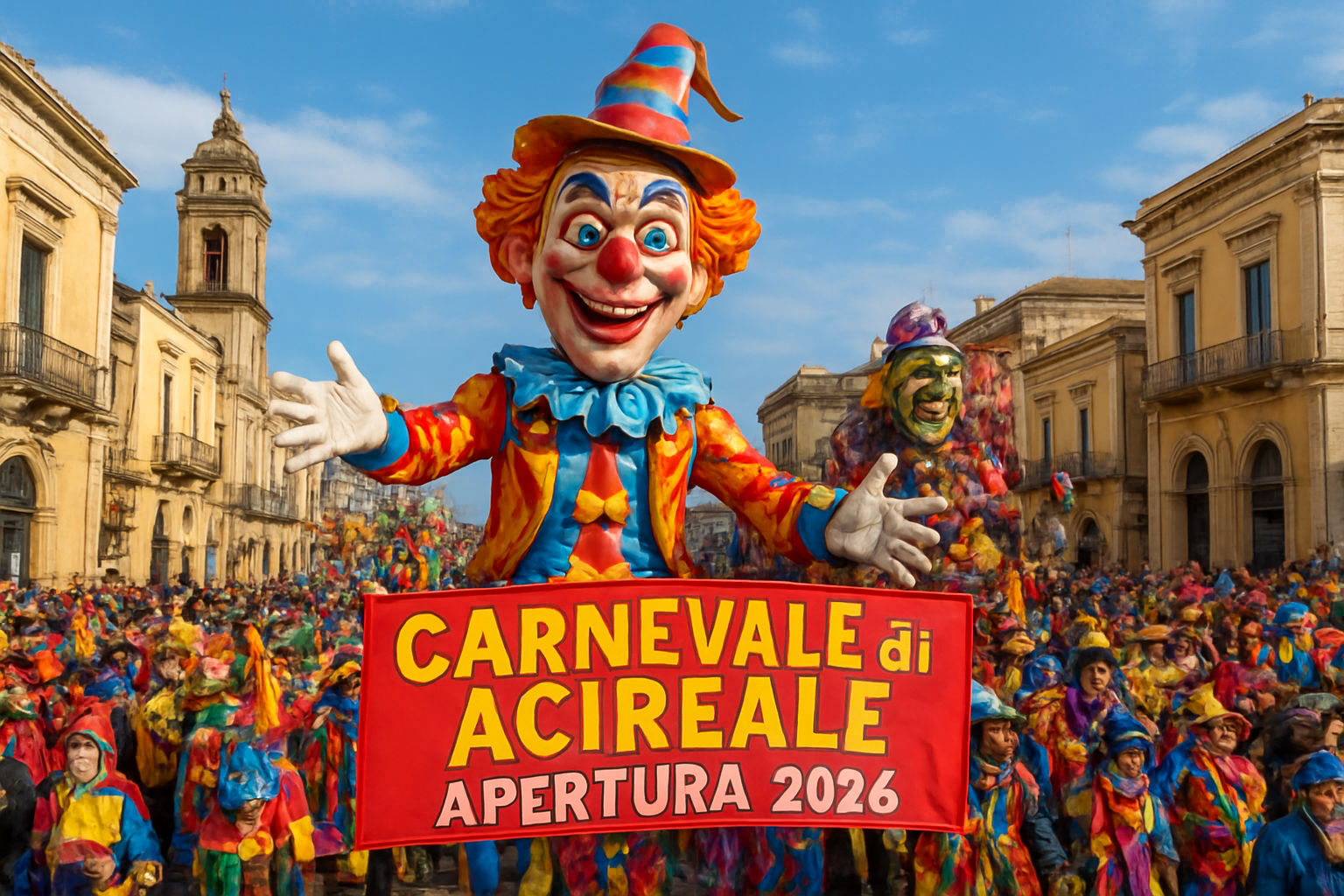
    Carnival of Acireale – Opening Period 2026

    The Carnival of Acireale is often called the most beautiful Carnival in Sicily, and in 2026 the party opens with a packed first weekend of floats, music, and street entertainment. The official program confirms that the Carnival of Acireale 2026 runs from Saturday 31 January to Tuesday 17 February 2026, with the opening period centered on the weekend of 31 January and 1 February in the historic center of Acireale, near Catania on Sicily’s Ionian coast. For island travelers, these first days offer the full flavor of Sicily’s top Carnival, from the handover of the keys to King Jester in Piazza Duomo to the first night parades of allegorical floats under the baroque façades.​

    Key Dates: Opening Period of Carnival of Acireale 2026

    The official Carnival website and partner guides agree on the 2026 calendar:

    • Overall Carnival 2026 dates:
    • Saturday 31 January – Tuesday 17 February 2026.​
    • Opening weekend (focus of this guide):
    • Saturday 31 January 2026 – paid entry day.​
    • Sunday 1 February 2026 – paid entry day.​

    The Carnival’s English site announces “ACIREALE CARNIVAL 2026 – TICKETS NOW AVAILABLE ONLINE” and highlights that the 2026 edition runs from 31 January to 17 February. Travel portals likewise list the 2026 Carnival of Acireale from January 31 to Shrove Tuesday on February 17, describing it as one of Italy’s most beautiful Carnivals alongside Venice and Viareggio.​

    The opening weekend is when:

    • Floats and masks are first unveiled and paraded.
    • The city’s keys are officially handed to Carnival’s symbolic ruler, King Burlone (the Jester).
    • Ticketed access to the central circuit begins, with early pricing offers for those who buy online in advance.​

    Saturday 31 January 2026: First Night of Floats and Music

    The official 2026 program shows a detailed schedule for Saturday 31 January, the first full Carnival day and night in Acireale. Highlights include:​

    • Morning and daytime:
    • 10:00 – Exposition of allegorical‑grotesque floats and isolated masks along the Carnival circuit, allowing visitors to see these huge papier‑mâché creations up close before they move.​
    • 10:00 – Masked school parade along the circuit, with local students in costume filling the streets with color.​
    • 12:00 – Opening of the exhibition of miniature floats at Teatro Maugeri, a beloved tradition where artisans display scaled‑down versions of their designs.​
    • Afternoon and early evening:
    • 15:00 – DJ set in Piazza Duomo, setting the rhythm for the rest of the day.​
    • 16:00 – Presentation of the isolated mask contest in Piazza Duomo.​
    • 16:30 – Opening float parade with DJ set from Piazza Duomo, launching the moving spectacle.​
    • Official opening and night parade:
    • 17:00 – Handover of the keys to King Jester, represented by the Carnival’s godmother, and the formal opening ceremony of “the most beautiful Carnival in Sicily,” with a masked group and the opening float in Piazza Duomo.​
    • From 17:30 to 22:00 – Night‑time parade of allegorical‑grotesque floats with DJ sets, roaming entertainment, and isolated masks along the circuit.​
    • 22:00 – Opening musical show of Carnival 2026 in Piazza Duomo.​

    This first day sets the tone for the entire Carnival period. The combination of traditional floats, contemporary music, and the ceremonial transfer of the city’s keys makes Saturday 31 January the must‑see opener for 2026.

    Sunday 1 February 2026: Road Race and Family Carnival

    Sunday 1 February continues the opening period with a mix of sport, family activities, and more music. Key events include:​

    • 09:00 – Acireale Carnival Trophy – 30th Sicily Grand Prix Road Race – 10 km, a road race that brings runners through town and ties the Carnival to Sicily’s active tourism scene.​
    • 12:00 – Exposition of floats and standalone masks, plus entertainment for families and children in Piazza Garibaldi.​

    Later in the day:

    • 14:00 – Musical show in Piazza Duomo.​
    • 15:30 – Static exposition of allegorical‑grotesque floats and isolated masks along the circuit.​
    • 18:00 – “Baroque Noises” selections in Piazza Duomo, a music contest or showcase connecting Carnival with contemporary sound and the city’s baroque identity.​
    • 22:30 – Evening musical show in Piazza Duomo.​

    Compared with the formal opening on Saturday, Sunday feels more relaxed and family‑oriented, but still full of color, sound, and Carnival spirit.

    Float Parades and Opening Period Atmosphere

    Enjoy Sicilia’s 2026 Carnival summary notes that the allegorical floats parade on the three Sundays of Carnival, on Shrove Thursday, and every day from the last Saturday to Shrove Tuesday, but the first weekend already features night parades and static exhibitions. The opening period is ideal if you want:​

    • A taste of the full float spectacle without the absolute peak crowding of the final days.
    • Time to see floats both in motion at night and up close during daytime static displays.
    • To enjoy early programming such as school parades, “Baroque Noises,” DJ sets, and the Carnival road race.

    The circuit winds through Acireale’s historic center, with floats rolling past baroque churches, palazzi, and the twin squares of Piazza Duomo and Piazza Garibaldi, turning the city into an open‑air stage.​

    Ticket Prices and Access for Carnival 2026 Opening

    The official ticket page for Carnival of Acireale 2026 lists several options and pricing tiers:​

    • Early Ticket – €6.00
    • Valid from 10 August 2025 to 31 October 2025.
    • Open Ticket – €10.00
    • Valid from 1 November 2025 to 30 January 2026.
    • This is a flexible ticket that can be used on any paid entry day, including the opening weekend.​
    • Fixed Date Ticket – €8.00
    • Sold from 1 November 2025 onward for specific dates such as Saturday 31 January or Sunday 1 February 2026.​

    Some days in the later Carnival period are free entry, but the program clearly marks 31 January and 1 February as “a pagamento” (paid entry) days for access to the central circuit and official events. Buying tickets online in advance is recommended to:​

    • Secure access for the exact opening date you want.
    • Save money with early or fixed‑date pricing instead of last‑minute purchases.

    Children’s policies and possible family packages are usually detailed on the ticket site as the event approaches, so checking closer to the date will clarify reduced or free entry for young visitors.

    Local Culture and Landmarks Around the Carnival

    Acireale is known as “the Baroque town with 100 bell towers,” and the Carnival circuit passes many of its signature sights. During the opening period, you can combine events with visits to:​

    • Basilica di San Sebastiano and Cathedral of Acireale, whose façades become backdrops for floats and light shows.
    • Palazzo del Turismo and the Carnival Museum, which hosts exhibitions on past costumes, floats, and Carnival history during event days.​
    • Zelantea Art Gallery, a historic cultural institution noted in the “other initiatives” list for Carnival 2026.​

    The mix of baroque architecture, coastal views toward the Ionian Sea, and Mount Etna in the distance makes Acireale’s Carnival feel distinctly Sicilian. You are never far from seafood trattorie, granite bars, and pastry shops serving cannoli and cassatelle between parades.

    Travel Tips for the Opening Period 2026

    When to Arrive and How Long to Stay

    For the opening period of the Carnival of Acireale 2026, plan to be in town:

    • From Friday 30 January through Monday 2 February 2026, if possible.
    • This allows time to:
    • Arrive and settle in before Saturday’s opening.
    • Enjoy both the 31 January ceremony and the 1 February road race and family events.
    • Explore Acireale and nearby Catania without rushing.

    Getting There

    Acireale lies just north of Catania on Sicily’s east coast:

    • By air: Fly into Catania Fontanarossa Airport (CTA).
    • By train or bus: Frequent regional trains and buses link Catania and Acireale, with journey times of around 20–30 minutes.
    • By car: The A18 motorway runs nearby, but parking can be tricky on major Carnival days; park at signed lots and walk into the center.

    Where to Stay

    • In Acireale: Ideal if you want to walk to Piazza Duomo and the circuit. Book early because local hotels and B&Bs fill for Carnival weekends.
    • In Catania: A good base if you prefer a larger city. You can day‑trip to Acireale for opening events and return by train or bus in the evening.

    What to Wear and Bring

    January and early February are winter in Sicily, though milder than northern Europe:

    • Pack layers, a warm jacket, and comfortable shoes for standing and walking on stone streets.
    • Bring a light raincoat or umbrella for possible showers.
    • For photos, a small camera or smartphone is fine, but be mindful not to block floats or performers as they pass.

    Why You Should Not Miss the Opening of Carnival of Acireale 2026

    The opening period of the Carnival of Acireale 2026 captures the moment when a baroque Sicilian town hands itself over to fantasy. On Saturday 31 January, the keys of Acireale pass to King Jester in a burst of music, light, and masks. Night settles, the allegorical floats roll out under the bell towers, and the first DJ sets and musical shows turn Piazza Duomo into an open‑air stage. On Sunday 1 February, runners, families, and children take the lead, reminding everyone that Carnival belongs to the whole community.

    If you love islands, parades, and authentic local festivals, make sure Acireale is on your 2026 travel list. Plan those last days of January around the opening weekend. Secure your Carnival tickets, book a room in town or nearby Catania, and get ready to walk into one of Italy’s most beautiful Carnivals right from the start.

    The floats are being built, the miniature models are taking shape, and the keys are waiting for King Jester. All that is missing from the opening of Carnival of Acireale 2026 is you.

    Verified Information at glance

    Event Category: Carnival / Cultural festival / Street parades and shows

    Event Name: Carnival of Acireale 2026 (Carnevale di Acireale 2026)

    Island / Location: Acireale, Province of Catania, Sicily, Italy

    Confirmed 2026 Carnival Period:

    • From Saturday 31 January to Tuesday 17 February 2026.​

    Opening Period Focus (paid entry days):

    • Saturday 31 January 2026 – A pagamento (paid entry).​
    • Sunday 1 February 2026 – A pagamento (paid entry).​

    Key Opening Events – Saturday 31 January 2026:​

    • 10:00 – Exposition of allegorical‑grotesque floats and isolated masks along the circuit.
    • 10:00 – Masked school parade along the circuit.
    • 12:00 – Opening of miniature float exhibition at Teatro Maugeri.
    • 15:00 – DJ set in Piazza Duomo.
    • 16:00 – Presentation of isolated mask contest in Piazza Duomo.
    • 16:30 – Opening float parade with DJ set from Piazza Duomo.
    • 17:00 – Handover of keys to King Jester and official opening ceremony in Piazza Duomo.
    • 17:30–22:00 – Night‑time parade of allegorical‑grotesque floats, roaming entertainment, and isolated masks.
    • 22:00 – Opening musical show of Carnival 2026 in Piazza Duomo.

    Key Opening Events – Sunday 1 February 2026:​

    • 09:00 – Acireale Carnival Trophy – 30th Sicily Grand Prix Road Race – 10 km.
    • 12:00 – Exposition of floats and display of standalone masks.
    • 12:00 – Family and children’s entertainment in Piazza Garibaldi.
    • 14:00 – Musical show in Piazza Duomo.
    • 15:30 – Static exposition of floats and isolated masks.
    • 18:00 – “Baroque Noises” selections in Piazza Duomo.
    • 22:30 – Musical show in Piazza Duomo.

    Ticket Rates 2026 (official Carnival site):​

    • Early Ticket: €6.00 – from 10 Aug 2025 to 31 Oct 2025.
    • Open Ticket: €10.00 – from 1 Nov 2025 to 30 Jan 2026 (valid on any paid entry day, including opening weekend).
    • Fixed Date Ticket: €8.00 – from 1 Nov 2025 onward, tied to a specific date such as 31 Jan or 1 Feb 2026.

    Float Parades (general pattern):

    • Floats parade on the three Carnival Sundays, on Shrove Thursday, and every day from the last Saturday to Shrove Tuesday; they are also exhibited statically on several days, including the opening weekend.​

    Reputation:

    • Widely described as “the most beautiful Carnival in Sicily” and one of the most beautiful in Italy, featuring allegorical papier‑mâché floats, flower floats, masks, and light shows.​


    Acireale, Sicily, Sicily
    Jan 31, 2026 - Feb 17, 2026
    Italia Nomad Fest 2026
    Conference/Community
    TBA

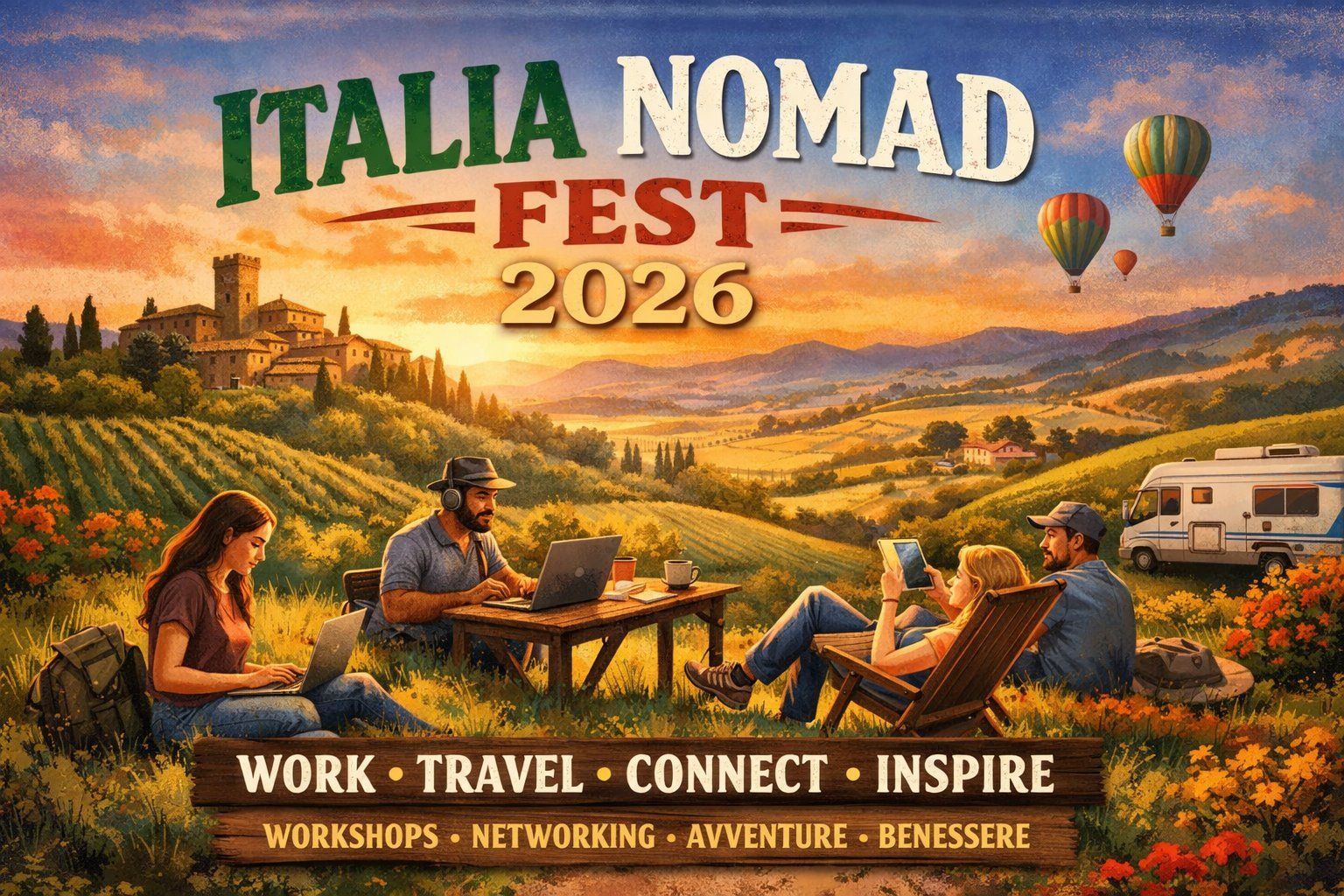
    Italia Nomad Fest 2026

    Discover Italia Nomad Fest 2026: A Unique Sicilian Experience

    Italia Nomad Fest 2026 is confirmed for March 8–15, 2026 in Palermo, Sicily. This week-long event blends talks, workshops, wellness, local food, outdoor experiences, and evening events designed to connect digital nomads and locals. With ticket options starting at €295, it’s a travel-worthy Sicily gathering for remote workers who want community, culture, and a real sense of place instead of a conference bubble.

    Italia Nomad Fest 2026 in Sicily: Why Palermo Fits the Nomad Life

    Sicily has always been a crossroads, and Palermo is one of the island’s most layered cities, shaped by centuries of Mediterranean influences. Italia Nomad Fest positions itself around that idea of living-in-a-city rather than just visiting it, stating its theme clearly: “A city to live, not just to visit.” The official festival messaging emphasizes that nomad gatherings shouldn’t be isolated bubbles, and that this event aims to break the invisible wall between nomads and locals so both communities grow stronger.

    For an island audience, this is the right kind of festival framing. Sicily is not only beaches and day trips, it’s neighborhoods, markets, and daily rhythms. A week-long format makes it easier to feel Palermo as a lived-in place, not a quick photo stop between tourist sites.

    Verified Dates and Location: Palermo, Sicily

    The official Italia Nomad Fest site confirms the event dates as 8–15 March 2026. Search results from the official site also identify the location as Palermo. The official ticket page confirms the same date range and explicitly lists the venue as Villa Niscemi, Palermo, placing the festival within a recognizable Palermo landmark setting.

    That combination is helpful for travel planning. You can book accommodations in Palermo and build a week that mixes scheduled festival programming with independent exploring, food experiences, and day trips around Sicily.

    What to Expect: Talks, Workshops, Wellness, and Sicilian Experiences

    Italia Nomad Fest describes a week of connection and learning that blends wellness, talks, workshops, outdoor adventures, local food, and vibrant evening events. The ticket page also confirms the festival structure includes conferences, workshops, cultural activities, and unique evening events, with an explicit goal of creating real connections between travelers and the local community.

    This is especially appealing if you’re tired of events that feel like hotel ballroom marathons. Here, the promise is a more city-integrated format, which naturally suits Palermo’s street life and food culture.

    Ticket Pricing and What’s Included (Verified)

    The official ticket page lists three paid ticket tiers with inclusions, making budgeting straightforward:

    • Basic Ticket – €295: Conference access, free daily activities, final party, Global Nomad Pass, Pangia e-Sim.
    • Medium Ticket – €395: Conference access, free daily activities, 3 premium activities, final party, Global Nomad Pass, Pangia e-Sim.
    • Full Ticket – €495: Conference access, unlimited premium activities, gala dinner, final party, Global Nomad Pass, Pangia e-Sim.

    This tiering is useful for travelers because you can decide whether your Sicily trip is mainly a conference-style learning week (Basic), a curated experience week (Medium), or a full “all-in” island immersion with dinner programming and more activities included (Full).

    How the Festival Avoids the “Nomad Bubble” (and Why That Matters in Sicily)

    The official site emphasizes values like collaboration over competition and describes the festival as a space where “real connections are made” between global and local communities. It also frames the broader idea as “community becomes economy” and “belonging as culture,” positioning the event as something closer to a movement than a one-off meetup.

    In Sicily, this approach can be especially meaningful. Palermo rewards curiosity: talking to vendors, asking locals where they eat, learning the pace of daily life. A festival designed to integrate with the host city makes it easier to experience that Sicily feeling without needing an insider friend to open doors.

    Palermo Travel Tips for Festival Week

    Because the festival runs a full week, you can create a comfortable rhythm:

    • Mornings: light wellness or coworking time, then espresso and a walk.
    • Midday: talks or workshops.
    • Late afternoon: local cultural activities or outdoor adventures.
    • Evenings: community dinners and festival nightlife.

    Palermo also works well as a base for small day trips within Sicily, but keep those lighter during the festival week so you don’t miss the relationship-building and spontaneous meetups that tend to become the most valuable part of nomad events.

    Experience Italia Nomad Fest 2026 in Sicily

    Italia Nomad Fest 2026 is confirmed for March 8–15, 2026 in Palermo, Sicily, with programming built around conferences, workshops, cultural activities, outdoor experiences, local food, and evening events. With verified ticket tiers at €295, €395, and €495, it’s designed for remote workers who want both structure and freedom, and who want Sicily to feel like a place to belong rather than just a destination to consume. If Palermo is on your list for 2026, this is the week to come, meet people who travel with purpose, and experience Sicily through community, creativity, and the kind of island pace that stays with you long after you fly home.

    Verified Information at a Glance

    Event Name:

    • Italia Nomad Fest 2026

    Event Category:

    • Digital nomad and remote work community festival (talks, workshops, activities, evening events)

    Island/Region:

    • Sicily, Italy

    City (confirmed):

    • Palermo

    Confirmed Dates (2026):

    • March 8–15, 2026

    Confirmed Venue (listed):

    • Villa Niscemi, Palermo

    Ticket Pricing (verified):

    • Basic €295; Medium €395; Full €495

    What Tickets Include (verified highlights):

    • Conference access; free daily activities; final party; Global Nomad Pass; Pangia e-Sim (tier-dependent premium activities and gala dinner).
    Palermo, Sicily
    Mar 8, 2026 - Mar 15, 2026
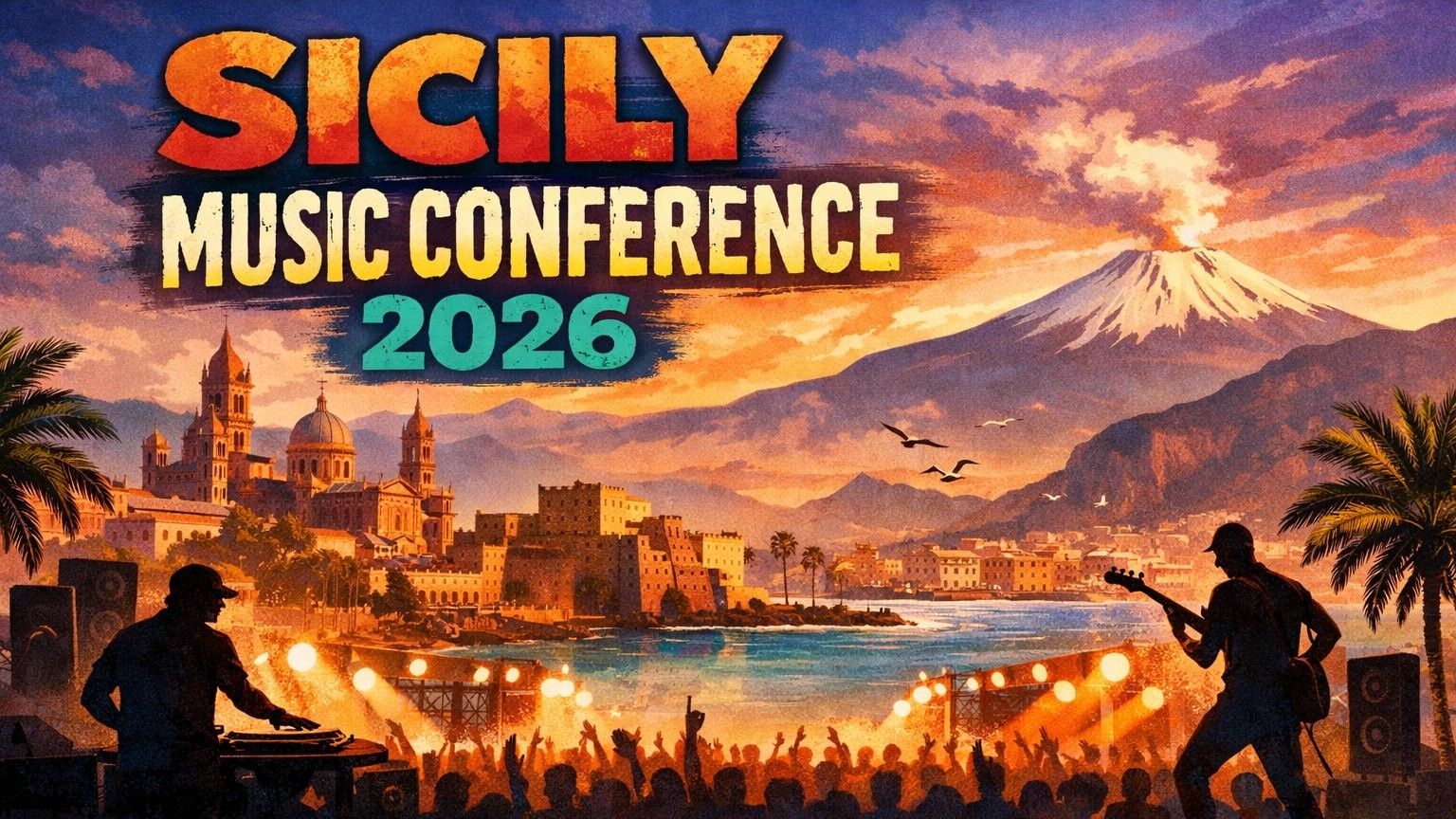
    Sicily Music Conference 2026
    Conference/Music
    TBA

    Sicily Music Conference 2026

    Sicily Music Conference 2026: A Music Industry Event with Island Energy

    Sicily Music Conference 2026 is confirmed for May 13–16, 2026, taking place across Palermo and Catania on the island of Sicily, Italy. It’s a music-industry meeting and showcase designed for artists, festivals, bookers, and cultural professionals who want to connect where the Mediterranean feel is real, not staged, and where two of Sicily’s most character-rich cities become the backdrop for four days of sound, ideas, and networking.

    Sicily Music Conference (often shortened to SMC) is positioned as an international meeting that strengthens Sicily’s cultural network through cooperation, innovation, and music tourism, with a focus on sustainability and accessibility. That mission matters because Sicily is not only a destination, it’s a living cultural region with its own festivals, venues, and creative communities that benefit when touring routes include the island.

    For travelers, SMC is the kind of event that blends professional value with island lifestyle. You can spend your days in panels and showcases, then step outside into Palermo’s street life or Catania’s volcanic-edge atmosphere, where food, architecture, and music culture are part of everyday life.

    Verified Dates and Locations: Palermo and Catania Await

    Conference Dates

    European Festivals Association’s FestivalFinder listing confirms the 5th edition of Sicily Music Conference will take place May 13–16, 2026. An official-looking SMC Instagram announcement for the international open call also states the conference dates as 13–16 May 2026.

    Conference Locations

    The event explicitly states the locations as Palermo and Catania. The official Instagram post further specifies Palermo & Catania, Sicily, Italy, aligning with the FestivalFinder listing.

    That dual-city format is important for planning. SMC is not limited to one venue or one neighborhood, so booking accommodation with easy transport access and leaving a little buffer for transfers between programming sites can make your experience much smoother.

    What to Expect at Sicily Music Conference: Networking, Showcases, and the Live Sector

    FestivalFinder describes the conference as focusing on strengthening Sicily’s cultural network, which signals a strong industry angle rather than a purely consumer music festival. The open call announcement emphasizes live performance opportunities and networking with global music industry professionals, and it highlights the chance to showcase talent to “60+ Sicilian music festivals.” This makes SMC especially relevant if you are:

    • An artist seeking international showcase opportunities.
    • A manager or agent building touring strategy across Southern Europe.
    • A festival programmer looking for new talent with strong live potential.
    • A music professional interested in sustainability and accessibility within the live sector.

    Calling All Artists: Verified Open Call and Deadline (2026)

    A public article about the open call confirms applications are open for artists who want to perform live at Sicily Music Conference and lists an application deadline of 31 January 2026. The same source references the May 13–16 time window and frames the event as “the first international music conference in Sicily,” which matches SMC’s positioning as a key island industry gathering.

    For artists, the strategic takeaway is simple: treat this like a showcase application, not a casual gig pitch. Strong live video, clear positioning, and a concise artist story tend to matter most for showcase selection.

    Sicily Travel Value: Why Palermo and Catania are a Perfect Pairing

    Sicily Music Conference uses two cities that represent different sides of Sicily’s personality. Palermo offers layered Mediterranean history and a dense cultural life, while Catania sits in the shadow of Mount Etna and has a distinct, energetic urban character. The FestivalFinder listing confirms both Palermo and Catania are core locations, making the experience feel like a curated “Sicily tour” for music professionals rather than a static conference.

    For an islands audience, this is a major advantage: you can combine a career-focused trip with real destination value. Even short windows between sessions can become meaningful, an espresso in a historic square, a quick street-food stop, an evening walk, and then back into showcases.

    Ticket Pricing and Registration Fees (What’s Verified)

    The verified sources available here confirm dates and locations, but they do not provide official attendee ticket prices or pass fees for Sicily Music Conference 2026. Because pricing is not stated in the sources retrieved, it cannot be confirmed in this article. The best approach is to check the official Sicily Music Conference channels for pass releases and professional accreditation details closer to May 2026.

    Planning Tips for Attending SMC 2026 on an Island Schedule

    A conference across Palermo and Catania rewards a calm, practical plan:

    • Book accommodation early, especially if you want to stay central and walk to evening events.
    • Build in transfer time if you plan to attend programming in both cities.
    • Keep one free half-day for Sicily itself, because the island setting is part of the experience, and it helps prevent conference burnout.

    Attend Sicily Music Conference 2026 in Sicily

    Sicily Music Conference 2026 is confirmed for May 13–16, 2026 in Palermo and Catania, offering four days of industry exchange and live performance opportunity on one of Europe’s most culturally intense islands. With an artist open call deadline listed as January 31, 2026, it’s also a timely opportunity for performers and teams planning their 2026 showcase strategy. If Sicily is already on your radar, make these May dates your reason to go, arrive ready to connect, and experience music industry networking the Mediterranean way in Palermo and Catania.

    Verified Information at a Glance

    • Event Name: Sicily Music Conference 2026
    • Event Category: Music industry conference and showcase (meeting and festival format)
    • Island/Region: Sicily, Italy
    • Confirmed Dates (2026): May 13–16, 2026
    • Confirmed Locations: Palermo and Catania
    • Edition (confirmed by listing): 5th edition
    • Open call for artists (verified): Live performance open call mentioned publicly with application deadline 31 January 2026
    • Ticket pricing: Not published in the verified sources retrieved here
    Palermo and Catania, Sicily
    May 13, 2026 - May 16, 2026
    infiorata di noto 2026
    Flower festival
    TBA

    infiorata di noto 2026

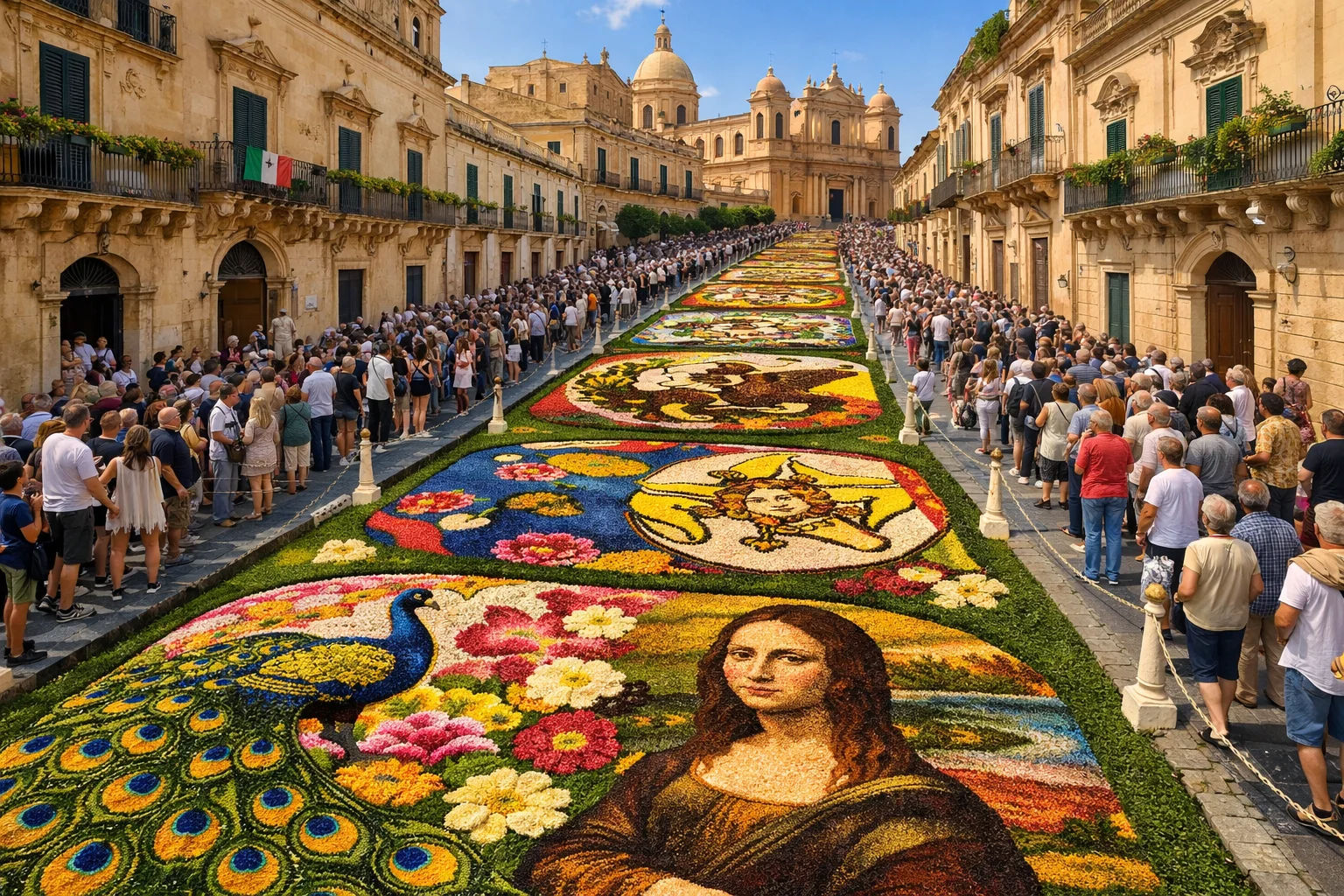
    Infiorata di Noto 2026: Sicily’s Flower-Art Weekend in a UNESCO-Level Baroque Setting

    Infiorata di Noto 2026 is expected in mid-to-late May 2026 on the famous Baroque Via Corrado Nicolaci in Noto, Sicily, where artists create large-scale floral “carpets” using millions of petals. While some travel calendars claim specific 2026 dates, the most reliable official-style guidance confirms the festival’s anchor timing as the third Sunday in May in Via Nicolaci, so exact 2026 dates should be verified closer to spring once Noto publishes the year’s official program and ticketing details.

    Noto is one of Sicily’s most photogenic towns, known for honey-gold Baroque architecture, monumental staircases, and elegant balconies. During Infiorata, that beauty becomes the frame for something even more extraordinary: an entire street turns into a temporary masterpiece made of petals.

    This event is often called the “Baroque Flower Festival,” and the concept is simple but powerful. Teams of artists design intricate images, then “paint” them on the street surface using flower petals arranged by color and texture. For travelers, Infiorata di Noto is perfect because it blends art, local tradition, and walkable sightseeing. You can admire the floral carpet, then wander to nearby landmarks, cafés, and viewpoints in the same afternoon.


    When is Infiorata di Noto 2026?

    Visit Sicily, a key regional tourism source, states that in Noto the Infiorata takes place on the third Sunday in May and that the central Via Nicolaci is the scene of the traditional Baroque Infiorata. That means the core “main day” for 2026 is expected to fall on the third Sunday of May, although modern editions often extend across multiple days around that weekend for installation, viewing, and related events.

    Some third-party guides publish specific date ranges for 2026, but those are not the same as an official municipal announcement, and dates can shift slightly based on local programming decisions. The safest planning method is to target May 2026, then confirm the final schedule once Noto’s official channels release the year’s program.


    Where It Happens: Via Corrado Nicolaci, the Festival’s Iconic Street

    The festival’s location is one of its biggest draws. Visit Sicily identifies Via Nicolaci as the central street where the Infiorata takes place. This is the same street famous for the ornate Baroque balconies of Palazzo Nicolaci, which makes the viewing experience feel like you’re standing inside a theatrical set designed for beauty.

    Because the floral carpet covers the street itself, the experience is intensely walkable. Arriving early matters, especially on the weekend day, because crowds build quickly and the best photos require a clear line of sight down the street.


    The Tradition and the Artistry: How the Floral Carpets Are Made

    Visit Sicily explains that teams of young artists arrange millions of flower petals to decorate the street floor, forming elaborate, multi-colored designs. Even if you’ve seen floral festivals elsewhere in Italy, the scale and precision in Noto feels different because the works are built to be viewed as a single “gallery” along the length of Via Nicolaci.

    Infiorata is also tied to a broader historical tradition. Visit Sicily notes that this type of Baroque display dates back to the 1600s and was created in Rome to celebrate Corpus Christi. That history gives the event a deeper cultural layer: it’s not just decoration, it’s a form of public art with roots in ritual and community celebration.


    What to See and Do During Infiorata Weekend in Noto

    Infiorata is the headline, but the best trips treat it as the centerpiece of a full Noto itinerary.

    Experience the Floral Carpet at Different Times of Day

    • Morning: cleaner light, fewer people, and better photography angles.
    • Late afternoon: warmer golden tones on Baroque stone, but busier crowds.
    • Evening: atmospheric strolling, especially if the town hosts related performances.

    Even without a published 2026 program yet, the “street transforms into art” dynamic is the core draw, and it remains consistent year to year.


    Pair It with Noto’s Baroque Landmarks

    Noto’s historic center is compact, so you can easily combine Infiorata with:

    • Noto Cathedral area for classic architecture views.
    • Side streets filled with gelaterias and cafés.
    • Scenic terraces and viewpoints as the light changes.

    This is the kind of Sicilian festival where “slow travel” pays off. A one-day visit is possible, but an overnight stay lets you enjoy the street before peak day-tripper hours.


    Food, Culture, and the Sicily Feeling

    Infiorata sits inside a wider springtime atmosphere in southeastern Sicily, where towns are lively but not yet at full summer heat. Even if your travel plan is driven by the festival, you’ll want time for the local rhythm: espresso breaks, granita, and long dinners with seasonal produce and seafood.

    For visitors who care about cultural context, the best approach is to see Infiorata not as a standalone attraction, but as a community tradition that turns the town’s most famous street into a shared artwork, even if only for a few days.


    Travel Tips: Planning a Smooth Infiorata di Noto Trip in 2026

    Getting There

    Noto is in southeastern Sicily (Province of Syracuse), and many travelers base themselves in Syracuse/Ortigia or nearby coastal towns, then day-trip to Noto for the festival weekend. If you’re renting a car, arrive early because parking becomes more challenging as crowds grow.

    Where to Stay

    Staying in Noto itself makes the experience easier, especially if you want early-morning viewing before the street fills up. If hotels are booked, nearby bases can still work well, but plan transport carefully.

    What to Bring

    • Comfortable walking shoes for cobblestone streets.
    • Water and sun protection.
    • A phone power bank for photos and maps.
    • A light layer for evenings.


    Ticketing and Pricing: What’s Confirmed and What Isn’t

    An official Noto Infiorata site page for 2025 lists an entrance ticket price of €5.00 (plus pre-sale fees online) and a school group ticket price of €3.00, showing that recent editions have used paid entry to access the Infiorata viewing area. However, 2026 pricing is not confirmed yet, so travelers should treat those numbers as a reference point rather than a guaranteed 2026 rate.

    The best practice is to check ticketing details once the 2026 program goes live, especially if timed-entry or online booking is required on peak days.


    Verified Information at a Glance

    Item: Confirmed details

    Event name: Infiorata di Noto (Baroque Flower Festival)

    Event category: Flower festival / floral street-art festival (petal “carpet” installations)

    Typical annual timing: Third Sunday in May

    Main location: Via Corrado Nicolaci (Via Nicolaci), Noto, Sicily

    What happens (core tradition): Teams create elaborate designs using millions of flower petals arranged on the street.

    Cultural background: Baroque-style Infiorata tradition dates to the 1600s and originated in Rome for Corpus Christi celebrations.

    Ticket pricing: 2026 price not confirmed; 2025 official event site lists €5.00 entry (+ fees online) and €3.00 for school groups.

    2026 dates: Not officially confirmed in the cited official-style sources yet; plan for May 2026 and verify when the 2026 program is released.


    If Sicily is on your 2026 travel list, build your May itinerary around Noto, wake up early for that first quiet moment on Via Nicolaci, and let the colors and scent of petals guide you through one of the island’s most beautiful traditions, because Infiorata di Noto is the kind of event that makes you fall in love with Sicily slowly and all at once.

    Via Corrado Nicolaci (Via Nicolaci), Noto, Sicily , Sicily
    May 15, 2026 - May 19, 2026
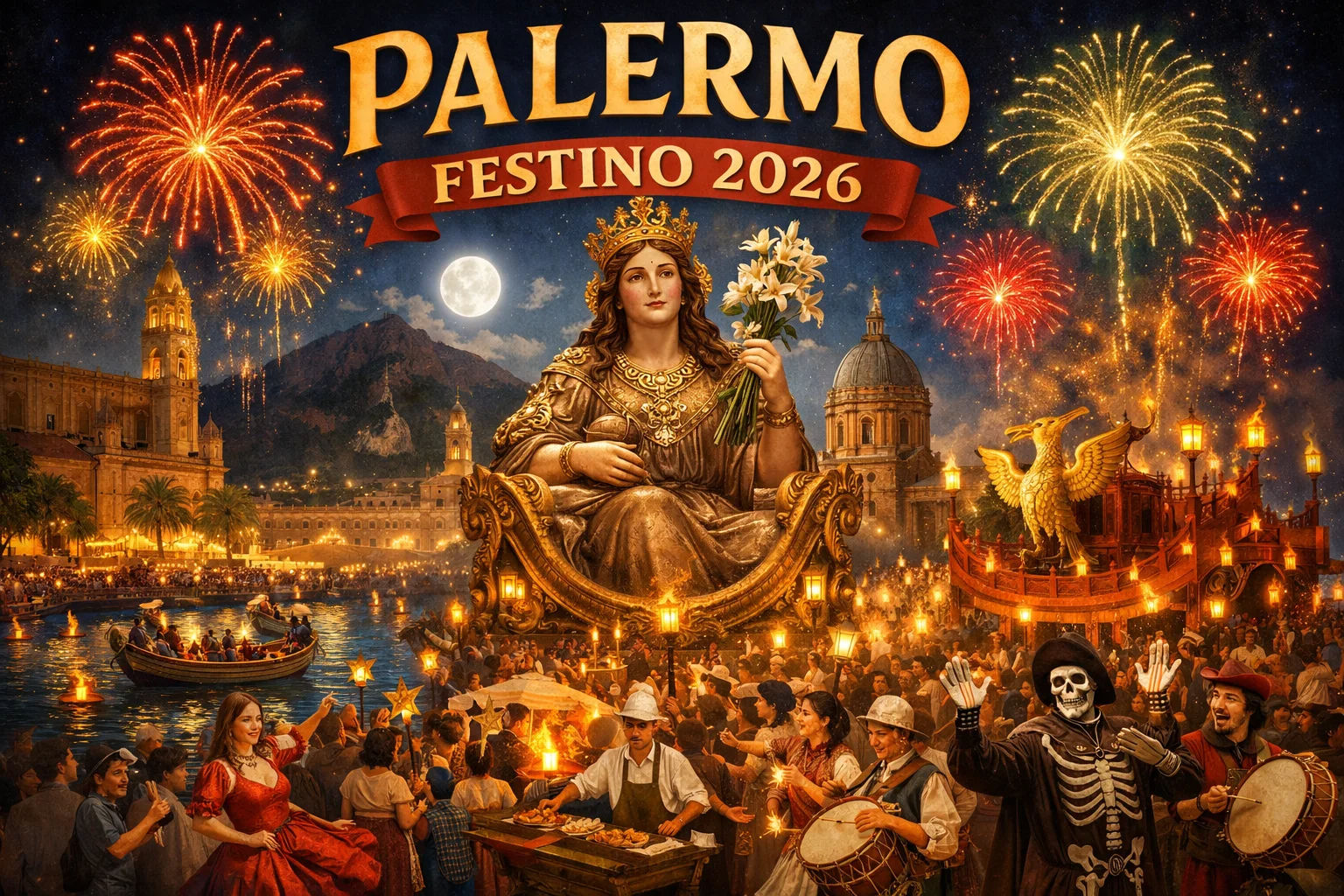
    Palermo Festino (Feast of Saint Rosalia) 2026
    Religious and cultural festival
    Free

    Palermo Festino (Feast of Saint Rosalia) 2026

    Palermo Festino 2026: Sicily’s Most Emotional Street Festival

    Palermo Festino (the Feast of Saint Rosalia) in 2026 centers on the night of July 14 with the city’s iconic procession from Palermo Cathedral along the Cassaro (Via Vittorio Emanuele) to the Foro Italico, ending with fireworks, followed by the official feast day on July 15 with the relics carried in procession. It’s Palermo’s most important annual festival, blending devotion, theatre, and street celebration into a powerful “only in Sicily” experience that turns the entire historic center into a moving stage.

    If you want to feel Palermo’s heartbeat, you don’t look for it in a museum. You find it in the crowd on a warm July night, moving as one along the Cassaro while the cry “Viva Palermo e Santa Rosalia!” rises above the drums, lights, and music. The Festino is not a quiet religious holiday and not a typical summer carnival. It’s a dramatic public ritual that Palermo has repeated for centuries, mixing sacred meaning with a spectacular city-wide show.

    For travelers, the magic is that Palermo becomes the venue. The procession passes monumental landmarks, tight Old Town streets, and open seaside spaces, making the event feel cinematic without ever losing its local soul. Even if you’ve visited Sicily before, experiencing the Festino is like meeting the city again, but this time through its traditions rather than its guidebook highlights.

    The Key Dates for 2026: July 14 and July 15

    Visit Sicily explains that the popular procession sets off from Palermo Cathedral on the night of July 14 and goes to the Foro Italico via the Cassaro, culminating in a firework display. The following day, July 15, the relics of Saint Rosalia are carried in procession in a silver urn, masses are celebrated, and the urn is blessed by the Archbishop before returning to the Cathedral.

    A public-holiday reference also notes that July 15 is observed in Palermo and describes the Festino spectacle taking place on the evening of July 14, with the saint’s statue paraded through the main streets to the marina for fireworks. For trip planning, this means the best itinerary is at least two nights: one for the July 14 nighttime procession and fireworks, and one for the July 15 devotional procession and daytime city atmosphere.

    Who is Saint Rosalia and Why Palermo Celebrates Her

    Santa Rosalia is deeply tied to Palermo’s history and identity, especially because tradition links her to the city’s deliverance from the plague of 1624. Visit Sicily explains that she is beloved for her role in eradicating the plague epidemic of 1624, and that the rediscovery and procession of her remains was believed to cure the disease.

    OfficeHolidays also recounts the tradition that Rosalia’s remains were found in a cave and carried around Palermo during the plague, after which the city was freed from the disease, leading to the annual Festino and her status as Palermo’s patron saint. This backstory is why the event feels so intense: it’s not only “a festival,” it’s a public memory of survival, retold through procession, performance, and collective celebration.

    The July 14 Procession: A Moving Stage Through Palermo

    The night of July 14 is the Festino’s peak moment, and Visit Sicily describes the route clearly: from the Cathedral, along the Cassaro, to the Foro Italico, ending with fireworks. The same description notes the procession is headed by the Archbishop and the Mayor of Palermo, emphasizing that the event is both civic and religious, and that the whole city participates.

    The Iconic Float: Palermo’s “Ship” of Santa Rosalia

    At the center of the procession is the lavish ship-shaped float carrying the saint’s statue, described by Visit Sicily as a “veritable travelling stage,” about ten meters high and almost as long, built year after year and transported by oxen. This float is one reason the Festino is so visually unforgettable: it’s devotional art, theatre design, and Baroque imagination combined into one moving object.

    OfficeHolidays similarly describes an elaborate boat-shaped chariot made each year, pulled by oxen, moving through Palermo’s main streets toward the marina for the fireworks finale. For visitors, the float is the moment the Festino shifts from “crowd event” to “spectacle,” because you understand instantly that Palermo is staging its story at full scale.

    Best Places to Experience the Route

    Because the route is linear, you can choose your “Festino style”:

    • Cathedral area: best for seeing the start and feeling the anticipation build.
    • Along the Cassaro (Via Vittorio Emanuele): best for classic city-street atmosphere, with buildings and balconies framing the procession.
    • Foro Italico: best for the end-of-night celebration and fireworks near the sea.

    July 15: Relics, Devotion, and Palermo’s Quieter Sacred Rhythm

    If July 14 is Palermo’s theatrical celebration, July 15 leans more devotional. Visit Sicily explains that on July 15 the saint’s relics are carried in procession in a silver urn, masses are celebrated, and the urn is blessed by the Archbishop before returning to the Cathedral. This day gives travelers a different way to connect with the festival: less spectacle, more meaning, and a sense of how Palermo holds tradition across generations.

    OfficeHolidays also notes that on July 15 the relics are paraded around Palermo before returning to the Cathedral for a blessing. For visitors who want a fuller, more respectful understanding of the Festino, attending both days shows how Palermo balances joy and reverence within the same celebration.

    What Else Happens in Palermo During the Festino

    Visit Sicily describes the Festino as a city-wide series of events around Palermo including dances, balls, choreography, and light shows, with the crowd’s repeated cry “Viva Palermo e Santa Rosalia!” This matters because you don’t have to be physically inside the densest part of the procession to feel the festival. You can experience it through the city’s mood: performances, street energy, and the way neighborhoods stay awake late into the night.

    It’s also a great time to explore Palermo’s historic core in a “festival lens” way, since many travelers find the Festino atmosphere brings out the city’s most social side. If your Sicily trip includes food and street culture, this is one of the best nights of the year to sample Palermo’s street-food scene before the procession reaches peak density.

    Practical Travel Tips for Palermo Festino 2026

    Arrive Early and Plan for Crowds

    The Festino is widely described as Palermo’s most important festival, and the main night can be extremely busy. A simple strategy is to pick one primary viewing zone (Cathedral, Cassaro, or Foro Italico), arrive early, and treat the wait as part of the experience with snacks and water.

    What to Wear and Bring

    Mid-July in Sicily is hot. Plan light clothing, comfortable shoes, and refillable water, and expect long periods standing in crowds.

    Where to Stay for Easy Access

    Staying near the historic center makes a big difference, because the route is central and traffic can become difficult on festival night. If you stay farther out, plan your return carefully after fireworks, when rideshares and taxis can be slower.

    Pricing: What Does It Cost to Attend?

    The Festino is primarily a public street festival, and the core experience of watching the procession and fireworks is typically free from public viewing areas. Costs for most travelers come from accommodation in Palermo during peak nights, transportation, and optional paid extras like rooftop dinners, reserved terraces, or guided experiences rather than “festival tickets.”

    Verified Information at a Glance

    Event Name: Palermo Festino (Festa di Santa Rosalia / u fistinu)

    Event Category: Religious and cultural festival with a major procession and fireworks

    Key 2026 Dates: Night of July 14 (main procession and fireworks) and July 15 (feast day and relic procession)

    Main Route: Palermo Cathedral → Cassaro (Via Vittorio Emanuele) → Foro Italico

    Main Finale Location: Foro Italico with fireworks (end of the July 14 procession).

    Signature Element: Ship-shaped float carrying Santa Rosalia’s statue, rebuilt year after year, transported by oxen.

    July 15 Tradition: Relics carried in procession in a silver urn; masses and blessing by the Archbishop; urn returns to Cathedral.

    Pricing: Public viewing generally free; costs are travel, accommodation, and optional paid vantage points.

    If Sicily is calling in summer 2026, plan your Palermo days around July 14 and 15, follow the Cassaro as the city turns into a moving theatre, and end at the Foro Italico with the sea breeze and fireworks overhead, because the Festino is Palermo’s proudest night and one of the most unforgettable ways to meet the true spirit of the island.

    Foro Italico with fireworks, Sicily
    Jul 10, 2026 - Jul 15, 2026

    Past Events

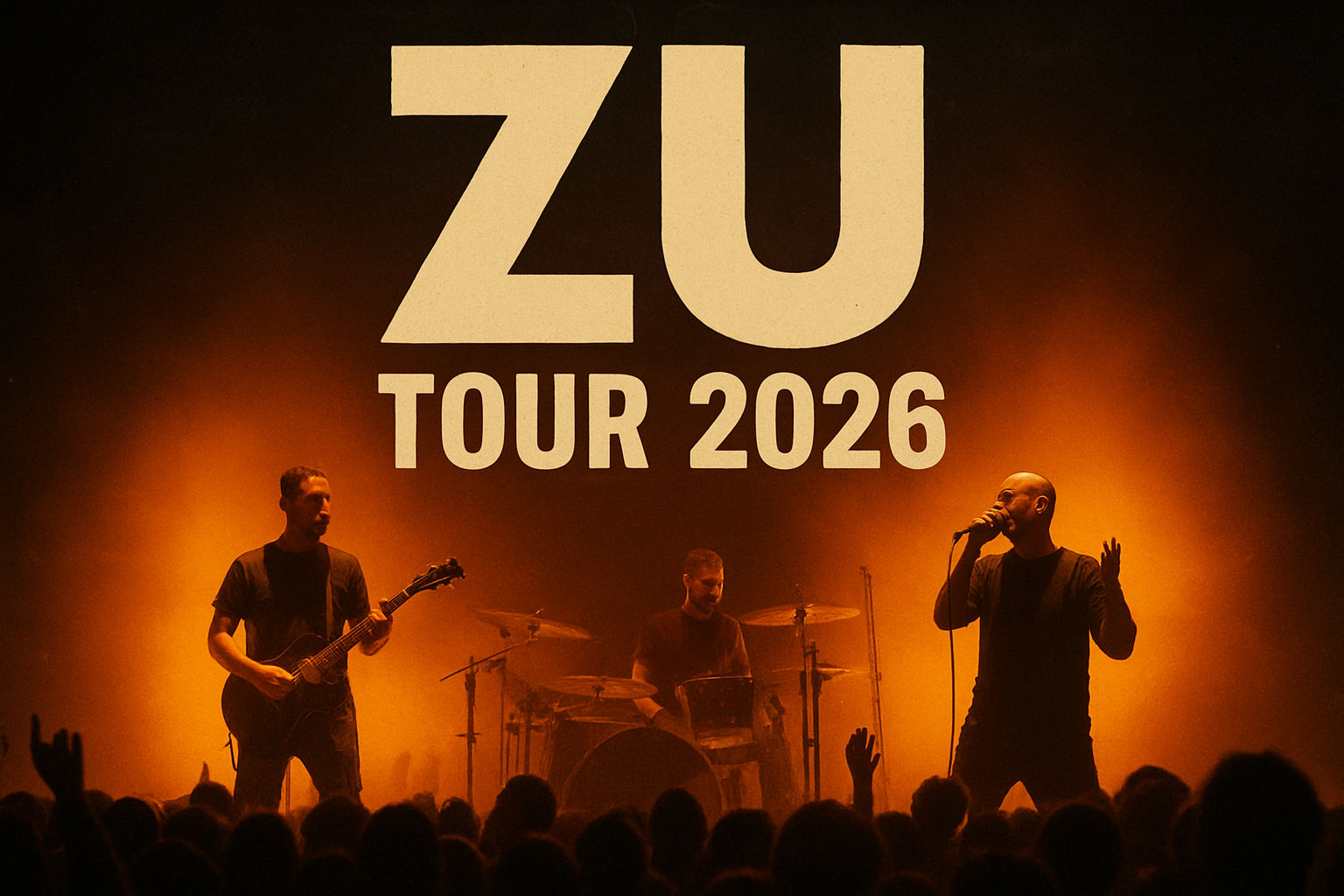
    Zu – Tour 2026 Concert 2026
    Music/Concert
    TBA

    Zu – Tour 2026 Concert 2026

    In January 2026, Sicily turns into a high‑energy stop on one of Italy’s most adventurous music tours. Zu, the cult Italian experimental rock band from Ostia, bring their Tour 2026 to Palermo and Catania, giving island audiences a rare chance to experience their intense blend of metal, jazz, noise, and ambient in intimate club settings. On Friday 23 January 2026 Zu play I Candelai in Palermo, followed on Saturday 24 January 2026 by a concert at Zo Centro Culture Contemporanee in Catania. For travelers who love edgy live music as much as Mediterranean islands, Zu – Tour 2026 Sicily offers the perfect excuse to plan a winter escape built around two unforgettable nights.​

    Who Are Zu and Why This 2026 Tour Matters

    Zu formed in 1997 on the coast near Rome and have since become one of Europe’s most respected experimental bands, known for powerful live shows and constant reinvention. Their core line‑up weaves baritone sax, bass, drums, and guitar into a sound that draws from metal, prog, noise, industrial, and free jazz without fitting neatly into any one genre. Over more than 15 albums and thousands of concerts worldwide, Zu have built a cult following, collaborating with artists such as Mike Patton, and theatre visionary Romeo Castellucci, and touring with Japanese noise legends Ruins in the RuinsZu project.​

    For 2026, official tour listings and social media announcements show Zu launching a dense European run in support of new music, with Italian dates in January followed by Northern and Western Europe in February. Sicily’s inclusion is significant: the band is choosing club‑scale venues in Palermo and Catania, bringing their latest material directly to island audiences rather than limiting the tour to mainland cities.​

    Confirmed Zu Tour 2026 Sicily Dates and Venues

    Zu’s official concert schedule and multiple event platforms confirm two key Sicilian dates in January 2026:

    • Friday 23 January 2026 – Palermo
    • Venue: I Candelai
    • Address: Via dei Candelai 65, 90134 Palermo, Sicilia, Italy.​
    • Event listings describe this date as part of “Zu – Tour 2026” at the historic club in Palermo’s old town.​
    • Saturday 24 January 2026 – Catania
    • Venue: Zo Centro Culture Contemporanee (often shortened to “Zo”)
    • Address: Piazzale Rocco Chinnici 6, 95129 Catania, Sicilia, Italy.​
    • Concert guides list this as “Zu – Tour 2026” at Zo Centro Culture Contemporanee, a key venue for contemporary arts on the east coast.​

    Zu’s own “When and Where to see Zu live” page lists these dates among their January 2026 Italian shows, placing Palermo and Catania between club gigs in Bologna, Caserta, Milan, Verona, and then onward into Croatia, Slovenia, Denmark, Sweden, Belgium, the Netherlands, France, and Switzerland.​

    Both Sicilian venues are mid‑size cultural hubs:

    • I Candelai is a well‑known Palermo club housed in a former candle workshop in the historic center, famous for indie, rock, and alternative concerts.
    • Zo in Catania is a multi‑arts center hosting contemporary music, theatre, and performance, with a reputation for strong sound and adventurous programming.​

    What to Expect from a Zu Tour 2026 Concert

    Fan reviews and recent live recordings paint a clear picture of the Zu live experience:

    • Bandsintown fan comments describe Zu’s performance as “insane,” with sound so powerful it pulls listeners into a dimension of “raw energy and structured chaos,” bypassing logic and hitting the “reptilian brain” with something primal.​
    • Recent full‑set videos from 2025 shows in Turin show a tight ensemble building long, evolving pieces where bass riffs, baritone sax textures, and polyrhythmic drumming generate an almost physical wall of sound.​

    In 2026, the core line‑up includes:

    • Massimo Pupillo – bass
    • Luca T. Mai – baritone sax
    • Jacopo Battaglia – drums (returning behind the kit)
    • Stefano Pilia – guitar, completing the quartet since 2019.​

    Genres listed for Zu range from metal and experimental to ambient and electronic, but the real essence is a dynamic journey that moves from quiet drones and atmospheric build‑ups to explosive, riff‑driven climaxes. Expect:​

    • Long, evolving tracks instead of short radio‑style songs.
    • Heavy, distorted bass and guitar layered with sax noise and percussive attacks.
    • Minimal stage banter; focus stays on the music and its physical impact.

    In club settings like I Candelai and Zo, this translates into an immersive, body‑felt concert where proximity to the band and sound system enhances every texture.

    Ticket Pricing and How to Buy

    While Sicily‑specific ticketing pages for Zu – Tour 2026 are often hosted directly by the venues or local promoters, several clues suggest pricing levels:

    • A Milan club date at Santeria Toscana 31 on 28 January 2026 lists tickets “from €25.00,” providing a reference point for major city club pricing.​
    • Zu’s tours are typically booked into independent venues where ticket prices remain accessible for underground and alternative audiences, rather than arena‑scale figures.​

    For Palermo and Catania, you can reasonably expect:

    • Approximate price range: Around €20–€30 for standard entry, depending on local fees and pre‑sale offers (exact amounts to be confirmed by each venue).
    • Sales channels:
    • I Candelai’s official site and social pages for Palermo.
    • Zo Centro Culture Contemporanee’s website, ticket portals, or box office for Catania.​
    • Links from Zu’s official site and social accounts (especially @zu.music on Instagram) pointing to official sales partners.​

    Booking in advance is recommended, as both venues have limited capacity and Zu’s return with new material is likely to attract strong interest from Sicilian and mainland fans.

    Why Sicily Is a Perfect Match for Zu’s Tour 2026

    Pairing Zu – Tour 2026 with a Sicily trip means connecting a boundary‑pushing music experience with one of the Mediterranean’s most layered islands. The two Sicilian stops also make it easy to build a short itinerary.

    Palermo: History, Street Life, and Sound

    In Palermo, you can:

    • Spend the day exploring the historic center around Via Maqueda, Quattro Canti, and the Cathedral, then walk to I Candelai in the evening for the show.
    • Combine the concert with visits to the Ballarò or Vucciria markets and the Norman‑Arab monuments that define Palermo’s skyline.
    • Enjoy post‑gig food in nearby trattorie, tasting panelle, arancine, and cannoli within a few minutes’ walk of the club.

    The dense, lived‑in atmosphere of Palermo’s alleys pairs naturally with Zu’s raw, urban sound, giving the night a distinctly Sicilian edge.

    Catania: Etna, Baroque, and Contemporary Culture

    In Catania, Zu’s concert at Zo Centro Culture Contemporanee slots into a city already known for its vibrant alt‑music scene and strong ties to Mount Etna:

    • During the day, stroll Via Etnea, Piazza Duomo, and the baroque Via Crociferi, or take a short trip toward Etna’s lower slopes.
    • In the evening, head to Zo, located near the city center, where experimental theatre, film, and music often cross paths.​
    • After the show, bars and clubs around the old town keep the night going with drinks and DJ sets, making it easy to spin the concert into a full evening out.

    For island travelers, doing both Palermo and Catania back‑to‑back over the January weekend offers a compact road trip across Sicily’s north and east coasts with Zu’s music as the through‑line.

    Travel Tips for Zu – Tour 2026 Concerts in Sicily

    Getting Between Palermo and Catania

    • By train: Regular Trenitalia services link Palermo and Catania, often via the northern coast and inland through Enna. Travel times are typically around 3–4 hours.
    • By bus: Intercity buses can be an alternative, sometimes faster depending on route.
    • By car: Renting a car allows flexible day‑time stops in places like Cefalù or the interior; winter driving is straightforward on main roads, though parking near venue neighborhoods requires planning.

    With concerts on 23 and 24 January 2026, you can:

    • Arrive in Palermo by Thursday or Friday, see the show, travel to Catania on Saturday morning, and catch the second concert that night.


    Weather and Packing

    January in Sicily is mild but variable:

    • Daytime temperatures often in the low to mid‑teens Celsius, cooler at night.
    • Occasional rain and wind.

    Pack:

    • A warm jacket for line‑ups outside the venues.
    • Comfortable shoes for standing during the concert.
    • Layers for city exploring before and after shows.

    Local Etiquette and Venue Culture

    Both I Candelai and Zo are small venues that thrive on close artist‑audience contact. To make the most of Zu’s Tour 2026 concerts:

    • Arrive early to secure a good spot near the stage or sound desk.
    • Respect local crowd norms; Sicily’s audiences are passionate but generally respectful, letting the music take center stage.
    • Support the scene by checking if the venue hosts exhibitions or installations linked to the concert night.

    Make Zu – Tour 2026 Sicily Part of Your Island Year

    Zu’s 2026 tour is more than a series of dates; it is a chance to step into a sound world that defies categories, in two of Italy’s most charismatic island cities. In Palermo, their riffs and sax lines will bounce off stone alleys and historic walls. In Catania, their rhythmic storms will shake a contemporary arts center in the shadow of Etna.

    If you are planning an island‑focused 2026, mark Friday 23 January in Palermo and Saturday 24 January in Catania on your calendar. Build a weekend around music, food, and Sicilian streets, then let Zu’s Tour 2026 be the pulse that ties it all together.

    Book your tickets, plan your island hop between coasts, and get ready to step into a night of sound that feels like Sicily itself: raw, layered, and impossible to forget.

    Verified Information at glance

    Event Category: Live music concert / Experimental rock and metal / Club‑scale tour date

    Artist: Zu – Italian experimental rock band from Ostia, Italy.​

    Tour Name: Zu – Tour 2026.​

    Confirmed Sicily Dates 2026:

    • Friday 23 January 2026 – Palermo
    • Venue: I Candelai.​
    • Address: Via dei Candelai 65, 90134 Palermo, Sicilia, Italy.​
    • Saturday 24 January 2026 – Catania
    • Venue: Zo Centro Culture Contemporanee (“Zo Culture Contemporanee”).​
    • Address: Piazzale Rocco Chinnici 6, 95129 Catania, Sicilia, Italy.​

    Tour Context (selected 2026 dates):

    • 10.01.2026 – Bologna (IT), TPO.​
    • 21.01.2026 – Caserta (IT), Lizard Club.​
    • 23.01.2026 – Palermo (IT), I Candelai.​
    • 24.01.2026 – Catania (IT), Zo Centro Culture Contemporanee.​
    • 28.01.2026 – Milano (IT), Santeria Toscana 31.​

    Typical Ticket Pricing Reference:

    • Milan 28 January 2026 show at Santeria Toscana 31 lists tickets “from €25.00,” indicating likely price level for Italian club dates.​

    Band Line‑up and Style:

    • Members: Luca T. Mai (baritone sax), Massimo Pupillo (bass), Jacopo Battaglia (drums), Stefano Pilia (guitar).​
    • Genres: Experimental rock, metal, noise, prog, ambient, electronic, industrial influences.​

    Live Reputation:

    • Fan reviews describe Zu’s shows as powerful, immersive performances with intense sound and “structured chaos” that deeply engages audiences.​
    • Recent 2025 live sets documented at clubs like Blah Blah in Turin confirm energetic, long‑form performances.​

    Official Info Sources:

    • Zu’s official live schedule at Zuism.net, listing January 2026 Italian and European dates including Palermo and Catania.​
    • Additional confirmations from concert‑metal listings for Palermo (I Candelai) and Catania (Zo Centro Culture Contemporanee).​


    I Candelai, Via dei Candelai 65, Palermo, Sicily
    Jan 23, 2026 - Jan 24, 2026
    San Sebastiano Festival (Saint Sebastian) 2026
    Religious/Festival
    Free

    San Sebastiano Festival (Saint Sebastian) 2026

    Sicily celebrates Saint Sebastian with some of its most intense and colorful patronal festivals, turning winter and summer dates into powerful demonstrations of faith and community. In 2026, the San Sebastiano Festival unfolds in multiple Sicilian towns, with two main focal points for travelers: the January 20 patron feast in Acireale on the island’s east coast, and the dramatic August celebrations in Palazzolo Acreide, famous for the explosive “sciuta” of the saint’s statue. Together, these festivals offer a deep dive into island devotion, Baroque architecture, and the emotional power of Sicilian street processions.​

    Who Is Saint Sebastian and Why Sicily Honors Him

    Saint Sebastian is an early Christian martyr, traditionally a Roman soldier who secretly supported persecuted Christians under Emperor Diocletian. He was famously tied to a tree and shot with arrows, surviving that execution attempt before being martyred a second time, and has long been venerated as a protector against plagues and epidemics.​

    In Sicily, where communities have faced waves of disease, earthquakes, and invasion, Sebastian’s role as a defender and intercessor made him a natural patron. Several towns adopted him as co‑patron or main patron saint, including:

    • Acireale, on the Ionian coast near Catania, where Saint Sebastian is patron and honored on January 20 each year.​
    • Palazzolo Acreide, inland in the province of Syracuse, where San Sebastiano is one of the town’s patron saints and the focus of a famous multi‑day summer festival with the highlight “sciuta” on August 10.​

    For island visitors, this means there are at least two prime chances in 2026 to experience San Sebastiano festivals at different times of year in distinct Sicilian settings.

    San Sebastiano Festival 2026 in Acireale (January 20)

    Patron Feast Day and City Setting

    Acireale is a Baroque town perched above the Ionian Sea, known for its churches, bell towers, and one of Sicily’s most beautiful historic centers. Saint Sebastian is the patron of Acireale, and the festival of San Sebastiano takes place every year on January 20, drawing large crowds of devotees and visitors.​

    Travel and event guides emphasize that:

    • The Basilica di San Sebastiano is a prime example of Sicilian Baroque, with an ornate façade and interior frescoes by Pietro Paolo Vasta.​
    • The Feast of Saint Sebastian on January 20 is described as “a major religious and cultural event celebrated with great devotion,” filling the area around the basilica and Piazza with processions, music, and fireworks.​
    • January 20, 2026 falls on a Tuesday, and Acireale dedicates the full day to its patron saint with morning and evening events.

    How the Day Unfolds

    Enjoy Sicilia’s description of the Feast of San Sebastiano in Acireale outlines a day that starts in the early morning and continues into the night:

    • From the early hours, devotees gather at the Basilica di San Sebastiano for Masses, prayers, and the opening of the church doors to venerate the saint.​
    • The city streets fill with worshippers in traditional white shirts and red scarves, colors associated with Sebastian’s martyrdom and the confraternities that honor him.​
    • Processions carry the simulacrum (statue) of San Sebastiano through Acireale’s streets, accompanied by brass bands, clergy, and crowds chanting or calling the saint’s name.​

    Videos and photo descriptions from recent feasts describe:

    • A dramatic arrival of San Sebastiano’s relics and simulacrum in areas such as the local fish market, greeted with “fuochi di carta e pirotecnici,” showers of confetti and fireworks, and live singers.​​
    • An evening fireworks show in Piazza del Duomo, after the statue returns to the basilica, lighting the Baroque skyline with color.​

    For San Sebastiano 2026, travelers can expect a similar structure: morning liturgies, daytime processions, and an evening finale of lights, music, and fire.

    Practical Tips for Acireale’s January Festival

    • Date to be in town: At least January 19–21, 2026, with the main feast on Tuesday, January 20.​
    • Crowds: Guides note that the feast draws a high crowd level, so arriving early in the day helps secure good viewing spots near the basilica and along key procession routes.​
    • Dress: Modest clothing for church entry, plus layers for January’s cool coastal temperatures.
    • Photography: The basilica and processions are photogenic, and photography is generally allowed, but it is respectful to avoid flash inside the church and to give space to bearers and devotees.​

    Because Acireale’s famous Carnival begins soon after (Carnival 2026 runs from late January into early February), visiting around San Sebastiano allows you to experience both a solemn patronal feast and the early decorations of one of Sicily’s best‑known Carnivals.​

    La Sciuta di San Sebastiano 2026 in Palazzolo Acreide (August 10)

    If Acireale brings winter devotion, Palazzolo Acreide delivers summer spectacle. Set inland in the Iblei hills, this Baroque town is renowned for La Festa di San Sebastiano, a ten‑day festival dedicated to the saint that many consider one of Italy’s most impressive patronal celebrations.​

    Dates and Festival Structure in 2026

    Rove.me and Sicilian festival calendars describe the Palazzolo Acreide San Sebastiano celebrations as:

    • A ten‑day festival in August, with the highlight La Sciuta on August 10.​
    • Additional processions, music, and fireworks stretching to mid‑August; some schedules mention an extended feast with events up to August 17, including a final evening procession and fireworks.​
    • A mix of formal religious rites, infant blessings, and highly emotional outdoor rituals that draw thousands of participants and spectators.​

    For 2026, travelers can plan around:

    • August 10, 2026: La Sciuta di San Sebastiano, including the dramatic midday exit and afternoon human chain.​
    • Following days through mid‑August: Further processions, concerts, and a closing fireworks display (exact 2026 program to be confirmed locally closer to the time).​

    La Sciuta: The Explosive Exit of the Saint

    La Sciuta is the emotional core of the Palazzolo Acreide festival. Descriptions highlight:

    • At 1 pm on August 10, the statue of San Sebastiano and his relic are carried out from the basilica on a heavy cart, accompanied by men in white and red, bands, and deafening firecrackers.​
    • Thousands of colored paper strips called ‘nzareddi are released, raining down in a storm of color as the saint appears at the church doorway.​
    • The crowd surges with shouts, prayers, and emotional cries, many devotees raising arms and calling to the saint as the cart moves into the square.​

    Immediately following the sciuta, another dramatic element unfolds:

    • The “Catena Umana” (human chain) on Via Fiume Grande, where a large number of participants link arms and pull the heavy cart carrying the statue up a steep incline, symbolizing collective effort and devotion.​

    The day continues with evening processions, concerts, and a pyro‑musical fireworks display at midnight, blending religious intensity with festival joy.​

    Intimate Rituals and Local Culture

    Beyond spectacle, the Palazzolo Acreide festival includes moments of intimate devotion:

    • Blessing of votive breads (cuddure) and laurel at 10:30 am on August 10, offerings that connect the saint to local agricultural and symbolic traditions.​
    • Barefoot women and devotees following the statue in procession, some carrying babies or small children stripped to be presented to the saint, seeking protection or giving thanks.​

    Travel footage and accounts describe Palazzolo Acreide during San Sebastiano as “exploding with color, fireworks, music, and emotion,” with narrow Baroque streets filled from morning to night.​​

    Other San Sebastiano Festivals in Sicily

    San Sebastiano is honored in several smaller Sicilian towns beyond Acireale and Palazzolo Acreide. For example:

    • Ferla (province of Syracuse): Hosts a patronal feast on January 20 and a major summer San Sebastiano festival, with a triumphant exit at noon under showers of ‘nzareddi, an evening chariot procession, and fireworks.​
    • Other communities like Cerami and villages around Enna also hold processions with fireworks and local rituals dedicated to San Sebastiano Martire.​

    These festivals share common themes of processions, bands, bare‑shouldered statue bearers, and night‑time fireworks, but each town adds its own style, scale, and traditions.

    Travel Tips for Experiencing San Sebastiano 2026 in Sicily

    Choosing Your Festival: Winter or Summer

    • For January 20, 2026, base yourself in Acireale or nearby Catania. This option suits travelers who enjoy cooler weather, Baroque architecture, and a more local crowd with fewer tourists.​
    • For August 2026, choose Palazzolo Acreide if you want maximum intensity, or explore smaller towns like Ferla for a more intimate but still dramatic summer San Sebastiano celebration.​

    Practical Planning

    • Accommodation: Book early around both January 20 and August 10, as these dates coincide with other events (Carnival preparations in Acireale, high summer season in Palazzolo Acreide’s region).
    • Transport:
    • Acireale and Catania are well connected by train and bus along the Ionian coast.
    • Palazzolo Acreide and Ferla require bus or car from Syracuse or Catania; renting a car gives more flexibility in August heat.
    • Dress and etiquette:
    • Modest attire for church and processions.
    • Be respectful in dense crowds, allowing space for statue bearers, bands, and barefoot devotees.

    Combining with Other Island Highlights

    • Near Acireale: Visit Catania, Mount Etna, and the Cyclops Riviera (Aci Trezza, Aci Castello) along the coast.​
    • Near Palazzolo Acreide and Ferla: Explore the Baroque towns of Noto and Ragusa, the Pantalica necropolis, and the Val di Noto countryside, using San Sebastiano as a cultural anchor for a broader trip.​

    Make San Sebastiano Festival 2026 Part of Your Sicily Story

    The San Sebastiano Festival in Sicily reveals the island at its most heartfelt. In January, Acireale’s bell towers ring as crowds flood the Baroque streets, fireworks echo off church façades, and the patron saint moves through a winter sky of incense and devotion. In August, Palazzolo Acreide’s La Sciuta turns a hilltown into a sea of red and white, ‘nzareddi, and human chains pulling together for a shared act of faith.

    If you are drawn to islands not just for beaches but for living traditions, put San Sebastiano Festival 2026 on your calendar. Choose Acireale in January, Palazzolo Acreide in August, or both, and let Sicily’s devotion to Saint Sebastian guide you through processions, music, and fireworks in some of the island’s most beautiful towns.

    Stand in the piazza, feel the drums, watch the saint emerge to the roar of the crowd, and let the San Sebastiano Festival become one of the defining chapters of your 2026 Sicily journey.

    Verified Information at glance

    Event Category: Religious patron festival / Processions and fireworks / Cultural and devotional event

    Main Festivals and Towns (Sicily, 2026):

    • San Sebastiano Festival in Acireale (Province of Catania)
    • Patron saint of Acireale; festival takes place annually on January 20.​
    • 2026 date: Tuesday, January 20, 2026 (patron feast day).​
    • Centered on Basilica di San Sebastiano (Sicilian Baroque church with façade and frescoes by Pietro Paolo Vasta).​
    • Celebrations: Early morning liturgies at the basilica, processions with the simulacrum of Saint Sebastian through city streets, bands, devotees in white and red, and evening fireworks in Piazza del Duomo.​​
    • La Festa / La Sciuta di San Sebastiano in Palazzolo Acreide (Province of Syracuse)
    • Described as a ten‑day festival dedicated to San Sebastiano, one of the town’s patron saints.​
    • Highlight La Sciuta: August 10, 2026.​
    • Key events on August 10:
    • 10:30 am blessing of votive breads “cuddure” and laurel.​
    • 1 pm sciuta: statue and relic carried out on a cart amid firecrackers and thousands of ‘nzareddi (colored paper strips).​
    • 2 pm Catena Umana: human chain pulling the cart up Via Fiume Grande.​
    • Evening procession and musical show, ending with a midnight pyro‑musical fireworks display.​
    • San Sebastiano in Ferla (Province of Syracuse)
    • Patronal feast on January 20 and separate summer festival considered one of the most traditional in Sicily.​
    • Summer festival: Noon triumphant exit of the patron saint amid ‘nzareddi and fireworks, evening chariot procession through the historic center, octave day ending with veiling of the simulacrum.​

    General Notes:

    • Saint Sebastian is revered as a protector against plagues and a major martyr in Christian tradition.​
    • Acireale is described as a Baroque town with “100 bell towers,” with San Sebastiano and Santa Venera as key religious festivals.​
    • Travel guides for Italy in January list San Sebastiano Festival in Acireale, Sicily, on January 20 as a colorful celebration with processions, fireworks, and traditional music.​
    • Social and travel media highlight Palazzolo Acreide’s San Sebastiano celebrations as among Sicily’s most spectacular patron festivals, drawing large crowds and featuring intense emotional participation.​​


    Acireale and other towns, Sicily
    Jan 20, 2026 - Jan 20, 2026
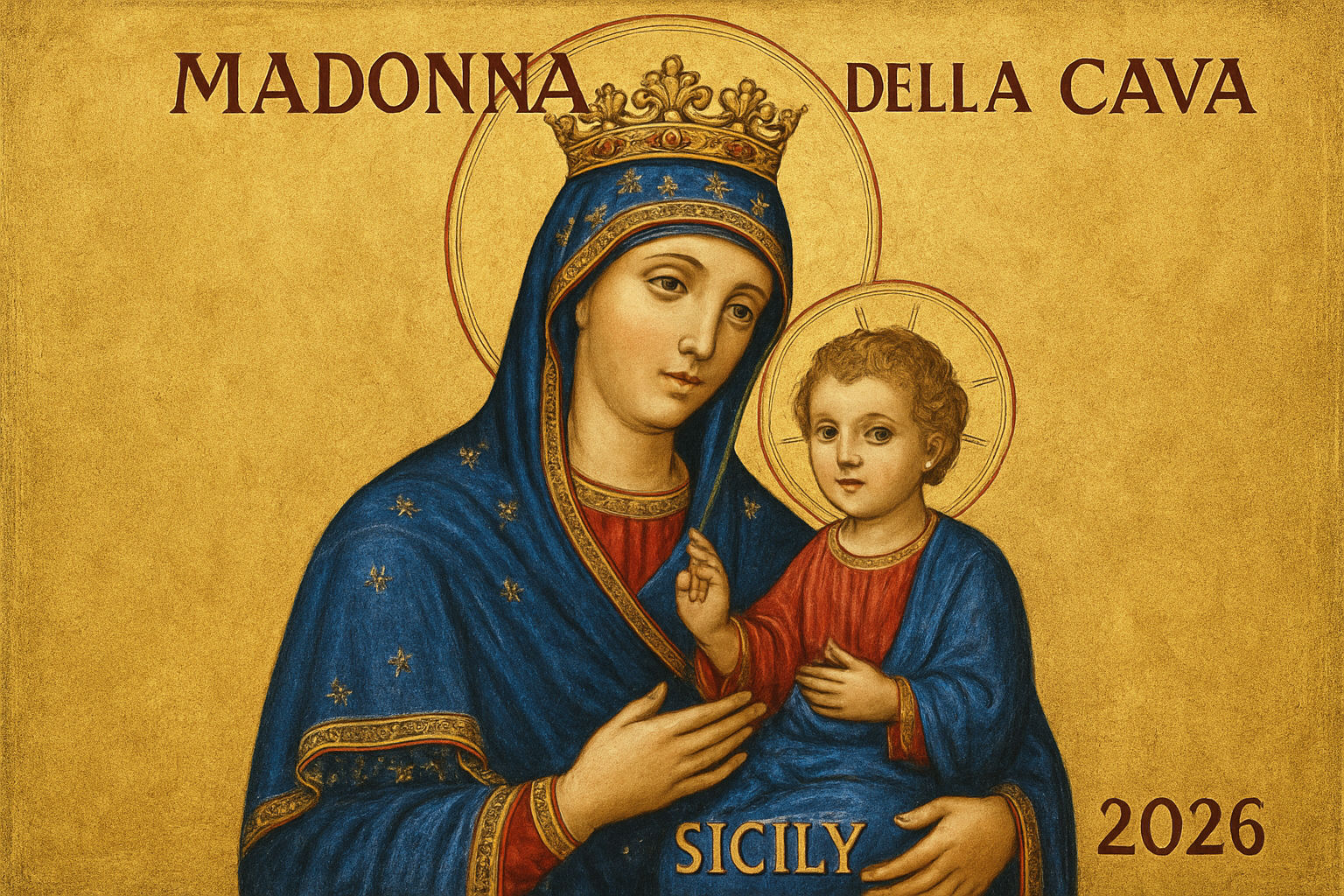
    Madonna della Cava 2026
    Religious/Holiday
    Free

    Madonna della Cava 2026

    Every January, just when Sicily’s Christmas lights begin to fade, the coastal city of Marsala gathers underground to honor a tiny statue that has protected it for more than 500 years. The Madonna della Cava, found in a cave beneath the Porticella district in 1518, is the patron saint of Marsala and the focus of one of western Sicily’s most intimate and distinctive winter feasts. On Monday, 19 January 2026, the city will again celebrate Madonna della Cava with novenas, Masses, and a solemn procession from her underground sanctuary through the streets of Marsala. For visitors interested in island faith traditions, the Madonna della Cava 2026 feast offers a powerful glimpse into how Sicilians blend archaeology, legend, and devotion beneath the streets of a wine‑famous port.​

    Who Is Madonna della Cava and Why Marsala Honors Her

    Marsala’s devotion to Maria Santissima della Cava dates back to the early 16th century. Local tradition recalls that a small statue of the Madonna was discovered in a cave or quarry (cava) in the Porticella area, probably where it had been hidden centuries earlier to protect it from iconoclastic persecution. The find was interpreted as a sign of divine favor, and the image quickly became the focus of popular devotion and stories of protection and miracles, especially during earthquakes and wars.​

    Over time, the Madonna della Cava was formally recognized as patron saint of Marsala, and her feast day on 19 January came to commemorate both the discovery of the statue and the city’s ongoing reliance on her intercession. In Marsala’s list of special patron celebrations, local tourism sources list the Madonna della Cava first, with the city dedicating “on the 19th of January, a devoted procession” to her, distinct from later feasts such as San Giovanni.​

    The Sanctuary: An Underground Church Beneath Marsala

    The heart of the 2026 feast lies in the Sanctuary of Maria SS. della Cava, a semi‑hypogean church carved into the tuff beneath the modern city.​

    Descriptions of the sanctuary explain that:

    • The underground church has a Greek cross plan and is accessed by descending a staircase of 24 steps.​
    • It formed part of a wider underground monastic complex, with decorated rock walls and hypogean spaces linked to earlier quarries and burial sites.​
    • Today it houses the precious image of Madonna della Cava and remains a place of deep spiritual significance for Marsalese residents.​

    Explorers and travel writers describe entering the sanctuary from a ramp and walking down toward an inner garden, then further into the rock‑cut church where frescoes and layers of history are visible along the walls. The sanctuary’s underground setting gives the feast a distinctive, almost archaeological atmosphere, as if devotion is literally rooted in the city’s layers.​

    Feast Structure: Novena, Mass, and January 19 Procession

    According to Enjoy Sicilia’s event listing, the Feast of the Madonna della Cava in Marsala in January begins a few days earlier with the novena and ends on January 19 with the celebration of Holy Mass at the sanctuary and the solemn procession of the simulacrum through the city streets.​

    In practical terms, for Madonna della Cava 2026 you can expect:

    • About nine days before 19 January 2026: A novena of prayers, Masses, and devotions at the sanctuary and associated churches, preparing the community spiritually for the feast.​
    • Monday 19 January 2026 (liturgical feast):
    • Morning and/or principal Holy Mass at the Sanctuary of Maria SS. della Cava, with clergy, civic authorities, and many local faithful present.​
    • After Mass, a solemn procession in which the statue or simulacrum of the Madonna is carried through the streets of Marsala, accompanied by prayers, hymns, and possibly a marching band.​

    Marian feast calendars confirm that on January 19 Marsala commemorates the anniversary of the finding of the statue of St. Mary of the Quarry in 1518, reinforcing the link between the processions and the original discovery narrative.​

    A 2025 article on the Madonna’s miracles notes that every January 19, the city celebrates her feast day with processions, Masses, and joyful festivities, the statue carried through the streets as families ask for protection and give thanks. The 2026 edition will continue this pattern, giving visitors a reliable structure to plan around even before the detailed program is posted.​

    Madonna della Cava Across Sicily and the Diaspora

    While Marsala is the focus of the January 19 feast, devotion to Madonna della Cava extends beyond this single city. Historical sources connect the title to an earlier miracle in Pietraperzia, a town in central Sicily where a young mute boy dreamt of the Madonna telling him to uncover her from the ground, leading to the discovery of a stone bearing her image and his sudden healing.​

    That stone image became the focus of a shrine and local festival, and over centuries, Sicilian migrants carried the devotion abroad. Boston’s North End, for example, still hosts an annual Madonna della Cava feast honoring the patron saint of Pietraperzia, with local societies keeping ties to the original Sicilian festival.​

    Marsala’s devotion to Maria SS. della Cava may draw on similar themes of hidden images and quarry spaces, but the city’s underground sanctuary and January date give it a distinct identity. For a traveler tracing Sicilian Marian geography, visiting Marsala’s sanctuary and January feast offers one node in a broader network of Cava shrines across the island and in the diaspora.

    Experiencing Madonna della Cava 2026 as a Visitor

    When to Arrive

    If you want the full experience of Madonna della Cava 2026 in Marsala:

    • Plan to be in the city from at least Sunday 18 January through Tuesday 20 January 2026, with the feast day itself on Monday 19 January.​
    • Arriving a few days earlier allows you to witness parts of the novena and get oriented around the sanctuary and historic center.

    Marsala’s 2026 events calendar lists “Madonna della cava” as a local event on 19 January, confirming the date and local holiday flavor.​

    Where in Marsala It Happens

    Key locations for the feast include:

    • Santuario Maria SS. della Cava: The underground sanctuary in the Porticella area, accessed via steps and ramps from street level.​
    • Historic center: Streets around Marsala’s centro storico, where the procession likely passes, with banners, candles, and residents watching from balconies.​

    The sanctuary area is also an archaeological site, forming part of Marsala’s layered urban heritage alongside attractions like the Church of Santa Maria della Grotta and the Archaeological Park of Lilybaeum.​

    What to Expect During the Procession

    When the simulacrum of Madonna della Cava leaves the sanctuary, you can expect:

    • Bells and possibly fireworks marking the start of the procession.
    • Confraternities or lay brotherhoods dressed in formal robes, carrying candles or standards.
    • Clergy and altar servers leading prayers and hymns as the statue progresses through the streets.
    • Local families following behind, some barefoot or carrying ex‑voto offerings in thanks for favors received.​

    The atmosphere mixes solemnity with quiet festivity. Unlike big summer festivals, January’s cold and smaller visitor numbers make this an occasion where you stand among locals rather than tourists, hearing Sicilian dialect and seeing how patronal devotion still structures community life.

    Practical Tips for Attending

    • Dress modestly for church services and respectfully for processions. Shoulders and knees covered is a good guideline.
    • Arrive early to the sanctuary on January 19 to find space, as the underground church is compact and fills quickly.
    • For the procession, choose a spot along a central street but be ready to move as the crowd flows; do not block the statue’s path or the bearers’ route.
    • Photography is generally tolerated, but avoid flash inside the church and be discreet during prayers.

    Exploring Marsala and Western Sicily Around the Feast

    Marsala sits on the western tip of Sicily, overlooking the Egadi Islands and famous for its fortified wine and Phoenician‑Roman heritage. Combining Madonna della Cava 2026 with broader island exploration makes for a rich island itinerary.​

    • Historic Marsala: Visit the Mother Church (Chiesa Madre), which houses Renaissance sculptures and marble icons, and walk the streets of the old town between Porta Garibaldi and Porta Nuova.​
    • Archaeology: Explore the Archaeological Park of Lilybaeum, with Punic and Roman remains, and consider pairing the underground sanctuary of Maria SS. della Cava with the nearby Church of Santa Maria della Grotta for a deeper look at Marsala’s hypogean churches.​
    • Salt pans and sunsets: Just north of Marsala, the Stagnone Lagoon and its salt pans offer iconic windmills and sunsets, beautiful even in January.
    • Wine culture: Many Marsala wineries offer tastings year‑round; a glass of Marsala or local Grillo makes a fitting toast after a long feast day.

    Winter crowds are low, prices are gentler than in summer, and the combination of religious feast and off‑season atmosphere gives a more intimate feel than peak holiday periods.

    Why Madonna della Cava 2026 Belongs on Your Island Travel List

    Madonna della Cava 2026 is not a flashy tourist spectacle. It is something deeper: a city descending into its own underground to thank a small, centuries‑old statue for protection and presence. It is a procession of ordinary people through streets that carry layers of Phoenician, Roman, Norman, and Baroque history. It is a reminder that Sicily’s islands and coasts are not just about beaches and food, but also about enduring faith traditions that anchor communities through time.

    If you want to experience Sicily as an island of stories and shrines, not just scenery, put Marsala’s Madonna della Cava 2026 on your calendar. Book a few days in January, find your way to the sanctuary’s 24 steps, and stand quietly as the bells ring and the statue emerges into winter light.

    Let this hidden Madonna be your guide into the heart of Sicilian devotion. The cave is waiting, the candles will be lit, and on 19 January 2026 Marsala will once again walk with its patron through the streets. The invitation is open. Will you walk with them?

    Verified Information at glance

    Event Category: Religious feast / Patron saint festival / Procession and liturgical celebration

    Event Name: Festa di Maria Santissima della Cava (Madonna della Cava) 2026 – Marsala

    Island / City: Sicily, City of Marsala (Province of Trapani)

    Confirmed Feast Date 2026:

    • Madonna della Cava: Monday, 19 January 2026​

    Patron Status:

    • Madonna della Cava is patron saint of Marsala; the city dedicates a procession to her each 19 January.​

    Feast Structure (January):

    • Novena of prayers and liturgies in days before 19 January.​
    • On 19 January: Holy Mass at the Sanctuary of Maria SS. della Cava, followed by solemn procession of the simulacrum through Marsala’s streets.​

    Sanctuary Details:

    • Santuario Maria SS. della Cava located in Porticella area of Marsala.​
    • Underground church with Greek cross plan, accessed by descending 24 steps.​
    • Part of a hypogean complex with rock decorations and multiple historical layers; considered a place of deep spiritual significance.​

    Historical Note:

    • On January 19 Marsala commemorates the anniversary of the finding of the statue of St. Mary of the Quarry (Madonna della Cava) in 1518.​

    Procession:

    • Devoted procession on 19 January through Marsala’s streets with the statue carried by the faithful.​

    Local Name:

    • Feast often referred to as “Festa di Maria SS. della Cava” or “Madonna della cava” in local events listings.​

    Travel Context:

    • Marsala tourism materials highlight the 19 January Madonna della Cava procession among key annual religious events.​
    • Events calendar for Marsala lists “Madonna della cava” on 19.01.2026 among local holidays.​

    Access / Pricing:

    • Public religious celebrations; no admission fee to watch the procession or attend outdoor aspects (church entry subject to normal capacity and any local guidelines).


    Regional (selected municipalities), Sicily
    Jan 19, 2026 - Jan 19, 2026
    Mangia’s Running Event (Road Race) 2026
    Sports/Running
    TBA

    Mangia’s Running Event (Road Race) 2026

    Sicily’s 2026 running calendar opens in style with Mangia’s Maratona di Ragusa, a uniquely scenic road race that combines serious distance running with the beauty of a UNESCO‑listed Baroque cityscape. Scheduled for Sunday, 18 January 2026, this Mangia’s running event takes place in Ragusa, in the southeast of Sicily, and offers both a full marathon and associated races across rural plateaus and historic streets. For runners who love island destinations, Mangia’s Ragusa Marathon 2026 is a chance to start the year with a challenging but rewarding road race framed by dry‑stone walls, Iblean countryside, and views toward Ragusa Ibla, one of Sicily’s Baroque jewels.​

    What Is Mangia’s Maratona di Ragusa 2026?

    Mangia’s Maratona di Ragusa is a road running event held in the provincial capital of Ragusa on the island of Sicily. The 21st edition is listed in race calendars as “21° Mangia’s Maratona Di Ragusa 2026,” confirming its long history on the Sicilian running scene.​

    Race listings describe it as:

    • A road marathon event with 42.195 km distance, accompanied by shorter races such as the StraRagusa and a half marathon in some editions.​
    • An event that mixes urban running through Ragusa’s outskirts with long sections in the surrounding countryside on the Iblean plateau, characterized by rural hamlets and iconic dry‑stone walls.​
    • A winter race that typically attracts both local Sicilian runners and visitors from mainland Italy and abroad who want to combine competition with cultural tourism in the Val di Noto.​

    The event is now sponsored under the Mangia’s brand, a hospitality group that also lends its name to other endurance events such as Mangia’s Triathlon Sicily, reinforcing its connection to sports tourism on the island.​

    Date, Start Time, and Location for 2026

    Official race calendars give clear details for the 2026 edition:

    • Event Name: 21° Mangia’s Maratona di Ragusa 2026
    • Date: Sunday, 18 January 2026​
    • Main Start Time: Around 8:00 AM (Ragusa)​

    Two different descriptions help clarify the start area:

    • One calendar notes that the races will start at 8 AM from Via Feliciano Rossitto, in the upper town center of Ragusa, near the E. Fermi Scientific High School.​
    • A detailed course description on a marathon platform lists the start address as Viale Europa, Ragusa, with a finish in Via G. B. Odierna 5, 97100 Ragusa.​

    These addresses sit in the higher, modern part of Ragusa (Ragusa Superiore), from which the route heads out toward the Iblean countryside before skirting the western edge of the city and eventually returning toward the finish.​

    The Course: From Baroque City to Sicilian Countryside

    The Mangia’s Ragusa Marathon stands out from many urban races by mixing city sections with significant stretches of rural landscape. According to official course information:

    • The marathon presents the first 5 km within the city, between the outskirts of Ragusa Ovest, giving runners an initial urban segment to settle into rhythm.​
    • The next 32 km unfold primarily in the countryside on the plateau, passing through rural hamlets and villages such as Cilone and Tre Casuzze.​
    • Along this central section, runners are surrounded by classic Iblean scenery, including the region’s famous dry‑stone walls, which race organizers describe as “true rural landscape icons”.​

    This combination offers a powerful sense of place. You are not just running in Sicily; you are running through the landscapes that helped earn the Val di Noto UNESCO World Heritage status, though the marathon route itself focuses more on plateau villages and western Ragusa than on Ragusa Ibla’s narrow lanes.​

    Surface and Elevation

    While Mangia’s Maratona di Ragusa is defined as a road marathon, the official course description notes that in the first 21 km there are several short dirt sections between 50 and 300 meters each. These unpaved stretches break up the asphalt and add a bit of variety underfoot, so:​

    • Road shoes remain appropriate, but runners should be prepared for brief packed‑dirt or gravel portions.
    • Weather in mid‑January can affect these segments; wet conditions may make them slightly softer, though overall the course remains primarily road‑based.

    The overall profile is described on marathon platforms as hilly but manageable, typical of a plateau city rather than a flat coastal course. Expect rolling terrain rather than steep mountain climbs, with enough variation to keep the race technically interesting without becoming a trail challenge.​

    The Finish and Connection to StraRagusa

    Around the 24th kilometer, the marathon route merges with that of the StraRagusa, a shorter associated race, and begins to skirt the western outskirts of Ragusa, including the large Viale delle Americhe roundabout. From here, the route leads back toward the city, finishing at Via G. B. Odierna, a central street in upper Ragusa.​

    For many runners, this section offers:

    • A psychological lift as the city reappears after long rural kilometers.
    • Potential support from spectators lining parts of the shared marathon and StraRagusa route.
    • The emotional reward of finishing in the city after exploring its surrounding countryside.

    The combination of separate and shared sections allows both marathoners and shorter‑distance participants to enjoy the event, making Mangia’s road running event a genuine festival of running rather than a single‑distance race.​

    Weather and Conditions: Running a Sicilian Winter Marathon

    January in Ragusa means cool, often ideal running temperatures compared with summer heat. Sicily’s southeast enjoys relatively mild winters, and January daytime highs around Ragusa typically sit in the low teens Celsius, with cooler early‑morning starts. Travel guides for Sicily in winter note:

    • Comfortable conditions for endurance sports, especially for athletes used to colder northern climates.
    • Potential for rain or overcast skies, but also many bright, crisp winter days.

    Runners should plan:

    • A layered race kit, possibly with arm warmers or a light shell to remove as the sun rises.
    • A hat or buff for early wind, especially in the open plateau sections.

    Hydration and sun exposure remain important, but heat stress is far less of an issue than in spring or autumn Sicilian races.

    Registration, Pricing, and Entry Info

    While detailed 2026 entry fees for Mangia’s Maratona di Ragusa are published closer to race day on the official event site and partner registration platforms, race calendars confirm that:

    • The event is listed on platforms like ENDU and Finishers, which provide centralized registration, rules, and program information.​
    • Categories typically include the full marathon and at least one shorter associated race (StraRagusa, sometimes a half marathon or 10 km), each with its own bib and fee structure.​

    Historically, Italian marathons of this scale offer:

    • Lower entry fees than major world majors, especially for early bird registrations.
    • Tiered pricing that increases as race day approaches.

    Prospective runners should:

    • Monitor ENDU and the official Maratona di Ragusa or Mangia’s branding pages in mid‑ to late‑2025 for 2026 registration opening and fee announcements.​
    • Check documentation requirements, as FIDAL rules may require a medical certificate or membership in an athletics federation for competitive categories in Italy.

    Travel Tips: Turning Mangia’s Road Race into a Sicilian Island Adventure

    Getting to Ragusa

    Ragusa lies in southeast Sicily, within reach of:

    • Comiso Airport (CIY): The nearest airport, served by regional and low‑cost flights from parts of Italy and Europe.
    • Catania Fontanarossa Airport (CTA): The island’s major eastern gateway, with bus and car‑rental options to Ragusa (roughly 1.5–2 hours by road).

    Arriving a day or two before the race gives time to pick up bibs, explore the city, and recover from travel.

    Where to Stay

    Consider basing yourself in:

    • Ragusa Superiore: Convenient for the start area and modern services, with easier access to main roads and race logistics.
    • Ragusa Ibla: The Baroque lower town, a UNESCO‑listed jewel with narrow lanes, churches, and piazzas. Staying here offers a more atmospheric experience, though you will need to climb or drive up to the start on race morning.​

    Some runners choose accommodation that partners with the event or with Mangia’s hospitality brand, potentially offering discounts or shuttle options, so checking official race communications can provide added value.​

    What to Do Before and After the Race

    Make the most of your trip by exploring:

    • Ragusa Ibla: Baroque architecture, the Duomo di San Giorgio, and scenic viewpoints over the valley.
    • Modica and Scicli: Nearby Baroque towns, also UNESCO‑listed, accessible as day trips and often linked with other running events like the Barocco Race.​
    • Local cuisine: Reward yourself with dishes like scacce ragusane (stuffed flatbreads), cavatelli or ravioli with ricotta, and chocolate from Modica, paired with Sicilian wines.

    January crowds are far lighter than in summer, offering a calmer, more local feel while you explore.

    Why Mangia’s Road Race in Sicily Belongs in Your 2026 Plans

    For island‑focused runners, Mangia’s Maratona di Ragusa 2026 delivers a rare combination:

    • A bona fide road marathon with professional organization.
    • A route that immerses you in one of Sicily’s most distinctive landscapes, from city edges to stone‑walled countryside.
    • A start‑of‑year race that doubles as a winter escape to a Mediterranean island full of culture and food.

    Instead of pounding anonymous city streets, you will run through villages like Tre Casuzze, along lanes bordered by dry‑stone walls, and back toward a Baroque hilltown that has seen centuries of history. The Mangia’s branding underscores the event’s connection to hospitality and tourism, making it ideal for runners who want a complete travel experience rather than just a number on their race log.​

    Mark Sunday, 18 January 2026 on your training calendar. Build your winter plan around Ragusa’s roads. Then book your flight to Sicily, lace up on Viale Europa or Via Feliciano Rossitto, and let Mangia’s road running event carry you through the Iblean plateau and into the new year.

    Sicily’s streets, villages, and Baroque skyline will be waiting. So will the starting gun. The only question is whether you will be on that start line when it sounds.

    Verified Information at glance

    Event Category: Road running event / Marathon (with associated shorter races)​

    Official Event Name: 21° Mangia’s Maratona di Ragusa 2026

    Island / Region: Sicily (Sicilia), Italy – City of Ragusa

    Confirmed Date: Sunday, 18 January 2026​

    Main Start Time: Around 8:00 AM​

    Start Area (described in race listings):

    • Via Feliciano Rossitto, upper town center of Ragusa, near E. Fermi Scientific High School​
    • Viale Europa, Ragusa (start address given on course description)​

    Finish Address: Via G. B. Odierna, 5, 97100 Ragusa, Italy​

    Course Highlights:

    • First ~5 km in the city between outskirts of Ragusa Ovest​
    • Next ~32 km in the countryside on the plateau, through villages and rural hamlets such as Cilone and Tre Casuzze​
    • Route characterized by iconic dry‑stone walls of the Iblean countryside​
    • Around km 24, marathon route merges with StraRagusa course and skirts western outskirts of Ragusa, including Viale delle Americhe roundabout​

    Surface Details:

    • Predominantly road, with short dirt sections (50–300 m) in the first 21 km​

    Related Listings:

    • Featured as “21° Mangia’s Maratona Di Ragusa 2026” in Sicily race calendars​
    • Listed among featured Sicilian running events with both full and half marathon starting around 8 AM in Ragusa on 18 January 2026​

    Registration / Info Platforms:

    • ENDU event page for Mangia’s Maratona di Ragusa with program, regulations, registration, and route details​
    • Finishers and other international race calendars offering overview and links​

    Travel Context:

    • Ragusa is part of the Val di Noto Baroque towns, a UNESCO World Heritage area​
    • Event offers combination of sports tourism and cultural exploration in southeast Sicily​


    Sicily (exact town per race calendar), Sicily
    Jan 18, 2026 - Jan 18, 2026
    Epiphany Celebrations (La Befana) 2026
    Holiday, Cultural
    Free

    Epiphany Celebrations (La Befana) 2026

    Discover the enchanting world of Epiphany Celebrations (La Befana) 2026 in Sicily as Italy's largest island transforms into a magical wonderland of ancient traditions and delightful folklore on Tuesday, January 6, 2026. Experience the perfect blend of sacred religious observances honoring the Three Wise Men's journey to Bethlehem and the beloved Italian tradition of La Befana, the kind-hearted witch who brings gifts to children across this beautiful Mediterranean paradise.

    The Sacred and Folkloric Significance of Epiphany in Italy

    The Feast of the Three Kings and Divine Revelation

    Epiphany, celebrated on January 6th, commemorates one of Christianity's most significant events: the visit of the Three Wise Men (Melchior, Caspar, and Balthazar) to the infant Jesus, bearing gifts of gold, frankincense, and myrrh. This feast of the Epiphany marks the first manifestation of Jesus to humanity and represents the end of the Twelve Days of Christmas, making it a profound religious celebration throughout Catholic Sicily.

    The term "Epiphany" derives from the Greek word "epiphaneia" meaning manifestation or appearance, signifying the revelation of Christ as the Son of God to the Gentiles represented by the Magi. This theological significance adds deep spiritual meaning to celebrations throughout Sicily, where the island's strong Catholic heritage creates especially meaningful observances.

    La Befana: Italy's Beloved Christmas Witch

    La Befana represents one of Italy's most cherished folklore traditions, dating back to the 13th century when the legend first emerged in Rome and surrounding regions. According to the beloved story, the Three Wise Men invited an old woman to join them on their journey to see the infant Jesus, but she declined due to being busy with housework.

    Later regretting her decision, La Befana gathered gifts and tried to find the Christ child but was unable to locate him. Ever since, she travels on her broomstick every January 5th-6th, looking for the baby Jesus while leaving gifts for good children and coal for mischievous ones. This transformation from regret to generosity creates a powerful narrative that resonates with families across Sicily.

    Sicilian Epiphany Traditions and Regional Celebrations

    Piana degli Albanesi: A Unique Cultural Fusion

    Near Palermo, the town of Piana degli Albanesi offers one of Sicily's most distinctive Epiphany celebrations, where the local Albanian-Greek Orthodox community observes Byzantine-rite masses featuring intricate vestments and choral hymns that echo centuries of tradition. This remarkable cultural fusion demonstrates Sicily's role as a Mediterranean crossroads where different traditions blend harmoniously.

    The celebration creates an atmosphere of incense and song that differs from typical Roman Catholic observances while maintaining the spiritual significance of Epiphany. This unique experience provides visitors with insights into Sicily's diverse cultural heritage.

    Catania's Festa dei Tre Re (Feast of the Three Kings)

    In Catania, the Festa dei Tre Re features processions and markets selling toys and sweets, keeping the festive spirit alive throughout the island's second-largest city. These celebrations combine religious processions with traditional markets that showcase local crafts and holiday treats, creating comprehensive cultural experiences for visitors.

    The festivities typically include colorful parades featuring participants dressed as the Three Wise Men, accompanied by traditional music and local folk groups that enhance the celebratory atmosphere. Children eagerly anticipate these processions while searching for La Befana among the costumed participants.

    Island-Wide Religious Observances

    Throughout Sicily, churches hold special Epiphany masses that emphasize the Adoration of the Magi theme, featuring enhanced music, special decorations, and nativity scenes that remain displayed until Epiphany. Local parishes organize processions where statues of the Three Wise Men process through village streets, accompanied by faithful carrying candles and singing traditional hymns.

    These religious celebrations provide opportunities for visitors to witness authentic Sicilian Catholic traditions while participating in meaningful spiritual observances.

    Traditional Foods and Epiphany Delicacies

    Carbone della Befana: Sweet Coal Treats

    One of Sicily's most beloved Epiphany traditions involves "carbone della Befana" (Befana's coal) - sweet black candy that represents the coal given to mischievous children. These sugar confections are made with caramel, black food coloring, and royal icing to create realistic coal-like appearances that delight both children and adults.

    Traditional recipes require powdered sugar, egg whites, alcohol, black food coloring, and caramel syrup to create authentic coal-shaped candies that taste deliciously sweet despite their ominous appearance. Local Sicilian confectioneries prepare these treats throughout early January, making them widely available during Epiphany celebrations.

    Sicilian Buccellati: Traditional Christmas Cookies

    Buccellati represent typical Sicilian Christmas cookies that reach peak popularity during Epiphany celebrations, featuring biscuit dough filled with dried figs, almonds, walnuts, honey, and raisins. These traditional ring-shaped cookies reflect Sicily's Arab heritage through their use of dried fruits and nuts while providing authentic tastes of island culinary traditions.

    Local bakeries throughout Palermo and Catania prepare fresh buccellati during the holiday season, offering visitors opportunities to taste authentic Sicilian flavors that have been perfected over centuries.

    Blood Oranges and Winter Citrus

    January represents peak season for Sicily's famous blood oranges, particularly the Moro, Tarocco, and Sanguinello varieties that grow in the fertile plains around Catania and Syracuse. These arance rosse explode with color and tangy sweetness, providing perfect accompaniments to Epiphany celebrations while showcasing Sicily's agricultural heritage.

    Fresh orange juice becomes a morning ritual during Epiphany celebrations, while orange and fennel salads with black olives provide refreshing contrasts to richer holiday foods.

    January Weather and Island Travel Conditions

    Mild Mediterranean Winter Climate

    Sicily in January enjoys a Mediterranean winter climate with average daytime temperatures of 14-16°C (57-61°F) in coastal cities like Palermo and Catania. Evening temperatures drop to 5-8°C (41-46°F), requiring warm layers for outdoor celebrations but remaining comfortable compared to northern European winters.

    January brings approximately 5-7 hours of daily sunshine with occasional rain showers that enhance the atmospheric character of Epiphany processions. The UV index remains moderate, making extended outdoor activities pleasant without excessive sun protection concerns.

    Off-Season Tourism Advantages

    January represents Sicily's quiet season with significantly reduced tourist crowds, allowing visitors to experience authentic local celebrations without overwhelming summer congestion. Hotel rates during January are considerably lower than peak season pricing, making Sicily an excellent value destination for cultural tourism.

    This timing provides opportunities to participate in genuine community celebrations rather than tourist-oriented events, creating more meaningful cultural exchanges with local families.

    Planning Your Epiphany Experience in Sicily

    Accommodation and Booking Strategies

    January offers excellent accommodation availability throughout Sicily with reasonable pricing compared to summer rates. Both Palermo and Catania provide good options for Epiphany celebrations, with Palermo offering slightly more lively atmospheres during winter months.

    Early booking ensures better rates and location choices, though January generally provides good availability throughout the island. Historic city centers offer walking access to churches and celebration venues while providing authentic neighborhood experiences.

    Transportation Between Cities

    Sicily's efficient bus and train networks connect major cities for comprehensive Epiphany experiences. Direct buses between Palermo and Catania take approximately 2.5 hours, allowing visitors to experience celebrations in both cities. Rental cars provide maximum flexibility for exploring smaller towns and villages hosting traditional celebrations.

    Public transportation within cities proves adequate for accessing churches and celebration venues, though walking remains the preferred method for navigating historic centers during festivities.

    Cultural Activities and Extended Experiences

    Epiphany celebrations combine perfectly with Sicily's year-round cultural attractions including Norman palaces, baroque churches, ancient Greek ruins, and traditional markets. Cooking classes and food tours provide authentic cultural immersion opportunities while museum visits offer deeper insights into Sicilian history and traditions.

    Day trips to nearby attractions including Monreale, Cefalù, and Segesta enhance comprehensive Sicilian cultural experiences while providing dramatic backdrops for winter photography.

    Traditional Gift-Giving and Family Customs

    La Befana's Special Deliveries

    Sicilian children participate enthusiastically in La Befana traditions by hanging stockings by windows or fireplaces on the evening of January 5th. Families often leave refreshments including wine, panettone, or pandoro for La Befana's midnight journey, demonstrating the generous hospitality characteristic of Sicilian culture.

    Well-behaved children receive sweets, candies, small toys, and traditional treats, while mischievous ones discover lumps of coal (now typically sweet black rock candy) in their stockings. This tradition creates excitement and anticipation that brings families together for meaningful celebrations.

    Modern Adaptations of Ancient Customs

    Contemporary Sicilian families blend traditional Befana customs with modern gift-giving practices, creating celebrations that honor ancestral traditions while adapting to contemporary lifestyles. Local shops and markets feature Befana-themed decorations, toys, and sweets that maintain the holiday's commercial appeal.

    Shopping centers and toy stores often host Befana appearances and children's activities that extend celebrations beyond family homes into community spaces.

    Regional Variations and Local Festivals

    Small Town Celebrations and Village Traditions

    Throughout Sicily's interior villages and coastal towns, local churches organize special Epiphany programming including children's pageants, nativity plays, and community dinners that strengthen cultural identity. These intimate celebrations provide authentic experiences where visitors can observe traditional customs in their original contexts.

    Village celebrations often feature local folk musicians, traditional costumes, and homemade specialties that create genuine cultural immersion opportunities. Participation is typically welcome for respectful visitors interested in experiencing authentic Sicilian hospitality.

    Urban Festivities and Modern Celebrations

    Palermo and Catania host larger-scale celebrations featuring organized parades, street performers, and cultural events that attract participants from throughout their metropolitan areas. These urban festivities combine traditional elements with contemporary entertainment that appeals to diverse audiences.

    City celebrations often include concerts, art exhibitions, and special museum programming that extend Epiphany observances beyond religious and folkloric elements into broader cultural celebrations.

    Experience the magic and wonder of authentic Italian traditions by joining Sicily's Epiphany Celebrations (La Befana) 2026 on January 6th. From sacred religious processions honoring the Three Wise Men to delightful encounters with the beloved Befana folklore, this enchanting island offers unique Mediterranean perspectives on one of Italy's most cherished holidays. Whether you're participating in Byzantine-rite masses in Piana degli Albanesi, enjoying sweet coal treats in Catania's markets, or witnessing traditional processions through ancient Palermo streets, Sicily provides unforgettable cultural experiences that blend spiritual devotion with joyful community celebration. Plan your January island escape and discover why Epiphany in Sicily creates lasting memories of Italian tradition, warm hospitality, and authentic Mediterranean culture.

    Verified Information at a Glance

    Event: Epiphany Celebrations (La Befana) 2026 Sicily

    Date: Tuesday, January 6, 2026

    Religious Significance: Feast of the Epiphany - Visit of Three Wise Men to Jesus

    Cultural Tradition: La Befana - Italian Christmas witch folklore

    Key Celebrations:

    Piana degli Albanesi (near Palermo): Albanian-Greek Orthodox Byzantine-rite masses

    Catania: Festa dei Tre Re (Feast of Three Kings) with processions and markets

    Throughout Sicily: Special church masses, processions, community celebrations

    Traditional Activities:

    • Religious processions with Three Wise Men statues
    • La Befana gift-giving (sweets for good children, coal for mischievous ones)
    • Special church services and nativity scene displays
    • Traditional markets selling toys, sweets, and Epiphany treats
    • Family gatherings with regional foods and customs

    Traditional Foods:

    • Carbone della Befana: Sweet black coal candy
    • Buccellati: Traditional Sicilian cookies with figs and nuts
    • Blood oranges: Peak season citrus from Catania/Syracuse regions
    • Regional sweets and traditional holiday treats

    Weather: Average 14-16°C (57-61°F) days, 5-8°C (41-46°F) nights

    Season: Off-season tourism, reduced crowds, lower accommodation prices

    Public Holiday: National holiday in Italy, most businesses closed

    Cultural Heritage: 13th-century tradition, strong Catholic observance

    Entry: Free public celebrations and church services throughout Sicily


    Island-wide (piazzas, churches), Sicily
    Jan 5, 2026 - Jan 6, 2026
    Christmas Markets Palermo & Catania 2025
    Market, Holiday
    Free

    Christmas Markets Palermo & Catania 2025

    Discover the enchanting magic of Christmas Markets Palermo & Catania 2025 as Sicily's two largest cities transform into festive Mediterranean wonderlands from December 8, 2025, through January 6, 2026. Experience the perfect blend of Italian holiday traditions and authentic Sicilian culture, where Christmas markets offer everything from handcrafted ceramics and traditional sweets to modern attractions like ice skating rinks, all set against the backdrop of this beautiful Italian island's mild winter climate.

    The Unique Charm of Sicilian Christmas Celebrations

    Mediterranean Christmas Magic Under Palm Trees

    Sicily's Christmas markets offer a distinctly different holiday experience from their Northern European counterparts, where visitors enjoy festive celebrations in comfortable December temperatures averaging 15-18°C (59-64°F) under clear Mediterranean skies. This mild climate allows for extended outdoor exploration of markets and attractions, creating perfect conditions for families to enjoy traditional Christmas festivities without harsh winter weather.

    The island's multicultural heritage shines through Christmas celebrations, where Arab, Norman, Spanish, and Italian influences blend together in unique holiday traditions that cannot be experienced anywhere else in Europe. Palermo and Catania serve as the epicenters of these celebrations, each offering distinct cultural experiences that showcase Sicily's rich historical tapestry.

    A Modern Renaissance of Festive Traditions

    Christmas markets in Sicily are a relatively recent phenomenon, having spread across the island since the early 2000s and now representing an important feature of the Christmas holiday season. Both large cities like Catania and Palermo and small towns throughout the island now host Christmas fairs of various shapes, sizes, and displays, creating a network of festive celebrations that attract visitors from across Europe.

    This evolution demonstrates how Sicily has adapted international Christmas market traditions while maintaining its distinctive Mediterranean character and authentic local culture.

    Palermo's Christmas Market Spectacular

    Piazza Castelnuovo: The Heart of Holiday Festivities

    Palermo's main Christmas market takes place at the elegant Piazza Castelnuovo, where over 100 vendors have gathered in previous years to create one of Southern Italy's most impressive holiday celebrations. The market features traditional wooden stalls offering Sicilian specialties including handcrafted ceramics, local olive oil, traditional wines, and authentic holiday treats that represent the best of island culture.

    Via Maqueda and Via Roma complement the central market with festive lights and additional vendor stalls, while Piazza Castelnuovo and Piazza Verdi host markets offering handcrafted items, Christmas decorations, and local artisan products. This network of celebration venues allows visitors to experience diverse aspects of Palermo's holiday traditions while exploring the historic city center.

    Traditional Markets with Christmas Flair

    Palermo's historic markets, Capo and Ballarò, dating back to Arab times, transform during Christmas season while maintaining their authentic character. These markets add traditional Christmas sweets, seasonal ingredients, and decorations to their usual offerings of fresh produce, creating unique experiences where visitors can sample street food while Christmas shopping.

    Local vendors call out "CANNOLIII!!!" in melodic voices while offering roasted chestnuts, seasonal sweets, and traditional holiday specialties that blend seamlessly with the markets' daily operations. This authentic approach to Christmas markets provides visitors with genuine Sicilian cultural experiences rather than commercialized holiday attractions.

    Catania's Christmas Town: Modern Holiday Magic

    Le Ciminiere Exhibition Center: Southern Italy's First Christmas Theme Park

    Catania's Christmas Town at Le Ciminiere Exhibition Center represents the first and largest Christmas theme park in Southern Italy, operating from December 8-30, 2025. This spectacular venue features an ice skating rink, play areas equipped by Lego, Playmobil, Disney Princess, and Sylvanian Families alongside Christmas cinema screenings and a planetarium.

    Santa's house, talking reindeer, the Magic Show, Christmas Circus performances, and disco Christmas events create comprehensive entertainment that appeals to visitors of all ages. The facility includes carousels, hot chocolate stands, and Christmas treat vendors while millions of twinkling lights illuminate Santa's village streets.

    University Square and City Center Celebrations

    Piazza Università serves as Catania's traditional Christmas celebration center, where elaborate light displays and a giant Christmas tree create magical evening strolls during the holiday season. The square hosts concerts, choirs, and open-air performances that add festive spirit to the historic baroque architecture backdrop.

    Multiple venues throughout Catania including Via Garibaldi, Piazza Mazzini, Via Montesano, Via Minoriti, and Villa Pacini host Christmas markets with operating hours from 10:00 AM to 10:00 PM daily (extended to 11:45 PM on holidays and pre-holiday days). This extensive network ensures visitors can experience Christmas magic throughout the city center.

    Traditional Sicilian Christmas Foods and Market Treats

    Authentic Holiday Delicacies

    Sicilian Christmas markets showcase the island's exceptional culinary heritage through traditional holiday foods that reflect centuries of cultural exchange. Cannoli with fresh winter ricotta reach peak flavor during December, as sheep's milk ricotta is at its freshest in colder months, making winter the perfect season to experience this iconic Sicilian dessert.

    Arancini (stuffed rice balls) take on special significance during Christmas season, particularly on December 13th for the Feast of Santa Lucia when Palermitans traditionally avoid bread and pasta. Christmas market vendors offer various arancini flavors alongside cassata Siciliana (decorative ricotta cakes that serve as traditional Christmas gifts).

    Sweet Traditions and Festive Specialties

    Buccellato represents Sicily's Christmas dessert par excellence, featuring biscuit dough filled with dried figs, almonds, walnuts, honey, jam, and raisins. Christmas markets throughout Palermo and Catania offer these traditional treats alongside cannoli, cassata, rice crispelle with honey, and mustazzola cookies.

    Artisanal Sicilian panettone has recently gained popularity, particularly versions from Castelbuono filled with Sicilian PGI ingredients including Bronte pistachios and Modica chocolate. Market vendors also offer torrone (nougat), roasted chestnuts, and traditional almond cookies that provide authentic tastes of Sicilian Christmas traditions.

    Authentic Sicilian Crafts and Holiday Shopping

    Traditional Ceramics and Handcrafted Treasures

    Christmas markets throughout Sicily showcase hand-painted Sicilian ceramics perfect for gifts and souvenirs, alongside intricate lacework and wooden nativity figurines crafted by local artisans. Caltagirone ceramics represent particularly prestigious purchases, as this historic town is famous worldwide for its artisanal ceramics and transforms during Christmas with markets dedicated to local crafts.

    Lava stone jewelry inspired by Mount Etna, handwoven scarves, leather goods, and textiles reflect authentic Sicilian heritage while providing unique shopping opportunities unavailable elsewhere in Italy. Teste di Moro (Moor's heads), Trinacria medallions, and traditional Sicilian masks offer distinctive cultural souvenirs that represent the island's rich artistic traditions.

    Local Artisan Products and Culinary Specialties

    Traditional Sicilian olive oil, regional wines, and artisanal liqueurs including limoncello made with Sicilian citrus flavors provide excellent gifts that capture the essence of island cuisine. Christmas food boxes featuring mixed arancini in various Sicilian flavors, cannoli making kits, and traditional sweets allow visitors to take authentic tastes home.

    Local markets offer unique Christmas decorations, traditional nativity scene components, and handcrafted ornaments that reflect Sicily's distinctive approach to holiday celebrations.

    December Weather and Island Travel Conditions

    Perfect Mediterranean Climate for Holiday Exploration

    December in Sicily provides ideal conditions for Christmas market visits with average high temperatures of 16°C (61°F) and comfortable lows that make extended outdoor activities pleasant. Palermo enjoys approximately 5 hours of daily sunshine with moderate humidity levels, creating perfect weather for market strolling and cultural exploration.

    December is Sicily's rainiest month, though rainfall typically occurs in short bursts that enhance the atmospheric character of Christmas market visits rather than creating significant disruption. Visitors should pack light layers and waterproof jackets while taking advantage of the mild temperatures for extended cultural activities.

    Seasonal Tourism Advantages

    December represents Sicily's quiet season with significantly reduced tourist crowds compared to summer months, allowing for authentic cultural experiences and easier access to popular attractions. Hotel rates during December are considerably lower than peak season pricing, making Sicily an excellent value destination for Christmas market visits.

    This timing provides opportunities to experience authentic local culture and participate in genuine community celebrations rather than tourist-oriented events.

    Transportation Between Palermo and Catania

    Efficient Inter-City Connections

    The distance between Palermo and Catania is approximately 211 kilometers (131 miles), with multiple transportation options connecting Sicily's two largest cities for comprehensive Christmas market experiences. Sais Autolinee buses provide the most efficient service with 16 daily round trips taking 2 hours 35 minutes for €14 one-way.

    Flixbus offers additional service with 2 daily round trips taking 3 hours for €16 one-way, providing budget-friendly alternatives for travelers planning to visit both cities' Christmas celebrations. Train service requires transfers in Messina with total journey times of 4.5-5 hours for €20 one-way, though this option offers scenic coastal views.

    Car Rental for Island Exploration

    Rental cars provide maximum flexibility for exploring Christmas markets in multiple Sicilian towns, with the direct route through Sicily's interior offering opportunities to discover traditional villages and additional holiday celebrations. The southern coastal route through Agrigento, Ragusa, and Siracusa provides scenic alternatives for extended cultural exploration.

    Public transportation within both cities proves efficient for accessing Christmas market venues, with Palermo's AMAT buses connecting the historic center to outlying attractions.

    Planning Your Sicilian Christmas Market Adventure

    Accommodation and Booking Strategies

    December offers excellent accommodation availability throughout Sicily with reasonable pricing compared to peak summer rates. Palermo's historic center provides walking access to Christmas markets while Catania accommodations near Piazza Università offer convenient access to city center celebrations.

    Early booking ensures better rates and location choices though December generally provides good availability throughout the island . Agriturismo options throughout Sicily offer authentic cultural experiences and traditional hospitality at competitive prices.

    Cultural Events and Extended Activities

    Christmas market visits combine perfectly with Sicily's year-round cultural attractions including Norman palaces, baroque churches, archaeological sites, and traditional neighborhoods that remain accessible during winter months. Cooking classes, food tours, and cultural workshops provide authentic cultural immersion opportunities.

    Teatro Massimo in Palermo and other cultural venues host special Christmas programming that complements market visits with high-quality entertainment. Day trips to nearby attractions including Cefalù, Monreale, and Taormina enhance comprehensive Sicilian cultural experiences.

    Embrace the magic of a Mediterranean Christmas by exploring the Christmas Markets of Palermo and Catania 2025, where ancient Sicilian traditions blend with modern holiday celebrations under the warm winter sun. From authentic cannoli and handcrafted ceramics in Palermo's historic piazzas to ice skating and Christmas cinema at Catania's innovative Christmas Town, Sicily offers unique holiday experiences that cannot be found anywhere else in Europe. Book your December island getaway now and discover why Sicily's Christmas markets represent the perfect blend of cultural authenticity, festive entertainment, and Mediterranean charm that creates unforgettable holiday memories.

    Verified Information at a Glance

    Event: Christmas Markets Palermo & Catania 2025 Sicily

    Season: December 8, 2025 - January 6, 2026

    Palermo Christmas Markets:

    Main Venue: Piazza Castelnuovo (100+ vendors in past years)

    Additional Locations: Piazza Marina, Sant'Oliva, Via Maqueda, Via Roma

    Historic Markets: Capo and Ballarò (with Christmas specialties)

    Features: Handcrafted ceramics, Sicilian olive oil, wines, traditional sweets

    Catania Christmas Town:

    Venue: Le Ciminiere Exhibition Center (Viale Africa 12)

    Dates: December 8-30, 2025

    Features: Ice skating rink, Lego play areas, Christmas cinema, planetarium

    Additional: Santa's house, talking reindeer, Magic Show, Christmas Circus

    City Center Markets:

    Piazza Università: Giant Christmas tree, light displays, concerts

    Multiple Venues: Via Garibaldi, Piazza Mazzini, Via Minoriti, Villa Pacini

    Hours: 10:00 AM - 10:00 PM daily (11:45 PM holidays)

    Traditional Foods: Cannoli, arancini, buccellato, cassata, panettone

    Crafts: Caltagirone ceramics, lava stone jewelry, Teste di Moro, textiles

    Weather: 15-18°C (59-64°F) average, occasional rain, 5 hours daily sunshine

    Transportation: Bus (2h 35min, €14), Train (4-5h, €20), Car rental available

    Accommodation: Good December availability, reduced winter rates

    Palermo, Catania (historic centers), Sicily
    Dec 8, 2025 - Jan 6, 2026
    Feast of Santa Cecilia (Patron of Musicians) 2025
    Music, Religious
    Free

    Feast of Santa Cecilia (Patron of Musicians) 2025

    Experience the profound spiritual and musical heritage of Sicily as the island honors Santa Cecilia, the patron saint of musicians, on November 22, 2025. This sacred celebration transforms Sicily's churches, concert halls, and cultural venues into vibrant centers of devotion and musical excellence, where centuries-old traditions blend with contemporary performances to create an unforgettable Mediterranean cultural experience.

    The Sacred Legacy of Santa Cecilia: Patroness of Musicians

    The Roman Martyr Who Sang to God

    Santa Cecilia, a noble Roman virgin martyr from the 3rd century, earned her eternal connection to music through her profound faith and devotion. According to ancient tradition, as musicians played at her wedding ceremony, Cecilia "sang in her heart to the Lord," maintaining her spiritual vow of virginity despite being forced into marriage. This powerful act of inner devotion while external music played established her as the divine protector of all who create and perform sacred music.

    Her martyrdom around 230 AD under Emperor Alexander Severus alongside her husband Valerian, his brother Tiburtius, and the Roman soldier Maximus created a legacy of faith that continues to inspire musicians worldwide. The discovery of her incorrupt body in 1599 with deep cuts in her neck at the church of Santa Cecilia in Trastevere, Rome, provided physical testimony to her sacrifice and strengthened devotion to her intercession.

    Why Musicians Claim Her Protection

    Santa Cecilia's patronage of musicians stems from multiple sources: her wedding day musical devotion, her legendary ability to sing even while dying, and the tradition that she invented the organ to enhance church worship. Her feast day on November 22nd has become the occasion of concerts and musical festivals worldwide, making this date a universal celebration of sacred and secular musical traditions.

    The Roman Catholic Church honors her as one of only seven women, excluding the Blessed Virgin, commemorated by name in the Canon of the Mass, demonstrating her exceptional importance in Christian tradition. This prestigious recognition elevates her feast day celebrations to special significance throughout Catholic regions like Sicily.

    Sicily's Musical Heritage and Santa Cecilia Celebrations

    Teatro Santa Cecilia Palermo: The Heart of Island Musical Culture

    Teatro Santa Cecilia in Palermo serves as Sicily's premier venue for honoring the patron saint of musicians, hosting world-class performances throughout November 2025. The theater's programming around Santa Cecilia's feast day includes international artists like Kemuel Roig performing from November 13-15, 2025, and the Darius Brubeck Quartet presenting four nights of jazz from November 27-30.

    These performances create a bridge between classical sacred music traditions and contemporary musical expression, reflecting Sicily's role as a Mediterranean crossroads where diverse musical cultures have flourished for centuries. The theater's proximity to Palermo's historic center allows visitors to combine musical experiences with exploration of Norman palaces, Arab-influenced architecture, and Baroque churches.

    The Sicilia Jazz Festival Connection

    While the main Sicilia Jazz Festival occurs in June-July, the musical energy it generates throughout Palermo creates year-round appreciation for musical excellence that culminates in Santa Cecilia celebrations. The festival's emphasis on orchestral jazz productions featuring international stars alongside young Sicilian conservatory talents demonstrates the island's commitment to nurturing musical heritage that Santa Cecilia represents.

    Venues like the Real Teatro Santa Cecilia, Teatro di Verdura, and Palazzo Steri provide diverse settings where sacred and secular musical traditions honor the patron saint's legacy. This network of cultural venues ensures that Santa Cecilia's feast day celebrations extend beyond traditional religious observances to encompass Sicily's broader musical identity.

    Religious Observances and Sacred Music Traditions

    Cathedral Celebrations Across Sicily

    Cagliari's Cathedral of Santa Cecilia in Sardinia represents one of the most significant architectural tributes to the patron saint, where special masses and musical performances mark her feast day. The cathedral, built in the 13th century and dedicated to both Santa Maria Assunta and Santa Cecilia, showcases the dual devotion that characterizes Sicilian religious architecture.

    Throughout Sicily, parish churches dedicated to Santa Cecilia host special liturgies featuring choral performances, organ recitals, and traditional hymn singing that honor her musical patronage. These celebrations create opportunities for local musicians to showcase their talents while maintaining centuries-old traditions of sacred music performance.

    Musical Masses and Choral Performances

    November 22, 2025 brings enhanced musical elements to masses throughout Sicily, where church choirs perform special compositions written for Santa Cecilia's feast day. Alessandro Scarlatti's "Music for the Feast of Saint Cecilia" represents one of the most celebrated liturgical works performed during these celebrations, featuring Vespers, Magnificat, and Te Deum specifically composed for the patron saint.

    Local musical bands and church choirs collaborate to present symphonic marches, traditional hymns, and contemporary Christian music that demonstrates the evolution of sacred musical expression. These performances often occur in historic squares and cathedral steps, creating public celebrations that welcome both faithful and visitors to experience Sicily's living musical heritage.

    Cultural Activities and Island-Wide Celebrations

    Musical Workshops and Educational Programs

    Sicilian conservatories and music schools organize special events around Santa Cecilia's feast day, offering masterclasses, workshops, and student performances that celebrate musical education. These programs often feature international guest artists who share expertise while experiencing authentic Sicilian musical traditions.

    Young musicians from Sicily's conservatories participate in collaborative concerts that blend traditional folk music with classical and contemporary styles, demonstrating how Santa Cecilia's patronage extends to all musical genres. These educational initiatives ensure that future generations understand both the religious significance and cultural importance of musical heritage.

    Folk Music and Traditional Celebrations

    Sicilian folk bands and traditional music groups honor Santa Cecilia through performances of ancient ballads, harvest songs, and religious folk music that connect contemporary celebrations to centuries-old island traditions. These performances often incorporate traditional instruments like the marranzano (jaw harp), friscalettu (reed pipe), and tambourines that create distinctive Sicilian musical textures.

    Village festivals throughout Sicily use Santa Cecilia's feast day as occasions for community musical celebrations featuring local bands, folk dancers, and traditional song circles that strengthen cultural identity while honoring the patron saint.

    November Weather and Festival Atmosphere

    Perfect Climate for Cultural Exploration

    November in Sicily provides ideal conditions for outdoor musical celebrations, with comfortable temperatures averaging 15-20°C (59-68°F) and mild evening conditions perfect for concerts and processions. The reduced tourist crowds create intimate atmospheres where visitors can experience authentic local celebrations without overwhelming summer congestion.

    Autumn sunshine and occasional Mediterranean showers create dramatic lighting conditions that enhance the visual beauty of outdoor musical performances against Sicily's historic architecture. The season's golden light provides perfect backdrops for photography while comfortable temperatures encourage extended cultural exploration.

    Seasonal Festivities and Cultural Context

    November celebrations in Sicily include multiple religious and cultural festivals that create rich contexts for Santa Cecilia observances. All Saints' Day (November 1) and All Souls' Day (November 2) establish the month's spiritual atmosphere, while various patron saint festivals throughout the island demonstrate Sicily's deep Catholic heritage.

    The approach of Advent season adds anticipatory energy to musical celebrations, as churches and cultural venues prepare for Christmas while honoring Santa Cecilia's special protection of musicians and sacred music.

    Planning Your Musical Pilgrimage to Sicily

    Accommodation Near Cultural Venues

    Palermo's historic center offers diverse lodging options within walking distance of Teatro Santa Cecilia and major churches hosting feast day celebrations. November availability is generally excellent with reasonable pricing compared to peak summer rates, allowing visitors to secure quality accommodations near musical venues.

    Boutique hotels and historic palazzi provide atmospheric settings that complement the cultural richness of Santa Cecilia celebrations while offering modern amenities for comfortable stays. Many accommodations feature traditional Sicilian architecture that enhances the overall cultural immersion experience.

    Transportation and Cultural Access

    Palermo serves as the ideal base for comprehensive Santa Cecilia celebrations, with excellent connections to other Sicilian cities hosting musical events. Public transportation and rental car options provide access to smaller towns and villages where traditional celebrations offer authentic cultural experiences.

    Walking tours of Palermo's historic center allow visitors to discover multiple churches dedicated to Santa Cecilia while experiencing the city's remarkable architectural heritage. The compact historic center makes it easy to attend multiple musical events during the feast day celebrations.

    Concert Tickets and Event Planning

    Teatro Santa Cecilia performances require advance booking, especially for special November concerts featuring international artists. Early reservation ensures access to the most sought-after musical events while allowing visitors to plan comprehensive cultural itineraries.

    Church celebrations typically offer free admission, though special musical masses may request donations to support parish musical programs. Music festival events vary in pricing, with some performances offering student discounts and group rates.

    Culinary Traditions and Feast Day Foods

    Traditional Sicilian Sweets for Santa Cecilia

    November 22nd celebrations feature special sweets and traditional foods that honor Santa Cecilia's feast day. Cannoli, cassata, and traditional almond pastries appear at church gatherings and cultural events, providing authentic tastes of Sicilian hospitality.

    Local bakeries prepare special breads and pastries decorated with musical symbols and religious imagery that celebrate Santa Cecilia's dual role as martyr and patron of musicians. These culinary traditions create additional ways for visitors to experience authentic Sicilian culture during the feast day celebrations.

    Wine and Musical Pairings

    Sicilian wineries often host special tastings during Santa Cecilia's feast week, combining regional wines with musical performances that create memorable cultural experiences. These events showcase Nero d'Avola, Grillo, and other indigenous varietals while celebrating the island's artistic heritage.

    Restaurant dinner concerts featuring traditional Sicilian cuisine paired with live musical performances provide intimate ways to experience both culinary and musical traditions that honor Santa Cecilia's patronage.

    The Spiritual and Cultural Legacy

    Continuing Musical Traditions

    Santa Cecilia's feast day in Sicily demonstrates how ancient religious traditions continue to inspire contemporary musical expression. The celebration bridges sacred and secular music, showing how spiritual devotion can enhance all forms of artistic creativity.

    Sicilian musicians, composers, and music educators use this annual celebration to reflect on their artistic calling while seeking the patron saint's intercession for continued inspiration and skill. This spiritual dimension adds profound meaning to musical pursuits beyond mere entertainment or career advancement.

    Cultural Preservation and Innovation

    The feast day celebrations showcase how traditional musical heritage adapts to contemporary expressions while maintaining spiritual significance. Young Sicilian musicians learn to honor ancestral traditions while creating new musical expressions that speak to modern audiences.

    This balance between preservation and innovation ensures that Santa Cecilia's patronage remains relevant for future generations of musicians while maintaining the authentic character that makes Sicilian musical culture distinctive.

    Immerse yourself in the divine harmony of faith and music by experiencing the Feast of Santa Cecilia 2025 throughout Sicily's magnificent cultural venues and sacred spaces. From world-class performances at Teatro Santa Cecilia in Palermo to intimate church celebrations in historic villages, this extraordinary festival offers authentic opportunities to witness how spiritual devotion continues to inspire musical excellence. Whether you're a musician seeking the patron saint's blessing, a music lover exploring Mediterranean cultural traditions, or a traveler wanting to experience authentic Sicilian heritage, Santa Cecilia's feast day provides profound connections to centuries of artistic and spiritual tradition. Plan your visit to Sicily during this sacred season and discover why the patron saint of musicians continues to inspire divine creativity on this remarkable Italian island.

    Verified Information at a Glance

    Event: Feast of Santa Cecilia (Patron of Musicians) 2025

    Date: Friday, November 22, 2025

    Religious Significance: Patron Saint of Musicians, Church Music, and Singers

    Main Celebrations: Throughout Sicily, with focus on Palermo

    Key Venues:

    Teatro Santa Cecilia, Palermo: Kemuel Roig concerts November 13-15, 2025 (7:00 PM)

    Real Teatro Santa Cecilia: Darius Brubeck Quartet November 27-30, 2025

    Cathedral of Santa Cecilia, Cagliari: Special liturgical celebrations

    Churches throughout Sicily: Enhanced musical masses and choral performances

    Special Events:

    Alessandro Scarlatti - Music for the Feast of Saint Cecilia (Accademia Nazionale di Santa Cecilia, Rome - November 26, 2025)

    Local church celebrations: Musical masses, choir performances, organ recitals

    Cultural workshops: Music education programs at Sicilian conservatories

    Folk music performances: Traditional Sicilian musical celebrations

    Cultural Context:

    • Historical Background: 3rd-century Roman martyr who "sang to God"
    • Feast Day Tradition: November 22nd annual celebration worldwide
    • Musical Patronage: Guardian of musicians, composers, and sacred music
    • Sicilian Heritage: Strong Catholic traditions and musical culture

    Weather: November temperatures 15-20°C (59-68°F), ideal for cultural activities

    Accommodation: Palermo historic center recommended for easy venue access

    Planning: Book concert tickets in advance; church celebrations typically free

    Cultural Tips: Experience both sacred liturgies and secular musical performances


    Island-wide (churches, conservatories), Sicily
    Nov 22, 2025 - Nov 22, 2025
    Palermo Marathon 2025
    Sports, Running
    Free

    Palermo Marathon 2025

    Experience the perfect blend of athletic challenge and cultural discovery at the Palermo Marathon 2025, taking place on Sunday, November 16, 2025, in Sicily's captivating capital city. This 30th edition of the international marathon offers runners a unique opportunity to race through 2,500 years of Mediterranean history while enjoying ideal November temperatures and spectacular views of palaces, cathedrals, and coastal landscapes that define this remarkable Italian island.

    The Historic Heart of Sicily's Premier Running Event

    A 30-Year Legacy of Island Athletics

    The Palermo Marathon represents one of Sicily's most prestigious sporting events, combining world-class organization with an intimate, low-key atmosphere that attracts runners from across Europe and beyond. This XXX edition marks three decades of celebrating both athletic achievement and Sicilian cultural heritage, offering participants an authentic island experience far removed from commercial mega-marathons.

    The event showcases Palermo's unique position as a crossroads of Mediterranean civilizations, where runners traverse streets that have witnessed Arab, Norman, Spanish, and Italian influences over centuries. This cultural richness creates running experiences where every kilometer reveals new architectural treasures and historical landmarks.

    Perfect November Running Conditions

    November in Sicily provides ideal marathon conditions with comfortable temperatures averaging 15-19°C (59-66°F) during the day and mild 57-59°F (14-15°C) evening temperatures. The island enjoys approximately 5 hours of daily sunshine with moderate humidity levels, creating perfect conditions for endurance running without the intense summer heat.

    Light, occasional rainfall enhances the atmospheric character of running through ancient streets while providing natural cooling during the race. The reduced tourist crowds in November allow runners to experience authentic Palermo without overwhelming summer congestion.

    Race Details and Registration Information

    Multiple Distance Options for Every Runner

    The Palermo Marathon 2025 offers three competitive race formats designed to accommodate various fitness levels and preferences :

    Marathon (42.195 km) - The classic full distance with a challenging 5h30 cut-off time requiring participants to be minimum 20 years old. Half Marathon (21.097 km) - A scenic introduction to Palermo's historic center with a 2h40 cut-off time. Relay Marathon (4 x 10.5 km) - Team competition allowing groups to share the full marathon distance.

    Competitive Registration Pricing

    Early bird registration offers excellent value with €30 entry fees until May 15, 2025, increasing to €40 from September 1st and €45 from October 1st. Half Marathon pricing starts at €25 until May 15th, rising to €30 from September 1st and €40 from October 1st.

    Relay team registration costs €65 per team until May 15th, increasing to €70 from September 1st and €80 from October 1st. Registration closes on November 2, 2025, providing ample time for international participants to plan their Sicilian running adventure.

    The Spectacular Course Through Historic Palermo

    Start and Finish at Piazza Ruggero Settimo

    The marathon begins and ends at Piazza Ruggero Settimo on Via Libertà, Palermo's elegant main boulevard, providing convenient access to the city center and excellent spectator viewing opportunities. The 8:30 AM start time allows runners to experience the city awakening while enjoying cool morning temperatures ideal for distance running.

    Double Loop Through Cultural Treasures

    The marathon course loops twice around the half marathon route, taking runners through Palermo's most spectacular cultural landmarks. The carefully designed route includes Via della Libertà, Piazza Vittorio Veneto, Parco della Favorita, Mondello direction, Viale Ercole, Palazzina Cinese, and historic city center passages.

    Key highlights include running through the internal courtyard of Palazzo Reale (Norman Palace), past Teatro Massimo, Quattro Canti, Palermo Cathedral, and Piazza Politeama. These iconic landmarks create a living museum experience where runners literally race through centuries of Mediterranean history.

    Iconic Landmarks Along the Route

    Teatro Massimo: Europe's Largest Opera House

    The course passes Teatro Massimo, Italy's largest opera house and Europe's third largest, representing the pinnacle of 19th-century theatrical architecture. This neoclassical masterpiece serves as both a stunning visual landmark and a symbol of Palermo's rich cultural heritage.

    Quattro Canti: The Baroque Heart of Palermo

    Runners experience the spectacular Quattro Canti (Four Corners), officially known as Piazza Vigliena, representing the geometric and spiritual center of historic Palermo. This octagonal Baroque square features four ornate building facades decorated with statues representing the four seasons, Spanish monarchs, and patron saints of Palermo's historic districts.

    The "Teatro del Sole" (Theater of the Sun) nickname reflects how sunlight illuminates each ornate facade throughout the day, creating dramatic architectural theater that runners witness during the race.

    Palazzo dei Normanni and Palatine Chapel

    The course includes an extraordinary passage through the internal courtyard of Palazzo dei Normanni (Norman Palace), one of Europe's oldest royal residences and current seat of the Sicilian Regional Assembly. This unique route privilege allows runners to experience spaces normally reserved for official functions while racing through 1,000 years of Sicilian royal history.

    Parco della Favorita and Coastal Views

    The route ventures through Parco della Favorita, Palermo's largest public park, providing runners with refreshing tree-lined sections and stunning views toward Monte Pellegrino and the Mediterranean coastline. The Palazzina Cinese offers a glimpse of 18th-century royal architectural whimsy within the park setting.

    Pre-Race Expo and Packet Pickup

    Marathon Expo at Piazza Castelnuovo

    The Maratona Expo takes place at Piazza Castelnuovo on Friday, November 14, and Saturday, November 15, 2025, from 10:00 AM to 7:30 PM. This central location provides convenient access to race packet pickup, official merchandise, and running industry vendors.

    Comprehensive Race Package

    Registration includes an impressive array of amenities: finisher medal, goodie bag, event T-shirt, e-certificate, timing chip, pace leaders, expo entry, massage services, parking, free public transport, hydration stations, nutrition stations, medical assistance, bag drop, toilets, changing rooms, and accident insurance.

    Cultural Immersion and Island Exploration

    November: Perfect Season for Sicilian Discovery

    November represents ideal timing for comprehensive Sicily exploration, combining marathon participation with cultural immersion during the island's most pleasant season. Reduced tourist crowds ensure authentic experiences at major attractions while comfortable temperatures make extended sightseeing enjoyable.

    Must-Visit Palermo Attractions

    Palermo Cathedral showcases the architectural fusion of Arab, Norman, and Spanish influences that defines Sicilian identity. The Norman Palace and Palatine Chapel offer UNESCO World Heritage experiences featuring spectacular Byzantine mosaics.

    Traditional markets including Ballarò, Vucciria, and Il Capo provide authentic Sicilian culinary experiences with street food, fresh produce, and local specialties that reflect the island's diverse cultural heritage.

    Day Trip Opportunities

    Marathon weekend provides excellent opportunities for Sicily exploration including Monreale Cathedral with its stunning Norman mosaics just 8 kilometers from Palermo. Cefalù offers beautiful coastal scenery and medieval architecture within easy driving distance.

    Segesta presents one of the world's best-preserved Greek temples, while Erice provides medieval mountain town charm with panoramic coastal views.

    Training and Preparation for Island Conditions

    Course Difficulty and Elevation

    The Palermo Marathon features a flat-to-undulating profile that challenges runners with varied terrain including narrow Sicilian streets, broad avenues, and historic city center cobblestones. The double loop format allows spectators multiple viewing opportunities while providing runners familiar landmarks throughout the race.

    Climate Adaptation Strategies

    November temperatures ranging from 15-19°C require clothing strategies that accommodate morning coolness and potential midday warming. Light layering proves effective for the mild Mediterranean climate while waterproof options prepare for occasional light rainfall.

    Moderate humidity levels and sea breezes create comfortable running conditions distinct from both northern European winters and Mediterranean summers.

    Accommodation and Travel Planning

    Palermo City Center Hotels

    Historic center accommodation provides walking access to both the marathon start/finish and major cultural attractions. November availability is generally good with reasonable pricing compared to peak summer rates.

    Sicily Regional Exploration

    Palermo serves as an excellent base for comprehensive Sicily exploration, with rental car access to major attractions and good public transportation connections to coastal towns and mountain villages. Agriturismo options throughout the island provide authentic Sicilian hospitality experiences.

    Transportation and Logistics

    Palermo Airport offers convenient international connections while public transportation provides efficient access between accommodation and marathon venues. The free public transport included in race registration simplifies logistics for international visitors.

    The Running Community and Race Atmosphere

    International Participation in Intimate Setting

    The Palermo Marathon attracts runners from throughout Europe seeking authentic cultural experiences combined with competitive athletics. The relatively quiet, low-key atmosphere creates opportunities for meaningful interactions with local participants and genuine cultural exchange.

    Warm Sicilian hospitality enhances the race experience through enthusiastic local support, traditional music along the course, and post-race celebrations that welcome international visitors into the community.

    Unique Mediterranean Marathon Experience

    Running through 2,500 years of Mediterranean history creates experiences impossible to replicate elsewhere, where athletes literally race through the same streets where Arabs, Normans, and Spanish once ruled. The combination of competitive athletics and cultural immersion appeals to runners seeking meaningful travel experiences.

    Join thousands of international runners for an unforgettable journey through Sicily's historic capital at the Palermo Marathon 2025. This extraordinary event combines world-class athletics with authentic Mediterranean culture, offering participants the unique opportunity to race through centuries of history while enjoying perfect November weather and genuine Sicilian hospitality. From the spectacular Baroque architecture of Quattro Canti to the royal splendor of Norman Palace, every kilometer reveals new treasures that make this marathon a true bucket-list experience. Register now at competitive early-bird rates and discover why the Palermo Marathon represents one of Europe's most rewarding cultural running adventures.

    Verified Information at a Glance

    Event: Palermo Marathon 2025 (XXX Edition)

    Date: Sunday, November 16, 2025

    Start Time: 8:30 AM

    Location: Piazza Ruggero Settimo - Via Libertà, Palermo, Sicily

    Distances: Marathon (42.195 km), Half Marathon (21.097 km), Relay Marathon (4×10.5 km)

    Registration Fees:

    Marathon: €30 (until May 15), €40 (Sept 1), €45 (Oct 1)

    Half Marathon: €25 (until May 15), €30 (Sept 1), €40 (Oct 1)

    Relay Team: €65 (until May 15), €70 (Sept 1), €80 (Oct 1)

    Key Details:

    Registration Closes: November 2, 2025

    Age Requirement: 20+ years for marathon

    Cut-off Times: 5h30 (marathon), 2h40 (half marathon)

    Course: Double loop through historic center, flat-to-undulating terrain

    Expo Information:

    Dates: November 14-15, 2025

    Time: 10:00 AM - 7:30 PM

    Location: Piazza Castelnuovo, Palermo

    Course Highlights: Teatro Massimo, Quattro Canti, Palermo Cathedral, Norman Palace courtyard, Parco della Favorita, Palazzina Cinese

    Weather: 15-19°C day, 13-15°C night, moderate humidity, occasional light rain

    Registration: worldsmarathons.com, ahotu.com, palermomaratona.it

    Contact: info@palermomaratona.it, +39 392 988 67 42


    Palermo (city center start/finish), Sicily
    Nov 16, 2025 - Nov 16, 2025
    Funghi Fest 2025
    Food, Nature
    TBA

    Funghi Fest 2025

    Funghi Fest 2025 transforms Castelbuono, in the heart of the Madonie Park, into Sicily’s autumn capital of flavors and folklore across two celebratory weekends: October 18–19 and October 24–26, 2025. The official festival site confirms dates, format, and pillars for the 19th edition, highlighting a multisensory program of tastings, show cooking, “laboratori del gusto,” guided tours, foraging‑themed excursions, street performances, concerts, artisan markets, and locally brewed craft beers. Set against medieval streets and the Ventimiglia Castle, Funghi Fest invites visitors to taste iconic madoniti mushroom dishes, meet producers, and join music‑filled evenings that celebrate the season’s bounty.

    Dates, place, and what’s included

    • Dates: Two weekends — October 18–19 and October 24–26, 2025 — with daily schedules spanning morning to late evening in Castelbuono, Palermo province.
    • Format and themes: A curated tasting route for mushroom‑based specialties, live show cooking with guest chefs, educational “laboratori del gusto,” and a full roster of exhibitions, talks, concerts, and street theater throughout the historic center.
    • Where it happens: Stages, tasting areas, and artisan stalls unfold in the centro storico around Piazza Margherita, Piazza Castello, and lanes leading to the Ventimiglia Castle and the Civic Museum.

    What to eat and drink

    • Mushroom classics: Expect porcini arrosto, tagliatelle ai funghi, arancine ai funghi, polenta with funghi misti, panini caldi, and sauces that spotlight Madonie varieties; tasting points run day and night with rotating menus.
    • Street food and sweets: Sicilian street‑food stands and patisserie counters complement the savory routes with cannoli, biscotti, and seasonal desserts.
    • Craft beers and wine: Local birrifici pour autumnal brews alongside regional wines, curating pairings for both tasting area plates and show‑cooking dishes.

    Culture, music, and learning

    • Shows and concerts: A nightly calendar brings bands to Piazza Castello and Piazza Margherita, while daytimes feature folk groups, marching street bands, and artists of strada weaving through the lanes.
    • Exhibitions and talks: The program layers photo and craft exhibitions with conferences on mycology, sustainable foraging, and Madonie biodiversity, often led by experts and local associations.
    • Family friendly: Didactic trails, guided walks, and circus‑arts segments keep the festival welcoming to all ages; museum hours extend to accommodate visitors in town for the event.

    Nature and territory

    • Madonie setting: Funghi Fest’s identity is tied to the Parco delle Madonie, a biodiversity hotspot whose oak and chestnut forests produce prized fungi; guided excursions and talks connect tastings to the landscape.
    • Medieval charm: The festival doubles as a cultural visit to Castelbuono’s heritage sites, including the Ventimiglia Castle and the Civic Museum, which often extend opening hours on festival days.

    Sample weekend plan

    • Saturday (Oct 18 or 25):
    • Morning: Stroll the centro storico as stands open; visit the Civic Museum and Castle for context.
    • Midday: Follow the tasting route for porcini dishes and arancine ai funghi; pause for a “laboratorio del gusto.”
    • Afternoon: Catch a mycology talk or a guided walk; browse artisan stalls for preserves, cheeses, and local olive oil.
    • Evening: Settle in Piazza Castello for the headline concert; pair a mushroom plate with a craft beer or a Madonie wine.
    • Sunday (Oct 19 or 26):
    • Morning: Join a guided excursion toward Madonie trails or nearby borghi; return for street‑band parades in the centro.
    • Afternoon: Taste alternative mushroom recipes and sweets; end with a final show before departure.

    Practical information

    • Getting there: Castelbuono sits east of Palermo in the Madonie foothills; self‑drive is the most flexible for weekend timetables. Allow extra time for festival‑day traffic into the town.
    • Parking and mobility: Use signed lots at the perimeter and walk into the pedestrian core; wear comfortable shoes for cobbles and gentle slopes.
    • Where to stay: Book early in Castelbuono or nearby Madonie villages; regional listings suggest coordinated hospitality networks with event rates during festival weekends.
    • Accessibility: Historic streets can be uneven; check event pages for accessible routes and ask staff at tasting areas for seating options during peak hours.

    How to get the most from tastings

    • Share plates: Split portions to sample more dishes and return to favorites later; lines ebb mid‑afternoon between lunch and dinner.
    • Ask producers: Inquire about mushroom species, foraging zones, and preservation methods; many stands offer jars and dried mixes ideal for travel.
    • Pair thoughtfully: Choose malty beers with roasted porcini, lighter whites with sautéed funghi misti, and bold reds for richer ragùs.

    Responsible foraging and sustainability

    • Learn before you pick: Conference sessions led by micologists cover identification and sustainable harvesting; the festival’s education focus discourages untrained foraging in protected areas.
    • Reduce waste: Look for recycling stations and compostable serviceware; bringing a reusable bottle and tote helps minimize single‑use items.
    • Support local: Purchase pantry staples like dried mushrooms, sauces, cheeses, and oils from small producers to extend the festival experience at home.

    2025 dates and confirmations

    • Official dates: Funghi Fest 2025 runs October 18–19 and October 24–26, per the event’s website; regional calendars mirror those dates and describe the program pillars.
    • Program teasers: Enjoy Sicilia’s 2024 schedule gives a sense of daily flow — stand openings, museum access, parades, tastings, and evening concerts — which returns in 2025 with updated artists and speakers.
    • Event status: Organizers note that 2025 retains the successful format of previous years, with continuous updates on artists, chefs, and specific activities posted as autumn nears.

    Verified details at a glance

    • Event: Funghi Fest (Mushroom Festival), Castelbuono, Sicily.
    • 2025 dates: October 18–19 and October 24–26.
    • Highlights: Tastings, show cooking, “laboratori del gusto,” exhibitions, talks, guided tours and excursions, street performance, concerts, artisan market, craft beer.
    • Locations: Historic center around Piazza Margherita, Piazza Castello, and Ventimiglia Castle/Civic Museum.

    Plan a crisp autumn weekend in the Madonie, book a stay in Castelbuono, and let the aromas of porcini guide the way from tasting stall to evening concert. With confirmed dates, a rich culinary and cultural lineup, and the medieval charm of one of Sicily’s most welcoming towns, Funghi Fest 2025 is a delicious reason to discover the island’s mountain heart.

    Castelbuono (Palermo), Sicily
    Oct 18, 2025 - Oct 26, 2025
    Sagra del Pistacchio di Bronte (Weekend 2)
    Food, Culture
    TBA

    Sagra del Pistacchio di Bronte (Weekend 2)

    Sagra del Pistacchio di Bronte 2025 returns for Weekend 2 from Friday to Sunday, October 17–19, closing the 34th edition with three more days of tastings, music, parades, and market streets devoted to Pistacchio Verde di Bronte DOP on Etna’s lava slopes. The Municipality of Bronte has set the 2025 festival over two consecutive weekends to align with the fresh harvest, following an identical format across both Fridays–Sundays so visitors on the second weekend can still experience the full spread of DOP‑certified products, cooking shows, and folklore. Regional and local outlets echo the official dates, underscoring that this year’s schedule was set to match ripening and keep producers’ “pistacchio fresco” at the heart of the event.

    Dates, place, and format

    • Weekend 2 dates: Friday–Sunday, October 17–19, 2025, in Bronte, province of Catania; Weekend 1 runs Oct 10–12. The city notice fixes both weekends as the definitive 2025 calendar.
    • Where it happens: Bronte’s historic center transforms into a “vetrina naturale,” with stands and stages along main streets and piazzas and a fenced DOP area reserved for certified Pistacchio Verde di Bronte products.
    • Why October timing: Authorities timed the sagra to the 2025 harvest window so that both weekends feature newly gathered nuts and maximum producer participation.

    What to expect on the second weekend

    • All the classics, again: Weekend 2 mirrors Weekend 1 with pasta al pistacchio, arancini with pistachio béchamel, panini and salsiccia with pistachio sauces, cannoli and cassata al pistacchio, torta al pistacchio, gelato, semifreddi, crepes, and spreads — nearly every menu item gets a green twist.
    • DOP and traceability: The festival includes an area dedicated exclusively to DOP‑certified products with origin controls and chain transparency, highlighting Bronte’s protected supply from lava‑stone terraces.
    • Parades and shows: Expect folk groups, bands, Sicilian carts, medieval cortei, and evening concerts, keeping the same family‑friendly format across both weekends with a Sunday crescendo.
    • The big pistachio cake: The iconic torta al pistacchio slice is a perennial highlight on Sundays, often presented with a public ceremony as part of the closing festivities.

    What makes Bronte’s pistachio special

    • Terroir and DOP: Pistacchio Verde di Bronte DOP is prized for its vivid green color, aroma, and flavor derived from Etna’s lava soils and centuries‑old terrace cultivation; it is Sicily’s “green gold.”
    • Harvest cycle: Producers often follow a biennial rhythm; 2025 scheduling ensures the sagra aligns with active harvest to deliver freshness across both weekends.

    Program structure across the weekend

    • Friday evening: Ribbon cutting and opening of the stands, first concerts in the main squares, and exhibitions in cultural venues offer a soft launch for tasters and families.
    • Saturday peak: Stands open late morning through night with cooking demos, DOP info points, and roving folk performers; it is the longest tasting day.
    • Sunday finale: The busiest day, with parades, large musical shows, and the pistachio cake celebration that symbolizes the sagra’s sweet heart.

    How to taste and buy

    • Shop the DOP area: Look for DOP labels and ask vendors about harvest year and processing; whole pistachios, granella, paste, and pesto are the best pantry take‑homes.
    • Pairings to try: Pistachio sweets with passiti or malvasia; savory dishes with Etna Rosso or Etna Bianco emphasize the local terroir link.
    • Shipping options: Some producers ship; confirm international delivery and lead times on site to avoid luggage overload.

    Travel logistics for Weekend 2

    • Getting there: Bronte sits on Etna’s western flank; self‑drive from Catania is most flexible. Plan extra time for festival traffic during the final weekend.
    • Parking and arrival: Perimeter lots are typical; arrive before late morning to secure parking and stroll 10–20 minutes into the historic core.
    • Where to stay: Book early in Bronte, Maletto, Adrano, or Randazzo. Catania works for day trips with an early start; weekend train/bus combos may be slower on Sundays.

    Accessibility, families, and safety

    • Surfaces: Cobblestones and gentle slopes call for comfortable footwear; strollers navigate main arteries best.
    • Crowds: Weekend 2 Sunday draws the largest audiences; set a family meeting point and hydrate.
    • Allergens: This is a nut‑forward event; those with allergies should prioritize sealed DOP packages and ask about cross‑contamination at tasting stands.

    Make the most of a Bronte weekend

    • Etna and culture: Pair the sagra with a morning walk on Etna’s lava fields or a visit to the Ducea Nelson (Castello Nelson) before afternoon tastings and evening concerts.
    • Wine country: Nearby Etna DOC wineries offer tastings that connect the pistachio’s volcanic terroir to the reds and whites poured along the slopes.
    • Heritage stops: Exhibitions at civic spaces and schools often run during the sagra, adding context on harvesting traditions and Bronte’s role in Sicilian history.

    Responsible enjoyment

    • Respect DOP integrity: The municipality stresses origin protections; purchasing from the DOP area supports the certified chain and terrace agriculture.
    • Waste and reusables: Use festival bins and consider bringing a tote and reusable bottle; many stands use compostable tableware.
    • Support producers: Choose at least one pantry staple to take home; long‑lived products like paste and pesto keep the sagra’s flavors alive beyond the weekend.

    Verified details at a glance

    • Event: 34th Sagra del Pistacchio Verde di Bronte DOP.
    • Weekend 2: October 17–19, 2025; Weekend 1: October 10–12, 2025. Officially set by the Comune di Bronte and reported by regional outlets.
    • Location: Historic center of Bronte (CT), with a dedicated DOP zone and citywide stands, shows, and parades.
    • Highlights: Fresh‑harvest DOP pistachio tastings, pistachio cake on Sunday, folk parades and Sicilian carts, cooking demos, artisan markets, concerts.
    • Rationale for timing: Dates align to the 2025 harvest to ensure “pistacchio fresco” and full producer participation across both weekends.

    Plan for the second weekend, arrive hungry, and let Etna’s “green gold” guide the day from savory to sweet. With Oct 17–19 set for the closing celebration, Sagra del Pistacchio di Bronte 2025 invites a final round of tastings, music, and market strolls — and a DOP treasure or two to bring home from Sicily’s pistachio capital.


    Bronte (Etna, Catania), Sicily
    Oct 17, 2025 - Oct 19, 2025
    Sagra del Ficodindia 2025
    Food, Culture
    TBA

    Sagra del Ficodindia 2025

    Sagra del Ficodindia 2025 is an autumn celebration of Sicily’s prickly pear that unfolds across several historic towns during October, with the largest and most structured weekend set in Roccapalumba from October 17 to 19, 2025. Known locally as Opuntia ficus‑indica Fest, Roccapalumba’s sagra pairs guided tastings, “laboratori del gusto,” and full menus built around the fruit with live music, exhibitions, and market streets, drawing tens of thousands of visitors each year. Additional ficodindia feasts in the same season span the Belìce valley and the Etna area, including Santa Margherita di Belìce’s Ficodindia Fest and DOP‑focused sagra formats in towns like San Cono and Belpasso, giving travelers multiple ways to taste the fruit in its home terroirs.

    Dates, places, and how the season works

    • Core weekend: Roccapalumba, October 17–19, 2025, for the XXV Opuntia ficus‑indica Fest – Sagra del Ficodindia, confirmed by Sicily events listings that track the festival’s schedule and scale.
    • Other hubs: Santa Margherita di Belìce’s Ficodindia Fest traditionally runs mid‑October with stands, craft markets, and shows in the historic center near Palazzo Filangeri di Cutò. Belpasso hosts the Sagra del Ficodindia dell’Etna DOP in October, focused on the Etna DOP supply chain and derivatives. San Cono, recognized as a prickly pear capital, typically opens the season on the first weekend of October.

    Why prickly pear matters in Sicily

    • A landscape icon turned staple: Native to Mexico, opuntia adapted to Sicily’s arid, sun‑drenched hillsides and is now a visual and culinary symbol of the island. Its growing popularity has paralleled consumer interest in nutrient‑dense, low‑impact fruits.
    • DOP distinctions: The Ficodindia di San Cono enjoys European DOP status, with production anchored between 200 and 600 meters in parts of Catania, Enna, and Caltanissetta provinces; varieties include the yellow Sulfarina, red Sanguigna, and white Muscaredda.

    What to expect at Roccapalumba’s sagra

    • Guided tastings and “laboratori del gusto”: Structured experiences walk visitors through fresh fruit, mostarde, marmalades, desserts, rosoli, and savory pairings, often led by producers who explain harvest and processing.
    • Street menus and sweets: Stands serve ficodindia‑themed menus spanning appetizers to desserts, with crowd favorites like mostarda in terracotta molds, gelati, cakes, and liqueurs, plus “scuzzulata” snack tastings along the route.
    • Festival atmosphere: Over three days, the town fills with music, folk shows, exhibitions, and artisan stalls, creating a village‑wide route through Roccapalumba’s streets and piazzas.

    Santa Margherita di Belìce’s Ficodindia Fest

    • Belìce flavors: Two days of stands and cultural programming in the historic center offer prickly pear in marmalades, mostarde, torte, gelati, and liquori, alongside crafts and local specialties like Vastedda del Belìce.
    • Setting: Events often frame visits to the Palazzo Filangeri di Cutò and the Gattopardo Museum, tying the sagra to the area’s literary and architectural heritage.

    Etna area sagre and DOP focus

    • Belpasso’s Etna DOP sagra: October weekends center on the ficodindia dell’Etna DOP and its full supply chain at the Giardino Nino Martoglio, with tastings, producer stands, and educational routes.
    • San Cono’s tradition: Celebrated since 1984, San Cono’s early‑October sagra highlights the “bastardone” fruit and a broad range of derivatives—from confetture and rosoli to centrifugati and sweets—alongside music and craft markets.

    How to taste like a local

    • Learn the varieties: Try all three colors—Sulfarina (yellow), Sanguigna (red), Muscaredda (white)—and notice differences in sweetness and aroma. Santa Margherita and San Cono often label stalls by cultivar.
    • Beyond fresh fruit: Seek out mostarda cooked down from juice, marmalade with citrus notes, and rosolio liqueurs; in DOP zones, look for certified labeling on packaged goods.
    • Savory pairings: Prickly pear reductions complement cheeses and grilled meats; some sagre feature innovative arancini or salads with ficodindia accents.

    Travel planning for October 2025

    • When to go:
    • First weekend of October for DOP‑driven San Cono.
    • Mid‑October for Santa Margherita di Belìce’s Ficodindia Fest and Belpasso’s Etna DOP weekend.
    • October 17–19 for Roccapalumba’s flagship sagra.
    • Getting there:
    • Roccapalumba is inland in Palermo province; self‑drive is easiest.
    • Santa Margherita di Belìce lies along the SS188b between Sciacca and Portella Misilbesi.
    • Belpasso sits on Etna’s Catania side; combine with Etna or Catania sightseeing.
    • Where to stay: Use Palermo or Catania as bases for day trips, or overnight in nearby towns to arrive before crowds; mid‑October is a busy festival period across the island.

    Market savvy and sustainability

    • Provenance matters: In DOP zones, check labels for origin and harvest year; ask producers about cleaning and peeling tips for fresh fruit.
    • Waste wise: Use festival bins; bring a tote for jars and sweets; consider insulated bags for perishables on warm afternoons.
    • Support small producers: Buying directly sustains rural economies; look for cooperative stands that represent grower groups in each area.

    Sample two‑day route

    • Day 1 (Roccapalumba, Oct 18): Start with a guided tasting, then walk the stands for mostarda, gelato, and rosoli; attend an evening concert in the main piazza.
    • Day 2 (Belìce or Etna): Drive to Santa Margherita di Belìce for the Ficodindia Fest stands and a visit to Palazzo Filangeri di Cutò, or head east to Belpasso for Etna DOP tastings and a producer talk on the supply chain.

    Cultural texture and family tips

    • Heritage context: Many sagre pair food with museum hours, parish squares, and folk bands, making them natural family outings that connect taste to place.
    • Kids and comfort: Prickly pears are sweet and hydrating; choose pre‑peeled portions at stands, and carry wipes for seeds and juice. Shade and water breaks help during midday sun.

    Verified essentials at a glance

    • Roccapalumba: XXV Opuntia ficus‑indica Fest – Sagra del Ficodindia, October 17–19, 2025; guided tastings, “laboratori del gusto,” full menus, music, and markets.
    • Santa Margherita di Belìce: Ficodindia Fest in mid‑October with stands, crafts, shows, and cultural visits around Palazzo Filangeri di Cutò.
    • Belpasso: Sagra del Ficodindia dell’Etna DOP in October with an educational supply‑chain route at Giardino Nino Martoglio.
    • San Cono: Early‑October sagra for DOP Ficodindia di San Cono, the “bastardone,” with product tastings and live entertainment.

    Plan an October weekend that follows the fruit from hilltop orchards to piazzas rich with music, jars of mostarda, and slices of jewel‑colored ficodindia. Start at Roccapalumba’s flagship dates, then branch to Belìce or Etna to compare terroirs and traditions. Sicily’s Sagra del Ficodindia 2025 is a sweet, sunlit invitation to taste the island’s autumn—one peel, one spoon, one song at a time.


    San Cono (Catania), Sicily
    Oct 17, 2025 - Oct 19, 2025
    Sagra del Pistacchio di Bronte (Weekend 1)
    Food, Culture
    TBA

    Sagra del Pistacchio di Bronte (Weekend 1)

    Sagra del Pistacchio di Bronte 2025 opens its first weekend from Friday to Sunday, October 10–12, transforming the Etnean town of Bronte into a sprawling open‑air fair devoted to the island’s “green gold,” the Pistacchio Verde di Bronte DOP. The Municipality of Bronte has officially set the 2025 dates over two consecutive weekends (Oct 10–12 and Oct 17–19), aligning the festival with the fresh harvest cycle so visitors can taste newly gathered pistachios across sweets, savories, and chef creations. Local and regional outlets echo the city’s announcement and confirm this year’s 34th edition will follow the familiar format of tastings, street shows, folk parades, and artisan markets centered in the historic core.

    Dates, place, and access

    • First weekend: Friday–Sunday, October 10–12, 2025. The second weekend runs October 17–19. The municipal notice sets these as the definitive dates for the sagra.
    • Where it happens: Bronte’s historic center becomes a “vetrina naturale” for DOP pistachios, with stands and stages along main streets and squares, plus a dedicated area exclusively for certified Bronte DOP pistachio products.
    • Why mid‑October: The mayor notes the timing tracks the 2025 harvest to ensure producers can participate and that visitors find pistachio fresco at the stands; if ripening lags, dates were set later to avoid missing fresh fruit.

    What to expect on Weekend 1

    • Food everywhere: Expect pasta al pistacchio, arancini with pistachio béchamel, panini and sausage with pistachio sauces, cannoli and cassate al pistacchio, torta al pistacchio, gelato, semifreddi, crepes, and spreads — nearly every stand crafts a green twist.
    • DOP focus: Organizers enforce origin rules and traceability for agricultural products, with a fenced DOP area highlighting the certified supply chain for Bronte’s pistachios grown on Etna’s lava terraces.
    • Shows and parades: Two full weekends bring folk groups, bands, dance troupes, medieval costume parades, and Sicilian cart pageantry; competitions and prize moments historically punctuate the program.
    • The big cake: The famous pistachio cake is a recurring draw on sagra Sundays, served with fanfare as a shared symbol of the festival’s sweet heart.

    Background: why Bronte’s pistachio is unique

    • Terroir: The Pistacchio Verde di Bronte grows on lava‑stone terraces on Etna’s western and southwestern slopes; its intense color, aroma, and flavor earned DOP status and Slow Food Presidio recognition.
    • Biennial rhythm: Orchards often follow a two‑year cycle with heavier harvests every other year; aligning the sagra with active harvests keeps producers and visitors connected to the land’s real calendar.

    Program structure and flow

    • Opening evening: Friday night typically features ribbon cutting and first tastings, with music in the main piazzas and exhibitions in cultural venues; plan a light dinner while sampling sweets and savory snacks.
    • Saturday peak: Stands run from late morning to late evening; look for cooking demos, DOP information points, and roaming folk performers.
    • Sunday crescendo: Folklore parades, live bands, and dessert showcases — including the pistachio cake — make Sunday the family day with the densest crowds.

    Tips for tasting and buying

    • How to shop smart: In the DOP‑only area, confirm labels and ask vendors about harvest year and processing; whole nuts, grains, paste, and pesto travel well and are prized gifts.
    • Pairings: Try pistachio sweets with passito or malvasia; pair savory dishes with Etna Rosso/Etna Bianco. Local honey and almond confections often complement purchases.
    • Shipping: Some producers can arrange shipping for larger orders; confirm international options and lead times at the stand.

    Travel logistics

    • Getting there: Bronte lies on Etna’s western flank; self‑drive is most flexible from Catania or Enna. For trains and buses, allow extra time and expect festival‑day traffic at town entrances.
    • Parking: Perimeter parking is typical on festival days; plan a 10–20 minute walk to the core. Arrive by late morning to reduce delays and secure a spot.
    • Where to stay: Book early in Bronte or nearby towns like Adrano, Randazzo, Maletto, or Bronte agriturismi; Catania is workable for day trips with an early start.

    Accessibility and family notes

    • Surfaces and slopes: Historic‑center cobbles and mild gradients require comfortable shoes; strollers manage best on main arteries rather than side lanes.
    • Crowds: Weekend 1 is busy, especially Sunday afternoon; set meeting points and hydrate; consider a mid‑afternoon break at a quieter side street café.
    • Gluten and nuts: This is a nut‑forward festival; those with allergies should check cross‑contamination at stands and favor sealed DOP products with labeled ingredients.

    Make a weekend of it

    • Etna excursions: Pair the sagra with a morning visit to Etna’s lava fields or a guided walk near the Simeto River; return by midday for tastings.
    • Castello Nelson: Explore the Ducea Nelson complex just outside Bronte for a historic interlude among cloisters and gardens before evening shows.
    • Wine routes: Etna DOC producers lie within striking distance; tastings of Etna Rosso and Bianco underscore the terroir link with Bronte’s pistachios.

    Responsible enjoyment

    • Respect DOP rules: The municipality stresses designation integrity; buy from the DOP area when provenance matters and ask questions about sourcing.
    • Waste and recycling: Use designated bins; many stands offer compostable plates and cutlery; carrying a small tote and reusable water bottle helps.
    • Support producers: Choose at least one pantry staple — paste, pesto, grains, or whole nuts — to take home; these purchases sustain Etna’s terrace agriculture.

    Verified details at a glance

    • Event: Sagra del Pistacchio Verde di Bronte DOP — 34th edition.
    • Dates: Weekend 1 — Oct 10–12, 2025; Weekend 2 — Oct 17–19, 2025. Set by Comune di Bronte and reiterated by regional listings.
    • Location: Historic center of Bronte (CT), with a dedicated DOP pistachio zone and citywide stands, shows, and parades.
    • Highlights: Fresh‑harvest DOP pistachio tastings, iconic pistachio cake, folk parades, Sicilian carts, medieval corteo, cooking demos, artisan and food markets.
    • Rationale for dates: Timed to the 2025 harvest to ensure “pistacchio fresco” and full producer participation.

    Arrive hungry, start with savory, save room for the legendary torta al pistacchio, and take a DOP treasure home. With Weekend 1 set for October 10–12 and the town geared to celebrate a fresh harvest, the Sagra del Pistacchio di Bronte 2025 is Sicily’s green‑gold invitation to taste, learn, and join the parade on Etna’s slopes

    Bronte (Etna, Catania), Sicily
    Oct 10, 2025 - Oct 12, 2025
    Ottobrata Zafferanese 2025 (Sundays in Oct)
    Food, Market, Culture
    TBA

    Ottobrata Zafferanese 2025 (Sundays in Oct)

    Ottobrata Zafferanese 2025 fills every Sunday in October with Etna’s flavors, crafts, and music, turning the streets and squares of Zafferana Etnea into one of Southern Italy’s most beloved open‑air food and culture fairs. The 45th edition is confirmed to run on all October Sundays in 2025, with themed sagre each weekend dedicated to seasonal products like grapes, honey, Etna apples, mushrooms, and chestnuts, alongside a full slate of artisan markets, cooking shows, folk concerts, and guided nature excursions on Etna’s slopes. Official tourism listings, the event’s channels, and municipal notices align on the Sunday format and the 2025 edition, with operational preparations already underway.

    What it is

    • A Sunday‑by‑Sunday feast: Ottobrata Zafferanese is a month‑long series of Sunday festivals celebrating Etna’s harvest, staged in Zafferana’s historic center between Piazza della Regione Siciliana, Via Roma, and Piazza Umberto I, where tasting stands and craft booths run from morning into evening.
    • Signature themes: Each Sunday traditionally centers on a product—Grape, Honey, Etna Apples, and Mushrooms & Chestnuts—with tastings, paired wines, cooking demonstrations, and competitions that showcase local producers and recipes.

    2025 dates and format

    • Sundays in October 2025: The 45th edition will be held every Sunday in October, following the established format that drew large crowds in previous years; official guides list 2025 as “all Sundays in October.”
    • Themed sagre: Expect the classic sequence reflected in recent programs—Grape Festival, Honey Festival, Etna Apple Festival, and Mushroom & Chestnut Festival—each with dedicated stands, stage programming, and chef demos. Final 2025 confirmations post on the official site as autumn approaches.

    Where it happens

    • Street‑long fair: The festival route flows from Piazza della Regione Siciliana along Via Roma to Piazza Umberto, with food courts, show kitchens, and family areas; vantage points look toward the sea with the Chiesa Madre steps away.
    • Family and music zones: An area for children and live folk music animate the lanes; cooking shows by guest chefs add a culinary theater element throughout the day.

    What to eat and buy

    • Etna pantry: Honey, mushrooms, chestnuts, grapes and must, Etna DOC wines, apples in varieties like Cola and Gelato Cola, almonds and walnuts, cheeses, sausages, mustarda, and traditional sweets fill the stands. Many items carry DOC/DOP or are listed among Sicily’s traditional agri‑food products.
    • Artisanal crafts: Wood and lava‑stone carving, basketry, textiles, ceramics, and contemporary artisan booths line the squares; photo exhibitions and artisan demonstrations add context for makers and materials.

    Experiences beyond the stalls

    • Nature excursions: Guided walks on Etna’s trails depart on festival Sundays, giving visitors a morning on the volcano before afternoon tastings and shows.
    • Cultural programming: Photo exhibits, folk performances, and concerts close out the evenings; the atmosphere mixes town fête with regional showcase.

    Sustainability and access

    • Greener operations: The festival has emphasized biodegradable single‑use tableware and a “green” focus in recent editions, with an exclusive gluten‑free area introduced and likely to return in 2025.
    • Free entry: Access to the street fair and stages is free; tastings and purchases are pay‑as‑you‑go at vendor stands.

    Planning the Sundays

    • Sample Sunday plan:
    • Morning: Etna excursion or stroll Zafferana’s lanes as booths open; grab cocoa‑must sweets and coffee on the square.
    • Midday: Tasting circuit tailored to the theme (grape must, honey varieties, apple fritters, mushroom arancini, roasted chestnuts), with a glass of Etna DOC.
    • Afternoon: Cooking show and artisan demos; shop for honey, nuts, cheeses, and mustarda to take home.
    • Evening: Folk music and family‑friendly shows in the piazza, then a final dessert and liqueur before heading out.

    Travel tips

    • Getting there: Zafferana Etnea sits on Etna’s eastern slopes above the Catania coast; self‑drive is easiest on Sundays. Arrive early and park at the town perimeter to walk into the fair.
    • Where to stay: Use Zafferana or nearby Etna villages as a base, or stay in Catania with a short drive; pairing a Sunday at the fair with weekday Etna wineries makes a rich autumn itinerary.
    • What to bring: Cash for small producers, reusable bottle, sunhat for midday, a light layer for evening, and a tote for purchases; wear comfortable shoes for cobbles and gentle slopes.

    For food lovers and families

    • Tasting strategy: Share plates to sample more stands; ask producers about varietals and production methods; prioritize fresh seasonal plates tied to the Sunday theme.
    • Kids’ highlights: Family areas and music give breaks from the food circuit; some Sundays include games or simple craft activities; street performers often appear near the main square.

    Why it matters

    • Etna’s identity on a plate: Ottobrata Zafferanese foregrounds the volcanic terroir that shapes Etna’s fruits, nuts, honey, and mushrooms, connecting small producers with a wide audience.
    • A model town festival: Multi‑Sunday scheduling spreads attendance and keeps a neighborhood feel; cultural add‑ons turn a market into a heritage experience.

    2025 themes and likely dates

    • Traditional sequence:
    • Grape Festival — first Sunday of October 2025.
    • Honey Festival — second Sunday of October 2025.
    • Etna Apple Festival — third Sunday of October 2025.
    • Mushrooms & Chestnuts Festival — fourth Sunday of October 2025.
    • Official updates: The organizing committee and municipality publish weekly themes and stage schedules closer to October; traders and gastronomy area tenders confirm operational planning for 2025.

    Verified essentials at a glance

    • Event: Ottobrata Zafferanese 2025, Zafferana Etnea.
    • Dates: Every Sunday in October 2025; four themed sagre across the month.
    • Place: Historic center routes between Piazza della Regione Siciliana, Via Roma, and Piazza Umberto I.
    • Highlights: Themed tastings (grape, honey, Etna apples, mushrooms and chestnuts), Etna DOC wines, artisan market, cooking shows, folk music, family area, and Etna nature excursions.
    • Access: Free entry; tastings and purchases at stands; sustainability focus with biodegradable tableware and gluten‑free area noted in recent editions.

    Mark the October Sundays, come hungry, and let Etna’s harvest lead the way from one piazza to the next. With themed sagre, generous tastings, and music that keeps the town humming until night, Ottobrata Zafferanese 2025 is a warm, flavorful invitation to savor Sicily’s autumn on the slopes of the volcano.

    Zafferana Etnea (Catania), Sicily
    Oct 5, 2025 - Oct 26, 2025
    Cous Cous Fest (finale days) 2025
    Food, Culture, Music
    TBA

    Cous Cous Fest (finale days) 2025

    Cous Cous Fest 2025 brings ten sun‑splashed days of tastings, cooking shows, free beach concerts, and the world’s most joyful couscous cook‑off to San Vito Lo Capo from September 19–28, 2025. For travelers eyeing the finale days, the closing weekend crystallizes everything the festival stands for: the last heats and finals of the Italian and World Cous Cous Championships at the Bia Theatre, packed evening concerts on the sand, and nonstop tastings at the Fest Houses from noon to midnight. Official listings confirm dates, program pillars, and ticketing, while the festival site outlines how to join tastings and sit on the popular jury for championship rounds, making the final Friday to Sunday a perfect window for maximum flavor and energy.

    Dates, place, and how it works

    • Dates: September 19–28, 2025 in San Vito Lo Capo, Trapani province, on Sicily’s northwest coast. The finale weekend runs Friday 26 to Sunday 28, when championship rounds and headline concerts typically peak.
    • Festival footprint: The EXPOVILLAGE stretches along Lungomare, Via Regina Margherita, and Via Savoia, open daily 12:00–24:00 with artisans and agri‑food producers. Fest Houses serve 20+ couscous recipes from 12:00–24:00.
    • Core stages: Culinary competitions and cooking shows at the Bia Theatre in the Sanctuary Garden; free evening concerts on the Beach Stage set up on San Vito’s white sands.

    What defines the finale days

    • Championship climaxes: The Italian Cous Cous Championship and the Bia‑sponsored World Cous Cous Championship run eliminations through late week, with finals over the closing weekend. Tickets include tastings of competing dishes and participation in the popular jury.
    • Free beach concerts: The last Friday and Saturday nights put major Italian artists on a seaside stage, with shows free to attend and crowds gathering early on the sand. Listings describe concerts as a nightly hallmark of the festival.
    • Tastings to the last ladle: Fest Houses keep serving until midnight, with classic San Vito fish couscous, meat and vegetarian variations, and gluten‑free options. The culinary village remains the festival’s beating heart through Sunday.

    Tickets and passes

    • Couscous tasting ticket: Valid at Fest Houses for one couscous dish, a glass of wine or water, and coffee or bitter. Online promo typically launches at €10 before returning to €12 during the event. QR code is sent by email after purchase.
    • Cooking shows: Reserved seats at the Bia Theatre include the on‑stage tasting and paired wine; prices start around €10–€20 depending on the guest chef and slot, with some sessions free while seats last.
    • Championships:
    • Italian Championship eliminations ~€20; final ~€30. Tickets include seated access, dish tastings, wine pairings, and the right to vote in the popular jury.
    • World Championship eliminations ~€20; final ~€40 with the same inclusions and popular jury access.
    • Where to buy: Online presale via the festival portal with Vivaticket handling service fees; on‑site ticket offices offer base prices without online fees during event days.

    Program pillars at a glance

    • Cultural integration: The festival is explicitly framed as an International Festival of Cultural Integration that celebrates couscous as a “dish of peace,” bringing chefs from multiple nations to compete and collaborate.
    • Gastronomy + music: Showcookings and wine tastings fill the day; free concerts light up the night. This day‑to‑night balance defines the closing weekend atmosphere.
    • Expo and artisans: A colorful market runs noon to midnight with Sicilian and Mediterranean crafts and specialty foods, creating a “suq” across the seafront streets.

    Finale‑weekend strategy

    • Friday (Sept 26):
    • Day: Book a Bia Theatre cooking show, then stroll the EXPOVILLAGE.
    • Evening: Catch late‑stage eliminations for the World Championship and stake out a beach spot for the free concert.
    • Saturday (Sept 27):
    • Day: Mix a cooking show with Fest House tastings; consider an Italian Championship session to join the popular jury.
    • Night: Headline beach concert; arrive early on the sand and bring a light layer for the sea breeze.
    • Sunday (Sept 28):
    • Day: World Championship final at Bia Theatre with tasting and voting; wrap with sunset on the beach and a last couscous plate before midnight.

    What to eat and drink

    • Couscous spectrum: San Vito’s classic fish couscous anchors the menu, with North African styles using mutton, chicken, or mixed meats; vegetarian and gluten‑free recipes ensure inclusive tastings.
    • Pairings: Fest tickets include wine or water; Bia Theatre events pair dishes with Sicilian wines. The EXPOVILLAGE features regional specialties and sweets to round out meals.

    Practical planning

    • Where to stay: San Vito Lo Capo hotels and rentals book out for the final weekend; consider nearby Castelluzzo or Macari with short transfers. The official tourism pages anchor dates for lodging searches.
    • Getting there: Fly to Palermo or Trapani, rent a car for the most flexibility, or use event‑time shuttles if offered; plan extra time for weekend traffic into San Vito.
    • What to bring: Sun protection, hat, light layers for nights, and a reusable bottle; on the beach stage, a towel or light blanket helps for concert viewing on the sand.
    • Families: The village setup, daytime shows, and early tastings are family‑friendly; evenings get crowded, so establish meeting points near the beach stage.

    Accessibility and booking tips

    • Seating and entry: Bia Theatre sessions are seated and covered, with entry recommended at least 15 minutes before start; free sessions admit while seats last.
    • On‑site vs online: Online presale secures popular slots and reduces queues but includes Vivaticket service fees; on‑site ticket offices sell at base price during the event.
    • Peak demand: World Championship final seats and late‑evening cooking shows during finale days sell first; lock these before arrival if possible.

    Why the finale weekend is special

    • All threads tie together: The championships crown winners; star chefs wrap their cooking shows; the biggest crowds arrive for concerts under the stars.
    • The “dish of peace” onstage: The Bia Theatre finale distills the festival’s spirit as international chefs cook live, with experts and the public voting together on flavor and story.
    • One long, slow goodbye: With Fest Houses serving until midnight, the Sunday night stroll through the EXPOVILLAGE offers a last taste of Sicily’s craft and culinary energy.

    Verified details at a glance

    • Festival dates: September 19–28, 2025, San Vito Lo Capo.
    • Finale focus: Italian and World Couscous Championship eliminations and finals at Bia Theatre; free beach concerts; tastings at Fest Houses 12:00–24:00.
    • Tickets: Tasting ticket promo €10 online, then €12; Bia Theatre cooking shows from ~€10–€20; Italian Championship eliminations ~€20, final ~€30; World Championship eliminations ~€20, final ~€40; online via Vivaticket or on‑site box office.
    • Festival footprint: EXPOVILLAGE along Lungomare, Via Regina Margherita, Via Savoia; Beach Stage for free evening concerts.

    Pick the closing weekend, secure championship seats, and plan long, sea‑breezy evenings on the sand. Between the popular jury tastings, the last free concerts under the stars, and one more plate at the Fest Houses before midnight, Cous Cous Fest’s finale days deliver the most concentrated joy of the entire ten‑day celebration. Book now, come hungry, and let San Vito Lo Capo serve the taste of the Mediterranean in one unforgettable weekend.

    San Vito Lo Capo (Trapani), Sicily
    Sep 27, 2025 - Sep 29, 2025
    Le Vie dei Tesori (Heritage Weekends)
    Culture, Heritage
    $5 - $20

    Le Vie dei Tesori (Heritage Weekends)

    Le Vie dei Tesori (Heritage Weekends) turns Sicily into a living, island‑wide museum each autumn, opening palaces, convents, villas, gardens, archives, ateliers, and normally closed spaces with storytellers, scholars, guides, and volunteers leading thousands of visitors through hundreds of “treasures.” For 2025, the 18th edition runs over staggered weekends from late September through mid‑November, with Palermo and Catania offering multi‑week programs and rotating clusters of towns hosting three consecutive weekends each. Access works with simple coupon passes that can be booked online, and a satellite “Terre dei Tesori” track adds open wineries, olive mills, dairies, nurseries, and tastings tied to the land. Official tourism portals and the festival’s channels confirm the September–November 2025 window, city groupings, and booking method, and encourage checking the live schedule as new sites and experiences are added.

    What it is and how it works

    • Festival model: Le Vie dei Tesori is Sicily’s largest heritage festival, a coordinated program that “animates and networks” treasures across dozens of cities and borghi through guided visits, author‑led walks, sea and mountain excursions, theatrical visits, exhibitions, and tastings among monuments, with family programming throughout. Coupons purchased online unlock entry and reservations per site.
    • 2025 scope at a glance: The 18th edition rolls from September to November 2025 in phases. Palermo runs roughly from October 10 to November 16 and Catania from October 10 to November 9, while rotating clusters of towns open for three weekends each between September 20 and early November. The official Italy guide lists clusters such as Alcamo, Bagheria, Carini, Enna, Leonforte, Messina, Mazara del Vallo, Termini Imerese, Trapani (Sept 20–Oct 5); Caltanissetta, Corleone, Marsala, Sciacca, Scicli (Oct 11–26); Ragusa with later dates into November. Exact city calendars publish on the festival site.

    2025 calendar highlights by area

    • Early cycle (Sept 20–Oct 5): Alcamo, Bagheria, Carini, Enna, Leonforte, Messina, Mazara del Vallo, Termini Imerese, Trapani. Expect aristocratic villas, liberty‑era theaters, sea‑salt landscapes, and industrial archaeology sites to open with docents and curated routes.
    • Mid cycle (Oct 11–26): Caltanissetta, Corleone, Marsala, Sciacca, Scicli. Baroque palazzi, thermal histories, olive‑oil mills, and coastal watchtowers feature, with family workshops and theatrical storytelling in courtyards.
    • Late cycle and big cities: Catania runs Oct 10–Nov 9 and Palermo extends Oct 10–Nov 16, each with dozens of sites and special experiences; Ragusa and other towns continue into early November. The official calendar updates continuously as host sites confirm logistics.

    What you can see and do

    • Open‑door treasures: Noble palaces, cloisters, crypts, archives, botanical gardens, scientific collections, and panoramic terraces open with short, timed visits, typically 30–60 minutes, guided by experts or trained volunteers.
    • Passeggiate d’autore: Author‑led walks trace layers of history, literature, street art, crafts, and foodways, from Arab‑Norman routes to liberty façades and artisan quarters.
    • Experiences between sea and mountains: Boat views of waterfront skylines, nature walks on historic trazzere, and inland itineraries connect heritage to landscape.
    • Theatre and tastings: Theatrical visits revive characters and episodes in situ; tasting stations and curated food stops bring local produce into the cultural route.
    • For families: Special programming invites children to decode symbols, draw façades, and meet craftspeople, making complex histories accessible and fun.

    Terre dei Tesori: taste the landscape

    • The satellite track: Terre dei Tesori returns in 2025, opening wineries, vineyards, frantoi, dairies, and nurseries for tours, talks, and hands‑on learning about Sicily’s products of excellence. It’s a direct link between heritage and terroir, often scheduled to dovetail with nearby city programs.

    Palermo and Catania: extended seasons

    • Palermo: The festival’s birthplace typically assembles 90 or more places with a single coupon and dozens of special experiences and curated walks through hidden courtyards and gardens. The Palermo page lists each site, schedules, and how many “stamps” each coupon includes.
    • Catania: Baroque palaces, underground rivers and lava‑formed spaces, and scientific and musical heritage venues often feature in a multi‑week arc that pairs big‑name museums with private places rarely seen.

    Planning and booking

    • Dates and clusters: Official tourism pages confirm the 2025 September–November window and outline clusters by weekend, while reminding travelers to consult the live program at leviedeitesori.com for definitive dates and sites per city.
    • Coupons and reservations: Access is via online coupons; visitors choose city pages, select time slots, and redeem “stamps” for guided entries. The format keeps lines manageable and preserves fragile spaces.
    • New this year: Education tie‑ins continue. Sicily’s regional school office renewed its agreement with the Foundation for 2025–26 PCTO pathways, connecting students with art‑history training and site internships that often support festival weekends.

    Why it matters

    • A model for heritage access: The festival networks public and private custodians to open “keys in pockets” places in a coordinated, welcoming format that locals and visitors embrace. It’s a platform for slow tourism and urban regeneration, shaping how Sicily tells its own story.
    • Scale and continuity: Since launching in Palermo, the festival has expanded island‑wide while preserving a neighborhood feel in each city; official guides note it as Sicily’s largest heritage circuit.

    Practical tips for a perfect weekend

    • Build a route: Pick one city per day and cluster nearby sites to minimize transfers. Mix an architectural landmark, a garden or terrace, a craft studio or archive, and one theatrical or tasting experience.
    • Book prime slots early: Late‑morning and late‑afternoon slots in iconic venues go first, especially on the second weekend in each cluster; reservations open city by city as the calendar goes live.
    • Travel times: Trains link Palermo, Bagheria, Termini Imerese, Cefalù, and Messina on the north coast; buses and car rentals help with inland towns. Consider a two‑base itinerary if combining Palermo and Ragusa weeks.
    • Dress and access: Comfortable shoes for stairs and cobbles; some attics and crypts have low clearance. Accessibility varies by site; check symbols on each listing and book accessible slots where offered.
    • Budget: Coupons keep costs low for multiple entries. Add a small budget for special “experiences,” tastings, or boat segments priced separately.

    Sample 5‑day itinerary (late Sept to mid‑Oct)

    • Day 1: Bagheria and Santa Flavia. Villas and gardens in the morning; Termini Imerese churches and street views in the afternoon.
    • Day 2: Messina. Liberty theaters, the astronomical clock visits, and sea‑view terraces; sunset passeggiata and tasting.
    • Day 3: Trapani. Salt pans interpretation, noble palaces, hidden oratories, and a short author’s walk on the waterfront.
    • Day 4: Palermo. Morning at a hidden cloister, mid‑day at a scientific collection, and a theatrical visit at dusk.
    • Day 5: Catania. Baroque staircase palazzi, lava‑layered underground spaces, and a panoramic terrace to close the day.

    Responsible and rewarding visiting

    • Respect fragile sites: Follow docents’ guidance; no touching, limited flash photography, and small group etiquette protect places rarely open to the public.
    • Support the network: Many places are maintained by small associations; consider buying the foundation’s magazine, making a small donation, or adding an “experience” to sustain the circuit.
    • Try Terre dei Tesori: Pair a morning of palazzi with an afternoon at a mill or winery to taste how Sicily’s landscapes shape its culture.

    Verified 2025 essentials at a glance

    • Edition and window: 18th edition from September to November 2025, in phased weekend clusters across Sicily; city calendars roll out on the official site.
    • City clusters (examples): Sept 20–Oct 5 for Alcamo, Bagheria, Carini, Enna, Leonforte, Messina, Mazara del Vallo, Termini Imerese, Trapani; Oct 11–26 for Caltanissetta, Corleone, Marsala, Sciacca, Scicli; Catania Oct 10–Nov 9; Palermo Oct 10–Nov 16.
    • Access: Online coupons with timed reservations per site; many add‑on walks, shows, and tastings; family programming at most hubs.
    • Satellite program: Terre dei Tesori opens wineries, mills, dairies, and nurseries for tours and tastings tied to place.

    Sicily’s doors are about to open. Choose a weekend, secure coupon passes, and wander from cloister to courtyard, archive to atelier, terrace to tasting. With Le Vie dei Tesori 2025 stretching from September to November and Palermo and Catania running for over a month, there is time to savor the island slowly. Book early, bring curiosity, and let Sicily’s treasures lead the way.

    Multiple cities (Palermo, Catania, Ragusa, Trapani, etc.), Sicily
    Sep 20, 2025 - Nov 16, 2025
    Bellini International 2025
    Music, Arts
    TBA

    Bellini International 2025

    Bellini International 2025 returns to Sicily from September 13 to 28 with more than twenty free-with-reservation events across Catania and Messina, transforming the island into a grand stage devoted to Vincenzo Bellini’s music, legacy, and enduring influence. The Region of Sicily confirms the fifth edition as a multidisciplinary celebration curated with the island’s leading cultural institutions, featuring symphonic and chamber concerts, sacred music, jazz, theater, dance, guided conversations, and a centerpiece opera performance at Teatro Massimo Bellini. Most events are free by advance booking from September 3, while the single paid title, Il pirata, plays September 23 in Catania with tickets priced €15–€25 through Vivaticket and the theater box office.

    Dates, cities, and access

    • Festival window: September 13–28, 2025, in Catania and Messina, with 20+ appointments spanning music and the performing arts. The Sicilian regional announcement and local cultural calendars align on the dates and format.
    • Reservations: Free events require advance booking starting September 3 via the official festival portal; details are reiterated by local listings that preview the opening of reservations and the volume of programming.
    • Paid performance: Bellini’s Il pirata is the sole ticketed show, scheduled for Tuesday, September 23, at Teatro Massimo Bellini; seats €15–€25, on sale from September 3 at the theater’s box office and Vivaticket.

    Who makes it happen

    • Regional leadership: The Assessorato Turismo, Sport e Spettacolo of the Regione Siciliana produces the festival, reaffirming the Bellini International Context name to emphasize a multidisciplinary, project-driven identity.
    • Institutional network: Partners include Teatro Massimo Bellini (Catania), Teatro Massimo (Palermo), Teatro Vittorio Emanuele (Messina), Taormina Arte Sicilia Foundation, the University of Catania, and the Catania and Messina conservatories, among others.

    Opening night and headline opera

    • Opening gala: Saturday, September 13 at Villa Bellini, Catania, presents a grand gala of Bellini melodies conducted by Antonino Fogliani, with soprano Irina Lungu, tenor Jack Swanson, actors Gaetano Aronica and Stefano Valanzuolo, and visual projections by Gitrop; free with reservation.
    • Il pirata (Sept 23): Teatro Massimo Bellini stages Bellini’s early masterpiece, conducted by Marco Alibrando, directed by Renato Bonajuto, with Irina Lungu as Imogene, Celso Albelo as Gualtiero, and Franco Vassallo as Ernesto; this is the festival’s only paid event.

    What’s on the program

    • Music at the core: The regional note and city guides preview a mix of symphonic, chamber, and sacred concerts, alongside jazz, theater, and dance, situating Bellini’s scores among contemporaries and new works inspired by his art.
    • Conversations and guides: University-led talks, listening guides, and divulgazione events link scholarship to performance, with the Dipartimento di Scienze Umanistiche and Bellini study centers participating.
    • Sites of memory: Performances and itineraries draw Bellini’s city into focus, from Villa Bellini and the Teatro Massimo Bellini to the cathedral and historic places tied to the composer’s life, reinforcing destination storytelling around the “Swan of Catania.”

    Why it matters

    • A living portrait of Bellini: By programming opera, orchestral projects, chamber music, and cross-genre commissions, the festival renews Bellini’s voice for contemporary audiences and invites new listeners through accessible formats.
    • Cultural tourism engine: The edition is framed by the Region as a high-profile showcase that boosts Sicily’s cultural brand, with free access broadening reach while the opera anchor provides a marquee draw.

    Travel planning

    • Where to base: Catania places attendees within walking distance of Villa Bellini, Teatro Massimo Bellini, and historic venues; Messina dates make a two-city itinerary tempting across the two festival weeks.
    • Getting tickets: Mark September 3 to reserve free seats online and to purchase Il pirata tickets via Vivaticket or the theater box office; local cultural guides emphasize early booking for headline nights.
    • Getting there: Catania Fontanarossa (CTA) serves most flights; intercity trains connect to Messina for satellite events; the festival’s spread invites day-trips using Sicily’s rail or driving corridors.

    Sample four-day itinerary

    • Day 1 (Sept 13): Arrive Catania; pick up reservations; Opening Gala at Villa Bellini under the stars; late passeggiata and gelato.
    • Day 2: Morning Bellini walking tour; afternoon conversation or listening guide at a university venue; evening chamber concert or sacred music program in the historic center.
    • Day 3: Day-trip to Messina for a theater or orchestral date; return to Catania for a jazz-inflected late set connected to Bellini themes.
    • Day 4 (Sept 23 if timed): Opera night at Teatro Massimo Bellini for Il pirata; celebrate with a post-show aperitivo near Piazza Vincenzo Bellini.

    Practical tips

    • Reservations: Free events fill quickly; create an account ahead of September 3 and shortlist preferred dates. Bring photo ID matching reservation names at venue entry if requested.
    • Dress code and timing: Smart casual suits most venues; for Teatro Massimo Bellini, opt for elevated evening attire and arrive 30–45 minutes early to enjoy the house.
    • Language access: Most program notes are in Italian; the music speaks for itself, and university talks often provide clear context—arrive a bit early to review handouts or surtitles.

    Extending the experience

    • Beyond the pit: Local listings note companion events that connect Bellini to other composers and genres, reflecting the festival’s “context” mission to bridge memory and innovation across Sicily.
    • Year-round Bellini: Tribute concerts at Badia di Sant’Agata and chamber series around Catania continue through autumn, letting late travelers catch Bellini-themed evenings beyond the two-week arc.

    Verified details at a glance

    • Name and scope: Bellini International Context, 5th edition, a multidisciplinary festival honoring Vincenzo Bellini.
    • Dates: September 13–28, 2025; bookings from September 3 for free events.
    • Cities and venues: Catania and Messina, including Villa Bellini and Teatro Massimo Bellini.
    • Opening gala: September 13 at Villa Bellini, conducted by Antonino Fogliani with Irina Lungu, Jack Swanson, Gaetano Aronica, and Stefano Valanzuolo; visuals by Gitrop.
    • Opera highlight: Il pirata on September 23 at Teatro Massimo Bellini; €15–€25 via Vivaticket and box office; only paid event.
    • Organizers: Regione Siciliana with leading theaters, conservatories, the University of Catania, Taormina Arte Sicilia, and partners.

    Mark the calendar, line up reservations when bookings open on September 3, and plan a cultural escape where Bellini’s melodies guide each evening. From a gala under the trees of Villa Bellini to the storm-swept passions of Il pirata at Teatro Massimo Bellini, this two-week journey is Sicily at its most musical—an invitation to hear the island’s voice in concert halls, cloisters, and piazzas that sing with history.


    Catania + various, Sicily
    Sep 13, 2025 - Sep 28, 2025

    Photo Gallery

    Sicily gallery 1
    Sicily gallery 2
    Sicily gallery 3
    Sicily gallery 4
    Sicily gallery 5

    Popular Events at Sicily

    Cous Cous Fest (San Vito Lo Capo)

    Cous Cous Fest (San Vito Lo Capo)

    <p>Cous Cous Fest in San Vito Lo CapoCous Cous Fest (San Vito Lo Capo) is Sicily’s most delicious celebration of cultural exchange, where couscous becomes a symbol of connection between Mediterranean peoples through chef competitions, tastings, and free seaside concerts. Typically held in <strong>late September</strong> for about ten days, the festival turns this beach town in the Province of Trapani into a lively food village with international flavors and a joyful, inclusive atmosphere.​</p><h2>What is Cous Cous Fest in San Vito Lo Capo?</h2><p>Cous Cous Fest is an international festival of food and cultural integration hosted in <strong>San Vito Lo Capo</strong>, on Sicily’s northwestern coast. SanVitoWeb describes it as a ten-day event welcoming chefs from around the world with cooking challenges, tastings, and cultural meetings, with the couscous championships as the central moments.</p><p>What makes this event special for a Sicily island trip is its story. Couscous is a shared Mediterranean dish, and the festival uses it to celebrate dialogue, diversity, and hospitality in a place that already feels like a meeting point between Europe and North Africa.</p><p><br></p><h2>When Cous Cous Fest is Typically Held</h2><p>Cous Cous Fest is typically staged in <strong>late September</strong>, often running for around ten days. An event overview notes the festival takes place from <strong>September 19 to 28</strong> in one recent edition and frames the format as ten days dedicated to couscous in San Vito Lo Capo.</p><p>For travelers, late September is a sweet spot in Sicily. San Vito Lo Capo still has beach weather, but the summer rush begins to soften, making it easier to enjoy both the coastline and the festival’s evening concerts.</p><p><br></p><h2>Where It Happens: The Town Becomes the Venue</h2><p>Cous Cous Fest spreads through central San Vito Lo Capo, especially around the festival village areas and main streets near the seafront. One local event guide describes ticket offices located on the town’s main streets and references tastings at the “Houses of Cous Cous,” reinforcing that the festival is designed for walking, sampling, and wandering.</p><p>You’re also surrounded by iconic nature. San Vito Lo Capo sits near protected coastal landscapes, which is part of why the destination feels so memorable even between events.</p><p><br></p><h2>The Heart of the Festival: Competitions That Bring the World to Sicily</h2><p>Cous Cous Fest’s biggest draw is its culinary competition format, which turns tastings into a playful, crowd-pleasing “world championship” vibe.</p><h2>Cous Cous World Championship</h2><p>SanVitoWeb describes an international competition, the <strong>Cous Cous World Championship</strong>, where chefs from different countries compete for the Best Cous Cous award. It also notes that two juries participate, a technical jury and a popular jury, which is one of the most fun details for visitors because it means spectators can be part of the story.</p><p><br></p><h2>Italian Cous Cous Championship</h2><p>Alongside the international contest, the festival also features an Italian championship for professional chefs. This creates a great tasting rhythm: you can sample interpretations rooted in Sicily and Italy, then compare them with recipes inspired by other Mediterranean shores.</p><p><br></p><h2>What to Do at Cous Cous Fest: Signature Experiences</h2><p>Cous Cous Fest is designed to be enjoyed in layers. Come for the food, stay for the beach-town nightlife, and leave with a new understanding of Sicily’s cultural crossroads.</p><h2>Taste Couscous at the “Case del Cous Cous”</h2><p>Tastings are a core visitor experience. The official ticket page lists “Cous Cous Tasting at the Cous Cous Houses” with a standard tasting that includes a couscous dish of your choice plus a drink, coffee or bitter.</p><p>A local event guide similarly describes a tasting ticket format that includes a couscous portion, a glass of wine, and a typical Sicilian dessert, showing how the festival pairs savory and sweet in a simple bundle.</p><p><br></p><h2>Watch Cooking Shows and Meet Chefs</h2><p>Cooking shows add a fun, interactive layer beyond eating. The official ticket page lists cooking shows as both paid and sometimes free depending on the appointment, with ticketed options including a presentation by chefs and a tasting with wine pairing.</p><p><br></p><h2>Free Concerts and Live Shows by the Beach</h2><p>Cous Cous Fest is also a music festival at night. The official ticket page states that concerts and performances are free, which is a huge plus for travelers who want a lively evening without buying a separate ticket.</p><p>Event guides also highlight the tradition of free concerts after sunset, reinforcing that the festival is built around a full day-to-night experience.</p><p><br></p><h2>Why This Festival Fits Sicily So Perfectly</h2><p>San Vito Lo Capo’s couscous tradition reflects the island’s layered identity and its long relationship with the Mediterranean. Cous Cous Fest is often described as a progressive culinary appointment that celebrates peace and cultural integration, using food as common ground.</p><p>For visitors, that theme feels real on the street. You’ll hear different languages, taste different spice profiles, and see how a single dish can be endlessly reimagined while still feeling familiar.</p><p><br></p><h2>Travel Tips for Visiting Cous Cous Fest in San Vito Lo Capo</h2><h3>Plan Your Days Like a Beach Holiday, Then Go Festival at Night</h3><p>San Vito Lo Capo is famous for its beach, so use mornings and early afternoons for swimming, boating, and coastal walks. Save your appetite and energy for tastings, cooking shows, and concerts later in the day.</p><h3>Book Accommodation Early</h3><p>Late September is still popular, and the festival draws visitors into a relatively small town. If you want to stay close enough to walk home after concerts, reserve early.</p><h3>Make Your Tasting Strategy</h3><p>A simple approach:</p><ul><li>Start with one tasting ticket to learn what you like.</li><li>Then split more tastings across different days so you don’t rush.</li><li>If you’re curious about judging, consider a competition session where public tasting is part of the experience.</li></ul><h3>Add Local Landmarks and Side Trips</h3><p>San Vito Lo Capo is a strong base for exploring the western Sicily coastline and nearby nature reserves, making it easy to build a “festival plus nature” itinerary.</p><p><br></p><h2>Pricing: What Cous Cous Fest Costs</h2><p>Cous Cous Fest is a mix of free and ticketed elements.</p><ul><li>Concerts and performances: The official festival ticket page states these are free.</li><li>Couscous tastings: The official ticket page lists a “Case del Cous Cous” standard tasting at <strong>€12.00</strong>.</li><li>World Championship sessions: The official ticket page lists eliminatory stages at <strong>€20.00</strong> and the final at <strong>€50.00</strong>, with tasting and participation in the popular jury included.</li><li>Cooking shows: The official ticket page lists paid cooking shows from <strong>€10.00</strong>, and also notes some cooking show appointments can be free subject to availability.</li></ul><p>Because program formats can shift, it’s always smart to double-check the official ticket page and schedule close to your travel dates.</p><p><br></p><h2>Verified Information at a Glance</h2><ul><li>Event name: Cous Cous Fest (San Vito Lo Capo), Sicily</li><li>Event category: Food and cultural integration festival (international couscous competitions, tastings, cooking shows, concerts).</li><li>Typically held: Late September, often around ten days.</li><li>Main location / venues: San Vito Lo Capo town center and festival areas including “Case del Cous Cous” tastings and Bia Theatre competition sessions (as referenced in official ticketing).</li><li>Key highlights: Italian Cous Cous Championship and Cous Cous World Championship with technical and popular juries; tastings; cultural meetings; free evening concerts.</li><li>Pricing (examples from official ticketing): Concerts free; tasting ticket €12; World Championship eliminatory €20 and final €50; cooking shows from €10 (some free subject to availability).</li></ul><p>Plan your Sicily island escape for late September, spend your days in the turquoise shallows of San Vito Lo Capo, then follow the aromas into the Cous Cous Fest village at sunset, taste the Mediterranean in a single bowl, and let music by the sea turn your night into the kind of festival memory you’ll want to repeat again and again.</p>

    Typically in Late September
    Taormina Film Festival

    Taormina Film Festival

    <h2>Taormina Film Festival: Sicily’s Glamorous Cinema Event</h2><p>Taormina Film Festival is Sicily’s most glamorous cinema event, where premieres, awards nights, and red-carpet energy unfold in one of the world’s most dramatic screening venues, the Ancient Theatre of Taormina overlooking the Ionian coast. Typically held in summer, it turns Taormina into a stylish meeting point for film lovers who want culture by night and island scenery by day.</p><p><br></p><h2>What is the Taormina Film Festival in Sicily?</h2><p>Taormina Film Festival, often branded as Taormina Film Fest, is an annual international film festival in Taormina, Sicily. Wikipedia notes it was established in <strong>1955</strong> in Messina and later moved permanently to Taormina in <strong>1971</strong>, building its modern identity around Taormina’s cinematic setting and festival tradition.</p><p>The festival’s experience is defined by its venues. The same overview describes screenings taking place in multiple locations, including the <strong>Teatro Antico</strong> (Ancient Theatre), <strong>Palazzo dei Congressi</strong>, and <strong>Casa del Cinema</strong>, with premieres and new films often highlighted in the Ancient Theatre setting.</p><p><br></p><h2>When Taormina Film Festival is Typically Held</h2><p>Taormina Film Festival takes place in summer, and it is often scheduled in <strong>June or July</strong> depending on the edition. An official local listing for the festival shows a June program window, reinforcing early-summer timing as a common slot for modern editions.</p><p>For travelers, summer scheduling is perfect for combining screenings with classic Taormina island-style days. You can take the cable car down to Mazzarò for the sea, explore Isola Bella viewpoints, then return to the historic center for a night under the stars at the theatre.</p><p><br></p><h2>Where It Happens: Taormina’s Iconic Venues</h2><h3>Teatro Antico (Ancient Theatre): The Signature Experience</h3><p>The Ancient Theatre is the festival’s most famous venue and the reason many visitors put Taormina Film Festival on their Sicily itinerary. Festival coverage and event overviews consistently identify Teatro Antico as a key screening location for major nights, where cinema meets Taormina’s cliff-top views and open-air atmosphere.</p><p><br></p><h3>Palazzo dei Congressi and Casa del Cinema</h3><p>Taormina Film Festival also uses additional venues for screenings and festival programming beyond the main stage. Wikipedia lists Palazzo dei Congressi and Casa del Cinema as festival locations, which is helpful for visitors who want a broader schedule beyond the headline evening events.</p><p><br></p><h2>A Bit of Festival History: Why It Matters on the Island</h2><p>Taormina Film Festival’s long history gives it cultural weight in Sicily beyond the celebrity factor. The festival was founded in <strong>1955</strong> and became associated with Taormina over time, with permanent roots in the town from <strong>1971</strong> onward, which helps explain why it feels woven into the destination rather than “imported.”</p><p>It also has a tradition of awards and prestige. The same overview notes that the festival hosted the <strong>David di Donatello</strong> awards for many years and that the <strong>Nastri d’Argento</strong> awards are part of the festival’s program structure, reinforcing its place within Italy’s film culture.</p><p><br></p><h2>What to Expect: Highlights and Festival Experiences</h2><p>Taormina Film Festival is more than sitting in a seat. It’s the full ritual of dressing up, walking Corso Umberto, hearing the crowd buzz, and watching the lights dim in an ancient amphitheatre.</p><h3>Red-Carpet Energy and Special Guests</h3><p>Taormina has a long association with major cinema figures. A Taormina event listing notes the festival has welcomed legendary names over the years, reinforcing the festival’s reputation for attracting well-known talent and special appearances.</p><p><br></p><h3>Premieres and Outdoor Screenings</h3><p>The open-air format is central to the festival’s charm. The festival’s venue setup described in Wikipedia emphasizes that premieres and new films are screened in the Ancient Theatre, shaping the “big night out” feel that visitors seek.</p><p><br></p><h3>A Festival Town Atmosphere</h3><p>During festival days, Taormina’s center feels like a stylish stage. You’ll see people timing dinners around screenings, photographers near entrances, and a lively nightlife mood that’s still distinctly Sicilian.</p><p><br></p><h2>Travel Tips for Enjoying Taormina Film Festival Smoothly</h2><h3>Stay in Taormina or Nearby for Easy Evenings</h3><p>If your goal is to attend multiple nights, staying in Taormina reduces stress and lets you enjoy the full evening without transport worries. For more space and beach access, consider staying in Giardini Naxos and coming up to Taormina for screenings.</p><h3>Arrive Early to the Theatre</h3><p>The Ancient Theatre is a popular venue, and festival nights are busy. Arriving early gives you time to find your seat, take photos of the view, and settle before the program begins.</p><h3>Plan Daytime Activities That Match the Festival Rhythm</h3><p>A good festival-day structure:</p><ul><li>Morning: beach time at Mazzarò or Giardini Naxos.</li><li>Afternoon: a slow walk on Corso Umberto and a light meal.</li><li>Evening: Teatro Antico screening and a post-film gelato walk.</li></ul><p><br></p><h2>Tickets and Pricing: What You Need to Know</h2><p>Taormina Film Festival screenings require tickets, and rules can vary depending on the show and venue. The official festival ticket information states that <strong>children under 4</strong> can attend free with an adult ticket (one child per adult) but must be held and cannot occupy a seat.</p><p>Ticket policies also highlight practical considerations for an open-air venue. The festival notes weather can affect show timing, and refunds are only issued in case of cancellation, which is useful information for travelers planning around outdoor screenings.</p><p>Because prices vary by event and seating area, check the official ticketing channel close to your travel dates and book in advance for the most in-demand nights.</p><p><br></p><h2>Verified Information at a Glance</h2><ul><li>Event name: Taormina Film Festival (Taormina Film Fest / TFF)</li><li>Event category: International film festival (screenings, premieres, awards, special guests).</li><li>Typically held: Summer (often June or July depending on edition).</li><li>Main venues: Teatro Antico (Ancient Theatre), Palazzo dei Congressi, Casa del Cinema.</li><li>Founded: 1955 (originated in Messina; permanent move to Taormina in 1971).</li><li>Tickets: Ticketed event; children under 4 can attend free with an adult ticket under stated conditions; weather-related refund policy applies.</li></ul><p>Build your Sicily island itinerary around a Taormina Film Festival night at the Ancient Theatre, book your seats early, spend the day between sea views and Baroque streets, and let cinema under the open sky become the memory that defines your Taormina trip.</p>

    Typically in June or July
    Palermo Festino (Feast of Saint Rosalia)

    Palermo Festino (Feast of Saint Rosalia)

    <h2>Experience the Electric Atmosphere of Palermo’s Festino (Feast of Saint Rosalia)</h2><p>Palermo’s Festino (Feast of Saint Rosalia) is Sicily’s most electrifying midsummer celebration, when the city pours into the streets for a massive night procession, music, and fireworks in honor of <strong>“La Santuzza,”</strong> the patron saint believed to have saved Palermo from the plague. Centered on the night of <strong>July 14</strong> and continuing into <strong>July 15</strong>, the Festino turns Palermo into a living stage, with the Cathedral, the Cassaro, Quattro Canti, and the seafront becoming part of one unforgettable island-city ritual.​</p><h2>What is the Palermo Festino (Feast of Saint Rosalia)?</h2><p>The Festino di Santa Rosalia is the most important annual celebration on Palermo’s calendar, mixing deep devotion with theatrical spectacle and a strong sense of local identity. The Città Metropolitana di Palermo tourism site describes it as a “true festival of the people,” brought to life with a procession of floats, bands, and costumes down the Cassaro toward the Marina and ending with fireworks.</p><p>This is not a quiet saints’ day. Visit Sicily describes a “popular procession” that leaves from Palermo Cathedral on the night of July 14, following the Cassaro route and culminating in a joyous celebration with fireworks at the Foro Italico.</p><h2>When the Festino is Typically Held</h2><p>The Palermo Festino is traditionally celebrated on <strong>July 14</strong> and <strong>July 15</strong>, with the most dramatic night happening between the 14th and 15th. Times of Sicily notes the annual celebration takes place every year on July 14 and 15, while Enjoy Sicilia emphasizes that on the night between July 14 and 15, thousands accompany the chariot through the ancient Cassaro.</p><p>For travelers, mid-July timing means long warm evenings, lively street life, and a Palermo that stays awake late. Plan your Sicily island itinerary accordingly, because the energy of the night is a feature, not a side effect.</p><h2>Why Palermo Celebrates: The Plague Vow and the Santuzza Story</h2><p>The Festino is rooted in a historic crisis and a city’s promise. Rove.me explains that Santa Rosalia is honored for saving Palermo from the plague, and that her relics have been paraded through the city since 1624, traditionally in mid-July.</p><p>This backstory is why the celebration feels so emotional even amid the party atmosphere. The procession is not only folklore; it’s an annual ritual of gratitude and protection, repeated as the city moves from the Cathedral to the sea.</p><h2>Where It Happens: Palermo’s Most Iconic Route and Landmarks</h2><p>The Festino is a moving celebration with a clear, famous route through the historic center.</p><h2>Palermo Cathedral: The Starting Point</h2><p>The procession sets off from <strong>Palermo Cathedral</strong> on the night of July 14. Visit Sicily specifically mentions the procession leaving the Cathedral and heading toward the Foro Italico, giving visitors a clear anchor point for planning.</p><h2>The Cassaro (Corso Vittorio Emanuele): Palermo’s Ceremonial Spine</h2><p>The procession follows the <strong>Cassaro</strong>, Palermo’s ancient main street. Visit Sicily highlights the route along the Cassaro and describes it as full of references to suffering, reinforcing that the city’s main street becomes both a ceremonial path and a storytelling corridor.</p><h2>Quattro Canti: The Dramatic Crossroads</h2><p><strong>Quattro Canti</strong> is one of the most photogenic and symbolic points along the route. Palermo’s tourism authority lists the procession passing along the Cassaro “via the Quattro Canti” on its way to the Marina.</p><h2>Foro Italico and the Waterfront: The Fireworks Finale</h2><p>The procession culminates at the <strong>Foro Italico</strong>, where the night ends in fireworks. Visit Sicily states that the celebration culminates with a fireworks display at the Foro Italico after the procession arrives via the Cassaro.</p><p>Times of Sicily adds that fireworks light up the Foro Italico and the Cala (the small port area), giving you a second waterfront viewing option if you want a slightly different angle on the finale.</p><h2>What to Expect: The Festino Experience, Moment by Moment</h2><p>Festino night is a mix of devotion, theater, and island-city street celebration.</p><h2>The Triumphal Chariot (Carro) of Santa Rosalia</h2><p>The chariot is the soul of the night. Enjoy Sicilia describes the triumphal chariot as a highly symbolic contemporary work of art, shaped like a vessel with an architectural structure and the statue of Santa Rosalia raised at the top.</p><p>This detail matters because it tells you how to “read” the procession. The chariot is not only transport; it’s a moving stage that carries music and meaning through the city, pulling the crowd behind it like a tide.</p><h2>Music, Bands, Performances, and Street Life</h2><p>The Festino is a city-wide show. Palermo’s tourism authority emphasizes bands, costumes, color, folklore, and gastronomy enlivening the night, so even if you’re not following every step of the procession, you’ll still feel surrounded by celebration.</p><h2>The Fireworks: Palermo’s “Joyous Celebration of Life”</h2><p>The night ends with a release of pure festival energy. Visit Sicily describes the finale as a joyous celebration of life with fireworks at the Foro Italico, making the waterfront a must-visit point for the emotional peak of the event.</p><h2>How to Enjoy the Festino Like a Smart Traveler</h2><p>Palermo in mid-July is hot, crowded, and thrilling. A few simple choices can upgrade your experience.</p><h2>Choose Your Viewing Style</h2><p>Three reliable approaches:</p><ul><li><strong>Cathedral Start:</strong> Arrive early near the Cathedral to see the opening energy and the procession’s beginning.</li><li><strong>Historic-Center Immersion:</strong> Pick a spot along the Cassaro near Quattro Canti for classic architecture framing the parade.</li><li><strong>Fireworks Finish:</strong> Head to Foro Italico or the Cala for the finale and stay until the last sparkle fades.</li></ul><h2>Eat Like a Palermitan During Festino</h2><p>Palermo’s street food culture pairs perfectly with Festino night because you’re moving on foot and need easy bites. While the sources emphasize gastronomy in the celebration, the best plan is practical: eat early, snack during the night, and hydrate constantly.</p><h2>Dress for Heat and Walking</h2><p>Bring comfortable shoes and light clothing, then add a light layer for the sea breeze at the waterfront late at night. Palermo is walkable, but the Festino route can mean hours on your feet.</p><h2>Cultural Etiquette: Faith First, Even in a Party</h2><p>The Festino is a celebration, but it’s still a religious feast day at its core. Visit Sicily notes that the procession is headed by the Archbishop and the Mayor, signaling its religious and civic importance for the city.</p><p>Respectful habits that help:</p><ul><li>Don’t block the procession route when the chariot approaches.</li><li>Keep voices low during devotional moments near the Cathedral.</li><li>Ask before photographing individuals up close, especially if they appear in organized roles.</li></ul><h2>Pricing: What Does Palermo Festino Cost?</h2><p>The Festino is primarily a public street celebration. A travel event guide states the festival is <strong>free to attend</strong>, encouraging visitors to join the crowds along the procession route, which fits the open-access nature of the main night procession.</p><p>Your main costs will be accommodation, transport, and food and drinks during one of Palermo’s busiest and most atmospheric summer nights. If you want upgraded comfort, some visitors book terraces or guided experiences, but the core Festino magic is designed for the streets.</p><h2>Verified Information at a Glance</h2><ul><li><strong>Event Name:</strong> Palermo Festino (Festino di Santa Rosalia / Feast of Saint Rosalia)</li><li><strong>Event Category:</strong> Religious and cultural festival (procession, floats, music, civic participation, fireworks).</li><li><strong>Typically Held:</strong> July 14–15, with the main procession on the night of July 14 into July 15.</li><li><strong>Main Locations / Route:</strong> Starts at Palermo Cathedral, follows the Cassaro (Corso Vittorio Emanuele) past Quattro Canti, and ends at the waterfront Foro Italico (with fireworks also associated with the Cala area).</li><li><strong>Signature Highlight:</strong> The triumphal chariot carrying Santa Rosalia, described as a symbolic work of art shaped like a vessel, accompanied by musicians.</li><li><strong>Pricing:</strong> Public street participation is commonly described as free.</li></ul><p>Plan your Sicily island summer around Palermo’s most famous night, follow the Festino route from cathedral stones to sea air, and let the Feast of Saint Rosalia show you Palermo at its most alive, where faith and celebration move together through the streets until fireworks crown the city by the water.</p>

    Typically in July
    Infiorata di Noto

    Infiorata di Noto

    <p>Infiorata di Noto - Event DescriptionInfiorata di Noto is Sicily’s most dazzling “flower carpet” festival, when Via Nicolaci transforms into a temporary open-air gallery made from millions of petals arranged into enormous mosaics. Taking place every year on the <strong>third weekend of May</strong>, this beloved spring event pairs Baroque architecture with floral art, drawing visitors to southeastern Sicily for a sensory experience of color, fragrance, and craftsmanship.​</p><h2>What is Infiorata di Noto in Sicily?</h2><p>Infiorata di Noto is a multi-day celebration in the UNESCO-listed Baroque city of Noto, centered on the creation of large-scale floral artworks laid directly onto the pavement of Via Corrado Nicolaci. Visit Sicily describes the Infiorata as a traditional Baroque flower festival where teams of artists arrange “millions of flower petals” into elaborate polychrome designs along Via Nicolaci.​</p><p>While many Italian infiorate are tied to religious calendars, Noto’s Infiorata is often presented as a civic and artistic “Baroque Spring” event. It turns the city into an island of art on land, where the streets themselves become the canvas and the medium is purely natural.</p><h2>When Infiorata di Noto is typically held</h2><p>Infiorata di Noto takes place every year on the <strong>third weekend of May</strong>, with the centerpiece display aligned with the <strong>third Sunday of May</strong>. Visit Sicily specifically points to the third Sunday in May and names Via Nicolaci as the protagonist street of the celebration.​</p><p>Although the main viewing day is Sunday, the event typically spans several days, allowing time for preparation, petal-laying, and public viewing. A practical festival guide notes the Infiorata lasts for multiple days and lists it as a five-day event in its format description.​</p><h2>Where it happens: Via Nicolaci and Noto’s Baroque heart</h2><p>The floral carpet is created on Via Corrado Nicolaci, one of Noto’s most elegant streets, famous for its Baroque palaces and balcony details. Enjoy Sicilia explains that Via Corrado Nicolaci is the frame of the Infiorata, dominated at the top by the Church of Montevergini and contrasted with the palace of Prince Nicolaci, with the street flowered along its full length and width.​</p><p>This location choice is a big part of the magic. A flower mosaic looks impressive anywhere, but in Noto it is staged in a perfect Baroque “theater,” where honey-colored stone, ornate balconies, and the gentle slope of the street create a natural amphitheater for viewing.</p><h2>A bit of history: how the tradition began in Noto</h2><p>Infiorata di Noto is relatively young compared to some Italian traditions. Italy-themed coverage notes it was born in the early 1980s, emerging through collaboration and inspiration linked to the infiorata tradition of Genzano di Roma, and it has become a fixed annual appointment in May.</p><p>The idea, however, draws from older Italian flower-carpet traditions. Visit Sicily points to a 17th-century Roman tradition connected to Corpus Christi as a historical reference for the broader “infiorata” art form, helping visitors understand the deep roots of flower mosaics even as Noto’s event is modern.</p><h2>What makes Infiorata di Noto so unforgettable</h2><p>Infiorata di Noto is not only about beauty. It’s about scale, precision, and the fact that the artwork is temporary, created to be admired, photographed, and then allowed to fade.</p><h2>The flower carpet: huge, detailed, and temporary</h2><p>The festival’s main attraction is the floral carpet itself, a long corridor of images and patterns created panel by panel. Enjoy Sicilia states the carpet covers about <strong>700 square meters</strong> and is composed of <strong>16 sketches</strong> made by artists, with work continuing through the night before the day of the event welcomes thousands of visitors.​</p><p>For travelers, that “one weekend only” nature creates urgency. You’re witnessing art that exists for days, not months, and the island-like intimacy of Noto makes it feel personal rather than mass-produced.</p><h2>Live creation: watching art being built</h2><p>One of the best ways to experience Infiorata is to arrive while petals are still being placed. Event descriptions often explain that designs are first sketched and then filled with petals, making the creation process part of the attraction, especially on the initial days.</p><h2>The scent and sound of a Sicilian spring festival</h2><p>Infiorata is a full sensory event. Visit Sicily emphasizes the <strong>“spectacular display of colours,”</strong> but the real magic is that you’re standing in it, smelling flowers, hearing crowds and street music, and feeling that southern Sicilian spring energy in a walkable historic center.</p><h2>What to do in Noto during Infiorata weekend</h2><p>Infiorata di Noto works best when you plan more than a quick stop. Give the town time, because the festival atmosphere flows into the surrounding streets.</p><h3>Explore Noto’s landmarks between viewing sessions</h3><p>Use breaks from Via Nicolaci to explore Noto’s Baroque highlights and cafés. The city is compact enough to walk, and during the festival, the whole center feels like a cultural promenade.</p><h3>Enjoy food and local products</h3><p>Festival weekends bring pop-up vendors, sweets, and local food energy. Even a simple granita stop becomes part of the day’s rhythm when you’re weaving between street art and Baroque scenery.</p><h3>Capture golden-hour photos</h3><p>The flower carpet looks different in every light. Morning is best for detailed viewing, while late afternoon and early evening create warm tones on Noto’s stone, elevating every photo.</p><h2>Practical travel tips for Infiorata di Noto</h2><h3>Arrive early and expect crowds</h3><p>Infiorata is one of the most popular spring events in Sicily, and Via Nicolaci is a single, narrow focal point. Enjoy Sicilia notes that the flower carpet welcomes thousands of visitors, so arriving early helps you see the designs clearly and photograph them before the densest crowds.</p><h3>What to wear and bring</h3><ul><li>Comfortable shoes for cobblestones and standing time.</li><li>Sun protection and water, since May days can feel bright in southeastern Sicily.</li><li>A light layer for evening, especially if you plan to stay for night atmosphere.</li></ul><h2>Getting there and where to stay</h2><p>Noto is in the province of Syracuse, and many travelers pair the event with stays in Syracuse/Ortigia, Noto itself, or nearby coastal towns. Planning overnight is worth it, because day-trippers often leave early, and the city becomes more relaxed later.</p><h2>Pricing: tickets and entry information</h2><p>Infiorata di Noto is often managed with a small entrance fee for the Via Nicolaci viewing area during the event days. Citymap Sicilia lists admission at <strong>€3.50</strong>, with school groups at <strong>€2.50</strong>.</p><p>Because pricing and access control can change by organizer and edition, confirm the latest ticket info close to travel dates through official local notices or updated event pages.</p><h2>Verified Information at a glance</h2><ul><li>Event name: Infiorata di Noto (Noto Flower Festival / Baroque Spring)</li><li>Event category: Cultural and artistic festival (flower carpet street art).</li><li>Typically held: Third weekend of May, with the key day on the third Sunday of May.</li><li>Main venue / location: Via Corrado Nicolaci (Via Nicolaci), historic center of Noto, Sicily.</li><li>Scale details often cited: Carpet described as covering about 700 square meters with 16 panels/sketches.</li><li>Tickets (if applied): Admission commonly listed around €3.50 (school groups €2.50), depending on the edition’s access plan.</li></ul><p>Plan your Sicily island journey for the third weekend of May, step into Noto’s Baroque streets as Via Nicolaci blooms into a living artwork, and experience Infiorata di Noto the right way: slow, curious, and fully present, so you leave with the scent of spring and the colors of Sicily still vivid in your mind.​</p>

    Typically in third weekend of May
    Feast of Saint Agatha (Catania)

    Feast of Saint Agatha (Catania)

    <p>Feast of Saint Agatha - Event DescriptionFeast of Saint Agatha (Catania), known locally as the Festa di Sant’Agata, is Sicily’s most intense winter celebration, filling the Baroque streets of Catania with candlelit processions, fireworks, devotional chants, and a city-wide wave of white-clad faithful. Held every year from <strong>February 3 to February 5</strong>, it’s an unforgettable way to experience the island’s faith, folklore, and community spirit in one of Sicily’s most dramatic cities.​</p><h2>Feast of Saint Agatha in Catania: What It Is</h2><p>The Feast of Saint Agatha is Catania’s annual festival honoring its patron saint, combining religious rites with historic ritual, music, and public celebrations across the city. Catania’s official tourism site explains that every year on 3, 4, and 5 February, the city offers its patron saint an extraordinary feast, often compared in importance to Holy Week in Seville or Corpus Christi in other major Catholic centers.</p><p>It’s also a festival on a massive scale. Visit Sicily states that the celebration involves up to a million people, including tourists, onlookers, and devotees, with processions, fireworks, ceremonies, and historical parades moving through the city’s illuminated streets.</p><p><br></p><h2>When It’s Held: The Key Days and Timing</h2><p>The main Feast of Saint Agatha celebrations run from <strong>February 3 to February 5</strong> each year. Those dates matter for trip planning because each day has its own distinct focus, and you’ll miss a huge part of the story if you only drop in for one afternoon.​</p><p><br></p><h2>February 3: The City Warms Up with the Candelore</h2><p>One of the most iconic early moments is the procession of the <strong>candelore</strong>, the large decorated candles associated with the city’s guild traditions. A detailed overview explains that the three-day festival begins with a procession known as the “della luminaria,” featuring large candles in ornate casings, each representing medieval guilds.</p><p><br></p><h2>February 4: Dawn Mass and the “Outside” Route</h2><p>February 4 is famous for early-morning devotion and a long procession that extends beyond the historic core. A route guide describes the day beginning at dawn in Piazza Duomo, with the “Messa dell’Aurora” at <strong>6:00 a.m.</strong>, followed by the fercolo procession passing key points and popular neighborhoods, including via Plebiscito and Piazza Palestro.</p><p><br></p><h2>February 5: The Inner-City Procession and the Emotional Return</h2><p>The final day is marked by major liturgy and a long inner-city route through central Catania. A local guide describes February 5 beginning with a solemn Pontifical Mass and continuing with an afternoon procession that goes toward Piazza Cavour (“u burgu”), passes along Via Etnea, and reaches Via dei Crociferi where cloistered nuns commemorate Saint Agatha with evocative chants.</p><p><br></p><h2>Where It Happens: Catania’s Most Iconic Streets and Landmarks</h2><p>The Feast of Saint Agatha unfolds across the heart of Catania, weaving together major landmarks, historic streets, and neighborhoods that feel different in daylight versus candlelit night.</p><p>Key places that appear repeatedly in official and route descriptions include:</p><ul><li>Piazza Duomo and the Cathedral area, which serve as major focal points for gatherings and key moments.</li><li>Via Etnea, Catania’s central artery, featured prominently in the routes on February 5 and other stages of the festival.</li><li>Piazza Stesicoro, often included along the processional route.</li><li>Via dei Crociferi, tied to one of the most evocative moments of the February 5 procession.</li></ul><p>For visitors, this “moving venue” format is a gift. You don’t need a single ticketed arena. You experience the festival by walking the city and letting the sound of chants, drums, and fireworks guide you.</p><p><br></p><h2>The Symbols That Define the Festival</h2><h3>The Fercolo: Silver, Weight, and Devotion</h3><p>The saint’s relics are carried on a silver <strong>fercolo</strong>, a central symbol of the Feast of Saint Agatha. Holyart notes that the fercolo with the bust, casket, and candles can weigh up to <strong>30 quintals</strong>, which helps explain the intensity of the devotees hauling it through the streets and up steep sections of the route.</p><p><br></p><h3>The Candelore: Towering “Candles” of Catania</h3><p>Candelore are not simple candles. They are large, decorated structures associated with groups and professions, carried in procession and always preceding the saint. Holyart describes them as large candles enriched with sculptures and decorations, each linked to a group of citizens, often aligned with worker groups.</p><p><br></p><h3>The White Clothing of the Devotees</h3><p>A striking visual detail is the “white river” of devotees seen especially on February 4. A route description uses this imagery in Piazza Duomo at dawn, capturing the unique look and emotional tone of the early-morning gathering.</p><p><br></p><h2>What to Do as a Visitor: Best Experiences for First-Timers</h2><p>The Feast of Saint Agatha is intense, crowded, and emotionally powerful. Planning a few anchor experiences helps you feel the full story without being overwhelmed.</p><h3>Experience the Dawn Mass Atmosphere</h3><p>If you can handle an early start, the dawn gathering is one of the most memorable ways to feel Catania’s devotion. The same route guide references the Messa dell’Aurora at <strong>6:00 a.m.</strong> and describes the excitement and anticipation in Piazza Duomo.</p><p><br></p><h3>Follow Part of the Route Instead of Chasing It All</h3><p>The procession is long, and it’s not realistic to “do everything.” Choose a stretch along Via Etnea for classic city-center views, then pick one additional neighborhood segment for contrast, such as the popular streets included in February 4 descriptions.</p><p><br></p><h3>Watch Fireworks in Context</h3><p>Fireworks are part of the festival’s public celebration rhythm. Visit Sicily specifically mentions fireworks alongside processions and ceremonies, reinforcing that this is not a quiet church-only event but a full-city spectacle.</p><p><br></p><h2>Cultural Etiquette: How to Attend Respectfully</h2><p>This is a sacred event for locals, even when the city feels festive. Respectful behavior helps you be welcomed and keeps the experience meaningful.</p><p>Simple etiquette that matters:</p><ul><li>Dress practically but modestly, especially if you plan to enter churches or stand close to devotional focal points.</li><li>Avoid blocking processional movement, especially in tighter streets where the fercolo and candelore require space to pass safely.</li><li>Keep voices low during devotional moments, particularly near churches or during chant-heavy sections.</li></ul><p><br></p><h2>Practical Travel Tips for a Smooth Saint Agatha Trip</h2><h3>Where to Stay</h3><p>Choose accommodation near central Catania so you can return on foot when streets are crowded and traffic is restricted. Being near the historic center also helps if you want to attend early-morning events without transport stress.</p><h3>What to Pack</h3><p>Bring comfortable walking shoes, a light rain layer, and a charged power bank. The festival days are long, and you’ll likely spend hours on foot moving between viewing spots.</p><p><br></p><h3>Safety and Crowd Comfort</h3><p>Expect dense crowds, especially around Piazza Duomo and Via Etnea at peak moments. Keep valuables secure and pick a meeting point if you’re traveling with a group.</p><h2>Pricing: What Does the Feast of Saint Agatha Cost?</h2><p>The Feast of Saint Agatha is a public religious festival, and attending the processions and watching from city streets does not require a ticket. Visitor spending typically goes to accommodation, transportation, meals, and any optional guided experiences you book for easier navigation and historical context.</p><p><br></p><h2>Verified Information at a Glance</h2><ul><li>Event name: Feast of Saint Agatha (Festa di Sant’Agata), Catania, Sicily</li><li>Event category: Religious and cultural festival (processions, devotion, fireworks, historic ritual).</li><li>Typically held: February 3 to February 5 every year.</li><li>Main location: Catania city center (key focal areas include Piazza Duomo and Via Etnea, with routes extending into additional neighborhoods).</li><li>Signature elements: Candelore procession; silver fercolo carrying relics; dense crowds and large-scale participation described as up to a million people.</li><li>Pricing: Public street viewing is free; visitor costs are mainly travel-related and optional guided services.</li></ul><p>Plan your Sicily island escape for early February, step into Catania’s streets as the candelore sway and the city turns white with devotion, and let the Feast of Saint Agatha show you the kind of living tradition that can only be felt in person, shoulder to shoulder with the people who keep it alive.​</p>

    Typically in February

    Fall in Love with Sicily

    Discover the magic of this tropical paradise. From stunning beaches to vibrant culture,Sicily offers unforgettable experiences for every traveler.