Tenerife

    Tenerife

    Canary Islands, Spain

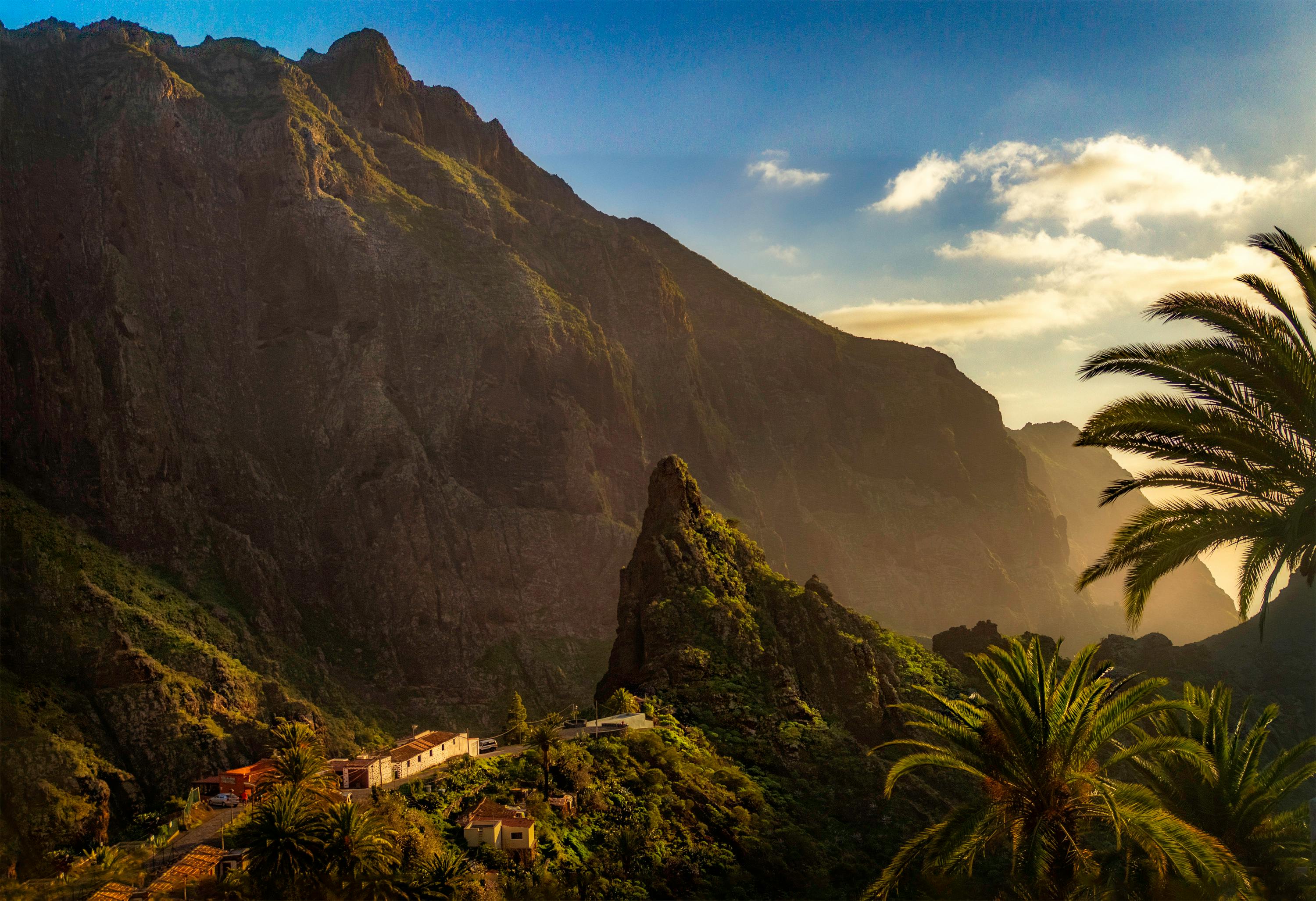
    The largest of the Canary Islands, Tenerife offers dramatic volcanic landscapes dominated by Mount Teide, stunning black sand beaches, and year-round spring-like weather. From charming colonial towns to vibrant resorts, this diverse island blends natural wonders with rich Spanish culture.

    4.6
    Guest Rating
    7°C
    Clear
    Humidity: 11%
    Wind: 15 km/h
    Live Temperature
    2
    Active Events

    About Tenerife

    Tenerife is the crown jewel of the Canary Islands, a Spanish archipelago located off the northwest coast of Africa. Dominated by the magnificent Mount Teide, Spain's highest peak and a UNESCO World Heritage Site, the island offers an extraordinary blend of volcanic landscapes, lush forests, and beautiful coastlines.

    The island's unique position gives it an eternal spring climate, making it a year-round destination. The north features verdant valleys and traditional Canarian towns, while the south boasts golden beaches and modern resorts. Historic La Laguna, also a UNESCO site, showcases stunning colonial architecture.

    From whale watching in the Atlantic to exploring ancient laurel forests in Anaga, Tenerife provides endless adventures. The island's gastronomy features fresh seafood, local wines from volcanic vineyards, and traditional dishes like papas arrugadas with mojo sauce.

    Climate & Weather

    Tropical climate with year-round warm temperatures and trade winds.

    Best Time to Visit

    Year-round, especially March-May and September-November

    Top Highlights

    Mount Teide National Park

    Year-round pleasant climate

    Diverse beaches and landscapes

    UNESCO World Heritage sites

    Whale and dolphin watching

    Popular Activities

    Hiking Mount Teide
    Beach hopping
    Whale watching tours
    Wine tasting in volcanic vineyards
    Exploring La Laguna old town
    Snorkeling and diving
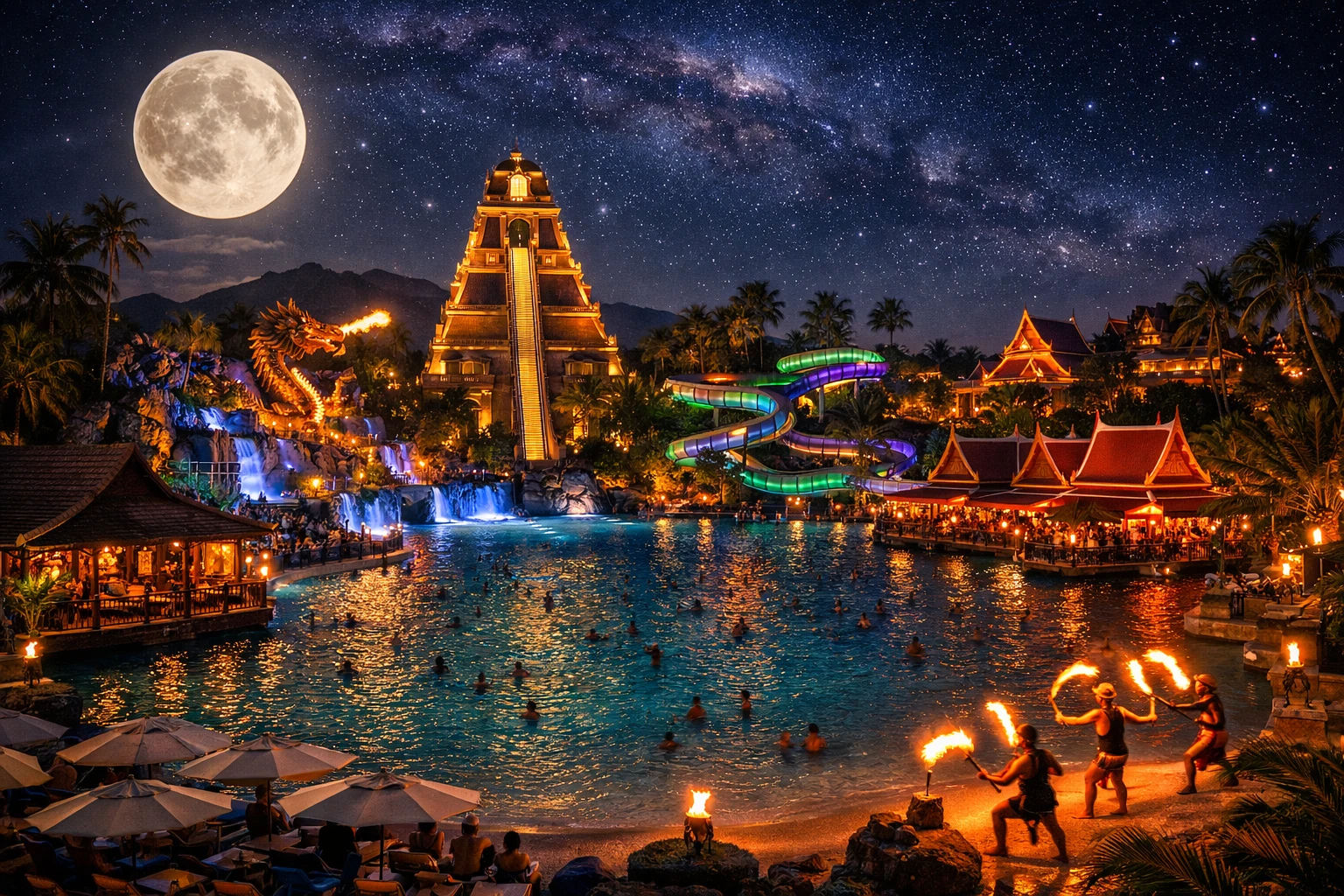
    Visiting Siam Park
    Stargazing at Teide Observatory

    Quick Info

    Timezone
    UTC+0/UTC+1
    💰Currency
    Euro (EUR)
    🗣️Language
    Spanish
    Temperature
    18-25°C

    Upcoming Events

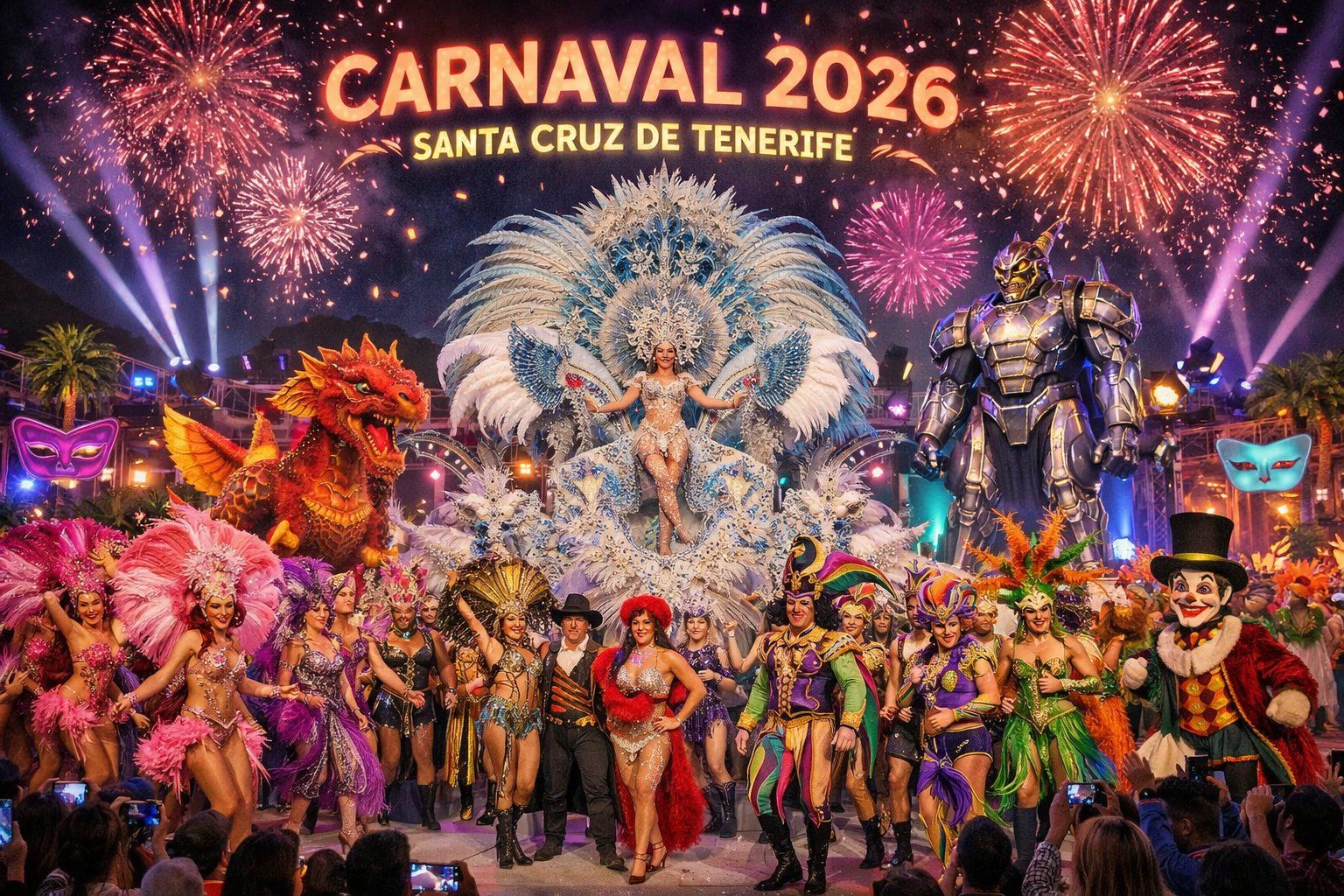
    Santa Cruz de Tenerife Carnival 2026
    Festival (parades/events)
    Free

    Santa Cruz de Tenerife Carnival 2026

    Santa Cruz de Tenerife Carnival 2026 is confirmed to run from January 16 to February 22, 2026 in Santa Cruz de Tenerife, with the 2026 theme set as Ritmos Latinos (Latin Rhythms). If you want a winter island trip with maximum energy, this is Tenerife’s biggest street celebration, blending iconic galas, murgas, comparsas, parades, day carnivals, and the famous Entierro de la Sardina in the city center.

    Experience the Santa Cruz de Tenerife Carnival 2026

    Carnival in Santa Cruz is not a single weekend. It is a full-season cultural engine that fills the island’s capital with music, costumes, satire, dance, and neighborhood pride. WonderfulTenerife describes the Carnival as living “in the street,” noting that the city center is decorated and filled with kiosks, food stands, and music that animate the festival zone once the major galas and contests begin. The same source emphasizes the popularity of competitions such as murgas, rondallas, comparsas, costume contests, and the feeling that the city is dressed in fantasy as Carnival takes over day and night.

    For travelers, the most important detail is that Santa Cruz Carnival is not confined to ticketed venues. Even if you don’t attend a gala, you can still experience the pulse of Carnival by planning time in the center, watching the parades, and enjoying the street atmosphere that spreads across the capital.

    Verified Dates and Official 2026 Theme: Ritmos Latinos

    WonderfulTenerife confirms the 2026 theme as RITMOS LATINOS. The same source provides the 2026 calendar framework, stating the edition begins with the Gala inaugural on January 16, 2026, and runs through the festival’s end on February 22, 2026. CarniFest’s schedule overview aligns with the end date by listing February 22 as “End of the Carnival,” reinforcing that the celebration carries through late February.

    This timing makes Santa Cruz Carnival a strong anchor for winter sun travel. January and February are ideal for escaping colder climates, and Tenerife is built for visitors with a strong hotel base, walkable city zones, and island day trips that fit between events.

    Key Carnival Highlights and Verified Dates

    Santa Cruz Carnival can feel overwhelming because there’s so much happening, so it helps to plan around the “big moments” that shape the rhythm of the city. WonderfulTenerife’s 2026 calendar confirms major milestones:

    • January 16, 2026: Gala inaugural del Carnaval 2026 and presentation/draw of queen candidates.
    • Saturday, January 31, 2026: Gran final de murgas.
    • Wednesday, February 11, 2026: Gala de Elección de la Reina del Carnaval (Carnival Queen election gala).
    • Friday, February 13, 2026: Cabalgata anunciadora (opening parade that brings Carnival fully into the streets).
    • Sunday, February 15, 2026: Primer Carnaval de Día (first daytime Carnival).
    • Tuesday, February 17, 2026: Coso Apoteosis del Carnaval (the major parade day highlighted as the “gran apoteosis”).
    • Wednesday, February 18, 2026: Entierro de la Sardina (Burial of the Sardine).
    • Saturday, February 21, 2026: Segundo Carnaval de Día (second daytime Carnival).
    • Sunday, February 22, 2026: Closing day with final celebrations.

    CarniFest also lists a similar set of peak events, including the Queen Election Gala (Feb 11), the announcing parade (Feb 13), Carnaval de Día (Feb 15 and Feb 21), the Grand Carnival Parade/Coso Apoteosis (Feb 17), and the Burial of the Sardine (Feb 18).

    Cultural Context: What Makes Santa Cruz Carnival World-Famous

    WonderfulTenerife notes that Santa Cruz de Tenerife Carnival was declared Fiesta de Interés Turístico Internacional on January 18, 1980, and describes it as one of the world’s most important carnivals and the only Canarian festival with that distinction. It also highlights the layered structure of the celebration, explaining how official contests and galas build momentum before the Cabalgata announces the street Carnival phase, when the city becomes the main stage.

    For visitors, this matters because it explains why Santa Cruz Carnival feels so organized despite its wild energy. There are formal cultural elements with deep local roots, but the overall experience is inclusive, public, and street-driven once the celebrations spill into the center.

    Where to Experience the Carnival in Santa Cruz

    WonderfulTenerife explains that the center of Santa Cruz is decorated and becomes the main festival area with kiosks and food stands, reinforcing that the heart of the experience is in the city’s central zone. Since the biggest parades and street gatherings happen in the capital, staying in or near Santa Cruz during your main Carnival days makes the experience more comfortable.

    If you’re based elsewhere on the island, plan transport carefully on peak days like the Cabalgata (Feb 13) and Coso Apoteosis (Feb 17).

    Travel Tips for Carnival Week on an Island

    Santa Cruz Carnival is a high-demand period. CarniFest notes the high demand for accommodations during Carnival days and recommends booking well in advance. A few practical strategies make your Tenerife Carnival trip smoother:

    • Book accommodations early, especially if you want to stay near the city center.
    • Choose comfortable shoes, because Santa Cruz Carnival is experienced on foot, moving between streets, squares, and parade routes.
    • Plan daytime breaks, especially during the most intense week in mid-February when events and parties run late.

    If you want to blend Carnival with classic Tenerife sightseeing, consider adding a day trip outside Santa Cruz on a quieter morning, then return for evening events.

    Tickets and Pricing: What’s Verified

    The verified sources used here confirm dates and a detailed schedule, but they do not provide official ticket prices for specific galas, reserved seating, or premium events. Because pricing is not published in the retrieved sources, this article cannot confirm exact ticket costs for 2026. Many street events are public and experienced in open spaces, while gala pricing typically depends on seating category and organizer releases closer to the event.

    Summary: Experience Santa Cruz de Tenerife Carnival 2026

    Santa Cruz de Tenerife Carnival 2026 is confirmed from January 16 to February 22, 2026, with the theme Ritmos Latinos, bringing weeks of contests, queen galas, parades, day carnivals, and the unforgettable Burial of the Sardine into the heart of the island’s capital. With peak events clustered from mid-February through the final weekend, it’s an ideal winter escape for travelers who want Tenerife at its most vibrant and communal. Plan your days around the big parade moments, leave space for late-night street energy, and come discover why Santa Cruz Carnival is one of the most powerful reasons to visit Tenerife when the rest of Europe is still in winter mode.

    Verified Information at a Glance

    • Event Name: Santa Cruz de Tenerife Carnival 2026 (Carnaval de Santa Cruz de Tenerife 2026)
    • Event Category: Carnival cultural festival (galas, competitions, parades, street parties)
    • Island/City: Tenerife, Canary Islands, Spain (Santa Cruz de Tenerife)
    • Confirmed Theme (2026): Ritmos Latinos (Latin Rhythms)
    • Confirmed Dates (2026): January 16 to February 22, 2026
    • Key Dates (verified): Jan 16 opening gala; Jan 31 murgas final; Feb 11 Queen Election Gala; Feb 13 Cabalgata anunciadora; Feb 15 first Carnaval de Día; Feb 17 Coso Apoteosis; Feb 18 Entierro de la Sardina; Feb 21 second Carnaval de Día; Feb 22 closing day.
    • Pricing: Not confirmed in the retrieved official schedule sources (varies by gala and seating; many street events are public).
    Santa Cruz de Tenerife, Tenerife
    Jan 16, 2026 - Feb 22, 2026
    37th International Bridge Festival (Puerto de la Cruz)
    Sports tournament (Bridge)
    TBA

    37th International Bridge Festival (Puerto de la Cruz)

    37th International Bridge Festival in Puerto de la Cruz: Your Island Bridge Escape

    The 37th International Bridge Festival (Puerto de la Cruz) is confirmed for March 22–28, 2026 in Puerto de la Cruz, Tenerife (Canary Islands). It will be hosted at Alua Tenerife (formerly Gran Hotel Turquesa Playa). This week-long island bridge festival masterfully pairs serious tournament play with a relaxed Atlantic-island setting, making it ideal for players who desire both competition and a memorable Tenerife escape.

    Puerto de la Cruz stands as one of Tenerife’s most iconic resort towns, celebrated for its captivating oceanfront promenades, dramatic volcanic coastline, and convenient access to lush gardens and breathtaking viewpoints. The 37th International Bridge Festival draws a distinctly international crowd to this vibrant northern Tenerife hub, transforming a hotel base into a social, strategic, and highly structured week of duplicate bridge. For travelers, this event naturally fosters a sense of community: you'll encounter familiar faces at breakfast, at the tables, and later during leisurely evening strolls near the sea.

    Because it is structured as a festival, rather than a single-day tournament, the experience feels significantly less rushed. You have the flexibility to play, rest, explore, and return for the next session, embodying the true spirit of an island event.

    Confirmed Details: Dates, Island, and Venue for 2026

    Eurobridge’s official event listing verifies the festival dates as 22/03/2026 to 28/03/2026. The same listing confirms the venue as ALUA TENERIFE (Antes GRAN HOTEL TURQUESA PLAYA), providing visitors with a clear hotel landmark for accommodation planning. Furthermore, it confirms the location as Puerto de la Cruz (Tenerife-Canary Islands), a crucial detail for travel logistics, as Tenerife is a large island and Puerto de la Cruz is strategically situated on its north coast.

    When mapping your trip, it's worth noting that the north of the island offers a distinct atmosphere compared to the south: you'll find greener landscapes, dramatic seascapes, and often a more local, lived-in feel. This environment is perfectly suited for a week of focused bridge and gentle sightseeing.

    Why This Bridge Festival is Travel-Friendly

    An island bridge festival truly shines when its setting supports ample downtime between sessions. Puerto de la Cruz is perfectly designed for this. You can easily step away from the bridge tables and quickly discover:

    • Waterfront walking routes for refreshing air and a mental reset.
    • Charming cafés and relaxed dining options that comfortably fit within an event schedule.
    • Scenic day trips, especially if you opt to add extra days before or after the festival week.

    Since the festival is hosted within a hotel venue, your practical routine becomes remarkably simple: play in the same base, meet fellow participants organically, and maintain a low-stress experience.

    The Significance of the 37th Edition: A Legacy of Bridge

    Being the 37th edition indicates that this is a long-running, established event with a history of repeat visitors and a stable position in the international bridge calendar. Such continuity is particularly important for players traveling internationally, as it suggests an experienced organizing structure and a destination that has consistently proven its appeal over time. This also tends to cultivate a welcoming atmosphere where newcomers can feel easily included, given that many attendees participate for both the competitive bridge and the enduring friendships.

    Enhance Your Trip: Cultural and Island Experiences Around Puerto de la Cruz

    Even if bridge is your primary focus, Tenerife richly rewards curious travelers. Puerto de la Cruz is renowned for its beautiful gardens and stunning coastal scenery, and the north of Tenerife is an excellent choice for travelers seeking a greener, more authentic island vibe. Integrating light cultural experiences around your bridge schedule can significantly enrich your week:

    • Plan a brief visit to local gardens and picturesque viewpoints within or near Puerto de la Cruz.
    • Dedicate an afternoon to exploring the town’s historic streets and vibrant seafront.
    • Savor traditional Canarian cuisine at a local restaurant as a relaxing post-session ritual.

    These small island rituals can transform a week of intense competition into a genuinely restorative experience.

    Practical Travel Tips for Players and Companions

    A bridge festival is often a shared journey, even when only one person is actively playing. For a smoother and more enjoyable Tenerife stay, consider these tips:

    • Strongly consider staying close to the official venue to allow for easy walks to sessions, thereby avoiding transport-related stress.
    • Keep your sightseeing plans flexible, ensuring you don’t feel rushed between bridge rounds.
    • If traveling with a non-playing companion, Puerto de la Cruz offers a variety of engaging daytime options to keep them entertained while you're at the tables.

    Because the festival runs from March 22–28, it also perfectly complements extending your trip into the early spring travel season on Tenerife, when the island's climate is comfortably ideal for outdoor activities.

    Entry Fees and Pricing: What's Verified

    The verified sources utilized for this information confirm the dates and venue, but they do not disclose specific entry fees, session pricing, or package rates for the 2026 festival. Consequently, because pricing information is not stated in the retrieved official listing, it cannot be confirmed in this article. For accurate and up-to-date costs, please consult the official festival website (as listed on the event page) or directly contact the provided organizer email.

    Plan Your Tenerife Bridge Week

    The 37th International Bridge Festival in Puerto de la Cruz is confirmed for March 22–28, 2026, hosted at Alua Tenerife in northern Tenerife. This offers a rare kind of trip where your mornings can be calm and coastal, your afternoons strategically competitive, and your evenings wonderfully social—all within a single, walkable island setting. If you’ve been searching for a bridge holiday that feels like a true getaway without compromising serious play, Puerto de la Cruz is ready to welcome you for a week of cards, engaging conversation, and indelible Atlantic island charm.

    Verified Information at a Glance

    Event Overview

    Event Name:

    • 37th International Bridge Festival Puerto de la Cruz (Tenerife-Canary Islands)

    Event Category:

    • Duplicate bridge tournament / bridge festival

    Island/Location:

    • Tenerife, Canary Islands, Spain (Puerto de la Cruz)

    Confirmed Dates (2026):

    • March 22–28, 2026

    Confirmed Venue:

    • Alua Tenerife (formerly Gran Hotel Turquesa Playa)

    Official Website (listed):

    Organizer Contact (listed):

    Pricing:

    • Not published in the verified sources retrieved here.
    Puerto de la Cruz (ALUA Tenerife / former Gran Hotel Turquesa Playa), Tenerife
    Mar 22, 2026 - Mar 28, 2026

    Photo Gallery

    Tenerife gallery 1
    Tenerife gallery 2
    Tenerife gallery 3
    Tenerife gallery 4
    Tenerife gallery 5

    Popular Events at Tenerife

    Tenerife Walking Festival

    Tenerife Walking Festival

    <h2>Discover the Tenerife Walking Festival</h2><p>Tenerife Walking Festival is a multi-day celebration of hiking on this Atlantic island, combining guided routes through volcanic landscapes, green forests, and dramatic coastlines with local culture and group events. While exact dates can vary by edition, the festival is best known as a <strong>spring</strong> walking event and a great reason to visit Tenerife when temperatures are ideal for long days on the trails.</p><h2>What is the Tenerife Walking Festival?</h2><p>Tenerife Walking Festival is a hiking-focused event built around organized routes on different trails across the island. World Walking Festivals describes it as Tenerife’s proposal for hiking enthusiasts, with <strong>15 routes</strong> organized along coastal paths, volcanic landscapes, and green trails, plus additional nature activities.</p><p>The festival’s appeal is the variety you can experience in a short time. WebTenerife notes that the festival trails can take you from Atlantic blues to “reddish Martian landscapes” in Teide National Park, through forests and along coastlines, showing how Tenerife’s island terrain changes quickly from one region to another.</p><h2>When it’s Typically Held</h2><p>Tenerife Walking Festival is commonly framed as a <strong>spring</strong> event. WebTenerife ties its festival description to five days of hiking adventures and presents it as a recurring annual hiking event, supporting the idea that it is planned for a comfortable hiking season rather than mid-summer heat.</p><p>Because specific dates shift, it’s smart to treat “spring in Tenerife” as your planning window and then confirm dates when you book your flights and accommodation.</p><h2>Where the Festival Takes Place on the Island</h2><p>Unlike a single-location festival, Tenerife Walking Festival uses multiple landscapes, which is part of its charm. World Walking Festivals explains that routes are organized along different trails across Tenerife, including coastal itineraries, volcanic paths, and green routes. WebTenerife adds that the festival can include famous areas such as <strong>Teide National Park</strong>, <strong>Punta de Teno</strong>, <strong>Masca</strong>, and coastal routes around <strong>Benijo</strong> in the Anaga Mountains, giving visitors a clear sense of the island regions that may be featured.</p><p>If you want a strong festival base, look for accommodation in the north where access to Anaga and the Orotava Valley is easy, or choose a central base that reduces travel time to Teide and the northwest.</p><h2>Why This Walking Festival is Perfect for an Island Audience</h2><p>Tenerife is often marketed for beaches, but it’s also one of Europe’s most diverse hiking islands, shaped by volcanoes, forests, and sea cliffs. WebTenerife emphasizes that Tenerife was “slowly born from volcanoes” over millions of years and that the festival routes teach hikers about volcanic history while also showcasing rural landscapes and coastal treasures.</p><p>The festival also highlights cultural heritage, not only nature. WebTenerife notes that during hikes you can experience local culture such as <strong>Salto del Pastor</strong>, an ancient technique used by goatherds to move across steep terrain.</p><h2>What to Expect: Routes, Landscapes, and the Social Vibe</h2><p>Tenerife Walking Festival is designed to be both active and social, with guided routes and shared group moments.</p><h2>Green Routes: Forests, Trade Winds, and Island “Sea of Clouds”</h2><p>The north of Tenerife is famous for its greener side. WebTenerife describes trails through northern forests influenced by trade winds and a “sea of clouds,” where you walk among Canary pines and laurel trees and pass endemic landscapes tied to local history and culture.</p><h2>Volcanic Routes: Teide and Beyond</h2><p>Volcanic terrain is a headline feature. WebTenerife states that up to seven routes can be offered focused on volcanic landscapes, with Teide as the “big protagonist,” alongside other famous volcanic areas such as Punta de Teno and Masca. World Walking Festivals also highlights Teide National Park, noting that participants will get to know the park and describing it as a UNESCO World Heritage Site.</p><h2>Coastal Routes: Cliffs, Wild Beaches, and Photography Spots</h2><p>Coastal hikes are where Tenerife feels especially “island.” WebTenerife highlights Benijo as a coastal-route star and notes that it is one of the most photographed beaches in Tenerife, with spectacular sunsets and characteristic rocks, and it connects this to routes through the Anaga Mountains toward Cruz del Draguillo and Roque Bermejo.</p><h2>Welcome, Farewell, and Community Moments</h2><p>The festival is not only hiking. WebTenerife notes that the festival includes welcome and farewell parties, and describes a closing ceremony where hikers parade through Puerto de la Cruz with live music and local gastronomy to end the days of hiking adventures.</p><h2>Travel Tips for Visitors Planning Tenerife Walking Festival</h2><p>A few practical choices can make your trip smoother and more enjoyable.</p><ul><li>Choose a base that matches your route priorities: north for Anaga and greener hikes, central for Teide access, northwest if you want Teno Rural Park style landscapes.</li><li>Pack layered clothing, because Tenerife’s microclimates can shift from cool mountain air to warm coastal sun in the same day.</li><li>Bring proper hiking shoes and sun protection, since routes include volcanic terrain and exposed coastal sections.</li><li>Consider adding a rest day between longer hikes, so you can still enjoy beaches, local food, and historic towns without fatigue.</li></ul><h2>Pricing: What Does Tenerife Walking Festival Cost?</h2><p>Pricing varies by edition and by the routes you choose, but it’s commonly structured around registration plus route participation. One detailed festival write-up explains that a basic registration fee was set at <strong>€25</strong> per person in one edition and that route participation had additional costs per route.</p><p>If you are budgeting, plan for three main cost categories: registration and guided routes, accommodation (often in a base town such as Puerto de la Cruz), and transport or transfers if they aren’t included in your chosen package.</p><h2>Verified Information at a Glance</h2><ul><li>Event name: <strong>Tenerife Walking Festival</strong></li><li>Event category: <strong>Outdoor adventure and nature event</strong> (guided hiking routes plus cultural and social activities).</li><li>Typically held: Often positioned as a <strong>spring</strong> hiking festival (dates vary by edition).</li><li>Main locations / landscapes: Island-wide routes including coastal paths, volcanic landscapes, and green trails; featured areas may include Teide National Park and coastal and mountain regions such as Anaga and Teno.</li><li>Number of routes (as described): <strong>15 routes</strong> organized along different trails.</li><li>Signature nature highlights: Teide National Park; volcanic landscapes; coastal routes such as Benijo; forest routes shaped by trade winds and cloud layers.</li><li>Cultural element mentioned: <strong>Salto del Pastor</strong>, an ancient goatherd technique demonstrated during some hikes.</li><li>Pricing (example structure): Registration and per-route fees have been used in past editions (example cited: €25 basic registration in one edition, plus route costs).</li></ul><p>Plan your Tenerife island escape around the Walking Festival season, lace up for a guided route that matches your dream landscape, and let Tenerife surprise you with how quickly it shifts from laurel forest to lava rock to Atlantic cliffs, because this is the kind of island adventure that turns a trip into a story you’ll keep telling.</p>

    Typically in spring
    Fiestas del Cristo de La Laguna

    Fiestas del Cristo de La Laguna

    <h2>Fiestas del Cristo de La Laguna: A September Celebration</h2><p>Fiestas del Cristo de La Laguna is one of Tenerife’s most important September celebrations, filling the UNESCO city of San Cristóbal de La Laguna with religious tradition, street parties, major processions, and some of the island’s most anticipated fireworks. Centered on <strong>September 14</strong>, the festival spans much of September, making it a perfect late-summer island trip for travelers who want culture, community energy, and historic streets that stay lively long after sunset.</p><h2>What are Fiestas del Cristo de La Laguna?</h2><p>Fiestas del Santísimo Cristo de La Laguna are celebrations held in honor of the Santísimo Cristo, an object of deep devotion in La Laguna. WebTenerife describes it as La Laguna’s festival in honor of the Santísimo Cristo, highlighting that the key day includes a traditional military parade, major processions, open-air parties at night, and a fireworks display that attracts visitors from across the island.</p><p>Hello Canary Islands frames the event as an iconic celebration spanning the entire month of September, blending cultural, sports, and artistic activities, while placing religious traditions at the heart of the festivities. For visitors, that mix is exactly what makes the festival special: you can witness solemn moments of devotion and, on the same evening, walk into a buzzing plaza atmosphere with music and crowds.</p><h2>When it’s typically held</h2><p>Fiestas del Cristo de La Laguna typically run through September, with the key date on <strong>September 14</strong>. WebTenerife explicitly states that the key day is 14 September and lists hallmark features like the military parade, magna processions, open-air parties, and the much-awaited fireworks.</p><p>Hello Canary Islands adds that the festivities span the entire month of September and points to several major religious moments during the celebration cycle. If you’re visiting Tenerife as an island escape, plan for a few nights in La Laguna during mid-September so you can experience both the build-up and the big day atmosphere.</p><h2>Where the festival happens in La Laguna</h2><p>The celebrations are centered in San Cristóbal de La Laguna, especially around the <strong>Plaza del Cristo</strong> and the Cristo’s Sanctuary, with major moments also involving the Cathedral of La Laguna. Hello Canary Islands highlights that the Octava del Cristo culminates with a procession around the Plaza del Cristo and the raising of the image back to its altar, and it also describes the transfer of the image to the Cathedral during key rituals.</p><p>WebTenerife’s description emphasizes that the fireworks span the entire square, reinforcing the Plaza del Cristo area as a major nighttime focal point where crowds gather. For travelers, staying within walking distance of the historic center is a huge advantage, especially on busy nights when traffic and parking can become challenging.</p><h2>The traditions that define Fiestas del Cristo</h2><p>This festival is famous not only for its parties, but for its ritual rhythm: devotion, movement, return, and celebration.</p><h2>Bajada del Cristo: A Defining Devotional Moment</h2><p>Hello Canary Islands describes the Bajada del Cristo as a solemn act where the image is lowered for the traditional kissing of the feet and then transferred to the Cathedral of La Laguna. For visitors, this moment is key to understanding the festival’s emotional intensity, because the streets fill with reverence rather than pure party energy.</p><h2>The Main Day: September 14</h2><p>The biggest day includes both civic and religious spectacle. WebTenerife notes that September 14 features the traditional military parade, magna processions, open-air parties at night, and the much-awaited fireworks display with deafening explosions that draw visitors from all over Tenerife.</p><p>Hello Canary Islands also notes that the main day is when the Cristo is returned to its Sanctuary, placing the “return” at the heart of the festival’s most important date.</p><h2>Octava del Cristo: Procession and the Raising of the Image</h2><p>Hello Canary Islands explains that the Octava del Cristo culminates in a procession around the Plaza del Cristo and the raising of the image back to its altar. This is an excellent moment for travelers who want to see a powerful tradition without needing to follow a long route across the city, since the Plaza del Cristo becomes the symbolic stage.</p><h2>Fireworks: The Sound and Light Signature</h2><p>The festival’s fireworks are not a minor add-on. WebTenerife calls the fireworks display much-awaited and describes the deafening explosions spanning the entire square, emphasizing its reputation for scale and intensity.</p><p>Hello Canary Islands also notes that key devotional moments are accompanied by spectacular fireworks displays, reinforcing fireworks as a recurring highlight rather than a single finale.</p><h2>How to Enjoy Fiestas del Cristo as a Traveler</h2><p>La Laguna is one of the best Tenerife towns for walking and atmosphere, and the festival rewards visitors who plan their days around crowd flow.</p><h3>Choose Your Experience: Solemn, Festive, or Both</h3><p>You can tailor your visit:</p><ul><li>For faith and tradition, focus on Bajada del Cristo and the Octava procession.</li><li>For spectacle, prioritize September 14 for processions and fireworks.</li><li>For a balanced island-cultural trip, attend one religious event and one night of open-air parties to see the full range.</li></ul><h3>Arrive Early and Stay Late</h3><p>On major nights, central La Laguna fills up. Arrive early to secure a comfortable spot near Plaza del Cristo, then stay after fireworks to enjoy the open-air festivities and the city’s late-night buzz.</p><h3>Explore La Laguna Between Events</h3><p>Because the celebration lasts much of September, you can spend daytime exploring the UNESCO old town, cafés, and local shops, then return for evening events. The festival’s schedule style makes it easy to combine cultural sightseeing with nighttime celebration.</p><h2>Practical Travel Tips for Visiting La Laguna in September</h2><ul><li>Stay in La Laguna or close by, so you can walk to Plaza del Cristo and avoid transport stress on peak nights.</li><li>Bring ear protection for children if you plan to watch fireworks, since the display is described as deafening.</li><li>Wear comfortable shoes for cobblestone streets, and bring a light layer for evenings, as temperatures can feel cooler than coastal resorts.</li><li>Expect crowds around the key day (September 14), so book accommodation early if your travel dates match that period.</li></ul><h2>Pricing: What Does It Cost to Attend?</h2><p>Fiestas del Cristo de La Laguna are generally <strong>free</strong> to attend in public spaces. Hello Canary Islands explicitly lists the event price as free, aligning with the fact that the major celebrations are processions, plaza gatherings, and fireworks in open public areas.</p><p>Your main costs will be travel to Tenerife, accommodation in or near La Laguna, and food and drinks during festival nights.</p><h2>Verified Information at a Glance</h2><ul><li>Event name: Fiestas del Santísimo Cristo de La Laguna (Fiestas del Cristo de La Laguna)</li><li>Event category: Religious and cultural festival (processions, civic ceremonies, concerts and activities, fireworks, street parties).</li><li>Typically held: September, spanning much of the month.</li><li>Key date: September 14 (military parade, magna processions, open-air parties, major fireworks).</li><li>Main locations: San Cristóbal de La Laguna, especially Plaza del Cristo; key traditions include transfer to the Cathedral and return to the Sanctuary.</li><li>Signature traditions: Bajada del Cristo; Octava del Cristo (procession around Plaza del Cristo and raising of the image).</li><li>Pricing: Listed as free.</li></ul><p>Plan your Tenerife island stay for September, book a few nights in La Laguna, and join the crowds around Plaza del Cristo for processions, open-air celebrations, and the unforgettable fireworks, because Fiestas del Cristo is one of the rare Tenerife experiences where history, devotion, and pure island nightlife all meet in the same streets.</p>

    Typically in September
    Corpus Christi Carpet Festival (La Orotava)

    Corpus Christi Carpet Festival (La Orotava)

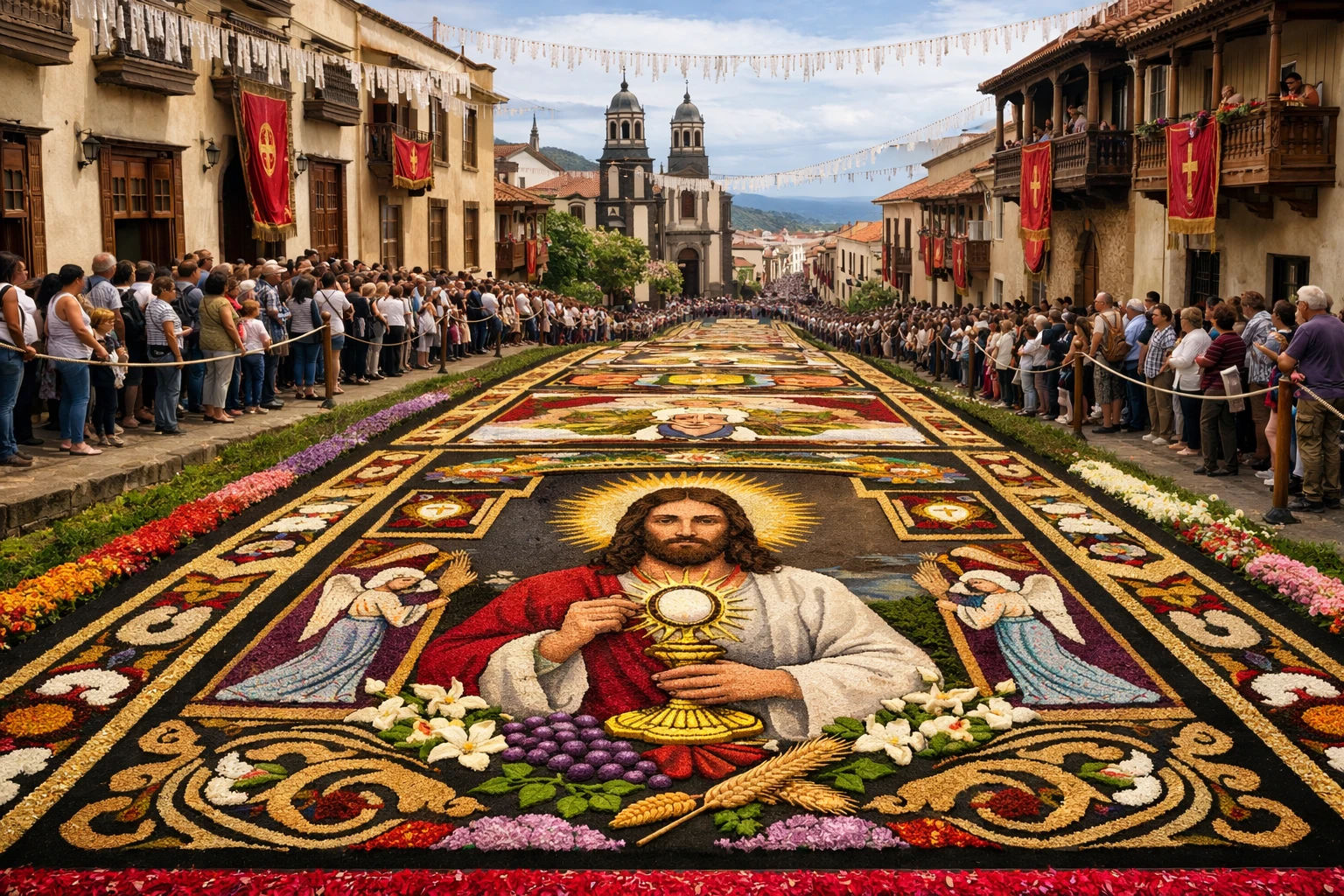
    <p>Corpus Christi Carpet Festival in La OrotavaThe Corpus Christi Carpet Festival in La Orotava is Tenerife’s most breathtaking “street art” tradition, when the historic town center is covered in intricate carpets made from flower petals, greenery, and famously, colored volcanic sand from Mount Teide. Typically taking place in late May or June (on the Thursday of the Octave of Corpus Christi), it’s a must-see island event where faith, craftsmanship, and community pride briefly turn streets into a walkable gallery.</p><h2>What is the Corpus Christi Carpet Festival in La Orotava?</h2><p>La Orotava’s Corpus Christi celebrations are best known for their <strong>alfombras</strong> (carpets), ephemeral artworks laid along streets near the town hall square. WebTenerife describes the tradition as making carpets from flowers, salt, and shrubs laid around streets near the town hall, with the main carpet filling the entire town hall square and made from different colored volcanic sand brought from Teide National Park.</p><p>The festival is both artistic and religious. WebTenerife explains that La Orotava celebrates Corpus Christi by laying flower carpets with religious and artistic designs in the historic quarter, culminating with a procession that walks over the carpets.</p><p>For travelers, the effect is unforgettable: an island town becomes an open-air museum for a single day, and then the artwork is respectfully “returned” to the street as the procession passes.</p><h2>When the La Orotava carpets are typically held</h2><p>The Corpus Christi carpets in La Orotava take place between <strong>May and June</strong> each year. WebTenerife states the Corpus de La Orotava festivities take place between the months of May and June, reflecting the movable nature of Corpus Christi on the liturgical calendar.</p><p>A key detail for planning is that the carpet day is tied to the <strong>Octave of Corpus Christi</strong>, meaning it is celebrated on the <strong>Thursday after Corpus Christi</strong>. A Tenerife dates guide explicitly explains that the celebration happens on the “octava” (eighth day) of Corpus Christi, described as the Thursday after the date of the religious feast.</p><p>In practical terms, you should plan your trip around “late spring to early summer” rather than expecting a fixed annual weekend. If you’re building an island itinerary, keep your dates flexible so you can catch the carpet day when it lands.</p><h2>Where it happens: La Orotava’s historic center</h2><p>The festival takes place in La Orotava’s old town, especially around the streets near the town hall square. WebTenerife specifies the location as the <strong>La Orotava old town</strong> and notes the largest and most spectacular carpet can be seen in the <strong>Plaza del Ayuntamiento</strong>.</p><p>Hello Canary Islands adds that the streets of the historic center fill with floral carpets, and highlights the <strong>Teide sand carpet</strong> created in the Plaza del Ayuntamiento as a major centerpiece. For visitors, this means your best plan is to arrive early and explore on foot, letting the carpets guide your route through the town.</p><h2>A short history: how the tradition began</h2><p>La Orotava’s Corpus carpets have deep roots in local creativity. WebTenerife notes the tradition became famous in <strong>1847</strong> when members of the Monteverde family, inspired by Leonor del Castillo, made a flower carpet to decorate the way for the Corpus platform as it passed their house.</p><p>Over time, the celebration evolved into one of Tenerife’s most distinctive cultural expressions. WebTenerife describes it as a centuries-old tradition recognized officially as a <strong>Cultural Heritage Asset</strong>, reinforcing that this is not a modern tourist invention but a long-standing community art form.</p><h2>What makes La Orotava’s carpets so special</h2><p>Many places create flower carpets, but La Orotava is in a category of its own because of its materials and scale.</p><h2>The volcanic sand masterpiece from Mount Teide</h2><p>The most famous piece is the monumental sand carpet in the Plaza del Ayuntamiento, made using colored volcanic sands from Teide National Park. WebTenerife emphasizes that the main carpet is made using different colored volcanic sand brought straight from Teide National Park, which is a defining difference compared to many other carpet festivals.</p><p>Hello Canary Islands also highlights this Teide sand carpet as a major festival highlight, calling it a majestic work that pays tribute to Tenerife’s iconic volcano. For an island audience, this connection to Teide matters, because it ties the art directly to the landscape that defines Tenerife’s identity.</p><h2>Flower carpets on surrounding streets</h2><p>Beyond the main square, the streets of the historic center are filled with detailed carpets made from petals and plant materials. Hello Canary Islands describes vibrant carpets made from flower petals forming intricate designs and patterns, reflecting both religious devotion and artistic creativity.</p><h2>A fleeting artwork, honored by a procession</h2><p>The festival culminates with a religious procession that walks over the carpets. WebTenerife explicitly notes that the celebration ends with a procession that crosses these temporary works of art, which is part of their meaning: beauty created not to last, but to be offered.</p><h2>How to experience the festival as a traveler</h2><p>The best way to enjoy Corpus Christi Carpet Festival in La Orotava is to treat it like a full-day walking experience.</p><h2>Arrive early and walk slowly</h2><p>Carpet-making and viewing draw large crowds, especially near the Plaza del Ayuntamiento. Because the artworks are detailed and spread across the historic center, you’ll enjoy it more if you arrive early enough to see the designs before peak midday congestion.</p><h2>Build your viewing route</h2><p>A simple route that works well:</p><ul><li>Start at the <strong>Plaza del Ayuntamiento</strong> to see the Teide sand carpet.</li><li>Explore nearby old-town streets where floral carpets line the route.</li><li>Stay for the procession if you want to see the festival’s most meaningful moment.</li></ul><h2>Eat like a local in the Orotava Valley</h2><p>La Orotava sits in the lush Orotava Valley, and the festival day often comes with a “fiesta” atmosphere around the carpet streets. While carpet viewing is the main draw, planning a relaxed meal in the area helps you pace the day and soak in the town’s social vibe.</p><h2>Practical tips for visiting La Orotava</h2><ul><li>Wear comfortable shoes, because you’ll be walking and standing on cobblestone streets in the historic center.</li><li>Respect the carpets: avoid stepping on them before the procession and follow any barriers or volunteer guidance.</li><li>Consider combining the festival with a Teide day trip, since the signature carpet explicitly uses Teide sand and connects the tradition to the island’s volcanic landscape.</li></ul><h2>Pricing: what does the Corpus Christi Carpet Festival cost?</h2><p>This is primarily a public cultural and religious celebration, and it is typically <strong>free</strong> to attend as a spectator. Hello Canary Islands lists the Corpus Christi carpets event and states the price is free.</p><p>Your main costs will be transport to La Orotava, food and drinks during the day, and accommodation if you plan to stay overnight in northern Tenerife.</p><h2>Verified Information at a glance</h2><ul><li>Event name: <strong>Corpus Christi Carpets (Alfombras del Corpus Christi), La Orotava, Tenerife</strong></li><li>Event category: <strong>Cultural and religious festival</strong> (flower carpets and volcanic sand art, procession).</li><li>Typically held: <strong>May–June</strong>, on the <strong>Octave of Corpus Christi</strong> (the Thursday after Corpus Christi).</li><li>Main venue / area: <strong>La Orotava old town</strong>, especially <strong>Plaza del Ayuntamiento</strong> and surrounding streets near the town hall square.</li><li>Signature highlight: <strong>Monumental Teide sand carpet</strong> made with colored volcanic sand brought from Teide National Park in the Plaza del Ayuntamiento.</li><li>Key experience: <strong>Carpets are created as temporary artworks</strong> and the celebration culminates with a procession that walks over them.</li><li>Pricing: Listed as <strong>free</strong> to attend.</li></ul><p>Plan your Tenerife island trip for late May or June, head to La Orotava early on carpet day, follow the floral streets up to the Plaza del Ayuntamiento to see the Teide sand masterpiece, and let this one-day-only festival show you how Tenerife turns nature, faith, and community artistry into an experience you’ll remember long after the last petal is gone.</p>

    Typically in late May or June
    Romería de San Benito Abad (La Laguna)

    Romería de San Benito Abad (La Laguna)

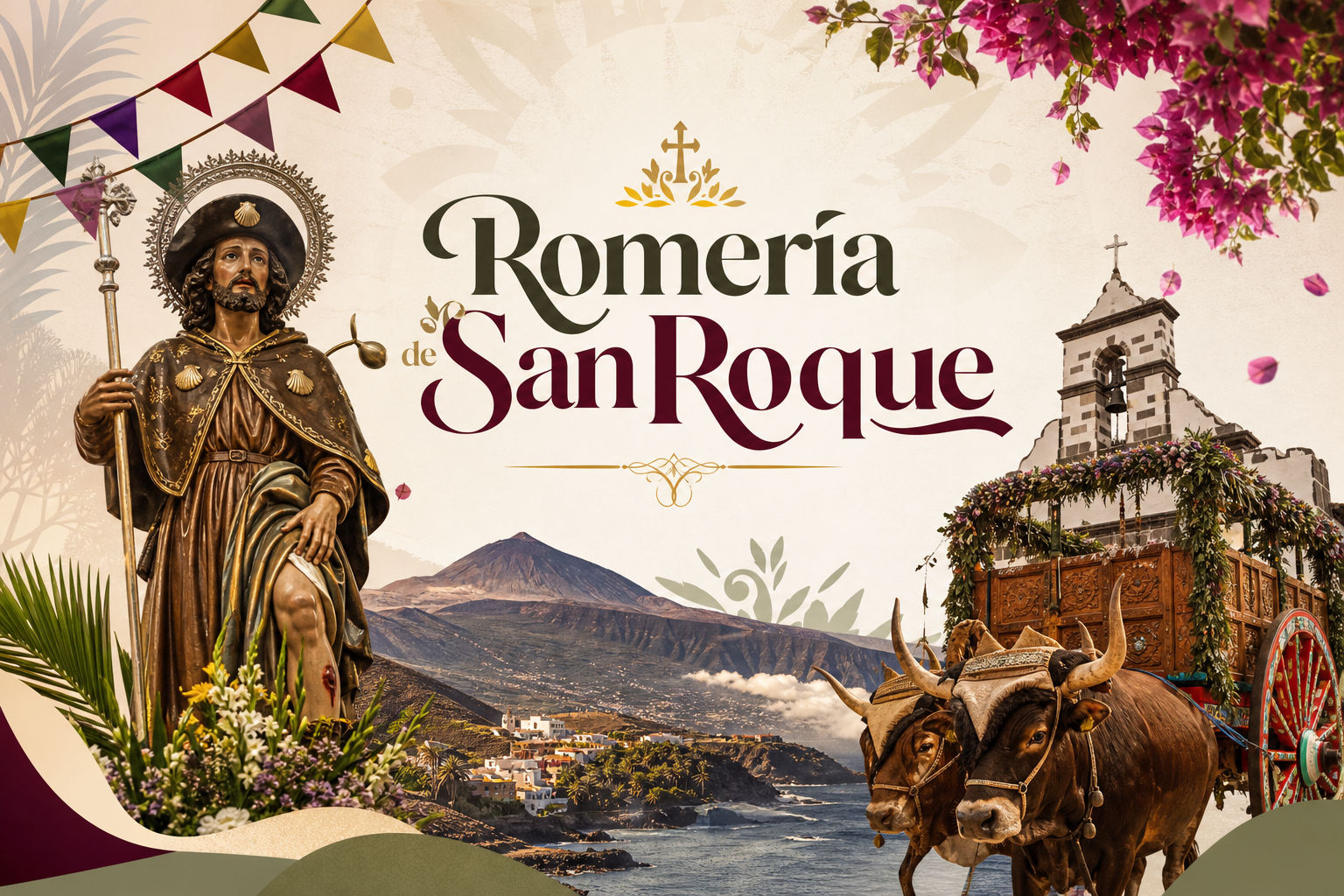
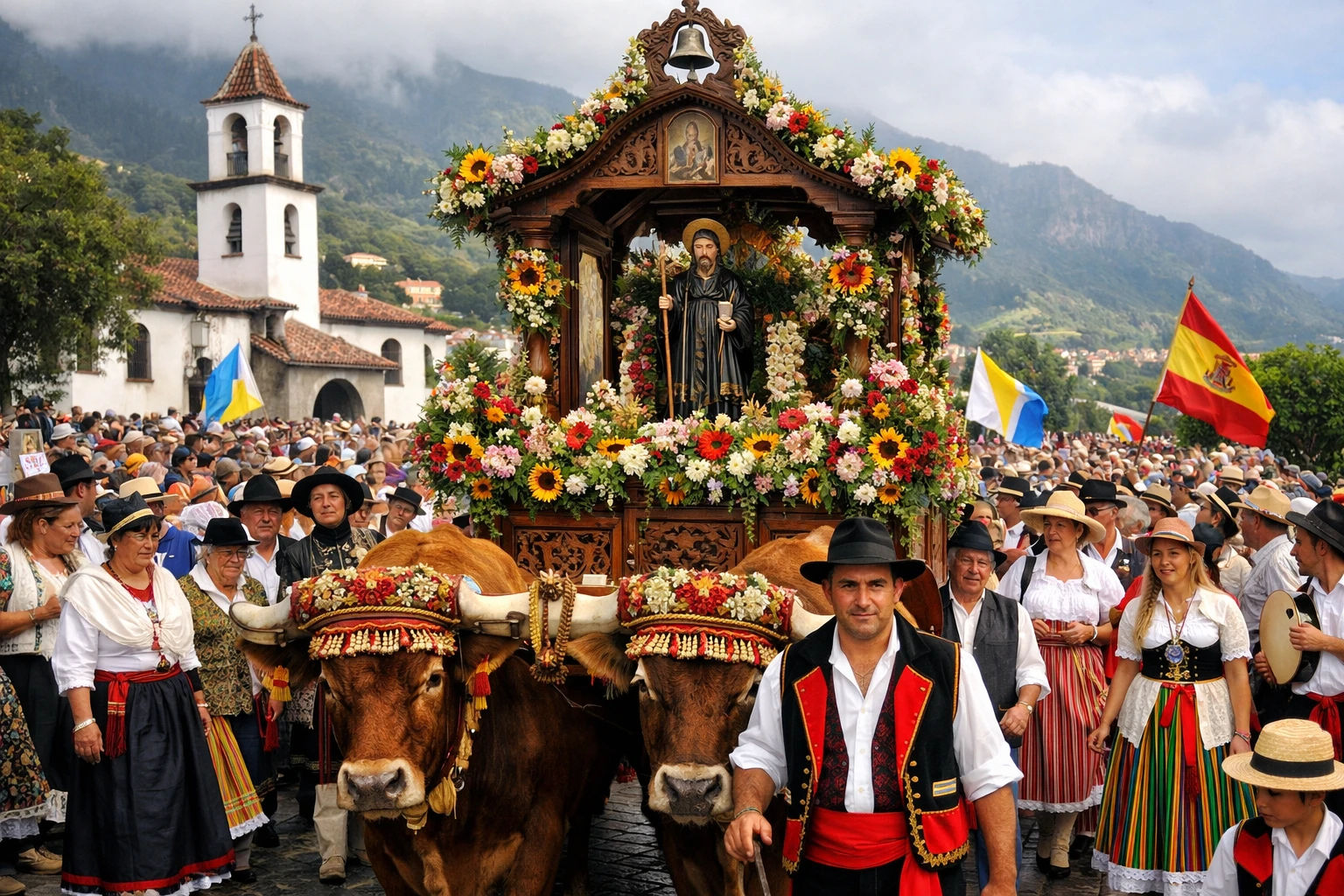
    <h2>Romería de San Benito Abad: A Celebration of Canarian Culture</h2><p>Romería de San Benito Abad in San Cristóbal de La Laguna is one of Tenerife’s most beloved island pilgrimages, where traditional dress, decorated ox carts, folk music, and local food turn a UNESCO-listed historic city into a joyful celebration of rural roots. Held every year on the <strong>second Sunday of July</strong>, it’s a standout summer event for travelers who want authentic Canary Islands culture beyond the beach.</p><h2>What is Romería de San Benito Abad (La Laguna)?</h2><p>Romería de San Benito Abad, also called the Romería Regional de San Benito Abad, is a traditional Canarian pilgrimage-style festival celebrated in La Laguna in honor of <strong>San Benito Abad</strong>, considered the patron saint of farmers on Tenerife. It’s widely described as the Canary Islands’ most representative romería, with groups joining from across the archipelago, and it has been declared an event of <strong>National Tourist Interest</strong>.</p><p>Unlike a modern ticketed festival, a romería is a community celebration rooted in gratitude for the land and harvest. Spain’s official tourism site explains that the pilgrimage’s origins go back to farmers giving thanks to the saint for the summer harvest, and today it includes traditional dress, folk songs and dancing, and local gastronomy.</p><h2>When it’s typically held</h2><p>The main Romería de San Benito Abad takes place on the <strong>second Sunday in July</strong> each year. WebTenerife notes that July is a month of celebration in La Laguna and that events build toward the popular pilgrimage, which finally takes place on the second Sunday of July.</p><p>If you’re planning an island trip, give yourself more than one day. WebTenerife describes a run of events beginning around the end of the previous month with processions in honor of San Benito leading up to the romería, so you may find cultural activities even before the main Sunday.</p><h2>Where it happens: San Cristóbal de La Laguna</h2><p>La Laguna is Tenerife’s cultural and historic heartbeat, known for its preserved old town and walkable streets. During the romería, those streets become the route for a huge moving celebration.</p><p>WebTenerife places the festival in <strong>San Cristóbal de La Laguna</strong> and frames it as the city’s major July festivity. Spain.info highlights that many people participate wearing traditional clothing while enjoying folk music, dancing, and regional gastronomy, which typically unfolds along the festival route through the town.</p><p>For visitors, the setting is part of the magic: you’re watching a “rural roots” festival inside an elegant historic city, which gives the event a unique Tenerife character.</p><h2>Why the romería matters on the island</h2><p>Romería de San Benito Abad is often described as more than a local party. The Romería Regional de San Benito Abad is noted as the only romería in the Canary Islands with the title “Regional,” and it is widely considered among the most important romerías in Spain.</p><p>It’s also officially recognized for its cultural and tourism value. WebTenerife states it has been declared a <strong>Festival of National Tourist Interest</strong>, reinforcing that this is one of the island’s headline heritage experiences.</p><h2>What you’ll see: key highlights and traditions</h2><h3>Traditional costumes (traje típico) everywhere you look</h3><p>One of the most striking parts of the romería is how many locals dress in traditional Canarian clothing. Spain.info emphasizes traditional dress as a defining part of participation, which makes the streets feel like a living cultural museum rather than a spectator-only event.</p><h3>Decorated carts, livestock, and offerings</h3><p>The procession includes decorated carts and offerings of typical produce. The romería description notes that carts are decorated with typical products, and people wear traditional costumes while folk music accompanies the route.</p><p>Wonderful Tenerife adds a signature detail: seven young women in the traditional dress of different islands carry flowers and fruit as an offering, while floats, folk groups, and livestock parade through the streets.</p><h3>Food and drink shared along the route</h3><p>Romerías are famous for their generosity. Spain.info highlights “regional gastronomy” as part of the experience, reflecting the tradition of sharing local flavors during the pilgrimage celebration.</p><h3>Folk music and dance in the streets</h3><p>This is a festival you hear before you see. Descriptions consistently mention Canarian folk music accompanying the procession route, creating a soundtrack of strings, drums, and singing that keeps the celebration moving.</p><h2>How to experience it like a local traveler</h2><p>Romería de San Benito Abad is easy to enjoy if you come with the right expectations: crowds, warmth, and a lot of walking.</p><p><strong>Best ways to join in:</strong></p><ul><li>Arrive early on the main Sunday to see the most complete procession and to find a comfortable viewing spot.</li><li>Eat and drink gradually through the day, because the event is long and the atmosphere builds over hours.</li><li>Consider renting or wearing traditional attire if you want to feel fully part of the festival culture, as traditional dress is central to participation.</li></ul><h2>Practical travel tips for La Laguna on romería day</h2><h3>Get there without stress</h3><p>La Laguna connects easily with Santa Cruz by tram, making it a smart option if you’re staying near the capital and don’t want to deal with parking on a busy festival day. Aim to travel earlier than you think you need, because crowds can slow everything down.</p><h3>Pick a base with atmosphere</h3><p>Staying in La Laguna lets you enjoy the evening ambience after the day crowds thin, and it gives you more time to explore local streets, cafés, and heritage corners. If you’re staying elsewhere on the island, plan a full-day outing and keep your return flexible.</p><h3>What to pack</h3><p>Bring comfortable shoes, sun protection, and a refillable water bottle. Add a light layer for the evening, since La Laguna can feel cooler than coastal resorts due to its elevation.</p><h2>Pricing: what does Romería de San Benito Abad cost?</h2><p>Romería de San Benito Abad is generally a <strong>free</strong> public celebration. Hello Canary Islands lists the event and explicitly states the price is free, which aligns with the romería’s public-street and community nature.</p><p>Your main costs as a visitor are transport, food and drinks during the day, and accommodation if you’re staying overnight in La Laguna or nearby.</p><h2>Verified Information at a glance</h2><ul><li>Event name: <strong>Romería de San Benito Abad (Romería Regional de San Benito Abad)</strong></li><li>Event category: <strong>Cultural and religious pilgrimage-style festival</strong> (traditional costumes, folk music, decorated carts, local food).</li><li>Typically held: <strong>Second Sunday of July</strong></li><li>Location: <strong>San Cristóbal de La Laguna, Tenerife, Canary Islands, Spain</strong></li><li>Recognition: <strong>Declared a Festival of National Tourist Interest</strong></li><li>Key traditions: <strong>Traditional dress, decorated carts with typical products, folk music along the route; offerings of fruit and flowers</strong> described in local festival summaries.</li><li>Pricing: Listed as <strong>free</strong> to attend.</li></ul><p>Plan your Tenerife island summer around the second Sunday of July, head to La Laguna early, and spend the day following music, ox carts, and traditional dress through the historic streets, because Romería de San Benito Abad is one of the most joyful ways to feel the real Canary Islands spirit, shared openly with everyone who comes to celebrate.</p>

    Typically in second Sunday of July
    Santa Cruz de Tenerife Carnival

    Santa Cruz de Tenerife Carnival

    <p>Santa Cruz de Tenerife Carnival Event DescriptionSanta Cruz de Tenerife Carnival is the Canary Islands’ most famous street party, transforming Tenerife into a glittering Atlantic island stage of parades, costumes, live music, and nonstop celebration across late winter. Typically held in <strong>February and March</strong> (dates shift each year), it’s often described as one of the world’s most renowned carnivals, drawing huge crowds for both official galas and open-entry street festivities.</p><h2>What is Santa Cruz de Tenerife Carnival?</h2><p>The Carnival of Santa Cruz de Tenerife (Carnaval de Santa Cruz de Tenerife) is the signature annual carnival of Tenerife’s capital city and a major cultural event in the Canary Islands. It is commonly held each February–March depending on the year and attracts visitors from around the world, giving the island a festival atmosphere that rivals far larger destinations.</p><p>A key reason it feels so immersive is that the celebrations operate in two layers: official competitions and shows, plus the Street Carnival where anyone can dress up and join in. Hello Canary Islands explains that the Street Carnival is open entry and invites everyone to participate, while the official side includes designated groups such as dancers, singers, street musicians, and ensembles performing throughout the festivities.</p><h2>When it’s Typically Held</h2><p>Santa Cruz de Tenerife Carnival is usually celebrated in <strong>February and March</strong>, and the “street” period is when the city feels like one big outdoor venue. WebTenerife describes a full Street Carnival period running from late February into early March in one edition, starting with the opening parade and continuing daily through major family parades, themed events, and the farewell fireworks.</p><p>Because the calendar changes year to year, the best planning approach is to think in seasons rather than dates: late winter on this Atlantic island is Carnival time. If you’re building an island itinerary, aim to be in Santa Cruz for at least one weekend and one midweek night to experience both the daylight celebrations and the late-night street energy.</p><h2>Where the Carnival Happens in Santa Cruz</h2><p>Santa Cruz de Tenerife Carnival spreads across the city center, with parades and events moving through major streets and plazas.</p><p>WebTenerife notes that the opening parade, the <strong>Cabalgata Anunciadora</strong>, starts from Plaza de la República Dominicana and ends at Avenida Francisco La Roche. It also highlights key public spaces like Plaza de la Candelaria and Plaza del Príncipe as recurring event hubs for performances, galas, and late-night celebrations.</p><p>For visitors, this is great news: you don’t need a car to “do Carnival.” You can walk between parade routes, viewing spots, and plazas, and the city’s waterfront avenues give the whole experience a bright, ocean-air backdrop.</p><h2>Carnival History and Why It Matters on the Island</h2><p>Carnival in Santa Cruz is not just entertainment, it’s one of Tenerife’s most important cultural expressions and a major driver of island identity. Hello Canary Islands describes it as the most important carnival in Europe and notes it has drawn crowds in the hundreds of thousands, giving examples such as <strong>400,000 people</strong> gathering on Piñata Saturday in 2019.</p><p>The event’s reputation is also tied to its international recognition. The Carnival of Santa Cruz de Tenerife was declared a Fiesta of International Tourist Interest in <strong>1980</strong>, reinforcing its status as a world-class festival rather than only a local celebration.</p><h2>Unmissable Highlights: What to See and Do</h2><p>Santa Cruz de Tenerife Carnival has many events, but several are especially memorable for first-time visitors.</p><h2>Opening Parade: Cabalgata Anunciadora</h2><p>The Street Carnival kicks off with the announcing parade. WebTenerife describes the Cabalgata Anunciadora as the event that begins the Street Carnival and includes the Carnival Queen and her court, bands, troupes, and costume contest winners, followed by the first big night of celebration.</p><h2>Carnival Queen and Costume Artistry</h2><p>The Queen Gala is one of the most emblematic carnival events because the costumes are works of engineering as much as fashion. Hello Canary Islands explains that costumes can be valued at tens of thousands of euros and can weigh up to <strong>500 kilos</strong>, sometimes requiring wheels, making the Queen election a true spectacle of design and craftsmanship.</p><h2>Rhythm and Harmony (Ritmo y Armonía)</h2><p>If you want movement, percussion, and energy, this is a major night. WebTenerife lists the Rhythm and Harmony Contest as a headline event, held at night with the participation of all troupes, and calls it one of the great nights of celebration.</p><h2>Coso Apoteosis: The Big Parade Moment</h2><p>Coso Apoteosis is one of the most anticipated parades, bringing maximum spectacle to the streets. WebTenerife identifies the Coso Apoteosis del Carnaval as the “finishing touch” to Carnival Tuesday, making it a key target if you’re trying to choose one major parade day to attend.</p><h2>Burial of the Sardine: The Satirical Farewell</h2><p>The Entierro de la Sardina is one of the most theatrical traditions, mixing humor and mock mourning as Carnival winds down. WebTenerife describes a parade of widows and mourners following a sardine float through the city, ending with the burning of the sardine on Avenida Marítima and late-night orchestras afterward.</p><h2>Family-Friendly Daytime Events</h2><p>Carnival is not only for late-night partygoers. WebTenerife highlights the Day Carnival in the city center and also describes the Coso Infantil (children’s parade) that features the children’s Queen, prize-winning costumes, and youth groups.</p><h2>Cultural Flavor: Music, Satire, and Island Creativity</h2><p>Santa Cruz Carnival isn’t just visuals, it’s sound. Hello Canary Islands explains that murgas are groups who compete with songs that include social and political criticism, covering themes such as socio-economic problems, corruption, and inequality.</p><p>You’ll also see comparsas, dance-and-music troupes often compared to samba schools in spirit. Hello Canary Islands links the Rhythm and Harmony Parade to these troupes and describes it as a must-see, reinforcing that Tenerife’s Carnival has its own Atlantic take on carnival culture.</p><h2>Travel Tips for Visitors to Santa Cruz de Tenerife Carnival</h2><p>A few smart decisions can make your Carnival trip smoother and more enjoyable.</p><ul><li>Stay in or near <strong>Santa Cruz</strong> if you want to experience the Street Carnival at night, since events run late and the city center is the action zone.</li><li>Arrive early for major parades like the opening parade and Coso Apoteosis to claim a good viewing spot along main routes such as Avenida Francisco La Roche.</li><li>Wear comfortable shoes and bring a light layer for nighttime, since you’ll likely be walking, standing, and dancing for hours.</li><li>If you want a calmer experience, prioritize Day Carnival and family events, which are clearly identified as daytime programs in the official schedule.</li></ul><h2>Pricing: What Does Carnival Cost?</h2><p>Many of the best Santa Cruz de Tenerife Carnival experiences are free because they happen in public streets and plazas. Hello Canary Islands describes the Street Carnival as open entry, meaning you can dress up, dance, and participate without a general admission ticket.</p><p>Some official galas and competitions can be ticketed depending on the event and venue, while street parades and public plaza celebrations are typically accessible without paid entry. If you’re budgeting, plan for accommodation and transport as your biggest costs, then treat costumes, food, and late-night outings as your flexible spend.</p><h2>Verified Information at a Glance</h2><ul><li>Event name: <strong>Carnival of Santa Cruz de Tenerife</strong> (Carnaval de Santa Cruz de Tenerife)</li><li>Event category: <strong>Carnival festival</strong> (parades, costume competitions, music, dance, street parties, family events).</li><li>Typically held: <strong>February–March</strong> (varies by year).</li><li>Main location: <strong>Santa Cruz de Tenerife</strong>, Tenerife, Canary Islands, Spain.</li><li>Street Carnival format: <strong>Open-entry street participation</strong> alongside official competitions and galas.</li><li>Signature events (examples from official schedule): <strong>Cabalgata Anunciadora</strong> (opening parade), <strong>Rhythm and Harmony Contest</strong>, <strong>Coso Apoteosis</strong>, <strong>Entierro de la Sardina</strong>, <strong>Coso Infantil</strong>, <strong>Day Carnival</strong>.</li><li>Recognition: Declared a <strong>Fiesta of International Tourist Interest</strong> (1980).</li><li>Crowd scale (example): <strong>400,000 people</strong> gathered on Piñata Saturday in 2019, cited as a major peak day.</li><li>Pricing: <strong>Street Carnival is open entry</strong>; some official galas may require tickets.</li></ul><p>If you’re craving an island escape with big-city energy, plan your trip to Tenerife for late winter, pack a costume, join the Street Carnival in Santa Cruz, and let the parades, music, and Atlantic-night sparkle pull you into one of Europe’s most unforgettable Carnival celebrations.</p>

    Typically in February and March

    Fall in Love with Tenerife

    Discover the magic of this tropical paradise. From stunning beaches to vibrant culture,Tenerife offers unforgettable experiences for every traveler.