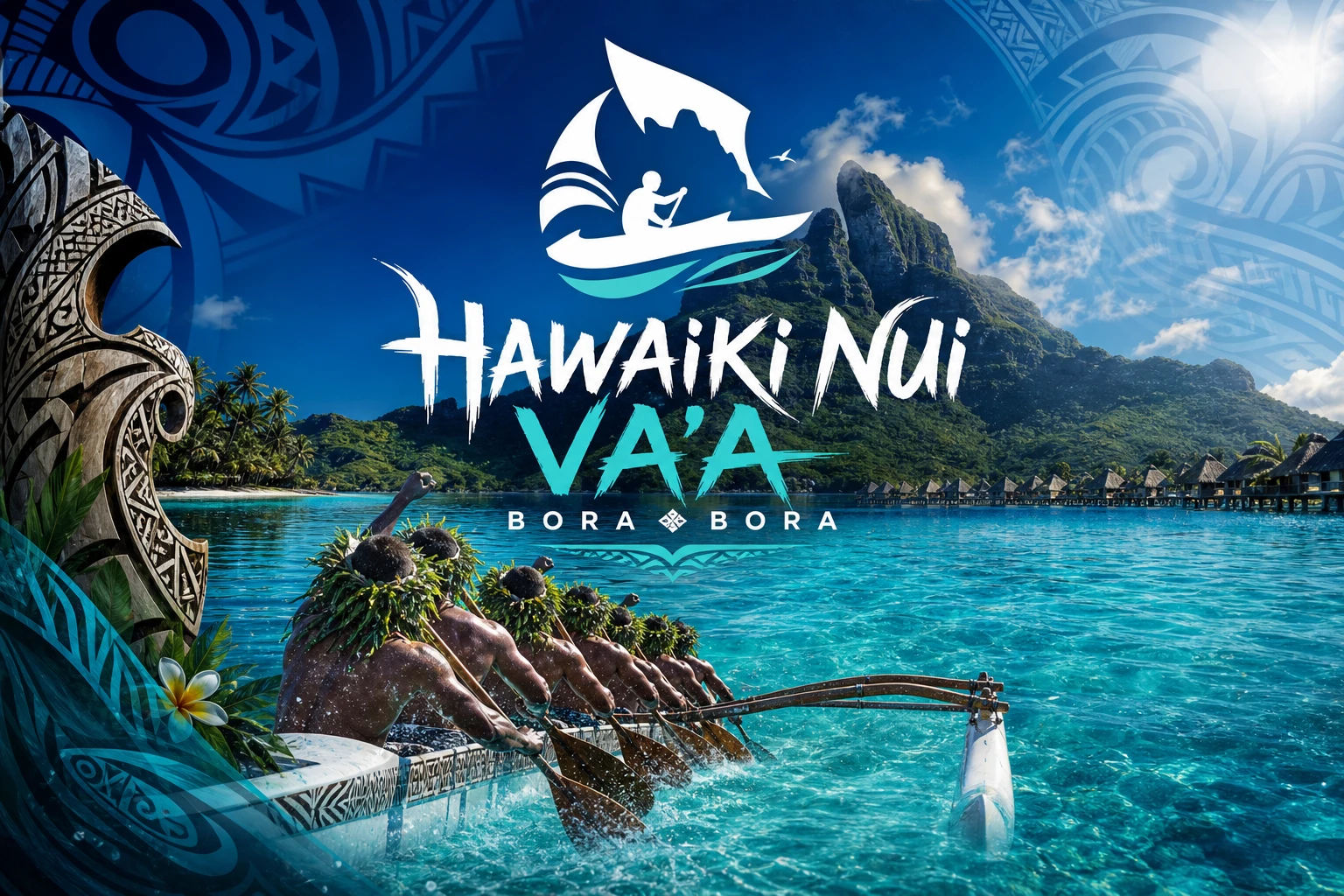
Hawaiki Nui Va’a 2026 takes place from Wednesday, 28 October to Friday, 30 October 2026, bringing one of the world’s most prestigious outrigger-canoe races across the Leeward Islands of French Polynesia. The three-stage race begins in Huahine, continues through Raiatea and Taha’a, then reaches its exhilarating finish in Bora Bora on Friday, 30 October 2026.
For visitors, Hawaiki Nui Va’a is much more than a sporting event. It is a powerful celebration of Polynesian identity, ocean knowledge, teamwork, endurance and the living legacy of the va’a, the traditional outrigger canoe. Bora Bora becomes the dramatic final destination, where cheering crowds gather near Matira Beach to welcome crews after an unforgettable journey across open water.
"Hawaiki Nui Va’a is a powerful celebration of Polynesian identity, ocean knowledge, teamwork, endurance and the living legacy of the va’a."
What Is Hawaiki Nui Va’a?
The World's Most Prestigious Outrigger-Canoe Race
Hawaiki Nui Va’a is the biggest and most famous outrigger-canoe race in French Polynesia. The race attracts elite paddling teams from Tahiti, the wider Pacific and international outrigger communities.
The event is raced in six-person outrigger canoes, known as V6 canoes. Teams paddle across open ocean channels, lagoons and island coastlines over three demanding days.
The course covers approximately 80 miles, or around 129 kilometres, across the Society Islands. The route connects four islands with deep cultural and navigational significance:
- Huahine
- Raiatea
- Taha’a
- Bora Bora
The race requires far more than fitness. Crews need discipline, timing, steering ability, ocean awareness and an exceptional level of teamwork.
For many Polynesians, va’a is not simply a sport. It is a living link to ancestral wayfinding, community values and the ocean-based history of the Pacific.
Hawaiki Nui Va’a represents:
- Polynesian maritime heritage
- Traditional canoe culture
- Ocean navigation
- Team endurance
- Cultural pride
- Island identity
- Elite athletic performance
- Community support
- Inter-island connection
- The spiritual relationship between people and the sea
Hawaiki Nui Va’a 2026 Dates
Mark Your Calendars
The confirmed Hawaiki Nui Va’a 2026 race dates are:
- Wednesday, 28 October 2026
- Thursday, 29 October 2026
- Friday, 30 October 2026
The final stage ends in Bora Bora on Friday, 30 October 2026.
Key Race Details
Essential Information for Participants and Spectators
- Event name: Hawaiki Nui Va’a 2026
- Event category: International outrigger-canoe race and Polynesian cultural sporting event
- Race dates: Wednesday, 28 October to Friday, 30 October 2026
- Race duration: Three days
- Main route: Huahine, Raiatea, Taha’a and Bora Bora
- Final destination: Bora Bora
- Final-stage finish area: Matira Beach area, Bora Bora
- Main race format: Six-person outrigger-canoe teams
- Approximate distance: 80 miles, or about 129 kilometres
- Spectator pricing: No universal spectator ticket announced
- Best spectator date in Bora Bora: Friday, 30 October 2026
The event may also include additional youth, women’s, veteran and lagoon-race activities around the principal elite race. Visitors should check the official 2026 programme closer to October for final category schedules, ceremonial events and finish-line activities.
The Hawaiki Nui Va’a Route
From Huahine to Bora Bora
The Hawaiki Nui Va’a course is divided into three major stages, each with a different challenge.
Stage One: Huahine to Raiatea
Conquering the Open Ocean
Wednesday, 28 October 2026
The race begins in Huahine, a lush island known for ancient temples, quiet bays and strong cultural traditions. Teams paddle from Huahine toward Raiatea, facing the open-ocean conditions that make Hawaiki Nui Va’a so respected.
This first stage is generally associated with a challenging crossing of approximately 27 miles. Crews must settle into a rhythm quickly, work with ocean swells and maintain communication under pressure.
Stage Two: Raiatea to Taha’a
Precision and Race Intelligence
Thursday, 29 October 2026
The second stage moves from Raiatea to Taha’a. Though shorter than the opening crossing, it still requires precision and race intelligence.
Raiatea is one of the most sacred islands in Polynesian tradition, while Taha’a is famous for vanilla farms, lagoon scenery and close cultural links with its larger neighbour.
The Raiatea-to-Taha’a stage is often around 16 miles. It may be shorter on paper, but no stage of Hawaiki Nui Va’a is easy. Wind, current, boat wake and changing water conditions can all affect the race.
Stage Three: Taha’a to Bora Bora
The Grand Finale
Friday, 30 October 2026
The final stage is the one Bora Bora visitors should not miss.
Teams leave Taha’a and paddle toward Bora Bora, often covering the race’s longest and most dramatic distance. This stage is commonly described as approximately 36 miles of open-ocean competition.
As crews approach Bora Bora, the scenery becomes extraordinary. The outline of Mount Otemanu rises above the lagoon, boats gather to support teams and spectators line the shore near the finish.
The final arrival at Bora Bora is not simply a sporting finish. It is a community celebration filled with cheering, flags, music, boats and shared pride.
Why Bora Bora Is the Perfect Finish Line
A Spectacular Conclusion to an Epic Journey
Bora Bora is known worldwide for its lagoon, luxury resorts and dramatic volcanic mountain. During Hawaiki Nui Va’a, it becomes something more: the final stage of a race that connects Polynesian islands through human power and ocean skill.
The finish is associated with the Matira Beach area, one of Bora Bora’s most beautiful public beaches. Its white sand, shallow lagoon and view toward the mountain create a remarkable setting for a sporting finale.
On Friday, 30 October 2026, visitors may see:
- Outrigger canoes arriving from the open ocean
- Support boats gathered offshore
- Families and local residents cheering
- Teams sprinting toward the finish
- Paddlers exhausted but focused
- Team flags and colours
- Ocean safety crews
- Photographers and media
- Celebratory music
- A festive shoreline atmosphere
- Bora Bora’s lagoon at its most energetic
The finish can be emotional. After three days of paddling through demanding conditions, crews arrive carrying the effort of their teammates, coaches, families and home communities.
Understanding Va’a Culture
A Deep Connection to Polynesian Heritage
The word va’a refers to a canoe in several Polynesian languages. In French Polynesia, va’a is central to sporting life and cultural identity.
Traditional Polynesian canoes were essential to exploration, fishing, travel, trade and survival. They allowed Pacific navigators to cross immense distances, connect islands and build communities across the ocean.
Modern va’a racing honours that history while demanding elite athletic skill.
A six-person outrigger canoe includes:
- A main hull
- An outrigger float, known as the ama
- Connecting beams
- Six paddling positions
- A steersperson in the back position
- Coordinated stroke rhythm
- Strong communication
- Constant awareness of water conditions
The team succeeds only when every paddler works together. Timing matters as much as strength. A powerful crew must paddle in unison, respond to waves and maintain focus for hours.
What Makes Hawaiki Nui Va’a So Difficult?
The Ultimate Test of Endurance and Skill
Hawaiki Nui Va’a is one of the most demanding outrigger-canoe events in the world because it combines distance, speed, open-ocean conditions and multi-day endurance.
Racers must manage:
- Long distances
- Open-ocean swells
- Wind
- Current
- Heat
- Saltwater exposure
- Nutrition
- Hydration
- Team strategy
- Boat handling
- Fatigue
- Changing weather
- Pressure from competing crews
Teams train extensively before race week. Many paddlers spend months preparing their strength, cardio fitness, technique and ocean skills.
For spectators, the best way to appreciate the event is to remember that every crew is balancing physical power with navigation, teamwork and respect for the sea.
How to Watch Hawaiki Nui Va’a in Bora Bora
Experience the Thrill of the Finish
The final day on Friday, 30 October 2026 is the best time for Bora Bora visitors to experience Hawaiki Nui Va’a.
Arrive early in the Matira Beach area, especially if you want a good viewing position. The finish-line atmosphere can attract residents, visitors, support crews and media.
Spectator tips:
- Arrive early
- Wear sun protection
- Bring drinking water
- Carry cash for local snacks
- Use reef-safe sunscreen
- Respect marked event zones
- Avoid blocking safety personnel
- Keep clear of canoe landing areas
- Do not enter the water near the finish
- Watch children closely
- Follow police and event-staff instructions
- Ask before photographing athletes closely
- Use a hat and lightweight cover-up
- Arrange transport before the race finishes
Do not assume that boats can approach the racing canoes. Safety boats, team vessels and official craft need space to operate.
Where to Stay for the Bora Bora Finish
Find the Perfect Base for Race Day
Bora Bora accommodation can fill quickly around Hawaiki Nui Va’a weekend. Book early for the nights of 29 and 30 October 2026, especially if you want to stay close to Matira Beach.
Matira
Best for Beach Access and Local Vibes
Best for:
- Finish-line atmosphere
- Public beach access
- Restaurants
- Lagoon views
- A more local and walkable Bora Bora stay
Vaitape
The Hub of Bora Bora
Best for:
- Restaurants and shops
- Ferry access
- Local services
- Transfers and tour operators
- A central base for exploring the island
Motu Resorts
Luxury and Privacy
Best for:
- Luxury accommodation
- Overwater bungalows
- Lagoon scenery
- Private boat transfers
- Honeymoon-style stays
Motu resorts can be beautiful but may require more planning for transportation to the public finish area. Confirm boat transfers well in advance.
Getting to Bora Bora
Plan Your Journey to the Island Paradise
Most visitors reach Bora Bora by domestic flight from Tahiti’s Faa’a International Airport.
The Bora Bora airport is located on a motu, or small islet, rather than the main island. From the airport, visitors take a boat transfer to Vaitape, Matira or their resort.
Travel planning tips:
- Book domestic flights early
- Reserve airport boat transfers
- Confirm resort transfer times
- Allow extra time during Hawaiki Nui Va’a week
- Carry waterproof protection for electronics
- Bring small cash for local purchases
- Check inter-island schedules if travelling from Huahine, Raiatea or Taha’a
- Arrange return transport after the finish-line celebration
- Keep hotel details available offline
If you want to follow the race across multiple islands, book domestic flights, ferries and accommodation months in advance.
Extend Your Hawaiki Nui Va’a Trip
Discover More of Bora Bora
The race finale is the perfect reason to explore Bora Bora beyond the finish line.
Matira Beach
Relax and Unwind
Matira Beach is one of Bora Bora’s best public beaches. The shallow lagoon, white sand and relaxed atmosphere make it ideal for a recovery day after race viewing.
Lagoon Tour
Explore the Underwater World
Book a licensed lagoon tour to see coral gardens, rays, sharks and the island from the water. Respect guides, avoid touching marine animals and use reef-safe sunscreen.
Mount Otemanu Viewpoints
Breathtaking Vistas
Mount Otemanu is Bora Bora’s iconic volcanic peak. While it cannot be climbed to the summit, island tours offer viewpoints and hiking routes with dramatic scenery.
Vaitape
The Heart of the Island
Vaitape is Bora Bora’s main village. It is a useful place for shopping, restaurants, pearl boutiques, local markets and island services.
Traditional Polynesian Dinner
A Feast for the Senses
A local Polynesian dinner can be a memorable way to experience music, dance and regional cuisine after Hawaiki Nui Va’a.
Look for dishes such as:
- Poisson cru
- Fresh tuna
- Coconut milk dishes
- Grilled fish
- Taro
- Breadfruit
- Tropical fruit
- Banana desserts
- Vanilla-flavoured treats
- Local juice drinks
What to Pack for Hawaiki Nui Va’a 2026
Be Prepared for Adventure
Bora Bora is warm and sunny, but race-day viewing requires practical gear.
Bring:
- Lightweight clothing
- Sun hat
- Sunglasses
- Reef-safe sunscreen
- Reusable water bottle
- Sandals
- Swimsuit
- Light rain jacket
- Waterproof phone pouch
- Portable charger
- Small dry bag
- Cash in French Pacific francs
- Insect repellent
- Beach towel
- Binoculars, if preferred
- Modest clothing for village or cultural visits
The sun can be intense, especially while standing on open beach areas for several hours.
Hawaiki Nui Va’a 2026 Pricing
Plan Your Budget
There is no single universal spectator ticket for Hawaiki Nui Va’a 2026.
The race takes place across public shorelines, lagoons and island communities. Viewing from accessible public areas may be free, but visitors should budget for transport, accommodation, food, tours and optional activities.
Budget for:
- Flights to Tahiti and Bora Bora
- Domestic flights or ferries
- Airport transfers
- Hotel accommodation
- Lagoon tours
- Meals
- Local transportation
- Race-related boat excursions, if authorised
- Travel insurance
- Coffee, snacks and drinks
- Souvenirs and local crafts
- Optional cultural experiences
Crew registration, canoe transport and team support costs are separate from spectator travel costs and are managed by race organisers.
Respectful Spectator Etiquette
Honor the Spirit of the Event
Hawaiki Nui Va’a is a major sporting event, but it is also a cultural gathering with deep Polynesian meaning.
- Respect crews and their preparation spaces
- Do not block beaches or canoe access points
- Keep clear of official safety areas
- Avoid stepping on team equipment
- Ask before taking close-up photos
- Respect local communities
- Do not litter beaches or lagoons
- Use reef-safe sunscreen
- Support local vendors
- Follow all marine-safety instructions
- Keep noise low during ceremonial moments
- Never interfere with race boats or team vessels
Frequently Asked Questions
The Things People Always Want to Know
When is Hawaiki Nui Va’a 2026?
Hawaiki Nui Va’a 2026 takes place from Wednesday, 28 October to Friday, 30 October 2026.
When does Hawaiki Nui Va’a finish in Bora Bora?
The final stage finishes in Bora Bora on Friday, 30 October 2026.
Where does Hawaiki Nui Va’a start?
The race begins in Huahine, then continues through Raiatea and Taha’a before reaching Bora Bora.
How long is Hawaiki Nui Va’a?
The overall course is approximately 80 miles, or around 129 kilometres, spread across three stages.
What is va’a?
Va’a is a traditional Polynesian outrigger canoe. Modern va’a racing uses crew-powered canoes and celebrates Polynesian maritime heritage.
Is Hawaiki Nui Va’a free to watch?
There is no universal spectator ticket announced. Public shoreline viewing may be free, but visitors should budget for travel, accommodation, food and transportation.
Where is the best place to watch in Bora Bora?
The Matira Beach area is closely associated with the final-stage finish and is one of the best places to experience the Bora Bora race arrival.
Verified Information at a Glance
- Event name: Hawaiki Nui Va’a 2026
- Event category: International outrigger-canoe race and Polynesian cultural sporting event
- Confirmed dates: Wednesday, 28 October to Friday, 30 October 2026
- Race route: Huahine, Raiatea, Taha’a and Bora Bora
- Bora Bora finish date: Friday, 30 October 2026
- Main race format: Six-person outrigger-canoe teams
- Approximate course distance: 80 miles, around 129 kilometres
- Bora Bora finish area: Matira Beach area
- Spectator admission: No universal ticket price announced
- Best arrival date for Bora Bora spectators: Thursday, 29 October 2026
- Best places to stay: Matira, Vaitape and Bora Bora motu resorts
- Best for: Sports travellers, Polynesian culture enthusiasts, photographers, paddling fans, families and Bora Bora visitors
Plan your Bora Bora stay around Friday, 30 October 2026, find a respectful viewing spot near Matira Beach and feel the energy of Hawaiki Nui Va’a as elite crews paddle toward the finish beneath the towering silhouette of Mount Otemanu.
```
%202026.webp)