Chasing trade winds, turquoise lagoons, and island energy on Rarotonga and Aitutaki
The Cook Islands are famous for lagoon blues that look almost unreal, palm-lined beaches, and a relaxed island rhythm that makes time feel softer. But there is another side to this Pacific paradise: wind, speed, and adrenaline. When the trade winds arrive and the lagoons warm up, the islands become a natural playground for kite surfing, paddling, outrigger canoeing, snorkeling, and other water sports. For travelers who want more than sunbathing, Kite Surfing & Water Sports Festivals Cook Islands style offer a memorable way to experience the ocean like locals do.
While the Cook Islands are not known for one single global mega-festival dedicated only to kitesurfing, the country does host water sports events, races, and seasonal activities that align with the best wind and water conditions. This guide focuses on how to plan an island trip around those festival-style moments, what to expect, where to go, and how to enjoy the lagoons responsibly.
In the Cook Islands, water sports are not a side activity. They are part of island life, shaped by trade winds, reef lagoons, and community events on the ocean.
Why the Cook Islands Are Ideal for Kite Surfing and Water Sports
Warm Lagoons and Reef-Protected Waters
One reason water sports thrive here is the geography. Islands like Rarotonga and Aitutaki have reef systems that create calmer lagoon zones, plus channels and outer reef areas for more advanced conditions. This makes it possible to find suitable water for a range of skill levels depending on wind, tide, and location.
The Trade Winds That Power the Season
The Cook Islands sit in the South Pacific trade wind belt. The windier months often create better conditions for kiteboarding and sailing-oriented water sports. Travelers planning a dedicated kite trip usually focus on the dry season window, when breezes are more consistent and weather is generally stable.
Island Community Energy
Even when events are competitive, the vibe tends to be friendly and community-led. On an island, spectators are close to the action, and participants often mingle easily with visitors. You get that rare combination of sport and cultural warmth.
When Kite Surfing and Water Sports Events Are Typically Held in the Cook Islands
Because “Kite Surfing & Water Sports Festivals Cook Islands” is an umbrella topic, timing depends on the sport and the island. In general, the most reliable planning seasons are:
Typical Months for Wind and Water Sports Activity
- June to August: Often the best bet for trade winds, making it a common window for kiteboarding-focused travel.
- May to October: A broader dry season period when many outdoor events and ocean activities are most comfortable.
- November to April: Warmer, more humid months with higher rain risk. Water is still beautiful, but wind and weather patterns can be less predictable for kite-driven plans.
Event calendars can vary year to year, so if your goal is to attend a specific race, competition, or festival weekend, plan your trip around the season first, then confirm the exact event dates locally closer to travel time.
Where the Action Happens: Best Islands and Spots for Water Sports
Rarotonga: The Main Island Hub for Events and Visitors
Rarotonga is the gateway island and the easiest place to base yourself for water sports. It offers:
- More accommodation choices
- Easier access to gear, guides, and transport
- A strong community scene around the lagoon
Local relevance for visitors: spend time in Avarua for supplies, cafés, and local markets like Punanga Nui Market, then head back to the coast for ocean time.
Aitutaki: Lagoon Paradise with a Sporty Side
Aitutaki is famous for its lagoon, and it can also be an incredible place for:
- Lagoon paddling and kayaking
- SUP sessions
- Lagoon cruises that include snorkeling and water time
For advanced riders, conditions can change quickly depending on wind direction and reef exposure, so it is best to connect with local operators for the safest launch and riding zones.
Muri Lagoon (Rarotonga): A Go-To for Lagoon Sports
Muri Lagoon is often a favorite for visitors because it is scenic, accessible, and naturally set up for lagoon activities. It is also close to many resorts, making it easy to combine festival-style events with a comfortable stay.
What “Festival” Looks Like in the Cook Islands Water Sports Scene
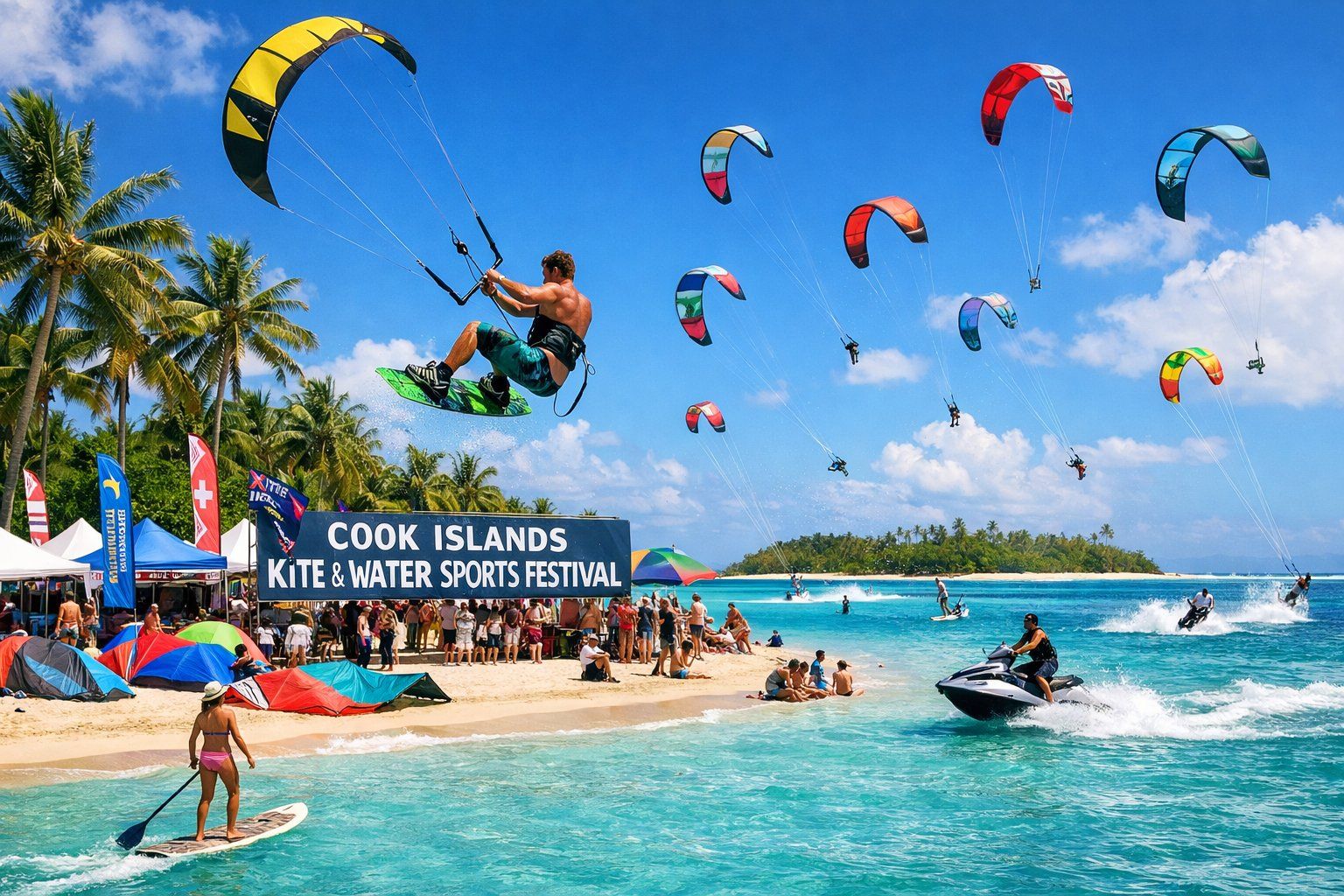
The Cook Islands’ water sports calendar is often shaped by community races, ocean challenges, paddling events, and seasonal gatherings rather than a single branded international kitesurf festival. For travelers, the festival feeling comes from a mix of sport and island celebration:
Common Festival-Style Features You May See
- Community and club-led competitions
- Lagoon-based races and paddle events
- Demonstrations and skill showcases
- Beachside gatherings after events with food, music, and social atmosphere
Because the islands are small, you can often watch the action up close and still make it back for a sunset swim.
Water Sports to Look For During Cook Islands Event Season
Kite Surfing and Kiteboarding
Kiteboarding is the most wind-dependent. If you are traveling with your own gear, plan for:
- Local launch rules and reef awareness
- Respect for swimmers, lagoon tours, and sensitive reef zones
- Wind windows that can shift day to day
If you are learning, it is strongly recommended to go through a local professional for safety, reef etiquette, and correct spots.
Stand-Up Paddleboarding (SUP) and Lagoon Paddling
SUP is popular in lagoon environments and works well even on lower-wind days. During busier weeks you may find group paddles or informal meetups that feel festival-like.
Outrigger Canoeing (Vaka) and Paddling Culture
The Cook Islands have a strong vaka tradition. Even if you are not racing, watching paddlers train or compete is an excellent way to connect with island culture. Vaka events often carry deeper community pride and are worth attending respectfully.
Snorkeling, Freediving, and Reef Experiences
Water sports festivals and ocean events often bring more visitors into the lagoon. If snorkeling is part of your trip, choose reef-safe practices:
- Avoid stepping on coral
- Use reef-safe sun protection
- Keep distance from marine life
Cultural Connection: How Ocean Sport Fits Cook Islands Island Life
The Ocean as Daily Life, Not Just a Playground
In the Cook Islands, the ocean has always been central. It shapes food systems, travel history, stories, and identity. Ocean events often feel meaningful because they connect modern sport with island tradition.
Respecting Lagoon Spaces and Local Customs
During event periods, lagoons can be shared by swimmers, tour boats, paddlers, and kiteboarders. Being respectful is part of being a good visitor:
- Follow signage and local guidance
- Give right of way when appropriate
- Avoid launching in crowded swimming zones
Practical Travel Tips for Planning a Kite Surfing and Water Sports Trip
Getting to the Cook Islands and Moving Between Islands
Most travelers arrive through Rarotonga International Airport. From there:
- Domestic flights connect to Aitutaki and some outer islands
- Rarotonga is easy to circle by bus, scooter, or car
If you want both Rarotonga event access and Aitutaki lagoon time, consider splitting your trip.
Where to Stay for Water Sports Access
- Muri: great for lagoon access, tours, and easy water time
- Avarua: practical for supplies, markets, and local life
- West coast: sunsets and a quieter pace after active days
What to Pack for Kiteboarding and Ocean Events
- Rash guard and reef shoes for coral safety
- Waterproof bag for phones and valuables
- Repair tape and spare parts if you bring kite gear
- A light windproof layer for breezy evenings
Safety Considerations for Reef Lagoons
Reef environments can be unforgiving. Use local knowledge for:
- Safe channels and exits
- Tide timing
- Wind direction and gust patterns
- Boat traffic zones
If you are not experienced in reef conditions, do not treat the lagoon like a flat-water training lake. Local instructors and guides are worth it.
Pricing: What Visitors Should Budget For
Because “Kite Surfing & Water Sports Festivals Cook Islands” refers to multiple event types, pricing can vary widely.
Typical Cost Structure You May Encounter
- Public events and races: often free to watch
- Participation fees: may apply for certain races or organized challenges
- Lessons and guided sessions: paid, with prices depending on duration and equipment
- Gear rental: paid, if available through local operators
To stay factually accurate without inventing numbers, plan on budgeting for lessons or rentals as your main activity cost, and treat spectator access as usually low-cost or free.
A Simple Island Itinerary Around Wind and Water
5-Day Plan for Active Travelers
Day 1: Arrive on Rarotonga, settle in Muri, lagoon swim and sunset walk
Day 2: Book a guided lagoon session or paddling experience, explore Avarua and Punanga Nui Market
Day 3: Kite session or ocean activity day depending on wind, relaxed evening meal
Day 4: Day trip or flight to Aitutaki for lagoon paddling and snorkeling
Day 5: Return to Rarotonga, beach time, shop local crafts, final ocean session if conditions allow
This structure gives you flexibility, which matters when wind conditions decide the best kite days.
Why These Festivals and Events Are Worth Traveling For
The Cook Islands are already a dream destination for beaches and lagoons. Adding kite surfing and water sports festival energy turns that dream into something more personal. You do not just admire the ocean. You participate in it, alongside island communities who understand it deeply.
If you want a trip that blends adventure with culture, plan your Cook Islands getaway during the dry season, base yourself near Muri Lagoon or Avarua for easy access, and keep your days flexible so you can follow the wind. Come ready to learn, ride, paddle, and cheer from the shoreline, and let the Cook Islands show you how thrilling an island ocean can be when you meet it with respect and curiosity.
Verified Information at a Glance
- Event Topic: Kite Surfing and Water Sports Festivals and Events in the Cook Islands
- Event Category: Outdoor sports events, water sports gatherings, ocean and lagoon competitions
- Country / Island Nation: Cook Islands
- Most relevant islands for visitors: Rarotonga and Aitutaki
- Typically held: Most water sports activity and event scheduling aligns with the dry season, commonly May to October, with wind-focused travel often peaking June to August
- Typical venues and settings: Lagoon and coastal areas around Rarotonga (including Muri Lagoon) and Aitutaki Lagoon, plus community waterfront zones depending on the event
- Typical activities: Kiteboarding sessions, lagoon paddling and SUP, vaka and paddling culture, snorkeling-linked ocean activity, beachside gatherings around event days
- Pricing: Spectator access is often free for public-facing events; participation fees, lessons, and rentals vary by operator and event type and should be confirmed locally
- Local relevance: Pair events with Avarua, Punanga Nui Market, lagoon viewpoints, and island cultural experiences for a full Cook Islands trip