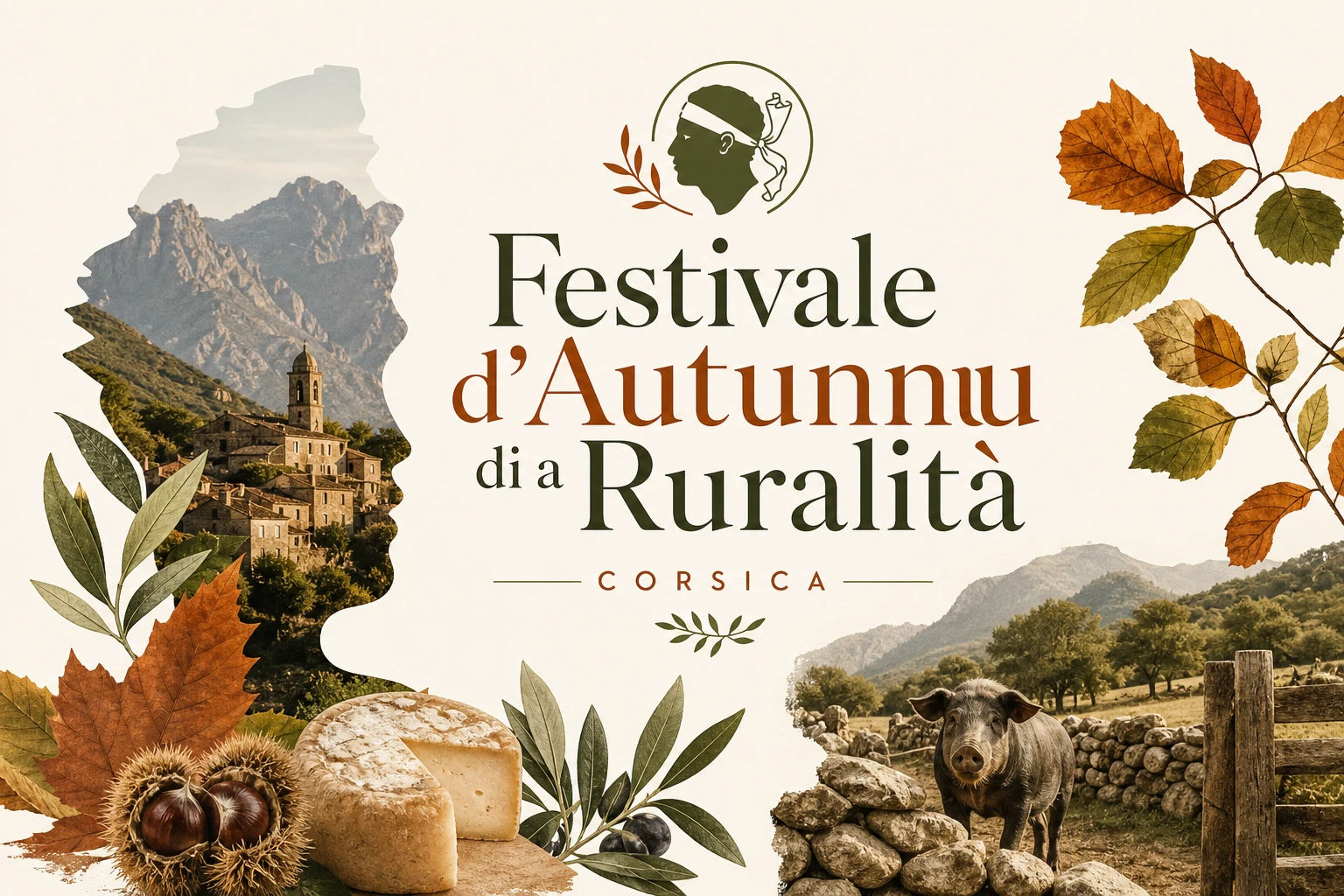
The Festivale d’Autunnu di a Ruralità, also known as the Corsican Autumn Festival of Rural Life, celebrates the island’s villages, food traditions, sacred heritage, language, and music. The programme is traditionally connected to the Via San Martinu cultural route, with activities centered on rural communities and culminating around the feast of Saint Martin in Patrimoniu during early to mid-November.
For travelers who want to experience Corsica beyond its famous beaches and summer coastline, this festival opens a more intimate door into island life. Expect village gatherings, local flavors, polyphonic singing, heritage talks, church events, and encounters with people who keep Corsican rural culture alive.
"The festival is a journey through villages and landscapes, bringing visitors into churches, public squares, cultural centers, vineyards, and local gathering places where rural life is still part of the everyday rhythm."
A Celebration of Corsican Rural Life
Exploring the Island’s Intangible Heritage
The Festivale d’Autunnu di a Ruralità translates as the Autumn Festival of Rurality. It highlights the material and intangible heritage of rural Corsica, including agriculture, craftsmanship, local history, language, religious traditions, and music.
The festival grew from the feast of San Martinu, or Saint Martin of Tours, in Patrimoniu. Saint Martin is closely associated with winegrowers, making Patrimoniu a fitting spiritual and cultural center for the festival.
The festival encourages people to leave the coast, slow down, and discover the villages, stories, and traditions that define the island’s interior and northern regions.
Confirmed Festival Timing
When to Experience the Festivities
The festival is traditionally staged from mid-October through 11 November, with past programmes running from 17 October to 11 November. The main San Martinu celebrations in Patrimoniu are generally held around 8 to 11 November, leading into the feast day of Saint Martin on 11 November.
For travelers planning ahead, the most reliable period to reserve is:
- Mid-October to 11 November for the wider rural heritage programme
- 8 to 11 November for the central San Martinu celebrations in Patrimoniu
- 11 November for the traditional Saint Martin’s Day focus in Patrimoniu
Because Festivale d’Autunnu di a Ruralità is a traveling programme, dates, villages, performers, and activities can vary from year to year. Check the official festival channels before finalizing accommodation, transport, or event-specific plans.
From Patrimoniu to Corsica’s Villages
Exploring the Heart of the Festival
Patrimoniu, located in the Conca d’Oru region of Haute-Corse, is the symbolic heart of the festival. It sits near Saint-Florent, between Cap Corse and the Nebbio region, surrounded by vineyards, limestone hills, and rural villages.
The town is celebrated for its wine heritage, but the festival adds deeper context. It explores the relationship between people and land, the role of villages in preserving culture, and the ways that old traditions can remain relevant in modern Corsica.
The wider festival has previously reached communities across northern Corsica, creating a cultural route that has included places such as:
- Bastia
- Patrimoniu
- San Fiurenzu, also known as Saint-Florent
- Cap Corse villages
- Conca d’Oru communities
- Campile
- Vulpaghju
- Barbaghju
- Nonza
- Evisa
- Bastelicaccia
- I Prunelli di Casacconi
This traveling character makes the event ideal for a slow road trip. Visitors can choose a few festival stops, then connect them with vineyards, hiking routes, historic churches, village markets, and coastal views.
The Via San Martinu Cultural Route
Connecting Communities Through Heritage
At the heart of the festival is the Via San Martinu, a cultural route inspired by Saint Martin of Tours and his enduring presence in Corsican communities. Sixty-one communes in Corsica identify Saint Martin as their patron saint, revealing how widely his legacy is woven into the island’s spiritual and village life.
The route is not simply religious. It provides a framework for exploring local heritage, rural communities, oral history, and the cultural landscapes that connect villages across Corsica.
Festival activities linked to the Via San Martinu can include:
- Heritage walks and guided village visits
- Talks on rural history and village identity
- Conferences led by historians, researchers, and cultural figures
- Church services and sacred music
- Conversations about agricultural heritage
- Local food tastings and wine discovery
- Traditional music and polyphonic singing
- Book presentations and cultural discussions
For visitors, the Via San Martinu adds a meaningful theme to an island drive. It invites you to look beyond scenery and understand how church, land, language, and family history have shaped Corsican communities.
Corsican Music, Language and Storytelling
Listening to the Island’s Soul
Music is a core part of Festivale d’Autunnu di a Ruralità. Corsica is internationally recognized for its powerful polyphonic singing tradition, often heard in churches, village squares, and intimate evening gatherings.
The festival has featured traditional Corsican songs, sacred vocal music, local musicians, and cultural groups such as Caramusa and A Brigata San Martinu. In past events, programmes have combined talks with performances of island music, making the experience accessible even for visitors who do not speak Corsican or French.
Listen closely and you may hear the Corsican language, lingua corsa, used in songs, introductions, and local conversations. The language remains an important part of the island’s cultural identity, and the festival creates a welcoming space where it is heard naturally rather than presented as a museum piece.
For the best experience:
- Arrive early for music events in small churches or village halls
- Keep your phone silent during sacred or acoustic performances
- Ask before taking close-up photographs or recordings
- Take time to read programme notes, even when they are in Corsican, French, or Italian
- Stay for conversation after a performance, when local hospitality often shines
Food, Wine and Island Flavours
A Taste of Corsican Autumn
Autumn is one of the best seasons to taste Corsica’s rural character. The heat of summer softens, vineyards and farms remain active, and village tables fill with flavors that feel rooted in the island’s mountains and Mediterranean climate.
Patrimoniu is a natural focal point for wine lovers. The appellation is among the island’s most respected, and a stay in the area gives visitors the chance to explore wineries responsibly, learn about local grape varieties, and pair regional wines with traditional dishes.
Food and tasting events connected with the festival may feature:
- Patrimoniu wines
- Corsican charcuterie, including cured meats and sausages
- Farmhouse cheeses, especially sheep and goat cheeses
- Chestnut flour specialties
- Olive oil and local preserves
- Honey from island producers
- Seasonal pastries and bread
- Dishes made with local herbs, vegetables, and game
- Regional fruit, jams, and traditional sweets
Do not expect every activity to be a large food fair. The charm of Festivale d’Autunnu di a Ruralità often lies in smaller moments: tasting a local product after a heritage talk, sharing food at a village gathering, or meeting the people behind a family-run vineyard or farm.
Why Patrimoniu Is Worth the Journey
Exploring Corsican Wine and Culture
Patrimoniu is a small village with an outsized role in Corsican wine, history, and culture. During the San Martinu period, it becomes a natural meeting point for residents, returning families, musicians, producers, and visitors.
The village also makes an excellent base for exploring northwest Corsica. It is close to:
- Saint-Florent, with its marina, citadel, and restaurants
- Cap Corse, known for dramatic coastal roads and historic villages
- Désert des Agriates, a protected wilderness of maquis, beaches, and remote trails
- Bastia, Corsica’s lively northern port city
- Nonza, famous for its black-pebble beach and hillside tower
- Balagne, with artisan villages, olive groves, and mountain viewpoints
By day, you can explore vineyards and coastal landscapes. By evening, return to the festival for music, food, or a cultural gathering that feels closely tied to the place.
Festival Highlights to Look For
Immersive Experiences in Rural Culture
While the final programme varies, Festivale d’Autunnu di a Ruralità has a strong identity. Look for events that connect you directly with rural culture rather than only offering entertainment.
Common festival themes include:
- Conferences and talks: Discussions on Corsican history, rural society, religious heritage, and local identity
- Village heritage visits: Guided discovery of churches, public spaces, agricultural landscapes, and historic landmarks
- Traditional music: Polyphonic singing, sacred music, and instrumental performances
- Food tastings: Regional products, village cooking, and wine-linked experiences
- Corsican-language culture: Songs, storytelling, and discussions that celebrate lingua corsa
- Religious gatherings: Masses, processions, and events associated with San Martinu
- Artisan encounters: Opportunities to support local producers, makers, and craftspeople
- Evening gatherings: Intimate concerts, conversations, and community meals
One earlier published event at the Church of San Martinu in Evisa included Mass, sacred singing by Corsican confraternities, a talk about the Via San Martinu route, a historical conference, and a performance of Corsican songs and music. Entry was listed as free.
Travel Tips for Visiting Rural Corsica
Practical Advice for a Smooth Journey
Festivale d’Autunnu di a Ruralità rewards travelers who are willing to explore with patience. Corsican roads are often narrow and winding, especially between mountain villages, so allow more time than a map suggests.
Choose the Right Base
Where to Stay for the Best Experience
For the festival’s main November focus, consider these places:
- Patrimoniu: Best for the San Martinu atmosphere, vineyards, and rural village character
- Saint-Florent: Good for hotels, restaurants, marina access, and easy drives to Patrimoniu
- Bastia: Ideal for travelers arriving by ferry or plane who want city services and festival access
- Nonza: A striking Cap Corse village for scenic stays and quiet exploration
- Calvi or L’Île-Rousse: Useful if you want to combine the festival with Balagne and northwest-coast travel
- Corte: A strong choice for travelers who wish to explore Corsica’s mountain heart after northern festival events
Getting Around
Transportation Tips for a Seamless Trip
A rental car is the most practical choice for reaching village venues. Public transport can help between larger towns, but many festival communities are easier to access by road.
Keep these tips in mind:
- Book your rental vehicle early for autumn travel
- Avoid driving tired on mountain roads after evening events
- Use village car parks where available
- Keep a light rain jacket and warm layer in the car
- Carry water, particularly during rural walks
- Do not rely on mobile reception in remote valleys
- Check exact event locations, as village churches and halls may be outside the main center
What to Pack
Essential Items for a Comfortable Visit
Autumn in Corsica can be gloriously mild, but the weather changes quickly between the coast and higher ground.
Bring:
- Comfortable walking shoes
- A light waterproof jacket
- Warm layers for evening concerts and village events
- Smart-casual clothing for church gatherings
- A reusable water bottle
- A small day bag
- A printed or downloaded event schedule
- A portable charger
- Cash for small producers, tastings, or village purchases
Prices and Entry Information
Understanding the Costs
There is no single published festival pass or universal ticket price for Festivale d’Autunnu di a Ruralità. Many heritage talks, concerts, and religious or village events are free to attend, as shown by past published programme listings.
Some guided visits may require advance booking and a small fee. One past festival programme listed a guided visit at €9, with registration required by SMS.
Budget for:
- Guided tours or heritage visits where charges apply
- Wine tastings or winery visits
- Food and drink purchases
- Optional festival dinners or special events
- Transport, parking, and accommodation
- Artisan products, local honey, wine, cheese, and crafts
Because individual event prices can vary, always confirm directly with the festival organizers before traveling for a specific workshop, tasting, or guided visit.
Responsible Festival Etiquette
Respecting Local Traditions and Communities
The festival is rooted in small communities and meaningful traditions. Respectful behavior helps ensure visitors are welcomed and that local culture is valued on its own terms.
- Dress modestly for church events
- Arrive early for small-venue talks and concerts
- Ask before photographing people, performers, or religious services
- Avoid interrupting music performances or speeches
- Buy directly from local vendors where possible
- Learn a few greetings such as Bonghjornu for good morning and Grazie for thank you
- Respect vineyard property, village parking rules, and quiet streets
- Keep rural paths clean and carry all litter away
- Drive slowly through village centers
Frequently Asked Questions
The Things People Always Want to Know
When is Festivale d’Autunnu di a Ruralità held in Corsica?
The festival is traditionally held from mid-October to 11 November, with past published programming running from 17 October to 11 November. The key San Martinu celebrations in Patrimoniu are generally held around 8 to 11 November.
Where does the Festival of Rurality take place?
The main San Martinu focus is in Patrimoniu, Haute-Corse. The wider programme may include rural communities across northern Corsica, including Bastia, Saint-Florent, Cap Corse villages, Nonza, Evisa, and other locations connected through the Via San Martinu route.
What can visitors do at Festivale d’Autunnu di a Ruralità?
Visitors can enjoy rural heritage talks, traditional Corsican music, polyphonic singing, local food tastings, wine experiences, village walks, cultural discussions, church events, and Corsican-language programming.
Is Festivale d’Autunnu di a Ruralità free?
Many events have been listed as free, including selected conferences and musical performances. Some guided visits may have a charge, with one past visit priced at €9 and requiring advance registration.
Why is San Martinu important in Patrimoniu?
San Martinu refers to Saint Martin of Tours, who is closely associated with winegrowers. Patrimoniu’s vineyard setting and local religious heritage make it the festival’s central location for the November celebrations.
Do I need a car for the festival?
A rental car is strongly recommended because the programme can extend across several villages and rural areas. Public transport is more useful between larger towns than for reaching individual festival venues.
What is the Via San Martinu in Corsica?
The Via San Martinu is a cultural route connected to Saint Martin’s heritage in Corsica. It links villages, churches, history, rural traditions, and local cultural events across the island.
Verified Information at a Glance
- Event name: Festivale d’Autunnu di a Ruralità
- Also known as: Festival d’Automne de la Ruralité, Corsican Autumn Festival of Rural Life
- Event category: Rural heritage, cultural, food, wine, music, and village festival
- Traditional festival period: Mid-October to 11 November
- Previously published programme dates: 17 October to 11 November
- Main San Martinu period: Typically 8 to 11 November
- Key feast date: 11 November, Saint Martin’s Day
- Primary venue area: Patrimoniu, Haute-Corse, Corsica
- Wider locations: Rural communities across northern Corsica and the Via San Martinu cultural route, including Bastia, Saint-Florent, Cap Corse, Nonza, and Evisa
- Main activities: Heritage talks, village visits, music, polyphonic singing, sacred music, tastings, wine culture, Corsican-language events, and rural heritage discussions
- Entry pricing: Many listed events are free; some guided visits may require booking and a fee, with a past guided visit advertised at €9
- Booking: Required for selected visits and activities, subject to the final programme
- Official festival reference: Festivale di a Ruralità and Via San Martinu cultural programme
Plan a slower Corsican autumn around Patrimoniu and 11 November, follow the Via San Martinu through villages and vineyards, and let the songs, flavors, and stories of the island’s rural heart turn your visit into something far more personal than a typical Mediterranean escape.
```