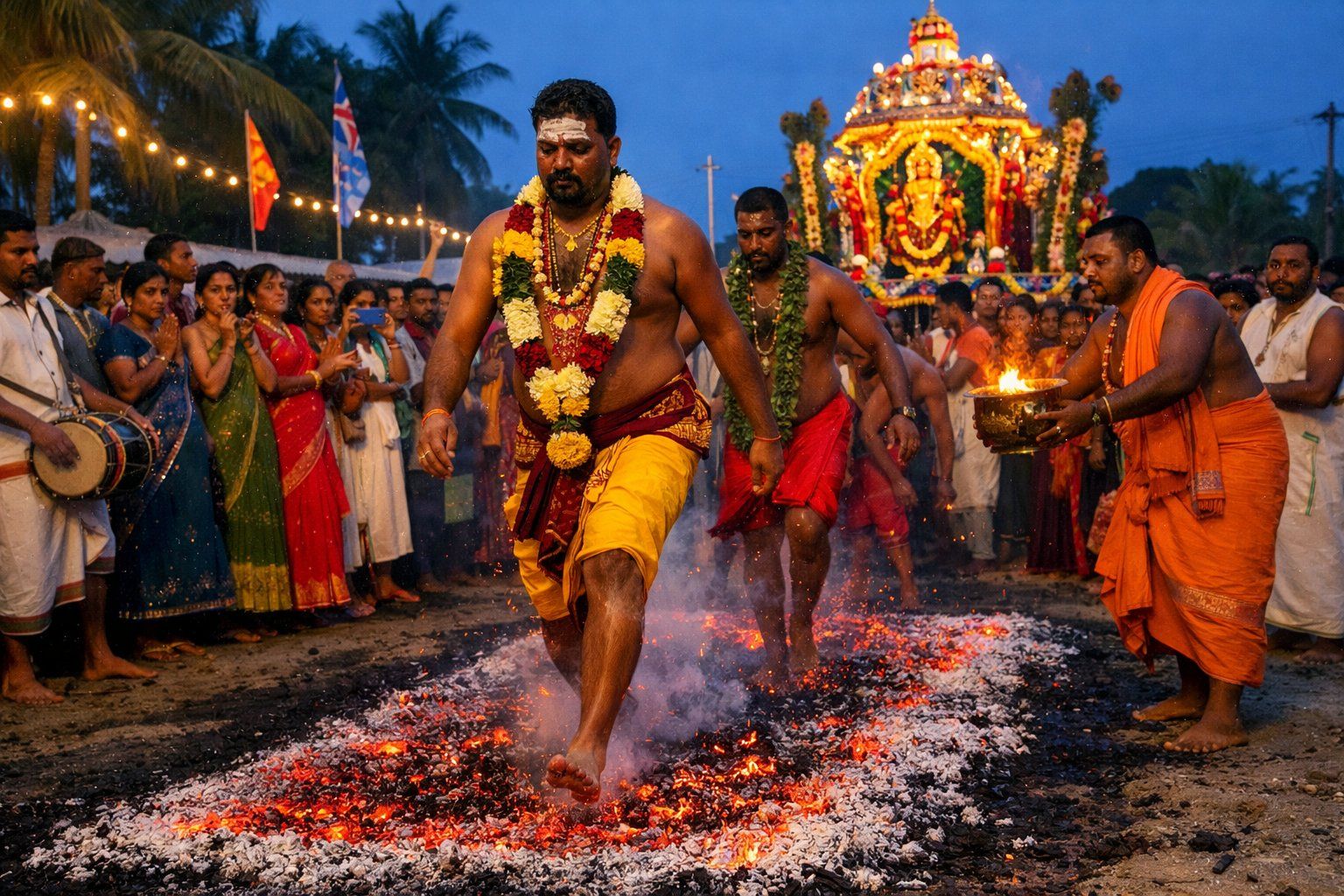
South Indian Fire Walking Festival Fiji
A powerful island tradition of faith, devotion, and living culture
Fiji is often celebrated for its turquoise waters and warm island hospitality, but beyond the beaches lies a cultural depth shaped by many communities who call the islands home. One of the most striking and spiritually charged events in the country is the South Indian Fire Walking Festival Fiji, a sacred ceremony rooted in South Indian Hindu tradition and practiced with deep devotion by the Indo‑Fijian community.
This festival is not staged for tourism. It is a living religious observance that has been passed down through generations since the arrival of South Indian indentured labourers in Fiji in the late 19th century. For respectful visitors, witnessing a fire walking festival offers a rare and deeply moving insight into faith, endurance, and community life on the islands of Fiji.
The South Indian Fire Walking Festival in Fiji is an unforgettable expression of belief where faith meets courage on sacred ground.
What to Expect at the South Indian Fire Walking Festival
A Ritual of Devotion and Purification
Fire walking is a traditional Hindu ritual practiced mainly by followers of Lord Murugan, also known as Subramanya Swami. Participants walk barefoot across a bed of hot embers as an act of faith, penance, gratitude, or fulfillment of a vow.
In Fiji, the South Indian Fire Walking Festival is most closely associated with Tamil Hindu temples, and it remains a deeply respected religious ceremony rather than a performance event. The ritual is believed to demonstrate purity of mind and devotion, with protection granted through faith and prayer.
Why it is Significant on a Pacific Island
The presence of this ceremony in Fiji reflects the country’s multicultural identity. Indo‑Fijians, particularly those of South Indian Tamil descent, have preserved religious traditions brought from India while adapting them to life on Pacific islands. The fire walking festival is one of the most visible and enduring examples of this cultural continuity.
Historical Roots of Fire Walking in Fiji
Arrival of South Indian Traditions
Between 1879 and 1916, thousands of Indians arrived in Fiji under the indenture system. Among them were many South Indian Tamils who brought with them temple rituals, festivals, language, and religious beliefs.
Despite distance from India, these communities rebuilt temple life in Fiji. Fire walking ceremonies became a way to maintain religious identity, community bonds, and spiritual discipline on island soil far from their ancestral homeland.
Passed Down Through Generations
Today, fire walking festivals are organized by temple committees and community elders. Preparation, rituals, and songs are taught orally and through practice, ensuring the festival retains authenticity and spiritual meaning rather than becoming ceremonial display.
When the South Indian Fire Walking Festival Is Held in Fiji
Typical Timing During the Year
The South Indian Fire Walking Festival Fiji is not tied to a fixed calendar date. Instead, it is linked to the Tamil Hindu calendar and temple schedules.
Most fire walking ceremonies in Fiji are typically held between:
- June and September, with a higher concentration during July and August
The specific dates vary by temple and community, often following weeks of prayer, fasting, and ritual preparation.
Travelers interested in attending should check locally with temples or community notices once on the island.
Where Fire Walking Takes Place in Fiji
Major Locations and Communities
Fire walking ceremonies are most commonly held in areas with established Tamil Hindu populations, including:
- Suva and its surrounding suburbs
- Nausori
- Lautoka
- Nadi
- Smaller towns on Viti Levu
Temples dedicated to Lord Murugan or South Indian deities serve as the focal point for the ceremonies.
Temple Grounds and Sacred Spaces
The ritual takes place within temple compounds or adjacent open areas prepared specifically for the ceremony. A long trench of burning embers is created, blessed, and sanctified through chanting and prayer before participants begin the walk.
What Happens During the Fire Walking Festival
Weeks of Preparation Before the Walk
Participants do not simply arrive on the day to walk on fire. Preparation often includes:
- Fasting or strict dietary observances
- Daily prayers and temple visits
- Abstaining from alcohol, meat, and negative behavior
- Spiritual cleansing and mental discipline
This period of preparation is considered essential for both physical and spiritual readiness.
The Day of the Ceremony
On the day of the fire walk, the atmosphere at the temple is solemn yet supportive. The sequence usually includes:
- Extended prayers and chanting in Tamil
- Drumming and devotional music
- Religious rituals led by priests
- Lighting and preparation of the fire pit
As the embers settle, devotees walk across the fire one by one, often entering a trance‑like state of concentration and faith.
After the Fire Walk
Participants typically proceed directly to the temple or holy water area where:
- Feet are washed or cooled
- Blessings are given
- Offerings are made in gratitude
Family members and supporters often wait quietly, offering prayers rather than celebration.
Cultural and Spiritual Meaning for the Community
Faith Over Spectacle
To the Indo‑Fijian Hindu community, fire walking is not about proving physical endurance. It is a sacred promise, a moment of surrender to divine will, and a test of inner purity. The belief is that true devotion protects the faithful from harm.
Strengthening Community Bonds
The festival brings families and generations together. Elders guide younger members, children observe respectfully, and the entire community shares responsibility for safety, order, and spiritual care.
A Living Example of Fiji’s Diversity
Fire walking highlights how Fiji’s cultural identity extends beyond its indigenous and colonial history. It reflects the enduring contributions of Indian communities who have shaped the islands socially, spiritually, and economically.
Attending the Fire Walking Festival as a Visitor
Is the Festival Open to the Public?
Yes, respectful visitors are usually welcome to observe, but this is not a tourist show. Attending requires sensitivity, patience, and quiet respect for religious practices.
Always follow instructions from temple organizers and local community members.
Key Etiquette for Visitors
- Dress modestly with shoulders and knees covered
- Remain quiet during prayers and the fire walk
- Do not obstruct participants or ceremonial areas
- Ask permission before taking photos or videos, and accept refusal gracefully
- Avoid cheering or loud reactions
Your role as a visitor is to witness, not to disrupt.
Travel Tips for Experiencing the Festival
Planning Your Trip
Since dates vary:
- Plan travel for mid‑year if fire walking is a priority
- Ask hotel staff, local drivers, or cultural centers about upcoming ceremonies
- Be flexible with your schedule
Getting Around
Most fire walking ceremonies take place in urban or semi‑urban areas on Viti Levu, making them accessible by:
- Taxi
- Local transport
- Guided cultural tours, if available
What to Bring
- Lightweight, respectful clothing
- Comfortable walking shoes
- Water and sun protection
- A calm and observant mindset
Is There a Cost to Attend?
The South Indian Fire Walking Festival in Fiji is generally free to attend for observers. It is a religious event, not a ticketed festival.
Visitors may wish to:
- Make a small donation to the temple
- Purchase food from local vendors if present
Any contribution should be offered respectfully and without expectation.
Pairing the Festival With Other Island Experiences
While attending the fire walking festival, you can also explore:
- Suva’s Municipal Market for local food and culture
- The Sri Siva Subramaniya Temple in Nadi on non‑ceremony days
- Museums and cultural centers that explain Indo‑Fijian history
- Fiji’s natural landscapes to balance spiritual observation with island relaxation
This creates a deeper understanding of Fiji beyond resorts.
Why the South Indian Fire Walking Festival Is Worth Experiencing
In a world where many traditions are diluted for entertainment, the South Indian Fire Walking Festival Fiji stands as a powerful reminder of living faith. It is intense, emotional, and humbling. Watching individuals step across fire with calm determination leaves a lasting impression that no photograph can capture.
If you seek a meaningful cultural experience on the islands of Fiji, plan your visit with respect and curiosity, find a local temple hosting this sacred ritual, and allow yourself to witness one of the most profound expressions of devotion practiced anywhere in the Pacific. Standing quietly at the edge of the embers, you will not only see a ceremony, you will feel the heartbeat of a community that has kept its faith alive across oceans and generations.
Verified Information at a Glance
- Event Name: South Indian Fire Walking Festival
- Event Category: Religious and cultural Hindu festival
- Country / Island Nation: Fiji
- Primary communities: Indo‑Fijian Tamil Hindu communities
- Typically held: June to September (exact dates vary by temple and Tamil Hindu calendar)
- Common locations: Suva, Nadi, Lautoka, Nausori and surrounding areas on Viti Levu
- Main venues: Tamil Hindu temples and adjoining ceremonial grounds
- Key highlights: Fire walking ritual, devotional chanting, drumming, weeks of spiritual preparation
- Admission and pricing: Free to attend as an observer; small temple donations are optional and respectful
- Visitor notes: Modest dress and respectful behavior required; photography only with permission