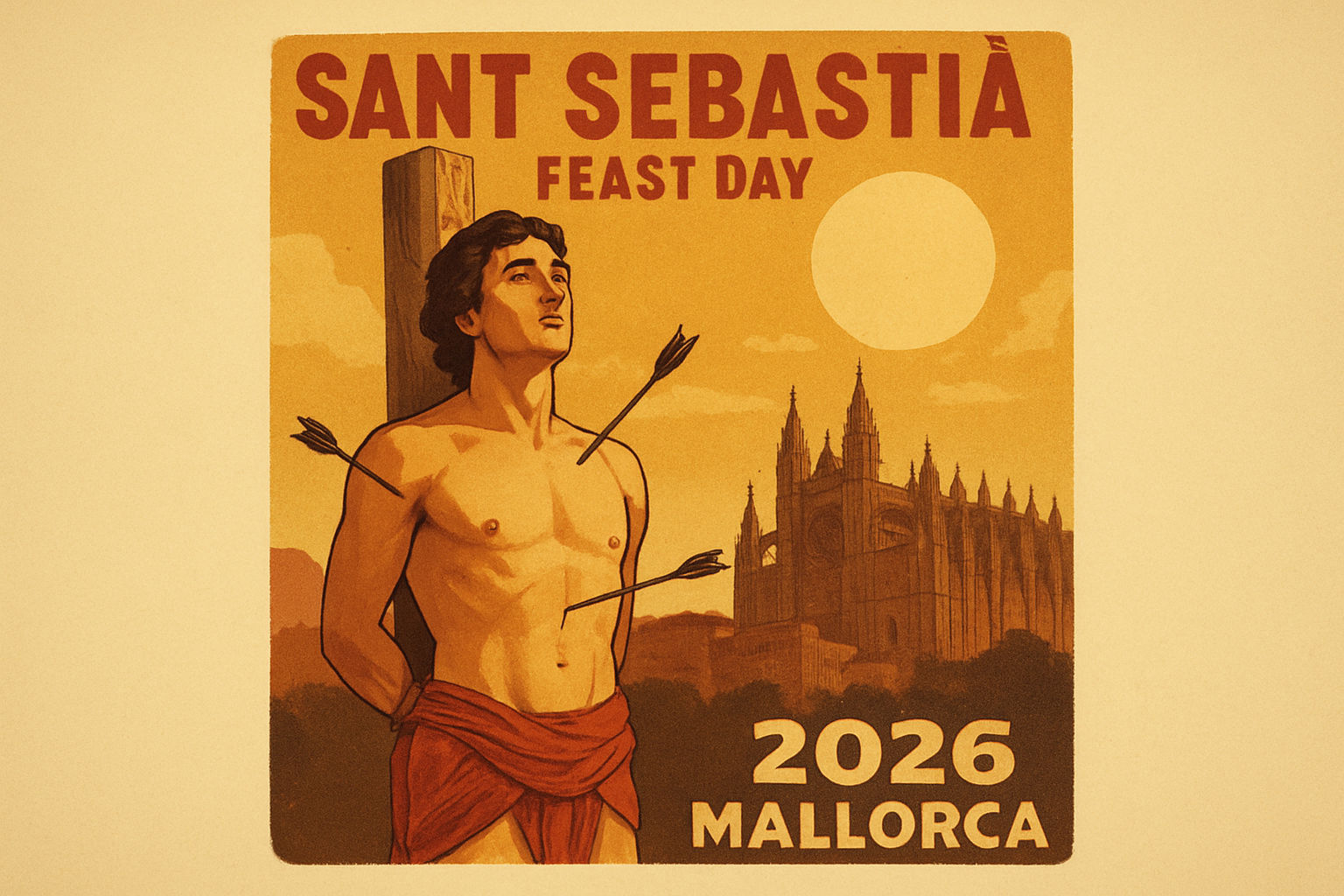
Tuesday, January 20, 2026 marks Sant Sebastià Feast Day, the date underlined in red on every Palma resident's calendar and a public holiday celebrating the patron saint who has protected Mallorca's capital for nearly five centuries. While the previous evening's spectacular Revetla brings fire, music, and massive crowds, the feast day itself offers a more contemplative island experience combining religious observance, family traditions, and the quiet joy of a community holiday when Palma pauses its usual rhythms to honor its spiritual protector. For visitors seeking to understand authentic Balearic culture beyond beach resorts and tourist attractions, this sacred day reveals the deep faith traditions that continue shaping island identity in modern times.
The Legend of Sant Sebastià and Palma
The connection between Sant Sebastià (Saint Sebastian) and Palma de Mallorca traces back to 1523 and 1524, when a devastating plague threatened to decimate the island capital's population. According to cherished local legend, a ship carrying a sacred relic purported to be a bone from Saint Sebastian's arm sought shelter in Palma's bay during a storm, remaining anchored while the tempest raged.
During the ship's forced stay, the plague that had been ravaging the city began to ease, and Palma's suffering population gradually recovered. Interpreting this miraculous timing as divine intervention, grateful citizens adopted Sant Sebastià as their patron and protector, establishing January 20 as the city's great midwinter fiesta to honor the saint who delivered them from catastrophe.
The sacred relic that arrived during that fateful storm is now venerated in Palma's magnificent Cathedral of Santa Maria, where it remains as a tangible connection between contemporary worshippers and the plague-stricken community that first called upon the saint's protection nearly 500 years ago. This historical continuity transforms the feast day from simple religious observance into a living tradition that connects modern Palmesanos with their ancestors through shared devotion and gratitude.
January 20, 2026: A Public Holiday in Palma
Sant Sebastià Feast Day holds official recognition as a public holiday specifically within Palma municipality, meaning businesses, offices, and many shops close to allow residents the day for religious observance and family celebration. The Tuesday timing in 2026 creates a particularly fortunate situation, following Monday night's Revetla and allowing locals to recover from the late-night festivities while participating in feast day traditions without work obligations.
The public holiday status reflects Sant Sebastià's profound importance to Palma's civic and spiritual identity, positioning January 20 as more significant to the capital's residents than many national holidays. Visitors should note that while Palma businesses close, shops and services in other Mallorca towns remain open, as the feast day represents Palma's particular devotion rather than an island-wide observance.
Religious Ceremonies and Cathedral Mass
The feast day traditionally begins with solemn religious services at Palma Cathedral, the iconic Gothic masterpiece overlooking the Mediterranean that serves as the spiritual heart of Mallorca. Locals gather for special masses that honor Sant Sebastià, seek his continued protection for the city, and express communal gratitude for his intercession during historical trials and contemporary challenges.
The cathedral's majestic architecture creates a powerful setting for these sacred observances, with morning light streaming through stained glass windows and illuminating the venerated relic that connects worshippers with the plague miracle of 1523 and 1524. The solemn atmosphere contrasts dramatically with the previous evening's raucous street celebration, revealing the dual nature of Spanish religious festivals that honor saints through both reverent worship and joyful communal celebration.
For visitors interested in experiencing authentic Balearic Catholic traditions, attending a feast day mass offers insight into the spiritual dimensions of island culture that tourists rarely encounter during beach-focused vacations. The service proceeds in Catalan and Spanish, creating an immersive cultural experience that transcends language barriers through shared ritual and sacred music.
Family Gatherings and Traditional Meals
Following morning religious services, January 20 unfolds as a day for extended family gatherings centered around leisurely meals that showcase traditional Mallorcan cuisine. Many families continue the previous evening's grilling traditions with daytime barbecues, while others prepare elaborate feasts featuring local specialties that honor island culinary heritage.
The holiday atmosphere encourages unhurried conversations, multigenerational storytelling, and the strengthening of family bonds through shared time unburdened by work schedules and daily obligations. Children often receive small gifts or special treats, maintaining the feast day's association with generosity and celebration while distinguishing it from the commercial gift-giving of Christmas and Three Kings Day.
These intimate family celebrations reveal how Palmesanos integrate faith, tradition, and kinship into a cohesive cultural identity where religious feast days serve social and emotional functions beyond purely spiritual observance. The public holiday allows this integration by creating protected time when community values take precedence over economic productivity.
Exploring a Quieter Palma
The feast day's public holiday status transforms the normally bustling capital into a remarkably peaceful city where visitors can explore historic streets, waterfront promenades, and architectural treasures without the usual crowds and commercial activity. Many locals spend the day in parks, beaches, or countryside excursions, creating opportunities for travelers to experience Palma's beauty in unusually tranquil conditions.
Cathedral and Historic Center
Palma Cathedral remains accessible for feast day services and typically allows visitors during non-worship hours, offering opportunities to admire this architectural masterpiece when tourist crowds are minimal. The surrounding old town, with its narrow medieval streets, noble mansions, and hidden plazas, reveals its character most authentically when freed from commercial bustle.
The Almudaina Palace, city walls, and other historic landmarks create a walkable circuit through centuries of Mallorcan history, from Roman foundations through Islamic rule to the Christian kingdom and contemporary democracy. The feast day's quiet atmosphere allows contemplative exploration that deepens appreciation for the island's layered heritage.
Waterfront and Beach Escapes
Palma's waterfront areas, including the Paseo Marítimo and nearby beaches like Cala Major or Ciudad Jardín, provide pleasant destinations for January strolls when Mediterranean weather typically remains mild and comfortable. The reduced crowds create ideal conditions for photography, seaside dining at restaurants that remain open for the holiday, or simply enjoying the coastal landscape that defines Balearic island living.
Many Palmesanos use the feast day for family beach picnics or countryside drives to mountain villages, maintaining the holiday's spirit of communal celebration while escaping urban density. Visitors can adopt similar approaches, using the day to explore beyond Palma to discover inland towns, agricultural landscapes, and natural sites that reveal Mallorca's diversity beyond the capital.
The Broader Festival Context
While January 20 represents the specific feast day, the celebration exists within the larger Festes de Sant Sebastià that typically extends across approximately two weeks in mid-January. The pattern generally includes opening weekend concerts (likely January 17 and 18 in 2026), the spectacular La Revetla on January 19, the feast day holiday on January 20, and a closing weekend featuring the dramatic correfoc fire run.
This extended timeline allows visitors to experience multiple dimensions of the celebration, from secular street party to sacred religious observance to spectacular pyrotechnic finale. Each element contributes to a comprehensive cultural portrait showing how Palma integrates tradition, faith, entertainment, and community identity into a cohesive whole.
The Correfoc Finale
The festival typically concludes with the breathtaking correfoc (fire run), likely scheduled for Sunday, January 25 or 26, 2026. This spectacular parade features over 30,000 spectators witnessing demons and dragons parading through streets while shooting sparks from handheld fireworks, creating a thrilling finale that brings closure to the two-week celebration.
The correfoc's placement after the feast day allows the festival to build from religious devotion on January 20 through increasingly intense celebration toward the dramatic pyrotechnic conclusion. This structure honors both the saint's spiritual significance and the community's need for joyful, cathartic expression.
Sant Sebastià Celebrations Beyond Palma
While Palma hosts the largest and most elaborate Sant Sebastià festivities, towns throughout Mallorca organize their own commemorations around January 19 and 20, often blending Sant Sebastià traditions with the equally beloved Sant Antoni celebrations that occur on January 16 and 17.
Inca features foguerons (bonfires), communal torrades (barbecues), xeremiers bagpipers, and local dimonis (demons) in the days surrounding the feast day, offering a more intimate scale than Palma's massive gatherings. Cities and villages across Mallorca's plains and eastern Llevant region light bonfires and organize neighborhood grills, sometimes including small correfocs or rosaries honoring the saint on January 19 and 20.
These smaller town celebrations reveal the feast day's grassroots character, showing how Sant Sebastià devotion extends beyond tourist-focused events to permeate authentic community life across the island. Visiting village celebrations on January 20 provides opportunities to observe how different Mallorcan communities interpret the same basic traditions through local character and scale.
Planning Your Feast Day Experience
International visitors planning to experience Sant Sebastià Feast Day should understand that January 20 functions as a quiet, reflective day following the intense celebration of La Revetla the previous evening. The feast day itself offers cultural immersion through religious observance and family-oriented activities rather than spectacular public events.
Attending cathedral mass provides the most meaningful feast day experience, offering insight into Palma's spiritual life and the devotional traditions that underpin the broader festival. Visitors should dress respectfully for religious services, arrive early for good seating, and approach the experience with reverence for the sacred observance occurring around them.
The public holiday means limited restaurant and shop availability, so planning meals in advance or identifying establishments that remain open ensures comfortable logistics. Many hotels and tourist-area restaurants maintain service, though experiencing the quiet city and reduced commercial activity constitutes part of the feast day's authentic character.
Cultural Sensitivity and Respectful Participation
While Palma welcomes international visitors to Sant Sebastià celebrations, approaching the feast day with cultural sensitivity enhances both visitor experience and local community relations. Understanding that January 20 holds profound spiritual significance for many Palmesanos encourages respectful behavior during religious services and awareness that the holiday represents genuine devotion rather than tourist entertainment.
Photography during cathedral masses should be discreet and non-intrusive, with flash disabled and awareness that worshippers deserve privacy during prayer. Conversations should remain quiet, and visitors should follow local behavioral cues regarding when to stand, sit, or remain silent during liturgical moments.
This respectful approach creates positive cross-cultural exchanges where visitors gain authentic insight into Balearic Catholic traditions while Palmesanos feel their sacred observances receive appropriate dignity. Such interactions strengthen the bonds between island residents and international guests, transforming tourism from commercial transaction into meaningful cultural exchange.
Experience the Sacred Heart of Palma's Identity
Sant Sebastià Feast Day 2026 invites you to witness a quieter, more contemplative dimension of Mallorcan culture that contrasts beautifully with the previous evening's spectacular Revetla. Tuesday, January 20 offers rare opportunities to experience Palma when the city pauses its commercial rhythms, when cathedral bells call the faithful to prayer, and when family bonds take precedence over productivity and profit.
Don't miss this meaningful cultural experience that reveals the spiritual foundations supporting Palma's contemporary identity. Book your Mallorca accommodations for mid-January 2026, extending your stay through the feast day to appreciate the celebration's complete arc from raucous street party to sacred observance. Attend morning mass at the magnificent cathedral. Explore a peaceful city freed from crowds. Understand why Sant Sebastià remains the patron saint that Palmesanos honor with such devotion.
The cathedral awaits. The feast day beckons. Palma is calling you to witness the sacred heart of island tradition. Will you answer?
Verified Information at Glance
Event Category: Religious Feast Day / Public Holiday / Patron Saint Celebration
Event Name: Sant Sebastià Feast Day (Dia de Sant Sebastià)
Confirmed Date: Tuesday, January 20, 2026
Honored Saint: Sant Sebastià (Saint Sebastian), Patron Saint of Palma
Public Holiday: Official public holiday in Palma municipality (businesses closed)
Holiday Status: Shops in other Mallorca towns remain open (Palma-specific holiday)
Historical Origin: Commemorates 1523-1524 plague miracle when Sant Sebastià's relic arrived during epidemic
Sacred Relic Location: Venerated at Cathedral of Santa Maria (Palma Cathedral)
Main Religious Service: Solemn mass at Palma Cathedral (morning)
Cathedral Address: Plaça de la Seu, s/n, 07001 Palma
Traditional Activities:
- Cathedral mass and religious services
- Extended family gatherings and meals
- Quiet city exploration with reduced crowds
- Continuation of grilling traditions from previous evening
Atmosphere: Contemplative and family-oriented, contrasting with Revetla's intense celebration
Festival Context: Part of broader Festes de Sant Sebastià (approximately January 10-26, 2026)
Previous Evening: La Revetla de Sant Sebastià (January 19) with bonfires and music
Following Event: Correfoc fire run typically scheduled for final festival Sunday (likely January 25-26)
Business Closures: Most Palma shops, offices, and services closed; tourist-area restaurants may remain open
Island-Wide Celebrations: Inca and other towns also commemorate Sant Sebastià with local events
Visitor Recommendations: Attend cathedral mass, explore quiet historic center, respect religious observances
Dress Code: Respectful attire for cathedral services
Cultural Significance: Palma's most important annual feast day; celebrates 500-year patron saint tradition