Few summer experiences in Hawaii are as genuinely moving, warmly inclusive, or deeply rooted in community tradition as Maui's Obon Festival season. From June through early September, Buddhist temples across the Valley Isle open their grounds for evenings of ancestral remembrance, taiko drumming, traditional dance, and some of the most beloved festival food in Hawaii. Obon season 2026 on Maui runs from early June through Sunday, September 7, 2026 — and every event is completely free to attend.
"The Bon Dance is not a performance you watch from the sidelines. It is a dance you join."
The Story of Obon Festival
A Tradition of Ancestral Remembrance
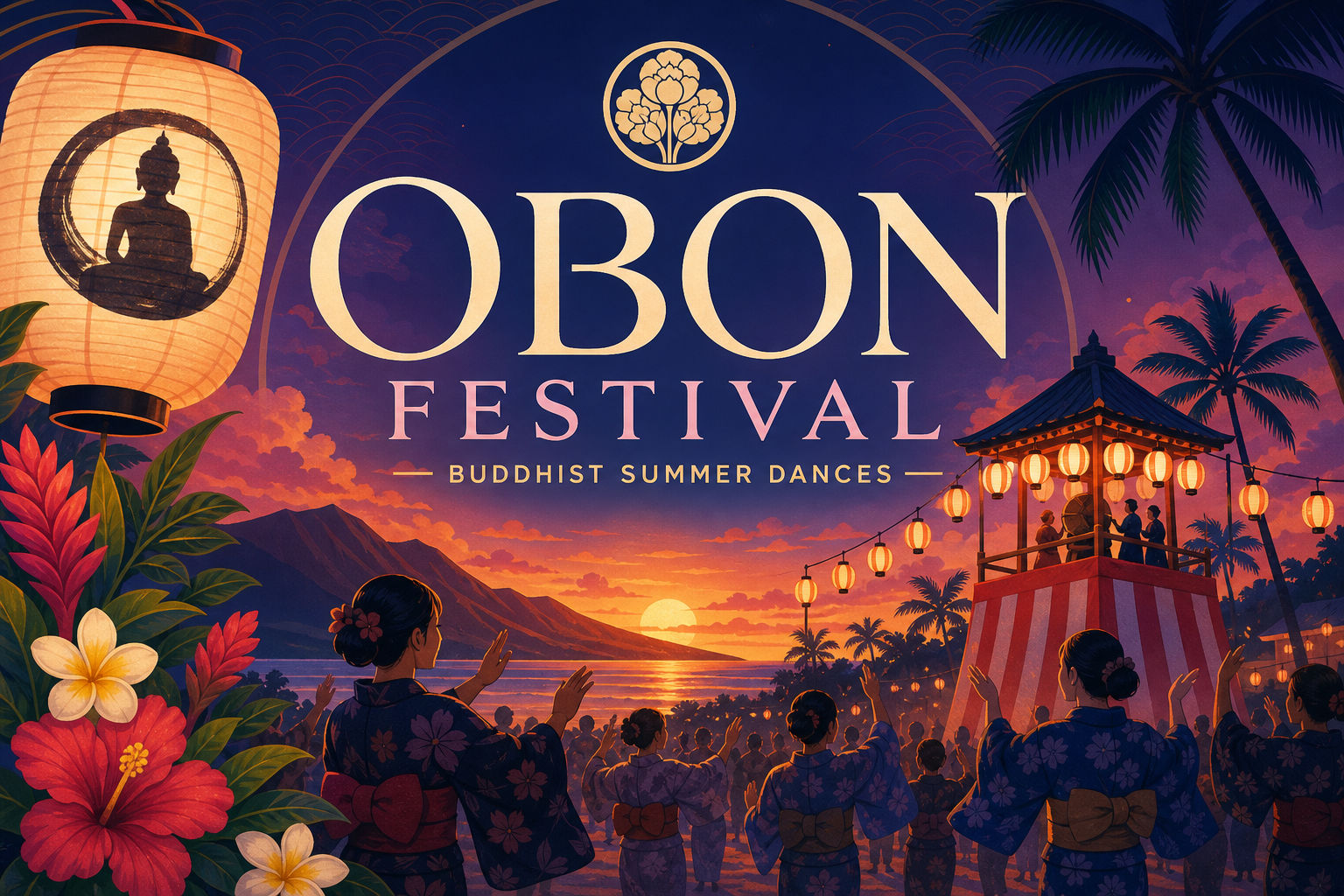
Obon (お盆) is a multi-day Japanese Buddhist tradition to honor the spirits of ancestors, rooted in the belief that those who have passed return to visit the living world once a year during this season. The centerpiece of every Obon celebration is the Bon Dance — a circular community dance performed around a yagura (a raised wooden platform) to the rhythms of taiko drums and traditional Obon songs.
In Japan, Obon traditionally lasts three days in August. In Hawaii, the season spans the full summer — June through early September — allowing individual Buddhist temples on each island to host their own Bon Dance on different weekends. This creates a summer-long rolling calendar of Obon events across Maui.
The 2026 Experience
Confirmed Schedule for Maui
Based on the established 2025 Maui Obon schedule, here is the expected 2026 Maui Bon Dance calendar. Verify directly with each temple before attending:
June 2026
- Kahului Jodo Mission — late June (2025: Saturday June 28); Service 6:30 PM, Dance 7:30 PM; 325 Laau St., Kahului; (808) 871-4911
July 2026
- Pāʻia Mantokuji Soto Zen Mission — mid-July (2025: Friday July 11 and Saturday July 12); Taiko at 6:00 PM, Dance 7:00 PM Saturday only; 253 Hana Highway, Paia; (808) 579-8051
- Kahului Hongwanji Mission — mid-July (2025: Friday July 18 and Saturday July 19); Service 6:00 PM, Dance 7:30 PM both nights; 291 S. Puunene Ave., Kahului; (808) 871-4732
- Makawao Hongwanji Mission — late July (2025: Friday July 25 and Saturday July 26); Service 5:00 PM, Dance 7:00 PM both nights; 1074 Makawao Ave., Makawao; (808) 572-7229
August 2026
- Wailuku Hongwanji Mission — early August (2025: Friday August 1 and Saturday August 2); Service 6:30 PM, Dance 7:45 PM both nights; 1828 Vineyard St., Wailuku; (808) 244-0406
- Lahaina Community Bon Dance — early August (2025: Saturday August 9, 6:30 PM); Lahaina Cannery Mall parking lots
- Pāʻia Rinzai Zen Mission — mid-August (2025: Saturday August 16); Service 6:00 PM, Dance 7:00 PM; 120 Alawai Road, Paia; (808) 579-9921
- Kula Shofukuji Mission — late August (2025: Saturday August 23); Service 6:30 PM, Dance 7:30 PM; 113 Puanani Place, Kula; (808) 661-0466
September 2026
- Hāna Buddhist Temple — early September (2025: Sunday September 7); 1819 Hana Highway; (808) 248-7010
Into the Temples
Each One Its Own World
Every Maui Obon carries the specific character of its host temple and community — no two are exactly alike:
- Pāʻia Mantokuji Soto Zen Mission on the Hana Highway in Paia is one of the most visually striking Obon settings on Maui — a Zen mission surrounded by North Shore jungle, with the Zenshin Daiko and Maui Taiko drum groups performing before the dance begins.
- Kahului Hongwanji Mission runs one of the largest and most attended Maui Obon dances over two consecutive nights, drawing hundreds of community members of all ages to the mission grounds in central Kahului.
- Makawao Hongwanji Mission in upcountry Maui carries a distinctly different atmosphere — higher elevation, cooler air, and the specific energy of Maui's upcountry Japanese-American farming community.
- Wailuku Hongwanji Mission on Vineyard Street in Wailuku draws from one of the most historically dense Japanese-American neighborhoods in all of Maui.
- Kula Shofukuji Mission at Puanani Place in Kula offers an upcountry Obon experience at an elevation where the summer air turns genuinely cool by 7:30 PM — a striking contrast to the beach resort world 45 minutes below.
- Hāna Buddhist Temple closes the season in September with the most remote and most intimate Obon on the island — the Road to Hana's ending point, a small community holding one of the Pacific's oldest traditions.
The Bon Dance
How It Works and How to Join
The Bon Dance format at every Maui temple follows a consistent and welcoming structure:
- An evening service at the temple typically precedes the dance by 1 to 1.5 hours — visitors are welcome to attend and observe, though participation in the religious service is respectfully optional.
- The yagura (raised platform) is erected in the center of the temple grounds; drummers, musicians, and folk singers take their positions as darkness falls.
- Dancers form concentric circles moving around the yagura in a slow, rhythmic, repetitive pattern — step right, step together, clap, wave, repeat; the specific movements vary slightly by song and temple tradition.
- Yukata (light summer kimono) are traditionally worn but absolutely not required — visitors in casual summer clothing are warmly welcomed at every temple.
- The dance is open to all ages, all backgrounds, and all levels of experience — first-timers are often gently guided into the circle by regular attendees.
- The atmosphere is described universally by first-time visitors as unexpectedly emotional — the circular, meditative quality of the dancing, the lantern light, and the awareness that you are moving in the same pattern that Hawaiian communities have followed for over a century creates a feeling that is genuinely hard to anticipate.
The Food
A Maui Obon Essential
The food concessions at Maui Bon Dances are as much a part of the tradition as the dance itself, and among the most genuinely local food experiences available on the island:
- Andagi — Okinawan fried doughnuts, crisp outside and pillowy inside, typically sold in bags at the concession table.
- Yakitori — skewered and grilled chicken with sweet soy glaze, cooked over charcoal.
- Saimin — Hawaii's beloved local noodle soup, a fusion of Japanese ramen and Chinese noodle traditions specific to the islands.
- Shave ice in tropical flavors — the ultimate Maui summer dessert at the Obon concession stand.
- Sushi and onigiri — rice-based Japanese food made by temple community members.
- Mochi and Japanese sweets — handmade by temple community groups.
- Local plate lunch combinations — rice, macaroni salad, and grilled meats in the specifically Hawaiian plate lunch format that reflects the Japanese-American community's deep roots in Hawaii's working culture.
The food concessions typically open 1 to 1.5 hours before the dance begins — arriving at 5:30 or 6:00 PM gives you time to eat, explore the temple grounds, and secure a good position near the yagura before the dancing starts.
Planning Your Maui Obon Experience
Practical Tips
- All Maui Obon Bon Dances are free — there is no admission charge at any temple. Food and drink purchases at the concession tables are the primary way attendees support the temple's fundraising.
- Arrive early — the food concessions open before the service and dance begin, and the best viewing positions around the yagura fill as the evening progresses.
- Parking is available at most temples with overflow to nearby streets or community lots — Pāʻia Mantokuji specifically recommends parking at the Pāʻia Community Center or Pāʻia Hawaiian Protestant Church across Hana Highway.
- Wear light clothing — Maui summer evenings range from warm in Kahului and Wailuku to genuinely cool in upcountry locations like Kula and Makawao; bring a light layer for the upcountry temples.
- Cash is strongly preferred for food concession purchases at most temples; card readers are not standard at temple fundraising tables.
- Photography is generally welcome at Bon Dances; use your judgment during the temple service itself and always ask before photographing religious ceremonies directly.
Combining Multiple Obon Events
A Journey Through Maui's Temples
Because each Maui temple schedules its Obon on a different weekend, a visitor staying on Maui for two to three weeks in July or August can realistically attend three or four different Bon Dances across the island — experiencing the same tradition in Pāʻia, Kahului, Makawao, and Wailuku within a single trip. Each location is different enough in atmosphere, food, and community character to feel like a genuinely distinct experience.
Getting to Key Maui Obon Venues
From Kahului Airport
- Kahului Jodo Mission / Kahului Hongwanji / Wailuku Hongwanji: 10 to 20 minutes from Kahului Airport (OGG) — the most accessible cluster of Obon events for visitors staying in central Maui.
- Pāʻia Mantokuji Mission: 20 minutes east of Kahului along Hana Highway; easily combined with a morning at Pāʻia's town and beaches.
- Makawao Hongwanji: 25 to 30 minutes from Kahului via the upcountry road through Pukalani.
- Kula Shofukuji Mission: 35 to 40 minutes from Kahului; combine with an upcountry Maui afternoon at Kula Botanical Garden or Ali'i Kula Lavender Farm.
- Hāna Buddhist Temple: 2 to 2.5 hours from Kahului via the Road to Hana — the September 7 closing event of the season; plan a full Road to Hana day trip culminating at the evening Obon.
The Sweetest Month for Obon
Maui 2026 in July and August
Obon season sits within the richest stretch of Maui's annual events calendar:
- Emma Farden Sharpe Hula Festival — Saturday August 22, Royal Lahaina Resort, Kāʻanapali Beach (free)
- 28th Annual Maui Calls Benefit Gala — Saturday August 22, Yokouchi Pavilion, MACC Kahului
- Maui Matsuri Festival — Saturday May 23, 2026 (already completed for the season)
The Obon season's July and August dates overlap perfectly with both the Emma Farden Sharpe Hula Festival and Maui Calls — meaning a Maui visitor in the third week of August 2026 can experience a Bon Dance at Wailuku Hongwanji in early August, the hula festival at Kāʻanapali on August 22, and the Maui Calls gala that same evening. That is one of the most culturally full single-week Maui itineraries imaginable.
Why the Obon Festival Is Unmissable
A Celebration of Community and Tradition
There are events in Hawaii that are designed for visitors. And then there are events that are simply part of how Hawaii lives — events that would happen regardless of whether any tourist ever bought a ticket, because they exist to serve the community that created them. The Maui Obon season is entirely in that second category.
The fact that visitors are welcomed so genuinely and completely into the circle makes it more special, not less. When you step into the Bon Dance at Pāʻia Mantokuji or Makawao Hongwanji on a July evening, with taiko drums sounding and paper lanterns glowing above the yagura, you are not watching Hawaii. You are in it.
Frequently Asked Questions
The Things People Always Want to Know
When is the Obon Bon Dance season on Maui in 2026?
The Maui Obon Bon Dance season runs from early June through Sunday, September 7, 2026, with individual temple events on different weekends throughout the summer.
Is the Maui Obon Festival free to attend?
Yes, all Maui Bon Dance events are completely free to attend. Food concession purchases support the temple's fundraising.
What is the Bon Dance and can tourists join?
The Bon Dance is a circular community dance performed around a yagura (raised platform) to taiko drumming and Obon folk songs. Tourists and visitors are warmly welcomed to join the dance circle — no experience required.
What food is available at the Maui Obon Festival?
Andagi (Okinawan doughnuts), yakitori, saimin, shave ice, sushi, onigiri, mochi, and local plate lunch combinations.
Which Maui temple hosts the most accessible Obon for visitors?
Kahului Hongwanji Mission (291 S. Puunene Ave., Kahului) runs one of the largest two-night Bon Dances in mid-July, approximately 10 minutes from Kahului Airport.
What should I wear to a Maui Obon Bon Dance?
Casual summer clothing is perfectly appropriate. Traditional yukata (summer kimono) is traditional but not required. Bring a light layer for upcountry temple locations like Kula and Makawao.
Verified Information at a Glance
- Event: Maui Obon Festival / Bon Dance Season 2026
- Category: Buddhist ancestral memorial festival and community dance series
- Season dates: Early June through Sunday, September 7, 2026
- Entry: Free at all Maui temples
- Format: Evening temple service followed by community Bon Dance around a yagura
- Confirmed Maui temples (based on 2025 schedule): Kahului Jodo Mission / Pāʻia Mantokuji Soto Zen Mission / Kahului Hongwanji Mission / Makawao Hongwanji Mission / Wailuku Hongwanji Mission / Lahaina Community Bon Dance / Pāʻia Rinzai Zen Mission / Kula Shofukuji Mission / Hāna Buddhist Temple
- Dance times: Typically 7:00 to 7:30 PM start; food concessions from approximately 5:30 to 6:00 PM
- Nearest airport: Kahului Airport (OGG) — 10 to 20 minutes to central Maui temples
- Best for: Japanese culture enthusiasts, Hawaii local experience seekers, families, summer Maui visitors, spiritual and cultural tourism travelers, food explorers, community festival seekers, island event content creators