Discover Maha Shivaratri Mauritius: A Journey of Deep Devotion
Maha Shivaratri Mauritius is the island’s most significant Hindu pilgrimage, when hundreds of thousands of devotees walk from towns and villages across the island to the sacred crater lake of Grand Bassin, also known as Ganga Talao. For visitors, it is a rare opportunity to witness Mauritius as a spiritual island nation, with prayer, music, community hospitality, and deep devotion unfolding across roads, villages, and temple grounds.
What is Maha Shivaratri in Mauritius?
Maha Shivaratri means the “Great Night of Shiva” and is a major Hindu festival dedicated to Lord Shiva. In Mauritius, the celebration is defined by pilgrimage, with devotees traveling on foot from all around the island to Grand Bassin (Ganga Talao) to make offerings at shrines located around the lake.
This festival is not a staged performance. It is a living religious observance rooted in prayer, fasting, and vows, and it shapes the rhythm of the entire island as roads fill with pilgrims and roadside volunteer stations offer support.
When to Experience Maha Shivaratri (Best Months to Plan Your Trip)
Maha Shivaratri in Mauritius is a public holiday celebrated on the thirteenth night and fourteenth day of the eleventh Hindu month, and it usually falls between February and March. Because the date is based on the Hindu calendar, the exact day changes each year, so travelers should confirm the holiday date before booking.
The pilgrimage begins in the days leading up to the main night. Mauritius Attractions notes that devotees start their pilgrimage a few days before the celebration, which means the island atmosphere builds gradually, offering visitors multiple chances to witness the journey, not only the destination.
Grand Bassin (Ganga Talao): The Sacred Heart of the Event
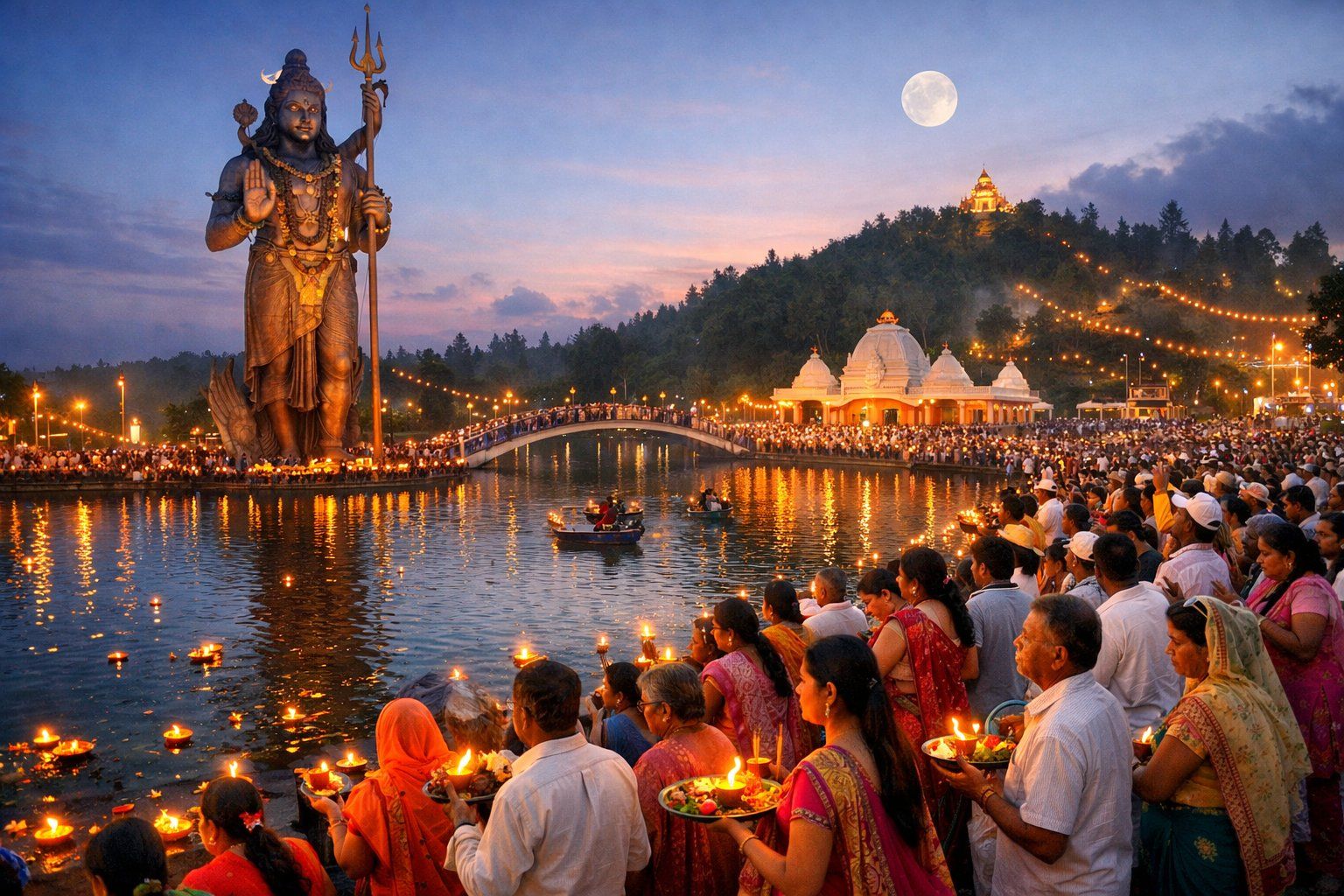
Grand Bassin, also called Ganga Talao, is the focal point of Maha Shivaratri in Mauritius. Pilgrims travel to this sacred lake in the southwest of the island, where Hindu shrines and devotional sites create a powerful setting for worship and offerings.
MauritiusNow specifically notes that offerings are made at the shrines at Grand Bassin and mentions a 33-metre-high statue of Lord Shiva as part of the site’s religious landscape. For visitors, that landmark helps orient the experience: once you reach the Grand Bassin area, you are in the spiritual center of the pilgrimage.
The Pilgrimage Experience: Walking, Kanwars, and Community Support
One of the most unforgettable parts of Maha Shivaratri Mauritius is the journey itself. Mauritius Attractions explains that devotees come from all around the island and will walk miles to reach Grand Bassin, often dressed in white to collect sacred water.
Many pilgrims carry kanwars (also commonly spelled kawars), which are special structures built for the occasion and carried on the shoulders during the march. Along the route, Mauritius Attractions notes that benefactors set up tents where devotees are offered drinks and food, creating a strong sense of island-wide community care and hospitality.
What Happens at the Lake?
Reaching Grand Bassin is only part of the ritual. Mauritius Attractions explains that devotees pray at the banks of the lake, collect water, and bring it back to their localities to pour over the Shivalingam at their local mandir.
The night dimension is also central. Mauritius Attractions describes devotees remaining awake and fasting, and explains that the Shivalingam is sprinkled with milk, holy water brought back from Ganga Talao, honey, and sugar as part of the ritual practice.
Cultural Depth: Why Maha Shivaratri is So Important on This Island
Mauritius is a multicultural island with public holidays across multiple religions, and Maha Shivaratri is one of the most prominent and widely felt of these observances. The festival’s scale in Mauritius is shaped by the large Hindu population and by the national tradition of honoring diverse cultural roots through official holidays and shared respect.
For island travelers, this makes the event uniquely accessible. You do not need to be Hindu to appreciate the power of the pilgrimage, but you do need to approach it with humility, patience, and an understanding that you are witnessing worship and vows, not entertainment.
Travel Tips for Visitors Attending Maha Shivaratri Mauritius
Maha Shivaratri can be an incredible cultural addition to a Mauritius vacation, but it requires thoughtful planning. The experience involves crowds, road congestion, and long processions, especially close to Grand Bassin.
Practical Advice for a Respectful Visit
- Expect to see pilgrims on many roads across the island as they walk toward Grand Bassin in the days leading up to the festival.
- Plan extra travel time if you are driving, since movement can be slow near pilgrimage routes and the Grand Bassin area.
- Dress modestly and comfortably if visiting the lake area, and keep a respectful distance from active rituals and prayer circles.
- Avoid blocking pilgrims for photos and do not step into processional paths; observe from the side and let the pilgrimage flow.
If you want a deeper experience, consider hiring a local guide for the day. Many visitors benefit from contextual explanations about what offerings mean, how to behave near shrines, and where it is appropriate to stand.
Tickets and Pricing: What Does it Cost?
Maha Shivaratri in Mauritius is a public holiday observance and pilgrimage, so there is no standard admission ticket to watch the pilgrimage or visit Grand Bassin during the festival period. Visitor costs typically come from transport, optional guided tours, and personal spending such as food and water while traveling.
If you are staying in a resort area, transportation is the biggest planning element. Consider arranging a driver or tour so you can focus on the experience rather than navigating traffic and parking around the lake during peak times.
Verified Information at a Glance
- Event name: Maha Shivaratri (Great Night of Shiva) Mauritius
- Event category: Hindu religious festival and major island pilgrimage (public holiday)
- Typically held: February to March (date varies annually by Hindu calendar)
- Main pilgrimage destination: Grand Bassin, also called Ganga Talao, a sacred lake in Mauritius
- Core traditions (confirmed):
- Pilgrimage on foot from around the island
- Devotees dressed in white
- Carrying kanwars
- Roadside tents offering drinks and food
- Prayer at the lake
- Collecting sacred water to pour over the Shivalingam at local mandirs
- All-night prayer and fasting
- Site landmark noted: Shrines at Grand Bassin include a 33-metre-high statue of Lord Shiva.
- Pricing: No ticketed entry is described for public pilgrimage viewing; costs are mainly travel logistics and optional guided experiences.
If you want to see Mauritius as more than a tropical escape, plan your island journey for the Maha Shivaratri season between February and March, visit Grand Bassin with respect, and witness the pilgrimage roads and lake-side prayers that make this one of the most moving spiritual gatherings anywhere in the Indian Ocean.