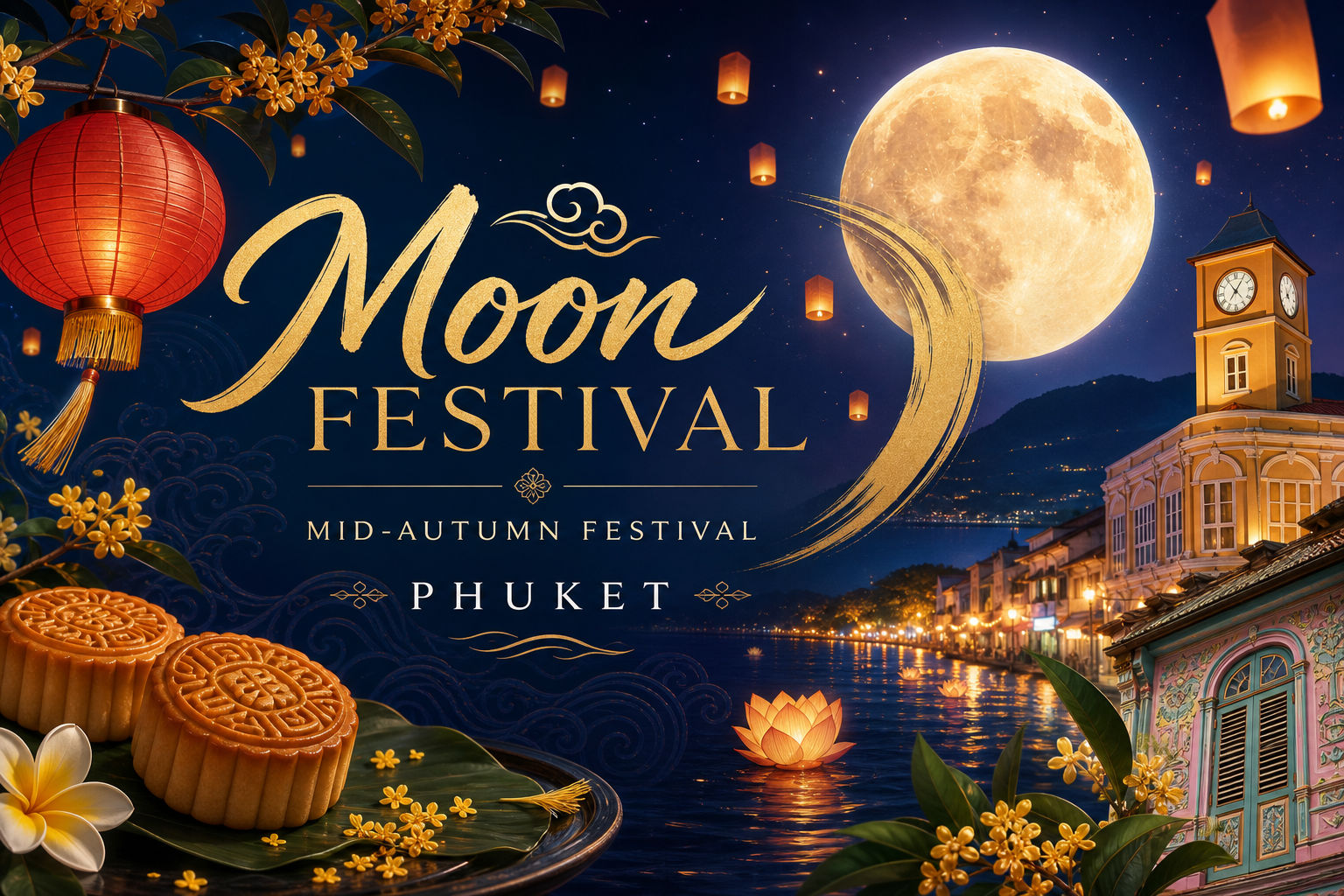
There is something quietly perfect about celebrating the Mid-Autumn Festival on an island. The Moon Festival 2026 falls on Wednesday October 7, 2026, the 15th day of the 8th lunar month when the full moon reaches its brightest and most perfect state, and in Phuket it lands on a Chinese-heritage island whose Hokkien community has been observing this ancient celebration for over two centuries. Known in Thailand as Wai Phra Chan (literally "worship the moon"), the Mid-Autumn Festival in Phuket is an evening of altar offerings, mooncake sharing, lantern displays, and beachfront moon gazing that combines the island's Sino-Portuguese Old Town atmosphere with the warm October ocean air in a way that no mainland city can quite replicate.
"The Mid-Autumn Festival in Phuket combines the island's Sino-Portuguese Old Town atmosphere with the warm October ocean air in a way that no mainland city can quite replicate."
The Date: October 7, 2026
The Brightest Full Moon of the Year
The Mid-Autumn Festival follows the Chinese lunar calendar and falls on the 15th day of the 8th lunar month, which in 2026 corresponds to Wednesday October 7, 2026. This is when the moon is at its fullest and most luminous of the entire year according to the traditional Chinese calendar, and the entire festival is built around that astronomical moment.
The timing places the Moon Festival squarely within Phuket's most culturally dense autumn period:
- August 19 to September 6: Por Tor Hungry Ghost Festival
- October 7, 2026: Moon Festival / Mid-Autumn Festival
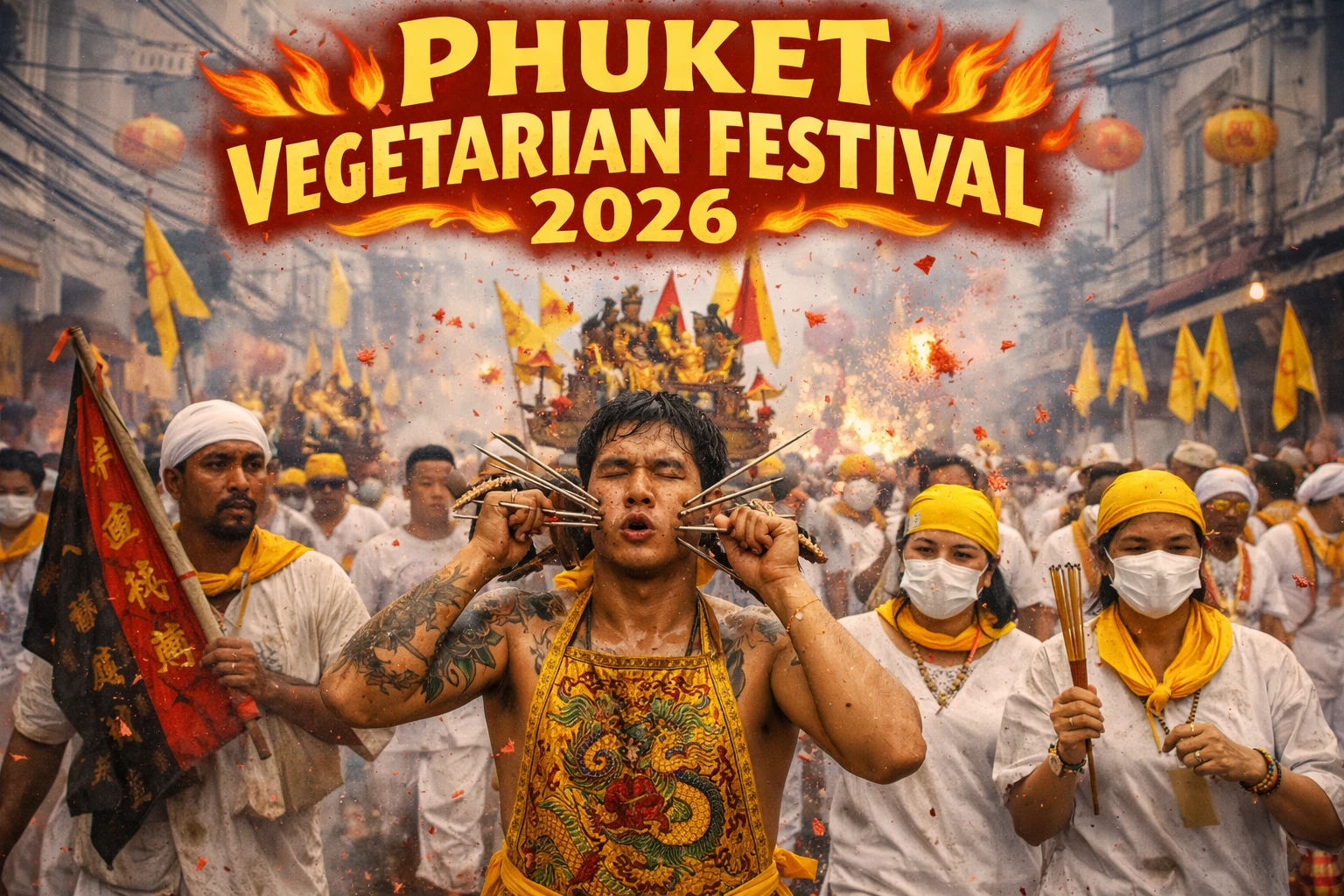
- October 8 to 17: Phuket Vegetarian Festival
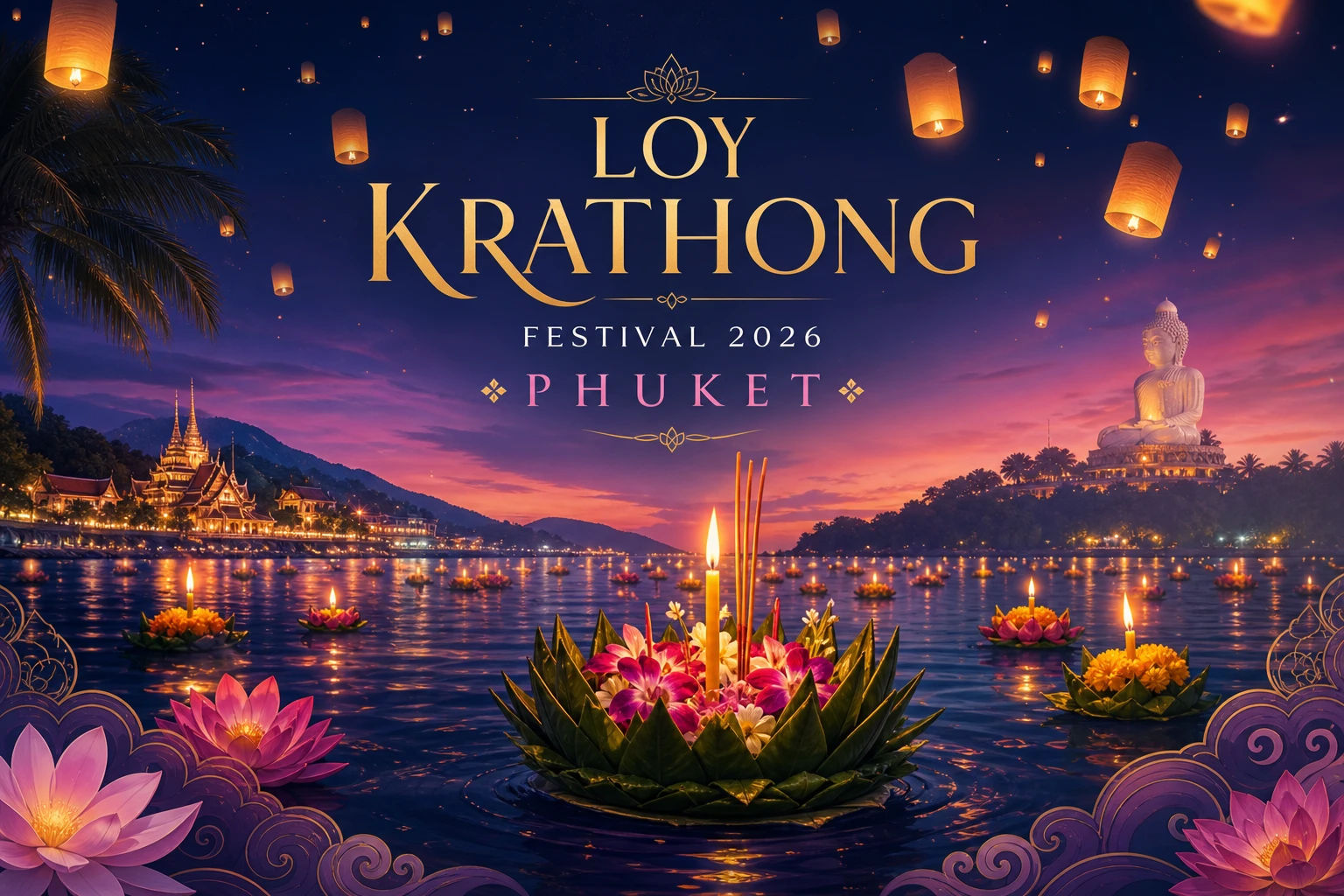
- November 14: Loy Krathong
What Is the Mid-Autumn Festival
The Ancient Story Behind the Moon
The Mid-Autumn Festival has been celebrated in China for over 3,000 years, with roots in both the autumn harvest tradition and one of the most enduring love stories in Chinese mythology.
Chang'e and the Moon
The Myth of the Moon Goddess
The festival's most beloved origin story centers on Chang'e, the Moon Goddess of Immortality. In the original myth, the legendary archer Hou Yi shot down nine of the original ten suns that were burning the earth, saving humanity. As a reward, the Queen Mother of the West gave him the elixir of immortality. Hou Yi, not wishing to live forever without his beloved wife Chang'e, kept the elixir safely at home. When a villain broke into their home to steal it, Chang'e swallowed the elixir herself to prevent it from falling into his hands. She immediately floated up to the moon, where she has lived ever since.
"On the 15th day of the 8th lunar month, the moon is at its fullest and Chang'e is at her most visible."
The Mid-Autumn Festival is the night when people look up at the moon and feel her presence most strongly, when families eat mooncakes together, light lanterns, and send their love across the distance between earth and moon.
The Harvest Connection
Celebrating Abundance and Gratitude
Alongside the mythological dimension, the Mid-Autumn Festival has its roots in the autumn harvest celebration. The 15th day of the 8th lunar month in the traditional Chinese agricultural calendar marks the midpoint of autumn when harvests are gathered, the granaries are full, and the community can pause to give thanks and enjoy abundance together. Mooncakes, traditionally made from the harvest's finest ingredients, are the edible expression of that gratitude.
How the Moon Festival Is Celebrated in Phuket
Phuket's Unique Cultural Blend
Phuket's Mid-Autumn Festival is observed primarily by the island's Chinese-Thai community, whose Hokkien and Teochew heritage gives the celebration the same deep cultural roots that characterize Por Tor and the Vegetarian Festival. The celebrations are centered in Phuket Town's Old Town area and at the Chinese shrines and community spaces that form the backbone of the island's Chinese cultural life.
The Altar Ceremony: Wai Phra Chan
A Ritual of Gratitude and Reflection
The central ritual of the Moon Festival in Thailand is Wai Phra Chan, the worship of the moon, performed at household altars and at community shrines on the evening of October 7. The ceremony involves:
- Setting up a sacred altar facing the moon, typically outdoors on a terrace, in a courtyard, or at a temple facing east or southeast to catch the moonrise
- Arranging offerings on the altar including mooncakes, pomelos, seasonal fruits, candles, incense sticks, and paper offerings
- The worship ceremony itself in which family members pay respects to the moon, to the Moon Goddess Chang'e, and to their ancestors in a sequence of incense offering and prayer that varies by family tradition but shares the common element of expressing gratitude for the year's blessings
- Moon gazing as the full moon rises over the horizon, the family gathers to admire its brightness together, a ritual that in Phuket takes place with the warm tropical October night as the backdrop and, for families near the coast, the reflection of the moon on the Andaman Sea below
Mooncakes: The Festival's Essential Food
A Culinary Tradition with Modern Twists
Mooncakes are the single most iconic and most universally shared element of the Mid-Autumn Festival across all Chinese communities worldwide, and Phuket is no exception. These dense, rich pastries are round like the moon and are filled with sweet pastes, whole salted egg yolks (representing the full moon), and increasingly contemporary flavors that reflect the modern confectionery industry's enthusiasm for reinventing the tradition.
The classic mooncake varieties available in Phuket during the Moon Festival season include:
- Lotus seed paste with salted egg yolk: The most traditional and most beloved variety, where the smooth sweetness of the lotus paste is cut by the rich, savory depth of the salted egg yolk at the center. When sliced in half, the egg yolk glows golden like a miniature moon in the center of the cake
- Red bean paste: The second most traditional filling, slightly less rich than lotus paste and with a cleaner sweetness that makes it the preferred variety for those who find lotus paste intense
- Mixed nuts and seeds (wuren): A Cantonese-style mooncake filled with a dense mixture of sesame seeds, walnuts, melon seeds, and other nuts bound with golden syrup, providing a texturally complex alternative to the smooth paste varieties
- Pandan and coconut: A Southeast Asian adaptation of the mooncake tradition that reflects the Phuket community's Thai culinary influences, using the fragrant green pandan leaf and coconut milk in a combination that is as naturally suited to the tropical setting as any filling the traditional recipe could produce
- Durian: Phuket's own contribution to mooncake innovation, using the King of Fruits in a filling that is intensely aromatic, deeply sweet, and unmistakably Southeast Asian. Durian mooncakes are deeply divisive in the way that all durian preparations are, but for those who love the fruit they are the most distinctively local version of the festival's essential food
"Mooncakes are the single most iconic and most universally shared element of the Mid-Autumn Festival across all Chinese communities worldwide."
In Phuket, mooncakes appear in Chinese bakeries, supermarkets, hotel lobbies, and market stalls throughout the weeks leading up to October 7. The Phuket Town Chinese bakeries on Thalang Road and Dibuk Road produce the most traditional versions, with recipes that have been passed down through Hokkien family bakery traditions for generations.
Lanterns: Light for the Moon Goddess
A Glowing Tribute to Tradition
Paper lanterns are the Mid-Autumn Festival's most visually beautiful element, carried by children through the streets and displayed at temples and community spaces throughout the evening of October 7. The lantern tradition has multiple explanations in Chinese folklore, but its most widely shared meaning is simply that the lantern's light guides the Moon Goddess and honors the full moon's own brilliance with a terrestrial echo.
In Phuket's Old Town, the lanterns hung at the Chinese shrines and along Thalang Road's shophouse arcades during the Moon Festival create one of the most photogenic evening atmospheres the island produces at any time of year, with the red and gold paper lanterns glowing against the heritage Sino-Portuguese architecture in a combination that is entirely particular to this island and this community.
Traditional lantern varieties for children include:
- Rabbit lanterns: The most traditional and most beloved shape, honoring the Jade Rabbit who lives on the moon and is the Moon Goddess's companion
- Fish and animal lanterns
- Lotus flower lanterns: Connecting the Moon Festival's celestial theme to the Buddhist symbolism that runs through Thai culture alongside the Chinese tradition
- LED and modern lanterns: Contemporary versions in the shapes of popular cartoon characters and animals that reflect the festival's evolution within living communities
Pomelos: The Moon Festival Fruit
A Sweet Symbol of Abundance
The pomelo is the Mid-Autumn Festival's sacred fruit in the Hokkien tradition and one of the most practically charming elements of how the festival is observed in Phuket. Large, round, and yellow-green, the pomelo's roundness echoes the full moon, its sweetness represents abundance, and its large size means a single fruit can be shared across an entire family gathering.
"The pomelo's rind is famously used by children as a hat during the festival, hollowed out and worn on the head in a tradition of cheerful practicality."
In Phuket's markets in the weeks before October 7, pomelos appear in extraordinary abundance at every Chinese household's fruit stall, piled in towers at the altar offerings in the Chinese shrines and sold in clusters of three or five for the home altar arrangements that families assemble for the Wai Phra Chan ceremony.
Where to Experience the Moon Festival in Phuket
Phuket Town Old Town: The Atmospheric Heart
Phuket Town's Old Town, with its Sino-Portuguese shophouse architecture along Thalang Road, Dibuk Road, Rommanee Road, and Phang Nga Road, is the most atmospheric location on the entire island for Moon Festival evening. The Chinese shrines embedded throughout the Old Town neighborhood, the heritage buildings decorated with lanterns and flowers for the occasion, and the Chinese bakeries selling freshly made mooncakes from their shopfront windows create a sensory environment that makes the Mid-Autumn Festival feel lived-in and genuine rather than performative.
Specifically:
- Jui Tui Shrine on Ranong Road, Phuket Town's most famous Chinese shrine and the center of the Vegetarian Festival, holds Moon Festival ceremonies and is beautifully decorated for the occasion
- Bang Neow Shrine on Phangsana Road hosts its own community ceremony
- Seng Tek Bel Shrine on Phuket Road, fresh from its role as the Por Tor Festival's spiritual center just weeks earlier, continues its calendar of community observances through the Moon Festival
- Thai Hua Museum on Krabi Road, the converted Chinese school that serves as the most accessible introduction to Phuket's Chinese heritage for first-time visitors, stages Moon Festival programming appropriate to its role as a living cultural institution
The Chinese Shophouse Bakeries
A Taste of Tradition
The working Chinese bakeries in Phuket Town's Old Town neighborhood are one of the most direct connections between the island's current residents and the Hokkien culinary heritage their ancestors carried from Fujian province generations ago. During the Moon Festival season from late September through October 7, these bakeries produce mooncakes alongside their year-round inventory of Hokkien pastries, Ang Ku cakes, and Chinese-style bread. Visiting the bakeries on Thalang Road in the days before October 7 and buying mooncakes directly from the family businesses that produce them is one of the most meaningfully local food experiences Phuket offers.
Beachfront Hotel Celebrations
Moonlit Elegance by the Sea
Phuket's international resort hotels and beachfront properties use the Moon Festival as an occasion for special dinner and entertainment programmes that bring the Chinese cultural celebration into the resort experience for international visitors. These hotel events typically offer:
- Special mooncake menus and mooncake boxes prepared by the hotel's Chinese chef or in partnership with Phuket Town bakeries
- Lantern-lit beachfront dinner settings that use the October full moon rising over the Andaman Sea as the evening's natural centerpiece
- Thai and Chinese cultural performances that combine the two traditions that meet in Phuket's heritage
- Moon-viewing setups on terraces, poolside, or directly on the beach where guests can observe the October 7 full moon rising over the water in the most dramatically beautiful possible setting
"Book these special dinners in advance as they typically sell out quickly among both hotel guests and the local expat community who treat the hotel Moon Festival dinner as an annual tradition."
At the Kata, Karon, Bang Tao, and Laguna beachfront resorts, the combination of the full moon reflected on the Andaman Sea and the lantern decorations for the hotel's Moon Festival programme creates an evening atmosphere that is simply not available at any other time of year.
Mooncakes in Phuket: Where to Buy and What to Look For
The Mooncake Market in Phuket
The mooncake market in Phuket during the weeks before October 7 extends well beyond the traditional Chinese bakeries, reflecting the festival's broad popularity across both Chinese-Thai and Thai communities:
- Robinson Department Store and Central Festival Phuket: Both major shopping malls stock imported premium mooncake brands from Hong Kong and Singapore alongside Thai-made varieties, with branded gift boxes available for giving as presents to Thai colleagues, resort hosts, and friends
- Tops Supermarket and Villa Market: The international supermarkets in Phuket carry a range of mooncakes from early September through October 7
- Chinese bakeries on Thalang Road: The most traditional and most locally significant source for mooncakes in Phuket, with the best lotus seed paste, red bean, and pandan coconut varieties
- Hotel boutiques: Many of Phuket's five-star hotels produce their own signature mooncake ranges as gifts and as part of their Moon Festival dining programmes, with the most sought-after examples coming from the Chinese restaurants at major resort properties
Mooncake Gift Giving
A Gesture of Goodwill
In both Chinese and Thai culture, giving mooncakes as gifts during the Moon Festival season is as natural and as obligatory as sending Christmas cards in the Western tradition. A box of quality mooncakes is the appropriate gift for Thai business associates, landlords, resort staff you interact with regularly, and any Thai-Chinese friends or acquaintances. The presentation of the gift matters as much as its content: premium mooncake boxes are often as beautiful as the cakes themselves, with lacquered or printed tins and boxes that are kept and reused long after the mooncakes are eaten.
The Moon Festival and Phuket's Vegetarian Festival
Two Days Apart in 2026
One of the most remarkable features of the 2026 Moon Festival for visitors planning a Phuket autumn trip is that the Moon Festival on October 7 and the Vegetarian Festival opening on October 8 are separated by exactly one day.
This creates a natural combined itinerary that gives visitors two of Phuket's most culturally significant Chinese heritage events in a single trip:
- October 7 evening: Moon Festival ceremonies at the Chinese shrines of Phuket Town, mooncakes and pomelos at the Old Town bakeries, lantern displays along Thalang Road, beachfront moon-gazing dinner at a Kata or Karon resort
- October 8: Vegetarian Festival Day 1 at Jui Tui Shrine and Bang Neow Shrine, the beginning of nine extraordinary days of vegetarian street food, white-clad devotees, and the build-up to the piercing and fire-walking ceremonies that make the Vegetarian Festival one of the most visually extraordinary events anywhere in Southeast Asia
The two festivals share the same shrine network, the same community, and the same Hokkien cultural roots, making the transition from Moon Festival evening to Vegetarian Festival morning a completely natural progression through the deepest layers of Phuket's Chinese heritage.
Moon Festival and the Paradise Beach Full Moon Party
Two Distinct Celebrations
It is worth noting that Phuket also hosts an entirely separate and entirely secular Full Moon Party at Paradise Beach, Patong on a monthly basis, timed to the actual full moon. The September full moon party at Paradise Beach falls on Saturday September 26, 2026 and the October full moon party on Monday October 26, 2026.
The Moon Festival on October 7 does not coincide with the Paradise Beach Full Moon Party, as the Chinese lunar calendar's 15th day of the 8th month does not always align exactly with the Western full moon calendar. The two events are entirely distinct:
EventDateCharacterMoon Festival (Mid-Autumn)October 7, 2026Chinese cultural heritage, Phuket Town, family ceremony, mooncakes, lanternsParadise Beach Full Moon PartyOctober 26, 2026Beach party, electronic music, 20+ crowd, 1,200 to 1,800 THB entry Both are legitimate and enjoyable Phuket experiences. They serve completely different audiences and different travel intentions. The Moon Festival is a cultural immersion event centered in Phuket Town's Chinese community. The Paradise Beach party is one of Phuket's best known monthly nightlife events at a beachfront venue in Patong. Visitors to Phuket in October 2026 who want both can attend the Moon Festival on October 7 and the Full Moon Party on October 26 without any conflict.
Practical Tips for Moon Festival in Phuket 2026
Make the Most of Your Experience
- Be in Phuket Town on the evening of October 7 rather than on the west coast beaches. The Old Town's Chinese shrine and shophouse atmosphere is the most culturally authentic setting for the Moon Festival and the one that gives the celebration its most resonant character
- Buy mooncakes early. The best traditional varieties from the Thalang Road bakeries sell out in the days before October 7. Aim to visit the bakeries on October 4 or 5 for the best selection
- Book the Vegetarian Festival accommodation at the same time. If you plan to combine the Moon Festival with the Vegetarian Festival (October 8 to 17), accommodation in Phuket Town and near Jui Tui Shrine fills up quickly. Book both together as a single extended trip
- Bring a pomelo to a shrine. Purchasing a pomelo at a Phuket Town market and offering it at one of the Chinese shrine altars on the evening of October 7 is the simplest and most meaningful way for a visitor to participate in the ceremony rather than simply observe it
- October weather in Phuket falls in the green season with a higher chance of afternoon rain showers, but evenings typically clear for the pleasant, warm October nights that make outdoor moon-gazing so enjoyable. October temperatures are 27 to 30 degrees Celsius with the humidity moderated by the season's rainfall
Frequently Asked Questions
The Things People Always Want to Know
When is the Moon Festival (Mid-Autumn Festival) 2026 in Phuket?
Wednesday October 7, 2026, the 15th day of the 8th lunar month.
What is the Moon Festival called in Thailand?
Wai Phra Chan, meaning "worship the moon".
What do people eat at the Moon Festival?
Mooncakes and pomelos are the essential foods, along with seasonal fruits displayed on the altar and shared between family members.
Where is the best place to experience the Moon Festival in Phuket?
Phuket Town's Old Town area, particularly around Jui Tui Shrine, Thalang Road, and the Chinese bakeries of the heritage shophouse district.
Is the Moon Festival a public holiday in Thailand?
No. Unlike Emancipation Day in Jamaica, Wai Phra Chan is a cultural observance rather than a national public holiday, though it is widely celebrated by Thailand's significant Chinese-Thai community.
What is the connection between the Moon Festival and the Vegetarian Festival in Phuket?
Both are observed by Phuket's Hokkien Chinese community through the same network of Chinese Taoist shrines. In 2026, the Moon Festival on October 7 falls exactly one day before the Vegetarian Festival opens on October 8, making a combined trip extremely straightforward.
Phuket's Chinese Heritage Festival Calendar: August to November 2026
A Rich Tapestry of Cultural Observances
DateFestivalCharacterAugust 19 to September 6Por Tor Hungry Ghost FestivalAncestral offerings, shrine ceremonies, Ranong Road marketOctober 7Moon Festival / Wai Phra ChanMooncakes, lanterns, moon gazing, Phuket TownOctober 8 to 17Phuket Vegetarian FestivalNine days, white dress, street food, piercing ceremoniesNovember 14Loy KrathongFloating lanterns, candlelit krathong on water Verified Information at a Glance
- Festival Name: Moon Festival / Mid-Autumn Festival / Wai Phra Chan
- 2026 Date: Wednesday October 7, 2026 (15th day, 8th lunar month)
- Type: Cultural observance (not a public holiday)
- Primary Location: Phuket Town Old Town — Chinese shrines, Thalang Road, Chinese bakeries
- Key Rituals: Altar offerings (Wai Phra Chan), mooncake sharing, lantern displays, moon gazing, pomelo offering
- Essential Food: Mooncakes (lotus paste, red bean, pandan coconut, durian) and pomelos
- Symbol: Round mooncake, paper lantern, pomelo, Jade Rabbit
- Community: Hokkien and Teochew Chinese-Thai community of Phuket
- Adjacent Event: Phuket Vegetarian Festival opens October 8, 2026 (one day later)
- Nearest Airport: Phuket International Airport (HKT)
- Best For: Cultural travelers, Chinese heritage visitors, food tourists, families, photographers, visitors combining with the Vegetarian Festival, long-stay Phuket residents, expat community
```