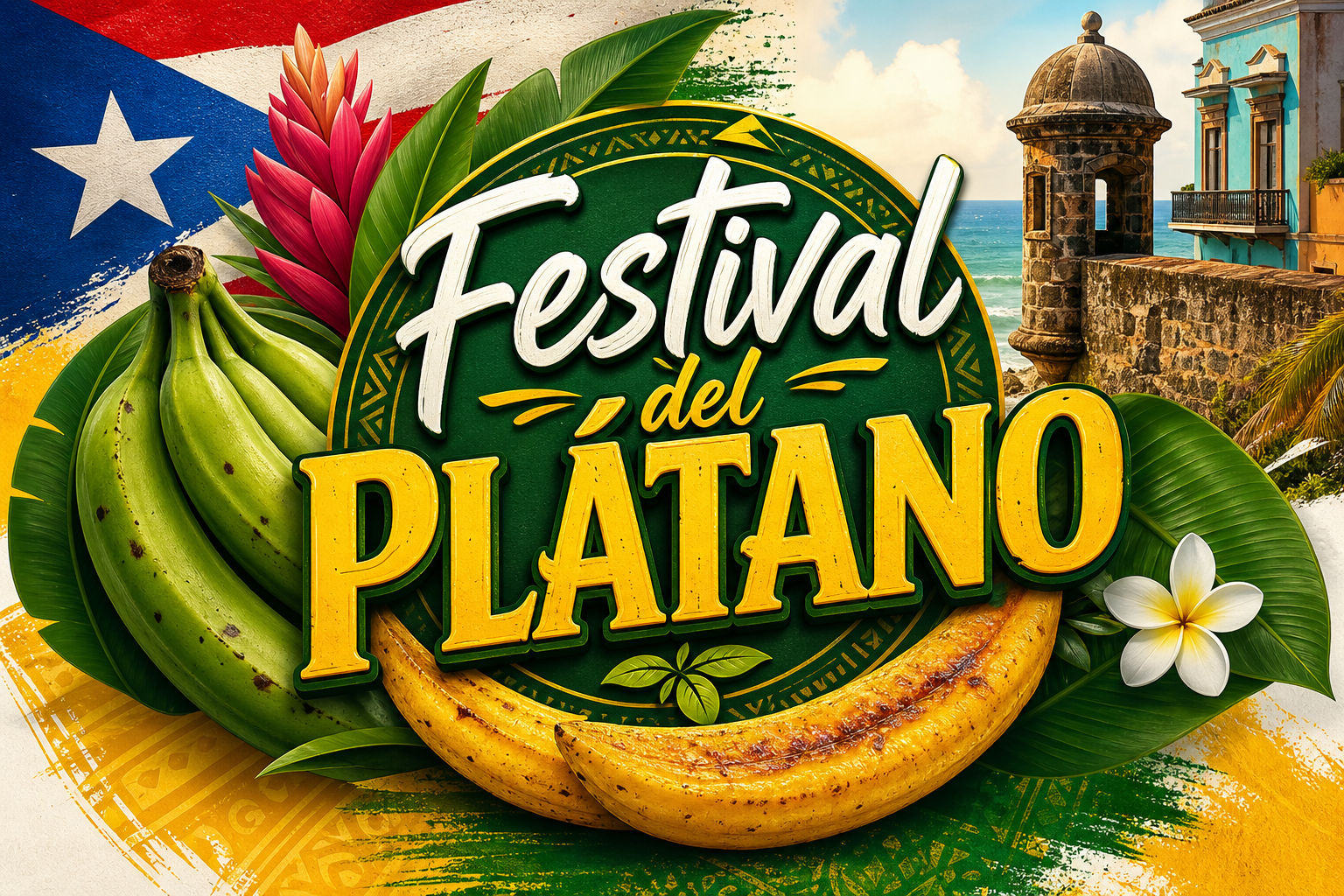
Every October, the mountain town of Corozal in Puerto Rico's central highlands becomes the undisputed capital of the plantain universe. The 41st Festival Nacional del Plátano 2026 runs Saturday October 10 through Monday October 12, 2026, at the traditional festival grounds along Carretera 159 in Corozal, the island town that has proudly carried the title of Puerto Rico's plantain capital since the festival launched in its current format in 1983. Admission is free. Food runs approximately $6 to $18 per item.
This is Puerto Rico at its most authentically local: mountain air, live music, handmade crafts, and more plantain dishes than most people knew existed, all gathered in one place for a long October weekend that the island's food lovers, cultural travelers, and culinary tourists circle on the calendar every year.
"The Festival Nacional del Plátano is a celebration of the plantain, the starchy, versatile, deeply Puerto Rican fruit-vegetable that sits at the center of the island's culinary identity."
Forty-One Years of Plantain Pride: The Festival's History
The Roots of a Cultural Tradition
The Festival Nacional del Plátano has its roots even earlier than its 1983 founding date. It began as a craft fair in Corozal before evolving into a dedicated celebration of the plantain. The choice of Corozal as the festival's permanent home reflects the municipality's genuine agricultural significance in Puerto Rico's plantain-growing geography.
Corozal sits in the central mountain region (La Cordillera Central) where the fertile volcanic soil, reliable rainfall, and mountain altitude create growing conditions that produce the island's best plantains. The farmers of Corozal and the surrounding highland municipalities have been growing plantains for generations, and the festival exists to honor that agricultural heritage while drawing visitors from across Puerto Rico and beyond into the mountains to experience it directly.
By 2026, the festival reaches its 41st edition, which makes it one of the longest-running agricultural and cultural food festivals in Puerto Rico's dense festival calendar.
The Plantain: Puerto Rico's Most Versatile Ingredient
Understanding the Plátano
Before the food, the context. The plátano (plantain) is not a banana. This distinction matters enormously in Puerto Rican culinary culture and the Festival Nacional del Plátano is in many ways a three-day argument for recognizing it properly.
The plantain belongs to the same genus as the banana but is starchier, less sweet, and treated in Puerto Rican cooking as a vegetable rather than a fruit. It is cooked at every stage of its ripeness cycle, each stage producing entirely different textures and flavor profiles:
- Verde (green, unripe): Starchy, firm, and neutral in flavor, the green plantain is the raw material for mofongo, tostones, pasteles, alcapurrias, and many of Puerto Rico's most iconic dishes.
- Pintón (semi-ripe, yellow-green): The transitional stage where some starch has converted to sugar but the plantain still holds its structure.
- Maduro (ripe, yellow to black): Sweet, soft, and caramelizable, the ripe plantain is sliced and pan-fried into tostones maduros or baked into plátanos al horno.
The festival's food programme celebrates all three stages and the full range of preparations that Puerto Rican culinary tradition has built around them.
What Happens at the Festival: Food, Music, Crafts, and Community
The Heart of Puerto Rican Festivity
The Festival Nacional del Plátano is built on four pillars that together define what a Puerto Rican municipal festival looks and feels like at its best:
La Ciudad Platanera: The Plantain Food Village
A Culinary Haven
The Ciudad Platanera (Plantain City) is the festival's culinary heart, a dedicated food zone where vendors present the full range of plantain-based dishes from across Puerto Rico's culinary tradition. With food running approximately $6 to $18 per item, the Ciudad Platanera is one of the most accessible and most genuinely satisfying food experiences in Puerto Rico's festival calendar.
The dishes available across the three days include:
- Mofongo: Puerto Rico's most iconic dish, green plantain mashed with garlic, olive oil, and pork cracklings (chicharrón).
- Tostones: Green plantain sliced, fried, flattened, and fried again to a crisp golden round.
- Alcapurrias: Ground green plantain and yautía (taro root) masa stuffed with beef picadillo.
- Canastitas (Plantain Cups): Green plantain formed into small cups filled with chicken, shrimp, or ground beef stew.
- Sopas de plátano (Plantain Soup): Slow-cooked broths where green or semi-ripe plantain thickens the liquid.
- Pasteles: Green plantain and root vegetable masa spread on a banana leaf, filled with seasoned pork and olives.
- Tembleque de plátano: A plantain adaptation of Puerto Rico's classic coconut pudding.
- Pionono: Ripe sweet plantain sliced lengthwise, shaped into a ring, and filled with seasoned ground beef.
Live Music: Orquestas and Puerto Rican Sound
The Rhythm of the Festival
No Puerto Rican festival exists without music, and the Festival Nacional del Plátano presents live orquestas and musical acts across all three days on the festival's main stage. The musical programme at Corozal's festival reflects the broad spectrum of Puerto Rican popular music:
- Salsa: The heartbeat of any Puerto Rican festival.
- Cumbia and merengue: The broader Latin popular music tradition.
- Plena and bomba: Puerto Rico's indigenous Afro-Caribbean percussion-based folk music forms.
- Reggaeton and urban: Contemporary Puerto Rican popular music.
The evening musical programme is the social dimension of the festival, when the food vendors stay open and the crowd shifts from eating and shopping to dancing and celebrating.
Artesanías: Puerto Rican Craft Market
A Showcase of Craftsmanship
The artisan market is the third pillar of the festival and one of the most culturally significant. The Festival Nacional del Plátano hosts artisans from Corozal and across Puerto Rico presenting handmade work in a range of traditional and contemporary craft categories:
- Vejigante masks: The papier-mâché or coconut shell masks with their multi-pointed horns.
- Mundillo lace: The traditional Puerto Rican bobbin lace-making tradition.
- Wood carving and santos: Carved wooden religious figures (santos de palo).
- Jewelry and metalwork: Contemporary artisan jewelry using local materials.
- Ceramics and pottery: Wheel-thrown and hand-built pieces from Puerto Rican ceramic artists.
- Textiles and woven work: Baskets, hats, and woven items in the mountain craft tradition.
The artisan market gives visitors a direct purchasing relationship with the makers, providing genuinely local Puerto Rican craft objects.
Family Activities and Cultural Programming
Interactive and Educational Experiences
The festival's three-day programme also includes activities that make it appropriate for families with children:
- Cooking demonstrations showing traditional plantain preparation techniques.
- Agricultural displays connecting the festival's food programme to the actual growing of plantains.
- Children's entertainment zones with games, rides, and activities.
- Cultural presentations by school groups, folkloric dance troupes, and community organizations.
The Festival Location: Corozal in Puerto Rico's Mountain Heart
A Scenic Setting
Corozal (population approximately 35,000) sits in the north-central interior of Puerto Rico, in the foothills of the Cordillera Central at an elevation that gives it significantly cooler and more pleasant temperatures than the coastal tourist zones in October.
The festival grounds are located on Carretera 159 (PR-159), the main road through the agricultural zone outside the Corozal town center. This location along the highway rather than in the town plaza gives the festival space for its full Ciudad Platanera food village, artisan market, main stage, and parking infrastructure.
Getting to Corozal
Your Journey to the Festival
Corozal is approximately 35 to 45 minutes southwest of San Juan via the Luis A. Ferré Expressway (PR-52) and the mountain roads of the central interior:
- From San Juan: PR-52 (Luis A. Ferré Expressway) west to Bayamón, then PR-2 or PR-167 south and west through Naranjito toward Corozal.
- From Luis Muñoz Marín Airport (SJU): Approximately 45 to 55 minutes via the expressway network.
- From Ponce: Approximately 1 hour north via PR-52 and the central mountain roads.
- From Mayagüez: Approximately 1.5 hours east via PR-2 and the northern coastal route.
A rental car is strongly recommended for visiting the Festival del Plátano in Corozal. The mountain location and the festival's agricultural-zone grounds are not accessible by public transit from San Juan.
October in Corozal: Mountain Weather vs. Coastal Puerto Rico
Embracing the Elements
The Festival del Plátano's October timing places it in Puerto Rico's late wet season, with weather conditions in the mountain interior that differ significantly from the coastal experience:
- Temperature: Corozal's mountain elevation brings October highs of approximately 24 to 27°C (75 to 81°F).
- Rainfall: October is still in the wet season and afternoon showers are possible.
- Hurricane season: October is technically still within the Atlantic hurricane season.
The mountain air, the cooler temperatures, and the green landscape of the central highlands in October make the Festival del Plátano one of the most physically pleasant outdoor food festival experiences in Puerto Rico.
Festival del Plátano and the October Puerto Rico Event Calendar
A Month of Celebrations
The Festival del Plátano lands in one of Puerto Rico's most festival-dense months:
October 10 to 12: Festival Nacional del Plátano, Corozal.
The festival's proximity to San Juan makes it a natural day trip from the capital, but overnight visitors who stay in a Corozal or nearby mountain municipality guesthouse (parador) get the full experience of the central highlands.
Beyond the Festival: Corozal and the Central Highlands
Exploring Puerto Rico's Interior
Visitors making the trip to Corozal for the Festival del Plátano can extend their stay into the broader central mountain region, one of the most undervisited and most beautiful parts of Puerto Rico:
- Toro Negro State Forest: Puerto Rico's largest forest reserve, approximately 40 minutes south of Corozal.
- Lago Dos Bocas: The most scenic of Puerto Rico's mountain reservoirs, near Utuado approximately 45 minutes from Corozal.
- Ciales: A small mountain municipality near Corozal known for its coffee, its honey, and its traditional mountain cooking.
- Naranjito and Barranquitas: Mountain municipalities between Corozal and San Juan with their own agricultural heritage.
A Parallel Plantain Festival: Festival Nacional del Guineo in Lares
Celebrating the Musa Genus
Puerto Rico actually celebrates two major plantain-family festivals in 2026 that together bookend the island's agricultural year:
- Festival Nacional del Guineo (banana festival) in Lares: Saturday June 13 to Sunday June 14, 2026.
- Festival Nacional del Plátano in Corozal: October 10 to 12, 2026.
The two festivals together represent Puerto Rico's dual relationship with the Musa genus: the guineo as the sweet everyday fruit and the plátano as the culinary cornerstone of the island's savory cooking tradition.
Frequently Asked Questions
The Things People Always Want to Know
When is the Festival Nacional del Plátano 2026?
Saturday October 10 to Monday October 12, 2026.
Which edition is the 2026 festival?
The 41st annual Festival Nacional del Plátano.
Where is it held?
Along Carretera 159 (PR-159), Corozal, Puerto Rico.
How much does it cost to attend?
Admission is free. Food items run approximately $6 to $18.
How far is Corozal from San Juan?
Approximately 35 to 45 minutes by car from San Juan via the expressway network.
Do I need a car?
Yes. A rental car is strongly recommended. The festival grounds are not accessible by public transit from San Juan.
What is the signature dish?
Mofongo is Puerto Rico's most iconic plantain dish and the festival's most celebrated preparation, alongside tostones, alcapurrias, pasteles, piononos, and plantain soups.
Verified Information at a Glance
- Event Name: Festival Nacional del Plátano 2026
- Edition: 41st annual
- 2026 Dates: Saturday October 10 to Monday October 12, 2026
- Location: Carretera 159 (PR-159), Corozal, Puerto Rico
- Admission: Free
- Food Prices: $6 to $18 per item
- Festival Since: 1983 (in its current format), earlier roots as a craft fair
- Key Programme: Ciudad Platanera food village, live music (orquestas), artisan craft market, cultural activities
- Featured Food: Mofongo, tostones, alcapurrias, canastitas, pasteles, piononos, sopas de plátano
- Distance from San Juan: 35 to 45 minutes by car
- Nearest Airport: Luis Muñoz Marín International Airport (SJU), San Juan
- Transportation: Rental car required
- October Weather: 24 to 27°C, cooler than coast, possible afternoon showers
- Related Event: Festival Nacional del Guineo, Lares, June 13 to 14, 2026
- Best For: Food tourists, Puerto Rican culture travelers, culinary content creators, families, visitors wanting authentic off-the-beach island culture, island heritage travelers, day-trippers from San Juan
```