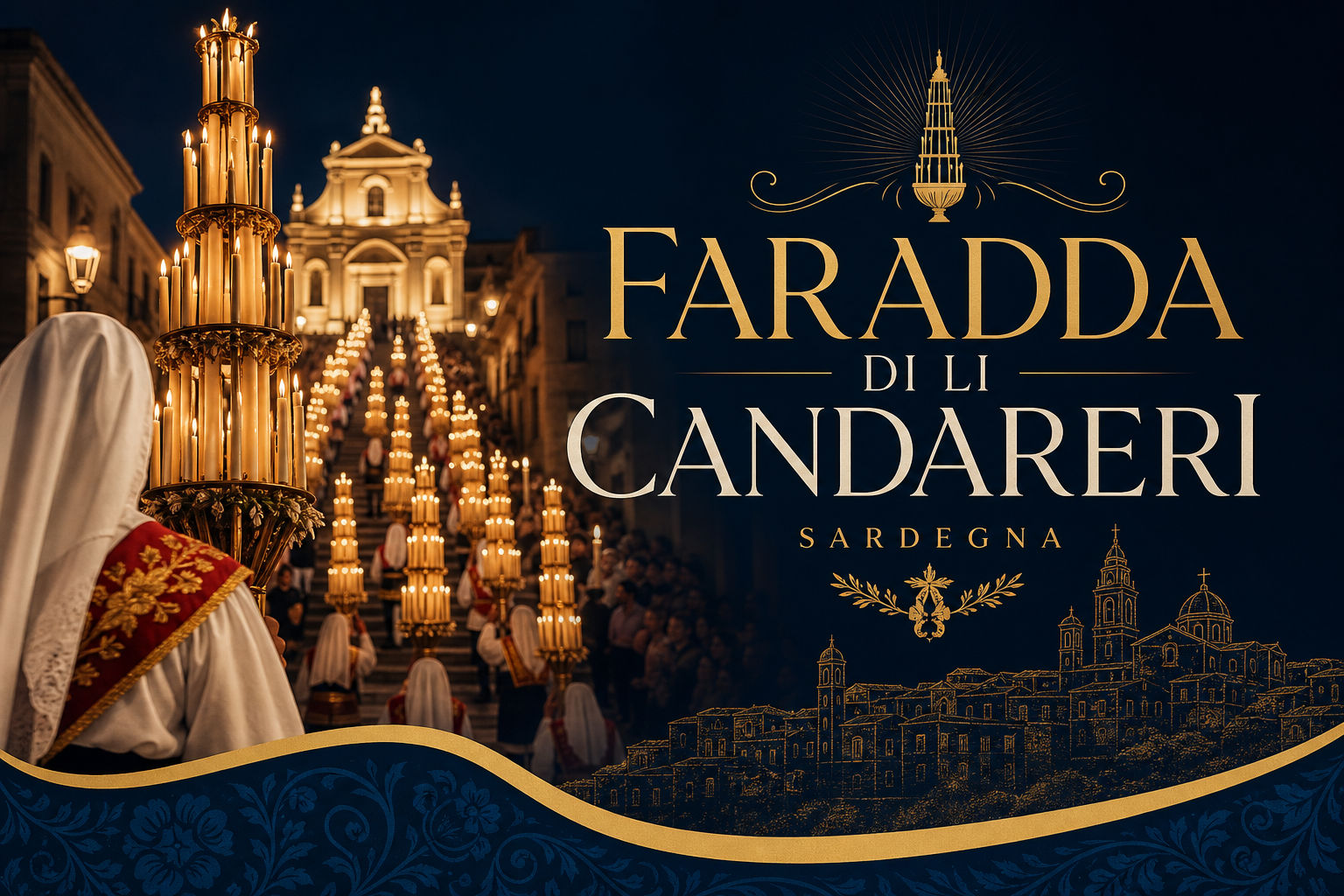
On 14 August 2026, the city of Sassari in northern Sardinia will pause for about five hours as its streets transform into a vibrant stage of history, faith, and community strength. The Faradda di li Candareri, known in Italian as the Discesa dei Candelieri or March of the Candelieri, is one of the most significant and ancient religious processions in Sardinia, recognized since 2013 as part of UNESCO’s Intangible Cultural Heritage.
This is not a show for tourists; it is a tradition renewed every year for over five centuries, offering a direct connection to the heart of Sardinian identity.
"The Faradda di li Candareri is a tradition that connects past and present in a way very few modern festivals manage to do."
The Story of Faradda di li Candareri
Sassari’s Timeless Tradition
The Faradda di li Candareri (the Descent of the Candlesticks) is Sassari’s most important annual religious event. Every year on 14 August, representatives of the city’s 13 historical guilds (Gremi) perform a ritual procession through the old town, carrying massive wooden candelieri — votive candlesticks symbolizing candles — on their shoulders as they dance through the streets to the Church of Santa Maria di Betlem.
The event is a votive offering to the Madonna dell’Assunta (Our Lady of the Assumption), commemorating the end of an epidemic of plague in the city several centuries ago, tying the ceremony into a much older Pisan‑Mediterranean tradition of pledges made to the Virgin.
The Faradda is a cultural performance, a physical test of strength, and a communal ritual.
The 2026 Experience
A Week of Celebration
While the highlight of Faradda di li Candareri always falls on 14 August, the celebration stretches over several days in Sassari. The official “Festha Manna” (Big Festival) begins earlier in mid‑August and builds toward the main Descent.
Current itineraries and tour operators planning 2026 holidays list a Sardinia mid‑August Candelieri experience from around 12–16 August 2026, using the week around the 14th as a full island stay. This means you can arrive a couple of days before and still experience the build‑up: smaller processions, local music, and the atmosphere in the streets as the candlesticks are prepared and blessed.
- Morning (around 09:00) – The “vestation” of the candelieri in the guild houses and associated squares, when the large wooden columns are decorated with flags, paper streamers, and flowers.
- Afternoon (around 17:00) – The candlesticks transported to Piazza Castello, the parade’s starting point.
- Evening (around 18:00–23:00) – The full Faradda procession from Piazza Castello, down Corso Vittorio Emanuele, to the Church of Santa Maria di Betlem, followed by fireworks and evening celebrations in the city.
Into the Streets of Sassari
The Procession Route and Rituals
The Faradda di li Candareri is visually stunning and emotionally intense. The 13 candelieri are around 3 metres high and can weigh up to over 400 kg each, carried on the shoulders of guild members in traditional costume.
As the parade moves, the candlesticks do not just march; they dance. The bearers adjust the objects’ movements so they swing, rotate, and even “kiss” each other by tilting their tops so the carved capitals briefly touch in a symbolic gesture. This choreography is both a physical endurance feat and a carefully preserved ritual, passed down through generations.
The procession traditionally follows the path from Piazza Castello through the main arterial streets of the old town to Santa Maria di Betlem, the church where the vow is symbolically dissolved and the religious core of the event closes.
The Principles at the Heart of Faradda
The Symbolism and Cultural Significance
The Faradda di li Candareri is tied to a vow made to the Madonna dell’Assunta. According to tradition, the city of Sassari, then under Pisan influence, faced a devastating plague in the 17th century and turned to the Virgin to end the epidemic.
For visitors, this means witnessing a centuries‑old promise kept, carried out in the most physical and visible way possible.
Because of this deep historical and cultural layer, the event was inscribed on UNESCO’s Representative List of the Intangible Cultural Heritage of Humanity in 2013, recognizing its importance not just for Sardinia but for the wider Mediterranean tradition.
Everything You Need Before August 14
Practical Tips for Visitors
If you are planning to attend the Faradda di li Candareri 2026 in Sassari, Sardinia, here are a few practical points to consider:
- Stay in Sassari or nearby towns. The best viewing spots along Corso Vittorio Emanuele fill up early, so staying in the city ensures you can secure a place on the kerb without rushing from the coast.
- Arrive early. To get a good front‑row spot, many locals arrive 2–3 hours before the 18:00 start. Arriving later may push you further back or onto balconies or upper‑floor bars.
- Book accommodation in advance. Mid‑August is peak season in Sardinia, and demand for beds around the Candelieri festival is high. Hotels and rentals in Sassari and Alghero often sell out weeks ahead.
- Be prepared for heat and noise. The 14 August procession takes place in the evening but still feels hot; comfortable shoes, water, and light clothing are essential.
- Consider a guided tour. English‑language tours and cultural guides regularly run special “Faradda of the Candelieri” packages that include commentary, reserved viewing, and transport, making the event more meaningful for non‑Italian speakers.
Frequently Asked Questions
The Things People Always Want to Know
When is Faradda di li Candareri 2026 in Sardinia?
The Faradda di li Candareri (Descent of the Candlesticks) is held every year on 14 August, and the 2026 edition follows this date in Sassari, Sardinia, Italy.
Where exactly in Sardinia does the festival take place?
The main procession starts at Piazza Castello in Sassari, moves along Corso Vittorio Emanuele through the historic centre, and ends in front of the Church of Santa Maria di Betlem in the same city.
What is the Faradda di li Candareri and why is it famous?
The Faradda di li Candareri is a religious procession where 13 large wooden candlesticks are carried on the shoulders of participants from Sassari’s historic guilds as a votive offering to the Madonna dell’Assunta. It has been recognized as part of UNESCO’s Intangible Cultural Heritage since 2013.
Is there an entry fee to watch the Faradda di li Candareri?
No, the main procession is an open‑air religious event and free to attend. Visitors pay for accommodation, transport, and optional guided tours, but there is no ticket price for the parade itself.
How can I see the best part of the procession in Sassari?
The best views are along Corso Vittorio Emanuele between Piazza Castello and Santa Maria di Betlem. To secure a front‑row spot, arrive 2–3 hours before the 18:00 start, and consider booking a guided tour that includes reserved viewing if you want commentary and a smoother experience.
Verified Information at a Glance
- Event Name: Faradda di li Candareri (Descent of the Candlesticks / Discesa dei Candelieri)
- Category: Religious procession, traditional festival, UNESCO Intangible Cultural Heritage event
- Main Date: 14 August 2026 in Sassari, Sardinia, Italy
- Extended Dates: Around 12–16 August 2026 for “Candelieri‑focused” island holidays
- Location: Starts at Piazza Castello, Sassari; Parade route along Corso Vittorio Emanuele through the historic centre; Ends in front of the Church of Santa Maria di Betlem, Sassari
- Ceremonial Structure: Morning clothing/decorating of the candelieri at guild houses (around 09:00); Transport to Piazza Castello (around 17:00); Main procession begins at around 18:00 and runs to the church, followed by fireworks and evening festivities
- Participants: 13 historical guilds (Gremi) of Sassari, each carrying its own large wooden candelieri on the shoulders of guild members
- Cultural Status: Inscribed on UNESCO’s Representative List of the Intangible Cultural Heritage of Humanity since 2013
- Entry / Ticketing: The parade itself is a free public religious event; visitors pay for transport, accommodation, and guided tours rather than a ticket for the main processional
- Typical Crowd Experience: Large local and international attendance, especially along the main streets of the old town; front‑row spots are highly sought‑after and must be claimed hours in advance
The Faradda di li Candareri 2026 is one of those rare Sardinian events that feels both ancient and absolutely alive. It is a festival that does not try to court crowds with flash; it simply renews an old promise in the most powerful way possible, and in that honesty, it becomes something very special for anyone who witnesses it.