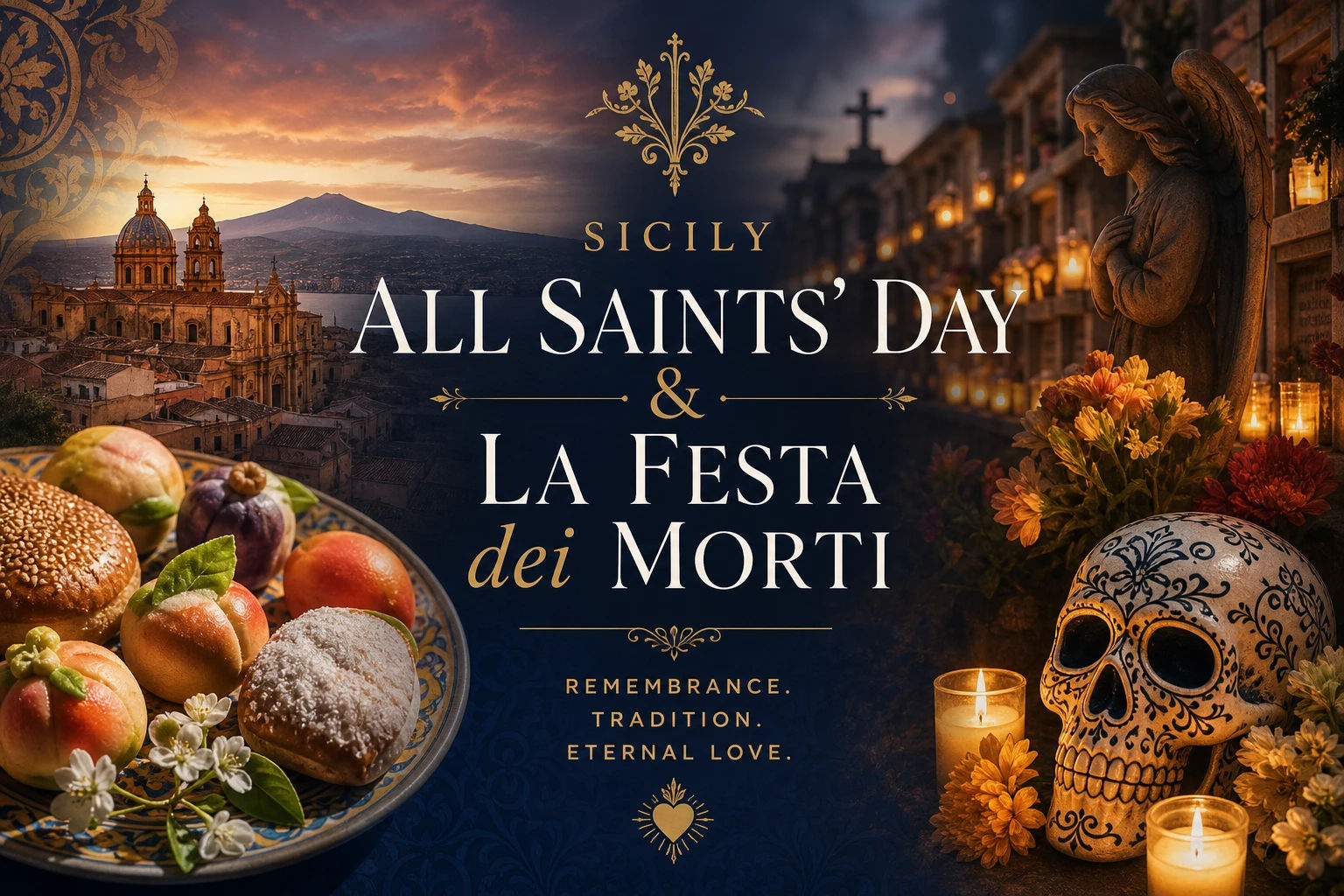
All Saints’ Day and La Festa dei Morti 2026 Sicily take place on Sunday, 1 November 2026 and Monday, 2 November 2026. These two connected dates are among the most heartfelt periods in the Sicilian calendar, blending Catholic observance, family remembrance, colourful sweets and a distinctive island tradition in which deceased relatives are believed to leave gifts for children.
For visitors, the experience is unlike Halloween. Sicily’s Festa dei Morti is not built around fear or costumes. It is a tender, family-centred tradition of memory, generosity, sweet food and connection between generations.
"Chi ti purtaru i muorti?" — "What did the dead bring you?"
All Saints’ Day and Festa dei Morti 2026 Dates
Key Observances in November
The key dates are:
- Sunday, 1 November 2026: All Saints’ Day, Ognissanti
- Monday, 2 November 2026: All Souls’ Day, La Festa dei Morti
- Night of 1–2 November 2026: Traditional Sicilian family rituals connected with gifts and sweets for children
All Saints’ Day is a national public holiday in Italy. In 2026, it falls on a Sunday, so many businesses will follow Sunday opening hours or close altogether. On Monday, 2 November, cemeteries, churches, pastry shops and traditional markets are likely to be especially active.
What Is La Festa dei Morti?
A Unique Sicilian Tradition
La Festa dei Morti is Sicily’s Day of the Dead tradition. It has roots in Catholic remembrance, regional folklore and deeply held family customs. The central idea is not sadness alone. It is the belief that loved ones remain part of the family story. In traditional Sicilian households, deceased relatives are imagined returning during the night of 1 November to 2 November to bring sweets, toys and small gifts to children.
The ritual gives the day a magical quality, while also teaching children that remembrance can be warm, loving and intergenerational.
Children wake up and search around the home for a decorated basket, called u cannistru, filled with treats, toys, fruit and traditional sweets.
All Saints’ Day in Sicily: Sunday, 1 November 2026
Cultural and Religious Observances
All Saints’ Day honours saints known and unknown in the Christian tradition. Across Sicily, churches hold services, families attend Mass and many people prepare for the following day’s cemetery visits. On Sunday, 1 November 2026, expect:
- Church services
- Greek and Latin Catholic observances
- Flower shops doing brisk business
- Families travelling home
- Pastry shops displaying Festa dei Morti sweets
- Temporary markets and fairs
- Restaurants operating on Sunday schedules
- Reduced hours at banks, public offices and some shops
- Crowded streets in major cities
- Quiet reflection in village communities
It is a good day to visit a bakery, pastry shop or traditional market, but travellers should avoid treating church services and cemeteries as tourist attractions. If you attend a religious service, dress modestly, arrive quietly and follow local customs.
La Festa dei Morti: Monday, 2 November 2026
A Day of Remembrance and Celebration
The main Sicilian remembrance day is Monday, 2 November 2026. Families visit cemeteries, bring chrysanthemums and candles, clean graves and spend time remembering relatives. In many towns, the day begins with Mass, then continues with family gatherings and food.
The emotional atmosphere is usually calm and dignified, but it is not entirely sombre.
Typical activities include:
- Morning Mass
- Cemetery visits
- Flowers and candles
- Family lunches
- Pastry-shop visits
- Children searching for gifts
- Temporary “Fiera dei Morti” markets
- Buying traditional sweets
- Remembering family stories
- Visiting relatives’ homes
- Preparing u cannistru baskets
For travellers, 2 November is best experienced through food markets, city streets and bakeries rather than by entering private family rituals.
U Cannistru: Sicily’s Basket of Memory
A Symbol of Family Bonds
U cannistru is a traditional decorated basket prepared for children during La Festa dei Morti. Traditionally, the basket contains treats and gifts supposedly brought by deceased family members during the night. Adults may hide the basket under a bed, behind a door, in a cupboard or elsewhere in the home for children to discover on the morning of 2 November.
A typical cannistru may include:
- Frutta Martorana
- Pupi di zucchero
- Ossa dei morti biscuits
- Mustazzoli
- Tatù biscuits
- Dried fruit
- Dates
- Almonds
- Walnuts
- Chocolate
- Toys
- Small gifts
- Seasonal fruit
- Candies
The basket is often decorated with colourful paper, ribbons and seasonal elements. Its purpose is not only to offer sweets. It represents the idea that family bonds continue through memory.
Frutta Martorana: Sicily’s Most Famous Festa dei Morti Sweet
A Masterpiece of Confectionery
Frutta Martorana is one of the most recognisable symbols of the Sicilian Festa dei Morti. These remarkable sweets are made from almond paste and sugar, then shaped and painted to look like real fruit, vegetables, seafood or small objects. The craftsmanship can be astonishing. A peach, lemon, fig, pear or prickly pear may look almost identical to the real thing.
During late October and early November, Palermo pastry-shop windows fill with:
- Almond-paste oranges
- Lemons
- Figs
- Pears
- Apples
- Peaches
- Grapes
- Miniature vegetables
- Decorative sea creatures
- Colourful baskets of sweets
Frutta Martorana is one of the best edible souvenirs to take home from Sicily, but keep it away from heat and check airline hand-luggage rules before travelling.
Pupi di Zucchero: Sugar Figures of Sicily
Decorative and Sweet Delights
Pupi di zucchero, sometimes called pupaccena, are colourful sugar statues traditionally included in Festa dei Morti baskets. The figures may represent:
- Paladins
- Knights
- Princesses
- Saints
- Animals
- Folklore characters
- Sicilian puppet-theatre heroes
- Modern children’s characters
The link with the Sicilian Opera dei Pupi tradition is especially important. The figures often recall the knights and heroes of Sicily’s famous puppet theatre, which is recognised by UNESCO as an important cultural tradition.
Pupi di zucchero are decorative, fragile and extremely sweet. They are often admired before being eaten. Look for them in specialist pastry shops, traditional fairs and confectionery stalls in Palermo, Catania and other Sicilian towns.
Ossa dei Morti and Traditional Biscuits
Sweet Treats of Remembrance
Another essential Festa dei Morti food is ossa dei morti, meaning “bones of the dead.” The name may sound dramatic, but these biscuits are a beloved seasonal treat. Recipes vary across Sicily, and textures can range from very hard, crunchy biscuits to softer almond-based pastries.
Mustazzoli
Spiced Biscuits of Sicily
Mustazzoli are traditional Sicilian biscuits often made with flour, sugar, cinnamon, cloves and other aromatic ingredients. In Palermo, they are strongly associated with the Festa dei Morti period.
Tatù
Black-and-White Biscuit Pairs
Tatù biscuits are often found in black-and-white pairs:
- White tatù: Coated in sugar icing
- Black tatù: Coated in cocoa glaze
They are soft, sweet and popular in pastry-shop displays before 2 November.
Nucatoli
Filled Pastries with a Twist
Nucatoli are filled pastries that may contain dried fruit, nuts, spices and honey. They reflect Sicily’s long tradition of Arabic-influenced sweets.
Taralli
Sweet Rings of Sicily
Sicilian taralli are sweet ring-shaped biscuits, sometimes coated in icing sugar. They are distinct from savoury taralli found in other parts of Italy.
Almond Sweets
The Essence of Sicilian Confectionery
Sicily’s almond-paste tradition appears everywhere during this period. Look for marzipan, almond biscuits and sweets flavoured with citrus, cinnamon or pistachio.
The Fiera dei Morti in Sicily
Markets of Memory and Celebration
In many Sicilian towns, temporary markets appear between 31 October and 2 November. These are often called Fiera dei Morti, or Fair of the Dead. The fairs may sell:
- Toys
- Sweets
- Pupi di zucchero
- Frutta Martorana
- Dried fruit
- Seasonal fruit
- Flowers
- Candles
- Household goods
- Decorations
- Small gifts
- Street food
- Crafts
In Palermo, traditional markets may be set up in areas associated with public gardens and open spaces. In Syracuse, stalls may appear near Ortigia and central streets. Every city and town has its own local rhythm. The exact 2026 locations, opening times and market arrangements should be confirmed closer to the holiday weekend.
Palermo and Festa dei Morti 2026
A Cultural Hub for Celebrations
Palermo is one of the most interesting places to experience La Festa dei Morti. The city has a particularly strong tradition of Frutta Martorana, pupi di zucchero and elaborate cannistru baskets. In the days before 2 November, pastry shops become colourful displays of almond paste, sugar figures and seasonal sweets.
In Palermo, consider visiting:
- Traditional pastry shops
- Ballarò Market
- Capo Market
- Vucciria Market
- Piazza Marina
- Historic churches
- Local confectionery stores
- Fiera dei Morti stalls, if confirmed
For breakfast on 2 November, some Palermitans enjoy muffuletta condita, a soft bread roll dressed with olive oil, anchovy, oregano, salt, pepper and sometimes tomato. It may seem unexpected for a remembrance holiday, but that combination of bread, family and local food captures the Sicilian approach to the day.
Catania and Eastern Sicily
Traditions Across the Region
Catania and eastern Sicily also observe La Festa dei Morti through pastry traditions, cemetery visits, church services and family gatherings. Visitors can combine the holiday with:
- Catania’s Baroque centre
- The fish market
- Mount Etna villages
- Acireale
- Noto
- Syracuse and Ortigia
- Modica chocolate shops
- Ragusa Ibla
Remember that 1 November is a public holiday, and 2 November may bring reduced services or busy roads near cemeteries.
Respectful Visitor Etiquette
Participate with Sensitivity
La Festa dei Morti is deeply personal. It should be approached with respect.
- Do not photograph grieving families at cemeteries.
- Dress modestly when visiting churches.
- Keep voices low at memorial sites.
- Ask permission before photographing market vendors.
- Avoid treating religious customs as entertainment.
- Support local pastry shops and small producers.
- Learn a few Italian phrases, such as grazie for thank you.
- Be patient with holiday opening hours.
- Do not block cemetery entrances or parking areas.
- Respect local family traditions.
The best way to participate is through food, culture, markets and quiet observation.
Travel Tips for 1–2 November 2026
Plan Around Public-Holiday Hours
On Sunday, 1 November 2026, banks, public offices and many shops will be closed. Some restaurants, cafés and tourist attractions may follow Sunday hours.
Book Accommodation Early
Avoid Last-Minute Hassles
The period is popular with domestic travellers returning to visit family. Book hotels, car rentals and train tickets in advance.
Carry Cash
Be Prepared for Market Purchases
Small stalls at Fiera dei Morti markets may prefer cash.
Expect Crowds at Cemeteries
Plan Your Visit Wisely
Avoid driving near major cemeteries on the morning of 2 November. Traffic and parking can be difficult.
Pack for Autumn
Dress for Mild Weather with a Chance of Rain
Sicily can still be mild in early November, but evenings may be cool and rain is possible. Bring:
- Comfortable shoes
- Light waterproof jacket
- Warm layer
- Small backpack
- Umbrella
- Phone charger
- Reusable water bottle
- Space for sweets and souvenirs
Frequently Asked Questions
The Things People Always Want to Know
When is All Saints’ Day in Sicily in 2026?
All Saints’ Day takes place on Sunday, 1 November 2026.
When is La Festa dei Morti 2026 in Sicily?
La Festa dei Morti, also known as All Souls’ Day, is observed on Monday, 2 November 2026.
What is u cannistru?
U cannistru is a decorated basket filled with sweets, toys, fruit and gifts traditionally left for children by deceased relatives during the night between 1 and 2 November.
What is Frutta Martorana?
Frutta Martorana is a colourful Sicilian almond-paste sweet crafted to look like realistic fruit, vegetables and decorative objects.
What are pupi di zucchero?
Pupi di zucchero are hand-decorated sugar figures often shaped like knights, saints, animals or characters from Sicilian puppet theatre.
Is All Saints’ Day a public holiday in Sicily?
Yes. All Saints’ Day is a national public holiday in Italy. In 2026 it falls on a Sunday, so many businesses follow Sunday or holiday opening hours.
Can visitors attend Festa dei Morti markets?
Yes. Visitors are welcome to browse public Fiera dei Morti markets, buy sweets and enjoy local food. Respect cemetery visits, family rituals and religious observances.
Verified Information at a Glance
- Event name: All Saints’ Day and La Festa dei Morti 2026 Sicily
- Italian names: Ognissanti, Festa di Tutti i Santi, Commemorazione dei Defunti and Festa dei Morti
- Event category: Religious observance, family tradition, food culture, sweets and remembrance
- All Saints’ Day: Sunday, 1 November 2026
- La Festa dei Morti: Monday, 2 November 2026
- Public-holiday status: All Saints’ Day is a national public holiday in Italy
- Main Sicilian traditions: Cemetery visits, church services, u cannistru baskets, gifts for children, sweets and Fiera dei Morti markets
- Key sweets: Frutta Martorana, pupi di zucchero, ossa dei morti, mustazzoli, tatù, nucatoli and almond pastries
- Best city for traditional sweets: Palermo
- Entry price: Public markets and city traditions are generally free to experience
- Additional costs: Food, sweets, gifts, transport and any special events
- Best for: Culture travellers, families, food lovers, photography enthusiasts and visitors seeking authentic Sicilian traditions
- Travel tip: Confirm shop hours, market locations and transport schedules before 1 November 2026
Spend 1 and 2 November 2026 discovering Sicily’s gentle and distinctive Festa dei Morti traditions, taste Frutta Martorana and pupi di zucchero, and experience how the island turns remembrance into a celebration of family, history and enduring love.
```