Sri Lanka

    Sri Lanka

    South Coast & Cultural Triangle

    Beaches + heritage

    4.6
    Guest Rating
    24°C
    Partly Cloudy
    Humidity: 91%
    Wind: 6 km/h
    Live Temperature
    12
    Active Events

    About Sri Lanka

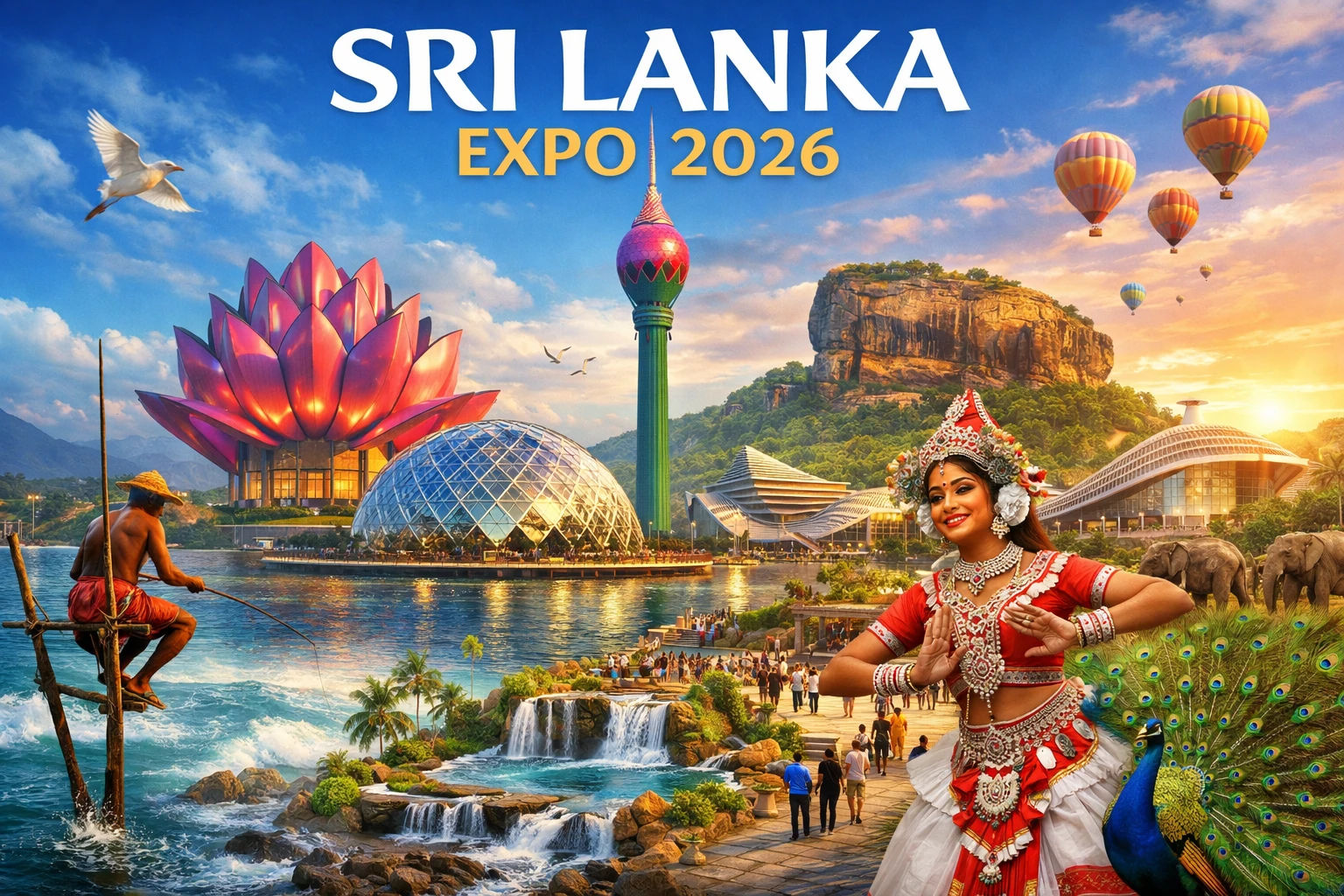
    The air in Sri Lanka smells of spices, rain-soaked earth, and the sea. It is an island of incredible variety, where you can spend the morning watching elephants in a national park, the afternoon sipping tea in the cool highlands, and the evening on a warm, golden beach. Sri Lanka travel is a journey through ancient kingdoms, lush landscapes, and a culture that greets you with a genuine smile.

    Shaped like a teardrop off the coast of India, Sri Lanka packs a world of experiences into a compact space. The island’s heart is its central highlands, a tapestry of green tea plantations, misty mountains, and charming colonial-era towns like Nuwara Eliya and Ella. Surrounding this cool interior are coastal plains that give way to hundreds of miles of beautiful shoreline. In the center of it all lies the Cultural Triangle, home to ancient cities and magnificent temples that tell the story of the island’s rich history.

    When it comes to Sri Lanka beaches, the south coast is a great place to start. Mirissa is a beautiful crescent of sand, famous for its relaxed vibe and as a departure point for whale watching tours. Unawatuna is a lively beach town near...

    Climate & Weather

    Tropical climate with year-round warm temperatures and trade winds.

    Best Time to Visit

    December to April for South Coast; May to September for Cultural Triangle

    Top Highlights

    Ancient temples

    Tea plantations

    Wildlife

    Popular Activities

    Temple visits
    Safari
    Tea tasting
    Beach relaxation

    Quick Info

    Timezone
    UTC+5:30
    💰Currency
    Sri Lankan Rupee (LKR)
    🗣️Language
    Sinhala, Tamil
    Temperature
    28°C

    Upcoming Events

    ICC Men’s T20 World Cup 2026
    Sports/Cricket
    TBA

    ICC Men’s T20 World Cup 2026

    ICC Men’s T20 World Cup 2026 in Sri Lanka will turn the island into one of the most exciting stops on the world cricket calendar, with packed stadium nights, passionate crowds, and a travel backdrop that mixes city buzz with hill-country calm. The ICC has confirmed the tournament will start on February 7, 2026 and run through the final on March 8, 2026, with India and Sri Lanka co-hosting across eight venues . For fans planning specifically for Sri Lanka, the ICC’s official announcement confirms three Sri Lanka venues: R. Premadasa Stadium (Colombo), Sinhalese Sports Club Cricket Ground (Colombo), and Pallekele International Cricket Stadium (Kandy) .

    If you’ve been looking for a reason to combine a beach-and-tea-country trip with world-class sport, this is it. Sri Lanka’s compact geography makes it unusually easy to follow matches and still explore temples, food streets, and scenic train routes in between games.

    Verified tournament dates and host venues

    The biggest travel decisions depend on what’s already official. Here is what the ICC has confirmed:

    • Tournament name: ICC Men’s T20 World Cup 2026 .
    • Dates: Starts February 7, 2026, final March 8, 2026 .
    • Hosts: Co-hosted by India and Sri Lanka .
    • Sri Lanka venues (confirmed):
    • R. Premadasa Stadium, Colombo
    • Sinhalese Sports Club Cricket Ground, Colombo
    • Pallekele International Cricket Stadium, Kandy

    The ICC announcement also confirms the structure timeline: 40 group matches are played February 7–20, with the Super Eights beginning February 21 . That’s useful for trip planning because you can target the group stage if you want multiple matches in a shorter window, or aim later for higher-stakes Super Eights and knockouts.

    Sri Lanka match cities: Colombo and Kandy

    Colombo: two venues, big-night energy

    Sri Lanka gets a double dose of cricket in Colombo with both R. Premadasa Stadium and the SSC Ground included on the official venue list . That means Colombo is the best base if you want to attend multiple games without changing hotels, and it also offers city conveniences like restaurants, museums, and easy transport links.

    The ICC’s published fixtures show multiple early matches in Colombo across both venues, including Sri Lanka’s group-stage opener listed as Sri Lanka vs Ireland on 08 Feb 2026 at Premadasa, Colombo . If you want that “first match” electricity with local fans, Colombo is where it will feel most intense.

    Kandy: hill-country cricket at Pallekele

    Kandy’s confirmed venue is Pallekele International Cricket Stadium . The ICC fixture list includes matches in Kandy through the group stage, including Sri Lanka vs Oman on 12 Feb 2026 in Kandy and Australia vs Sri Lanka on 16 Feb 2026 in Kandy .

    Kandy is also ideal for travelers who want to pair cricket with Sri Lanka’s cultural heart and cooler evenings. Between match days, you can explore lakeside walks, temples, and short hill-country escapes without committing to long cross-island transfers.

    What makes a T20 World Cup trip in Sri Lanka special

    Sri Lanka is a cricket island in every sense. Even outside stadiums, you’ll see games in parks, school grounds, and beaches, and during a World Cup the whole place tends to become a live commentary track. The ICC itself highlighted the “unmatched” passion for cricket in the region and expects venues in India and Sri Lanka to be “alive with energy” throughout the tournament .

    For visitors, the unique advantage is scale. You’re not dealing with the huge distances that make some multi-city tournaments exhausting. In Sri Lanka you can realistically:

    • Watch a match in Colombo.
    • Take a scenic train or road trip to Kandy.
    • Add a couple of beach days on the coast.
    • All in the same week, without feeling like you lived in a taxi.

    Planning your Sri Lanka cricket itinerary (easy, realistic options)

    Option 1: Colombo-based “match cluster” trip

    Best for: fans who want maximum matches with minimum logistics.

    • Stay in Colombo and target games at Premadasa and SSC .
    • Use off-days for food, city walks, and day trips.
    • Great if you’re also traveling with friends who want nightlife and dining.

    Option 2: Colombo + Kandy “two-city cricket and culture”

    Best for: travelers who want variety and scenery.

    • Start in Colombo for early fixtures, then move to Kandy for a hill-country phase .
    • The ICC schedule includes notable Kandy games like AUS vs SL (16 Feb) and other group matches, making it easy to plan around match dates .

    Option 3: Cricket + island touring (matches plus beaches)

    Best for: travelers mixing sport with a classic Sri Lanka holiday.

    • Attend 1–2 matches, then move to the coast or tea country.
    • Use the tournament as the anchor, with sightseeing as the “between innings” experience.

    Tickets and pricing: what’s confirmed so far

    The ICC’s official fixtures announcement includes a clear message: “REGISTER YOUR INTEREST FOR TICKETS NOW!” . However, specific ticket prices for Sri Lanka matches are not published in the ICC announcement content captured here, so pricing cannot be confirmed from this source .

    Practical approach for travelers:

    • Register interest through the ICC ticket pathway early, then buy as soon as categories and prices go live .
    • Budget for a range, since marquee matchups and premium seating typically cost more than standard group-stage seats.

    Match-day tips for Colombo and Kandy

    A World Cup match day is more enjoyable when you plan like a local fan.

    • Arrive early: security checks and crowds increase for big games, especially in Colombo .
    • Stay close to your venue: Colombo has two grounds, so choose accommodation that reduces cross-city travel on match day .
    • Hydrate and dress for heat: February can be warm, and day games can be intense.
    • Plan your transport home: after a night match, rides can surge and roads can be busy.

    Local relevance: what to explore between matches

    In Colombo

    Use the city to understand modern Sri Lanka between fixtures. Even simple experiences like street food, markets, and seaside promenades help balance stadium time.

    In Kandy

    Kandy offers a cultural contrast to Colombo’s pace. On non-match days, build in:

    • A calm morning around the lake.
    • A cultural site visit.
    • A short hill-country trip that still gets you back in time for an evening match at Pallekele.

    The joy of doing ICC Men’s T20 World Cup 2026 Sri Lanka-style is that the island gives you meaningful experiences even when you’re not holding a ticket.

    Sri Lanka is ready to host the world, and the ICC Men’s T20 World Cup 2026 is the perfect reason to experience the island at full volume. Lock in the tournament window February 7 to March 8, 2026, pick your match cities in Colombo and Kandy, and plan a trip where cricket nights, hill-country mornings, and coastal sunsets all fit into one unforgettable island itinerary .

    Verified Information at glance

    Event Category: International sports tournament (cricket)

    Event Name: ICC Men’s T20 World Cup 2026

    Confirmed tournament dates: February 7, 2026 to March 8, 2026

    Confirmed host countries: India and Sri Lanka

    Confirmed Sri Lanka host venues:

    • R. Premadasa Stadium, Colombo
    • Sinhalese Sports Club Cricket Ground, Colombo
    • Pallekele International Cricket Stadium, Kandy

    Confirmed stage timeline: Group matches Feb 7–20, Super Eights start Feb 21

    Ticket pricing: Not confirmed in the ICC fixtures release; ICC invites fans to register interest for tickets

    Sri Lanka (venues TBA), Sri Lanka
    Feb 7, 2026 - Mar 8, 2026
    Medin Full Moon Poya Day 2026
    Public holiday/Religious
    Free

    Medin Full Moon Poya Day 2026

    Unveiling Medin Full Moon Poya Day in Sri Lanka

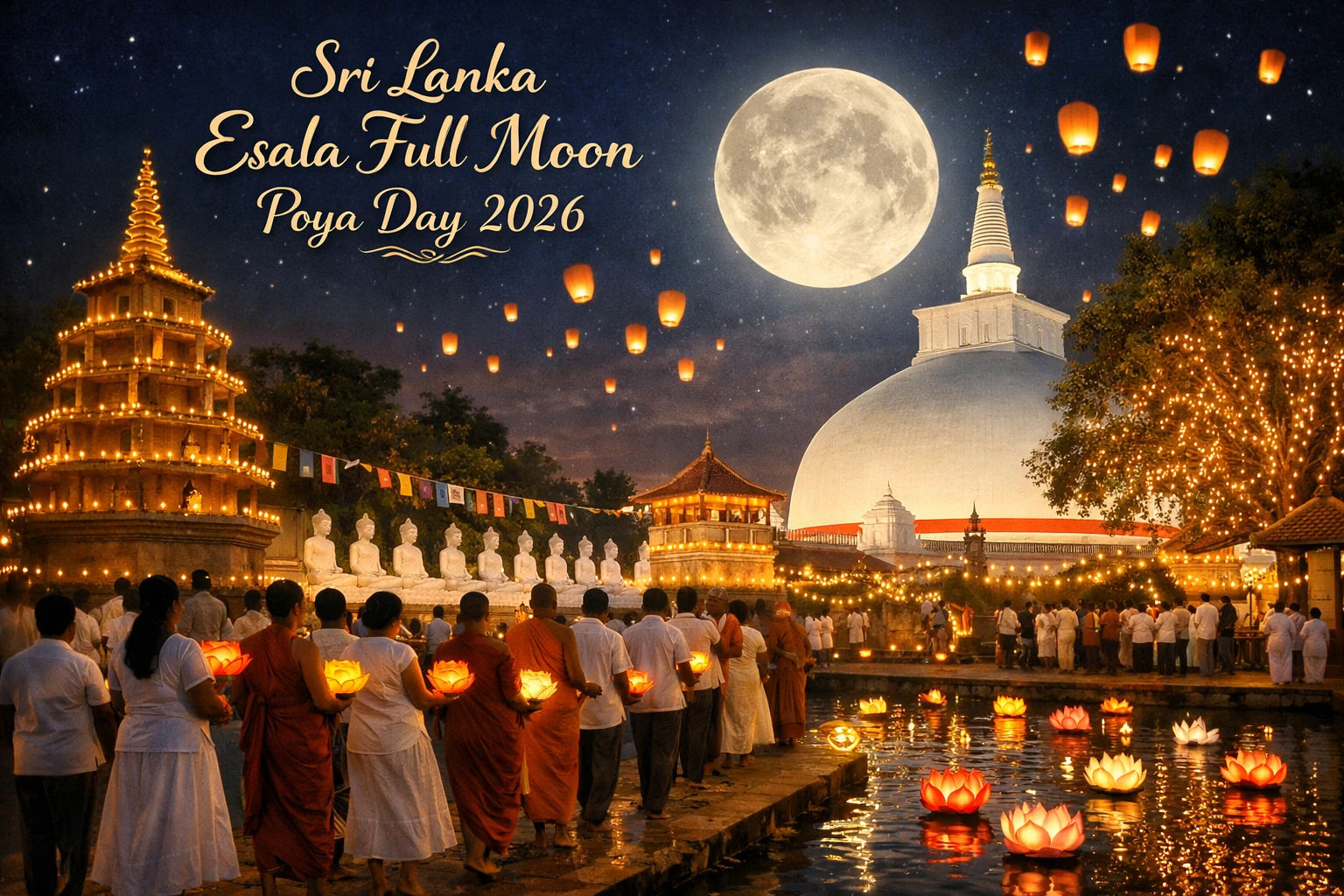
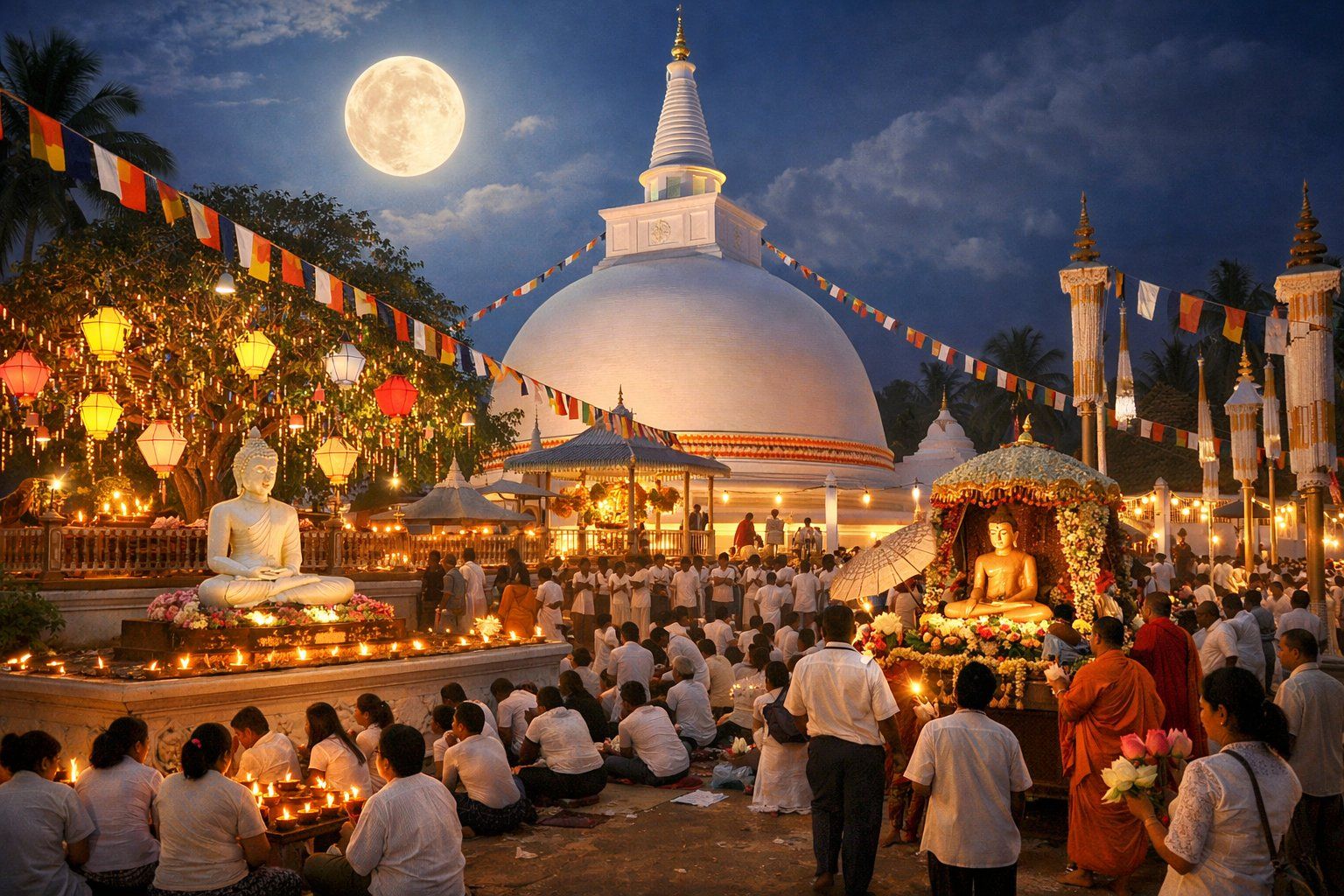
    Medin Full Moon Poya Day is a public holiday in Sri Lanka, and in 2026 it falls on Monday, March 2. For island travelers, it’s a powerful day to experience Sri Lanka’s Buddhist culture through temple visits, quiet observances, and a slower national rhythm that feels very different from a typical sightseeing day.

    Sri Lanka’s full moon days are known as Poya, and each Poya day is linked to key events in Buddhism while also being a nationwide public holiday. Office Holidays explains that every full moon is generally a public holiday in Sri Lanka and that each full moon has its own name and commemorative meaning. Medin (also written Madin) Full Moon Poya is one of the best-known March observances, and it carries special significance for Sri Lankan Buddhists because it connects to pivotal stories from the Buddha’s life and to the island’s most famous pilgrimage season.

    If you want an island cultural experience that feels sincere and community-led, Medin Poya is an ideal day to step away from fast travel and into Sri Lanka’s spiritual calendar.

    Confirmed Date for Medin Poya 2026

    Timeanddate’s 2026 Sri Lanka holiday calendar lists Madin Full Moon Poya Day as a public holiday on March 2, 2026 (Monday). This confirmed date is essential for trip planning because it affects opening hours, transportation patterns, and the general pace of the island on that day.

    Because Poya dates can shift year to year and may not always align perfectly with the astronomical full moon, checking the year-specific calendar before traveling is a smart move.

    Understanding Medin Poya: History and Meaning

    Office Holidays explains that Medin Full Moon Poya (also known as Medin Full Moon Day) marks the Buddha’s first visit to his father’s palace following his enlightenment. The same source describes how King Suddhodana repeatedly sent envoys to invite the Buddha back, and how the Buddha ultimately made the journey to reunite with his father, relatives, and friends. Office Holidays also notes that Medin Poya signifies love and brotherhood and commemorates Prince Rahula entering the Buddha Sasana, and it adds that in Sri Lanka it is especially important because it marks the climax of the Sri Pada pilgrimage season.

    For visitors, this context helps explain why Medin Poya feels emotionally resonant. It’s not simply a day off, it’s a day tied to reunion, devotion, and pilgrimage in a Buddhist island nation.

    What Visitors Can Do on Medin Poya Day

    Medin Poya is best experienced quietly and respectfully. Since it’s a public holiday with strong religious significance, many locals spend the day visiting temples, offering alms, listening to Dhamma talks, or observing additional precepts.

    Recommended Activities for Travelers:

    • Visit a major temple in your region early in the day and observe quietly.
    • Dress modestly, remove shoes where required, and follow local signage.
    • Plan a calm itinerary with fewer “must-do” stops, since many businesses close.

    Practical Travel Impacts: Closures and Restrictions

    Office Holidays notes that on Poya days, shops and businesses will usually close, and the sale of alcohol and meat is forbidden. Timeanddate confirms Medin Poya is a public holiday, which aligns with reduced business activity and altered schedules. For travelers, this means your “normal” evening plan may not work, and the smartest approach is to treat Medin Poya as a reset day: a temple visit, a scenic walk, and an early night.

    If you’re staying at a hotel, ask in advance about food service and what will be available on Poya day, since the broader retail and restaurant landscape may be quieter.

    Where to Experience Medin Poya on the Island

    Sri Lanka is one island, but Poya energy feels different depending on where you are.

    • In Colombo, you may see temples and shrines drawing devotees while other parts of the city feel subdued.
    • In the Cultural Triangle area, temple visits can feel especially atmospheric on Poya, with more pilgrims and offerings.
    • In the hill country, the pace is naturally slower and Poya can feel deeply reflective.

    Office Holidays highlights Sri Pada pilgrimage season as a key Medin Poya connection, which makes the hill-country and pilgrimage corridors particularly meaningful for this time of year.

    Planning Your Sri Lanka Trip Around Medin Poya 2026

    Because Medin Poya in 2026 is on Monday, March 2, you can build a smooth long-weekend structure around it. Consider arriving at your base location the day before so you’re not relying on last-minute transport or tight check-in schedules on the public holiday.

    A Practical Itinerary Rhythm:

    • Day before: travel, check in, stock any essentials.
    • Poya day: temple visit, scenic nature time, rest.
    • Day after: resume normal sightseeing, markets, and nightlife.

    Experience the Quiet Magic of Medin Poya

    Medin Full Moon Poya Day in Sri Lanka is confirmed for Monday, March 2, 2026, and it’s one of the most culturally meaningful days to witness how this island nation moves to a spiritual calendar. With businesses often closed and restrictions like bans on alcohol and meat sales, the day invites you to travel differently: slower, quieter, and more observant. Plan your visit with respect, step into a temple courtyard under the March full moon season, and let Sri Lanka’s Medin Poya show you the island’s calm heart in a way ordinary travel days rarely can.

    Verified Information at a Glance

    • Event Name: Medin (Madin) Full Moon Poya Day
    • Event Category: Religious observance and public holiday (Poya full moon day)
    • Country/Island: Sri Lanka
    • Confirmed Date (2026): Monday, March 2, 2026
    • Public holiday status (confirmed): Public Holiday in Sri Lanka
    • What it commemorates (confirmed): The Buddha’s first visit to his father’s palace following enlightenment; linked to Prince Rahula entering the Buddha Sasana; associated with the climax of Sri Pada pilgrimage season in Sri Lanka
    • Common impacts (confirmed): Shops/businesses usually close; sale of alcohol and meat is forbidden on Poya days
    • Ticket pricing: Not applicable (public holiday observance)
    Nationwide (Sri Lanka), Sri Lanka
    Mar 2, 2026 - Mar 2, 2026

    Past Events

    Sri Lanka Independence Day (National Day) 2026
    National Holiday/Ceremony
    Free

    Sri Lanka Independence Day (National Day) 2026

    Sri Lanka Independence Day (National Day) 2026 takes place on Wednesday, February 4, 2026, a nationwide public holiday that commemorates Sri Lanka’s independence from British rule in 1948. Timeanddate lists National Day in Sri Lanka on Feb 4, 2026 as a Public Holiday, confirming the official date for travel planning. Office Holidays also confirms the holiday is always celebrated on February 4 and describes it as Sri Lanka’s National Day, also known as Independence Day, marking independence in 1948.​

    For visitors, National Day is a rare chance to feel the island’s shared identity in one day, where ceremonies, flags, music, and cultural performances turn ordinary streets into spaces of national pride.

    Verified date and why it matters

    Sri Lanka’s National Day is fixed on the calendar, which makes it easy to plan around.

    • Confirmed date (2026): February 4, 2026 (Wednesday).​
    • Holiday status: Public Holiday.​
    • What it commemorates: Sri Lanka’s independence from British rule on February 4, 1948.​

    If you’re traveling in early February, this public holiday can affect opening hours and transport rhythms, but it can also be one of the most rewarding cultural days to be on the island.

    What happens on Sri Lanka National Day

    Sri Lanka Independence Day is typically marked by official ceremonies and strong public symbolism. Office Holidays describes National Day celebrations as including official ceremonies and military parades, with the main celebrations taking place in Colombo, where the President hoists the national flag and delivers a nationally televised speech. The same source notes that the President’s address includes a tribute to national heroes, including two minutes of silence in their memory.​

    For travelers, this means Colombo becomes the focal point for formal national events, while the wider island often reflects the day through flags, smaller community ceremonies, and a general patriotic atmosphere.

    Colombo: the heart of the main ceremony

    If your goal is to witness the most official Independence Day atmosphere, Colombo is the place to be. Office Holidays states plainly that the main celebrations occur in Colombo, centered on the presidential flag-hoisting and speech, supported by official ceremony and parade elements.​

    Practical visitor note: major civic events often come with road closures, security zones, and traffic planning. Even if you don’t attend the core ceremony, being in Colombo on February 4 helps you feel the national mood through decorations, media coverage, and the city’s heightened sense of occasion.

    Island-wide cultural highlights you’ll notice

    National Day is more than a formal parade. It is also an island celebration of Sri Lanka’s multi-ethnic cultural identity. Office Holidays describes National Day as a day of remembrance and national unity in addition to celebrating independence, with public messaging asking people to join together in commemorating the day.​

    For travelers, the cultural experience often includes:

    • Flags and patriotic displays in public places.
    • School and community performances in some towns.
    • A quieter commercial rhythm because it is a public holiday, which encourages family time and community participation.​

    If you want to capture the spirit without pushing into crowds, plan a morning temple visit or a scenic walk, then spend the afternoon in a public park or café where you can watch local life unfold.

    Travel planning tips for February 4, 2026

    Expect holiday operating hours

    Because Timeanddate lists National Day as a public holiday, some government offices and businesses may be closed or have reduced hours. Plan errands, bank needs, and long shopping lists for the day before.​

    Transport and traffic

    If you’re in Colombo, build extra travel time into your day. National ceremonies can shift traffic patterns, and it’s best to travel early and keep the rest of the day flexible.

    Best places to stay for the experience

    • Colombo: best if you want the strongest National Day atmosphere and access to the main civic focus described by Office Holidays.​
    • Kandy or the Hill Country: good if you want a quieter base while still feeling the nationwide holiday mood.
    • Galle or the south coast: good if you want beach time combined with a national holiday day that still feels culturally significant.

    A simple National Day itinerary for travelers

    A visitor-friendly way to experience Sri Lanka Independence Day without overplanning:

    • Morning: Start early and watch for flags and local ceremonies, especially if you’re staying in Colombo where the main celebration focus is described.​
    • Midday: Enjoy a calm lunch and keep expectations flexible, since some restaurants may run holiday hours.​
    • Afternoon: Choose a cultural venue, public park, or scenic viewpoint, then wind down the day with a relaxed meal while the country’s televised coverage and public conversations reflect on the holiday.​

    This approach allows you to participate respectfully while still enjoying a comfortable travel day.

    Pricing: what to expect

    Sri Lanka Independence Day is a public holiday, not a ticketed festival, so there is no single entry price for “National Day.” Timeanddate confirms it as a public holiday on the national calendar, which indicates the day is observed broadly rather than sold as an event. Your costs will depend on transport, optional tours, and any paid attractions you choose to visit outside official ceremony zones.​

    Sri Lanka Independence Day 2026 is an ideal moment to experience the island’s pride and shared identity in real time. Plan to be in Sri Lanka on February 4, 2026, base yourself in Colombo if you want the main ceremony atmosphere described in official holiday guides, and let the day’s flags, music, and community energy show you how the island celebrates its story of independence and unity.​

    Verified Information at glance

    Event Category: National public holiday (Independence Day / National Day)​

    Event Name: Sri Lanka Independence Day (National Day)​

    Confirmed Date (2026): Wednesday, February 4, 2026​

    Confirmed Holiday Type: Public Holiday​

    What it commemorates (verified): Independence from British rule on February 4, 1948​

    Main celebration location (verified description): Colombo, where the President hoists the national flag and delivers a nationally televised speech as part of official ceremonies and parades​

    Pricing: No single ticket price (public holiday; costs depend on optional tours and personal travel plans)​

    Colombo (main ceremony) + island‑wide, Sri Lanka
    Feb 4, 2026 - Feb 4, 2026
    Navam Full Moon Poya Day 2026
    Religious Holiday
    Free

    Navam Full Moon Poya Day 2026

    Navam Full Moon Poya Day 2026 is one of the most culturally significant Buddhist observances in Sri Lanka, marked by temple visits, almsgiving, and a calm, reflective atmosphere that spreads across the whole island. The Central Bank of Sri Lanka’s official bank-holidays list confirms Navam Full Moon Poya Day falls on February 01, 2026 (Sunday) and labels it as a Bank Holiday and Public Holiday. Because Poya days shape everything from opening hours to travel rhythms, visiting Sri Lanka around Navam Poya can feel like stepping into a quieter, more devotional version of the island, one where the full moon sets the pace.​

    For travelers who want more than beaches and photos, Navam Poya offers a window into Sri Lanka’s living Buddhist culture, especially in cities like Colombo and sacred towns with major temples that become focal points for worship and community offerings.

    Verified date and public-holiday status for 2026

    When planning a trip around religious observances, it’s important to rely on an official calendar. The Central Bank of Sri Lanka’s Bank Holidays for 2026 list shows:

    • Holiday name: Navam Full Moon Poya Day.​
    • Date: February 01, 2026 (Sunday).​
    • Type: Bank Holiday and Public Holiday (shown with “B. P.” in the Central Bank list).​

    This confirmation matters for visitors because Poya days often affect transportation flow, business hours, and the general feel of public life.

    What Navam Poya commemorates (in plain language)

    Navam Poya is connected to important Buddhist events, and it is widely treated as a major devotional day in Sri Lanka’s Buddhist calendar. A Buddhist uposatha calendar resource explains that Navam Poya marks two key events: the ordination of Venerable Sāriputta and Venerable Mahā Moggalāna as the first two chief disciples, and the First Buddhist Council after the Buddha’s death, where the Vinaya (monastic discipline) was recited and established.​

    For travelers, you don’t need to be Buddhist to appreciate the meaning. The atmosphere tends to be respectful, community-oriented, and focused on merit-making, which you’ll see through temple offerings, quiet dress, and people moving through their day with intention.

    How Navam Full Moon Poya Day is observed on the island

    Navam Poya is a day when Sri Lanka leans toward simplicity: spiritual practice, family time, and community service. While each region has its own rhythm, Poya observance commonly includes:

    • Visiting temples for chanting, offerings, and listening to Dhamma talks.
    • Observing sil (taking precepts) for those who choose a more intensive spiritual day.
    • Dana (almsgiving), which can range from small offerings to organized community food distributions.

    Because it is a confirmed public holiday and bank holiday, many workplaces close or reduce hours, and the island can feel quieter than usual in commercial districts. That quiet is part of the travel experience.​

    Where visitors can experience Navam Poya respectfully

    Sri Lanka is full of sacred sites, but a few places are especially easy for visitors to connect with Poya-day culture because they are accessible and have established visitor flows.

    Colombo: urban devotion and temple life

    Colombo offers a strong “lived Buddhism” experience on Poya days: you can see temple courtyards filling with offerings, families visiting together, and community donation activity. It’s also a practical base because it has transport links and accommodation options that make it easier to navigate a public holiday schedule.

    Kandy and the Hill Country: sacred tradition in cooler air

    Kandy’s Buddhist heritage makes it a natural place to witness Poya observance, particularly because many travelers already include Kandy on an itinerary. The cooler climate also makes it comfortable to spend time outdoors around temple areas and lakeside walks.

    Anuradhapura and Polonnaruwa: ancient sacred landscapes

    If your trip is heritage-focused, the Cultural Triangle takes on an especially reflective mood on Poya days. Ancient stupas, bodhi trees, and pilgrimage routes can feel more alive when local worship is at its peak.

    Exact event schedules vary by temple and year, but the shared element is the island-wide shift toward devotion and community practice.

    What travelers should expect on a Poya public holiday

    Shorter opening hours and a different nightlife feel

    On Poya days, some entertainment venues may close or operate differently, and alcohol sales restrictions can apply in certain contexts. Even where rules vary, the practical reality is that Sri Lanka feels quieter and more family-oriented during Poya. Since Navam Poya is officially listed as a public and bank holiday, plan for reduced service in offices and some businesses.​

    Slower transport and more domestic movement

    Public holidays can change traffic patterns. Some areas may be quieter, while temple districts may be busier due to visitors and worshippers. Plan your long drives with extra buffer time and keep your schedule light.

    Temple etiquette and cultural tips (especially for first-timers)

    A good Navam Poya experience is built on respect, not sightseeing speed. Basic etiquette includes:

    • Dress modestly (cover shoulders and knees).
    • Remove shoes and hats when entering temple areas where required.
    • Speak softly and avoid disruptive photography, especially during chanting.
    • Don’t pose on or touch religious statues and offerings.

    If you’re unsure, follow local cues. On Poya days, many Sri Lankans are intentionally observing a solemn, mindful day, so travelers who match that tone usually receive a warm response.

    Navam Poya travel planning: simple itineraries that work

    Because February 1, 2026 is a Sunday, you can build a weekend-style itinerary even if you’re traveling from abroad.

    Option 1: Colombo-based Poya weekend

    • Arrive Friday or Saturday.
    • Use Sunday (Feb 1) for temple visits and a calm city day.
    • Continue onward Monday when normal travel services are more predictable.

    The key is to avoid stacking too many “must-do” commercial activities on the holiday itself.

    Option 2: Cultural Triangle with a Poya focus

    • Travel into Anuradhapura or Polonnaruwa ahead of the holiday.
    • Spend Navam Poya morning at a major sacred site, then keep the afternoon quiet.
    • Use the following day for museums, longer drives, or guided heritage touring.

    Pricing and tickets: what’s confirmed

    Navam Full Moon Poya Day is a public holiday, not a ticketed festival, so there is no single entry price for “Navam Poya.” The confirmed information available is the official date and holiday status as listed by the Central Bank of Sri Lanka. Costs during your visit will depend on your travel choices such as accommodation, guides, transport, and any attraction entrance fees that apply to specific heritage sites.​

    Navam Full Moon Poya Day is one of the most peaceful times to experience Sri Lanka’s island-wide culture in a way that feels genuine and grounded. Plan your trip around Sunday, February 1, 2026, choose one or two temples or sacred areas to visit with care, and let the full-moon rhythm guide your day from morning offerings to a quiet evening under the island sky.​

    Verified Information at glance

    Event Category: Religious observance and public holiday (Buddhist Poya day)​

    Event Name: Navam Full Moon Poya Day​

    Confirmed Date (2026): February 01, 2026 (Sunday)​

    Confirmed Status: Bank Holiday and Public Holiday (as listed by the Central Bank of Sri Lanka)​

    Venue: Island-wide observance (not a single venue; observed across Sri Lanka)​

    Pricing: No single ticket price (public holiday observance; personal travel costs vary)

    Colombo (Gangaramaya area), Sri Lanka
    Feb 1, 2026 - Feb 1, 2026
    Navam (Nawam) Maha Perahera (Gangaramaya) 2026
    Cultural/Religious
    Free

    Navam (Nawam) Maha Perahera (Gangaramaya) 2026

    Navam (Nawam) Maha Perahera 2026 at Gangaramaya Temple is one of Sri Lanka’s most spectacular religious and cultural processions, transforming central Colombo into a river of drummers, dancers, flag-bearers, and illuminated elephants. The Gangaramaya Temple’s official Facebook announcement states that Nawam Maha Perahera 2026 will take place on 31 January and 1 February 2026, parading through the streets around the historic Gangaramaya Temple area. Those dates also align with the wider Navam season: the Central Bank of Sri Lanka confirms Navam Full Moon Poya Day falls on February 1, 2026, a public and bank holiday, which explains why the perahera often clusters around this weekend.​

    For travelers, this is one of the best nights to experience Sri Lanka’s island culture at full volume, with a setting that is unmistakably Colombo: the “Temple by the Lake,” city lights reflected on Beira Lake, and a crowd that comes out early and stays late.

    Verified 2026 dates and main location

    If you’re building a Sri Lanka itinerary around festivals, these are the key confirmed details:

    • Event name: Nawam (Navam) Maha Perahera (Gangaramaya).​
    • Confirmed dates (2026): 31 January 2026 and 1 February 2026.​
    • City: Colombo (the announcement describes the procession parading through streets around the historic Gangaramaya Temple area).​
    • Navam Poya connection (confirmed): Navam Full Moon Poya Day is February 1, 2026, a public and bank holiday in Sri Lanka.​

    While many travel guides estimate dates year to year, using this official announcement gives you a reliable planning anchor for hotels and transport.

    What makes Gangaramaya’s Navam Perahera special

    The Gangaramaya Navam Maha Perahera is not just a parade. It’s a cultural statement about Sri Lanka’s living heritage, presented in the heart of the capital. Gangaramaya’s official site describes the procession as a celebration of “culture and spirituality,” and notes it has been a highlight of the February calendar since 1979. The same page emphasizes that the event brings together thousands of artistes from across the island and that it helps preserve heritage performances of dance and music that might otherwise fade.​

    One of the most distinctive aspects is its emphasis on unity. Gangaramaya notes that Buddhists, Hindus, Muslims, and Christians gather to display cultural heritage in the procession, with performers from multiple regions of the island appearing together in one event. For visitors, this is a powerful way to understand Sri Lanka beyond one tradition or one region.​

    What you’ll see: elephants, dance, drums, and pageantry

    Navam Maha Perahera is famous for its visuals and sound. Even in short descriptions, the defining elements repeat because they are what people come to experience: caparisoned elephants with lights, rhythmic drumming, traditional dancers, and ceremonial groups moving in a long procession. Gangaramaya’s official description highlights crowds gathering as “majestic elephants and dancers parade the streets,” with drums and colourful lights filling the area.​

    Office Holidays also notes that the first Navam Perahera at Gangaramaya began in 1979 and has grown into one of Sri Lanka’s most popular pageants, featuring decorated elephants accompanied by whip crackers, fire dancers, flag bearers, traditional dancers, and musicians.​

    If you’ve never seen a Sri Lankan perahera before, this is a strong introduction because it is large-scale, urban-accessible, and designed as a public spectacle while still holding a devotional core.

    Local Colombo relevance: where it happens and how the city feels

    Gangaramaya Temple sits near Beira Lake in Colombo, and the perahera is closely associated with the streets around the temple and the lake-side area. While the official 2026 announcement confirms the dates and “streets around” the temple, the consistent cultural framing is that this is a Colombo-city experience, not a rural festival you must travel far to find.​

    Plan for a true capital-city crowd: families, photographers, pilgrims, and tourists all arriving early to secure a view. If you want comfort, stay in central Colombo so you can reach the area without long commutes, then leave after the densest crowds begin to disperse.

    How to attend respectfully (temple and crowd etiquette)

    Navam Perahera is festive, but it’s also religiously rooted. A respectful visitor approach includes:

    • Dress modestly, especially if you plan to visit Gangaramaya Temple before the procession.
    • Avoid blocking performers and keep a clear lane when the procession approaches.
    • Be mindful with photography, particularly around religious symbols and close-ups of participants.

    Because February 1 is a confirmed public holiday for Navam Poya, expect heavier temple attendance and a more devotional tone earlier in the day, even if the perahera itself is the nighttime highlight.​

    Travel tips for a smooth 2026 Perahera trip

    Book accommodation early

    Colombo fills up for major events, and these confirmed dates fall right at the start of February travel season. Staying near the city center reduces stress and helps you return to your hotel without negotiating long rides through traffic.

    Arrive early and plan your viewing spot

    Even without publishing a single official “best spot,” the practical rule is universal: arrive early, pick a safe curbside place, and stay put once crowds thicken. If you want a calmer experience, aim for a slightly less dense stretch near the lake-side streets rather than the tightest choke points.

    Expect road closures and slow traffic

    Processions require space. If you are using a tuk-tuk or car, arrange a pickup point outside the most crowded area or be prepared to walk the final portion.

    Pair it with other Colombo highlights

    A strong Navam Perahera itinerary often includes:

    • A daytime visit to Gangaramaya Temple (quiet, reflective).
    • A late afternoon meal near central Colombo.
    • The evening procession experience.

    Pricing and tickets: what’s confirmed

    No official 2026 ticket prices were confirmed in the sources accessed. The official Gangaramaya announcement confirms dates and location context but does not publish a price in the accessible content used here. As a result, it’s safest to assume that most street viewing is public-access, while any reserved seating, donation tickets, or special viewing areas (if offered) should be confirmed through Gangaramaya’s official channels closer to the event.​

    Budget planning for travelers should focus on: transport, food, and optional donations, rather than a guaranteed ticket fee.

    Let Colombo surprise you on the first weekend of February: come early, stand with the crowd, and watch the capital turn into a moving tapestry of lights, rhythm, and tradition. If you’ve been waiting for a reason to plan Sri Lanka around culture, set your itinerary for 31 January and 1 February 2026, spend the day exploring Gangaramaya and the lake-side cityscape, and stay for the night when the Nawam Maha Perahera brings the island’s heritage into the streets in the most unforgettable way.​

    Verified Information at glance

    Event Category: Religious and cultural procession (Buddhist perahera / pageant)​

    Event Name: Navam (Nawam) Maha Perahera (Gangaramaya)​

    Confirmed Dates (2026): 31 January 2026 and 1 February 2026​

    Confirmed Location: Streets around Gangaramaya Temple, Colombo (announcement context)​

    Confirmed Navam Poya link (date): Navam Full Moon Poya Day is February 1, 2026, a public and bank holiday in Sri Lanka​

    Verified historical context: Gangaramaya’s Navam Perahera has been a highlight of the February calendar since 1979​

    Pricing: Not confirmed in the sources accessed (no official 2026 ticket price published in the verified announcement content)​


    Island wide, Sri Lanka
    Jan 31, 2026 - Feb 1, 2026
    Galle Literary Festival 2026
    Literature/Festival
    Free

    Galle Literary Festival 2026

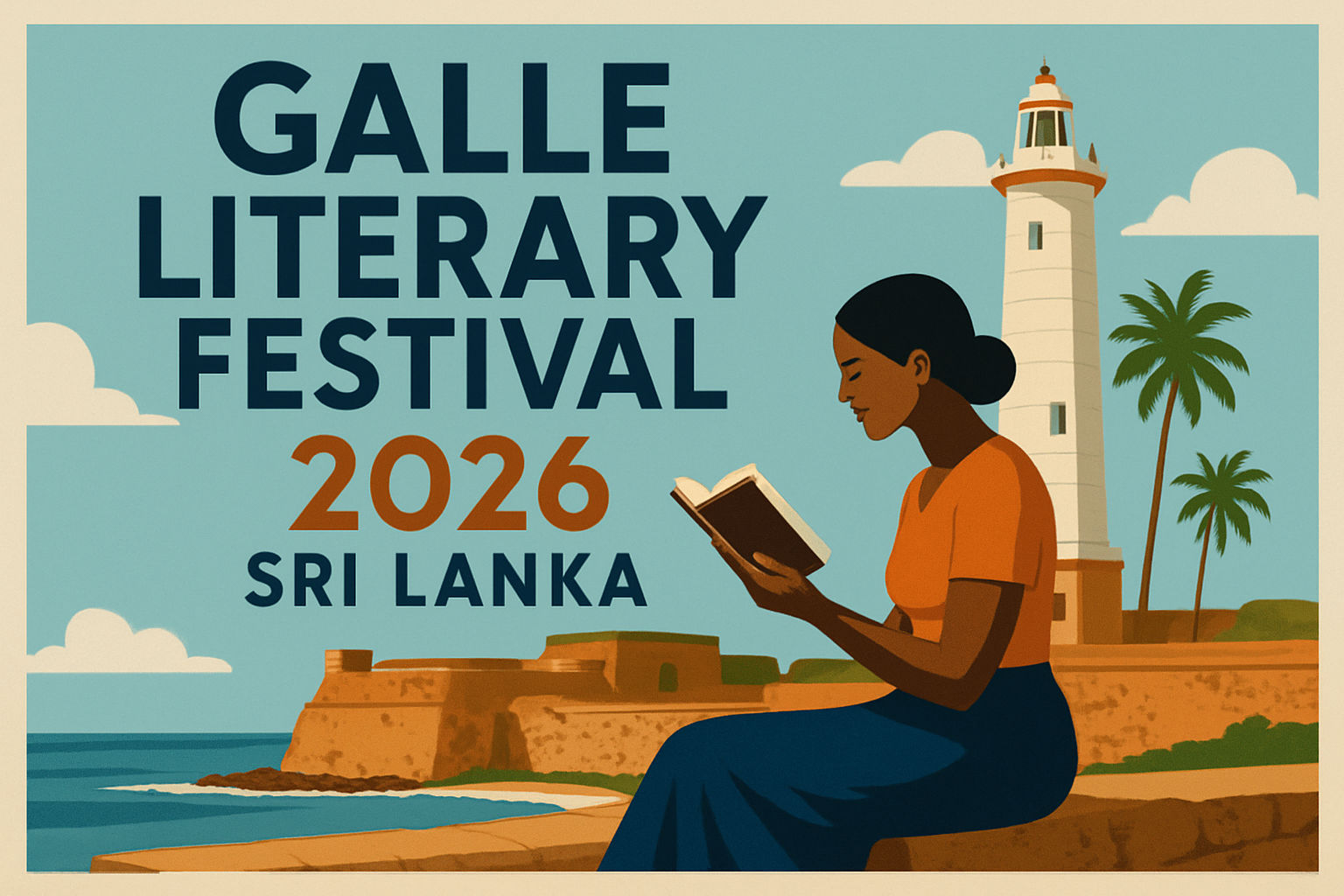
    Galle Literary Festival returns to the UNESCO‑listed Galle Fort from Thursday to Sunday, January 22–25, 2026, preceded by an Opening Night on Wednesday, January 21, bringing four days of author talks, readings, debates, dinners, film, and performance across historic halls, boutique courtyards, and seaside lawns. Organizers flag an expanded Art Trail and a revived Children’s Festival for 2026, with film screenings and live performance added to the core literary program, making this edition one of the most comprehensive cultural weekends on Sri Lanka’s south coast. If the plan is an early‑year island escape built around books and conversation—plus tea, curry, and ramparts at sunset—this guide has every confirmed date and practical tip to make it seamless.​

    Dates, venues, and what’s new

    • Dates: Thursday–Sunday, January 22–25, 2026; Opening Night Wednesday, January 21.​
    • Setting: Galle Fort’s museums, hotels, and open‑air sites turn into stages, with satellite events along the south coast.​
    • New for 2026: A larger Art Trail curated with South Asian partners, a strengthened Children’s Festival, and added film and live performance blocks throughout the weekend.​

    Expect a festival footprint that pairs intimate salons with marquee conversations, so you can alternate deep dives with star‑power keynotes as you wander between venues inside the Fort’s ramparts.​

    Tickets and passes

    • Passes: Organizers indicate a 4‑Day Festival Pass and Day Passes, with individual session tickets also sold; Opening Night will release a limited public ticket allocation.​
    • Priority access: “Festival Insider” membership provides early access and a 10% discount window on 4‑Day passes during the priority period.​
    • Reference pricing: A recent edition listed season tickets at Rs 45,000, day passes at Rs 12,000, and single events at Rs 3,000; use as guidance only and verify current 2026 rates at checkout.​

    Box Office and pass collection typically operate next to Hall de Galle inside the Fort; carry photo ID and your confirmation email.​

    Program pillars and likely formats

    • Author conversations: International and Sri Lankan writers across fiction, non‑fiction, poetry, history, and current affairs.​
    • Workshops and masterclasses: Craft sessions in writing, translation, and editing, plus youth programming under the Children’s Festival banner.​
    • Art Trail: Contemporary works installed across the Fort, guided walks, and talks with curators and artists through late January into early February.​
    • Film and performance: Screenings, stage pieces, and music that extend the day’s ideas into the evening.​

    Curated dinners and “author lunches” link literature and Sri Lankan cuisine; satellite “Gourmet Galle” experiences along the coast may appear again in season.​

    A smart four‑day plan

    • Day 0 (Wed): Opening Night—dress smart‑casual, arrive early for mingling in a courtyard venue, and keep the next morning light.​
    • Day 1 (Thu): Start with a keynote in Hall de Galle, then a craft talk; sunset on the ramparts and an author dinner booking.
    • Day 2 (Fri): Pair two big‑room panels with a Children’s Festival visit if traveling with family; night film block.​
    • Day 3 (Sat): Peak programming—alternate crowd‑draws and smaller salons; catch an Art Trail walk mid‑afternoon.​
    • Day 4 (Sun): Poetry morning, a history panel, and a farewell conversation; finish with tea overlooking the lighthouse.

    Lock two “must‑see” sessions per day first, then fill around them with Art Trail and courtyard events so there’s room to breathe between venues.​

    Where to stay

    • Inside Galle Fort: Boutique hotels and villas place you steps from venues and the ramparts; many host authors.​
    • Along the coast: Beachfront stays from Unawatuna to Ahangama pair morning swims with afternoon sessions.​
    • Inland retreats: Tea and paddy estates give quiet nights within a short tuk‑tuk ride of the Fort.​

    Book early—festival week sells out the Fort’s small properties quickly, and coastal favorites near Unawatuna and Thalpe go next.​

    Getting there and around

    • Flights: Bandaranaike International (CMB) plus expressway transfer to Galle (2–2.5 hours); Mattala (HRI) as a southern alternative for some routes.
    • Trains: Coastal line to Galle Station for a scenic arrival; grab a tuk‑tuk to your Fort gate.
    • Inside the Fort: Walkable. Cobblestones and heat favor light shoes, a hat, and water; tuk‑tuks help for off‑site dinners.

    Food and drink between sessions

    • Fort cafés: Hoppers, kottu, and short eats for quick turns; iced tea and king coconut water beat the afternoon heat.
    • Author dinners: Reserve early—small rooms, big demand.​
    • Coffee: Independent roasters dot Church Street and Pedlar Street; pair a flat white with a short essay talk.

    Packing and comfort

    • Clothing: Breathable fabrics, modest layers for temples and churches used as venues, and a packable rain shell for brief showers.
    • Day kit: Festival pass lanyard, notebook, sunscreen, and a portable charger; a slim tote for books.
    • Evening: Smart‑casual works for dinners and Opening Night; sandals with good grip for Fort stones.

    Culture and context

    The Fort’s Dutch and Portuguese layers frame readings about empire, identity, and belonging in powerful ways. Sri Lankan voices—from Colombo to Jaffna and the diaspora—bring nuance to panels on history, language, and art. The Art Trail creates a dialogue between contemporary work and centuries‑old walls, adding dimension to the page.​

    Budgeting and value

    • Pass calculus: If you plan three or more events per day, a Day Pass or 4‑Day Pass often yields better value than à la carte tickets; confirm 2026 rates when released.​
    • Hotel costs: Fort boutiques run premium during the festival; coastal or inland stays can ease budgets with a tuk‑tuk commute.​
    • Local spend: Build a cushion for books, café stops, and taxis to coastal dinners.

    Responsible festival etiquette

    • Arrive 10–15 minutes early for keynotes to keep aisles clear.
    • Keep phones silent; step out for calls.
    • In Q&A, ask concise, relevant questions to maximize audience benefit.

    Call to action

    Mark January 22–25, 2026, set an alert for the pass on‑sale and Opening Night release, and reserve a base inside Galle Fort or within a short tuk‑tuk ride. Sketch two anchor sessions per day, leave time for the Art Trail and a rampart sunset, and come ready to meet writers over tea and tropical light. The Fort is waiting—with stories, sea breezes, and the conversations that make travel unforgettable.​

    Verified Information at a Glance

    • Event: Galle Literary Festival (GLF) 2026​
    • Dates: January 22–25, 2026; Opening Night January 21, 2026​
    • Location: Galle Fort, Sri Lanka, with sessions across historic venues; Art Trail spans Jan 22–Feb 1, 2026​
    • What’s new: Expanded Art Trail; strengthened Children’s Festival; film and live performance blocks added​
    • Passes: 4‑Day Pass and Day Pass expected; limited Opening Night tickets; early‑access discount via Festival Insider​
    • Reference pricing: Prior edition guidance—season Rs 45,000; day Rs 12,000; single events Rs 3,000 (verify 2026 rates)​
    • Stay: Boutique hotels in Galle Fort and coastal/inland options curated for attendees


    Galle Fort, Galle, Sri Lanka
    Jan 21, 2026 - Jan 25, 2026
    Thai Pongal (Harvest Festival) 2026
    Religious, Cultural
    Free

    Thai Pongal (Harvest Festival) 2026

    Tamil Thai Pongal Day 2026 in Sri Lanka falls on Thursday, January 15, as a national public holiday dedicated to thanksgiving for the harvest and honoring the Sun (Surya) at the start of the Tamil month of Thai. Official year planners and gazetted holiday lists place Thai Pongal firmly in mid‑January 2026, aligning with the solar transition linked to Makar Sankranti and the traditional four‑day Pongal sequence observed by Tamil communities. Across Sri Lanka, households and kovils prepare kolam (rice‑flour designs), tie sugarcane at doorways, and cook sweet pongal in new clay pots at auspicious hours, offering the first bubbling of rice and milk to Surya before sharing the dish with family, neighbors, and the poor.

    Date, status, and what it signifies

    • Date: Thai Pongal 2026 is on Thursday, January 15, according to national holiday planners and time/date calendars for Sri Lanka. This matches the festival’s solar timing at the start of Thai, which typically falls Jan 14–15.
    • Public holiday: The Government’s Extraordinary Gazette of 27 May 2025, listing Sri Lanka’s 2026 Public and Bank Holidays, includes “Tamil Thai Pongal Day” on Thursday, Jan 15, confirming countrywide observance.
    • Meaning: A harvest thanksgiving and Sun festival, Thai Pongal expresses gratitude for rain, fertile land, cattle, and agricultural bounty, paralleling Makar Sankranti across the subcontinent while remaining distinctly Tamil in rituals and cuisine.

    The four days of Pongal

    • Bhogi Pongal (Jan 14, 2026): Home cleansing and renewal; old items are discarded, symbolizing a fresh start before Thai. Community sources often note fires for symbolic “letting go,” though responsible, modern practice discourages open burning.
    • Thai Pongal / Surya Pongal (Jan 15): The main day in Sri Lanka; families face east to cook sakkarai pongal in a new clay pot as milk boils over, an auspicious “pongu” moment offered first to Surya; then shared widely.
    • Mattu Pongal (Jan 16): Honoring cattle for their role in agriculture; cows and bulls are washed, decorated, and fed special treats; temples may bless animals.
    • Kaanum Pongal (Jan 17): Social visiting and outings; families gather in parks and beachfronts, exchange gifts, and strengthen kin ties to open the Thai season.

    Customs and home rituals in Sri Lanka

    • Kolam and thresholds: Doorways are graced with kolam designs of rice flour, inviting prosperity and feeding ants and birds; sugarcane and banana stems frame entrances as living emblems of harvest.
    • The pongal pot: A new earthen pot with turmeric leaves tied to the neck is set over an outdoor stove; raw rice, milk, jaggery, ghee, and cardamom boil until they overflow, signaling abundance; the first ladle goes to Surya.
    • Sharing and charity: Bowls of sweet pongal are carried to neighbors, local kovils, elders, and those in need; Tamil households emphasize dana (giving) alongside celebration.

    Temple and community observances

    • Kovil offerings: Tamil kovils hold special Surya puja, archanai, and blessings; garlanded Surya images and temple chariots may feature in larger towns with Tamil communities.
    • School and society events: Cultural programs with dance, music, and kolam competitions occur around the holiday week in Jaffna, Eastern Province towns, and Tamil neighborhoods in Colombo.

    What to eat: festive flavors

    • Sakkarai pongal: The centerpiece—short‑grain rice, milk, jaggery, ghee, cardamom, raisins, and cashews, cooked to a glossy, aromatic sweet.
    • Savory pongal (ven pongal): A comfort dish with moong dal, ghee, cumin, pepper, and curry leaves, served for breakfast alongside coconut chutney.
    • Sugarcane and snacks: Fresh sugarcane segments, murukku, adhirasam, laddu, and banana leaf spreads complete the table.

    Travel tips for celebrating in Sri Lanka (2026)

    • Where to be: Jaffna and the Northern and Eastern Provinces showcase the most immersive Pongal scenes; in Colombo, neighborhoods like Wellawatte/Majestic City area and Kochchikade have visible kolam and kovil festivities.
    • Respectful dress and timing: Wear modest attire for kovil visits; mornings are best for Surya Puja and household pongal; ask before photographing rituals at doorways or shrines.
    • Bookings and closures: As a public and bank holiday, some businesses close or reduce hours; plan banking and intercity travel before Jan 15; trains and buses run but may be crowded around festival hubs.

    Photography and etiquette

    • Consent matters: Always request permission before close‑ups of people at their doorways or in ritual; avoid obstructing kolam or sacred setups.
    • Temple rules: Many kovils restrict interior photography; leave shoes at entrances; observe separate queues for offerings, and follow the priest’s guidance.

    How Thai Pongal connects across the calendar

    • Solar anchor: Unlike lunar Poya days, Thai Pongal’s solar basis ties it to Makar Sankranti; Sri Lanka’s 2026 planner shows Duruthu Poya on Jan 3 and Thai Pongal on Jan 15, reflecting dual systems in the same month.
    • Community arcs: Thai Pongal opens the Tamil social year that soon meets the island‑wide Sinhala and Tamil New Year in April, another public holiday pairing marked by shared hospitality.

    Suggested 3‑day Thai Pongal itinerary (Colombo + Jaffna)

    • Day 1 (Jan 14 – Bhogi): Arrive Colombo; evening walk through Wellawatte to see kolam taking shape; dine on vegetarian Tamil cuisine.
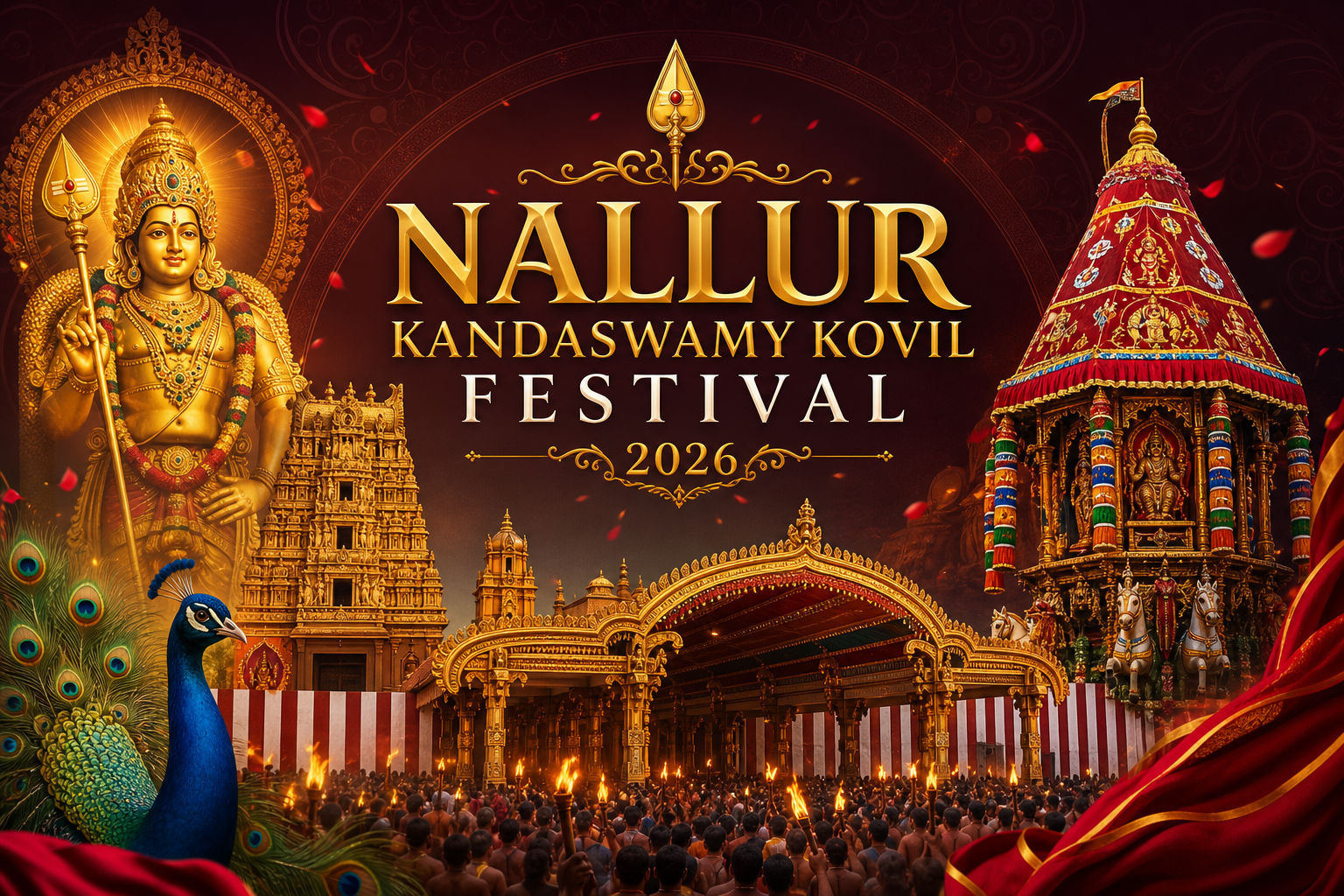
    • Day 2 (Jan 15 – Thai Pongal): Dawn pongal ceremony with a host family or cultural program; visit a kovil for Surya Puja; fly or train to Jaffna in the afternoon; sunset at Nallur Kandaswamy Kovil precinct.
    • Day 3 (Jan 16 – Mattu Pongal): Observe cattle blessings in rural outskirts; sample sugarcane and sweets; return to Colombo or continue to Trincomalee/Batticaloa for coastal Kaanum Pongal the next day.

    Frequently asked questions

    • Is Thai Pongal always a public holiday in Sri Lanka? Yes. The gazette lists Tamil Thai Pongal Day as a public and bank holiday annually; for 2026 it is Thursday, Jan 15.
    • Is there alcohol service on Thai Pongal? Many venues refrain out of respect; check hotel policies; shops in Tamil areas may close or shorten hours.
    • Can visitors participate? With permission, yes—join a household boiling ceremony, learn to draw kolam, attend kovil puja, and share sweet pongal after offerings.

    Verified essentials at a glance

    • Date: Thursday, January 15, 2026 (Tamil Thai Pongal Day).
    • Holiday type: National public and bank holiday in Sri Lanka.
    • Core rituals: Boiling sweet pongal in a new clay pot at auspicious time; Surya offerings; kolam at thresholds; sugarcane decorations; sharing pongal with community.
    • Four‑day arc: Bhogi (Jan 14), Thai Pongal (Jan 15), Mattu Pongal (Jan 16), Kaanum Pongal (Jan 17).

    Choose a neighborhood where kolam brightens the thresholds, wake before sunrise, and welcome the first light as the pongal pot boils over. With gratitude at its heart and community in every ladle, Thai Pongal 2026 is a beautiful window into Sri Lanka’s Tamil heritage—plan early, dress modestly, and be ready to share sweet pongal as the Sun ushers in Thai.

    , Sri Lanka
    Jan 14, 2026 - Jan 17, 2026
    Duruthu Perahera (Kelaniya) 2026
    Religious, Procession
    UPDATED
    Free

    Duruthu Perahera (Kelaniya) 2026

    Duruthu Perahera (Kelaniya) 2026 will illuminate the Kelaniya Raja Maha Vihara and its surrounding streets with three nights of sacred pageantry in early January, culminating on the pre–Duruthu Full Moon night at one of Sri Lanka’s most storied temples just northeast of Colombo. The temple confirms that the Duruthu Maha Perahera is staged on three consecutive nights prior to the Duruthu Full Moon Poya and forms the climax of a month-long festival that commemorates the Buddha’s first visit to Sri Lanka in the month of Duruthu. In 2026, Duruthu Full Moon Poya falls in early January, and traveler event guides list Saturday 3 January 2026 for the main procession window, aligning with the temple’s “pre–full moon” timing tradition. Expect whip crackers, torchbearers, traditional drummers and dancers, caparisoned elephants, and the relic casket leading the four sacred sections of the procession for more than two hours of living heritage.

    What Duruthu Perahera marks

    • First visit of the Buddha: The Kelaniya festival honors the Buddha’s first visit to the island in the ninth month after Enlightenment, an encounter retold in the Mahavamsa, with Kelaniya linked to that sacred narrative and memorialized by the temple’s stupa and murals. The Duruthu Poya also opens the pilgrimage season to Sri Pada/Adam’s Peak in many traditions.
    • A month of observances: Kelaniya Temple notes that the season runs from Unduvap Full Moon (December) to Duruthu Full Moon (January), with nightly sermons, a week of pirith-chanting, then three nights of perahera before the full moon.

    2026 dates and format

    • Pre–full moon scheduling: The temple states the perahera is held on the three nights prior to Duruthu Full Moon Poya each year, not on the full moon itself, which is reserved for temple observances. In 2026, public holiday calendars place Duruthu Poya at the start of January, and event roundups list Saturday 3 January 2026 as the marquee night for viewing. Always check the temple’s noticeboard close to the date.
    • Three-night progression: Kelaniya describes three stages—Udamaluwa Perahera (upper-terrace, smaller scale), Pahatha Maluwa/Veedi Perahera (more elaborate within and around the temple), and the Randholi Perahera (the grand pageant on the final pre–full moon night).

    How the procession is organized

    • Four sacred sections: The perahera developed from two divisions (Dhathu Perahera for relics and Vibhishana Devala Perahera) to four with the addition of Vishnu (1930) and Skanda/Kataragama (1954) devalas, reflecting the island’s guardian deities alongside the Buddha relics.
    • Pageant elements: Whip crackers announce the approach, followed by fireball performers, flag bearers, drummers, dancers, monks, lay officials, and caparisoned elephants, including the tusker that carries the relic casket beneath an illuminated howdah.

    A brief history at Kelaniya

    • Modern revival: The contemporary Duruthu Perahera at Kelaniya was inaugurated in 1927 under Basnayake Nilame Don Walter Wijewardene, with chief priest Ven. Mapitigama Dharmarakkhita Thero; it has grown into a national cultural focal point that attracts thousands of worshippers and visitors.
    • Temple legacy: Kelaniya Raja Maha Vihara’s chronicles and art connect directly to the Buddha-visit narrative; essays on the festival describe months-long preparation, extended Dhamma sermon cycles, and ritual canon fire to begin processions.

    2026 viewing plan

    • Likely night sequence: With the main procession listed by event guides on Saturday 3 January 2026, plan for the two preceding evenings for Udamaluwa and Pahatha Maluwa/Veedi Peraheras. The temple’s official schedule is posted locally; arrive early each night.
    • Best vantage points: The temple approaches and along the route just outside the Kelaniya precincts provide immersive views; avoid bottlenecks near devala junctions and leave space for elephants and torch crews.

    Practical tips

    • Getting there: Kelaniya is about 10–12 km from central Colombo; leave by late afternoon to beat traffic as road closures phase in; expect pedestrian-only corridors nearest the temple as the procession begins.
    • Dress and conduct: Wear modest, light clothing suitable for a devotional crowd; remove hats and be mindful near relic segments; avoid camera flash in faces of drummers, dancers, and elephants.
    • Safety around elephants: Keep a respectful distance from tuskers and handlers; do not attempt to pass across the procession line; follow police and temple marshal instructions at all times.

    Cultural etiquette and photography

    • Devotional first: This is a religious ceremony; refrain from stepping into the route or blocking worshippers for photos; long exposures from the sidelines capture torchlight and movement beautifully without intrusion.
    • Alcohol-free zones: As with many sacred processions, the area immediately surrounding the temple is alcohol-free; local vendors serve tea and snacks outside the inner precincts.

    How Duruthu relates to other peraheras

    • Start of the Buddhist year: Cultural overviews call Duruthu Perahera the opening pageant of the Buddhist calendar, followed later by Navam Perahera (Gangaramaya, Colombo) and the great Esala season culminating in Kandy’s Dalada Perahera.
    • Poya alignment: Duruthu Full Moon Poya is a national public holiday and frames the season; temple authorities emphasize the perahera is held on nights before the Poya itself.

    Sample two-night itinerary

    • Night 1 (Udamaluwa): Arrive by 5:30 p.m.; enter the upper-terrace viewing area; focus on drum ensembles and fire acts; exit slowly to avoid post-procession surges.
    • Night 2 (Randholi/Main): Stake a place 60–90 minutes early on the outer route; avoid sharp curves where the convoy compresses; plan a pickup point well away from closures.

    Booking and local advice

    • Stay close: Base in Colombo or Peliyagoda for quickest access; many travelers pair daytime temple visits at Kelaniya with the evening perahera; check hotel advice for the latest traffic plans.
    • Confirm dates locally: While event guides list Jan 3, 2026, the temple’s noticeboard remains the authority; perahera dates follow the lunar calendar, and the temple schedules “pre–full moon” nights each year.

    Verified essentials at a glance

    • What: Duruthu Maha Perahera, Kelaniya Raja Maha Vihara.
    • When: Three consecutive nights prior to Duruthu Full Moon Poya; guides list Saturday 3 Jan 2026 as the main night—verify locally.
    • Why: Commemorates the Buddha’s first visit to Sri Lanka; marks the opening of the Buddhist festival year.
    • How: Four segments—Dhathu Perahera and devala processions for Vibhishana, Vishnu, and Skanda—featuring elephants, dancers, drummers, torchlight, and relic veneration.

    Stand along the torchlit route, listen as the drums roll through the night, and watch the relic casket pass beneath a canopy of lights. With centuries of devotion distilled into three luminous evenings, the Duruthu Perahera at Kelaniya is a profound beginning to the year—plan early, arrive respectful, and experience Sri Lanka’s living heritage at its most unforgettable.

    , Sri Lanka
    Jan 10, 2026 - Jan 10, 2026
    Unduvap Full Moon Poya Day 2025
    Religious, Cultural
    Free

    Unduvap Full Moon Poya Day 2025

    Unduvap Full Moon Poya Day in 2025 falls on Thursday, December 4, and it closes Sri Lanka’s lunar year with one of the island’s most meaningful Buddhist observances: gratitude for Sanghamittā Theri and the arrival of the sacred Bodhi tree sapling at Anurādhapura. On this public holiday, temples fill with devotees in white for precepts, meditation, and Dhamma, while pilgrims journey to Anurādhapura’s Sri Maha Bodhi to honor the tree planted in the 3rd century BCE, venerated as the world’s oldest human‑planted tree with a known date. Government calendars, bank‑holiday lists, and cultural references confirm the date and significance, and they explain the customs that shape the day across the country.

    Date, status, and meaning

    • Date and status: Unduvap Poya is observed nationwide on Thursday, December 4, 2025, as a public and bank holiday; government and banking calendars list it explicitly.
    • Core commemoration: The day marks Sanghamittā Theri’s arrival bearing a sapling from the Bodhi tree under which the Buddha attained Enlightenment, later planted at Mahamevnāwa Park in Anurādhapura; it remains a living focus of veneration.

    Why Unduvap matters

    • The Bodhi link: The Sri Maha Bodhi sapling, planted by King Devanampiya Tissa, is central to Sri Lankan Buddhist identity and pilgrimage, with thousands visiting on Unduvap for homage and precepts.
    • Sanghamittā’s role: Traditions emphasize Sanghamittā’s founding contributions, including establishing the Bhikkhunī (nuns’) order and carrying the living link to the Buddha’s awakening.

    How the day is observed

    • At temples: Devotees observe Sil (precepts), offer flowers and lamps, chant, listen to Dhamma talks, and engage in meditation and dana (alms‑giving); businesses often shorten hours, and the sale of alcohol and meat is restricted across the country.
    • At Anurādhapura: The sacred Bo tree precinct becomes the spiritual center for the day, with processions and sustained worship under the Bodhi’s canopy; cultural summaries note the site’s UNESCO‑recognized heritage and its draw for pilgrims.

    Planning a respectful visit in 2025

    • Expect closures: As a public and bank holiday, Unduvap affects banking and some retail operations; plan transactions and intercity travel the day before or after.
    • Dress and etiquette: Wear modest white or light clothing; cover shoulders and knees; remove shoes and hats before shrine areas; ask before taking photos inside shrines.
    • Join merit‑making: Contribute to temple dana or help with volunteer tasks; many communities organize offerings and service activities on Unduvap.

    Unduvap within the Poya cycle

    • Monthly Poya rhythm: Every full moon is a public holiday in Sri Lanka, each marking a key episode in Buddhist history; 2025 listings include Ill/Il Poya on November 5 and Unduvap on December 4 to close the year’s cycle.
    • Names and narratives: Calendars and guides identify Unduvap as “Sanghamitta Day,” highlighting women’s roles in Theravāda history and honoring the Bhikkhunī lineage.

    Unduvap 2025: confirmed calendars

    • Government tourism calendar: Lists Unduvap Full Moon Poya Day on Thursday, December 4, 2025, noting its Bo tree commemoration.
    • Central Bank list: Bank holidays include Unduvap on Thursday, December 4, 2025.
    • Holiday compendia: National and international holiday databases align on the date and public‑holiday type for 2025.

    Visiting Anurādhapura for Unduvap

    • What to expect: Large, orderly pilgrim flows in and around the Sri Maha Bodhi precinct; flower stalls, oil‑lamp stations, and spaces for quiet reflection; increased police and volunteer presence for crowd flow.
    • UNESCO context: The ancient city’s palaces, monasteries, and monuments frame the day, with the Bodhi tree precinct at the emotional center; the site has been UNESCO‑listed since 1982.
    • Practicalities: Book lodging early for December 3–5; arrive before mid‑morning or late afternoon for cooler temperatures; carry water, sun protection, and a small cloth for sitting during sermons.

    Customs and restrictions

    • Island‑wide norms: Sales of alcohol and meat are forbidden on Poya days; many restaurants switch to vegetarian menus or close part of the day; hotels maintain service with policy compliance.
    • Quiet tones: Keep voices low near sermon halls and precept groups; avoid blocking pathways or worship lines; follow stewards’ guidance during offerings and lamp lighting.

    Suggested Unduvap itinerary

    • Dawn: Temple visit in white attire to undertake precepts and offer flowers and oil lamps.
    • Midday: Dhamma talk and meditation; light vegetarian lunch; rest during the heat.
    • Late afternoon: Pilgrimage to Sri Maha Bodhi precinct in Anurādhapura or a local Bodhi shrine; sit for evening chanting beneath prayer flags.

    Learning more about Sanghamittā and the Bodhi

    • Women in the Saṅgha: Unduvap discussions and community programs honor the legacy of Sanghamittā Theri, with talks on the Bhikkhunī Order and the practice of generosity toward nuns and monks.
    • The living tree: Accounts emphasize the Bodhi’s lineage to Bodhgayā; saplings from Anurādhapura were later planted across the island, spreading devotional practice and sacred ecology.

    Travel and logistics for December

    • Transport: Holiday schedules can reduce services or change frequencies; check bus and rail times in advance; rideshares operate but expect waits near major shrines at peak hours.
    • Weather: December is warm with variable showers; light, breathable clothing and a compact umbrella are practical for long temple days.
    • Combining festivals: Pair Unduvap with heritage touring in the Cultural Triangle, or continue south for coastal retreats after the holiday.

    Verified essentials at a glance

    • Date: Thursday, December 4, 2025.
    • Type: National public holiday; bank holiday.
    • Meaning: Arrival of the Bodhi tree sapling with Sanghamittā Theri; veneration of Sri Maha Bodhi at Anurādhapura.
    • Customs: Temple precepts and meditation; offerings; restrictions on alcohol and meat sales; large pilgrimages to Anurādhapura.

    Mark the calendar for December 4, dress in white, and share in a luminous day of gratitude beneath a living link to Enlightenment. Unduvap Full Moon Poya 2025 is a rare chance to witness Sri Lanka’s Buddhist heart—plan early, participate respectfully, and let the stillness of the Bodhi shade welcome the year’s final full moon.

    , Sri Lanka
    Dec 4, 2025 - Dec 4, 2025
    Full Moon Poya Day 2025
    Religious, Cultural
    Free

    Full Moon Poya Day 2025

    Full Moon Poya Days are the rhythm of Sri Lanka’s cultural and spiritual calendar, with every full moon designated as a nationwide public holiday for Buddhist observance throughout 2025. From Duruthu in January to Unduvap in December, each Poya marks a key episode tied to the life of the Buddha and the island’s Buddhist heritage, and the entire country feels the change in tempo: offices are closed, the sale of alcohol and meat is restricted, and devotees stream to temples to observe precepts, listen to Dhamma, and take part in community service. Official gazettes and national calendars confirm the 2025 Poya dates and public-holiday status, while cultural guides explain the customs that shape the day from dawn until after the evening moonrise.

    What Poya means in 2025

    • Public holiday every full moon: Sri Lanka’s Holidays Act enshrines each full moon “Poya Day” as a public holiday, resulting in one additional nationwide holiday every lunar month in 2025 alongside other national and religious observances. Gazette notices and bank-holiday lists verify the 2025 schedule.
    • A day for Uposatha: The word poya derives from Pali/Sanskrit uposatha, a day for purification and spiritual focus; shops often close or shorten hours, and alcohol and meat sales are paused, while Buddhists observe the Five Precepts or take Eight Precepts for the day. Cultural explainers outline the practice and its island-wide impact.

    2025 Poya dates at a glance

    • Confirmed Poya holidays include Duruthu (Mon 13 Jan), Navam (Wed 12 Feb), Madin (Thu 13 Mar), Bak (Sat 12 Apr), Vesak (Mon 12 May, with the Day After Vesak on Tue 13 May), Poson (Tue 10 Jun), Esala (Thu 10 Jul), Nikini (Fri 8 Aug), Binara (Sun 7 Sep), Vap (Mon 6 Oct), Il/Ill (Wed 5 Nov), and Unduvap (Thu 4 Dec). National holiday calendars and time/date listings align on these dates.


    What happens on a Poya day

    • Temple observances: Devotees dress in white and visit temples to undertake Sil (precepts), offer flowers and lamps, chant, and listen to Dhamma talks; many spend the whole day in meditation and service. Guides highlight the precepts and the quiet, reflective tenor of the day.
    • Social and legal norms: Alcohol and meat sales are restricted nationwide; many businesses either close or operate on shortened schedules; banks follow the public/bank holiday calendar. Bank and government circulars show Poya as both public and bank holidays on the relevant dates.

    The meaning of each Poya, month by month

    • Duruthu (Jan 13): Commemorates the Buddha’s first visit to Sri Lanka to subdue yakkhas; major pageants take place at Kelaniya Raja Maha Viharaya in most years. Official lists confirm Duruthu as the first Poya holiday of 2025.
    • Navam (Feb 12): Marks the first Buddhist Sangha Council and appointment of Sariputta and Moggallana as chief disciples; Colombo sees large processions in typical years.
    • Madin (Mar 13): Commemorates the Buddha’s first return to Kapilavastu after Enlightenment, visiting family and kin.
    • Bak (Apr 12): Observes the Buddha’s second visit to Sri Lanka; falls alongside Sinhala and Tamil New Year in mid‑April.
    • Vesak (May 12–13): Marks the Buddha’s birth, Enlightenment, and Parinibbana; Sri Lanka observes both Vesak Full Moon and a Day After Vesak public holiday, with lanterns, pandals, and Dansal (free food stalls) nationwide.
    • Poson (Jun 10): Celebrates the introduction of Buddhism to Sri Lanka by Arahant Mahinda; Mihintale becomes the primary pilgrimage center in June.
    • Esala (Jul 10): Associated with the Buddha’s first sermon; Kandy’s Esala Perahera season follows the lunar cycle, drawing global attention.
    • Nikini (Aug 8): Commemorates the first Dhamma Sangayana (Council) in some traditions and the retreating monsoon’s retreat scene for monastics.
    • Binara (Sep 7): Honors the establishment of the Bhikkhuni Order (order of nuns) by the Buddha’s aunt and foster mother, Mahapajapati Gotami.
    • Vap (Oct 6): Marks the end of the Rains Retreat (Vassana) and the Kathina robe-offering season across temples.
    • Il/Ill (Nov 5): Linked to events such as the Buddha’s return from teaching the Abhidhamma in Tavatimsa; spellings Il/Ill appear across calendars.
    • Unduvap (Dec 4): Commemorates Sangamitta Theri bringing the sacred Bodhi Tree sapling from India, leading to the Sri Maha Bodhi at Anuradhapura.

    Travel tips for experiencing Poya respectfully

    • Plan around closures: Government gazette and bank lists show each Poya as a public/bank holiday, so schedule banking, intercity travel, and errands for the day before or after.
    • Dress modestly for temples: Shoulders and knees covered; remove shoes and hats before entering shrine areas; photography etiquette varies—ask before shooting inside halls.
    • Join community merits: Look for Dansal (free food stalls) during Vesak and other major Poya days; consider making a donation to temple maintenance or a food drive.

    Vesak and Poson: peak Poya experiences

    • Vesak night: Streets glow with Vesak koodu (lanterns) and illuminated pandals depicting Jataka tales; the extra public holiday “Day After Vesak” makes this the year’s most immersive cultural window for visitors.
    • Poson pilgrimage: Anuradhapura and Mihintale host mass observances commemorating the arrival of Buddhism; plan accommodations well in advance for June 10, 2025.

    Practical notes on transport, dining, and hospitality

    • Transport: Buses and trains typically run but may have Sunday/holiday frequencies; rideshares operate, though waits can be longer near large temples in the evening.
    • Dining: Hotel restaurants stay open; independent eateries may close or switch to limited menus. Alcohol is not served on Poya; visitors should plan accordingly.
    • Shopping: Supermarkets often open reduced hours; many retail shops close, especially near temples, creating a calmer cityscape for walking.

    Why Poya is central to understanding Sri Lanka

    • Living Buddhism in public life: Monthly Poya holidays demonstrate how Buddhist practice shapes civic routines, from commerce to community service; the 2025 government calendar codifies this continuity.
    • A shared calendar across faiths: While Poya is Buddhist, Sri Lanka’s 2025 calendar also honors Hindu, Muslim, and Christian feast days, reflecting a diverse religious tapestry alongside the lunar cycle.

    Sample 3‑day Poya trip plan (Vesak or Poson)

    • Day 1: Arrive and settle; evening temple stroll for preliminary lanterns or Poson banners; read posted notices on programs and talks.
    • Day 2 (Poya): Morning temple visit in white attire to undertake precepts; afternoon rest; at dusk, visit a major shrine area to see lanterns/pandals; dine at a Dansal if available.
    • Day 3: Heritage day trip to Anuradhapura (Poson) or a city temple circuit (Vesak); shop for simple lanterns to hang at the guesthouse if permitted.

    Verified essentials at a glance

    • Legal basis: Holidays Act No. 29 of 1971 declares every Full Moon Poya Day a public holiday; government calendars and Central Bank lists show Poya as both public and bank holidays.
    • 2025 highlights: Vesak Full Moon (Mon 12 May) and the Day After Vesak (Tue 13 May), Poson (Tue 10 Jun), and Unduvap (Thu 4 Dec).
    • Customs: Temple observance, alcohol/meat sales restrictions, shortened business hours, and community service such as Dansal on major Poya nights.

    Choose a full‑moon date, pack modest whites, and let the island’s lunar rhythm guide the day. With temples aglow, lanterns in the streets, and a nation at gentle pause, Sri Lanka’s Poya holidays in 2025 offer a serene, culture‑rich window into living Buddhist tradition—plan ahead, participate respectfully, and experience the country at its most contemplative.

    , Sri Lanka
    Nov 5, 2025 - Nov 5, 2025
    Deepavali (Festival of Lights) 2025
    Cultural, Religious, Festival
    Free

    Deepavali (Festival of Lights) 2025

    Major Hindu festival celebrated island-wide, particularly vibrant in Tamil communities, featuring oil lamp lighting, fireworks, temple visits, gift exchanges, and cultural performances.

    Deepavali, the Festival of Lights, will be celebrated across Sri Lanka on Monday, October 20, 2025, as an official public and bank holiday observed nationwide by the Hindu Tamil community and embraced in multicultural gatherings islandwide. The date is confirmed by Sri Lanka’s Central Bank holiday circular and national holiday calendars, which list “Deepavali Festival Day” on October 20, aligning Sri Lanka with other countries observing Diwali on that Monday in 2025. Travelers in Colombo, Jaffna, Trincomalee, Batticaloa, Kandy, and other towns with significant Hindu communities can expect homes, kovils (temples), and streets to glow with oil lamps, colorful rangoli, and festive attire, with many businesses closing or operating limited hours to mark the occasion.

    Date and public holiday status

    • Official date: Monday, October 20, 2025, designated “Deepavali Festival Day”.
    • National calendars: Timeanddate and the national listings reflect the same date as a public holiday, matching regional and international Diwali observances for 2025.
    • Government missions: Sri Lankan diplomatic posts list Deepavali on Oct 20, with some noting Oct 21 as the “day following” in specific consular schedules abroad, underscoring the holiday’s formal observance.

    What Deepavali celebrates in Sri Lanka

    Deepavali in Sri Lanka centers on the triumph of light over darkness and knowledge over ignorance, with religious observances tailored to local Saivite traditions and family customs. Temples hold special pūjā and abhishekam to deities such as Lord Ganesha and Lord Murugan, alongside Lakshmi worship and community offerings that bring families together for blessings and renewal. As in India and other parts of the world, the day is marked by the lighting of oil lamps (vilakku), the creation of colorful kolam (rangoli) at thresholds, and exchanges of sweets and gifts among neighbors, colleagues, and extended family.

    Where to experience Deepavali

    • Colombo: Hindu kovils in Wellawatte and Pettah illuminate with lamps and flower garlands, and neighborhoods with Tamil communities showcase kolam, new saris and veshti, and sweet shops offering laddoo, jalebi, and milk toffees special to the season.
    • Jaffna Peninsula: The epicenter for Tamil Hindu culture in Sri Lanka, Jaffna’s Nallur Kandaswamy Kovil and other temples hold elaborate morning rituals, with homes radiating rows of lamps and families visiting elders to exchange greetings and sweets.
    • Eastern Province: Trincomalee’s Koneswaram Kovil and Batticaloa kovils host special prayers that draw devotees from across the region; seafront neighborhoods light up in the evening as families gather to share festival meals.
    • Hill Country: Tamil estate communities near Kandy, Nuwara Eliya, and Hatton celebrate with temple offerings, lights on estate lines, and cultural programs in community halls, reflecting the diversity of Deepavali across regions.

    Observances and customs

    • Temple visits: Morning pūjā and abhishekam with offerings of flowers, fruits, and sweets; devotees often wear new attire and seek blessings for prosperity and wellbeing.
    • Lamps and kolam: Rows of oil lamps placed along windowsills and walls, and hand-drawn kolam patterns at thresholds welcome Lakshmi and symbolize auspicious beginnings.
    • Sweets and savory treats: Households exchange homemade and shop-bought favorites; in Sri Lanka, milk toffee, kesari, laddu, and murukku are widely shared among friends and colleagues.
    • Community spirit: Many schools and offices organize cultural assemblies before the holiday, while the public holiday itself is often reserved for family visits and religious observance.

    Practical information for visitors

    • Closures and hours: As an official public and bank holiday, government offices, banks, and many shops will close; plan errands for the prior Friday or Tuesday. Tourist sites may open with holiday hours; confirm in advance.
    • Transport: Buses and trains run, though some services may follow holiday schedules; book intercity rail or long-distance buses early if traveling that weekend.
    • Respectful attire: When visiting temples, wear modest clothing that covers shoulders and knees; remove shoes before entering kovils and avoid photography where restricted.
    • Alcohol restrictions: While Poya Days specifically carry alcohol bans, Deepavali does not impose the same nationwide restriction; however, some restaurants may limit alcohol service on the day out of respect or due to staffing.
    • Money and ATMs: Banks are closed; ATMs function, but withdraw cash ahead of the holiday to avoid queues or outages.

    Travel planning around Deepavali

    • Festivals and lights: Evenings of Oct 19–20 are the best time to see homes and kovils illuminated. For a deeper cultural immersion, plan an early morning temple visit on Oct 20 followed by a neighborhood walk at dusk to view kolam and lamps.
    • Culinary experiences: Seek out sweets from reputed Colombo or Jaffna confectioners the day before; many shops sell special Deepavali boxes. Tamil restaurants offer festival menus that include vegetarian dishes enjoyed after temple visits.
    • Photography etiquette: Ask before photographing people, homes, or rituals; many families happily share the meaning of their kolam and welcome respectful interest in the art.

    Calendar context and variations

    • The Hindu lunisolar calendar sets Deepavali’s date, which shifts annually; Sri Lanka aligns via official holiday gazettes and bank circulars to confirm the precise day each year.
    • In 2025, Sri Lanka, India, Malaysia, Singapore, and Mauritius observe Diwali/Deepavali on Monday, October 20, while neighboring countries with multi-day observances may mark associated days on Oct 21–22 for their regional traditions.
    • Sri Lanka’s government holiday lists unify observance into a single public holiday (with some missions listing the following day for administrative purposes), simplifying national scheduling for residents and travelers.

    Getting to and around Sri Lanka for the holiday

    • Flights: Colombo’s Bandaranaike International Airport (CMB) handles most international arrivals; book early if traveling the Oct 18–21 window, as domestic travel increases during festival periods.
    • Local transport: Ride-hailing apps and metered taxis operate in major cities; in Jaffna and Trincomalee, tuk‑tuks and local taxis make temple-hopping easy on holiday evenings.
    • Accommodation: City hotels and guesthouses seldom sell out for Deepavali alone, but boutique stays near kovils may be busier; reserve preferred properties in advance, especially in Jaffna.

    Verified details at a glance

    • Holiday: Deepavali (Festival of Lights) in Sri Lanka.
    • Date: Monday, October 20, 2025.
    • Type: Public and bank holiday, nationwide.
    • Government confirmation: Central Bank holiday list and national calendars list “Deepavali Festival Day” on Oct 20, 2025.

    As lamps flicker across Sri Lanka on October 20, 2025, Deepavali invites residents and visitors alike to celebrate light, learning, and renewal. Plan a dawn temple visit, taste the season’s sweets, and watch the island glow at dusk. Mark the date, build a respectful itinerary, and let the Festival of Lights illuminate a heartfelt journey through Sri Lanka’s Hindu heritage and the rich cultural mosaic that makes the island so welcoming to all.

    Multiple locations across Sri Lanka, Sri Lanka
    Oct 20, 2025 - Oct 20, 2025
    AIA International Conference 2025 Sri Lanka
    Conference, Architecture, Cultural
    TBA

    AIA International Conference 2025 Sri Lanka

    International architecture conference themed "The Art Within Architecture" featuring keynote speakers, workshops, and curated architectural tours around Colombo.

    AIA International Conference 2025 arrives in Colombo, Sri Lanka on October 9–11, 2025, uniting architects, designers, and built‑environment leaders around the theme The Art Within Architecture at the Cinnamon Grand Hotel, with optional pre‑ and post‑conference architectural tours on October 8 and from October 12 onward. Hosted by AIA International with Sri Lankan partners, the three‑day program blends morning plenaries and technical sessions with curated afternoon site visits, then culminates in a Saturday gala dinner, all set against a destination that embodies tropical modernism, UNESCO World Heritage cities, and the legacy of Geoffrey Bawa. Registration is open to members and non‑members, with early‑bird pricing and add‑ons for the welcome reception and tours, plus a separate channel for Sri Lanka‑based attendees.

    Dates, venue, theme

    • Dates: Thursday to Saturday, October 9–11, 2025, with optional tours on Wednesday, October 8 and from Sunday, October 12.
    • Venue: Cinnamon Grand Colombo, 77 Galle Road, Colombo 00300, Sri Lanka, with main sessions in the Oak Room and official evening functions onsite.
    • Theme: The Art Within Architecture, foregrounding creativity, culture, and the humanistic dimensions of practice across history and contemporary design.

    Program shape and highlights

    The official overview outlines a three‑day structure that opens Thursday morning and runs through Saturday evening, with afternoon tours on October 9 and 10 and a gala dinner on October 11. A draft program details a ceremonial inauguration and welcome procession, the lighting of the traditional oil lamp, national anthem, and opening remarks by AIA and Sri Lankan dignitaries in the Oak Room at Cinnamon Grand, underscoring the conference’s cultural context and international scope. Beyond plenaries and panels, the format includes curated architectural tours in and around Colombo, with extended itineraries from October 12 that reach Sri Lanka’s UNESCO sites and Bawa’s modernist landmarks.

    Speakers and global participation

    Sri Lankan press coverage confirms the conference dates and venue and notes the event is among the largest international gatherings of architects to visit Sri Lanka, with AIA National President Evelyn Lee and ARCASIA President Saifudeen Bin Ahamed among those slated to attend, alongside invited star architects including Moshe Safdie, Massimiliano and Doriana Fuksas, Ma Yansong, Ken Yeang, Simon Alford, Billie Tsien, Junya Ishigami, Nadia Tromp, Brinda Somaya, and others, reflecting a program that spans regions and design discourses. AIA International channels and social announcements reiterate the timing and theme, inviting both AIA members and non‑members to take part.

    Registration, tickets, and add‑ons

    • Full conference passes: Early‑bird pricing through August 31, 2025, with separate rates for AIA members and non‑members; full‑price tiers apply thereafter. Each full pass includes access to conference talks, scheduled tours on October 9–11, and one gala dinner ticket.
    • Guest options: AIA members may purchase one additional guest pass at the member rate; separate gala‑only tickets are available for companions on Saturday night.
    • Welcome reception: Optional add‑on ticket for the Wednesday, October 8 reception to connect with peers before sessions begin.
    • Tours: Pre‑ and post‑conference tours must be booked directly through the official tour partner, Jetwing; pricing for multi‑day itineraries starts in the published tour PDF, with booking link to follow via AIA International.
    • Refunds: Full refunds, less processing fees, are available until September 15, 2025; no refunds from September 16 onward.

    Why Sri Lanka, why now

    Sri Lanka’s architectural narrative bridges millennia, from Anuradhapura and Polonnaruwa’s stonecraft and urban planning to the 20th‑century synthesis of landscape, climate, and materiality in Geoffrey Bawa’s tropical modernism. With eight UNESCO World Heritage Sites and a diversity of climates and cultures across a compact island, the country offers rare density for architectural learning in one trip, amplified by Colombo’s evolving skyline and contemporary design practices. AIA International’s choice of Colombo reconnects the profession with a region where architecture is inseparable from ecology, craft, and ceremony, aligning with a conference theme that foregrounds creativity’s role in civic and environmental stewardship.

    Cultural framing and opening ceremony

    The draft program includes Sri Lankan ceremonial elements such as the oil‑lamp lighting and musical performances, alongside formal welcomes by AIA International leadership and local dignitaries, signaling a conference experience rooted in place as much as in content. This framing continues through curated tours that introduce delegates to Colombo’s civic spaces, Bawa‑era works, and craft traditions that inform spatial culture, with extended options to visit icons like Sigiriya, Kandy, and Galle after the conference.

    Travel planning and logistics

    • Getting there: Colombo’s Bandaranaike International Airport (CMB) is the main gateway, with airport transfers to Cinnamon Grand approximately 45–60 minutes depending on traffic; conference sessions are centralized at the hotel to simplify movement.
    • Where to stay: Cinnamon Grand is the official venue; additional hotels across Colombo 1–3 provide varied price points and quick access to the Oak Room and waterfront neighborhoods.
    • Climate and dress: October in Colombo is warm and humid; smart‑casual is specified for the conference, with lightweight, breathable attire recommended, plus comfortable footwear for tour afternoons.
    • Currency and connectivity: Sri Lankan Rupee (LKR); major hotels and restaurants accept cards; purchase a local SIM or eSIM for reliable data during tours.
    • Safety and etiquette: Respect site rules at temples and heritage sites; carry modest coverups for certain interiors; follow tour guidance regarding photography and conservation.

    Making the most of tours

    Pre‑ and post‑conference extensions are designed to maximize architectural density: Colombo city highlights, Bawa’s works and gardens, and multi‑day circuits to UNESCO sites pair historic fabric with modernist heritage to illustrate continuity between craft and contemporary practice. Given popularity, booking early through Jetwing is advised once links go live; expect tiered itineraries that fit one to four days, with price ranges published in the AIA tour PDF.

    Networking and CE value

    The schedule balances content, tours, and social time to facilitate peer exchange, with the welcome reception, daily breaks, and gala dinner offering structured networking moments across international chapters and allied organizations. As with AIA conferences globally, attendees can anticipate opportunities to earn learning units through sessions; final CE details typically publish with the definitive schedule closer to October.

    Sample daily flow (draft)

    • Morning: Opening ceremony and keynote sessions in the Oak Room at Cinnamon Grand, followed by focused panels on design, culture, sustainability, practice, and region‑specific case studies.
    • Afternoon: Curated tours in Colombo to civic spaces, modernist works, and neighborhoods that illustrate Sri Lanka’s design evolution and cultural layers.
    • Evening: Informal meetups or scheduled functions; Saturday culminates in the gala dinner.

    Verified details at a glance

    • Title: AIA International Conference 2025 Sri Lanka — The Art Within Architecture.
    • Dates: October 9–11, 2025; optional tours October 8 and from October 12.
    • Venue: Cinnamon Grand Colombo (Oak Room for plenaries).
    • Registration: Open to members and non‑members; early‑bird pricing through Aug 31, gala guest tickets available; welcome reception add‑on Oct 8; refund policy detailed.
    • Tours: Book direct via Jetwing; itineraries and pricing in the AIA tour PDF; link to follow on the tours page.
    • Speakers and VIPs: AIA President Evelyn Lee and ARCASIA President Saifudeen Bin Ahamed slated to attend; high‑profile invited architects noted by Sri Lankan press.

    Sri Lanka is ready to welcome the design world for three days of ideas, site visits, and celebration in one of architecture’s most inspiring landscapes. Secure an early‑bird pass, add the welcome reception, and reserve extension tours the moment they go live. Then pack for warm days, bring a curious eye for detail, and prepare to experience The Art Within Architecture across Colombo’s halls and Sri Lanka’s timeless horizons.

    Cinnamon Grand Hotel, Colombo, Sri Lanka
    Oct 9, 2025 - Oct 11, 2025

    Photo Gallery

    Sri Lanka gallery 1
    Sri Lanka gallery 2
    Sri Lanka gallery 3
    Sri Lanka gallery 4
    Sri Lanka gallery 5

    Popular Events at Sri Lanka

    Nallur Festival (Jaffna)

    Nallur Festival (Jaffna)

    <h2>Experience the Vibrant Nallur Festival in Jaffna, Sri Lanka</h2><p>Nallur Festival (Jaffna) is Northern Sri Lanka’s most powerful Hindu celebration, a 25-day season of devotion, drumming, and processions centered on the iconic Nallur Kandaswamy Kovil. Typically held in <strong>August</strong> (sometimes stretching from late July into August depending on the Hindu lunar calendar), the festival culminates in the spectacular <strong>Ther</strong> (chariot) procession and the <strong>Theertham</strong> (water-cutting) ritual, drawing thousands of devotees and visitors to Jaffna.</p><p><br></p><h2>What is the Nallur Festival in Sri Lanka?</h2><p>The Nallur Festival, also known as the annual festival or <em>Thiruvizha</em> of Nallur Kandaswamy Kovil, is one of Sri Lanka’s most significant Hindu temple festivals. Tourism North describes Nallur Kandaswamy Kovil as one of the most significant Hindu temples in the Jaffna district, with a long history and strong cultural importance as a landmark of endurance and devotion.</p><p>For travelers, the festival is also a gateway into Jaffna’s distinct identity. Northern Sri Lanka has its own rhythm, cuisine, and temple culture, and during Nallur Festival the town’s spiritual atmosphere becomes visible in daily rituals, offerings, and community gathering.</p><p><br></p><h2>When is the Nallur Festival Typically Held?</h2><p>Nallur Festival lasts <strong>25 days</strong> each year and is commonly associated with <strong>August</strong>, with timing determined by the Hindu calendar. Tourism North states that the annual grand festival begins with Holy Flag Hoisting (<em>Kodiyetram</em>) and spreads over twenty-five days, with the chariot festival on the 24th day and the water-cutting ceremony on the 25th day.</p><p>A festival news report notes that the annual festival is 25 days long, drawing thousands of devotees and tourists from across Sri Lanka and the Tamil diaspora, and it highlights the Ther Thiruvizha chariot festival as the key main event. In practical travel terms, this means you do not have to visit for the full 25 days, but you should target the final days if you want to see the biggest rituals.</p><p><br></p><h2>Where it Happens: Nallur Kandaswamy Kovil and Its Festival Streets</h2><p>The festival is centered at <strong>Nallur Kandaswamy Kovil</strong> in Jaffna, where daily rituals and processions take place and where crowds gather from morning through evening. Tourism North notes the temple’s grand Dravidian-style entrance tower (gopuram) and emphasizes that the kovil is a “pious magnet” attracting devotees from many parts of the world.</p><p>Because the festival is a temple-based event, the experience isn’t confined to one “stage.” You will feel it in the streets leading up to the temple, at the entrances where devotees arrive barefoot, and in the rhythm of puja times that structure the day.</p><p><br></p><h2>A Brief History of Nallur Kandaswamy Kovil</h2><p>Understanding the temple’s history helps visitors understand why Nallur Festival carries so much emotional weight in the north. Tourism North states that Nallur Kandaswamy Kovil’s history goes back several centuries, with a tradition that the first temple was built in <strong>948 A.D.</strong>, and that it was reconstructed multiple times due to invasions and upheavals.</p><p>The same source explains that a temple was built in the 15th century by Senpaha Perumal, later destroyed by the Portuguese in <strong>1624</strong>, and that the present temple was constructed in <strong>1734</strong> during the Dutch colonial era by Ragunatha Maapaana Mudaliyar. This layered history is part of what makes festival attendance feel like stepping into a living continuity rather than a one-off event.</p><p><br></p><h2>What to Expect: Festival Highlights and Key Rituals</h2><p>Nallur Festival is best experienced as a sequence that builds in intensity, from ritual beginnings to the grand public processions at the end.</p><h3>Kodiyetram: The Sacred Flag Hoisting</h3><p>The festival begins with <strong>Kodiyetram</strong>, the holy flag hoisting that signals the start of the 25-day sacred period. A festival report confirms that the annual festival begins with the ceremony for hoisting the deity’s flag.</p><p>For visitors, this day feels ceremonial and anticipatory. You will see the community gathering not just to watch, but to mark a spiritual “opening” that sets the tone for the days that follow.</p><p><br></p><h3>Daily Pujas and the Living Rhythm of the Kovil</h3><p>Even outside the big procession days, the festival is defined by the temple’s daily worship rhythm. Tourism North notes that puja is held multiple times per day and provides temple opening hours, which highlights how structured and continuous worship is at Nallur.</p><p><br></p><h3>The Ther (Chariot) Festival: The Main Event</h3><p>The <strong>Ther</strong> is the festival’s most famous public moment. A festival report highlights the chariot festival (<em>ther thiruvizha</em>) as the main event, scheduled during the 25-day festival period.</p><p>Tourism North also states that the annual chariot festival is held on the <strong>24th day</strong> of the festival cycle. If you only have one day in Jaffna for Nallur Festival, this is the day most travelers aim for, because it is visually spectacular and deeply emotional for devotees.</p><p><br></p><h3>Theertham: The Water-Cutting Ceremony</h3><p>The festival concludes with <strong>Theertham</strong>, also described as the water-cutting ceremony. Tourism North states Theertham is held on the <strong>25th day</strong>, following the chariot festival, making it the closing ritual of the festival cycle.</p><p>For visitors, this is a powerful closing moment because it feels like the festival’s spiritual energy returns to water and ritual purity, rather than ending with only a party atmosphere.</p><p><br></p><h2>Cultural Etiquette: How to Attend Respectfully</h2><p>Nallur Festival is a sacred event, and the best visitor experiences come from treating it as a living religious environment.</p><p>Essential etiquette:</p><ul><li>Dress modestly and be prepared to remove footwear before entering the kovil, since Tourism North notes removing shoes is a mandatory rule for every Hindu temple.</li><li>Keep voices low and behavior restrained inside temple areas, as Tourism North advises polite, constrained behavior and avoiding loud conversation.</li><li>Do not touch statues or sacred objects, because Tourism North notes that in Hindu faith only priests are permitted to touch the statues.</li></ul><p><br></p><h2>Travel Tips for Visiting Nallur Festival (Jaffna)</h2><h3>Plan Your Timing Around the Final Days</h3><p>Because the 24th and 25th days hold the chariot and water-cutting rituals, visiting near the end of the festival helps you see the biggest moments. If you prefer a calmer experience, attend earlier in the 25-day period for daily processions and pujas with fewer crowds.</p><h3>Stay Close to Nallur for Easy Evenings</h3><p>Festival nights can run late and streets can be busy. Staying in Jaffna town or near Nallur reduces stress and lets you return on foot or with a short ride.</p><h3>Explore Jaffna’s Culture Between Rituals</h3><p>Nallur Festival pairs beautifully with Jaffna’s food scene and local exploration. Many travelers use mornings for sightseeing, then return to Nallur in the late afternoon as devotional activity builds toward evening.</p><p><br></p><h2>Pricing: What Does Nallur Festival Cost?</h2><p>Nallur Festival is a temple-based religious celebration, so attending the festival and watching processions is generally not a ticketed event in the way a concert is. Your main costs are travel logistics such as accommodation, transport to Jaffna, and food during peak days when the city is busy with visitors.</p><p>If you want a more structured experience, you can hire a local guide for context and navigation, but the festival itself is meant to be experienced as a public devotional gathering.</p><p><br></p><h2>Verified Information at a Glance</h2><ul><li>Event Name: <strong>Nallur Festival (Nallur Kandaswamy Kovil Annual Festival / Thiruvizha), Jaffna, Sri Lanka</strong></li><li>Event Category: <strong>Religious and cultural festival (Hindu temple festival with processions and rituals).</strong></li><li>Typically Held: <strong>25 days, commonly in August</strong> (timing varies by the Hindu calendar).</li><li>Main Venue: <strong>Nallur Kandaswamy Kovil, Nallur, Jaffna.</strong></li><li>Key Rituals: <strong>Kodiyetram</strong> (flag hoisting) starts the festival; <strong>Ther</strong> (chariot festival) on the 24th day; <strong>Theertham</strong> (water-cutting ceremony) on the 25th day.</li><li>Attendance: <strong>Described as drawing thousands of devotees, visitors from across Sri Lanka, and members of the Tamil diaspora.</strong></li><li>Pricing: <strong>Generally unticketed public religious observance; costs mainly relate to travel, lodging, and food.</strong></li></ul><p><br></p><p>Plan your Sri Lanka island journey for August, base yourself in Jaffna, and step into the sacred streets of Nallur as drums echo and the chariot festival approaches, because few experiences reveal Northern Sri Lanka’s devotion and cultural depth as vividly as the Nallur Festival in full flow.</p>

    Typically in August
    Kataragama Festival (Esala Festival – Kataragama Temple)

    Kataragama Festival (Esala Festival – Kataragama Temple)

    <p>Kataragama Festival Event DescriptionKataragama Festival, also called the Esala Festival at Kataragama Temple, is one of Sri Lanka’s most powerful pilgrimages, drawing devotees of multiple faiths to nights of drumming, perahera processions, fire-walking, and the famous water-cutting ceremony on the Menik Ganga. Typically held in July–August during the Esala lunar month, it transforms the sacred town of Kataragama into a living island crossroads of devotion, culture, and ritual.</p><h2>What is the Kataragama Festival (Esala Festival) in Sri Lanka?</h2><p>The Kataragama Esala Festival is an annual religious and cultural festival centered on the Ruhunu Maha Kataragama Devalaya (often referred to as the Kataragama Temple complex), dedicated to Kataragama Deviyo, commonly associated with Skanda or Murugan. Time Out describes Kataragama as a place where pilgrims of different religions come in throngs, and notes that bathing in the Manik (Menik) River is an ancient ritual that devotees fulfill before entering the sacred area.</p><p>What makes this festival unique is its multi-faith energy. A heritage guide emphasizes that Kataragama is revered by Buddhists, Hindus, Muslims, and even some Christians, with key sacred points including the Maha Devale and the nearby Buddhist Kiri Vehera Dagoba.</p><p>For travelers, this means the festival is not only a spectacle, it’s a deep cultural lesson in Sri Lanka’s religious geography. You are witnessing devotion expressed in many languages and traditions, all flowing into one sacred town.</p><h2>When Kataragama Festival is typically held</h2><p>The Kataragama Esala Festival is celebrated during the Esala month, commonly described as July–August, and processions are held nightly during the waxing moon. A detailed festival overview states the ritual procession is conducted nightly during the waxing of the moon during the Esala month and is celebrated as the culmination of the Esala Festival.</p><p>The timing is tied to ritual structure rather than a fixed Gregorian date. Sri Lanka’s official tourism listings describe Kap planting as taking place about 45 days before the first procession, reinforcing that the festival is built around a ceremonial calendar that shifts year to year.</p><h2>Where it happens: Kataragama’s sacred landscape</h2><p>Kataragama sits in Sri Lanka’s southeast, near the wild edges of the country’s protected landscapes, and the festival takes over the town’s core religious sites. Time Out notes that pilgrims bathe in the Manik River and cross it to set foot on the divine land, making the river a symbolic “threshold” for festival participation.</p><p>Key places you will hear locals mention during festival days:</p><ul><li>Maha Devalaya (Maha Devale), the spiritual heart of Kataragama worship.</li><li>Menik Ganga (Manik River), tied to bathing rituals and the water-cutting ceremony.</li><li>Kiri Vehera, a major Buddhist stupa referenced as part of the final procession route in some descriptions.</li></ul><p>This is why Kataragama works so well for island travelers. You can explore sacred sites in the morning, rest in the afternoon heat, then join the procession rhythm at night.</p><h2>The festival story: why Esala matters here</h2><p>Kataragama’s Esala Festival is built around ritual, sacrifice, and renewal. Time Out describes the festival beginning with kap situweema, the installation of a sanctified log in the temple grounds, marking the start of the sacred period.</p><p>A longer festival overview explains that rituals begin well before the processions and that the Esala Perahera features the procession of sacred relics from the Maha Devalaya after chanting and holy-water sprinkling. Understanding these details helps visitors see that what looks like a parade is actually a sequence of structured religious actions with deep meaning.</p><h2>Must-see highlights: what you’ll experience at Kataragama Festival</h2><p>Kataragama Festival is intense, emotional, and unforgettable. It’s also physically demanding if you want to see the biggest moments, so a bit of planning helps.</p><h3>The nightly perahera processions</h3><p>The perahera is the festival’s core visual experience. A detailed guide describes the grand procession leaving the main shrine nightly over a multi-day period, with the most important part involving sacred relics from the Maha Devalaya.</p><p>Time Out also describes the perahera as the festival’s pulsing heart in July, when the locale gets “throbbing with life and colour” as crowds gather for the nightly pageant.</p><h3>Fire-walking: devotion in its most dramatic form</h3><p>Fire-walking is one of the most famous Kataragama rituals. Time Out describes it as a spiritual act where pilgrims walk on a bed of embers, believing faith prevents physical harm.</p><p>Another festival overview describes devotees walking the length of a pit containing a thick layer of red-hot coals, emphasizing how central this act is to the festival’s identity.</p><h3>Diya Kapeema (water-cutting): the cleansing finale</h3><p>The festival concludes with diya kapeema, the water-cutting ceremony. Time Out describes the chief priest cleaving the waters of the Manik River with a sword, after which devotees plunge into the river with joy.</p><p>A detailed festival description places diya kapeema on the bank of the Menik Ganga and notes that the water is believed to be sacralised by the ritual and especially effective in removing evil.</p><h3>Pada Yatra: the long pilgrimage to Kataragama</h3><p>Some devotees take the festival’s devotion even further by walking for weeks or months to reach Kataragama. Time Out describes a long pilgrimage tradition, Pada Yatra, including devotees walking from Jaffna and traveling for months living on alms and sleeping outdoors.</p><p>For visitors, you may encounter groups arriving with a strong communal energy and chant-like calls. Observing this respectfully offers a rare look into living pilgrimage culture.</p><h2>Cultural etiquette: how to attend respectfully</h2><p>Kataragama Festival is sacred, not staged for tourists. Dress modestly, remove shoes where required, and keep a respectful distance from rituals like fire-walking and piercings. Avoid flash photography near intense devotional moments, and never step into ritual spaces unless you are explicitly guided to do so.</p><p>It also helps to understand Kataragama’s multi-faith nature. Since the town is sacred to multiple religious communities, respectful behavior is not only polite, it’s essential to maintaining the harmony that makes this place unique.</p><h2>Practical travel tips for Kataragama Festival visitors</h2><h3>Plan transport and accommodation early</h3><p>Festival days draw large crowds, and Kataragama is not a big city. Arranging accommodation early is one of the best ways to reduce stress, especially if you want to attend multiple nights of perahera and the finale ceremonies.</p><h3>Handle heat and crowds wisely</h3><p>Daytime in the southeast can feel hot and heavy, while nights can be crowded and energetic. Rest in the afternoon, hydrate throughout the day, and bring essentials like water, tissues, and a small towel for dusty streets.</p><h3>Combine the festival with nature travel</h3><p>Kataragama is often used as a base for visiting nearby wildlife areas, which can pair beautifully with the festival experience. Plan a morning nature outing, then return for evening rituals and processions.</p><h2>Pricing: what does Kataragama Festival cost?</h2><p>Kataragama Festival is a public religious celebration centered around temple rituals and processions, so most viewing and participation is not ticketed in the way a concert festival is. Costs for visitors are mainly travel-related: accommodation, transport, and food during peak demand.</p><p>If you choose guided experiences or private transport, those are additional paid services, but the core festival experience is typically accessible by showing up respectfully and following local guidance.</p><h2>Verified Information at glance</h2><ul><li>Event name: <strong>Kataragama Festival</strong> (Kataragama Esala Festival / Kataragama Esala Perahera).</li><li>Event category: <strong>Religious and cultural pilgrimage festival</strong> (perahera processions, fire-walking, water-cutting ritual).</li><li>Typically held: <strong>Esala month (July–August)</strong>, with nightly processions during the waxing moon.</li><li>Main location: <strong>Kataragama, Sri Lanka</strong>, centered on the Maha Devalaya temple complex and the Menik Ganga (Manik River).</li><li>Key rituals: <strong>Kap situweema</strong> (starting ritual), fire-walking, and <strong>diya kapeema</strong> (water-cutting ceremony) at the river.</li><li>Notable travel tradition: <strong>Pada Yatra</strong> pilgrimage, including long-distance walkers arriving for the festival.</li><li>Pricing: <strong>Largely public and unticketed</strong>; visitor costs mainly for travel, accommodation, and optional guided transport.</li></ul><p>Plan your Sri Lanka island itinerary for July or August, base yourself in Kataragama for several nights, witness the perahera rhythms build toward fire-walking and diya kapeema at the Menik Ganga, and experience one of the island’s most intense spiritual festivals in a way that stays with you long after the drums fade.</p>

    Typically in July–August
    Vesak Festival

    Vesak Festival

    <p>Vesak Festival - Event DescriptionVesak Festival is Sri Lanka’s most important Buddhist celebration, marking the Buddha’s birth, enlightenment, and passing away, and it transforms the island into a glowing landscape of lanterns, illuminated pandals, and acts of generosity. Typically observed on the <strong>May full moon</strong> with celebrations often extending for about a week, Vesak is one of the best times to experience Sri Lanka’s spiritual heart and its warm, community-first culture.</p><h2>What is Vesak Festival in Sri Lanka?</h2><p>Vesak, also called Vesak Poya, is the most significant Buddhist festival in Sri Lanka, commemorating key events in the life of Gautama Buddha. A recent news report explains that Vesak Poya commemorates the birth, enlightenment, and passing away of the Buddha and is observed with islandwide celebrations featuring lanterns and pandals.</p><p>Unlike a festival limited to one city, Vesak is experienced everywhere. A Sri Lanka events guide states Vesak is celebrated all across the country, with grand-scale celebrations particularly visible in Colombo.</p><p>For island travelers, this makes Vesak uniquely flexible. You can base yourself in a city like Colombo or Kandy for major displays, or you can stay in a quieter coastal town and still witness lanterns, temple activity, and local dansal hospitality.</p><h2>When Vesak is Typically Held</h2><p>Vesak is observed on the <strong>full moon day in May</strong>, which is why it’s called Vesak Poya Day in the Sri Lankan lunar calendar. Multiple travel and cultural guides emphasize that Vesak falls on the May full moon and often continues as a week-long season of celebration.</p><p>Some years, Sri Lanka designates an official Vesak “week,” reinforcing the festival’s multi-day nature. A news report notes a declared State Vesak week (with dates varying by year) and highlights the scale of registered dansal across the island.</p><h2>Where to Experience Vesak on the Island</h2><p>Vesak is nationwide, but certain places are especially rewarding for visitors who want the most vivid night-time displays.</p><h3>Colombo: The Brightest Lantern and Pandal Scene</h3><p>Colombo is often described as the epicenter of Vesak’s public spectacle. A guide describes Colombo’s major public spaces such as <strong>Galle Face Green</strong> and <strong>Beira Lake</strong> being adorned with massive pandals and lantern displays, drawing huge crowds.</p><p>Another travel article specifically mentions Colombo Vesak celebrations at Galle Face Green on multiple evenings, underscoring how the capital becomes a prime viewing zone.</p><h3>Kandy and Other Major Towns: Temple-Centered Celebration</h3><p>Vesak is strongly tied to temple life. A Sri Lanka events guide notes that Buddhist temples become especially busy during Vesak Poya, with illuminated displays appearing in cities including Colombo, Gampaha, and Kandy.</p><h3>Nuwara Eliya and the “State Vesak” Spotlight</h3><p>Some years, Sri Lanka highlights a particular host area for State Vesak celebrations. A news report describes Vesak being marked with a State Vesak Festival in Nuwara Eliya, with thousands of devotees gathering and public displays across the town.</p><h2>The Most Iconic Vesak Traditions</h2><p>Vesak is a festival of light, but also a festival of values. The visuals are unforgettable, yet the real meaning comes from generosity, calm, and community.</p><h3>Vesak Lanterns (Vesak Kudu): The Island Glows</h3><p>One of the most recognizable sights is the Vesak lantern, often handmade and displayed outside homes and along streets. Cultural guides explain that these lanterns symbolize the light of the Buddha’s teachings, and that homes and public spaces become decorated in lights during Vesak.</p><h3>Pandals (Thorana): Illuminated Storytelling</h3><p>Vesak pandals are large illuminated structures that depict stories from the Buddha’s life or Jataka tales. A guide explains that major pandals are temporary structures with complex artwork and lighting effects, often accompanied by narration telling the story to gathered crowds.</p><h3>Dansal: Free Food, Offered with Kindness</h3><p>Dansal are temporary charity stalls that provide free food and drinks to anyone passing by, and they are one of the most beloved Vesak traditions. A travel guide explains that dansal offer everything from rice and curry to soft drinks and desserts, all free of charge, and that running a dansal is considered a highly meritorious act during Vesak.</p><p>Vesak’s generosity is also measurable. A news report states that over <strong>8,500</strong> temporary stalls or dansal were registered across Sri Lanka during one declared State Vesak week, showing the huge scale of community giving.</p><h2>What to Do During Vesak: A Traveler’s Itinerary</h2><p>You don’t need a tour to enjoy Vesak, but a simple plan helps you experience both the spiritual and festive sides.</p><h3>Start at a Temple, Then Explore the Lantern Streets</h3><p>Temples are busiest during Vesak, with sermons, offerings, and a reflective atmosphere. After a temple visit, head to the main lantern and pandal areas in your city for evening viewing.</p><h3>Eat at a Dansal, Respectfully and Gratefully</h3><p>Accepting food at a dansal is one of the most authentic Vesak experiences. Since these stalls are created as acts of generosity, your role is to be polite, patient, and thankful, and to follow any local cues such as forming a queue.</p><h3>Watch a Thorana Story from Start to Finish</h3><p>Pandals often tell a full narrative. Make time to stand and listen, because the combination of lights and storytelling is one of the most moving “public art” experiences in Sri Lanka.</p><h2>Cultural Etiquette and Practical Tips</h2><p>Vesak is welcoming, but it is also sacred. A little cultural awareness makes your visit smoother and more respectful.</p><p>Key tips:</p><ul><li>Dress modestly, especially when visiting temples or standing near devotional areas.</li><li>Avoid alcohol and loud partying, as Vesak is associated with religious observance and a calm public mood.</li><li>Expect traffic and crowds in major cities at night, particularly around popular pandals and waterfront areas.</li><li>Book accommodation early if you plan to stay in major centers like Colombo during peak Vesak nights.</li></ul><h2>Pricing: What Does Vesak Festival Cost?</h2><p>Vesak is a public religious and cultural celebration, and most of the main experiences are <strong>free</strong>: street lantern displays, pandals, temple visits, and dansal food stalls. Your costs are mainly travel-related: accommodation, transportation between viewing areas, and optional guided rides or drivers if you prefer not to navigate crowds independently.</p><h2>Verified Information at a Glance</h2><ul><li>Event name: Vesak Festival (Vesak Poya), Sri Lanka</li><li>Event category: Religious and cultural festival (Buddhist holy day, lanterns, pandals, charity food stalls).</li><li>Typically held: May full moon (celebrations often continue for about a week).</li><li>Where it happens: Nationwide across Sri Lanka, with especially large public displays in Colombo and other major towns.</li><li>Signature traditions: Vesak lanterns (Vesak kudu), illuminated pandals (thorana) with story narration, and dansal stalls offering free food and drinks.</li><li>Helpful statistic (scale of giving): One State Vesak week included over 8,500 registered dansal across the island.</li><li>Pricing: Generally free to experience in public spaces; visitor costs mainly for travel and logistics.</li></ul><p>Plan your Sri Lanka island escape for the May full moon, spend your evenings walking through lantern-lit streets in Colombo or Kandy, pause at a thorana to hear its story, accept a warm meal from a dansal, and let Vesak Festival show you the island at its most peaceful, generous, and beautifully illuminated.</p>

    Typically in May
    Sinhala & Tamil New Year (Avurudu / Puthandu)

    Sinhala & Tamil New Year (Avurudu / Puthandu)

    <p>Sinhala &amp; Tamil New Year Event DescriptionSinhala &amp; Tamil New Year (Avurudu / Puthandu) is Sri Lanka’s most joyful seasonal turning point, celebrated with family rituals, astrological auspicious times, temple visits, sweetmeats, and community games that light up the island in mid-April. Typically celebrated on April 13 or April 14, it marks the sun’s transition from Pisces to Aries and signals the end of the harvest season, making it both a cultural holiday and a deeply rooted agrarian festival.</p><h2>What is Sinhala &amp; Tamil New Year (Avurudu / Puthandu)?</h2><p>Sinhala &amp; Tamil New Year is a shared traditional New Year celebrated by Sinhalese and Tamil communities across Sri Lanka, commonly called Avurudu in Sinhala and Puthandu in Tamil. Wikipedia describes it as being marked by two official public holidays, with most shops and businesses closing for about a week as families and communities gather to celebrate.</p><p>What makes it special for travelers is the atmosphere. The celebration is not centered on a single parade route or one stadium event, it’s an island-wide feeling of renewal, where homes are cleaned, oil lamps glow, tables fill with food, and neighbors visit each other with sweets and good wishes.</p><h2>When Sinhala &amp; Tamil New Year is typically held</h2><p>The festival is generally celebrated on April 13 or April 14, with timing based on Sinhalese astrology. Wikipedia explains that New Year begins when the sun transitions from Meena Rashiya (Pisces) to Mesha Rashiya (Aries), linking the celebration to astrology as well as seasonal change.</p><p>A defining feature is the “in-between time,” when work stops and religious observances take priority. A guide explains this transitional period is known as Nonagathaya or Punya Kaalaya, when people abstain from work, avoid meals for a time, and focus on religious activities as the old year ends and the new year begins.</p><p>Because exact auspicious times change each year, locals often follow a published “nakath” schedule for rituals such as lighting the hearth and taking the first meal. If you are visiting, you do not need to calculate anything, but knowing that time is ceremonial helps you understand why certain moments feel so significant.</p><h2>Why the festival matters: harvest, renewal, and island identity</h2><p>Sinhala &amp; Tamil New Year is often described as a harvest festival, tied to the end of the paddy harvest and the rhythm of seasonal life. The Kolamba article highlights that it marks the end of paddy harvesting and historically included gratitude for a bountiful harvest, which is why rice-based foods and sharing are so central.</p><p>It also functions like an annual social reset. Wikipedia notes shops and businesses close for about a week, which means Sri Lanka briefly steps off its usual pace and becomes more family-centered and neighborhood-focused.</p><p>For visitors, this is a rare window into everyday Sri Lankan culture. Instead of being a tourist-facing festival only, you see how families celebrate, how elders guide rituals, and how villages and city neighborhoods create community through play and food.</p><h2>The rituals that define Avurudu and Puthandu</h2><p>New Year rituals vary by household and region, but certain themes appear across the island: cleansing, pausing, beginning again, and sharing.</p><h2>The “old year” bath and spiritual preparation</h2><p>Many households begin with a cleansing ritual before the old year ends. A guide explains the first symbolic act is bathing before the old year ends, followed by the nonagathaya period of abstaining from work and focusing on religious activities.</p><h2>Nonagathaya: the calm between years</h2><p>Nonagathaya is the festival’s emotional heart because it creates a shared pause. During this time, families focus on temple visits, prayers, and quiet reflection before the new year officially begins.</p><h2>Lighting the hearth and the first meal</h2><p>When auspicious time arrives, households light the hearth and prepare the first meal. A nakath guide describes that rituals like hearth lighting and the first meal are guided by auspicious timings, and that the transition period includes a pause in work before beginning auspicious activities such as cooking and transactions.</p><h2>Food traditions: what you’ll taste during Sinhala &amp; Tamil New Year</h2><p>If you travel during Avurudu, food is the easiest way to connect to the celebration.</p><h2>Kiribath (milk rice): the dish of new beginnings</h2><p>Kiribath, or milk rice, is one of the most symbolic foods of the New Year. Love Sri Lanka notes that many households prepare kiribath and highlights the ritual of boiling milk over a clay pot, a practice signifying prosperity.</p><p>Kiribath is often part of the first meal of the year. A culinary article explains that kiribath is the first food prepared and eaten during Sinhala and Tamil New Year, symbolizing prosperity and blessings.</p><h2>Sweetmeats and snack tables</h2><p>New Year tables often include a spread of traditional sweetmeats made from rice flour and related harvest ingredients. Love Sri Lanka notes sweetmeats such as kavum (oil cakes), kokis (crispy cookies), and mung kavum, reinforcing how harvest foods become celebration foods.</p><p>For travelers, the most enjoyable approach is simple: accept what’s offered, taste a little of everything, and ask what each item is called. It’s a friendly conversation starter almost anywhere on the island.</p><h2>Games and community celebrations: the fun side of Avurudu</h2><p>Avurudu is also famous for village games and playful competitions. Zesta Ceylon Tea describes community games such as kotta pora and kana mutt, and notes that both children and adults participate, with schools and offices sometimes holding Avurudu ceremonies too.</p><p>These games show the festival’s social purpose. They bring neighbors together, encourage laughter, and create a shared experience that goes beyond family homes.</p><h2>Local signals and seasonal mood: the “Koha” call</h2><p>Sri Lankans often describe the approach of New Year through nature’s signs. Zesta Ceylon Tea notes the call of the Koha (Asian koel), also called the cuckoo-bird, echoes through villages and is believed to signal the arrival of New Year festivities.</p><p>This detail matters because it reflects how Avurudu is tied to the environment. It’s not only a calendar holiday, it’s a seasonal feeling the island recognizes through sound, harvest, and weather patterns.</p><h2>Travel tips for visitors during Sinhala &amp; Tamil New Year</h2><p>Avurudu is wonderful for cultural travel, but it affects logistics.</p><h2>Expect closures and plan ahead</h2><p>Because businesses can close for days, plan transport and essential shopping in advance. Wikipedia notes that after the holidays, many shops and businesses close for about a week, which can affect restaurant availability, tour schedules, and intercity travel options.</p><h2>Where to experience the festival as a visitor</h2><p>You can feel Avurudu anywhere in Sri Lanka, but it’s especially vivid in residential neighborhoods and villages where games and family visiting are visible. If you’re in Colombo, you’ll still notice the slowed pace and holiday feel, but rural areas often make traditions easier to observe.</p><h2>How to participate respectfully</h2><p>Dress modestly if visiting temples, accept food and invitations politely, and avoid interrupting rituals that are clearly being timed to auspicious moments. Recognize that timing and ritual order matter, since nakath schedules guide key actions like cooking and the first meal.</p><h2>Pricing: what does Sinhala &amp; Tamil New Year cost?</h2><p>Sinhala &amp; Tamil New Year is a public holiday and family-centered cultural celebration, not a ticketed festival. Most experiences are free to observe and participate in when invited, with visitor costs mainly related to travel during a peak domestic holiday period, food, and accommodation.</p><p>If you want a structured experience, some hotels host Avurudu-themed events, but the most authentic moments are usually in homes, temples, and local communities.</p><h2>Verified Information at a Glance</h2><ul><li><strong>Event name:</strong> Sinhala &amp; Tamil New Year (Avurudu / Puthandu)</li><li><strong>Event category:</strong> Traditional New Year and harvest-related cultural festival (religious observances, rituals, family gatherings, games).</li><li><strong>Typically held:</strong> Mid-April, generally April 13 or April 14.</li><li><strong>Key cultural timing:</strong> New Year is tied to the astrological transition from Pisces to Aries; a transitional period called Nonagathaya / Punya Kaalaya is observed between the old year and the new year.</li><li><strong>Signature traditions:</strong> Temple visits and religious observance during Nonagathaya; lighting the hearth and having the first meal at auspicious times guided by nakath schedules.</li><li><strong>Signature foods:</strong> Kiribath (milk rice) and traditional sweetmeats such as kavum and kokis.</li><li><strong>Pricing:</strong> Not a ticketed event; most experiences are free, with costs mainly tied to travel and holiday logistics.</li></ul><p>Plan your Sri Lanka island journey for mid-April, slow down with the country as it pauses for Nonagathaya, taste kiribath and sweetmeats when the new year begins, and seek out a local Avurudu celebration so you can feel Sri Lanka’s warmth, generosity, and renewal in the most authentic way possible.</p>

    Typically in April 13 or April 14
    Kandy Esala Perahera (Festival of the Tooth)

    Kandy Esala Perahera (Festival of the Tooth)

    <h2>Overview of Kandy Esala Perahera: The Festival of the Tooth</h2><p>Kandy Esala Perahera, also known as the Festival of the Tooth, is Sri Lanka’s most spectacular cultural procession, honoring the Sacred Tooth Relic of the Buddha at the Temple of the Tooth in Kandy. Typically held in July or August, it turns Kandy’s lakeside streets into nights of drumming, dancers, torchbearers, and richly adorned elephants, creating an unforgettable island-heritage experience for visitors.</p><h2>What is Kandy Esala Perahera (Festival of the Tooth)?</h2><p>Kandy Esala Perahera is an annual religious and cultural festival held in Kandy to pay homage to the Sacred Tooth Relic of the Buddha, enshrined at Sri Dalada Maligawa (Temple of the Sacred Tooth Relic). The procession is also known as “Sri Dalada Perahara,” reflecting its direct connection to the Tooth Relic and the temple at the heart of the city.</p><p>What makes this festival unique is its layered structure. Multiple Devale Peraheras (processions linked to local deities) converge in front of the Temple of the Tooth, with each deity’s insignia carried in procession, traditionally under domed canopies and guided by the respective lay custodians of the Devales.</p><p>For travelers, the result is a festival that feels both intimate and grand. Kandy is a compact city with a sacred core around Kandy Lake, so you can experience world-class spectacle without needing to travel between distant venues.</p><h2>When Kandy Esala Perahera is Typically Held</h2><p>The Kandy Esala Perahera is held annually in July and August, aligned with the Esala lunar month in the Sinhalese calendar. This timing is important because it gives you a reliable seasonal window for planning even when exact procession nights shift year to year.</p><p>The official Temple of the Tooth site describes the Dalada Perahera as being held annually in the month of Esala (July) and frames it as one of the temple’s annual rituals linked to worship of the Tooth Relic. In practice, many editions spill into August, which is why most travel planning should treat it as a July–August event window rather than a single fixed week.</p><h2>Where it Happens: Kandy’s Sacred Heart</h2><p>Kandy Esala Perahera is centered around Sri Dalada Maligawa, the Temple of the Tooth Relic, which houses the Sacred Tooth Relic and anchors the festival’s meaning. The city’s central streets become the route for nightly parades, and the temple area is the emotional focal point where crowds gather before and after each procession.</p><p>Kandy’s geography amplifies the experience. The temple complex sits near Kandy Lake, and the procession routes run through streets where sound echoes and crowds compress, making drums and chanting feel immersive rather than distant.</p><h2>Background and History: Why the Tooth Relic Matters</h2><p>The festival is inseparable from the Tooth Relic’s story in Sri Lanka. The official Sri Dalada Maligawa site explains that the Tooth Relic is considered and worshipped as the living Lord Buddha, which is why daily, weekly, and annual rituals are performed, including the Dalada Perahera.</p><p>The same official source describes the tradition that the Tooth Relic was brought to Sri Lanka in 310 A.D. by Princess Hemamala and Prince Dantha during the reign of King Kithsirimewan, seeking protection during conflicts in Kalinga. That historical narrative is key for visitors because it explains why the procession is not symbolic theatre alone; it is lived devotion connected to a relic believed to embody the Buddha’s presence.</p><h2>What You’ll See: Highlights of the Perahera Nights</h2><p>Kandy Esala Perahera is a sequence of nights, and the experience builds in intensity.</p><h3>Dancers, Drummers, and Traditional Performers</h3><p>The Perahera is famous for its rhythmic power. The procession includes traditional dancers and drummers moving in coordinated formations, creating a soundscape that can be felt in your chest as much as heard.</p><h3>Decorated Elephants and Sacred Symbolism</h3><p>Elephants are a signature feature of Esala Perahera. Elephants carry sacred insignia under ceremonial canopies, and the procession is conducted in homage to the Tooth Relic housed at the Temple of the Tooth.</p><p>It is important for visitors to understand one core detail: the Tooth Relic itself is not publicly paraded. A travel explainer notes that a replica of the relic, housed in a golden casket, is carried during the processions, symbolizing the presence of the Buddha and protecting the sanctity of the true relic.</p><h3>The Blend of Buddhist and Hindu Traditions</h3><p>Esala Perahera is often described as a fusion of spiritual traditions. The festival combines Buddhist and Hindu elements, reflecting the country’s multicultural heritage while keeping the Tooth Relic at its spiritual center.</p><h2>Cultural Etiquette: How to Experience the Festival Respectfully</h2><p>This is a sacred event first, and a spectacle second. Dress modestly, especially if you plan to visit the temple before the procession. Avoid loud conversation during devotional moments, and never step into the procession path, even for a quick photo.</p><p>Photography is welcome in most public areas, but be mindful when taking close-up images of performers, religious officials, or devotees. If you plan to attend temple rituals, follow posted rules and observe quietly.</p><h2>Travel Tips for Visitors: Making Your Perahera Trip Smooth</h2><h3>Choose the Right Viewing Strategy</h3><p>Kandy Esala Perahera draws heavy crowds, and comfort depends on planning. Reports highlight issues with “seat tickets” being resold at extremely high prices, indicating both strong demand and the need to book through legitimate channels if you want reserved seating.</p><p>If you do not want paid seating, arrive early for a curbside spot and expect to stand for hours. Bring water and a small snack, and plan bathroom breaks well before the procession starts.</p><h3>Stay Central in Kandy</h3><p>Stay near the lake and temple area so you can walk to and from the procession route. Roads can become congested during Perahera nights, and being able to walk back to your accommodation is a major advantage.</p><h3>What to Pack</h3><ul><li>Lightweight modest clothing, breathable but respectful.</li><li>A small cushion or scarf if you plan to sit on a curb for long periods.</li><li>Ear protection for children, since drumming can be intense at close range.</li><li>Power bank for your phone, because nights are long.</li></ul><h2>Pricing: What Does Kandy Esala Perahera Cost?</h2><p>Watching from public streets is generally free, but comfort upgrades can be costly. Reports note seat tickets being resold at very high prices, which signals the reality that reserved viewing can become expensive in peak demand conditions.</p><p>Many travelers choose guided packages or pre-arranged viewing seats through established operators, with pricing depending on location and inclusions. For example, a tour operator listing offers private seating experiences as part of a paid package, demonstrating that organized viewing is a common way visitors secure comfort.</p><h2>Verified Information at a Glance</h2><ul><li><strong>Event name:</strong> Kandy Esala Perahera (Sri Dalada Perahara), also called the Festival of the Tooth</li><li><strong>Event category:</strong> Religious and cultural festival (processions honoring the Sacred Tooth Relic, traditional dance and drumming, ceremonial elephants).</li><li><strong>Typically held:</strong> July and August (Esala lunar month period).</li><li><strong>Main location:</strong> Kandy, Sri Lanka, centered on Sri Dalada Maligawa (Temple of the Sacred Tooth Relic).</li><li><strong>Spiritual focus:</strong> Homage to the Sacred Tooth Relic of the Buddha housed in the Temple of the Tooth.</li><li><strong>Historical origin details:</strong> Tooth Relic brought to Sri Lanka by Princess Hemamala and Prince Dantha during King Kithsirimewan’s reign, dated in the temple narrative to 310 A.D.</li><li><strong>Pricing:</strong> Street viewing is generally free; reserved seating and packaged viewing options can be costly and should be booked through legitimate channels due to reported resale issues.</li></ul><p>Plan your Sri Lanka island journey for July or August, base yourself in Kandy near the Temple of the Tooth, and experience Kandy Esala Perahera with patience and respect, because few festivals in the world match the power of seeing devotion, history, and performance move together through the night in a single breathtaking procession.</p>

    Typically in July or August

    Fall in Love with Sri Lanka

    Discover the magic of this tropical paradise. From stunning beaches to vibrant culture,Sri Lanka offers unforgettable experiences for every traveler.