Sinhala & Tamil New Year Event DescriptionSinhala & Tamil New Year (Avurudu / Puthandu) is Sri Lanka’s most joyful seasonal turning point, celebrated with family rituals, astrological auspicious times, temple visits, sweetmeats, and community games that light up the island in mid-April. Typically celebrated on April 13 or April 14, it marks the sun’s transition from Pisces to Aries and signals the end of the harvest season, making it both a cultural holiday and a deeply rooted agrarian festival.
What is Sinhala & Tamil New Year (Avurudu / Puthandu)?
Sinhala & Tamil New Year is a shared traditional New Year celebrated by Sinhalese and Tamil communities across Sri Lanka, commonly called Avurudu in Sinhala and Puthandu in Tamil. Wikipedia describes it as being marked by two official public holidays, with most shops and businesses closing for about a week as families and communities gather to celebrate.
What makes it special for travelers is the atmosphere. The celebration is not centered on a single parade route or one stadium event, it’s an island-wide feeling of renewal, where homes are cleaned, oil lamps glow, tables fill with food, and neighbors visit each other with sweets and good wishes.
When Sinhala & Tamil New Year is typically held
The festival is generally celebrated on April 13 or April 14, with timing based on Sinhalese astrology. Wikipedia explains that New Year begins when the sun transitions from Meena Rashiya (Pisces) to Mesha Rashiya (Aries), linking the celebration to astrology as well as seasonal change.
A defining feature is the “in-between time,” when work stops and religious observances take priority. A guide explains this transitional period is known as Nonagathaya or Punya Kaalaya, when people abstain from work, avoid meals for a time, and focus on religious activities as the old year ends and the new year begins.
Because exact auspicious times change each year, locals often follow a published “nakath” schedule for rituals such as lighting the hearth and taking the first meal. If you are visiting, you do not need to calculate anything, but knowing that time is ceremonial helps you understand why certain moments feel so significant.
Why the festival matters: harvest, renewal, and island identity
Sinhala & Tamil New Year is often described as a harvest festival, tied to the end of the paddy harvest and the rhythm of seasonal life. The Kolamba article highlights that it marks the end of paddy harvesting and historically included gratitude for a bountiful harvest, which is why rice-based foods and sharing are so central.
It also functions like an annual social reset. Wikipedia notes shops and businesses close for about a week, which means Sri Lanka briefly steps off its usual pace and becomes more family-centered and neighborhood-focused.
For visitors, this is a rare window into everyday Sri Lankan culture. Instead of being a tourist-facing festival only, you see how families celebrate, how elders guide rituals, and how villages and city neighborhoods create community through play and food.
The rituals that define Avurudu and Puthandu
New Year rituals vary by household and region, but certain themes appear across the island: cleansing, pausing, beginning again, and sharing.
The “old year” bath and spiritual preparation
Many households begin with a cleansing ritual before the old year ends. A guide explains the first symbolic act is bathing before the old year ends, followed by the nonagathaya period of abstaining from work and focusing on religious activities.
Nonagathaya: the calm between years
Nonagathaya is the festival’s emotional heart because it creates a shared pause. During this time, families focus on temple visits, prayers, and quiet reflection before the new year officially begins.
Lighting the hearth and the first meal
When auspicious time arrives, households light the hearth and prepare the first meal. A nakath guide describes that rituals like hearth lighting and the first meal are guided by auspicious timings, and that the transition period includes a pause in work before beginning auspicious activities such as cooking and transactions.
Food traditions: what you’ll taste during Sinhala & Tamil New Year
If you travel during Avurudu, food is the easiest way to connect to the celebration.
Kiribath (milk rice): the dish of new beginnings
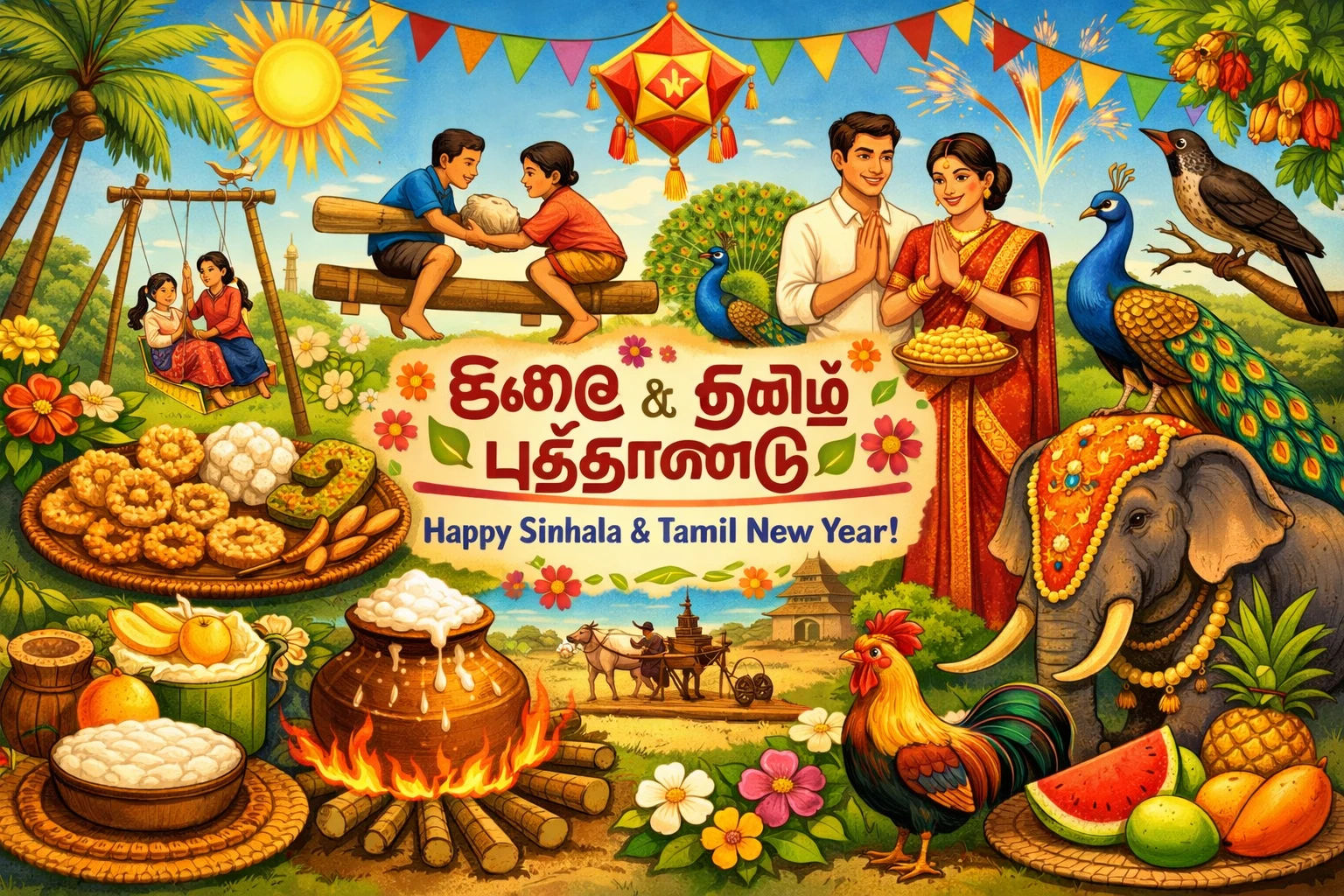
Kiribath, or milk rice, is one of the most symbolic foods of the New Year. Love Sri Lanka notes that many households prepare kiribath and highlights the ritual of boiling milk over a clay pot, a practice signifying prosperity.
Kiribath is often part of the first meal of the year. A culinary article explains that kiribath is the first food prepared and eaten during Sinhala and Tamil New Year, symbolizing prosperity and blessings.
Sweetmeats and snack tables
New Year tables often include a spread of traditional sweetmeats made from rice flour and related harvest ingredients. Love Sri Lanka notes sweetmeats such as kavum (oil cakes), kokis (crispy cookies), and mung kavum, reinforcing how harvest foods become celebration foods.
For travelers, the most enjoyable approach is simple: accept what’s offered, taste a little of everything, and ask what each item is called. It’s a friendly conversation starter almost anywhere on the island.
Games and community celebrations: the fun side of Avurudu
Avurudu is also famous for village games and playful competitions. Zesta Ceylon Tea describes community games such as kotta pora and kana mutt, and notes that both children and adults participate, with schools and offices sometimes holding Avurudu ceremonies too.
These games show the festival’s social purpose. They bring neighbors together, encourage laughter, and create a shared experience that goes beyond family homes.
Local signals and seasonal mood: the “Koha” call
Sri Lankans often describe the approach of New Year through nature’s signs. Zesta Ceylon Tea notes the call of the Koha (Asian koel), also called the cuckoo-bird, echoes through villages and is believed to signal the arrival of New Year festivities.
This detail matters because it reflects how Avurudu is tied to the environment. It’s not only a calendar holiday, it’s a seasonal feeling the island recognizes through sound, harvest, and weather patterns.
Travel tips for visitors during Sinhala & Tamil New Year
Avurudu is wonderful for cultural travel, but it affects logistics.
Expect closures and plan ahead
Because businesses can close for days, plan transport and essential shopping in advance. Wikipedia notes that after the holidays, many shops and businesses close for about a week, which can affect restaurant availability, tour schedules, and intercity travel options.
Where to experience the festival as a visitor
You can feel Avurudu anywhere in Sri Lanka, but it’s especially vivid in residential neighborhoods and villages where games and family visiting are visible. If you’re in Colombo, you’ll still notice the slowed pace and holiday feel, but rural areas often make traditions easier to observe.
How to participate respectfully
Dress modestly if visiting temples, accept food and invitations politely, and avoid interrupting rituals that are clearly being timed to auspicious moments. Recognize that timing and ritual order matter, since nakath schedules guide key actions like cooking and the first meal.
Pricing: what does Sinhala & Tamil New Year cost?
Sinhala & Tamil New Year is a public holiday and family-centered cultural celebration, not a ticketed festival. Most experiences are free to observe and participate in when invited, with visitor costs mainly related to travel during a peak domestic holiday period, food, and accommodation.
If you want a structured experience, some hotels host Avurudu-themed events, but the most authentic moments are usually in homes, temples, and local communities.
Verified Information at a Glance
- Event name: Sinhala & Tamil New Year (Avurudu / Puthandu)
- Event category: Traditional New Year and harvest-related cultural festival (religious observances, rituals, family gatherings, games).
- Typically held: Mid-April, generally April 13 or April 14.
- Key cultural timing: New Year is tied to the astrological transition from Pisces to Aries; a transitional period called Nonagathaya / Punya Kaalaya is observed between the old year and the new year.
- Signature traditions: Temple visits and religious observance during Nonagathaya; lighting the hearth and having the first meal at auspicious times guided by nakath schedules.
- Signature foods: Kiribath (milk rice) and traditional sweetmeats such as kavum and kokis.
- Pricing: Not a ticketed event; most experiences are free, with costs mainly tied to travel and holiday logistics.
Plan your Sri Lanka island journey for mid-April, slow down with the country as it pauses for Nonagathaya, taste kiribath and sweetmeats when the new year begins, and seek out a local Avurudu celebration so you can feel Sri Lanka’s warmth, generosity, and renewal in the most authentic way possible.