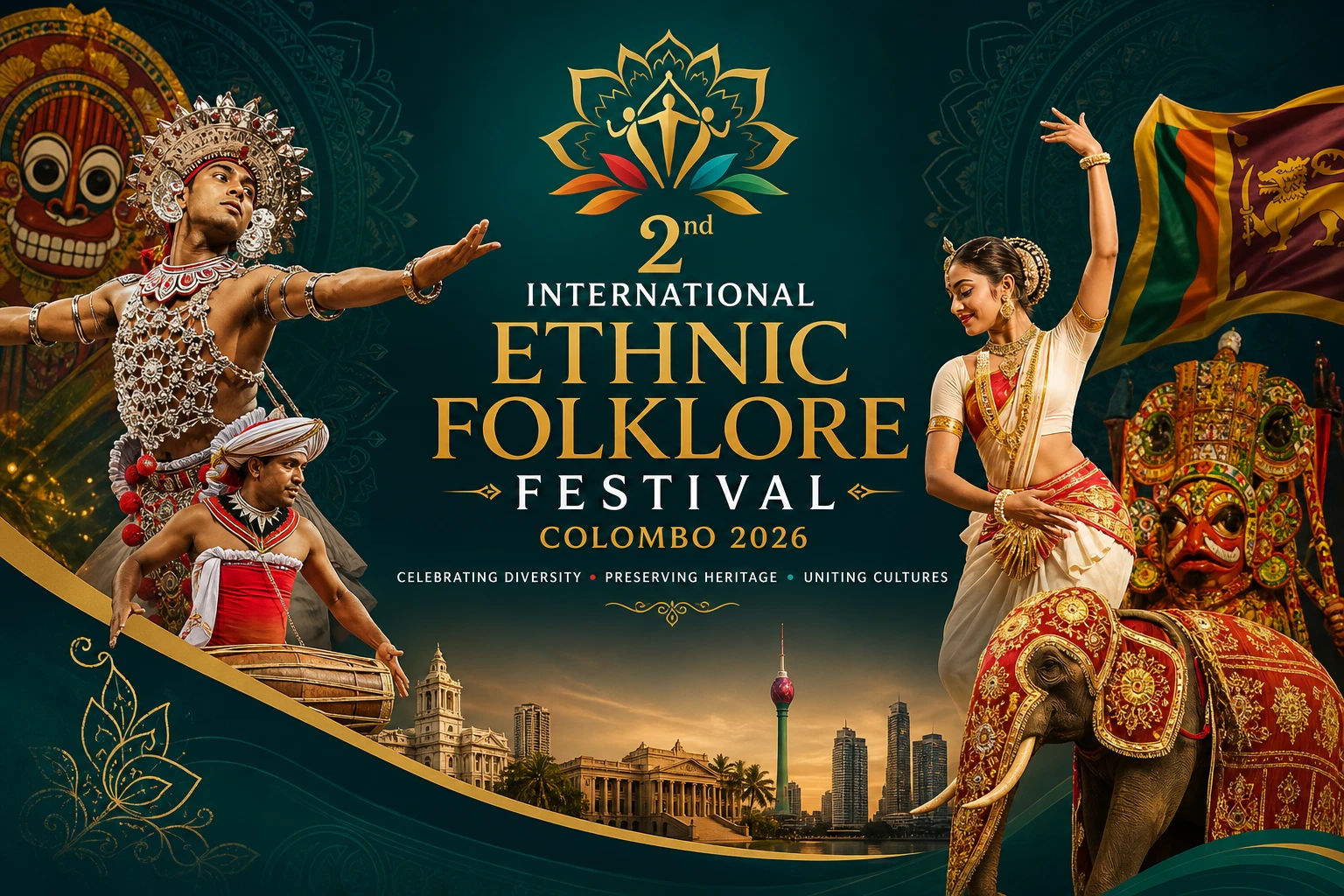
The 2nd International Ethnic Folklore Festival Colombo 2026 will take place from Monday, 23 November to Monday, 30 November 2026 in Colombo, Sri Lanka. This international cultural gathering welcomes folk-dance groups, choirs, orchestras, majorettes, marching bands, classical performers, and contemporary music ensembles for a week of performance, exchange, and discovery.
"Colombo becomes a meeting place where global performance traditions meet Sri Lankan hospitality, vibrant city life, and the warm rhythms of the Indian Ocean."
The Story of the Festival
An International Celebration of Cultural Exchange
The 2nd International Ethnic Folklore Festival Colombo is an international performing-arts festival built around cultural exchange. It brings together dance and music groups of many styles, creating space for performers to share the traditions, costumes, instruments, and stories that define their communities.
The festival programme welcomes a notably broad range of participants, including:
- Folk-dance ensembles
- Traditional music groups
- Choirs
- Majorette groups
- Orchestras
- Classical performers
- Contemporary dance groups
- Oriental dance ensembles
- Marching bands
- Brass bands
- Cultural associations
- Youth groups
- Adult performance groups
- Intergenerational ensembles
Participants may be aged from 7 to 70 years and above, and groups need a minimum of four members. This wide age range gives the Colombo event a community feel, where young performers can share the stage with experienced artists and long-standing cultural groups.
"The festival is more than a series of concerts. It is an opportunity to celebrate the cultural identity of different regions and countries through music, movement, textiles, ceremony, and shared experiences."
Festival Dates and Schedule
From Arrival to Departure
The confirmed overall festival period is 23 to 30 November 2026 in Colombo, Sri Lanka. Visitors should note that the organiser’s programme lists the main performance schedule between Tuesday, 24 November and Thursday, 26 November 2026, while participant packages offer departure dates from Saturday, 28 November or Sunday, 29 November 2026.
Important 2026 Dates:
- Monday, 23 November 2026: Participant arrivals, hotel check-in, and welcome period
- Tuesday, 24 November 2026: Group-leader meeting, rehearsals, and opening ceremony
- Wednesday, 25 November 2026: Festival performances
- Thursday, 26 November 2026: Closing ceremony and cultural performances
- Friday, 27 November 2026: Colombo city tour for participating groups
- Saturday, 28 November 2026: Departure date for the five-night participant package
- Sunday, 29 November 2026: Departure date for the six-night participant package
- Monday, 30 November 2026: End of the advertised festival period
The public performance venues in Colombo have not yet been specified in the available event information. This is important for visitors. Do not assume that every rehearsal, ceremony, or concert will be open to the public until the official audience programme is released.
Why This Festival Matters
Preserving Traditions and Cultural Diplomacy
Folklore festivals preserve something that cannot be replaced by a screen or recording. They bring people face to face with living traditions. A folk dance is not only choreography. It may carry the memory of harvests, weddings, migration, religious observances, courtship, work, celebration, or a community’s relationship with land and sea. A traditional song may keep a local language alive. An instrument may reflect skills passed through generations.
"The 2nd International Ethnic Folklore Festival Colombo 2026 offers performers a platform to share those traditions beyond their home regions."
The festival’s cultural value lies in:
- Preserving folk traditions through performance
- Encouraging youth participation
- Connecting artists across borders
- Supporting cultural diplomacy
- Creating space for choirs, bands, and dance groups
- Celebrating traditional costume and craft
- Inspiring travel through music and dance
- Helping audiences understand cultural diversity
- Pairing global heritage with Sri Lankan cultural experiences
For Sri Lanka, hosting an international folklore festival reinforces Colombo’s role as a regional meeting point for tourism, commerce, education, and the arts.
What to Expect at the Festival
A Diverse Programme of Performances
The event programme indicates that participating groups will present three different dance or music items, each lasting approximately 10 to 15 minutes, with performances scheduled at provided venues. Both live and recorded music are permitted.
"This format means audiences may experience a broad range of performances during a single evening."
Expect possibilities such as:
- Traditional circle dances
- Regional folk songs
- Choral performances
- Percussion ensembles
- Brass-band presentations
- Folk instruments
- Colourful national dress
- Classical dance
- Contemporary cultural choreography
- Majorette routines
- Processional music
- Group finales
- International friendship moments
The exact line-up of countries, groups, public venues, and stage times is not yet confirmed. That uncertainty makes it especially important to follow the organisers’ announcements as November approaches.
Sri Lankan Culture at a Folklore Festival
Exploring Local Traditions
A Colombo-based folklore festival naturally provides a gateway into Sri Lanka’s own rich performing traditions. Sri Lankan dance, drumming, and ritual arts have strong regional identities, from the central highlands to the south coast and low-country areas.
Visitors may wish to learn about:
- Kandyan dance: Known for intricate footwork, expressive movement, and ornate costumes
- Ves dance: A prestigious form of Kandyan dance with elaborate headpieces and costume elements
- Low-country dance: Often associated with coastal traditions, masks, and ritual performance
- Sabaragamuwa dance: A distinctive regional dance tradition
- Geta Beraya drumming: A central drum tradition in Kandyan performance
- Yak Beraya drumming: Associated with low-country dance and ritual practices
- Traditional masks: Especially connected with southern Sri Lankan craft and performance heritage
- Baila music: A popular Sri Lankan musical form shaped by Portuguese influence
Even if the official festival programme focuses mainly on visiting groups, Colombo provides many ways to explore Sri Lankan culture before and after the main performances.
Colombo: A Fitting Festival Host City
Discovering the Vibrant Capital
Colombo is Sri Lanka’s energetic commercial capital, a coastal city where colonial buildings, religious landmarks, contemporary hotels, busy markets, and oceanfront promenades sit close together. The city’s diversity makes it a natural home for an international festival. Sinhala, Tamil, Muslim, Burgher, and other communities contribute to Colombo’s food, faith, architecture, and social life.
Between events, explore:
- Independence Square: A calm public space in Colombo 7, ideal for an early walk
- Colombo National Museum: A useful introduction to Sri Lankan art, archaeology, and history
- Gangaramaya Temple: One of Colombo’s best-known Buddhist sites
- Seema Malaka: A tranquil temple setting on Beira Lake
- Galle Face Green: Colombo’s oceanfront promenade, especially lively at sunset
- Pettah Market: A busy district for spices, textiles, produce, and local commerce
- Dutch Hospital Precinct: A restored historic area with restaurants and cafés
- Viharamahadevi Park: A green space near cultural institutions and museums
- Arcade Independence Square: A popular area for dining, shopping, and relaxed evenings
Colombo is also well placed for day trips and longer Sri Lanka extensions after the festival.
Food to Try During Festival Week
A Taste of Sri Lanka
Sri Lanka’s food culture is as diverse as its performing traditions. Colombo is an ideal place to taste regional dishes in restaurants, street-food areas, and hotel dining rooms.
Try these Sri Lankan favourites:
- Rice and curry: A selection of curries served with rice
- Hoppers: Bowl-shaped rice-flour pancakes, often served with sambol or curry
- Egg hoppers: Hoppers cooked with an egg in the centre
- Kottu roti: Chopped flatbread stir-fried with vegetables, egg, chicken, or seafood
- String hoppers: Steamed rice-noodle nests served with curry
- Pol sambol: Fresh coconut relish with chilli and lime
- Dhal curry: A comforting lentil dish
- Lamprais: Rice and accompaniments baked in a banana-leaf parcel
- Watalappan: A rich coconut custard dessert
- Ceylon tea: Sri Lanka’s iconic black tea, served plain or with milk
If you are attending an evening event on 24, 25 or 26 November 2026, leave time for dinner afterward. Ask your hotel for restaurant suggestions near the confirmed venue once it is announced.
Participant Packages and Pricing
Options for Performing Groups
The festival information currently publishes participation packages for performing groups, rather than general spectator tickets. For participants, the listed package options are:
- €230 per person: Five nights, full board, double-sharing accommodation, with arrival on 23 November 2026 and departure on 28 November 2026
- €275 per person: Six nights, full board, double-sharing accommodation, with arrival on 23 November 2026 and departure on 29 November 2026
The packages include selected three-star or four-star Colombo hotel accommodation, three meals daily, airport transfers, a Colombo city tour, certificates for group members, and a trophy for each group. The six-night package also lists an additional shopping tour.
Additional published costs include:
- 10% advance guarantee fee, deducted from the final payment
- €10 per person double-room surcharge for three-star hotels
- €15 per person double-room surcharge for four-star hotels
- €35 per person for an additional full-board day in a three-star hotel
- €45 per person for an additional full-board day in a four-star hotel
- Monument and attraction fees during excursions are extra
Flights, travel-health insurance, and optional excursions are not included. Public admission pricing for audience members has not been announced.
Optional Sri Lanka Excursions
Enhance Your Festival Experience
The organiser lists optional excursions to several popular Sri Lankan destinations at additional cost.
Consider adding:
- Negombo: A coastal town near Bandaranaike International Airport, known for its lagoon and fish market
- Dambulla: Home to the famous cave temple complex
- Sigiriya: Sri Lanka’s iconic rock fortress and UNESCO World Heritage Site
- Kandy: The hill-country city known for the Temple of the Sacred Tooth Relic
- Nuwara Eliya: A cooler tea-country destination with colonial-era character
- Bentota: A south-west coastal resort area known for beaches and river activities
If time permits, combine the festival with a three- to seven-day journey through the Cultural Triangle, Kandy, and Sri Lanka’s scenic hill country.
Travel Tips for Colombo in November
What to Know Before You Go
Late November is a popular time to visit Sri Lanka as the island begins transitioning into its main tourism season. Colombo can still be warm and humid, with rain possible, so flexible planning is wise.
Getting to Colombo
Arriving and Navigating the City
Most international travellers arrive at Bandaranaike International Airport near Katunayake. The airport is north of Colombo, and travel time depends on traffic, time of day, and your chosen transfer.
Useful planning tips:
- Arrange airport pickup through your hotel or a licensed provider
- Keep printed or digital hotel details accessible
- Carry a small amount of Sri Lankan rupees
- Confirm visa requirements before travelling
- Allow extra time for Colombo traffic
- Use reputable taxi services or hotel-arranged transport
- Keep bottled water or a reusable bottle with you
- Confirm the final performance venue before booking local transport
What to Wear
Dressing for Comfort and Respect
For concerts and cultural events:
- Smart-casual, breathable clothing
- Comfortable shoes
- A light shawl or jacket for air-conditioned halls
- Modest attire for temple visits
- A compact umbrella or light rain jacket
- Sun protection for daytime sightseeing
Avoid clothing that is too casual for formal opening or closing ceremonies, particularly if you are part of a participating group.
Respectful Festival Etiquette
Being a Considerate Audience Member
Folklore festivals work best when audiences recognise that each costume, song, and dance may hold real cultural meaning.
- Arrive before the performance begins
- Keep aisles and stage-front areas clear
- Switch phones to silent mode
- Ask before taking close-up photographs
- Avoid using flash during performances
- Applaud appropriately after each item
- Support artists and official merchandise where available
- Respect national flags, costumes, and religious symbols
- Encourage children to watch without disrupting performers
- Follow venue staff instructions
Frequently Asked Questions
The Things People Always Want to Know
When is the 2nd International Ethnic Folklore Festival Colombo 2026?
The festival runs from 23 to 30 November 2026 in Colombo, Sri Lanka. The principal listed performance dates are 24, 25, and 26 November 2026.
Where is the 2nd International Ethnic Folklore Festival held?
The confirmed host city is Colombo, Sri Lanka. The specific public performance venues have not yet been announced.
What types of groups can participate?
The festival welcomes folklore groups, choirs, majorettes, orchestras, classical and contemporary performers, marching bands, brass bands, and other dance or music ensembles.
Is there an age limit for performers?
Participants may be aged from 7 to 70 years and above. Each group requires at least four members.
How much does it cost for performers to join the festival?
Published group packages begin at €230 per person for five nights with full board and €275 per person for six nights with full board, based on double-sharing accommodation. Flights, insurance, and optional excursions are separate.
Are public spectator tickets available?
Public spectator ticket prices have not yet been announced. Check directly with organisers for audience access, venue details, and any ticket or registration requirements.
What should visitors do in Colombo during festival week?
Explore Independence Square, the Colombo National Museum, Gangaramaya Temple, Galle Face Green, Pettah Market, Viharamahadevi Park, and the Dutch Hospital Precinct between festival events.
Verified Information at a Glance
- Event Name: 2nd International Ethnic Folklore Festival Colombo
- Event Category: International folklore, dance, music, and cultural-exchange festival
- Confirmed Festival Dates: Monday, 23 November to Monday, 30 November 2026
- Confirmed Location: Colombo, Sri Lanka
- Specific Public Venue: To be announced
- Opening Ceremony: Tuesday, 24 November 2026, listed from 6:00 p.m. to 8:00 p.m.
- Festival Performance Day: Wednesday, 25 November 2026, listed from 5:00 p.m. to 8:00 p.m.
- Closing Ceremony: Thursday, 26 November 2026, listed from 5:00 p.m. to 8:00 p.m.
- Eligible Performers: Dance groups, folk ensembles, choirs, majorettes, orchestras, classical and contemporary acts, marching bands, and brass bands
- Age Eligibility: 7 to 70+ years
- Minimum Group Size: Four participants
- Participant Package, Five Nights: €230 per person, full board, double sharing
- Participant Package, Six Nights: €275 per person, full board, double sharing
- Public Spectator Pricing: Not yet announced
- Best For: Folk performers, choirs, cultural groups, families, dance enthusiasts, music lovers, and travellers seeking a meaningful Colombo experience
Plan your Colombo visit around 23 to 30 November 2026, watch for the final venue and audience programme, and step into a week where drums, voices, costumes, and dances from many cultures meet in the welcoming heart of Sri Lanka.
```