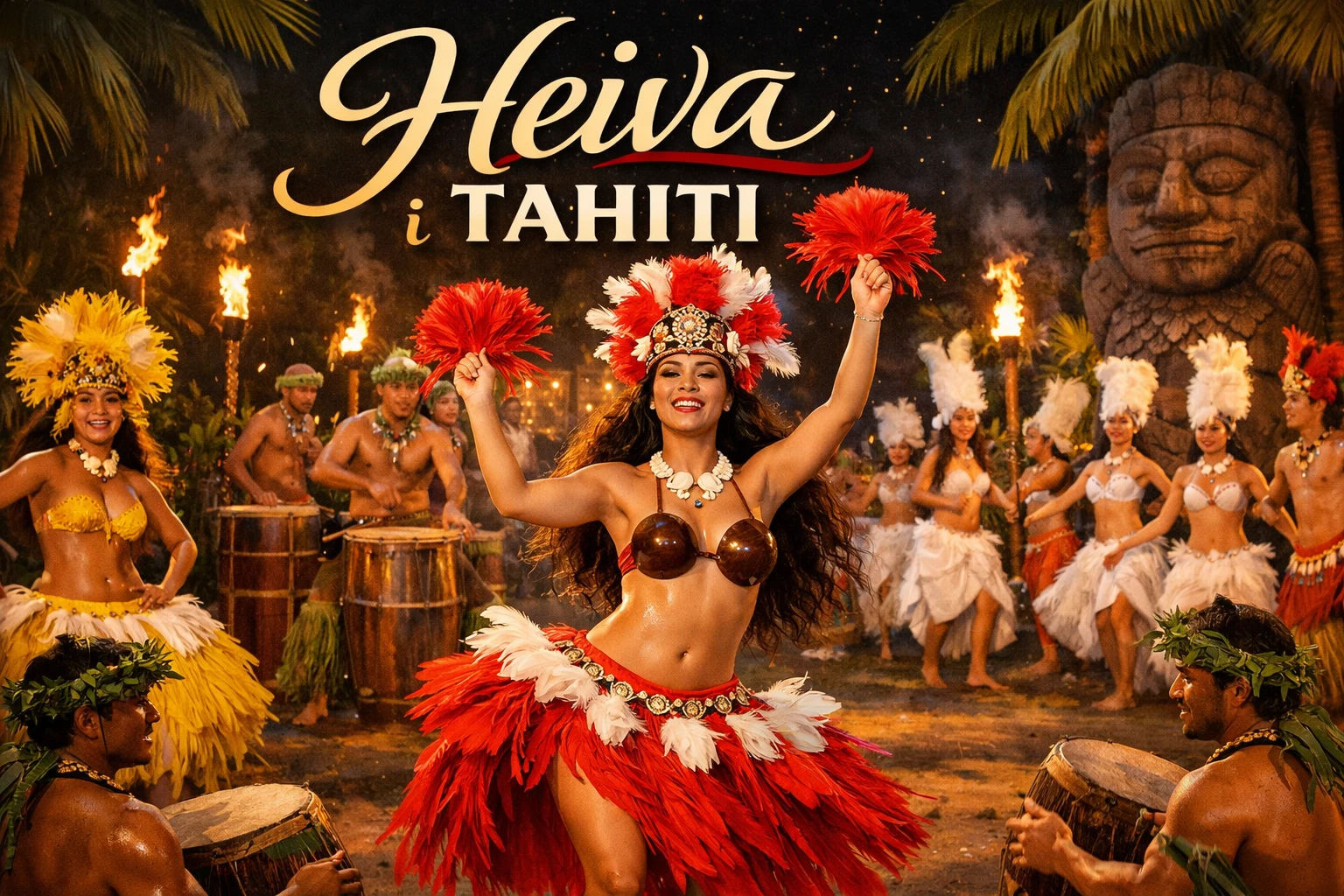
Heiva i Tahiti: A Cultural Celebration Like No Other
Heiva i Tahiti is the biggest cultural celebration in The Islands of Tahiti, when Papeete becomes a stage for powerhouse dance and singing competitions, traditional sports, craft exhibitions, and island pride that you can feel in every drumbeat. Held every year in July, Heiva i Tahiti is the ultimate moment to experience Polynesian culture in its most vibrant, competitive, and community-driven form.
What is Heiva i Tahiti?
Heiva i Tahiti is a major annual cultural festival and a must-see event in French Polynesia’s calendar, bringing communities from different archipelagos together in Papeete. The official Tahiti Tourisme event listing describes it as one of the most important cultural events on The Islands of Tahiti, featuring dance shows, songs, rituals, contests, traditional sports, and craft exhibitions that showcase techniques and know-how from across French Polynesia.
This is not a small cultural show designed only for visitors. The same official source notes that more than 3,000 artists participated in one edition and about 30,000 spectators attended, underlining the scale and importance of the festival for locals and travelers alike.
When Heiva i Tahiti is Typically Held
Heiva i Tahiti is traditionally held in July, and the festival program usually unfolds across multiple weeks, with major evening performances and competitions scheduled throughout the month. Tahiti Tourisme specifically frames Heiva as a July event and invites visitors to join in during that time for shows, rituals, and contests.
For planning your island trip, July timing is a big advantage. It’s peak cultural season, and it’s also a time when the festival rhythm shapes the evenings in Papeete, meaning you can explore Tahiti in the daytime and return for unforgettable nights.
Where it Happens: Papeete and Place To’atā
Heiva i Tahiti gathers people from across French Polynesia in Papeete, making the capital the center of celebration. The iconic performance venue is Place To’atā, widely known as the main stage for major cultural events and the place where dance and singing groups compete in front of large crowds.
If you want the “classic Heiva night” experience, aim for an evening performance in To’atā. The atmosphere combines the excitement of a competition with the emotion of cultural storytelling, and the audience energy is part of the show.
A Brief History: From Tiurai to Heiva
Heiva i Tahiti has roots in the late 19th century and reflects a long journey of cultural survival and revival. The official Heiva history explains that after earlier prohibitions on traditional cultural expression, the first authorized cultural activities reappeared in 1881 in the context of July 14 festivities, evolving over time from Governor’s Day to Tiurai and, since 1985, to the Heiva we know today.
That history matters because it explains why Heiva feels emotional for many Polynesians. The same source describes the festival as the result of cultural expressions that were “conquered with great difficulty,” and frames Heiva as the most important event of the year for many.
What to Expect: Signature Heiva Highlights
Heiva is best experienced as a mix of competitive performances, island artistry, and outdoor cultural life.
Dance Competitions: ‘ori Tahiti at Full Power
Dance is a centerpiece of Heiva, performed by large groups with complex choreography, storytelling, and costume design. The Heiva history notes that the revival of traditional dance gathered momentum in the 20th century and highlights how the Heiva troupe movement helped restore ‘ori Tahiti’s status as a noble performance art that could captivate local audiences and newcomers.
For visitors, this means you’re not just watching “a dance.” You’re watching a full production with narrative structure, precision, and serious cultural weight.
Singing Competitions: hīmene and Powerful Polyphony
Heiva includes major singing competitions that are a cultural universe of their own. The official history explains that hīmene did not face the same prohibitions as dance and continued across time, transmitting language, tradition, and legends through complex, structured polyphony that differs across archipelagos.
Even if you don’t understand the language, you can feel the architecture of the voices. The singing is often the most unexpectedly moving part for first-time visitors.
Traditional Sports and Physical Challenges
Heiva is also known for traditional sports and athletic competitions, which add a different kind of island spectacle. The official Heiva history mentions that the festivities include “traditional sports” and references historic favorites such as horse races and regattas as part of the broader festival lineage.
Craft Exhibitions and Cultural Know-How
Heiva is also a place to discover Polynesian craft traditions and skills. Tahiti Tourisme notes that communities present their arts, techniques, and know-how during contests and craft exhibitions, which makes the festival a strong match for travelers who love shopping for authentic handmade pieces and learning the story behind them.
Cultural Tips: How to Enjoy Heiva Respectfully and Fully
Heiva is festive, but it’s also cultural heritage on display, and a few habits help you experience it the right way.
- Book evening performances early if you want good seats, because To’atā nights are the headline events that draw large crowds.
- Arrive early to settle in and take in the atmosphere, because the experience is as much about anticipation and crowd energy as the performance itself.
- Avoid interrupting performances with flash photography, especially during intense dance sequences and chant-like singing passages.
Travel Tips for a Smooth Heiva i Tahiti Trip
Build a “Day Islands, Night Culture” Itinerary
Heiva timing makes it easy to pair lagoon experiences with city nights. Spend your mornings on Tahiti’s beaches or waterfalls, then return to Papeete for an evening show and a late dinner afterward.
Where to Stay
Staying near Papeete makes Heiva nights simple, especially if you plan to attend multiple performances. If you prefer quieter lodging, you can stay outside the capital and commute in for key evenings, but build buffer time for traffic and parking.
What to Pack
Bring light layers for warm nights, comfortable footwear for walking around event areas, and a small rain layer just in case. If you plan to attend multiple nights, pack at least one “smart casual” outfit, since some audience members treat Heiva evenings as a special occasion.
Pricing: Tickets and Entry
Heiva i Tahiti includes public festival atmosphere, but major evening performances at Place To’atā are typically ticketed. While exact prices vary by seating category and year, it’s common for tickets to be sold online through official channels associated with the event organizer, so booking early is the best strategy for visitors.
Some related activities, exhibitions, and outdoor celebrations may be free or low-cost, depending on the program. Check the official schedule once you’ve chosen travel dates.
Verified Information at a Glance
- Event name: Heiva i Tahiti
- Event category: Cultural festival (dance and singing competitions, rituals, traditional sports, craft exhibitions).
- Typically held: July (multi-week program with major evening events).
- Main location: Papeete, Tahiti, French Polynesia.
- Key venues: Place To’atā (major performance stage for festival nights).
- Scale (example edition): More than 3,000 artists participated and about 30,000 spectators attended one edition, per Tahiti Tourisme.
- Historical notes (official festival history): Origins traced to cultural activities authorized in 1881 and evolution from Tiurai to Heiva since 1985.
- Pricing: Major evening performances are generally ticketed, with prices varying by seating category and edition; book through official channels when available.
Plan your July island escape to Tahiti, reserve at least one Heiva night at Place To’atā, and let the drums, songs, and fierce beauty of competition introduce you to Polynesian culture in its most alive form, because Heiva i Tahiti is not something you watch once, it’s something you feel and immediately want to experience again.

%202026.webp)