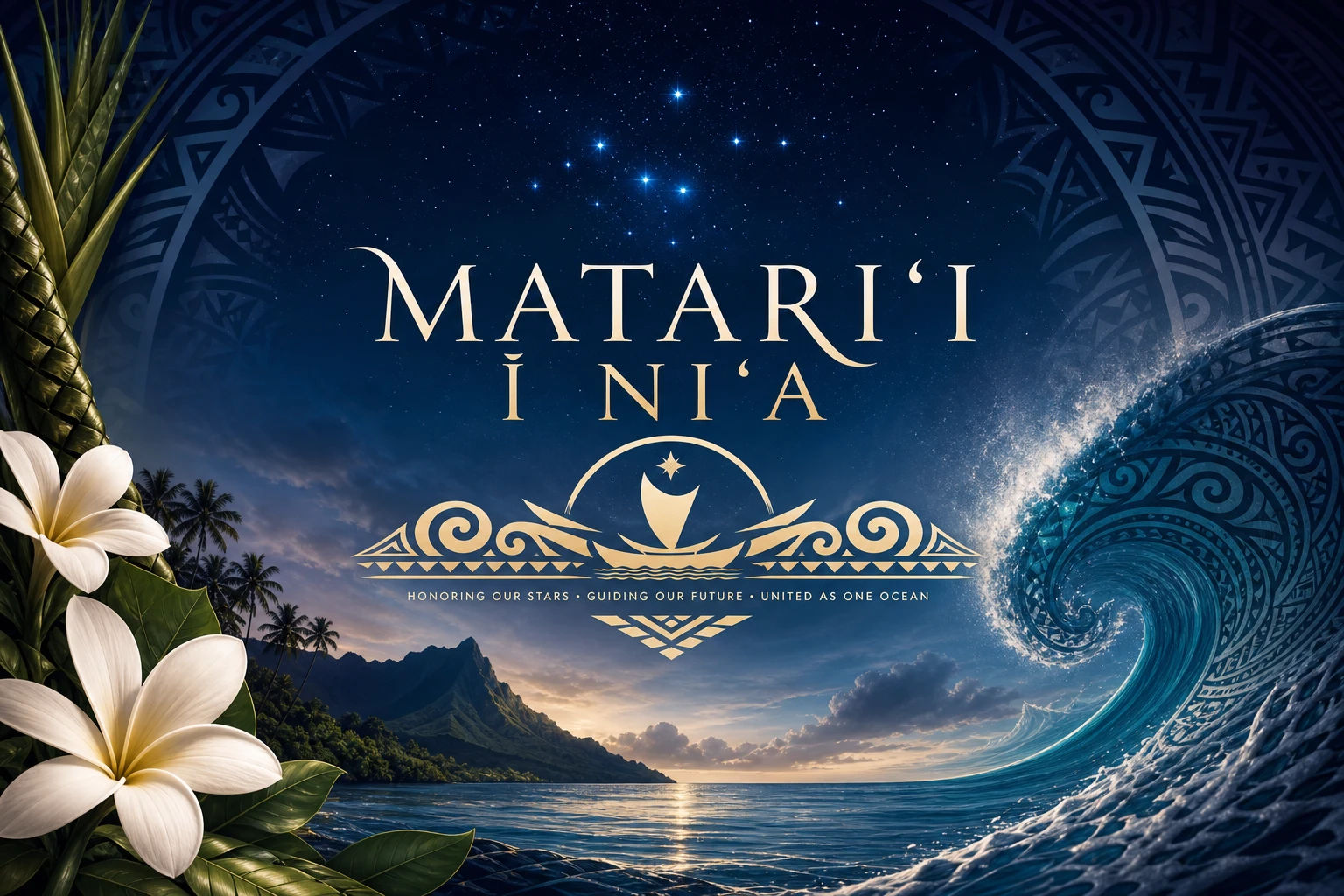
Matari’i i Ni’a 2026 will be celebrated on Friday, 20 November 2026 in Papeete, Tahiti, marking the traditional Polynesian beginning of the season of abundance. The observance is tied to the return of the Pleiades star cluster, known in Tahitian as Matari’i, and opens a six-month period of fertility, harvest, sharing, and renewal across French Polynesia.
For visitors, Matari’i i Ni’a is one of the most meaningful times to experience Tahiti’s living culture. It is a celebration shaped by stargazing, traditional food, music, dance, craft, ocean knowledge, and deep respect for the rhythms of nature. Rather than a single commercial festival, it is a cultural moment that connects sky, land, sea, and community.
“It is a celebration shaped by stargazing, traditional food, music, dance, craft, ocean knowledge, and deep respect for the rhythms of nature.”
The Story of Matari’i i Ni’a
The Polynesian Season of Abundance
The traditional start of Matari’i i Ni’a is 20 November each year. In 2026, the central Tahiti celebration is scheduled for Friday, 20 November 2026 in Papeete.
The season of Matari’i i Ni’a continues for approximately six months, from November to May. It is followed by Matari’i i Raro, the season associated with the disappearance of the Pleiades and a period of relative scarcity, beginning around 20 May.
Confirmed and useful 2026 dates include:
- Friday, 20 November 2026: Matari’i i Ni’a, Papeete
- Sunday, 8 November to Friday, 27 November 2026: Registration period for Tere Matari’i i Ni’a
- Saturday, 28 November 2026: Tere Matari’i i Ni’a in Pirae
- Saturday, 20 May 2027: Approximate traditional transition to Matari’i i Raro
What Does Matari’i i Ni’a Mean?
The Rising of the Pleiades
Matari’i i Ni’a translates approximately as “the Pleiades above” or “the rising of the Pleiades.” It refers to the annual appearance of the Pleiades star cluster in the evening sky around November.
In traditional Polynesian knowledge, the movements of stars were closely observed. The sky was not separate from daily life. It offered guidance for seasons, agriculture, fishing, ceremonial life, and ocean navigation.
“Matari’i i Ni’a announces a time of abundance, when food resources are traditionally more plentiful and communities gather to give thanks, share harvests, and celebrate the renewal of life.”
The celebration honors:
- The Pleiades star cluster
- Seasonal knowledge
- Agricultural abundance
- Fishing traditions
- Community sharing
- Polynesian navigation
- Land and ocean stewardship
- Traditional arts
- Family and ancestral connection
- The balance between abundance and restraint
The Polynesian Calendar: Abundance and Scarcity
Two Seasons, One Cycle
The traditional Polynesian calendar is often described through two major seasons: Matari’i i Ni’a and Matari’i i Raro.
Matari’i i Ni’a
A Time of Abundance
Matari’i i Ni’a begins around 20 November and lasts until around 20 May. It is associated with abundance, fertility, growth, and productivity.
“During this period, communities historically observed the return of food resources, productive fishing grounds, agricultural harvests, and the natural generosity of the environment.”
Matari’i i Raro
A Season of Scarcity
Matari’i i Raro begins around 20 May, when the Pleiades disappear below the horizon at sunset. It is associated with a period of relative scarcity and calls for careful resource management, restraint, and preparation.
Together, these seasons reflect an important Polynesian principle: abundance should be celebrated, but it should also be managed responsibly. The cycle teaches that nature gives generously at some times and asks for patience at others.
Matari’i i Ni’a 2026 in Papeete
A Cultural Celebration in the Heart of Tahiti
The main Matari’i i Ni’a 2026 observance is scheduled for Friday, 20 November 2026 in Papeete.
Papeete, the capital of French Polynesia, is Tahiti’s main cultural and administrative center. During Matari’i i Ni’a, its public spaces may host cultural performances, traditional craft displays, food experiences, educational talks, and ceremonies connected with the season of abundance.
The official 2026 programme is still pending. However, previous Matari’i i Ni’a celebrations have included:
- Traditional craft workshops
- Dance and music
- Cultural processions
- Floral attire and crowns
- Polynesian singing
- ‘Ōrero, or traditional oratory
- ‘Ava ceremonies
- Star observation
- Traditional sports
- Food-sharing events
- Local artisan stalls
- Public talks about cultural heritage
- Environmental and seasonal education
The Pleiades and Polynesian Navigation
Guiding Stars of the Pacific
The Pleiades are a cluster of stars visible from many parts of the world. In Tahiti, their appearance carries seasonal meaning and connects to wider Pacific knowledge systems.
Polynesian navigators developed sophisticated non-instrument navigation techniques, using stars, winds, ocean swells, bird behavior, and cloud patterns to travel long distances across the Pacific.
“Matari’i i Ni’a celebrates this relationship between people and sky.”
The stars have helped guide:
- Seasonal fishing
- Planting and harvest decisions
- Ocean travel
- Ceremonial timing
- Community gatherings
- Weather awareness
- Inter-island connection
Traditional Arts and Cultural Activities
Expressions of Maohi Culture
Matari’i i Ni’a is an ideal time to encounter the creative expressions that keep Maohi culture alive.
Possible cultural activities may include:
- Himene: Polynesian choral singing
- ʻŌrero: Traditional public speaking and storytelling
- ʻŌteʻa: Tahitian dance accompanied by drums
- ʻAparima: Dance that uses hand movements to tell stories
- Tū’aro Mā’ohi: Traditional Polynesian sports
- Va’a: Outrigger-canoe culture
- Rā’au Tahiti: Traditional plant-based knowledge
- Fai: Coconut-leaf weaving
- Tifaifai: Quilting and textile arts
- Tapa: Bark-cloth traditions
- Artisan demonstrations
- Local food preparation
Not every activity is confirmed for 2026. The examples above reflect the types of practices featured in previous Matari’i i Ni’a celebrations.
Dress, Flowers and the Spirit of Abundance
Embracing Tahitian Traditions
Matari’i i Ni’a is associated with vibrant clothing, flowers, crowns, and the warmth of Polynesian celebration. A 2026 Tahiti event guide describes the occasion as one in which people wear floral clothing and flower crowns to honor the season of abundance.
Visitors can join respectfully by wearing:
- Bright but comfortable island clothing
- A pareu, or wrap skirt
- A locally made flower crown
- Floral prints
- Sandals suitable for outdoor events
- Modest attire for formal or sacred moments
Buy flower crowns, pareu, and crafts from local vendors rather than importing costume items. This supports Tahitian makers and creates a more authentic connection to the celebration.
Tere Matari’i i Ni’a 2026 in Pirae
A Separate Cultural Experience
A separate cultural experience, Tere Matari’i i Ni’a, is scheduled for Saturday, 28 November 2026 in Pirae, on Tahiti’s north coast near Papeete.
The event takes place at Aorai Tinihau, 98716 Pirae, from 6:30 a.m. to 6:30 p.m.
This organized cultural outing has a listed price of:
- 11,000 XPF per person
- Participation from age 12
- Registration period: 8 to 27 November 2026
Tere Matari’i i Ni’a is a separate activity from the free public Matari’i i Ni’a observance in Papeete. Its programme may include guided cultural experiences, nature connection, learning, and seasonal celebration.
Food and Seasonal Flavours
A Taste of Tahitian Abundance
Food is central to Matari’i i Ni’a because the celebration honors abundance and sharing. Tahitian cuisine draws on the ocean, local crops, tropical fruit, and French influence.
During the season, look for foods such as:
- Poisson cru: Fresh fish marinated with lime and coconut milk
- Grilled local fish
- Tuna dishes
- Breadfruit
- Taro
- Uru chips
- Coconut-based desserts
- Bananas
- Papaya
- Mango
- Pineapple
- Vanilla products
- Fresh juices
- Local honey
- French Polynesian pastries
- Coconut bread
A shared meal can be one of the most meaningful ways to experience Matari’i i Ni’a. If invited to a community food event, follow local etiquette, wait for guidance, and thank hosts with māuruuru, meaning thank you.
Visiting Papeete During Matari’i i Ni’a
Your Base for Cultural Exploration
Papeete is an excellent base for Matari’i i Ni’a because it offers hotels, restaurants, transport connections, and access to public cultural events.
Key places to explore include:
- Marché de Papeete: Fresh produce, flowers, crafts, and food
- Paofai Gardens: Waterfront walking and sunset views
- Papeete waterfront: Restaurants, food trucks, and harbor life
- Museum of Tahiti and the Islands: Context on Polynesian history and culture
- Te Fare Tauhiti Nui, Maison de la Culture: A major cultural venue
- Papeete ferry terminal: Gateway to Moorea
- Pirae: Site of the 28 November Tere Matari’i i Ni’a experience
If you have time, extend your trip to Moorea. The island is a short ferry crossing from Papeete and offers lagoon activities, mountain views, pineapple farms, and a slower pace.
Travel Tips for November 2026
Prepare for Tahiti’s Tropical Climate
November is the beginning of Tahiti’s warmer, wetter season. Expect tropical humidity, sunshine, heavy showers, and changing conditions.
Bring:
- Lightweight clothing
- A light rain jacket
- Sandals and walking shoes
- Swimwear
- Reef-safe sunscreen
- Insect repellent
- Reusable water bottle
- Flower-friendly or colorful clothing
- Small dry bag
- Portable charger
- Cash in French Pacific francs, XPF
- A modest cover-up for formal cultural moments
French Polynesia uses XPF. Credit cards are accepted at many hotels and larger restaurants, but cash is useful for markets, taxis, craft stalls, and smaller food vendors.
Respectful Cultural Travel
Engage with Gratitude and Awareness
Matari’i i Ni’a is rooted in Maohi knowledge and Polynesian cultural renewal. Visitors can contribute positively by traveling with attention and gratitude.
- Ask before photographing people, ceremonies, or crafts.
- Do not interrupt prayer, chanting, or oratory.
- Support local artisans and food vendors.
- Avoid touching cultural objects unless invited.
- Follow event staff directions.
- Do not litter in public spaces or on beaches.
- Use reef-safe sunscreen.
- Learn a few Tahitian words.
- Be patient with island schedules.
- Respect both the celebration and the season’s environmental message.
Useful Tahitian phrases include:
- Ia ora na: Hello
- Māuruuru: Thank you
- Nānā: Goodbye
- Fenua: Land or homeland
- Mana: Spiritual strength or power
- Matari’i: The Pleiades
Frequently Asked Questions
The Things People Always Want to Know
When is Matari’i i Ni’a 2026 in Tahiti?
Matari’i i Ni’a 2026 is celebrated on Friday, 20 November 2026 in Papeete, Tahiti.
What does Matari’i i Ni’a mean?
Matari’i i Ni’a refers to the rising of the Pleiades and marks the start of the traditional Polynesian season of abundance.
How long does Matari’i i Ni’a last?
The season begins around 20 November and lasts until around 20 May, when Matari’i i Raro begins.
Is Matari’i i Ni’a free to attend?
The official 2026 Papeete programme and access policy have not yet been published. Previous official public celebrations have been free and open to the public, while the separate Tere Matari’i i Ni’a event on 28 November 2026 costs 11,000 XPF.
What is Tere Matari’i i Ni’a 2026?
Tere Matari’i i Ni’a is a separate organized cultural event in Pirae on Saturday, 28 November 2026, from 6:30 a.m. to 6:30 p.m. It costs 11,000 XPF and is open to participants aged 12 and over.
What should I wear to Matari’i i Ni’a?
Wear lightweight, colorful, and respectful island clothing. A locally made flower crown or pareu is an appropriate way to embrace the celebration.
Is Matari’i i Ni’a connected to Matariki in New Zealand?
Yes. Matari’i i Ni’a and Matariki are related cultural observances tied to the Pleiades and the start of a new seasonal cycle in Polynesian traditions.
Verified Information at a Glance
- Event name: Matari’i i Ni’a 2026
- Event category: Polynesian cultural, seasonal, astronomical, and heritage celebration
- Confirmed main date: Friday, 20 November 2026
- Main location: Papeete, Tahiti, French Polynesia
- Cultural meaning: The rising of the Pleiades and the start of the season of abundance
- Season duration: Approximately 20 November to 20 May
- Related season: Matari’i i Raro, beginning around 20 May
- Expected experiences: Traditional arts, music, dance, crafts, food sharing, star observation, cultural workshops, and community gatherings
- Main 2026 Papeete programme: To be announced
- Main 2026 public-event pricing: To be announced
- Related ticketed event: Tere Matari’i i Ni’a
- Tere date: Saturday, 28 November 2026
- Tere venue: Aorai Tinihau, 98716 Pirae, Tahiti
- Tere hours: 6:30 a.m. to 6:30 p.m.
- Tere price: 11,000 XPF per person, from age 12
- Tere registration window: 8 to 27 November 2026
- Best for: Culture travelers, families, stargazers, food lovers, heritage enthusiasts, and visitors seeking a meaningful Tahiti experience
Plan your Tahiti stay around 20 November 2026, look to the evening sky for Matari’i, share in the season’s generosity, and let the music, flowers, food, and ancestral knowledge of Matari’i i Ni’a reveal a deeply rooted side of French Polynesia.
```

%202026.webp)