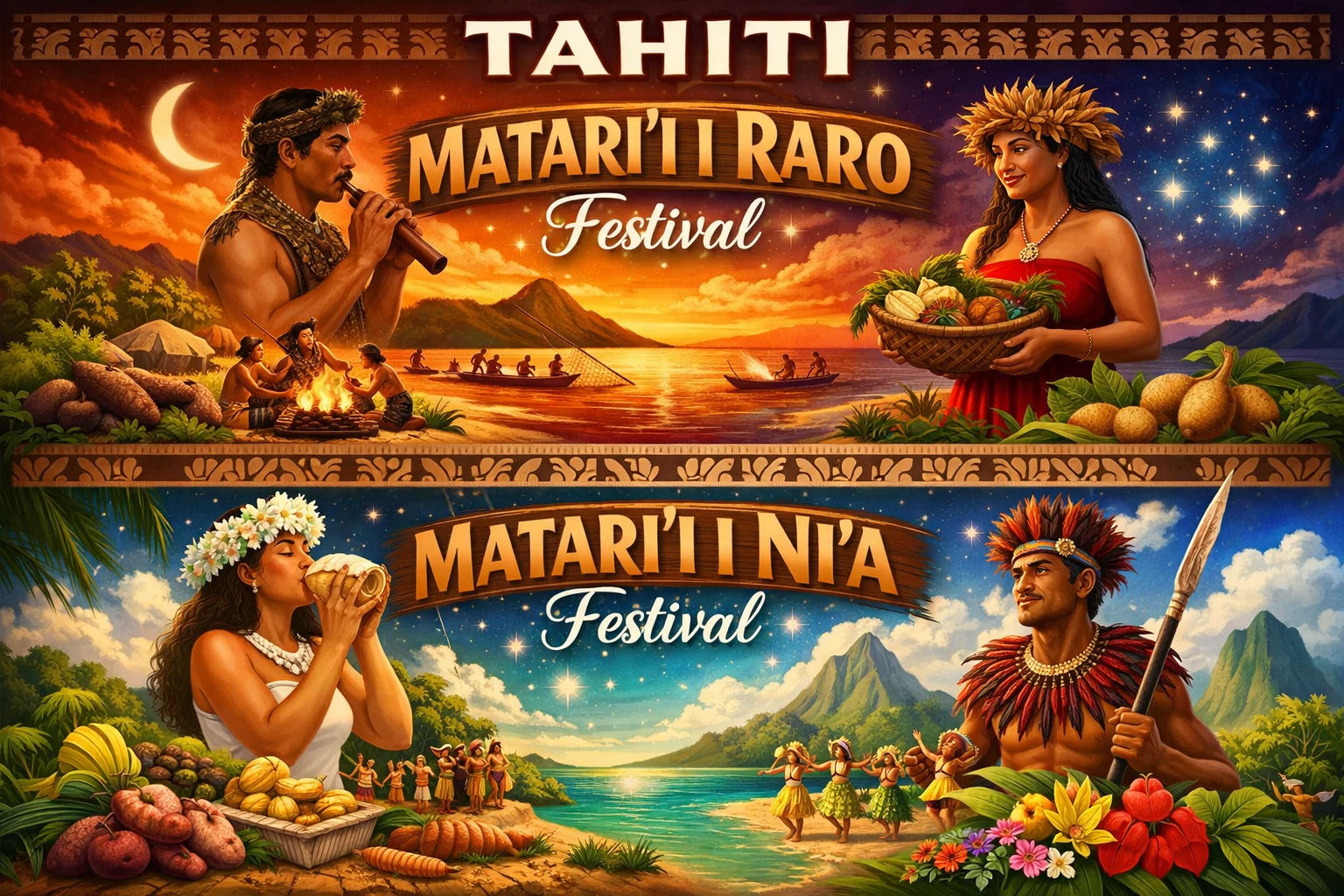
Discover the Meaningful Celebrations of Matari’i i Ni’a and Matari’i i Raro
Matari’i i Ni’a and Matari’i i Raro are Tahiti’s deeply meaningful seasonal celebrations, guided by the rising and setting of the Pleiades. They invite travelers to experience island life through Polynesian time, not just a modern calendar. With Matari’i i Ni’a beginning around November 20 (season of abundance) and Matari’i i Raro beginning around May 20 (season of scarcity), these festivals mark the rhythm of rain, harvest, fishing, and gratitude across The Islands of Tahiti.
What are Matari’i i Ni’a and Matari’i i Raro?
In the traditional Polynesian calendar, the year is divided into two main seasons named for whether the Pleiades constellation (Matari’i) is visible after sunset. Tahiti Tourisme explains that matari’i i ni’a is the season of abundance beginning on November 20, while matari’i i raro is the season of scarcity beginning on May 20, and the transition is marked by ritual celebrations.
These are not “single-venue” festivals like a stadium concert. They are island-wide cultural moments expressed through ceremonies, dancing, and communal gatherings that thank the land and sea, connecting visitors to the environmental heartbeat of French Polynesia.
When the Festivals are Typically Held
Matari’i i Ni’a typically begins around November 20, timed with the rising of the Pleiades. Tahiti Tourisme notes that the rising of the Pleiades coincides with the arrival of rains, and for roughly six months, the land produces fruit in abundance and fish are more plentiful.
Matari’i i Raro typically begins around May 20, timed with the descent of the Pleiades. Tahiti Tourisme explains that the descent heralds the onset of the dry, cool season and a period associated with scarcity.
For planning your island travel, treat these as seasonal anchors rather than fixed “one-day only” events. Even if you miss the exact date, the broader weeks around late May and late November can still carry the cultural atmosphere, depending on the island and community programming.
Why Matari’i Matters in Island Culture
Matari’i celebrations link astronomy, ecology, and identity. Tahiti Tourisme emphasizes that Matari’i is the Tahitian name for the Pleiades constellation, and its visibility in the sky signals the start of each seasonal phase in the Polynesian calendar.
Matari’i i Ni’a is closely tied to abundance and fertility. The same source notes that during this season, fauna and flora are at the peak of reproduction, the land yields abundant fruits, and fish are more plentiful, which is why rituals and dances express gratitude to the land and sea.
Matari’i i Raro represents the contrasting season. Tahiti Tourisme describes it as the start of the dry, cool season and a period of scarcity, which historically shaped how island communities managed resources and prepared for leaner months.
What to Expect: Rituals, Dance, and a Living Relationship with Nature
Because these celebrations are cultural “passages,” the best way to understand them is through what they honor: rain, harvest, fish, and renewal.
Matari’i i Ni’a: Season of Abundance
Matari’i i Ni’a is associated with the return of rains and a six-month stretch of abundance. Tahiti Tourisme notes that joyful dances give thanks to the land and sea for feeding the people and for the virtues of flora that support healing, framing the celebration as both ecological and spiritual.
The same source also mentions an opening to the spiritual circle through tasting a liqueur called kava, presented as a way for visitors to connect with abundance. For travelers, this is a reminder that Matari’i i Ni’a is not only a performance to watch but a worldview that links community wellbeing to seasonal cycles.
Matari’i i Raro: Season of Scarcity
Matari’i i Raro marks the transition to a cooler, drier season and a period traditionally associated with scarcity. The Tahiti Tourisme description explains that the islands enter this phase when the Pleiades descend, reinforcing that this “festival” is also a cultural lesson in seasonal awareness and restraint.
If you’re visiting during Matari’i i Raro, you may see a different mood in cultural activities, more reflective and grounded. It’s a great time to explore heritage sites, local crafts, and community life without the intensity of peak tourism.
Where to Experience Matari’i Celebrations in Tahiti
Because these are cultural and local celebration days, programming can vary by island and community. Tahiti Tourisme categorizes Matari’i events as “Culture” and “Local celebration day,” which signals that the experiences are often community-driven rather than a single centralized ticketed festival.
Practical island bases to consider:
- Tahiti (Papeete and surrounding districts): Often the easiest place to find organized cultural programming and public celebrations.
- Moorea: A strong option for travelers who want a quieter island stay while still being close enough to Tahiti for major events.
- Leeward Islands (Raiatea, Taha’a, Huahine): Great for travelers who want a deeper “traditional islands” feel and time outdoors tied to lagoon and land.
Travel Tips for Visitors
Build Your Itinerary Around the Seasonal Vibe
For Matari’i i Ni’a in late November, plan for warmer, wetter conditions and lean into lagoon activities, fruit-heavy local menus, and cultural nights when available. For Matari’i i Raro in late May, expect a cooler, drier feel and plan hikes, heritage touring, and slower evenings.
Ask Locally What’s Happening
Because celebrations can be neighborhood-based, ask your accommodation host, local cultural centers, or tourism desks what ceremonies or performances are scheduled. This is one of the best ways to find authentic events without relying only on big listings.
Pack for the Season
- Late May: Light layers for cooler evenings and comfortable shoes for exploring.
- Late November: Breathable clothing plus a rain layer, since the season of abundance is linked with the return of rains.
Pricing: What Do Matari’i Festivals Cost?
Matari’i i Ni’a and Matari’i i Raro are described as cultural local celebration days, and many experiences are community events rather than ticketed performances. Your costs are usually tied to travel logistics, inter-island transport, and optional paid cultural shows or dinners, depending on what’s offered where you are staying.
Verified Information at a Glance
- Event name: Matari’i i Ni’a and Matari’i i Raro (Matari’i Festivals), Tahiti and The Islands of Tahiti
- Event category: Cultural and local celebration days (seasonal rituals and community celebrations linked to the Polynesian calendar).
- Typically held: Matari’i i Ni’a begins on November 20; Matari’i i Raro begins on May 20.
- Cultural meaning: Matari’i is the Tahitian name for the Pleiades; its rising and descent signal seasonal transitions in the Polynesian calendar.
- Seasonal associations: Matari’i i Ni’a aligns with rains and abundance (fruits and fish more plentiful, flora and fauna at reproductive peak); Matari’i i Raro aligns with the dry, cool season and a period of scarcity.
- Pricing: Often community-based and not inherently ticketed; costs mainly depend on travel and optional cultural activities.
Plan your Tahiti island journey around late May or late November, look up at the night sky that guides Polynesian seasons, and join a Matari’i celebration where dance, gratitude, and nature come together, because these festivals let you experience The Islands of Tahiti the way locals have understood them for generations.
%202026.webp)