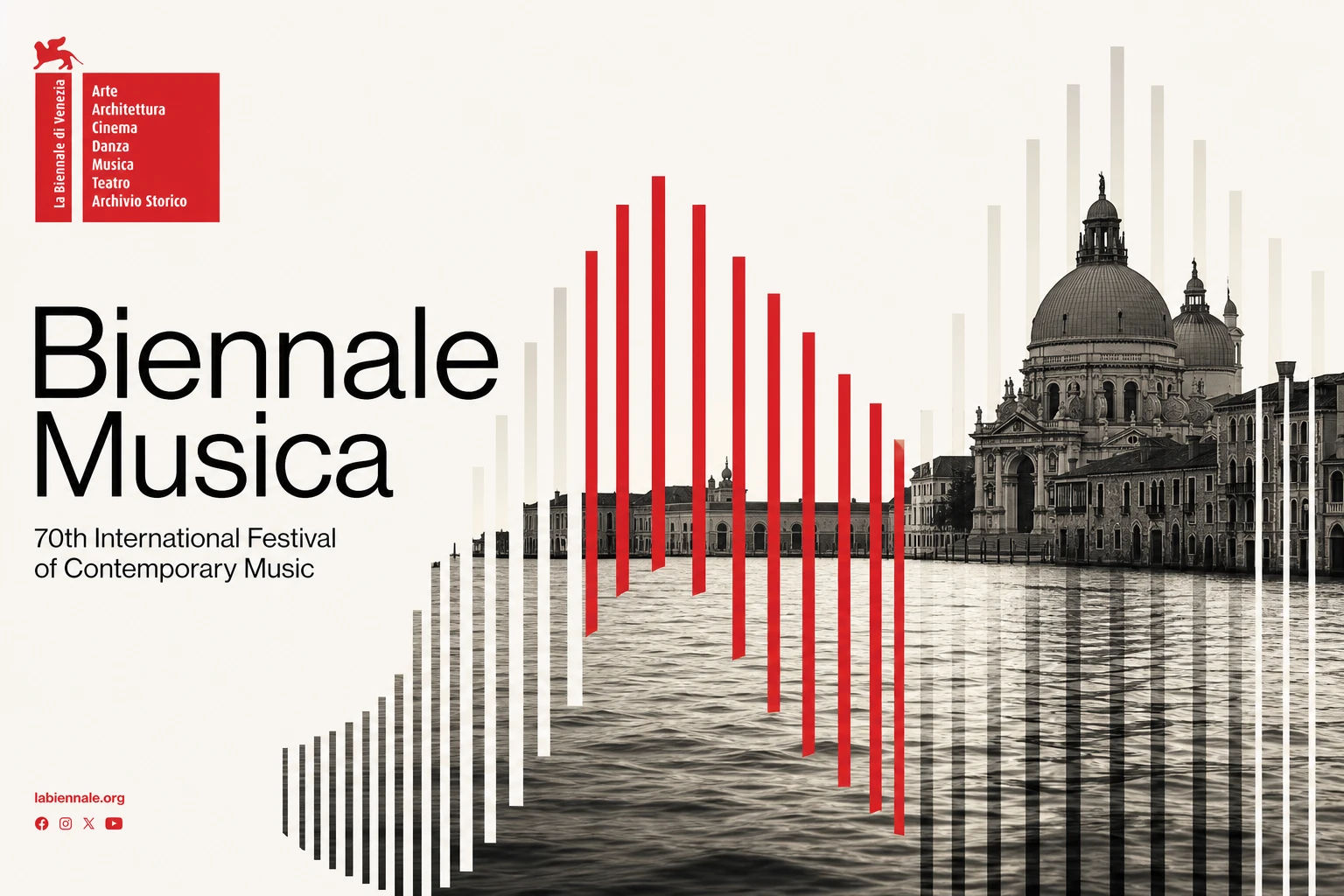
Every October, Venice transforms into a city of sound, where the past and future of music converge in a celebration of creativity and innovation. Biennale Musica 2026, the 70th International Festival of Contemporary Music, promises to be an extraordinary journey through the realms of experimental music, classical reinterpretation, and electronic sound.
Over 15 days, the festival invites you to explore Venice's historic venues and immerse yourself in a world of sound that challenges and inspires. Directed by Italian composer and electronic musician Caterina Barbieri, this year's theme, A Child of Sound, encourages listeners to rediscover the wonder and curiosity of music.
"Venice becomes a listening city, where sound transcends boundaries and invites open, curious, and unguarded exploration."
The Story of Biennale Musica
Venice's Sonic Legacy
Biennale Musica is the music branch of La Biennale di Venezia, a prestigious cultural institution founded in 1895. Known for its Art, Architecture, Cinema, Dance, Theatre, and Music programmes, La Biennale is a beacon of artistic excellence.
The International Festival of Contemporary Music explores sound beyond conventional genre boundaries. It presents artists working across:
- Contemporary classical music
- Experimental music
- Electronic music
- Noise
- Improvisation
- Sound art
- Chamber music
- Vocal performance
- Instrumental composition
- Digital performance
- Multimedia work
- Site-specific sound
- Music theatre
- Avant-garde traditions
- Global musical practice
The 2026 Theme: A Child of Sound
Rediscovering Musical Wonder
The official title of Biennale Musica 2026 is A Child of Sound. This theme invites audiences to embrace music with the openness and curiosity of a child, free from expectation and prejudice.
"Music as a form of spiritual childhood reconnects listeners with vitality, creative energy, and the ability to hear without fixed categories."
The 2026 programme explores:
- Wonder
- Curiosity
- Listening without prejudice
- Experimental sound
- Musical discovery
- Memory and imagination
- Noise and silence
- The relationship between tradition and innovation
- Sound as a collective experience
- The role of music in social and emotional life
Caterina Barbieri: Festival Director
Leading with Vision and Innovation
Caterina Barbieri is an Italian composer and musician renowned for her work with electronic sound, synthesis, and psychoacoustics. Her music explores how subtle changes in frequency, rhythm, and harmony can create immersive listening experiences.
Biennale Musica 2026 is Barbieri’s second edition as director. Her approach continues the direction begun with the 2025 festival, which explored cosmic music and included artists working across minimalism, electronics, improvisation, and experimental sound.
Keiji Haino: Golden Lion for Lifetime Achievement
A Pioneer in Radical Sound
The Golden Lion for Lifetime Achievement at Biennale Musica 2026 is awarded to Japanese artist Keiji Haino. Known for his work in radical improvisation, experimental rock, and noise music, Haino has developed a unique artistic language through guitar, voice, percussion, and electronics.
The award recognises his pioneering contributions to:
- Improvisation
- Noise music
- Free music
- Experimental performance
- Guitar-based sound art
- Vocal expression
- Avant-garde practice
- Radical listening
The Golden Lion ceremony is free to attend with advance reservation, subject to seating availability.
Sarah Davachi: Silver Lion 2026
Exploring the Depths of Sound
The Silver Lion of Biennale Musica 2026 goes to Canadian composer, performer, and organist Sarah Davachi. Her music focuses on long durations, acoustic resonance, and harmonic texture, inviting audiences to notice details often missed in conventional music.
Her award reflects the importance of:
- Organ music
- Acoustic resonance
- Experimental composition
- Minimal sound
- Sustained tones
- Listening as attention
- Historical instruments and contemporary practice
Biennale Musica 2026 Programme Highlights
A Diverse Musical Landscape
The 2026 edition presents more than 40 events, featuring 130 artists, 23 new works, and 18 world premieres. The programme spans various musical worlds:
- Classical reinterpretation
- Electronic music
- Experimental sound
- Contemporary chamber music
- Organ performance
- Vocal music
- Sound installation
- Global musical traditions
- New commissions
- Improvisation
- Site-specific work
Key Biennale Musica Venues
Historic Spaces of Sound
The festival takes place across Venice, utilizing its historic venues to create unique musical experiences.
Arsenale
The Arsenale is a central festival location, known for its industrial architecture and rich history. It hosts events in spaces such as:
- Teatro alle Tese
- Teatro Piccolo Arsenale
- Tese dei Soppalchi
- Sale d’Armi
Teatro Goldoni
Located in the San Marco district, Teatro Goldoni is ideal for intimate concerts and chamber music.
Teatro Malibran
Near the Rialto area, Teatro Malibran links Venice's performance heritage with contemporary creation.
Ca’ Giustinian
La Biennale’s historic headquarters, Ca’ Giustinian, serves as a cultural meeting point and venue for selected events.
San Marco Cathedral
One of Venice’s most sacred spaces, the cathedral hosts a free audio installation and special access programme. Visitors should dress modestly and respect worshippers.
Biennale Musica 2026 Ticket Prices
Accessing the Festival
Ticket prices vary by venue and event. The standard listed ticket price is €25 full price. Special ticket categories include:
- Speciale Musica ticket: €15
- Reduced ticket: €18 for eligible disabled visitors
- Free admission with advance reservation for selected events
- Biennale Musica + Biennale Arte: €40
Tickets and subscriptions can be purchased in advance through the official La Biennale di Venezia website.
How to Plan Your Festival Days
Maximizing Your Experience
Biennale Musica is spread across Venice, so a little planning makes the experience much easier.
Choose a Daily District
Group events by area to minimize travel. For example:
- Arsenale day: Teatro alle Tese, Teatro Piccolo Arsenale, and Castello
- San Marco day: Ca’ Giustinian, Teatro Goldoni, and San Marco Cathedral
- Rialto day: Teatro Malibran, Cannaregio, and San Polo
- Dorsoduro day: Contemporary art museums, galleries, and evening performances
Book Major Events Early
World premieres, award ceremonies, and limited-capacity concerts may sell out quickly.
Allow for Venice Travel Time
Walking routes can take longer than maps suggest. Use:
- Walking
- Vaporetto water buses
- Water taxis
- Traghetto gondola crossings
- Alilaguna airport boats
Balance Music and Venice
Do not try to see every event. Build in time for food, rest, museums, and unexpected discoveries.
Where to Stay for Biennale Musica 2026
Accommodation Options
Castello
Best for Arsenale events and a quieter Venetian atmosphere.
San Marco
Best for Teatro Goldoni, Ca’ Giustinian, and central access to many festival venues.
Cannaregio
Best for restaurants, artisan workshops, Teatro Malibran access, and a more local feel.
Dorsoduro
Best for art lovers, galleries, museums, and waterfront walks.
Santa Croce
Best for visitors arriving by train, bus, or airport transfer through Piazzale Roma.
Mestre
Best for lower-budget accommodation. Train and bus connections are practical, but late-night return planning is important.
Venice in October
The Perfect Cultural Escape
Venice in October is ideal for cultural travel. Temperatures are cooler than summer, museums are active, and the city’s evening atmosphere becomes especially appealing.
However, prepare for:
- Rain
- Cool evenings
- High humidity
- Possible acqua alta flooding
- Busy weekends
- Vaporetto queues
- Limited seating at popular events
Bring:
- Waterproof walking shoes
- Lightweight rain jacket
- Smart-casual evening clothing
- Warm layer
- Small umbrella
- Phone power bank
- Reusable water bottle
- Modest clothes for religious venues
- Earplugs for louder experimental performances
Food and Evening Culture
Indulge in Venetian Delights
Between concerts, experience Venice through food. Try:
- Cicchetti
- Baccalà mantecato
- Sarde in saor
- Risotto al nero di seppia
- Bigoli in salsa
- Venetian tramezzini
- Local wine from the Veneto
- Gelato
- Pastries from historic cafés
Good areas for a pre-concert aperitivo include:
- Cannaregio
- Dorsoduro
- Rialto
- Campo Santa Margherita
- Castello
- San Polo
Reserve dinner if you have a fixed performance time. Venice restaurants can fill quickly on festival weekends.
Frequently Asked Questions
The Things People Always Want to Know
When is Biennale Musica 2026?
Biennale Musica 2026 takes place from Saturday, 10 October to Saturday, 24 October 2026.
What is the theme of Biennale Musica 2026?
The theme is A Child of Sound, exploring openness, wonder, experimental listening, and the creative vitality of music.
Who directs Biennale Musica 2026?
The festival is directed by Italian composer and musician Caterina Barbieri.
Who receives the Golden Lion in 2026?
Japanese experimental artist Keiji Haino receives the Golden Lion for Lifetime Achievement.
Who receives the Silver Lion in 2026?
Canadian composer and organist Sarah Davachi receives the Silver Lion.
How much are Biennale Musica tickets?
Standard tickets are €25, while selected Speciale Musica events cost €15. A Biennale Musica plus Biennale Arte combined ticket costs €40.
Where does Biennale Musica take place?
The festival takes place across Venice, including the Arsenale, Teatro Goldoni, Teatro Malibran, Ca’ Giustinian, and San Marco Cathedral.
Verified Information at a Glance
- Event name: Biennale Musica 2026
- Official title: 70th International Festival of Contemporary Music
- Festival theme: A Child of Sound
- Confirmed dates: Saturday, 10 October to Saturday, 24 October 2026
- Location: Venice, Italy
- Festival director: Caterina Barbieri
- Programme scale: 130 artists, more than 40 events, 23 new works, and 18 world premieres
- Golden Lion for Lifetime Achievement: Keiji Haino
- Silver Lion: Sarah Davachi
- Key venues: Arsenale, Teatro alle Tese, Teatro Piccolo Arsenale, Tese dei Soppalchi, Sale d’Armi, Ca’ Giustinian, Teatro Goldoni, Teatro Malibran, and San Marco Cathedral
- Standard ticket price: €25
- Speciale Musica ticket price: €15
- Reduced ticket price: €18 for eligible disabled visitors
- Free reservation events: Golden Lion ceremony, Silver Lion ceremony, selected Ca’ Giustinian audio installation, and San Marco Cathedral programme
- Combined Biennale Musica + Arte ticket: €40
- Best for: Contemporary-music listeners, composers, students, artists, experimental-sound fans, culture travellers, and Venice visitors
- Travel tip: Book major world premieres early, group events by Venice district, and allow extra travel time between venues
Choose a night between 10 and 24 October 2026, enter Venice’s theatres, Arsenale spaces, and historic halls with an open ear, and let Biennale Musica 2026 reveal a city where the future of sound meets centuries of artistic memory.
```