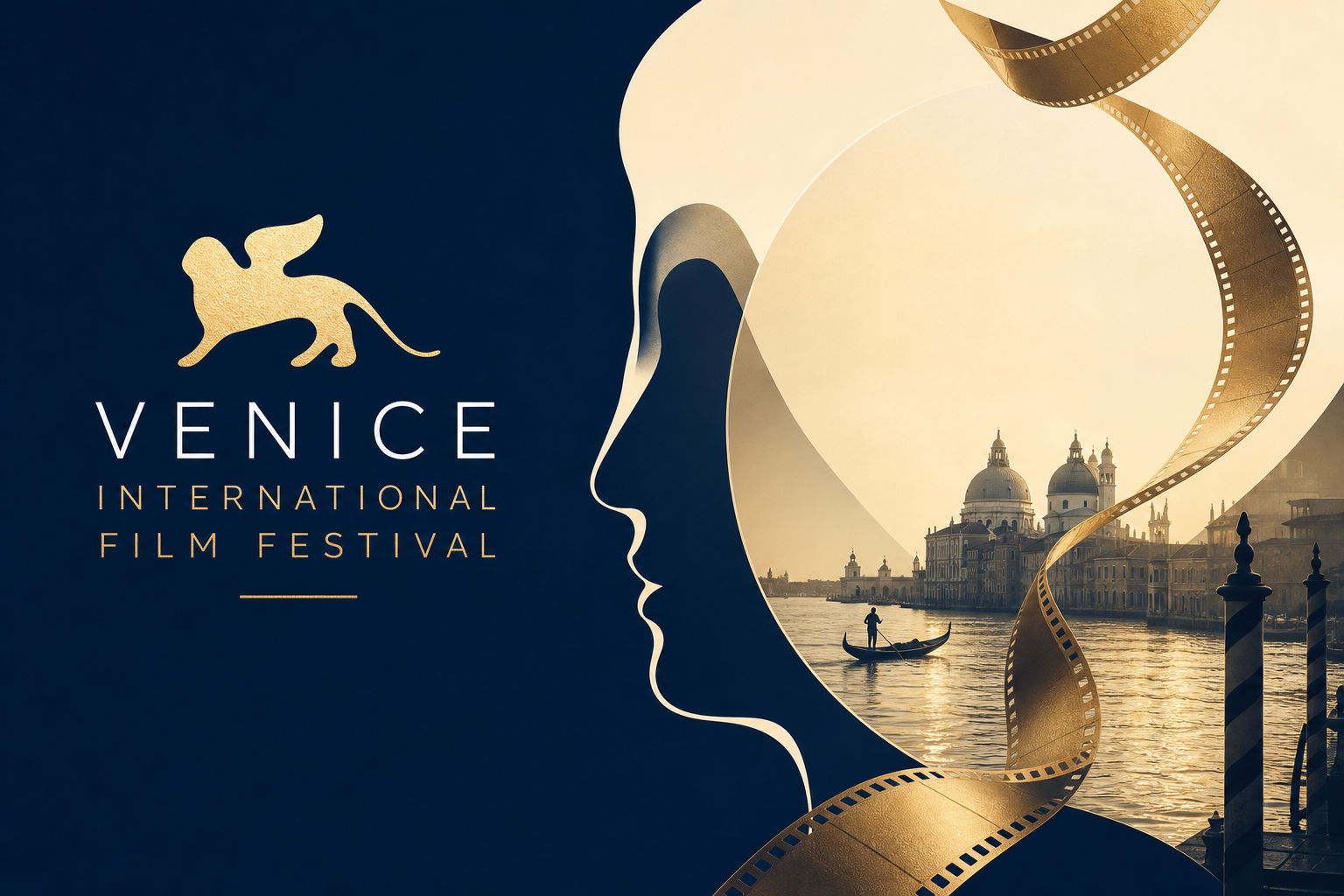
There is no film festival quite like Venice. Not Cannes, not Sundance, not Berlin. What La Biennale di Venezia has built on the island of Lido di Venezia since 1932 is a living institution, the oldest film festival in the world, and one that continues to set the tone for cinema's most important awards season every September. For eleven days each year, the barrier island separating Venice from the Adriatic Sea becomes the most talked-about stretch of sand in global cinema.
The 83rd Venice International Film Festival is confirmed to take place from 2 to 12 September, directed once again by Alberto Barbera, with Maggie Gyllenhaal serving as Jury President for the main competition. Whether you are a film industry professional, a devoted cinephile, or a traveler looking for something genuinely unforgettable during a visit to Venice, the Film Festival delivers an experience that cannot be replicated anywhere else on earth.
"September on the island of Lido di Venezia is one of the great cultural experiences available in Europe, and the Venice International Film Festival is the reason."
A Festival Born in 1932
The World's First International Film Festival
The Venice International Film Festival was founded in 1932, making it the world's first international film festival by a margin of several decades. It was created as part of the Venice Biennale, the same cultural institution that organizes the Venice Art Exhibition, the Architecture Biennale, and festivals dedicated to dance, music, and theatre.
From the beginning, the festival was designed to celebrate cinema as an art form, not just entertainment. That mission has not changed. Over its long history, it has given the world the Golden Lion (Leone d'Oro), its highest award, and launched films that went on to define their eras. Directors like Akira Kurosawa, Federico Fellini, Orson Welles, and countless others have had defining moments at Venice.
The festival is officially recognized by the FIAPF (International Federation of Film Producers Association), which places it in the highest category of international competitive film festivals alongside Cannes and Berlin.
Where it Happens: The Island of Lido di Venezia
A Cinematic Escape
The Venice Film Festival takes place on Lido di Venezia, a long, narrow barrier island that stretches along the edge of the Venetian lagoon between the city of Venice and the Adriatic Sea. The Lido is a world apart from the tourist-heavy alleys of San Marco and the glass furnaces of Murano. It has wide, tree-lined boulevards, Art Nouveau hotels from the early 20th century, sandy beaches, and a relaxed atmosphere that feels like a different era.
The main venue is the Palazzo del Cinema, the festival's historic screening hall on the Lungomare Marconi, the seafront boulevard facing the Adriatic. Other screening venues on the island include the Sala Darsena, Sala Laguna, and the PalaBiennale, all clustered near the waterfront.
Getting to the Lido from Venice is straightforward. The vaporetto Line 1 and Line 2 connect the main Venice waterfront with the Lido in about 15 to 25 minutes. During the festival, the lines run frequently and the journey itself, across the open lagoon with views of the city's skyline, feels appropriately cinematic.
What the Festival Includes
A Rich Programme of Cinematic Excellence
The programme of the Venice International Film Festival is built around several key sections:
- Main Competition (Venice 74 Competition): The official competitive selection, where films compete for the Golden Lion, Silver Lion, and other major awards.
- Out of Competition: Major films, often high-profile premieres, screened outside the main competition.
- Orizzonti (Horizons): A section dedicated to new trends and emerging voices in world cinema.
- Venice Immersive: One of the most innovative sections, dedicated to XR (extended reality) projects, virtual reality films, and immersive installations.
- Venice Classics: Restored classic films, honoring cinema history.
- Settimana Internazionale della Critica (International Critics' Week): A parallel section organized independently, showcasing debut and second features.
- Giornate degli Autori (Venice Days): Another independent parallel section focusing on bold cinematic voices.
Across all sections, the most recent selection process screened 4,580 films to arrive at the final festival lineup, including 1,936 feature films and 2,353 short films. Of those, 91 films made the official selection. Those numbers give some sense of how competitive and globally significant this event is.
Venice Immersive: A Festival Within a Festival
Exploring the Intersection of Cinema and Technology
One of the most distinctive aspects of the Venice Film Festival compared to its rivals is the Venice Immersive strand. For several years, this section has operated with its own dedicated venue, often referred to as the Venice Immersive Island, where XR installations and virtual reality works are presented.
The immersive section runs from late August through early September, overlapping with the main festival, and attracts artists, technologists, and filmmakers who are working at the intersection of cinema and interactive digital experience. If you want to understand where cinema is going in the next decade, the Venice Immersive section is one of the most fascinating places to look.
Venice Production Bridge
The Industry Hub of the Festival
Running alongside the public festival is the Venice Production Bridge, the industry-focused section of the event. It runs from 3 to 9 September and includes:
- Venice Gap-Financing Market: Connecting film projects with international co-production opportunities.
- Book Adaptation Rights Market: Linking publishers and literary agents with film producers.
- Final Cut in Venice: A support programme for films from Africa, Iraq, Jordan, Lebanon, Palestine, and Yemen in post-production.
- VPB Locations Market: Showcasing international filming locations to producers.
The Venice Production Bridge is primarily for industry professionals with accreditation, but its existence adds an important dimension to the festival as a whole. Venice in September is not just a showcase. It is a working hub where films get financed, co-produced, and shaped.
Attending as a Visitor
Making the Most of Your Festival Experience
The Venice International Film Festival is partly open to the general public, and tickets for public screenings are available to anyone, not just industry professionals. Here is what general visitors need to know:
- Public tickets go on sale in late July or early August. They are available through the official Biennale website.
- Accreditation categories include Industry, Press, Cinema, and Cinema for Students. The Cinema and Cinema for Students accreditation is the most accessible route to see a wide range of films during the festival.
- Early Bird accreditation registration has a deadline in early June for reduced rates.
- The Opening Ceremony on 2 September and the Awards Ceremony on 12 September are the two most prestigious moments, though both require separate invitations or accreditation for access.
Practical tips for attending:
- Book accommodation on the Lido well in advance. Hotels fill up fast, particularly the classic Art Deco properties on the seafront like the Hotel Excelsior.
- The Lido in September is wonderful. The beaches are still warm, the water is clear, and the atmosphere is electric during the festival.
- Combine with other Venice September events. The Venice Glass Week runs 12 to 20 September immediately after the Film Festival, making a combined trip extremely worthwhile.
- Use the vaporetto ferry to move between Venice and the Lido. It runs frequently during festival days.
- Dress for the occasion at evening screenings. The atmosphere at the Palazzo del Cinema on a festival evening is genuinely glamorous.
The Golden Lion and Why It Matters
The Pinnacle of Cinematic Achievement
The Golden Lion (Leone d'Oro) is the highest award at Venice, equivalent to the Palme d'Or at Cannes or the Golden Bear at Berlin. Winning at Venice can transform a film's trajectory. Films that have taken the Golden Lion have gone on to win Academy Awards, define critical conversations, and influence filmmaking for years afterward.
The jury for the main competition, led in the current edition by Maggie Gyllenhaal, makes decisions that reverberate through the entire film industry. This is what gives September in Venice its specific energy: the sense that the films being screened here might matter in ways that extend far beyond the ten days of the festival itself.
Verified Information at a Glance
- Event name: Venice International Film Festival (La Biennale di Venezia – Biennale Cinema)
- Category: International competitive film festival, FIAPF-recognized
- Edition: 83rd Venice International Film Festival
- Artistic Director: Alberto Barbera
- Jury President (main competition): Maggie Gyllenhaal
- Dates: 2 to 12 September
- Typical month: September (end of August to mid-September historically)
- Main venue: Palazzo del Cinema, Lungomare Marconi, Lido di Venezia
- Additional screening venues: Sala Darsena, Sala Laguna, PalaBiennale
- Venice Immersive section: Operates on a dedicated venue on the Lido
- Venice Production Bridge: Runs 3 to 9 September (industry professionals)
- Official selection (recent edition): Over 91 films from 4,580 screened
- Accreditation types: Industry, Press, Cinema, Cinema for Students
- Public tickets: Available through the official Biennale website from late July
- Highest award: Golden Lion (Leone d'Oro)
- Founded: 1932 (world's oldest film festival)
- Organizer: La Biennale di Venezia
- Official website: www.labiennale.org/en/cinema
September on the island of Lido di Venezia is one of the great cultural experiences available in Europe, and the Venice International Film Festival is the reason. If you have ever wanted to be in the same room where cinema history is being made, this is your moment. Buy your tickets, book your accommodation on the Lido, and step into a world where the art of filmmaking is taken seriously, celebrated generously, and projected onto screens a short ferry ride from one of the most beautiful cities in the world. Do not let this season pass without experiencing it.
```