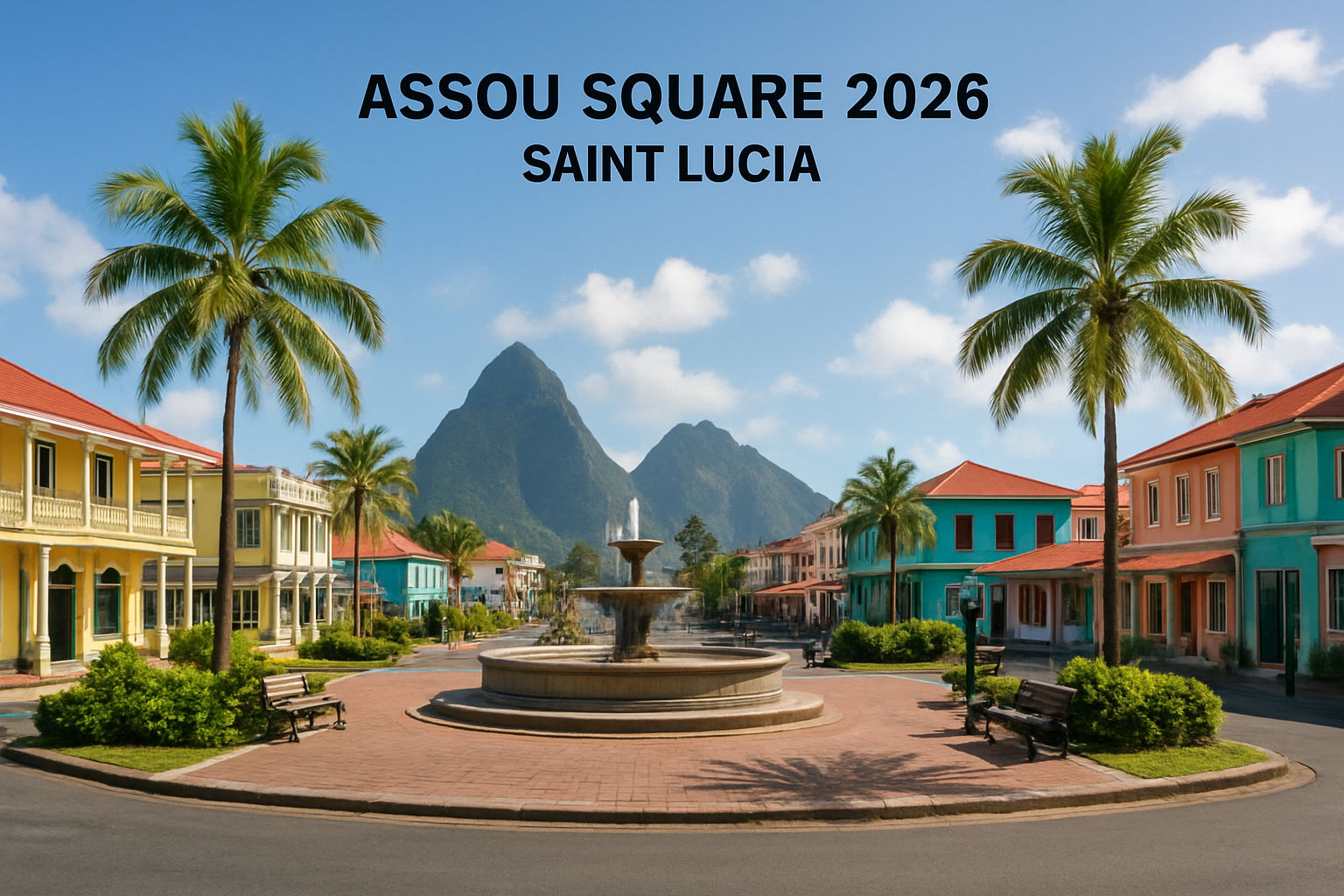
Saint Lucia island landscape
    Caribbean

    Saint Lucia

    Famous for the Pitons, luxury escapes

    4.9
    Guest Rating
    22°C
    Rainy
    Humidity: 100%
    Wind: 15 km/h
    Live Temperature
    21
    Active Events
    About

    The story of Saint Lucia

    Saint Lucia is famous for its dramatic Piton mountains, luxury resorts, and volcanic black sand beaches. This romantic destination offers world-class spas, hiking adventures, and stunning natural beauty.

    Two green peaks rise like pyramids from a turquoise sea, fishing boats bob in quiet coves, and the air smells of chocolate and spice. Saint Lucia is an island that feels both dramatic and gentle, a place where you can hike a volcano in the morning and float in a warm mineral bath in the afternoon. Saint Lucia travel is about finding your balance, whether that means adventure in the rainforest, lazy days on the beach, or lively nights at a village street party.

    Set in the Eastern Caribbean, Saint Lucia’s geography is defined by the Pitons, two volcanic spires that are a UNESCO World Heritage site. The island’s interior is a tangle of rainforest, banana plantations, and winding roads, while the coastline alternates between golden sand beaches and steep, jungle-clad cliffs. The north of the island is home to Rodney Bay, a hub for sailing, dining, and resorts. The south, around the town of Soufrière, is where you will find the Pitons, hot springs, and a more rustic, natural vibe.

    When...

    Climate & Weather

    Tropical climate with year-round warm temperatures and trade winds.

    Best Time to Visit

    December to April for dry, pleasant weather

    Highlights

    Top highlights

    The Pitons UNESCO site

    Luxury resorts

    Volcanic beaches

    Activities

    Popular activities

    Hiking
    Luxury spa treatments
    Volcano tours
    Snorkeling
    Essentials

    Quick info

    Timezone
    UTC-4
    💰Currency
    East Caribbean Dollar (XCD)
    🗣️Language
    English
    Temperature
    27°C
    What's On

    Upcoming events

    Saint Lucia Carnival 2026
    Carnival
    TBA

    Saint Lucia Carnival 2026

    Saint Lucia Carnival 2026: An Unforgettable Island Experience

    Saint Lucia Carnival 2026 (also promoted as Lucian Carnival) is officially scheduled for July 1 to July 22, 2026, with the signature two-day Parade of the Bands on July 20 and July 21, 2026 in and around Castries. It’s an island-wide celebration of soca, calypso, Dennery Segment, costumes, and non-stop “fete” culture that blends street-level energy with Saint Lucia’s stunning coastline and warm summer nights.


    Saint Lucia Carnival 2026: The Caribbean Island Party with Real Local Soul

    Saint Lucia is already one of the Caribbean’s most visually dramatic islands, from the Pitons rising near Soufrière to the golden bays around Rodney Bay and the north coast. Carnival season adds a second layer to that beauty: sound. For three weeks in July, the island’s calendar fills with competitions, parties, and community events that build toward two massive parade days where bands take over the roads in sequins, feathers, and Lucian color.

    What makes Saint Lucia Carnival stand out for travelers is its scale-to-island ratio. The celebrations are big enough to feel like a major Caribbean carnival destination, yet small enough that you can still escape to the beach, find a quiet viewpoint, and return to the music when you are ready. If you love festivals that feel rooted in a place, Lucian Carnival delivers that island identity with every horn line, drum rhythm, and crowd chorus.


    What’s Confirmed for 2026: Dates, Parade Days, and the Island Focus

    The official Lucian Carnival site states Lucian Carnival 2026 runs from July 1 to July 22. The official Lucian Carnival Instagram profile also posts July 1 to 22, 2026, and explicitly lists Parade Days: July 20 & 21, 2026.

    Those parade days are the grand finale for many visitors, and they are best treated like a two-day “marathon on the road” rather than a quick look-and-leave event. Even if you do not play mas in a costume band, simply following the route, watching the judging points, and feeling Castries light up with music gives you the heart of the carnival experience.


    Carnival Background: Why “Lucian Carnival” Matters

    Lucian Carnival is marketed as a full cultural celebration, not a single weekend, with music, dance, pageantry, and street parades across the island. That extended format is why the festival is so travel-friendly: you can plan around parade days, then add fetes, music competitions, and local community events in the week before.

    Carnival in Saint Lucia also reflects the island’s living music culture, where soca and calypso compete for attention alongside modern local sounds and DJ-driven party formats. For travelers who want more than a beach vacation, carnival week is a direct line into what Saint Lucians celebrate and how the island expresses joy.


    The Highlight: Parade of the Bands (July 20–21, 2026)

    The Parade of the Bands is described on the official carnival site as the grand finale, and it emphasizes that the route is long and high-energy, so pacing and preparation matter. Parade days in Saint Lucia are when “mas” becomes the main language of the streets: music trucks, dancers, band sections, and spectators all moving through Castries in waves.


    Where the Parade Happens: Castries Streets and Highways

    Government-published route guidance for parade days (from prior official announcements) describes the parade moving along major Castries corridors including the Castries–Gros Islet Highway, the John Compton Highway, the Vigie roundabout area, and the Waterfront, then looping through central streets before ending near Caribbean Cinemas. While exact traffic plans can change year to year, that description gives visitors a reliable picture of the parade geography: it’s a city-and-highway circuit, not just a short downtown loop.


    Timing and Crowd Energy

    A widely read travel guide notes the Parade of the Bands takes place on Monday and Tuesday and “kicks off around 11am,” with a route that finishes in the town centre near the judging stage roundabout area. This is why many experienced carnival travelers treat parade days as all-day commitments: start hydrated, expect heat, and plan rest breaks.


    J’ouvert in Saint Lucia: Sunrise Energy and Paint-Powder Culture

    If you want the most raw “start of the day” carnival feeling, J’ouvert is the tradition to look for. The official Lucian Carnival site describes J’ouvert as a pre-dawn celebration that kicks off at 4 AM, noting the term comes from French “jour ouvert,” meaning “daybreak.”

    For visitors, J’ouvert is often the moment that carnival becomes personal: you are not watching performers, you are inside the crowd, moving with the music as the island wakes up. It’s also one of the best ways to understand how Saint Lucia’s carnival blends Caribbean tradition with a local twist, especially when paired with a later beach reset and a return to night fetes.


    Fetes, Music Events, and Where the Island Parties

    Saint Lucia Carnival season is built on a ladder of events, from competitions to all-inclusive parties to street-level gatherings. Even when a visitor’s “main goal” is parade days, the most memorable trips usually include at least one fete night to experience Saint Lucia’s DJ culture, local performers, and the way the island comes together after dark.

    A useful planning note is that many travelers gravitate toward the north of the island for nightlife and pre-game energy, especially in the Rodney Bay and Gros Islet area, then head into Castries for major parade activities. That north-to-capital movement is a classic Saint Lucia carnival flow: relax by the marina and beaches, then go “on de road” when it matters most.


    What It Costs: Free Street Viewing vs Paid Carnival Experiences

    Watching the parade from public areas is typically a street experience rather than a ticketed stadium event, while many premium experiences cost money. Costs usually show up in three main places:

    • Fete tickets
    • Band registration and costumes (if you play mas)
    • Travel logistics like accommodation and transport on peak nights

    For travelers who want an all-in-one option, some third-party packages publish full trip pricing that bundles hotels, parties, and extras, but those are not the same as official carnival “entry fees.” If you want the most flexible budget, plan to watch parade days for free from the route, then choose one or two paid events that match your vibe.


    Travel Tips for Saint Lucia Carnival Week

    Book Accommodations Early and Choose Your Base Wisely

    Parade days create the highest demand, so booking early matters if you want a specific area or hotel style. A practical approach is to pick a base that matches your priorities:

    • Rodney Bay or Gros Islet for nightlife and a resort-meets-party atmosphere.
    • Castries-adjacent areas for quicker access to parade routes and daytime carnival logistics.


    Plan Transport Like It’s a Festival, Not a Normal Beach Day

    The official parade route guidance warns about significant traffic diversions and delays during parade days, which affects how you move around the island. If you are staying outside Castries, leave early and expect the return trip to take longer than usual.


    Bring Smart Road Essentials

    Parade days are a heat-and-sun experience for most people, so think like you are doing an outdoor endurance event:

    • Refillable water bottle and electrolyte packets.
    • Sunscreen and a hat.
    • Comfortable shoes you can dance in for hours.
    • A small crossbody bag that keeps valuables secure in crowds.


    Verified Information at a Glance

    Event Name: Lucian Carnival / Saint Lucia Carnival 2026

    Event Category: Caribbean carnival festival (music, costumes, street parades, cultural events)


    Confirmed Overall Dates: July 1 to July 22, 2026

    Confirmed Parade Days: July 20 & July 21, 2026

    Main Parade Event: Parade of the Bands (grand finale)

    Main Parade Location: Castries (parade route through city/highway corridors)

    Parade Route (official guidance, route subject to change): Castries–Gros Islet Highway, John Compton Highway, Vigie roundabout, Waterfront, city streets, ending near Caribbean Cinemas

    J’ouvert Time (general official description): Starts at 4 AM

    Attendance Pricing: Public street parade viewing is presented as a street event; major costs come from optional fetes, costumes/band participation, and travel logistics.

    Notable Statistic (official site): Over 7,000 revellers scheduled to play mas in the 2025 Parade of the Bands (useful indicator of scale).


    • Saint Lucia in July already feels alive, but during Carnival it becomes magnetic. Choose your band or choose your viewing spot, learn a few lyrics before you arrive, and let the island lead you from sunset in Rodney Bay to the pulse of Castries on parade day, because Lucian Carnival 2026 is exactly the kind of Caribbean celebration that turns first-time visitors into lifelong returners.
    , Saint Lucia
    Jul 1, 2026 - Jul 22, 2026
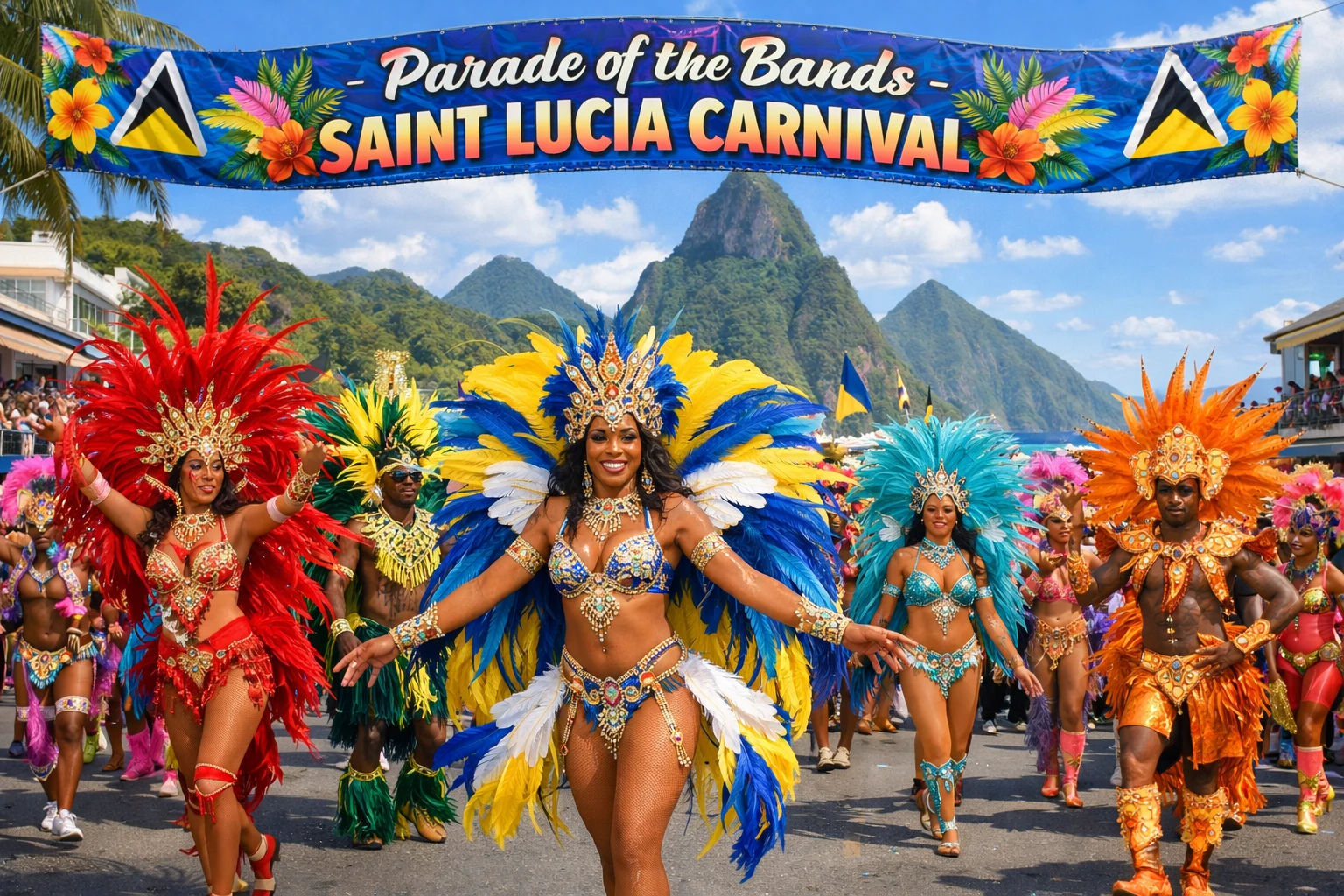
    Parade of the Bands — Saint Lucia Carnival 2026
    Festival (Carnival street parade)
    Free

    Parade of the Bands — Saint Lucia Carnival 2026

    Parade of the Bands — Saint Lucia Carnival: The Greatest Street Party in the Caribbean

    Picture this. You are standing on a sun-drenched street in Castries, the compact and colorful capital of Saint Lucia, and the bass from an approaching music truck is rolling through your chest before you can even see it coming. Then it rounds the bend, and behind it floods a river of human color so brilliant and so densely packed that your brain takes a second to process what your eyes are seeing. Towering feathered backpacks. Glittering bikini-style mas costumes draped in sequins the color of peacock wings. Headpieces so elaborate they look like wearable architecture. And every single person in that river is dancing, laughing, and absolutely living their best life on a Tuesday morning in July.

    That is the Parade of the Bands at the Saint Lucia Carnival, and there is genuinely nothing else like it in the Caribbean.

    The Parade of the Bands is the grand culmination of the Saint Lucia Carnival, where revelers adorned in dazzling costumes flood the streets of Castries in a kaleidoscope of colors and music, led by vibrant music trucks, with each band showcasing their intricately designed costumes dancing to the infectious rhythms of soca and calypso. It is the moment that everything else in the three-week carnival season builds toward, and for tens of thousands of participants and spectators, it delivers every single time.


    A Festival Rooted in History: Where the Parade of the Bands Came From

    From Shrove Tuesday to July: The Evolution of a Caribbean Icon

    In Saint Lucia, carnivals became an organized festival after World War II. The first recorded celebration was in 1947 when a small group of people dressed in ragged clothes began to beat out rhythms on bottles and pieces of steel as they paraded through Castries. People soon joined the impromptu parade, which ended at the home of Derek and Roddy Walcott on Chaussee Road.

    The Walcott home is a meaningful landmark in that origin story. Derek Walcott, who grew up watching this very tradition take root in the streets of Castries, went on to become Saint Lucia's first Nobel Laureate in Literature. His twin brother Roderick won the first Masquerade Band of the Year title in 1957. The carnival was literally born in the neighborhood of the family that would go on to define Saint Lucian artistic culture for the rest of the twentieth century.

    In 1950, the Physical and Culture Club in Castries organized the first-ever King and Queen competition for the Saint Lucia Carnival. Steel bands first made their appearance at the carnival in 1948, and some anthropologists suggest that steel band music is directly related to the melodious xylophones of Africa, from tribes in Mozambique and Guinea.

    The carnival grew through the 1950s and 1960s as a predominantly pre-Lenten celebration, but its most significant transformation came toward the end of the twentieth century. In 1999, the Saint Lucia Carnival Planning and Management Committee strategically moved it from February to July. The aim was to attract a larger international audience, avoid competing with Trinidad Carnival, and capitalize on the island's beautiful summer weather. Moving Saint Lucia Carnival to the summer transformed it from a pre-Lenten observance into a major tourism event with a growing international audience.

    That decision changed everything. The July carnival now sits in its own lane in the Caribbean festival calendar, drawing visitors from North America, Europe, and across the Caribbean who previously would have chosen Trinidad or Barbados. Saint Lucia's carnival has its own identity, its own music, its own culture, and now its own undisputed place on the global party map.


    What Actually Happens During the Parade of the Bands

    Two Days of Road March, Music, and Mas

    The Parade of the Bands is the crown jewel of Saint Lucia Carnival, featuring over 7,500 revelers who take to the streets for two days in a kaleidoscope of colors and creativity. On both days, the parade begins at the Choc Highway roundabout and winds its way through the City of Castries.

    The two-day structure gives the parade a distinct personality on each day. Monday is the full costume day, when the bands come out in their most elaborate and carefully constructed finery. Monday is full-costume glory: feathers, gems, towering backpacks, the whole works. You grab your section's music truck and chip along the city circuit from early morning until sundown. This is the day that produces the images that end up on magazine covers and Instagram feeds, the day when months of costume design work finally gets its moment under the Caribbean sun.

    Tuesday is lighter but just as fun. Most bands switch to Tuesday-wear, think monokini or swim-style pieces, so you can dance easier and keep cool. Tuesday has a looser, more intimate energy, a celebration among people who have already crossed the threshold of full-costume Monday together and now want to savour the last day of the season with a little less structure and a lot more joy.

    The Route Through Castries

    On Carnival Monday and Tuesday, carnival bands usually meet up at Union, which is about ten minutes or less from Castries by car. Revelers meet their bands at specific times and each band heads down the road at their allotted time with gaps in between to differentiate them.

    The route moves through the heart of Castries, past the Basilica of the Immaculate Conception on Derek Walcott Square, through the busy commercial streets of the capital, and along a path that has been walked by Saint Lucians in carnival costume for more than seven decades. For spectators, lining the route near the start at the Choc Highway roundabout means fewer spectators and easier photography as the revelers pass. After some time you can head south to the center of Castries, overtaking the parade of bands heading to the end to see them cross the stage.

    How the Judging Works

    The Parade of the Bands is a competition as much as a celebration, and the judging system adds a layer of drama and craft to what might otherwise be simply a very spectacular procession.

    There are two judging points along the route. The judges evaluate various aspects to award: Band of the Year, Best Portrayal of Theme, Mas on the Move, Spirit of Carnival, Section of the Year, and Individual of the Year.

    The Band of the Year title is the most coveted award in Saint Lucia Carnival, and the competition for it is fierce. Bands spend months conceptualizing their theme, designing their sections, constructing costumes, and rehearsing the presentation they will deliver at the judging points. The difference between a band that wins and one that finishes second can come down to the coherence of the theme across every costume, the energy of the masqueraders when they cross the stage, and the ingenuity of the design that ties everything together. Tribe of Twell has been a particularly dominant force in recent editions, winning the Band of the Year title in consecutive years in 2024 and 2025.


    Playing Mas: How to Join the Parade

    Choosing Your Band

    The carnival band you choose shapes your entire experience on the road. Whether you're looking for jaw-dropping costumes, premium drinks, a cultural experience, or a high-energy pump, each band offers something unique.

    There are several established mas bands that participate in the National Parade of the Bands each year. Just4Fun and Xuvo are among the names that carnival travel packages frequently partner with, but the official carnival website lists all registered bands along with their themes, costume options, and what is included in each package. Reading the details carefully matters. Beyond the costumes, also consider what else is included in the carnival package, such as food, drinks, music, security, and toilets. These elements can significantly impact your carnival experience.

    Picking Up Your Costume

    Set aside at least half a day to grab your outfit at the band's mass camp. Your band will email or text the exact location and time window, usually a few days before the road parade. Arrive early, bring photo ID and your final payment receipt, and be ready to try everything on for quick tweaks. Lines can be long, but the vibe is festive and worth the wait.

    The Ole Mas Tradition

    Alongside the pretty mas costumes that dominate the visual coverage of the parade, there is a deeper and older tradition running through the Castries streets during carnival week. The ole mas competition features more traditional handmade mas costumes referencing stories of folklore, freedom, and strength, which tend to accompany old-school calypso music and reference the island's colonial past. Many of these tend to be huge, stilt-like structures with moving parts and intricate details.

    These are the costumes that connect the modern carnival most directly to its African and Caribbean roots, the ones that carry the history and the memory of what this celebration was built on before sequins and feathers entered the picture. If you want to understand Saint Lucia Carnival at its deepest level, find a quiet spot along the route early on Monday morning and watch the ole mas pass by before the main parade builds.


    The Events That Lead Up to the Parade

    Three Weeks of Fetes, Competition, and Cultural Fire

    The Parade of the Bands does not exist in isolation. It is the endpoint of a three-week season that begins in early July and builds relentlessly in energy and intensity. A variety of competitions including the ever-popular Power and Groovy Monarch, Senior and Junior Panoramas (Steel Pan Competitions), and the Inter-Commercial House Calypso competition, dozens of community events, and a continuous calendar of parties and fetes all precede the two-day street parade.

    The Soca Monarch competition is where the songs of the season are crowned. The Power Monarch category rewards the most energetic and driving soca tracks, the ones that will be blasted from music trucks throughout the parade. The Groovy Monarch recognizes the more melodic, danceable end of the soca spectrum. Attending the Soca Monarch Finals, typically held on the Friday before the parade days, means you arrive on Monday already knowing the season's anthems and understanding why the crowd goes absolutely wild when a particular track drops from the truck.

    Panorama, the steel band competition, is where Saint Lucia's musical heritage is most purely expressed. Steel bands compete with arrangements of carnival songs performed entirely on tuned steel pans, and the musicianship on display is genuinely extraordinary. Steel bands first made their appearance at the Saint Lucia carnival in 1948, and today the number has grown to sixteen, including junior orchestras and even female-only groups.

    J'ouvert deserves its own paragraph entirely. J'ouvert at Castries is the official island-wide paint party that explodes around 2 AM on the relevant morning, with bands rolling out and streets staying drenched in color, mud, and soca until sunrise. It is chaotic, joyful, muddy, and entirely committed to the idea that the best way to greet carnival week is to cover yourself in paint in the middle of the night and dance in the streets with strangers until the sun comes up. Most people who do it once want to do it every year for the rest of their lives.


    Getting There and Getting Around

    Flying Into Saint Lucia

    Saint Lucia has two airports: Hewanorra International Airport (UVF) in the south, which handles most long-haul international flights from North America and Europe, and George F.L. Charles Airport (SLU) near Castries, which mainly serves regional Caribbean routes.

    Most travelers flying from the United States connect through Miami or New York, with the flight taking approximately four and a half hours from New York's JFK. From the UK, direct flights from London Gatwick with British Airways and Virgin Atlantic serve Hewanorra, with a flight time of around eight and a half hours. The drive from Hewanorra to Castries takes approximately one hour under normal conditions, but carnival traffic on parade days means building in extra time and confirming ground transport arrangements well in advance.

    Staying in Castries for Carnival

    The Sandals Halcyon Beach resort is situated at Choc Bay and the Saint Lucia Carnival Parade of Bands passes by the property on both days, which makes it one of the most conveniently located hotels in the city for spectators who want a guaranteed view without fighting for sidewalk space. For those who want to be closer to the action of the fetes and parties, hotels and guesthouses in and around Rodney Bay to the north of Castries offer easy access to the pre-parade party circuit.

    Accommodation fills up months before the parade days. Although Lucian Mas falls in the island's low tourism season, flights can be surprisingly scarce and expensive once carnival fans snap them up. Book your seat and room in the same click. The recommendation to treat flights and accommodation as a single transaction rather than two separate decisions is well-earned advice from experienced carnival travelers.

    Money and Getting Around

    The local currency is the Eastern Caribbean Dollar (EC$), with US dollars widely accepted. Exchange rates hover around EC$2.7 to US$1. Carry small bills for street food and taxis. Official taxis have TX plates, confirm fares in advance. Parade days mean road closures around Castries and the northern highway, so arrange taxis early and confirm a pickup spot for after Las Lap.


    Tips for Making the Most of Your Parade Experience

    The carnival route is a marathon, not a sprint. From the moment you step onto the route it is nonstop vibes, dazzling costumes, and pure Lucian energy. The sun will be shining, the music will be pumping, and the drinks will be flowing. Lather up sunblock, stay hydrated with lots of water, wear comfortable shoes because you will be dancing for hours, and fuel up with a good meal before and during the parade to keep energy high.

    For spectators who want the best free viewing experience, arriving at the Choc Highway roundabout starting point well before the first bands roll allows you to see each band as it launches in its full morning energy before the hours on the road have taken their toll. Bringing a cooler, as Saint Lucians do, and claiming a shaded spot along the route is the most comfortable and most communal way to experience the parade from the sidelines.

    If you are playing mas for the first time, stay with your band's designated section throughout the day. The music trucks, the food and drinks, the security personnel, and the general organizational support all operate around the band's movement as a unit. Wandering too far ahead or falling too far behind means missing the infrastructure that makes the all-day parade physically manageable.


    Why This Parade Belongs on Your Caribbean Bucket List

    Saint Lucia is already one of the most beautiful islands in the Caribbean. The twin peaks of the Pitons rising dramatically from the southwest coast are among the most iconic natural landmarks in the entire region. The world's only drive-in volcano sits near Soufriere. Pigeon Island National Landmark to the north holds centuries of military and cultural history. The island's French and British colonial past has produced a cultural blend of Kweyol language, Creole cuisine, and Caribbean artistic tradition that is entirely its own.

    The unique confluence of Caribbean, African, English, and French cultures creates an exquisite blend of food, music, and traditions that will inspire and enchant you.

    The Parade of the Bands takes all of that heritage and puts it in motion for two days in July. It is not a performance for tourists. It is a community expressing itself at full volume, in full color, with every creative and cultural tool it has developed over more than seventy-five years of carnival tradition. Watching it from the sidewalk will move you. Being inside it, behind a music truck with feathers on your back and soca in your ears, will change you.

    Pack your costume, charge your phone, break in your carnival shoes, and get yourself to Castries in July. The road is calling.


    Verified Information at a Glance

    Event Name: Parade of the Bands, Saint Lucia Carnival (officially known as Lucian Carnival)

    Event Category: Annual National Carnival Street Parade and Cultural Celebration

    Organizer: Carnival Planning and Management Committee (CPMC), under the Cultural Development Foundation (CDF), Government of Saint Lucia

    Official Website: carnivalsaintlucia.com

    Typical Months Held: July (full carnival season runs early July through the third week of July; exact dates vary by year)

    Parade Days: Two consecutive days, traditionally the Monday and Tuesday of the final week of the carnival season (typically the third week of July)

    Parade Start Location: Choc Highway Roundabout, northern Castries (near Massy Mega) / Union area, approximately 10 minutes from Castries city center

    Parade End / Judging Stage: City of Castries (William Peter Boulevard area and Mindoo Phillip Park corridor)

    Primary Venue City: Castries, Saint Lucia, Eastern Caribbean

    Spectator Admission: Free (standing along the parade route is free and open to the public)

    Mas Band Participation Cost: Varies by band, costume section, and inclusions (food, drinks, and amenities differ across packages). Costume costs have historically ranged from approximately USD $200 to $600 and above depending on the band and section. Always check directly with individual bands for current pricing at carnivalsaintlucia.com/carnival-bands

    Fetes and Private Party Tickets: Range from approximately USD $20 to $100+ per event

    Band of the Year Award: Most recent back-to-back holder: Tribe of Twell (2024 and 2025)

    Nearest Airports: Hewanorra International Airport (UVF), Vieux Fort (major international gateway, approximately 1 hour from Castries) and George F.L. Charles Airport (SLU), Castries (regional Caribbean routes

    Castries City Circuit, Saint Lucia
    Jul 20, 2026 - Jul 21, 2026
    Roots & Soul Festival 2026
    Music Festival
    TBA

    Roots & Soul Festival 2026

    Saint Lucia's most grounded and most spiritually connected music festival returns in August 2026. The Roots & Soul Festival 2026 brings reggae, conscious sound, hip-hop, Afropunk, and R&B to the iconic open-air stage at Pigeon Island National Landmark on Saint Lucia's northern coast. It delivers a Caribbean music experience that feels less like a concert and more like a gathering — a weekend when the island's most historically charged outdoor venue fills with the rhythms that define Caribbean identity at its deepest level.

    "A weekend when the island's most historically charged outdoor venue fills with the rhythms that define Caribbean identity at its deepest level."

    The 2026 Experience

    August at Pigeon Island National Landmark

    The Saint Lucia Tourism Authority confirms the Roots & Soul Festival for August 2026 at Pigeon Island National Landmark. Specific weekend dates had not been officially announced at the time of research. Based on the festival's historical scheduling pattern, the event runs across a two-day weekend in August, typically the last weekend of August or the first weekend of September.

    For confirmed 2026 dates and the official lineup announcement, monitor:

    The Story of Roots & Soul

    Saint Lucia's Signature Summer Festival

    The Roots & Soul Festival is one of the signature events within Soleil — the Saint Lucia Summer Festival, a multi-event cultural program that runs from approximately May through November. Soleil frames the summer months between the Jazz & Arts Festival (April 30 to May 10) and the Christmas and New Year season as a continuous cultural calendar, with the Roots & Soul Festival as one of its most prominent events.

    The festival's character and purpose are deliberately distinct from the Jazz & Arts Festival:

    • Jazz & Arts Festival: Polished, internationally marketed, high production, headline global artists, premium ticket pricing, draws international visitors from North America and Europe
    • Roots & Soul Festival: More grounded, community-connected, reggae and conscious sound-focused, rooted in Caribbean musical identity, popular among French Caribbean visitors from Martinique and Guadeloupe
    The Saint Lucia Tourism Authority describes it as "a more grounded music experience focused on reggae, conscious sound, and Caribbean identity".

    The Music at Roots & Soul

    Reggae, Conscious Sound, and Caribbean Soul

    The Roots & Soul Festival has built its identity around a specific musical philosophy that values roots, consciousness, and Caribbean authenticity over mainstream commercial programming. The genres represented include:

    • Reggae and Conscious Sound: From foundational Jamaican rocksteady and roots reggae of the 1970s to modern roots revival. Past performers include Tarrus Riley, Etana, Christopher Martin, and The Original Wailers.
    • R&B and Soul: Reflects the deep musical relationship between African-American soul music and Caribbean popular music. Past performers include American R&B artists like Musiq Soulchild.
    • Afropunk and Hip-Hop: Extends the festival's scope to broader diaspora musical conversations.
    • Caribbean Artists: Local Saint Lucian and regional Caribbean performers are a consistent part of the lineup.

    Into the Woods at Pigeon Island

    The Venue's Dramatic Beauty

    Pigeon Island National Landmark is one of the Caribbean's most dramatically beautiful outdoor concert venues. It is located on Saint Lucia's northwestern tip, connected to the mainland by a causeway, featuring:

    • Fort Rodney: Ruins of the 18th-century British military fortifications, adding historical gravitas.
    • Twin peaks: Rising from the island's interior, providing a dramatic natural backdrop.
    • Sweeping views: North across the Caribbean Sea toward Martinique.
    • The Atlantic and Caribbean Sea on two sides: Offering a cooling evening breeze.
    • Fort Rodney's grassy slopes: Natural viewing areas for the stage at multiple levels.

    Pigeon Island is also the venue for the headline nights of the Saint Lucia Jazz & Arts Festival, connecting both events to the same iconic setting.

    The Principles at the Heart of Roots & Soul

    Part of the Saint Lucia Festival Calendar

    The Roots & Soul Festival sits within Saint Lucia's most ambitious cultural festival calendar in the Eastern Caribbean:

    • April 30 to May 10, 2026: Saint Lucia Jazz & Arts Festival
    • June/July: Carnival / Saint Lucia Carnival
    • August 2026: Roots & Soul Festival, Pigeon Island
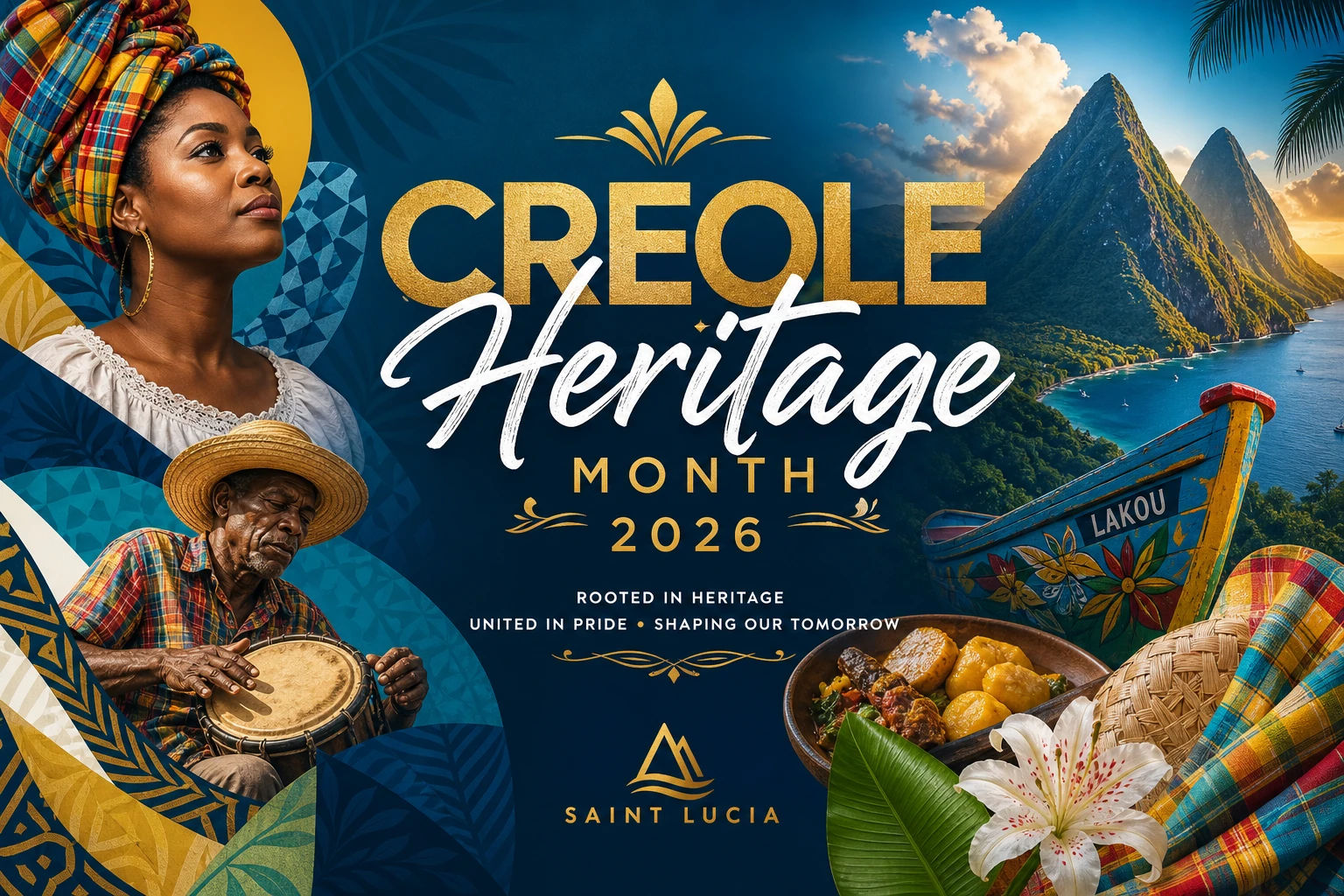
    • November: Creole Heritage Month and La Rose Festival
    • December: Atlantic Rally for Cruisers (ARC) arrival

    The festival calendar positions Saint Lucia as a destination where a single annual trip can be timed to several major events.

    Everything You Need Before August

    Tickets, Pricing, and Planning

    Based on the festival's historical pricing and the Saint Lucia festival market, expect:

    • General admission tickets: Approximately EC$100 (US$37), with early bird pricing at around EC$75 (US$28).
    • VIP packages: Premium viewing and hospitality options available.
    • Ticket sales: Through Events Saint Lucia Inc. and the official Saint Lucia Tourism Authority channels.

    The pricing structure reflects the festival's positioning as a community-accessible event.

    Seasonal Context and Travel Tips

    The Soleil Summer Festival Context

    The Roots & Soul Festival is part of Soleil, Saint Lucia's overarching summer festival brand. Soleil's multi-event structure means:

    • The festival benefits from Soleil's infrastructure, marketing, and audience relationships.
    • Fringe events create a broader cultural week in the Rodney Bay and Gros Islet area.
    • Regional visitors from Martinique and Guadeloupe treat the festival as part of a broader cultural tourism experience.

    Getting to Saint Lucia

    Travel Logistics for Festival Goers

    Hewanorra International Airport (UVF) at the southern tip of Saint Lucia is the primary international airport, receiving direct flights from:

    • London Heathrow: British Airways, approximately 8.5 hours
    • New York (JFK): American Airlines and JetBlue, approximately 4.5 hours
    • Miami: American Airlines, approximately 3 hours
    • Toronto: Air Canada seasonal direct services
    • Charlotte, Atlanta, Philadelphia: American Airlines connections

    George F.L. Charles Airport (SLU) near Castries handles regional connections. The drive from Hewanorra to Pigeon Island takes approximately 1 hour 15 minutes to 1 hour 30 minutes.

    Practical Tips for Roots & Soul Festival 2026

    Maximize Your Festival Experience

    • Stay in the Rodney Bay or Gros Islet corridor for convenient access to Pigeon Island and local amenities.
    • Book accommodation early. The festival drives demand across the Rodney Bay strip.
    • Arrive at Pigeon Island before sunset for breathtaking views.
    • Walk to the venue to avoid traffic congestion.
    • Bring Caribbean dollars or a card. EC dollars are widely accepted.
    • Check stlucia.org for confirmed dates and lineup announcements.

    Frequently Asked Questions

    The Things People Always Want to Know

    When is the Roots & Soul Festival 2026?

    August 2026 at Pigeon Island National Landmark, Saint Lucia. Specific weekend dates TBC — confirm via stlucia.org.

    Where is the venue?

    Pigeon Island National Landmark, connected to the mainland at Gros Islet by causeway on Saint Lucia's northwestern tip.

    What music genres are featured?

    Reggae, conscious sound, R&B, soul, Afropunk, and hip-hop, with both international headline artists and Caribbean/local performers.

    What is Soleil?

    Soleil is the Saint Lucia Summer Festival, the overarching programme under which the Roots & Soul Festival sits alongside other summer cultural events.

    How does it compare to the Jazz & Arts Festival?

    The Jazz & Arts Festival (April 30 to May 10, 2026) is larger, more internationally marketed, and higher priced. The Roots & Soul Festival is more community-connected, reggae and Caribbean-identity focused, and more accessible in pricing.

    What airport should I fly into?

    Hewanorra International Airport (UVF) for transatlantic and US flights. George F.L. Charles Airport (SLU) near Castries for regional Caribbean connections.

    Verified Information at a Glance

    • Event Name: Roots & Soul Festival 2026
    • 2026 Dates: August 2026 (specific weekend TBC)
    • Venue: Pigeon Island National Landmark, Gros Islet, Saint Lucia
    • Part of: Soleil — Saint Lucia Summer Festival
    • Music: Reggae, conscious sound, R&B, soul, Afropunk, hip-hop
    • Format: Two-day outdoor music festival
    • Historical Ticket Price: EC$100 general / EC$75 early bird (approx. US$37 / US$28)
    • Tickets: Events Saint Lucia Inc. / stlucia.org
    • Official Events Page: stlucia.org/en/things-to-do/festivals
    • Primary Airport: Hewanorra International Airport (UVF), Vieux Fort
    • Secondary Airport: George F.L. Charles Airport (SLU), Castries (regional)
    • Best Base: Rodney Bay / Gros Islet — 5 to 10 minutes from Pigeon Island
    • Core Audience: Caribbean reggae and soul music lovers, French Caribbean visitors (Martinique, Guadeloupe), conscious music fans, reggae culture travelers
    • Best For: Reggae and Caribbean music enthusiasts, conscious sound lovers, Caribbean heritage travelers, couples, friend groups, visitors combining with the Jazz & Arts Festival on a return Saint Lucia trip

    ```

    Pigeon Island National Landmark, Gros Islet, Saint Lucia, Saint Lucia
    Aug 1, 2026 - Aug 31, 2026
    Gros Islet Friday Night Jump-Up 2026
    Nightlife / Street Party
    Free

    Gros Islet Friday Night Jump-Up 2026

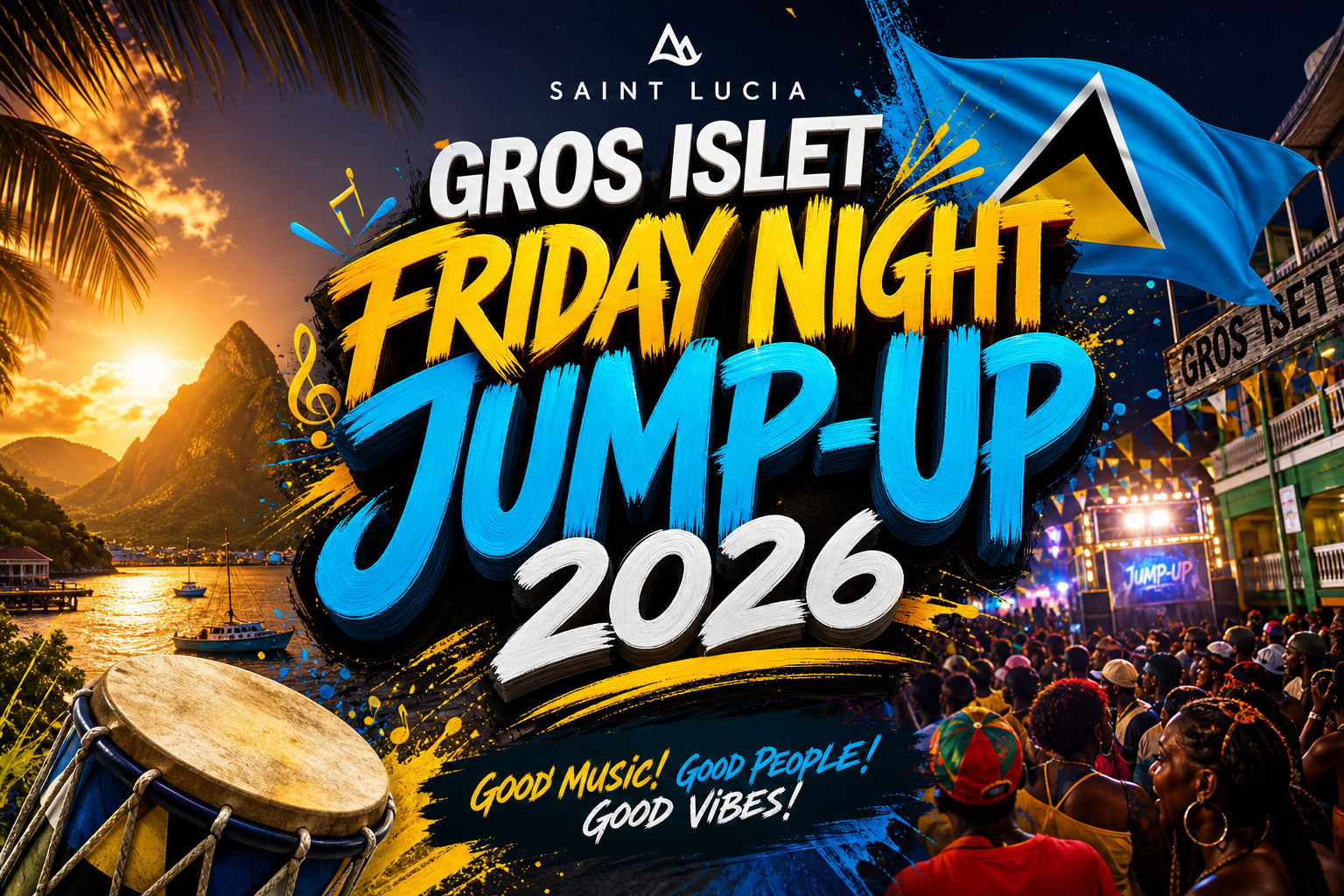
    Every Friday night, the small fishing village of Gros Islet on Saint Lucia's northern coast transforms into the most joyful, authentic, and genuinely free party in the Eastern Caribbean. Known as the Gros Islet Friday Night Jump-Up, this weekly event is a celebration of community spirit, vibrant music, and delectable street food. With no tickets or VIP sections, this is a party for everyone who shows up.

    "The Jump-Up is not just an event; it's a force of nature that embodies the spirit of Saint Lucian culture."

    The Timeless Tradition of the Jump-Up

    Every Friday Night, All Year

    The Gros Islet Jump-Up is a weekly institution that runs every Friday night from approximately 9:00 PM until the early hours of Saturday morning. It has been a staple of Saint Lucian life for decades, only pausing on Good Friday out of respect for religious traditions. For visitors in 2026, the question is never "will the Jump-Up happen?" but simply "which Friday am I going?".

    The Culture Behind the Jump-Up

    What Is a Jump-Up?

    The term "jump-up" is synonymous with street parties in the Eastern Caribbean. It encapsulates the spontaneous and energetic nature of these celebrations, where the music and crowd create an irresistible energy. Originating from post-plantation freedom celebrations, the jump-up tradition has evolved into a celebrated cultural institution in Gros Islet, attracting locals and tourists alike.

    The Streets Come Alive

    What the Jump-Up Looks Like

    The transformation of Gros Islet village on a Friday evening is a sensory experience unparalleled in Caribbean tourism. The village becomes a vibrant scene of music, food, and community:

    • The streets are cordoned off from vehicle traffic, creating a pedestrian-friendly party zone.
    • Food vendors and barbecue grills line the streets, offering a variety of delicious street eats.
    • Bars and rum shacks serve up local favorites like Piton beer and rum punch.
    • Sound systems play a mix of Caribbean music genres, creating a dynamic audio landscape.
    • String lights and bare bulbs illuminate the streets, adding to the festive atmosphere.
    • The crowd is a lively mix of locals, French Caribbean visitors, and international tourists.

    The Music

    Calypso, Reggae, Rap, Zouk, and More

    The music at the Gros Islet Jump-Up is a rich tapestry of Caribbean and Black Atlantic sounds:

    • Calypso and soca: Energetic carnival music that gets everyone dancing.
    • Reggae: From roots rhythms to dancehall beats, reggae is a staple of the night.
    • Zouk: French Caribbean dance music that adds a sensual groove to the party.
    • Rap and hip-hop: American influences that resonate with the younger crowd.
    • Kompa: Haitian rhythms that add diversity to the musical lineup.
    • Contemporary Caribbean pop and R&B: The latest hits keep the energy high.

    The Food: Grilled Fish, Jerk Chicken, and More

    The Best Street Eats in Saint Lucia

    The food at the Jump-Up is as much a highlight as the music, with vendors offering a mouthwatering array of dishes:

    • Grilled fish: Whole fish seasoned with Creole spices, grilled to perfection.
    • Jerk chicken: Spicy and flavorful, a Caribbean street food classic.
    • Barbecued ribs and pork: Slow-cooked with a sweet rum glaze.
    • Corn on the cob: Roasted and seasoned for a simple, satisfying snack.
    • Fried fish: Deep-fried in the Creole tradition, served with fresh lime.
    • Provisions: Local root vegetables that ground the meal in Saint Lucian tradition.

    What to Drink

    Piton Beer, Rum Punch, and More

    The drinks at the Jump-Up are as varied as the food, offering something for everyone:

    • Piton beer: The national lager, perfect for a warm Caribbean night.
    • Rum punch: A strong cocktail of dark rum, lime, syrup, and nutmeg.
    • Bounty rum: Saint Lucia's own distilled rum, available in various forms.
    • Fresh coconut water: Hydrating and refreshing, a natural counterbalance to the rum.

    The Two Friday Night Street Parties

    Gros Islet vs. Anse La Raye

    Saint Lucia hosts two Friday night street parties, each with its own character:

    Gros Islet Jump-Up — Northern Saint Lucia

    • Location: Gros Islet village, near Rodney Bay Marina.
    • Character: Larger, louder, and more internationally known.
    • Vibe: High energy, densely packed streets.
    • Best for: Visitors in the Rodney Bay area.

    Anse La Raye Fish Friday — Western Coast

    • Location: Anse La Raye fishing village.
    • Character: Smaller, more local, seafood-focused.
    • Vibe: Intimate and representative of traditional fishing village culture.
    • Best for: Visitors in Soufrière or Marigot Bay.

    Both events run every Friday night and are free to enter. The choice is one of geography and vibe rather than quality.

    Getting to the Gros Islet Jump-Up

    Location

    Gros Islet village, located at the northern end of the Rodney Bay strip, is easily accessible from various parts of the island.

    From Rodney Bay Hotels

    5 to 15 minutes on foot or by taxi. Many hotels are within a comfortable walking distance.

    From Castries

    Approximately 20 minutes north by taxi or minibus. Minibuses run regularly through the evening.

    From Soufrière and the South

    Approximately 1 hour to 1 hour 30 minutes north by taxi. Consider Anse La Raye Fish Friday for a closer option.

    Getting Back

    Arrange your return before you go. Taxis may not be readily available after 2:00 AM. Most tour operators offer organized pickups.

    Practical Tips for the Gros Islet Jump-Up 2026

    • Arrive between 9:00 PM and 10:00 PM for the best atmosphere.
    • Bring EC cash. While some vendors accept cards, cash is preferred.
    • Eat the grilled fish. A must-try dish for any visitor.
    • Wear comfortable shoes. Cobblestone streets make heels impractical.
    • Leave valuables at your hotel. Carry only essentials to avoid pickpocketing.
    • The crowd is mixed-age and family-friendly in the early evening. After midnight, the atmosphere becomes more adult-oriented.
    • Do not skip it. The Jump-Up is one of Saint Lucia's top-rated experiences.

    Frequently Asked Questions

    The Things People Always Want to Know

    When is the Gros Islet Jump-Up?

    Every Friday night, year-round, from approximately 9:00 PM until the early hours of Saturday morning. The only exception is Good Friday.

    How much does it cost to attend?

    Completely free to enter the street party. Costs are only for food and drinks purchased from vendors.

    Where exactly is it?

    Gros Islet village, northern Saint Lucia, adjacent to Rodney Bay and Pigeon Island causeway.

    What should I eat?

    Grilled fish is the signature dish. Jerk chicken, barbecued ribs, and roasted corn are excellent supporting options.

    What should I drink?

    Piton beer and rum punch are the Jump-Up staples. Fresh coconut water for hydration between rounds.

    Is it safe?

    Generally yes. The Jump-Up is a community event attended by Saint Lucians of all ages alongside tourists. Standard street party awareness applies: secure your valuables, stay aware of your surroundings, and arrange your return transport in advance.

    What is the difference between Gros Islet and Anse La Raye?

    Gros Islet is larger, louder, and more internationally mixed. Anse La Raye is smaller, more local, and more seafood-focused. Both run every Friday.

    Verified Information at a Glance

    • Event Name: Gros Islet Friday Night Jump-Up / Gros Islet Street Party
    • When: Every Friday night, year-round (except Good Friday), from 9:00 PM to 2:00 AM+
    • Location: Gros Islet village, Gros Islet Quarter, northern Saint Lucia
    • Admission: Free
    • Food: Grilled fish, jerk chicken, barbecued ribs, roasted corn, provisions
    • Drinks: Piton beer, rum punch, Bounty rum, fresh coconut water
    • Music: Calypso, soca, reggae, dancehall, zouk, hip-hop, kompa
    • Crowd: Saint Lucians island-wide, French Caribbean visitors (Martinique, Guadeloupe), international tourists
    • TripAdvisor Rating: Recommended by 90%+ of travelers
    • Tour Options: Pickup-inclusive tours available from Castries area via Viator from US$33 per person
    • Best Base: Rodney Bay / Gros Islet corridor — 5 to 15 minutes walk or taxi
    • Nearest Airport: George F.L. Charles Airport (SLU), Castries — approximately 20 minutes south
    • Sister Event: Anse La Raye Fish Friday (western coast, same night, more local character)
    • Best For: Every category of Saint Lucia visitor — couples, solo travelers, friend groups, families (early evening), cultural travelers, food tourists, nightlife seekers, first-time visitors, repeat visitors — the Jump-Up is the one experience that applies to all of them
    Gros Islet Village, Saint Lucia, Saint Lucia
    Aug 7, 2026 - Aug 28, 2026
    La Rose Flower Festival 2026
    Cultural Festival / Heritage
    Free

    La Rose Flower Festival 2026

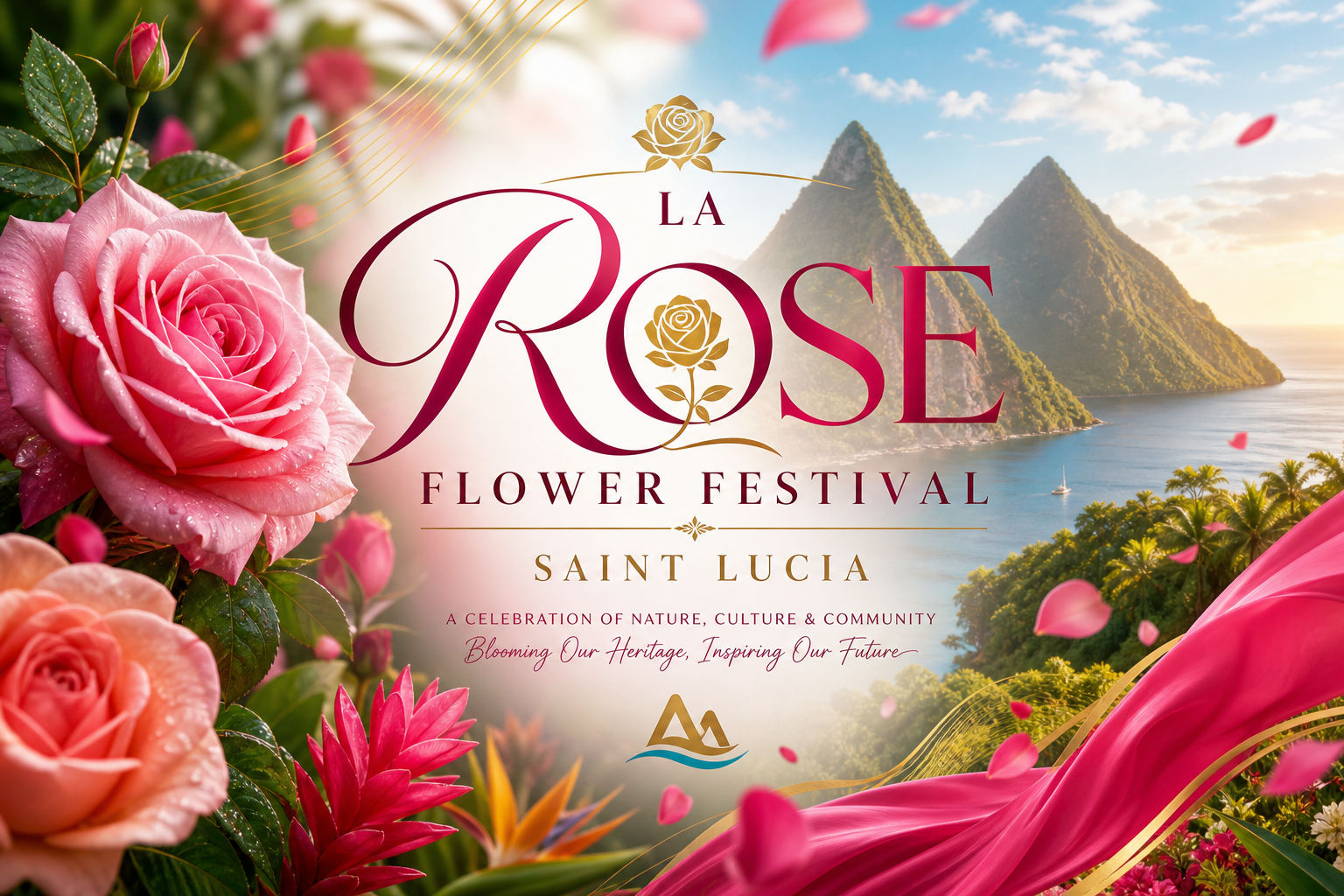
    Saint Lucia carries cultural traditions that exist nowhere else on earth, and the La Rose Flower Festival is one of the most extraordinary of them. On Sunday August 30, 2026, the island's La Rose (Lawòz) society celebrates its annual feast day in a spectacle of red costumes, roses, singing, processions, and a grand fete that has been running continuously for over 250 years. This is not a festival created for tourism. It is a living cultural institution nominated for inscription on UNESCO's Representative List of the Intangible Cultural Heritage of Humanity — one of the most genuinely irreplaceable cultural events in the entire Caribbean.

    "A living cultural institution nominated for inscription on UNESCO's Representative List of the Intangible Cultural Heritage of Humanity."

    Two Flowers, One Island: The Rivalry That Built a Tradition

    The Rose and the Marguerite

    The La Rose Flower Festival cannot be fully understood without its counterpart. Saint Lucia has two rival flower societies whose historical competition defines the cultural landscape of the entire island:

    • La Rose (Lawòz): Members pledge allegiance to the rose, dress in red and white, and celebrate on the feast of Saint Rose de Lima, August 30
    • La Marguerite (La Magéwit): Members pledge allegiance to the marguerite, dress in blue, yellow, and white, and celebrate on the feast of Saint Margaret Mary Alacoque, October 17

    The two societies are divided by community allegiance passed down through families across generations. A Saint Lucian is either a Rose or a Marguerite — you are born into it, you grow up in it, and the rivalry between the two is one of the most delightfully passionate and most genuinely harmless cultural competitions in the Caribbean. The singing competitions between the two societies — where members compose and perform songs celebrating the virtues of their flower and mocking the rival — are the most musically creative and most comedically sharp cultural performance tradition on the island.

    Origins: A Tradition Born in the Shadow of Slavery

    Resilience and Identity

    The Flower Festivals date back more than 250 years, with their roots in the enslaved communities of Saint Lucia's plantation era. The societies began as mutual aid and social organizations that gave enslaved and later emancipated Saint Lucians a framework for community identity, celebration, and resilience outside the structures of colonial society. They modeled their organization on the hierarchies of European royal courts — with kings, queens, princes, princesses, counts, and countesses — but transformed that borrowed structure into something entirely their own, anchored in African community values, Catholic feast day observance, and the particular Saint Lucian Creole cultural identity that merged French, African, and British influences into something unique.

    UNESCO's recognition of the Flower Festivals' nomination-readiness reflects precisely this historical significance: the festivals are described as "a symbol of community resilience, particularly in the face of slavery".

    What Happens on August 30: The Grand Fete

    A Day Full of Tradition

    The La Rose feast day on August 30, 2026, is the culmination of a season of celebrations that builds across the weeks preceding the grande fete. The La Rose society's season includes gatherings, practice sessions, seances (communal singing and dancing events), and inter-community events that build anticipation and solidarity among Rose members before the feast day arrives.

    On August 30 itself, the sequence of events follows the tradition established over 250 years:

    • The Procession to Church: The entire La Rose society, dressed in their red and white costumes, assembles and marches together to the church for a solemn Catholic Mass honoring their patron saint, Saint Rose of Lima.
    • The Street Parade: Following the church service, the society parades through the streets in full costume, singing the La Rose songs that are the most distinctively musical element of the tradition.
    • The Grand Fete: The society returns to its celebration venue for the Grand Fete, the extended celebration that combines music, dancing, eating, and the internal ceremonies of the society.

    The Costumes: Red, White, and the Court of the Rose

    Elaborate Traditions

    The costume tradition of the La Rose society is one of the most elaborate and most carefully maintained elements of the entire festival:

    • The King and Queen: The most magnificent costumes in the entire society, with the queen's gown typically the most extraordinary individual costume piece in any Saint Lucian cultural event.
    • Princes and Princesses: Supporting royalty whose costumes echo the king and queen's grandeur at a slightly reduced scale.
    • Counts, Countesses, and Nobles: The aristocratic tier of the court in elaborately decorated costumes.
    • Police, Judges, Nurses, and Doctors: Community role figures in costume versions of their professional dress.
    • General membership: All in the red and white palette that identifies them unmistakably as Roses in the island's cultural geography.

    The costume-making tradition that supports the La Rose festival is itself a significant craft heritage, with seamstresses and tailors across Saint Lucia preparing the elaborate pieces across the months before August 30.

    La Rose and La Marguerite: UNESCO Nomination in Progress

    Recognizing Cultural Heritage

    In 2024, the Saint Lucia National Commission for UNESCO received approval and US$10,000 in preparatory assistance from UNESCO to prepare a nomination of The Flower Festivals of Saint Lucia for the Representative List of the Intangible Cultural Heritage of Humanity. This UNESCO nomination process recognizes the Flower Festivals as among the most significant intangible cultural traditions in the Caribbean, comparable in cultural depth to Carnival in Trinidad, the Jab Jab traditions of Grenada, and the Jonkanoo heritage of Jamaica and the Bahamas.

    The nomination covers both La Rose (August 30) and La Marguerite (October 17) as a single inseparable cultural tradition, reflecting the understanding that the two societies and their historical rivalry are two halves of the same cultural whole. Visitors to Saint Lucia who attend either the La Rose festival in August or the La Marguerite festival in October are participating in a tradition that the global heritage community has recognized as irreplaceable.

    La Rose in the Saint Lucia August Calendar

    A Month of Celebration

    The La Rose Flower Festival on August 30 sits within Saint Lucia's most culturally dense summer period:

    • August 2026: Roots & Soul Festival, Pigeon Island
    • August 30, 2026: La Rose Flower Festival — Grand Fete Day
    • October 17, 2026: La Marguerite Flower Festival

    A visitor in Saint Lucia for the Roots & Soul Festival in mid-to-late August who extends their stay through August 30 experiences both the island's most important reggae and soul music event and its most historically significant cultural society festival in a single trip.

    Practical Tips for La Rose Festival 2026

    Make the Most of Your Visit

    • The public procession is the most accessible entry point. The street parade on August 30 is visible to anyone in the streets of the participating community and requires no ticket or advance arrangement.
    • Contact the Cultural Development Foundation (CDF) Saint Lucia at cdfstlucia.org for the confirmed 2026 grand fete location and the schedule of pre-feast-day seances.
    • Attend a pre-fete seance if possible. The weeks before August 30 include seance events where La Rose members gather to sing, dance, and practice the society's musical repertoire.
    • Dress respectfully. The La Rose festival is a formal cultural and religious occasion for its members. Visitors who dress thoughtfully signal respect for the tradition.
    • La Rose happens across multiple communities. The festival is not a single-venue event but a network of La Rose society branches across Saint Lucia's communities.

    National Day — Festival of Lights and Renewal 2026 Saint Lucia: December 13 and the Patron Saint of Light

    A Celebration of Light and Identity

    Saint Lucia is the only country in the world named after a saint, and the only one where the nation's name and the patron saint of light are one and the same. December 13, 2026 is both Saint Lucia's National Day and the feast of Saint Lucy (Santa Lucia), the early Christian martyr whose name means "light" in Latin and whose feast day has been associated with the triumph of light over darkness since the Middle Ages. The Festival of Lights and Renewal that culminates on December 13 every year is the most symbolically complete national celebration in the Caribbean — a day when a nation literally celebrates its own name.

    December 13, 2026: National Day and the Feast of Saint Lucy

    Saint Lucy of Syracuse

    Saint Lucy of Syracuse (283–304 AD) was a young Sicilian Christian martyr whose name, derived from the Latin lux (light), became her defining symbol in the Catholic tradition. Her feast day on December 13 historically fell on the winter solstice in the Julian calendar, the darkest night of the year, which gave the "saint of light" her most resonant symbolic context: her feast day was literally the moment when light began its return.

    For Saint Lucia — the island — the feast of Saint Lucy is simultaneously a religious observance, a national holiday, and an expression of the island's entire identity. The Festival of Lights and Renewal is the celebration that gives this convergence its public form.

    The Festival Programme: December into December 13

    Building Up to the Celebration

    The Festival of Lights is not a single-day event. It builds across the first two weeks of December in a programme managed by the Cultural Development Foundation (CDF) of Saint Lucia:

    The Lantern Competition — Early December

    Creativity and Tradition

    The Lantern Competition is the festival's most beloved community participation element and the one that most directly connects the celebration to its core symbol. Saint Lucians of all ages design and build handmade lanterns for judging at the National Cultural Centre, with categories spanning children, youth, adults, and community organizations. The lantern-making tradition has deep roots in Saint Lucian family culture, where the creation of a lantern to hang in the home doorway was once the standard way of marking the December 13 feast day.

    In 2025, lantern judging took place on Saturday December 6 at the National Cultural Centre from 10:00 AM to 4:00 PM, open to the public as both a spectator and a participatory event where the artistry of hundreds of handmade lanterns transforms the judging venue into one of the most visually beautiful spaces on the island.

    The Parade of Lanterns — December 12 Evening

    A Night of Light

    The Grand Lantern Parade on the eve of National Day (December 12) is the festival's most dramatic public spectacle. In 2025, the parade:

    • Began at 7:00 PM at the Vigie Playing Field in Castries
    • Wound through the streets of the city center toward Derek Walcott Square
    • Featured the Royal Saint Lucia Police Band, masqueraders, drummers, steelpan players, folk dancers, stilt walkers, and the iconic Papa Jab character with his entourage
    • Concluded at William Peter Boulevard, leading into the Festival of Lights celebration at Derek Walcott Square

    The parade is one of the most joyful and most visually arresting public events in Saint Lucia's entire calendar, with the moving river of handmade lanterns through the Castries streets creating a visual effect that photographs cannot fully capture.

    The Festival of Lights Finale — Derek Walcott Square, December 12 Night

    A Celebration of Illumination

    The parade concludes at Derek Walcott Square in central Castries, where the Festival of Lights finale takes place under the patronage of the Office of the Governor General of Saint Lucia:

    • Live band and Christmas show — carol singing and traditional Christmas music
    • Bamboo bursting — the traditional Saint Lucian percussive folk tradition of creating explosive reports from bamboo tubes, one of the most distinctively Saint Lucian sounds of the December season
    • The turning on of the lights of Derek Walcott Square — the ceremonial illumination that transforms the central square into the most decorated public space in Castries for the Christmas season
    • Fireworks display over the square, the visual punctuation mark of the entire celebration

    National Day — December 13

    A Day of National Pride

    December 13, 2026 is a public holiday across Saint Lucia. Business houses across the island observe the tradition of lighting up on December 13th, filling the island with decorative lighting as a collective expression of the national identity and the festival's central theme. Official National Day ceremonies mark the public holiday at the governmental level alongside the cultural programme.

    Derek Walcott Square: The Heart of the Celebration

    Symbolism and Celebration

    Derek Walcott Square in central Castries, renamed from Columbus Square in honor of Saint Lucia's Nobel Laureate poet Derek Walcott (1930–2017), is the Festival of Lights' primary venue and Saint Lucia's most symbolically charged public space. The square anchors the capital city's historic center, surrounded by the Castries Cathedral, colonial-era government buildings, and the commercial streets of downtown Castries, and its illumination on the eve of December 13 is the visual centerpiece of the entire national holiday.

    The connection between the Festival of Lights and Derek Walcott Square carries an additional layer of meaning: Walcott, whose poetry engaged throughout his career with the themes of Caribbean identity, cultural memory, light, and renewal, is the most intellectually appropriate patron for a public space hosting a festival that celebrates those same themes in their most communal and most joyful form.

    Saint Lucy and the Global Festival of Light Tradition

    A Shared Celebration

    The Feast of Saint Lucy on December 13 is celebrated across the Catholic world but reaches its most culturally elaborate expression in Scandinavia — particularly Sweden, where the Sankta Lucia processions, with white-robed girls carrying candles and wearing crown of lights, are the most iconic images of the Swedish winter season — and in Saint Lucia, where the entire nation takes its name from the same saint.

    The parallel between the Swedish Lucia tradition and the Saint Lucian Festival of Lights is one of the most charming and most symbolically resonant coincidences in global folk culture: two completely different communities, separated by 8,000 kilometers and by entirely different cultural, historical, and climatic contexts, honoring the same saint with light and celebration on the same date for reasons rooted in the same original devotion.

    Practical Tips for the Festival of Lights 2026

    Enjoy the Festival to the Fullest

    • Attend both the lantern judging and the parade for the full Festival of Lights experience. The lantern judging at the National Cultural Centre in early December is the most artistically rich dimension of the programme, and the December 12 parade through Castries is the most visually spectacular.
    • Be at Derek Walcott Square by 9:00 PM on December 12 for the best position for the lighting ceremony and fireworks finale.
    • December is peak tourism season in Saint Lucia. Book accommodation well in advance — Castries-based and Rodney Bay-based accommodation for the first two weeks of December, particularly the December 12 to 13 National Day weekend, fills quickly.
    • The festival is free to attend at all public events. The lantern competition judging at the National Cultural Centre is open to the public at no charge.
    • Contact the CDF Saint Lucia at cdfstlucia.org for the confirmed 2026 lantern competition dates, the parade route, and the full December cultural programming schedule.

    Saint Lucia December Cultural Calendar 2026

    A Month of Festivities

    • First week of December: Lantern Competition judging, National Cultural Centre
    • December 12, 2026: Grand Lantern Parade, Castries — 7:00 PM from Vigie Playing Field
    • December 12 night: Festival of Lights finale, Derek Walcott Square
    • December 13, 2026: National Day — Public Holiday
    • December 13 and beyond: 12 Days of Christmas in Saint Lucia

    Verified Information at a Glance: Both Events

    La Rose Flower Festival

    • Date: Sunday August 30, 2026
    • Character: Cultural society feast day — procession, parade, grand fete
    • Costume Color: Red and white
    • Patron Saint: Saint Rose de Lima
    • History: 250+ years
    • UNESCO Status: Nominated for Representative List of Intangible Cultural Heritage of Humanity
    • Organizer: Cultural Development Foundation (CDF) Saint Lucia — cdfstlucia.org
    • Admission: Free (public procession and parade)
    • Sister Event: La Marguerite Flower Festival, October 17, 2026

    National Day — Festival of Lights and Renewal

    • National Day: Sunday December 13, 2026 (public holiday)
    • Grand Lantern Parade: Saturday December 12, 2026, 7:00 PM, Vigie Playing Field to Derek Walcott Square, Castries
    • Lantern Competition Judging: Early December, National Cultural Centre, Castries
    • Finale Venue: Derek Walcott Square, central Castries
    • Programme: Parade of lanterns, Royal Police Band, masqueraders, steelpan, folk dancers, Papa Jab, bamboo bursting, carol singing, lights illumination, fireworks
    • Organizer: Cultural Development Foundation (CDF) Saint Lucia — cdfstlucia.org
    • Admission: Free
    • Patron: Office of the Governor General of Saint Lucia
    • Best For: Families, cultural travelers, Caribbean heritage visitors, Christmas season travelers, photography, Saint Lucia identity and history enthusiasts

    ```

    Island-wide communities, Saint Lucia, Saint Lucia
    Aug 30, 2026 - Aug 30, 2026
    Saint Lucia Dive Fest 2026
    Sports / Diving Festival
    Free

    Saint Lucia Dive Fest 2026

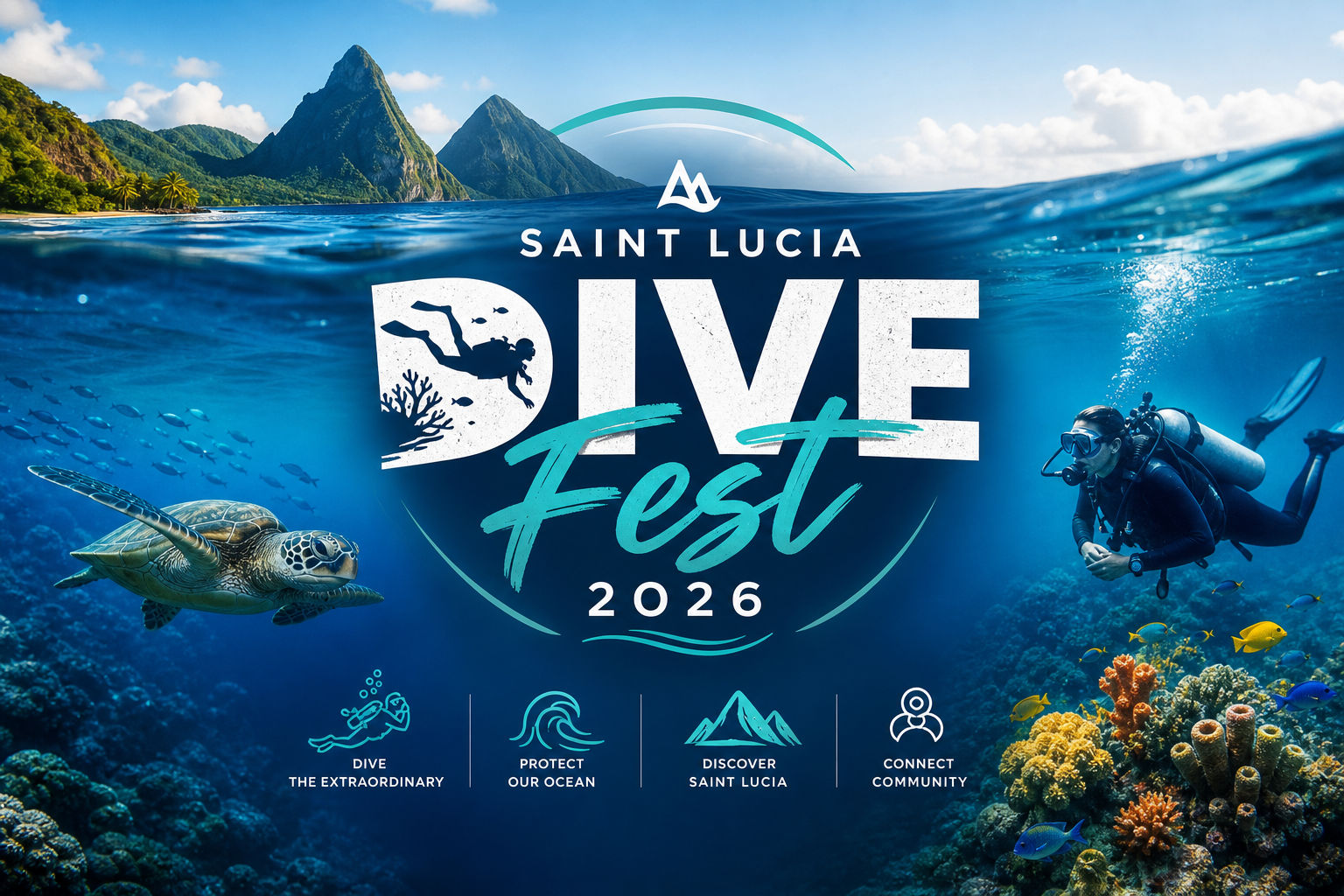
    There are dive destinations, and then there are dive destinations. Saint Lucia sits firmly in the second category — an island where the same volcanic geology that created the Piton World Heritage Site also built an underwater landscape of walls, pinnacles, wrecks, and reef systems that consistently rank among the finest diving in the entire Caribbean. The Saint Lucia Dive Fest 2026 runs from Sunday, September 14 through Saturday, September 21, 2026, offering a full week of guided dives, night dives, underwater photography events, marine education programmes, and the singular experience of exploring the waters beneath the Pitons during a week when the entire island's dive community is activated around a single shared purpose.

    "Saint Lucia's underwater landscape of walls, pinnacles, wrecks, and reef systems consistently rank among the finest diving in the entire Caribbean."

    The Story of Saint Lucia Dive Fest

    A Celebration of Marine Heritage and Conservation

    The Dive Fest is an annual week-long celebration of Saint Lucia's marine environment and dive culture, organized through the St Lucia Dive Fest official programme in partnership with Saint Lucia's PADI-certified dive operations, the Saint Lucia Tourism Authority, and the island's marine park management. Established as a multi-day event, it combines organized dive experiences, conservation activities, and marine education, growing across successive editions into the most concentrated diving event in the Eastern Caribbean calendar.

    The festival's dual purpose is to celebrate Saint Lucia's marine heritage and to actively support its conservation:

    • Celebrating by giving divers from around the world guided access to the island's finest sites at a festival price point with the added value of organized group experiences, expert guides, and the social dimension of diving alongside a community of fellow enthusiasts.
    • Conserving through marine park fee contributions, reef monitoring dives, underwater cleanup activities, and educational programming that gives both visiting divers and Saint Lucian residents a deeper understanding of the ecosystem they are diving in.

    The 2026 Experience

    September 14 to 21: A Dive into the Extraordinary

    The Saint Lucia Dive Fest 2026 runs from September 14 to 21, 2026, with the official festival opening and dive activities running daily across all seven days. The Saint Lucia Tourism Authority lists the festival as a flagship Soleil Summer Festival event and one of the most distinctive tourism products on the island's annual calendar.

    The September timing is deliberate and well-chosen:

    • September water conditions in Saint Lucia deliver some of the year's best underwater visibility, with warm Caribbean Sea temperatures of 27 to 29°C and the reduced boat traffic of the shoulder season giving dive sites a quieter and more undisturbed quality than the peak dry-season months.
    • September is festival season on the island — Dive Fest sits within the broader Soleil Summer Festival programme that also includes the Roots & Soul Festival in late August and the build-up to Creole Heritage Month in October.
    • Marine life is abundant in September, with the warm season producing active reef ecosystems, sea turtle activity around nesting and post-nesting cycles, and the full complement of Caribbean reef fish, invertebrates, and pelagic species that make Saint Lucia's dive sites so reliably productive.

    Into the Depths: Saint Lucia's Dive Sites

    Volcanic Geology Meets Marine Biodiversity

    Saint Lucia's dive reputation rests on a specific set of sites that combine volcanic geology, healthy reef systems, significant marine life, and the dramatic visual backdrop of the Pitons in a way that no other Caribbean island can replicate.

    Superman's Flight — The Piton Wall

    An Iconic Dive Beneath Petit Piton

    The most famous dive in Saint Lucia and one of the most photographed underwater environments in the entire Caribbean. Superman's Flight is the vertical wall dive that runs along the base of Petit Piton, the smaller of the two iconic volcanic peaks whose silhouette defines Saint Lucia's visual identity from every angle. The wall descends from 10 meters to beyond recreational diving limits, passing through a succession of coral formations, sea fans, black coral, sponge encrustation, and the marine life that colonizes a vertical reef face — trumpetfish, chromis, angelfish, spotted drums, and the larger pelagic species that patrol the deeper blue water at the wall's edge.

    "You are literally diving on the underwater extension of one of the world's most famous island peaks."

    The Pinnacles

    Architectural Beauty Underwater

    The Pinnacles are four volcanic spires rising from 12 to 15 meters depth to within 8 meters of the surface, their sides encrusted with dense hard and soft coral growth and surrounded by exceptionally rich marine life. The architectural quality of the Pinnacles — their vertical form, their symmetry, their sheer scale — makes them one of the most visually impressive dive sites in Saint Lucia, and the marine biodiversity concentrated around the spires delivers the kind of encounter density that keeps photographers running out of memory cards.

    Fish life around the Pinnacles includes large schools of Atlantic spadefish, French and queen angelfish, parrotfish in their full color range, moray eels in the crevices, and the occasional eagle ray passing through the blue water between the spires.

    Lesleen M Wreck

    A Living Reef Structure

    The Lesleen M is a 60-meter cargo vessel deliberately sunk in 1986 to create an artificial reef and now one of the most heavily encrusted and most fully inhabited wrecks in the Eastern Caribbean. Lying in 18 to 30 meters of water near Anse Cochon on the west coast, the Lesleen M has had forty years of coral colonization to develop the sponge gardens, wire coral forests, and fish communities that turn a former cargo ship into a living reef structure.

    The wreck is accessible to Open Water certified divers at its shallowest points and rewards Advanced divers with penetration into the holds and engine room where the darkness gives way to the torch-lit spectacle of glass sweepers, soldierfish, and the occasional nurse shark resting on the steel floor.

    Turtle Reef

    Reliably Turtle-Populated Waters

    Turtle Reef near Anse Chastanet is among the most reliably turtle-populated shallow reef sites in Saint Lucia, where hawksbill sea turtles feed on the sponge and coral growth with sufficient regularity to justify the name. The reef runs from 5 to 25 meters, making it accessible to every certification level and appropriate for snorkelers in the shallower sections, and the combination of turtle encounters, dense reef fish populations, and the easy shore access from Anse Chastanet beach makes it one of the most visited and most consistently rewarding sites on the island.

    Anse Chastanet Reef — Shore Diving Paradise

    Unlimited Shore Access in the Caribbean

    The reef system directly in front of Anse Chastanet beach is one of the finest and most accessible shore dives in the entire Caribbean. Beginning just meters from the shoreline, the reef develops quickly from a sandy bottom into a dense coral garden that extends to 30+ meters, with enough fish life, coral diversity, and invertebrate species to satisfy multiple dives on the same reef without repetition.

    The shore-access format means Dive Fest participants staying at Anse Chastanet resort can enter the water directly from the beach at any time, logging unlimited additional dives beyond the organized festival schedule without the logistical overhead of boat scheduling.

    The Dive Fest Programme

    A Week of Diving Adventures and Conservation

    The official Dive Fest package available through Scuba Saint Lucia and partner operations includes:

    • Daily guided boat dives to the festival's featured sites, with briefings from certified PADI dive masters and instructors who know the sites intimately.
    • Night dives — among the most rewarding experiences in Caribbean diving, when the reef transforms as nocturnal species emerge and the bioluminescence that is invisible in daylight becomes visible in the darkness.
    • Snorkeling excursions for non-diving travel companions or certified divers who want surface-level reef exploration between dive sessions.
    • Marine education events covering Saint Lucia's marine ecosystem, conservation challenges, and the citizen science contribution that recreational divers can make to reef monitoring programmes.
    • Underwater photography workshops and competitions organized within the festival schedule, with instruction from underwater photographers and judging of participant images in the categories most relevant to Caribbean reef diving.
    • Conservation dives — organized reef clean-up dives and coral monitoring activities that give participants a direct conservation contribution alongside their recreational diving.
    • Social events on the evenings when the day's diving is complete, with the Saint Lucian resort and beach bar network providing the natural venue for the Dive Fest community to gather and review the day's highlights.

    PADI 5-Star Dive Operations

    The Dive Fest Partners

    The Saint Lucia Dive Fest is anchored by the island's PADI-certified dive operations, with Scuba Saint Lucia at Anse Chastanet resort serving as the primary festival dive operator and the face of the event's organizational structure:

    Scuba Saint Lucia — Anse Chastanet

    The Premier Dive Resort

    The PADI 5-Star Dive Resort at Anse Chastanet is Saint Lucia's most celebrated dive operation and the one most directly associated with the Dive Fest programme. Located directly on the beach in the shadow of the Pitons, with shore access to Anse Chastanet Reef and a short boat ride to Superman's Flight, the Pinnacles, and the Lesleen M wreck, Scuba Saint Lucia offers:

    • Full PADI course range from Discover Scuba through to Divemaster.
    • Nitrox fills and certification for enriched air diving.
    • Equipment rental and servicing.
    • Underwater photography equipment hire and instruction.
    • The most geographically ideal position on the island for accessing the Piton Marine Management Area dive sites.

    Marine Life: What You Will See

    A Diverse Ecosystem Awaits

    Saint Lucia's Caribbean Sea waters support one of the most biodiverse marine ecosystems in the Lesser Antilles, and Dive Fest participants can expect encounters across the full range of Caribbean reef species:

    Reef Fish

    • Angelfish: French, queen, grey, and rock beauty angelfish in the varied color stages from juvenile to adult that make the angelfish family one of the most visually rewarding reef fish groups in the Caribbean.
    • Parrotfish: The Caribbean's reef architects, grazing on coral algae and producing the white sand that covers Saint Lucia's beaches as a byproduct of their digestion — visible in every color phase from the drab brown initial phase to the brilliant blue-green terminal phase.
    • Trumpetfish: Masters of camouflage and ambush predation, hanging vertically among sea rods and sea fans or shadowing other fish to approach their prey undetected.
    • Spotted drums: One of the most distinctive and most requested Caribbean reef fish species, with the juvenile's extraordinary long dorsal fin and the adult's spotted pattern making every encounter a highlight.
    • Chromis, damselfish, and butterflyfish: The small, abundant, and visually dense reef fish communities that fill every available space in the coral architecture.

    Turtles, Rays, and Larger Species

    • Hawksbill sea turtles at Turtle Reef and throughout the Piton Marine Management Area, feeding on sponge and resting on coral heads.
    • Green sea turtles less commonly but reliably encountered at several sites.
    • Eagle rays patrolling the blue water at deeper sites and occasionally crossing the shallower reef areas.
    • Southern stingrays resting on sandy patches between reef structures.
    • Nurse sharks in the crevices and under coral overhangs at the wreck and deeper reef sites.

    Invertebrates

    • Flamingo tongue cowries on sea fans — their brilliant orange spotted mantle making them one of the most striking and most photographed reef invertebrates.
    • Arrow crabs in sea urchin spines and coral crevices.
    • Christmas tree worms drilling their spiral tubes into massive star coral heads.
    • Octopus in the rubble zones and coral overhangs, their color-changing camouflage making them among the most challenging and most satisfying reef animals to spot and photograph.

    The Dive Fest and Anse Chastanet

    The Natural Base for Your Diving Adventure

    Anse Chastanet Resort, the 600-acre boutique eco-resort set within lush tropical forest on Saint Lucia's west coast between Soufrière and the Pitons, is the natural home base for the Dive Fest experience. The resort's position directly adjacent to the Piton Marine Management Area and its ownership of the beach directly above some of the finest shore diving in the Caribbean makes it the most logistically ideal and the most atmospherically appropriate place to stay for a Dive Fest week.

    The resort's characteristics that make it particularly suited to a dive festival week:

    • Direct beach access to Anse Chastanet Reef for unlimited shore dives at any hour.
    • Scuba Saint Lucia PADI 5-Star dive centre on-site with full equipment rental, courses, and boat dive scheduling.
    • 500-acre forest setting surrounding the beach, with the Piton peaks visible from the water, creating the most visually distinctive resort environment on the island.
    • Two restaurant and bar options including the Treehouse Restaurant high in the forest canopy and the beach-level Trou au Diable, giving post-dive meals the setting they deserve.
    • No phones in rooms and limited connectivity — a design choice by the resort that preserves the disconnected, immersive quality of a week that is meant to be spent underwater and in the natural world rather than on screens.

    Snorkeling at Dive Fest

    For Non-Divers and Surface Swimmers

    The Dive Fest is not exclusively for scuba-certified divers. Several of Saint Lucia's finest dive sites have shallow reef sections that are extraordinary snorkeling destinations, and the Dive Fest programme includes snorkeling excursions and activities that allow non-certified companions to participate meaningfully in the week's marine exploration:

    • Anse Chastanet Reef: From 1 to 10 meters in the shallowest sections, with parrotfish, surgeonfish, trumpetfish, hawksbill turtles, and dense coral growth visible from the surface with a mask and fins.
    • Jalousie / Sugar Beach: The shallow reef inside the Piton Marine Management Area at the Jalousie resort beach, one of the most visually dramatic snorkeling locations in the Caribbean with the Piton peaks as the backdrop.
    • Discover Scuba programmes for Dive Fest participants or their companions who want to try scuba for the first time in the supportive and logistically excellent environment of a PADI 5-Star resort during festival week.

    Getting to Saint Lucia for Dive Fest

    Travel Logistics and Scenic Arrivals

    Hewanorra International Airport (UVF) in the south near Vieux Fort is the closest airport to the Soufrière and Anse Chastanet dive base:

    • London Heathrow: British Airways direct to UVF, approximately 8.5 hours.
    • New York (JFK): American Airlines and JetBlue to UVF, approximately 4.5 hours.
    • Miami: American Airlines, approximately 3 hours.
    • Toronto: Air Canada seasonal direct.

    From Hewanorra to Anse Chastanet and Soufrière: Approximately 40 to 60 minutes by taxi along the west coast road, or approximately 20 minutes by water taxi from Vieux Fort if arranged through the resort — the water taxi option is the most dramatically scenic arrival, approaching the resort by sea with the Pitons appearing on the horizon as you travel north up the west coast.

    From Castries and the Rodney Bay corridor in the north: Approximately 1 hour 30 minutes to 2 hours south by road to Soufrière, or approximately 30 minutes by water taxi from Castries harbour — the water taxi is again the most enjoyable and most efficient option, hugging the west coast through the island's most dramatic scenery.

    Dive Fest 2026 and the September Saint Lucia Calendar

    A Month of Cultural and Recreational Richness

    The Dive Fest's September 14 to 21 timing places it within one of Saint Lucia's most event-rich months:

    DateEvent August 30La Rose Flower Festival September 8Feast of La Virgen de Monserrate (Jayuya context — Puerto Rico) September 14–21Saint Lucia Dive Fest 2026 October 1Creole Heritage Month begins October 17La Marguerite Flower Festival October 25Jounen Kwéyòl A visitor who arrives in Saint Lucia for the La Rose Flower Festival weekend of August 30 and stays through September 21 experiences the festival, the Roots & Soul Festival (August, Pigeon Island), and the full Dive Fest week in a single extended island stay — one of the most culturally and recreationally complete Caribbean trips available anywhere in the region.

    Practical Tips for Saint Lucia Dive Fest 2026

    Maximize Your Dive Fest Experience

    • Book the official Dive Fest package through Scuba Saint Lucia at scubastlucia.com as early as possible. Dive Fest week fills the available spaces at Anse Chastanet and partner operations early, and the package deals that include accommodation, diving, and meals represent the best value available during festival week.
    • Certification requirement: Scuba diving requires at minimum a PADI Open Water certification or equivalent from any recognized certifying agency. If you are not yet certified, Scuba Saint Lucia offers the full PADI Open Water course in advance of Dive Fest.
    • Bring your dive certification card. All operators will request your certification card before allowing you to dive. Photo evidence on your phone is generally accepted but a physical card is more reliable.
    • Nitrox divers: Nitrox certification and fills are available at Scuba Saint Lucia for an additional charge — worth it for the extended bottom times that make multi-dive Dive Fest days more productive.
    • Underwater camera: Dive Fest's underwater photography events and the visual quality of Saint Lucia's sites make this one of the most rewarding underwater photography destinations in the Caribbean. If you have or can rent an underwater housing for your camera, bring it.
    • September is the heart of hurricane season for the Atlantic basin. Saint Lucia sits south of the main hurricane track and rarely receives direct hurricane impacts, but monitor the National Hurricane Center (nhc.noaa.gov) in the weeks approaching September 14 for any active systems in the Eastern Caribbean.
    • Marine park fee: A marine park fee of approximately US$15 is paid locally per diver and is used directly for reef conservation and management in the Piton Marine Management Area.

    Frequently Asked Questions

    The Things People Always Want to Know

    When is Saint Lucia Dive Fest 2026?

    Sunday September 14 to Saturday September 21, 2026.

    Where is the main dive base?

    Scuba Saint Lucia, Anse Chastanet Resort, west coast near Soufrière, Saint Lucia.

    Do I need to be certified to participate?

    Yes for scuba diving. Snorkeling excursions are available for non-certified participants. Discover Scuba programmes are available for first-timers.

    What are the best dive sites?

    Superman's Flight (Petit Piton wall), The Pinnacles, Lesleen M wreck, Turtle Reef, and Anse Chastanet Reef.

    What airport should I fly into?

    Hewanorra International Airport (UVF), Vieux Fort — the closest airport to the Soufrière and Anse Chastanet dive base, approximately 40 to 60 minutes by road.

    How do I book?

    Through scubastlucia.com or the official stluciandivefest.com website.

    Verified Information at a Glance

    • Event Name: Saint Lucia Dive Fest 2026
    • 2026 Dates: September 14 to 21, 2026
    • Primary Operator: Scuba Saint Lucia, PADI 5-Star Dive Resort, Anse Chastanet
    • Official Website: stluciandivefest.com
    • Organizer Partnership: Saint Lucia Tourism Authority, Scuba Saint Lucia, island dive operations
    • Programme: Daily guided boat dives, night dives, snorkeling, underwater photography, conservation dives, marine education, social events
    • Featured Sites: Superman's Flight, The Pinnacles, Lesleen M wreck, Turtle Reef, Anse Chastanet Reef, Piton Marine Management Area
    • Water Temperature: 27 to 29°C in September
    • Marine Park Fee: Approximately US$15 per diver, paid locally
    • Certification Required: PADI Open Water or equivalent for scuba; snorkeling open to all
    • Primary Airport: Hewanorra International Airport (UVF), Vieux Fort — 40 to 60 minutes to Soufrière
    • Best Base: Anse Chastanet Resort, Soufrière
    • Part of: Soleil — Saint Lucia Summer Festival
    • Best For: Certified scuba divers, underwater photographers, marine life enthusiasts, dive certification seekers, non-diving snorkelers, couples (diver and non-diver), adventure travelers, Caribbean diving bucket list travelers, IsleRush water sports and marine tourism content
    Various dive sites island-wide, Saint Lucia, Saint Lucia
    Sep 14, 2026 - Sep 21, 2026
    Jounen Kweyol – Creole Heritage Month 2026
    Cultural / Heritage
    Free

    Jounen Kweyol – Creole Heritage Month 2026

    Every October, Saint Lucia does something that no marketing campaign could manufacture and no tourism board could invent. The entire island turns itself inside out to celebrate exactly what it is — the language, the food, the music, the fabric, the stories, and the community traditions that make Saint Lucian Creole culture one of the most distinctive and most joyful cultural identities in the entire Caribbean. Mwa Ewitaj Kwéyòl (Creole Heritage Month) 2026 runs across the full month of October, culminating in Jounen Kwéyòl (Creole Day) on Sunday, October 25, 2026 — the last Sunday of October — celebrated simultaneously in communities across the entire island.

    The Saint Lucia Tourism Authority describes it simply as one of "the most authentic events Saint Lucia has to offer". That understatement is doing a lot of work. Jounen Kwéyòl is the biggest national cultural festival in Saint Lucia, with wider participation across the island's communities than any other annual event, including Carnival. When Saint Lucians say this is the best time of year to visit their island, they mean it with the conviction of people who genuinely believe it themselves.

    "The most authentic event Saint Lucia has to offer."

    The Origins: Forty-Two Years of Cultural Pride

    A Celebration that Transcends Generations

    Mwa Ewitaj Kwéyòl and Jounen Kwéyòl are programmes of the Msgr. Patrick Anthony Folk Research Centre (FRC), started in 1984 as a one-day celebration and expanding over four decades into the full month-long cultural programme it is today. Saint Lucia first celebrated Creole Day in 1981, making 2026 the 45th anniversary of the tradition.

    The founding objective of the Folk Research Centre's programme has never changed: "to increase the awareness and pride among St. Lucians of their rich cultural heritage and to promote the Kwéyòl language and culture". In the four decades since, it has succeeded beyond any reasonable founding expectation — Jounen Kwéyòl is now observed not just across Saint Lucia but by the Saint Lucian diaspora in North America, the United Kingdom, and the wider Caribbean, a community of Saint Lucians who feel the pull of their cultural identity most intensely when October comes around and the madras fabric, the Creole cooking smells, and the kwadril dancing start.

    The date connects to International Creole Day on October 28, proclaimed by UNESCO since 1983 as an annual celebration of Creole language and culture across the more than 10 million people worldwide who share Creole languages and heritage. Saint Lucia observes it on the last Sunday of October — making Sunday, October 25, 2026 the Jounen Kwéyòl date — while neighboring Dominica observes the same tradition on the last Friday of October.

    Mwa Ewitaj Kwéyòl: A Full Month of Cultural Programming

    From Late September to October's Grand Finale

    Creole Heritage Month is not a single-weekend event that calls itself a month. It is a genuinely month-long cultural programme that begins in late September and builds week by week to the Jounen Kwéyòl weekend finale, with events spread across communities throughout the island. The 2026 theme continues the FRC's tradition of annual thematic focus — the 2025 edition ran under the theme "Kwéyòl Sé Fòs Nou" (Creole Is Our Strength).

    The month's programming includes:

    • Open-air cultural shows in village communities beginning as early as late September, featuring folkloric dance, traditional music, Creole drama, and storytelling that bring the performing arts dimension of the heritage to community audiences across the island
    • Jazz Jwenn Kwéyòl: The jazz-meets-Creole cultural crossover event that connects Saint Lucia's internationally famous Jazz & Arts Festival legacy to the Creole heritage tradition, demonstrating the cultural synthesis that defines Saint Lucian identity
    • Mizik an San Nou (Our Music): Traditional and contemporary Saint Lucian music performances that trace the lineage from ancestral folk forms to modern expressions of Creole musical identity

    The Kwéyòl Language: The Soul of the Celebration

    A Linguistic Bridge Across Generations

    The Kwéyòl language (also written Kwéyòl, Patwa, or Saint Lucian Creole French) is the first language in which most Saint Lucians' grandparents and great-grandparents conducted their entire emotional and social lives, and the language that carries the oldest and most deeply felt layers of Saint Lucian cultural identity. It is a French-based Creole language with deep African structural influences, shaped by the particular history of an island that changed colonial hands between France and Britain fourteen times before finally becoming British in 1814, leaving a French Creole-speaking population under English colonial administration for 150 years.

    The result is one of the most linguistically distinctive communities in the Caribbean: an island that speaks English officially, Kwéyòl culturally, and code-switches between the two with the fluency of a people who have always needed to operate across linguistic worlds. During Creole Heritage Month, Kwéyòl takes its rightful place at the center — in signage, in performances, in competitions, and in the everyday conversations that fill the community events of October with the sound of the language that Saint Lucians have been speaking since before any of the colonial powers arrived.

    Jounen Kwéyòl Day: October 25, 2026 — One Island, Many Celebrations

    Simultaneous Festivities Across Saint Lucia

    Sunday, October 25, 2026 is the day when all of Creole Heritage Month's build-up culminates simultaneously across every corner of Saint Lucia. Jounen Kwéyòl is not a single-venue event with a headline act and a ticketed crowd. It is an island-wide simultaneous community celebration where every participating municipality hosts its own full-day programme at the same time:

    The day begins before sunrise in the most committed communities — the Belle Vue 2025 programme started at 5:00 AM on the main day — and runs through the afternoon and evening with programming that covers every dimension of Creole cultural expression:

    From dawn:

    • Creole breakfast service at the community food stalls, with the traditional Saint Lucian morning foods — saltfish and green figs (green bananas), bakes (fried dough), cocoa tea, and the Creole provisions breakfast that is one of the most satisfying and most distinctively Saint Lucian meals available at any time of year
    • The smell of wood fires and iron pots beginning in the early morning as community cooks start the slow preparations for the day's traditional Creole dishes

    Through the morning and afternoon:

    • Traditional cooking demonstrations where the preparation techniques for classic Creole dishes are demonstrated publicly, preserving the procedural knowledge that recipe cards cannot fully capture
    • Craft stalls and artisan demonstrations filling the community grounds with the full range of Saint Lucian traditional material culture
    • Storytelling sessions in the kontè tradition, where master storytellers hold audiences with the folk narrative forms that have been entertaining and educating Saint Lucian communities for generations
    • Traditional games running across the community grounds with participation from children, adults, and elders in the multi-generational format that is one of Jounen Kwéyòl's most distinctive qualities
    • Creole language workshops and activities that give visitors and younger participants practical engagement with Kwéyòl

    In the afternoon and evening:

    • Cultural performances — kwadril (the traditional quadrille-derived Creole dance form), folk singing, Creole theatre, and traditional music performances from groups representing the full breadth of Saint Lucian folk performance heritage
    • Live music that spans the traditional-to-contemporary spectrum of Creole-rooted Saint Lucian sound
    • The community fete — the evening celebration that brings the day's cultural programme to its most joyful conclusion with music, dancing, and the collective spirit of a community that has spent an entire day celebrating exactly who it is

    The Madras: Dressing for Jounen Kwéyòl

    A Fabric that Unites and Celebrates

    No element of Jounen Kwéyòl is more immediately visually striking than the madras fabric, and no element more universally unites participants in a shared visual identity. The madras — a plaid cotton fabric in the characteristic colors of red, yellow, green, and blue, originally from the Madras region of India and arriving in the French Caribbean through the indentured labor migration of the post-emancipation era — became the defining textile of Creole identity across Martinique, Guadeloupe, Dominica, and Saint Lucia, worn in the traditional women's dress format of the jupe (skirt), caraco (blouse), tête-en-l'air (headwrap), and foulard (neckerchief).

    On Jounen Kwéyòl, Saint Lucians across the island wear their madras as a collective statement of cultural belonging. The sea of plaid cotton in the community grounds, the church processions, the cooking demonstrations, and the cultural shows transforms every Jounen Kwéyòl venue into a visual celebration of the heritage that gives the day its meaning. For visitors, wearing madras to Jounen Kwéyòl is not cultural appropriation — it is the most respectful and most welcomed form of participation in the celebration, and many vendors sell madras garments in the weeks before the event specifically for this purpose.

    The Food: Creole Cuisine at Its Most Traditional

    A Culinary Journey Through Saint Lucian Heritage

    The food of Creole Heritage Month and Jounen Kwéyòl is the most direct sensory experience of Saint Lucian cultural heritage available to any visitor, and the community cooking that fills the festival grounds from dawn to dusk is the most authentically prepared Creole food you will eat anywhere on the island at any time of year:

    The Essential Creole Dishes

    • Green figs and saltfish (Figues Verts épi Lanmori): The national dish of Saint Lucia, as fundamental to Saint Lucian identity as jerk chicken to Jamaica or roti to Trinidad. Boiled green bananas (called "figs" in the Saint Lucian French Creole tradition) with salted codfish seasoned in a sofrito of onion, tomato, garlic, and herbs — the breakfast that begins every Jounen Kwéyòl morning and the dish that most clearly expresses the combination of African culinary technique, European preserved protein, and Caribbean agricultural produce that defines the Creole kitchen
    • Bouyon: The quintessential Saint Lucian one-pot hearty stew, where meat (typically beef, chicken, or pork), dasheen, yam, green banana, breadfruit, and ground provisions slow-cook together in a seasoned broth that becomes the most warming and most filling dish in the entire Creole culinary repertoire. Bouyon is the dish most associated with community gathering and communal cooking — it is made in large quantities for groups, it improves over the course of a long slow cook, and eating it together is one of the most elemental social acts in Saint Lucian community life
    • Callaloo soup: Made from the leafy green dasheen bush (callaloo), okra, coconut milk, and crab or saltfish in the West Indian tradition, one of the most nutritionally rich and most historically continuous dishes in the entire Caribbean culinary heritage
    • Accra (saltfish fritters): Flaked saltfish folded into a spiced batter of flour and herbs and fried to a golden crisp — one of the most universally beloved Creole street food forms across the French Caribbean, eaten hot from the oil with hot sauce
    • Breadfruit dishes: Roasted, boiled, or fried breadfruit in the multiple preparations that reflect the fruit's central place in the provision crops of Saint Lucia's agricultural history. The tradition of roasting a whole breadfruit directly on a wood fire until the skin chars and the flesh steams is one of the most aromatic and most visually dramatic cooking techniques at any Jounen Kwéyòl food stall
    • Coconut bakes: The traditional Saint Lucian fried bread incorporating coconut milk into the dough, producing a slightly sweet, dense, and deeply satisfying bread that is the vehicle for the saltfish and other Creole toppings of the morning food programme
    • Cocoa tea: Hot chocolate made from real cacao balls grown in the Saint Lucian hills, grated into boiling water or milk and sweetened with raw cane sugar — the most traditional and most culturally significant hot drink in the entire Saint Lucian morning food tradition, served at every Jounen Kwéyòl breakfast station
    • Sweets and traditional confections: Tablèt (peanut brittle in coconut and spice), coconut fudge, sugarcake, and the full range of Creole confectionery that reflects the island's sugar heritage

    Hotel Programming: Creole Heritage Month at the Resorts

    Connecting Visitors to Saint Lucian Culture

    Saint Lucia's resort hotels use Creole Heritage Month as an opportunity to bring the cultural programme into the guest experience in ways that connect international visitors to the island's heritage without requiring them to navigate unfamiliar community events independently:

    • Bay Gardens Hotel and Bay Gardens Inn host their Jounen Kwéyòl celebration on the day itself, beginning at 7:00 AM with a full-day outdoor event running from Creole breakfast through to dinner, with entertainment, traditional games, and competitions providing a complete cultural immersion programme for guests
    • Bay Gardens Marina Haven typically hosts its Creole celebration on the Saturday night before Jounen Kwéyòl in a marina-view evening event
    • Larger Rodney Bay and Cap Estate resort properties typically stage their own Jounen Kwéyòl dinners and cultural evenings, with Creole menus prepared by their kitchens and folk performance groups invited to perform for guests

    For visitors who want the hotel experience as a starting point before venturing into the community celebrations, the resort programming provides the most accessible and most logistically straightforward entry point into Creole Heritage Month's cultural world.

    Jounen Kwéyòl and the October Saint Lucia Cultural Calendar

    A Month of Unparalleled Cultural Richness

    October 2026 is Saint Lucia's most culturally dense month of the year:

    DateEvent October 1Creole Heritage Month begins island-wide October 17La Marguerite Flower Festival — Grand Fete Day Throughout OctoberCooking competitions, storytelling, cultural shows, craft exhibitions, language workshops October 25, 2026Jounen Kwéyòl — Creole Day (last Sunday of October) October 28International Creole Day (UNESCO) The La Marguerite Flower Festival on October 17 and Jounen Kwéyòl on October 25 fall within the same week, creating the most compressed and most culturally rich 8-day period in Saint Lucia's entire annual calendar. A visitor arriving in Saint Lucia for the La Marguerite festival and staying through Jounen Kwéyòl experiences the two most distinctively Saint Lucian cultural events in consecutive weekends — a combination that delivers a depth of cultural engagement no other island destination in the Eastern Caribbean can match within a single trip.

    Getting to Saint Lucia for Creole Heritage Month

    Flights and Travel Logistics

    Hewanorra International Airport (UVF) in the south and George F.L. Charles Airport (SLU) near Castries in the north serve Saint Lucia from international and regional connections respectively:

    • London Heathrow: British Airways direct to UVF, approximately 8.5 hours
    • New York (JFK): American Airlines and JetBlue to UVF, approximately 4.5 hours
    • Miami: American Airlines to UVF, approximately 3 hours
    • Toronto: Air Canada seasonal direct to UVF
    • Regional Caribbean: LIAT, Caribbean Airlines, and BVI Airways into SLU from Barbados, Trinidad, Grenada, Martinique, and other Eastern Caribbean islands

    October is shoulder season in Saint Lucia — past the summer peak but before the December high season — which means accommodation availability is better, prices are lower, and the crowds at resort beaches are thinner than in either high season. For cultural travelers, October is genuinely the best month of the year to visit Saint Lucia.

    Practical Tips for Jounen Kwéyòl 2026

    Make the Most of Your Cultural Experience

    • Confirm the 2026 host communities through the Folk Research Centre (FRC) and stlucia.org/en/things-to-do/festivals in September 2026 — the host community announcement shapes the logistics of which part of the island to base yourself in for the main day
    • Wear madras on Jounen Kwéyòl. Buy a piece of madras fabric or a ready-made garment from the market vendors in the weeks before October 25. Wearing it is the most respectful and most welcomed participation gesture a visitor can make
    • Start early on Jounen Kwéyòl Day. The best community programmes begin before sunrise and the Creole breakfast service from the early morning is one of the most memorable food experiences of the entire event
    • Attend a pre-Jounen Kwéyòl seance or cooking event in the weeks before October 25. The month's build-up events are less crowded, more intimate, and often more revealing of the authentic community character of the tradition than the main day's larger crowds
    • Rent a car to move between community Jounen Kwéyòl events on the main day. The island-wide simultaneous format means different communities are offering different programmes at the same time, and having a car allows you to move from the host community's main programme to a secondary community event and back
    • Book accommodation for the La Marguerite festival weekend (October 17) at the same time to combine both events in a single 10-day Saint Lucia cultural trip

    Frequently Asked Questions

    The Things People Always Want to Know

    When is Jounen Kwéyòl 2026?

    Sunday, October 25, 2026 — the last Sunday of October.

    What is Mwa Ewitaj Kwéyòl?

    Creole Heritage Month, running the full month of October across Saint Lucia, culminating in Jounen Kwéyòl.

    Where does it take place?

    Island-wide across multiple communities simultaneously, with two or three designated host communities receiving the main programme each year.

    Who organizes it?

    The Msgr. Patrick Anthony Folk Research Centre (FRC) has produced the event since 1984.

    What is Kwéyòl?

    The Saint Lucian Creole French language — a French-based Creole with deep African structural influences spoken as the mother tongue of Saint Lucian cultural identity.

    Is it free?

    The vast majority of community Jounen Kwéyòl events are free to attend. Hotel resort events and some ticketed dinners carry charges.

    What should I wear?

    Madras fabric in the traditional Saint Lucian Creole dress style — available from market vendors island-wide in October.

    Verified Information at a Glance

    • Event Name: Jounen Kwéyòl (Creole Day) / Mwa Ewitaj Kwéyòl (Creole Heritage Month)
    • 2026 Jounen Kwéyòl Date: Sunday, October 25, 2026
    • Creole Heritage Month: Full month of October 2026
    • Format: Island-wide simultaneous community celebrations
    • Organized By: Msgr. Patrick Anthony Folk Research Centre (FRC), since 1984
    • 2025 Theme: Kwéyòl Sé Fòs Nou (Creole Is Our Strength)
    • Programme: Cultural shows, storytelling, cooking competitions, craft exhibitions, language workshops, traditional games, Creole breakfast and dinner, folk dancing, live music
    • Signature Dish: Green figs and saltfish
    • Signature Garment: Madras fabric in traditional Saint Lucian Creole dress
    • Language Celebrated: Kwéyòl (Saint Lucian Creole French)
    • UNESCO Connection: Linked to International Creole Day (October 28), UNESCO proclaimed since 1983
    • Admission: Mostly free across community events
    • Adjacent Event: La Marguerite Flower Festival, October 17, 2026
    • Primary Airport: Hewanorra International Airport (UVF), Vieux Fort
    • Secondary Airport: George F.L. Charles Airport (SLU), Castries (regional)
    • October Advantage: Shoulder season — better rates, less crowded resorts, perfect cultural travel timing
    • Best For: Cultural immersion travelers, Caribbean heritage visitors, food tourists, language and folklore enthusiasts, families, repeat Saint Lucia visitors, diaspora communities, content creators covering authentic island culture, IsleRush Caribbean editorial content

    ```

    Various communities island-wide, Saint Lucia, Saint Lucia
    Oct 1, 2026 - Oct 31, 2026
    Archive

    Past events

    Saint Lucia Jazz & Arts Festival 2026
    Music/Press Launch
    Past
    TBA

    Saint Lucia Jazz & Arts Festival 2026

    Castries/Saint Lucia Tourism Authority
    Apr 30, 2026 - May 10, 2026
    Destination: For the WELL of It (DFTWOI) — Saint Lucia 2026
    Wellness/Retreat
    Past
    TBA

    Destination: For the WELL of It (DFTWOI) — Saint Lucia 2026

    Royalton Saint Lucia, Gros Islet area
    Mar 1, 2026 - Mar 8, 2026
    Saint Lucia Independence Day 2026
    National Holiday/Cultural
    Past
    Free

    Saint Lucia Independence Day 2026

    Castries (parades) + island‑wide holiday
    Feb 22, 2026 - Feb 22, 2026
    St. Lucia port day 2026
    Cruise/Visit
    Past
    Free

    St. Lucia port day 2026

    Castries cruise port
    Feb 10, 2026 - Feb 10, 2026
    Assou Square 2026
    Cultural/Fair
    Past
    Free

    Assou Square 2026

    Derek Walcott Square and William Peter Boulevard, Castries
    Jan 1, 2026 - Jan 2, 2026
    New Year’s Eve Fireworks (Rodney Bay)  2026
    Holiday, Celebration
    Past
    Free

    New Year’s Eve Fireworks (Rodney Bay) 2026

    Dec 31, 2025 - Jan 1, 2026
    Atlantic Rally for Cruisers (ARC) Finish  2025
    Sailing, Community
    Past
    TBA

    Atlantic Rally for Cruisers (ARC) Finish 2025

    Dec 10, 2025 - Dec 20, 2025
    ARC Prizegiving & Marina Village  2025
    Sailing, Community
    Past
    Free

    ARC Prizegiving & Marina Village 2025

    Dec 8, 2025 - Dec 12, 2025
    UBX Beach Rave  2025
    Nightlife, Music
    Past
    TBA

    UBX Beach Rave 2025

    Nov 29, 2025 - Nov 29, 2025
    Mango Bowl Regatta  2025
    Sailing, Sport
    Past
    TBA

    Mango Bowl Regatta 2025

    Nov 26, 2025 - Nov 30, 2025
    Gros Islet Friday Night Street Party (Nov–Dec) 2025
    Cultural, Street Party
    Past
    TBA

    Gros Islet Friday Night Street Party (Nov–Dec) 2025

    Nov 7, 2025 - Dec 26, 2025
    Jounen Kwéyòl (Creole Day) 2025
    Cultural, Heritage
    Past
    Free

    Jounen Kwéyòl (Creole Day) 2025

    Oct 26, 2025 - Oct 26, 2025
    La Marguerite (La Magwit) Festival 2025
    Cultural, Heritage
    Past
    Free

    La Marguerite (La Magwit) Festival 2025

    Oct 17, 2025 - Oct 17, 2025
    Creole Heritage Month 2025
    Cultural, Culinary
    Past
    Free

    Creole Heritage Month 2025

    Oct 1, 2025 - Oct 31, 2025
    Gallery

    Photo gallery

    Saint Lucia gallery 1
    Saint Lucia gallery 2
    Saint Lucia gallery 3
    Saint Lucia gallery 4
    Saint Lucia gallery 5
    Always Popular

    Popular at Saint Lucia

    Saint Lucia Food & Rum Festival

    Typically in November

    Saint Lucia Food & Rum Festival

    Discover the Saint Lucia Food & Rum Festival Saint Lucia Food & Rum Festival is an island celebration of Caribbean flavors, pairing chef-driven dining experiences, rum tastings, and culinary events that spotlight Saint Lucia’s local ingredients and spirited culture. Typically associated with November on Saint Lucia’s event calendar, it’s a perfect excuse to plan an island getaway built around food, mixology, and warm Caribbean nights. What is the Saint Lucia Food & Rum Festival? Saint Lucia Food & Rum Festival is a gastronomic festival concept created to attract top chefs, rum connoisseurs, and food lovers, while promoting Caribbean rums, restaurants, chefs, and regionally produced food and drink products. The festival’s archived official site describes programming that can include: Chef demonstrations Rum tastings Wine tastings Gastronomic dinners hosted at high-end restaurants It’s designed as a “festival weekend” style experience rather than a single ticketed concert. The archived festival site describes it as combining dinners, lectures on rum, chef demonstrations, rum tastings of over 40 rums from across the region, and concerts, giving travelers multiple ways to participate, from tastings to full dining events. A separate travel calendar description notes the festival as a revival of an event that first took place in 2006 , aimed at attracting chefs, wine connoisseurs, rum fanatics, and food critics from the Caribbean and internationally. That same source emphasizes the festival’s mix of food demonstrations, rum tasting, wine tasting, gastronomic dinners, community culinary experiences, and accompanying music or artistic performances. When it’s Typically Held: Best Month to Plan Saint Lucia Food & Rum Festival is commonly described as taking place in November . Carib.com states that the St Lucia Food and Rum Festival takes place in November and attracts top chefs, wine connoisseurs, rum fanatics, and food critics. The festival has been staged at other times in some years, but the most consistent public positioning for travelers remains November as the typical planning window. For trip planning, it’s best to target November and then confirm the festival’s current schedule through Saint Lucia’s official tourism channels, since the archived festival site notes that the event has evolved over time. Where It Happens on the Island Saint Lucia Food & Rum Festival programming is typically spread across multiple venues, reflecting the island’s mix of resort dining, marina nightlife, and scenic landmark experiences. The archived official festival site notes that an early edition took place in Rodney Bay Village , pointing to the north of the island as a natural hub for culinary events and nightlife. The same archived source references events such as “rum boat cruises to the Pitons” and concerts, suggesting that experiences may extend beyond a single town to iconic island settings. A UK travel calendar entry also frames the festival as promoting Saint Lucian and Caribbean rums and restaurants, with community culinary experiences and performances, implying that the “venue” can be the island itself, from restaurants to cultural spaces. Background and Evolution: Why the Festival Matters The festival’s origin story is clear. The archived official festival site states that the first annual Food & Rum Festival took place in 2006 and was created as a gastronomic event to attract the best chefs, wine connoisseurs, rum enthusiasts, and food critics from across the Caribbean and internationally. It has also had interruptions and format changes. The same site notes that the St. Lucia Tourist Board announced a cancellation of one scheduled edition and that an announcement would later be made about a new and modified format, reinforcing that the festival has evolved rather than following one fixed structure every year. For island travelers, this background is actually useful. It means you should expect an event that adapts: some years may be dinner-heavy, others may lean into tastings, demos, and community events, but the central theme stays consistent: celebrating Saint Lucia’s flavors and rum culture. What to Experience: Highlights Visitors Look For Because Food & Rum Festival is more of a culinary “season” than one stage show, the best experience comes from choosing a mix of events. Chef Dinners and Restaurant Showcases High-end dinners are a core part of the concept. The archived festival site describes dinners featuring menus from invited chefs and gastronomic dinners at five-star restaurants, which aligns with the idea that the festival is built to showcase the island’s culinary talent alongside visiting chefs. This is where Saint Lucia’s French-Creole influence can really shine. The festival site’s description emphasizes the quality of local dishes and the island’s culinary personality, making chef dinners a strong choice for travelers who want a curated experience. Rum Tastings and Rum Education Rum is not a side note here. The archived festival site explicitly lists “lectures on rum” and “rum tastings of over 40 rums from across the region,” emphasizing education and variety, not only cocktails. If you’re traveling as a couple or group, rum tastings are also a great “shared” activity because they’re social, structured, and still feel distinctly Caribbean. Demonstrations, Community Experiences, and Entertainment The festival concept includes learning and community elements. The UK travel calendar entry notes food demonstrations, rum tasting, wine tasting, gastronomic dinners, and community culinary experiences, accompanied by musical and artistic performances by young Saint Lucian artists. For an island audience, this matters. It suggests the festival is not only about fine dining, but also about celebrating local culture and giving visitors a way to connect with Saint Lucia through food and music. Island Travel Tips: How to Plan a Food & Rum Festival Trip Saint Lucia is compact, but it’s not “walk everywhere,” so planning your base helps. Practical tips: Stay in the north (Rodney Bay / Gros Islet) if you want easy access to restaurant clusters and nightlife, since the festival has historical ties to Rodney Bay Village. Plan at least one “scenic day” between festival nights, because Saint Lucia’s iconic nature experiences pair well with food tourism, and the festival has referenced experiences such as rum cruises to the Pitons. Book dinners early if the festival publishes limited-seat chef events, since culinary festivals often cap attendance for premium experiences. Pricing: What Does Saint Lucia Food & Rum Festival Cost? Pricing varies by event type, from casual community experiences to premium chef dinners. A Caribbean Journal article notes that in one edition, tickets for a gala event started at $120 with limited seating, while tickets for a Pigeon Island event were $8 , showing how wide the price range can be depending on the venue and format. Because the festival’s structure can evolve year to year, there isn’t always one fixed “entry fee” for the entire festival. The best budgeting approach is to plan for a mix of: One premium ticketed dinner or gala-style event. One lower-cost public tasting or showcase event if offered. Additional spending on restaurant meals, transportation, and any add-on tastings you choose. Verified Information at a Glance Event name: Saint Lucia Food & Rum Festival Event category: Culinary and beverage festival (chef dinners, demonstrations, rum tastings, food and drink showcases). Typically held: November (commonly described as taking place in November). Origin: First annual festival took place in 2006. Venue style: Multi-venue island event, historically linked with Rodney Bay Village and including culinary events, tastings, and experiences that may extend to iconic settings. Typical programming: Dinners with invited chefs, lectures on rum, chef demonstrations, rum tastings featuring 40+ rums, wine tastings, gastronomic dinners, and entertainment. Pricing: Event-by-event pricing can vary widely; one reported example cited gala tickets starting at $120 and a Pigeon Island event at $8 in a past edition. If Saint Lucia is on your culinary bucket list, plan a November island escape, follow the festival program from chef dinners to rum tastings, and let the Saint Lucia Food & Rum Festival guide you through the flavors, stories, and island hospitality that make Saint Lucia one of the Caribbean’s most delicious destinations.

    La Marguerite Festival (La Magwit)

    Typically in October 17

    La Marguerite Festival (La Magwit)

    Experience the Vibrant Saint Lucia La Marguerite Festival (La Magwit) Saint Lucia La Marguerite Festival, known in Kweyol as La Magéwit (La Magwit), is one of the island’s most meaningful folk celebrations, blending pageantry, traditional music, community “séances,” and a feast-day parade rooted in Saint Lucia’s flower societies. Celebrated every year on October 17 , it’s an ideal island cultural event for travelers who want to experience Saint Lucia beyond beaches through living heritage, local song traditions, and a joyful community rivalry with La Rose (La Woz). What is the Saint Lucia La Marguerite Festival (La Magwit)? La Magéwit is one of Saint Lucia’s two National Flower Festivals, paired with La Rose (La Woz), and it is described by the Cultural Development Foundation as uniquely Saint Lucian in identity and location. The CDF explains that these flower celebrations reveal elaborate pageantry reminiscent of a European court, while their music is richly evocative of Africa, reflecting Saint Lucia’s layered cultural roots. The festival is built around Saint Lucia’s flower societies. According to the CDF, each society is presided over by a “king” and “queen” and includes mock princes and princesses along with military, legal, and service roles, creating a structured folk “court” that performs through costume, song, and ceremony. For visitors, La Magwit is not a staged show for tourists. It’s a community-led cultural tradition where locals actively participate, sing, and celebrate, so attending feels like stepping into a Saint Lucian story rather than just watching an event. When La Magwit is Held: Annual Celebration Date Saint Lucia La Marguerite Festival (La Magwit) is celebrated on October 17 each year. The Saint Lucia Tourism Authority’s listing for the La Marguerite Flower Festival states “October 17th,” and the CDF confirms La Magéwit is observed on October 17 annually as the feast of St. Margaret Mary Alacoque. This fixed date makes it easy to plan an island trip. If you travel to Saint Lucia in mid‑October, you can confidently aim to be on-island for the feast-day celebrations and then round out your stay with beach time, hiking, and food adventures before or after the festival. Where the Festival Happens: Community Societies Across Saint Lucia La Magwit is not limited to a single stadium or concert park. The CDF states that flower societies exist across the island, which is why the celebration can feel different depending on which community you experience it in. On feast day, the celebration has a recognizable flow. The CDF explains that members dressed in the costumes of their roles march to church for the service, then parade through the streets, and return to the venue for the Grand Fete. For island travelers, this means the best approach is local. Choose the community where you’re staying, ask where the parade route and Grand Fete are centered, and plan to follow the sequence from church to streets to celebration venue. The Story Behind Saint Lucia’s Flower Societies La Magwit is part of a wider tradition of flower societies that preserve Saint Lucia’s cultural memory through music, role-play, and friendly rivalry. The CDF describes the flower festivals as a unique anthropological study, explaining they were created by the peasant class as a parody of social superiors, staged through elaborate court-like pageantry and performance. This context helps visitors understand why the experience can feel theatrical and ceremonial at once. It’s not “random costumes,” it’s a folk structure with roles, rules, songs, and seasonal preparation. What You’ll See and Hear: Costumes, Purple Pride, and Traditional Songs La Marguerite celebration has clear visual markers. The Saint Lucia Tourism Authority notes that La Marguerite members dress in the colour purple and create displays of the Marguerite flower while singing their traditional songs. Expect a festival that is strongly music-driven. The CDF explains that groups hold weekly song-filled séances consisting of all-night singing and dancing sessions, where drinks are sold and games are played, and that a central figure called the Chantwelle or Chanteur (lead singer) sustains the spirit of the entertainment. The sound is deeply rooted in traditional instrumentation. The CDF lists rustic instruments used in the séances, including guitar, banjo, quatro, shak-shak, baha, gwaj (grater), and drums, which signals the kind of acoustic folk energy that makes La Magwit feel distinctly Saint Lucian rather than a modern concert. The Cultural Rhythm: Séances and the Build-Up to Feast Day To truly appreciate La Magwit, it helps to know that the feast day is the finale of a longer season. The CDF notes that each flower society has a highly animated season lasting several weeks and culminating in a feast day full of splendor and spectacle. The séances are the heartbeat of that season. Because they involve long-form singing, dancing, and community gathering, they also serve as a cultural “training ground” where songs, call-and-response patterns, and performance traditions stay alive across generations. For travelers, this means mid‑October can offer more than just one day of celebration. Depending on where you stay and what’s scheduled locally, you may find pre-festival gatherings or performances that make the island feel like it’s warming up for a major heritage moment. Local Relevance: Building an Island Itinerary Around La Magwit La Magwit fits perfectly into a Saint Lucia itinerary because it’s community-based and often happens in the same places you’ll explore anyway. You can attend the cultural celebrations, then spend the next day enjoying the island’s natural highlights such as beaches, rainforest viewpoints, and local food experiences in nearby towns. Practical itinerary ideas: Base in the north (Castries, Gros Islet, Rodney Bay) for easier transport access and a wider range of lodging, then travel to community celebrations. Base in a quieter area and treat La Magwit as a day-trip cultural experience to balance resort relaxation with heritage. Practical Travel Tips for Attending Respectfully Because this is living tradition, the best travel behavior is thoughtful and low-impact. Tips that help: Wear purple to align with La Marguerite identity, as recommended by the Saint Lucia Tourism Authority’s description of how members dress. Arrive earlier in the day so you can see the full feast-day flow described by the CDF: church service, street parade, then Grand Fete. Ask before taking close-up photos of performers, especially during church-related moments, because parts of the day are ceremonial and community-focused. Carry water and sun protection, since parades and outdoor gatherings can mean long periods outside. Pricing: What Does La Marguerite Festival Cost? The La Marguerite Festival is a cultural community celebration with public elements like parades and performances. The official tourism listing explains what happens and how people participate, but it does not provide a single universal ticket price, suggesting that many aspects are open community activities while specific venues or special events may vary by location. Travel budgeting is typically focused on: Transport to the celebration community and back. Food and drinks during the day or at evening gatherings. Optional local events connected to the season, such as séances or Grand Fete-related community activities. Verified Information at a Glance Event name: Saint Lucia La Marguerite Festival (La Magéwit / La Magwit) Event category: National Flower Festival and cultural heritage celebration (pageantry, traditional songs, feast-day parade, community gatherings). Typically held: October 17 (fixed annual date). Paired tradition: One of two flower festivals, alongside La Rose (La Woz). Key identity markers: La Marguerite members dress in purple , create Marguerite flower displays, and sing traditional songs. Season build-up: Flower societies hold weekly all-night singing and dancing “séances” in the weeks leading up to feast day. Feast-day structure: Church service, street parade, then Grand Fete. Music details: Lead singer (Chantwelle/Chanteur) and traditional instruments such as guitar, banjo, quatro, shak-shak, baha, gwaj (grater), and drums. Pricing: No universal ticket price listed in the official tourism description; costs generally relate to transport, food, and optional local venue activities. Plan a mid‑October Saint Lucia getaway, pack something purple, follow the sound of the Chantwelle from community séances into the feast-day parade, and experience La Magwit as a truly island-rooted celebration where Saint Lucia’s heritage isn’t displayed, it’s lived.

    La Rose Festival (La Woz)

    Typically in August 30

    La Rose Festival (La Woz)

    Experience the Vibrant Saint Lucia La Rose Festival (La Woz) Saint Lucia La Rose Festival, known in Kweyol as La Woz (Lawòz), is one of the island’s most distinctive cultural traditions, celebrated every year on August 30 with vivid red-and-pink costumes, singing, pageantry, and community pride. If you want to experience Saint Lucia beyond beaches and resorts, La Woz is an unforgettable way to see the island’s folk heritage come alive through music, rivalry, and a uniquely Saint Lucian style of celebration. What is the Saint Lucia La Rose Festival (La Woz)? La Rose Festival is one of Saint Lucia’s two National Flower Festivals, paired with La Marguerite (La Magéwit). The Cultural Development Foundation describes these flower festivals as “uniquely Saint Lucian,” featuring elaborate pageantry reminiscent of European court traditions, but with music that is strongly evocative of Africa, reflecting the island’s layered cultural history. La Woz is more than a single day of entertainment. The CDF notes that each flower society has a highly animated season lasting several weeks and culminating in the feast day, when members dress in role-based costumes, attend church, parade through the streets, and return to a venue for the Grand Fete. When La Woz is Held La Rose Festival (La Woz) is celebrated on August 30 each year. The Saint Lucia Tourism Authority’s event listing states “La Rose Flower Festival: August 30th,” making it one of the easiest Saint Lucia cultural events to plan because it’s a fixed annual date. The CDF further explains that La Woz celebrations coincide with the feast of Saint Rose de Lima on August 30. This fixed-date structure is ideal for island travelers, because you can book your flights and accommodation with confidence and then confirm the year’s specific parade and Grand Fete details closer to travel time. Where It Happens on the Island La Woz is celebrated across Saint Lucia through community-based flower societies. The CDF describes the flower festivals as involving societies and communities, with the feast day including a church service and parade before returning to the venue for the Grand Fete. While specific host towns for major showcases can vary by year and by society, La Woz celebrations are strongly linked to community identity. That means the best way to experience it is to pick an area where celebrations are organized and follow the day’s flow: church, parade, and Grand Fete. The Story Behind La Rose and the Flower Societies La Woz is part of a wider Saint Lucian tradition of two rival flower societies: La Woz (Rose) and La Magéwit (Marguerite). Wikipedia describes these as historic associations, called “Societies of the Flowers,” with an intense rivalry and broad community membership, and notes that the festivals are major events in Saint Lucia’s cultural life and history. The rivalry is central to the performance. The Saint Lucia Tourism Authority notes that the two flower festivals depict a historical rivalry among communities whose members sing the virtues of their flowers, and that La Rose members pledge allegiance by dressing in red and creating flamboyant displays made of roses. A cultural explanation from the French Embassy in Saint Lucia adds context, noting that these societies were initially created under European administrations and later became a form of cultural appropriation and parody of social structures, with communities staging their own “court” roles and performances. That’s why La Woz isn’t just a parade; it’s a theatrical, musical, community-driven tradition with deep roots. What You’ll See: Costumes, Roles, Songs, and Pageantry La Woz is visually and musically distinctive. The CDF explains that a “king” and “queen” preside over each society, with mock princes and princesses plus military, legal, and service roles, and that members dress in costumes reflecting their roles for the feast day. The French Embassy’s description highlights this role-play aspect too, listing professions such as policemen, magistrates, doctors, nurses, princes, princesses, queens, and kings, and explaining that songs and plays are performed to praise the rose while teasing the competing festival. For visitors, this creates an experience that feels like folk theater in motion: costumed characters, call-and-response singing, and proud community identity on display. Colors and Symbolism Color matters in La Woz. The Saint Lucia Tourism Authority notes that La Rose members dress in red and create flamboyant displays made of roses, which is a simple travel tip: if you want to blend in respectfully, wear red tones. How the Feast Day Typically Unfolds La Woz has a recognizable structure. The CDF describes the feast day sequence as: Society members dressed in costume march to church for a service. A parade through the streets follows. The celebration returns to a venue for the Grand Fete. This flow helps travelers plan. If you arrive late, you may miss the church service and early parade moments, so it’s best to treat August 30 as a full-day cultural itinerary rather than a night-only event. Cultural Significance for an Island Audience La Woz is one of Saint Lucia’s clearest expressions of living folk heritage. The CDF describes the flower festivals as an anthropological study in how the peasant class created a parody of social superiors, blending European court imagery with African-influenced music and community performance. This is also why La Woz feels different from a tourism-focused carnival. It is a tradition kept alive by societies and communities, with identity, rivalry, and music at the center, making it a meaningful cultural experience for travelers who want to learn as they celebrate. Travel Tips for Attending La Rose Festival (La Woz) La Woz is welcoming, but it’s still a community-based festival, so a respectful approach goes a long way. Practical tips: Wear red or rose-inspired colors to align with La Rose symbolism, as noted by the Saint Lucia Tourism Authority. Arrive early enough to see the church-and-parade sequence described by the CDF, since the day has a structured flow. Bring water and sun protection, because parades and outdoor gatherings can involve long hours outside in Caribbean heat. Ask locals where the Grand Fete is centered in the area you’re staying, since the celebrations are society-based and may be anchored in specific communities. Pricing: What Does La Woz Cost? La Woz is a cultural festival that includes public elements like parades and community gatherings. The sources above describe the event structure and cultural context, but they do not publish a single standardized ticket price for the festival as a whole, which suggests costs vary depending on whether you attend free public segments or choose special seating, food, or organized cultural showcases in specific communities. For travelers, budgeting typically centers on: Transport to the main celebration community or parade route. Food and drinks during the day. Any optional paid events, venue packages, or community fundraising activities tied to the Grand Fete (if offered locally). Verified Information at a Glance Event name: Saint Lucia La Rose Festival (La Woz / Lawòz) Event category: National Flower Festival and cultural heritage celebration (pageantry, music, parade, community rivalry tradition). Typically held: August 30 (fixed annual date). Related paired festival: La Marguerite (La Magéwit) , celebrated separately as Saint Lucia’s other flower festival. Cultural structure (feast day): Costumed members attend church, parade through streets, then return to a venue for the Grand Fete. Key identity markers: La Rose members pledge allegiance by dressing in red and creating rose displays. Background context: Flower societies are historic associations with intense rivalry; festivals are major cultural events in Saint Lucia. Pricing: No single universal ticket price published in the cited official descriptions; public parade elements are typically accessible, with visitor spending mainly on transport, food, and optional local venue activities. Plan an August trip to Saint Lucia, dress in rose-red, follow the music from church to parade to Grand Fete, and experience La Woz as the island intended: a proud, playful, deeply rooted celebration that turns Saint Lucian culture into something you can see, hear, and feel in the streets.

    Saint Lucia Jazz & Arts Festival

    Typically in late April into early May

    Saint Lucia Jazz & Arts Festival

    Saint Lucia Jazz & Arts FestivalSaint Lucia Jazz & Arts Festival is the island’s flagship celebration of live music and creativity, staged across Saint Lucia in late April through early May with a mix of major concerts, community jazz events, and arts programming in Castries. It’s a smart choice for island travelers because you can pair headline performances with beach days, local food nights, and scenic adventures, all while experiencing Saint Lucia’s culture in multiple towns rather than one arena.​ What is the Saint Lucia Jazz & Arts Festival? Saint Lucia Jazz & Arts Festival is widely promoted as the premier jazz festival in the Caribbean, featuring leading names in modern jazz performing in intimate venues and public settings across the island. The official festival site positions it as more than a concert series, emphasizing that the experience includes city-based arts programming and community events designed to connect visitors with Saint Lucian cultural heritage.​ A key feature is how it blends “big stage” excitement with smaller community experiences. The festival website describes Community Jazz as an integral component that celebrates local rhythms and creates intimate settings where local communities and international visitors come together to experience the authenticity of Saint Lucian music. When it’s typically held The Saint Lucia Jazz & Arts Festival is typically held from late April into early May. SaintLucia.org’s festivals and events page lists the Jazz & Arts Festival in an April–May window, reinforcing the festival’s consistent placement at the start of the island’s summer season. For travelers, this timing is ideal for an islands itinerary. It sits in a period when Saint Lucia feels lively and social, while still giving room for daytime exploring, hiking, and beach time between evening performances. Where it happens on the island One of the festival’s strongest SEO and travel hooks is that it is truly island-wide. SaintLucia.org notes that performances take place in intimate venues and public settings throughout Saint Lucia, which means different communities get their own moment during festival season.​ The official festival site’s Community Jazz schedule examples show events happening across multiple towns and villages including Micoud (Point Vierge), Desruisseaux, Bexon, Choiseul, Anse La Raye, Babonneau, Vieux Fort, and Soufrière. This variety makes it easy to build a trip that feels like a real island journey rather than staying only in one resort corridor. Castries: the arts hub Castries becomes a central hub for the arts component. The Cultural Development Foundation’s “Art and the City” page describes Castries being transformed into a creative space and gallery environment for modern and contemporary visual, auditory, and performing arts during the festival period. This is valuable for visitors because it adds daytime and early-evening options beyond concerts. Instead of waiting for a headline show, you can explore Castries as an arts district during festival weeks. Pigeon Island National Landmark: the iconic concert setting Pigeon Island National Landmark is frequently associated with the festival’s biggest concert moments. Frommer’s describes the festival as hosting entertainers across atmospheric venues including the Castries waterfront and Fond D’or Heritage Park, while naming Pigeon Island National Landmark as the main stage. For island travelers, Pigeon Island delivers the “only in Saint Lucia” vibe. You get major live music in an outdoor setting shaped by coastline views and national-landmark atmosphere, which is a big reason the festival feels like a destination experience, not just an event. Festival highlights: what to do beyond the main concerts Saint Lucia Jazz & Arts Festival is built for variety, and that’s one reason it ranks high for repeat visitors.​ Community Jazz: local rhythm, real connection The official festival site describes Community Jazz as a way to experience Saint Lucia’s cultural heritage through local musicians and community gatherings, separate from the mainstage extravaganzas. These events are often the best way to connect with Saint Lucian warmth, because they happen in places where locals already gather. Art and the City: creative Castries experiences “Art and the City” is explicitly positioned as part of the arts component, presenting an interactive showcase of emerging Saint Lucian artists complemented by selected works of other regional and international artists. The same page also lists free admission and operating hours, making it a practical addition for travelers who want culture without adding ticket costs. Jazz, but not only jazz The festival brand is rooted in jazz, but its programming often embraces wider music and arts. Frommer’s describes it as featuring dozens of entertainers and notes that the festival also includes carnival-style street parties and an international fashion show in addition to concerts. Cultural aspects: why this festival fits Saint Lucia Saint Lucia has a strong identity in music, language, and community life, and the festival reflects that by moving into communities rather than staying only in resort venues. The festival site frames Community Jazz as a bridge between local cultural heritage and international visitors, using music as a shared language. The arts programming also reinforces Saint Lucia as a place of creativity, not just scenery. By turning Castries into a gallery-style hub, the festival highlights Saint Lucian artists and gives visitors a way to engage with the island’s cultural life in a respectful, structured setting. Practical travel tips for festival visitors A good Saint Lucia Jazz & Arts Festival trip is about smart pacing. Planning tips: Choose a base that matches your priorities: a north base makes it easier to reach major concert settings associated with Gros Islet and landmark venues, while a south base makes it easy to pair festival nights with scenic experiences around Soufrière.​ Mix one headline show with at least one Community Jazz event, since the official festival messaging positions Community Jazz as a core part of the festival’s heart. Add an arts day in Castries, using Art and the City as a daytime cultural anchor with free admission. Pricing: what to expect Pricing depends on the event type. Art and the City lists free admission, which is a great value option for travelers. Main concerts and some featured events can be ticketed. The existence of an official ticket portal for the festival indicates that at least part of the program requires paid tickets, with pricing varying by event and seating section. For budgeting, plan for a combination: Free and low-cost community events and city arts showcases.​ Ticketed marquee concerts if you want the full mainstage experience.​ Verified Information at a glance Event name: Saint Lucia Jazz & Arts Festival​ Event category: Island-wide music and arts festival (modern jazz performances plus arts programming and community events).​ Typically held: Late April to early May Where it happens: Intimate venues and public settings throughout Saint Lucia, including multiple towns and villages through Community Jazz programming. Key program components: Community Jazz events that showcase local musicians and cultural heritage. Art and the City in Castries, presenting visual, auditory, and performing arts with free admission. Iconic venue reference: Pigeon Island National Landmark is described as the main stage in travel guidance. Pricing: Mix of free events (Art and the City) and ticketed concerts via official ticketing channels.​ Plan your Saint Lucia trip for late April or early May, lock in one big night at a landmark venue, spend an afternoon in Castries exploring Art and the City, and chase Community Jazz events across the island so you experience Saint Lucia Jazz & Arts Festival the way it was meant to be felt: through music, place, and authentic island culture.​

    Saint Lucia Carnival

    Typically in July

    Saint Lucia Carnival

    Saint Lucia Carnival Event DescriptionWelcome to Saint Lucia Carnival (Lucian Carnival) Saint Lucia Carnival, officially branded as Lucian Carnival, is the island’s biggest summer celebration, filling July with soca, calypso, steelpan, pageantry, and epic street parades through Castries. If you want a Caribbean island carnival with high energy but still easy to navigate, Saint Lucia delivers an unforgettable mix of culture, costumes, and beach-day recovery time in between events. What is Saint Lucia Carnival (Lucian Carnival)? Lucian Carnival is Saint Lucia’s national carnival season, built around music competitions, community events, all-inclusive fêtes, and the signature two-day Parade of the Bands where masqueraders take over the streets in full costume. The official Lucian Carnival website describes it as an island-wide festival where “music, dance, pageantry, and pure joy” come alive, emphasizing soca and calypso at the heart of the celebration. For travelers, the appeal is that Lucian Carnival feels both authentic and visitor-friendly. It has the big moments you expect from a Caribbean carnival, but it’s also staged in a way that lets you enjoy Saint Lucia’s iconic island scenery, beaches, and landmarks between events. When Saint Lucia Carnival is typically held Saint Lucia Carnival is held in July. The official Lucian Carnival website specifically announces “Lucian Carnival 2026” as happening from 1st to 22nd July, which signals that the season runs across most of the month rather than just a weekend. The schedule builds up with launches, competitions, and parties through May and June, then peaks in mid-to-late July with the biggest national events. The official Lucian Carnival events schedule lists major July milestones such as the National Power & Groovy Soca Monarch, National Calypso Monarch, Junior Carnival Parade, Panorama, J’ouvert, and the National Parade of the Bands. Where it happens: Castries, Gros Islet, and island-wide venues Lucian Carnival is island-wide, but the key action centers around Castries (the capital) and Gros Islet. The official events schedule lists multiple events at venues in Castries such as Mindoo Phillip Park, the National Cultural Centre, and “The SAAB” at Vigie, plus major events and parties at Gros Islet locations like Pigeon Island National Landmark and Rodney Bay Marina. This location spread is perfect for an island audience because it lets you mix carnival nights with beach mornings. You can stay near Rodney Bay for resort convenience, then head into Castries for national shows and the parade circuit when it’s time to jump up. The biggest highlights: Parade of the Bands and J’ouvert If you only plan for two experiences, make them these. National Parade of the Bands (Carnival Monday and Tuesday) The National Parade of the Bands is the heart of Lucian Carnival. The official schedule lists it as a two-day street parade on July 21–22 (in the 2025 schedule shown), starting at 10:00 AM and running on the Choc Roundabout to Castries City Circuit route. In practical terms, this is when you’ll see the full visual power of Saint Lucia Carnival. Bands roll through Castries in elaborate costumes, with music trucks and nonstop movement, creating the kind of street-level spectacle people travel across the Caribbean to experience. National J’ouvert J’ouvert is the raw, early-morning street party energy that carnival lovers crave. The official schedule lists National J’ouvert at 4:00 AM on July 21 (2025 schedule shown) on the Castries City Circuit. This event is often less about costumes and more about paint, powder, mud, music, and pure freedom. Plan for a very early wake-up and expect to get messy. Music competitions and pageantry: the cultural backbone Saint Lucia Carnival is not only about street parades. The season includes national competitions that showcase Saint Lucia’s musical identity and performance culture. Major official events listed include: National Power & Groovy Soca Monarch (listed July 11 in the 2025 schedule shown). National Calypso Monarch (listed July 12 in the 2025 schedule shown). National Panorama Competition (steelpan), listed July 13 in the 2025 schedule shown. National Carnival Queen Pageant, listed July 5 in the 2025 schedule shown at The Pavilion on Rodney Bay in Gros Islet. For visitors, these events add meaning to the party. You get to hear the season’s biggest soca and calypso songs in their competitive context and understand how carnival is built by artists months before the parade hits the streets. Fêtes: the “island party circuit” feel Lucian Carnival is also known for its parties, including all-inclusive breakfast fêtes and daytime beach events. The official schedule lists multiple named fêtes (for example, “Remedy” at Pigeon Island, “Indulgence Breakfast Fete” at Pigeon Island, and various boat rides and day parties), showing how much of the carnival experience happens outside the parade days. This is where travelers can customize their vibe. Some people build a full itinerary around a handful of top fêtes plus the parade days, while others keep it simple with one marquee fete and one parade day to balance budget and energy. Practical travel tips for Saint Lucia Carnival A smooth Saint Lucia Carnival trip comes down to planning your base, transport, and pacing. Tips that help: Book accommodation early for July, since the official site positions July 1–22 as the main 2026 season window. If you want to attend multiple venues, consider staying near Rodney Bay / Gros Islet, since the official schedule lists many key parties and venues there (Pigeon Island, Rodney Bay Marina, The Pavilion). Plan your Castries days carefully, especially J’ouvert morning and Parade of the Bands, because these are early starts and long days on foot. Hydrate and pace yourself because the schedule shows multiple nights of competitions leading into early-morning J’ouvert and two parade days. Pricing: what does Saint Lucia Carnival cost? Saint Lucia Carnival has both free-to-watch and paid elements. The major street parades (like the Parade of the Bands) are typically viewed from public streets, while many parties, competitions, and premium experiences can require tickets or band registration. Official schedules list the events and venues but do not publish a single standardized price list across all events in the captured pages. Pricing varies depending on what you choose: Mas band costume packages (if you want to parade with a band). Tickets for Soca Monarch, Calypso Monarch, Panorama, and major fêtes. All-inclusive fete tickets and boat ride tickets. For budgeting, think in tiers: a spectator-focused trip (street viewing and a couple paid shows) versus a full masquerader experience (band registration plus multiple fêtes). Verified Information at a glance Event name: Saint Lucia Carnival (Lucian Carnival) Event category: National carnival celebration (street parades, soca and calypso competitions, steelpan panorama, pageants, fêtes). Typically held: July (officially promoted season window for 2026: July 1–22). Main locations: Castries (city circuit events) and Gros Islet (Rodney Bay, Pigeon Island, marina venues), plus island-wide community carnival events. Signature street events (official schedule example): National J’ouvert: 4:00 AM, Castries City Circuit (listed July 21 in the 2025 schedule shown). National Parade of the Bands: two days, starting 10:00 AM, Choc Roundabout to Castries City Circuit (listed July 21–22 in the 2025 schedule shown). Major national shows (official schedule example): Carnival Queen Pageant, Soca Monarch, Calypso Monarch, Panorama. Pricing: Varies by event type (tickets, band packages, fêtes); no single official universal price list is published on the schedule pages captured here. If Saint Lucia is calling and you want a true Caribbean carnival on an island that’s as beautiful by day as it is electric by night, lock in a July trip, pick your must-do events from J’ouvert to Parade of the Bands, and start planning your Lucian Carnival experience so you can dance through Castries, fete by the sea, and feel Saint Lucia at full power.

    Fall in love withSaint Lucia

    From stunning beaches to vibrant culture, Saint Lucia offers unforgettable experiences for every traveler.