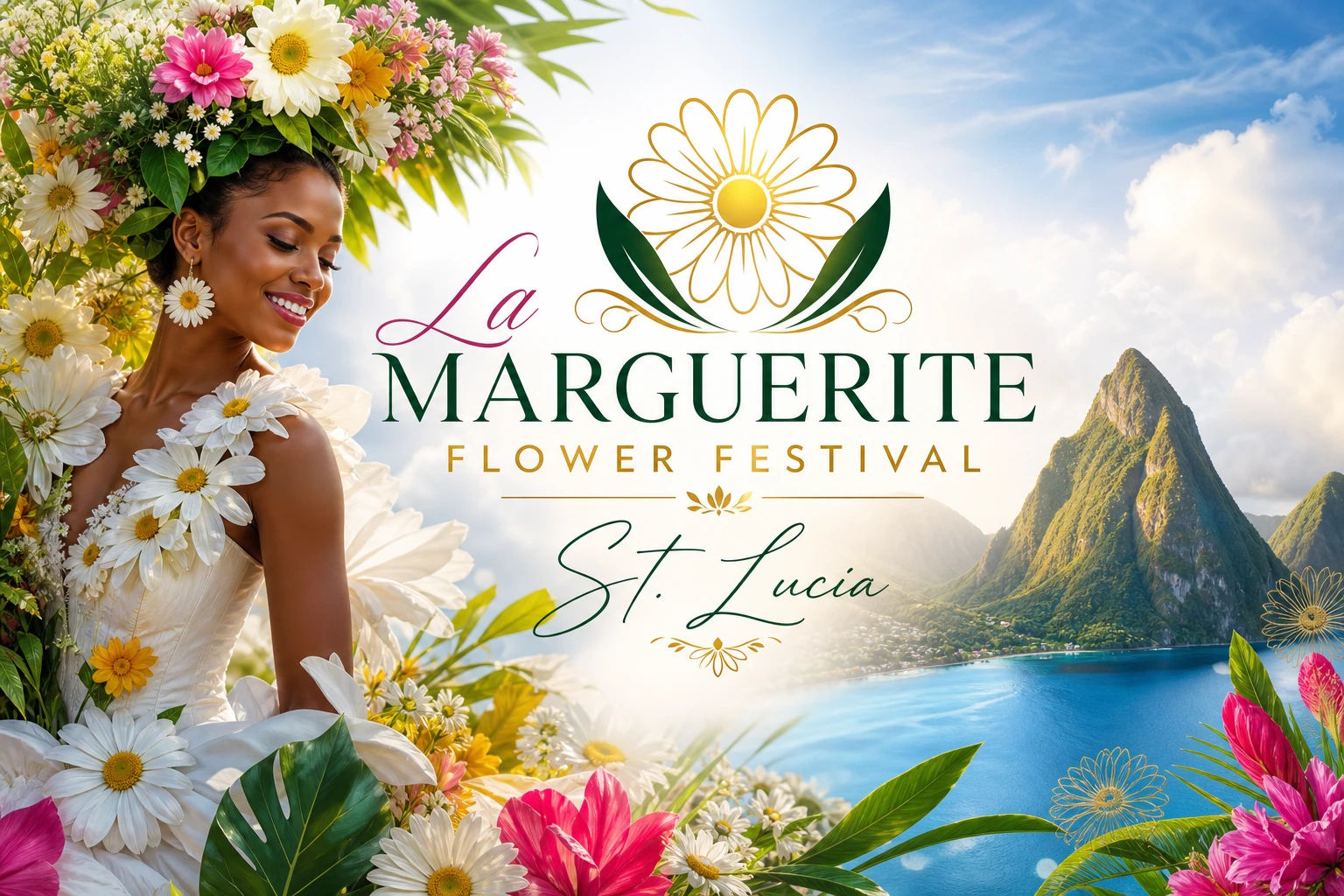
Experience the Vibrant Saint Lucia La Marguerite Festival (La Magwit)
Saint Lucia La Marguerite Festival, known in Kweyol as La Magéwit (La Magwit), is one of the island’s most meaningful folk celebrations, blending pageantry, traditional music, community “séances,” and a feast-day parade rooted in Saint Lucia’s flower societies. Celebrated every year on October 17, it’s an ideal island cultural event for travelers who want to experience Saint Lucia beyond beaches through living heritage, local song traditions, and a joyful community rivalry with La Rose (La Woz).
What is the Saint Lucia La Marguerite Festival (La Magwit)?
La Magéwit is one of Saint Lucia’s two National Flower Festivals, paired with La Rose (La Woz), and it is described by the Cultural Development Foundation as uniquely Saint Lucian in identity and location. The CDF explains that these flower celebrations reveal elaborate pageantry reminiscent of a European court, while their music is richly evocative of Africa, reflecting Saint Lucia’s layered cultural roots.
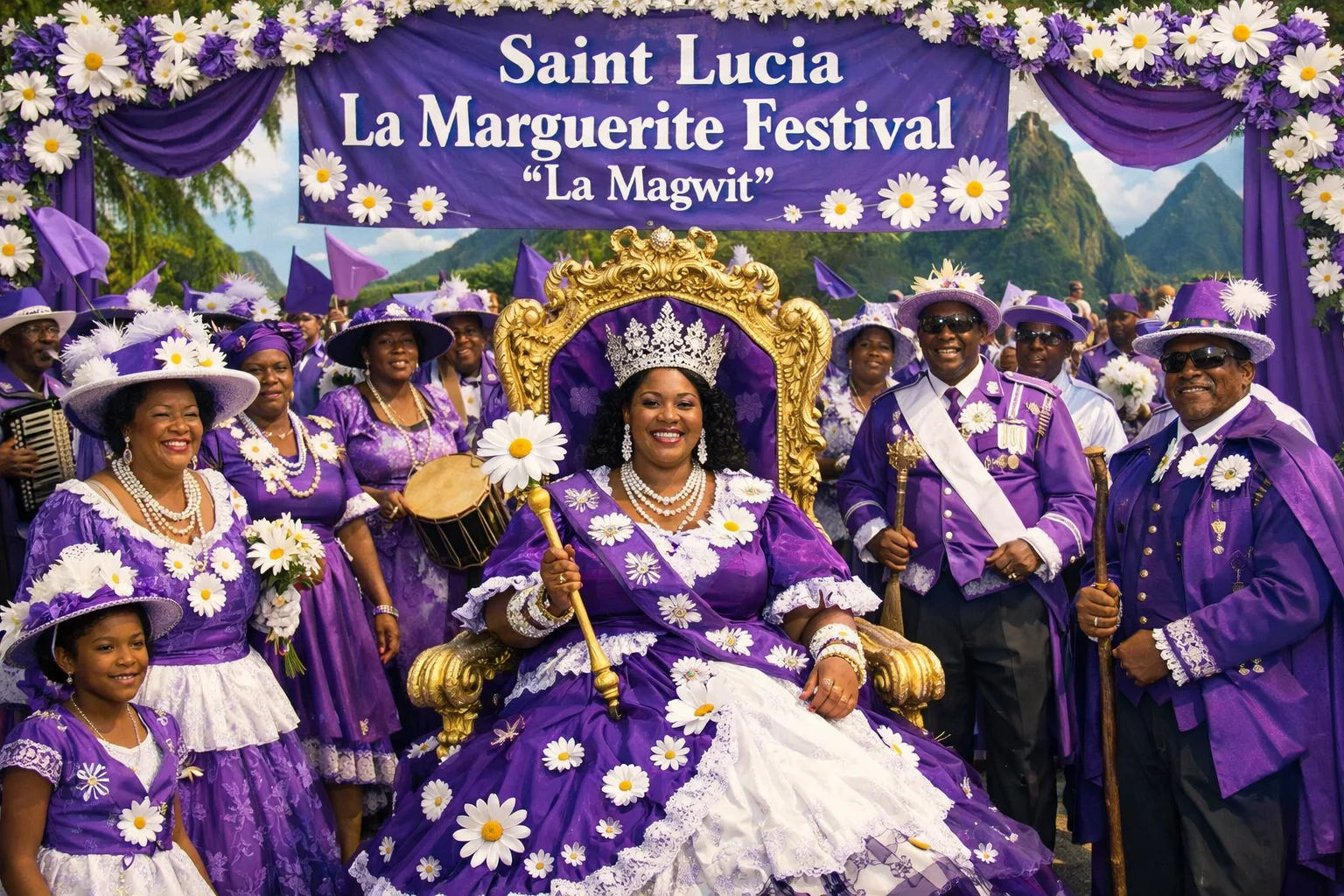
The festival is built around Saint Lucia’s flower societies. According to the CDF, each society is presided over by a “king” and “queen” and includes mock princes and princesses along with military, legal, and service roles, creating a structured folk “court” that performs through costume, song, and ceremony.
For visitors, La Magwit is not a staged show for tourists. It’s a community-led cultural tradition where locals actively participate, sing, and celebrate, so attending feels like stepping into a Saint Lucian story rather than just watching an event.
When La Magwit is Held: Annual Celebration Date
Saint Lucia La Marguerite Festival (La Magwit) is celebrated on October 17 each year. The Saint Lucia Tourism Authority’s listing for the La Marguerite Flower Festival states “October 17th,” and the CDF confirms La Magéwit is observed on October 17 annually as the feast of St. Margaret Mary Alacoque.
This fixed date makes it easy to plan an island trip. If you travel to Saint Lucia in mid‑October, you can confidently aim to be on-island for the feast-day celebrations and then round out your stay with beach time, hiking, and food adventures before or after the festival.
Where the Festival Happens: Community Societies Across Saint Lucia
La Magwit is not limited to a single stadium or concert park. The CDF states that flower societies exist across the island, which is why the celebration can feel different depending on which community you experience it in.
On feast day, the celebration has a recognizable flow. The CDF explains that members dressed in the costumes of their roles march to church for the service, then parade through the streets, and return to the venue for the Grand Fete.
For island travelers, this means the best approach is local. Choose the community where you’re staying, ask where the parade route and Grand Fete are centered, and plan to follow the sequence from church to streets to celebration venue.
The Story Behind Saint Lucia’s Flower Societies
La Magwit is part of a wider tradition of flower societies that preserve Saint Lucia’s cultural memory through music, role-play, and friendly rivalry. The CDF describes the flower festivals as a unique anthropological study, explaining they were created by the peasant class as a parody of social superiors, staged through elaborate court-like pageantry and performance.
This context helps visitors understand why the experience can feel theatrical and ceremonial at once. It’s not “random costumes,” it’s a folk structure with roles, rules, songs, and seasonal preparation.
What You’ll See and Hear: Costumes, Purple Pride, and Traditional Songs
La Marguerite celebration has clear visual markers. The Saint Lucia Tourism Authority notes that La Marguerite members dress in the colour purple and create displays of the Marguerite flower while singing their traditional songs.
Expect a festival that is strongly music-driven. The CDF explains that groups hold weekly song-filled séances consisting of all-night singing and dancing sessions, where drinks are sold and games are played, and that a central figure called the Chantwelle or Chanteur (lead singer) sustains the spirit of the entertainment.
The sound is deeply rooted in traditional instrumentation. The CDF lists rustic instruments used in the séances, including guitar, banjo, quatro, shak-shak, baha, gwaj (grater), and drums, which signals the kind of acoustic folk energy that makes La Magwit feel distinctly Saint Lucian rather than a modern concert.
The Cultural Rhythm: Séances and the Build-Up to Feast Day
To truly appreciate La Magwit, it helps to know that the feast day is the finale of a longer season. The CDF notes that each flower society has a highly animated season lasting several weeks and culminating in a feast day full of splendor and spectacle.
The séances are the heartbeat of that season. Because they involve long-form singing, dancing, and community gathering, they also serve as a cultural “training ground” where songs, call-and-response patterns, and performance traditions stay alive across generations.
For travelers, this means mid‑October can offer more than just one day of celebration. Depending on where you stay and what’s scheduled locally, you may find pre-festival gatherings or performances that make the island feel like it’s warming up for a major heritage moment.
Local Relevance: Building an Island Itinerary Around La Magwit
La Magwit fits perfectly into a Saint Lucia itinerary because it’s community-based and often happens in the same places you’ll explore anyway. You can attend the cultural celebrations, then spend the next day enjoying the island’s natural highlights such as beaches, rainforest viewpoints, and local food experiences in nearby towns.
Practical itinerary ideas:
- Base in the north (Castries, Gros Islet, Rodney Bay) for easier transport access and a wider range of lodging, then travel to community celebrations.
- Base in a quieter area and treat La Magwit as a day-trip cultural experience to balance resort relaxation with heritage.
Practical Travel Tips for Attending Respectfully
Because this is living tradition, the best travel behavior is thoughtful and low-impact.
Tips that help:
- Wear purple to align with La Marguerite identity, as recommended by the Saint Lucia Tourism Authority’s description of how members dress.
- Arrive earlier in the day so you can see the full feast-day flow described by the CDF: church service, street parade, then Grand Fete.
- Ask before taking close-up photos of performers, especially during church-related moments, because parts of the day are ceremonial and community-focused.
- Carry water and sun protection, since parades and outdoor gatherings can mean long periods outside.
Pricing: What Does La Marguerite Festival Cost?
The La Marguerite Festival is a cultural community celebration with public elements like parades and performances. The official tourism listing explains what happens and how people participate, but it does not provide a single universal ticket price, suggesting that many aspects are open community activities while specific venues or special events may vary by location.
Travel budgeting is typically focused on:
- Transport to the celebration community and back.
- Food and drinks during the day or at evening gatherings.
- Optional local events connected to the season, such as séances or Grand Fete-related community activities.
Verified Information at a Glance
- Event name: Saint Lucia La Marguerite Festival (La Magéwit / La Magwit)
- Event category: National Flower Festival and cultural heritage celebration (pageantry, traditional songs, feast-day parade, community gatherings).
- Typically held: October 17 (fixed annual date).
- Paired tradition: One of two flower festivals, alongside La Rose (La Woz).
- Key identity markers: La Marguerite members dress in purple, create Marguerite flower displays, and sing traditional songs.
- Season build-up: Flower societies hold weekly all-night singing and dancing “séances” in the weeks leading up to feast day.
- Feast-day structure: Church service, street parade, then Grand Fete.
- Music details: Lead singer (Chantwelle/Chanteur) and traditional instruments such as guitar, banjo, quatro, shak-shak, baha, gwaj (grater), and drums.
- Pricing: No universal ticket price listed in the official tourism description; costs generally relate to transport, food, and optional local venue activities.
Plan a mid‑October Saint Lucia getaway, pack something purple, follow the sound of the Chantwelle from community séances into the feast-day parade, and experience La Magwit as a truly island-rooted celebration where Saint Lucia’s heritage isn’t displayed, it’s lived.