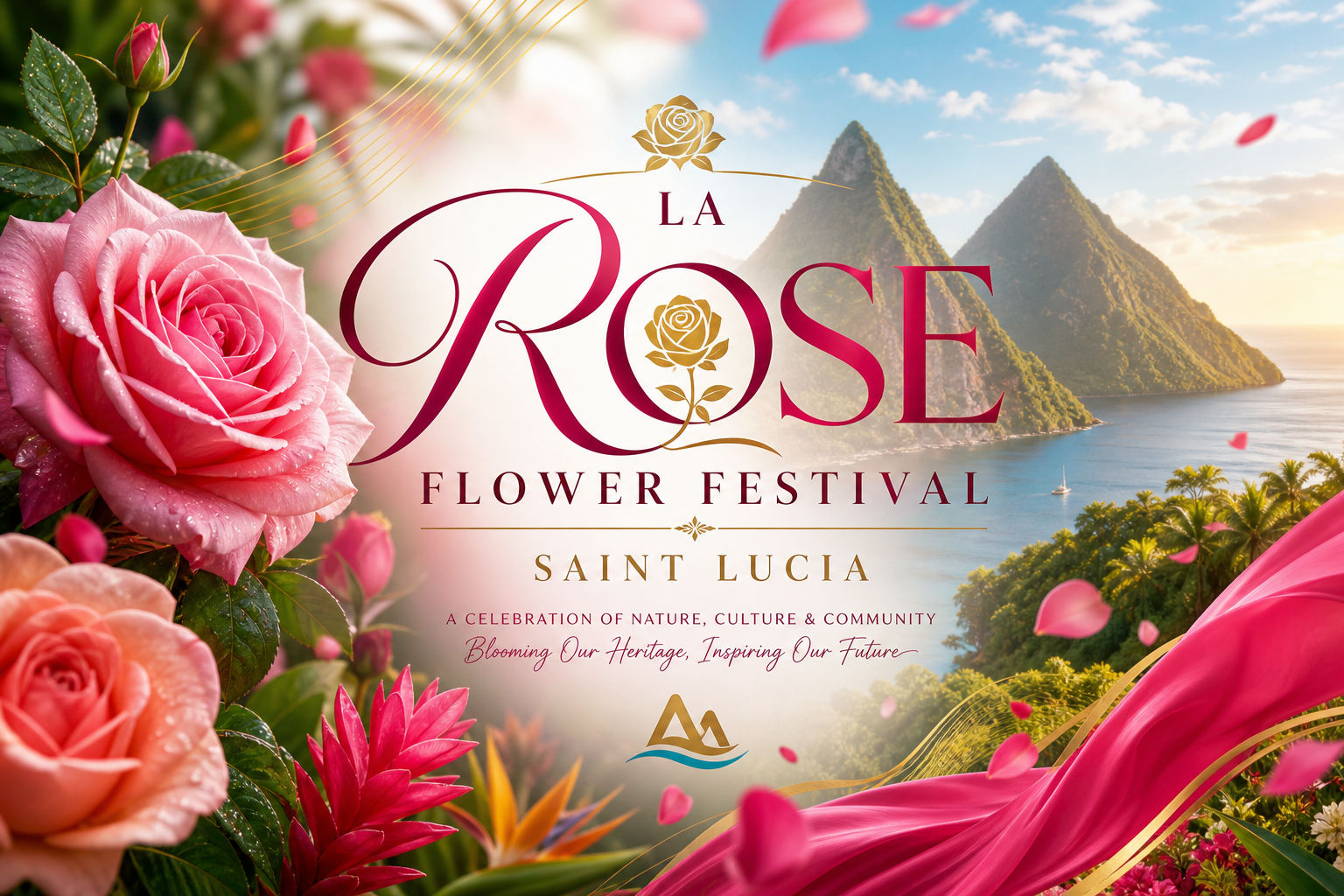
Saint Lucia carries cultural traditions that exist nowhere else on earth, and the La Rose Flower Festival is one of the most extraordinary of them. On Sunday August 30, 2026, the island's La Rose (Lawòz) society celebrates its annual feast day in a spectacle of red costumes, roses, singing, processions, and a grand fete that has been running continuously for over 250 years. This is not a festival created for tourism. It is a living cultural institution nominated for inscription on UNESCO's Representative List of the Intangible Cultural Heritage of Humanity — one of the most genuinely irreplaceable cultural events in the entire Caribbean.
"A living cultural institution nominated for inscription on UNESCO's Representative List of the Intangible Cultural Heritage of Humanity."
Two Flowers, One Island: The Rivalry That Built a Tradition
The Rose and the Marguerite
The La Rose Flower Festival cannot be fully understood without its counterpart. Saint Lucia has two rival flower societies whose historical competition defines the cultural landscape of the entire island:
- La Rose (Lawòz): Members pledge allegiance to the rose, dress in red and white, and celebrate on the feast of Saint Rose de Lima, August 30
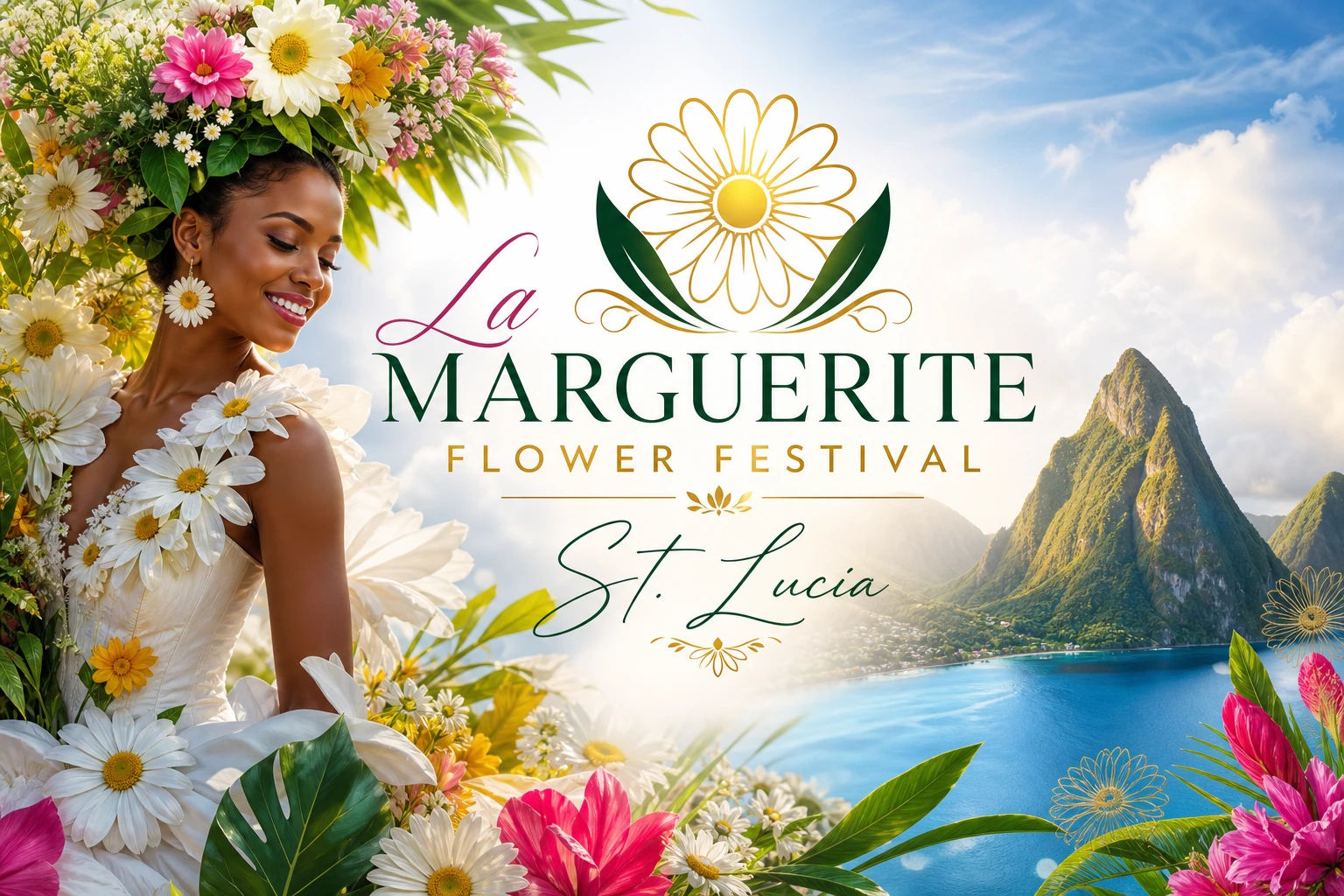
- La Marguerite (La Magéwit): Members pledge allegiance to the marguerite, dress in blue, yellow, and white, and celebrate on the feast of Saint Margaret Mary Alacoque, October 17
The two societies are divided by community allegiance passed down through families across generations. A Saint Lucian is either a Rose or a Marguerite — you are born into it, you grow up in it, and the rivalry between the two is one of the most delightfully passionate and most genuinely harmless cultural competitions in the Caribbean. The singing competitions between the two societies — where members compose and perform songs celebrating the virtues of their flower and mocking the rival — are the most musically creative and most comedically sharp cultural performance tradition on the island.
Origins: A Tradition Born in the Shadow of Slavery
Resilience and Identity
The Flower Festivals date back more than 250 years, with their roots in the enslaved communities of Saint Lucia's plantation era. The societies began as mutual aid and social organizations that gave enslaved and later emancipated Saint Lucians a framework for community identity, celebration, and resilience outside the structures of colonial society. They modeled their organization on the hierarchies of European royal courts — with kings, queens, princes, princesses, counts, and countesses — but transformed that borrowed structure into something entirely their own, anchored in African community values, Catholic feast day observance, and the particular Saint Lucian Creole cultural identity that merged French, African, and British influences into something unique.
UNESCO's recognition of the Flower Festivals' nomination-readiness reflects precisely this historical significance: the festivals are described as "a symbol of community resilience, particularly in the face of slavery".
What Happens on August 30: The Grand Fete
A Day Full of Tradition
The La Rose feast day on August 30, 2026, is the culmination of a season of celebrations that builds across the weeks preceding the grande fete. The La Rose society's season includes gatherings, practice sessions, seances (communal singing and dancing events), and inter-community events that build anticipation and solidarity among Rose members before the feast day arrives.
On August 30 itself, the sequence of events follows the tradition established over 250 years:
- The Procession to Church: The entire La Rose society, dressed in their red and white costumes, assembles and marches together to the church for a solemn Catholic Mass honoring their patron saint, Saint Rose of Lima.
- The Street Parade: Following the church service, the society parades through the streets in full costume, singing the La Rose songs that are the most distinctively musical element of the tradition.
- The Grand Fete: The society returns to its celebration venue for the Grand Fete, the extended celebration that combines music, dancing, eating, and the internal ceremonies of the society.
The Costumes: Red, White, and the Court of the Rose
Elaborate Traditions
The costume tradition of the La Rose society is one of the most elaborate and most carefully maintained elements of the entire festival:
- The King and Queen: The most magnificent costumes in the entire society, with the queen's gown typically the most extraordinary individual costume piece in any Saint Lucian cultural event.
- Princes and Princesses: Supporting royalty whose costumes echo the king and queen's grandeur at a slightly reduced scale.
- Counts, Countesses, and Nobles: The aristocratic tier of the court in elaborately decorated costumes.
- Police, Judges, Nurses, and Doctors: Community role figures in costume versions of their professional dress.
- General membership: All in the red and white palette that identifies them unmistakably as Roses in the island's cultural geography.
The costume-making tradition that supports the La Rose festival is itself a significant craft heritage, with seamstresses and tailors across Saint Lucia preparing the elaborate pieces across the months before August 30.
La Rose and La Marguerite: UNESCO Nomination in Progress
Recognizing Cultural Heritage
In 2024, the Saint Lucia National Commission for UNESCO received approval and US$10,000 in preparatory assistance from UNESCO to prepare a nomination of The Flower Festivals of Saint Lucia for the Representative List of the Intangible Cultural Heritage of Humanity. This UNESCO nomination process recognizes the Flower Festivals as among the most significant intangible cultural traditions in the Caribbean, comparable in cultural depth to Carnival in Trinidad, the Jab Jab traditions of Grenada, and the Jonkanoo heritage of Jamaica and the Bahamas.
The nomination covers both La Rose (August 30) and La Marguerite (October 17) as a single inseparable cultural tradition, reflecting the understanding that the two societies and their historical rivalry are two halves of the same cultural whole. Visitors to Saint Lucia who attend either the La Rose festival in August or the La Marguerite festival in October are participating in a tradition that the global heritage community has recognized as irreplaceable.
La Rose in the Saint Lucia August Calendar
A Month of Celebration
The La Rose Flower Festival on August 30 sits within Saint Lucia's most culturally dense summer period:
- August 2026: Roots & Soul Festival, Pigeon Island
- August 30, 2026: La Rose Flower Festival — Grand Fete Day
- October 17, 2026: La Marguerite Flower Festival
A visitor in Saint Lucia for the Roots & Soul Festival in mid-to-late August who extends their stay through August 30 experiences both the island's most important reggae and soul music event and its most historically significant cultural society festival in a single trip.
Practical Tips for La Rose Festival 2026
Make the Most of Your Visit
- The public procession is the most accessible entry point. The street parade on August 30 is visible to anyone in the streets of the participating community and requires no ticket or advance arrangement.
- Contact the Cultural Development Foundation (CDF) Saint Lucia at cdfstlucia.org for the confirmed 2026 grand fete location and the schedule of pre-feast-day seances.
- Attend a pre-fete seance if possible. The weeks before August 30 include seance events where La Rose members gather to sing, dance, and practice the society's musical repertoire.
- Dress respectfully. The La Rose festival is a formal cultural and religious occasion for its members. Visitors who dress thoughtfully signal respect for the tradition.
- La Rose happens across multiple communities. The festival is not a single-venue event but a network of La Rose society branches across Saint Lucia's communities.
National Day — Festival of Lights and Renewal 2026 Saint Lucia: December 13 and the Patron Saint of Light
A Celebration of Light and Identity
Saint Lucia is the only country in the world named after a saint, and the only one where the nation's name and the patron saint of light are one and the same. December 13, 2026 is both Saint Lucia's National Day and the feast of Saint Lucy (Santa Lucia), the early Christian martyr whose name means "light" in Latin and whose feast day has been associated with the triumph of light over darkness since the Middle Ages. The Festival of Lights and Renewal that culminates on December 13 every year is the most symbolically complete national celebration in the Caribbean — a day when a nation literally celebrates its own name.
December 13, 2026: National Day and the Feast of Saint Lucy
Saint Lucy of Syracuse
Saint Lucy of Syracuse (283–304 AD) was a young Sicilian Christian martyr whose name, derived from the Latin lux (light), became her defining symbol in the Catholic tradition. Her feast day on December 13 historically fell on the winter solstice in the Julian calendar, the darkest night of the year, which gave the "saint of light" her most resonant symbolic context: her feast day was literally the moment when light began its return.
For Saint Lucia — the island — the feast of Saint Lucy is simultaneously a religious observance, a national holiday, and an expression of the island's entire identity. The Festival of Lights and Renewal is the celebration that gives this convergence its public form.
The Festival Programme: December into December 13
Building Up to the Celebration
The Festival of Lights is not a single-day event. It builds across the first two weeks of December in a programme managed by the Cultural Development Foundation (CDF) of Saint Lucia:
The Lantern Competition — Early December
Creativity and Tradition
The Lantern Competition is the festival's most beloved community participation element and the one that most directly connects the celebration to its core symbol. Saint Lucians of all ages design and build handmade lanterns for judging at the National Cultural Centre, with categories spanning children, youth, adults, and community organizations. The lantern-making tradition has deep roots in Saint Lucian family culture, where the creation of a lantern to hang in the home doorway was once the standard way of marking the December 13 feast day.
In 2025, lantern judging took place on Saturday December 6 at the National Cultural Centre from 10:00 AM to 4:00 PM, open to the public as both a spectator and a participatory event where the artistry of hundreds of handmade lanterns transforms the judging venue into one of the most visually beautiful spaces on the island.
The Parade of Lanterns — December 12 Evening
A Night of Light
The Grand Lantern Parade on the eve of National Day (December 12) is the festival's most dramatic public spectacle. In 2025, the parade:
- Began at 7:00 PM at the Vigie Playing Field in Castries
- Wound through the streets of the city center toward Derek Walcott Square
- Featured the Royal Saint Lucia Police Band, masqueraders, drummers, steelpan players, folk dancers, stilt walkers, and the iconic Papa Jab character with his entourage
- Concluded at William Peter Boulevard, leading into the Festival of Lights celebration at Derek Walcott Square
The parade is one of the most joyful and most visually arresting public events in Saint Lucia's entire calendar, with the moving river of handmade lanterns through the Castries streets creating a visual effect that photographs cannot fully capture.
The Festival of Lights Finale — Derek Walcott Square, December 12 Night
A Celebration of Illumination
The parade concludes at Derek Walcott Square in central Castries, where the Festival of Lights finale takes place under the patronage of the Office of the Governor General of Saint Lucia:
- Live band and Christmas show — carol singing and traditional Christmas music
- Bamboo bursting — the traditional Saint Lucian percussive folk tradition of creating explosive reports from bamboo tubes, one of the most distinctively Saint Lucian sounds of the December season
- The turning on of the lights of Derek Walcott Square — the ceremonial illumination that transforms the central square into the most decorated public space in Castries for the Christmas season
- Fireworks display over the square, the visual punctuation mark of the entire celebration
National Day — December 13
A Day of National Pride
December 13, 2026 is a public holiday across Saint Lucia. Business houses across the island observe the tradition of lighting up on December 13th, filling the island with decorative lighting as a collective expression of the national identity and the festival's central theme. Official National Day ceremonies mark the public holiday at the governmental level alongside the cultural programme.
Derek Walcott Square: The Heart of the Celebration
Symbolism and Celebration
Derek Walcott Square in central Castries, renamed from Columbus Square in honor of Saint Lucia's Nobel Laureate poet Derek Walcott (1930–2017), is the Festival of Lights' primary venue and Saint Lucia's most symbolically charged public space. The square anchors the capital city's historic center, surrounded by the Castries Cathedral, colonial-era government buildings, and the commercial streets of downtown Castries, and its illumination on the eve of December 13 is the visual centerpiece of the entire national holiday.
The connection between the Festival of Lights and Derek Walcott Square carries an additional layer of meaning: Walcott, whose poetry engaged throughout his career with the themes of Caribbean identity, cultural memory, light, and renewal, is the most intellectually appropriate patron for a public space hosting a festival that celebrates those same themes in their most communal and most joyful form.
Saint Lucy and the Global Festival of Light Tradition
A Shared Celebration
The Feast of Saint Lucy on December 13 is celebrated across the Catholic world but reaches its most culturally elaborate expression in Scandinavia — particularly Sweden, where the Sankta Lucia processions, with white-robed girls carrying candles and wearing crown of lights, are the most iconic images of the Swedish winter season — and in Saint Lucia, where the entire nation takes its name from the same saint.
The parallel between the Swedish Lucia tradition and the Saint Lucian Festival of Lights is one of the most charming and most symbolically resonant coincidences in global folk culture: two completely different communities, separated by 8,000 kilometers and by entirely different cultural, historical, and climatic contexts, honoring the same saint with light and celebration on the same date for reasons rooted in the same original devotion.
Practical Tips for the Festival of Lights 2026
Enjoy the Festival to the Fullest
- Attend both the lantern judging and the parade for the full Festival of Lights experience. The lantern judging at the National Cultural Centre in early December is the most artistically rich dimension of the programme, and the December 12 parade through Castries is the most visually spectacular.
- Be at Derek Walcott Square by 9:00 PM on December 12 for the best position for the lighting ceremony and fireworks finale.
- December is peak tourism season in Saint Lucia. Book accommodation well in advance — Castries-based and Rodney Bay-based accommodation for the first two weeks of December, particularly the December 12 to 13 National Day weekend, fills quickly.
- The festival is free to attend at all public events. The lantern competition judging at the National Cultural Centre is open to the public at no charge.
- Contact the CDF Saint Lucia at cdfstlucia.org for the confirmed 2026 lantern competition dates, the parade route, and the full December cultural programming schedule.
Saint Lucia December Cultural Calendar 2026
A Month of Festivities
- First week of December: Lantern Competition judging, National Cultural Centre
- December 12, 2026: Grand Lantern Parade, Castries — 7:00 PM from Vigie Playing Field
- December 12 night: Festival of Lights finale, Derek Walcott Square
- December 13, 2026: National Day — Public Holiday
- December 13 and beyond: 12 Days of Christmas in Saint Lucia
Verified Information at a Glance: Both Events
La Rose Flower Festival
- Date: Sunday August 30, 2026
- Character: Cultural society feast day — procession, parade, grand fete
- Costume Color: Red and white
- Patron Saint: Saint Rose de Lima
- History: 250+ years
- UNESCO Status: Nominated for Representative List of Intangible Cultural Heritage of Humanity
- Organizer: Cultural Development Foundation (CDF) Saint Lucia — cdfstlucia.org
- Admission: Free (public procession and parade)
- Sister Event: La Marguerite Flower Festival, October 17, 2026
National Day — Festival of Lights and Renewal
- National Day: Sunday December 13, 2026 (public holiday)
- Grand Lantern Parade: Saturday December 12, 2026, 7:00 PM, Vigie Playing Field to Derek Walcott Square, Castries
- Lantern Competition Judging: Early December, National Cultural Centre, Castries
- Finale Venue: Derek Walcott Square, central Castries
- Programme: Parade of lanterns, Royal Police Band, masqueraders, steelpan, folk dancers, Papa Jab, bamboo bursting, carol singing, lights illumination, fireworks
- Organizer: Cultural Development Foundation (CDF) Saint Lucia — cdfstlucia.org
- Admission: Free
- Patron: Office of the Governor General of Saint Lucia
- Best For: Families, cultural travelers, Caribbean heritage visitors, Christmas season travelers, photography, Saint Lucia identity and history enthusiasts
```