Independence Day 2026 Seychelles: Celebrating 50 Years of Freedom in the World's Most Beautiful Nation
On the morning of Monday, June 29, 2026, the Republic of Seychelles will mark a milestone that deserves every flag, every parade drum, and every firework the archipelago can produce. Fifty years ago on this date, the islands gained their independence from Britain, and in the half-century since, they have built one of the most distinctive, most ecologically committed, and most strikingly beautiful nations on earth from 115 islands scattered across the western Indian Ocean.
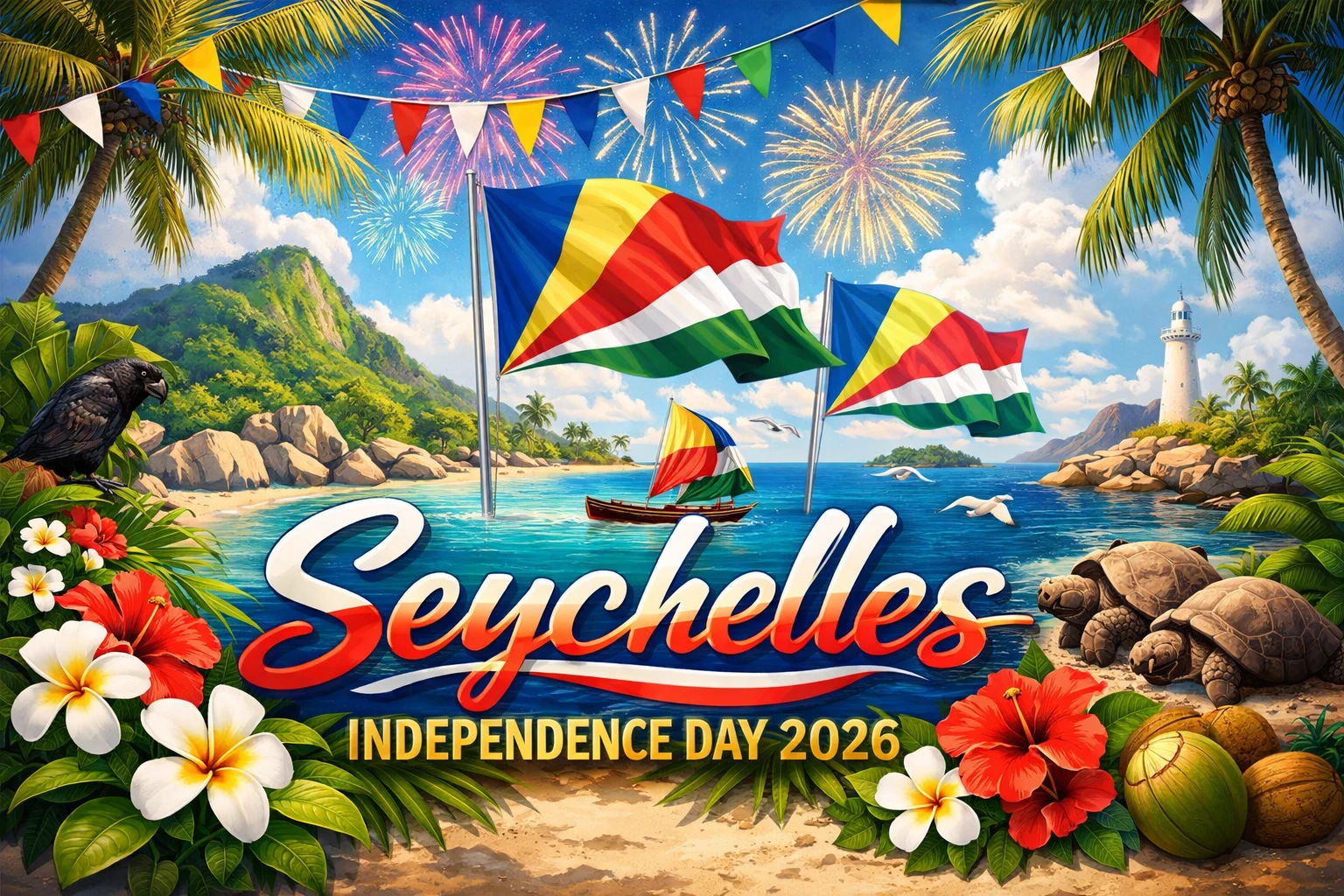
Also known as Republic Day, Independence Day is a public holiday in Seychelles on June 29th. This is Seychelles' National Day and marks the day when the country gained its independence from Britain in 1976. In 2026, Independence Day falls on a Monday, giving the celebration a natural long-weekend momentum that pulls the community's festivities from the weekend into the official national holiday with maximum energy. On Independence Day, the President of Seychelles addresses the nation in a celebratory speech. The holiday is celebrated with parades, flower and music shows, cultural events, parties, picnics, and firework displays.
For visitors fortunate enough to be in the Seychelles during the last week of June, this is one of those rare travel experiences where the destination you came to see decides to show you everything it is, all at once, without reservation.
The History That Made June 29 the Most Important Date in Seychellois Life
From Arab Traders to a Free Republic: The Long Road to Independence
Independence was long in coming to Seychelles, which perhaps makes the islanders value it the more. Before European colonisers arrived, Seychelles traded valuable coco de mer nuts with Arab traders, and the islands were briefly sighted by the Portuguese in the early 1500s.
The islands were first charted by Vasco da Gama in 1503, who named them the Admiral Islands in honour of himself. Over the next 150 years, various European nations attempted to claim the islands, which were seen as an important staging post in the Indian Ocean. At the start of the Seven Years' War in 1754, the French staked a claim on the islands. They went on to establish a colony on the main island, Mahé, in August 1770. In April 1811, after taking control of other French colonies in the Indian Ocean, the British took control of Seychelles.
The British took control of Seychelles in the early 1800s. They abolished slavery in 1835, and also brought freed slaves rescued off Arab trading vessels to settle on the islands. Those freed slaves, alongside the descendants of French settlers and the workers brought from Africa, Madagascar, and the Indian subcontinent over the colonial period, created the extraordinarily diverse Seychellois people whose culture, cuisine, and Creole language now define the islands' identity.
In Seychelles, the first political movements began to emerge in 1964. The Seychelles People's United Party campaigned for independence from Britain, but it lost elections to the Seychelles Democratic Party that wanted closer integration with the metropoly. During the 1974 elections, however, both major parties campaigned for independence. Following the election and negotiations with Britain, Seychelles was granted independence and became an independent republic on June 29, 1976.
Seychelles has been a member of the Commonwealth of Nations ever since it was granted independence in 1976. The journey from 1976 to 2026 is fifty years of nation-building on a foundation of extraordinary natural wealth and a deep commitment to the environmental principles that have made the Seychelles one of the most admired small nations in the world.
The National Day Evolution: From Constitution Day to Independence Day
Until 2015, the National Day was celebrated on Constitution Day on June 18th, marking the adoption of the new constitution on that day in 1993. The decision to shift the national celebration to June 29 brought the annual commemoration into alignment with the founding moment of the republic itself, and the change reflected a maturation in how the Seychellois people understand their national identity: not simply as a constitutional arrangement but as a sovereign community that chose freedom and has been building on that choice for fifty years.
The 2026 celebration therefore carries particular weight. Half a century is a long time, and the Seychelles has a great deal to show for it.
What the Independence Day Celebrations Look Like
The National Parade: Pride in Motion Through Victoria
Seychelles celebrates its Independence Day on June 29th with parades, concerts, and cultural performances to commemorate gaining independence from the United Kingdom in 1976.
The national parade is the centerpiece of Independence Day in the Seychelles, and its character reflects something genuine about who the Seychellois people are. The route through Victoria, the capital city and one of the smallest national capitals in the world, brings the parade within close visual range of virtually everyone who gathers along the route. The intimacy of the city's geography means this is not a spectacle observed from a distance but a communal experience where the crowd and the marchers are in immediate proximity.
Streets are usually decorated with the bright colors of the Seychelles flag. Even the lamp posts are also decorated with twinkling lights. The Seychellois flag, adopted in its current form in 1996, is one of the most visually striking national flags in the world: five radiating bands of blue, yellow, red, white, and green spreading from the bottom-left corner like rays of sunlight over the Indian Ocean. When those colors are reproduced in banners, bunting, and the costumes of parade participants along every street in Victoria, the effect is genuinely uplifting.
The military and police parade units, the school groups marching in formation, the cultural performance contingents in traditional dress, and the floats representing different aspects of Seychellois life and achievement all contribute to a procession that tells the story of the nation's past half-century with a directness and pride that no formal historical document can match.
The Presidential Address: The Nation Listens Together
On Independence Day, the President of Seychelles addresses the nation in a celebratory speech. In a country of approximately 98,000 people, the presidential address on Independence Day carries a particular intimacy. This is not a national leader speaking to a faceless mass of millions. It is a political leader addressing a community small enough that virtually every citizen has a personal connection to the institutions being discussed, the history being commemorated, and the future being described. The annual address typically reflects on the year's achievements, acknowledges the challenges ahead, and reaffirms the values that have defined Seychellois sovereignty since 1976.
For visitors, the presidential address provides a window into how this nation understands itself: not as a small country that happens to have beautiful beaches, but as a sovereign state with genuine contributions to make to global conversations about ocean conservation, biodiversity protection, and the kind of sustainable development that keeps the natural environment intact for future generations.
Cultural Performances: Sega, Moutya, and the Living Arts Tradition
The cultural performance dimension of Independence Day celebrations draws on the full richness of Seychellois artistic expression. Sega, the islands' most characteristic popular music form, pulses through the celebrations with the driving ravann drum rhythm that makes it impossible to stand still. Moutya, the older and more contemplative call-and-response tradition that emerged from the plantation era, connects the celebration to the deeper history of the people who built these islands with their labor and their suffering.
Traditional Creole dances, in the vibrant costumes that reflect the multicultural heritage of the Seychellois people, bring together the African, French, Indian, and Chinese threads of the islands' ancestry in a single visual and musical expression. These are not folkloric reconstructions performed for tourists. They are living traditions maintained by communities who have practiced them continuously across generations, and Independence Day is the occasion when they receive their most public and most celebrated annual platform.
Fireworks Over the Indian Ocean
The skies light up at night due to the fascinating fireworks. Fireworks over a natural harbor as magnificent as Victoria's, with the dramatic silhouette of Mahé's mountainous interior behind the city and the Indian Ocean stretching out ahead, create a visual experience that photographs consistently fail to capture. The combination of the fireworks' light with the reflection on the harbor water, the illuminated facades of the historic buildings of downtown Victoria, and the warm tropical night air makes the Independence Day fireworks one of the most atmospheric public spectacles in the Indian Ocean region.
For visitors based in hotels along Beau Vallon or in the hillside properties above Victoria, finding a vantage point that captures the fireworks above the harbor is one of the more rewarding pieces of Independence Day evening planning.
Victoria: The Capital City Where Independence Day Lives
The Most Personal Capital City in the World
Victoria is the smallest capital city in the world by resident population, with approximately 26,000 people living in its urban area. That scale transforms Independence Day from a large impersonal civic ceremony into something that feels closer to a neighborhood celebration on a national scale. The streets that the parade moves through are the streets where residents go to market on Wednesday mornings and where school children walk home in the afternoon.
The clock tower in the center of Victoria, a miniature replica of London's Victoria Tower installed to commemorate the Golden Jubilee of Queen Victoria in 1897, stands as a quietly ironic focal point during Independence Day celebrations: a symbol of British colonial presence that the city has fully incorporated into its own identity, the way a genuinely confident culture can absorb its history without being defined by it.
The Sir Selwyn Selwyn-Clarke Market nearby, one of the most colorful and fragrant markets in the Indian Ocean region, operates on normal schedules around the holiday, and in the days immediately before June 29, it fills with the additional produce and flowers and ingredients that families need for the Independence Day gatherings and communal meals that the celebration occasions.
The Natural History Museum of Seychelles in Victoria, the Seychelles National Botanical Gardens with their famous giant tortoise population, and the towering green backdrop of Morne Seychellois National Park above the city all contribute to the context of a capital whose natural setting is, quite simply, without parallel among the world's national capital cities.
The 50th Anniversary Significance: Why 2026 Is an Exceptional Year to Visit
Half-century national anniversaries are treated seriously in small island nations, and the Seychelles has every reason to mark its 50th independence anniversary with a celebration proportionate to the achievement it commemorates.
The country that gained independence in 1976 was a collection of islands with no established economic base beyond agriculture and fishing. In the five decades since, the Seychelles has built a thriving tourism economy, established one of the strongest environmental protection frameworks of any nation in the world, committed to protecting 30 percent of its ocean territory as Marine Protected Areas, and maintained a standard of living that places it consistently among the highest in sub-Saharan Africa by most development indicators.
The 50th anniversary celebrations will almost certainly involve additional programming beyond the standard annual Independence Day format: special cultural events, retrospective exhibitions documenting the nation's development since 1976, and the kind of commemorative programming that marks a genuine historical milestone. Visitors who travel to the Seychelles specifically for the June 29, 2026 celebration should monitor the official Tourism Seychelles channels and the local press in the weeks before the holiday for announcements about additional events tied to the anniversary.
Practical Information for Visitors Attending Independence Day
What to Do and Where to Be on June 29
The holiday is celebrated with parades, flower and music shows, cultural events, parties, picnics, and firework displays. For most Seychellois, Independence Day is a great occasion to spend time with their families and do some family bonding.
Victoria is the natural center of the public celebrations, and visitors staying anywhere on Mahé can reach the capital easily on Independence Day. The SPTC bus service runs from Beau Vallon, the southeast beaches, and all major coastal settlements to Victoria throughout the day. The journey from Beau Vallon takes approximately 15 to 20 minutes; from Anse Royale on the southeast coast, approximately 45 minutes.
The parade typically takes place in the morning, starting between 9 and 10 AM and running through the late morning along the main streets of central Victoria. Arriving in the city by 8:30 AM to secure a viewing position along the parade route is the standard advice from those who have attended previously.
The afternoon transitions into the more informal community celebration dimension of the holiday: families gathering for meals, beach picnics along Beau Vallon and the south coast beaches, and the gradual build toward the evening fireworks. The fireworks display over Victoria harbor is the traditional finale, typically launched after dark when the sky is fully black and the reflection on the harbor water is at its most spectacular.
Getting to the Seychelles for Independence Day
29th June (Monday): Independence (National) Day falls in the heart of the Seychelles' high season for tourism, making advance booking of flights and accommodation essential. The Seychelles International Airport on Mahé receives direct flights from London Heathrow with British Airways and Air Seychelles, from the Gulf hubs with Emirates and Etihad, and from Johannesburg with multiple southern African carriers. June flights to the Seychelles should be booked several months in advance, as the combination of high tourist season and the Independence Day public holiday creates demand that fills available capacity quickly.
Accommodation across Mahé spans the full range from basic guesthouses in Victoria and the coastal barangays to mid-range beachfront hotels along Beau Vallon to the luxury resort properties that have made the Seychelles famous in international travel media. For Independence Day specifically, staying within reasonable reach of Victoria gives you the easiest access to the parade and the evening fireworks without requiring extended taxi journeys.
The Seychellois rupee is the local currency, though most tourist-facing businesses accept euros and major credit cards. Having some rupees on hand for market purchases, bus fares, and informal food stalls on Independence Day is practical, as the celebrations generate a significant informal economy of food vendors, souvenir sellers, and community market activity around the main event areas.
Understanding the Cultural Context
Independence Day in the Seychelles is genuinely participatory rather than purely spectatorial, and visitors who approach it as guests in someone else's celebration rather than as consumers of a tourist product will find themselves welcomed into that celebration with the warmth that Seychellois people are consistently noted for. Wearing the national colors, joining the community picnic areas in the parks around Victoria, trying the Creole food from the stalls that set up around the celebration areas, and staying for the fireworks rather than retreating to a resort before dark are all ways of honoring the occasion rather than simply witnessing it.
The Seychellois flag colors, blue, yellow, red, white, and green, are everywhere on Independence Day, and joining the community in wearing at least one of those colors is a small gesture of respect that is consistently appreciated.
The Nation at Fifty: What the Seychelles Has Built and Where It Is Going
The Seychelles at fifty years of independence is a nation of approximately 98,000 people managing 115 islands across an exclusive economic zone of more than one million square kilometers of Indian Ocean. It hosts roughly 350,000 to 400,000 tourists annually, up from essentially zero fifty years ago. Its commitment to protecting its marine environment through the 30 percent Marine Protected Area pledge is among the most ambitious ocean conservation targets of any nation in the world. Its coco de mer palms still grow in the Vallée de Mai on Praslin, a UNESCO World Heritage Site. Its giant tortoises still patrol the Aldabra Atoll, the largest raised coral atoll in the world and another UNESCO site. And its people, descended from the most extraordinary mixture of African, European, Indian, and Chinese ancestry in the Indian Ocean world, continue to speak their Creole language, cook their Creole food, and dance their sega on the beaches that have been their home for generations.
That is what June 29, 2026 is celebrating. Fifty years of a country that chose freedom, chose sustainability, and chose to build something worth protecting in one of the most beautiful archipelagos the planet contains. Independence Day is a day filled with national pride celebrated through parades, music, and dance throughout the islands.
If you find yourself in the Seychelles on June 29, you are in exactly the right place.
Verified Information at a Glance
Event Name: Independence Day 2026 / Republic Day / National Day, Republic of Seychelles
Event Category: National Public Holiday and Annual State Celebration
Date: Monday, June 29, 2026
Anniversary: 50th Anniversary of Seychelles Independence (gained June 29, 1976)
Status: Official National Public Holiday; all businesses and government offices closed
Primary Celebration Location: Victoria, Mahé Island, Seychelles (capital city and main parade route)
Key Events:
- Presidential Address to the Nation (morning)
- National Parade through central Victoria (morning, typically 9:00 AM to midday)
- Cultural performances including sega, moutya, and traditional Creole dance
- Community picnics, family gatherings, and beach celebrations throughout the day
- Evening fireworks display over Victoria Harbour
History: Seychelles gained independence from the United Kingdom on June 29, 1976. National Day was celebrated on June 18 (Constitution Day) until 2015 when the date was changed to June 29.
Flag Colors: Blue, yellow, red, white, and green (five radiating diagonal bands; adopted 1996)
Admission: All public celebrations are free and open to residents and visitors
Transportation to Victoria: SPTC public buses from Beau Vallon (approximately 15 to 20 minutes), Anse Royale (approximately 45 minutes), and all major Mahé