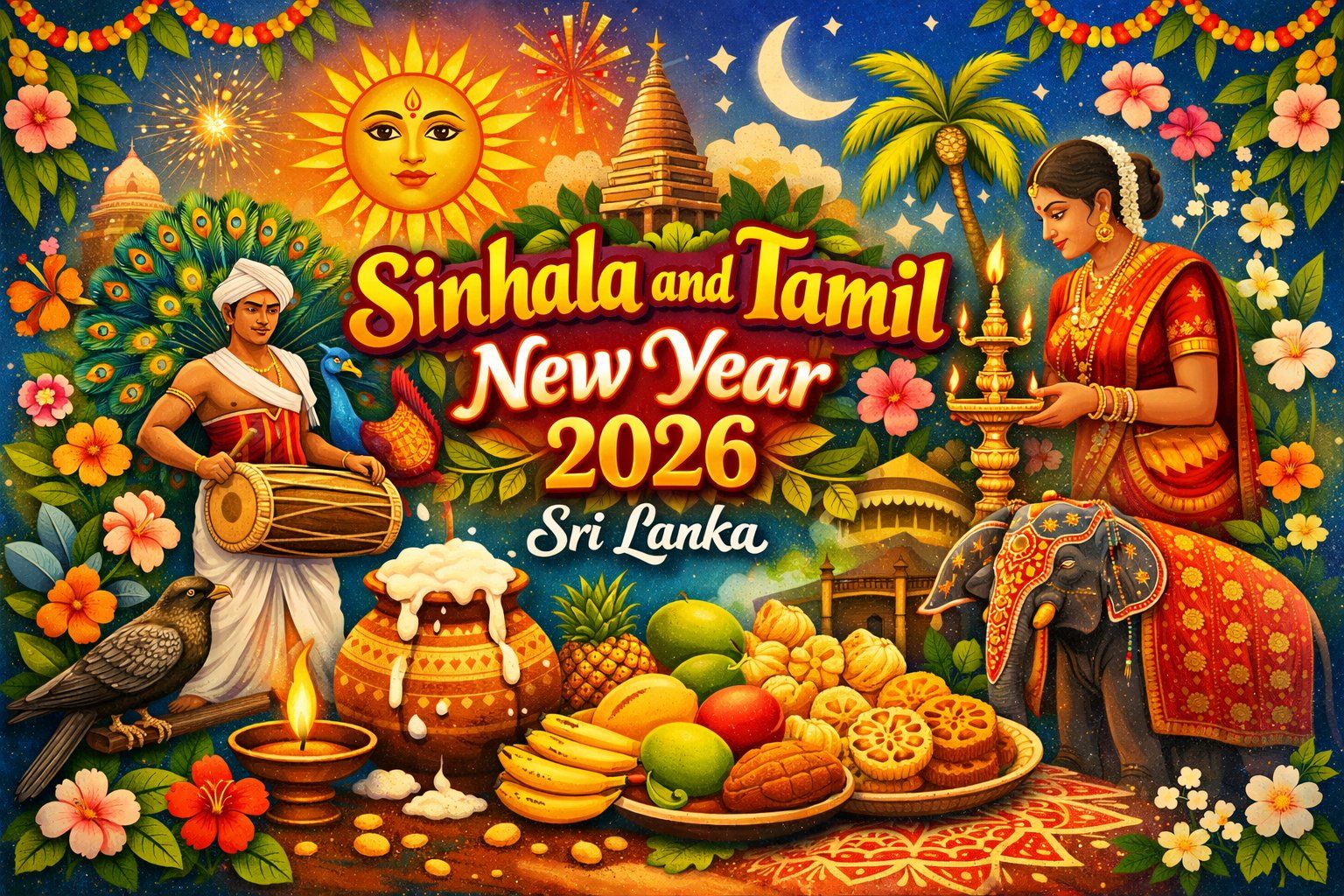
Sinhala and Tamil New Year Day 2026 - Event DescriptionSinhala and Tamil New Year Day 2026: A Celebration of Renewal
Sinhala and Tamil New Year Day in Sri Lanka in 2026 is confirmed for Tuesday, April 14, 2026, with the day before, Monday, April 13, 2026, observed as the Day Prior to Sinhala and Tamil New Year Day and also listed as a public holiday. Known locally as Aluth Avurudda / Puthandu and celebrated across the island by Sinhala Buddhists and Tamil Hindus, it is one of Sri Lanka’s most unifying seasonal festivals, shaped by family traditions, village games, astrology-based “auspicious times,” and a table full of sweetmeats.
Sri Lanka has many public holidays, but only a few reshape the entire island’s mood. Sinhala and Tamil New Year does exactly that. It arrives with April heat, mango season energy, and the sense that everyone is returning home, cleaning the house, cooking together, and resetting the year with goodwill.
For visitors, the best way to understand this celebration is to think of it as both a New Year and a harvest-season milestone. It is deeply cultural rather than strictly religious, and it’s celebrated across communities, which is part of why it feels so special to witness on an island where everyday life is usually busy and mobile. During New Year week, Sri Lanka slows down, families prioritize time together, and the country’s hospitality becomes even more personal.
Confirmed Dates for Sinhala and Tamil New Year Day 2026 (Official Holidays)
Sri Lanka’s official 2026 government desk calendar lists:
- April 13, 2026 (Monday): Day Prior to Sinhala and Tamil New Year Day
- April 14, 2026 (Tuesday): Sinhala and Tamil New Year Day
These dates are published under the calendar’s “Public, bank, mercantile and full moon poya holidays – 2026,” approved under the Holidays Act, making them the most reliable confirmation for travel planning.
If you’re building a Sri Lanka itinerary, treat April 13–14 as the core New Year window. Many shops, offices, and services change their hours around these holidays, and transport patterns can shift because people travel to be with family.
What the Festival is Really About: Shared Culture, Auspicious Timings, and Family Ties
Timeanddate’s Sri Lanka holiday listing recognizes Sinhala and Tamil New Year’s Eve and New Year’s Day as public holidays in 2026. The same source reflects how the holiday sits alongside other major national observances, showing it’s one of the country’s defining dates.
A key aspect of Sinhala and Tamil New Year is that many activities are guided by astrology and “auspicious times,” including when households begin cooking, when people light the hearth, and when work resumes after the holiday period. This is a beautiful cultural detail for travelers because it explains why the holiday feels structured and ceremonial even in ordinary homes, not only at temples.
What You’ll See and Taste During New Year in Sri Lanka
Even if you’re not staying with a local family, you’ll still feel New Year everywhere: in markets, in quiet streets, and in the way people dress and greet each other.
Traditional Foods and Sweetmeats
New Year tables often feature Sri Lankan sweetmeats and celebratory dishes. While your exact experience depends on where you are on the island, you can expect to see the classic New Year food culture: coconut-rich sweets, fried treats, milk rice, and shared snacks offered to guests and neighbors.
House Cleaning, New Clothes, and Visiting Family
The holiday period is closely linked to preparation: cleaning homes, wearing new clothes, and visiting relatives. It’s a time when the island’s social fabric becomes visible, with people returning to villages and prioritizing family ties.
Village Games and a Community Atmosphere
New Year is also famous for games and friendly competition. In many towns and villages, you’ll see informal sports, group activities, and neighborhood gatherings that feel joyful and inclusive.
Where to Experience Sinhala and Tamil New Year as a Visitor (Without Being Intrusive)
Because this is an island-wide celebration, you can experience it almost anywhere, but the type of experience changes by location.
Colombo and Suburbs: Public Holiday Energy with City Convenience
In Colombo, you may notice quieter roads and closed businesses during the core days, but you’ll still have access to major hotels, transport, and cultural sites that may run modified hours. It’s a good base if you want comfort and flexibility.
Kandy and the Central Highlands: Cultural Depth and Cooler Evenings
If you’re in the hill country, New Year can feel especially atmospheric because the climate is milder and the landscapes are lush. Kandy also offers strong cultural context due to its historical and religious significance.
Galle and the South Coast: Beach Time Plus Cultural Season
On the south coast, you can combine New Year with beaches and coastal towns. This is a nice pairing if you want a relaxed holiday vibe while still being present for the cultural moment.
Wherever you are, the best approach is respectful curiosity. If you’re invited to join a family meal or taste sweets, accept with gratitude. If you’re photographing celebrations, ask first.
Practical Travel Tips for New Year Week 2026 in Sri Lanka
Expect Closures and Limited Services
Since April 13 and 14 are official public and bank holidays, many services may be closed or run limited hours. Plan ahead for ATM access, transport bookings, and essentials like sunscreen, snacks, and SIM top-ups.
Book Transport Early
New Year is a major domestic travel period. If you plan to move between cities or regions around April 12–15, book trains, drivers, or buses early.
Dining and Alcohol Notes
During major Sri Lankan holidays, some restaurants may close or reduce menus. It’s a good idea to confirm meals with your hotel in advance and keep expectations flexible.
Best Way to Plan Your Itinerary
A smart visitor itinerary for New Year is to reduce long-distance travel and instead choose one base for 3–4 nights. Use the holiday days for cultural observation and rest, then continue your island route once services normalize.
Pricing: What to Expect
Sinhala and Tamil New Year Day is a national public holiday rather than a ticketed event. There is no official entrance fee for “celebrating the New Year.” Your costs are mainly travel-related: accommodation, transport, and any special meals or cultural performances you choose to attend.
If you want a guided cultural experience, some hotels and tour companies may offer New Year-themed dinners or activities, but pricing varies by property and isn’t part of the public holiday itself.
Verified Information at a Glance
Event Name: Sinhala and Tamil New Year Day (Sri Lanka)
Event Category: National cultural festival and public holiday (observed island-wide)
Confirmed 2026 Key Dates: April 13, 2026: Day Prior to Sinhala and Tamil New Year Day; April 14, 2026: Sinhala and Tamil New Year Day
Holiday Status: Listed in Sri Lanka’s official 2026 public and bank holiday calendar, approved under the Holidays Act.
Cultural Feature: Celebrations are guided by astrology-based auspicious times and are enjoyed by both Sinhala and Tamil-speaking Sri Lankans.
If you want to experience Sri Lanka at its most heartfelt and communal in 2026, plan to be on the island for April 13 and 14, slow your schedule, follow the local rhythm of auspicious times, and let Sinhala and Tamil New Year welcome you with sweetmeats, warm greetings, and the rare feeling of an entire island celebrating together.