
Trinidad and Tobago
A twin-island republic known for its vibrant Carnival, diverse culture, stunning beaches, and rich biodiversity including the oldest protected rainforest in the Western Hemisphere.
The story of Trinidad and Tobago
Climate & Weather
Tropical climate with year-round warm temperatures and trade winds.
Best Time to Visit
January to May (Carnival season peaks in February/March)
Top highlights
Popular activities
Quick info
Upcoming events

Reggae & R&B Nights – Jade Monkey Bar 2026
There is one place on the entire island of Tobago where every Sunday night feels like a celebration — where the reggae rhythms flow as smooth as the rum punch, where the R&B slow jams carry the beach breeze right through to your soul, and where locals and visitors find themselves on the same dance floor without any effort at all. Jade Monkey Bar at Crown Point is Tobago's most consistently energetic nightlife destination, and its Reggae & R&B Nights every Sunday from 8:00 PM until are the most reliably good time on the island's weekly entertainment calendar.
"It's the one weekend a year the whole island shows up in the same place."
The Weekly Event: Every Sunday, 8:00 PM Until
A Nightly Tradition in Crown Point
Reggae & R&B Nights at Jade Monkey Bar runs every Sunday night from 8:00 PM until late — a recurring weekly fixture officially listed in Tobago's 2026 events calendar published by the Tobago government. This is not a one-off event or a seasonal promotion — it is a permanent weekly feature of the Jade Monkey Bar programme, making it one of the most reliable and most accessible entertainment experiences in all of Trinidad and Tobago for visitors planning a Tobago stay around nightlife.
- Event: Reggae & R&B Nights
- Frequency: Every Sunday night, year-round
- Time: 8:00 PM until late
- Venue: Jade Monkey Bar, Milford Road, Crown Point, Tobago
- Format: Top tier DJs spinning reggae and R&B, with occasional live performer nights
The Easter Sunday Special: The Breakfast Experience
A Unique Morning Celebration
Beyond the weekly Sunday night format, Jade Monkey Bar elevated its Reggae & R&B concept to headline event status for Easter Sunday, April 5, 2026 — rebranding it as the Reggae & R&B Breakfast Experience running from 7:00 AM to 1:00 PM in a format unlike anything else on the Tobago events calendar:
- Breakfast served from 7:00 AM to 10:00 AM — Jade Monkey's famous breakfast menu served alongside the morning reggae and R&B sets
- Live performances from international recording artists Isasha and Ziggy Rankin — two international reggae acts whose stage presence turned the Easter morning into a full concert experience
- Top tier DJs — including DJ Sound Assassin and Kedane O'Connor — spinning smooth reggae and R&B from sunrise through midday
- The concept: "start your Easter Sunday morning the vibrant way — come hungry, come ready to sing along, and come ready to feel the love through music"
- The energy was confirmed as unmatched in the post-event Instagram recap from the Jade Monkey Bar's official account on April 10, 2026
The Full Jade Monkey Weekly Programme
Entertainment Every Day of the Week
The Reggae & R&B Sunday night is one pillar of a seven-day-a-week entertainment programme at Jade Monkey that makes it the most consistently programmed bar on the island:
- Sundays: Reggae & R&B — 8:00 PM until
- Wednesdays: Jade Monkey Karaoke Night
- Saturdays: Mix and Mingle — the Saturday night social
- 7 days a week: Open for food, drinks, and lime from morning
"7 days a week we are open — vibes, food, you know, lime. We have been consistent from inception and to be open for 7 days a week you have to be consistent."— Seon Anthony, Manager
Tobago's Sunday Night Scene: The Full Picture
A Diverse Entertainment Landscape
The Jade Monkey Reggae & R&B night sits within a Tobago Sunday nightlife scene that the government's 2026 weekly events calendar confirms is surprisingly well-rounded for a small island:
TimeEventVenue 8:00 PMSunday SchoolParis Bar, Buccoo 8:00 PM untilReggae & R&B NightsJade Monkey Bar, Crown Point SundaysKaraoke NightMoon Over Water Bar, Pleasant Prospect Sunday School at Paris Bar in Buccoo is Tobago's other legendary Sunday institution — the long-running Sunday afternoon and evening beach party that has been running for over 20 years and remains the most famous single recurring event on the island. The combination of Sunday School (afternoon/early evening at Buccoo) and Jade Monkey Reggae & R&B (night at Crown Point) makes the Tobago Sunday the most entertainingly complete day of the island's weekly calendar — start at the beach, finish with the reggae and R&B vibes at Crown Point.
Crown Point: The Location
The Heart of Tobago's Tourism
Crown Point is Tobago's tourism hub — the southwest corner of the island where the ANR Robinson International Airport sits just minutes from the beach, where the densest concentration of hotels, guesthouses, beach bars, and watersports operators on the island are located, and where the nightlife energy is at its most accessible for visitors. The Jade Monkey Bar on Milford Road, Crown Point is one of the most centrally positioned entertainment venues on the island — within walking distance or a short taxi ride from virtually every hotel in the Crown Point area and from the Store Bay and Pigeon Point beach strips that anchor Tobago's tourist geography.
The Rest of Tobago's 2026 Weekly Events Calendar
A Week of Island Entertainment
The Tobago government's May 2026 events calendar places the Jade Monkey Reggae & R&B Nights alongside a full week of recurring island entertainment:
- Mondays: Pan & Roast — Anchor Bar & Grill, Mt. Irvine
- Tuesdays: Karaoke Tuesdays (6:00 PM) — Anchor Bar & Grill, Mt. Irvine
- Wednesdays: Sunset Jazz — Anchor Bar & Grill, Mt. Irvine; Jade Monkey Karaoke — Crown Point
- Saturdays: Bonfire Night — Moon Over Water Bar, Pleasant Prospect; SNL (Saturday Night Live) — 9:00 PM — Barcode, Scarborough; Mix and Mingle — Jade Monkey Bar, Crown Point
- Sundays: Sunday School — Paris Bar, Buccoo; Reggae & R&B — Jade Monkey Bar, Crown Point; Karaoke — Moon Over Water Bar, Pleasant Prospect
The density of recurring weekly events across Crown Point, Buccoo, Scarborough, Mt. Irvine, and Pleasant Prospect gives Tobago one of the most programmed small-island entertainment calendars in the Caribbean — a 7-day structure that means there is genuinely never a quiet night on the island if you know where to go.
Practical Tips for Jade Monkey Reggae & R&B Nights
Maximizing Your Experience
- Show up at 8:00 PM for the best spot — Jade Monkey fills up quickly on Sunday nights, especially during peak tourist season (December to April)
- Tickets for special events like the Easter Breakfast Experience are available at Island E-Tickets (islandetickets.com) and at the Jade Monkey Bar directly
- Crown Point is walkable from the Airport hotels — if you are staying at the Coco Reef, Seaview, or any of the Crown Point guesthouses, the Jade Monkey is likely within 5 to 10 minutes on foot
- Follow @jademonkeybartbg on Instagram for the most current event announcements, special live performance nights, and any schedule changes
- The Saturday Mix and Mingle is worth combining with the Sunday Reggae & R&B night — a Crown Point weekend of Jade Monkey Saturday night into Sunday school at Buccoo into Jade Monkey Reggae & R&B is the most socially complete Tobago weekend available
- Dress code: Casual beach-bar smart — Tobago's nightlife culture is relaxed and the Jade Monkey's open-air format means comfortable warm-weather clothing works perfectly
Getting to Tobago
Seamless Travel Options
ANR Robinson International Airport (TAB), Crown Point, Tobago — literally adjacent to the Jade Monkey Bar's neighborhood:
- From Port of Spain, Trinidad: Caribbean Airlines operates the Port of Spain (POS) to Tobago (TAB) airbridge — a 20-minute flight that is the most practical inter-island connection in the Caribbean, with multiple daily departures
- Direct international flights: Caribbean Airlines operates flights from London Gatwick, New York (JFK), Miami, Toronto, and Barbados directly to Trinidad (POS), from where the Tobago airbridge connects
- By ferry: The T&T Spirit ferry connects Port of Spain to Scarborough, Tobago in approximately 2.5 to 3 hours — a scenic and more leisurely crossing option for visitors with time and luggage
Verified Information at a Glance
- Event Name: Reggae & R&B Nights
- Frequency: Every Sunday, year-round
- Time: 8:00 PM until late
- Venue: Jade Monkey Bar, Milford Road, Crown Point, Tobago, Trinidad and Tobago
- Format: Top tier DJs — reggae and R&B
- Official Instagram: @jademonkeybartbg
- Tickets (special events): islandetickets.com / Jade Monkey Bar in person
- Easter Sunday Special (April 5, 2026 — completed): Reggae & R&B Breakfast Experience, 7:00 AM–1:00 PM, live performances by Isasha and Ziggy Rankin, DJ Sound Assassin and Kedane O'Connor
- Other Jade Monkey weekly events: Karaoke (Wednesdays), Mix and Mingle (Saturdays)
- Nearest Airport: ANR Robinson International Airport (TAB), Crown Point, Tobago
- Government Calendar: Listed in Tobago's official May 2026 events calendar and 2026 packed calendar of festivals and events
- Best For: Reggae and R&B music lovers, Caribbean nightlife travelers, couples, groups, beach bar enthusiasts, Tobago visitors, music festival-goers, Caribbean cultural content creators, IsleRush Trinidad and Tobago island editorial
Sunday School – Buccoo Weekly Party 2026
Ask anyone who has ever been to Tobago what one thing they absolutely cannot miss and the answer comes back the same every time. Sunday School. Not the kind with hymn books and wooden pews — the kind with steelpan, soca, dancehall, rum punch, and an entire village street turned into the most joyful dance floor in the Caribbean. Sunday School at Buccoo runs every Sunday night from 8:00 PM at the Sunset Bar, Unit 7 Buccoo Integrated Facilities, Buccoo, Tobago — a fixture of Tobago life so deeply embedded in the island's identity that the Tobago government lists it as a permanent weekly event in its official 2026 calendar of festivals and events.
"Sunday School is the secular and celebratory opposite of what its name suggests."
The Weekly Event
Every Sunday, 8:00 PM Until
Sunday School Buccoo runs every Sunday night, 52 weeks a year, without exception. There are no off-seasons, no summer breaks, no quiet months. Whether it is the peak Christmas holiday weeks of December, the carnival build-up of January and February, the Easter weekend, or the quieter September shoulder season — if it is Sunday in Tobago, Sunday School is happening in Buccoo.
- Event: Sunday School Buccoo
- Frequency: Every Sunday night, year-round
- Time: 8:00 PM until late
- Venue: Sunset Bar, Unit 7 Buccoo Integrated Facilities, Buccoo, Tobago
- Contact: +1 868-392-9050 / buccooneers.sunsetbar@gmail.com
- Official Page: Facebook — Sunday School Buccoo Tobago
- Admission: Free to enter the street party; food and drinks purchased at the bars and stalls
The Format
How the Night Unfolds
Sunday School has a rhythm of its own — a two-phase progression from the melodic to the magnificent that has been refined across more than 20 years of consecutive Sunday nights:
Phase One — 8:00 PM to 11:00 PM
The Buccooneers Steel Band
The evening opens with the Buccooneers Steel Band — the resident steel orchestra whose pan music fills the Buccoo streets with the most quintessentially Tobagonian sound in existence. For two to three hours from 8:00 PM, the Buccooneers perform a full live steel pan set covering the full range of the steelpan tradition — from the classical arrangements that demonstrate the instrument's remarkable melodic range to the soca and calypso standards that the crowd knows by heart.
"The steelpan music was incredible — music, food, and dancing in a family-friendly street party atmosphere."
Phase Two — 11:00 PM Until
The Main Sound System
When the Buccooneers Steel Band concludes their set, Sunday School transitions into its second and more high-energy phase — the main sound system kicks in from the main venue directly opposite the main beach. The music format shifts to:
- Jamaican dancehall — the heavyweight bass-and-rhythm format that is the most dance-floor-commanding music in the Caribbean sound system tradition, with the selector reading the crowd and building the energy across the late-night hours
- Soca — the fast, horn-driven carnival music of Trinidad and Tobago that is the most energetically infectious genre in the entire Caribbean musical universe
- Hip hop and R&B — the international formats that give the late-night Sunday School its most globally accessible dimension and the ones that bring the younger international visitor crowd most fully onto the dance floor
Buccoo Village
The Setting
Buccoo is a small fishing village on Tobago's southwest coast, approximately 8 kilometers east of Crown Point along the coastal road — a 10 to 15 minute taxi ride from the Crown Point hotel strip, or a 20 to 25 minute drive from most Tobago accommodations. The village sits on the edge of the Buccoo Reef — the most famous coral reef system in Tobago and the island's most popular snorkeling and glass-bottom boat destination — giving Sunday School a physical setting of genuine natural beauty whose daytime character is completely transformed by Sunday night's street party energy.
Sunday School in the Context of Tobago's 2026 Calendar
The Full 2026 Tobago Weekly Events Schedule
The Tobago government's official 2026 calendar of festivals and events lists Sunday School as one of the island's anchor weekly events alongside the year's special festivals and one-off occasions:
Sunday is Tobago's most culturally concentrated evening of the week — three simultaneous events (Sunday School at Buccoo, Reggae & R&B at Jade Monkey, Karaoke at Moon Over Water) give visitors a genuine choice of entertainment tone on the same night.
The Sunday School Combination
The Perfect Tobago Sunday
The most complete Tobago Sunday — the one that every experienced Tobago visitor recommends — combines two of the three Sunday night events in a single evening:
- Morning/afternoon: Buccoo Reef glass-bottom boat tour and snorkeling at Nylon Pool — the shallow sandbar inside the reef whose clear water and stunning coral gardens are the finest snorkeling in Tobago
- Evening 6:00–8:00 PM: Dinner at one of Buccoo's waterfront restaurants or at a Crown Point spot before the parties start
- 8:00–11:00 PM: Sunday School at Buccoo — Buccooneers Steel Band live, beach setting, village atmosphere, first drinks
- 11:00 PM onwards: Either stay at Sunday School for the sound system phase OR taxi to Crown Point for the late-night Reggae & R&B at Jade Monkey Bar
What Makes Sunday School Different
From Every Other Caribbean Street Party
Caribbean street parties are not rare — virtually every island has its version of the weekly community party, from Fish Fry at Arawak Cay in Nassau to Oistin's Fish Fry in Barbados to Jump Up in St. Lucia. Sunday School at Buccoo is consistently ranked among the finest of these events worldwide, and the reasons are specific:
- The steelpan opening: No other Caribbean weekly street party features a live steel orchestra as the opening act — the Buccooneers' pan performance elevates Sunday School from a bar party to a genuine cultural event
- The village setting: Buccoo is an authentic Tobagonian fishing village, not a tourist strip — Sunday School happens in a real community context that gives the event a warmth and a genuineness that more purpose-built entertainment venues cannot replicate
- The longevity: Over 20 years of consecutive Sunday nights without interruption has given Sunday School a depth of community ownership and a collective memory that newer events cannot manufacture
- The demographic mix: TripAdvisor reviewers and travel writers consistently note that Sunday School brings together Tobagonians of all ages, backgrounds, and neighborhoods with international visitors in a genuinely integrated social environment
- The reef backdrop: The knowledge that the Buccoo Reef is just offshore — the same reef you snorkeled over earlier in the day — gives the Sunday School setting a natural context that no inland bar district can provide
Practical Tips for Sunday School 2026
Everything You Need Before You Go
- Go by taxi and pre-arrange your pickup time. Buccoo has limited taxi availability late at night, and the end of Sunday School's sound system phase in the early hours is not the ideal time to be searching for transport. Ask your hotel or guesthouse to arrange a return taxi when they book your outward journey
- Bring only what you need. Cash for drinks and food (rum and beer are cheap, there are barbecue and snack stalls), a phone for photos, and comfortable dancing shoes. Leave expensive watches, jewellery, and cameras at the hotel — as with any large crowd event anywhere in the world, Sunday School can attract pickpockets
- Arrive at 8:00 PM for the full Buccooneers Steel Band experience — arriving at 11:00 PM for the sound system phase means missing the most culturally distinctive part of the evening
- The party only truly gets going after 11:00 PM. If you are there primarily for the dancing and the sound system, pace yourself for the late-night phase
- It is free to enter. The only costs are food and drinks at the bars and stalls — Sunday School is genuinely free to attend
- Sunday School is loudly and explicitly not religious. The name is a playful Tobagonian joke on the wholesome church event it shares a time slot with — everything about Sunday School Buccoo is the secular and celebratory opposite of what the name suggests
- Peak season Sunday Schools (Christmas, Carnival period, Easter) are the most packed and most energetic nights of the year — if your Tobago trip falls in those windows, Sunday School in peak season is an exceptional experience but arrive early to secure good position
Getting to Buccoo from Crown Point
The Journey Made Easy
From Crown Point hotels: 10 to 15 minutes by taxi along the Milford Road/Claude Noel Highway coastal route — approximately 8 kilometers:
- Taxi fare: Approximately TTD $50 to $80 (approximately CAD $10 to $15) for the Crown Point to Buccoo run — confirm the fare with the driver before departure
- Route taxis (shared route taxis) run the Crown Point to Buccoo corridor during the evening hours but become less reliable late at night — private taxi for the return journey is strongly recommended
- Walking: Not recommended after dark due to the road conditions and the distance
From Tobago accommodation further east:
- Speyside / Charlotteville (northeast Tobago): Approximately 1 hour by taxi
- Scarborough (the capital): Approximately 20 to 25 minutes by taxi
- Mt. Irvine / Black Rock corridor: 5 to 10 minutes
Getting to Tobago
Seamless Connections
ANR Robinson International Airport (TAB), Crown Point — Tobago's only airport, a short taxi ride from Sunday School at Buccoo:
- From Port of Spain, Trinidad: Caribbean Airlines operates the POS to TAB airbridge — a 20-minute flight with multiple daily departures and the most practical way to reach Tobago from Trinidad
- By ferry: The T&T Spirit ferry runs from Port of Spain to Scarborough in approximately 2.5 to 3 hours
- International connections: Caribbean Airlines operates direct flights from London Gatwick, New York (JFK), Miami, Toronto, and Barbados to Trinidad (POS), connecting to Tobago by airbridge
Frequently Asked Questions
The Things People Always Want to Know
When is Sunday School Buccoo in 2026?
Every Sunday night, year-round — 8:00 PM until late.
Where exactly is it?
Sunset Bar, Unit 7 Buccoo Integrated Facilities, Buccoo, Tobago.
How much does it cost?
Free to enter. Pay only for food and drinks at the bars and stalls.
What music is played?
8:00–11:00 PM: Live Buccooneers Steel Band. 11:00 PM until: Sound system — Jamaican dancehall, soca, hip hop, and R&B.
How do I get there from Crown Point?
Taxi — approximately 10 to 15 minutes, approximately TTD $50 to $80. Pre-arrange your return pickup.
Is it suitable for families?
Yes — the early steelpan phase is explicitly family-friendly. The late-night sound system phase is more adult in character.
Verified Information at a Glance
- Event Name: Sunday School Buccoo
- 2026 Frequency: Every Sunday night, year-round
- Time: 8:00 PM until late
- Venue: Sunset Bar, Unit 7 Buccoo Integrated Facilities, Buccoo, Tobago, T&T
- Contact: +1 868-392-9050 / buccooneers.sunsetbar@gmail.com
- Official Facebook: Sunday School Buccoo Tobago
- Programme: 8:00–11:00 PM Buccooneers Steel Band live; 11:00 PM until sound system (dancehall, soca, hip hop, R&B)
- Admission: Free
- Official Calendar Listing: Tobago Government 2026 festivals and events calendar
- Nearest Airport: ANR Robinson International Airport (TAB), Crown Point, Tobago
- Travel from Crown Point: 10–15 minutes by taxi
- Best Combined Sunday: Sunday School (8:00 PM, Buccoo) + Reggae & R&B at Jade Monkey (11:00 PM onwards, Crown Point)
- Best For: Caribbean nightlife travelers, music lovers, cultural tourism visitors, steelpan enthusiasts, soca and dancehall fans, families (early phase), couples, groups, first-time Tobago visitors, beach bar enthusiasts, IsleRush Trinidad and Tobago island editorial
Pan & Roast & Sunset Jazz – Anchor Bar 2026
While Sunday School at Buccoo and Reggae & R&B at Jade Monkey own the Tobago Sunday night conversation, the Anchor Bar & Grill at Mt. Irvine quietly delivers two of the most atmospheric and most musically specific weekly events in the island's entire entertainment calendar. Pan & Roast every Monday night and Sunset Jazz every Wednesday are official fixtures of Tobago's 2026 government-published weekly events calendar — and together with Karaoke Tuesdays, they make the Anchor Bar & Grill the only venue on the island running three confirmed recurring weekly events back to back from Monday through Wednesday.
"The Anchor Bar & Grill at Mt. Irvine quietly delivers two of the most atmospheric and most musically specific weekly events in the island's entire entertainment calendar."
The Story of Pan & Roast
Tobago's Monday Night Tradition
Pan & Roast is the Anchor Bar & Grill's Monday night weekly event — a combination that the name describes perfectly: steelpan music played live alongside a roast/barbecue format that makes it the most relaxed and most quintessentially Tobagonian way to start the working week.
- Event: Pan & Roast
- Frequency: Every Monday night, year-round
- Venue: Anchor Bar & Grill, Mt. Irvine, Tobago
- Format: Live steelpan music + roast/barbecue food
"The steelpan and roast combination is the most classically Tobagonian pairing in existence."
The steelpan and roast combination is the most classically Tobagonian pairing in existence — the instrument that the Caribbean gave the world married to the outdoor cooking tradition that is the social glue of Tobagonian community life. Pan & Roast at the Anchor on Monday nights delivers both without pretension, in an open-air beachside setting that makes it one of the most genuinely enjoyable weekly events on the island's calendar.
Karaoke Tuesdays
A Mid-Week Melodic Escape
Karaoke Tuesdays at the Anchor Bar & Grill brings the mid-week crowd in from 6:00 PM — the early start time making it one of the most accessible weeknight events on the island, fitting comfortably into an evening that can still end at a reasonable hour for visitors whose next day involves an early beach or dive excursion.
- Event: Karaoke Tuesdays
- Frequency: Every Tuesday, year-round
- Time: 6:00 PM
- Venue: Anchor Bar & Grill, Mt. Irvine, Tobago
The Tuesday karaoke at the Anchor is one of two Tobago karaoke nights listed in the official weekly calendar alongside the Jade Monkey Wednesday karaoke and the Moon Over Water Sunday karaoke — a reflection of how deeply karaoke culture has embedded itself in Tobago's nightlife across different geographic corners of the island.
Sunset Jazz: A Signature Experience
Jazz and Sunsets in Harmony
Sunset Jazz is the Anchor Bar & Grill's signature weekly event and the one that has most clearly defined the venue's identity as Mt. Irvine's premier music destination. The name describes the experience precisely — live jazz performances aligned with the Mt. Irvine sunset, in an open-air setting on the west coast where the sun descends into the Caribbean Sea just beyond the venue's sight line, and the music's warm, unhurried character matches the evening's pace perfectly.
- Event: Sunset Jazz
- Frequency: Every Wednesday night, year-round
- Venue: Anchor Bar & Grill, Mt. Irvine, Tobago
- Format: Live jazz performances — local and visiting artists
"Check out Sunset Jazz every Wednesday at Anchor Bar and Grill!"
The Anchor Bar's Instagram confirms Sunset Jazz every Wednesday with the tagline "Check out Sunset Jazz every Wednesday at Anchor Bar and Grill!" alongside clips of artists performing under the open sky. The format features local Tobago jazz musicians alongside occasional visiting performers, with the Anchor's @amcotnt and @kiwanls artists featured in recent Instagram posts from the Wednesday sessions.
Sunset Jazz at the Anchor exists within a broader Tobago jazz culture that runs deeper than most visitors realize. The island's Tobago Jazz Experience (officially confirmed for October 30 to November 1, 2026) is one of the Caribbean's premier jazz festivals, and the Anchor's Wednesday Sunset Jazz is in many ways the weekly grassroots version of that same cultural investment in the jazz tradition.
The Special Events: Beyond the Weekly Programme
Celebrations and Festivities
The Anchor Bar & Grill's weekly Monday, Tuesday, and Wednesday programme sits within a broader annual calendar of special one-night events that the venue hosts across the year:
- Sunset Lime: Friday April 3, 2026 — 6:00 PM to midnight with free entry
- Beach Bash & Boat Regatta: Saturday April 4, 2026 — 2:00 PM, free admission, with free shots, drink specials, beer drinking competition, water sports and races, surprise guests, and a full DJ cast.
- R&B Saturdays: Announced for Saturday May 2, 2026 — featuring some of your hottest DJs and MCs
- L.O.S. — Launch of Summer: Friday June 19, 2026, from 2:00 PM to midnight
"The L.O.S. is an established annual Tobago event tradition — the official kickoff of the summer season."
The most significant upcoming Anchor Bar event confirmed for 2026 is the L.O.S. (Launch of Summer) on Friday June 19, 2026, running from 2:00 PM to midnight. The L.O.S. is an established annual Tobago event tradition — the official kickoff of the summer season that signals the start of the most festive and most visitor-heavy window of the Tobago year.
The Anchor Bar & Grill: The Venue
A Beachside Gem
The Anchor Bar & Grill is located at Grafton, Mt. Irvine, on Tobago's northwest coast — approximately 4 kilometers east of Crown Point along the Claude Noel Highway, placing it between the Crown Point tourism hub to the southwest and the Buccoo Reef area to the east.
TripAdvisor lists the Anchor at 4.1 of 5 across 44 reviews and ranked in the top 43 of 119 restaurants in Tobago — a solid mid-tier position that reflects a venue whose strengths are atmosphere, programming consistency, and the beachside setting rather than white-tablecloth fine dining. Reviewers specifically highlight the venue's position, its open-air format, and the quality of the weekly entertainment programme as its defining characteristics.
The venue description on Instagram positions it as "just nine minutes away from KDA Villa by the Sea" in the Mt. Irvine area, and the "Why leave paradise?" tagline on an Instagram post captures the essential promise of the Anchor Bar — a beachside venue whose combination of food, drinks, music, and natural setting makes the question of going anywhere else feel genuinely unnecessary.
Mt. Irvine: The Location
A Coastal Haven
Mt. Irvine is a small community on Tobago's northwest coast, best known internationally for Mt. Irvine Bay — a beach and surf break that is one of the finest and most consistent wave-riding locations in the southern Caribbean. The community sits on the coastal strip between Crown Point (the tourism hub, 4 to 5 km southwest) and Buccoo (8 km east), placing it in the geographic heart of Tobago's most active tourism and nightlife corridor.
The Mt. Irvine bay, the Mt. Irvine Golf Course (one of the finest golf courses in the Caribbean), the Grafton Beach Resort, and the Anchor Bar's beachside position give the area a character that is simultaneously more refined than Crown Point's beach bar strip and more accessible than the remote northern and eastern coasts of the island — the comfortable middle ground of Tobago's tourism geography.
The Complete Tobago Weekly Events Picture
Anchor Bar's Place in the Calendar
Placing the Anchor Bar's three weekly events within the full Tobago government-published 2026 weekly calendar:
Day Event Venue Sunday Sunday School — 8:00 PM Sunset Bar, Buccoo Sunday Reggae & R&B Nights — 8:00 PM Jade Monkey Bar, Crown Point Sunday Karaoke Night Moon Over Water Bar, Pleasant Prospect Monday Pan & Roast Anchor Bar & Grill, Mt. Irvine Tuesday Karaoke Tuesdays — 6:00 PM Anchor Bar & Grill, Mt. Irvine Wednesday Sunset Jazz Anchor Bar & Grill, Mt. Irvine Wednesday Jade Monkey Karaoke Jade Monkey Bar, Crown Point Saturday Bonfire Night Moon Over Water Bar, Pleasant Prospect Saturday SNL (Saturday Night Live) — 9:00 PM Barcode, Scarborough Saturday Mix and Mingle Jade Monkey Bar, Crown Point The Anchor Bar & Grill owns Monday, Tuesday, and Wednesday on this calendar — three consecutive weekday nights without competition from any other venue listed in the official programme.
The Mt. Irvine Week
The Most Immersive Tobago Weekday Itinerary
For visitors staying in the Mt. Irvine / Crown Point corridor for a full week, the Anchor Bar's three consecutive weekly events combine with the weekend programme to deliver the most programmatically complete entertainment week available in Tobago:
- Friday: Sunset Lime or R&B Saturdays (check Anchor Bar Instagram for upcoming special events)
- Saturday: Mix and Mingle at Jade Monkey (Crown Point) or Bonfire Night at Moon Over Water
- Sunday: Sunday School at Buccoo + late-night Reggae & R&B at Jade Monkey
- Monday: Pan & Roast at Anchor Bar & Grill — steelpan live, barbecue, beachside relaxation
- Tuesday: Karaoke Tuesdays at Anchor Bar & Grill — from 6:00 PM
- Wednesday: Sunset Jazz at Anchor Bar & Grill — live jazz, sunset, the Caribbean at its most cinematic
- Thursday: Recovery, reef snorkeling, Argyle waterfall, or a day trip to Trinidad
Practical Tips for the Anchor Bar Weekly Events
Maximize Your Experience
- Follow @anchorbarandgrill_tobago on Instagram for the most current event announcements, special guest artist nights, and any schedule changes — the Anchor's Instagram is its most actively updated information channel
- Sunset Jazz on Wednesdays is the most camera-ready event of the three — bring a phone or camera and time your arrival to catch the actual sunset alongside the opening jazz set
- The 6:00 PM start time for Karaoke Tuesdays is the earliest weekly event start on the entire Tobago calendar — ideal for visitors who want an evening event that finishes early enough to be up for a morning dive or tour the next day
- The L.O.S. on June 19, 2026 is the biggest Anchor Bar event of the year — if your Tobago travel falls anywhere near late June, prioritize getting to the Anchor for the Launch of Summer
- Taxi from Crown Point to Mt. Irvine: Approximately 5 to 10 minutes, approximately TTD $40 to $60 — among the shortest and most affordable taxi rides on the Tobago entertainment circuit
Getting to the Anchor Bar & Grill
Your Path to Paradise
Anchor Bar & Grill, Grafton, Mt. Irvine, Tobago:
- From Crown Point hotels: 5 to 10 minutes by taxi along the Claude Noel Highway (approximately 4 km)
- From Buccoo: 5 to 10 minutes by taxi (approximately 5 km)
- From Scarborough: Approximately 20 to 25 minutes by taxi
- Nearest Airport: ANR Robinson International Airport (TAB), Crown Point — approximately 10 minutes
Upcoming 2026 Special Events at the Anchor
Mark Your Calendar
Date Event Details April 3, 2026 Sunset Lime (completed) 6:00 PM–midnight, free entry April 4, 2026 Beach Bash & Boat Regatta (completed) 2:00 PM, free entry, water sports, DJs May 2, 2026 R&B Saturdays 2nd installment (completed) DJs, MCs, Coconut Rum Sour special June 19, 2026 L.O.S. — Launch of Summer 2:00 PM–midnight, Anchor Bar & Grill Verified Information at a Glance
- Venue: Anchor Bar & Grill, Grafton, Mt. Irvine, Tobago, T&T
- Official Instagram: @anchorbarandgrill_tobago
- TripAdvisor Rating: 4.1/5, ranked #43 of 119 restaurants in Tobago
- Pan & Roast: Every Monday night, Anchor Bar & Grill, Mt. Irvine
- Karaoke Tuesdays: Every Tuesday, 6:00 PM, Anchor Bar & Grill, Mt. Irvine
- Sunset Jazz: Every Wednesday, Anchor Bar & Grill, Mt. Irvine
- Government Calendar: All three events officially listed in Tobago's 2026 weekly events calendar
- Special Events 2026: Sunset Lime (Apr 3), Beach Bash & Boat Regatta (Apr 4), R&B Saturdays (ongoing), L.O.S. Launch of Summer — June 19, 2026
- Nearest Airport: ANR Robinson International Airport (TAB), Crown Point
- From Crown Point: 5–10 minutes by taxi
- Best For: Jazz enthusiasts, steelpan lovers, karaoke fans, barbecue and food travelers, couples, beach bar enthusiasts, music lovers, Tobago cultural visitors, Caribbean nightlife travelers, IsleRush Trinidad and Tobago island editorial
```
Tobago Blue Food Festival 2026
The Tobago Blue Food Festival 2026 takes place on Sunday, 18 October 2026 in the village of Bloody Bay, Tobago. This celebrated one-day culinary event turns Tobago’s signature root vegetable, dasheen, into an extraordinary menu of savoury meals, sweet treats, drinks, and inventive modern dishes.
For travellers seeking an authentic Caribbean food experience, the Tobago Blue Food Festival is far more than a market day. It is a joyful expression of island agriculture, village pride, culinary imagination, live entertainment, and warm Tobagonian hospitality.
"In 2016, UNESCO declared merengue an Intangible Cultural Heritage of Humanity, formally recognising what Dominican people had known for generations."
The Story of the Tobago Blue Food Festival
Celebrating Dasheen, Tobago’s Signature Crop
The Tobago Blue Food Festival is an annual culinary and cultural event built around dasheen, a root crop central to Tobago’s food traditions. Locally, dasheen is often called blue food, a name linked to the blue or purple tint that can appear when the root is cooked.
Every October, the quiet north Tobago village of Bloody Bay becomes a destination for food lovers. Cooks, chefs, farmers, vendors, and families gather to demonstrate how one locally grown ingredient can become an astonishing variety of dishes.
Festival visitors can expect dasheen prepared as:
- Traditional soups and stews
- Dasheen pie
- Dasheen balls
- Dasheen chips
- Dasheen bread
- Dasheen pasta
- Dasheen burgers
- Dasheen pizza
- Dasheen desserts
- Dasheen ice cream
- Dasheen cakes
- Dasheen drinks
- Dasheen wine or liqueur-style beverages
- Dasheen-based cocktails
- Innovative gourmet creations
The Blue Food Festival celebrates more than a crop. It highlights the value of local agriculture and shows how Caribbean food traditions can evolve without losing their roots.
The 2026 Experience
What Awaits at This Year's Festival
The confirmed date for the Tobago Blue Food Festival 2026 is Sunday, 18 October 2026. The event is traditionally associated with Bloody Bay, a small village in north Tobago. Previous official information confirms that the Blue Food Festival has been hosted annually by the Tobago Festivals Commission at the Bloody Bay Recreation Ground.
- Event: Tobago Blue Food Festival 2026
- Date: Sunday, 18 October 2026
- Location: Bloody Bay, Tobago
- Traditional venue: Bloody Bay Recreation Ground
- Event category: Culinary, agricultural, cultural, and entertainment festival
- Main ingredient: Dasheen, Tobago’s celebrated “blue food”
- Organising body: Tobago Festivals Commission
- Public ticket price: Not yet announced
- Food and drinks: Purchased separately from vendors
The official 2026 event page confirms the festival but does not yet list final opening hours, admission arrangements, vendor menu details, or ticket pricing. Confirm the full programme closer to 18 October 2026 through Tobago Festivals Commission channels.
Into the Heart of Bloody Bay
The Festival's Scenic Setting
Bloody Bay is located on Tobago’s north coast, in an area known for dense greenery, dramatic hills, quiet roads, and a strong connection to the island’s rural traditions.
The village is considerably different from the livelier south-west Tobago resort areas around Crown Point, Store Bay, and Pigeon Point. A trip to Bloody Bay is part of the Blue Food Festival experience because it takes visitors into a more rural part of the island.
- Rainforest-covered hills
- Scenic coastal roads
- Small villages
- Local farms
- Quiet bays
- A slower pace of life
- Views toward the Caribbean Sea
- Proximity to Parlatuvier and Charlotteville
- Easy access to nature experiences
The annual event gives Bloody Bay a major moment in Tobago’s cultural calendar. Visitors come for dasheen dishes, but they leave with a stronger impression of the village hospitality and natural beauty that define this side of the island.
The Principles at the Heart of Earth Garden
Dasheen: The Star Ingredient
Dasheen is a tropical root crop in the taro family. It has long been part of the food culture of Tobago and the wider Caribbean, where it is used in soups, side dishes, breads, pastries, and comforting family meals.
When cooked, dasheen may develop bluish, purple, or grey-blue tones. That unusual colour inspired the affectionate local name blue food.
The vegetable is valued for its versatility. Its mild, earthy flavour and starchy texture allow cooks to use it in both traditional and unexpected ways.
"Dasheen becomes a showcase for culinary creativity, transforming into a crisp snack, a creamy dessert, a warming soup, or a colourful drink."
Dasheen is used in:
- Ground provisions
- Soups
- Curries
- Bakes
- Salads
- Cakes
- Puddings
- Ice creams
- Smoothies
- Drinks
- Flour-based products
- Plant-forward dishes
- Seafood pairings
- Modern fusion cuisine
The festival gives local cooks an opportunity to compete, experiment, and show how Tobago’s agricultural ingredients can stand at the centre of a memorable dining experience.
Everything You Need Before 18 October
Practical Information for Festival Goers
The Tobago Blue Food Festival is designed for browsing, tasting, listening, and lingering. Arrive hungry and give yourself enough time to explore vendors before the most popular dishes sell out.
The 2026 programme has not yet been released, but established festival traditions and official descriptions point to a day of food, music, community activity, and culinary innovation.
- Dozens of dasheen-based dishes
- Traditional Tobago cooking
- Creative food competitions
- Local chefs and home cooks
- Dasheen drinks and desserts
- Fresh juices and local beverages
- Craft and artisan stalls
- Live music
- Cultural performances
- Family-friendly entertainment
- Community storytelling
- Agricultural displays
- Food demonstrations
- Opportunities to meet local producers
In a past festival, a competitor representing L’Anse Fourmi won awards for Best Dasheen Drink, Best Dasheen Dessert, and Best Dasheen Meal, illustrating the range of categories and creativity associated with the event.
Food vendors may sell out of their most popular items early. Start with a walk around the grounds to see the choices, then decide which dishes you do not want to miss.
The Sweetest Month for Earth Garden
October: A Perfect Time to Visit Tobago
October is warm and lush in Tobago, with the possibility of rain showers. The island’s green landscapes are especially beautiful at this time, but visitors should be ready for changing weather.
Pack:
- Lightweight clothing
- Comfortable sandals or walking shoes
- Swimwear
- Light rain jacket
- Sun hat
- Sunglasses
- Reef-safe sunscreen
- Insect repellent
- Reusable water bottle
- Small umbrella
- Cash in Trinidad and Tobago dollars
- Portable phone charger
- Dry bag for beach days and boat trips
Tobago is known for its welcoming pace. Do not try to rush every attraction into a short stay. Leave room for a roadside stop, an unexpected beach, a conversation with a food vendor, or an extra serving of dasheen ice cream.
Frequently Asked Questions
The Things People Always Want to Know
When is the Tobago Blue Food Festival 2026?
The Tobago Blue Food Festival 2026 is on Sunday, 18 October 2026.
Where is the Tobago Blue Food Festival held?
The festival is held in Bloody Bay, Tobago. The event has traditionally been hosted at the Bloody Bay Recreation Ground.
What is blue food in Tobago?
Blue food refers mainly to dasheen, a locally important root vegetable that can develop a blue or purple colour when cooked.
Is the Tobago Blue Food Festival free?
The official 2026 visitor price has not yet been announced. Previous editions have often been described as free or low-cost to enter, but food, drinks, transport, and purchases from vendors are separate costs.
What food should I try at the Blue Food Festival?
Try dasheen pie, dasheen balls, dasheen chips, dasheen soup, dasheen bread, dasheen cake, dasheen ice cream, and dasheen drinks.
How do I get to Bloody Bay for the festival?
Visitors can arrange a rental car, licensed taxi, private driver, or organised hotel transfer. Travel from Crown Point or Scarborough requires extra time because Bloody Bay is in north Tobago.
Is October a good time to visit Tobago?
Yes. October is ideal for culture and food travellers, with the Blue Food Festival on 18 October 2026 and Tobago Carnival beginning later in the month. Expect warm weather and occasional rain showers.
Verified Information at a Glance
- Event name: Tobago Blue Food Festival 2026
- Event category: Tobago culinary, agricultural, cultural, and entertainment festival
- Confirmed date: Sunday, 18 October 2026
- Location: Bloody Bay, Tobago, Trinidad and Tobago
- Traditional venue: Bloody Bay Recreation Ground
- Organiser: Tobago Festivals Commission
- Central ingredient: Dasheen, known locally as Tobago’s “blue food”
- Typical highlights: Dasheen meals, desserts, drinks, food competition, live entertainment, artisan stalls, and cultural experiences
- Public admission price: Not yet announced for 2026
- Food and drink pricing: Purchased separately from festival vendors
- Best arrival dates: Friday, 16 October or Saturday, 17 October 2026
- Best for: Food lovers, families, Caribbean culture travellers, chefs, photographers, nature enthusiasts, and visitors seeking an authentic Tobago experience
Make Sunday, 18 October 2026 a delicious stop on your Tobago journey. Travel north to Bloody Bay, taste the remarkable possibilities of dasheen, enjoy the music and community spirit, and let Tobago’s most imaginative food celebration show you just how much island flavour can grow from one humble root.
```
THA Tobago Panorama – PANOMEGA 2026
THA Tobago Panorama, PANOMEGA 2026 takes place on Saturday, 24 October 2026, bringing the power, skill, and creative energy of Tobago’s steelbands into the spotlight. Returning for its second year, PANOMEGA is presented as Tobago’s premier steelband showcase and forms part of the island’s growing Tobago Carnival season.
For pan lovers, cultural travellers, and first-time visitors, PANOMEGA 2026 is a chance to hear Trinidad and Tobago’s national instrument in its home territory. Expect thrilling arrangements, disciplined orchestras, booming bass lines, intricate melody work, and a crowd that understands every rhythm.
On 24 October 2026, steelpan will be the heartbeat of the island.
The Story of PANOMEGA
Tracing the Roots of Tobago's Steelband Celebration
PANOMEGA is Tobago’s dedicated Panorama-style steelband competition and showcase. It is spearheaded by the Pan Trinbago Tobago Region and supported by the Tobago House of Assembly, known as the THA. The event gives Tobago’s steelbands a major platform during Tobago Carnival, celebrating the technical excellence, musical imagination, and community tradition that steelpan represents across Trinidad and Tobago.
Steelpan is more than entertainment. It is one of the Caribbean’s greatest musical inventions, developed in Trinidad and Tobago from discarded metal containers during the 20th century. Over time, steelpan evolved from a community-based musical practice into a globally recognised instrument played in concert halls, schools, festivals, and competitions around the world.
PANOMEGA reflects that journey, honouring traditional Panorama competition while making room for Tobago’s own creative voice.
PANOMEGA 2026 is expected to feature:
- Tobago steelbands
- Panorama-style musical arrangements
- Small and large steel orchestras
- Skilled pannists of different generations
- Competitive performances
- Calypso, soca, and Caribbean musical interpretations
- Live audience energy
- Cultural pride
- Carnival-season excitement
- A celebration of Tobago’s musical identity
The 2026 Experience
Mark Your Calendar for a Musical Journey
The confirmed date for THA Tobago Panorama, PANOMEGA 2026 is Saturday, 24 October 2026. The event returns during the Tobago Carnival 2026 season and is positioned as one of Pan Trinbago Tobago Region’s two signature steelpan events. The other announced event is Steelpan and Powder Tobago, scheduled for Saturday, 31 October 2026.
Key PANOMEGA 2026 Details
Essential Information for Attendees
- Event name: THA Tobago Panorama, PANOMEGA
- Date: Saturday, 24 October 2026
- Location: Tobago, Trinidad and Tobago
- Event category: Steelpan competition, cultural showcase, and Tobago Carnival event
- Organisers: Pan Trinbago Tobago Region and Tobago House of Assembly partners
- Festival status: Second edition
- 2026 venue: To be announced
- 2026 start time: To be announced
- Ticket price: To be announced
- Related event: Steelpan and Powder Tobago on Saturday, 31 October 2026
The 2025 inaugural PANOMEGA was held at Market Square in Scarborough, where the official Tobago Carnival Panorama competition created a major open-air pan experience. However, the venue for 24 October 2026 has not yet been formally confirmed.
Why PANOMEGA Matters to Tobago
Celebrating a Rich Steelband Legacy
Tobago has a strong and proud steelband tradition. PANOMEGA gives that tradition a dedicated stage within the island’s own carnival calendar rather than making Tobago bands secondary to events elsewhere in Trinidad and Tobago. The competition showcases the work that happens long before performance night. A Panorama performance is built through weeks of rehearsal, arranging, tuning, memorisation, and collective discipline.
The final performance may last only several minutes, but the preparation represents countless hours of work.
Each successful steel orchestra requires:
- Talented pannists
- An arranger with a clear musical vision
- Section leaders
- Tuners and instrument technicians
- Band management
- Rehearsal spaces
- Community support
- Youth participation
- Costume and logistics teams
- Family members and supporters
- A passionate audience
Understanding the Steelpan Sound
The Instruments Behind the Music
A steelpan is made from a metal drum that has been shaped, grooved, tempered, and tuned into specific notes. Different pans cover different musical ranges, allowing a full steel orchestra to create melody, harmony, rhythm, and bass. At PANOMEGA 2026, listen for the conversation between pan sections.
Common instruments in a steel orchestra include:
- Tenor pan: Often carries the lead melody
- Double seconds: Provides harmony and melodic support
- Double guitars: Adds middle-range harmony
- Cellos: Creates rich lower harmonies
- Quadrophonic pans: Offers extended range and texture
- Six bass: Delivers the deep rhythmic foundation
- Nine bass: Provides an even wider low range
- Engine room percussion: May include drumset, iron, cowbell, and other rhythm instruments
What Happens at a Tobago Panorama Event?
Experience the Thrill of Competition
PANOMEGA is expected to follow the spirit of the Panorama tradition, where each band presents a carefully arranged interpretation of a chosen song. The arrangement can include key changes, tempo shifts, melodic variations, rhythmic surprises, and passages that spotlight different pan sections. The final 2026 rules, categories, performance order, and judging criteria have not yet been published. Still, visitors should expect a competitive atmosphere where musical excellence matters.
A PANOMEGA performance may include:
- A dramatic musical introduction
- Recognition of the original song melody
- Complex harmonies
- Fast rhythmic passages
- Call-and-response moments between pan sections
- Bass-led grooves
- Dynamic changes in volume
- A climactic ending
- Loud audience response
- Judges evaluating performance quality
Tobago’s Steelband Heritage
Honouring a National Art Form
Steelpan was born in Trinidad and Tobago, and every performance carries a connection to the country’s cultural history. Its rise is closely linked to communities that created music from available materials and built organised bands around rhythm, innovation, and local pride.
PANOMEGA is a chance to recognise Tobago's contribution within a national art form that belongs to the entire twin-island republic.
The event also matters for younger players. Steelband practice teaches musical ability, concentration, teamwork, discipline, and confidence. When youth pannists appear alongside experienced players, the event becomes a living transfer of knowledge.
PANOMEGA supports:
- Youth development
- Cultural preservation
- Community pride
- Music education
- Creative careers
- Tobago Carnival growth
- Intergenerational participation
- The global visibility of steelpan
PANOMEGA and Tobago Carnival 2026
A Celebration of Culture and Community
PANOMEGA on Saturday, 24 October 2026 arrives during a lively period for Tobago. The island’s carnival season blends mas, soca, calypso, steelpan, and community celebration into an experience that feels distinct from Trinidad Carnival. Tobago Carnival is known for its own flavour: smaller-scale intimacy, strong community involvement, beautiful island settings, and a relaxed but energetic atmosphere.
The announced 2026 sequence gives visitors a useful cultural itinerary:
- Sunday, 18 October 2026: Tobago Blue Food Festival
- Saturday, 24 October 2026: THA Tobago Panorama, PANOMEGA
- Saturday, 31 October 2026: Steelpan and Powder Tobago
Scarborough and the Festival Atmosphere
Exploring the Heart of Tobago
The final PANOMEGA 2026 venue has not yet been announced, but Scarborough is likely to remain important to the event’s atmosphere. Tobago’s capital is the island’s commercial and cultural centre, with ferry access, shops, restaurants, public spaces, and views over the harbour. The inaugural 2025 PANOMEGA was staged in Scarborough Market Square, demonstrating the appeal of an open-air city-centre celebration.
While in Scarborough, visitors can explore:
- Scarborough Esplanade
- Fort King George
- Scarborough Market
- Local restaurants and food stalls
- The waterfront
- The Tobago Museum at Fort King George
- Shops for locally made crafts and souvenirs
- Nearby Rockly Bay and Bacolet Beach
How to Prepare for PANOMEGA 2026
Planning for a Seamless Experience
The most enjoyable Panorama experience begins with simple planning. Tobago is relaxed, but major Carnival events can draw large crowds, and transport becomes more limited later in the evening.
Before You Go
- Confirm the official venue and start time
- Buy tickets early if ticketing is introduced
- Arrange a licensed taxi, driver, or designated driver
- Check whether bags, chairs, or outside drinks are permitted
- Bring cash in Trinidad and Tobago dollars
- Dress for warm weather and possible rain
- Charge your phone before leaving
- Plan a post-event meeting point with friends
- Save your accommodation address offline
- Follow Pan Trinbago Tobago Region and Tobago Carnival updates
What to Wear
PANOMEGA is a lively Caribbean cultural event, so smart-casual comfort works well.
Pack or wear:
- Lightweight clothes
- Comfortable sandals or shoes
- A rain poncho or compact umbrella
- A small secure crossbody bag
- Sunglasses for an early outdoor arrival
- Insect repellent
- Reusable water bottle, if venue rules allow
- A colourful top or Tobago-inspired outfit
PANOMEGA 2026 Travel Tips
Navigate Tobago with Ease
Tobago is reached by air through A.N.R. Robinson International Airport in Crown Point or by ferry from Port of Spain in Trinidad to Scarborough.
Getting Around Tobago
- Rental cars provide flexibility, especially for north-island exploration
- Licensed taxis are useful for evening events
- Hotel transfers can be arranged in advance
- Confirm return transport before PANOMEGA begins
- Drive carefully on winding roads
- Avoid driving after consuming alcohol
- Leave additional time for traffic near major Carnival events
Where to Stay
- Scarborough: Best for city access, ferry links, and potential event convenience
- Crown Point: Best for airport proximity, restaurants, nightlife, and beaches
- Pigeon Point: Best for beach stays and easy access to south-west Tobago
- Bacolet: Best for quiet coastal scenery near Scarborough
- Castara: Best for a relaxed fishing-village feel
- Speyside: Best for diving, birdwatching, and a peaceful north-east stay
- Charlotteville: Best for remote nature and local village character
Explore Tobago Beyond Steelpan
Discover the Island's Natural Beauty
A PANOMEGA weekend can become a complete Tobago island holiday.
Pigeon Point Heritage Park
Pigeon Point is known for calm water, white sand, and the iconic jetty. It is an easy choice for a recovery day after a late PANOMEGA night.
Buccoo Reef and Nylon Pool
Take a glass-bottom boat trip to Buccoo Reef and the shallow, clear waters of the Nylon Pool. Book with a licensed operator and use reef-safe sunscreen.
Argyle Waterfall
Argyle Waterfall is one of Tobago’s most popular inland nature attractions. Wear shoes suitable for uneven paths and bring swimwear if conditions permit bathing.
Fort King George
Near Scarborough, Fort King George offers a look at Tobago’s colonial history along with sweeping views over the harbour and coastline.
Castara and Parlatuvier
These north-coast villages offer a quieter, more rural side of Tobago. Visit for beach time, local food, community warmth, and scenic driving.
PANOMEGA 2026 Ticket Prices
Budgeting for the Event
The official public ticket price for THA Tobago Panorama, PANOMEGA 2026 has not yet been announced. Do not rely on pricing from the 2025 inaugural edition, as ticketing structures, venue capacity, and event arrangements can change. Watch official announcements from Pan Trinbago Tobago Region, Tobago Carnival, and the Tobago House of Assembly.
Budget for:
- Event admission, if charged
- Taxi or designated-driver service
- Food and drinks
- Accommodation
- Rental vehicle or fuel
- Carnival wear and accessories
- Other Tobago Carnival events
- Island excursions
- Craft and souvenir purchases
Respectful Pan Etiquette
Enjoy the Music with Mindful Manners
Steelpan is a living national art form. Audiences are encouraged to enjoy themselves, but respect for performers and fellow pan lovers makes the experience stronger.
- Arrive before the performances begin
- Keep clear of band entrances and performance areas
- Do not touch instruments without permission
- Avoid stepping into the orchestra’s playing space
- Ask before taking close-up photos of pannists
- Do not use flash during performances
- Keep phone conversations away from the stage area
- Applaud enthusiastically after each band
- Follow security and event-staff instructions
- Support official merchandise and local vendors
A Panorama crowd is expressive. Feel free to cheer, dance, and react, but make room for others to enjoy the music too.
Frequently Asked Questions
The Things People Always Want to Know
When is THA Tobago Panorama, PANOMEGA 2026?
THA Tobago Panorama, PANOMEGA 2026 takes place on Saturday, 24 October 2026.
What is PANOMEGA in Tobago?
PANOMEGA is Tobago’s premier steelband showcase and Panorama-style competition, celebrating the national instrument of Trinidad and Tobago through performances by Tobago steelbands.
Where will PANOMEGA 2026 be held?
The event will be held in Tobago, but the official 2026 venue has not yet been announced. The inaugural 2025 event was held at Scarborough Market Square.
Is PANOMEGA part of Tobago Carnival?
Yes. PANOMEGA is part of Tobago Carnival season and is one of Pan Trinbago Tobago Region’s signature events for 2026.
How much are PANOMEGA 2026 tickets?
Official ticket prices have not yet been announced. Check Pan Trinbago Tobago Region or Tobago Carnival channels before travelling.
What is the difference between PANOMEGA and National Panorama?
PANOMEGA is Tobago’s dedicated steelband showcase and competition during Tobago Carnival. National Panorama is part of the wider Trinidad and Tobago Carnival steelband competition structure.
What should I wear to PANOMEGA Tobago?
Wear lightweight, colourful, and comfortable clothing, with walking-friendly shoes. Bring rain protection if the official venue is outdoors.
Verified Information at a Glance
- Event name: THA Tobago Panorama, PANOMEGA
- Also known as: PANOMEGA, Tobago Panorama
- Event category: Steelpan competition, cultural showcase, and Tobago Carnival event
- Confirmed date: Saturday, 24 October 2026
- Location: Tobago, Trinidad and Tobago
- Confirmed 2026 venue: To be announced
- Organising partners: Pan Trinbago Tobago Region and Tobago House of Assembly partners
- Edition: Second year of PANOMEGA
- Main focus: Tobago steelbands, Panorama-style arrangements, live competition, and Caribbean musical culture
- Related event: Steelpan and Powder Tobago on Saturday, 31 October 2026
- Ticket pricing: Not yet announced
- Best arrival dates: Friday, 23 October or Saturday, 24 October 2026
- Best for: Steelpan fans, music travellers, Carnival lovers, culture seekers, families, photographers, and visitors discovering Tobago beyond the beach
Make Saturday, 24 October 2026 a date for Tobago’s sweet pan. Follow the official PANOMEGA venue announcement, stand close enough to feel the bass pans move through the crowd, and experience the musical pride, precision, and pure island joy that make Tobago steelpan unforgettable.
```
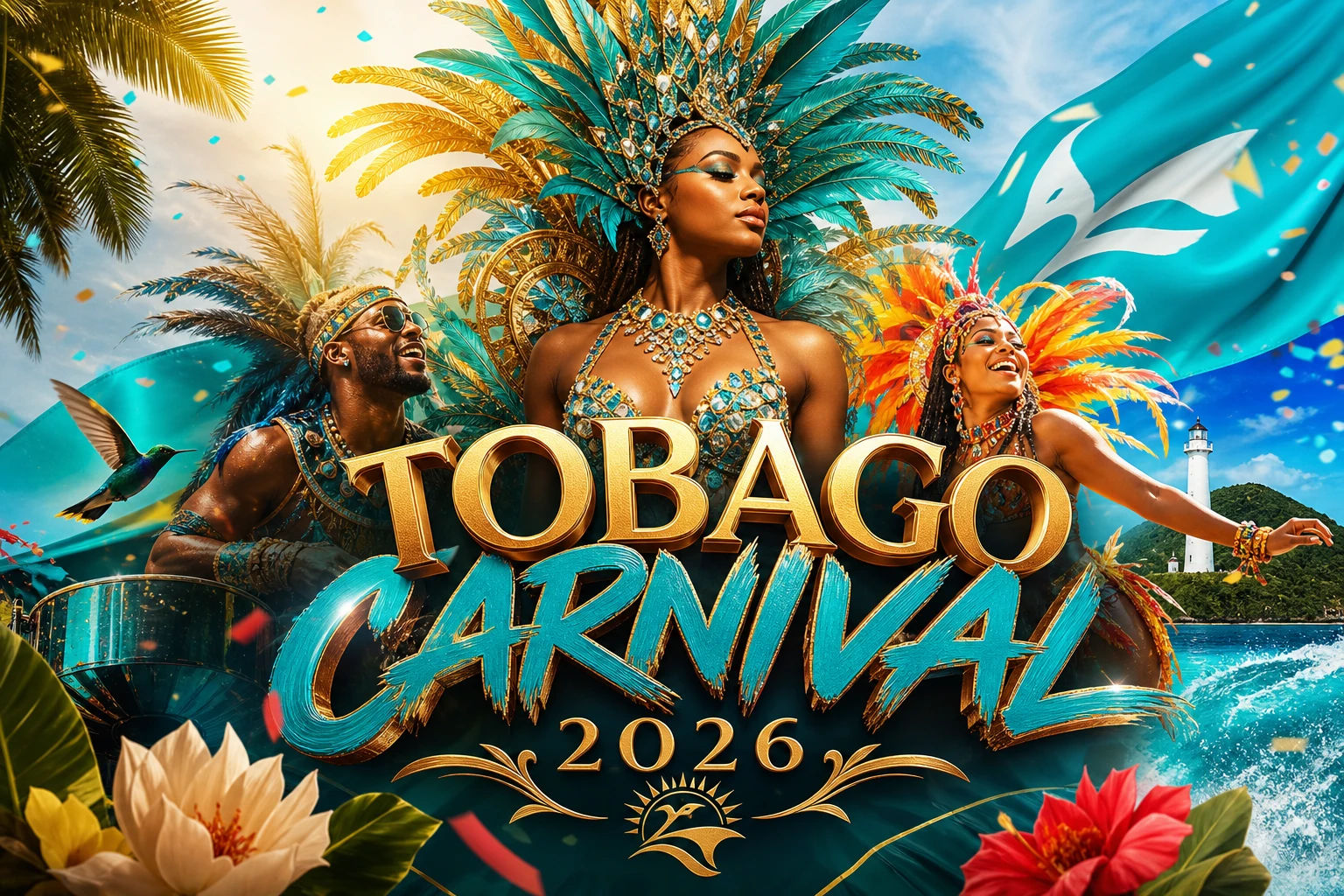
Tobago Carnival 2026
Tobago Carnival 2026 takes place from Friday, 30 October to Sunday, 1 November 2026, marking the fifth anniversary of Tobago’s October Carnival celebrations. Under the theme “The Awakening,” the island will come alive with masquerade, soca, calypso, steelpan, J’ouvert energy, fetes, and the unmistakable warmth of Tobago culture.
For travellers seeking a Caribbean carnival with big music, beautiful beaches, and a more intimate island setting, Tobago Carnival 2026 offers an unforgettable blend. The celebration is built around mud, mas, and music, but it also invites visitors to explore Tobago’s food, villages, rainforest, reefs, and welcoming community spirit.
"Make 30 October to 1 November 2026 your time to experience Tobago at full volume. Come ready for mud, mas, and music, then let the steelpan, soca rhythms, spectacular costumes, and bright island spirit awaken a Carnival memory you will carry long after the final song fades."
The Story of Tobago Carnival
Celebrating the Island's Unique Identity
Tobago Carnival is the island’s own October carnival celebration, distinct from the larger pre-Lenten Trinidad and Tobago Carnival held earlier in the year. It brings together traditional masquerade, contemporary costume bands, steelpan, calypso, soca, dance, food, and Tobago’s unique cultural identity.
The festival was created to give Tobago a dedicated carnival season that celebrates the island on its own terms. It has quickly become a major addition to the Caribbean events calendar, attracting residents, returning Tobagonians, Caribbean visitors, and international carnival travellers.
Tobago Carnival is often described through three defining words:
- Mud: The raw, playful, early-morning energy of J’ouvert
- Mas: The costumes, characters, creativity, and road parade tradition
- Music: Soca, calypso, steelpan, DJs, and live performances
"The 2026 edition carries special significance because it marks five years of Tobago October Carnival. The island’s official tourism calendar identifies the event as a premier cultural celebration that highlights Tobago’s heritage, music, and artistic expression."
The 2026 Experience
Dates and Theme for an Unforgettable Celebration
The confirmed Tobago Carnival 2026 dates are:
- Friday, 30 October 2026
- Saturday, 31 October 2026
- Sunday, 1 November 2026
The official festival theme is “The Awakening.” This anniversary edition will celebrate five years of Tobago Carnival through a weekend of culture, creativity, and music.
Into the Carnival Season
Building Anticipation with Cultural Highlights
Tobago Carnival is not limited to the official three-day weekend. The island’s Carnival atmosphere builds through September and October, with pan, food, music, and party events leading into the main celebration.
Confirmed or announced cultural highlights include:
- Sunday, 18 October 2026: Tobago Blue Food Festival in Bloody Bay
- Saturday, 24 October 2026: THA Tobago Panorama, PANOMEGA
- Friday, 30 October to Sunday, 1 November 2026: Tobago Carnival 2026
- Saturday, 31 October 2026: Steelpan and Powder Tobago
The final Carnival 2026 programme, including official J’ouvert details, road routes, pageants, competitions, party events, and ticketed showcases, should be confirmed through Tobago Festivals Commission channels before travel.
The Principles at the Heart of Tobago Carnival
Why This Celebration Stands Out
Tobago Carnival has the spectacle and musical force that Carnival lovers expect, but it happens on a smaller island with a different pace. You can dance at a fete at night, spend the next morning at Pigeon Point Heritage Park, and be swimming in clear Caribbean water within minutes.
The island’s compact scale makes the celebration feel personal. Visitors often find that they can enjoy headline events while still meeting local food vendors, chatting with artists, discovering quiet bays, and exploring outside the main party areas.
What makes Tobago Carnival special:
- A dedicated October Carnival season
- Steelpan at the centre of island culture
- Strong links to village and community traditions
- A mix of heritage mas and modern costumes
- Warm Caribbean nightlife
- Easy access to beaches and nature
- Smaller crowds than some major regional carnivals
- Tobago’s distinctive food culture
- A strong presence of local artists and performers
- A festival weekend that can be paired with a beach holiday
Everything You Need Before October 30
Practical Information for Carnival Goers
If you plan to take part in J’ouvert during Tobago Carnival 2026, prepare properly. Bring:
- Old clothing you do not mind staining
- Closed-toe shoes with good grip
- A waterproof phone pouch
- Sunglasses or protective eyewear
- A small towel
- Hydration supplies
- Insect repellent
- A change of clothes
- A designated meeting point with friends
- Pre-arranged transport home
Avoid wearing expensive jewellery, carrying unnecessary valuables, or assuming your phone will remain clean. Mud, paint, and powder are part of the experience.
The Sweetest Month for Tobago Carnival
Explore the Island Between Events
One of the greatest advantages of Tobago Carnival is that you can mix festival energy with an island escape. Explore:
- Pigeon Point Heritage Park: Pale sand, calm water, coconut palms, and the famous thatched jetty.
- Buccoo Reef and Nylon Pool: A shallow sandbar area with clear water. Choose a licensed operator and use reef-safe sunscreen.
- Scarborough and Fort King George: Visit for harbour views, history, and the Tobago Museum.
- Castara: A quieter village beach experience.
- Argyle Waterfall: One of the island’s best-loved inland attractions.
- Speyside and Charlotteville: For diving, birdwatching, fishing culture, and north-east Tobago scenery.
Frequently Asked Questions
The Things People Always Want to Know
When is Tobago Carnival 2026?
Tobago Carnival 2026 takes place from Friday, 30 October to Sunday, 1 November 2026.
What is the Tobago Carnival 2026 theme?
The official theme is “The Awakening.” The 2026 edition marks five years of Tobago October Carnival celebrations.
Where is Tobago Carnival held?
Tobago Carnival is held across Tobago, with major activity expected around Scarborough, Crown Point, Pigeon Point, and other event locations. Final 2026 road routes and venues should be confirmed through official organisers.
Is Tobago Carnival different from Trinidad Carnival?
Yes. Tobago Carnival is a separate October celebration with its own calendar, identity, events, and island character. Trinidad and Tobago’s national pre-Lenten Carnival takes place earlier in the year.
What should I wear to Tobago Carnival?
For fetes, wear lightweight, colourful clothes and comfortable shoes. For J’ouvert, wear old clothing that can get muddy or stained. For mas, follow your Carnival band’s costume requirements.
How much does Tobago Carnival cost?
Costs vary. There is no single Carnival ticket. Budget separately for accommodation, transport, fetes, J’ouvert packages, band costumes, food, excursions, and any ticketed events.
What is J’ouvert in Tobago?
J’ouvert is the early-morning Carnival celebration where revellers dance to soca while covered in paint, mud, powder, or water. It is one of the most energetic Carnival traditions.
Verified Information at a Glance
- Event Name: Tobago Carnival 2026
- Event Category: Caribbean Carnival, music, masquerade, steelpan, soca, and cultural festival
- Confirmed Dates: Friday, 30 October to Sunday, 1 November 2026
- Theme: The Awakening
- Anniversary: Fifth year of Tobago October Carnival celebrations
- Location: Island-wide across Tobago, Trinidad and Tobago
- Major Activity Areas: Scarborough, Crown Point, Pigeon Point, and other official Carnival venues
- Core Cultural Elements: Mud Mas, J’ouvert, mas, soca, calypso, steelpan, fetes, and road celebrations
- Related Event: THA Tobago Panorama, PANOMEGA on Saturday, 24 October 2026
- Related Event: Steelpan and Powder Tobago on Saturday, 31 October 2026
- Ticket Pricing: No universal Carnival ticket price announced; individual band packages, fetes, concerts, and special events are separately priced
- Best Arrival Dates: Wednesday, 28 October or Thursday, 29 October 2026
- Best For: Carnival lovers, music fans, beach travellers, culture seekers, groups of friends, food lovers, and first-time Caribbean festival visitors
```
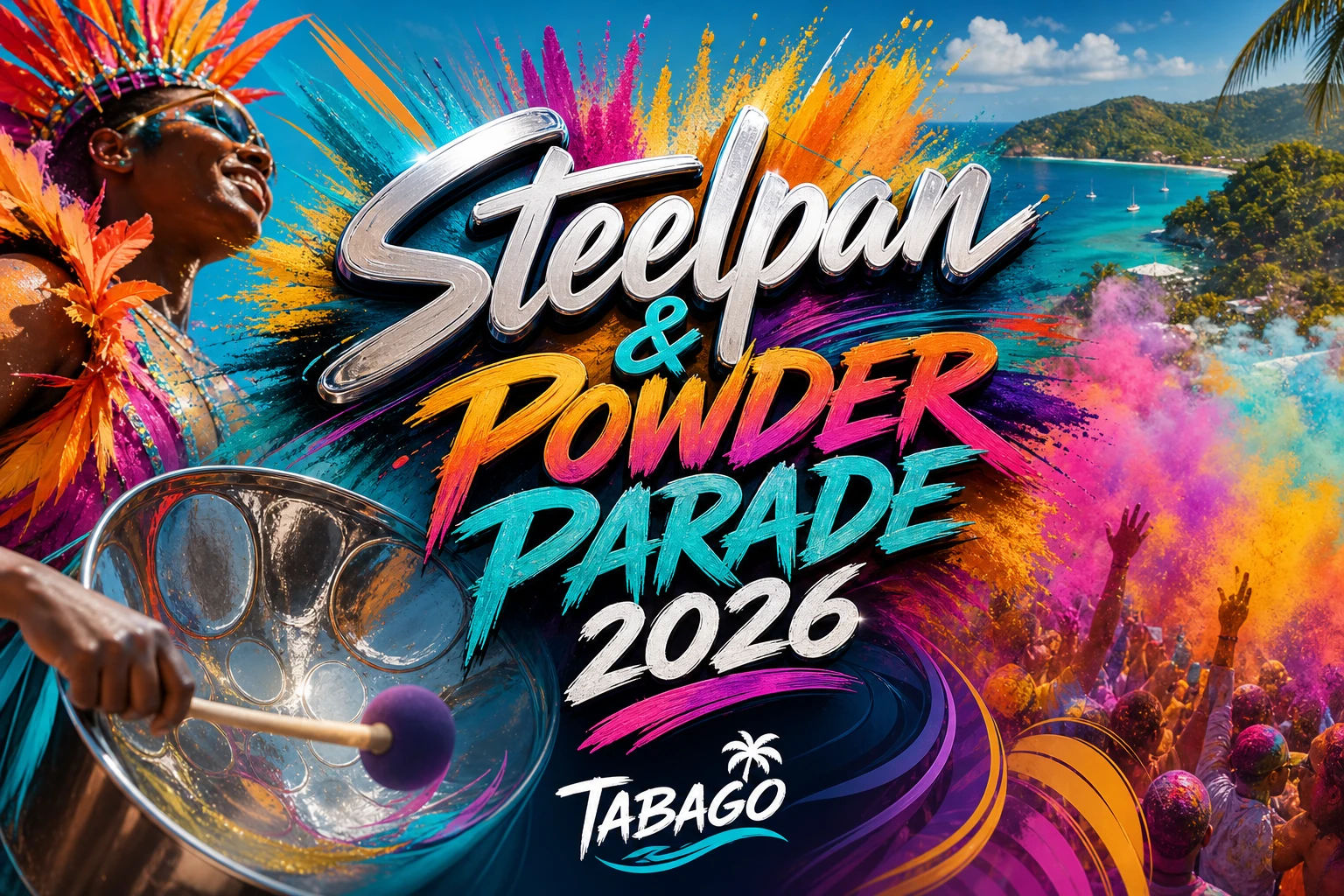
Steelpan & Powder Parade 2026
Tobago Steelpan & Powder Parade 2026 takes place on Saturday, 31 October 2026, bringing steelpan music, colourful powder, masquerade, and Tobago Carnival energy together in one unforgettable island celebration. Presented by the Pan Trinbago Tobago Region, the event is one of the signature steelpan experiences on Tobago’s 2026 Carnival calendar.
Held during the fifth-anniversary edition of Tobago Carnival, the Steelpan & Powder Parade promises a vibrant meeting of music and movement. It invites visitors to feel the bass pans, dance with the crowd, celebrate Tobago’s national instrument, and embrace the joyful, colourful spirit of Carnival weekend.
"You Can’t Love Steelpan Music and Fraid Powder!"
The Story of Tobago Steelpan & Powder Parade
A Vibrant Meeting of Music and Movement
The Tobago Steelpan & Powder Parade is a Carnival-season event that combines live steelpan performances with a high-energy powder celebration. It is built around one simple idea: steelpan music should be heard, felt, danced to, and celebrated in the streets.
Pan Trinbago describes the experience with the memorable phrase: “You Can’t Love Steelpan Music and Fraid Powder!” This statement captures the personality of the event. This is not a quiet seated concert. It is an active, colourful, outdoor-style Carnival experience where steelband culture meets the playful powder traditions associated with Caribbean revelry.
Expect a mix of:
- Live steelpan music
- Steelbands and pannists
- Powder moments
- Carnival costumes
- Dancing in the streets or event space
- Soca and Caribbean rhythms
- DJs and entertainment
- Tobago Carnival energy
- Food and drink vendors
- Colourful photo opportunities
- Community participation
- A mix of pan lovers, masqueraders, and visitors
The 2026 Experience
What to Expect This Year
The confirmed date for Steelpan & Powder Parade Tobago 2026 is Saturday, 31 October 2026. This places the event in the middle of Tobago Carnival 2026, which runs from Friday, 30 October to Sunday, 1 November 2026 under the theme “The Awakening.”
The exact 2026 route, venue, start time, participating steelbands, and event format have not yet been published. However, visitors should not confuse the Tobago Steelpan & Powder Parade on 31 October 2026 with the separate Steelpan and Powder Parade in Port of Spain, scheduled for 19 August 2026 as part of Trinidad’s Steelpan Month.
Why Steelpan Belongs at Carnival
The National Instrument's Cultural Significance
Steelpan is the national instrument of Trinidad and Tobago. Its story is rooted in creativity, resilience, and community innovation. The instrument emerged from neighbourhood culture in Trinidad and Tobago during the 20th century, when musicians transformed discarded metal drums into tuned instruments capable of melody and harmony.
Today, steelpan is played worldwide. Yet there is nothing quite like hearing it in Trinidad and Tobago, surrounded by Carnival energy, tropical heat, and people who know every turn of a classic arrangement.
The Tobago Steelpan & Powder Parade celebrates steelpan as a living art form rather than a museum piece.
A full steelband sound may include:
- Tenor pans carrying the melody
- Double seconds creating harmony
- Guitar pans building the middle range
- Cellos adding depth
- Quadrophonic pans expanding the sound
- Bass pans delivering a powerful low foundation
- Drumset, iron, and other rhythm instruments
- Vocalists or DJs in some event formats
Steelpan, Powder, and Caribbean Freedom
The Joyful Fusion of Music and Colour
Powder events have become a familiar part of contemporary Carnival culture. Bright clouds of coloured powder create a visual burst that fits the joy, freedom, and shared energy of a street celebration.
At Tobago Steelpan & Powder Parade 2026, powder is expected to complement, not replace, the music. The steelpan remains central, while the powder gives revellers another way to participate.
The experience may bring together:
- Steelband melodies
- Powder bursts
- Carnival flags
- Dancing
- Colourful clothing
- Group participation
- Social-media moments
- Outdoor celebrations
- Tobago’s easygoing island vibe
Powder celebrations can be fun, but they also require preparation. Choose clothes you are willing to stain, protect your eyes, and keep electronics in a sealed waterproof pouch.
PANOMEGA and Steelpan & Powder
A Perfect Prelude to the Parade
The Steelpan & Powder Parade follows another major Tobago pan event: THA Tobago Panorama, PANOMEGA, scheduled for Saturday, 24 October 2026. PANOMEGA is Tobago’s premier steelband showcase and competitive Panorama-style event. It focuses on the musical precision, arranging skill, and performance strength of Tobago’s steel orchestras.
The Steelpan & Powder Parade on 31 October 2026 takes a different approach. It brings pan into a more participatory Carnival environment, blending the instrument with movement, masquerade, and powder.
Together, the events create an ideal late-October Tobago itinerary:
- Sunday, 18 October 2026: Tobago Blue Food Festival
- Saturday, 24 October 2026: THA Tobago Panorama, PANOMEGA
- Friday, 30 October 2026: Tobago Carnival weekend begins
- Saturday, 31 October 2026: Tobago Steelpan & Powder Parade
- Sunday, 1 November 2026: Tobago Carnival weekend closes
For visitors who love Caribbean music, arriving a week before Carnival weekend allows time to experience Tobago’s food, steelpan, and mas traditions in one journey.
What to Expect at the Parade
An Energetic Celebration Awaits
The official event date is confirmed, but the detailed 2026 programme is still to be released. That means visitors should remain flexible about exact timing, route, and venue.
Based on the event’s name and announced focus, expect an energetic celebration where steelpan takes centre stage.
Potential highlights include:
- Steelband performances
- Street-style or open-air entertainment
- Powder moments
- Carnival costumes
- Live percussion
- DJs and soca music
- Dancing zones
- Food vendors
- Local drinks
- Tobago artists
- Carnival characters
- Group photo opportunities
- High-energy crowd participation
The event may attract both serious pan fans and visitors who simply want a fun Tobago Carnival experience. You do not need expert knowledge of steelpan to enjoy it. Come ready to listen, dance, respect the musicians, and embrace the colour.
How to Dress for Steelpan & Powder Parade
Practical Tips for a Colourful Day
This is an event where practical clothing matters. Powder can get into shoes, hair, bags, and phone ports, so plan accordingly.
Wear:
- Lightweight, breathable clothes
- A white or bright-coloured top that can show powder colour
- Comfortable sneakers or secure sandals
- Sunglasses or protective eyewear
- A hat or headwrap
- A small waterproof crossbody bag
- Clothes you do not mind staining
- A bandana or face covering if you are sensitive to powder
- A compact rain poncho if the forecast looks uncertain
Bring:
- A waterproof phone pouch
- Hand wipes
- A small towel
- Sunscreen
- Insect repellent
- Reusable water bottle, if venue rules permit
- A change of clothes
- Cash in Trinidad and Tobago dollars
- Portable charger
- Identification and emergency contact information
Avoid bringing expensive bags, delicate clothing, or footwear that will be uncomfortable after several hours of standing and dancing.
Powder Safety and Smart Carnival Planning
Enjoy Safely with These Tips
Powder events are joyful, but eye, skin, and respiratory comfort should always come first.
Follow these practical safety tips:
- Protect your eyes with sunglasses or clear protective glasses
- Keep powder away from your mouth and nose
- Step away if you feel uncomfortable in a dense powder cloud
- Do not throw powder directly at someone’s face
- Ask before applying powder to another person
- Stay hydrated
- Take breaks in shaded areas
- Use a designated driver or licensed taxi
- Keep valuables to a minimum
- Set a meeting point if travelling with friends
- Follow event staff, police, and security instructions
- Respect people who prefer to watch without being covered in powder
The most enjoyable Carnival experiences are built on consent, care, and shared respect.
Tobago Carnival Weekend: Beyond the Parade
Explore More During Your Visit
The Steelpan & Powder Parade takes place during Tobago Carnival weekend, making it easy to create a longer cultural itinerary.
Tobago Carnival 2026
Celebrating "The Awakening"
Tobago Carnival 2026 runs from 30 October to 1 November 2026. The fifth-anniversary edition is themed “The Awakening.” Carnival weekend can include mas, fetes, music, J’ouvert, competitions, food, DJs, and road celebrations. Exact schedules, ticket prices, and routes should be confirmed through official organisers.
Scarborough
The Capital's Role in Carnival
Scarborough is Tobago’s capital and likely to be important to the wider Carnival experience, even though the 2026 Steelpan & Powder Parade venue has not yet been confirmed.
Explore:
- Fort King George
- Scarborough Esplanade
- Local markets
- Tobago Museum
- Harbour views
- Shops and food vendors
- Nearby Bacolet Beach
Crown Point and Pigeon Point
Stay and Play in the Heart of Tobago
Stay in Crown Point, Bon Accord, or near Pigeon Point if you want easy access to beaches, restaurants, nightlife, and A.N.R. Robinson International Airport. Pigeon Point Heritage Park is an excellent place to recharge after a late Carnival night.
Buccoo Reef and Nylon Pool
Discover Tobago's Natural Wonders
Take a licensed boat excursion to Buccoo Reef and Nylon Pool for clear water, reef scenery, and a calmer side of Tobago.
Castara, Speyside, and Charlotteville
Explore Tobago's Scenic North
Extend your trip north to experience Tobago’s fishing villages, rainforest scenery, diving opportunities, and slower pace of life.
Tobago Food to Try During Carnival
Savour the Island's Culinary Delights
Do not let Carnival movement replace good meals. Tobago’s food culture is one of the island’s strongest attractions.
Look for:
- Crab and dumpling: Tobago’s signature dish
- Curry crab: A flavourful local favourite
- Fish broth: A warming soup with fish and ground provisions
- Callaloo: A traditional leafy green dish
- Coconut bake: Ideal for breakfast
- Bake and shark: Popular Caribbean street food
- Doubles: Curried chickpeas served in bara
- Roti: Flatbread wrapped around curry fillings
- Pelau: A hearty one-pot rice dish
- Tamarind balls: Sweet and tangy snacks
- Cocoa tea: A spiced local cocoa drink
- Sorrel: A refreshing Caribbean drink
Eat before drinking alcohol, especially if you are attending an outdoor fete or powder event. Hydration, shade, and food are part of a responsible Carnival plan.
Where to Stay for 31 October 2026
Find Your Perfect Base
Accommodation demand can be high during Tobago Carnival. Book early for the nights of 30 October and 31 October 2026.
Scarborough
Central and Convenient
Best for:
- Potential event access
- Ferry terminal connections
- Shops and practical services
- Local restaurants
- Central location
Crown Point
The Heart of Nightlife
Best for:
- Airport proximity
- Nightlife
- Store Bay
- Restaurants and cafés
- South-west Tobago convenience
Pigeon Point and Bon Accord
Beachside Bliss
Best for:
- Beach stays
- Villas and guesthouses
- Relaxed post-Carnival mornings
- Water sports
Bacolet
A Quieter Retreat
Best for:
- Quieter accommodation close to Scarborough
- Scenic coastal views
- A calmer retreat after Carnival events
Castara, Speyside, and Charlotteville
Nature and Village Life
Best for:
- Nature-focused extensions
- Village life
- Diving and hiking
- North Tobago scenery
Transport Tips for Carnival Night
Plan Your Journey Wisely
Do not leave transport planning until the event ends. Crowds, road closures, and limited taxis can make late-night movement more difficult.
- Arrange a return taxi before the parade starts
- Save your driver’s contact information
- Confirm the pick-up point precisely
- Do not drive after drinking
- Carry enough cash for transportation
- Travel with trusted friends where possible
- Keep your hotel address saved offline
- Allow extra time around Scarborough and other Carnival activity areas
- Follow official road-closure information
- Use only licensed or trusted transport providers
Ticket Prices and Costs
Budgeting for the Big Day
The official ticket price for Tobago Steelpan & Powder Parade 2026 has not yet been released. A social-media listing associated with Pan Trinbago refers to ticket information from a prior Tobago event, but it should not be treated as 2026 pricing because the confirmed date, venue, and commercial arrangements may change.
Budget for:
- Event admission, if ticketed
- Food and drinks
- Licensed transport
- Accommodation
- Carnival clothing
- Powder-event accessories
- Other Tobago Carnival fetes
- Beach excursions
- Souvenirs and local crafts
Buy only through official organisers, approved ticket platforms, or verified promoters once sales are announced.
Frequently Asked Questions
The Things People Always Want to Know
When is Tobago Steelpan & Powder Parade 2026?
Tobago Steelpan & Powder Parade 2026 takes place on Saturday, 31 October 2026.
Where is Steelpan & Powder Parade held in Tobago?
The event will be held in Tobago, but the official 2026 venue and parade route have not yet been announced.
Is Steelpan & Powder Parade part of Tobago Carnival?
Yes. It takes place during Tobago Carnival 2026, which runs from Friday, 30 October to Sunday, 1 November 2026.
What is Steelpan & Powder Parade?
It is a Tobago Carnival event that combines live steelpan music, powder, masquerade, dancing, and Caribbean cultural celebration.
How much are tickets for Steelpan & Powder Parade 2026?
Official 2026 ticket prices have not yet been announced. Check Pan Trinbago Tobago Region and Tobago Carnival sources closer to the event date.
What should I wear to a powder parade in Tobago?
Wear comfortable clothes and shoes that can get coloured, plus sunglasses or protective eyewear, sunscreen, a waterproof phone pouch, and a change of clothes.
Is Steelpan & Powder Parade suitable for first-time Carnival visitors?
Yes. It is a lively way to experience Tobago Carnival, but first-time visitors should plan transport, protect valuables, stay hydrated, and respect personal boundaries around powder.
Verified Information at a Glance
- Event name: Tobago Steelpan & Powder Parade 2026
- Also known as: Steelpan and Powder Tobago
- Event category: Steelpan, powder parade, Carnival, and cultural celebration
- Confirmed date: Saturday, 31 October 2026
- Location: Tobago, Trinidad and Tobago
- Confirmed 2026 venue: To be announced
- Parade route: To be announced
- Organiser: Pan Trinbago Tobago Region
- Official slogan: “You Can’t Love Steelpan Music and Fraid Powder!”
- Main focus: Steelbands, live pan music, Carnival culture, powder, dancing, and community celebration
- Tobago Carnival dates: Friday, 30 October to Sunday, 1 November 2026
- Related steelpan event: THA Tobago Panorama, PANOMEGA on Saturday, 24 October 2026
- Ticket pricing: Not yet announced
- Best arrival dates: Friday, 30 October or Saturday, 31 October 2026
- Best for: Steelpan fans, Carnival travellers, music lovers, friend groups, culture seekers, and visitors wanting a high-energy Tobago experience
Keep Saturday, 31 October 2026 open for Tobago’s sweetest and brightest Carnival rhythm. Follow the official venue announcement, dress for colour, protect your phone, step into the steelpan pulse, and let the powder, music, and island joy carry you through one of Tobago Carnival’s most distinctive celebrations.
```
KIDS FEST — TikTok Dance & Funday 2026
A day of games, face painting, and dancing sounds right at home in Trinidad, where families know how to bring energy to a gathering. KIDS FEST TikTok Dance & Funday has been listed for the Trinidad and Tobago Group of Professional Associations venue in Woodbrook, Port of Spain, promising children’s activities and interactive entertainment. Before promising the kids a day out, though, there is one detail parents need to check: the event date is inconsistent across the ticket platform’s listings.
As of September 28, 2026, Eventbrite’s search pages display Saturday, December 5, 2026, at 2 p.m., while other indexed pages for what appears to be the same Eventbrite ticket listing still show Saturday, September 26, at 2 p.m.. The main event page identifies the venue, organiser, and seven-hour duration, but the page content retrieved does not settle the date or show a ticket price. Do not treat December 5 as a confirmed rescheduled date until the organiser or a live checkout page confirms it.
This guide separates what families can rely on from what still needs verification. It also offers practical ways to plan a memorable Port of Spain outing if the event goes ahead on the date you book.
"Do not treat December 5 as a confirmed rescheduled date until the organiser or a live checkout page confirms it."
Is KIDS FEST Confirmed for December 5?
Tracking Down the Real Date
The KIDS FEST TikTok Dance & Funday (Trinidad) listing appears in Eventbrite search results for Saturday, December 5, 2026, at 2 p.m. It names Trinidad and Tobago Group of Professional Associations Ltd. as the Port of Spain location. That is a useful lead for families looking for a December activity, but it is not enough to confirm a date change.
Other Eventbrite search results associated with the same event title show Saturday, September 26, 2026, at 2 p.m. That date has already passed at the time of writing. Meanwhile, the individual ticket page, under a single listing number, describes the activities and venue but does not display the date in the content available for review. It calls the event “KIDS FEST - TRINIDAD - DAY 1.”
Check the date on the ticket selection and order confirmation before paying.
If one part of the platform says September 26 and another says December 5, ask Kids Fest USA, the named Eventbrite organiser, to confirm which date applies to that listing. Do not make non-refundable travel arrangements around either search snippet alone.
There is also a separate Kids Fest Trinidad 2026 page on TicketGateway for July 25, 2026. It is marked “Event Ended” and named a venue to be announced. Its $10 child ticket and free-parent offer belonged to that July listing, not to a verified December or September Eventbrite ticket.
What Is KIDS FEST TikTok Dance & Funday?
A Day of Play and Entertainment
Eventbrite describes KIDS FEST - TRINIDAD - DAY 1 as an in-person family event with games, activities, entertainment, face painting and interactive shows for children. It lists the experience as seven hours long. The event title refers to TikTok dance, but the reviewed description does not publish a dance timetable, age divisions, judging rules or named performers.
That makes this a promising funday rather than a dance competition whose format can already be described in detail. Children may be excited by the music and movement suggested by the name, while parents may be more interested in the variety of activities. Both groups deserve an accurate programme, so check what is actually included before telling a child they will get to compete, meet an influencer or perform on a stage.
The July TicketGateway event, which is not the same confirmed date or venue, advertised a TikTok dance and talent show funday. It shows that dance has featured in Kids Fest Trinidad promotion, but it does not establish the activity lineup for the Eventbrite listing under discussion.
For now, the confirmed activity description on that Eventbrite page is:
- Games and children’s activities.
- Face painting.
- Interactive shows and entertainment.
- An in-person event listed as seven hours in duration.
Food stalls, bounce houses, prizes, celebrity appearances and a detailed dance contest are not confirmed in the reviewed event listing. If any of those would make or break your family’s day, ask before purchasing tickets.
The Woodbrook Venue
Setting the Stage for a Family Day
The listed location is Trinidad and Tobago Group of Professional Associations Ltd., often shortened to TTGPA, on Fitzblackman Drive in Woodbrook, Port of Spain. The venue’s own contact details give the address as 11–13 Fitzblackman Drive South, Woodbrook. The association’s grounds can be hired for events, which helps explain why a family day may appear at a venue better known by its professional name.
It is important to distinguish the venue from the event organiser. The Eventbrite page names Kids Fest USA as organiser. TTGPA is the listed location; that does not mean its office can answer questions about dance rules, tickets or a changed event date. Start with the organiser or the ticketing platform for those questions.
Woodbrook is a useful base for a family day in Port of Spain. You can plan a meal nearby before heading home, but let the event’s confirmed hours decide how much else to fit in. A seven-hour listing that starts at 2 p.m., if verified, would take families into the evening. That is an inference from the stated duration, not a confirmed 9 p.m. closing time.
If you are coming from another part of Trinidad, confirm the correct entrance and your transport plans in advance. A venue address tells you where to go; it does not guarantee parking, drop-off arrangements or a staffed entry gate on any particular date.
Why the Family-Day Idea Fits Trinidad
Embracing the Culture of Celebration
A family event built around music, movement and play feels natural in a country with a rich public culture of performance. Port of Spain’s Queen’s Park Savannah is a landmark associated with major Carnival activities, including parades and staged shows. Kids Fest is not listed as a Carnival event at the Savannah, but the wider setting helps visitors understand why music and family gatherings are such familiar parts of life here.
Children do not need to be confident dancers to enjoy a day with games and shows. A shy child might start with face painting. Another might head straight for an interactive activity. A parent may simply want a shared afternoon that feels different from the usual weekend routine.
If TikTok-style dancing does feature in the final programme, keep the emphasis on enjoyment rather than performance pressure. Let children choose whether they want to join in or watch. The event title does not mean every attendee must dance, and the reviewed description does not state that children need a TikTok account or have to appear in a video.
It is also worth thinking about privacy. Ask the organiser whether event photography or video recording is planned, and what options parents have if they do not want their child filmed or posted online. The answer has not been specified in the reviewed listing.
Making a Port of Spain Day Out
Crafting a Memorable Family Experience
If the organiser confirms a future date, you can turn KIDS FEST into an enjoyable Trinidad island family outing without filling every hour. The event is listed in Woodbrook, while Queen’s Park Savannah offers a well-known open space elsewhere in Port of Spain. Around the Savannah are the Magnificent Seven historic mansions, the Royal Botanic Gardens, Emperor Valley Zoo and the National Museum. These are separate attractions, not part of a Kids Fest ticket.
A little flexibility will serve families better than a packed itinerary. If your child has a lot of energy before the event, a short outdoor stop may help. If they tend to tire after a lively afternoon, save sightseeing for another day.
Some easy planning choices:
- Eat before you arrive unless the organiser confirms food will be available.
- Bring water and a small essentials bag, subject to any venue rules.
- Choose comfortable clothes and shoes for games and movement.
- Agree on a meeting point if older children are moving between activities.
- Check the weather and venue setup before assuming every activity is indoors.
- Plan the journey home if the verified programme runs into the evening.
For visitors staying on Tobago, remember that the confirmed venue address is on Trinidad. Do not assume the listing describes a second event on Tobago simply because the country name includes both islands.
Tickets, Prices and Refunds
Understanding the Financial Details
No current ticket price for the Eventbrite KIDS FEST TikTok Dance & Funday listing was visible in the event content reviewed. Eventbrite’s description states “Refunds up to 7 days before event.” With the date itself disputed across listings, confirm what deadline applies to the ticket you actually purchase.
Do not use the price from the older TicketGateway page as an estimate for this listing. The TicketGateway July 25, 2026 event advertised $10 child tickets and free entry for parents, but that page is marked ended, had a different organiser label and did not name the Woodbrook venue. The currency is not clearly stated in the quoted offer, so even calling it TT$10 would go beyond what the page confirms.
Before checkout, parents should ask:
- Is the event happening on a future date, and what is that exact date?
- What time do doors open, and when does the event end?
- How much is each child’s ticket, and do adults need a ticket?
- What ages can attend, and must an adult stay with a child?
- Does admission include face painting and all activities?
- What is the refund deadline for this date?
- How will families be notified of a change or cancellation?
These questions are not obstacles to a fun day. They are the quickest way to make sure your family arrives at the right place, on the right day, with the right tickets.
KIDS FEST Trinidad 2026 FAQs
The Things People Always Want to Know
When is KIDS FEST TikTok Dance & Funday 2026?
Eventbrite search results conflict. Some show Saturday, December 5, 2026, at 2 p.m.; others show Saturday, September 26, at 2 p.m. for the same-named Port of Spain listing. The reviewed main event page does not resolve the conflict. Confirm the future date with Kids Fest USA before buying.
Where is the KIDS FEST Trinidad venue?
The Eventbrite listing names Trinidad and Tobago Group of Professional Associations Ltd. in Woodbrook, Port of Spain, Trinidad. The venue lists its address as 11–13 Fitzblackman Drive South.
How much are KIDS FEST TikTok Dance & Funday tickets?
A current price was not visible on the reviewed Eventbrite event page. A separate July 25, 2026 Kids Fest listing advertised $10 child tickets and free parent entry, but those prices must not be assumed to apply to the Woodbrook Eventbrite event.
What activities are listed for children?
The event description mentions games, face painting, interactive shows and other children’s entertainment. It does not give a confirmed dance competition format or name any performers.
How long is the event?
Eventbrite lists the experience as seven hours. Because the date and complete schedule need confirmation, ask the organiser for the actual opening and closing times.
Do children need a TikTok account to attend?
No account requirement is stated in the reviewed listing. The event title mentions TikTok dance, but the published description does not specify app use, posting rules or filming consent. Confirm any participation requirements with the organiser.
Is the July 2026 Kids Fest the same event?
It is a separate listing. TicketGateway marks its July 25, 2026 Kids Fest Trinidad event as ended and gives its venue as TBA. Do not transfer its ticket prices, hours or admission rules to the Eventbrite listing in Woodbrook.
Verified Information at a Glance
- Event category: Children’s and family entertainment; games and interactive activities.
- Event title: KIDS FEST - TIK TOK DANCE & FUNDAY (TRINIDAD) on Eventbrite.
- Date and time: Not safely confirmed for a future event. Eventbrite search results show December 5, 2026, at 2 p.m. in some places and September 26, 2026, at 2 p.m. in others. Confirm directly before booking.
- Duration shown: Seven hours; precise closing time not independently confirmed.
- Listed venue: Trinidad and Tobago Group of Professional Associations Ltd., 11–13 Fitzblackman Drive South, Woodbrook, Port of Spain, Trinidad.
- Listed organiser: Kids Fest USA on the Eventbrite page.
- Advertised activities: Games, face painting, interactive shows and entertainment.
- Current ticket prices and age rules: Not displayed in the reviewed Eventbrite content.
- Refund wording: Refunds up to seven days before the event; confirm the applicable date before purchase.
- Separate past listing: Kids Fest Trinidad, July 25, 2026, is marked ended on TicketGateway. Its $10 child and free-parent offer is not a confirmed price for this Eventbrite event.
When Kids Fest USA confirms the next Port of Spain date, gather the family for the games, movement, and shared fun the event promises. Check the tickets first, then give the children room to enjoy Woodbrook’s KIDS FEST in their own way, whether they are ready to dance or happiest cheering from the side.
```

Small Conventional Band Semi-Finals: National Panorama 2027
The road to National Panorama 2027 reaches the Queen’s Park Savannah in Port of Spain on Saturday, December 12, 2026, when small conventional steelbands are listed to play their semi-final round. Pan Trinbago’s event ticket listing gives a 4 p.m. to 11:59 p.m. event window at the Grand Stand. The organiser’s broader calendar also names December 12, although it labels its season dates tentative.
"Every band on the stage has a community behind it and a place in Trinidad and Tobago’s steelpan story."
Panorama 2027 Semi-Final Date and Venue
Mark Your Calendar for December 12, 2026
Pan Trinbago’s Small Conventional Band Semi-Finals are listed for Saturday, December 12, 2026, from 4 p.m. to 11:59 p.m. at the Grand Stand, Queen’s Park Savannah, Port of Spain, Trinidad. The event listing names Pan Trinbago Inc. as organiser.
The distinction between a listed event window and the time every band will play is worth making. The ticket page does not provide a playing order, named competing bands or a time for the first performance. It also does not guarantee that the last note will fall at exactly 11:59 p.m. Check the organiser’s final running order nearer December 12 if you are coming to support a particular steelband.
Why “Panorama 2027” Begins in 2026
Understanding the Extended Competition Season
Panorama’s competition season stretches across more than one calendar year. Pan Trinbago’s Panorama 2027 calendar starts with single pan band finals on November 21, 2026, places the small conventional semi-finals on December 12, and follows them with the small conventional finals on December 19. Junior and larger-band competitions continue into January and February 2027.
For travellers, the timeline changes how to plan. If you wait until the weeks immediately before Carnival to look for small-band semi-final tickets, the event may already have passed. A December 2026 visit instead lets you hear this category’s semi-final and, if your stay is long enough, return for the final the following Saturday.
"Bring Yuh Energy, Match D Rhythm!" — Pan Trinbago's 2027 season theme
What Makes a Small Conventional Band?
The Unique Sound and Structure of Small Bands
A conventional steelband uses the familiar family of tuned steelpans in an arranged ensemble. In Panorama, bands are grouped into competition categories that include small, medium and large conventional bands, as well as single pan bands. They are different divisions with separate rounds; “small” is a competition category, not a promise of a modest sound.
Pan Trinbago’s published rules for a 2019 preliminary round allowed a maximum of 50 players in the small conventional category. That figure helps explain the scale of a historical small-band entry, but it is not a verified 2027 player limit. Competition rules can change, so do not use an older cap as a current eligibility rule.
Steelpan Roots and Panorama History
A Deep Dive into Trinidad and Tobago's Musical Legacy
The steelpan is inseparable from Trinidad and Tobago’s cultural history. UNESCO describes Port of Spain as internationally known as a birthplace of steelpan, calypso and Carnival. Pan Trinbago’s records trace national Panorama results back to 1963, with North Stars listed as the first-place band that year.
There is also a history behind the organisation of the competition. Pan Trinbago says it was established in 1971, following the Trinidad Steelbandmen Association, founded in 1949. Its stated work includes developing the steelband movement and advancing the interests of member bands.
The Savannah Experience
A Cultural Gathering at Queen’s Park Savannah
Queen’s Park Savannah is one of Port of Spain’s defining landmarks. Visit Trinidad describes it as the capital’s largest open green space, at approximately 260 acres, with a perimeter of about two miles. During major cultural events it becomes a place where the city gathers, and for December 12, 2026, the Grand Stand is the named location for the small conventional semi-finals.
The surrounding area can be part of the day. The Magnificent Seven historic houses stand around the Savannah, giving visitors a sense of Port of Spain beyond the music. Nearby city stops are independent outings, not add-ons to a Panorama ticket.
Food, Panyards and Local Culture
Experience Trinidad Beyond the Music
A Panorama afternoon is an opportunity to enjoy more of Trinidad island life. Visit Trinidad highlights the Savannah area for local street food, including doubles, pholourie, roti and corn soup. Whether individual vendors will trade at the December 12 event has not been confirmed in the ticket listing, so eat beforehand or check the event’s vendor arrangements rather than relying on a particular stall.
If you have more time in Port of Spain, a panyard visit offers a different side of the music. Visit Trinidad lists a panyard experience at HADCO Phase II Pan Groove in Woodbrook, with customised visits available by arrangement. That is separate from the Small Conventional Band Semi-Finals and is not presented as a rehearsal by a competing small band.
Tickets and Visitor Planning
Prepare for Your Panorama Experience
The Island eTickets event page confirms the date, stated time, Grand Stand venue and Pan Trinbago organiser, but it did not display an admission price in the information reviewed. A 2025 small-band semi-final had its own published ticket price and took place at a different location. Neither its price nor its venue should be reused as a fact for December 12, 2026.
Before you travel, check:
- The final December 12 start time and whether doors open earlier.
- The current ticket price, any service fees and Grand Stand seating terms.
- The band lineup and playing order, if you hope to hear a particular group.
- Accessible entry and seating arrangements, if needed.
- Venue rules, including bags, food, photography and recording.
- Your return transport, since the listed event window runs late.
For visitors coming from Tobago or farther afield, the event is in Port of Spain on Trinidad. Build your transport and accommodation around the Saturday, December 12 event, not around a January 2027 Carnival arrival.
Frequently Asked Questions
The Things People Always Want to Know
When are the National Panorama 2027 small band semi-finals?
They are listed for Saturday, December 12, 2026, from 4 p.m. to 11:59 p.m. Pan Trinbago’s season calendar describes its dates as tentative, so check for updates before travelling.
Where are the small conventional band semi-finals held?
The named venue is the Grand Stand at Queen’s Park Savannah, Port of Spain, Trinidad.
Why is a Panorama 2027 event in December 2026?
Panorama 2027 is a competition season spanning late 2026 and early 2027. The small-band semi-final is listed for December 12, 2026, with its final scheduled for December 19.
How much are 2027 small band semi-final tickets?
A ticket price was not displayed on the reviewed December 12 event page. Check the current price with the ticket seller or Pan Trinbago rather than relying on another Panorama event’s price.
Is the small band semi-final the Savannah Party?
No. The small conventional band semi-final is listed for December 12, 2026. The Savannah Party for medium and large conventional semi-finals is a separate event listed for January 24, 2027.
When is the small conventional band final?
Pan Trinbago’s calendar and the separate ticket listing name Saturday, December 19, 2026, at the Grand Stand, Queen’s Park Savannah. The final has its own event listing.
Can I livestream the performances?
Not without authorisation. Pan Trinbago states that live streaming is not permitted at its events unless it has authorised it.
Verified Information at a Glance
- Event Name: National Panorama 2027 Small Conventional Band Semi-Finals
- Category: National steelband competition
- Organiser: Pan Trinbago Inc.
- Dates: Saturday, December 12, 2026
- Duration: 4 p.m. to 11:59 p.m.
- Venue: Grand Stand, Queen’s Park Savannah, Port of Spain, Trinidad
- Attendance: Not specified
- Recognition: Part of Trinidad and Tobago's cultural history
- Stages: Grand Stand
- Genres: Steelpan music
- Programme Elements: Small Conventional Band Semi-Finals
- Camping: Not available
- Age Policy: Not specified
- Tickets: Price not displayed
- Amenities: Not specified
- Nearest Airport: Not specified
- Official Website: Not specified
- Social Media: Not specified
Make December 12, 2026 your chance to hear Panorama while the result is still undecided. Confirm the final event details, find your place at the Queen’s Park Savannah Grand Stand, and give the small conventional bands the close listening and wholehearted support their music deserves.
```

Starlight New Year’s Eve Party 2027
Tobago knows how to make the end of a year feel personal. A holiday meal may stretch into a lime with friends; music spills into the evening; and, as midnight approaches, people look for a place to welcome what comes next. Starlight New Year’s Eve Party appears in Tobago’s festive event listings, making it one to watch if you hope to spend the countdown on this island of Trinidad and Tobago.
For 2027, the date you need is Thursday, December 31, 2026, leading into Friday, January 1, 2027. The Tobago Festivals Commission names Starlight among its December celebrations, but a specific 2026 Starlight date, venue, start time, organiser and ticket price have not been confirmed in the information reviewed.
"There is every reason to look forward to a Tobago New Year’s Eve, but no reason to invent a Starlight ticket, location or lineup before an organiser announces them."
Is Starlight Confirmed for New Year’s Eve 2027?
Current Status and What It Means for Travelers
Starlight New Year’s Eve Party is named in the Tobago Festivals Commission’s December events overview. It appears alongside other festive celebrations, including Champagne En Blanc. The overview does not provide an event-specific date, venue, hours or booking details for a December 31, 2026 edition.
Visit Tobago’s events calendar also contains a Starlight New Year’s Eve Party entry under nightlife, but displays “WED 31 DEC.” Since December 31, 2026, is a Thursday, the weekday shown on that entry points to an older year. The calendar is useful evidence that Starlight has been promoted as a Tobago event; it is not verification that the party will happen on December 31, 2026.
- Confirmed: Starlight is named as a Tobago December festive event in a local festivals overview.
- Not confirmed for 2026: Its exact date, venue, admission price, host, performers, and hours.
Until a dated Starlight announcement appears, treat the party as a possible New Year’s Eve option, not a ticketed plan you can build a non-refundable holiday around.
Why Spend New Year’s Eve on Tobago?
The Island's Unique Appeal
Part of Tobago’s appeal is the contrast between an easygoing day and a lively night. You can spend December 31 enjoying the sea, then dress for dinner or meet friends to welcome January 1. There is no need to claim that every beach hosts a party or that every hotel puts on the same countdown. Tobago offers different ways to celebrate, and the right one depends on what has actually been announced for the date.
"The food you share before leaving, the conversation on the way there and the people you meet can be just as memorable as the countdown."
The island’s own holiday traditions add warmth to the occasion. Tobago’s festive table can include pastelles, ham, turkey, fruit cake and sweetbread, with drinks such as sorrel, ginger beer and ponche de crème. Around Christmas, parang music and the custom of visiting friends and family keep the season social well before New Year’s Eve arrives.
Visit Tobago describes Crown Point as a centre for nightlife, with places to eat and gather along its strip. Scarborough, Store Bay and other communities have their own rhythms. None has been confirmed as the Starlight 2026 venue, so choose accommodation for the wider trip first, then adjust your evening transport when the party’s location is known.
A Tobago Day Before the Countdown
Activities to Enjoy Before the Evening Festivities
One way to make Thursday, December 31, 2026 feel different is to leave the morning open. If you are staying near Crown Point, Store Bay gives you a beach and a craft market where local makers sell their work. A relaxed lunch there can be a welcome change from spending the entire day waiting for an evening event.
Pigeon Point is another familiar Tobago setting for swimming, a beach walk or a boat excursion towards Buccoo Reef and Nylon Pool. Arrange a tour separately and follow the operator’s advice about conditions. A daytime boat trip is not part of an unconfirmed Starlight ticket.
If history appeals more than a beach morning, Fort King George above Scarborough offers restored historic features and views over the island’s capital. Check its holiday opening arrangements before travelling on December 31 or January 1.
These outings are not a list to race through. Pick one place, enjoy it properly and leave time to rest before the evening. Tobago is particularly rewarding when you allow the day to unfold at an island pace.
Music, Food and the Island’s Festive Spirit
Experience Tobago's Cultural Richness
A Tobago New Year’s Eve guide should say more than “dance under the stars.” The island’s sense of celebration has roots in community gatherings, food, and shared music. Visit Tobago describes parang as a Christmas-season tradition in which musicians have visited homes with instruments such as the cuatro, guitar and chac-chac, welcomed with food and drink.
That does not mean parang, live steelpan or any particular DJ has been booked for Starlight on December 31, 2026. No performer lineup for that party was verified. Instead, the tradition offers context for the festive season you will encounter beyond any single venue.
"Make room to try local food while you are on the island."
In the Crown Point area, Visit Tobago points visitors towards curried crab and dumplings at Store Bay, a dish closely associated with Tobago. It might become your most vivid New Year’s memory even if you spend the evening at a formal party elsewhere.
If your plans take you into a village or community event, be a guest rather than a spectator looking for a staged version of island life. Ask what is happening, support local food sellers, and respect the space people have made for their own celebrations.
Fireworks and the Midnight Moment
What to Know Before the Clock Strikes Twelve
Visit Tobago suggests that travellers can look for New Year’s fireworks from hotels and mentions an annual display over Rockly Bay. That is useful background for exploring your options, but it is not a confirmed December 31, 2026 fireworks schedule. Nor is there evidence in the reviewed information that a Starlight ticket includes a fireworks view.
If fireworks matter to your plans, confirm three things before booking:
- Will a display take place on December 31, 2026?
- Who is presenting it, and where is the designated viewing area?
- Can someone without a hotel or party reservation enter that viewing area?
The same care applies to a midnight toast. A party named for New Year’s Eve suggests a countdown, but it does not tell you whether Champagne, food or drinks are included in admission. Those details belong in the organiser’s ticket terms, not in an assumption based on the event’s name.
Prices, Tickets and Booking Checks
What to Verify Before You Purchase
No verified price has been published for Starlight New Year’s Eve Party welcoming 2027 in the sources reviewed. Prices for similarly named “Starlight” celebrations elsewhere are unrelated. A ticket for a party in another country, or for a previous New Year’s Eve, cannot tell you what a Tobago organiser will charge.
Before you commit to a Starlight booking, look for an announcement that clearly states Thursday, December 31, 2026, and answers the following:
- Where is the party? Ask for a named venue and address, not simply “Tobago.”
- When do doors open and when does it end?
- Who is the organiser and official ticket seller?
- What is the price in Trinidad and Tobago dollars, and are fees extra?
- What is included? Food, drinks, entertainment, and seating can all differ.
- Are there age or dress requirements?
- What happens if the event changes or is cancelled?
- Is parking available, and how will guests get home after midnight?
The local currency is the Trinidad and Tobago dollar (TTD), but a price for this particular event has not been established.
If Starlight never publishes a 2026 edition, you can still enjoy New Year’s Eve in Tobago. Choose another event that provides a full dated programme, or reserve a dinner with clear terms. You do not need to rely on an undated party title to have a memorable island night.
Travel and Safety for December 31
Planning Your Journey and Staying Safe
Travelling from Trinidad to Tobago takes separate planning from attending a party. Visit Tobago describes inter-island flights of about 25 minutes and an inter-island ferry service. Check the operators’ actual late-December 2026 schedules before booking, and do not assume a flight or ferry will be available immediately after midnight.
"A sensible plan leaves room for the unexpected while protecting the parts of the trip you most care about."
Once on Tobago, plan your journey back from the venue before you head out. That is especially important while the Starlight venue remains unconfirmed. If you are travelling with friends, agree on where to meet if you separate. Use transport you trust and avoid counting on an unplanned walk along an unfamiliar road or beach late at night. Visit Tobago advises visitors to avoid travelling alone at night in poorly lit areas and to use accredited taxis where appropriate.
December also calls for a little weather flexibility. Visit Tobago describes June through December as the wetter part of the year, when short tropical showers can occur. Pack for a possible shower if you are heading to an outdoor celebration, but wait for a confirmed venue before deciding what you need for Starlight.
A sensible plan leaves room for the unexpected while protecting the parts of the trip you most care about: a safe ride, a confirmed place to celebrate and enough time to enjoy Tobago on January 1, 2027.
Frequently Asked Questions
The Things People Always Want to Know
When is New Year’s Eve 2027 in Tobago?
The celebration welcoming 2027 is on Thursday, December 31, 2026. Midnight begins Friday, January 1, 2027.
Is Starlight New Year’s Eve Party confirmed for December 31, 2026?
No event-specific 2026 confirmation was verified. The Tobago Festivals Commission names Starlight in its December overview, but does not publish a 2026 date, venue, time or ticket details for it.
Why does a Tobago calendar say Wednesday, December 31?
The Visit Tobago Starlight entry displays “WED 31 DEC.” December 31, 2026 is a Thursday, so that calendar entry cannot be used as confirmation of a 2026 party.
Where will Starlight New Year’s Eve Party 2027 be held?
A 2026 venue has not been verified. Do not assume it is in Crown Point, Scarborough or Rockly Bay based on other Tobago nightlife or fireworks information.
How much are Starlight 2027 tickets?
No verified ticket price or package details are available in the sources reviewed. Wait for a dated announcement from an identified organiser or seller before paying.
Will Starlight have fireworks or live performers?
Neither a fireworks display nor a performer lineup has been confirmed for a 2026 Starlight event. Tobago has broader New Year’s fireworks traditions, but they should not be presented as features of this unconfirmed party.
Can I travel from Trinidad to Tobago for New Year’s Eve?
Yes, Tobago has inter-island flights and ferry service from Trinidad. Confirm December 2026 schedules and your return travel with the operators before making a party reservation.
Verified Information at a Glance
- Event category: New Year’s Eve nightlife party, as named in Tobago event overviews.
- Event name: Starlight New Year’s Eve Party.
- Island and country: Tobago, Trinidad and Tobago.
- Date for welcoming 2027: Thursday, December 31, 2026, leading into Friday, January 1, 2027. This is the New Year’s Eve date, not a confirmed Starlight booking date.
- Starlight 2026 event date: Not verified in an event-specific 2026 announcement.
- Venue and address: Not verified for a 2026 edition.
- Event hours, organiser and performer lineup: Not verified for a 2026 edition.
- Ticket price and inclusions: Not verified for a 2026 edition.
- Fireworks at Starlight: Not confirmed.
- Important calendar warning: An older Visit Tobago listing says Wednesday, December 31; that weekday does not match 2026.
Keep December 31, 2026 open for an evening that feels unmistakably Tobago, with good food, good company and time to savour the island before midnight. If a dated Starlight New Year’s Eve Party programme is announced, check its venue and ticket terms, then make it the gathering where you welcome 2027.
```
Past events

Tobago Heritage Festival 2026
Charlotteville Fisherman Festival 2026
PAYNT The Summer 2026 – Tobago
Everything Mango – Tobago 2026
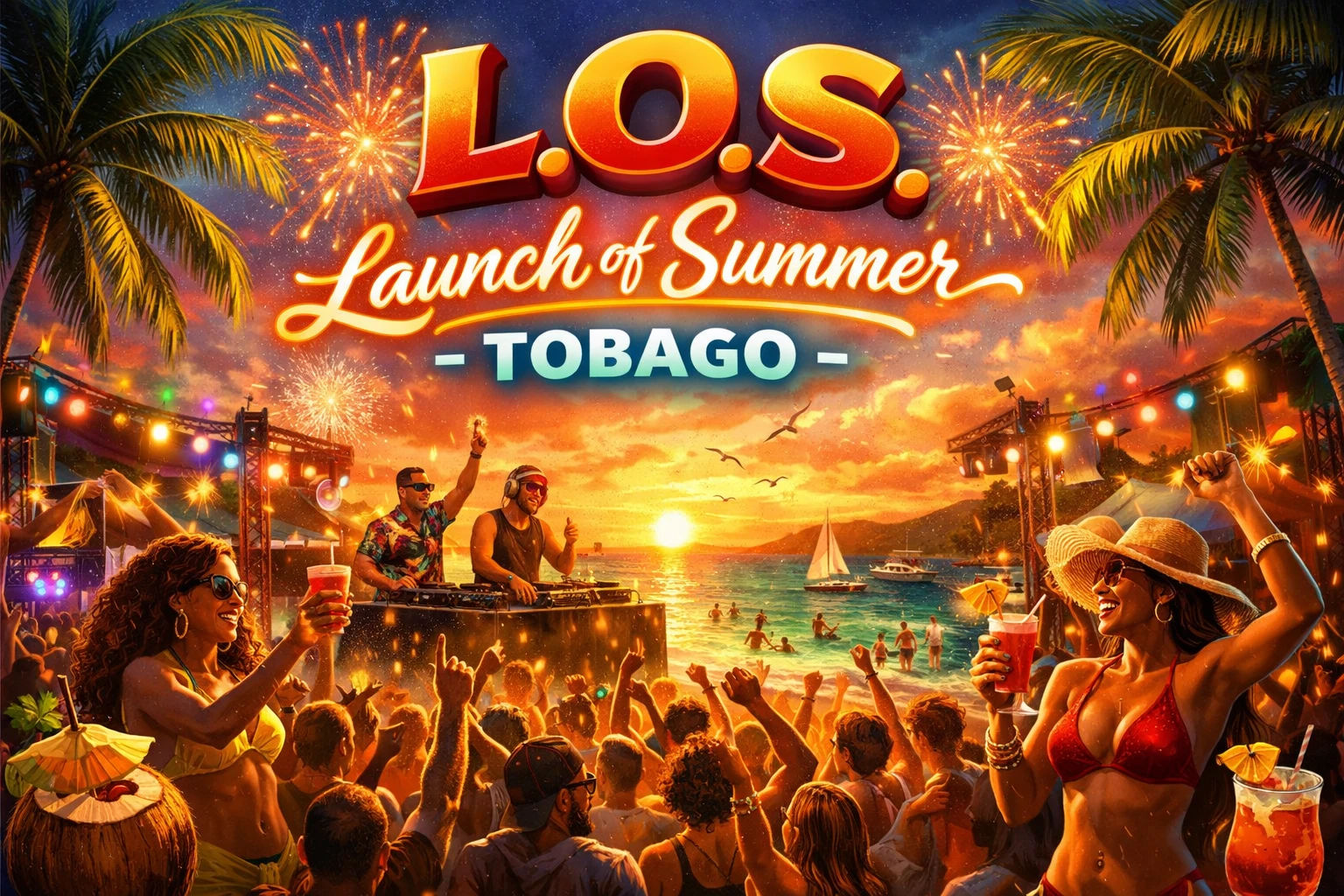
L.O.S. – Launch of Summer 2026 – Tobago
Steelpan Tribute to Fathers 2026 – Tobago
PURE 2026 – Tobago
Church Harvest Festivals in Tobago 2026
Photo gallery
