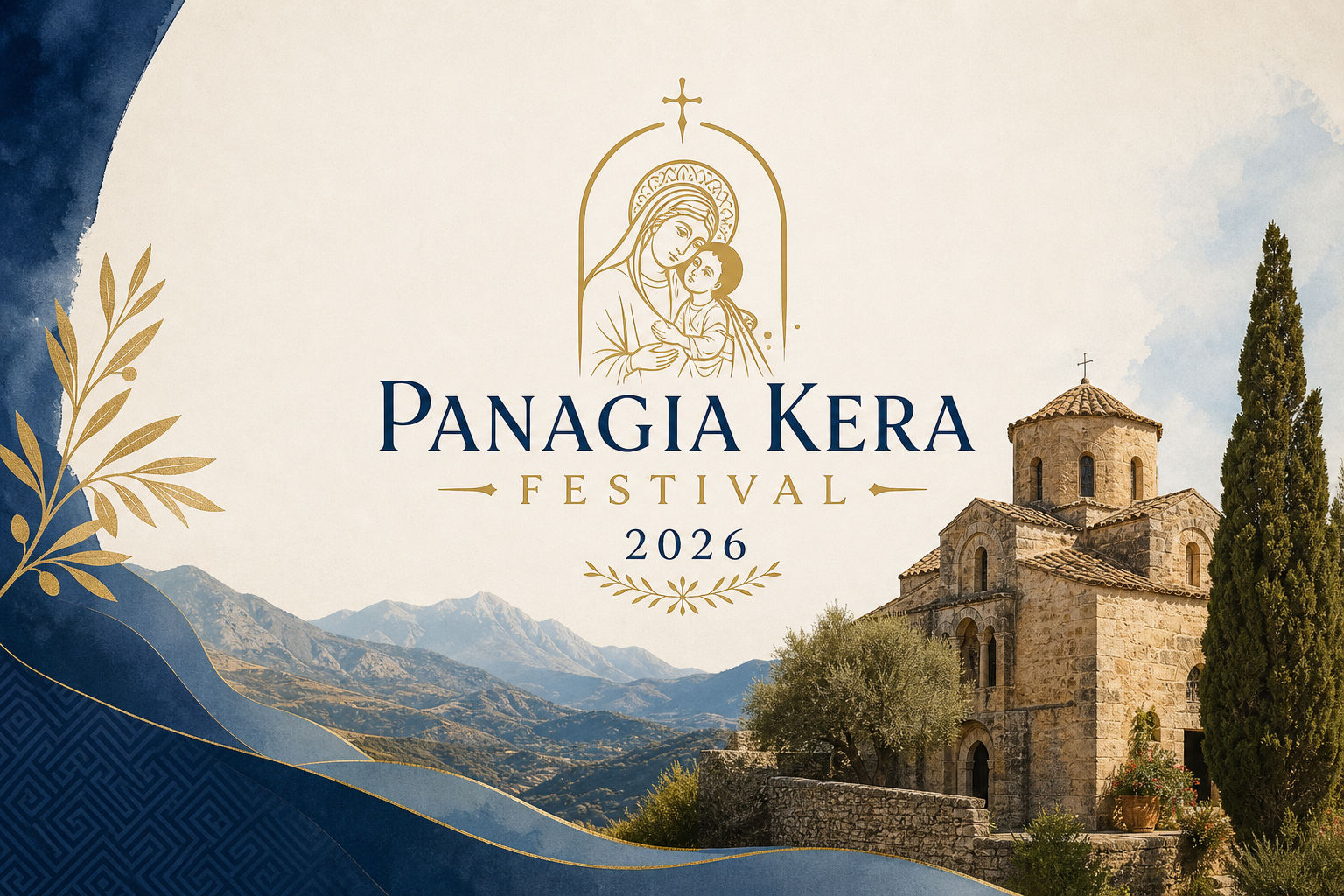
There are festivals that entertain, and there are festivals that reach into something far older and far deeper. The Panagia Kera Festival in Crete belongs irrefutably to the second category. Celebrated across multiple sacred sites on the island each year, with the principal dates falling on August 14 to 15, 2026 (the Dormition of the Virgin, known as Dekapentavgoustos) and September 7 to 8, 2026 (the Nativity of the Virgin), this is one of the most spiritually charged and culturally vivid celebrations in the entire Greek Orthodox calendar. On these days, some of Crete's most ancient and breathtaking religious sites come fully alive with liturgy, candlelight vigils, traditional Cretan music, communal feasting, and the warm, open-hearted hospitality for which this island is genuinely famous.
For travelers who want to experience Crete at its most authentically and deeply Cretan, planning a visit around either the August 15 or September 8, 2026 celebrations at the island's Panagia Kera churches and monasteries is one of the most rewarding decisions you can make. These are not staged performances for tourists. They are living expressions of a faith and a cultural identity that has survived Byzantine empire, Venetian rule, Ottoman occupation, and the modern world with its roots entirely intact.
"Panagia" is the Greek word for the Holy Virgin, meaning "All Holy," and she is venerated with an intensity in Crete that goes beyond even the usual devotion of the Greek Orthodox tradition.
What Is the Panagia Kera Festival?
The Virgin Mary at the Heart of Cretan Life
The island has more churches dedicated to the Virgin than to any other saint, and her feast days are treated as community events of the highest order, drawing not just churchgoers but entire villages together in a celebration that weaves liturgy, music, dance, and food into a single flowing experience.
The term "Panagia Kera" is used specifically to refer to several distinct and historically significant sacred sites on the island, most prominently:
- The Church of Panagia Kera in Kritsa (near Agios Nikolaos in eastern Crete, Lasithi region): A small triple-aisled Byzantine church housing what are considered the finest preserved Byzantine frescoes in all of Crete. The oldest frescoes in the central nave date to the 13th century and depict scenes from the life of Christ, including the Ascension, the Last Supper, and the four Gospel scenes. The church sits approximately 1 kilometer south of the village of Kritsa, on the main road toward the ancient Minoan site of Lato.
- The Monastery of Panagia Kera Kardiotissa (on the road connecting Pediada province and the Lasithi Plateau): An active nunnery with roots dating to at least 1333, when it appears in a document as a fief of the Latin Patriarchate of Constantinople. Dedicated to the Nativity of the Virgin, its main festival day is September 8.
- The Church of Panagia Kera in Amari (near the village of Nefs Amari, Amari Valley, Rethymno region): A magnificent three-aisled basilica from the 15th century, built on the ruins of a 13th-century Byzantine church with a dome, which itself replaced an earlier structure believed to have been a temple dedicated to Apollo. The accumulated history beneath this single building spans more than two millennia.
The August 14 to 15, 2026 Celebrations: Dekapentavgoustos
Greece's "Little Easter" on Crete
August 15 is, across the whole of Greece, a day of enormous spiritual and cultural weight. Known as Dekapentavgoustos (the Fifteenth of August) or the Feast of the Dormition (Assumption) of the Virgin, it is a national public holiday and the single most widely celebrated religious occasion on the Greek Orthodox calendar after Easter. On Crete in particular, where devotion to the Panagia runs especially deep, the entire month of August is informally known as "the month of the Panagia," and festivals and panigiria (village celebrations) related to her fill the calendar from the first day to the last.
The celebrations follow the established Orthodox structure:
- August 14 (Eve): Evening vespers and the beginning of vigil services at participating churches and monasteries across the island
- August 15 (Main Day): Divine Liturgy celebrated in the morning, followed by a procession of the icon, communal gathering, traditional Cretan music performed on the lyra and laouto, dancing in the village squares, and communal feasting on local specialties
The atmosphere across Crete on August 15 is unlike any other day of the year.
The September 7 to 8, 2026 Celebrations: Nativity of the Virgin
The Primary Festival Day at Panagia Kera Monasteries
If the August 15 celebrations represent the grand communal spectacle of Panagia veneration on Crete, the September 7 to 8 festival cycle at the Panagia Kera sites carries a more intimate and profoundly devotional character that many visitors find even more moving.
For the neighboring Panagia Charakiani Festival near Bali in Rethymno, which follows the same September 8 date pattern, the celebrations unfold at a church built directly into a rock face within a small gorge, one of the most unusual and dramatic religious settings in the entire Greek world. The icon there is also considered miraculous, and its pilgrims overlap significantly with those visiting the various Panagia Kera sites across Crete on the same date.
The Music and Dance That Define the Festival
Cretan Lyra, Laouto, and the Living Tradition
Any visit to a Panagia Kera Festival celebration in 2026 will, almost inevitably, lead you to music. Cretan music is one of the most distinctive and emotionally powerful folk traditions in Europe, built around the lyra, a three-stringed bowed instrument played resting on the knee, and the laouto, a long-necked lute that provides rhythmic and harmonic accompaniment.
For visitors, participation is not only welcomed but expected. A Cretan village panigiri has no audience. Everyone is a participant, and the long communal table, the carafe of raki, and the invitation to join the dance circle will arrive before you have finished your first plate of lamb.
The Cultural Depth of the Panagia Kera Sites
Byzantine Art and Architecture That Survived Everything
Visiting the Church of Panagia Kera in Kritsa as part of the festival experience adds an art historical dimension that is extraordinary even by the standards of a Greece rich in Byzantine heritage. The frescoes inside this small triple-aisled church are the finest of their kind in Crete, painted across three successive periods from the 13th to the 14th century and representing three distinct Byzantine artistic schools.
Entry to the church costs 2 euros, one of the most under-valued heritage experiences available anywhere in the Mediterranean. Visitors to the August 15 and September 8 celebrations should be aware that the church may be crowded during liturgical services and that respectful behavior, including modest dress with shoulders and knees covered, is expected and required.
Practical Travel Tips for the 2026 Celebrations
Planning Your Visit Around August 15 or September 8
Whether you choose the August 14 to 15 or September 7 to 8, 2026 celebrations, several practical considerations will significantly shape your experience:
- Book accommodation well in advance: Both festival dates are among the busiest of the Cretan year. Agios Nikolaos, the nearest town to the Kritsa church, fills up completely around August 15. Similarly, accommodation near the Lasithi Plateau and around Rethymno needs advance booking for the September 8 weekend
- Arrive by car: Public transport in rural Crete is limited. Renting a car gives you the freedom to reach both the main Panagia Kera sites and the village panigiria that continue into the evening across the surrounding communities
- Arrive at the church early on the festival morning: The liturgy at major Panagia Kera sites begins at sunrise or shortly after. Arriving early allows you to experience the full arc of the service and secure a position inside the church
- Dress modestly: This is a sincere religious celebration. Women should cover their shoulders and wear skirts or trousers that cover the knee. Men should wear long trousers. Most churches provide coverings at the entrance for those who arrive unprepared
- Stay for the panigiri: The communal feast and music that follows the morning liturgy is the cultural heart of the event and is completely open to visitors. Bring appetite and willingness to accept hospitality that will be pressed on you with genuine warmth
- Visit the Lato archaeological site near Kritsa: If you are visiting the Kritsa Panagia Kera church, the ancient Dorian city of Lato just above the village is one of the finest and least-visited archaeological sites in Crete, offering extraordinary views across the Gulf of Mirabello
The Broader Agios Nikolaos and Lasithi Experience
Exploring Eastern Crete's Rich Offerings
Eastern Crete around Agios Nikolaos is one of the island's most rewarding regions for independent travelers. The town's famous lake, the Gulf of Mirabello, the Minoan palace site of Malia to the west, the extraordinary Lasithi Plateau just above, and the dramatic gorge of Kritsa itself all provide multiple days of exploration that the Panagia Kera festival celebrations can anchor beautifully.
Crete's cuisine in this region, built around local olive oil, fresh cheese, wild herbs, slow-cooked lamb, freshly caught fish, and the extraordinarily good local wines from the Sitia and Peza regions, will reinforce at every meal the sense that this island does everything with an instinctive and unhurried excellence.
A Festival That Belongs to the Island and Welcomes the World
The Enduring Bond Between Crete and the Panagia
The Panagia Kera Festival in Crete in 2026 is not something organized for visitors. It happens because it has always happened, because the communities of this island have gathered at these sacred sites on these exact dates for centuries, and because the bond between the people of Crete and their Panagia is one of the deepest and most enduring relationships in the cultural life of the Mediterranean.
What makes it remarkable for travelers is precisely that it is so genuine. When you stand in the courtyard of the Kritsa church on the evening of August 14, watching candles being lit one from another as the vespers begin, or when you find yourself drawn to the dance circle at a village square on the night of September 8, you are not experiencing a re-enactment. You are part of a living tradition that has survived eight centuries of history and shows no sign of diminishing.
Come for the frescoes. Stay for the music. Leave with the kind of memory that only authentic island culture can produce.
Frequently Asked Questions
The Things People Always Want to Know
Q1: When is the Panagia Kera Festival in Crete in 2026?
The Panagia Kera celebrations in Crete take place on two primary dates: August 14 to 15, 2026 (the Feast of the Dormition of the Virgin, Dekapentavgoustos) and September 7 to 8, 2026 (the Nativity of the Virgin). The September 8 date is the main consecration celebration at the Church of Panagia Kera in Kritsa and the Monastery of Panagia Kera Kardiotissa.
Q2: Where is the Panagia Kera church in Crete?
The most famous Panagia Kera church is located approximately 1 kilometer south of the village of Kritsa, near Agios Nikolaos in eastern Crete (Lasithi region). A second Panagia Kera church is in the Amari Valley near Nefs Amari in the Rethymno region, and the Monastery of Panagia Kera Kardiotissa sits on the road connecting Pediada province and the Lasithi Plateau.
Q3: How much does it cost to visit the Church of Panagia Kera in Kritsa?
Entry to the Church of Panagia Kera in Kritsa costs 2 euros per person. The church is open to the public as a heritage site on regular days and as a place of active worship during festival celebrations.
Q4: What happens at the Panagia Kera Festival celebrations in Crete?
The celebrations follow Orthodox tradition: an evening vespers and vigil on the eve (August 14 or September 7), followed by Divine Liturgy on the main day (August 15 or September 8). After the church service, a panigiri (communal festival) takes place with traditional Cretan music performed on the lyra and laouto, dancing, and communal feasting. The celebration is open to all visitors.
Q5: What are the best places to stay near the Panagia Kera church in Kritsa for the 2026 festival?
Agios Nikolaos is the most convenient base, located approximately 10 km from the Kritsa church. The town offers a wide range of accommodation from budget guesthouses to four-star hotels. Elounda and Neapoli are also good alternatives within easy driving distance. Book well in advance for both the August 15 and September 8 festival weekends, as accommodation fills up rapidly.
Verified Information at a Glance
- Event Name: Panagia Kera Festival Crete 2026
- Event Category: Religious and Cultural Festival / Panigiri / Greek Orthodox Celebration
- Primary Celebration Dates: August 14 to 15, 2026 (Dormition of the Virgin); September 7 to 8, 2026 (Nativity of the Virgin)
- Main Sites:
- Church of Panagia Kera, Kritsa, near Agios Nikolaos, Lasithi, eastern Crete
- Monastery of Panagia Kera Kardiotissa, Pediada/Lasithi Plateau road, central Crete
- Church of Panagia Kera, Amari Valley, near Nefs Amari, Rethymno region
- Entry Fee (Kritsa Church): 2 euros
- Church Date of Origin (Kritsa): Original frescoes 13th century; church rebuilt 13th to 14th century
- Monastery Origin (Kardiotissa): References from 1333; believed 12th-century roots
- Nearest Town (Kritsa church): Agios Nikolaos (approximately 10 km)
- Nearest Airport: Heraklion International Airport (HER); also Sitia Regional Airport for eastern Crete
- Festival Character: Religious liturgy, icon procession, traditional Cretan music (lyra and laouto), Cretan dancing, communal feasting
- Dress Code: Modest attire required; shoulders and knees covered
- Admission to Festival Celebrations: Free (entry to the Kritsa church as heritage site: 2 euros)
```